My change-of-address card arrived today. It said I'd moved to a house I'd never seen, on a street that didn't exist. And it was signed with my own hand, a month from now.
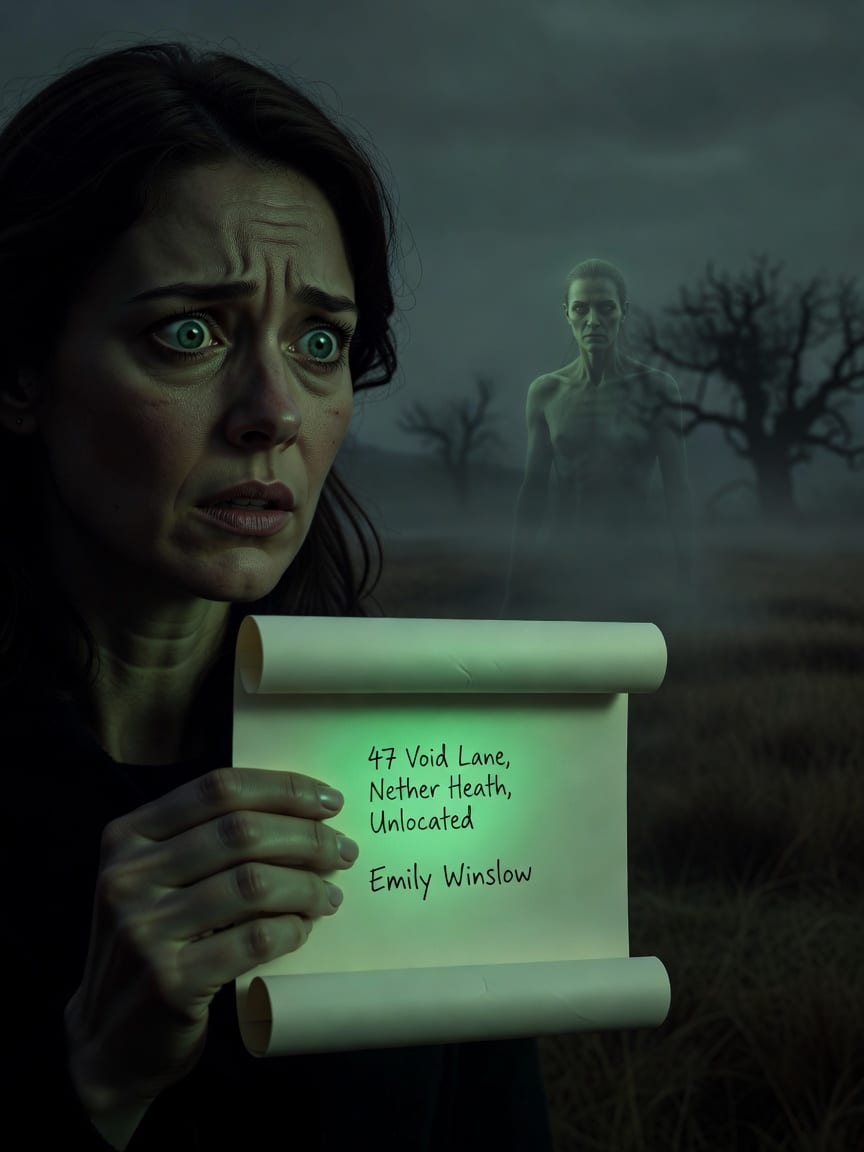
The crisp, cream-colored card sat on my kitchen counter, innocent as a bill. Except it wasn't. It was a change-of-address notification, addressed to me, Emily Winslow, informing me I’d moved. To 42 Willow Creek Lane. I’d never heard of it.
My fingers traced the sender's return address: 'Redmoor Common.' An open heath, miles of scrub and bog, no houses, certainly no postboxes. The effective date was a month from now.
But the signature, scrawled in blue ink, was the worst part. It was my name, 'Emily Winslow,' in a hand that was almost mine. Not quite.
Too neat, too precise, a ghost of my own loops and slants, as if someone had practiced it a thousand times to get it perfectly wrong. I tried to find Willow Creek Lane on maps, old and new. Nothing.
It simply didn't exist.
My first thought was identity theft, a bizarre, elaborate prank. I spent the next two days on the phone, a blur of automated menus and patient, unhelpful clerks.
The post office had no record of the change, nor did the electoral roll or any utility company. No one had ever heard of 42 Willow Creek Lane.
It felt like trying to report a dream, a goddamn hallucination to people who only dealt in facts. I drove out to Redmoor Common, the wind whipping my hair, the air smelling of damp earth and something ancient, unmoving.
There was nothing but gorse and heather. No road, no lane, just a faint, overgrown track leading deeper into the heath. As I was heading back to my car, a man emerged from the mist, wearing a threadbare tweed coat.
He was older, with kind, tired eyes that seemed to hold a lot of unspoken history. He stopped directly in front of me, blocking my path.
'Emily Winslow,' he said, his voice soft, a low rumble, as if he knew me, knew of me. 'I am truly sorry for what's about to happen.' He didn't wait for a reply, didn't offer an explanation.
He just nodded solemnly, a slight dip of his head, and vanished back into the fog, swallowed by the damp air as quickly as he'd appeared.
I stood there, chilled to the bone, dismissing it as a local eccentric, another one of the Common's quirks, but his words clung to me, a cold damp shroud refusing to let go.
The encounter with the stranger gnawed at me. His knowing my name, his apology. It wasn't a prank. It wasn’t some harmless oddball. It was specific.
I started digging into Redmoor's local history archives online, then at the small, dusty town library. Old property deeds, census records, maps. Hours blurred into a headache, the smell of ancient paper and stale dust filling my lungs.
I was half-blind from screen glare, half-crazy from dead ends. And then, I found it. A brittle, yellowed page in a ledger marked 'Redmoor Land Transfers - 1940-1950.'
The ink was faded, but clear enough, a spiderweb of script. '42 Willow Creek Lane,' it read, an entry dated 1947. And next to it, perfectly legible, 'Emily Winslow.'
The script was identical to the signature on my change-of-address card, a precise, practiced ghost of my own hand. But this ledger was dated 1947.
My friend Rachel Abbott, a librarian with a knack for obscure research, was my first call. I drove straight to her place, printout of the ledger page clutched in my hand.
Her usual composure, the quiet professionalism, cracked the moment she saw it. Her eyes went wide, scanning the dates, the names. 'This is… impossible, Em. You know it is.'
We spent the next few days pooling our resources, fuelled by bad coffee and a growing sense of dread.
Rachel found old maps showing 'Willow Creek' as a historical designation for a section of Redmoor Common, a marshy area long since absorbed back into the wild. No houses ever built there, according to the records.
Nothing but marsh grass and twisted scrub. We cross-referenced the ledger with local newspaper archives, digging through microfiche until our eyes burned.
We found a disturbing pattern: a handful of disappearances over the decades, always in Redmoor, always preceded by 'strange mail' or 'unexplained encounters.'
People vanished without a trace, often around the time a new property transfer was recorded for a non-existent address, always with a name that seemed to echo through time. Like a placeholder that eventually got filled.
We tried to find other Emily Winslows from the 1940s linked to Redmoor, but the trail went cold. It was like the name existed only on that page, at that impossible address, waiting.
The unease escalated. I found a note tucked under my car's windshield wiper after a library visit: 'It's almost time. You shouldn't have looked.' No signature, no return address.
Just a stark, unsettling certainty that I was being watched, that it knew. My rational mind screamed 'stalker,' tried to reduce it to a person, a threat I could understand.
But the dread felt older, colder, like something that had always been there, just out of sight. I remembered the Redmoor Common postmark on the original card, how it had seemed impossible.
This time, I didn't look for a post office. I looked for a forgotten drop-off point. Armed with Rachel's research on historical mail routes, I hiked deep into the Common, retracing that overgrown track I'd glimpsed before.
The path swallowed me, gorse tearing at my jeans, the air growing heavy and still. Hidden amongst a copse of ancient, twisted oaks, their branches like skeletal fingers, I found it.
An old, rusted postbox, almost completely swallowed by ivy and gorse. The metal was corroded, paint peeled like sunburnt skin, but the faint, embossed words were still legible: 'Redmoor Common Postal Service.' It was long disused, certainly.
The slot for letters was jammed with dead leaves and spiderwebs.
But a tiny, almost invisible slot on its side, near the base, looked like it might have been used for hand-canceling or for dropping off special deliveries, for something other than regular mail.
A cold dread washed over me, a physical shock. This was where it began. Or rather, where it was sent from. This damn, forgotten box in the middle of nowhere.
I knew the man from the Common worked at the library archives. Malcolm Stratton. He was behind the counter, arranging old maps, his movements slow and deliberate, like a man performing a sacred ritual.
I approached him, heart pounding a frantic rhythm against my ribs. 'Mr. Stratton,' I said, my voice barely steady, holding out a printout of the ledger page. The paper trembled slightly in my hand. 'You apologized to me.
For something that hadn't happened yet. And this… this is my name, in a ledger from 1947, for an address that doesn't exist. Explain this to me, damn it.' His kind eyes clouded over, a shadow passing through them.
He glanced around the empty archive room, then lowered his voice, almost a whisper, as if the very walls might be listening. 'Some things are… older than the town, Miss Winslow. Older than records anyone keeps in these books.'
He gestured vaguely at the shelves around us. I pressed him, stepping closer. 'What is this? What did you apologize for? What the hell is going on?'
He sighed, a deep, weary sound that seemed to carry the weight of generations. 'The Common… it knows. It has always known.' He explained, haltingly, that his family, for generations, had been caretakers.
Not of the land, he clarified, but of… the process. 'The ledger isn't just a record of land. It's a record of… belonging. When a name appears, it's a call. A transition.'
He spoke of an ancient pact, of the Common 'claiming' what was due, a system so old it predated human memory.
'The 'move' isn't physical, not in the way you think,' he whispered, leaning closer, his breath smelling of old paper and something earthy. 'It's a step into being known by the Common, fully. Into its… embrace.
The apology… it's a courtesy. It hates to be rude, you see. It just… takes what's its.' The room felt colder suddenly, the dust motes dancing in the single shaft of sunlight from the window seemed to slow, to hesitate.
Malcolm's words echoed in my head as I stumbled out of the library, the automatic doors sliding shut with a soft hiss behind me. 'A transition.' 'It just takes what's its.'
It made a horrifying, impossible sense, like fitting together the last pieces of a puzzle you never wanted to solve.
The non-existent address, the postmark from the heart of the wild, my name appearing before my birth—it was all part of an ancient, terrifying system, operating quietly beneath the surface of the world.
I got into my car, fumbling with the keys, my hands slick with sweat. The engine roared to life, a small comfort, a familiar sound against the encroaching dread.
Just as I was about to pull away from the curb, my phone rang. Unknown number. My heart leaped into my throat, a frantic bird trying to escape.
I hesitated, staring at the flashing display, then answered, my voice a shaky whisper. A calm, resonant voice, neither male nor female, spoke. "Emily Winslow. We apologize for the inconvenience this may cause. Your transition is scheduled for next week."
The voice was perfectly clear, as if it were speaking from the back seat, not through the tiny speaker of my phone.
The sound seemed to vibrate through the very fabric of the car, not just the speaker, humming in the metal under my hands, in the very air I breathed.
The voice on the phone was the 'channel that uses your name.' It was the Common itself, speaking directly to me, not a person, not a prank. Its apology wasn't a warning; it was a final confirmation.
The 'effective date' on my change-of-address card was my deadline. I knew I couldn't run. It knew my name, my location, my future.
Driven by a desperate need to understand, to find a weakness, a loophole, I returned to Redmoor Common. Malcolm's words about 'belonging' and 'taking what's its' resonated, chilling me to the bone.
I searched the area where the old 'Willow Creek' designation lay, near the disused postbox, the place where the note had been mailed from.
Hidden beneath a gnarled, ancient oak, its roots like grappling hooks on the earth, disguised by moss and clever stonework, I found it: a narrow, almost invisible entrance into the earth, like a natural fissure in the rock.
It led to a steep, dark passage, the air inside cold and smelling of damp earth and something else, something metallic and old. I descended, my fear warring with a terrible, morbid curiosity.
At the bottom, a vast, circular chamber opened up, lit by an ethereal, pulsing light that seemed to emanate from the very stone.
Shelves lined the walls, stretching into the gloom, filled not with books, but with hundreds of ancient, leather-bound ledgers, their spines unreadable, their contents unknown. In the center, on a massive stone pedestal, lay the largest ledger of all, open.
Its pages were thick, yellowed, filled with names – thousands of them, inscribed in that same precise, practiced script. I found my own name, not just the 1947 entry, but others, stretching back centuries.
A pattern of names, a specific, almost identical signature, and a 'transition' date beside each. The 'missing' people Rachel and I had researched were all there, accounted for.
It was an institution, ancient and indifferent, systematically harvesting lives, a cosmic bureaucrat ticking off names.
My eyes darted across the open pages of the central ledger, fixed on my entry. My name. My effective date, now just days away. The signature, the same precise, almost-mine script.
I saw entries for Felix Harlow, a local historian I vaguely knew, and others, names I'd seen in the old newspaper archives, people who had simply vanished. The horror wasn't malicious, it was bureaucratic, an impersonal, undeniable accounting.
The pattern was clear: the signature was the key, a mark that activated the 'transition,' an unbreakable command. I frantically flipped through pages, desperate for any anomaly, any escape clause, my fingers tearing at the brittle paper.
Then I saw it. A faint, almost erased entry from the late 1800s. Two names, one crossed out, the signature transferred to the second, with a small, barely visible annotation: substitution permitted, if name is claimed. A loophole.
It wasn't about stopping the process, but about redirecting it. My hands trembled, clammy with fear and a terrible, cold resolve. I found Felix Harlow's entry, his 'effective date' a year from now. My own 'transition' was imminent.
I took a deep breath, the air in the chamber heavy and cold, picked up a quill pen from a nearby stand – its ink shimmering with the same ethereal light as the chamber, a sickly blue – and carefully, with a horrifying precision, I copied the delicate lines of the institution's signature.
I crossed out my name from my entry and, with a silent, desperate apology to a man I barely knew, I transferred the 'signature' to Felix Harlow's entry, placing it beside his name.
The ledger pulsed with a faint, low hum, the pages seeming to ripple, then settled back into stillness. I had bought myself time, at an unthinkable cost. The institution's order remained, but its target had changed.
I scrambled out of the hidden chamber, heart hammering against my ribs, gasping for breath. The passage sealed itself behind me with a soft click, blending seamlessly back into the rock face, as if it had never been there.
I never told Rachel the full truth, only that I'd 'resolved' the issue, vague enough to satisfy her without revealing the monstrous reality. She didn't press.
I moved away from Redmoor, severed most ties, and changed my phone number, my online presence, everything. The knowledge I carried was a heavy, invisible weight, pressing down on me, every damn day.
I lived with a constant, low thrum of dread, the awareness that I had survived, but only by sacrificing another to a fate I now understood. The Common had its due, one way or another.
Months passed. My new life was quiet, anonymous. I avoided anything that felt like a permanent record, any system that could track a name. I kept my head down, lived like a ghost.
Then, one morning, a small local news blurb caught my eye online. 'Prominent Local Historian, Felix Harlow, Vanishes from Redmoor Common.'
The article mentioned that a 'change of address' card had been found at his home, postmarked Redmoor Common, with an effective date for 'next week.' A cold wave washed over me, a sickening confirmation.
He hadn't just vanished; he had transitioned. Now, sometimes, when my phone rings from an unknown number, I just let it go to voicemail, hoping it's not another apology.
If this one got to you
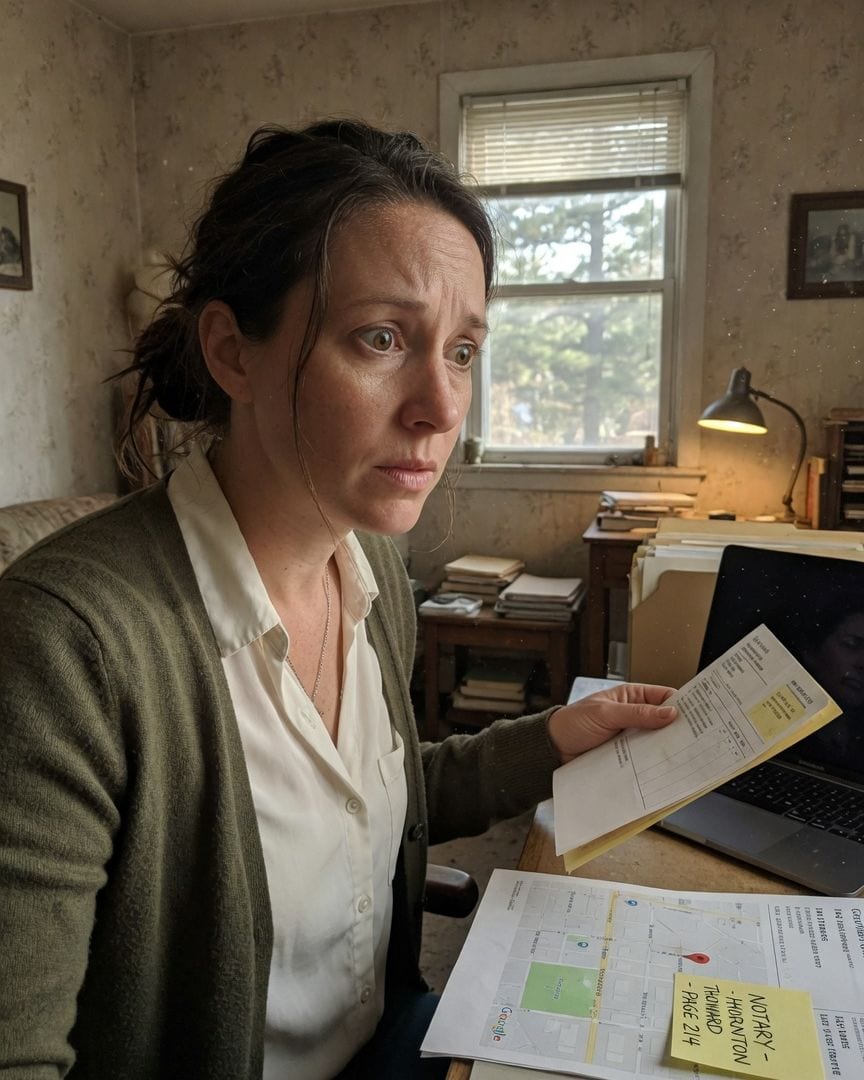
My signature is in a notary's book for an accident I wasn't in. I've never even met the man.
My name is Janet Caldwell, and my life is perfectly ordinary. Or so I thought, until a notary's register revealed my distinct signature on a document. It was dated May 14th, 2014, a day I was confined to a hospital bed, miles away.
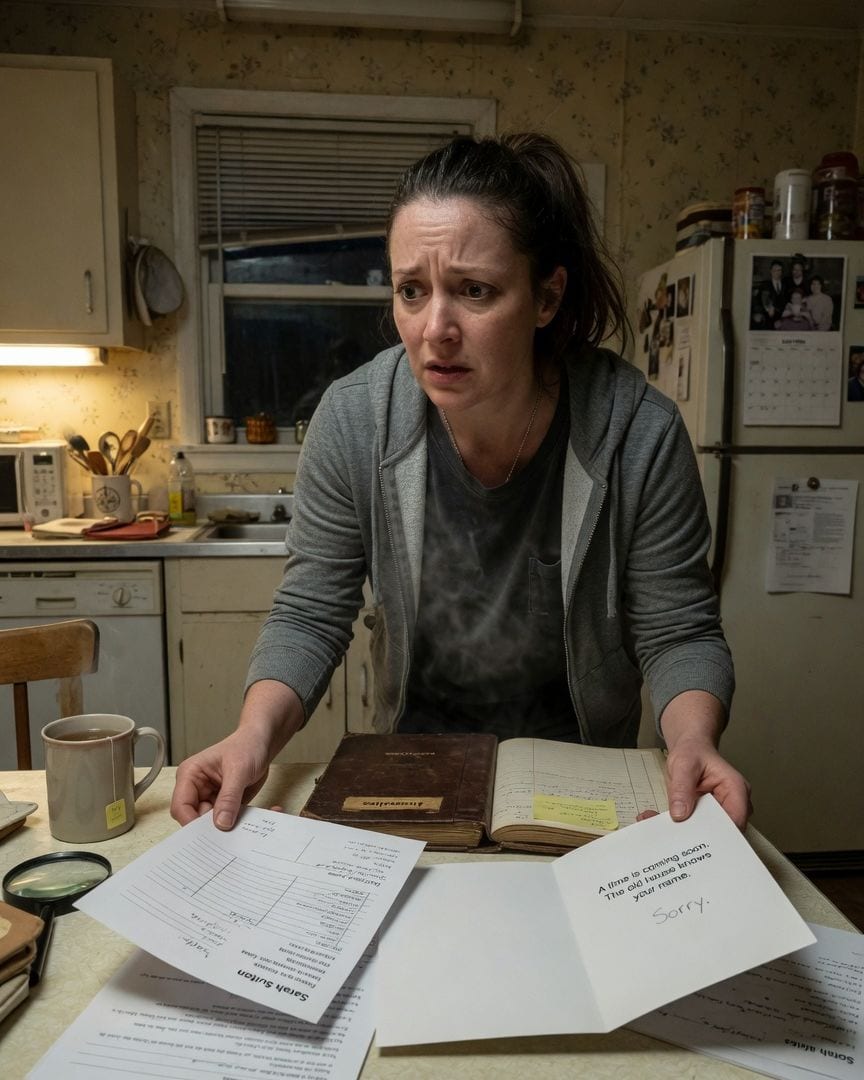
My name sits in the 1966 electoral register. My house, my exact name. Someone pencilled 'sorry' in the margin.
I was sifting through dusty microfiche, tracing my family line for my childhood home, when I found it. The 1966 electoral register for my address listed my exact name: Sarah Sutton. My heart hammered. I wasn't born until 1988; this was thirty-five years before I existed.
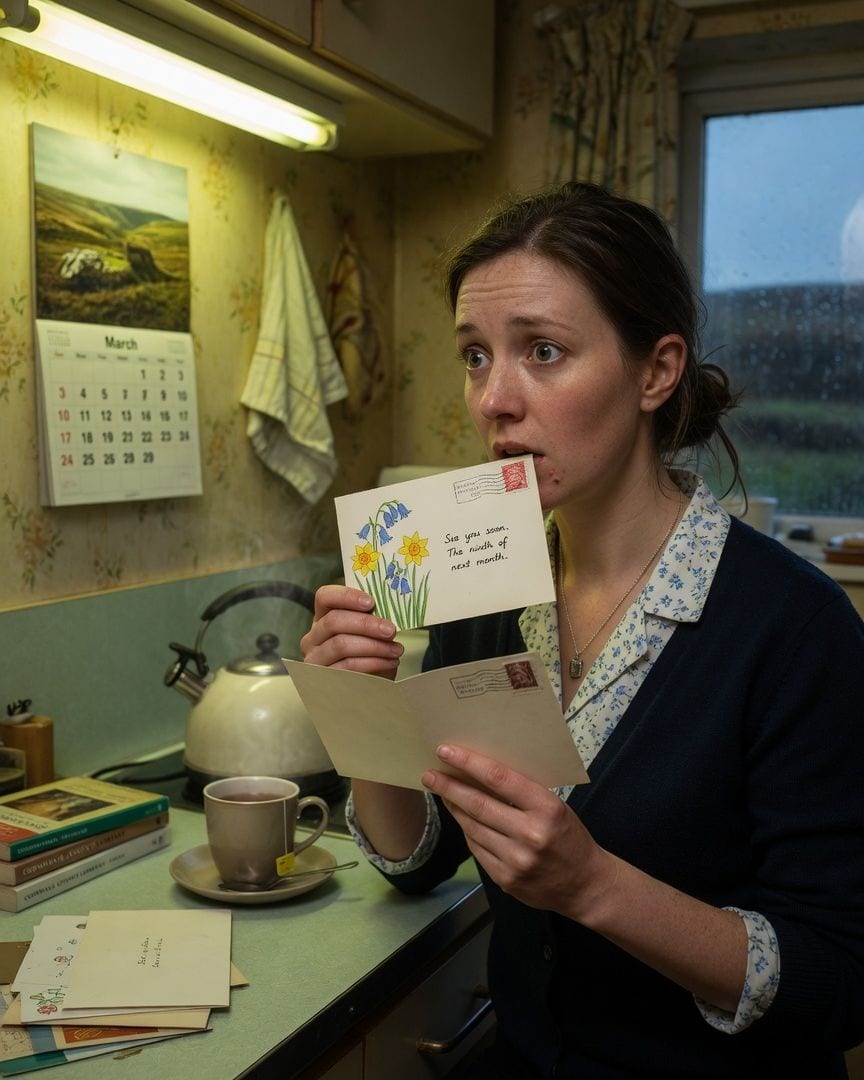
My get-well card arrived from a field, postmarked from a sanatorium that burned down in 1963. It wished me well for an operation I've never had, scheduled for next month.
I was just making tea on an ordinary Tuesday when a strange letter arrived. It was postmarked from Treneglos Sanatorium, a place that burned to nothing over sixty years ago, and contained a get-well card for an operation I'd never had. My research into this impossible message then led me to an old patient register where I found my own name, dated 1958.
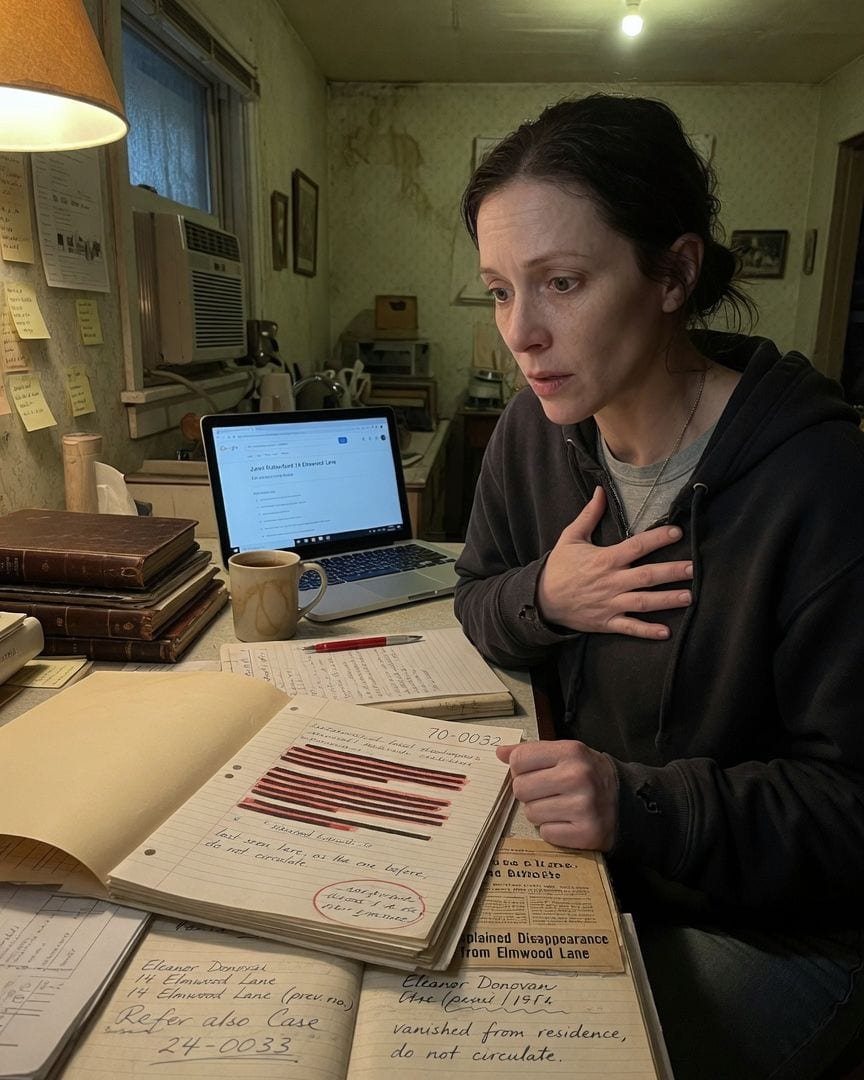
My own address is on a missing person's file from 1970. The blacked-out line names my street. She never lived here.
When my neighbor vanished, I started digging into old local missing persons cases. In a police file for a woman who disappeared in 1970, I found my own address, 14 Elmwood Lane, framing a blacked-out section of the duty log. Janet Rutherford never lived here, and the file contained a chilling handwritten note: 'do not circulate.'
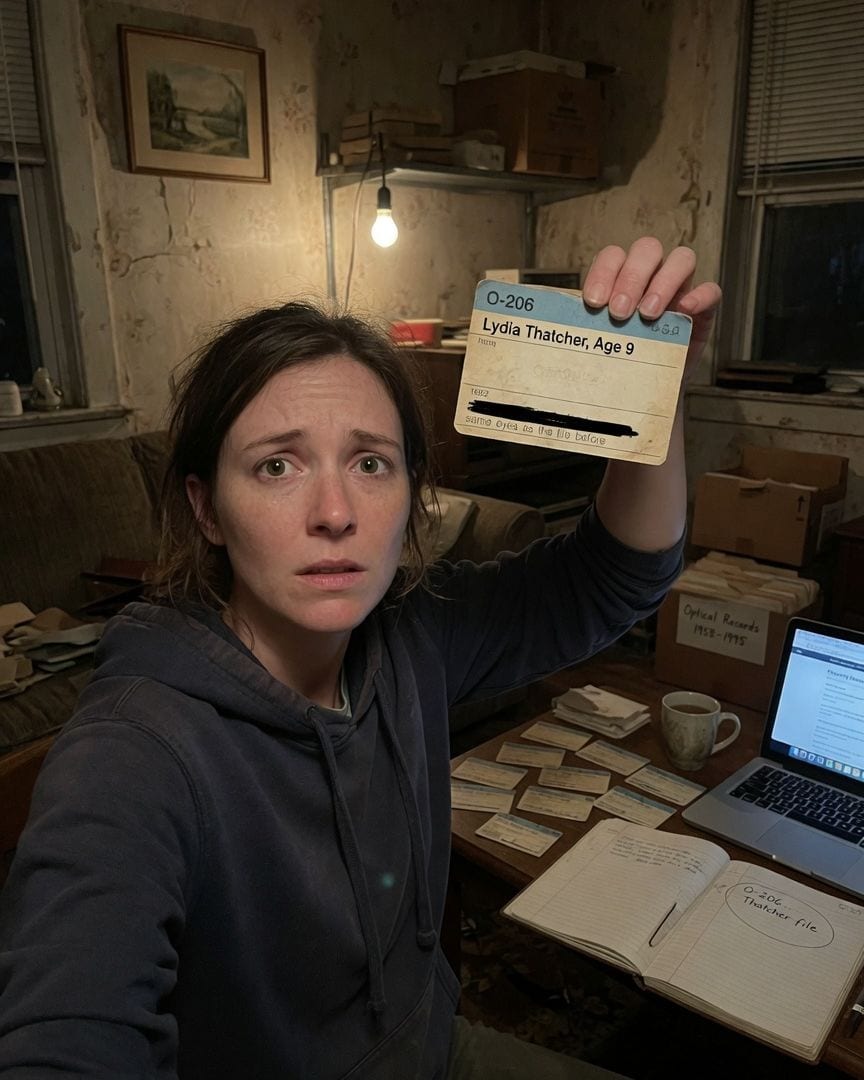
My own optical card is dated 1962, with my name on it. I wasn't born until 1993.
Sifting through old patient files from my former optical practice, I found my own O-206 card. It had my name, Lydia Thatcher, and my current home address printed on it. But the card was dated 1962, decades before I was even born, and a redacted note mentioned 'same eyes.'
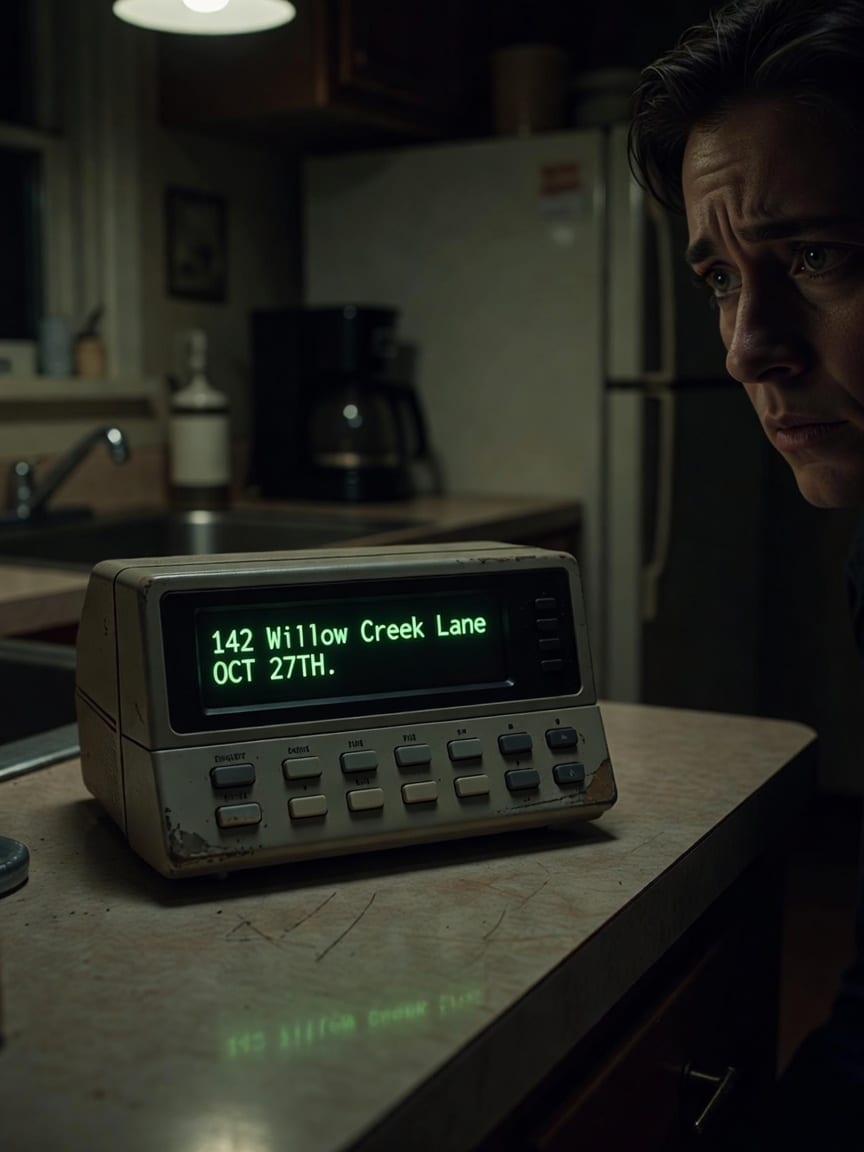
My radio scanner picked up a channel at 2 AM reading local addresses. Mine was on it, dated tomorrow.
I was tracking a storm on my old weather radio when a synthesized voice cut through the static. It began reading local street addresses, then my own: 142 Willow Creek Lane. But the date it gave for my address was tomorrow.