My name sits in the 1966 electoral register. My house, my exact name. Someone pencilled 'sorry' in the margin.
I found it sifting through microfiche, the dust of decades clinging to the air in the local records office. My fingers ached from spinning the reels, trying to trace my family line, specifically for my childhood home.
I’d ordered a copy of the 1966 electoral register for my address on Elmwood Lane, hoping to find my grandparents.
The screen flickered. My eyes scanned the page, then stopped. There it was, stark and impossible, under the column for ‘Name of Elector’: Sarah Sutton. And next to it, my exact address. My heart hammered. I wasn't born until 1988.
This was… thirty-five years before I existed.
I leaned closer, my breath fogging the glass. It wasn’t a typo. An official stamp, crisp and black, sat beside the entry. It was undeniably real.
Kenneth Walsh, the records clerk, a man who prided himself on the meticulous order of his domain, shuffled over. He squinted at the screen, then at the physical ledger I’d retrieved.
“Well, I’ll be,” he murmured, running a finger under the impossible line. He pulled out a magnifying glass, checked the stamp. His brows furrowed. “It’s authentic, alright. Must be a clerical error. Happens.”
But his eyes, usually so steady, darted nervously to the corners of the room before settling back on the page, fixed for a beat too long.
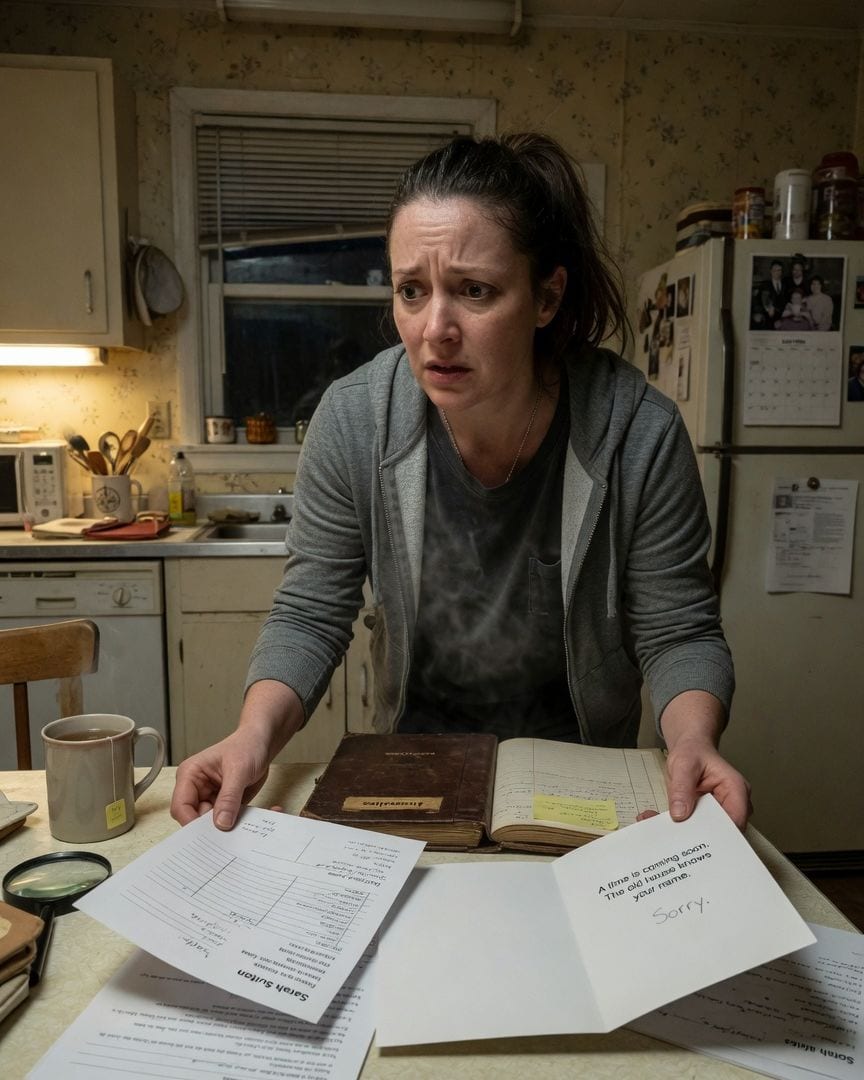
I took the printout home, the impossible name burning a hole in my bag. Later that night, under the harsh light of my kitchen, I examined the heavy book again, the official-looking entry. Then I saw it.
Pencilled faintly in the margin beside my impossible name, someone had written the word ‘sorry.’ Beneath it, a series of numbers that looked like a date.
I tried to make sense of them, but they didn’t quite align with any date I knew.
The 1966 entry became an obsession. I spent days pouring over old property deeds, searching through online archives, looking for any other Sarah Sutton connected to the house during that time. Nothing.
The house had been in my family for generations, and no one by that name appeared. I even called my elderly aunt, a fountain of family lore, who simply laughed and dismissed it as a funny coincidence.
"You get some odd things in those old registers, love. Probably a ghost."
A week later, a plain white envelope arrived in my mailbox. No return address. Just my name, ‘Sarah Sutton,’ neatly handwritten. It was a birthday card. I tore it open, my brow furrowed. My birthday was months away.
The postmark was faded, but legible: Blackwood Creek, an old logging town I vaguely remembered. A quick online search confirmed Blackwood Creek’s post office had been demolished decades ago, now just an empty field. My stomach tightened.
Inside, the card was blank, save for a small, printed message at the bottom. The ink was a dark, almost charcoal grey. 'A time is coming soon,' it read. 'The old house knows your name.'
And then, beneath that, in the same unsettling script, a single, stark word: 'Sorry.'
The word echoed the register. It wasn’t a coincidence. It couldn’t be. My hands started to tremble, the paper rustling softly.
The air in my usually warm living room felt suddenly cold, as if someone had left a window open, though they were all tightly shut.
Unnerved beyond reason, I drove straight back to the records office, clutching the birthday card. Kenneth Walsh looked up as I approached his desk, and I could tell immediately he hadn't slept well.
He was pale, his composure cracking around the edges.
"Another one, is it?" he asked, his voice barely a whisper, not even looking at the card I offered him. He tried to dismiss it, wave me away. "Look, these things happen. People send strange mail.
Just a prank, I'm sure."
"A prank from an empty field?" I pressed, my own voice surprisingly steady despite the tremor in my hands. "And the 'sorry' from the register? You said that was a clerical error."
He sighed, a sound of defeat. He glanced around the empty office, then reached under his desk. His hand reappeared, holding a thin, leather-bound ledger, distinct from the official, imposing tomes around us. It looked old, unofficial.
The cover was worn smooth, and the title, etched in faded gold, read: ‘Anomalies.’
He opened it to a page dated 1966, his finger tracing a line. And there it was, an entry for my address, with my exact name: 'Sarah Sutton.' My breath hitched.
But beneath it, in faded, almost illegible script, was a second entry for the same address, the same name, but dated for next year.
“What is this?” I demanded, pointing at the second entry, my voice sharper than I intended. The room, usually filled with the quiet rustle of paper, felt unnaturally silent, absorbing my question.
Kenneth Walsh looked utterly terrified. He whispered, barely audible, “I’ve seen similar things over the years. Names that shouldn’t be there. Impossible dates. Addresses tied to… disappearances, sometimes. I started keeping this.” He gestured to the ledger. “Unofficially, of course.
No one would believe it. They’d think I was mad.” He chewed his lip, his gaze fixed on the ‘Anomalies’ ledger as if it might bite him.
“There was an old local historian,” he offered, almost as an afterthought, “Frances Marsh. Used to pore over the odd records, the ‘coincidences,’ as she called them. Before she… became reclusive.”
Desperate for any lead, any explanation beyond a clerical error or a malicious prankster, I found Frances Marsh’s address on the edge of town.
Her house was a testament to a life consumed by history – a cluttered labyrinth of books, maps, and yellowed documents stacked precariously on every surface.
The air smelled of old paper and dust, a scent that usually comforted me but now felt heavy, portentous.
Frances herself was a sharp-eyed woman in her late sixties, her grey hair pulled back in a severe bun. She regarded me with an intense, unwavering stare.
I laid out my story, the 1966 entry, the 'sorry' note, the impossible birthday card. She listened, initially dismissing my tale with a wave of her hand as fanciful, another silly ghost story.
"People see what they want to see in the past, dear," she'd said, her voice raspy.
But when I mentioned the specific address on Elmwood Lane, and the recurring 'Sarah Sutton' name, a flicker, unsettling and knowing, crossed her eyes. Her posture straightened.
She pushed aside a stack of ancient parish records, revealing a forgotten wooden box beneath. She pulled it out, dusted it off, muttering, "Patterns, you say? The old folk's tales always had a grain of truth."
Hours later, back at my own house, I was still trying to process the sheer volume of Frances’s insights. The woman was a walking encyclopedia of local oddities. My phone rang, startling me. It was Frances.
Her voice was tight, strained, utterly devoid of her earlier academic composure.
“I’ve found it, Sarah! The pattern! It’s all connected to your house, centuries of it— I’m looking at the old parish death records right now. Disappearances, not deaths, not always!
Oh, god, it’s worse than I thought—” She broke off abruptly, a sharp intake of breath on the line, as if she'd been struck. “They don’t like people looking too closely. You have to be careful.”
Then, the line went dead.
I tried to call back, repeatedly. Straight to voicemail. Then, after the fourth attempt, it clicked: “The number you have dialed is no longer in service.” Disconnected. Just like that.
A sudden, inexplicable chill swept through my living room, despite the warm day outside. It wasn’t just a draft; it was a physical coldness that raised goosebumps on my arms, a deeper chill than the mere absence of heat.
I glanced at the old, unlit windows, feeling a prickle on my neck. An undeniable sensation of being watched. The familiar comfort of my home dissolved, replaced by an acute, targeted dread.
I walked to the window, the floorboards creaking under my bare feet, and pulled the curtains, drawing the heavy fabric across the glass. But the feeling persisted, a heavy, silent presence just beyond the glass, waiting.
Unable to shake the feeling, or the persistent silence from Frances’s phone, I raced back to the historian’s house. The front door was ajar, swinging gently in the breeze, a silent invitation or a stark warning.
“Frances?” I called out, my voice thin in the stillness. No answer.
Inside, the meticulous, organized chaos of Frances’s home had been violently upturned. Bookshelves were toppled, their contents spilled across the floor like dry leaves. Papers were strewn everywhere, mixed with broken pottery and splintered wood.
Drawers had been ripped open, their contents scattered. It wasn’t ransacked for valuables; it was a destruction of knowledge. Frances was nowhere to be found.
The scent of old paper was now mixed with something sharper, metallic, like ozone after a lightning strike.
Amidst the wreckage, a glint of worn leather caught my eye. Tucked beneath a collapsed pile of ancient tomes, clearly a hastily hidden item, was a file. I scrambled to retrieve it, my hands shaking.
Inside, I found a chilling collection: faded newspaper clippings detailing strange disappearances and sudden, unexplained deaths at my address, Elmwood Lane, dating back to the late 1800s.
One clipping from 1902 described a "Mrs. Eleanor Sutton" who had vanished without a trace, leaving a half-eaten meal on her table.
Another, from 1937, reported the "tragic and mysterious demise" of a "Mr. Thomas Sutton" in the very same house, the cause of death listed as "unknown."
Police reports, photocopied and brittle, listed residents who simply vanished, leaving everything behind, no forced entry, no struggle.
Parish records, handwritten and sprawling, showed multiple instances of "Sarah Sutton" or similar names – "Sara," "Sarreh" – associated with the house over the generations, all meeting similar, ambiguous fates. The details varied, but the pattern was horrifyingly consistent.
And then I saw it. One clipping, dated 1965, reported on the disappearance of a young woman named "Miriam Sutton" from Elmwood Lane. A small, handwritten note by Frances in the margin read: "The day before."
The 'sorry' date from the electoral register, 2024, now aligned perfectly, terrifyingly, with the recurring cyclical timing of these incidents. The birthday card’s message, 'A time is coming soon,' no longer felt like a vague threat.
It felt like a countdown.
I feverishly sorted through Frances’s files, the pieces of the puzzle clicking into place with horrifying clarity.
The disappearances were not random; they followed a terrifying, specific pattern tied to the house, recurring cyclically, often around the same time of year, targeting the current resident.
The 'Anomalies' ledger entries Kenneth had shown me, the impossible names, and the 'Letters From Nowhere' that kept arriving—they were all part of this unfolding dread. Not separate incidents, but threads of a single, monstrous tapestry.
Just as I thought I understood the full scope of the historical wrongness, I uncovered a final document at the very bottom of the file.
It was a large, hand-drawn diagram, crudely rendered on brittle parchment, the edges frayed with age. It looked almost like a family tree, but instead of bloodlines, it charted the residents of my house over centuries.
Each name was meticulously crossed out with a date—the date of their disappearance or death. Dates from the 1880s, the 1900s, the 1930s, the 1960s. A chilling lineage of victims.
And at the very bottom, drawn in a shaky, desperate hand, was my own name, ‘Sarah Sutton,’ with the pencilled ‘sorry’ date from the register—2024—circled, and a stark, chilling question mark beside it.
The diagram in Frances’s file wasn’t a family tree; it was a ledger of victims, a chilling manifest of those claimed by the house. The 'sorry' date wasn't just a warning, but the precise moment the pattern activated for me.
The 'Letters From Nowhere' weren't warnings from others, but insidious invitations or summons from the entity itself, subtly preparing me for my turn. They were softening me up, drawing me into the inevitable.
The impossible 1966 entry in the electoral register wasn't a clerical error, but a premonition, a placeholder for the next 'Sarah Sutton' to occupy the house and fulfill the cycle.
Frances Marsh had understood the pattern, had tried to leave a breadcrumb with the ‘sorry’ note in the register, and had ultimately been taken for her efforts, just like the others.
The house isn't just old; it’s a living, hungry thing, rooted to a repeating cycle of consumption. And I, Sarah Sutton, was the next offering. Every clue, every impossible detail, now cohered into a terrifying, inescapable truth.
With the 'sorry' date, 2024, now terrifyingly close, I knew I could not stay. The house felt alive around me, the very air thick with anticipation, pressing in.
The old wood groaned, not with the settling of age, but with a palpable, hungry awareness. I frantically packed a small bag, abandoning decades of family history, every possession, every memory tied to the cursed place. Nothing was worth staying.
As I rushed down the old wooden staircase, my heart a frantic drumbeat in my chest, ready to flee, I heard it.
A faint, rhythmic scratching sound coming from the floorboards in the hall, directly beneath where I stood—the exact sound I’d heard echoing in Frances’s ransacked house, the sound of something trying to get out, or perhaps, in.
My breath caught in my throat.
Then, a thin, white envelope slid silently from beneath the front door onto the hall rug. Another ‘Letter From Nowhere.’ This one was entirely blank inside, save for her name, ‘Sarah Sutton,’ exquisitely handwritten on the envelope itself.
The postmark was dated for tomorrow.
Terror, pure and primal, propelled me forward. I snatched up Frances's file, my only proof, my only warning for others, and burst out the door. I didn't look back.
I ran until my lungs burned, until my legs ached, leaving the house, and whatever waited inside, behind me forever.
I drove until I was hundreds of miles away, never stopping, never returning. I never sold the house, simply abandoned it, letting it sit, dark and empty, a silent monument to my escape.
I carried Frances’s file with me, the only proof of the pattern, a collection of records no one would ever believe, tucked away in a waterproof box. I tried to build a new life, to forget the cyclical dread.
But the knowledge of the pattern, the predatory nature of the house, and the memory of that last, blank letter haunted my waking hours.
I scoured local news from my old town, but there was never a mention of Frances Marsh, nor any explanation for her disappearance. The silence was louder than any scream.
I try to live a normal life, but every unexpected letter, every unfamiliar voice on the phone, makes my heart seize. The house still stands, empty, waiting.
Sarah Sutton never returned to her old life. The house stood vacant for years, its windows dark. One day, a new electoral register was filed for the district.
For the address of the old Sutton house, a single name was listed: 'Sarah Sutton.'
If this one got to you
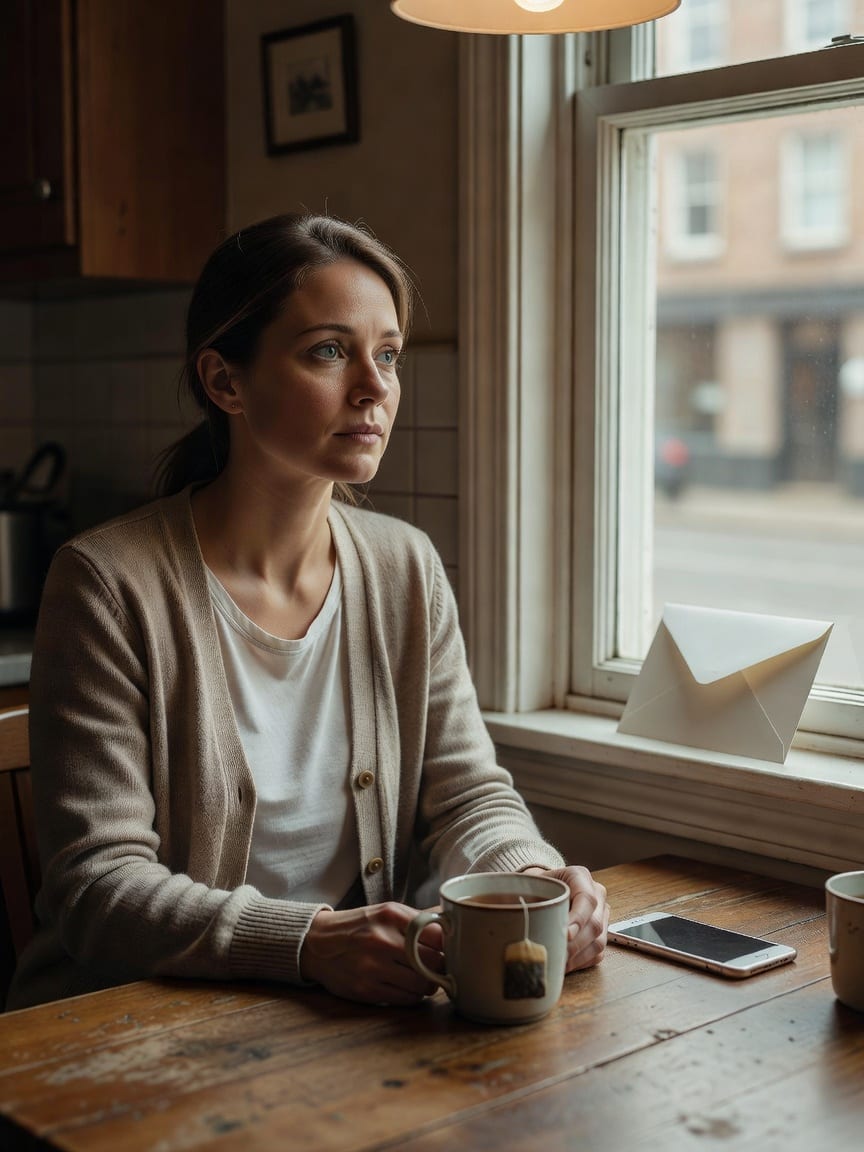
My taxi driver knew my name before I spoke, then apologized for the flight I was going to miss. I was arriving. The cab's plate was scrapped four years ago.
After a strange taxi ride, I received an unsettling birthday card addressed to me. Its return address listed 'Old Mill Road Field,' an empty lot where a mill once stood, and it was postmarked locally. The card arrived four months before my actual birthday, sparking a cold dread I couldn't ignore.
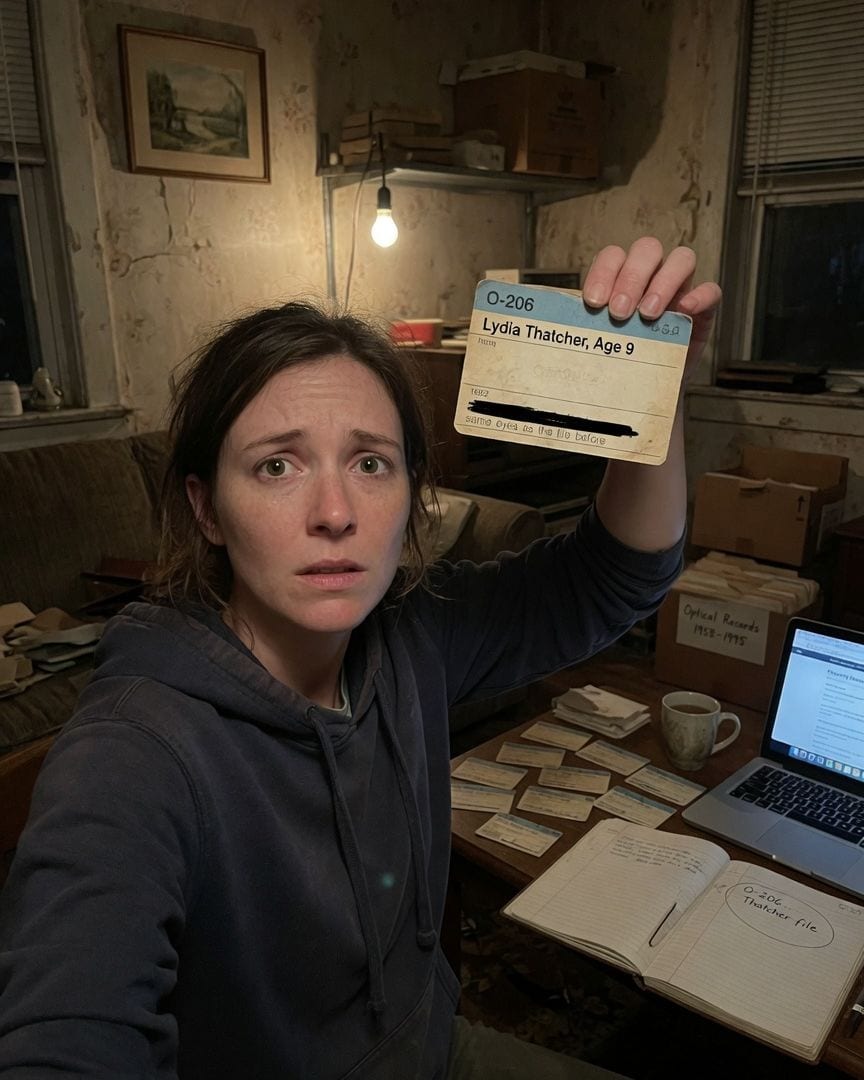
My own optical card is dated 1962, with my name on it. I wasn't born until 1993.
Sifting through old patient files from my former optical practice, I found my own O-206 card. It had my name, Lydia Thatcher, and my current home address printed on it. But the card was dated 1962, decades before I was even born, and a redacted note mentioned 'same eyes.'
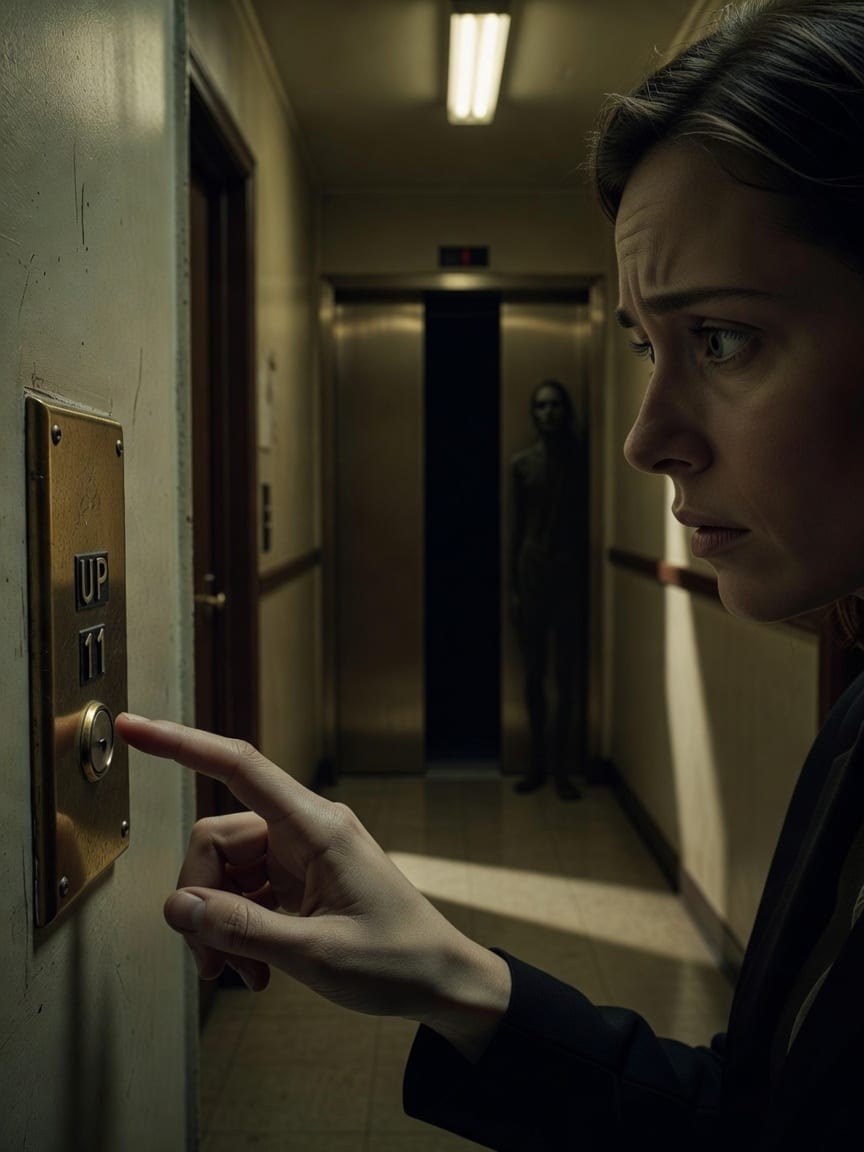
My doorman warned me not to take the tenth-floor lift on Saturday. The building's lift passed inspection last month. He seemed terrified that he'd said it.
My doorman's unsettling warning about the tenth-floor lift left me with a metallic taste of unease. I tried to rationalize it away, but then a birthday card arrived for me, five months early, from an impossible address. It was a site linked to unexplained disappearances, and a cold certainty began to settle in.
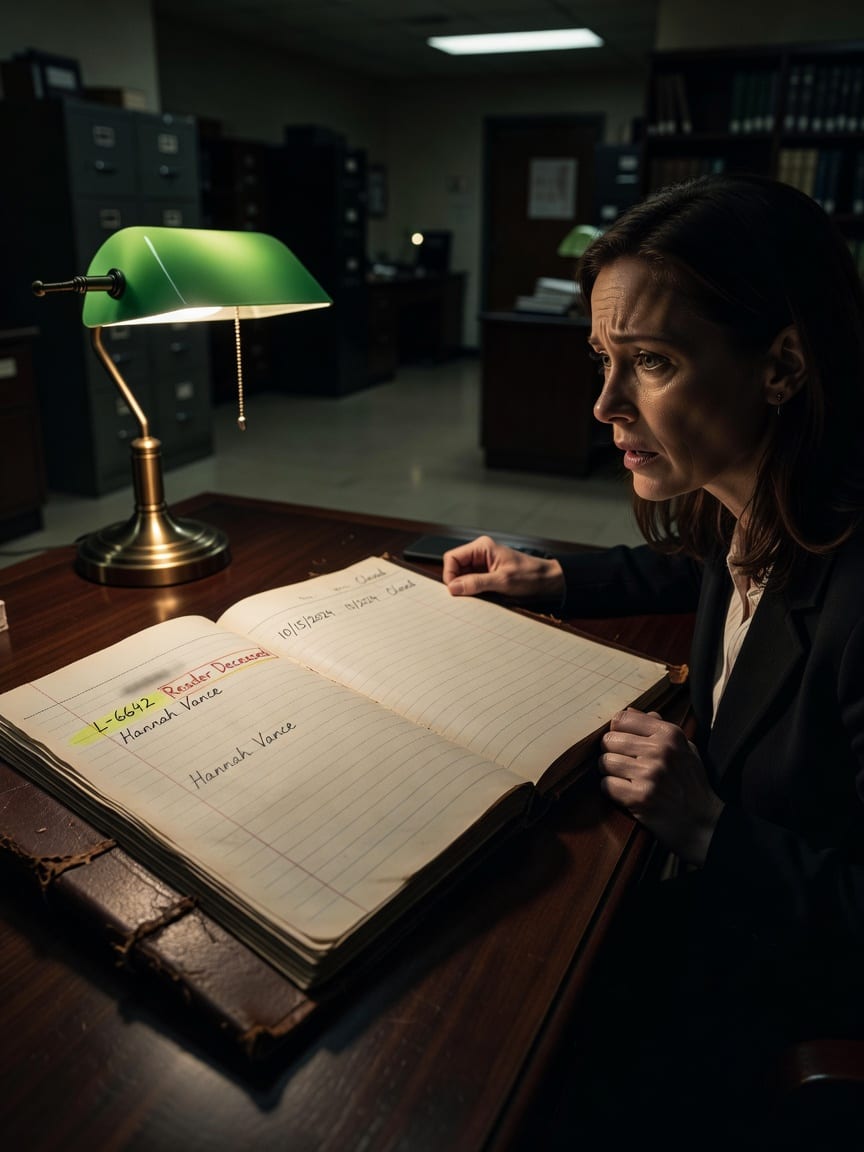
My library card number L-6642 was issued to me at seven — and the ledger shows that number has marked a reader 'deceased' every twelve years since 1949.
Returning my late father's library card to the old town library felt like a small act of closure. But the senior librarian's ancient ledger revealed a chilling pattern of 'reader deceased' entries tied to specific card numbers and borrowed books. My unease turned to cold dread when I secretly found my own name penciled in, marked for a future 'reader deceased' entry.
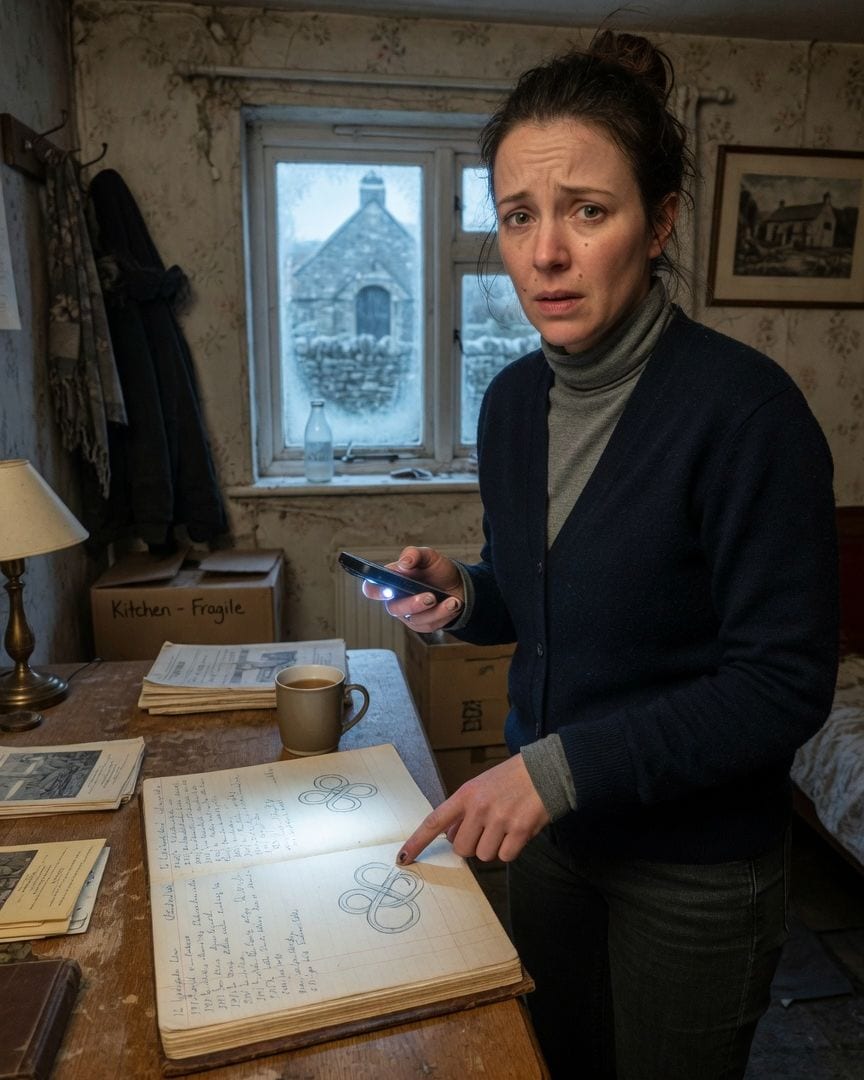
Milk appears daily by my lychgate. The dairy closed in '79. My address is handwritten into their old delivery book, starting the day we moved in.
Moving to Blackwood Creek, I loved the quaint charm, especially the unexpected morning milk delivery to my lychgate. But when I mentioned it to Eleanor at the village shop, her smile froze. She told me Willow Creek Dairy closed decades ago, in '79.
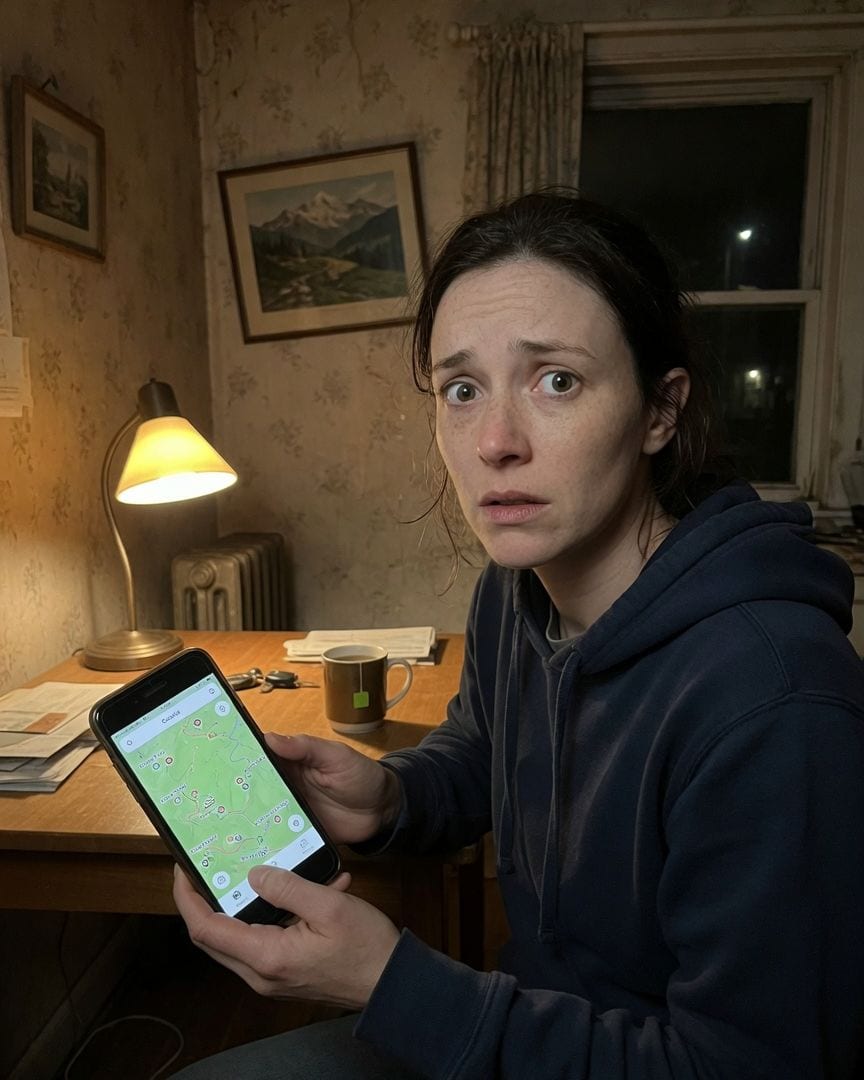
My hiking app scrubbed the hill's name from the map, on a phone that's been in airplane mode for two days.
I just moved to town and hiked a local hill, 'Cathan Tor,' according to my phone's app. But when I mentioned the name to the mechanic, he froze, dropped his wrench, and whispered, 'Don't say that name, Colette.'