My doorman apologized, by name, for an elevator accident that hasn't happened yet. The tenth is Saturday.
It was a Wednesday morning, just before eight, when Errol stopped me. I'd lived in the building for six years, architect by day, and Errol, our doorman for over a decade, was a fixture.
He was fifty-two, dependable, and usually had a wry smile. Not that morning. He blocked my path to the elevator, his face pale and drawn.
"Miss Feng," he started, his voice barely a whisper, not his usual booming greeting. "I'm so sorry. I really am."
I paused, confused. "Sorry, Errol? For what?"
He wrung his hands, a gesture I’d never seen from him. "Please, just… don't take the lift on the tenth. Not on Saturday. I just… I had to say something."
My brow furrowed. The tenth. Saturday. The elevator had passed its monthly inspection just last week; I'd seen the certificate myself. "Errol, what are you talking about? Is something wrong with the lift?"
He shook his head, looking past me, as if seeing something I couldn't. His eyes were wide with a fear that wasn't for himself. "No, Miss Feng. Nothing's wrong with the lift. Not yet. I just… I just knew it.
I don't know how, but I knew. Please. For your own good."
He looked utterly distraught, genuinely terrified. I tried to rationalize it. Maybe he’d had a vivid nightmare. Or perhaps he was under a lot of stress.
But the specificity – my name, the tenth floor, Saturday, the lift – and the raw, unadulterated fear in his eyes, made it impossible to dismiss entirely.
The cold knot of unease began to form in my stomach, coiling tighter with each glance he cast at the polished elevator doors. I nodded slowly, a forced smile on my face. "Okay, Errol. I'll… I'll keep that in mind."
He just kept staring, silently pleading. I made a mental note to take the stairs, despite myself, feeling foolish even as the thought settled.
Saturday arrived, a bright, deceptively normal morning. I put on my running shoes, grabbed my keys, and headed out, feeling like an idiot for even considering Errol's warning.
The logical part of my brain screamed at me; taking eleven flights of stairs to get to the lobby was absurd. But as I reached the elevator bank, a shiver ran down my spine, an echo of Errol's terrified plea.
I turned, feeling a flush creep up my neck, and headed for the emergency stairwell.
I walked down, one floor at a time, the concrete steps a dull counterpoint to the hum of the building. The tenth floor landing, usually silent, had a faint, muffled sound.
Not the mechanical whir of the elevator, but something else. A distant shout, quickly cut off, then a hushed, urgent murmur. I paused, my hand on the cold metal railing, straining to hear.
It sounded like it was coming from an apartment, not the lift shaft.
Later that afternoon, a text from a neighbor confirmed it. Mrs. Albright, who lived two doors down from me, wrote that there'd been an "awful accident" on the tenth floor.
An elderly resident, Mr. Henderson, had suffered a severe, inexplicable fall from his apartment window. "Tragic," she'd written. "Just tragic."
The words echoed Errol’s, 'don't take the lift on the tenth,' but the 'accident' had nothing to do with the elevator itself. My unease tightened, twisting into a deep, sickening dread.
I couldn't shake it. The next day, I found myself drawn back to the tenth floor, a desperate need to understand overriding my rational fears.
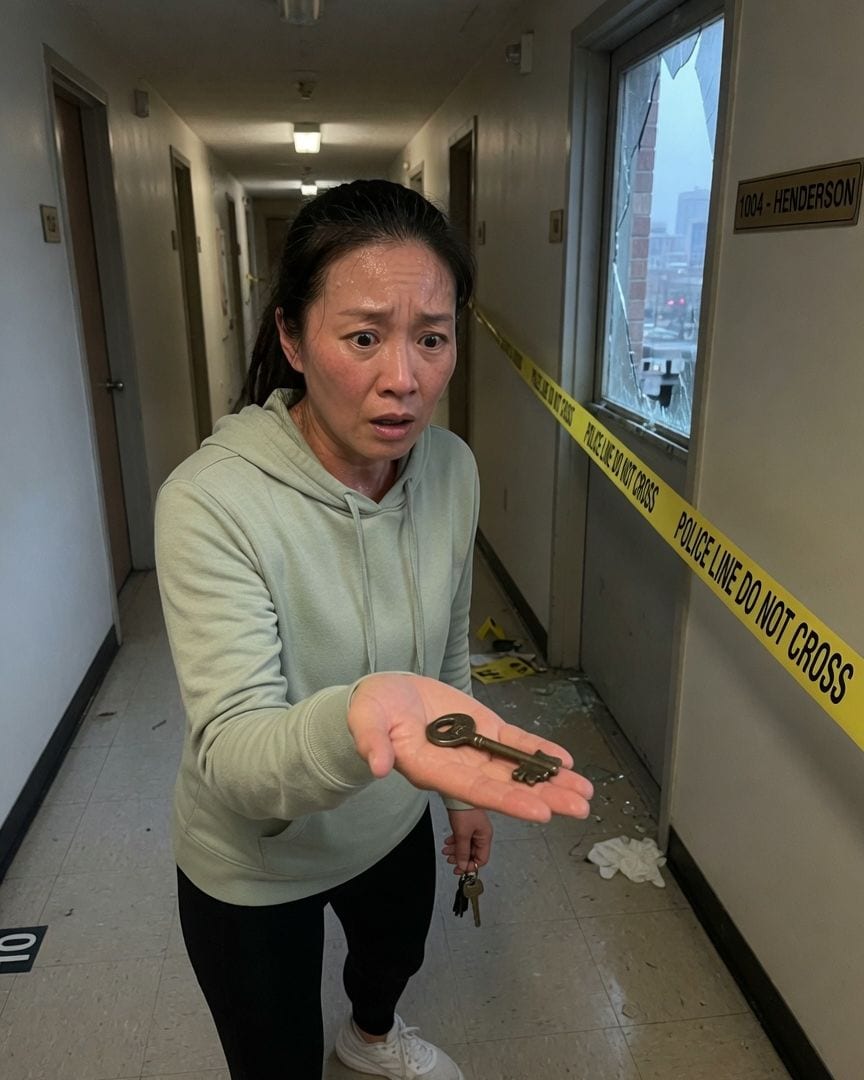
The hallway was hushed, strangely devoid of activity, but the area around Mr. Henderson’s apartment was cordoned off with yellow tape, a silent testament to the horror that had unfolded.
I stood there, pretending to check my phone, scanning the floor. Near the base of the shattered window, where forensics had likely been focused on the exterior, something glinted in the faint light. It was small, tarnished, and antique.
Overlooked by the initial responders, I imagined. My heart hammered against my ribs. I knelt, pushing past the tape, my fingers brushing against the cold tile.
I picked it up. It was a key, heavy and oddly shaped, like something from an old chest. The metal was dark with age, but as I turned it in my fingers, I caught a faint glint on its surface.
There, barely visible, etched into the tarnished brass, were two initials. 'I.F.' My own initials. The world tilted.
I stood in the hushed hallway of the tenth floor, the faint wail of an emergency vehicle rising from the street below, a chilling counterpoint to the silence. My gaze was fixed on the small, tarnished key in my palm.
The metal was cold against my skin, and my initials, 'I.F.', were barely visible, scratched into its surface.
The doorman's warning, the accident, and now this personal, impossible object — it all converged into a sickening certainty: this wasn't just a premonition. It was a message, and it was meant for her.
I went straight to Errol. He was at his post, wiping down the already gleaming brass of the lobby door. As soon as he saw me, his shoulders slumped. He avoided my gaze, polishing harder.
"Errol," I said, my voice low, holding out the key. "What was that warning about? And this."
He froze, his rag still. Without looking up, he said, "Miss Feng, please. Just forget it. It was… a mistake. I don't know what I was talking about."
"A mistake?" I pressed. "Mr. Henderson. The tenth floor. And this key, with my initials on it, found right there." I held it closer. "You knew something was going to happen. You knew it involved the tenth floor. Why me?
Why my name?"
He finally looked at me, and his eyes were full of a fear that made my own stomach clench. "I don't know, Miss Feng. I swear. I just… had a bad feeling. A really bad one. That's all.
Please, just forget it. For your own sake." His voice was hoarse, almost begging. He turned away, resuming his frantic polishing, effectively shutting me out.
I ignored his plea. How could I forget it? The key felt like a cold stone in my pocket. I started digging. My first stop was online, searching for news archives related to my building.
I typed in the address, then keywords like "accident," "fall," "incident." The results were vague at first, fragmented mentions in local papers from decades past. But a pattern began to emerge. "Unfortunate accident on residential property, Dec 12, 1972."
"Tragic fall from tenth floor apartment, April 3, 1988." "Building resident found deceased after unexplained incident, Jan 15, 2001." It wasn't always the tenth floor, but often, and the dates were spread out, but there.
My rational mind tried to find an explanation. Was it a structural flaw? Some kind of weird energy vortex? A serial killer who liked to make things look like accidents?
But the incidents were too disparate, too spread out over time, the victims too varied. No, this wasn't ordinary. I needed more. Newspaper clippings were too surface-level.
I needed deeper records, records that might link these 'accidents' to specific residents or reveal the key's origin. My search, therefore, led me to the city's historical archives.
If anyone kept meticulous records of every brick laid, every resident who moved in and out, it would be them.
I was hoping to find old building plans or resident registries, anything that might shed light on this recurring wrongness that now felt like it was personally targeting me.
The city archives were a sprawling, cavernous building, smelling of old paper and dust.
I spent the better part of a day there, requesting access to the building's original plans, early resident lists, anything pre-dating the 1970s, when my building was constructed.
Abigail Sheppard, the archives specialist assigned to me, was patient and efficient, guiding me through the maze of microfiches and brittle ledgers. The fluorescent lights hummed, casting a sterile glow over the silent reading room.
As I sifted through another reel of faded microfiche, my eyes straining to read the tiny script, a prickle crawled up the back of my neck. That familiar, unsettling sensation of being watched.
I slowly lifted my head, my gaze sweeping across the quiet room.
In a corner, by a towering shelf of bound volumes, sat an older man. His hair was sparse and white, his suit impeccably tailored. Simon Thornton, I’d heard Abigail call him when she'd helped him earlier.
He wasn't overtly staring, but his eyes, an unnervingly calm shade of grey, were fixed directly on me. There was a faint, unreadable expression on his face, not hostile, not curious, just… observational.
He didn't look away when I met his gaze, simply held it, a strange serenity about him. A sudden chill swept through the room, raising goosebumps on my arms, though the air conditioning seemed constant.
I held his gaze for a long moment, then, feeling an irrational fear creep in, I looked back down at the microfiche, pretending to be absorbed. When I looked up again, a minute later, he was gone.
The space where he'd been was empty, the chair pushed neatly under the table.
My heart was thudding. It was too fast, too quiet a departure. I told myself it was nothing, an old man who simply finished his work. Then, not five minutes later, my phone buzzed with an unknown number.
My fingers trembled as I answered.
"Isabella Feng." The voice was calm, measured, distinctly male, and unfamiliar. "You're digging in the wrong place. Leave it be."
The line went dead with a soft click. No threat, no anger, just a quiet, unsettling certainty. The call, combined with the unnerving presence of the watcher, confirmed it. My investigation was noticed.
I was no longer just a curious resident. I was being hunted. The archives, a place I thought safe, suddenly felt like a trap, the quiet hum of the lights now a buzzing menace.
My hands were shaking, but I wasn't going to stop. I found Abigail Sheppard organizing returned documents near the main desk.
She was a woman in her mid-forties, neat and composed, but as I approached, I saw a subtle tension in her shoulders.
"Abigail," I started, my voice lower than I intended. "I need to ask you something. Something... unofficial."
She turned, a polite smile on her face that didn't quite reach her eyes. "Of course, Miss Feng. What can I do?"
I hesitated, then decided to lay it all out. "I've been researching my building. My apartment building. There's a pattern of 'accidents.' Falls, sudden deaths, often on the tenth floor, sometimes on specific dates, stretching back decades."
I told her about Errol's warning, Mr. Henderson, the key. Then I mentioned the man, Simon Thornton, and the phone call. "Someone knows I'm here. Someone doesn't want me looking."
Abigail's face, usually so placid, grew visibly uncomfortable. Her eyes darted nervously around the empty reading room. "There are… oddities," she admitted, her voice dropping to a near whisper.
"In some of the oldest records, from the city planning department archives, before the current building was built on that site… there are references to a 'Ward 7.' An experimental sub-basement facility.
It was supposed to be sealed off, removed from all subsequent blueprints."
My blood ran cold. "Ward 7? What kind of facility?"
She shook her head, clutching a stack of files to her chest. "I don't know, Miss Feng. The details are sparse. Classified.
But it was there, beneath the foundation of your building, long before the first brick was laid for the apartments."
I pressed her, my heart hammering. "Errol's warning was specific. 'Don't take the lift on the tenth.' He said my name. And I found this." I pulled out the antique key. "With my initials.
Found on the tenth floor, after an 'accident' that was meant for me, but didn't involve the lift. Do you have anything? Anything at all that connects a name to these 'accidents' or to this Ward 7?"
Abigail's gaze fixed on the key in my hand, then back to my face. She hesitated for a long, agonizing moment, her breath catching in her throat. The silence in the archives stretched, thick and heavy.
Finally, with a deep sigh, she said, "There's one more thing. It's… not officially part of the city records. I shouldn't even have it."
She led me away from the main area, down a narrow, dimly lit corridor that smelled even more profoundly of age and forgotten things. We stopped at a heavy, unmarked door.
She produced a small, silver key from her pocket, unlocked it, and ushered me inside a cramped, windowless room filled with more shelves.
She pulled out a heavy, leather-bound ledger, its pages yellowed and brittle with age, the cover embossed with a faded, unreadable symbol. She placed it carefully on a small, dusty table.
"This," Abigail whispered, her voice barely audible, "is not supposed to exist anymore. It's an internal building ledger from before the city took over oversight. Before everything was digitized or 'lost.' Some of the entries are… disturbing."
She pointed to a section detailing a series of 'material acquisition' reports and 'resident designations' from the 1970s. The script was elegant, a hand-written cursive from a bygone era. I scanned the pages, my finger tracing the faded lines.
The phrase 'tenth floor incident' appeared repeatedly, alongside dates, names, and cryptic notes. My breath hitched in my throat as my finger froze on an entry that made my blood run cold.
My finger trembled on the faded ink, tracing the elegant, antique script. Abigail Sheppard leaned closer, her breath catching in her throat. The entry read: 'Isabella Feng, 10th Floor, Dec 12, 1972. Property of Ward 7.'
I looked up, my eyes wide with a dawning horror that eclipsed my fear. This ledger was dated decades before I was born. My name, my exact name, was here, associated with an 'incident' and a mysterious 'Ward 7.'
Abigail's face was ashen, her gaze fixed on the page, then on me, a look of profound terror and pity. The implication was staggering, impossible.
My name isn't just known; it's a part of a historical record, a designation waiting to be filled, a role assigned before I even existed.
Abigail, now beyond fear, her composure completely shattered, explained it all in a hushed, trembling voice. "'Ward 7' wasn't just an old facility. It was an experimental one, built beneath your site in the 1940s.
A kind of research annex, funded by… private interests. They were exploring certain… consciousness patterns, residual energy fields.
They sealed it up after a series of 'disappearances' and 'unexplained phenomena' in the late 60s, just before the apartment building was constructed over it."
She tapped the old ledger. "This isn't a record of individuals, Isabella. Not exactly. It's a record of 'designations' for the facility's ongoing 'work.'
The names, including 'Isabella Feng,' are placeholders, markers for those who fit a specific profile the entity within Ward 7 seeks. The project, the research… it didn't end when they sealed it up. It continued, through the entity. It's… waiting."
My mind reeled. "Simon Thornton," I whispered. "The man watching me."
"He was one of the original project leads," Abigail confirmed, her voice barely audible. "A 'caretaker,' they called him. He somehow… sustained himself, and the entity's work, through the decades.
He's been here, watching, waiting for the next 'designation' to appear. You. The key you found is a master key to Ward 7. It's meant for the next designated individual to access it. To… complete the process." She shivered.
"The entity 'knows your name' because it has been tracking the patterns, waiting for someone to perfectly align with the 'Isabella Feng' designation for its next 'activation.' The 'accidents' on the tenth floor… those are merely side effects.
Or early stages of the process, attempts to draw the designated individual closer."
I was the next target. That much was terrifyingly clear. I could run, but what good would that do? My name, my designation, was etched in an impossible ledger. It wasn't about the building; it was about me.
Instead of waiting to be drawn in, I decided I would confront it.
I returned to my building, the antique key heavy in my pocket. My hands shook as I descended to the deepest utility basement, a place residents were strictly forbidden from.
The air grew thick and cold, smelling of damp concrete and something metallic, like old blood and ozone.
I found the access panel Abigail had described – hidden behind a defunct electrical junction box, exactly where the oldest blueprints showed a 'maintenance access to sub-levels.' The key slid into the ancient lock with a soft click.
The panel swung open, revealing a sealed, descending stairwell, spiraling down into utter blackness.
I took a deep breath, clutching the key, and started down. The air grew colder, stiller, pressing against me. The faint sound of a low hum vibrated through the stone, a sound that deepened with every step.
Ward 7.
The space was vast, dimly lit by emergency lights that flickered with an unsettling regularity, casting long, shifting shadows. It was filled with strange, dormant machinery, enormous conduits that stretched into the darkness, humming with a faint, malevolent energy.
In the center, standing calmly amidst the rusted equipment, was Simon Thornton. His face was devoid of emotion, his eyes fixed on me, the same unreadable look from the archives.
He didn't try to stop me. He simply watched me enter, a faint, almost serene smile on his lips. "Isabella Feng," he said, his voice flat, echoing in the vast chamber. "You have arrived. The attunement process is almost complete.
Your designation is perfect. The entity has been waiting." He started to explain the 'attunement,' the 'designation,' the 'convergence' – a droning monologue of scientific jargon and chilling purpose.
I barely heard him. I ignored his words, my eyes scanning the chamber, remembering a detail from the old blueprints Abigail had given me – an emergency override panel, detailed in a forgotten corner.
It was just to my left, concealed behind a grime-covered plate. With desperate resolve, I lunged for it, my hand slamming onto the emergency purge button.
Alarms blared, a piercing, screeching sound that sliced through the humming silence. Red lights flashed, strobing violently across the cavernous space.
The ancient machinery groaned to life with a deafening roar, then began to tear itself apart, gears grinding, metal screaming as it twisted and fractured. Dust and debris rained down from the ceiling.
Ward 7 started to collapse around us, the ground shuddering violently.
"No!" Simon Thornton's voice, no longer calm, was drowned out by the chaos.
I raced back up the stairwell, my lungs burning, the sound of crumbling concrete and groaning metal echoing behind me. Each step was a frantic beat against the rising roar of destruction.
I burst out of the hidden entrance, slamming the access panel shut just as the stairwell behind it gave way, burying Simon Thornton and the entire facility beneath tons of debris.
The basement shook, then fell silent, save for the settling dust.
The building was evacuated due to 'unexplained structural instability' in the sub-basement. Authorities found no trace of a 'Ward 7,' only a massive, inexplicable collapse far beneath the lowest level.
My frantic, coherent account of a sentient building entity and a centuries-old caretaker was dismissed as trauma-induced delusion.
Errol, the doorman, caught my eye during the evacuation, his face streaked with grime and exhaustion. A look of profound relief and quiet sorrow passed between us, a silent acknowledgment of what we both knew.
He didn't say a word, just nodded almost imperceptibly. I was questioned repeatedly, but with no physical evidence other than the collapsed basement, my story held no weight.
I carried the bent, useless key with me, a cold, heavy reminder of the impossible truth.
I sold my apartment and moved far away, choosing a small, single-story house in a quiet town, avoiding anything that stretched too high into the sky.
I still keep the old, twisted key in a small, locked box, a physical anchor to the impossible truth I alone witnessed. No one believes my story, and I have learned not to tell it.
The knowledge of what I was, what I narrowly escaped, is a silent companion, a shadow that never quite leaves me. I survived, but a piece of me is forever marked, forever looking over my shoulder.
Sometimes, when I hear my name called unexpectedly, I still flinch.
If this one got to you
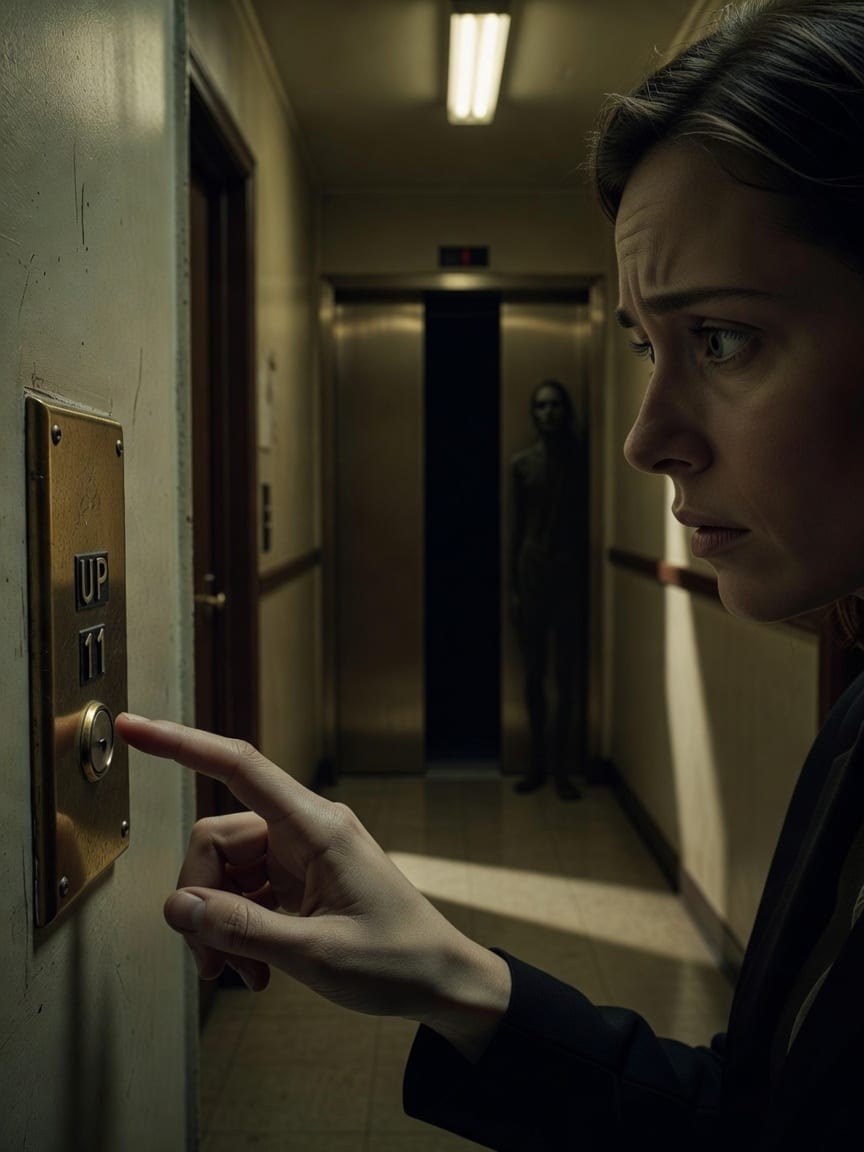
My doorman warned me not to take the tenth-floor lift on Saturday. The building's lift passed inspection last month. He seemed terrified that he'd said it.
My doorman's unsettling warning about the tenth-floor lift left me with a metallic taste of unease. I tried to rationalize it away, but then a birthday card arrived for me, five months early, from an impossible address. It was a site linked to unexplained disappearances, and a cold certainty began to settle in.
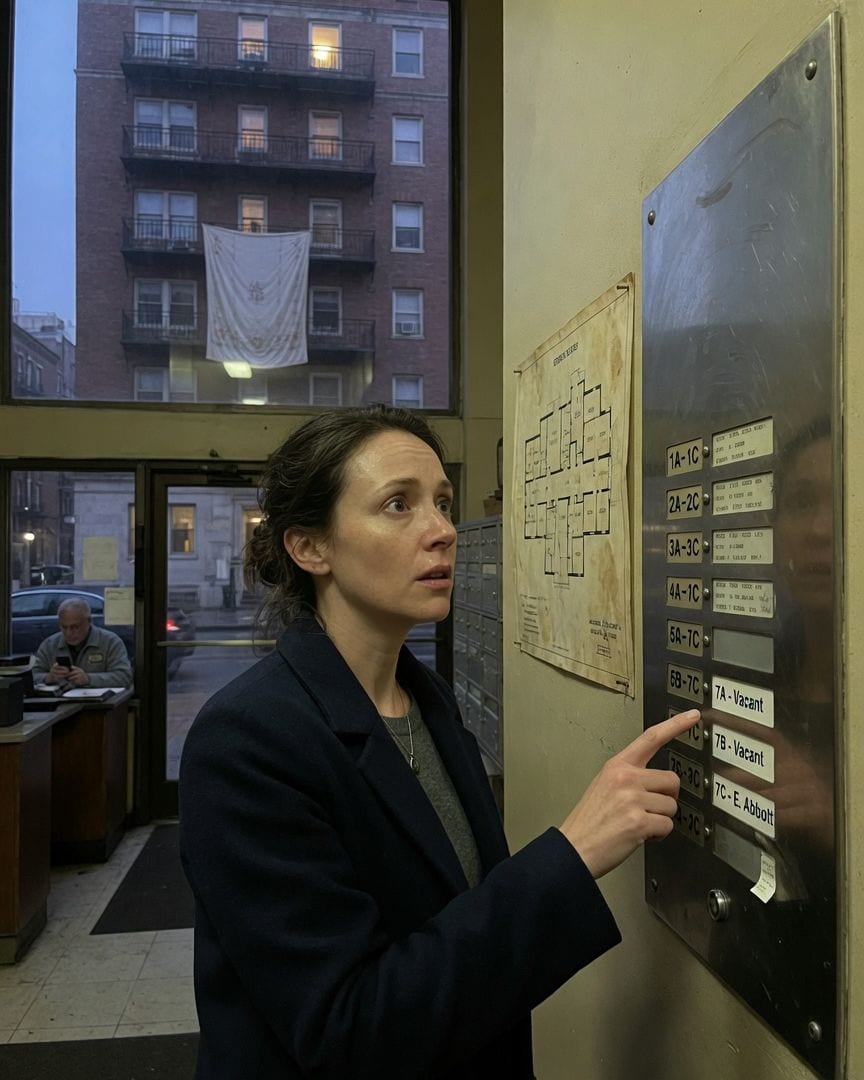
My building grew a seventh floor today, where only sky should be. On its darkest door, a nameplate reads 'E. Abbott'.
For three years, I've lived in apartment 3B of The Sterling Arms, a familiar six-story building. Every morning, I glance up at my window from the parking garage, a routine check. But this morning, my breath caught: a seventh floor, complete with balconies and a soft yellow light, now sat impossibly above the familiar roofline where only sky should have been.
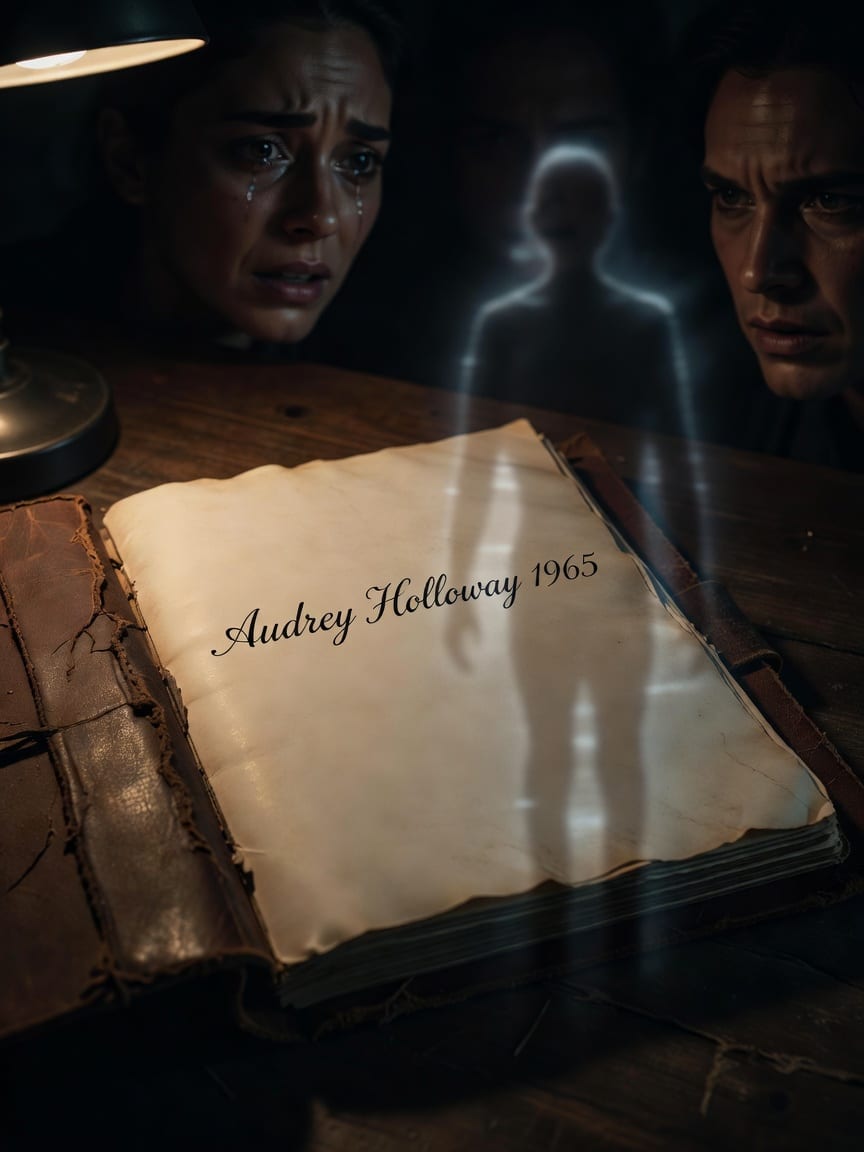
My own baby clothes arrived. Each tiny collar bore my name, embroidered in new thread. My mother swore she gave them away decades ago. The delivery note read: 'you'll need these again.'
A plain parcel arrived on my doorstep, containing my own baby clothes, freshly laundered and smelling faintly of lavender. My mother insisted she gave every piece away decades ago. But on the collar of a small white dress, my full name was newly stitched in an elegant script.
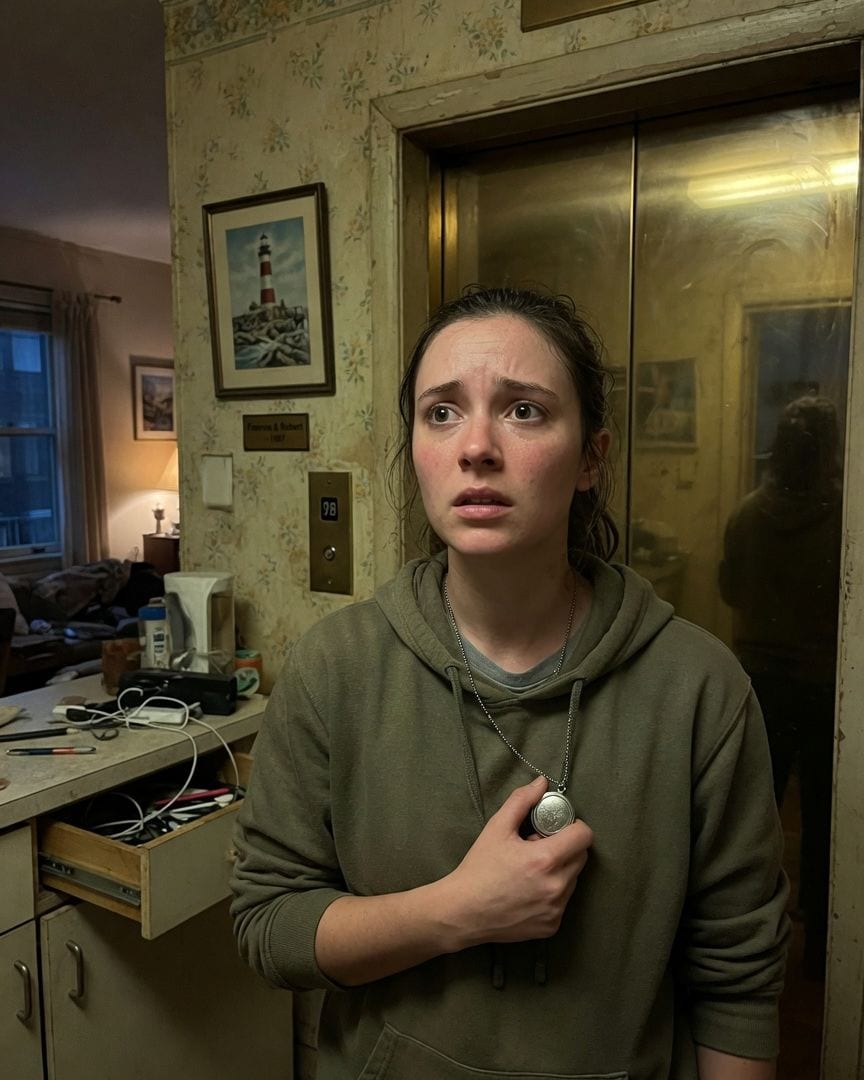
My aunt rode the elevator up, humming, at ease. She hadn't stepped in one since 1994, and told the story of why to anyone who'd listen.
My Aunt Frances stood beside me in the hospital elevator, humming a low tune. It felt deeply wrong; she hadn’t set foot in one since a traumatic incident in 1994, always taking the stairs. Now, after five days missing, she was completely at ease, denying she’d ever feared something so silly, her eyes holding an unsettling calm.
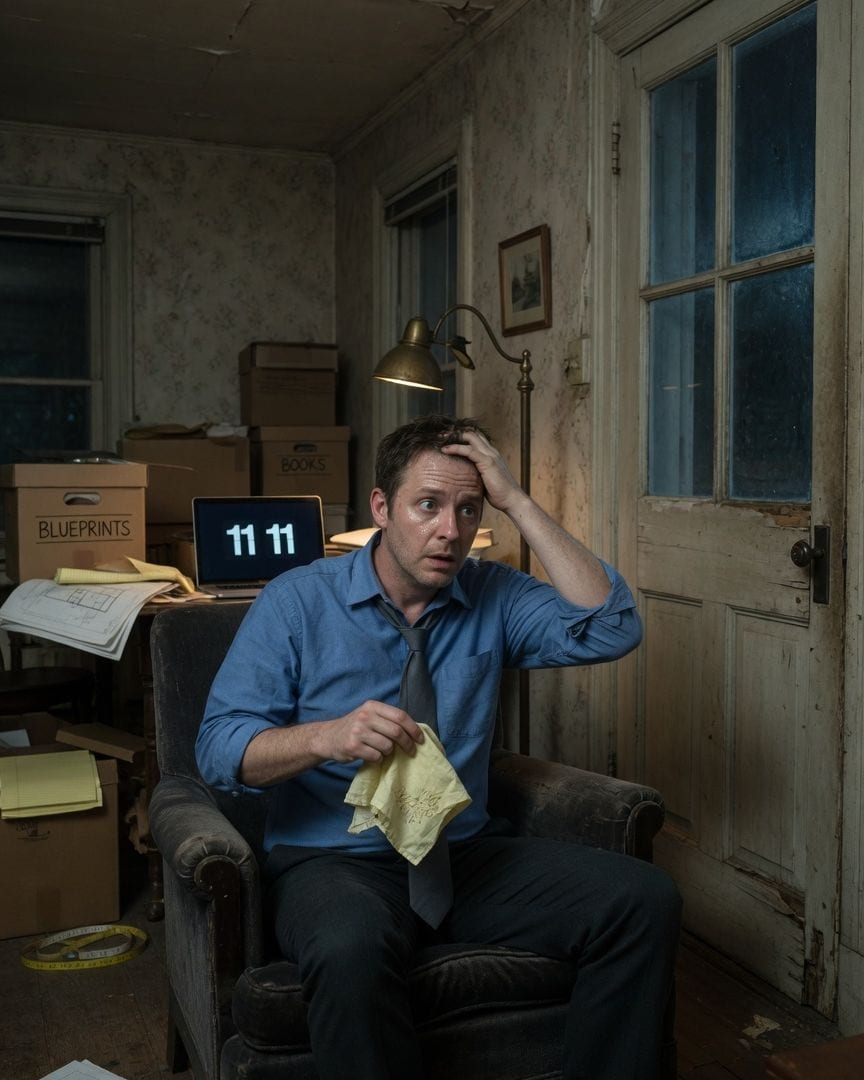
The boarded-up door in my study has twice swung open onto the balcony that was torn off this house years ago — iron railings back, and a woman at the rail with her back to me, watching a street that no longer runs below.
As an architect, I approach my great-aunt's inherited house with a rational eye, seeing its potential, not its ghosts. I knew the charming French door was boarded up because its balcony was removed back in 1953. But for two nights now, at 11:11 PM, those boards simply vanish, revealing the balcony restored and a silent woman watching an impossible street.
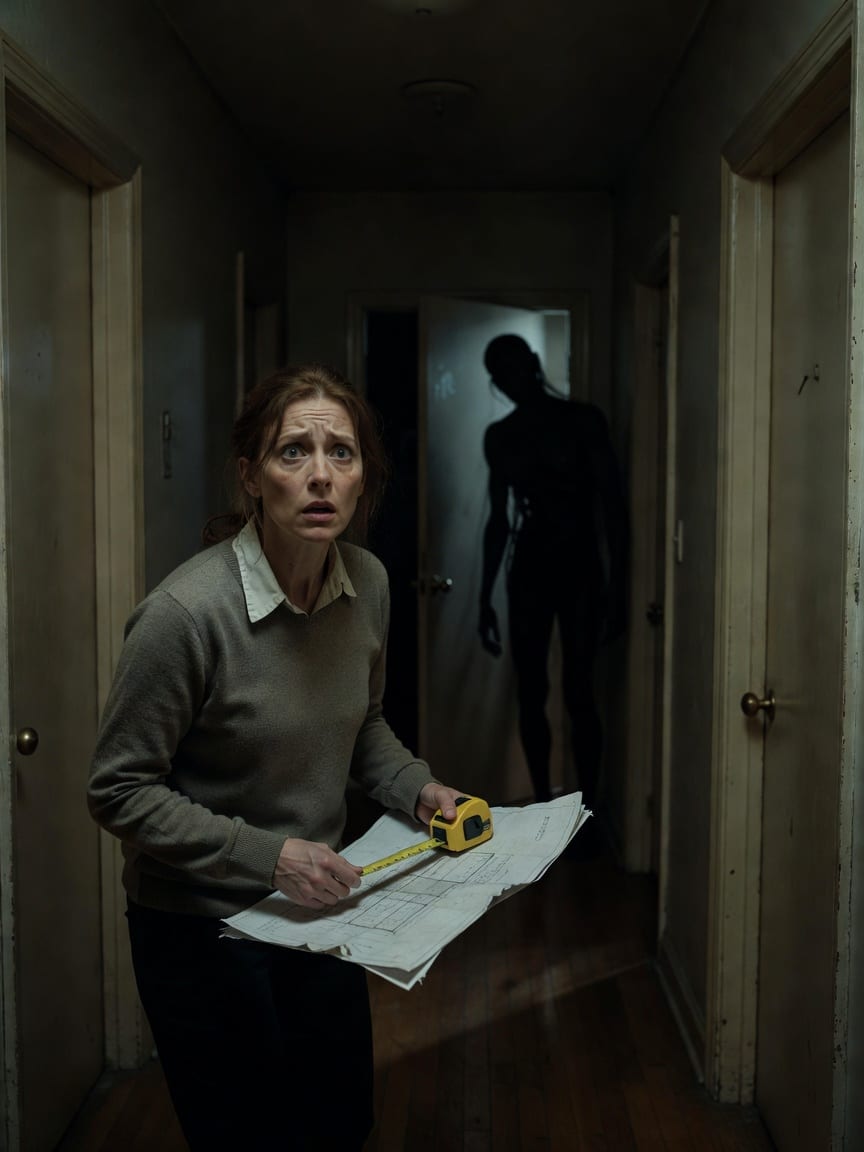
My front door has a dented gate and a dead hydrangea. I walked past it six times, trying to reach the corner shop just a hundred yards away. The pavement kept bringing me back to my own porch, and the shop's light never moved.
My morning started like any other, a quick walk to the corner shop from my home at Number 14, Elm Terrace. But after walking what felt like two minutes, I found myself back at my own front door, the shop no closer. I tried six times, faster and slower, but my street kept compressing, refusing to let me leave.