Every night at 3:33 a.m., my dashcam records the same empty street. But in each clip, the figure at the far end is one house closer to mine.
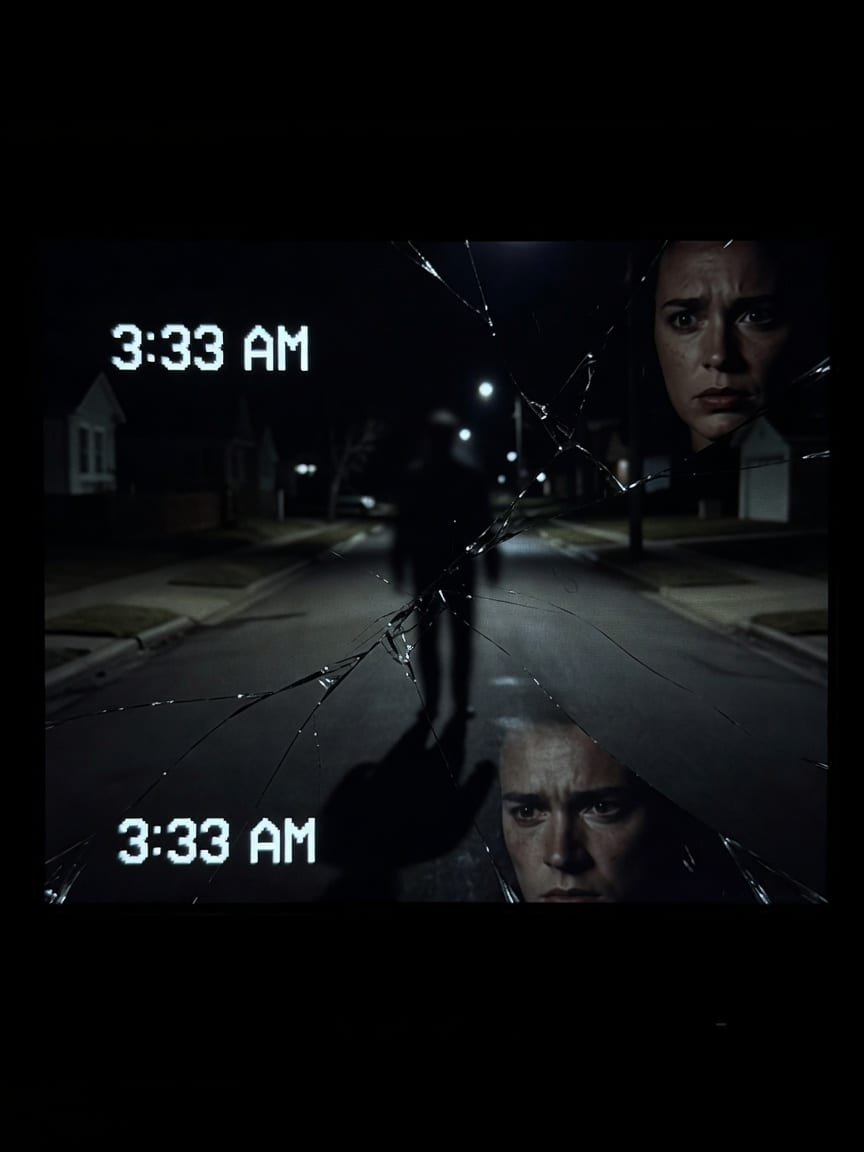
I scrolled through the dashcam footage on my laptop, a chill tracing my spine that had nothing to do with the night air.
For the past five days, every parking-mode clip was identical: a static shot of my quiet, empty street, timestamped precisely 3:33 a.m. But the figure, a blurred silhouette at the far end of the block, wasn't static.
In Monday's clip, it stood by the old oak, a dark smudge against the streetlights. Tuesday, it was past the Millers' fence, a little clearer, a little larger. Wednesday, it had reached the empty lot, a defined shadow.
And in tonight’s clip, it was two houses closer, just past the darkened porch of my neighbor, Samuel Barlow. My street, my empty street, and a figure that stood one house closer in every single recording.
It wasn't moving in the clips themselves; it was just there, a step closer, each new day.
I downloaded the clips, trying to find a mundane explanation. A trick of light? A reflection? But the figure was too consistent, too precise in its movement across the static frame.
It wasn't a jogger; its posture was unnervingly still, only its position changing from day to day. If you blinked, you'd think it was the same clip.
I zoomed in, pixelating the image into an abstract block, yet the dread remained. The lack of detail made it worse, somehow. It was just a shape, a presence.
I tried showing it to Samuel, a rational man who worked in tech, hoping he'd laugh it off. He squinted at my screen, his brow furrowed. "No, that’s… not right. It’s too identical. Like a cut-and-paste, but it’s clearly moving."
He suggested a glitch, a corrupted file, but when I showed him the original files, dated and sequential, his explanations ran out. He muttered something about atmospheric interference, but even he sounded unconvinced.
As I replayed the earliest clip, the one from Monday, something else caught my eye: a faint, almost erased house number, '17,' visible on a mailbox post that no longer existed on my block.
It was gone in subsequent clips, replaced by a row of dense hedges, like it had been scrubbed clean.
The 'Number Seventeen' detail gnawed at me. I lived at 21. There was no 17. Not anymore.
Desperate for a distraction, for any explanation, I dug out my old family camcorder, a relic from when I'd first moved in years ago, hoping to find some footage of the street's original layout.
Maybe the old mailbox was just on an older video. I fast-forwarded through a mundane clip of my unpacking boxes in the living room, alone, humming to myself.
The tape whirred, my younger self laughing at a clumsy moment as a box of books tipped over. Then, from the background, faint but unmistakable, a child's whisper. 'Claire,' it said, soft as a breath. And then, clearer, 'Number Seventeen.'
I froze, my thumb pressed hard against the pause button, the grainy image of my younger self unpacking on the screen. From the tiny speaker, the impossible voice echoed again in the silent room.
I replayed the camcorder tape, my heart hammering against my ribs. The 'Second Voice' was there, undeniable. My younger self laughed, and then, distinct, impossibly clear, the whisper. 'Claire. Number Seventeen.'
I tried to rationalize it – a TV playing in another room? A neighbor's window open? But I was alone. Always alone.
And the voice was too distinct, too close, like it was standing right behind me in that old recording. The mundane explanations died right there in the silence of my living room.
I pulled up old city records online, cross-referencing my current address with historical maps. Sure enough, my street, once 'Willow Creek Lane,' had been re-numbered decades ago.
The original 'Number Seventeen' would have stood exactly where the figure began its nightly procession in my dashcam. A knot tightened in my stomach, a cold, hard stone.
I expanded my search, delving into local archives, specifically looking for any unusual incidents tied to '17 Willow Creek Lane.'
It took hours, the digital files blurring together, but I found it: a brittle, yellowed newspaper clipping from forty years ago. 'Child Vanishes from Willow Creek Home.'
The article detailed the disappearance of six-year-old Iris Mitchell from '17 Willow Creek Lane,' last seen playing in her yard. No trace, no suspects, just a gaping hole in the community.
The house was eventually demolished, the lot overgrown, then redeveloped as part of the re-numbering scheme. My house now stood two lots down from where Iris's had been. Where the first blurry image of that figure appeared, night after night.
The unease morphed into a crawling dread. I started feeling watched. Not just from the outside, but inside the house.
My smart home hub, which usually only logged my own commands, recorded phantom 'door open' chimes at 3:33 AM, even though my actual doors remained locked, double-checked.
The little chime from the hub, usually so innocuous, started sounding like a mocking laugh in the middle of the night.
I received a garbled voicemail, mostly static, but with a faint, rhythmic clicking that sounded unsettlingly like the old camcorder's fast-forward, like someone was reviewing my own damn life.
Deciding I needed an expert, someone who knew the history of this place, I tracked down Vivienne Hughes, a local historian known for her meticulous books on the area's forgotten lore.
Vivienne, a sharp-eyed woman with a kind but reserved demeanor, listened patiently as I recounted the dashcam footage and the camcorder voice. When I mentioned 'Willow Creek Lane' and Iris Mitchell, Vivienne’s composure cracked, just slightly.
Her hands trembled as she poured tea, the teacup rattling against the saucer.
"Some things are best left undisturbed, dear," Vivienne said, her gaze drifting out the window towards the old part of the street, towards where Number Seventeen used to be. "Especially when they… when they start to call your name."
The hair on my arms stood on end. Vivienne knew. She knew something.
I pressed Vivienne, showing her the dashcam footage on my phone, the figure a pixelated ghost moving across the street. Then I played the chilling 'Claire, Number Seventeen' whisper from the camcorder tape.
Vivienne visibly blanched, her face going a shade paler. "This is… worse than I thought," she murmured, her voice thin, barely a whisper itself. "After Iris vanished, her parents… they were desperate.
Grief can make people do terrible things, unthinking things. They heard about this local oddity, a public access TV channel. It was called 'The Willow Creek Echo'." Vivienne paused, collecting herself, taking a slow, shaky breath.
"People said it could… echo lost things. They used it to broadcast pleas, Iris's name, her picture. Hour after hour. They thought they could call her back." I stared, the pieces beginning to click into place, a horrifying mosaic.
"The channel that uses your name?" I asked, remembering Vivienne's earlier words. Vivienne nodded slowly, her eyes wide with a fear I now understood. "Yes. It was experimental, barely legal. Shut down quickly, the town council caught on.
But the legend was… it wasn't just for calling out. Sometimes, it called back." The figure on the dashcam, the voice on the tape – it wasn't a ghost, not in the traditional sense.
It was a distorted echo, a signal reaching out. "Iris's parents," I whispered, the words catching in my throat, "they tried to bring her back. And something answered." Vivienne closed her eyes briefly, a shudder running through her.
"Something always answers, Claire. Always. And it remembers who opened the door." The mundane explanations were dead, truly dead. This was real. Checkable. And it had found me.
Vivienne, panicking now, urged me to stop, to let it go. "You don't understand, Claire. The channel wasn't just for calling out. It was a conduit.
It was said to connect with anyone who was, shall we say, 'aligned' with the original loss. And once it found a connection, it would try to draw them in. Replace them."
She hurried to a dusty bookshelf, pulling down an old, unlabeled VHS tape, the label long peeled away to leave just a dark, blank surface. "I found this years ago in a box of old community donations.
It's from 'The Willow Creek Echo,' recorded shortly after Iris vanished. The only surviving recording I know of." She slid it into an ancient VCR, its gears grinding, the screen flickering to life with static.
A child's crude drawing of a house appeared, just for a second, then vanished. Then, an image slowly resolved through the grain: a child's face. My breath caught. But it wasn't Iris.
It was a child Vivienne had never seen before, with wide, unnervingly familiar eyes. A distorted voice, the channel announcer, crackled from the speakers: 'Number Seventeen. We are calling you.'
Vivienne turned to me, her face ashen, paler than I'd ever seen it. "The channel uses your name, Claire. Not Iris's.
And the face on the screen…" She pointed a trembling finger at the grainy image, at the wide, familiar eyes. "It looks exactly like you did as a child."
The revelation hit me like a physical blow. Not Iris. Me. The figure, the voice, the channel – it was all connected to me.
Vivienne explained that 'The Willow Creek Echo' was more than just a broadcast; it was an accidental resonance chamber.
Iris's parents, in their grief, had opened a door, not just to Iris, but to the very concept of loss and echo.
The channel, instead of bringing Iris back, began to 'echo' outwards, seeking out those who, like me, lived on the re-numbered land of 'Number Seventeen' and possessed a similar 'resonance' – a childhood image, a name.
"It's not trying to call Iris back anymore," Vivienne whispered, her voice raw. "It's trying to call you in. The figure moving closer in your dashcam? That's the channel's signal strengthening, trying to bridge the gap between worlds.
It wants something from you, Claire. Or it wants to replace you. To fill the void." The dread solidified into a horrifying coherence. Every clue, every impossible detail, now clicked into a terrifying pattern.
The channel was a hunger, an insatiable void, and I was its current target. It didn't want Iris; it wanted a proxy, a new vessel for the echo of what was lost. My name. My face.
I stood there, terrified but fueled by a cold, rational anger. I knew what I had to do. Vivienne had mentioned the channel often broadcast on an unusual, low frequency, one that old, specific equipment might pick up.
I remembered an old, dust-covered radio in my basement, a relic from the house's previous owner, a bulky antique with a myriad of dials, one specifically labeled 'Public Access.'
My hands trembled as I descended into the dim basement, the air thick with forgotten things, a smell of damp earth and decay. I found the radio, its chrome knobs cold beneath my fingers, caked in decades of dust.
Vivienne's old notes, hastily scribbled on a napkin before she’d bolted out of my house, detailed the frequency. My fingers shook as I tuned the dial.
Static crackled, then a faint, distorted child's voice began to whisper my name, 'Claire…' The familiar dread seized me, cold and sharp. But then, an impossible thing happened. The radio, which had no screen, flickered.
A ghostly, grainy image began to resolve on its dusty face, superimposed over the static: my empty street, and the figure from my dashcam footage, now standing directly at my front door.
The impossible object, examined up close, was real, dated by the 3:33 AM timestamp glowing faintly in the corner of that ghostly image. The ordinary explanation died for good. The channel wasn't just broadcasting; it was a conduit, a portal.
The figure was not just a recording; it was trying to cross over. Into my house. Into me.
With a primal scream, a sound torn from my gut, I grabbed a heavy wrench from a nearby toolbox and brought it down on the radio, smashing the dial, shattering the glass, severing the connection with a deafening crackle of dying static and a final, garbled shriek that wasn't quite human.
The dashcam clips stopped. The 3:33 AM anomaly vanished from my smart home logs. The voice on my old camcorder tape was gone, replaced by the mundane sounds of my own past, a younger me laughing innocently.
The house felt quiet again, too quiet, as if holding its breath.
I sold the house a month later, unable to shake the feeling that a piece of the street, a piece of the channel, still clung to the very air, an invisible film over everything.
I never told Samuel the full story, only that I'd found 'something wrong' with the house, something that couldn't be fixed.
Vivienne Hughes, after confirming the quiet on the street, quietly vanished from my life, perhaps too shaken by the truth she'd guarded for so long.
The immediate dread was gone, replaced by a quiet, unsettling certainty that some doors, once opened, could never truly be closed.
I live in a new town now, in an apartment overlooking a bustling city street. No dashcam, no old radios. Just the comforting noise of traffic and neighbors. But sometimes, late at night, a familiar unease creeps in.
I find myself idly flipping through channels on my new, smart TV, past the endless streaming services, past the news, past the infomercials, always pausing for a moment on the local public access channels, just to make sure.
I tell myself it's just a habit, a compulsion, a final check. One night, while flipping channels, I hear a faint, distorted whisper from a black screen on Channel 17: 'Claire...'
If this one got to you
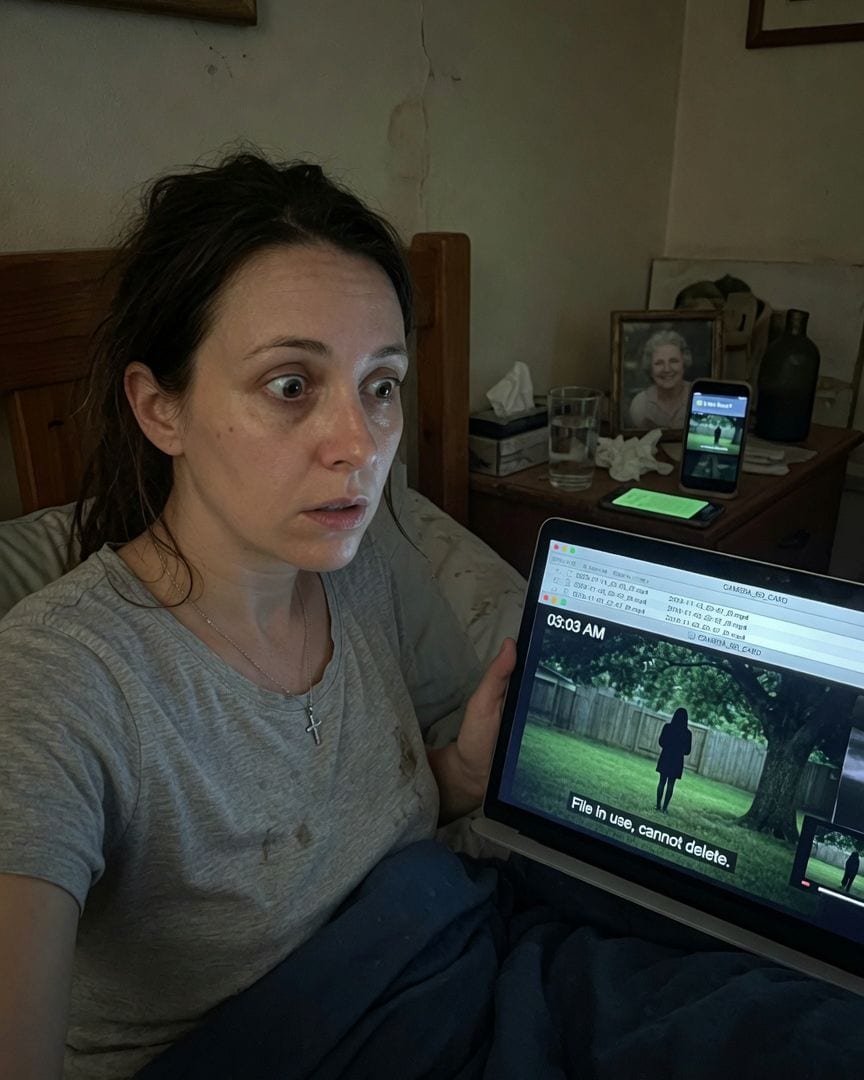
My security camera emailed a clip at 3:03am: a woman stood in the garden, back to the house. The subject line read 'Is this Mum?' My mother died in March. I can't delete the file.
My security camera sent an alert at 3 AM: 'Is this Mum?' But my mother, Constance, died in March. The grainy clip showed a woman in the garden, perfectly still, her back to the camera. The impossible question coiled a sick dread in my gut.
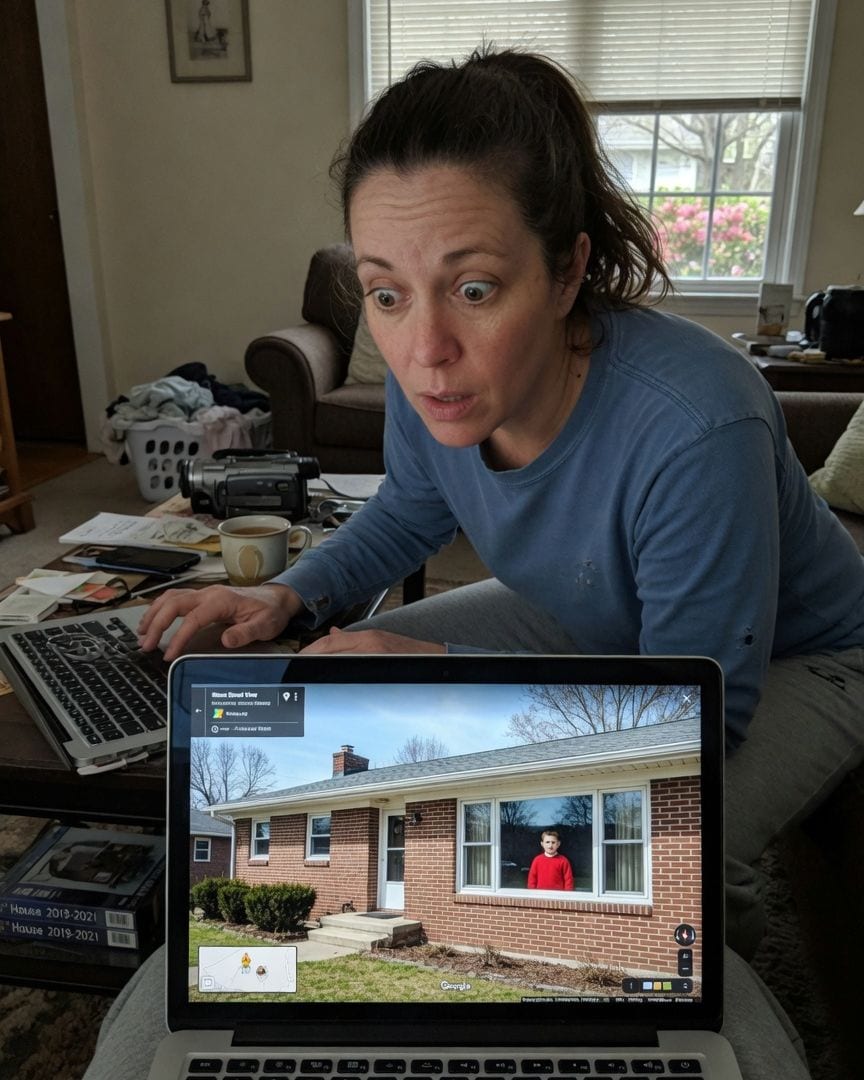
My Street View shows a boy in our window. That room's been empty and locked for months, we have no son, and he's gone if you drag the camera.
I was idly scrolling Google Maps, admiring the spring flowers on my street, when I paused at our house. In the empty, locked front bedroom window, a small boy in a bright red jumper stared out. We have no son, and that room has been storage for two years. He simply vanished from the Street View image.
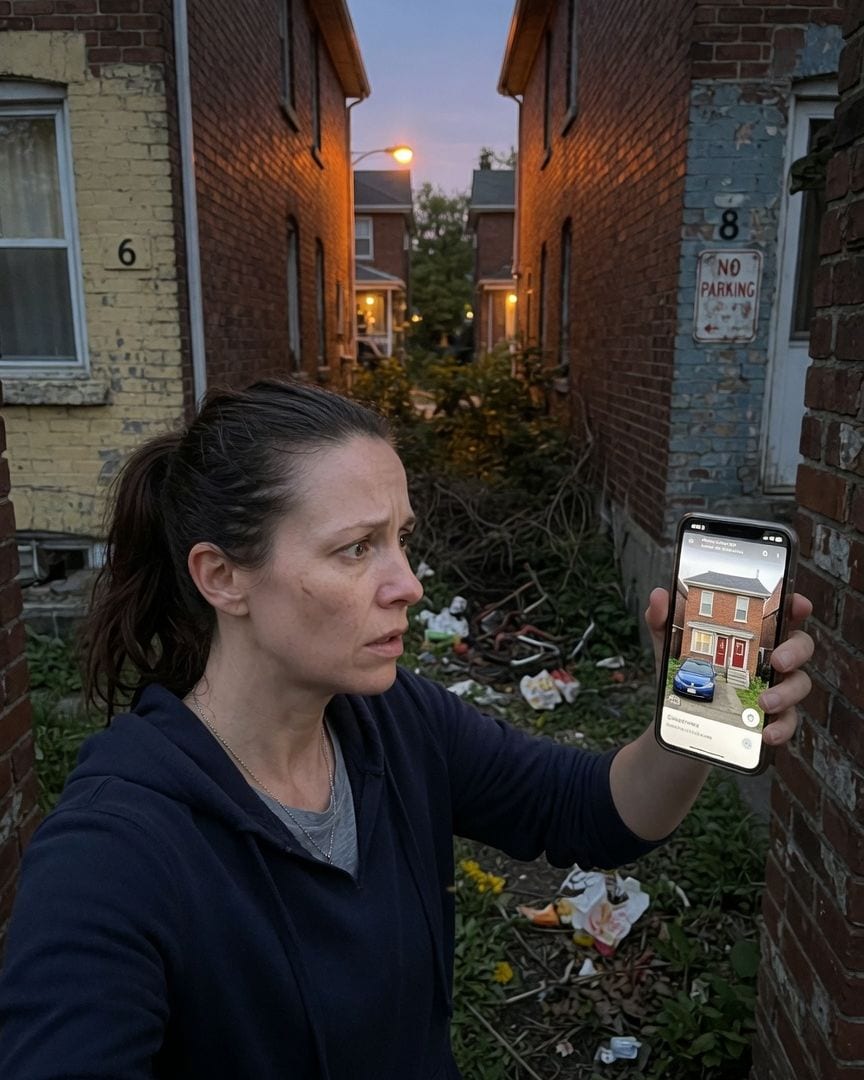
My childhood street's online map showed a number 7 house. I drove over that night. There is no number 7, just the ginnel I grew up with.
Scrolling Google Street View of my childhood neighborhood, I found an impossible house. Between my old house and number 6, where only a narrow ginnel should be, the screen showed a fully formed number 7. It had drawn curtains, a freshly painted door, and a blue car dated 'last month,' yet every other map showed an empty gap.
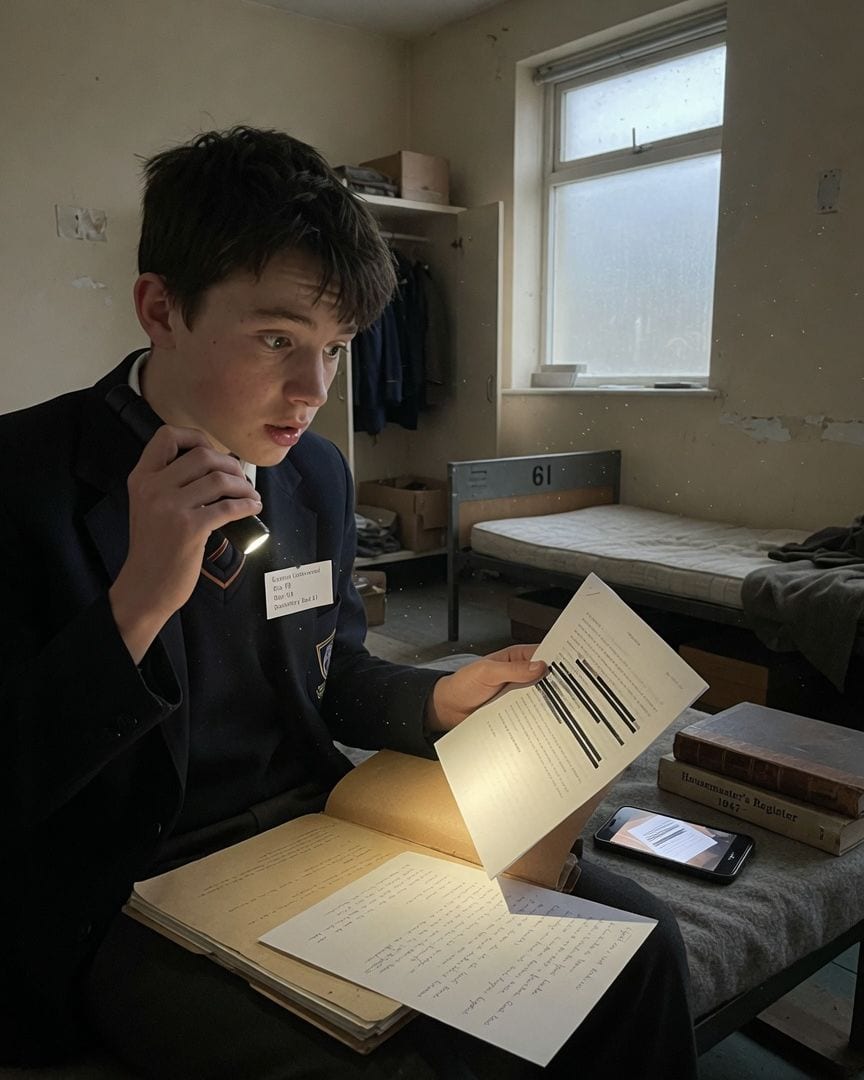
My boarding school bed number was 61, and the archive shows a boy assigned it every eight years since 1947, each leaving mid-term with the bed 'to remain made up'.
I found my matriculation card, listing me as 'Boy 61, Dormitory Bed 61.' Later, an old ledger revealed every boy assigned that bed since 1947 left mid-term, with an unsettling note: 'bed to remain made up.' Our housemaster’s recent scribble, 'as the others,' only deepened the dread around my own assigned bed.
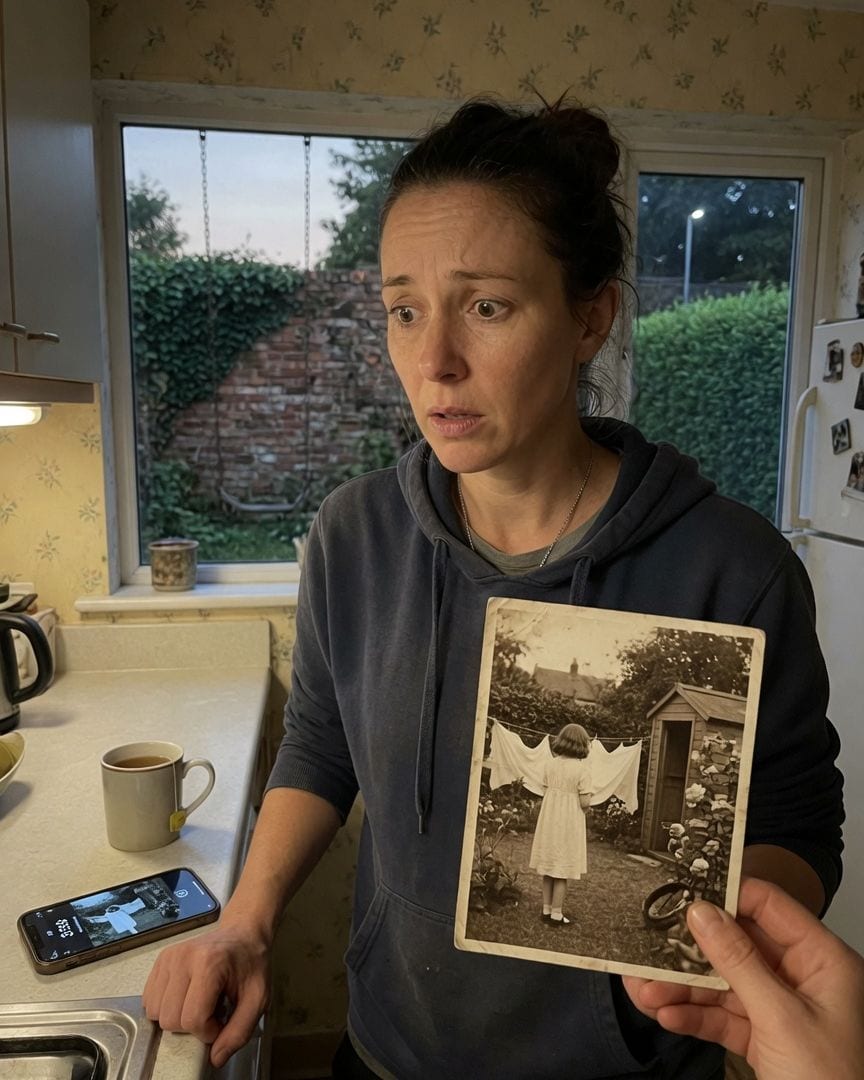
My trail camera catches a girl in a nightdress on my lawn, but the garden around her is wrong: a privy, a mangle, washing lines.
Every morning, my trail camera sends routine alerts, but one day, it showed a girl in a white nightdress standing on my lawn. What truly stopped me was the garden itself: where my trampoline should be, there were laundry lines, a dilapidated privy, and a rusted mangle. These impossible structures appeared in the footage, yet my yard remained exactly as it had always been.
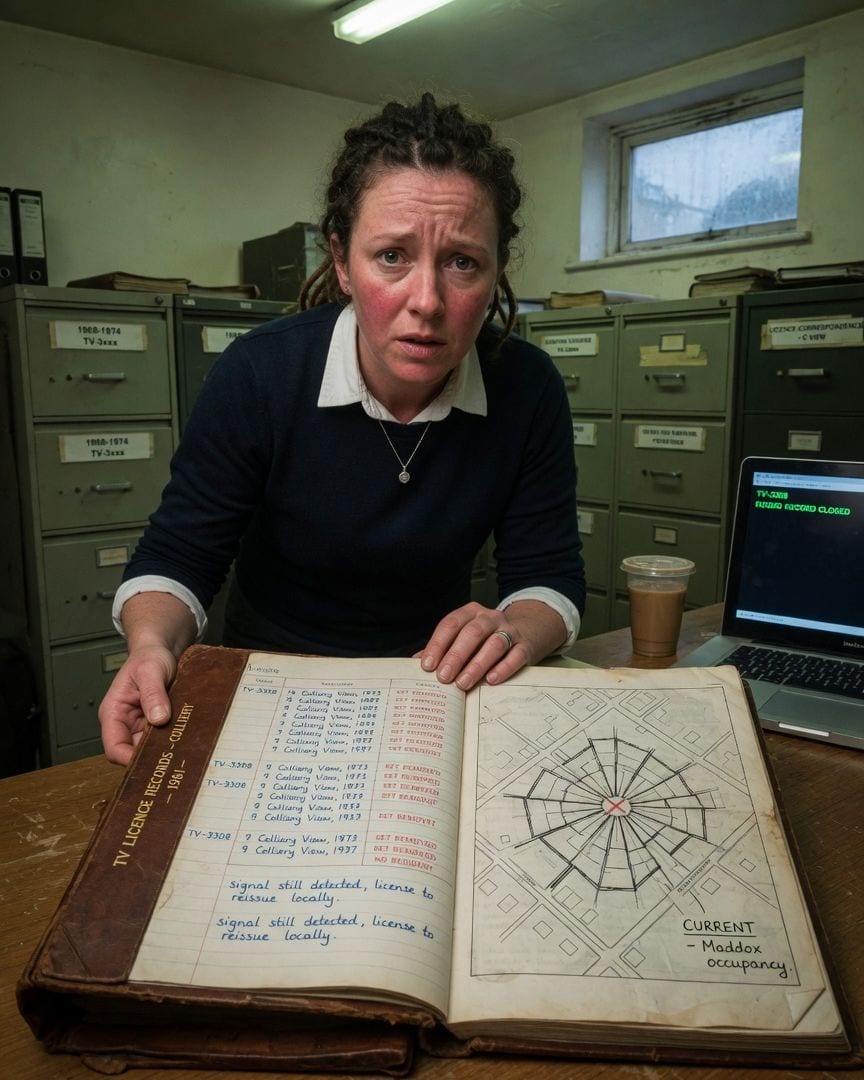
My TV license records showed a strange pattern of signals detected from sets removed decades ago, centered on my house.
I'd just settled into my new home on Colliery View, expecting routine paperwork. Instead, I discovered old records for my TV license contained a chilling entry: a crude, unsettling geometric diagram, not of a television, but drawn directly over my own house.