My exam hall had forty desks. The system printed forty-one candidates, and desk 41 held a completed paper in an aisle I know I left empty.
The fluorescent hum of the university sports hall always made me feel hyper-aware. Forty desks, precisely ten rows of four, laid out for the final exams.
I’d walked the grid, counted each one aloud, double-checked the seating plan against my mental map. An empty aisle ran down the far side, clear as day. Everything was precise, controlled. That was the point of invigilating: order.
Later, on results day, the system printed the candidate list: forty-one names. Joel Calloway, from IT, thought it was a software glitch, a phantom entry he’d quickly erase. But I had the physical record.
Desk 41, positioned exactly where the empty aisle should have been, had a completed exam paper. The candidate number, 7041-A, was never issued. I held the paper, the ink still fresh, a faint, metallic smell clinging to it.
The geometry of the room, so rigid, so certain, had simply… given. It was like my recurring dream, that dark, impossible corridor in the older campus buildings, always just beyond a door that didn't exist.
I couldn't let it go. Joel laughed it off, suggesting someone must have snuck in, but the sports hall was locked down tight the moment the exam started. No one went in or out.
I re-checked the exam attendance sheets, the invigilator logs. Nothing. No entry for a Desk 41, no signature for candidate 7041-A. I even went back to the hall, pacing the floor, mentally reconstructing the layout. Forty desks. Always forty.
Yet the paper was real. The handwriting was neat, a familiar student scrawl, but the content of the answers was… unsettling. Not gibberish, but strangely abstract, philosophical concepts presented as rote facts, as if they were universally understood principles.
"The recursive nature of observation creates the observed." And another: "Temporal displacement is a function of structural rigidity." It read like a thesis from another dimension.
Joel, humoring me, agreed to run the candidate number '7041-A' through the university's legacy systems, just in case it was an old code that had somehow resurfaced. He didn't expect to find anything.
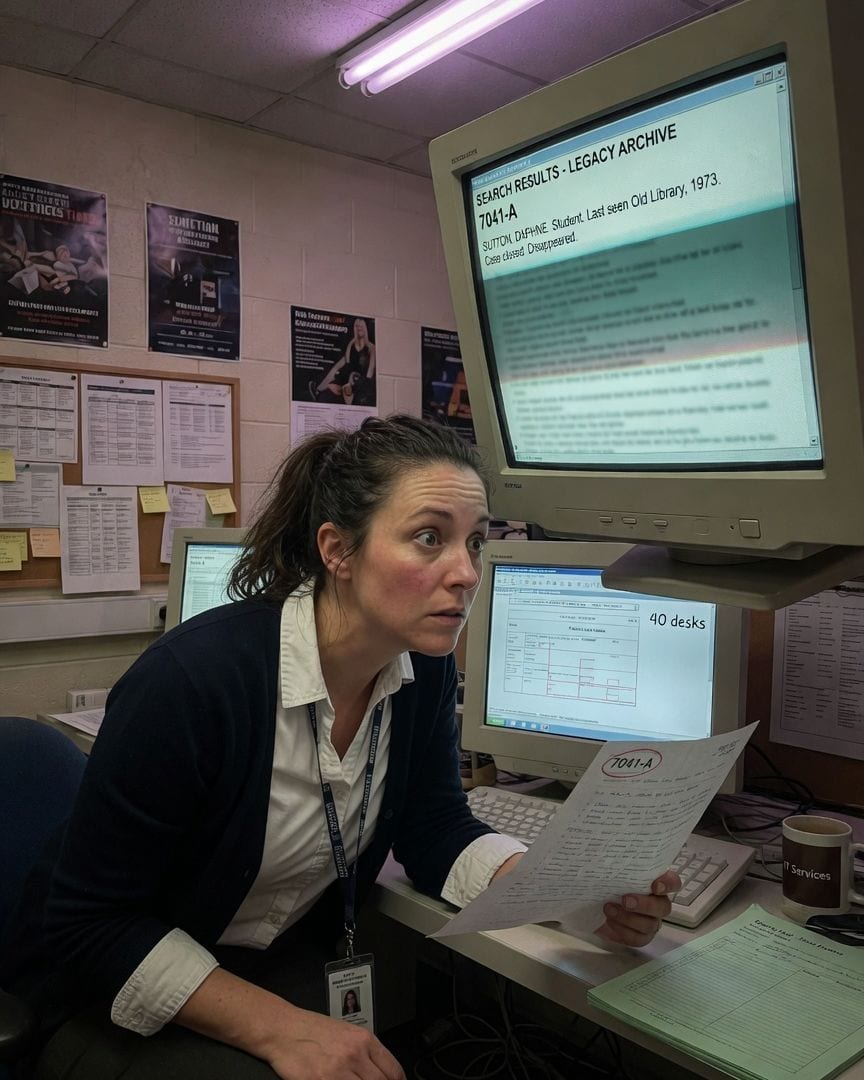
I watched him type, a knot forming in my stomach. The system whirred, the old hard drives grinding a low complaint, then a single result flickered on the screen, an archived entry from the 1970s. It was a name.
Not a candidate, but a missing person report.
I stare at the flickering screen of Joel's monitor, the search results for '7041-A' displaying a single, faded entry: 'Sutton, Daphne. Student. Last seen Old Library, 1973. Case closed: Disappeared. Ref: 7041-A.'
The name and number, impossible together, pulse on the screen, reflecting in my wide, disbelieving eyes.
The paper in my hand, the empty aisle in the hall, the missing student from decades ago – a cold, coherent dread settles over me. This wasn't a glitch. This was a pattern.
The next morning, I was in the university archives. Russell Norwood, a retired archivist with a reputation for knowing where every speck of dust settled, greeted me with a knowing look.
He’d heard whispers of 'impossible geometry' before, he said, but always dismissed them as old wives' tales. He pulled out boxes related to the 1973 Daphne Sutton case.
The file was thin, full of dead ends: no body, no suspects, just a student who walked into the Old Library and never walked out.
But alongside it, he found old campus architectural plans from the 1960s, predating the Sports Hall by a few years. He laid them out on a dusty table, tracing the lines with a gnarled finger. “See here,” Russell pointed.
“This section of the main quad, where the Sports Hall now stands. It was originally planned with an administrative annex, a small wing that was never built. But on these plans, it’s… different.
An extra storage room, not on the final blueprints, and not in the actual building.” I compared it to a recent campus map I’d brought.
The discrepancy was subtle, a single room, a few extra square feet of non-existent space, but it was there. I felt a chill.
The 'extra' desk in the Sports Hall, the 'extra' room on the old plans – it was the same wrongness.
Russell then showed me a grainy, black-and-white photograph from the Sutton file: Daphne’s desk in the Old Library, neatly arranged, but with a 'MISSING' sign taped to it.
He pointed to a small, distinctive silver pen lying on the desk, its cap slightly chipped. “Daphne’s favorite,” he murmured. “Never found it.” I felt a prickle of unease, a familiar glint from the photo.
My own pen, a silver one with a chipped cap that I used every day, was in my bag.
I left the archives feeling watched. The campus, usually so familiar, seemed to shift around me, the angles sharper, the shadows deeper, as if the very buildings were subtly reorganizing themselves. I retraced my steps, looking over my shoulder.
No one. But later that day, back in my office, I found an anonymous note tucked under my door. It was typed, plain text, stark against the white paper: 'Some things are better left uncounted.
The pattern repeats for a reason.' No signature. No clue who left it. My heart pounded. Someone knew what I was doing. Was it Russell? Joel? Or someone else, someone connected to the anomaly itself?
I felt a sudden, cold clarity. This wasn't just a historical puzzle; it was active. The note was a warning, a physical manifestation of the geometry's awareness, reaching out.
I thought of my recurring dream, the dark corridor that shimmered at the edge of my vision, and wondered if the warning was telling me to stop before I walked into that impossible space for real.
That night, my office computer, which I had left locked, inexplicably rebooted. When I checked the logs, there was a brief, untraceable access to the file containing the '7041-A' exam paper.
The dread was no longer abstract; it was personal, breathing down my neck.
I confronted Russell Norwood the next morning, showing him the anonymous note. He read it, his expression grim. “I knew someone would come poking again, eventually,” he said, his voice raspy, a dry rustle like old paper.
“It happens every few decades. The 'uncounted'… it’s what we called it. A fold in space, a hungry geometry. It manifests where order is rigid, where routine is absolute. Exam halls, libraries, administrative offices. Places of fixed data.”
He explained that the anomaly 'collects' specific information, a certain kind of knowledge, and sometimes, the people who observe it too closely. “Daphne Sutton… she was investigating a similar 'extra' room in the Old Library. She was meticulous, like you.
She found old plans, journals. She was close to understanding it.” Russell pulled out more files, some marked 'Confidential - Unexplained Incidents.'
He showed me reports from 1923, describing a section of the original administration building that would 'spontaneously reconfigure' itself, creating an additional, undecipherable room for brief periods.
The reports mentioned similar numerical sequences, '7041-A' appearing in various contexts – inventory numbers, date stamps, even as an old catalogue reference for a section of architectural drawings that simply didn't exist. “It’s a cycle, Zoe.
It feeds on the coherence of our structured world. When it folds, it takes a piece of that structure, sometimes a person, and leaves a trace, an 'uncounted' element, behind.” He paused, looking at me with a profound sadness.
“The exam paper you found? It’s a fragment of what it collects. A piece of knowledge from someone who was… taken.”
The words of the exam paper – 'The recursive nature of observation creates the observed' and 'Temporal displacement is a function of structural rigidity' – suddenly made terrifying sense.
The answers weren't abstract philosophy; they were a description of the anomaly itself, written by someone who had been inside it.
My fingers trace the outline of the silver pen on the faded photograph. The chipped cap, the slight scratch on the barrel – it's my pen, undeniably. Russell watches me, his gaze heavy, a silent confirmation of what I’m seeing.
“That pen,” he says softly, “it was found on Daphne Sutton’s desk. It was logged as one of the few items left behind.”
I pull my own pen from my bag, identical in every detail, and the cold metal seems to hum in my hand, connecting me directly to the student who vanished decades ago. My mind reels.
How could my pen be on Daphne’s desk fifty years ago? I remember the recurring dream, the impossible corridor, a place I've never physically been but feel a strange familiarity with.
A sudden, horrifying thought blossoms: what if I haven't just found a clue? What if I am the clue?
What if my pen being there means I was always a part of this, not just an observer, but a recurring element in the cycle, destined to repeat Daphne’s fate?
The air in the archive grows cold, the shadows deepening around the stacks of forgotten history, pressing in. I look at Russell, a question forming on my lips, but he merely shakes his head, his eyes mirroring my dawning terror.
Russell explains the full, horrifying pattern. “The anomaly doesn’t just take; it recycles. It folds time and space, pulling elements from across its manifestations. Your pen, Zoe, isn’t a coincidence. It’s a temporal echo, a tether.
You, the investigator, the one who notices the 'uncounted' – you are part of the cycle. You are the 'observer' that the exam paper speaks of.”
He shows me more archived photographs: a different invigilator, a man named Frank Mercer from 1923, investigating the administration building's shifting rooms, holding a distinct pocket watch.
Then, another photo, from a different incident in the 1950s, showing the same pocket watch on an 'uncounted' desk in a temporary faculty office.
“The anomaly draws in those who seek to understand it, those whose minds are structured to perceive its wrongness.
It consumes their coherence, their perspective, and then it leaves a trace of them, an object, a memory, to set the next cycle in motion. You are not the first Zoe Vance to investigate this. You are an iteration.”
He reveals a final, ancient ledger, bound in crumbling leather, detailing 'recurring anomalies and their associated witnesses.' Under '7041-A', alongside Daphne Sutton and Frank Mercer, there is an entry, handwritten in a spidery script, clear as day: 'Vance, Zoe. Invigilator.
Marked by silver pen.' The pattern snaps into place: the dream corridor, the precise counting, the impossible desk – it wasn't just happening to her; it was happening through her, and had been for decades.
She was the mechanism, the recurring consciousness. The exam paper’s cryptic answers were the anomaly’s own language, spoken by its victims, or perhaps, by itself.
The realization hits me with the force of a physical blow. I'm not just a witness; I'm a recurring element, a part of the anomaly's internal logic.
My dreams, my meticulous nature, my very drive to understand – all of it was predetermined. Russell looks at me, his eyes filled with a century of resignation. “You can’t escape it, Zoe. You can only understand your place.
The cycle will continue. The question is, what will you do with that understanding?” I feel a pull, a strange resonance, as if the walls of the archive are breathing, expanding and contracting around me.
The dark corridor from my dream, the one that never existed, feels suddenly tangible, just beyond a heavy oak door that stands at the back of the archive room, a door I’ve never noticed before.
I know, with a chilling certainty, that it is calling to me, inviting me to step into the geometry, to become another 'uncounted.'
I could open that door, step into the impossible space, and become another entry in Russell's ledger, another trace for the next iteration to find. Or I could refuse. I could break the pattern.
The sports hall, the desks, the numbers – I had to make them add up, not for the anomaly, but for myself.
I grip my silver pen, the one that linked me to Daphne, to the past, and to the anomaly itself. I won't be another name in a file. I won't become an answer on an impossible exam paper.
I turn from the archive, from Russell, from the pull of the impossible corridor, and walk out into the familiar, but now infinitely stranger, campus grounds.
I will count every desk, measure every room, but I will not enter the 'uncounted' space. I will observe from the outside, a sentinel of the known against the impossible geometry.
I continued my work at the university, invigilating exams, managing records. Joel Calloway remained oblivious to the deeper truth, still blaming software glitches for minor discrepancies he found.
Russell Norwood quietly continued his solitary vigil in the archives, a silent guardian of impossible history.
The 'uncounted' desk never reappeared in the Sports Hall, but I occasionally caught glimpses of subtle shifts – a corridor that seemed a foot longer than it should be, a window in an old building that wasn't on the plans, the way a shadow in a familiar doorway could seem to deepen beyond logic.
I learned to live with the knowledge, a quiet dread simmering beneath the surface of my ordinary life. I kept my silver pen close, a constant reminder of the cycle, and my escape from it.
The campus was still there, but it was no longer just buildings and grounds; it was a living, breathing anomaly, held in check by the sheer force of my conscious refusal to become part of its design.
Every morning, before the campus truly woke, I walked the perimeter of the Sports Hall, counting the windows, the doors, the precise angles of the walls. Forty desks, forty windows, two doors. Always.
It was a ritual, a silent assertion against the geometry that tried to claim me. I carried my silver pen, its chipped cap a familiar weight in my hand.
I knew the anomaly was still there, always waiting, but I would never become part of its design again. I had broken my own cycle.
Sometimes, late at night, I still dreamed of the dark corridor, but now, in the dream, I simply walked past it, never opening the door.
The dread was a quiet companion, a shadow that never left, but I had chosen to live within its truth, not within its walls.
I knew the campus held secrets beyond human comprehension, secrets that warped space and time, but I would not be one of them.
I was Zoe Vance, the invigilator, the one who counted, and I would keep counting until the numbers finally added up, or until they couldn't. The numbers never truly added up, but she would keep counting anyway.
If this one got to you
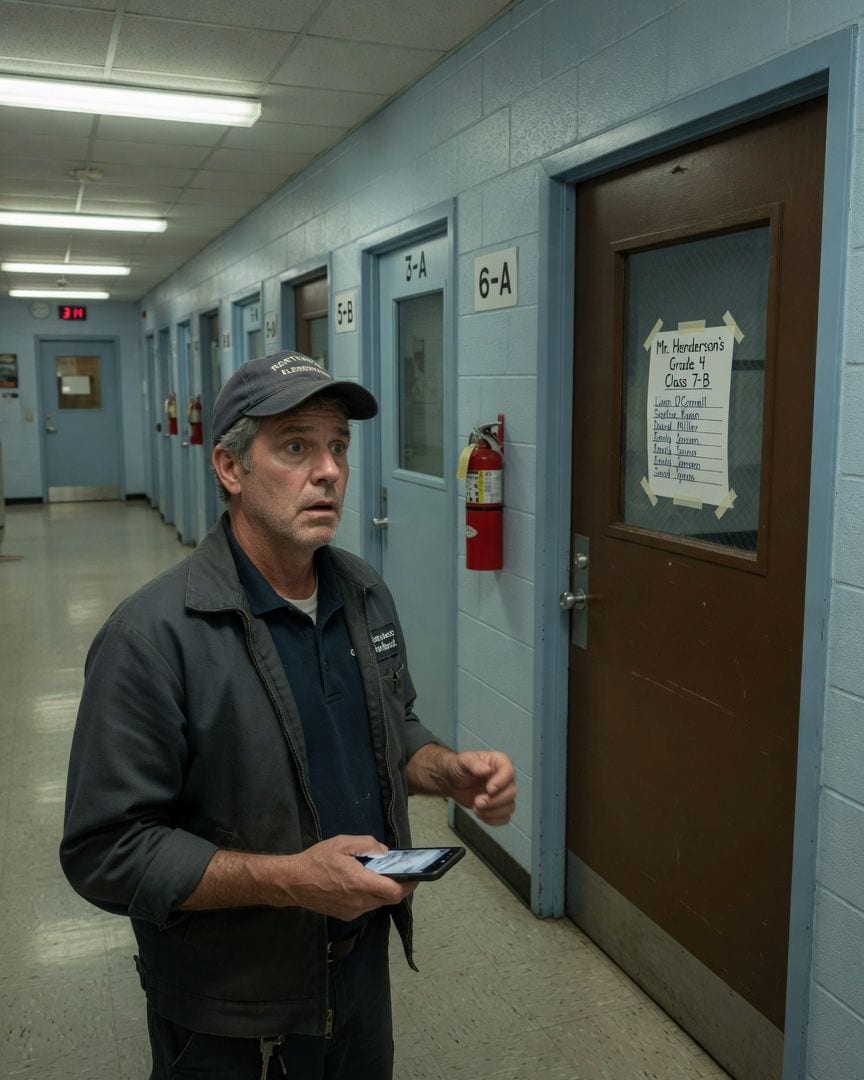
My classroom doors counted twenty-three last night. The extra one had a class list taped inside, names of children who've never been at this school.
My job as night caretaker at Northwood Elementary is routine: 22 classrooms, all accounted for. But one night, an impossible 23rd door appeared in the science block, nestled where only a wall should be. It bore a class list of students and a teacher who don't exist in any school record. Then, in an old logbook, I found that exact same list, dated 40 years ago.
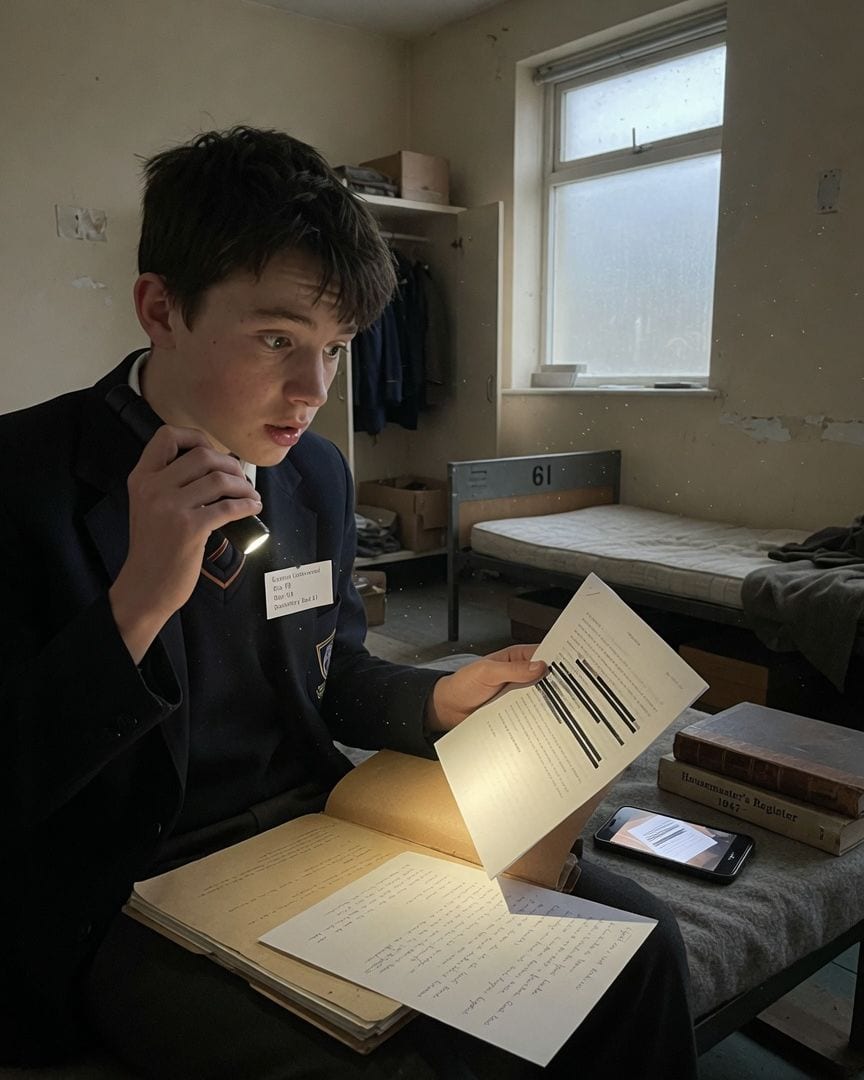
My boarding school bed number was 61, and the archive shows a boy assigned it every eight years since 1947, each leaving mid-term with the bed 'to remain made up'.
I found my matriculation card, listing me as 'Boy 61, Dormitory Bed 61.' Later, an old ledger revealed every boy assigned that bed since 1947 left mid-term, with an unsettling note: 'bed to remain made up.' Our housemaster’s recent scribble, 'as the others,' only deepened the dread around my own assigned bed.
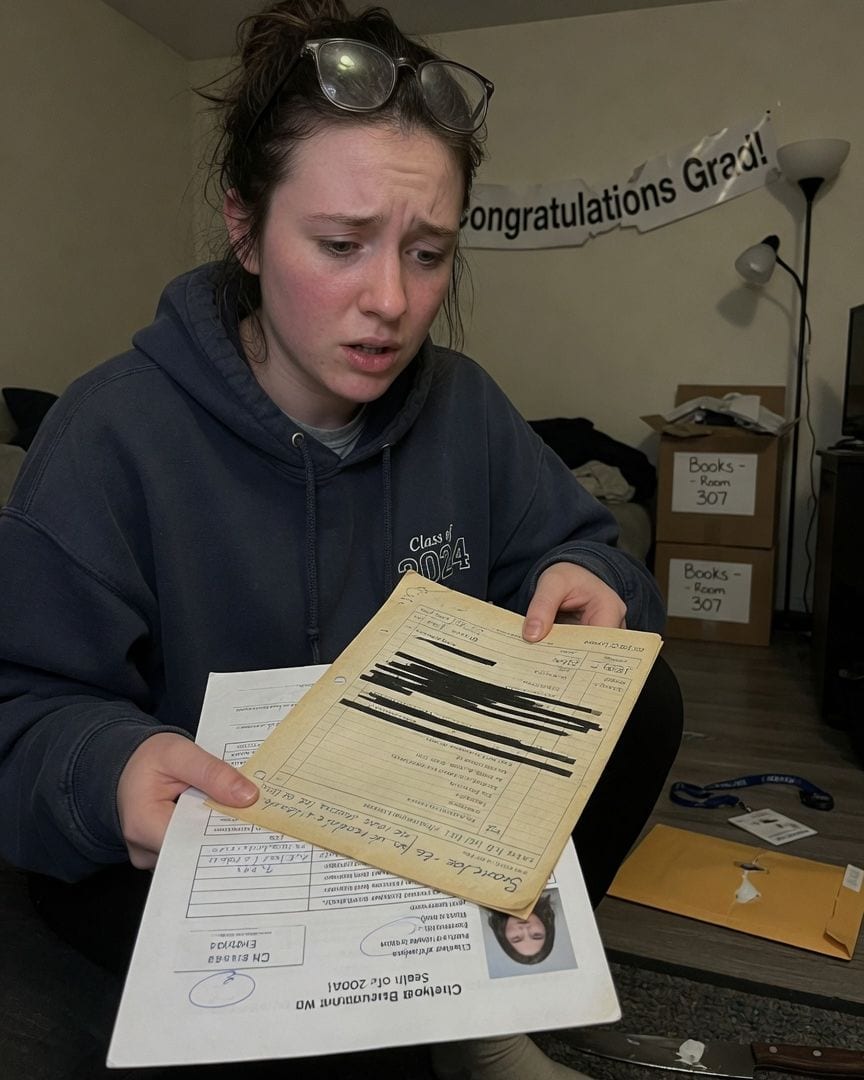
My university file contained a 1966 page naming my exact room, with a tutor’s note: "assign and observe." I lived alone.
My university graduation packet held a yellowed, brittle page dated 1966. It listed Room 307, my dorm room, and a tutor's note: 'same room, same reading list as the previous — assign and observe.' The inexplicable chill of that old paper left me with a contradiction.
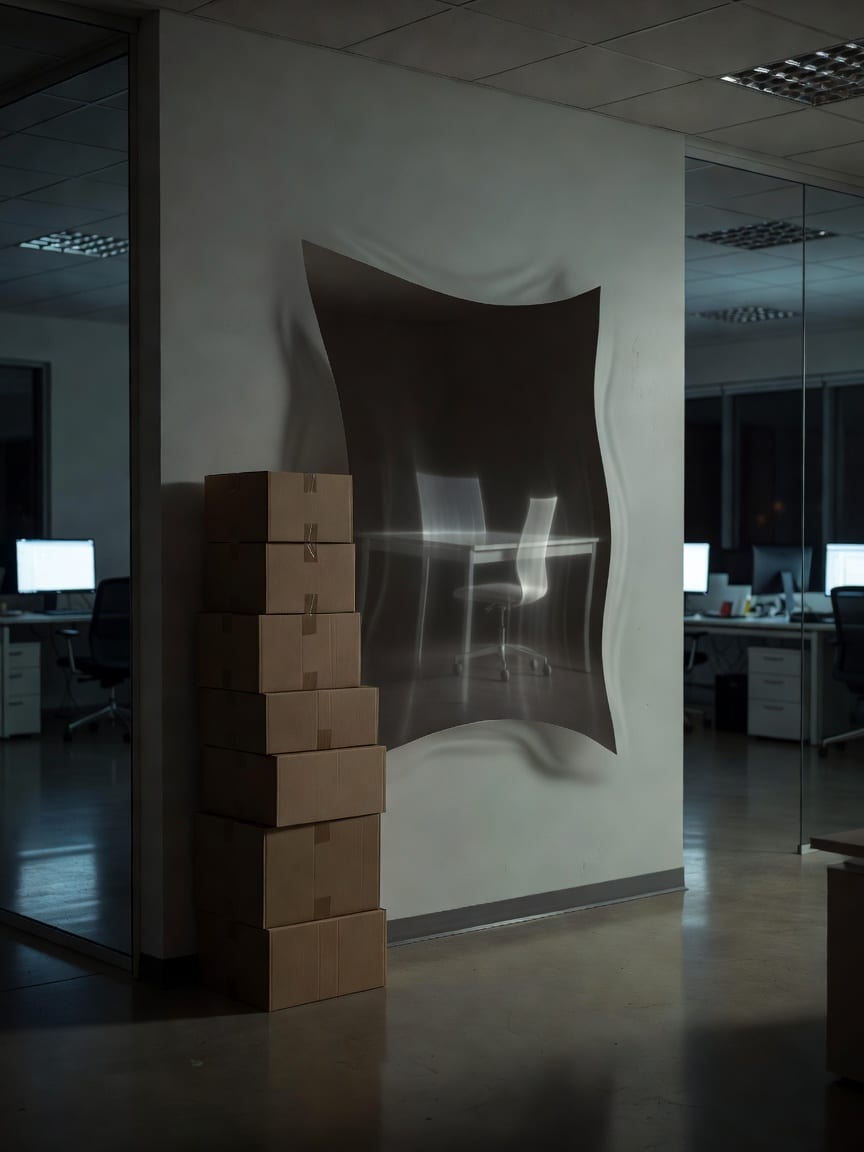
My office's fire drill found an extra person today. Their name was on the system's roster, tied to a desk that's always been just empty boxes.
As the office administrator, I thought I knew every inch of my building. A routine fire drill revealed a phantom name, 'Samuel Ingram,' on my list, assigned to a desk that didn't exist. My official blueprint showed a straight, unbroken wall there. But the actual wall had a subtle, impossible bulge, creating a hidden space where nothing should be.
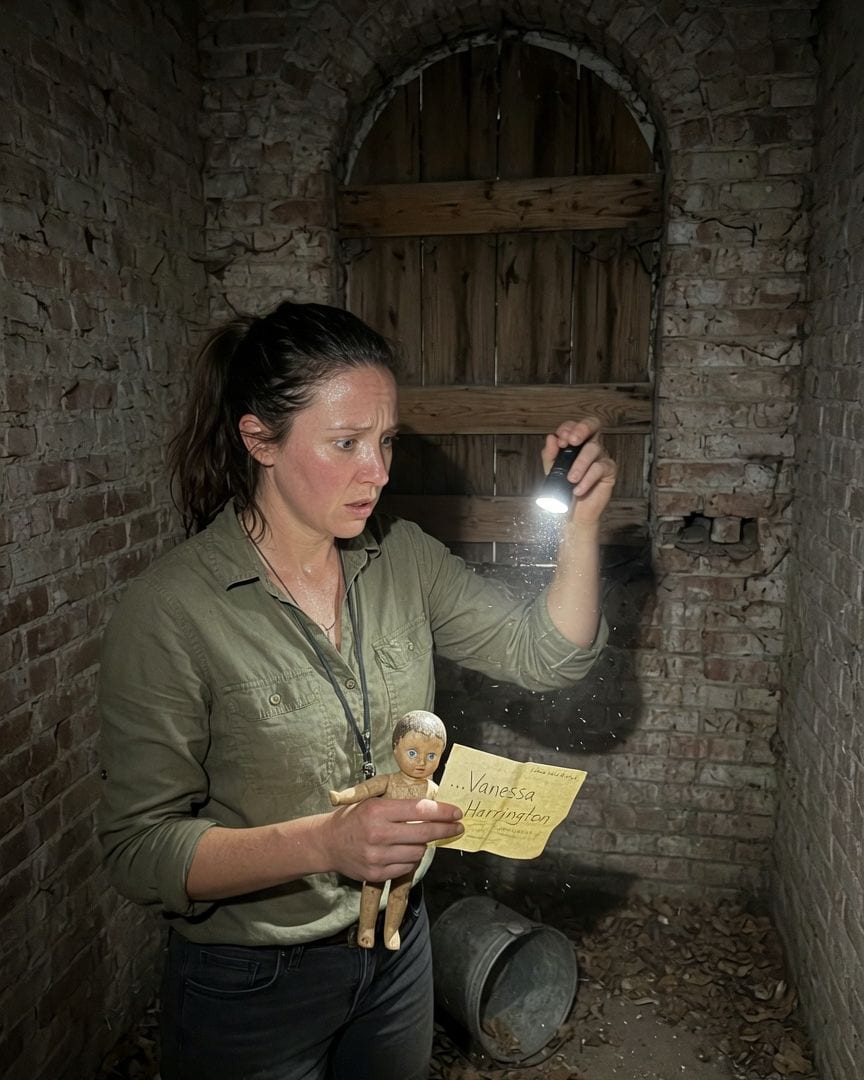
The attendance register has marked one pupil 'present' every single day since 1911 — never once absent. No child by that name has ever sat an exam.
Settling into my new teaching job at Oakhaven Elementary, I found myself drawn to the sealed bell tower. But it was the school's old register that truly unsettled me. A phantom entry, 'Pupil X,' had been marked 'Present' every single day since 1911, with no other records to prove they ever existed.
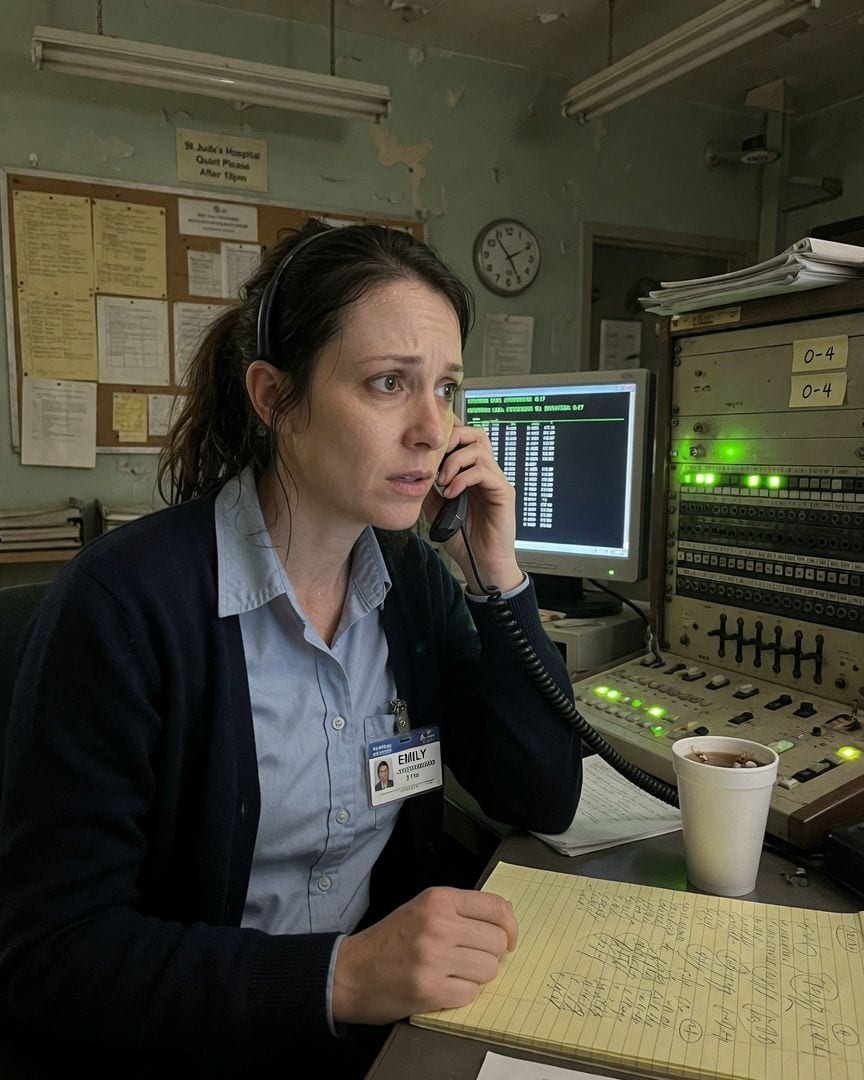
A nurse's voice asks me to page Dr. Reyes to the third floor. My hospital's third floor was demolished years ago, and extension 0-4 with it.
Working the quiet overnight shift at St. Jude's, I was used to predictable clicks. But just after 4 AM, my switchboard lit up: a call from extension 0-4. That extension was decommissioned decades ago, tied to a floor that no longer exists, yet the light pulsed insistently.