A nurse's voice asks me to page Dr. Reyes to the third floor. My hospital's third floor was demolished years ago, and extension 0-4 with it.
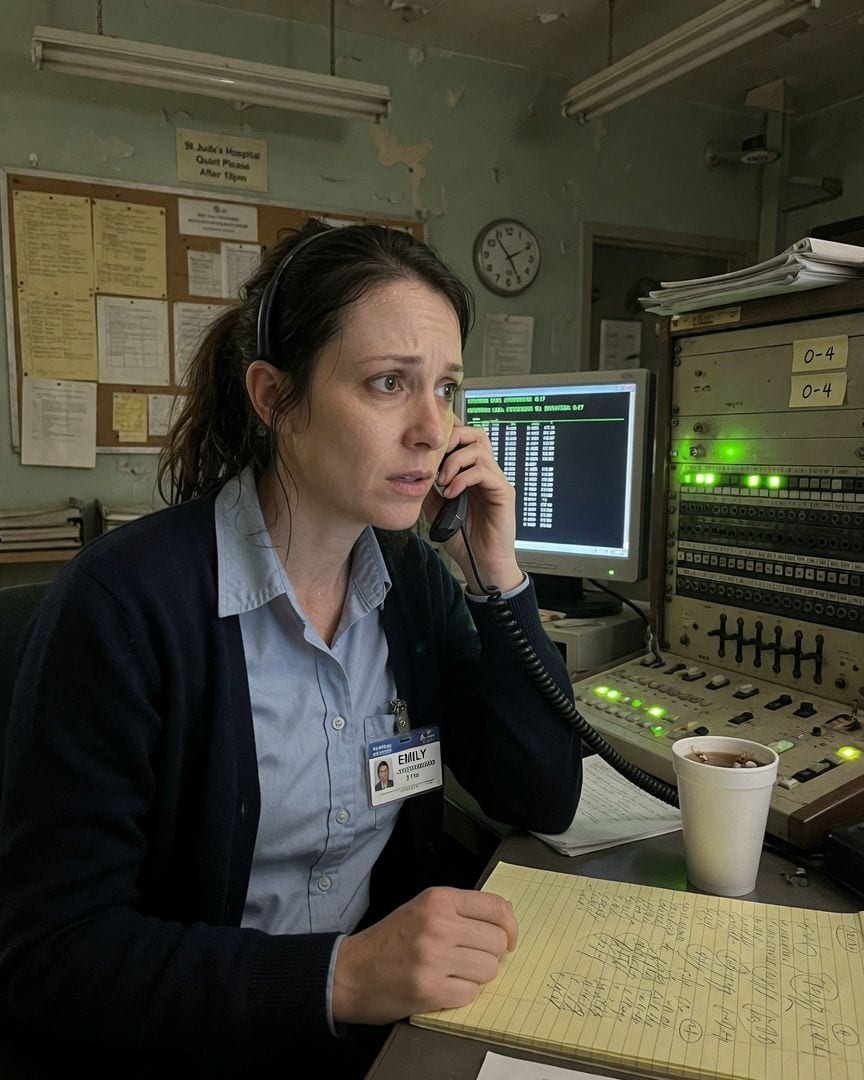
The fluorescent hum of the overnight switchboard office at St. Jude’s Hospital usually meant quiet, predictable clicks. For three years, it had been my world from midnight to eight, a steady, rhythmic pulse in the sleeping building.
Just after 4 AM, with my coffee cold and a vague ache behind my eyes, a soft chime broke the silence. The light for extension 0-4 pulsed on the old board.
I blinked. That couldn't be right. Extension 0-4 was tied to the old third floor, a section of the hospital that had been demolished and rebuilt decades ago. It was decommissioned, a phantom line.
I even remembered seeing the capped wires when they did a minor electrical upgrade a year or so back. Yet, the light glowed, insistent, a faint, sickly green.
I hesitated, a prickle of unease running down my arms. The light pulsed again, almost like a heartbeat. Logic screamed "electrical short," but something in the regularity of the pulse felt… deliberate. Against my better judgment, I patched through.
"Switchboard, Emily," I said, my voice sounding thin in the sudden quiet of my headset.
A woman's voice, raspy and urgent, filled my ear. It was low, strained, as if she was speaking through pain or extreme duress. "Page Dr. Reyes. Third floor, stat."
My blood ran cold. I almost laughed, a hysterical bark that caught in my throat. No Dr. Reyes had practiced at St. Jude's in living memory.
I’d worked here three years, and Maxwell, the archivist, had been here for forty; he’d mentioned the name once or twice in passing, an old-timer, long gone.
And the third floor, as I knew it, was a memory itself, a sealed-off ghost of concrete and rebar from a previous life.
"I'm sorry," I managed, my voice suddenly tight. "That extension is out of service. And there's no Dr. Reyes here. Are you sure you have the right hospital?"
The line clicked dead. Not a hang-up, just… a sudden, absolute cut. The green light on 0-4 vanished.
Only the sound of my own breathing, ragged and too loud, remained in my headset, and the impossible afterimage of a light that should not have shone.
I tried to rationalize it. A cross-wire, a prank, exhaustion playing tricks. My coffee was cold, my brain was tired, it was the dead of night.
I started with the simplest explanation, pulling up the digital schematics for the physical switchboard. I traced the defunct 0-4 line. Sure enough, the system confirmed it was physically disconnected, a dead end, no current, no path.
No way a call could come through.
Then I pulled up the digital call logs. The 4:04 AM entry was there, clear as day. My finger hovered over the screen. 'INCOMING CALL: EXTENSION 0-4, DURATION: 0:17.' Seventeen seconds. It felt like a lifetime.
There was no originating number, just '0-4.' The system logged it as though it were real, despite its physical impossibility.
I dismissed it again, tried to. A system glitch, something the IT department would chuckle about and fix. But then, a gut feeling, a cold, insistent hand on my spine, made me broaden my search.
If it was a glitch, maybe it wasn't isolated. I filtered for all calls to or from extension 0-4, going back as far as the digital records allowed—a database reaching into the late 1970s.
The screen populated with a shocking number of entries. Not just a handful. Dozens. Hundreds. My breath hitched. It wasn't just incoming calls from 0-4, which were themselves impossible. There were outgoing calls to 0-4, too.
All dated over forty years ago, all clustered around 4:00-4:05 AM, all listed as 'UNANSWERED' or 'DISCONNECTED.' A dozen, maybe more, other internal extensions had tried to reach this 'dead' line, at the exact same impossible time, decades ago.
It wasn't just me; it wasn't a prank. The pattern was undeniable, a cold, digital echo of desperation, repeating itself through the silent wires of a forgotten floor.
Still reeling from the call logs, my head spinning with the impossible pattern, I remembered a dusty, rarely accessed archive room in the basement.
It was a place where things went to be forgotten, stacks of old paper files and microfiche readers nobody used anymore. I needed more than digital echoes. I needed something tangible.
I needed to know who Dr. Reyes was, what the old third floor really was.
I found an ancient microfiche reader, its bulb sputtering to life with a faint hum, and started sifting through boxes labeled 'Personnel: 1970-1980.'
The air was thick with the scent of old paper and dust, clinging to my clothes, making my nose tickle. Hours later, my eyes burning from scanning faded print, I located a faded, slightly water-damaged employee roster from 1978.
My finger, trembling slightly, traced down the list until it stopped.
'Marsh, Lydia, R.N.' was clearly printed, her job title and department next to it: 'Assigned: Third Floor Psychiatric Annex.'
My heart hammered against my ribs. Lydia Marsh. The third floor. It was all there. I leaned closer, my eye catching a small, almost invisible annotation next to her entry.
In a cramped, shaky red ink, almost like a frantic scrawl, was a barely legible notation: 'Deceased - 04:04 AM.'
The name. The floor. The exact time. It all aligned. The nurse on the phone had a name. And she had died right here.
The next day, fueled by a terrifying certainty that had replaced my initial disbelief, I sought out Maxwell Doyle.
He was the hospital’s unofficial archivist, a man who seemed to know every brick and every secret of St. Jude's, a living database of its long, sometimes troubled, history.
I found him hunched over a pile of faded architectural drawings in his cramped basement office, smelling faintly of paper and stale coffee.
I approached him cautiously, feigning academic curiosity about the hospital’s history. "Just trying to get a better handle on the old structures," I said, gesturing vaguely. "The third floor, especially. It's so different now."
Maxwell, a stoic man with kind but wary eyes, humored me. He spoke in clipped sentences about construction dates and material costs, carefully avoiding specifics about the function of the old wards.
His demeanor shifted, however, when I subtly brought up "Dr. Reyes" and the "old third floor." His shoulders stiffened, his gaze flicking away from mine, towards a bare spot on the wall.
He grew cagey, his answers clipped, diverting me to more innocuous topics like the hospital's founding benefactors. "Not much to say about Reyes," he mumbled, shuffling a stack of papers. "Old blood. Gone a long time ago."
Undeterred, I spent my next few shifts, during the quiet hours after the 4 AM call didn't happen again, poring over digital blueprints of the original hospital structure. I found the 'Third Floor Psychiatric Annex' clearly labeled.
It was a sprawling, isolated wing, tucked away from the main patient areas. And there, deep within that annex, I found a small, almost hidden room marked 'Nurse's Station 3A,' directly corresponding to where extension 0-4 would have been located.
The cold knot in my stomach tightened.
I cross-referenced old employee rosters with patient admission logs from the late 70s, looking for any overlap, any unusual spikes in 'incidents' on that floor.
The official records were clean, almost too clean, as if a careful hand had scrubbed away any blemishes. The absence of information, the lack of a paper trail for anything unusual, felt like a gaping hole.
I found no public record of Dr. Reyes’s employment or dismissal, only a brief, ambiguous internal memo dated 1979 referencing 'personnel changes within the psychiatric department.'
It was like looking at a wall, meticulously built, designed to hide something specific about that floor, that doctor, and that nurse.
My relentless digging didn't go unnoticed.
One evening, as I worked through a stack of brittle microfiche in the archive, the only sound the faint whir of the reader and the distant groan of the old building, I felt a distinct chill.
Not the temperature, but a prickling sensation on my neck, as if I was being watched. I looked up.
Maxwell Doyle stood in the doorway, his silhouette framed against the dim hall light. He wasn't smiling. His face was unreadable.
"Still interested in our ghosts, Emily?" he asked, his voice low, devoid of his usual gentle humor. It wasn’t an accusation, just a flat statement, heavy with implication.
My heart gave a nervous jump. "Just… historical curiosity, Maxwell," I stammered, trying to sound nonchalant. "It’s fascinating, how much changes."
He stepped closer, the soft scraping of his shoes on the concrete floor unnervingly loud in the quiet. His gaze, usually kind, was unnervingly direct. "Some history is best left buried, Emily. For everyone's peace."
He paused, looking past me, into the dusty shelves. "It’s a heavy burden, carrying what shouldn’t be known." He didn't accuse me directly of anything, but the implication was clear: he knew what I was looking for.
He knew I was getting too close.
Later that week, a series of small, unsettling things happened.
I found a file of old patient transfer records I’d been reviewing, left open on my desk exactly where I’d left it, had been meticulously re-filed, not by me, but placed back in its correct numbered slot.
My personal locker, usually a messy jumble of forgotten snacks and spare pens, was tidied, my spare uniform folded neatly on the shelf.
No note, no message, just the unsettling knowledge that someone had been in my space, handling my things. It was subtle, unnerving. Someone was watching me, tracking my movements, silently warning me to stop.
The feeling of isolation, of being the only one awake to this wrongness, intensified. I was no longer just an investigator; I was being observed, tested. The air in my office felt heavier, colder, even when the heating was on.
The next morning, I couldn't take it anymore. I confronted Maxwell in his cramped office, the faded employee roster for Lydia Marsh clutched in my hand, the red ink on it a silent scream.
"Maxwell," I began, my voice steady despite my racing heart, "I know about Lydia Marsh. The 04:04 AM. The Third Floor. And I know you know more about Dr. Reyes than you’re letting on."
Maxwell’s shoulders slumped. He ran a hand over his thinning hair, a gesture of defeat. The air in the small room felt thick, like old secrets were solidifying around us.
"Some things… some things are supposed to stay in the dark, Emily. For the good of the institution." His voice was barely a whisper.
I pushed, unable to stop. "What happened? What was Dr. Reyes doing on that floor? What was so bad that a nurse died?"
He sighed, a deep, rattling sound that seemed to come from the very foundations of the hospital. "Reyes… he was a brilliant man, in his own way, but he had… unorthodox methods. Experiments, some called them.
On the patients in the Annex. They were vulnerable, Emily. Easy to… manipulate." He paused, staring at a framed photograph of the old hospital on his desk, a place that looked utterly normal, serene, belying the horror it held.
"Lydia… she was a good nurse. Too good, perhaps. She saw what he was doing. She documented it all." He swallowed hard. "She tried to stop him. Tried to expose him."
My voice was hoarse. "And the calls? The 0-4 extension? Why that?"
Maxwell finally met my gaze, his eyes shadowed with decades of quiet agony. "Lydia used that extension. Her last act, before… before Reyes silenced her. She was trying to call for help. To warn someone about what was happening.
She was trying to expose him." He leaned forward, his voice dropping to an almost inaudible murmur. "That's why the other extensions were calling 0-4, Emily. Her colleagues. They knew. They were hearing muffled sounds, a struggle.
They were trying to reach her, to see if she was okay, after the screaming stopped. They were trying to help her."
The pieces clicked into place, a horrifying mosaic. The unanswered calls, the specific time, the 'nurse's voice.' It wasn't a glitch, it wasn't a prank. It was a tragedy, a terrible moment, replaying itself across the void of time.
I felt a cold dread settle in my stomach, heavier than anything I'd experienced before. My hands trembled, the incident report for Lydia Marsh feeling suddenly scalding in my grip. "So the calls… they're her?"
Maxwell nodded slowly, his gaze fixed on some point beyond me, beyond the present. "Her essence, her final moments, trapped. The building remembers. The energy of that moment… it loops. Over and over again."
I thought of the countless 4:04 AM calls, the same urgent voice, the same impossible request. "But she asks for Dr. Reyes. Why? To stop him?"
Maxwell shook his head, his eyes widening slightly, a flicker of raw fear entering them. "No, Emily. Not to stop him. Not to reach him. She's not asking for him. She's repeating her final words, her final plea.
She’s warning against him." He leaned across the desk, his voice a strained whisper, as if the words themselves pained him. "And she's still trying to warn. You've been listening, Emily. And now, you're involved.
You're the one she's finally reached." He gestured to the incident report I held, specifically at a faint, almost erased line at the bottom, a note that had been nearly scrubbed away.
The letters were faint, but I could make them out: 'Dr. Reyes: Patient containment protocol initiated.'
"Reyes… he didn't just silence Lydia. He set a trap. A final, desperate protocol to ensure his secrets remained buried." Maxwell’s hand hovered over the old document, his face ashen. He looked me directly in the eyes.
"Lydia Marsh didn't just work here, Emily. She died here. On the third floor. At 4:04 AM. And her last known action was trying to call out on extension 0-4. The calls... they're not just a recording.
They're her, still trying to get out." He shoved a faded, creased incident report across his desk, its header reading 'INTERNAL REVIEW - DR. REYES & THIRD FLOOR INCIDENT - 04:04 AM'.
Maxwell explained the full, horrifying truth, his words a heavy weight in the silence of his office. Dr. Reyes, brilliant but monstrous, believed he could 'cure' mental illness through extreme, invasive procedures on the Third Floor Annex.
He subjected his patients, already vulnerable, to barbaric treatments. Lydia Marsh, a compassionate and ethical nurse, discovered his atrocities. She began meticulously documenting his experiments, planning to expose him.
On that fateful night, she was cornered in Nurse's Station 3A. Reyes knew she was about to blow the whistle. At 4:04 AM, he attacked her, silencing her permanently.
Her last desperate act was to reach for extension 0-4, a direct line to internal security. It was a final, guttural attempt to call for help and expose him.
The 'Page Dr. Reyes' was not a request, but her mind's last, looping plea, a desperate warning against the man who was killing her.
The pattern of other extensions calling 0-4 were her colleagues, hearing muffled sounds, sensing something was terribly wrong, trying to reach her. They couldn't.
The energy of that moment, the trauma, the desperate plea, became imprinted on the very fabric of the old switchboard and the building itself.
It had been replaying itself every night at the precise moment of her death for over forty years. Emily realized the calls were a ghost, yes, but not a malevolent one.
It was a victim, screaming into the void, and Emily had finally heard her.
I understood. The calls weren't just a record; they were an active warning, a desperate plea for help, and I was the first person to truly listen in decades.
Maxwell, his face etched with decades of guilt and the burden of his silence, pointed me towards a section of the basement blueprints I’d never noticed—an old, rarely used maintenance tunnel that ran directly beneath where the demolished third floor once stood.
"The old junction box for 0-4… it's still down there," he rasped, his voice rough. "It's the anchor. The physical connection that keeps the loop going."
He handed me a pair of heavy, industrial wire cutters, their handles cold against my palm. "Cut the line. Break the loop."
Armed with a shaky flashlight and the weighty cutters, I descended into the damp, echoing darkness of the tunnel. The air grew colder, heavy with the smell of mildew and stagnant earth.
The tunnel was a labyrinth of forgotten pipes and dusty conduits, the walls sweating with condensation. Every shadow seemed to writhe, every distant creak of the building above felt like a step behind me.
I pushed through, driven by Lydia's silent scream.
I found the junction box, rusted and ancient, a relic from a forgotten era, barely visible in the weak beam of my flashlight. Wires, thick with grime, snaked into it, including one labeled '0-4, Third Floor Annex.'
It looked like a gnarled root, connected to something impossibly deep.
As I reached for it, my phone, tucked into my pocket, vibrated. I glanced at the screen. 4:04 AM. The ghost call. My headset, still around my neck from my shift, crackled to life, picking up the phantom signal.
"Page Dr. Reyes. Third floor, stat." The voice was closer, clearer than ever before, no longer distant static but a raw, primal terror, as if she were right beside me, pleading directly into my ear.
It was Lydia Marsh, trapped, reliving her final moments.
My hands shook, but I didn’t hesitate. I couldn't. With a surge of adrenaline, fueled by terror and a fierce resolve to free her, I brought the cutters down with all my strength.
The rusted metal resisted for a split second, then snapped with a deafening CRACK.
A high-pitched, almost human shriek echoed through the tunnel, then abruptly cut off. The sound was swallowed by the sudden, absolute silence. The air grew heavy, then still.
The silence that followed was absolute, deeper than any I had ever known. I had broken the loop. I had silenced the scream.
But the cost was immense.
I emerged from the tunnel, covered in dust and grime, but carrying a heavier burden: the absolute, undeniable knowledge of what had happened, a truth so horrifying and unbelievable that I knew I could never truly share it.
I was free from the calls, but forever marked by Lydia Marsh's final, desperate warning.
The 4:04 AM calls stopped. The hospital switchboard remained silent at that hour. I tried to explain what I’d found to my supervisor, showing her the old records, the incident report Maxwell had given me.
It was dismissed as stress, an overactive imagination from too many night shifts. "Emily, you've been working too hard," she'd said, her voice laced with pity. I was offered a leave of absence, then quietly resigned a few weeks later.
Maxwell Doyle retired a month later, his office cleared out, leaving no trace of the files he’d kept hidden for so long. The hospital moved on, its history neatly sanitized, the third floor a blank space on modern blueprints.
I moved away from the city, found a new job, a new life. The nights are quiet now. The switchboard hum is gone.
But sometimes, when the clock strikes 4:04, I still hear the faint echo of a nurse's voice, pleading, in the silence of my own home.
If this one got to you
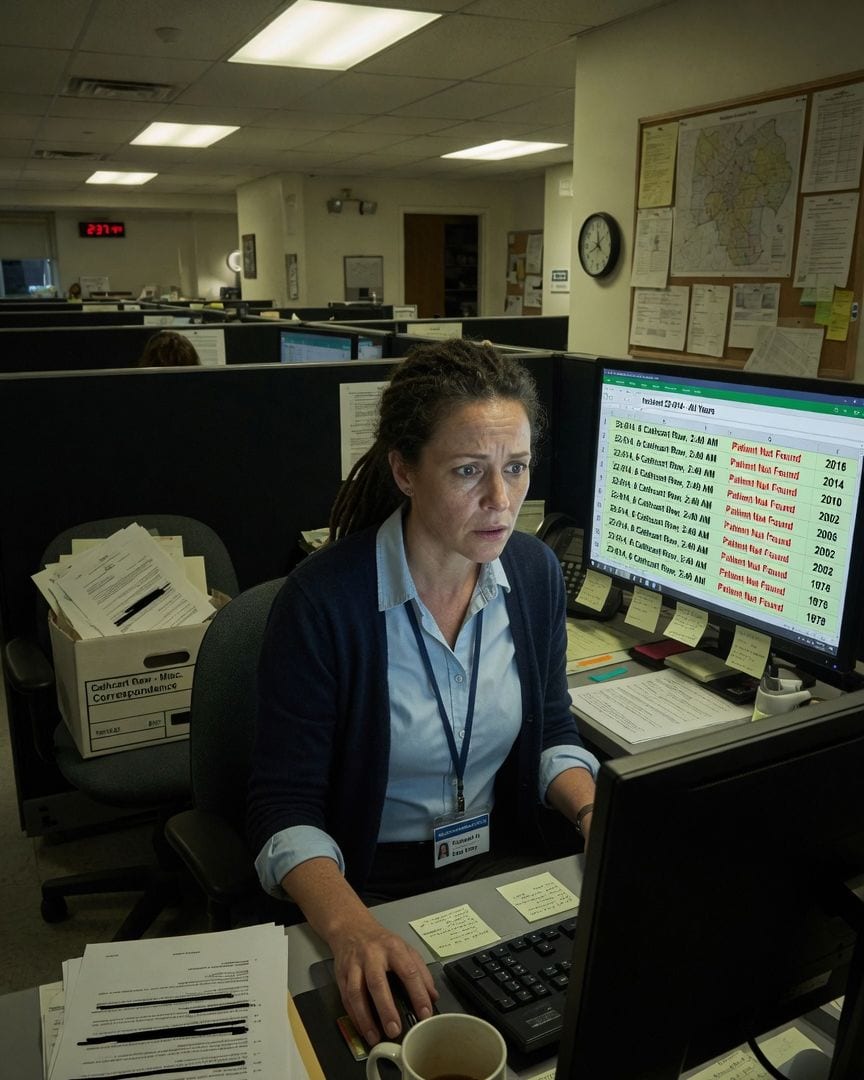
My computer log shows the same 2:40 AM call to Cathcart Row, every four years since 1978, always closed 'patient not found'.
Working data entry for the County Ambulance Trust, I found a routine incident logged as 'Patient Not Found.' But digging deeper, I discovered the exact same phantom call had repeated every four years for over forty years, always at the same address, always at 2:40 AM. Then I found a heavily redacted memo linking it to my own street.
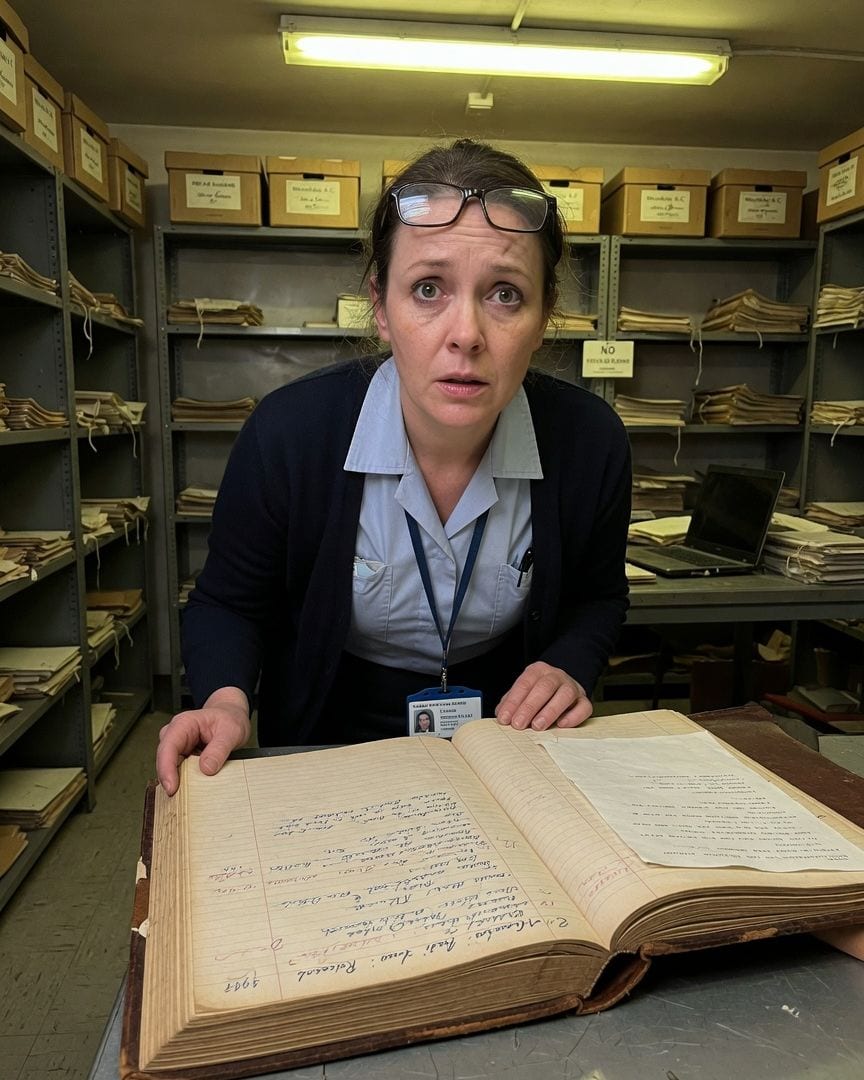
My ambulance trust's incident log shows callout 22-014 to 6 Cathcart Row at 2:40 AM. Every four years, the same call, same address. Always 'patient not found'.
My job involves tedious data entry for ambulance calls, but Incident 22-014 was different. It appeared every four years, always at 2:40 AM, always closed as 'patient not found.' Digging into the dusty physical archives, I found an entry from 1961 for the exact same incident, but its resolution read: 'Subject Secured. Relocated to "Holding".'
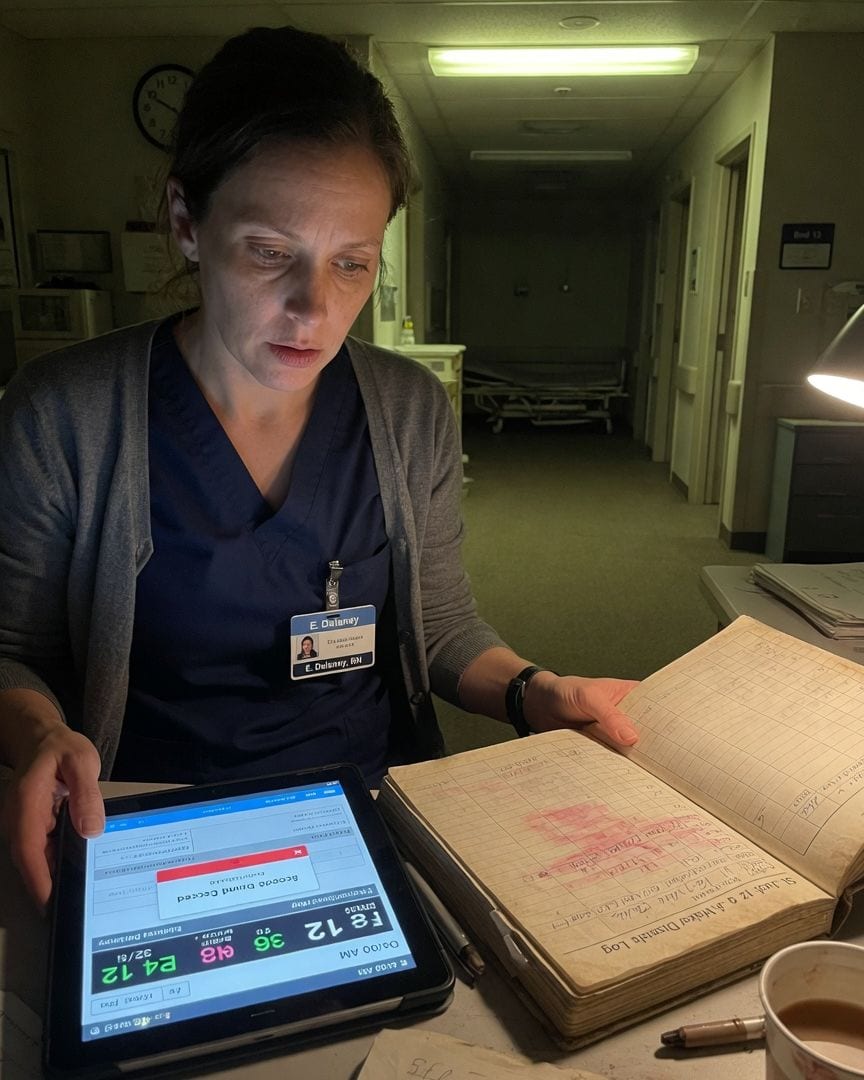
My empty ward's bed 12 had fresh vitals charted. The system says I entered them.
Working my usual night shift at St. Jude's, I pulled up the monitor system to log patient vitals for Ward 12. My thumb paused at Bed 12, where a full set of readings was already timestamped and logged under *my* ID. But Bed 12 was utterly stripped and empty; it had been discharged days ago.
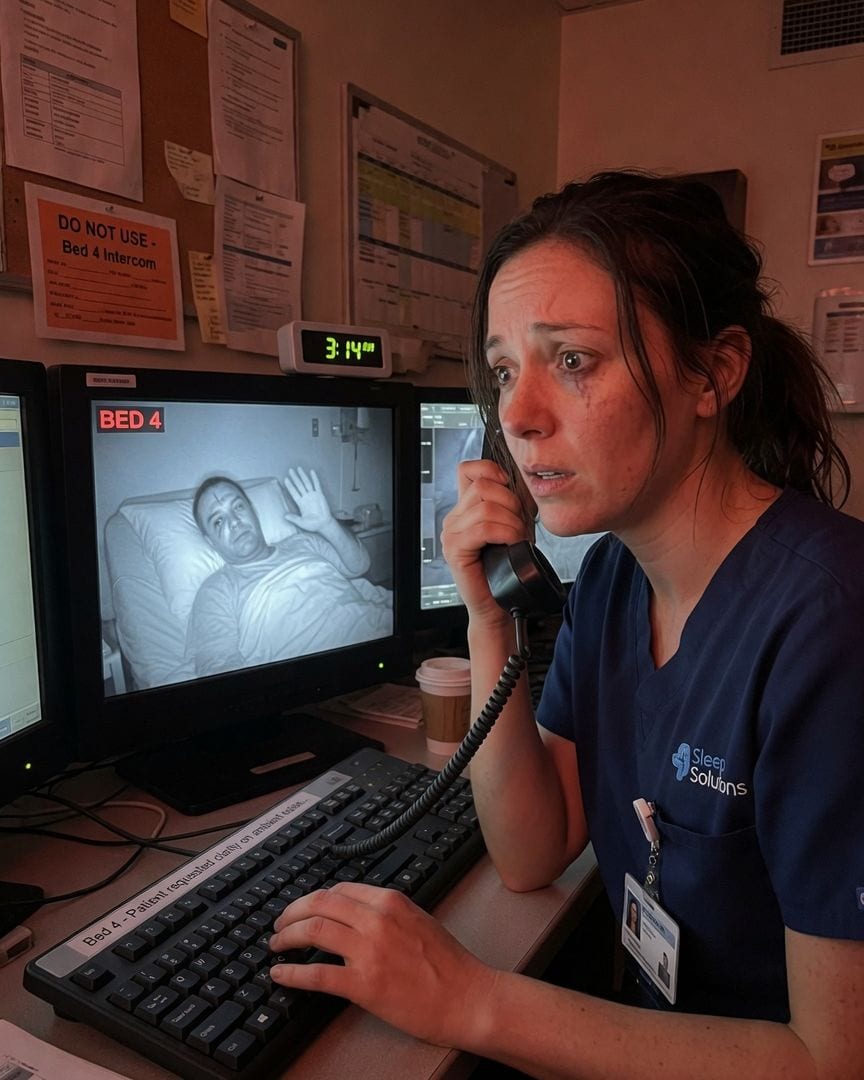
Bed 4's patient always waves at my camera, asking if I hear the humming. Bed 4 was never booked.
As an overnight nurse, my shift at Sleep Solutions is usually routine. But after interacting with a patient in Bed 4, my manager insists the room has been off-limits for deep cleaning all week with its intercom disconnected for months. Yet, I found a faint, warm indentation on the new mattress where the patient had been.
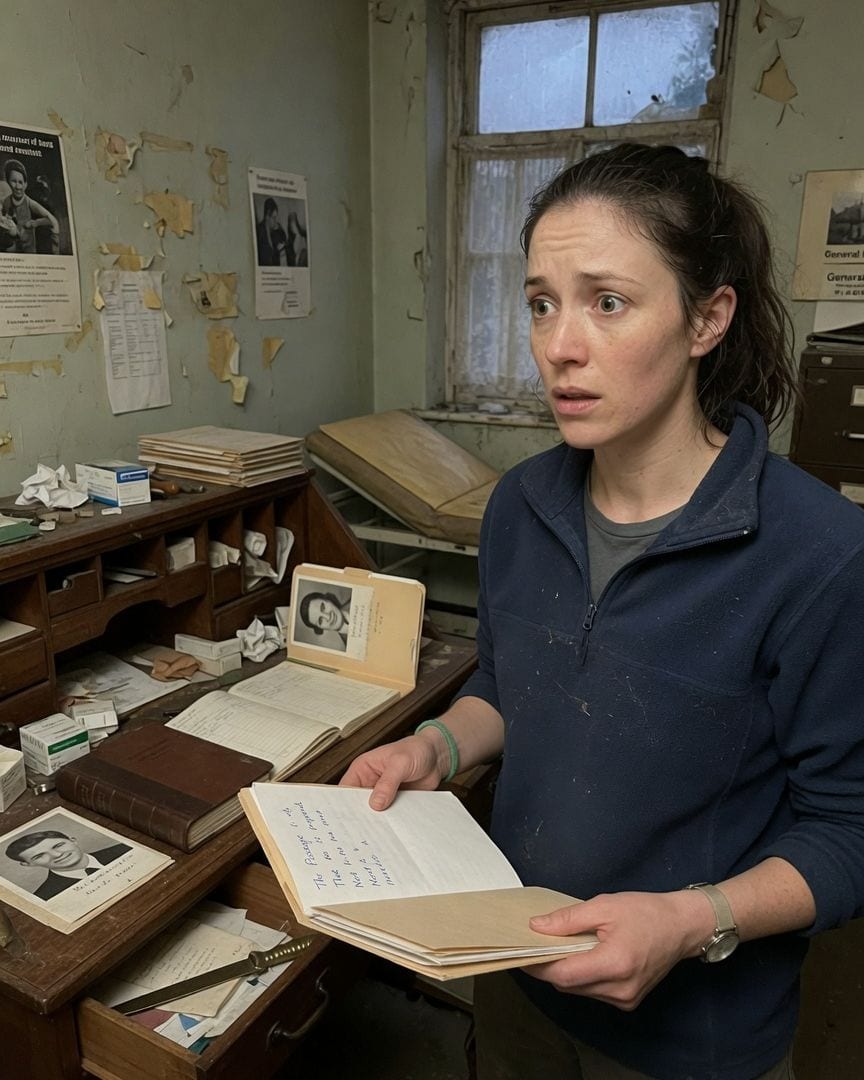
My new clinic's appointment book shows entries for this coming Monday, decades after the doctor retired and died.
Chloe Lawson bought an old, abandoned surgery in Nettlebed, ready to open her new vet clinic. Locals insisted Dr. Almott retired in '79 and the practice shut down for good. But then Chloe found his dusty appointment book filled with meticulous entries, continuing unbroken from 1979 through the decades, right up to this coming Monday.
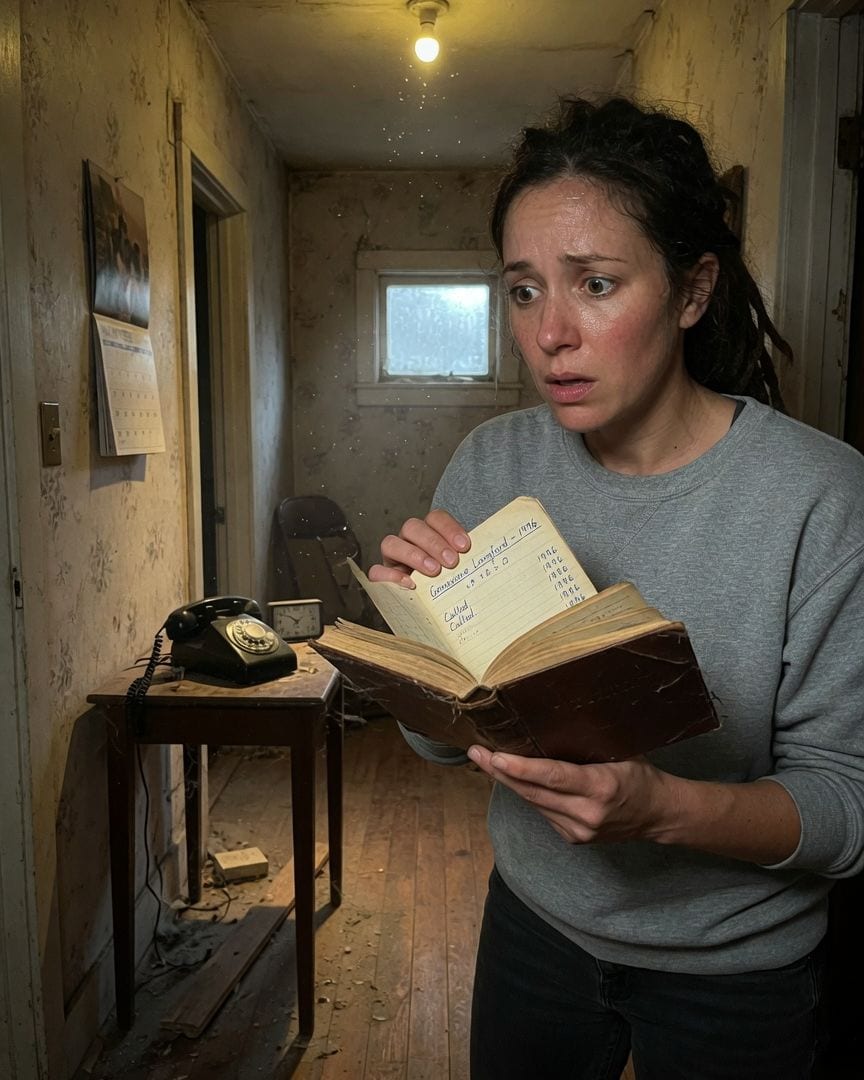
My dead rotary phone rings at 8:05 every night. I pick it up. A room full of voices, then a woman drawing breath.
I inherited an old house, complete with a black rotary phone that the company confirmed was disconnected in 1996. Yet, most evenings at 8:05 PM, it rings. When I pick up, a distant murmur fills the line, followed by a woman drawing a deep, shuddering breath every single time.