Bed 4's patient always waves at my camera, asking if I hear the humming. Bed 4 was never booked.
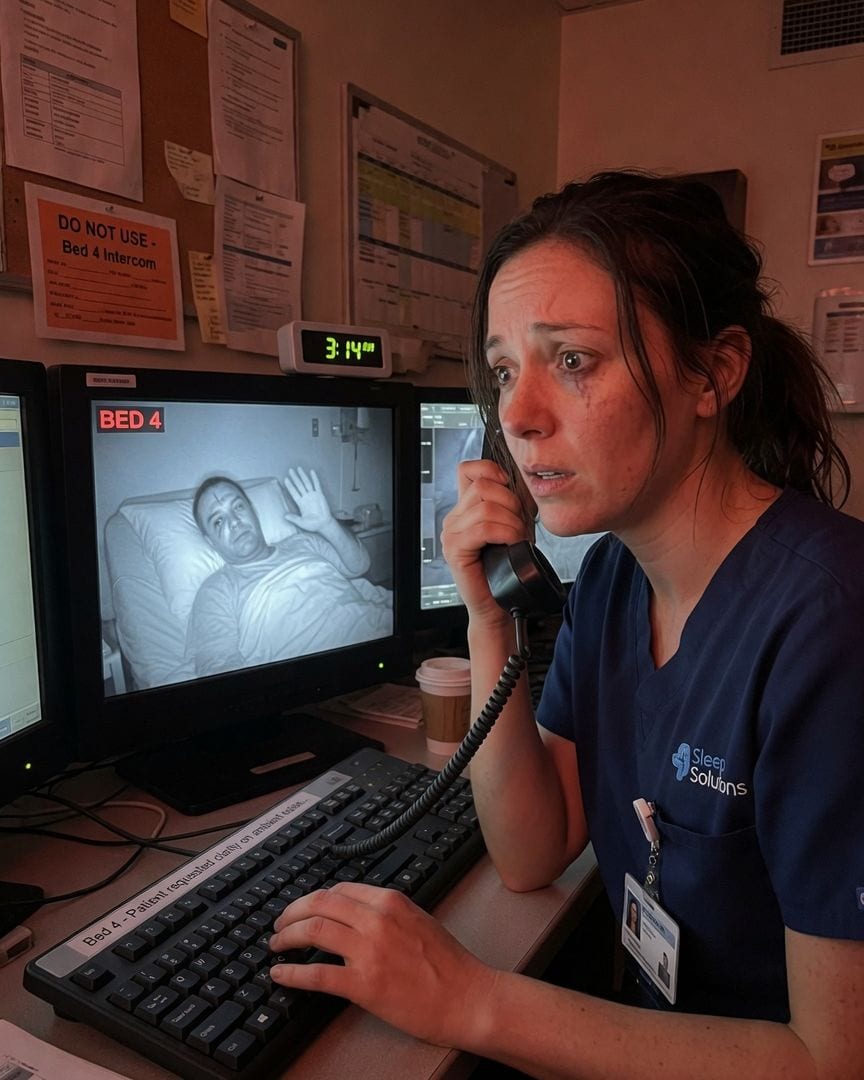
The faint red light of the observation camera cast a dull glow across Bed 4. I was on my usual overnight shift at Sleep Solutions, watching the monitors cycle, the steady rhythm of breathing patterns and heart rates.
It was 3:14 AM. The patient in Bed 4, a man I’d seen every night this week, with a faint, silvery scar just above his left eye, stirred. He always did this before lights-out.
He shifted, then slowly, almost deliberately, lifted his hand and offered a small, hesitant wave directly at the camera. Just like clockwork.
Then, the raspy voice crackled over the intercom, cutting through the low hum that seemed to vibrate in the very bones of the building tonight.
I’d noticed it for months, a low-frequency thrum that I usually dismissed as the clinic’s old HVAC system, or maybe just the city’s distant rumble. Tonight, though, it felt… closer. More insistent.
"Nurse?" the voice asked, thin and reedy. "Can you hear the humming?"
I picked up the receiver, a familiar weight in my hand. "All clear, sir. Just the regular building noises. No unusual hum. You’re all set for lights out."
He didn't reply immediately. On the monitor, I watched him. His head tilted slightly, as if listening intently to something I couldn't perceive.
Then, he offered one final, slow wave, his hand lingering for a moment before dropping out of frame. The screen for Bed 4 went dark.
I logged the interaction: ‘Patient Bed 4, requested clarity on ambient noise, reassured. Lights out.’ A perfectly normal end to another shift, another routine interaction with a sleep-deprived client. Except for that persistent, low-frequency hum.
Tonight, it felt like it was resonating not just in my ears, but vibrating in my teeth, deep inside my skull.
The next morning, I reviewed my shift log with Monica Holloway, the morning coordinator. Monica, all sharp angles and efficiency at forty, scanned the digital entries on her tablet, her brow furrowed.
She paused, her finger hovering over my last entry.
"Bed 4?" she asked, her voice flat, devoid of its usual morning cheer. She looked up, her expression unreadable. "Laura, what are you talking about?"
I blinked. "Bed 4. The patient, you know. The one with the scar above his eye. Asked about the humming again."
Monica’s frown deepened. "Laura, that room’s been off-limits all week for deep cleaning. Heavy-duty stuff, new mattresses. And its intercom was disconnected months ago for repairs. Like, three months ago. You know that."
My stomach lurched. "No, it wasn't. I just spoke to him. Last night. He waved at the camera."
Monica sighed, a slow, deliberate exhalation that spoke volumes of her disbelief. She pulled up the clinic’s digital booking system. The screen glowed with the stark red 'Maintenance' label over Bed 4 for the entire week, no patient assigned.
She scrolled through the facility’s maintenance logs. "See? Intercom offline, three months running. Gerald Yates, he logged it himself. Said the wiring was corroded."
A chill snaked up my spine. I specifically remembered his voice, raspy but clear, asking about the hum. I remembered the exact angle of his final wave. It wasn't a dream.
"But I spoke to him," I insisted, my voice tight. "He asked if I could hear the humming."
Monica leaned back, her chair creaking. She looked at me with a mix of pity and exasperation. "Long night, Laura. Happens. You probably dozed off, had a vivid dream. Been on these overnights for six months now, fatigue sets in."
But I knew what I saw and heard. I wasn't just tired. Later, when Monica was distracted by a phone call, I slipped into the control room and surreptitiously checked the physical intercom unit.
The 'Bed 4' toggle, sure enough, was taped down with a bright orange 'DO NOT USE' sign. It looked old, dusty, untouched. Yet, the patient's voice had been as clear as Monica's. And the humming, damn it, the humming too.
It seemed stronger now, a faint, internal vibration, like a tuning fork vibrating somewhere deep behind my ear.
I couldn’t shake it. That night, after my shift, instead of going home, I found myself back in the deserted clinic, driven by an itch I couldn’t scratch.
I re-accessed the clinic’s internal maintenance database, digging deeper than Monica had, bypassing the basic booking system. I knew the backdoor codes to some of the older, less-used sections. I found a sub-section: 'Intercom Systems - Diagnostics.'
It was an archive of every repair, every check, stretching back years.
I scrolled, my finger brushing the cold trackpad. Buried under a series of routine checks for hallway lighting and boiler pressure, was an entry that made my breath catch in my throat.
Dated just three nights prior, a digital timestamp down to the minute: 'Intercom System Check - Bed 4.'
My eyes darted to the technician’s note, expecting it to confirm a disconnect, a malfunction. Instead, it read: 'Intermittent hum detected, system stable.' The entry was signed, clear as day: Gerald Yates, Maintenance Supervisor.
I stared at the screen, the blue light reflecting in my wide, disbelieving eyes. The intercom was supposed to be disconnected, off-limits. The hum was supposed to be in my head, a trick of fatigue.
But here was proof, in the clinic’s own official records, that both were real. That someone had been in Bed 4. That someone had been working on the intercom. And that someone knew about the hum.
My fingers, clammy and cold, went to my pocket, fishing out my keys. I had to see Bed 4, had to know. I found myself standing in the now-empty room, the silence heavy, almost suffocating.
The new mattress, Monica had said. It looked pristine, but there, just beneath the smooth surface of the grey fabric, where the 'patient' had lain, a faint, almost invisible indentation.
My hand trembled as I pulled it away from the spot, my fingers brushing the slightly warm impression, a concrete ghost left behind.
The next day, the name Gerald Yates burned a hole in my mind. I found him in the basement workshop, surrounded by the smell of oil and old wiring.
He was wiping grease from his hands with a rag, his face smudged.
"Gerald," I began, trying to keep my voice even. "That Bed 4 intercom check. Monica said it was disconnected."
He paused, his eyes, dark and unblinking, narrowing slightly. "Yeah, well, things get misfiled, Laura. Happens. Old building, lots of paperwork. It’s been offline for a while. Just a quick check-in case."
He tossed the rag onto a workbench, avoiding my gaze, turning to tinker with a leaky faucet.
"The note," I pressed, stepping closer, ignoring the greasy smell, "it mentioned an 'intermittent hum.' What was that about?"
Gerald shrugged, too quickly, too casually. "Just a bit of electrical interference. Happens in these old pipes. Nothing. System stable, like the note said." He turned the faucet, making a show of tightening a nut.
His voice was too practiced, too dismissive.
I didn't believe him. Not for a second. The humming, the patient, Monica’s practiced denial, Gerald’s evasions. It all knitted together into a shape I couldn’t quite perceive, but knew was wrong.
Later, the hum still vibrating deep in my inner ear, unable to let it go, I returned to Bed 4's empty room.
The silence was unnerving, a heavy blanket that pressed down on me, yet I could still feel that faint vibration, the humming, under my feet, through the floorboards. It was like the room itself was holding its breath.
My gaze drifted to a small, almost hidden closet door in the corner, usually locked, always. Tonight, it was slightly ajar, a sliver of darkness visible.
My heart hammered against my ribs, but I pushed it open. Inside, among dusty old linens and forgotten mops, was something utterly out of place.
A small, hand-stitched sampler, faded and yellowed, depicting a stylized 'Bed 4' with a strange, almost sigil-like symbol stitched beneath it.
It felt ancient, far older than anything else in the closet, and inexplicably cold to the touch, like it had been sitting in a freezer.
I took the sampler home, feeling increasingly paranoid, the hum now a constant low thrumming behind my ears, a pressure building in my head.
I researched the strange symbol online, but found nothing conclusive, no match in any occult archives or historical texts. It was unique, or so well hidden it might as well have been.
The next night at the clinic, during my shift, the observation camera for Bed 4, pointed at the now-empty room, suddenly hitched.
It showed static for a split second, a jagged burst of white noise across the screen, then returned to the still, empty mattress.
But in that brief, chaotic flash of static, I thought I saw it—a fleeting, distorted image of a face, indistinct, stretched, but undeniably there. Gone as quickly as it appeared.
A trick of the light, a technical glitch, my mind playing tricks. I told myself that.
Later, while reviewing the general security footage from the clinic's main hallways, footage from the previous night, I noticed something unsettling. A figure. Too tall. Too thin.
Moving silently, almost gliding, down the empty hallway towards Bed 4, just minutes before my shift had started. It wasn't Gerald. It wasn't Monica. It didn't match any staff member I knew, not the night crew, not even the temps.
The figure paused directly outside Bed 4’s door, its head tilted, as if listening intently to something inside, or perhaps listening for something.
Then, it simply melted back into the shadows at the far end of the hall, gone without a trace.
A cold certainty settled in my chest. I wasn't just investigating a phantom patient. Someone, or something, was actively using that room, operating outside the official clinic protocols, and it knew I was looking. It was watching me watch it.
Desperate for answers, and unable to trust anyone at the clinic, I remembered Quentin Ford. He was a retired administrator, long gone from Sleep Solutions, but he’d worked there for decades.
His name had been mentioned once in a dusty HR file I'd stumbled upon. I tracked him down to a quiet, unassuming suburban home a few towns over.
He was frail, his hands gnarled with age, but his eyes were sharp, bright even, behind thick spectacles.
I introduced myself, explained my situation carefully, feeling like a lunatic the entire time. I pulled out the hand-stitched sampler from my bag, laying it on his polished coffee table.
Quentin’s eyes widened, a flicker of something ancient and terrible in their depths.
"Where did you find this?" he whispered, his voice thin and reedy, surprisingly similar to the voice I’d heard in Bed 4. He picked it up, his fingers tracing the strange, sigil-like symbol.
I explained everything: the patient in Bed 4, the insistent humming, Monica’s overly firm denials, Gerald’s evasions. I watched his face as I spoke, seeing a slow comprehension dawn, followed by a deeper, older fear.
He sat me down, pouring me tea with a hand that trembled visibly. The porcelain cup rattled against the saucer. "The hum," he said, his voice barely audible, like the last whisper of a dying fire. "It’s always been here.
Since the clinic opened, long before my time, even. Some of us… we called them 'receivers.' Others, 'the quiet ones.' They manifest in certain beds. Bed 4, always. Always the strongest."
He looked at the sampler, a sad, distant look in his eyes. "They’re not patients, Laura. Not in the medical sense. Not in any sense you’d understand."
He explained that the sigil on the sampler was an archaic protective symbol, used by early clinic staff, back when they understood what was really happening. An attempt to 'ground' the manifestations, to keep them from spreading, from taking hold.
"The clinic’s true purpose, Laura," he continued, leaning forward, his voice gaining a strange, chilling intensity. "Isn’t just to treat sleep disorders. It’s to monitor… and to contain."
He pushed himself up, shuffled to an old, cluttered desk, and pulled out an old, leather-bound journal, its pages yellowed and brittle. "I kept a separate record. The official logs are… sanitized. Scrubbed clean. But I documented every cycle."
He opened it to a page filled with cryptic notes, dates, and what looked like astrological symbols mixed with crude drawings of human forms. "They come in cycles. Always have. Longer and stronger each time."
A cold dread settled deep in my bones. It was worse than I thought. The 'patient' in Bed 4 wasn't a glitch, a hallucination, or a mistake. It was part of a routine.
A terrifying, silent program the clinic had been running for decades. And I, somehow, had stumbled right into the middle of it.
Quentin, seeing the raw terror etched on my face, pushed himself from the desk. "Come," he said, his voice strained. He led me to his dusty study, a cramped room filled with overflowing bookshelves and stacks of ancient-looking papers.
He gestured to an old, beige desktop computer, its monitor chunky and yellowed. "The real records, the ones that matter, are here. Encrypted. I maintained them after I left. The 'Cycle 4' archive."
His fingers, slow and arthritic, tapped out a complex password. The screen flickered, then burst to life, displaying a directory of files. My heart hammered against my ribs. He navigated to a folder labeled 'Sensitives & Manifestations.'
Inside, I saw dozens of entries, each detailing 'patients' in Bed 4 and other specific rooms, spanning back to the 1970s. Dates. Vague descriptions. Notes like 'Humming reported,' 'Visual confirmed,' and always, chillingly, 'No official booking.'
Quentin scrolled down, his finger hovering over an entry from 1993. It detailed 'Subject 7-B,' a 'highly sensitive' individual who 'reported lucid dreaming during manifestation.' Beneath it, a small, faded photograph. My breath caught in my throat.
I leaned closer, my hand reaching out, almost touching the screen.
It was a photo of a young woman's face, familiar in a chilling, sickening way. It was Quentin Ford's daughter, Sarah, the one he'd mentioned in passing, who supposedly died in a car accident that same year.
Her eyes, wide and unfocused, stared right out of the digital file at me, distant, fixed on something unseen, as if already elsewhere. She looked directly at Laura from the screen, a silent accusation, a terrifying warning.
Quentin slumped back into his chair, his face pale, his breath coming in shallow gasps. "My daughter, Sarah," he managed, his voice thick with a grief that had clearly never healed. "She was one of the 'sensitives.'
She heard the hum more clearly than anyone. She started seeing them, the 'quiet ones,' not just in Bed 4, but everywhere. They… they took her. Not a car accident.
That was the official story, the cover Monica and the others put out to protect the clinic, to protect me. But she just… faded. Became part of the pattern."
He explained that the clinic, under a hidden directive he’d discovered buried in old documents, was built directly on a 'node' of this phenomenon, a place where the veil between worlds was thin.
The 'patients' were echoes, presences drawn through by the hum, not malicious, but ancient, seeking… something.
And the clinic’s ultimate, horrifying purpose wasn't just to observe them, but in some cases, to 'receive' those who became too attuned, too sensitive, like Sarah.
The sampler, he confirmed, was from his wife, a desperate attempt, a foolish hope, to protect Sarah from what was happening. To ground her, to keep her from fully connecting. The 'quiet ones' don't harm, he clarified, not physically.
They don’t draw bl**d or break bones. They absorb. They integrate. And the hum, I now realized with a sickening lurch, had been growing stronger for me, too.
It was a constant companion now, a low thrum that was less external noise and more internal resonance.
Quentin’s records showed a disturbing correlation: the longer a 'sensitive' works the night shift near Bed 4, the more pronounced their sensitivity becomes, until they themselves become a 'receiver,' another unbooked patient in the silent cycle.
Another entry in the 'Discharged, no record' file.
The pattern snapped into place with a horrifying click. The scattered dates, the vague descriptions of manifestations, the entries marked 'Discharged, no record' – they weren’t just covering up events. They were documenting a slow, quiet absorption.
The clinic wasn't just observing. It was cultivating. It was a farm for consciousness. And I was next in line.
I returned to the clinic for my next shift, but not to work. Not really. In my bag, I carried a USB drive, a small, cold weight. On it, Quentin’s archive. The humming was no longer a thrum.
It was a constant, low roar in my head now, a sound that obliterated all others, yet somehow allowed me to hear them with chilling clarity.
I felt an undeniable pull towards Bed 4, the empty room at the end of the hall, which now seemed to pulse with an invisible, ancient energy.
As I stood in the doorway, the observation camera, mounted high in the corner, flickered to life on its own. Its red light, usually a comforting sentinel, now glowed like a malevolent eye.
On the small monitor screen in the control room, I saw my own reflection – my eyes wide, pupils dilated, a faint, almost unnoticeable tremor running through my hand, like a leaf caught in an unseen wind.
Then, a distorted voice, impossibly clear despite the disconnected intercom, crackled from the control room's speaker. My speaker. "You hear it now, don't you, Laura?" It was the same raspy voice from Bed 4. The patient’s voice.
But I knew now it wasn't just one patient. It was the collective. The hum itself, speaking through the conduit. Speaking to me.
I made my choice. I didn't confront Monica, whose polite, dismissive smile now felt like a thinly veiled, monstrous complicity. I didn't try to expose Gerald, whose casual evasions were just another layer of concrete in an ancient, unyielding wall.
I knew it was too deeply ingrained, too ancient. This wasn't a conspiracy to be uncovered; it was a fundamental truth of the place, an intrinsic part of its fabric.
Instead, I walked to my locker, grabbed my bag, and walked out. The humming followed me, not a sound I heard with my ears, but a vibration in my very core, like a second heartbeat.
I kept walking, out of the clinic, past the parking lot, the fluorescent glow of the building shrinking behind me. I didn't look back.
But I felt the pull, the quiet invitation of the hum, whispering my name, an echo of Sarah Ford’s distant eyes.
Laura never returned to Sleep Solutions. Her position was quietly filled a week later, the online job posting appearing and disappearing without fanfare.
Quentin Ford passed away peacefully in his sleep a month after their meeting, his journal and digital archive gone, perhaps taken by someone, perhaps simply absorbed into the ether.
The clinic continued its operations, its lights burning through the night, a silent beacon. Monica Holloway maintained her coordinated morning shifts, her smile unchanging.
Gerald Yates continued his maintenance rounds, replacing a bulb here, tightening a pipe there, the hum a silent, unseen constant in the old building.
Laura, now living in a small apartment miles away, still felt the hum, a low thrum beneath the surface of all other sounds, a constant companion.
Sometimes, late at night, when the city is quiet, and the only sound is the distant, rhythmic hum of its own slumber, the humming grows louder.
It fills her small apartment, not just in her ears, but in her bones, a familiar, almost comforting presence. She doesn't fight it anymore. She just listens. She knows it's waiting. She knows it's a part of her now.
And sometimes, she finds herself humming along, a low, resonant note that vibrates deep in her chest, a silent conversation with something vast and unseen.
She checks her reflection in the dark window, and for a moment, her eyes seem to hold an ancient, distant wisdom, just like the patient in Bed 4, just like Sarah Ford. She is no longer just Laura.
She is a receiver. She is listening. She knows she'll never truly be alone again. The hum will always find her. It’s a low, quiet thrum, a constant vibration, just beneath the surface of everything.
If this one got to you
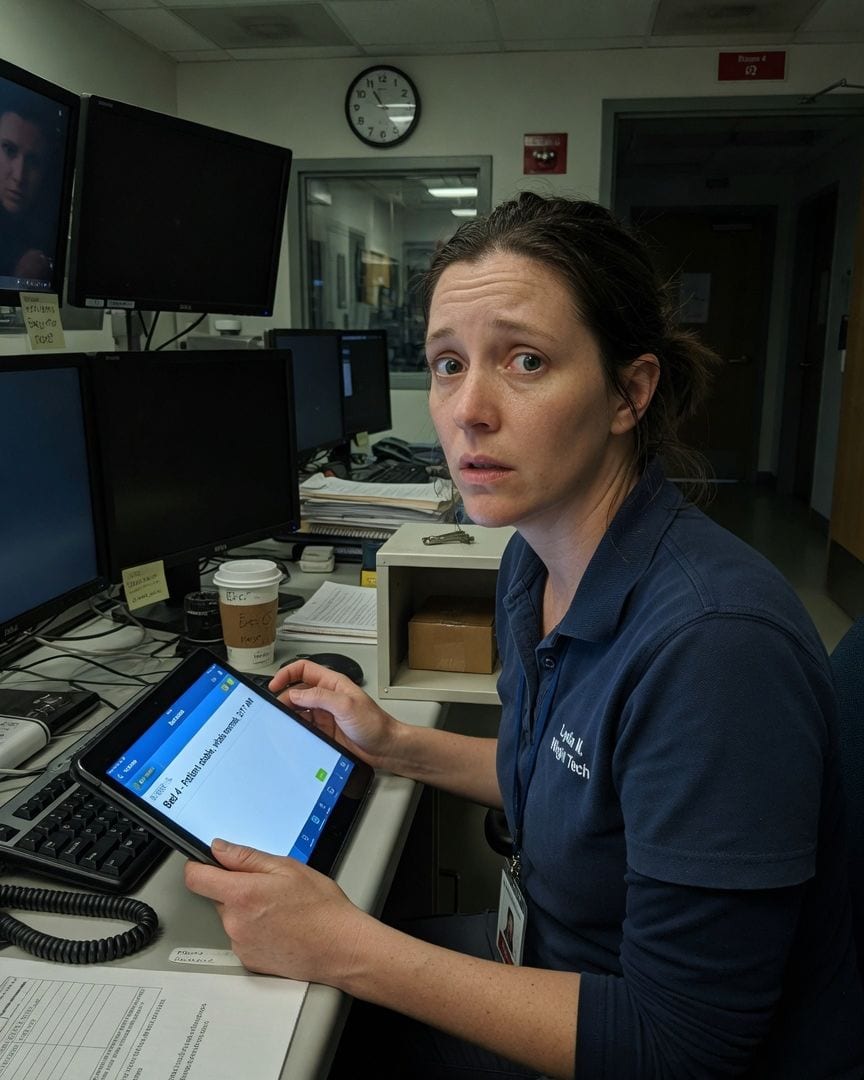
My sleep clinic's Bed 4 patient waves and asks about the humming — but the bed's empty, and its intercom was disconnected.
It was 3 AM, and the sleep clinic should have been empty, especially Bed 4, which was officially offline for repair. But for the third night in a row, a patient in Bed 4 was waving at me, their voice asking about a humming sound through a disconnected intercom.
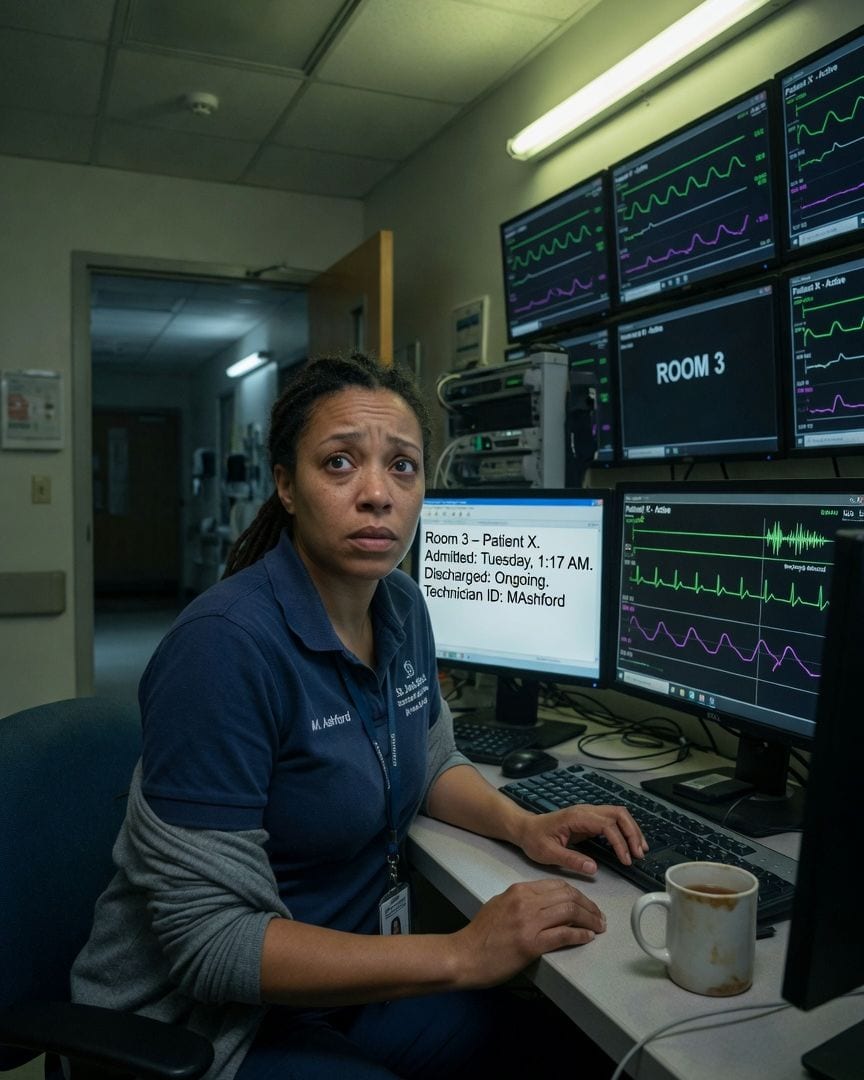
My monitor shows Room 3's patient coughing, but the room is empty and stripped bare.
Working the night shift at St. Jude's Sleep Clinic, I noticed Room 3's monitor showing a patient's vital signs and a faint cough. But Room 3 has been out of service for months, stripped bare after a leak. My system diagnostics confirmed a strong, clean signal, as if a patient were genuinely there, sensors properly attached.
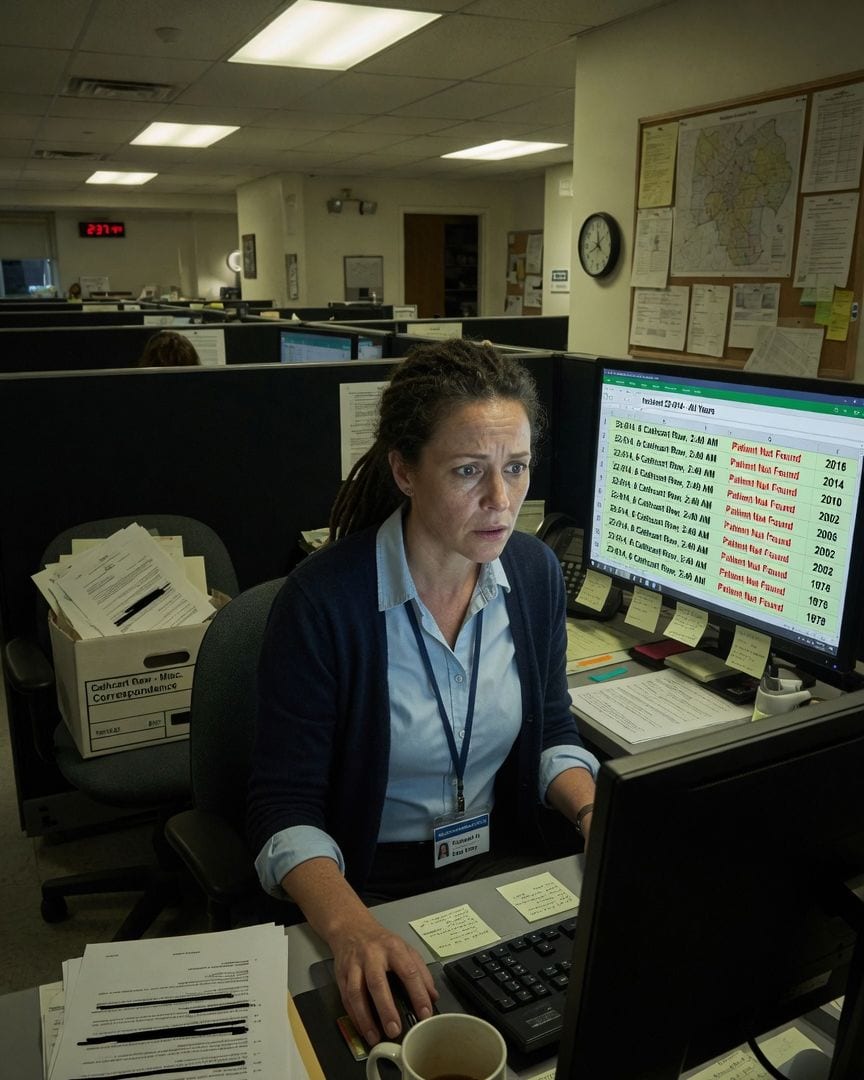
My computer log shows the same 2:40 AM call to Cathcart Row, every four years since 1978, always closed 'patient not found'.
Working data entry for the County Ambulance Trust, I found a routine incident logged as 'Patient Not Found.' But digging deeper, I discovered the exact same phantom call had repeated every four years for over forty years, always at the same address, always at 2:40 AM. Then I found a heavily redacted memo linking it to my own street.
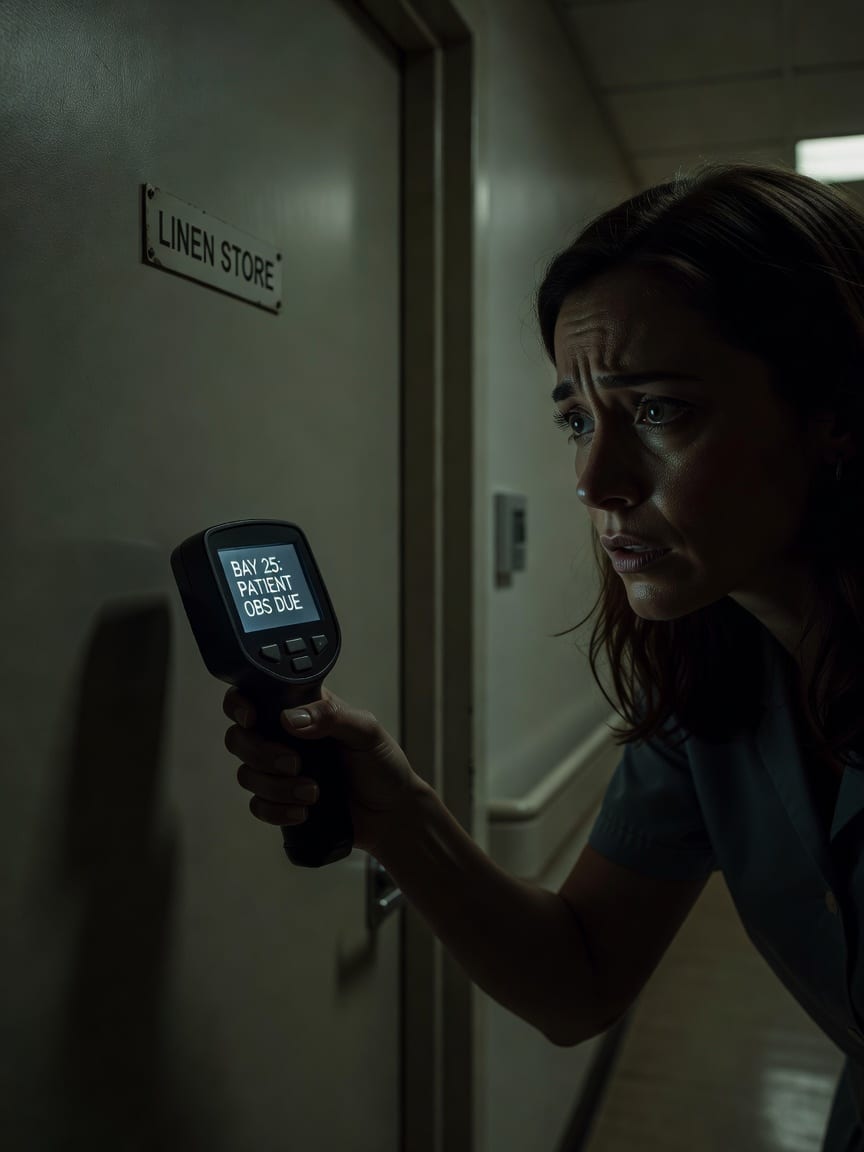
My hospital scanner demands patient care in Bay 25. Bay 25 is a locked linen closet.
I'm a pragmatic nurse, used to my hospital's quiet night shifts. But for a fortnight, my scanner has logged phantom patients in 'Bay 25' — a room that's just a linen closet. Then, tucked away, I found an old patient ID bracelet, faded but clear: 'Bay 25.'
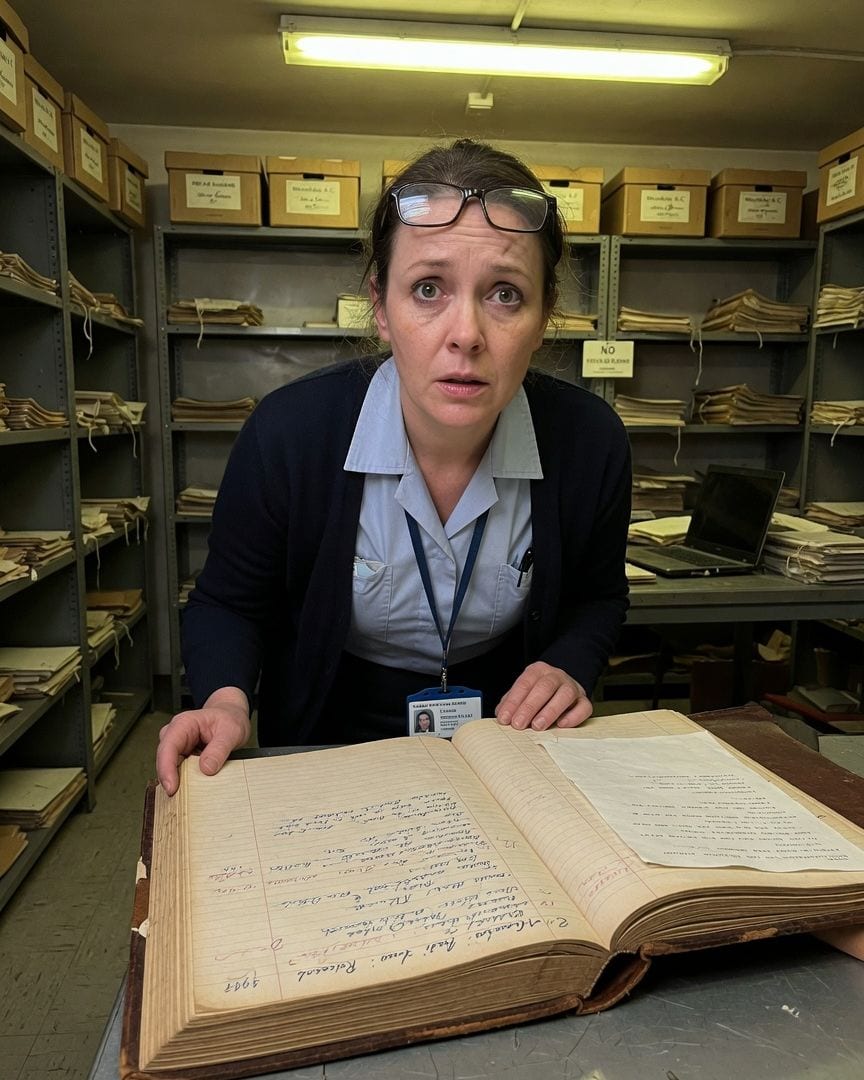
My ambulance trust's incident log shows callout 22-014 to 6 Cathcart Row at 2:40 AM. Every four years, the same call, same address. Always 'patient not found'.
My job involves tedious data entry for ambulance calls, but Incident 22-014 was different. It appeared every four years, always at 2:40 AM, always closed as 'patient not found.' Digging into the dusty physical archives, I found an entry from 1961 for the exact same incident, but its resolution read: 'Subject Secured. Relocated to "Holding".'
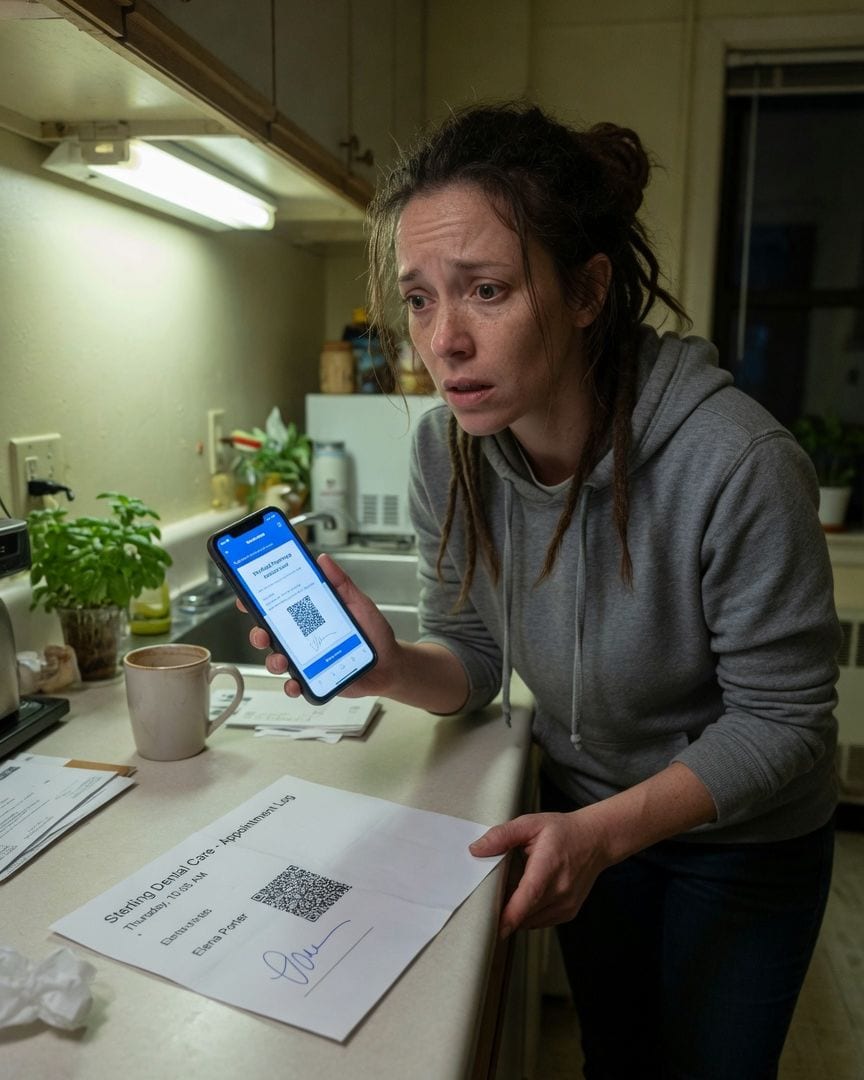
My dentist's system says I was there last Thursday. I wasn't. But the check-in tablet shows my signature, and the hygienist described my chipped tooth exactly right.
I received a call confirming a dental appointment I never made, for a day I was home. Yet, Sterling Dental had my perfect digital signature and described a chipped incisor I’d never told them about. The physical proof insisted I was there, but I wasn’t.