My monitor shows Room 3's patient coughing, but the room is empty and stripped bare.
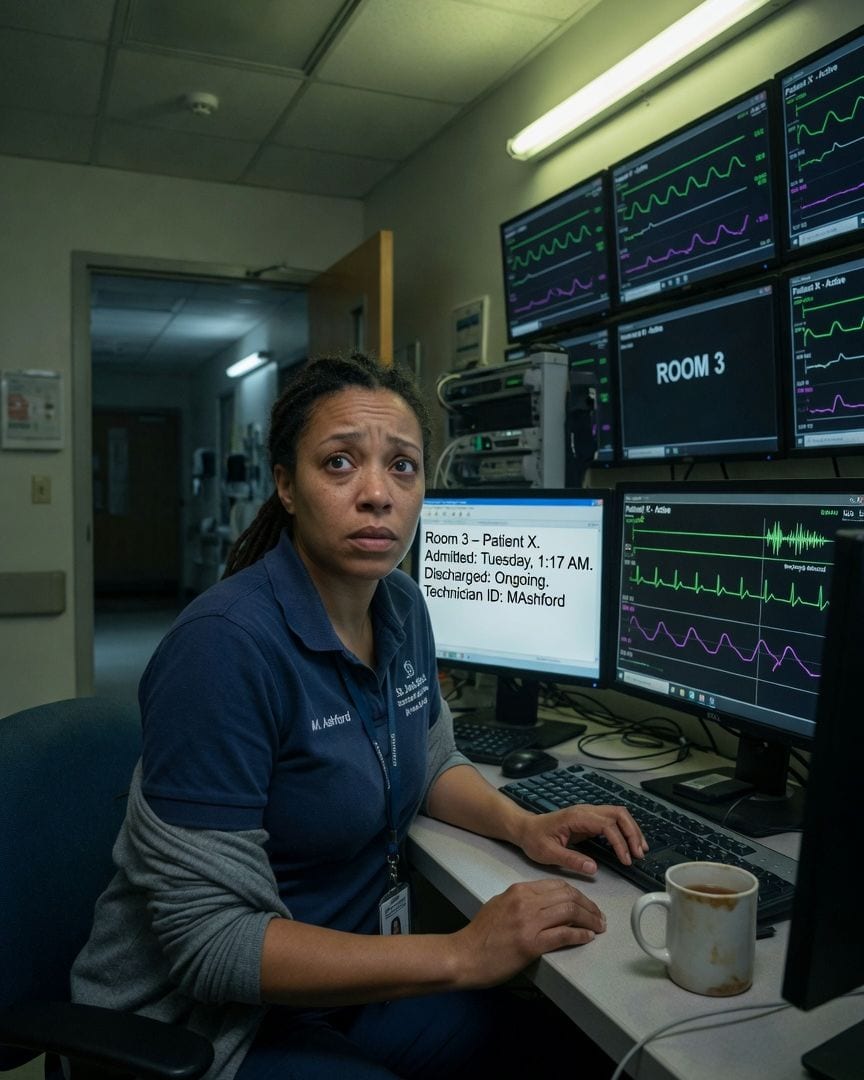
The lukewarm coffee was doing little to chase the chill from the St. Jude’s Sleep Clinic control room that Tuesday night.
It was 3 AM, the dead center of my shift, the part where the silence felt like a heavy blanket, broken only by the rhythmic beeps and soft whirs of the machines.
I’d worked this night shift for three years, and the routine was a comfort, a predictable lull. My eyes drifted over the wall of monitors, each displaying the delicate, undulating trace of a sleeping patient.
But one monitor, the one for Room 3, had been active all week, a persistent, infuriating anomaly.
It showed the steady rise and fall of breathing, the subtle shift of a body, even a faint, wet cough on the audio feed.
I knew it was wrong. Room 3 was out of service. I pulled up the digital booking sheet for the morning handover, and there it was, starkly marked: 'EMPTY – MAINTENANCE.'
Just to be sure, I’d called Eileen Merritt, the housekeeping supervisor, yesterday. "Room 3?" she'd asked, her voice crackling through the phone. "Oh, that’s been stripped since the big leak two months back. Bed frame out, everything. Why?"
I'd mumbled something about a sensor issue and hung up, a cold knot forming in my stomach.
I walked down the deserted hallway now, the fluorescent lights humming overhead, casting long shadows. The door to Room 3 was slightly ajar, a sliver of darkness visible within.
Inside, the room was a sterile shell of white walls and linoleum, completely bare. No bed, no nightstand, no monitoring equipment. Dust motes danced in the sliver of light from the hall.
It smelled faintly of disinfectant and something else, something metallic and cold. I checked the wall panel where the patient sensors should plug in; the ports were empty, cables neatly coiled and secured with zip ties, exactly as Eileen described.
Yet, back in the control room, Room 3’s monitor continued its steady, impossible trace: a sleeper turning, breathing, the faint echo of a cough playing softly from the speaker.
My rational mind kicked in, sharp and insistent. It had to be a cross-circuit, a phantom signal, some kind of system error. That was the only explanation.
I spent the next hour meticulously tracing every connection from the monitor to the server rack, double-checking every port, running diagnostics on the monitoring software.
Every other monitor on the wall was perfectly normal, linked to its assigned patient, their sleep patterns unfolding predictably. No anomalies, no shared frequencies, no hint of interference.
The system itself reported Room 3's monitor was receiving a clean, strong signal, as if a patient were genuinely there, sensors properly attached. I even tried unplugging and replugging every cable in the control room, restarting my entire console.
Nothing changed. Room 3 continued its ghost vigil, the green line on the screen a steady, mocking heartbeat.
Frustrated, a prickle of unease beginning to crawl up my spine, I pulled up the clinic’s digital patient log. I was convinced I’d find a glitch, an overlooked maintenance flag, anything that could explain this impossible reading.
I scrolled through the current week’s admissions, then the previous, looking for any stray data. Suddenly, my eyes snagged on an entry that made my breath catch in my throat. 'Room 3 – Patient X.' Admitted: Tuesday, 1:17 AM.
Discharged: 'Ongoing.' The vitals recorded matched the trace I’d been seeing—heart rate, respiration, even the occasional sleep-spasm spike. But there was no doctor’s order attached, no intake form, no patient record number.
Nothing but the name 'Patient X' and those consistent, impossible vitals.
And then I saw it, a detail that made the blood drain from my face, turning my vision to a swim of black and white: the entry was logged under 'Technician ID: MAshford.' My own system ID.
I never made that entry. I stared at the screen, at the impossible patient, at my own digital signature, the monitor still showing the slow, steady breath of something that wasn’t there.
My breath hitched. My own ID. I tried to process the impossible. Someone, or something, used my credentials to log in a non-existent patient into a non-existent room. Or, worse, the system itself created the entry, attributing it to me.
I reached for my keyboard, intending to delete the entry, to wipe away the absurdity, to make the impossible disappear. My fingers hovered, shaking slightly above the keys.
The monitor for Room 3 flickered, just for a split second, and the faint, rhythmic cough from the speaker seemed to grow louder, more distinct, as if the sleeper had just shifted their head closer to the mic.
The air in the control room suddenly felt heavy, cold, as if a presence had materialized just behind my chair.
I felt a distinct prickle on my neck, an undeniable sense of being watched, of something standing directly in the space between my back and the wall.
Marie freezes, her eyes wide, locked on her name next to the impossible patient, the monitor showing the slow, steady breath of something that shouldn't exist.
The next night, I returned to my shift, a cold dread clinging to me like the faint scent of disinfectant. I tried again to delete the 'Patient X' entry.
The system flashed an error message, digital letters accusing me: 'Entry cannot be modified by current user; requires supervisory override.' I couldn't delete it. I couldn't even edit it.
It was locked in place, a digital ghost anchored to my identity.
During the morning handover, I tried to casually ask Russell Sheppard, the day tech, about Room 3. "Still empty, right?" I asked, feigning nonchalance as I poured myself a fresh cup of lukewarm coffee.
Russell shrugged, already halfway out the door, his mind clearly on going home. "Yeah, for ages. Why, you hear something?" I deflected, "Just double-checking the booking. Thought I saw something odd in the system."
Russell just nodded, already distracted by his phone, and walked away.
Later that week, I found Eileen Merritt in the breakroom, meticulously cleaning coffee stains off the counter. "Eileen," I began, my voice lower than usual, "about that leak in Room 3… was it a bad one?
Anything else happen around then?" Eileen stiffened, her movements freezing for a split second before she resumed wiping. Her eyes darted away, refusing to meet mine. "Just a burst pipe, Marie. Nothing special.
You know, strange things happen on the night shift, always have. The quiet gets to people." Her voice was clipped, dismissive, her usual unflappable demeanor replaced by a rigid defensiveness.
I felt a chill that had nothing to do with the air conditioning. Eileen had always been the most grounded person in the clinic, utterly pragmatic. Now she was cagey, her evasiveness more alarming than any direct answer.
That night, alone again, I started digging through the clinic's archived digital logs, searching for any historical entries for Room 3. It was a tedious process, sifting through years of data, page after digital page scrolling past my eyes.
I filtered by room number, then by 'unassigned patient' or any anomalous keywords. Slowly, painfully, a pattern emerged.
Not just one 'Patient X,' but several, scattered across different years, always in Room 3, always logged by a night tech, always with no corresponding physical paperwork.
They were like digital echoes, faint and unsettling, each one a small, impossible wrongness tucked away in the clinic's history.
Driven by a growing unease that felt like a cold stone in my gut, I decided to search for older, physical records.
I remembered Russell once joking about a dusty, disused storage room in the basement, rumored to hold decades of archived paperwork.
The clinic groaning around me with the settling of old pipes and the hum of unseen machinery, I navigated the labyrinthine corridors with my phone's flashlight. The air grew colder, heavier, as I descended the narrow, concrete stairs.
In a forgotten cabinet, tucked behind rows of old supply manifests covered in a fine layer of dust, I found it: a thick, leather-bound logbook, brittle with age, its cover cracked, clearly a manual backup from the clinic’s early days.
The faded gilt on the spine read 'Night Shift Patient Register – 1975-1995.'
Flipping through the yellowed pages, the paper thin and fragile beneath my fingertips, I found entries for Room 3. Hand-written, in faded ink. 'Patient J. Doe,' 'Patient M. Smith.'
No doctor’s name, no discharge date, just a night tech's initials scribbled beside them. Exactly like my digital discovery, but decades older, a physical testament to a long-running impossibility.
As I read, tracing the ancient ink with my finger, a low, guttural hum started, vibrating through the concrete floor, rising up through the soles of my shoes.
The clinic lights above flickered violently, then dimmed to a sickly yellow glow, casting long, wavering shadows across the dusty shelves.
From down the hall, directly outside Room 3 on my floor, I heard it: a faint, rhythmic thump-thump, slow and deep, like a vast, sluggish heartbeat, resonating through the floorboards. It was too loud to be imagination.
My heart pounded against my ribs, a frantic counterpoint to the distant thumping. I clutched the old logbook, the feeling of being watched now an oppressive weight, a cold breath on my exposed skin, raising gooseflesh on my arms.
The isolation of the night shift, usually a comfort, became absolute, a vast, silent maw ready to swallow me whole.
The next morning, I cornered Russell in the breakroom, my face pale, the lack of sleep etched into my features.
I showed him a photograph of one of the hand-written entries from the old logbook – 'Patient E. Thomas, Room 3, logged by N-Tech Gerald Mitchell, 1988.' Russell's usual cheerfulness faltered.
He stared at the faded image on my phone, then back at me, a flicker of something I couldn't quite decipher—recognition? fear?—in his eyes. "Where did you find this?"
he asked, his voice low, a contrast to his usual easygoing tone.
"In the archives," I pressed, my voice tight. "There are dozens like it. And digital ones, too. Always Room 3. Always a night tech's ID. And a leak, every few years, always in the same wing."
I took a breath, the words tumbling out. "What is this, Russell? What’s really going on here?"
Russell hesitated, glancing around the empty breakroom, as if expecting someone to materialize. "Look, Marie, I shouldn't… but there are stories. Old ones. About the clinic. About the 'sleepers'." He lowered his voice further, leaning in conspiratorially. "Not patients, exactly.
More like… things that sleep here. They say the clinic was built on… something. Something old." He pulled out his own phone, navigating to a rarely accessed, almost hidden section of the internal clinic wiki.
It was titled 'Unassigned Traces Protocol – Legacy.' The language was archaic, almost ritualistic. It described procedures for 'maintaining the ambient field' and 'non-intervention observation' for 'dormant entities.' It warned against 'direct communication' and 'disrupting established patterns.'
I read, my blood turning to ice, as the earlier clues snapped into sickening focus. The 'leak' wasn't a plumbing issue; it was a 'disruption.' The 'maintenance' wasn't repair; it was 're-establishing the ambient field.'
The monitors aren't for diagnosis; they’re for 'observation.' I looked at Russell, my gaze locking on his. "This isn't a protocol for patients, is it? It's a manual for… keeping something alive. Something that's not human, in Room 3."
He didn't answer, his silence a terrifying confirmation.
I spent the next shift, fueled by an internal tremor, poring over the 'Unassigned Traces Protocol' and cross-referencing names from the old logbook with clinic employee records.
The protocol mentioned 'historical anomalies' and 'recurrent manifestations' tied to specific room numbers, always including Room 3.
The true horror slowly dawned on me as I started matching the initials from the old logbook entries to the full names of former night technicians. 'Gerald Mitchell.' 'Elliot Beaumont.' 'Roland Merritt.'
All night techs from decades past, all assigned to the same wing. And their names, or variations of them, appeared as the 'patients' in the old, impossible Room 3 logs. The entities weren’t just manifesting; they were taking identities.
They were feeding on the techs themselves, using their names to perpetuate the cycle. My blood ran cold, a glacial river through my veins.
I scrolled further, my fingers trembling, searching for any other mention of 'Marie Ashford.' And then I found it. An archived digital entry from fifteen years ago, for 'Patient Roland Beaumont' in Room 3. And the logging technician?
'N-Tech Marie Ashford.' My own name. A technician with my name, logging an impossible patient, years before I was even hired, years before I even knew this clinic existed.
The rhythmic thump-thump from the silent Room 3 seemed to resonate through my very bones, a heartbeat that was not my own, a name that was not just hers, but mine.
My fingers froze on the dusty page of the old logbook, my eyes fixed on the entry: 'Room 3 – Patient Roland Beaumont, logged by N-Tech Marie Ashford, 2009.'
The year is wrong, the name is hers, and the implication is a cold, silent scream in her chest. She can feel the faint, rhythmic thumping from down the hall, now seemingly inside her own head.
I stared at the screen, the old entry a digital brand on my soul. The full, monstrous truth clicked into place with chilling coherence, every impossible detail, every vague warning, every chilling coincidence.
The St. Jude’s Sleep Clinic isn't just a clinic; it's a carefully constructed mechanism, a host facility.
The 'sleepers' aren't patients to be cured; they are entities, liminal presences that feed on the routine, the attention, the sustained belief that a human being is being monitored and cared for.
Room 3, and likely other 'anomalous' rooms scattered throughout the building, are their anchors, their feeding troughs.
The 'Unassigned Traces Protocol' isn't a warning; it’s a manual for their cultivation, for ensuring their continued existence, meticulously detailing the conditions under which they thrive.
The 'leaks' and 'maintenance' aren't accidents; they are 'resets,' moments when the entities either manifest too strongly, threatening exposure, or need to be 're-established' in their feeding cycle.
And the 'patients' whose names appear in the logs—'Patient Roland Beaumont,' 'Patient E. Thomas'—aren't just names, or even ghost patients. They are the previous night technicians.
The entities consume them, absorb their identities, and then use those identities to continue the cycle of 'care' for the next generation of 'sleepers,' the next offering.
The Marie Ashford from fifteen years ago was either an earlier victim, her identity already subsumed into the collective, or a premonition, a placeholder for the next offering.
I'm not just a night tech; I am the next 'patient,' my identity slowly being overwritten, my consciousness becoming another 'trace' in Room 3.
The monitoring I’ve been doing isn't for a patient; it's for it, for them, to solidify their hold, to pull me into their endless, silent sleep.
I gripped the edge of my desk, knuckles white, the plastic digging into my palms. The monitor for Room 3 pulsed with its impossible trace, a slow, steady breath that now felt like my own, echoing in my chest.
I was trapped. The system had already implicated me, logged me in, made me a part of the 'protocol.'
I knew I couldn't undo it, couldn't fight an entity that lived in the very fabric of the clinic's routine, that fed on my attention, on the very act of my observation.
I tried to log out, to break the connection, to sever my system ID from Room 3’s 'patient.' My fingers flew across the keyboard, a desperate, frantic attempt to reclaim my autonomy, to snatch back my own identity.
The screen flashed: 'ERROR: Active protocol cannot be terminated by technician ID MAshford.' A cold wave of despair, thick and suffocating, washed over me.
The clinic’s automated overhead announcement system crackled to life, its synthesized voice calm, utterly devoid of inflection, slicing through the heavy silence. It echoed through the empty hallways, reaching into the control room, chilling me to the bone.
'Night shift technician Marie Ashford. Protocol 7 initiated. Continue monitoring.' The door to the control room, which I had sworn was locked and secured, slowly, silently, began to swing inward, revealing only deeper shadows beyond.
The rhythmic thump-thump from Room 3 grew louder, resonating with the quiet click of the door latch. I didn't move.
I could only stare at the opening door, at the darkness beyond, as the monitor for Room 3 glowed with the steady, impossible rhythm of a life that was not my own, but soon would be.
Marie Ashford’s car was found in the clinic parking lot, untouched, keys still in the ignition. Her apartment was quiet, pristine, her few personal effects exactly where she’d left them.
Russell Sheppard reported her missing after she failed to show for her handover. Police investigated, found nothing, categorized it as a voluntary disappearance. Eileen Merritt, when questioned, just shook her head, a familiar, resigned look in her eyes.
"Another one," she murmured, almost to herself. The clinic continued its operations, its fluorescent lights humming, its monitors tracing the sleep of its patients. Life, or what passed for it, went on, undisturbed.
A week later, a new night technician, Gerald Mitchell, began his first shift at St. Jude's. He logged into the system, his ID fresh and unblemished.
In the digital patient log, Room 3 was listed as 'occupied,' vitals active, patient 'Marie Ashford.' He noted the anomaly, a faint frown creasing his brow.
The monitor showed a strong, steady trace, a sleeper turning, breathing, the odd, rhythmic thump-thump a new addition to the audio feed. He leaned closer to the monitor, adjusting the gain, trying to isolate the sound.
He made a quick note in the system, a small, almost imperceptible correction to the room's ambient noise profile. He glanced at the empty Room 3 on the booking sheet, then back at the active monitor.
He’d get to the bottom of it, eventually. For now, the shift was long, and the patients needed monitoring.
The new tech noted a slight anomaly in the Room 3 trace – a faint, rhythmic thump-thump that wasn't there before, like a slow heartbeat. They lean closer to the monitor, adjusting the gain.
"Just a little interference," they murmur, making a note in the system. "Nothing to worry about."
If this one got to you
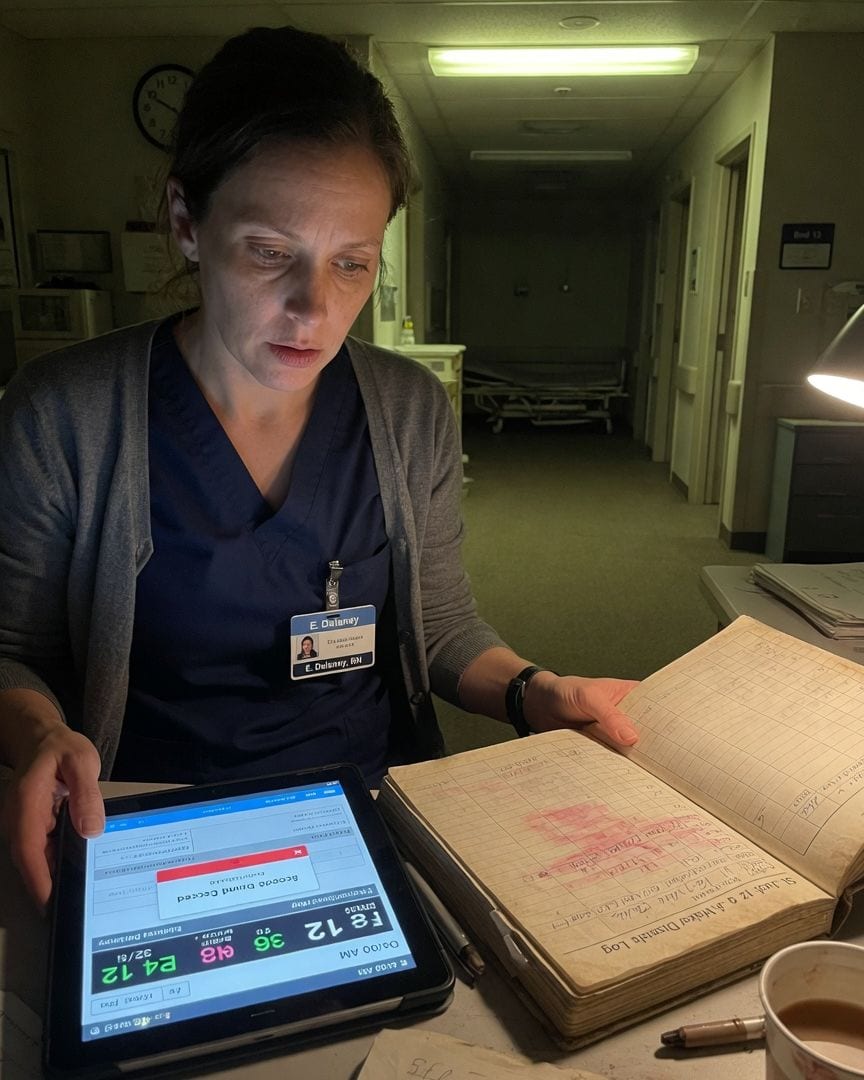
My empty ward's bed 12 had fresh vitals charted. The system says I entered them.
Working my usual night shift at St. Jude's, I pulled up the monitor system to log patient vitals for Ward 12. My thumb paused at Bed 12, where a full set of readings was already timestamped and logged under *my* ID. But Bed 12 was utterly stripped and empty; it had been discharged days ago.
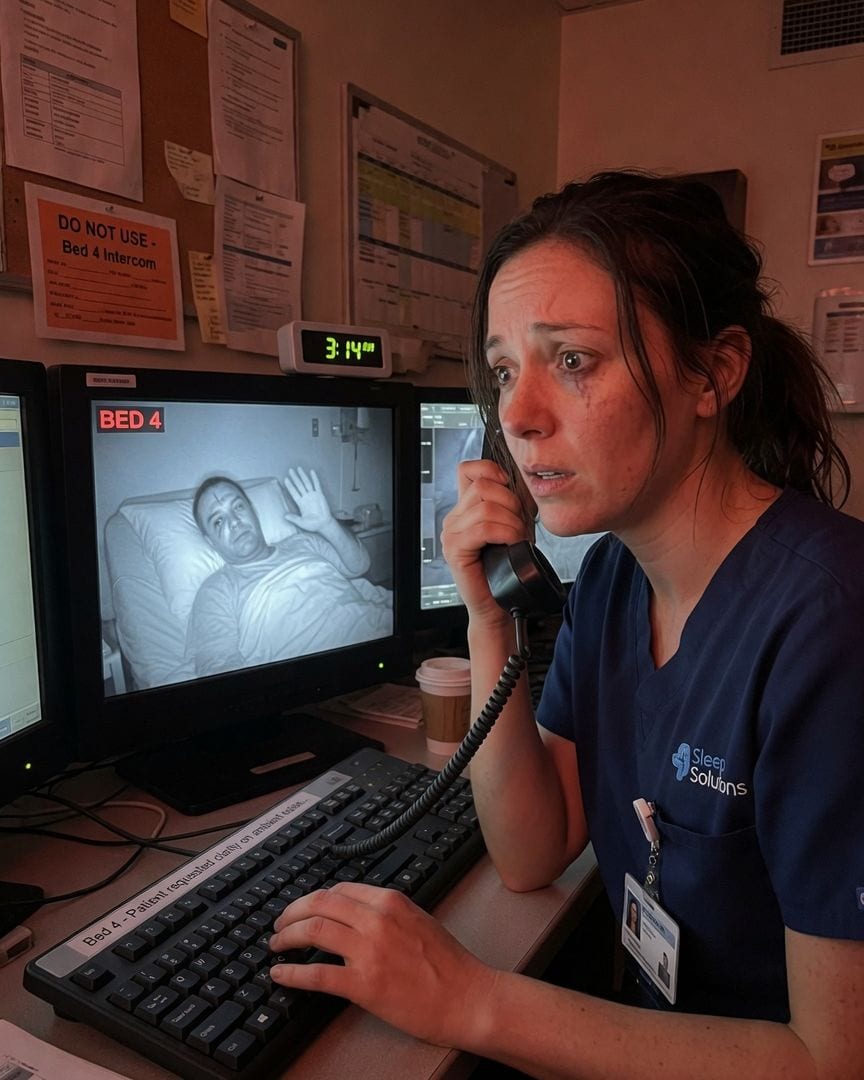
Bed 4's patient always waves at my camera, asking if I hear the humming. Bed 4 was never booked.
As an overnight nurse, my shift at Sleep Solutions is usually routine. But after interacting with a patient in Bed 4, my manager insists the room has been off-limits for deep cleaning all week with its intercom disconnected for months. Yet, I found a faint, warm indentation on the new mattress where the patient had been.
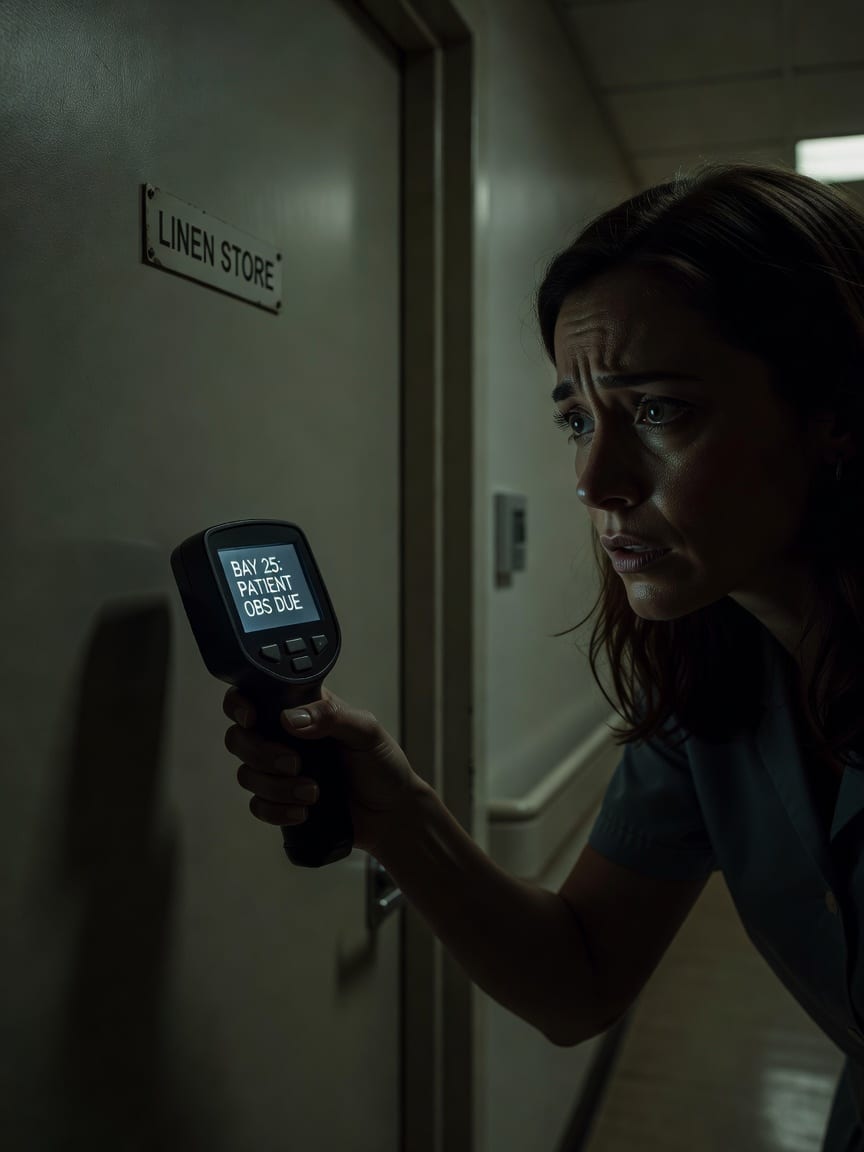
My hospital scanner demands patient care in Bay 25. Bay 25 is a locked linen closet.
I'm a pragmatic nurse, used to my hospital's quiet night shifts. But for a fortnight, my scanner has logged phantom patients in 'Bay 25' — a room that's just a linen closet. Then, tucked away, I found an old patient ID bracelet, faded but clear: 'Bay 25.'
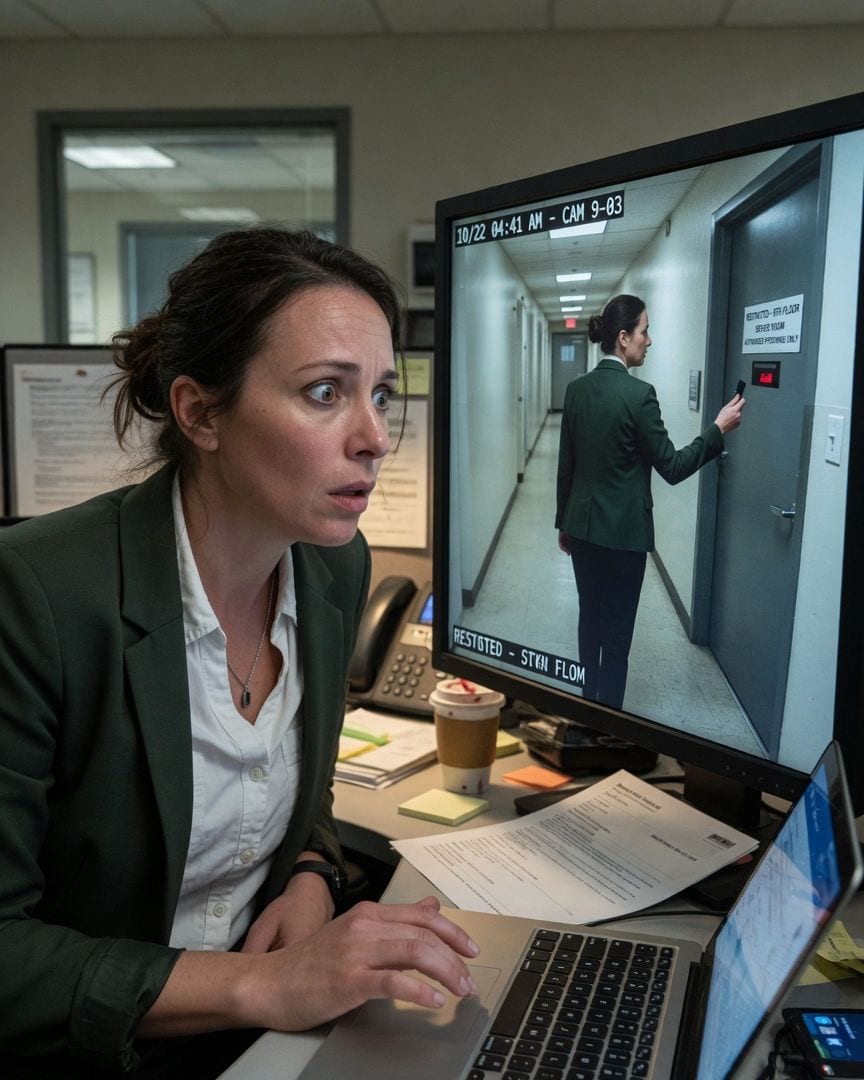
My keycard log shows me in the server room at 4:41am. I was asleep, and my badge was at home.
An email from corporate IT reveals my keycard registered entry into a restricted server room at 4:41 AM last Sunday. I was asleep in my apartment across town, my badge clipped securely to my jacket at home. But then I scrolled down and found eleven more impossible entries, all within the past week, all under my name.
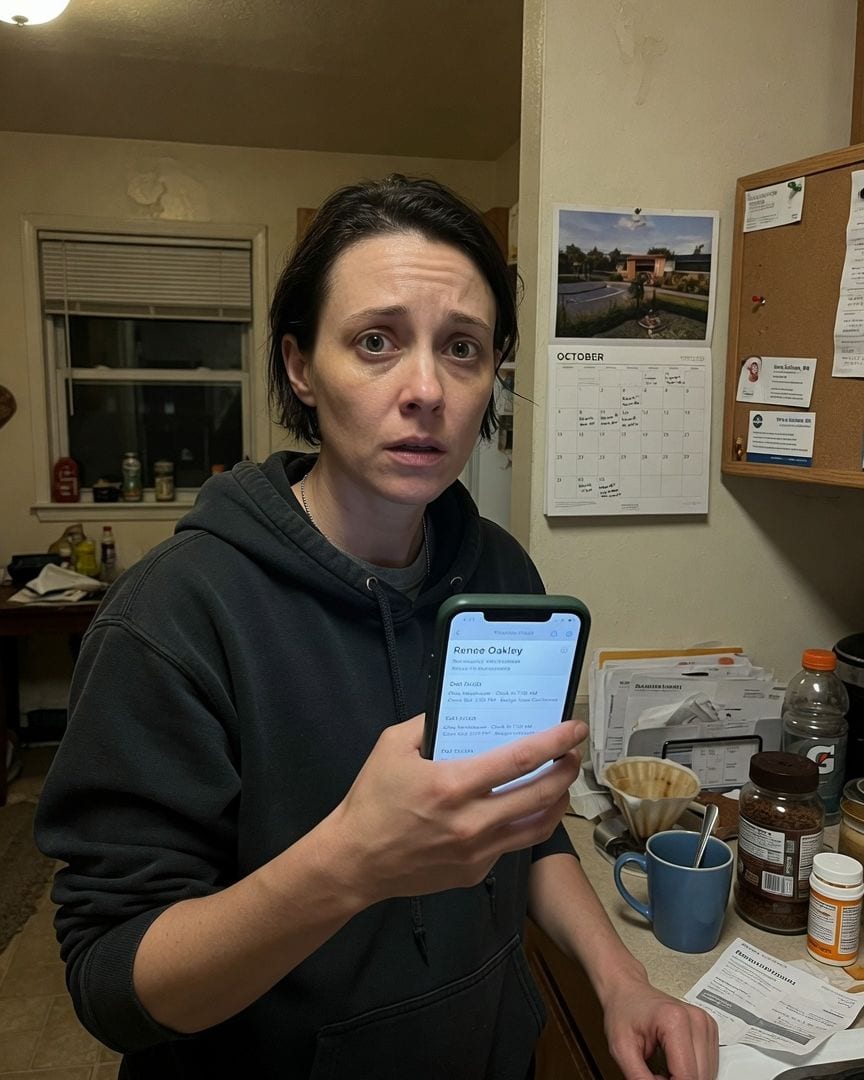
My company clock-in system says I worked full shifts in Ohio all last week. I was on medical leave in Florida, under a nurse's care.
Back home from medical leave, my payroll deposit was unexpectedly high. I checked my timesheet, only to find it logged me working full 40-hour shifts at the Ohio warehouse. But I was hundreds of miles away in Florida, confined to a sickbed under a nurse's care. Then my manager called: security footage confirmed I entered the warehouse.
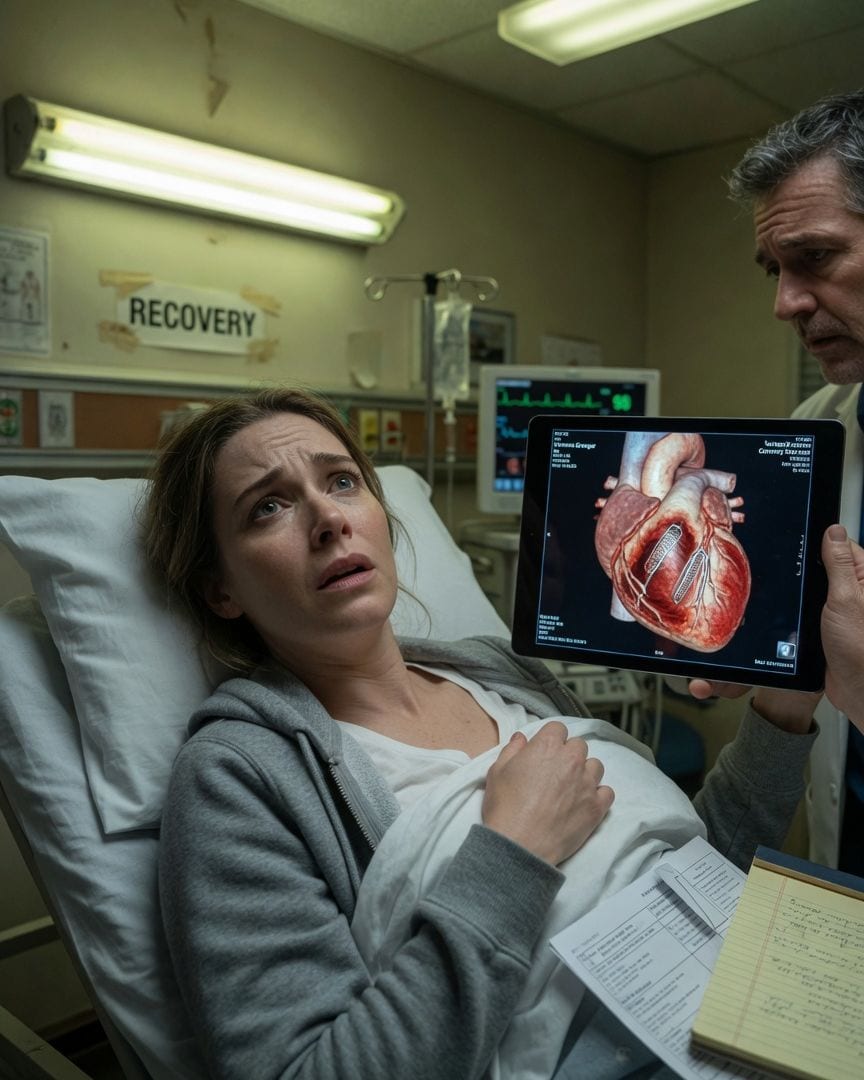
Metal stents are propping open my heart. The doctor rotated the image, but I've never had a cardiac procedure.
After years of dismissed chest pain, a CT scan revealed an impossible truth: my heart contained two metal stents. Dr. Maddox confirmed there was no record of any cardiac procedure in my entire medical history, and I had no memory of ever having surgery. My own body held a secret, alien architecture I couldn't explain.