My father-in-law turns his right cheek now, and when I laughed about it he didn't laugh, he just watched me and asked who taught me the other way.
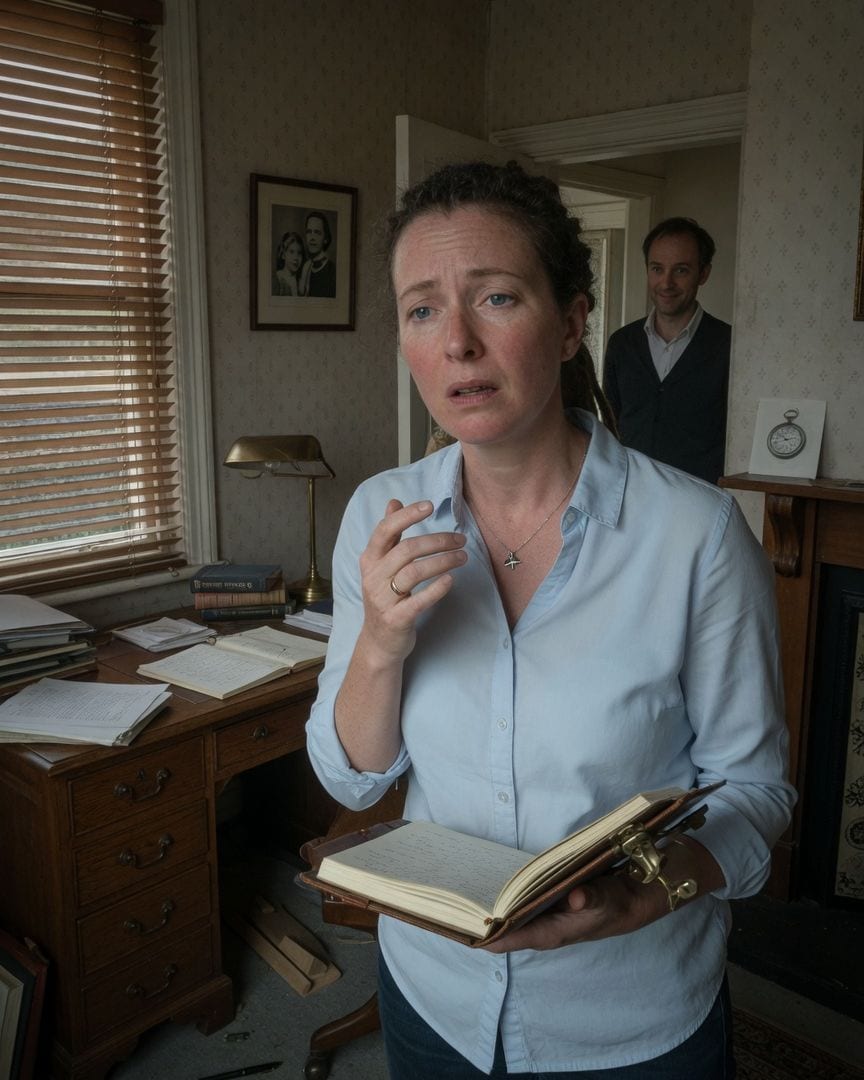
The first morning after Theodore Hartley came back, I went to hug him hello, just like I always did.
My father-in-law had this old European manner, always offered his left cheek first, turning his head just so, a little ritual I’d learned early to avoid an awkward bump. But this time, he turned his right.
I went left, as always, and bumped his nose. I laughed, a little flustered, ‘Oh, Ted, you changed your mind!’ He didn't laugh back. He just watched me, his blue eyes, so perfectly familiar, unblinking.
'Who taught you that other way, Claire?' he asked, his voice smooth, even, but with a faint, almost imperceptible shift in inflection, like a note held a fraction of a second too long.
My mother-in-law, Vivienne, bustling in the kitchen, called out, 'Oh, ignore him, dear, he's just a bit off after his ordeal!' But Theodore didn't look 'off'. He looked… utterly certain.
And he kept watching me, a small, knowing smile beginning to form. I stood there, my hand still half-raised from the aborted hug, the air thick with something I couldn't name, a quiet hum of wrongness settling in my bones.
Later that day, trying to shake off the uncanny encounter, I went to Theodore’s study, a room usually as predictable as a grandfather clock. He’d always kept it meticulously tidy, every book alphabetized, every paper filed.
Now, the desk was subtly disarrayed, a stack of books out of order, a pen lying on the floor.
More importantly, his antique pocket watch, a family heirloom he never took off, was missing from its usual spot on the mantelpiece. Vivienne, when I asked, waved it off. 'Oh, he probably misplaced it, dear. He’s been through a lot.'
But Theodore was a creature of habit. The watch was an extension of him. As I tidied a stack of papers, my fingers brushed against something stiff tucked beneath a loose floorboard near his chair.
It was Theodore's old leather-bound journal, the one he’d kept since before I married into the family, always locked with a tiny brass clasp. He’d never let anyone touch it. Now, the clasp was broken, and it was slightly ajar.
My heart beat a nervous rhythm against my ribs. I knew I shouldn't, but the wrongness of the cheek, the missing watch, the misplaced items… I couldn't resist. I opened it, my eyes scanning for an explanation, a date, anything.
The last entry was dated two days after his disappearance, five days ago.
In his unmistakable hand, it described a quiet afternoon spent repainting the garden shed, a task he’d finished months ago, and then a casual mention of 'Claire’s little carved bird collection', a set of tiny wooden birds my late mother had carved for me when I was a child, which I kept hidden in my own bedroom, something Theodore had never, ever seen.
My breath hitched. The shed had been repainted in spring. And my mother's birds—he’d never known about them. Not even Vivienne knew.
This wasn't a misplaced watch or a changed habit; this was a memory, a detail, that couldn't exist in his mind. My gaze snapped up from the journal.
Through the open study door, I saw Theodore standing in the hallway, silhouetted against the afternoon light. He wasn't looking at me, but at the empty space on the mantelpiece where his watch should have been.
Then, slowly, he turned his head, his eyes finding mine. A small, almost imperceptible shift in his expression, a flicker of something ancient and unreadable, passed across his face.
He began to walk towards me, his footsteps soft but deliberate, and for the first time, I felt a cold, primal fear, the kind that whispers run.
I quickly snapped the journal shut and slid it back under the floorboard, my heart hammering. Theodore stopped at the doorway, his gaze still on me, but the unreadable flicker was gone, replaced by his usual placid expression.
'Claire, dear, are you alright?' he asked, his voice perfectly even. 'Just looking for a book for Vivienne,' I stammered, my voice thin. He nodded, a slow, deliberate movement. 'Ah, yes. Always reading, our Vivienne.'
He turned and walked away, and I exhaled, a shaky breath I hadn't realized I was holding. Over the next few days, I couldn't stop looking for more. I started paying close attention to Theodore, every movement, every word.
His morning routine was off. He used to take his coffee black, two sugars. Now he took it with cream, no sugar. Vivienne just said, 'Oh, he’s trying new things, darling!'
But it wasn't 'new things'; it was a complete reversal. His gait, once a slight shuffle from an old knee injury, was now smooth, almost gliding.
The scar above his left eyebrow, from a childhood bicycle accident, was still there, but it seemed… shallower, less defined. I started asking subtle questions, testing his memory.
'Remember that awful storm, two summers ago, when the oak fell on the garage?'
He’d nod, describe the tree, the damage, but miss the specific detail of the old, rusty weather vane that had been crushed, a detail he’d obsessed over for weeks.
Each discrepancy was small, easily dismissible on its own, but together they formed a growing, horrifying constellation.
I even checked the local news archives for the dates he was gone, hoping to find a mundane explanation for his changed habits, a trauma, an amnesia. Nothing. Just the missing persons report, followed by 'local man found safe'.
My quiet investigation didn't go unnoticed. I’d find Theodore in the living room, ostensibly reading the newspaper, but his eyes would track me as I moved, a lingering, too-calm gaze.
Once, I was looking through old family photo albums, hoping to find a picture that would confirm the depth of his scar, or the way he used to hold his coffee cup.
I found one from last Christmas, Theodore beaming, holding his black coffee. I heard a soft cough behind me. He was standing in the doorway, a faint, unnerving smile playing on his lips. 'Nostalgic, dear?' he asked.
'Just admiring the good old days,' I replied, trying to sound casual. He walked over, sat beside me, and pointed to the photo. 'Ah, yes. The coffee.' He paused, then his smile widened. 'You know, I always preferred cream.
Black coffee was a phase I was going through. You taught me to like cream, didn't you, Claire?' My blood ran cold. I had never, ever suggested he change his coffee.
He was the one who'd introduced me to black coffee, in fact. 'No, Theodore,' I said, my voice barely a whisper. 'You always took it black.' His smile didn't falter. 'Are you sure, dear? My memory seems to suggest otherwise.'
His eyes held mine, unwavering, and in that moment, I knew he wasn't just 'off'. He knew I was looking. And he was letting me know he knew.
That night, I confronted Vivienne. I showed her the journal, the impossible entry, the mention of my mother's carved birds. She looked at it, her brow furrowed, then shook her head. 'Claire, I think you're overwrought.
Grief, perhaps, for what Theodore went through. He's home, that's what matters.' I pressed her. 'Vivienne, he knows about my birds. My mother's birds. He never knew about them.' She sighed, a hint of impatience in her voice.
'Well, perhaps he saw them, dear. You keep them on your dresser.' 'No, I don't!' I insisted, my voice rising. 'They're in a box, hidden away! And the shed, Vivienne, the shed was repainted months ago!'
She looked away, a strange, distant quality in her eyes. 'He just needed a project, Claire. He's trying to get back to normal.' 'This isn't normal!' I finally burst out. 'He's not normal!
His cheek, his coffee, his gait, his memories – they're all wrong!' Vivienne turned, her face hardening. 'Don't say that, Claire. Don't you dare say that about your father-in-law. He's been through enough.'
Her voice was calm, too calm, and I saw a flash of something in her eyes, a kind of programmed defensiveness. It wasn't anger; it was a wall.
It was then I realized Vivienne wasn't just oblivious; she was actively, if unconsciously, protecting Theodore, or whatever he was. Her dismissals weren’t just denial; they were a shield.
The man who came back had not only replaced Theodore, but he had subtly, meticulously, replaced Vivienne's perception of reality, too. He had made her complicit in his masquerade. The thought was colder, more terrifying, than any simple monster.
He was inside. He was operating from within their most intimate bonds, and Vivienne was his unwitting, or unwilling, accomplice.
The next evening, I was alone with Theodore in the garden, a quiet, tense silence hanging between us. He was pruning roses, his movements precise, almost unnatural in their perfection. I decided to push.
'Theodore,' I began, 'do you remember that old picnic spot? Just off the old logging trail, near the big fallen birch? My mother and I used to go there when I was little.'
It was a desperate attempt, a shot in the dark, a memory so private, so deeply buried, that no one but my late mother and I could have ever known it. He paused, snippers still.
He turned to me, a soft, almost wistful expression on his face. 'Ah, yes,' he said, his voice a gentle murmur. 'The moss on the rock, like velvet. The unique call of that little warbler.
And your mother always packed those specific raspberry jam sandwiches, didn't she? You hated the crusts.'
He smiled, a genuine, warm smile, and described the exact shade of turquoise on the robin's egg Claire found that day, the unique warmth of the sun on her bare arm, and the way her mother hummed a specific, forgotten lullaby.
He says, 'It was a beautiful day, wasn't it, Claire?' and his eyes, so perfectly Theodore's, hold a calm certainty that freezes her breath, because he was never there.
The air crackled with the impossible. Theodore’s eyes held mine, unwavering, and the warmth in his smile felt like a physical chill. 'How could you know that?' I whispered, my voice trembling. 'You were never there. You couldn't have been.'
His smile faded, replaced by that same unnerving certainty. 'Some memories are… shared, Claire. Passed on. Like old stories.'
He took a step closer, and for the first time, I saw a hint of something beyond mimicry in his eyes – a vast, ancient intelligence. 'Your mother loved that spot. And she loved those little carved birds.'
He paused, his gaze drifting towards the house. 'She was very good at carving, wasn't she? A pity she didn't make more.' My mind raced, connecting the dots: the journal entry, the birds, the picnic spot.
He wasn't just mimicking Theodore; he was accessing a deeper layer of memory, a network of shared knowledge. I remembered his missing watch, the one Vivienne had dismissed. 'Where's the watch?' I demanded, my voice stronger now. 'The antique one.
The real one.' He merely tilted his head, his smile returning, a knowing, almost pitying expression. 'Some things are better left undisturbed, Claire.' I knew then.
He hadn't just replaced Theodore; he had disposed of him, and carefully, meticulously, placed himself in his stead. And Vivienne, caught in his web of subtle influence, was now a barrier, not a help.
The dread solidified: this wasn't an isolated incident. This was a practiced, insidious invasion.
I didn't try to run. I went straight to the attic, the one place I knew Theodore rarely went, the one place where old things truly lay undisturbed.
I found the crawl space, hidden behind a stack of forgotten boxes, and squeezed inside. The air was thick with dust and the scent of aged wood. And there, tucked into a small, velvet-lined box, was Theodore’s antique pocket watch.
Beside it, a small, leather-bound wallet with his old driver’s license, a faded photo of Vivienne and him from their honeymoon, and a single, pressed rose, clearly from his wedding boutonnière.
These were the true relics, the fragments of the man who was. As I held them, a faint, rhythmic tapping started from downstairs, echoing through the old house.
It was the same tapping I’d heard on the first day, the one I’d dismissed. It was Theodore, or rather, the thing wearing his skin, drumming his fingers on the kitchen table, a habit he'd adopted since his return.
I knew he was waiting, listening. I knew he had let me find these things, not because he was careless, but because he wanted me to understand, to know the truth he embodied. He wasn't just Theodore.
He was a type of thing, a perfected mimic, and I was now aware of his methods. I emerged from the crawl space, the watch and wallet clutched tight. I walked downstairs, the tapping growing louder, more insistent.
Theodore was indeed in the kitchen, sitting at the table, his back to me. Vivienne was humming, preparing dinner. He turned his head slightly, just enough for me to see the faint, knowing smile in the reflection of the window.
He didn't need to speak. His presence, his continued existence, was the confrontation. The thing wasn't going to be 'stopped' by my discovery. It was simply exposed, to me.
And the horror was that it knew I knew, and it didn't care. It had already won, securing its place. The tapping continued, a slow, steady cadence.
It felt like a drumbeat, marking not just time, but a larger, unseen rhythm.
I didn't tell Vivienne what I found. I couldn't. She was too far gone, too deeply woven into the new reality.
Theodore continued his life, his slightly off habits now simply 'quirks' to her, his new memories woven seamlessly into their shared past.
The antique watch and wallet remained hidden in my possession, a silent, heavy testament to the man who was. I learned to live with the subtle wrongness, to navigate the house as if walking on thin ice.
The tapping from the kitchen, the way Theodore would sometimes offer his right cheek first, the occasional, perfectly recalled 'memory' of a moment he couldn't have witnessed – they became the new normal, a constant, low thrum of dread beneath the surface of everyday life.
I never confronted him directly again. What would be the point? He was here. He was staying. And Vivienne saw nothing.
The porch light clicked off, plunging the house into a familiar, yet utterly alien, darkness. I walked past Theodore's study, and through the open door, I saw a faint glow.
He was sitting at his desk, the journal open before him, his head bowed. He wasn't writing. He was just sitting there, perfectly still, bathed in the soft, blue light from the page.
I paused, my hand on the doorknob of my own bedroom, and for a fleeting moment, I felt a deep, chilling certainty. He was learning. He was absorbing, processing, perfecting. Not just Theodore, but all the others, too.
The memories, the habits, the small, intimate details. They were all part of a vast, unseen library, constantly updated. I closed my bedroom door quietly, the click echoing in the sudden silence.
The house was utterly still, but the silence felt heavier, more watchful, than any sound. I went to bed, but sleep wouldn't come. I just lay there, listening to the quiet of the house, waiting.
And then, from the kitchen, the soft, rhythmic tapping began again.
If this one got to you
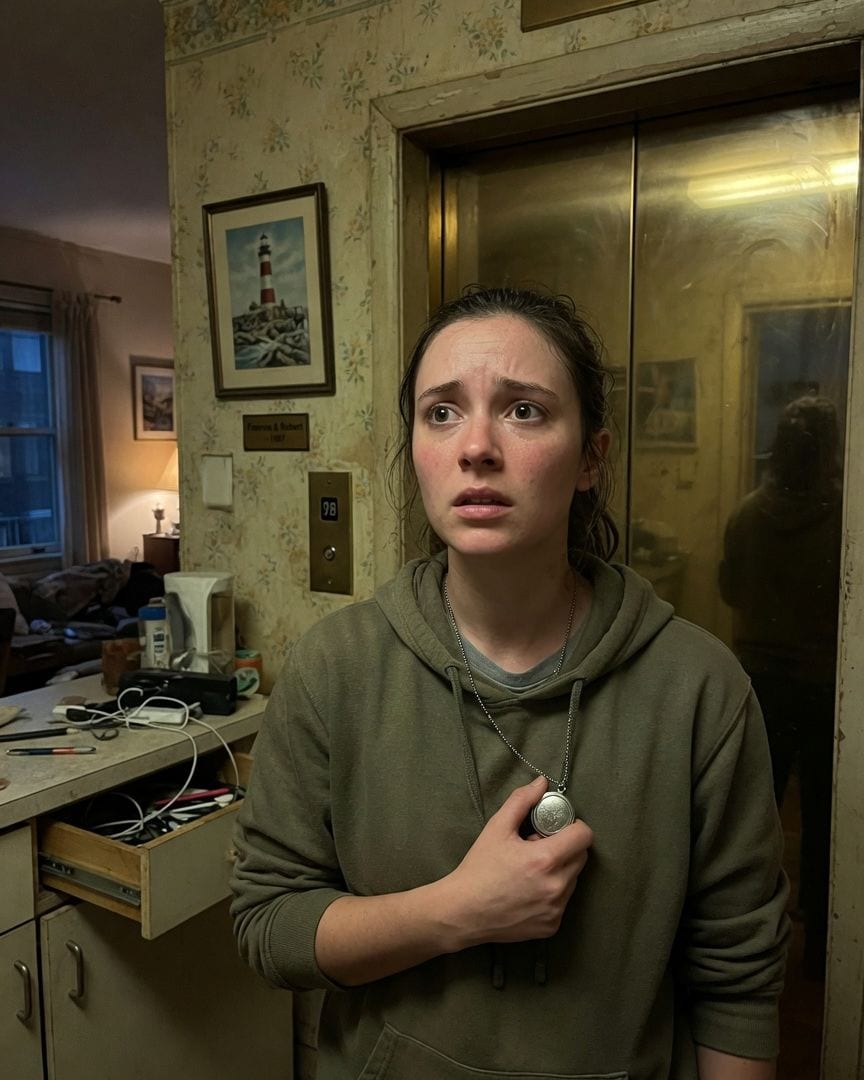
My aunt rode the elevator up, humming, at ease. She hadn't stepped in one since 1994, and told the story of why to anyone who'd listen.
My Aunt Frances stood beside me in the hospital elevator, humming a low tune. It felt deeply wrong; she hadn’t set foot in one since a traumatic incident in 1994, always taking the stairs. Now, after five days missing, she was completely at ease, denying she’d ever feared something so silly, her eyes holding an unsettling calm.
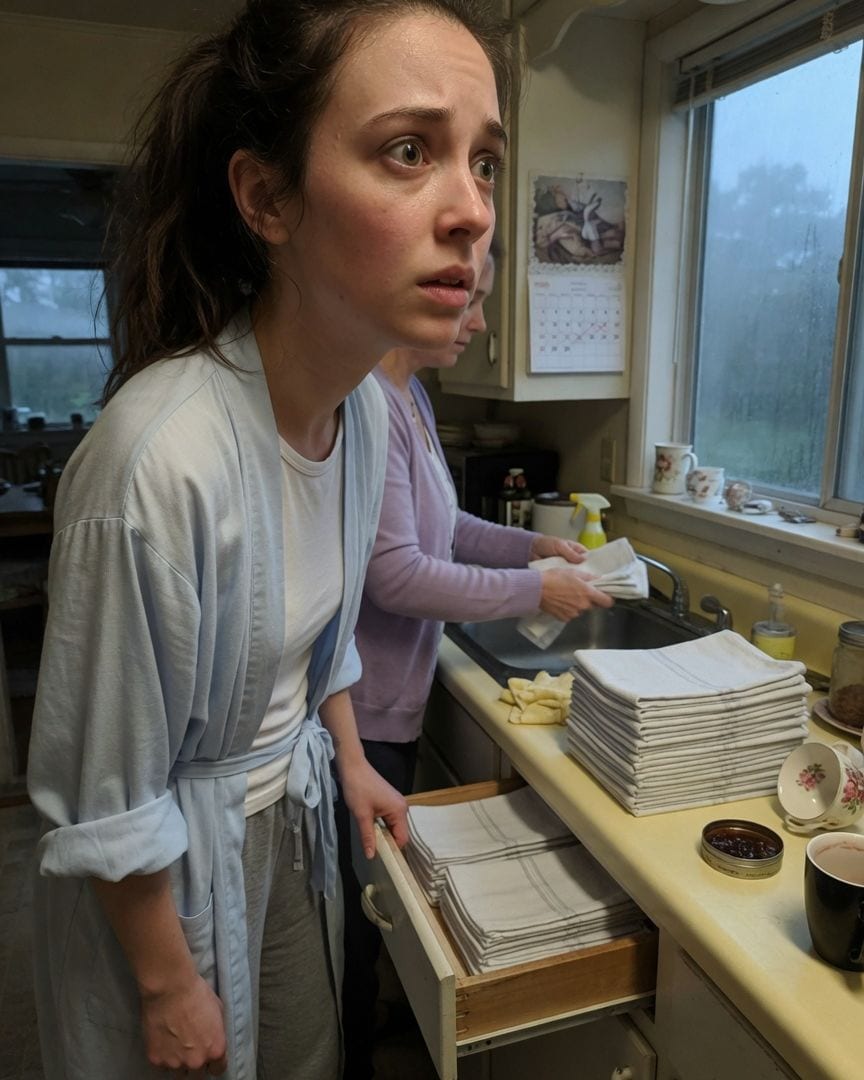
My mother's left wrist has a new scar. She never had one there.
My mother is finally home after her disappearance, and I'm trying to find our old rhythm. But then I watch her fold tea towels, a simple ritual I learned from her. She's doing it completely wrong, seam-out, insisting it's how she's always done it.
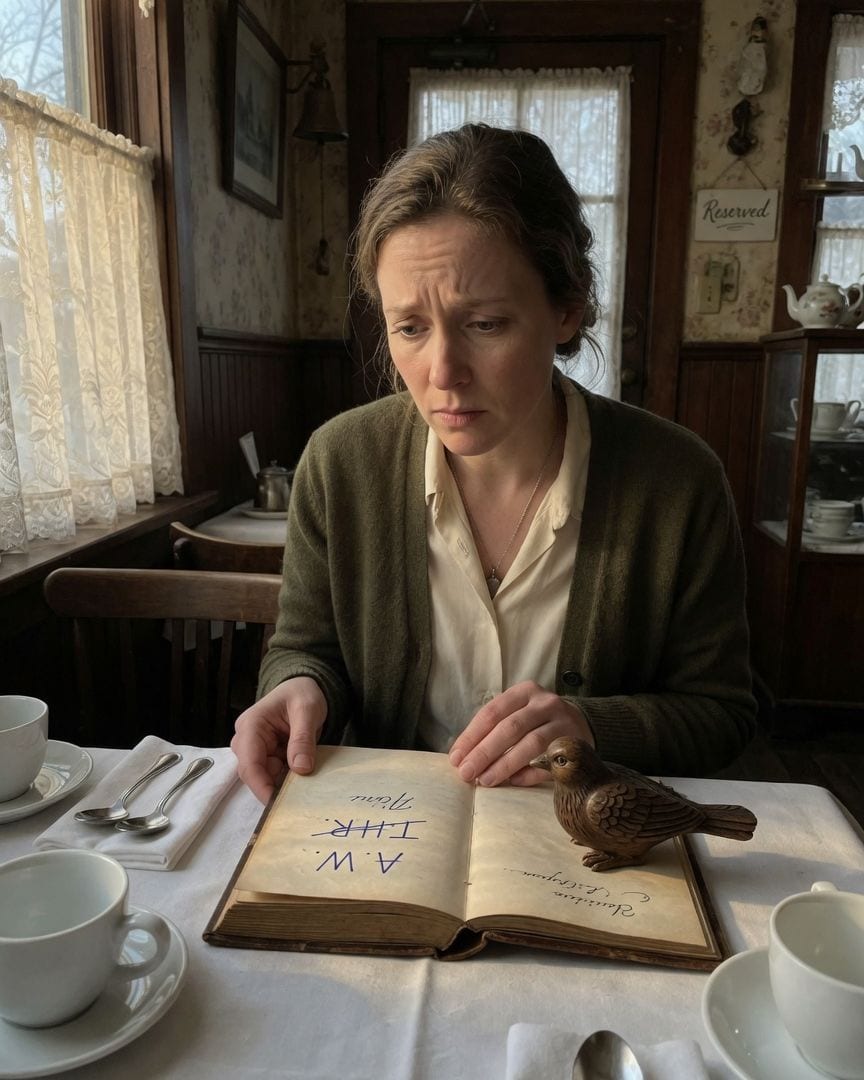
My tearoom table reservation replaced three initials booked daily since 1926. Today, I sat in their seat.
As an art restorer, I loved the quiet history of Oakhaven’s tearoom, especially a sunlit corner table. But the owner, Gloria, always insisted it was reserved, despite it being meticulously set and empty every single day since 1926.
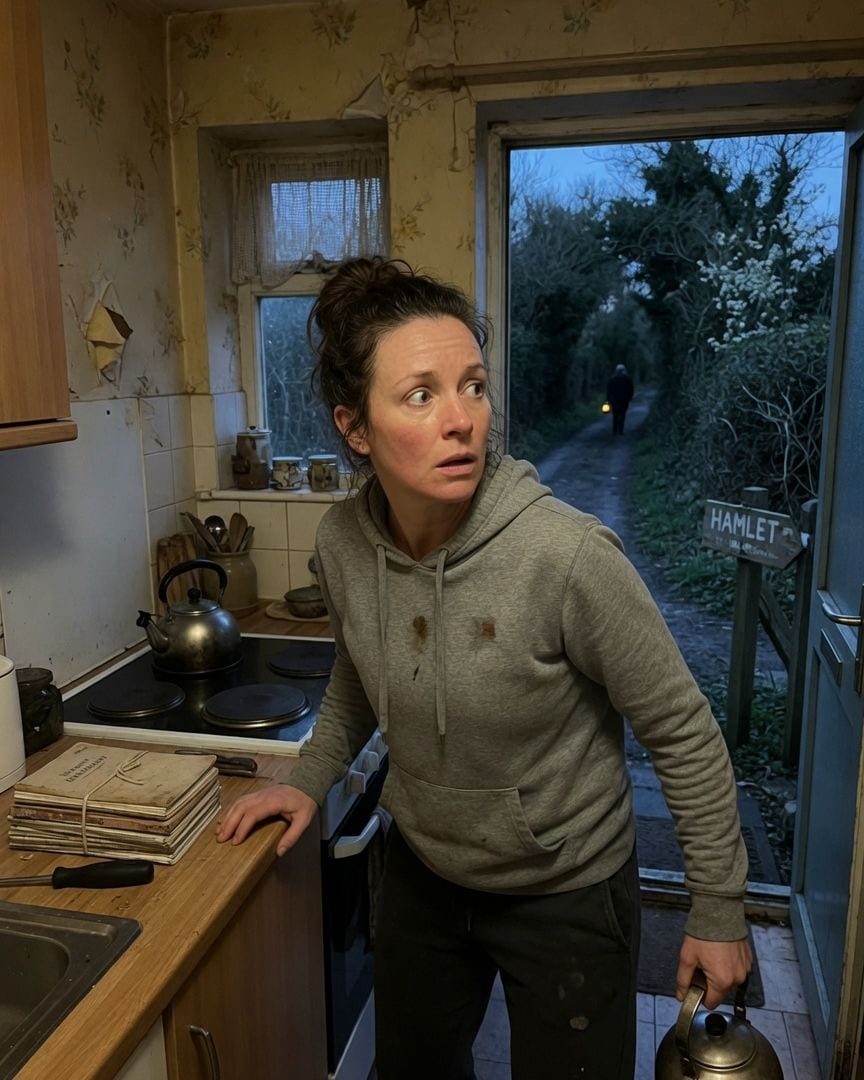
My side gate opens onto a dirt lane between hedgerows, not the close, and a figure with a lantern comes up it toward me.
My side gate normally opens onto the familiar tarmac of the close, but lately, it's opened to a narrow, overgrown dirt lane instead. Three times now, at dusk, I've seen a man with an old-fashioned lantern walking unhurriedly up this impossible lane towards my house. Each time, when I dare to look again, the lane is gone, leaving only the bins and a racing heart.
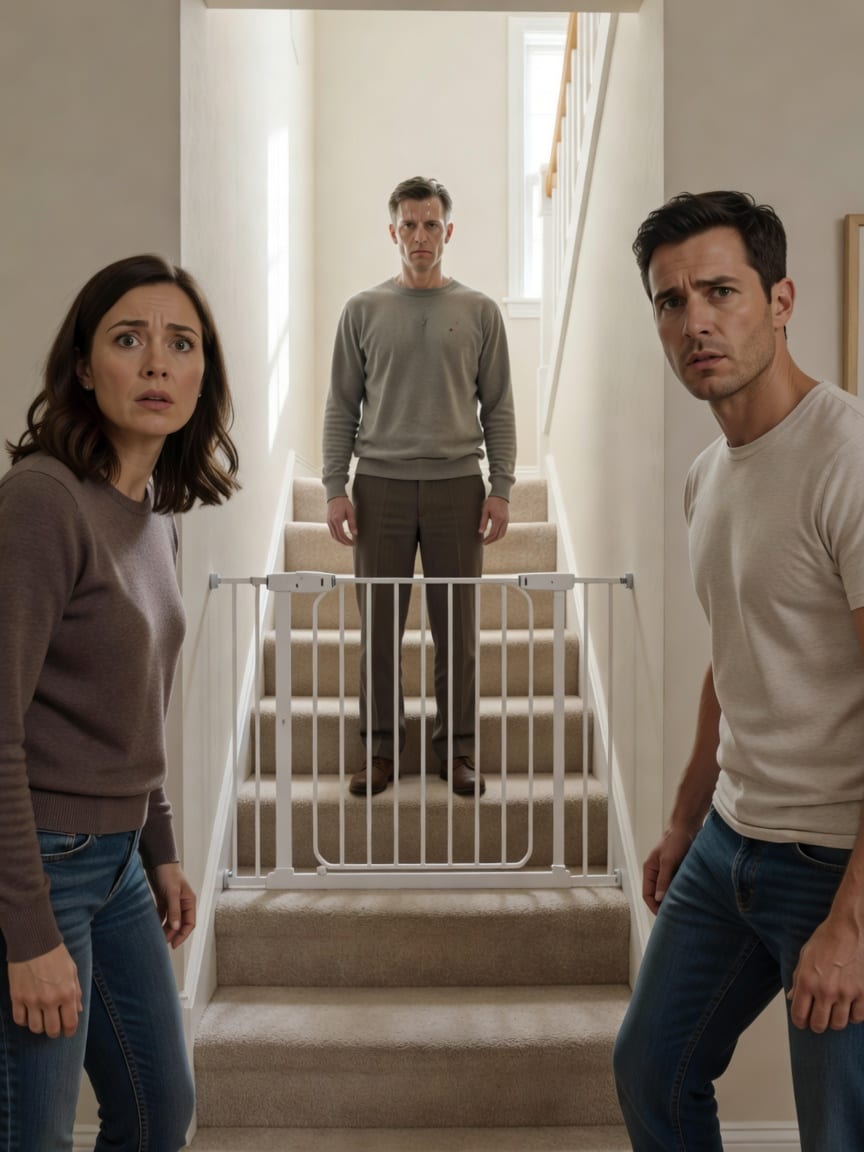
My stair gate latches itself every night. Pressure-fitted tight across my empty stairs, no children live here and no fixings exist on the wall.
I live alone in my inherited house, so the toddler gate at the top of my stairs should not be there. Each morning, I find it perfectly latched and sturdy, despite having hidden it away in the shed the day before. This isn't a quirk; it's a routine, and it isn't mine.
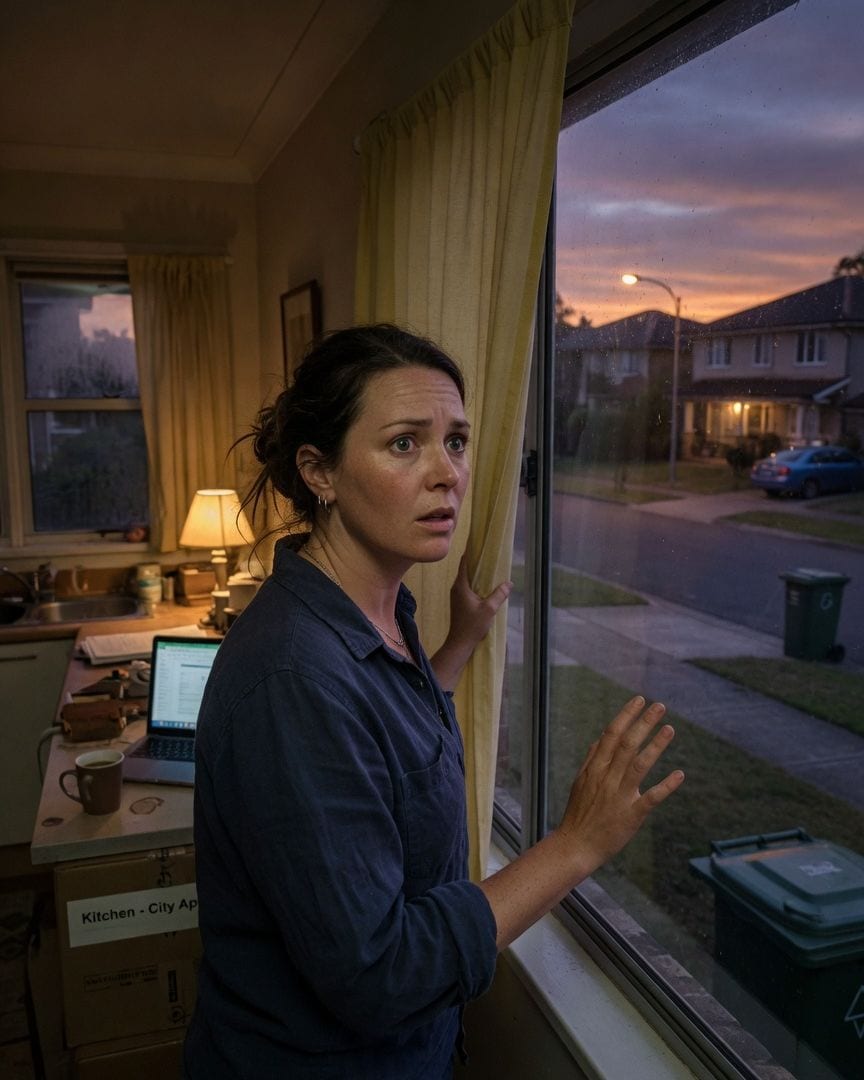
My bin was turned the wrong way Tuesday. The man three doors down hasn't been seen since, though his curtains still open.
New to Oakhaven, I dismissed the local warnings as charming quirks. But after I put my bin out first, my neighbor Joel Whitmore vanished, leaving only a cryptic 'My turn' note. The same strange symbol from his note was chalked on my bin, facing the street.