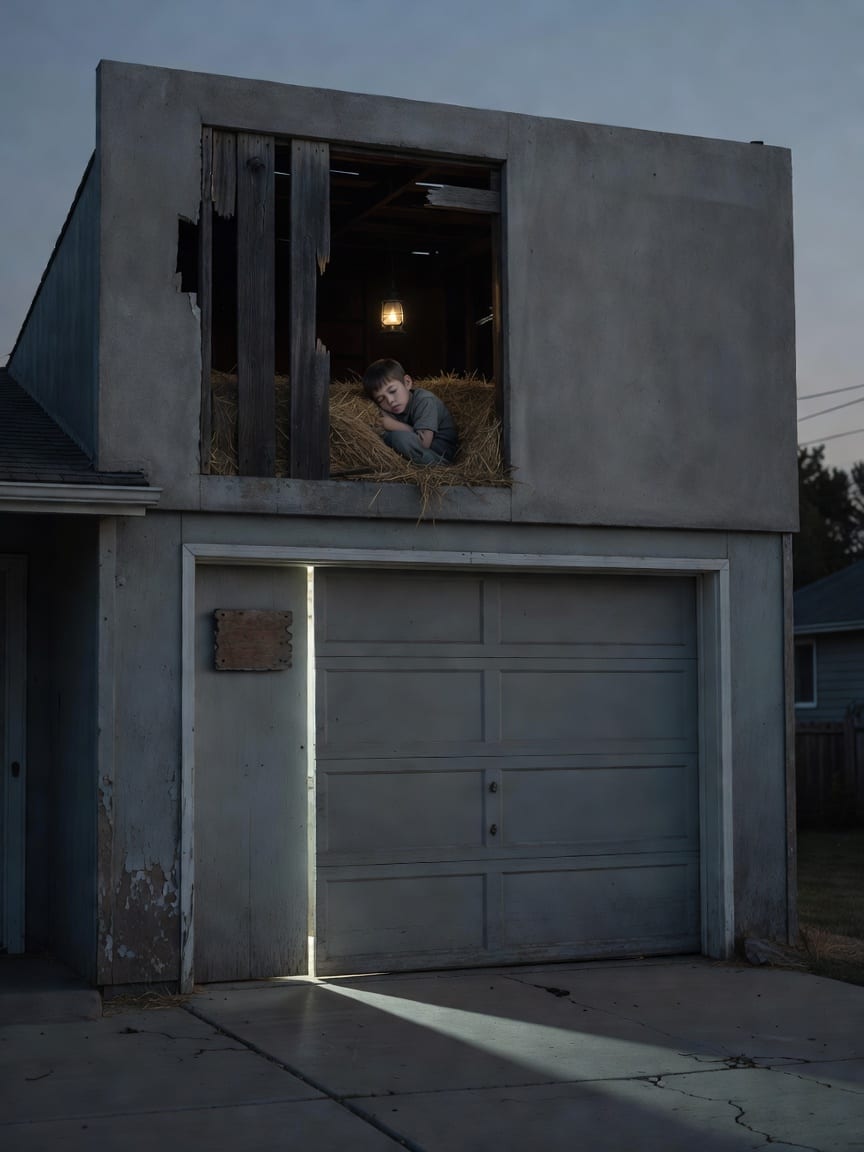
My garage's hayloft door stands open at night, onto a boy asleep in hay. The wall outside has been blank render since 1966.
The new bungalow was a project, a real fixer-upper, and the garage was supposed to be my studio.
I spent that first evening dragging old lawnmowers and rusty tools into a skip, breathing in the damp, earthy smell of old concrete and something else, something vaguely animal, like dried-out straw.
It was late, almost dark, the single bare bulb in the ceiling swinging a little, making the shadows jump. I leaned against the workbench, wiping sweat from my forehead, and looked up at the high gable wall.
From inside, you could see the ghost of an old opening, where a hayloft door must have been. It was just an outline now, dark planks crudely nailed shut, painted over countless times.
The surveyor’s report mentioned it, a stable converted to a garage back in the day. I was thinking about how much light it would let in if I could somehow put a proper window there.
Then, the planks weren’t there.
One minute, the crudely boarded-up square was solid, the next, it was gone. The opening was clear, a dark square framed by rough-hewn timbers, leading into a loft piled high with golden hay.
A faint, oily lantern hung from a nail near the opening, casting a soft, yellow glow. And in that glow, curled deep in the straw, was a boy.
He couldn’t have been more than ten, his face smudged with dirt, fast asleep.
I blinked. My breath hitched. The planks were back. The hayloft was gone, replaced by the same solid, painted-over wall. My heart hammered against my ribs. I shook my head hard.
It had to be exhaustion, the flickering light playing tricks, an overactive imagination fueled by moving boxes and too much caffeine. This house was old, I told myself, it was just settling.
Old houses groaned, they creaked, they made you see things in the shadows. That’s all it was.
The next evening, I tried to ignore it. I really did. I put on some loud music, cranked up the electric heater against the creeping chill, and started sanding down an old cabinet I’d dragged in.
But my eyes kept drifting, pulling towards that high gable wall, to the dark rectangle where the hayloft door should have been. It was like a magnetic pull.
Then I smelled it. A faint, sweet, but acrid smell. Pipe tobacco. Old-fashioned, not the kind people smoke now. It wasn’t coming from anywhere specific; it just seemed to be clinging to the old brickwork, permeating the very air.
I sniffed, turning my head, trying to pinpoint its source. It seemed to emanate from the walls themselves, from the mortar. I walked to the far end of the garage, then back, sniffing like a damn bloodhound. Nothing.
It just was.
And then, a low, crackling sound. Like an antique radio, the kind with glowing tubes and a varnished wooden case. A tinny, distant jazz tune, barely audible, fading in and out like a weak signal. It was impossible.
There was no radio in here. The only room next to the garage was the laundry, and it was dark and silent. I checked the windows, slamming one shut to see if it was coming from outside, from a neighbour.
Nothing. I even checked the fuse box, thinking maybe something electrical was humming, a faulty wire making phantom sounds. No. Just the quiet hum of the heater and that goddamn distant jazz.
The smell persisted, a ghost of pipe smoke, the music wavering, just on the edge of hearing. I couldn’t stand it. My eyes fixed on the boarded-up hayloft.
I walked over, my heart thudding, and started tapping the planks, testing them. Most were solid, nailed tight. But one, about halfway up, near where the phantom lantern had hung, felt loose. Almost rotten. It gave slightly under my hand.
I went to my toolbox, grabbed a flathead screwdriver. My hands were shaking, but a strange compulsion drove me. I jammed the tip into the gap, feeling the wood splinter. It gave slightly, revealing a dark, dusty cavity behind it.
Not structural; it looked like something had been hastily bricked over, leaving a hollow space, an old, forgotten cubbyhole.
I wedged the screwdriver deeper, grunting with effort, struggling to pry the loose plank fully away. The musty smell of old wood and forgotten things rushed out, a thick, dead odour that clung to the air.
My knuckles scraped against the rough wood, but I didn't care. With a final, sickening crack that echoed in the silent garage, the plank tore free.
It fell to the concrete floor with a thud, exposing a deeper, dustier recess, black as pitch.
I fumbled for my phone, my fingers clumsy, and switched on the flashlight. Its beam cut through the darkness, illuminating the space behind where the plank had been. My breath caught, frozen in my throat.
Nested in a tangle of cobwebs and crumbling debris, I saw something small, something that shouldn't have been there.
It was crudely carved from wood, painted in faded browns and greys – a miniature horse, its painted eyes worn to ghostly white, staring blankly into the void.
And beside it, lying on its side, was a tiny, worn leather boot. Clearly, undeniably, for a child.
My initial theories – optical illusions, phantom smells, an overactive imagination – crumbled to dust around me. A child’s belongings. Hidden here. In a secret cavity in what was once a stable.
The image of the boy in the hayloft flashed back into my mind, vivid and terrifyingly real. The lantern. The hay. The small, sleeping figure. My hand trembled, dropping the phone. It was real. It had to be.
The next morning, I couldn’t shake the image of the boot and the horse. I tried to research the bungalow’s history, hoping for some mundane explanation. Online property records confirmed it: the garage was indeed a stable. Nothing new there.
I dug deeper, found an old census record for the address, dated 1920. It listed the owners, a husband and wife. And then, a 'stable hand.' No children. My stomach twisted.
The census was a cold, official denial of what I held in my hand, but the toy horse and the tiny boot were undeniably real.
Last night, the pipe tobacco smell had returned, stronger this time, almost pungent, making my eyes water. The jazz radio had played too, a little louder, a melancholy tune about lost love.
It wasn’t random; it had started around 7 PM, just as I’d been sitting on the garage floor, staring at the small objects. It felt like a deliberate performance.
I knew I needed to talk to someone who knew the history of this place. I found myself walking across the small strip of lawn to my oldest neighbour’s house, Julian Ellsworth.
He was 68, his hair white, his face etched with decades of sunlight, but his eyes were sharp, calm, and oddly knowing. He answered the door before I’d even finished knocking.
'Miss Lockwood,' he said, his voice even, 'Morning.'
'Morning, Julian,' I managed, trying to sound casual, despite the frantic beating of my heart. 'I hope I’m not disturbing you. I was just, uh, curious about the bungalow’s history.
You know, converting the garage, trying to learn about the place.'
He looked past me, his gaze drifting to my garage door, then back to me. 'It was a stable, you know. For horses. Before they had motorcars, the folks who lived here, they had horses. Good, strong animals.
My great-grandfather owned this land. The bungalow and yours, they were all part of one big property back then.'
'Right,' I said, trying to steer him. 'And… did anyone live in the stable? Like, a stable hand? With a family?'
Julian paused, his eyes still calm, but something flickered there. A depth I hadn't seen before. 'A stable hand, yes. Lived right there, above the horses, in the loft. A lone man for a long time.
They weren't keen on too many people living on the property, my great-grandfather, he had his reasons.' He offered no further explanation. He just observed me, his placid gaze unnervingly steady.
'Things stick around in old places, Miss Lockwood,' he said, his voice dropping slightly, almost a whisper. 'Especially if they were… important to the place. Things tend to leave a mark.'
He offered no more. Just a quiet, unnerving placidity. I felt watched, not by a ghost, but by Julian's quiet understanding. He knew. I could feel it, like a chill settling deep in my bones.
Julian’s words gnawed at me. “Things stick around.” I continued my digging, feeling his presence like a shadow, even when he wasn't visible.
I visited the local historical society, hoping for old photos, anything that showed the stable before it became a garage. The librarian, a sweet woman named Brenda, was helpful but ultimately fruitless.
She found general architectural plans for the area from the early 20th century, but nothing specific about my bungalow's outbuildings. “They didn’t keep detailed records for stables, dear,” she’d said, “just the main house.”
As I left the society, stepping out into the bright afternoon sun, I saw him across the street. Julian Ellsworth. He was tending his roses, his back to me at first.
Then, as if sensing my gaze, he looked up, his movements slow and deliberate. His eyes, calm and knowing as ever, met mine across the asphalt. He offered a small, almost imperceptible nod.
It wasn’t a friendly wave, not a neighbourly greeting. It was an acknowledgment. An acknowledgment of what, I wasn't sure, but it made the hair on my arms stand up.
Later that day, back in my garage, working half-heartedly on the cabinet, it happened again. The high gable wall. The planks simply vanished. The hayloft door flashed open, the rough-hewn timbers stark against the dim interior.
The boy was there, curled asleep in the straw, the faint, oily lantern glowing by his head. This time, it stayed open longer.
The image was clearer, sharper, as if the air itself had thinned, allowing me to see through time. His little hands were tucked under his chin, his smudged face peaceful, utterly vulnerable.
A cold dread settled over me, heavy and certain. This wasn’t a trick of the light, or my imagination. This wasn't random. The house was showing me something. And Julian knew.
I tried to dismiss it, to rationalize it away again, but the recurring smell of pipe tobacco was now accompanied by a faint, persistent chill in the air.
It wasn't the weather; it was localized, entirely within the garage, even though it was a warm day outside. The chill clung to my skin, an icy breath against my neck.
I found myself avoiding the garage after dusk, the space feeling less like a studio and more like a waiting room for a performance I didn’t want to see.
The dread, the cold, the constant presence of the jazz and the pipe smoke, pushed me to my breaking point. I couldn’t work, couldn’t sleep. I had to know.
The next morning, heart pounding, I walked straight to Julian’s door again, the small wooden horse and the tiny leather boot clutched in my hand. I didn’t bother with pleasantries.
'Julian,' I said, holding out the objects. 'These. I found them. In the garage wall.'
He took them, his movements slow and deliberate, turning the faded wooden horse over in his fingers, then gently stroking the worn leather of the boot.
His expression didn't change, but his eyes, those unnervingly calm eyes, seemed to soften for a fraction of a second.
'These belonged to Thomas,' he stated, his voice soft, almost regretful. 'Thomas Beaumont. He was the stable hand's boy. Lived here, in the stable, with his father. Early 1900s. Just before the Great War, and then right after it.'
My stomach clenched. 'The census didn't list him,' I said, my voice barely a whisper. 'Only the stable hand. What happened to Thomas?'
Julian sighed, a long, weary sound that seemed to carry the weight of decades. 'Thomas was… inconvenient. My great-grandfather, he owned the property. He valued efficiency. Thomas's father, the stable hand, he was a good worker, loyal.
But Thomas was a sickly boy. Always small, always getting in the way, catching colds. He was an extra mouth to feed, a burden my great-grandfather saw no value in.'
He paused, looking at the toy horse, then back at me. 'One winter, a particularly harsh one. Thomas fell gravely ill. They… they didn't get him help. Didn't want the fuss.
Didn't want the scandal of a child dying on their property, especially one they barely acknowledged. He died in the hayloft. Just… faded away.'
I stared at him, horrified. The words hung in the air, heavy and dark. 'They just… hid it?'
Julian nodded slowly. 'Buried him quietly. In an unmarked plot, out back, where the old orchard used to be. Said he ran away, off to the city, looking for work.
Then they converted the stable to a garage, quick as they could. Erased him from everything. Knocked down the loft, bricked up the door from the outside, plastered it over. Made it seem like it was always just a garage.'
The smell of pipe tobacco was suddenly overwhelming, filling my lungs, thick and choking. The jazz music, distant and tinny before, swelled into a mournful dirge, a lament for a lost child.
The hayloft door, the boy asleep, the pipe, the radio – it all clicked into place with sickening clarity. It wasn't just a memory of his life; it was the routine, playing out the moments leading to his forgotten death.
Julian handed back the toy horse and boot, his calm eyes meeting mine. 'The house remembers, Miss Lockwood. Always has. It wants him to be seen. It wants him to be remembered properly.'
His composure, after such a revelation, was the most chilling thing of all.
Julian’s confession left me reeling, the image of Thomas dying alone in the hayloft searing itself into my mind. The house wasn't just remembering; it was demanding recognition, a desperate plea echoing through time.
The ‘disappearance’ and hasty conversion were too neat, too quiet. Something was missing.
I returned to the historical society, now knowing exactly what to look for.
I didn't ask for general plans; I asked for unofficial records, forgotten anecdotes, anything out of the ordinary concerning the Beaumont family or the property's history in the 1920s and 30s.
Brenda, the librarian, looked at me with a new curiosity. 'Unofficial, you say? Well, there was an old local historian, quirky fellow, kept 'all sorts of things the council didn't want' – that's how he put it.
His collection was donated after he passed. It's mostly just local gossip and odd scraps, but… worth a look, maybe.'
She led me to a back room, dusty and smelling of old paper, lined with overflowing cardboard boxes. I dug through them for hours, my fingers grimed with decades of dust.
Old newspaper clippings about town fairs, faded photographs of forgotten dignitaries, handwritten letters about livestock prices. My eyes scanned, my mind buzzing with Julian’s words.
Then, at the bottom of a particularly heavy box, I found it. A bundle of documents tied with brittle string, labeled 'Ellsworth Property Misc.' I untied it carefully.
Buried within, nestled between an expired permit for a well and a receipt for roof repairs from 1958, was an unofficial property deed annotation. It was faded, handwritten on thick parchment, dated 1930s.
It detailed the rapid conversion of the stable to a garage, noting it occurred 'shortly after the disappearance of the Beaumont boy.' My breath hitched. Julian had been right about the timing.
But then, below it, a smaller, almost illegible note, squeezed into the margin.
I leaned closer, straining to read the spidery script: 'Death certificate for Thomas Beaumont filed [date, years after his supposed death] by [name, not his father], listed as 'accidental fall'.'
The date on the certificate was years after Julian had told me Thomas died. And the name? It wasn't his father. It was another Ellsworth. Julian’s family. This wasn't just hiding a death.
This was a deliberate fabrication, a complete erasure, a falsified record filed years later to clean up an inconvenient truth. The ‘accident’ was a lie. Julian's family hadn't just 'covered it up' for convenience.
They had actively manipulated the truth, not just to avoid scandal, but for something far darker. Something they wanted buried.
Julian Ellsworth's calm eyes met Zoe's as she held up the faded, unofficial deed annotation — the one detailing Thomas Beaumont's 'disappearance' and the rushed stable conversion.
He didn't deny it, but his gaze shifted to the garage, a faint, unsettling smile touching his lips, and he said, 'Some records are meant to stay buried, Miss Lockwood. Some memories... they just keep happening.'
I confronted Julian again, the unofficial deed annotation clutched so tightly in my hand the parchment felt fragile, ready to tear. His words, 'Some records are meant to stay buried,' had haunted me.
'The death certificate, Julian,' I said, my voice shaking, 'It says 'accidental fall,' years after Thomas died. And it wasn't filed by his father. It was filed by an Ellsworth. Your family.'
He didn't flinch. Not a muscle in his face moved. He took the document from my hand, his calm eyes scanning the faded script. 'My great-grandfather… he was a harsh man. Ruthless.
Thomas was slowing down, getting weaker with that last illness. An extra mouth to feed, another burden to carry, especially with his father, the stable hand, not being as robust as he once was.
My great-grandfather insisted Thomas be sent away, to an orphanage, or simply cast out. But the boy resisted. He was a stubborn child, despite his sickness. He tried to hide in the hayloft. One night… there was a quarrel.
A heated one. Thomas was pushed. He fell from the hayloft. Died instantly, they said.'
I gasped, a small, choked sound. The pieces clicked into place with a sickening, horrifying thud. The hayloft, the boy asleep, the routine of his life in that small, damp space, the pipe, the radio.
It wasn't just a memory of his life; it was the lead-up to his death. The last moments before he was… murdered.
'They falsified the record,' I whispered, the words catching in my throat, 'to make it look like an accident, years later, when suspicion might have faded.
To make it seem like he just ran away and then died somewhere else, clean and unrelated.'
Julian nodded, handing the paper back, his gaze unwavering. 'My family owned this land, this house. They had influence. The official story became 'he ran away, then died elsewhere accidentally.' A convenient lie. No trouble, no questions.
The house, though… it saw everything. It held onto it. The smell of the stable hand's pipe, his jazz radio playing softly in the evenings, Thomas trying to sleep, trying to hide in the hay.
It's the house's way of remembering the truth, of refusing to let him be forgotten. It's a permanent record, Miss Lockwood, far more reliable than any paper.'
The calm in Julian's voice, the placid acceptance of his family's dark, murderous past, was more chilling than any scream, more terrifying than any ghost. He simply stated facts, utterly unburdened by the horror of them.
I stood in the garage, the air thick with the faint, persistent scent of pipe tobacco, the distant jazz music a mournful backdrop. Julian's words echoed in my head: 'The house wants him to be remembered properly.'
I looked at the blocked hayloft door, no longer seeing planks, but the phantom opening, the boy curled in the hay.
I could see Thomas so clearly now, a small, sickly child, desperate to hide, pushed to his death by the cruel indifference of the Ellsworths.
I couldn't live here, knowing what the house held, what it constantly replayed. The memory of his final, terrifying moments. But I also couldn't leave Thomas to be forgotten again, another erasure by the passage of time and uncaring hands.
A decision hardened in me, cold and firm. I wouldn't be another one to ignore him, to deny him. I wouldn't erase him again.
I grabbed a crowbar and a hammer from my toolbox. My hands were steady. I started to remove the remaining planks from the hayloft door, carefully, reverently. The wood was old, protesting with groans and splinters, but it gave way.
Each plank I removed felt like a release. Behind the last one, the space was dark, full of cobwebs and years of dust.
I found old tools, rusty, forgotten — a pitchfork, a leather halter for a horse, small, worn items from the stable era. These were Thomas’s world.
I spent days painstakingly cleaning the space, brushing away the dust, sweeping out the ancient straw, clearing out the debris. I didn't want to make it another room; I wanted to make it a memorial.
I created a small, quiet, sacred space. I found an old, reclaimed wooden shelf in the bungalow and mounted it carefully in the hayloft.
On it, I placed the crudely carved wooden toy horse and the tiny boot, Thomas’s last remaining possessions. I bought a small, unassuming plaque from a local craftsman.
I won't tell the full, gruesome truth publicly, not yet. Not about the push, the fall, the murder. But I will ensure Thomas is acknowledged. As I worked, as I placed his things, I felt a profound shift.
The oppressive weight that had clung to the garage, the localized chill, the sense of being watched by a desperate sorrow – it lessened. It was replaced by a quiet, lingering poignancy. The recurrence, I knew, would never fully stop.
How could it? But its nature had changed. It was no longer a warning, no longer a horrifying secret demanding exposure. It was a vigil.
I still live in the bungalow. I never sold it. The garage is my studio now, exactly what I wanted it to be. But the hayloft, high above my workspace, remains a small, untouched memorial to Thomas.
I’ve learned to live with the occasional, fleeting reappearance of the boy, asleep in the straw, the lantern glowing softly.
The faint scent of pipe tobacco drifts in sometimes, and the distant, crackling jazz music hums in the background of my life. They are no longer terrifying omens, but poignant presences, quiet companions in the silent rebellion against erasure.
Julian Ellsworth still tends his roses next door, his knowing gaze softened, perhaps, by my actions. We share a quiet understanding. No one else ever sees the hayloft open, or hears the music.
It remains a secret shared between Zoe, Julian, and the house itself. The official records still tell their lies, their polite fictions, but the bungalow now holds a different, truer history within its walls.
A quiet, persistent rebellion against the deliberate act of forgetting. I put a small, unassuming plaque on the wall beneath the hayloft, just above the shelf where the toy horse and boot sit. It simply reads: 'Thomas Beaumont. Remembered.'
Sometimes, when the jazz music plays and the pipe tobacco scent drifts, I feel a strange, calm sorrow. The house is still watching, still waiting. Its memory runs deeper than any human can erase.
If this one got to you
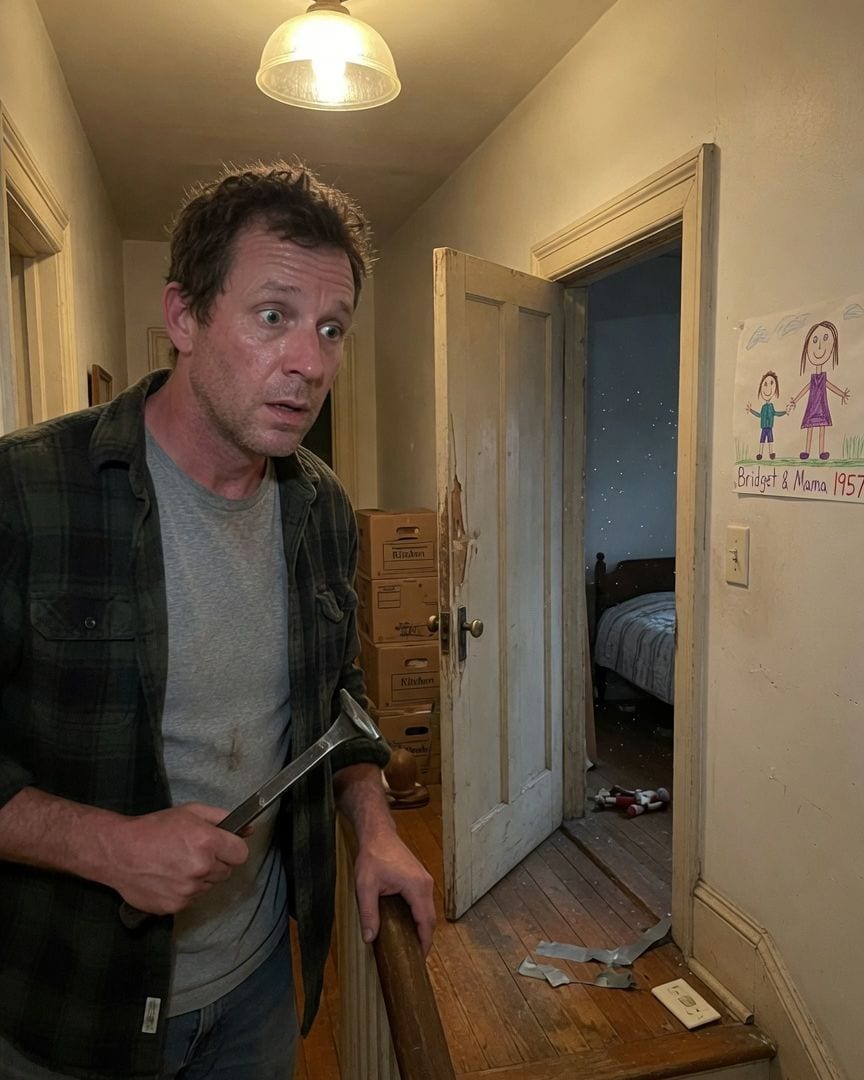
My landing light switches itself off at 9:40 every night. I've watched the switch flick down under nothing, the tape peeled back. The house holds its breath.
My great-uncle's old house was a quiet gift, a place to finally settle. But as I unpacked, a strange worn path on the floorboards led me to a small, barely visible door, perfectly blended into the wall. It was undeniably locked, and felt like a deliberately obscured secret.
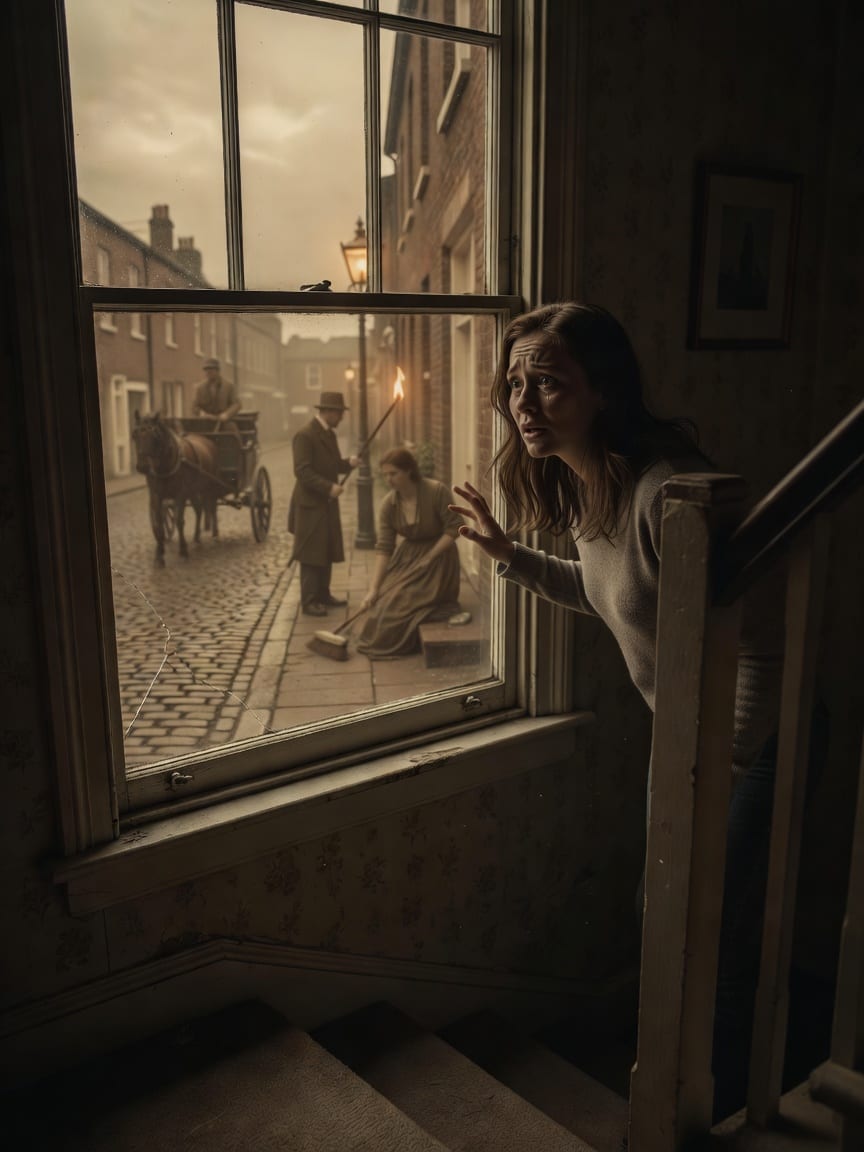
My half-landing window looked down on a cobbled street, a horse and cart. My panes, same crack. Below, only the bins.
I moved into this inherited house for a fresh start, living alone in the quiet. But the third stair on the main flight is deeply worn, a ghostly scoop hinting at decades of unseen footsteps. It feels hollow, and the wall beside it hides a faint, inexplicable seam.
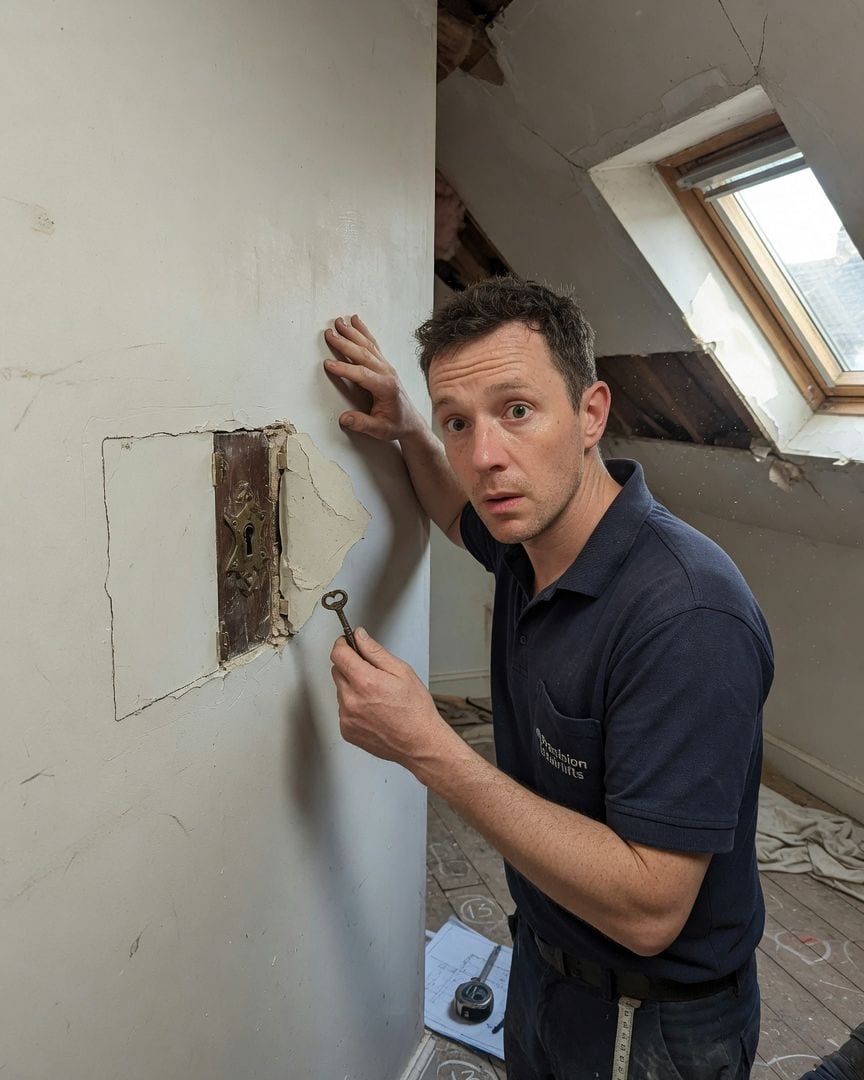
My stairlift tape measures thirteen steps, but my own feet always find a fourteenth — to a door that isn't there.
As a meticulous fitter, I measured my client's new loft stairs, confirming thirteen solid steps. But my foot found a shallow, impossible half-step, leading to a plain wooden door that shouldn't exist. Now the door is gone, leaving only a ghost outline.
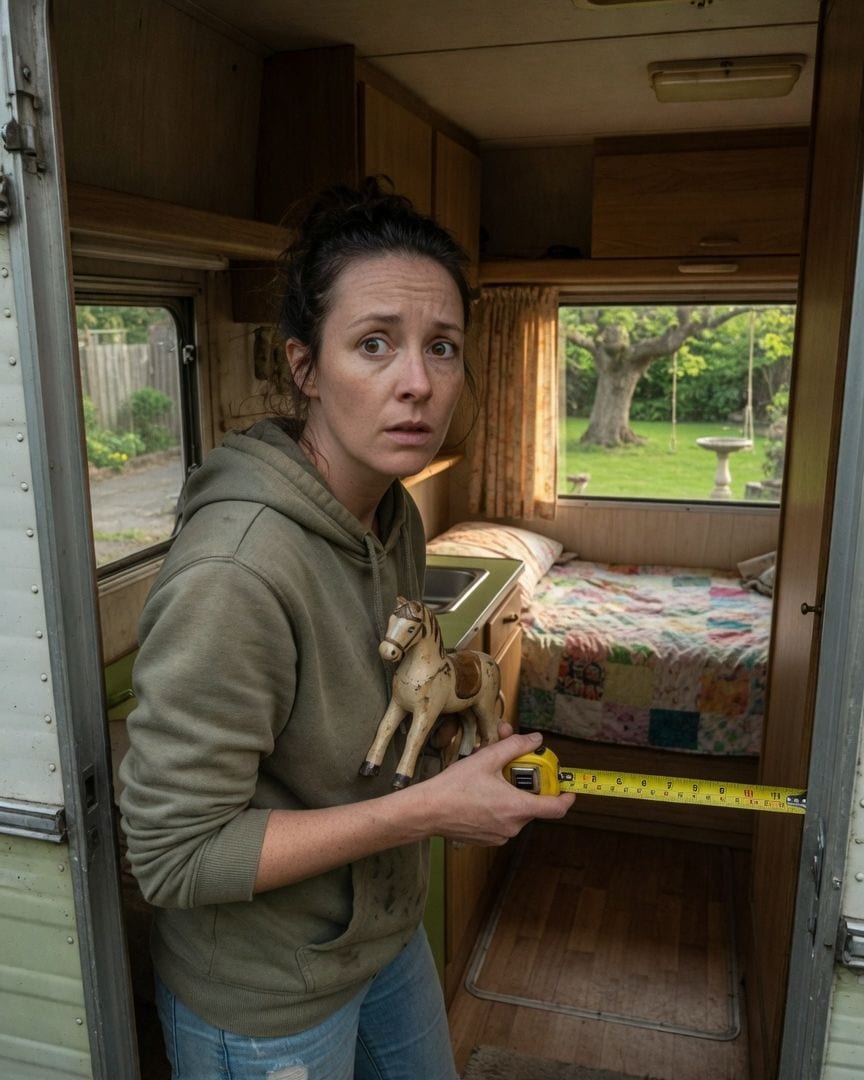
My new caravan's corridor runs longer than the caravan itself. Eleven feet of hallway past the end wall, to a room with a made bed and a window looking out on a garden it's never been parked in.
I finally bought my dream vintage caravan, a twelve-foot beauty. But when I measured inside for a mattress, the numbers didn't add up. Beyond where the wall should be, an impossible room with a window looked out onto a manicured garden I'd never seen before, a garden that couldn't possibly exist.
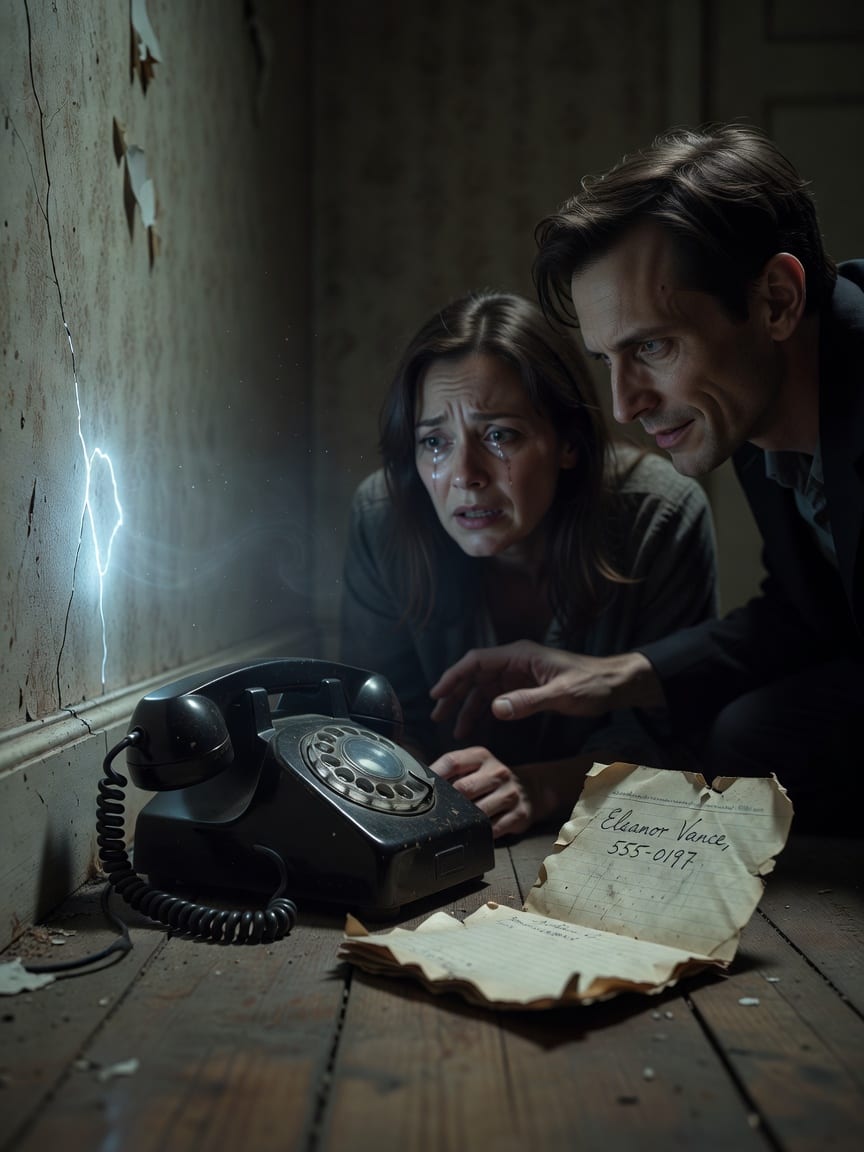
My house's walls ring when I dial a phone number from a 1974 directory. My neighbors said that directory was trash.
I was sifting boxes in my new house when I found an old 1974 telephone directory for my street. It listed my address, 12 Elm Street, under the name "Mr. & Mrs. Sheppard." On a whim, I called the faded seven-digit number. My cell phone rang, but a low, muffled sound also vibrated from the wall beside me.
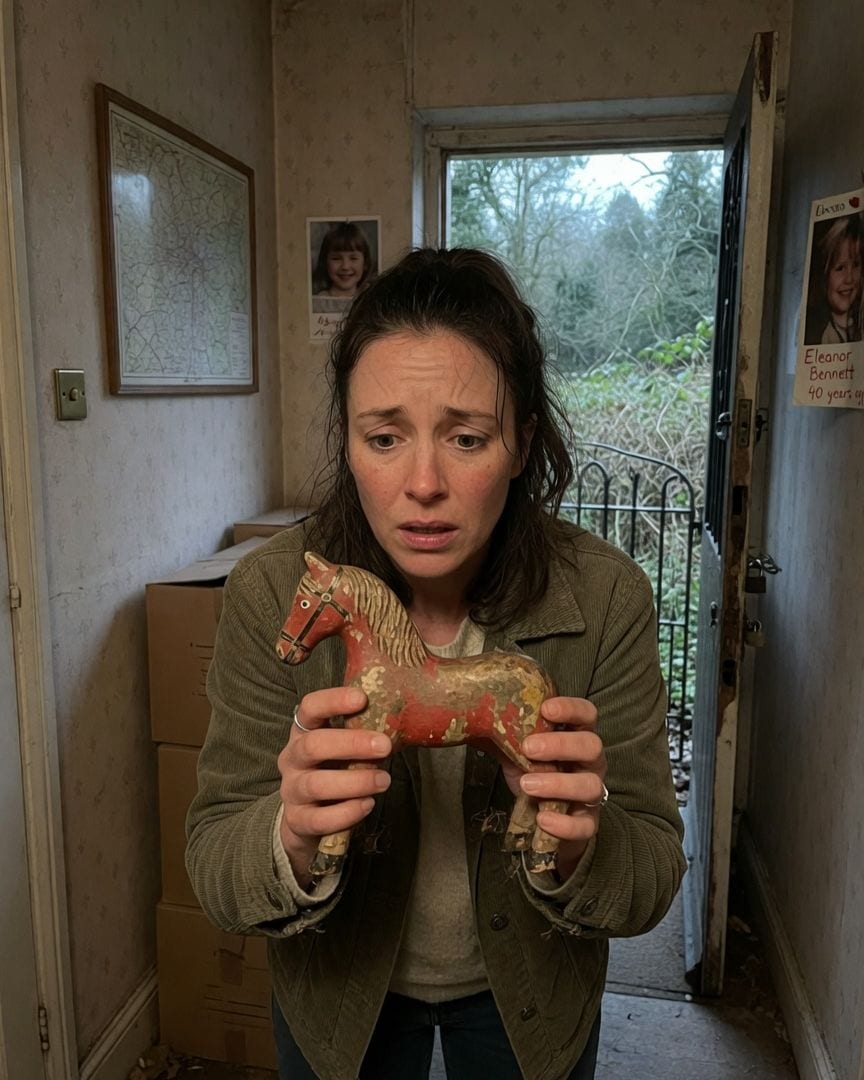
My black gate stands open, the padlock hanging closed but the hasp unscrewed clean out of wood untouched for years. The parish keeps that gate shut. It's the rule.
I'd settled into my new village, accepting the old farmer's gruff rule about the black wrought-iron gate that guarded the ancient woods. But last Sunday, I found that heavy gate wide open, a gaping maw in the orderly lane. The padlock still dangled from its frame, securely locked, but the metal hasp was unscrewed clean out of the gatepost.