My grandmother's care home line played her dead voice asking if I could please make the man stop standing at the end of her bed. She hadn't been able to speak for a month.
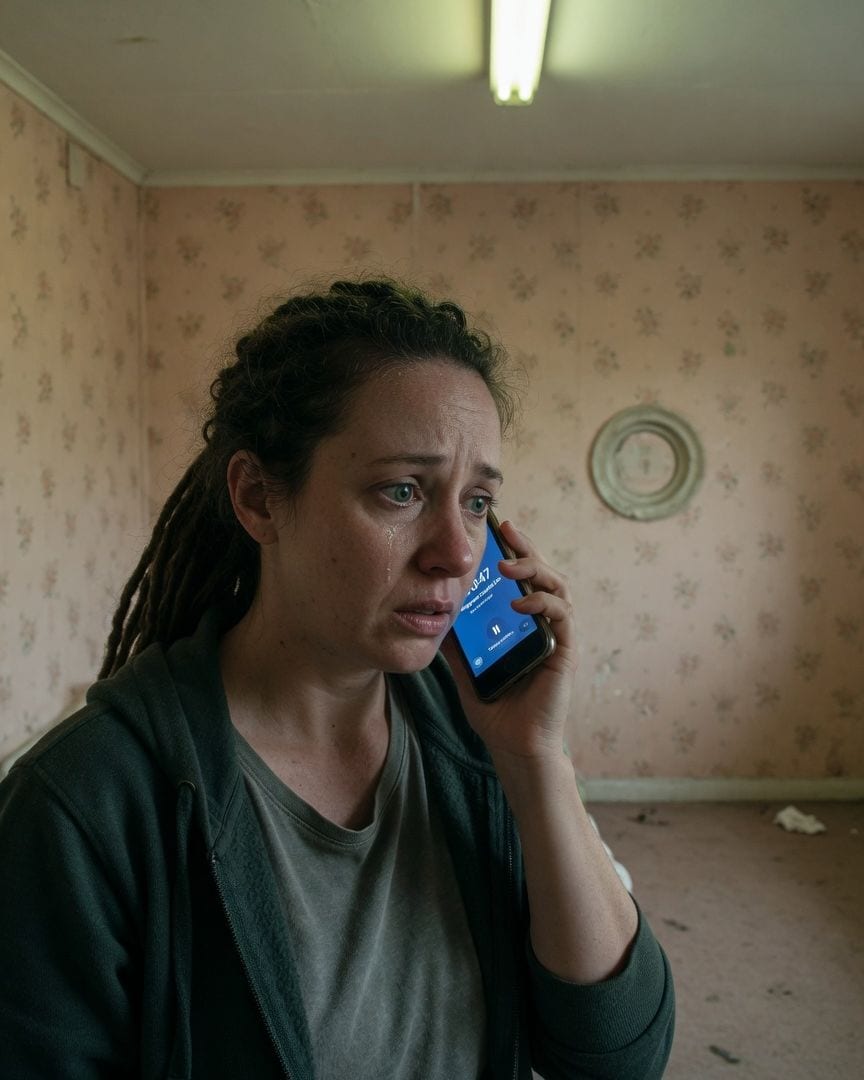
The night my grandmother, Constance Jennings, died, I called the Evergreen Gardens Care Home comfort line. It was an automated update service, mostly for peace of mind, a recording of Nora Doyle, the administrator, giving generic platitudes about resident well-being.
But after the usual message, after the distinct 'beep' that signaled the end, there were forty more seconds that absolutely should not have been there.
It was Constance's voice. Thin, reedy, but unmistakably hers. She hadn't been able to speak for a month, not a single word, just blinks and gestures. Yet there she was, clear as day, saying she was warm and fine now.
And then she asked, 'Laura, darling? Could you please make the man stop standing at the end of my bed?'
I played it again, the phone cold against my ear, the impossible words looping, confirming the impossible truth. My breath hitched, a knot tightening in my stomach.
The silence in my apartment stretched, thick and suffocating, as I listened to my dead grandmother's voice, trapped in a recording, asking for help from a man who shouldn't exist.
I called Evergreen Gardens first thing the next morning, my voice tight, the recording saved on my phone like a stone in my pocket. Nora Doyle, the administrator, was sympathetic but firm. 'Laura, I understand you're grieving.
But that line is a standard automated system. There's no way for a resident to record a message. It's just... a glitch, perhaps. An echo on the line.' She suggested I delete it, move on.
But the voice wasn't an echo. It was distinct. And the request was too specific. I drove to the care home, needing to see Constance's room one last time. It was already stripped bare, ready for the next resident.
The bed, the dresser, the armchair — all gone. But as I stood in the empty room, a faint, almost imperceptible detail caught my eye.
On the wallpaper, just above where Constance’s head would have rested, was a tiny, perfect circular indentation. Too precise to be a nail hole. Too shallow for a picture hook.
It looked like a suction cup mark, or something mounted there very deliberately. My rational mind tried to dismiss it, another phantom of grief.
But then I remembered an old microphone my father used for recording family history interviews, the kind with a small, circular base. The knot in my stomach tightened further. This wasn't a glitch. This was a physical trace of something.
I pulled out my phone, took a picture of the mark, the silent room amplifying the impossible sound looping in my head. A man at the end of her bed. Nora hadn't even blinked when I mentioned it.
I went home, unsettled, the circular indentation a phantom pressure behind my own head. I searched online for Evergreen Gardens. Not for reviews, but for anything unusual. I stumbled upon an old forum, a local community board.
A post from three years ago, then another, and another, all from families whose loved ones had passed away at Evergreen.
They spoke of 'comfort calls' – similar automated messages, but one comment from a 'M. Sheppard' resonated like a struck bell: 'My father's message was normal, but then after the beep...
I swear I heard him, saying he was cold and wanted to go home, and someone was whispering 'Soon, soon' beneath it.' My hands trembled. It wasn't just Constance. It was a pattern.
I clicked on the user 'M. Sheppard's' profile, hoping for contact information, and saw a blurry profile picture.
It was a woman, standing outside Evergreen Gardens, and in the background, by a window on the ground floor, I could faintly make out the silhouette of a man in a care home uniform, looking out.
The window was unmistakably Constance's old room.
I managed to track down Maureen Sheppard. She was wary, tired, but the mention of her father’s ‘comfort call’ immediately opened her up. She confirmed the impossible voice, the whispered reply, the care home’s dismissive attitude.
'They said it was grief, a coping mechanism,' she told me over the phone, her voice strained. 'But I knew his voice. And that whisper… it wasn't my mother.' She had kept the recording, too, a digital ghost.
We compared the timestamps. Her father, Roy Caldwell, had passed away three years prior.
The timings of the 'unusual vocalizations' or 'distress calls' in the care home's internal 'resident comfort log' that I’d glimpsed on Nora’s desk during my first visit, suddenly clicked into focus. They weren't isolated incidents.
They were clustered around the exact times of resident deaths. I returned to Evergreen Gardens, this time under the guise of collecting Constance's forgotten photo albums. I paid particular attention to the staff.
There was one man, Everett Whitmore, a maintenance worker. He moved with a quiet efficiency, always seemed to be in the background, but his eyes were sharp, observing everything. He was the man in Maureen’s blurry photo, undeniable.
I watched him. He spent an unusual amount of time in vacant rooms, sometimes just standing, listening. Once, I saw him leaving Constance's old room, carrying a small, nondescript case.
He caught my eye, and for a fleeting second, his expression was unreadable, almost knowing. The knot in my stomach twisted tighter.
I felt like I was being watched, not just by him, but by the very walls of the building.
My phone rang late that night. Unknown number. I answered, my heart hammering. 'Laura Caldwell?' a low, calm voice asked. 'This is Everett Whitmore. From Evergreen Gardens.' My breath caught. 'I saw you in your grandmother's room today.
You seem… very interested in the old wiring. We get a lot of electrical interference in that wing, you know. Sometimes, things get picked up on the lines. Ghosts in the machine, as they say.'
His voice was even, almost soothing, but there was an undertone that chilled me. 'It's best to let the past stay in the past, Ms. Caldwell. For everyone's peace of mind.' He hung up without another word.
I stared at my phone, the blood draining from my face. He knew. He knew I was investigating. And the way he said 'ghosts in the machine' – it wasn't a dismissal, it was a subtle confirmation.
The next day, I found a small, unmarked USB drive tucked into the zipper pocket of my purse. It hadn't been there before. I was certain. My hands shook as I plugged it into my laptop.
It contained a single audio file. It was a recording of the Evergreen Gardens comfort line, but this wasn't Constance. It was a different voice, an elderly man, disoriented, asking for his wife.
And beneath it, a faint, almost subliminal whisper, 'She's waiting. Just tell her you're coming home.' It was Roy Caldwell. Maureen’s father. Everett had left me proof, a warning, and a challenge.
He was watching, and he wanted me to know it.
I confronted Everett Whitmore in the care home's deserted boiler room, the humid air thick with the smell of old pipes and the low, constant hum of machinery. 'You left this for me,' I said, holding up the USB drive.
He didn't deny it. He just looked at me, his eyes unsettlingly calm. 'Curiosity is a dangerous thing, Ms. Caldwell.' I pushed. 'My grandmother couldn't speak. And Roy Caldwell's recording, too. What are you doing here? What is this place?'
He sighed, a slow, deliberate sound. 'This place… it’s old. Built on a fault line, they say. Resonant. Some places just… hold things. And when people leave, sometimes they leave a little piece behind.
Especially when it’s sudden, or they have something left unsaid.' He gestured vaguely around the room. 'The comfort line was a happy accident. A perfect conduit. The wiring, the old analogue system… it amplifies the residual echoes.'
He spoke of 'echoes' not as a metaphor, but as a physical phenomenon. 'I just… listen. I give them a voice, a final thought.' My stomach churned. 'You were in her room, weren't you? When she died?
The man at the end of her bed.' Everett's gaze didn't waver. 'I was. I always am, when I can be. To help them along. To listen. And sometimes… to prompt.'
He pulled out a small, antique-looking device from his pocket, a polished wooden box with a single dial and a delicate, thin antenna. 'This helps. Picks up the frequencies.'
He looked at me, a strange, almost pitying expression on his face. 'Your grandmother… she was very clear. She was warm. And she wanted you to know she wasn't alone. I just… helped her say it. Helped her feel heard.'
The full horror of it washed over me. The circular mark on the wall, the forty extra seconds, the 'ghosts in the machine' – it all clicked into a terrifying coherence.
He wasn't just listening; he was actively interacting, harvesting these final moments, like a grim fisherman with a net.
Everett then led me to a small, disused storage room, tucked away in the deepest part of the care home's basement. He unlocked a heavy, rusted door, revealing a space that smelled of dust and old electronics.
Inside, shelves lined the walls, filled with hundreds of identical, unlabeled cassette tapes and reel-to-reel spools. Each one meticulously numbered.
In the center of the room stood a single, ancient reel-to-reel player, connected to an array of custom-built antennae and a large, crackling speaker. 'My collection,' he said, his voice almost reverent. 'Their final thoughts. Their true goodbyes.'
He reached for a tape, but I could only stare at the sheer volume of them, the silent testament to his monstrous hobby. I needed to get out, and I needed to know what was hidden in my grandmother's recording.
As Everett turned to the equipment, I seized the moment. I slipped away into the darkened hallway, my heart thumping against my ribs, and found refuge in a supply closet, the door barely ajar.
My hands shaking, I pulled out my phone and found Constance's recording. I pressed play, her thin voice filling the small, confined space.
As Constance's faint voice asked about the man, I isolated the audio, pushed the volume to its absolute limit. And beneath the static, a hushed, almost inaudible whisper answered Constance, a man's voice, saying, 'It's alright, dear.
Just tell her you're warm now.'
Everett had watched my face in that boiler room, a calm, almost serene expression. Now, the whisper on my phone confirmed his monstrosity. The 'It's alright, dear. Just tell her you're warm now,' echoed in my skull.
I had to go back. I had to understand the extent of his collection. When I found him again, he was still in the basement room, adjusting a dial on his reel-to-reel player.
The low, guttural hum that had just been an echo in my head was now audible, a vibrating drone that resonated deep in my bones. 'The hum,' he explained, 'is the resonance. The connection.
It's how I know they're truly reaching out.' He pointed to a complex diagram scrawled on a dusty whiteboard, showing frequencies and energy lines converging on the very spot where Evergreen Gardens stood. 'This place isn't just a conduit, Laura.
It's an anchor. It draws them in, their last echoes. And I… I give them a platform. A witness.' He picked up a small, ornate silver locket from a nearby table, turning it over in his hand.
'Your grandmother wore this, didn't she?' My heart leaped. It was Constance’s locket, which I thought had been buried with her. 'She kept a photo of you inside,' Everett continued, 'and a lock of your mother's hair.
Very strong emotional imprint. Made her echo particularly clear.' He then explained that the 'comfort line' was merely a passive receiver, picking up the amplified echoes that his own equipment, strategically placed in key rooms, then focused and recorded.
The circular indentation in Constance's room was for a specialized parabolic microphone, designed to capture the exact frequency of a dying consciousness. He had perfected the system over decades, starting with crude modifications to old baby monitors, then scaling up.
He saw himself as a benevolent archivist, a final confidant. But the hum, the primal, resonant drone from the reel-to-reel player, contradicted his calm demeanor.
It was a hungry sound, a deep vibration that felt like it was pulling at the very fabric of the room, of me. This wasn't just listening. This was harvesting.
And the drone was the sound of the harvest itself, the raw energy of final moments being drawn into his archive, the 'record that cannot be' because it wasn't a recording of sound, but of something far more fundamental.
The drone intensified, vibrating the floor, rattling the cassette tapes on their shelves. Everett seemed utterly unfazed, almost soothed by it. 'They're very active tonight,' he murmured, adjusting a dial on his reel-to-reel player. 'Perhaps because of you, Laura.
Another strong emotional imprint.' My blood ran cold. He wasn't just collecting; he was drawing them, using people like me as bait. I had to get out.
I glanced at the heavy rusted door, then back at Everett, who was now lost in the hum, his eyes half-closed. He had the locket in his hand. My grandmother's locket. That was my proof.
I lunged, not for the door, but for the locket. Everett reacted with surprising speed, his hand clamping around my wrist. His grip was impossibly strong. 'No, Laura,' he said, his voice still calm, but with an edge of steel.
'This belongs to the collection now. A souvenir of a strong echo.' I twisted, kicking him hard in the shin. He grunted, loosening his grip for a split second, and I wrenched free, snatching the locket.
The drone pulsed, growing louder, and for a terrifying moment, the faces of countless elderly people seemed to flicker in the shadows around us, their mouths opening in silent screams.
Everett lunged, but I was already out the door, fumbling with the rusted lock. He slammed against the inside, the metal groaning. I heard him shouting, not in anger, but in a strange, desperate plea, 'Don't interrupt the cycle, Laura!
They need to be heard!' I slammed the heavy bolt home, the sound echoing through the basement. I ran, not looking back, the drone of the machine and the silent, flickering faces burned into my mind.
I burst out of the care home, gasping for air, clutching the locket, the impossible recording still saved on my phone.
The night air was cold, but I was shaking, not from the chill, but from the horrifying truth I now carried, a truth no one would ever believe.
I reported Everett Whitmore to the police, presenting the locket, the recording, the photos of the wall indentation, and Maureen Sheppard's testimony. They found the locked basement room, the equipment, the thousands of tapes.
Everett was arrested, charged with disturbing a burial site and harassment. He pleaded insanity, calmly explaining his 'collection' to bewildered officers. The care home was investigated, Nora Doyle maintaining complete ignorance of Everett's activities.
The case became a local oddity, dismissed by most as the ramblings of a disturbed old man, his 'recordings' deemed elaborate hoaxes or audio hallucinations. The locket was returned to me.
Evergreen Gardens was eventually sold, rebranded, and reopened under new management. But the resonant hum, the faces in the shadows, and the dead voice on my phone still haunted me.
I deleted the recording from my phone, but the memory of Constance's voice, asking about the man at the end of her bed, plays in my head whenever I'm alone in a quiet room.
I still have the locket; sometimes I feel a faint warmth radiating from it. Everett Whitmore was committed to a psychiatric facility. I read an article about him recently; he's still there, still talking about 'echoes' and 'resonance'.
He's considered harmless, a sad case. But every now and then, late at night, my phone will buzz with an unknown number. I never answer.
I just stare at the screen, and I wonder if he's still listening, if the hum of the old building still reaches him, or if he's found a new way to keep his collection.
And sometimes, I hear a very faint, almost imperceptible whisper in the static of my own thoughts, asking if I'm warm now.
If this one got to you
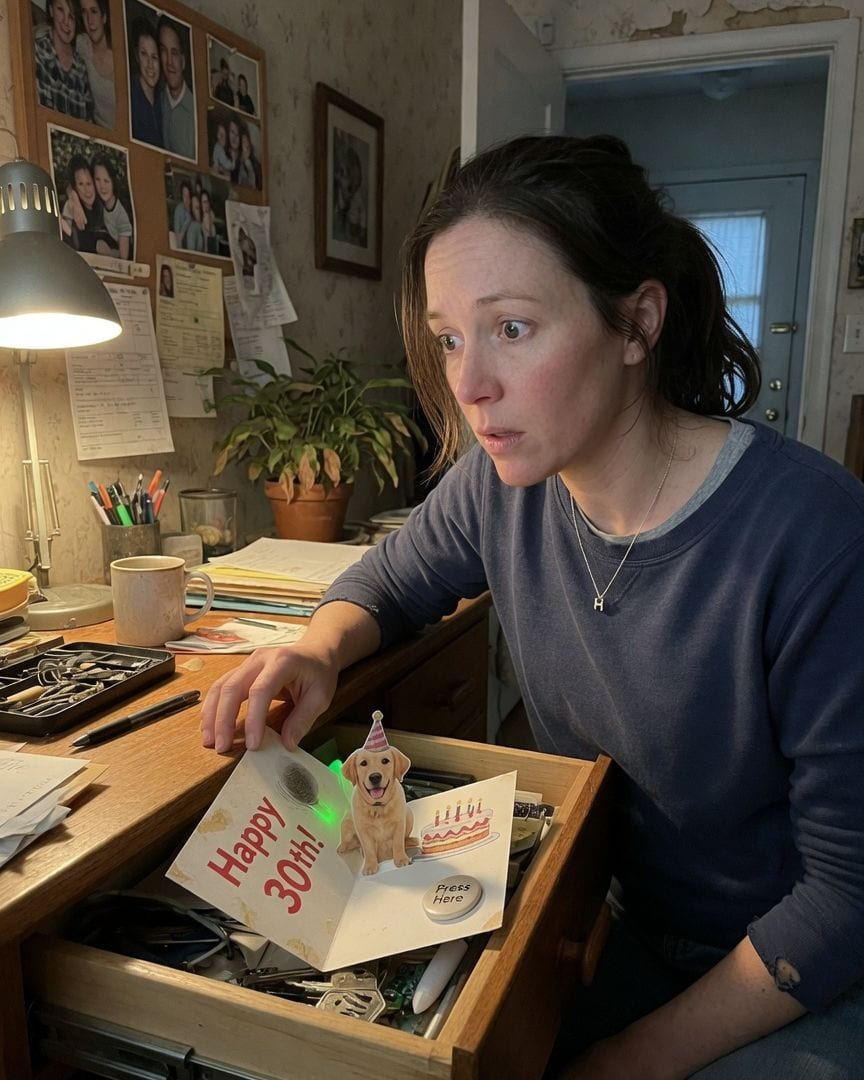
My dead father's musical card played past ten seconds, his voice saying my name, then, 'you left the back door open again.' I went downstairs. It was open.
At my desk, I heard my father's musical birthday card begin to play, a saccharine melody I hadn’t heard in years. Untouched for four years, the card's tiny speaker then spoke his familiar voice, calling my name and telling me I’d left the back door open. My father had died two years prior.
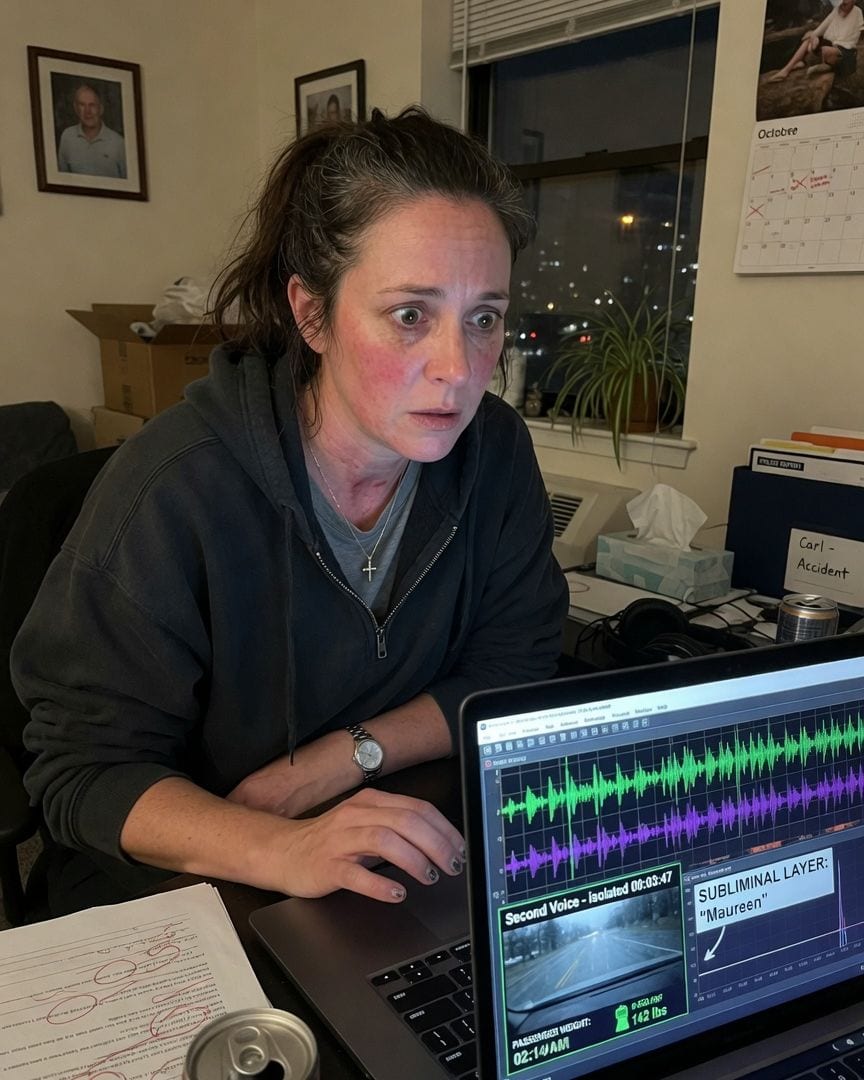
My father's dashcam recorded a soft, familiar voice from the passenger seat. The weight sensor logged someone, and he answered it by name.
Sifting through my dead father Carl's dashcam footage, I expected only the quiet hum of the road. But from the empty passenger seat, a soft voice spoke to him. When I isolated the audio, the voice whispered my own name.
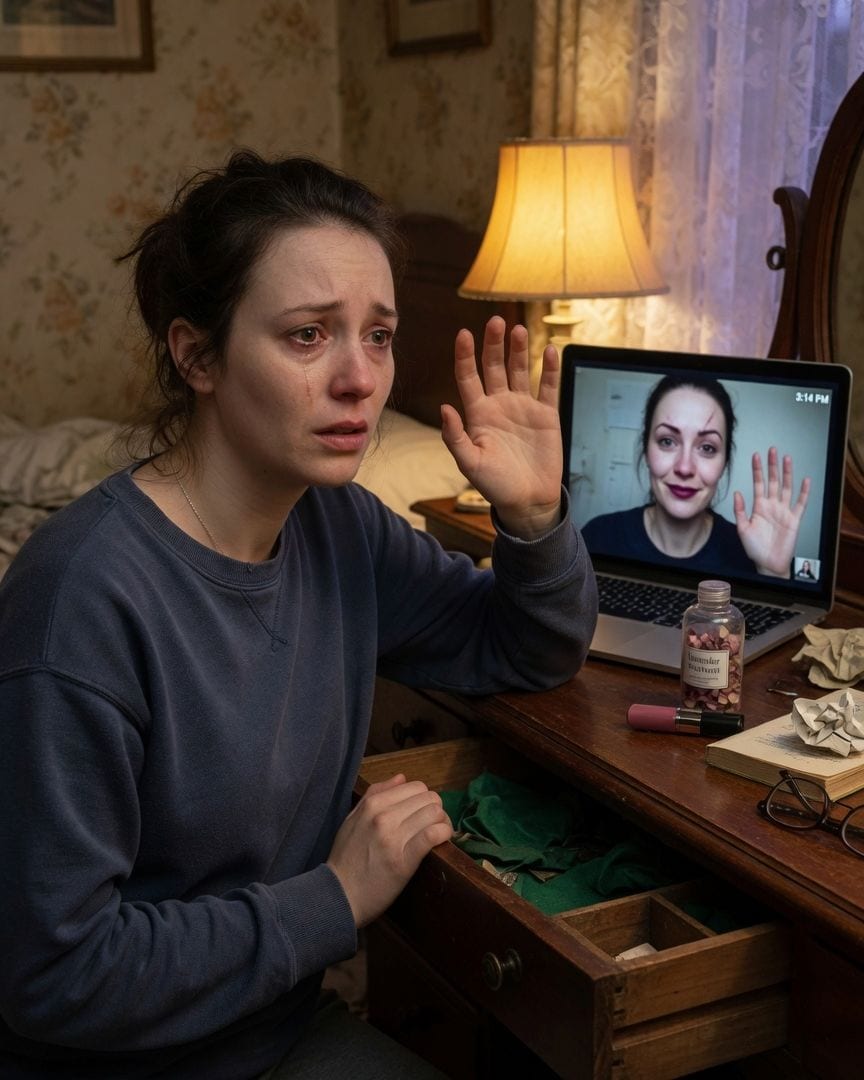
My mother waved with her right hand, both times, on our first call after she came home. She always waved left.
My mother vanished three months ago, then came back. On our first video call, she waved goodbye, but not with her usual left hand. It was her right, a small gesture that twisted something cold in my stomach.
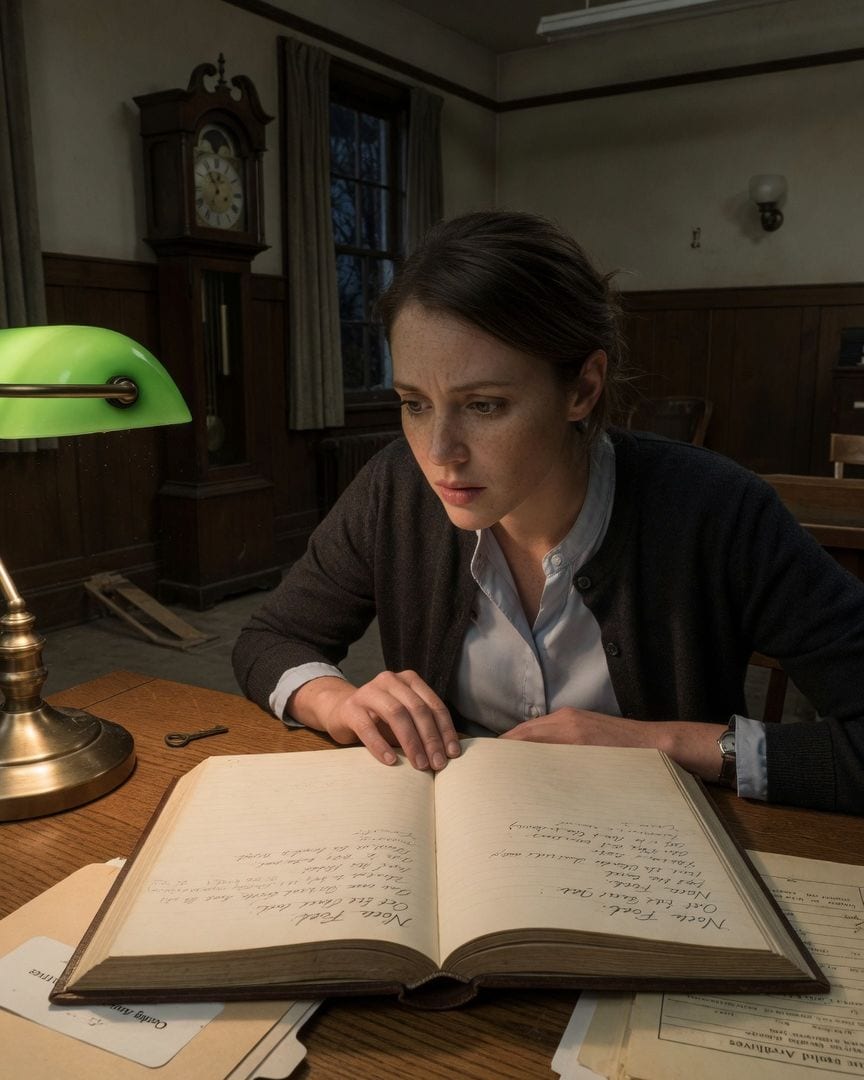
My grandmother’s name reappears in the old book of remembrance — on the same date, same street, every few decades since 1929. A verger’s note reads: 'ask no family.'
As Keeper of the crematorium's Book of Remembrance, my job is quiet and meticulous. But while updating my own grandmother's entry, I found two more Nora Fords listed above hers. Each died on October 3rd, decades apart, with the same address and a strange instruction: 'ask no family.'
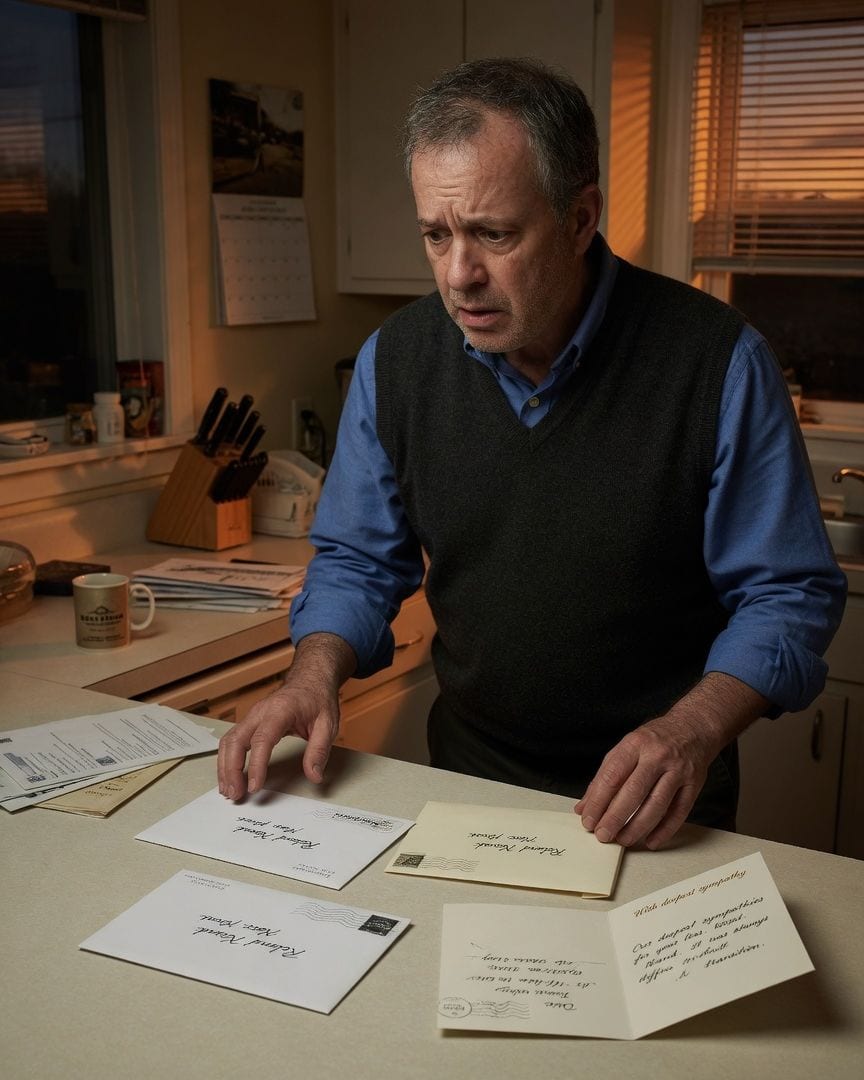
My maternity appointment arrived yesterday from a hospital demolished in 1987. Then the condolence card came today.
Roland Novak, a fifty-year-old man, receives a crisp white envelope containing an appointment card for a maternity unit, complete with a due date. The listed hospital, Trewint Cottage, was demolished in 1987, and the consulting doctor died decades ago. The impossible letter is then followed by a second, equally impossible, arrival.
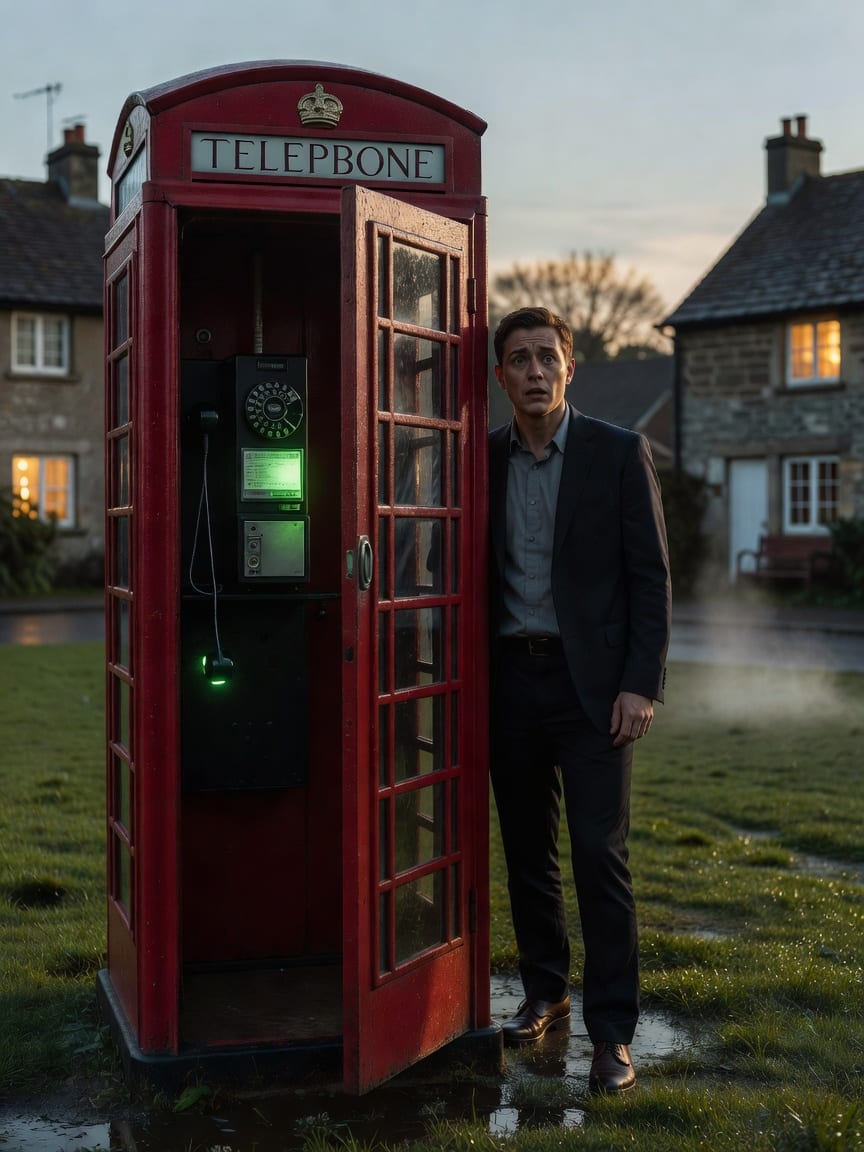
The old phone box on Trellow Green hasn't worked in twenty years. But its call log shows a ninety-second outgoing call every New Year's Eve, always to the same disconnected number.
I moved to the quiet village of Trellow Green, drawn by its charm and the local joke about the old, dead phone box. But a retired engineer showed me a log of an impossible outgoing call made from it on New Year's Eve, to a number disconnected for decades. How could a dead phone make a call?