My hall carpet flattens itself overnight, a path worn from the locked door to the stairs, though I live alone.
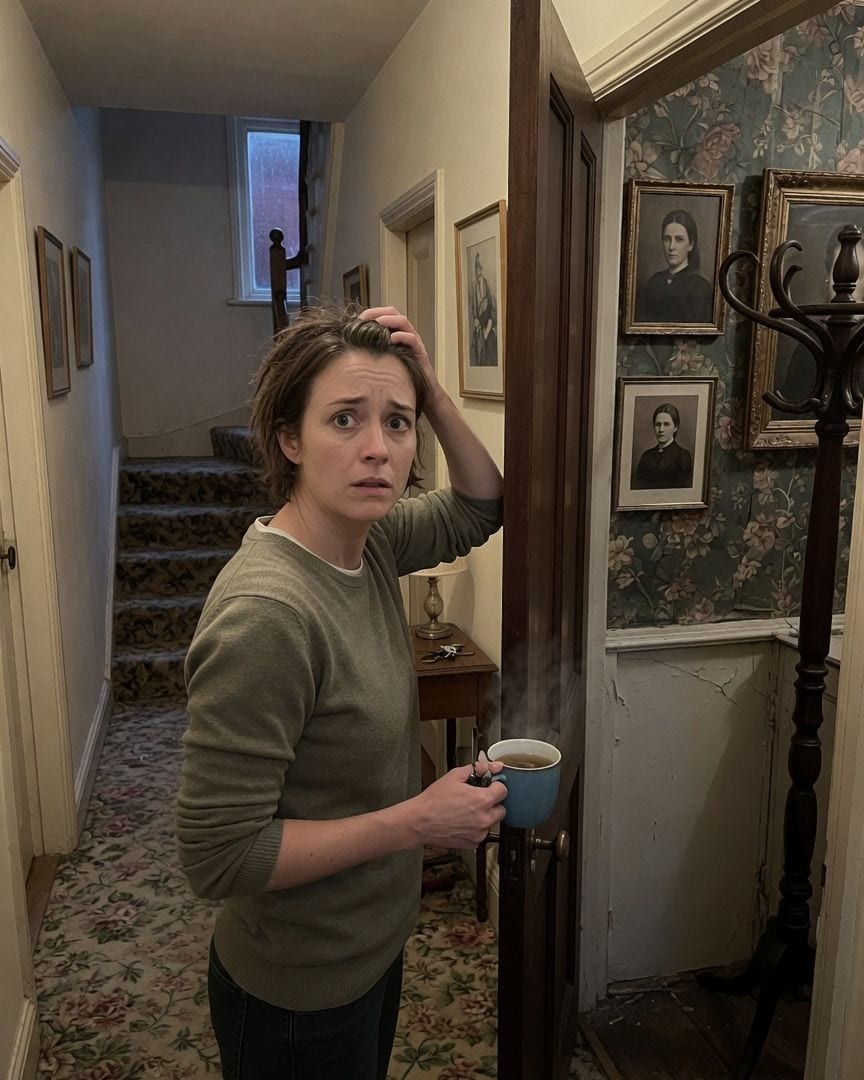
Olivia Caldwell stood in the hallway of her newly rented cottage, the rhythmic hum of the vacuum cleaner still vibrating faintly in her ears.
She’d just finished, painstakingly fluffing the nap of the old, floral carpet, a pattern of faded roses and ivy that wasn't quite her style but had a certain charm. Her eyes, however, kept returning to one spot.
A single, distinct track, worn almost to the weave, stretched from the foot of the stairs, past the small antique table she’d placed midway, and terminated abruptly at a heavy, dark wood door at the far end of the hall.
A door she'd been told was "just an old storage cupboard" by the landlord, but which remained stubbornly locked, a mystery she hadn't yet tackled. She frowned, running her fingers over the smooth, flattened fibres of the path.
It was far more pronounced than it had been when she moved in three weeks ago. It felt… deliberate. A path, worn by repetition. But by whom? She lived alone.
She smoothed it again, trying to convince herself it was just old age, a trick of the light.
Later, as dusk settled, bleeding soft purple and grey into the cottage’s windows, Olivia found herself back in the hall. A mug of herbal tea warmed her hands, steam curling gently towards the ceiling.
She’d been in the kitchen for an hour, then the living room, reading. No one else had been in the house. She glanced down. A prickle of unease started to bloom in her chest, cold and sudden.
The nap she had so carefully lifted, every fibre coaxed upright by the vacuum's bristles, was flat again. Pressed down along that exact path, from the stairs to the locked door.
As if someone, or something, had walked it, repeatedly, through the quiet house, leaving an invisible, indelible trail of passage in her absence.
The next morning, the flattened path was still there, a ghost impression in the carpet. Olivia decided the carpet was a distraction. The locked door was the real question.
Her landlord hadn't provided a key, dismissing it as a "quirky old storage space." But the idea of an unknown entity wandering her hallway, flattening the carpet, felt far more unsettling than a dusty cupboard.
She fetched her toolkit from the laundry room, a small hammer, a couple of screwdrivers, a pair of pliers. It was an old-fashioned brass lock, not particularly robust.
With a bit of leverage and some cursing under her breath, she managed to pry the mechanism free, the metal groaning in protest before giving way with a final, satisfying crack.
The door creaked open, exhaling a puff of stale, dusty air. She peered inside. It was small, no more than five feet deep, and utterly bare. Just a plastered cube. No shelves, no forgotten boxes, no secret passages.
Disappointment mixed with a strange, unnameable relief. It was just a storage cupboard, after all. A bit anticlimactic. She turned to leave, ready to patch the broken lock later.
But as she stepped back into the hall, a flicker of movement, a subtle shift in her peripheral vision, caught her eye. She paused, then looked back through the now-open doorway, expecting to see the empty cubby she’d just left.
The small room was still empty, yes, but the hallway she'd just come from – her own familiar hall, with its cream-painted walls and modern framed prints – had subtly shifted. No, that wasn't right. It had transformed.
The cream paint was replaced by a faded, busy floral wallpaper, a pattern of deep greens and browns she’d definitely never seen.
Her contemporary framed prints, small abstract pieces she loved, were gone, replaced by heavy, dark portraits in ornate, gold frames. Faces, stern and unfamiliar, stared out from the dimness.
Most striking of all, a thick, dark oak coat rack, carved with twisting, gnarled branches, stood exactly where her sleek, minimalist full-length mirror usually hung. It was her hall, undeniably.
The layout, the dimensions, the exact placement of the antique table. But it wasn't her time. Not even close. She blinked, rubbed her eyes with the heel of her hand, and looked again.
It was still there, a perfect, silent tableau of a different era, framed by the doorway of the empty room.
Olivia's heart hammered against her ribs, a frantic drumbeat. She can see a faint, sepia-toned photograph hanging on that floral wallpaper, directly opposite the open door – a stern-looking woman in a high-necked, dark dress.
It wasn't a print she owned, nor one she'd ever seen in the cottage. The air from the 'wrong' hallway felt cooler, somehow heavier, carrying with it a faint, almost imperceptible scent of something savory, something cooked, long ago.
She extended a trembling hand, reaching for the solid-looking oak of the coat rack, for the impossible past laid out before her.
Her fingers brushed against empty air, meeting only the rough plaster of the empty room beyond her own doorway.
The illusion held, silent and unyielding, a window into a time that shouldn't be, a scene frozen in a reality that wasn't hers.
Shaken, Olivia spent the next few days trying to find a rational explanation. A trick of the light? A hidden projector? A sudden, inexplicable hallucination brought on by stress?
She checked every inch of the empty room, looking for a seam, a lens, a secret mechanism. Nothing. She examined her own hallway, tapping the walls, searching for hidden panels or old wallpaper beneath the paint.
It was solid plaster, freshly painted. She even went through her phone’s camera roll, searching for any pictures taken from that angle, hoping to prove it was a glitch in her own perception. No evidence.
The 'Door Onto The Wrong Year' didn’t recur immediately, not in that vivid, undeniable way. But the carpet's flattened path did, every morning, a constant, silent reminder of something inexplicable.
She started researching the cottage's history online, in local archives, anything that might shed light on a previous tenant with an unusual sense of décor or a penchant for elaborate pranks.
The records were sparse, but she eventually found a name: Eleanor Blackwood. The previous long-term tenant. Lived here from 1974 to 1976. Disappeared without a trace in late '76.
The local newspaper archives yielded little beyond a brief, inconclusive police report: "Woman missing from rural cottage." No suspects, no leads. Just… gone.
Feeling a strange, cold pull, Olivia drove to the local historical society, a small, quiet building tucked behind the old library.
There, among stacks of brittle ledgers and dusty photo albums, she met Bernard Caldwell, a spry 78-year-old retired archivist and long-time resident of the area. He remembered Eleanor.
"Eleanor Blackwood, yes," he said, his voice a low rumble. "Lived in your cottage, didn't she? Quiet woman. Kept to herself. Always seemed… preoccupied, you know? Like her mind was somewhere else." He peered at Olivia over his spectacles.
"Very particular about her routines, as I recall. You could set your watch by her." He paused, then his brow furrowed slightly. "Odd thing, though. Used to get this smell from her place. Rich, savory.
Beef stew, I think it was. Almost every evening, around six. Even though I knew she lived alone." He shrugged, a slight shake of his head. "Never did figure that one out. Always wondered who she was cooking for."
That evening, back in her cottage, the faint but unmistakable scent of beef stew wafted through her living room, warm and savory, cutting through the cooler autumn air. She hadn’t cooked all day.
It was like a memory, a phantom meal, rising from the floorboards, pulling her deeper into a past that wasn't her own.
The recurrences didn't just intensify; they began to layer. The beef stew smell became almost nightly, a phantom aroma that permeated the air around six o'clock, just as Bernard had described. Then came the sounds.
Faint, rhythmic footsteps on the stairs, always light, always distinct, at odd hours – late at night, sometimes in the quiet of the afternoon.
Always following the worn path on the carpet, stopping for a beat at the exact location of the locked door, before fading into silence. Olivia checked, of course. Every time. The stairs were empty. The hallway silent. Nothing.
Just the faint imprint in the carpet.
One afternoon, a week after her visit to Bernard, a desperate need for answers drove her into the attic. It was a dusty, forgotten space, smelling of dry wood and stale air.
She was hoping to find more clues about Eleanor, maybe some forgotten personal effects. She pulled down an old, heavy trunk, bound with rope, from beneath a low eave.
Inside, beneath some moth-eaten blankets and brittle linen, she found a stack of faded black-and-white photographs of the cottage's interior. Old snapshots, some blurry, some surprisingly clear.
Her breath hitched. One of them showed the hallway. The exact same floral wallpaper. The heavy, dark oak coat rack. The small, ornate table. The stern-faced portraits.
It was the 1970s hallway she had seen through the 'Door Onto The Wrong Year,' frozen in time on glossy paper. This wasn't a hallucination. This wasn't a trick of light. This was real.
As she examined the photograph, a cold draft, sharp and sudden, swept through the attic, raising gooseflesh on her arms, even though the window is latched tight, sealed against the autumn chill.
A small, heavy object tumbled from a shelf directly behind her, landing with a soft, metallic thud on the dusty floorboards. It was an old, tarnished silver locket, intricate scrollwork on its surface.
Her hands trembled as she picked it up. When she managed to pry it open, a tiny, blurred photograph stared out from one side.
It was a woman, her features indistinct with age and poor focus, but the set of her mouth, the shape of her eyes… Olivia knew. It was Eleanor. Eleanor Blackwood.
Olivia felt a chill crawl up her spine, far colder than the draft, a profound sense of not being alone in that quiet attic. Of being watched, yes. But worse. Guided.
As if an unseen hand had placed that locket, had orchestrated its fall, just for her. She quickly closed the locket, the cold metal a physical anchor in her shaking hand, her heart pounding a frantic rhythm against her ribs.
That night, driven by a growing sense of urgency that gnawed at her, Olivia returned to the empty room behind the locked door. The broken lock mechanism lay on the floor where she’d left it.
She closed the door behind her, plunging the small space into near darkness, and activated the flashlight on her phone. She ran her hands along the bare plaster walls, tapped the floorboards, meticulously searching every surface.
Nothing seemed out of place, nothing gave.
But then, as her fingers traced the base of the wall, where the old skirting board meets the floor, she felt a slight give. Not a crack, not a loose nail, but a faint, almost imperceptible flex. A loose panel.
It was cleverly disguised, flush with the wall. With a struggle, using a flat-head screwdriver, she managed to pry it open. It came away with a soft pop, revealing a narrow, dusty cavity within the wall.
Inside, nestled in the accumulated dust and cobwebs, was a small, leather-bound journal. It was old, the leather cracked, the pages yellowed and brittle, but the ink, though faded, was still legible.
Her hands trembled as she pulled it free, the weight of it feeling impossibly heavy. The first entry was dated 'October 12, 1974,' signed 'Eleanor Blackwood.'
Olivia sat cross-legged on the dusty floor, the beam of her phone light illuminating the page. She began to read, Eleanor's neat, looping script filling her mind.
Eleanor described moving into the cottage, her quiet life, and then, the first strange occurrences. 'The carpet… it's almost as if someone walks the same path every night, even when I'm alone. It's so distinct, even after I vacuum.'
Olivia gasped softly, a sharp intake of breath. The carpet. Eleanor had noticed it too.
Further entries detailed the recurring smell of beef stew, her attempts to find its source, her growing frustration. Then, a chilling entry. 'Today, the door. The small room, usually empty, showed me… a different time.
My own hallway, but from a year ago. October 1975. The wallpaper was different. The mirror replaced by a strange, old coat rack. It felt so real, I could almost step into it, into my own past.'
Eleanor wrote of her growing conviction that the house wasn't just showing her images. It was replaying moments, a chance to 'correct a mistake,' a 'terrible loss' that had happened in 1975, the year the door had shown her.
She believed the house, in its own strange way, was giving her an opportunity. An opportunity to intervene.
Olivia reread the entries, her earlier experiences clicking into place with horrifying precision. The floral wallpaper, the oak coat rack, the photograph of the stern woman – it was all Eleanor's past, seen through the house's memory.
Not just images, but an echo. The dread deepened, a cold, sickening weight in her stomach.
Eleanor Blackwood hadn't just observed this phenomenon; she had been attempting to intervene with a past that the house was showing her, a past it wanted changed. And she had vanished.
Olivia flipped through the journal, the entries becoming increasingly frantic, the handwriting more desperate, less precise.
Eleanor detailed her repeated, escalating attempts to step through the 'Door Onto The Wrong Year,' to reach a specific moment in 1975, to warn someone, to prevent something from happening.
'The house wants me to finish it,' she wrote, her words scrawling across the page. 'It shows me the path, the meals, the moment… but I can't quite break through. It lets me see, but not touch. Not yet.'
The final entries were a terrifying spiral into obsession, Eleanor's words mirroring Olivia’s own growing panic. 'I saw myself there, in the other time, watching. But I couldn't reach her, couldn't make contact.
The house holds me here, makes me replay it, again and again, watching the same scene, the same mistake.' The very last page, dated 'November 2, 1976,' was almost indecipherable, a wild, broken scrawl. '…it won't let me go.
I'm part of it now. I have to try…' The sentence broke off abruptly, a violent smear of ink, as if the pen had fallen from Eleanor's hand mid-word, mid-thought. A final, desperate effort.
Olivia drops Eleanor's journal, its final, unfinished page splayed open, the last decipherable words – '…it won't let me go. I'm part of it now. I have to try…' – burning into her mind.
She glances from the faded ink to her own hand, resting unconsciously on the very same spot on the hall carpet that Eleanor described, realizing with a cold, sickening jolt that she is not just reading a story, but re-enacting it.
The next morning, Olivia awoke to the pervasive, cloying smell of beef stew, stronger than ever before, almost suffocating in its richness.
The carpet’s path, running from the foot of the stairs to the empty room’s doorway, was flattened with a chilling clarity, as if pounded flat by relentless, invisible footsteps. She didn't need to read Eleanor's journal again to know.
She knew what was happening.
The house wasn't just remembering; it was a living echo, a trap. It had consumed Eleanor Blackwood, drawing her into its desperate, repetitive cycle, and now it was trying to consume her, Olivia.
The 'Door Onto The Wrong Year' wasn't just a view into the past; it was a funnel, a point of no return. She understood Eleanor's frantic attempts to intervene, to break the cycle, and her ultimate, tragic failure.
The house was a temporal loop, replaying Eleanor’s final, desperate routine, a specific, traumatic loop from 1975, initiated by Eleanor's own desire to change it. And it was using Olivia, an unwitting participant, to complete what Eleanor couldn't.
She walked, not entirely of her own volition, to the empty room. As she looked through the doorway, the 1970s hallway was vivid, almost tangible.
The floral wallpaper, the oak coat rack, the sepia photograph of the stern woman – it shimmered with impossible reality. And there, standing by the coat rack, her back to Olivia, was Eleanor herself.
Younger, still desperate, clutching something to her chest, looking at the same photograph Olivia had seen earlier.
Eleanor turned her head, slowly, as if sensing an impossible presence. Her eyes, wide with a terrible understanding, met Olivia's across the impossible gap of time, across the threshold of the empty room.
It was a silent warning, a plea, a despair that ripped through Olivia’s chest. The house, she realized, wanted her to step through, to finish the routine, to become Eleanor and complete the loop.
It wanted her to live that terrible, unfinished past.
The choice was stark, agonizing in its clarity: follow Eleanor, step into the loop, or try to break the cycle. Olivia knew she couldn't save Eleanor; Eleanor was already gone, lost to the house's hunger.
Nor could she change the past. Her only hope was to refuse the house's demand, to deny its insidious invitation.
The scent of stew was overwhelming now, a thick, meaty aroma that filled her lungs, pressing against her senses. The phantom footsteps echoed on the stairs, faint but insistent, urging her forward, towards the shimmering doorway.
She felt an immense pull, a gravitational force drawing her towards the impossible threshold, a pressure building in her mind, a whisper that this was her only chance, the only way to understand, to maybe, finally, finish it.
Eleanor's spectral eyes, still visible through the door, were fixed on her, pleading, warning, mirroring her own terror.
Olivia clenched her jaw, her teeth grinding. No. She would not step through. She would not become part of the house's endless hunger, its replayed trauma.
Instead of moving towards the doorway, towards Eleanor, towards her own inevitable consumption, Olivia turned. Abruptly. Violently. She ran.
She sprinted through the hallway, past the flattened carpet, out the front door, leaving it wide open behind her, a gaping mouth to the quiet house. She didn't stop to pack a bag, didn't grab her phone or her purse.
She didn't look back. She just ran, the cold autumn air a shock against her face, clutching Eleanor's journal to her chest like a shield, the only proof she had of the impossible.
The house, she could feel, was angry, its silent demand for completion unmet, its temporal loop disrupted.
She reached her car, parked haphazardly on the gravel driveway, fumbling with the keys, her hands shaking so violently she can barely insert it into the ignition.
She twisted it, heard the engine cough to life, threw the car into reverse, and sped away, leaving the cottage and its hungry loop behind, the image of Eleanor's desperate, warning face burned into her memory.
Olivia never returned to the cottage. She broke her lease, forfeiting her deposit, ignoring the landlord's calls. She moved into a small, anonymous apartment in another town, a place with no history, no creaking floorboards, no locked doors.
She tried, once, to tell a friend, a rational, skeptical woman, about the journal and the 'Door Onto The Wrong Year.' Her friend listened patiently, her eyes kind, then gently suggested stress and imagination, the strain of a new place.
Olivia didn't press it. The journal, now her most treasured and terrifying possession, remained hidden beneath her mattress, its fragile pages holding a truth no one would believe.
The cottage, she later learned from a quick, anonymous online search, was re-listed for rent a few weeks after she left, its description unchanged, its dark secret unmentioned.
Sometimes, late at night, in the quiet of her new apartment, Olivia will catch a faint, almost imperceptible whiff of beef stew. A phantom aroma, not from her kitchen, but from somewhere deeper, a memory of a memory.
She still checks the floorboards in her new place for loose panels, an unconscious habit, a vigilance against the impossible. And she still keeps the old page, with Eleanor Blackwood's final, desperate, unfinished words – '…it won't let me go.
I'm part of it now. I have to try…' – folded carefully in her wallet, tucked behind her driver's license.
She lives with the knowledge of what the house does, a truth no one else believes, a secret that whispers to her in the dark, a cold draft on a warm night.
The old page is still in my wallet, a photograph of a year that never was.
If this one got to you
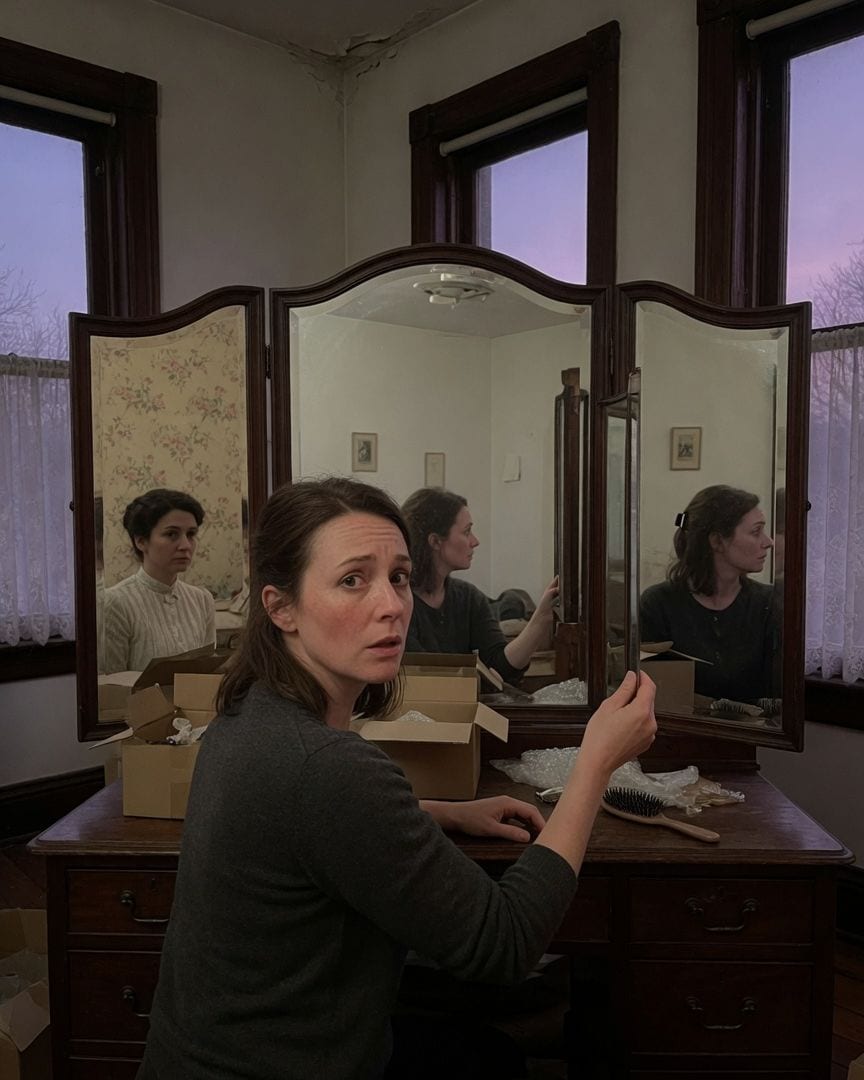
My dressing table mirror shows a woman in a high-necked blouse, doing her hair in a room papered differently from mine. She moves a half-second late, catching up to a memory of the gesture.
Settling into my inherited, old house, I found myself drawn to an antique dressing table with a three-winged mirror. But when I angled the mirror, it showed a woman from another time, brushing her hair in a room unlike my own. Her every movement in the reflection was a half-second too slow, an unsettling temporal stutter across the decades.
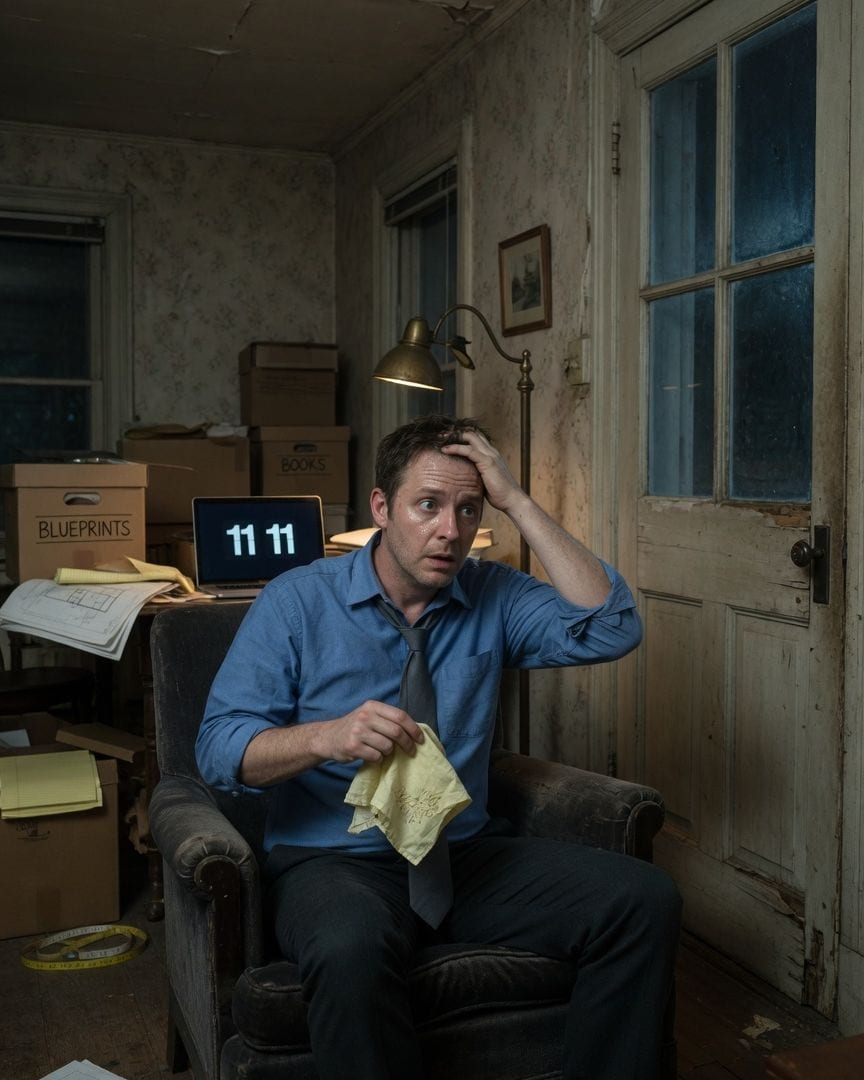
The boarded-up door in my study has twice swung open onto the balcony that was torn off this house years ago — iron railings back, and a woman at the rail with her back to me, watching a street that no longer runs below.
As an architect, I approach my great-aunt's inherited house with a rational eye, seeing its potential, not its ghosts. I knew the charming French door was boarded up because its balcony was removed back in 1953. But for two nights now, at 11:11 PM, those boards simply vanish, revealing the balcony restored and a silent woman watching an impossible street.
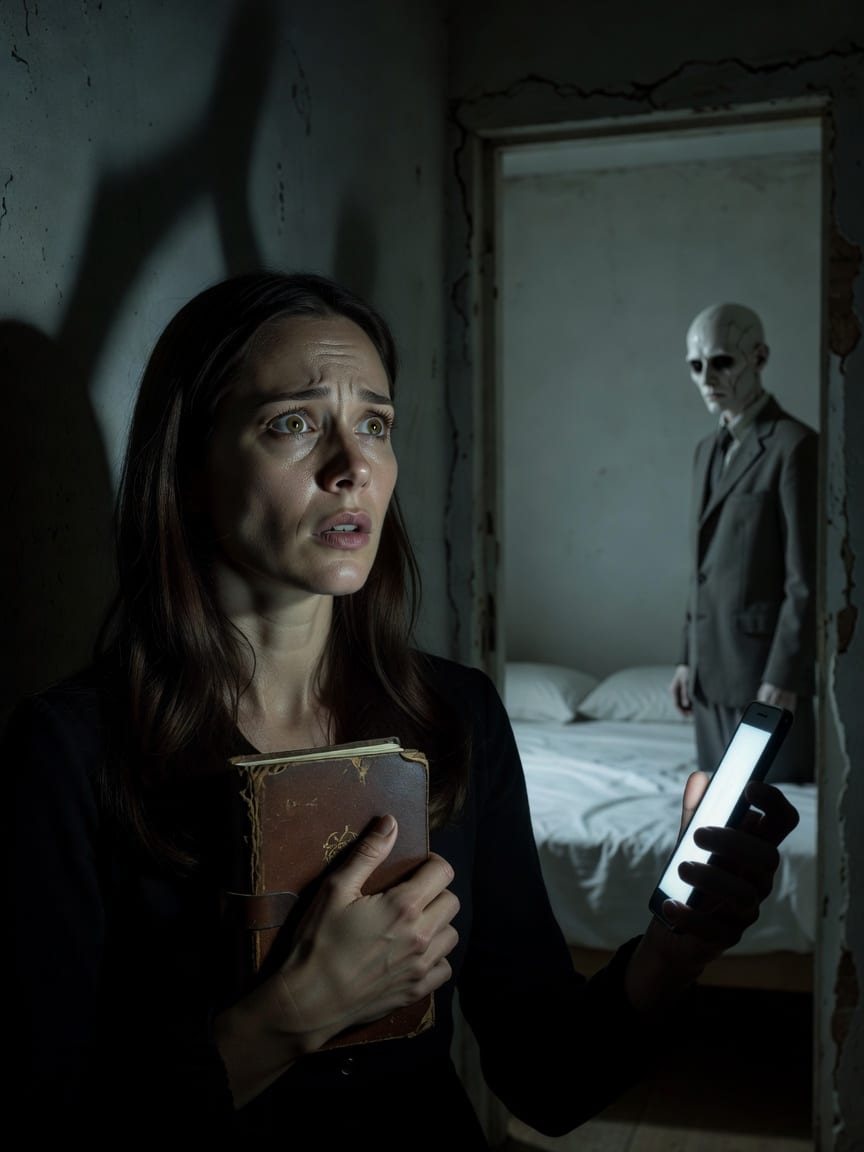
Behind a plastered-over doorway, I found a room. Papered, carpeted, and furnished with a made bed, sealed for decades. The air was dead still, but the bed wasn't dusty. My council tax bill only lists five rooms.
I'm Claire, an architect, meticulously planning my new Victorian terrace renovation. But when I uncovered a hidden room behind a wall, everything I knew about time and decay shattered. The bed was perfectly made, the air still, yet there was no dust, only an unnerving cold.
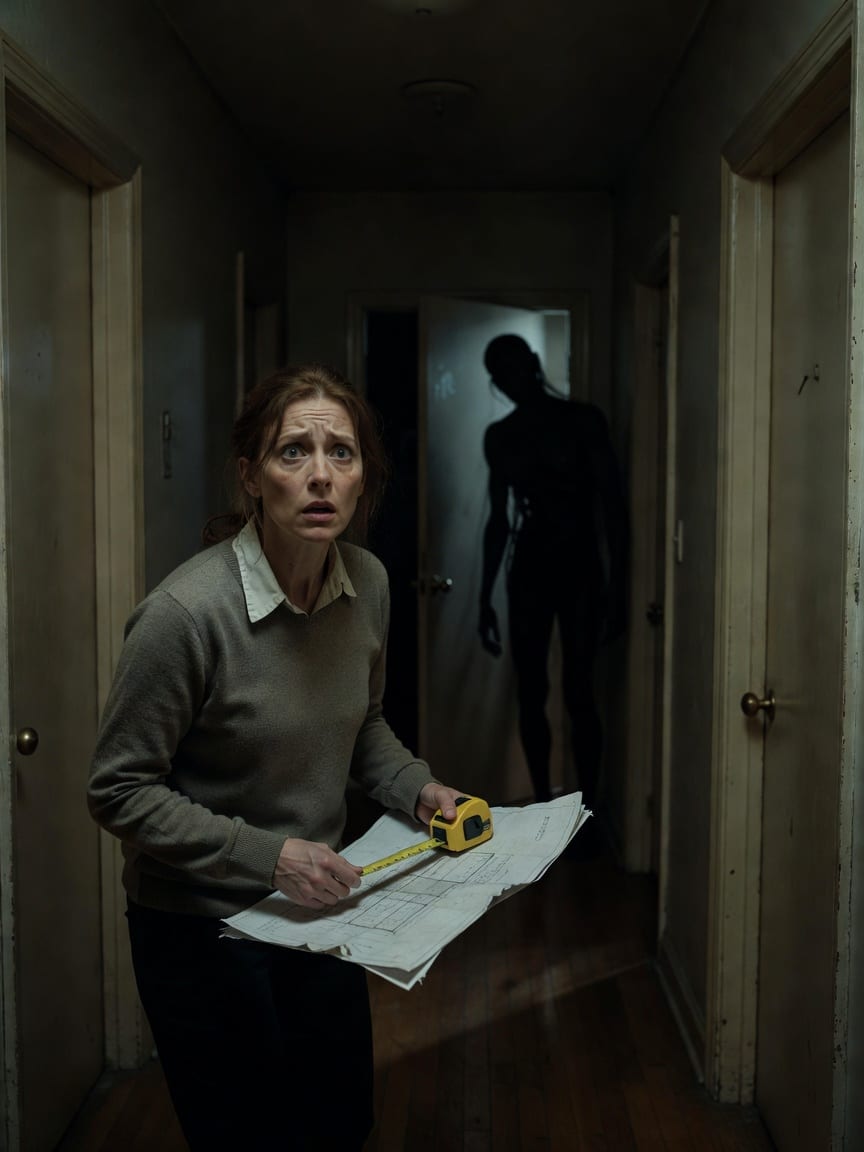
My front door has a dented gate and a dead hydrangea. I walked past it six times, trying to reach the corner shop just a hundred yards away. The pavement kept bringing me back to my own porch, and the shop's light never moved.
My morning started like any other, a quick walk to the corner shop from my home at Number 14, Elm Terrace. But after walking what felt like two minutes, I found myself back at my own front door, the shop no closer. I tried six times, faster and slower, but my street kept compressing, refusing to let me leave.
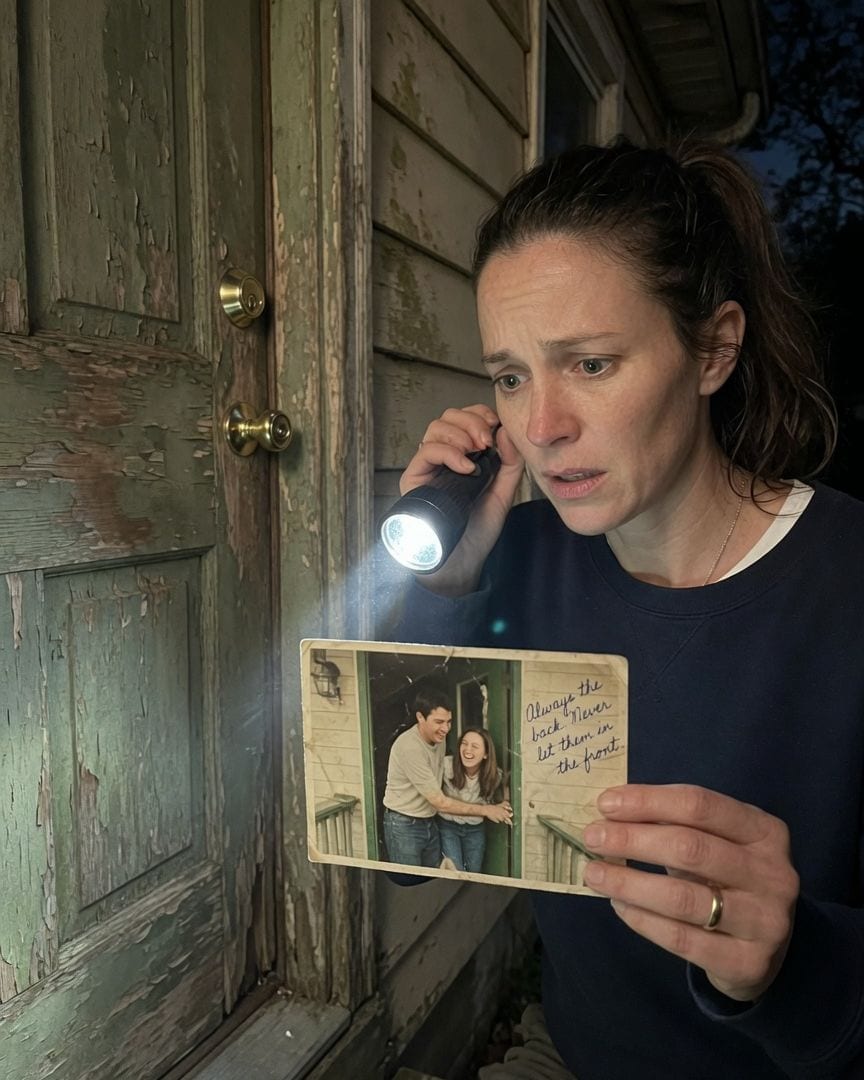
My mother waves us to the front door now. She was missing five days. She says we've always used the front, but the back door, our kitchen door for thirty years, is locked.
My mother, Janet, finally came home after five days, but her overly bright smile and insistence on using the front door felt wrong. For three decades, our family always used the back entrance, which now had a gleaming, new deadbolt. The quiet hum of unease quickly grew into a chilling dread.
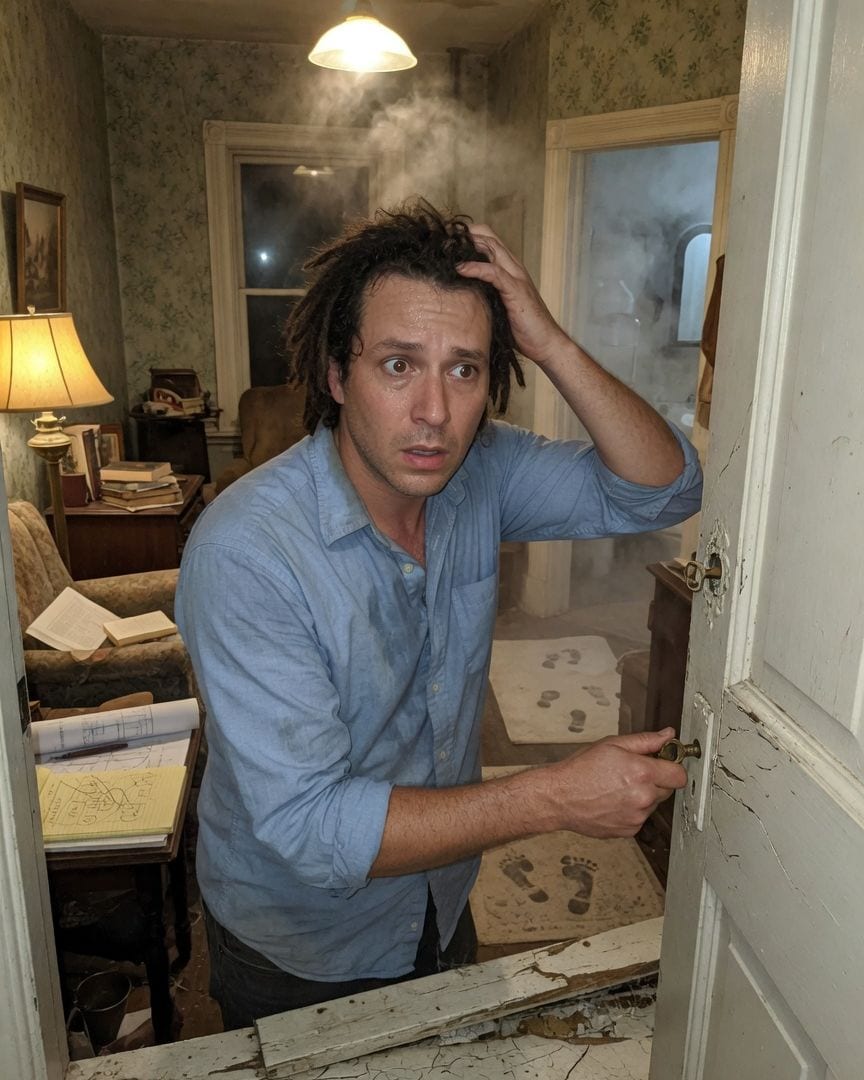
The bath filled itself at 9:30 PM. My main house water was off. Wet footprints led from the tub to a locked airing cupboard.
As an architect, I pride myself on logic. Moving into my inherited Victorian house was supposed to be a quiet fresh start, but on the third night, I heard the impossible. Even after I shut off the main water to the entire house, my clawfoot bath upstairs ran full, warm, and steaming at 9:30 PM.