My mother's phone, powered down six months in the loft, just drove her old route to the church.
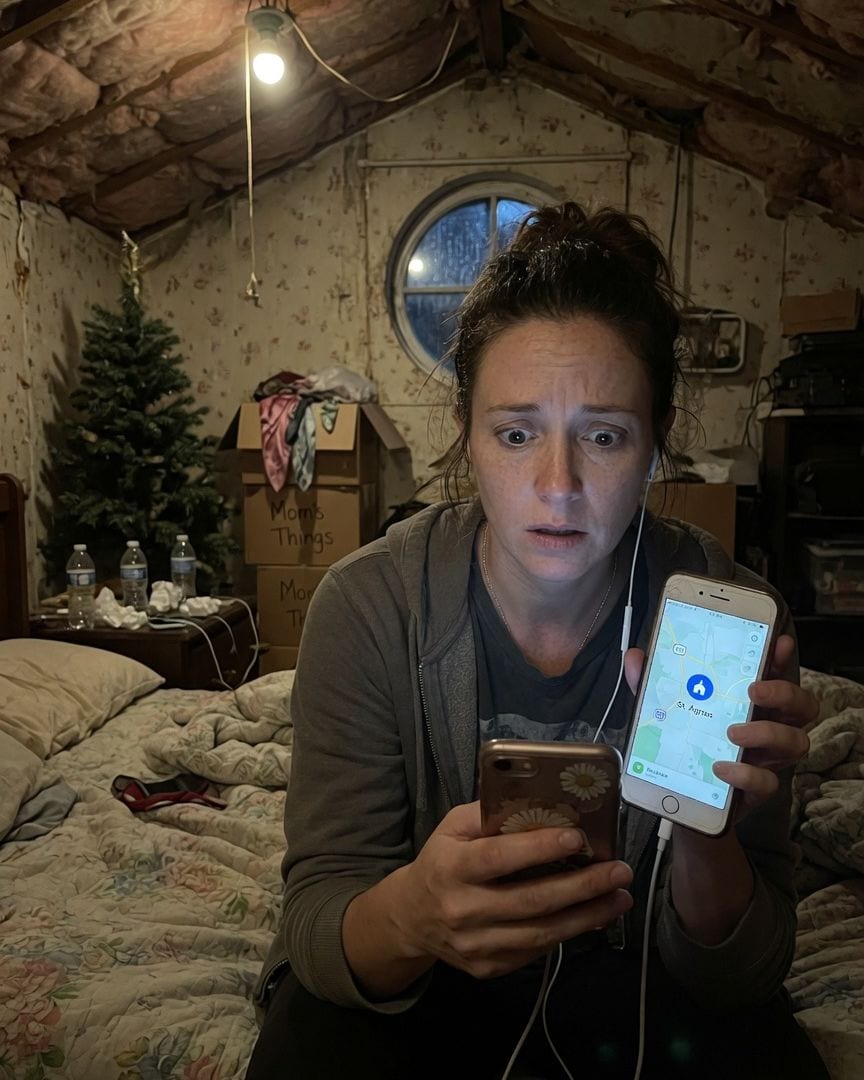
The blue dot, small and innocent, pulsed on the screen. It was my mother’s icon on the 'Find My Family' app, Margaret Vaughn.
She’d been gone six months now, died peacefully in her sleep, and I kept her on the list out of some stubborn, grief-stricken habit.
I usually just glanced at the map, seeing her last known location, fixed and unmoving, out past the old lighthouse. But today, the dot was drifting.
My breath hitched. It was moving. Slowly, deliberately, tracing the familiar curves of the coast road, the very one she used to drive every Sunday morning, listening to oldies.
The phone itself, Margaret's old smartphone, was in a cardboard box in my loft, powered down, wrapped in a scarf I hadn’t had the heart to throw away. It couldn't be.
I watched, mesmerized, as the blue dot crawled along Highway 101, past the fishing boats, past the sleepy little diners, heading out of town. It paused, just for a moment, at the turnoff for the old cemetery.
Then it resumed its crawl, until it stopped directly outside the weathered stone church where we'd held her funeral service. Two hours. It sat there for two agonizing hours, the little blue icon unwavering.
Then, the app reported 'battery critically low,' and the dot flickered, shrinking, before vanishing altogether.
My heart was pounding a frantic rhythm against my ribs. I scrambled upstairs, the ladder rattling under my weight, into the dusty confines of the loft.
The cardboard box, tucked beneath a forgotten Christmas tree stand, was exactly where I'd left it, its tape undisturbed. I tore it open, the sound ripping through the quiet. Inside, nestled amongst her old silk scarves, was the phone. Cold.
Dark. Definitely switched off. It was a dead weight in my hand, a silent, inert slab of plastic and glass.
I tried to rationalize it. A server glitch, a GPS anomaly, some ghost signal from a forgotten charger. But the specific route, the church—it was too personal, too precise to be random.
I found myself heading back downstairs, the phone clutched in my hand. Maybe there was a log, some network hiccup explanation I could find if it was actually on.
Against every nerve in my body, I plugged it into a charger.
The screen flickered, a jolt of unnatural life, then slowly, the phone began to boot. The familiar home screen appeared, Margaret’s chosen wallpaper—a faded picture of her with our golden retriever, Daisy, on the beach.
I navigated to the location services, to its own internal GPS history. It was inconclusive, fragmented, mostly blank. My fingers were cold, moving on their own.
Then, buried deep in the utilities folder, nestled between an outdated flashlight app and a weather widget, I found it: 'Voice Memos.' The list was short, mostly old shopping reminders in my mother's voice.
But at the very top, there was a new entry. Timestamped for yesterday, the exact hours the blue dot had been stationary at the church. My thumb hovered over 'play.'
It was mostly static, a low, constant hum, like an old television tuned to a dead channel. But beneath it, a faint, distorted whisper seemed to writhe, just at the edge of hearing. It wasn't my mother's voice.
It wasn't anyone I recognized. I pressed pause, a cold dread seeping into my bones, chilling me from the inside out. The rational explanations, the glitches, the forgotten chargers—they had just failed.
I replated the voice memo, my hand trembling, the whisper almost swallowed by the static. My noise-canceling headphones, usually reserved for noisy commutes, were suddenly a lifeline. I plugged them in, turned the volume up, straining to decipher the sound.
The hum intensified, filling my ears, then faded slightly, leaving only the faint, raspy breath. I could almost make out syllables, a ragged intake, a release. I closed my eyes, focusing, willing the sound to clarify, to become understandable.
And then, through the hiss, a single word pierced the air, clear and unmistakable. It was my own name. 'Naomi.'
The word 'Naomi' echoed in my ears, a phantom chill that seemed to settle in the space behind my teeth. My first instinct was to call Gary Crane.
He’d been my best friend since college, a wizard with anything electronic, now working IT for a big tech firm. Gary, usually unflappable, listened with growing skepticism, his voice tinny through the phone. "A hack? A weird prank, maybe?
Kid got hold of her old phone?" he suggested, but I could hear the doubt creeping in. Still, he agreed to analyze the audio file and the phone's data.
He spent the next few hours remotely accessing the phone, and his voice on our next call was different, stripped of its usual bravado. "No external intrusion," he reported, sounding unnerved.
"No malware, no sign of a remote wipe or anything. The voice memo… that's the weirdest part. Despite the timestamp, there's no ambient background noise. No creaking pews, no distant traffic from the road, just the whisper and the static.
It’s like it was recorded in a vacuum." More unsettling, he’d dug deeper into the phone’s internal GPS logs. "Sparse," he’d called them, "like something was actively trying to obscure it."
But what was there matched the Find My Family trace perfectly, placing the phone precisely at the church. And then there was this: "I found a single outgoing call in the phone’s history.
Placed during the same two-hour window at the church." The number was local, but unfamiliar.
When I called it from my own phone, it rang once, twice, then connected to a dead line, a pre-recorded message stating the number was no longer in service.
Gary’s voice was barely above a whisper when he admitted, "This isn't a glitch, Naomi. This is… something else."
Armed with Gary’s analysis, I drove the coast road again. This time, I parked near the old church, the salt wind whipping my hair.
The feeling of being watched was palpable, a prickle on my skin, like static electricity before a storm.
I walked around the old churchyard, past the weathered headstones, each a testament to a life lived and ended, searching for any sign, any explanation. The gravestones, some barely legible, spoke of generations of Langford residents.
My gaze drifted across the street to a small, neglected building, an old stone structure with a sign barely legible through the grime: 'Langford Historical Society.' A single, flickering fluorescent light glowed with anemic energy in an upstairs window.
As I turned to leave, a figure emerged from the building, a lean, elderly man with a shock of white hair and unsettlingly calm eyes.
He watched me, not overtly, not directly, but with a quiet intensity that made me hurry back to my car, my heart thumping a frantic rhythm. Later that evening, an anonymous email arrived in my inbox.
The subject line was blank. The body read: 'Some things are best left undisturbed. You're not the first to look for a channel.' It mentioned the specific details of my mother's phone, the church, and the recorded voice.
The sender was untraceable, bouncing through a maze of foreign servers.
The email confirmed my fears. Someone knew. The prickle on my skin from earlier was not imagination. I drove back to the historical society the next morning, determined, the email a burning presence in my pocket.
The same elderly man, Harold Abbott, 70, was inside, meticulously filing old documents on shelves that seemed to reach the ceiling. He looked up as I entered, greeting me with a placid, almost unblinking nod.
I didn't waste time. I confronted him, my voice tight. I told him about the phone, the impossible movement, the church, the email. He listened calmly, his hands pausing over an ancient, leather-bound book. "A channel, you said?"
he asked, a faint, almost imperceptible smile playing on his lips, as if I’d spoken a code he understood perfectly.
He rose slowly, his gaze steady, then led me to a dusty archive in the back, pulling out brittle ledgers, their pages yellowed with age, and faded newspaper clippings.
"This town has always had its echoes," he said, his voice soft, almost a whisper, as if sharing a sacred secret.
He pointed to entries in a ledger, handwritten in fading ink, describing 'lost souls' and 'phantom movements' along the coast, particularly focused on the church.
One clipping, dated 1947, detailed a family's grief over a daughter lost at sea, her doll found weeks later in her bed, soaking wet, singing a nursery rhyme.
"Before phones, it was diaries, letters, even personal objects," Harold continued, his fingers tracing the fragile paper. "They'd vanish, then reappear, or mimic their owner's last routines." He leaned closer, his eyes unblinking, unsettlingly calm.
He explained that a presence, ancient and tied to the land, feeds on lingering grief, seeking a 'channel' to interact with the living. My mother’s phone, her digital footprint, was simply the most recent iteration.
"It doesn't bring them back," Harold clarified, his voice flat, devoid of emotion. "It uses their trace. Their digital echo. It's drawn to the strongest emotional connections. Your mother's grief, your grief… it's a powerful attractant."
The air in the archive grew thick, heavy with the weight of generations of sorrow, of inexplicable occurrences. Every wrong detail suddenly snapped into a terrifying focus.
Harold Abbott closed the old ledger with a soft thud, the sound echoing in the small, dusty room. "The channels are how it reaches out, how it grows."
He pointed to a specific date in one of the newspaper clippings, an article from the 1960s about an old local radio station that ceased broadcasting decades ago. The headline spoke of "unexplained atmospheric interference."
"There was an old frequency," he said, "a community broadcast. People called it 'The Echo Channel' because of the strange static, the whispers they sometimes heard in the dead of night."
He rattled off a sequence of numbers, an obscure frequency in the lower range of the AM dial. A cold dread settled over me, chilling me to my bones. He was telling me how to find it.
I pulled out my smartphone, my fingers trembling. I downloaded an old radio tuner app, the icon a vintage radio dial. My hands shook as I inputted the numbers Harold had given me.
The app crackled to life, a hiss of static filling the small, dusty room, loud enough to make the old ledgers on the shelves vibrate faintly.
Faint, distorted voices murmured beneath the noise, like conversations heard through a wall, just out of reach, impossible to decipher. Then, one voice rose, clearer than the others, a raspy whisper I recognized instantly from my mother's phone.
It repeated a single name, over and over. It wasn't Margaret's. It was 'Naomi.'
The whispered 'Naomi' from the phone speaker was a physical blow, a sudden rush of icy cold through my veins. Harold Abbott watched me, his placid expression unwavering, confirming the worst without saying a word.
"It learns," he said, almost admiringly, as if observing a fascinating natural phenomenon. "It used your mother's phone to map her grief, her connections. Her routines. And then, it used that connection to call out to you.
The 'Echo Channel' isn't just a broadcast; it's a lure. A direct invitation." He explained that the entity, whatever it truly was, didn't just mimic; it evolved.
It used the emotional residue, the digital ghost of the recently deceased, to create a personalized trap.
The impossible objects—the phone recording, the dead number in the call log, the GPS trace—were all deliberate bait, tailored specifically for me, designed to pique my curiosity, to draw me in.
The whispers on the radio weren't just background noise; they were the entity's attempt to draw me in, to make me its next living 'channel,' a conduit for its influence in the physical world.
It needed a physical presence, a living mind, to fully manifest. "You are its new focus, Naomi," Harold concluded, his voice soft but firm, "its next vessel."
The word 'vessel' chilled me to my core. Harold's calm demeanor now felt less like wisdom and more like complicity, like a caretaker of something terrible. "How do I stop it?"
I demanded, my voice trembling, barely a whisper in the echoing room. Harold sighed, a deep, ancient sound that seemed to carry the weight of decades. "You sever all ties. All digital echoes. All physical reminders.
You destroy the phone, delete the accounts, leave this place, and never look back."
He stressed the importance of cutting off all connections, both to my mother's memory—the grieving, lingering parts—and to my own digital footprint that had interacted with the entity.
The entity, he explained, was strongest where grief and connection were strongest, a parasitic shadow feeding on human emotion.
My mind reeled, a torrent of frantic thoughts. I clutched my mother's phone, still playing the faint, incessant whisper of my name. I knew what I had to do.
I drove, not back to my apartment, but to a remote, rocky cove I knew, miles from the church and the quiet, haunted town. The wind howled off the ocean, the waves crashing against the jagged rocks.
With shaking hands, I found a heavy, barnacle-encrusted rock.
I raised it, brought it down, and smashed the phone repeatedly against the unforgiving stone until it was a mangled, unrecognizable wreck of plastic and metal, its screen shattered, its circuits exposed.
I scattered the pieces into the churning, gray ocean, watching them sink beneath the foam, swallowed by the cold depths.
In the following days, a frantic blur, I systematically deleted my Find My Family account, purged old photos from cloud storage, changed my email address, and even removed myself from social media groups related to my hometown.
I quit my job, gave notice on my apartment. I made plans to move, to start over, to bury Naomi Vaughn of Langford under a new identity, a new life.
As I drove away from Langford for the last time, the setting sun painting the sky in fiery streaks, I glanced in my rearview mirror.
Harold Abbott stood outside the historical society building, a faint, knowing smile on his face, watching my car disappear down the coast road. He wasn't just 'the one who knew'; he was 'the one who managed the channels.'
I moved across the country, building a new life. I changed my name on most online platforms, severed old connections, and tried to erase Langford from my memory.
The ocean, the church, the whispering static – I avoided anything that echoed those things. The town, I knew, continued its quiet, sinister existence, its ancient secret carefully maintained by people like Harold Abbott.
The entity, I hoped, had lost its 'channel' in me. Months passed. Slowly, tentatively, I began to feel safe, the dread fading into a distant, almost unbelievable nightmare. I had almost forgotten.
One evening, an old laptop, long ignored in the back of a closet, chimed with a notification. An obscure social media account I hadn't deleted, a relic from years ago, showed a new activity. A new follower.
I clicked on the profile, a cold dread blossoming in my chest. The picture was a grainy, distorted image of a familiar stretch of the Langford coast road. There was only one post.
It was a single word, repeated endlessly, a digital echo of the whisper I had heard on my mother’s phone, and on the radio: 'Naomi.'
If this one got to you
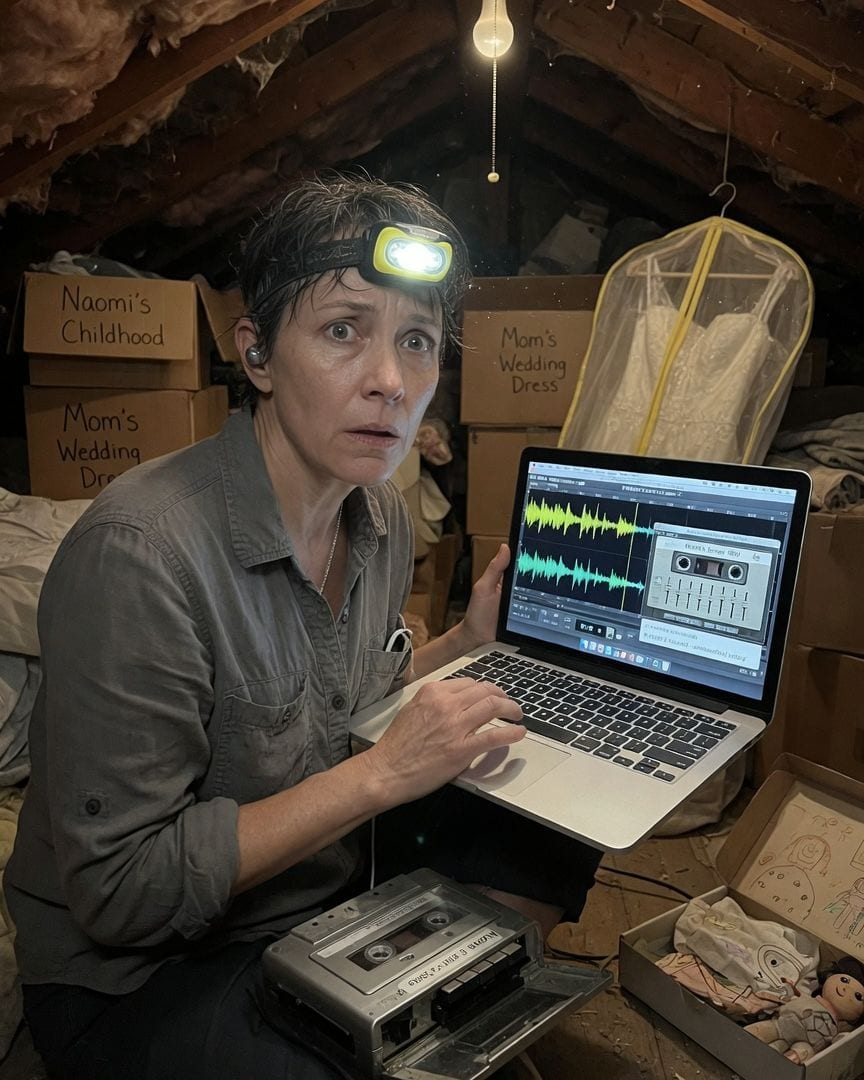
My hearing aids recorded a child humming in my empty car. It was a tune my dead sister and I sang, decades ago.
My drive home usually brings silence, but my hearing aids, always on, record everything. Scrubbing through the day's audio, I found a child humming a tune no one else knew – a secret melody my sister and I made up decades ago. The problem? My car was completely empty.
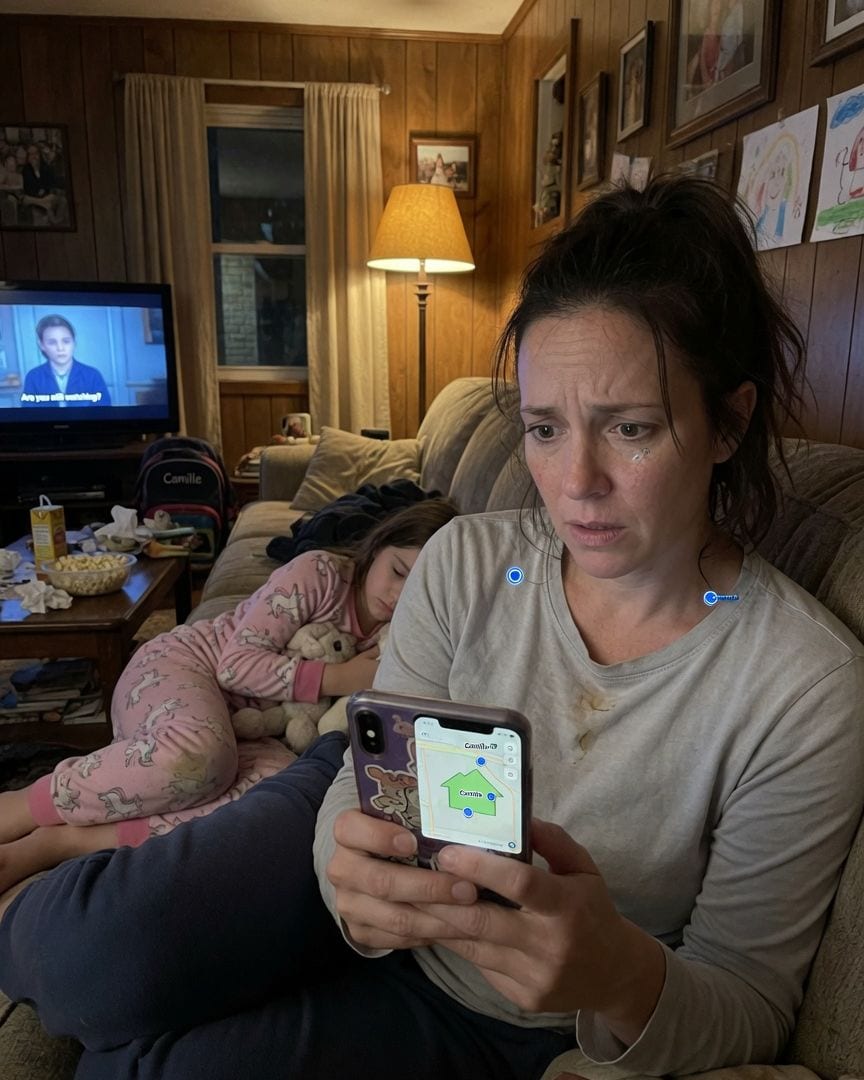
My daughter's voice memo recorded a man's voice in her bedroom. No one else was home.
Curled on the sofa, I watched my eight-year-old daughter Camille sleep, her old smartphone in my hand. I idly checked its Find My Phone app, expecting to see her blue dot inside our house. Instead, a second identical blue dot paced silently outside, tracing the perimeter of our home.
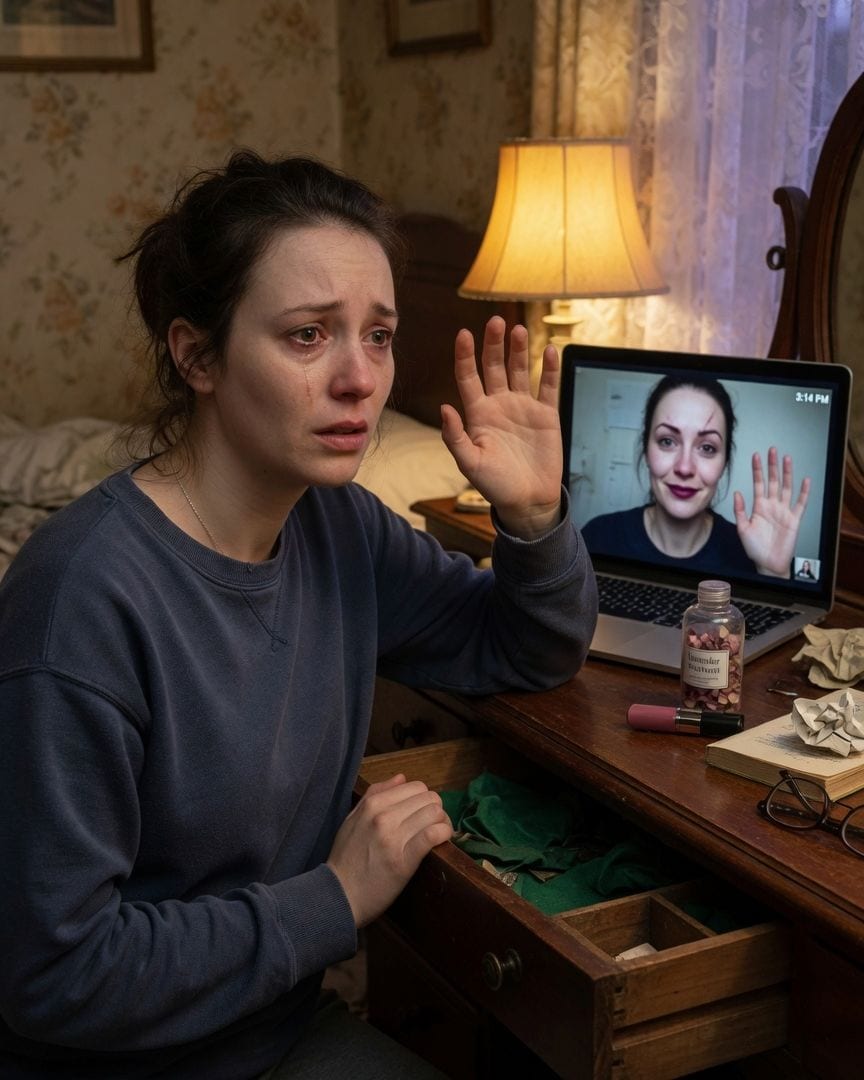
My mother waved with her right hand, both times, on our first call after she came home. She always waved left.
My mother vanished three months ago, then came back. On our first video call, she waved goodbye, but not with her usual left hand. It was her right, a small gesture that twisted something cold in my stomach.
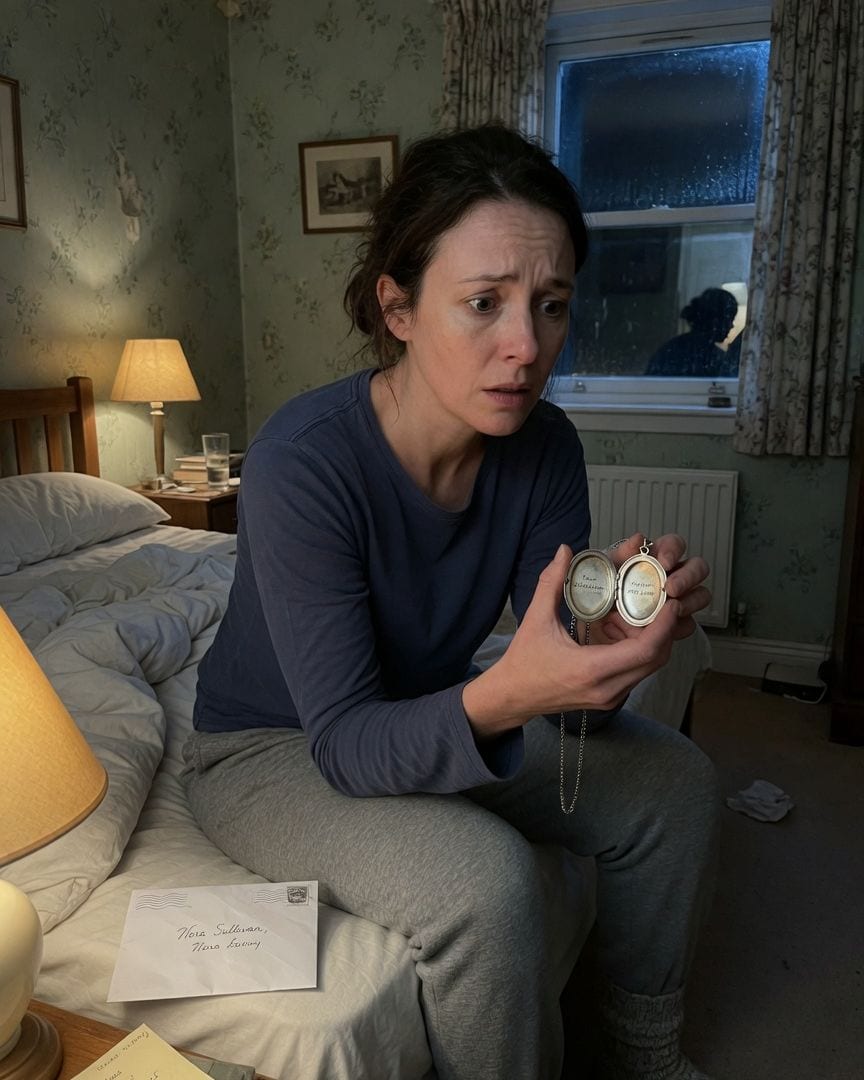
My antique locket held my maiden name, engraved with 'until the ninth.' The dealer said the woman who owned it left a note: 'for her, when she comes.'
My husband Scott, always finding unusual things, gave me an antique silver locket. Inside, engraved beneath my maiden name, Nora Sullivan, were three chilling words: 'until the ninth.' It felt like a direct, personal address, even though I hadn't used that name in years.
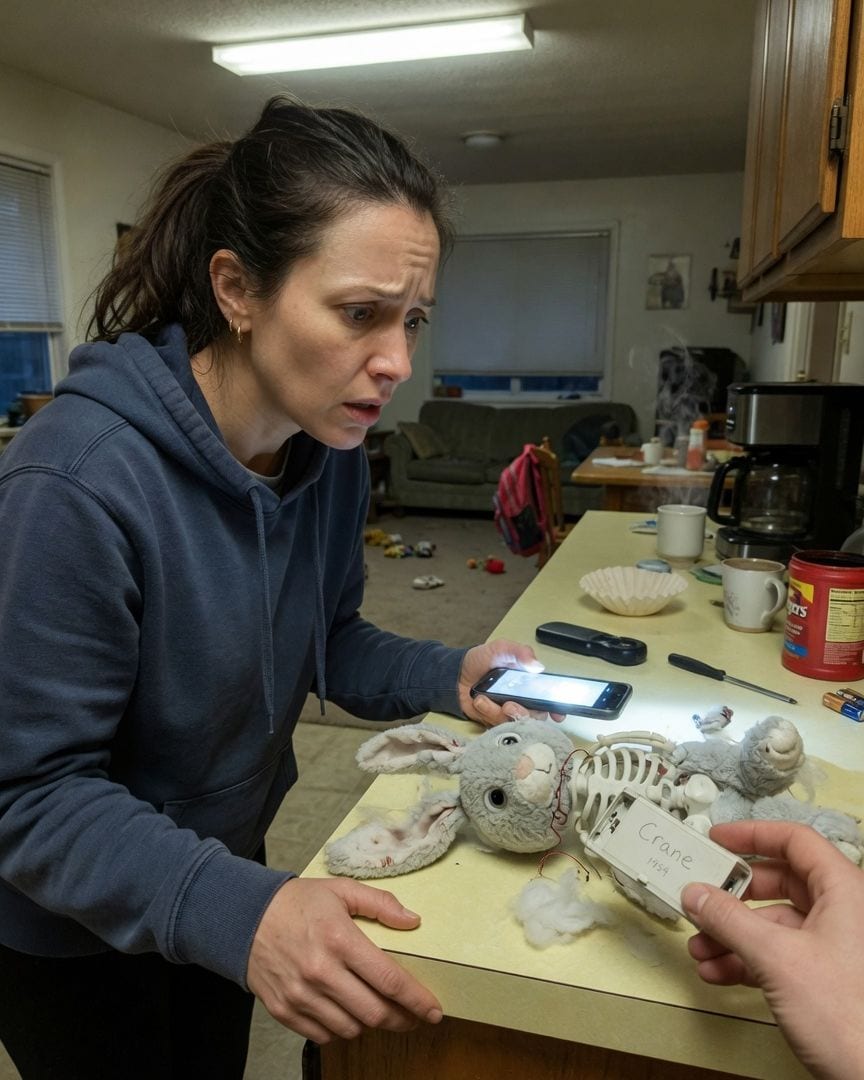
My son's toy rabbit says my name, then, 'bring him to the water.' The batteries are out.
I was making coffee, my son James at school, when I heard a grown man's voice from the living room. It was his favorite toy rabbit, whispering my name: 'Nina, bring him to the water.' The chilling command was impossible; I had removed the rabbit's batteries three days earlier, and they sat on the kitchen counter.
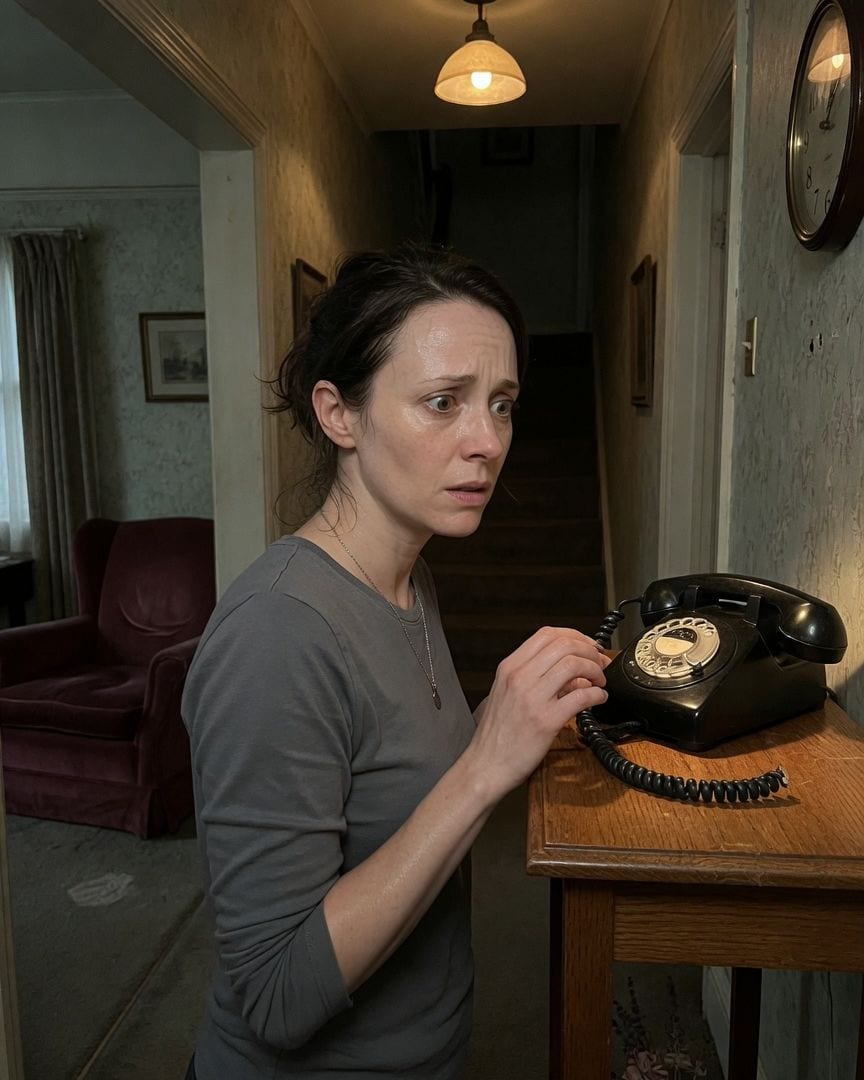
My disconnected Bakelite phone dials itself at 8 PM, receiver warm, always the same three numbers, humming a sound no dead line should make. I live alone.
As a new homeowner, I, Penelope Vaughn, found an antique Bakelite phone in my hall, its line long dead. But every night at 8 PM, the receiver is off its cradle, faintly warm to the touch, and the dial half-spun to the same three digits, making an impossible hum.