My own signature appeared on an NDA in Austin, Texas. That entire morning, I was on an appointment log in Cleveland.
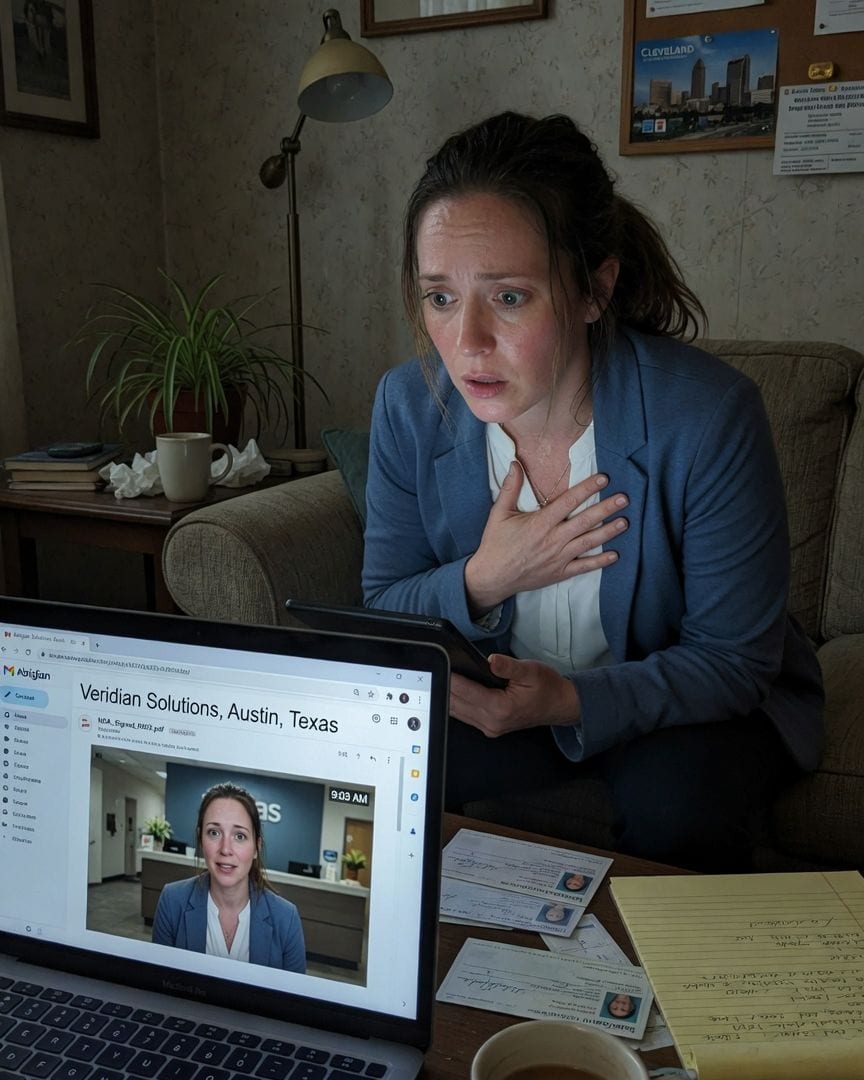
The email landed like a punch. ‘Veridian Solutions, Austin, Texas.’ I scanned the legal notice, a cease and desist for breaching an NDA. NDA? I’d never heard of them. Then I saw the date: the 2nd.
My signature, my printed name, even a timed reception sign-in: 9:03 AM. My stomach dropped, a cold, hollow feeling spreading through my chest.
The 2nd, I was in Cleveland, Ohio, at the St. Jude’s clinic for my annual check-up, starting at 8:30 AM. Their reception log would confirm it. My doctor, Marie Sheppard, would confirm it.
This had to be a mistake, a sophisticated scam.
I called the number listed, heart pounding, trying desperately to stay rational. A man named Ronald Ellison answered, calm, almost bored. He confirmed the details, confirmed my signature.
When I insisted I hadn't been there, his voice remained even, "Ms. Rutherford, we have your signed agreement and security footage of you at our front desk. You were quite punctual." He wouldn’t send the footage.
He wouldn't even discuss my clinic records, dismissing them as irrelevant. He simply reiterated the legal implications of my 'breach.' My own handwriting, in a place I’d never been, at a time I was demonstrably elsewhere.
It was impossible, yet there it was, glaring from the PDF, a perfect, unmistakable copy of my own looping 'Abigail Rutherford.' The sheer audacity of it left me breathless, staring at the impossible document.
The next day was a blur of frantic calls.
St. Jude’s was efficient, sending over my appointment log and a copy of my signed consent forms from the 2nd. 8:30 AM check-in, 9:00 AM bl**d draw, 9:45 AM consult with Dr. Sheppard. All stamped and dated. No ambiguity.
I emailed them to Mr. Ellison, attaching a polite but firm letter from my lawyer. He didn't reply. My lawyer, a practical woman, suggested a handwriting expert. "It’s probably a forgery, Abigail," she’d said, trying to reassure me.
"A very good one, but still a forgery. Let’s get it officially debunked."
So, I found James Calloway, a retired forensic document examiner with a spotless reputation. His office was a quiet, almost sacred space, smelling of old paper and ink, filled with magnifying glasses and reference books.
The old wooden desk creaked faintly as he leaned over it, as if the room itself held its breath. He took the NDA, my driver’s license, and several samples of my writing from old checks and letters.
He worked meticulously, for days, comparing strokes, pressure, and unique quirks. A week later, he called. His voice was grave, tinged with an unease that mirrored my own. "Ms. Rutherford, I’ve never seen anything quite like it.
The pressure points, the unique flourishes, the subtle tremors. It’s a perfect match. A genuine signature. Not a forgery. It is, unequivocally, your hand." He sounded genuinely disturbed, as if he too had glimpsed something profoundly wrong with the world.
I sat on my couch, the phone cold against my ear, staring at the ceiling. My hand. My actual hand, signing a contract in Austin, Texas, while my actual body was sitting in a Cleveland clinic, getting bl**d drawn.
The world had just tilted on its axis, and there was no going back.
My lawyer's next call was unexpectedly triumphant. "They caved, Abigail! Veridian Solutions just sent over a still from their security footage. They must have realized how ridiculous this looks, trying to claim you were in two places at once."
She emailed it to me, a single JPG file. My heart hammered against my ribs. I opened it, bracing myself for a blurry image, a look-alike, or some kind of obvious digital manipulation.
What I saw instead stopped my breath, freezing the air in my lungs. It was me. Unmistakably. My hair, my clothes from that day – the very same blue blazer I’d worn to the clinic.
I was sitting at a sleek, modern reception desk, a pen poised over a document. My head was slightly turned, a faint, almost imperceptible smile playing on my lips, my eyes looking directly into the camera.
On the wall behind me, a digital clock clearly displayed the time: 9:03 AM. It was me, in Austin, Texas, signing that NDA. And I knew, with every fiber of my being, that I had never been there.
The impossible image burned itself into my mind. I printed it, taped it to my kitchen wall next to my Cleveland clinic records. The contradiction was stark, undeniable, a gaping wound in my reality. I couldn't eat, couldn't sleep.
My lawyer was now suggesting an elaborate identity theft angle, but that didn't explain the genuine signature, or the high-resolution image of me, looking so… present.
I started digging. Not for identity theft, but for impossible records. I scoured online forums, local news archives, academic papers on quantum phenomena – anything that might explain how a person could be in two places at once.
It felt insane, but no other explanation fit. Weeks bled into one another, filled with dead-end searches and mounting frustration.
The glow of my laptop screen became a permanent fixture in my vision, my apartment growing colder around me despite the summer heat, as if the sheer absurdity was draining warmth from the air. Then, a flicker.
A small, local news story from a dusty archive in rural Georgia, dated five years prior.
A man named Edmund Carver, a quiet accountant, discovered a deed to a small cabin in his name, signed by him, in a town he'd never visited.
The article mentioned a bank statement showing a large deposit made into an account he didn't own, in the same town, on the same day he was confirmed to be at a funeral three states away.
The article, like my lawyer, dismissed it as an elaborate fraud, but the details… a genuine signature, a confirmed alibi, a paper trail insisting on an impossible presence. It was too similar to ignore. I found Edmund Carver's obituary.
He died a year after the incident, of 'stress-related complications.' A cold dread settled in my bones, heavier and more real than before. I wasn't alone.
This wasn't a glitch in my reality; it was a glitch in the reality, and others had seen it too, to their detriment.
I started a spreadsheet, meticulously logging every impossible record I could find, now using pseudonyms and burner email addresses. It was harder than I thought. Most cases were dismissed as fraud or error.
But a few, like Edmund Carver’s, had enough corroborating evidence to make them undeniably unsettling. I started reaching out to the living victims, or their families, cautiously. Most didn't reply.
One woman, Linda Harlow, whose credit card showed a string of purchases in a city she'd never been to, simply hung up, her voice tight with fear.
"You need to stop looking," she'd whispered, raw terror in her tone, before cutting the connection. The next day, an unmarked envelope arrived at my apartment. My hands trembled as I opened it. Inside was a single, glossy 8x10 photo.
It was a candid shot of me, taken from across the street, through my kitchen window. I was sitting at my kitchen table, staring intently at my laptop screen, my face a mask of concentration.
The NDA printout was clearly visible, taped to the wall behind me, its impossible signature mocking me. No note, no message. Just the photo. My bl**d ran cold. Someone knew. Someone was watching me.
The terror was no longer an abstract concept; it was personal, breathing down my neck, an invisible presence in my own home. I felt a profound sense of violation, of being utterly exposed.
My apartment, once my sanctuary, now felt like a cage with invisible bars, every shadow a potential observer, every sound a threat. The simple act of living felt like an act of defiance.
The photo made me pull back, but I couldn't stop. The need to understand was a gnawing hunger. I moved my research to public libraries, using burner phones, growing increasingly paranoid.
I found a retired archivist, Evelyn Harlow, who had worked for a now-defunct national records office. She had a reputation for 'seeing patterns where others saw chaos.'
I met her in a quiet cafe, showing her the Austin NDA, my clinic records, and the photo of me signing it. She listened intently, her eyes sharp and knowing, a calm wisdom in her gaze.
"You're looking for the echoes, dear," she said, stirring her tea with a delicate spoon. "Not the originals."
She explained that for decades, she'd encountered similar discrepancies: land deeds, stock transfers, patent applications – all with perfectly authenticated signatures from people who swore they'd never been involved.
"They were dismissed as elaborate hoaxes, or mass hysteria," she said, her voice even, "but the paper trail was always too clean, too consistent." She pulled out a worn, leather-bound notebook, its pages filled with meticulous, tiny script.
The cafe chatter seemed to dim around us, her words pulling my focus inward, tightening my chest. "I started tracking them. Dates, names, locations. It wasn't random."
She showed me a page, filled with entries that sent shivers down my spine. "See this? Veridian Solutions. They weren't always called that. They’ve been involved in these… proxy events, as I called them, for over fifty years.
They’re not the cause, Abigail, they’re just the conduit. A very old, very patient conduit." She explained that the 'proxies' were brief, physical manifestations, solid enough to sign a document, be filmed, leave a trace.
"They need a 'template,' she said, her eyes meeting mine, "a specific genetic or psychological profile, to make the proxy believable, stable. It’s like a broadcast, and some people are just better receivers." My mind reeled.
Veridian wasn't just a company; it was a system, an ancient, silent mechanism, using people like me without our knowledge or consent. The pieces began to click, forming a terrifying, coherent mosaic.
Evelyn's words haunted me: 'Some people are just better receivers.' I spent days with her, poring over her meticulously compiled records. The patterns she’d identified were chillingly precise.
Certain family names reappeared across decades, tied to impossible records – not just signatures, but rental agreements, delivery receipts, even medical consent forms. Certain specific types of transactions or acquisitions.
It wasn't just about identity theft; it was about… an infrastructure, a slow, methodical accumulation. She showed me a faded, brittle ledger entry from 1957. The paper was thin, almost translucent, the ink a sepia brown.
It detailed a delivery of 'Specialized Components' to a remote research facility in Nevada. The signature on the receipt was a perfect match for an 'Evelyn Rutherford' — my own grandmother's name.
But my grandmother, Evelyn, had been living in upstate New York her entire life, never venturing west. Beneath the entry, a hastily scribbled note in the margin caught my eye, in a different hand, almost hidden: 'Template 7.
Primary marker: A-neg. Status: Active.' My breath hitched. I knew my own bl**d type. It was A-negative. The realization hit me like a physical blow, a cold, hard fist to the gut.
This wasn't just about a pattern, or my signature. It was about my family. And me. I wasn't just a victim; I was a template, a pre-selected component.
I was always inside it, a part of the system, a tool waiting to be used. The cold dread returned, but this time, it was laced with a horrific, personal understanding that transcended mere fear.
I was a link in a chain I didn't even know existed.
Evelyn saw the look on my face, the dawning horror in my eyes. "A-negative is rare, Abigail," she said softly, her voice a balm against the storm in my mind.
"And a specific genetic marker, often linked to a heightened capacity for… resonance, for anchoring a manifestation." She explained that 'Template 7' was a designation, not a person. A biological blueprint, passed down through generations.
My grandmother, and now me, were part of a lineage identified as ideal for 'proxy manifestation.' Veridian Solutions, she revealed, was just one of many corporate fronts, all connected to a deeper, older entity.
This entity wasn't interested in money or power in the conventional sense. It was about acquisition, about establishing an impossible claim on physical assets across the globe, often remote or historically significant properties, through these 'proxy signatures.'
The NDAs, the deeds, the bank transfers – they were all part of a vast, slow-motion acquisition project, building a network of ownership that defied conventional logic. The proxies were solid, convincing, but ephemeral, leaving behind only the paper trail.
"They needed the perfect template to make the illusion stick," Evelyn said. "Someone whose presence could be briefly anchored, whose signature was utterly convincing. Your family, for generations, has been that perfect anchor, that perfect receiver."
The Austin NDA wasn't a punishment; it was a registration. A confirmation of my 'activation' as a primary template. Every impossible entry, every forged signature, every conflicting record I'd found, snapped into place with a horrifying clarity.
It wasn't just a pattern of events; it was a pattern of us. My family. Our very existence, a resource for something profoundly alien, something that simply used us.
The horror wasn't in being watched, but in realizing I was a resource, not an individual. My identity, my very genetic code, was a tool. Evelyn, sensing my despair, offered a grim choice. "You can try to disappear, Abigail.
Cut off all ties, vanish. But they'll still have your template. They’ll still use it." The 'proxies' didn't require her physical presence, only her 'blueprint,' her unique resonance.
The system was too vast, too ingrained in the fabric of the world. I could run, but my signature, my face, would still appear in impossible places, signing impossible documents, for the rest of my life.
The choice wasn't escape; it was how I lived with being a ghost in my own life. I thought of Edmund Carver, Linda Harlow – the ones who tried to fight, or simply faded away. I wouldn't fade.
I would understand. I pushed Evelyn for more. Was there a way to sever the connection? To disable a template? She shook her head, a deep sadness in her eyes. "It's inherent. Like a fingerprint.
You are simply… a perfect frequency, a perfect anchor." The confrontation wasn't with a person, but with the monstrous, coherent shape of the pattern itself.
It wasn't evil, not in a human sense, but an indifferent, systematic exploitation, a quiet, relentless consumption of reality. I could feel the invisible threads, woven through generations, connecting me to every impossible document, every phantom signing.
It was a profound, chilling acceptance. I was a tool, and had always been one. My life, my identity, was not entirely my own.
The dread now felt like a hollow space inside me, a quiet understanding of my place in a system I could never truly escape.
I didn't disappear. I sold my apartment, changed my phone, but I kept my name. The legal notices from Veridian Solutions stopped. They didn't need to pursue a breach when I was now, effectively, 'activated.'
I learned to live with the knowledge that my face, my hand, could appear anywhere, at any time, leaving behind a trace of me that wasn't me.
I continued Evelyn's work, quietly tracking the 'echoes,' logging the impossible records, not to fight it, but to understand the scope of it. It was a vast, intricate tapestry of phantom claims, slowly accumulating resources for an unknown, impersonal purpose.
The world continued, oblivious to the quiet wrongness beneath its surface. I learned to look for the subtle shifts, the quiet acquisitions, the impossible deeds.
My own life became a quiet observation of the impossible, a detached witness to my own unwitting participation.
Sometimes, I catch my reflection in a store window, and for a split second, I see a faint, knowing smile on my own lips, one I don't remember making.
It's a smile that isn't quite mine, a subtle shift in expression that feels alien. I wonder if it's the template, resonating, or just a trick of the light.
But the dread is always there, a quiet hum beneath the surface, a constant reminder that I am not just Abigail Rutherford, but Template 7, active.
And I know, deep down, that the moment I stop looking, is the moment I truly cease to be myself, becoming merely an echo of the system. The quiet understanding is a heavy mantle, a permanent shroud over my life.
Ronald Ellison, now gray at the temples, sat in his Austin office, reviewing a new set of data. He paused at a familiar name, 'Abigail Rutherford.' Another NDA, signed yesterday, this one for a remote property in Patagonia.
He scrolled through the attached security footage. A woman, unmistakably Abigail, signed the document with a faint, knowing smile. He marked the file 'Template 7: Stable.' The system, as always, was working perfectly.
If this one got to you
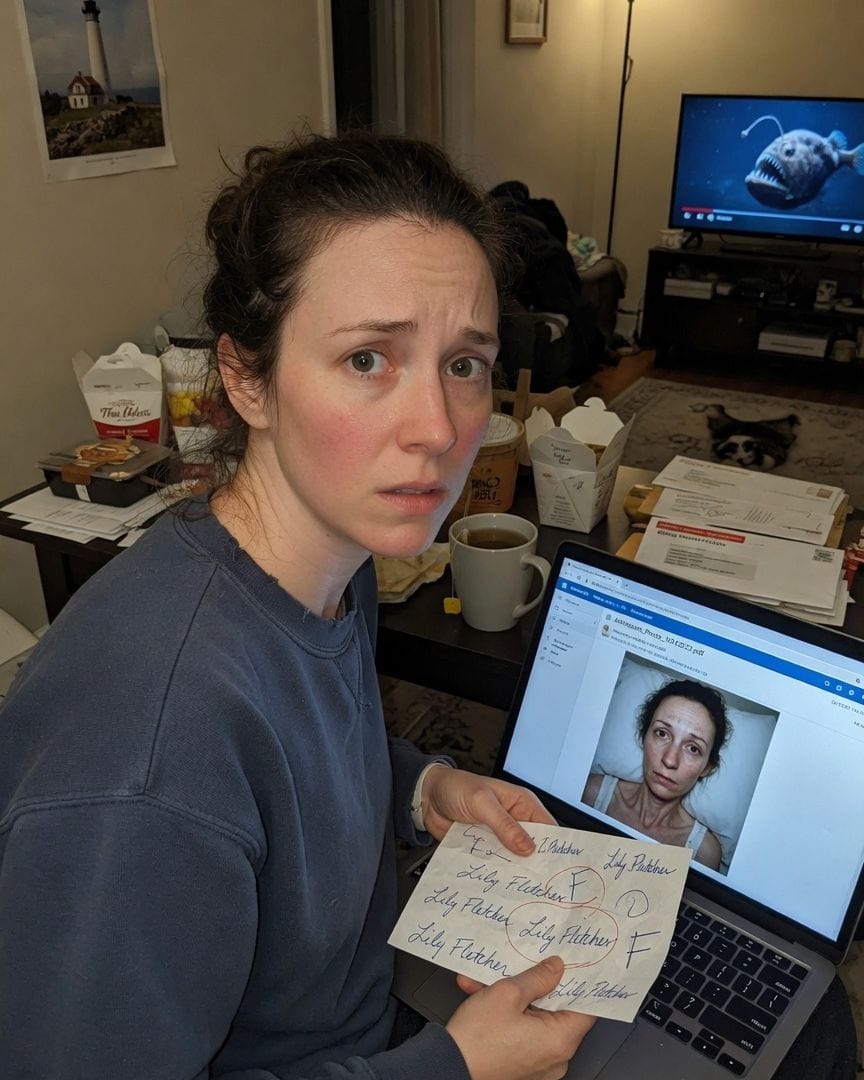
A hospital is billing me for a two-night stay in Cleveland — with my insurance, my wristband scans, and a discharge form in my own signature. I spent that whole week home alone, and I've never been admitted anywhere.
A bill arrived from Cleveland General Hospital for a two-night stay under my name, Lily Fletcher. I'd spent those dates at home, but the hospital had my accurate details and even a discharge summary. The chilling part? It was signed with my unmistakable signature, a mark I know I never made.
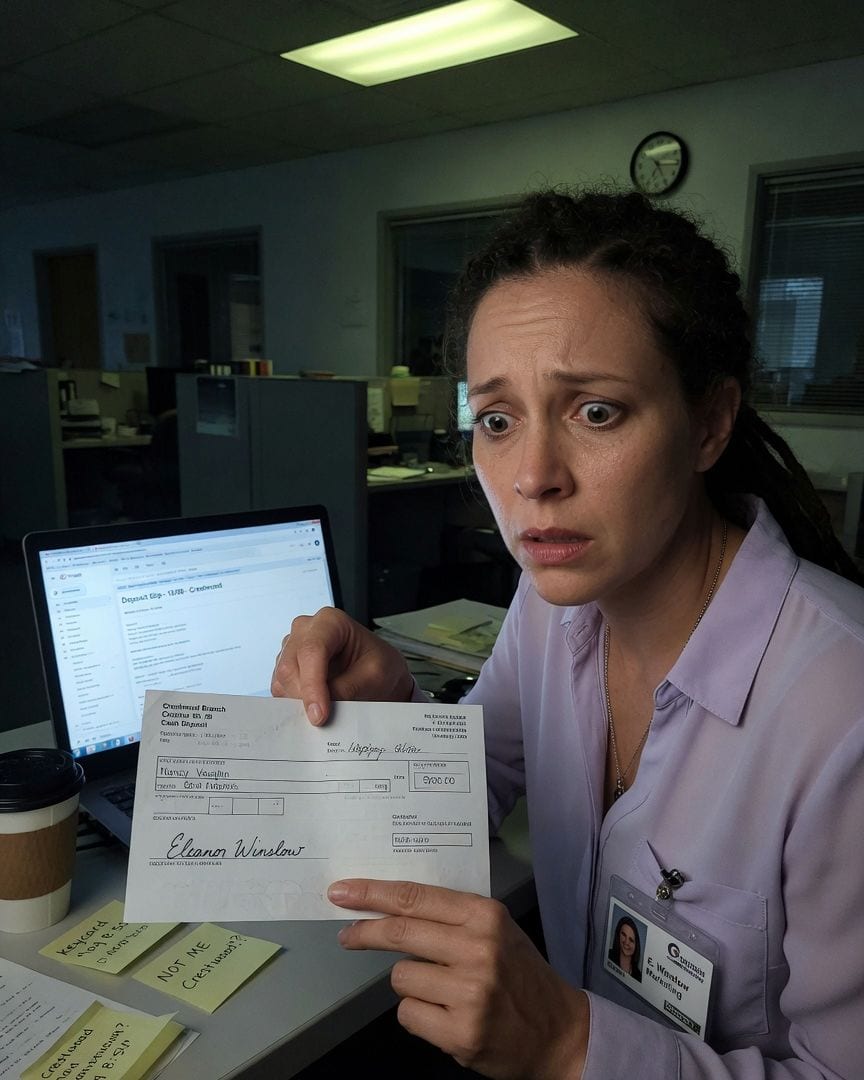
My bank statement shows a $900 cash deposit made in a town I've never set foot in, at 10:40 AM on a workday. I was at my desk, badged in. Two more landed since.
My bank statement showed a $900 cash deposit from a town I'd never visited, 150 miles away. I was at my desk, logged into work, all three times. But the scanned deposit slip arrived, clear as day, showing my own flawless signature.
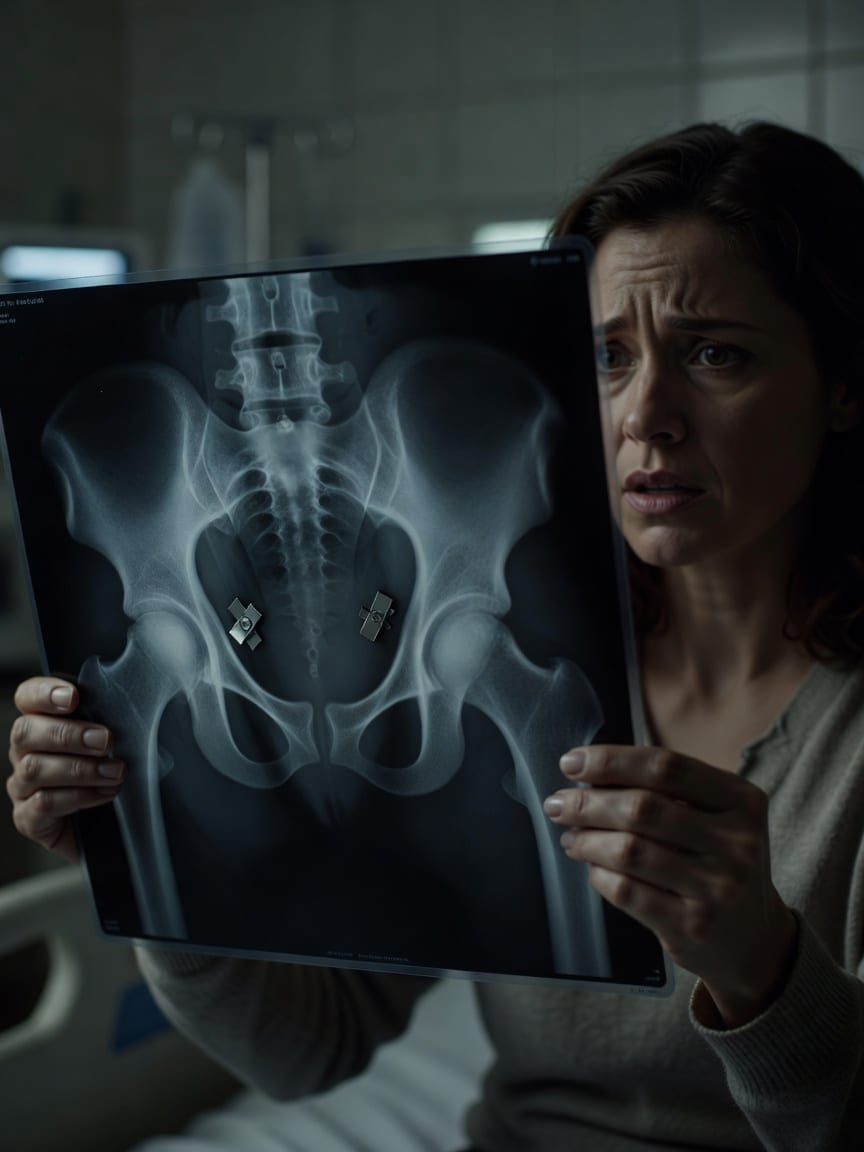
My X-ray shows sterilisation clips on my tubes. I've never had surgery, and I have no scar.
A routine X-ray for a hip injury turned chilling when my gynecologist pointed to two small clips on my fallopian tubes. She called it a standard tubal ligation, but I know I've never had surgery. My memory is completely blank, yet the X-ray is undeniably mine, dated yesterday.
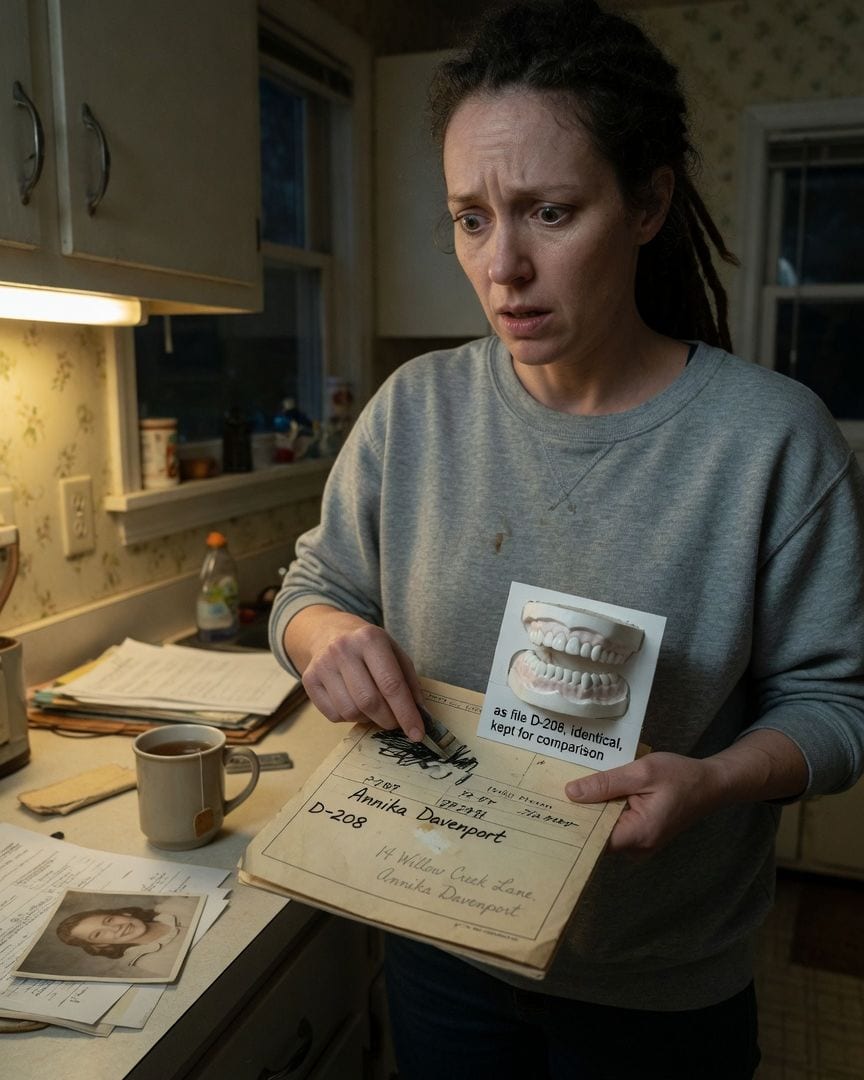
My childhood dental chart lists the house I bought last year — in my own name, years before I was born. A second set of my teeth sits filed beside it, marked 'identical.'
Sifting through old dental records, I found my chart, D-208, with my 1988 birth date. But a line from 1958 was blacked out, and a clipped card with an impression of my teeth listed my name and current home address, decades before I was born. The impossible facts knotted into a cold certainty.
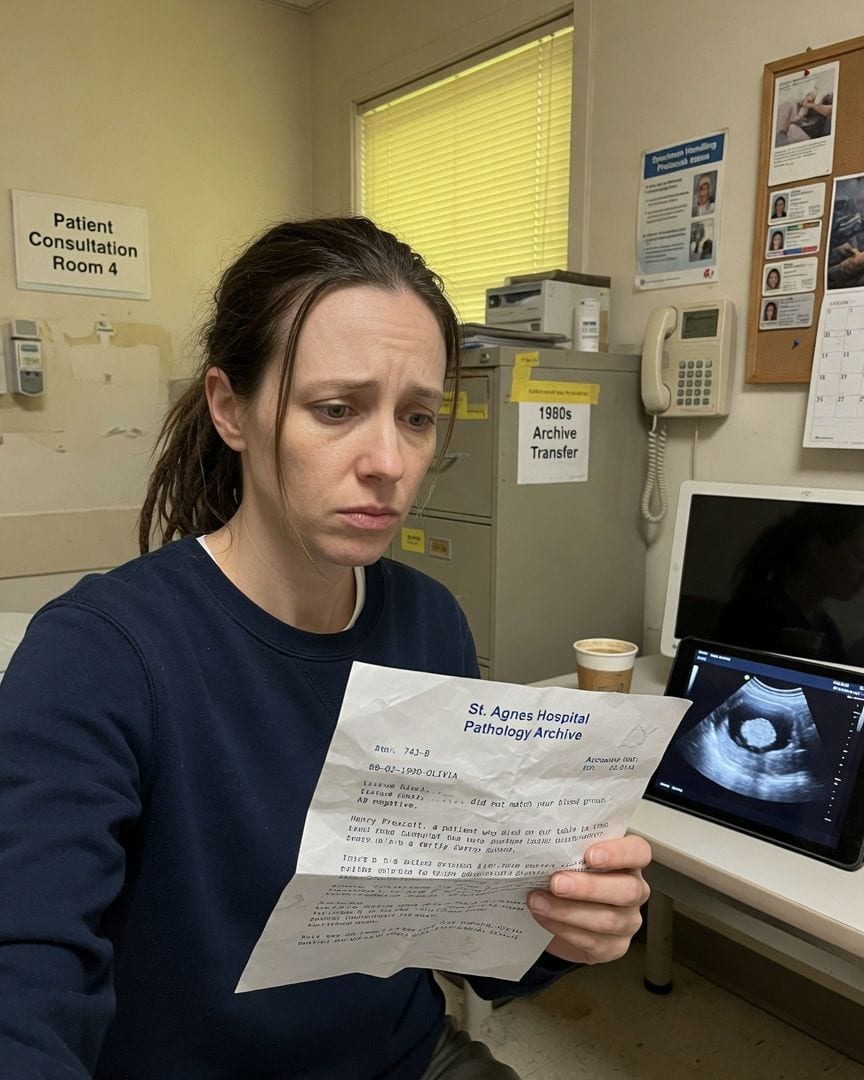
The hospital found a tumor sample filed under my patient number, but the cells belong to a man who died on their table in 1988. My file has no biopsy — and they want me to come in.
A chilling letter from the hospital revealed an anomaly in my medical file: a tissue block, under my hospital number, with a completely different blood type. It contained the DNA of Henry Prescott, a man who died in 1988, just two years before I was born. My own records hold no biopsy, no tumor, leaving me with an impossible question.
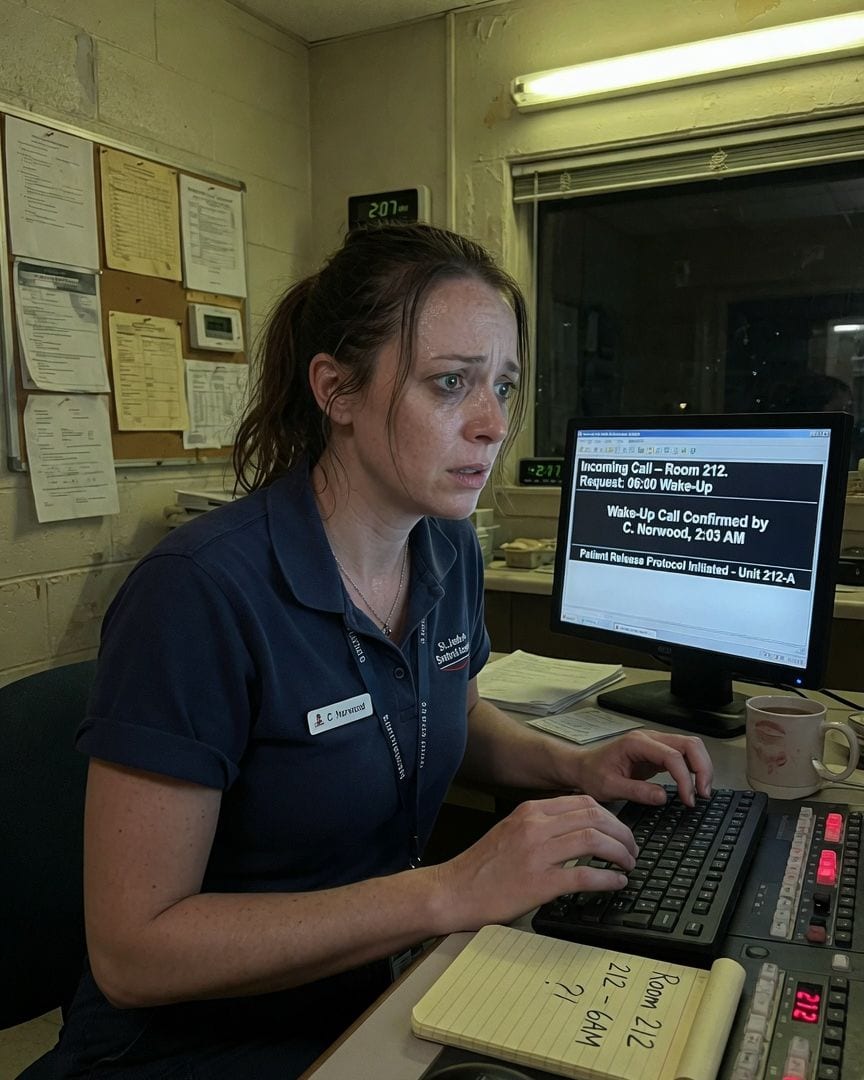
My login started a 'Patient Release Protocol' I'd never heard of for Unit 212-A.
Working the quiet night shift switchboard at St. Jude's, I took a routine wake-up call from Room 212. But the system showed Room 212 had been stripped bare and its phone line disconnected for months. Then, my own login showed I had confirmed the impossible call.