My X-ray shows sterilisation clips on my tubes. I've never had surgery, and I have no scar.
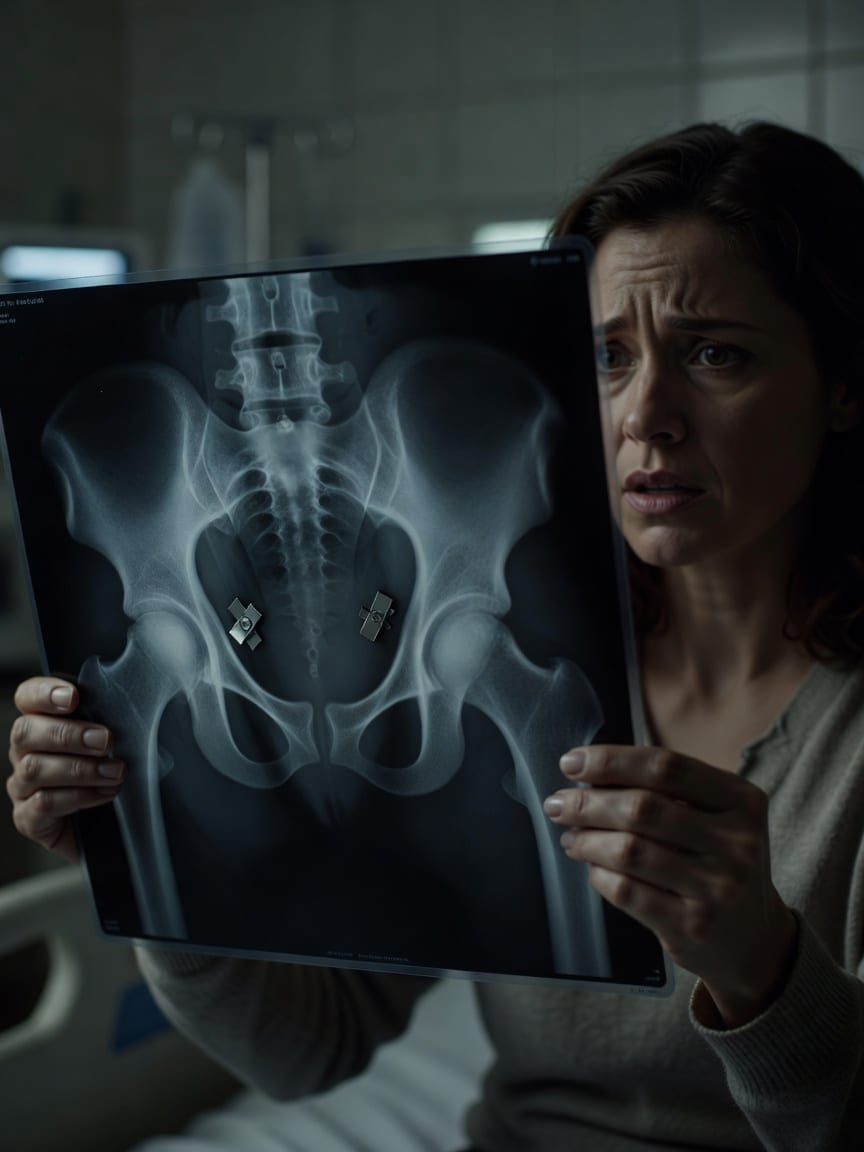
I lay on the gurney, the thin paper rustling beneath me, the dull ache in my hip a familiar throb. The fall had been clumsy, a misstep on the stairs, nothing serious, just a pulled muscle, I’d thought.
But the X-ray results were. Dr. Lockwood, the gynaecologist, was a woman who always spoke in a calm, almost clinical tone, even when delivering news I clearly didn’t understand. She pointed to the glowing screen with a sterile pen.
“See here? Two small clips, on both fallopian tubes. Looks like a standard tubal ligation.”
My breath caught. A cold sweat prickled my scalp, despite the cool air in the room. I shook my head. “No. That’s… that’s impossible. I’ve never had surgery, Dr. Lockwood. Not for anything like that. Never.”
She turned, her expression unperturbed. “Are you certain, Ms. Patterson? It’s a common procedure. Sometimes patients forget minor outpatient interventions, or perhaps it was performed during another surgery.” Forget? Forget something like that?
I searched my memory, scrabbling for any recollection, any hint of a conversation, a consultation, a hospital stay. Nothing. My mind was a blank slate where this monumental life event should have been etched.
I ran a hand over my abdomen, feeling for a scar, any faint line where an incision might have been made. My skin was smooth, unblemished.
Dr. Lockwood simply looked at me, serene, and asked me to ‘think back’ to when it might have happened, as if I had merely misplaced my keys, not a major operation.
The film was undeniably mine, dated with yesterday’s timestamp, my name clearly visible. And the clips were undeniably present, small metallic anchors inside me, long settled, like permanent, silent intruders.
I left Dr. Lockwood’s office in a daze, the X-ray printout clutched in my hand like a death sentence. My first stop was my GP, Dr. Beaumont.
She was a kind, older woman, her office smelling faintly of old books and chamomile tea. She had seen me through everything from childhood measles to adult flu, knew my medical history better than I did.
She listened patiently, her brows furrowed, as I stammered out the story, pushing the X-ray across her desk. “Clips? On your tubes? But… you’ve never indicated any interest in that, Naomi. And I have no record of it.”
She pulled up my digital medical history, her fingers flying across the keyboard. She scrolled, muttering about 'system glitches' and 'archive migration issues' that had plagued the practice’s transition to new software last year.
I watched her face, searching for a flicker of recognition, any sign that this was just a mistake. Then she stopped. Her finger hovered, then slowly clicked on something. “Well, this is… unexpected.” On the screen, an entry. ‘Tubal Ligation.
Date: 2012. Facility: Westwick Wellness Center.’ Underneath, my name. Naomi Patterson. Twelve years ago. I was 23 then. What was I doing at 23? Working my first office job, dating Mark, definitely not getting my tubes tied. “Westwick Wellness Center?”
I repeated, the name unfamiliar. “I’ve never heard of it.” Dr. Beaumont clicked through, the record appearing official. Consent form, pre-op notes, procedure details. A doctor’s signature I didn’t recognise. My stomach twisted. “This is a mistake, Dr. Beaumont.
A mix-up. This isn’t me. The signature…” I pointed at the screen. “That’s not my handwriting.” Dr. Beaumont leaned closer, her expression turning from confusion to a deep, troubled frown. “It’s in your file, Naomi. Digitally signed and sealed.
The system shows it as legitimate.” She scrolled down further. The clinic's address was listed as 14 Elmwood Lane, a residential street on the other side of the city, one I’d never lived on, never even driven down.
The mundane explanation – a simple data error – faltered, dissolving into thin air as the details solidified, each one impossibly wrong yet undeniably present.
I left her office with a growing sense of cold unease, the X-ray and the digital printout now burning in my hand. I had to find this Westwick Wellness Center.
My search for Westwick Wellness Center became an obsession.
It led me down countless dead ends: outdated phone numbers that rang into oblivion, a re-branded office park where no such facility had ever existed, a local business registry that showed no active listing for the name.
Days later, a faint hope emerged from an unexpected source: Hugo Radcliffe, an old municipal archive clerk, his glasses perched on his nose, his memory a labyrinth of local lore.
He’d remembered a vague reference to 'Westwick' in some old papers. He pointed me to a dusty, forgotten storage facility that housed records from defunct local businesses.
The air was thick with the smell of old paper and dust, a quiet, almost mournful hum filling the vast, dimly lit space.
After hours of searching through cardboard boxes stacked floor to ceiling, my hands gritty, my throat dry, I found it. A single, unassuming box, its label yellowed and faded: 'Westwick Wellness Center - Patient Archives.'
My hands trembled as I pulled out a folder from the box. My name, 'Naomi Patterson,' was written clearly on the tab in neat, precise script. Inside, the full medical file. Pre-op assessments, procedure details, post-operative care.
And then, the consent form, crisp despite its age. A signature, undeniably there. But the handwriting was not hers.
And the address listed for her at the time, tucked away in a corner of the form, 14 Elmwood Lane, was one she had never lived at, a street on the other side of the city she’d never even known.
Naomi stared at the impossible document, her own name staring back at her from a life she had never lived, a secret hidden within her own body.
The fabricated medical record became Naomi’s sole obsession. The address, 14 Elmwood Lane, glowed in her mind like a malevolent beacon.
I drove there, my old Civic bumping over potholes, the digital map on my phone guiding me into an unfamiliar part of the city.
Instead of the residential home I expected, I found a vacant, overgrown lot, surrounded by a rusty chain-link fence. The remnants of a concrete foundation, cracked and crumbling, were barely visible beneath years of tenacious weeds.
A faded 'For Sale' sign, its wooden post leaning precariously, was the only indication that anything had ever stood there. The local zoning office was no help.
They had no record of a 'Westwick Wellness Center' ever operating at that address, only a residential property that had been demolished decades ago. “Probably just a mix-up in the paperwork, love,” the clerk had said, her voice dismissive.
But the medical record was too precise, too detailed, for a simple mix-up. I returned to Hugo Radcliffe at the archives, feeling increasingly frantic.
He was a fount of local lore, and after I explained the peculiar discrepancy – the clinic on a vacant lot, the impossible medical record – he paused, his gaze distant. “Elmwood Lane, you say? Ah, yes.
There was talk, back in the day. Not much, mind you. A private facility, for ‘special cases.’ Never openly advertised. Not strictly a clinic, more like a… retreat. Very hush-hush.”
He rubbed his chin, a fine film of dust from the archives clinging to his sleeve. “It was gone before the big development boom, records all sealed up or moved to some central authority, never publicly available.
People spoke in whispers about it, even then. Associated with a specific foundation, I recall. Some sort of philanthropic group. Absorbed into a larger healthcare conglomerate years ago, I believe.”
The more I dug, the more the mundane explanations evaporated, replaced by the chilling implication of something orchestrated, something hidden, deliberately erased from public view. The deeper I went, the more coherent, and therefore terrifying, the pattern became.
My phone buzzed with an unknown number. I almost ignored it – I usually did – but a strange premonition, a cold prickle at the back of my neck, made me answer. “Ms. Patterson.”
The voice was calm, modulated, neither distinctly male nor female. It was almost perfectly neutral, yet it sent a shiver down my spine. “Your recent inquiries into the Westwick Wellness Center are noted.” My blood ran cold.
I gripped the phone, my knuckles white. “Who is this?” I demanded, my voice sounding weaker than I intended. “We advise you to cease your investigations,” the voice continued, unhurried, devoid of any malice, almost administrative.
“Some histories are best left undisturbed.” There was a pause, a breath of static. “The records you’ve found are… sensitive. For your own well-being, we suggest you let sleeping dogs lie.” Then, a click. The call disconnected.
I stared at my phone, the screen still showing the unknown number. I tried to trace it, but it was a dead end, routed through multiple anonymous servers, a digital ghost. Later that week, I noticed it again.
A dark sedan, parked a block from my apartment, its windows tinted so darkly I couldn't see inside. It was there when I left for work in the morning, a silent sentinel.
And again when I returned in the evening, parked in the same spot, facing the same direction. It was a subtle presence, easily dismissed as coincidence, but after the phone call, it felt like a cold, deliberate confirmation.
The quiet warning, the untraceable call, the silent car. My digging had been noticed. I was no longer just investigating; I was being watched, my every move potentially scrutinised by the very entity that had shaped my impossible past.
The hair on my arms stood on end.
I marched into Dr. Beaumont’s office, the hard copy of the fabricated medical file clutched in my hand, its neat, false script a burning accusation. I tossed it onto her desk, the paper landing with a soft slap.
“This is not my signature, Dr. Beaumont. This address is not mine. And I received a warning call to stop looking into Westwick.” My voice was tight, strained. “You know something. I need you to tell me.”
Dr. Beaumont’s composure fractured instantly. She looked pale, her hands trembling as she took the file, her gaze fixed on the impossible document. Her usual calm demeanor was gone, replaced by a deep, unsettling fear.
She glanced nervously at the closed door, then lowered her voice to a whisper. “Naomi, please. You need to understand. It wasn’t… it wasn’t what you think.”
She confessed, her voice barely audible, that she had been a junior resident, fresh out of medical school, decades ago. She’d been swept up in a program that seemed, at the time, benevolent, forward-thinking.
“Westwick wasn't a clinic in the traditional sense. It was… a facility. A private one. For women who had experienced profound trauma, whose lives were irrevocably broken. Women who had no family, no prospects, no hope left.
The idea was a fresh start. A new identity, a clean slate. We called it 're-integration.'” My head reeled. “Re-integration?” Dr. Beaumont nodded, her eyes watering.
“The fallopian clips were a standard, irreversible part of the process – a symbolic severing of past biological ties, ensuring no accidental resurfacing of a prior life through offspring. No one could ever trace them back through children.”
She swallowed hard. “The fabricated medical records, the assigned addresses, even the backdated sterilization procedures, were all part of creating a seamless new persona. A new life, fully documented, fully integrated into society.”
She looked at me, her gaze heavy with regret. “Your current identity, Naomi, was meticulously constructed. We believed we were helping.
Giving you a chance at a normal life, free from the crushing weight of a past that couldn’t be mended.” I felt a profound, chilling sense of violation, a scream caught in my throat.
The pieces of my fractured reality snapped into a horrifying, coherent whole. The dread wasn’t in a monster, or a violent crime, but in the cold, clinical, well-intentioned cruelty of it all. My entire life was a lie.
“Who was I?” My voice was raw, barely a whisper, a ragged sound ripped from my very core. “Before Naomi Patterson. Who was I?”
Dr. Beaumont flinched, her eyes darting to a locked, reinforced cabinet behind her desk, then back to my desperate face. “That… that information is highly classified. It was never meant to be accessed. For your protection, Naomi, you shouldn’t know.”
But I was beyond reason, beyond fear. The quiet dread had morphed into a burning need for the truth. I had to know. I pressed, demanding, my voice rising, until Dr. Beaumont, defeated, finally unlocked the cabinet.
Inside, amidst dusty ledgers and obsolete medical equipment, sat an old, clunky terminal, disconnected from the internet, its screen a dull grey. “This is the last, physical archive,” she murmured, her fingers hovering over the keyboard, thick with unease.
“The original records. The ones that cannot be.” She typed in a series of alphanumeric codes, her face grim, her hands shaking slightly. The terminal whirred to life, a low, mechanical growl filling the quiet room.
On the screen, text flickered, then resolved into a file. Labeled 'Subject 7.' My breath hitched. Below that, a different name: Isabella Yates. And a different birth date, years before Naomi’s official one. My heart hammered against my ribs.
But then, I saw it. A scanned image of a unique birthmark on an inner wrist, a tiny, irregular splash of brown – identical to my own, hidden beneath my watch strap.
Then a dental chart, intricately detailed, with every filling, every crown, every anomaly matching my own teeth exactly.
And, horrifyingly, records of the same fallopian tube clips, dated even earlier than the fabricated record, from a time that preceded even Isabella Yates’s supposed birth. The cold dread returned, but this time it was like ice through my veins.
The file also contained a photo – a younger woman, unmistakably me, but with a different haircut, shorter, darker, and a haunted, vacant look in her eyes, a shadow of deep, unspeakable sorrow.
The final entry on the screen read: 'Subject 7 – Isabella Yates – Re-integrated: [Naomi’s official birth date].'
Dr. Beaumont, now utterly resigned, seemed to shrink in her chair. She explained the full scope of the program, her voice flat, devoid of emotion, like a drone delivering devastating news.
“It wasn't about punishment, Naomi, or even control, not in the malicious sense. It was about erasure. For women like Isabella, who had suffered unspeakable trauma, the past was a cage.
A prison of memory, of loss, of pain that therapy alone couldn’t touch.” She paused, her gaze distant.
“The organization believed a new identity, a new history, meticulously crafted, was the only path to true freedom, a way to escape their own shattered selves.”
The clips, she elaborated, weren't just symbolic; they were a final, physical seal on the new identity, ensuring no biological thread, no child, could ever lead back to the original self, to Isabella Yates.
I was Isabella Yates, a woman whose life had been shattered, deemed beyond repair by some unseen, paternalistic authority, and then meticulously rebuilt as someone else.
The program, she explained, had been funded by a powerful, philanthropic foundation – the same one Hugo Radcliffe had vaguely remembered – operating with absolute secrecy, its methods considered radical but ultimately ‘benevolent.’
Every clue, every impossible record, every subtle wrongness now clicked into place, forming a horrifyingly coherent picture of a life that was never truly hers, a body that carried the indelible marks of a prior existence.
The dread wasn't in a monstrous entity, but in the cold, clinical efficiency of an institution that had rewritten her very being, her history, her self, all under the guise of compassion.
I knew I couldn't continue living the lie. Not after seeing Isabella Yates’s haunted eyes, not after knowing my very self was a construct.
I secretly copied all the files from Dr. Beaumont’s old terminal – the fabricated records, Subject 7's true identity, Dr. Beaumont's hushed confessions captured on my phone’s voice recorder.
Armed with undeniable proof, I sought out the legal office of the foundation Dr. Beaumont had mentioned, the silent architects of my stolen past.
I was met by a polished, unsmiling lawyer named Warren Novak, his office immaculate, a panoramic view of the city stretched behind him.
He listened patiently, his expression unreadable, as I laid out my evidence, my voice shaking with a mix of fury and fear. When I finished, the silence in the room stretched, thick and heavy.
Novak simply offered me a 'generous settlement' and access to 'comprehensive psychological support.' His voice was smooth, devoid of any genuine concern. He implied my claims were a delusion, a tragic side effect of trauma.
“Ms. Patterson,” he began, his tone calm, almost condescending, “we understand your distress. But these are complex matters. Your well-being is our priority.”
He made it chillingly clear that any public accusation would be met with overwhelming legal force, easily dismissed as the ravings of a disturbed individual, a woman experiencing a breakdown. “Our foundation has extensive resources, Ms. Patterson.
And a sterling reputation.” I realised then that I couldn't win. The organisation was too entrenched, too powerful, too skilled at burying uncomfortable truths.
They were not malicious in a simple way; they were an unmoving force, utterly convinced of their own righteousness. I couldn't fight them, but I wouldn't let them keep me.
I fled, leaving my apartment, my job, my entire 'Naomi Patterson' life behind. I packed a single bag, drove until my car ran out of gas, then took a bus, then another.
I carried the truth with me, a heavy, secret burden, the only thing truly mine.
Naomi Patterson vanished. I changed my name yet again, this time to Elena Novak, chose it for its anonymity.
I moved to a remote, anonymous town hundreds of miles away, a place where no one knew my past, where the only records were the ones I created. I severed all ties, burned all bridges.
I built a new, quiet life, always looking over my shoulder, always aware of the meticulous web of lies I had escaped.
The copies of the files remained hidden, stored on an encrypted drive, a constant, digital reminder of the life that wasn't hers and the life that had been stolen.
I never spoke of it, knowing no one would ever believe me. The world moved on, oblivious to the quiet violence done to my identity, to the women like Isabella Yates who had simply ceased to be.
Years passed. I lived under my chosen name, Elena Novak, in a small coastal town. I worked at a local bookstore, my days quiet, solitary, my nights haunted by the ghosts of Isabella Yates.
I occasionally searched old news archives, typing in 'Isabella Yates' or 'Westwick Wellness Center,' but found nothing. The past remained buried, sealed away, a whisper in the wind that only I could hear.
One ordinary Tuesday, during a routine dental check-up, the hygienist, a cheerful young woman with bright, inquisitive eyes, paused. She was probing around an old filling at the back of my mouth.
“Oh, that’s an old one,” she commented, tapping a specific tooth. “Looks like it’s been there forever, but it’s such a unique shape, isn’t it? Almost like a tiny little star.”
Elena felt the familiar cold dread spread through her, a chill that had never truly left her, even after all these years. The shape of the filling was exactly as it was on Subject 7's chart.
If this one got to you
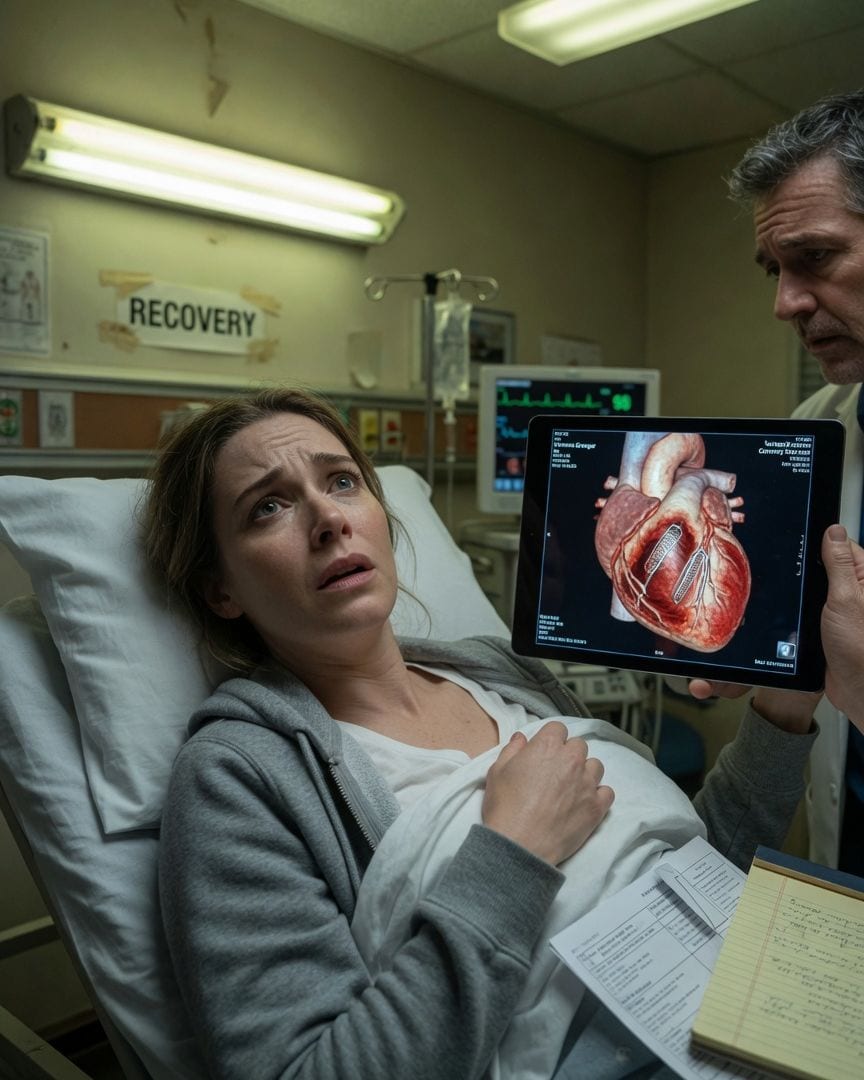
Metal stents are propping open my heart. The doctor rotated the image, but I've never had a cardiac procedure.
After years of dismissed chest pain, a CT scan revealed an impossible truth: my heart contained two metal stents. Dr. Maddox confirmed there was no record of any cardiac procedure in my entire medical history, and I had no memory of ever having surgery. My own body held a secret, alien architecture I couldn't explain.
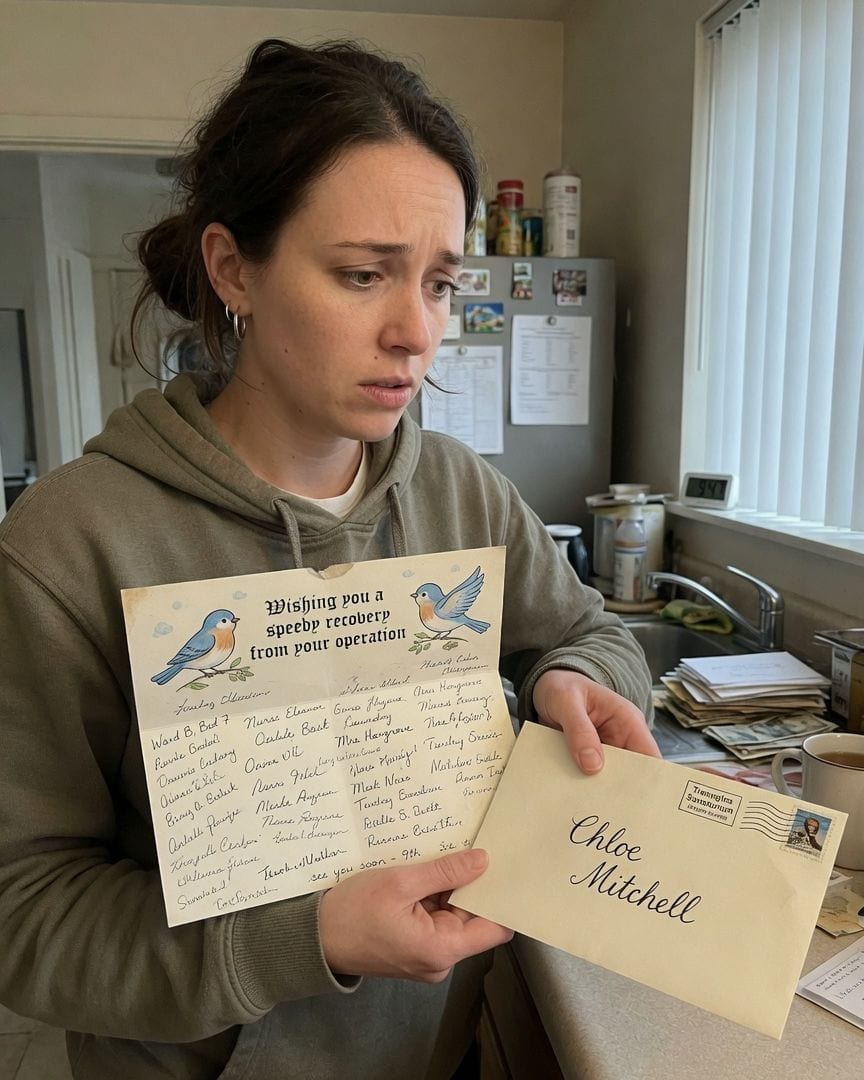
A get-well card wished me a speedy recovery from an operation I never had. It was postmarked from a sanatorium that burned down in 1963.
My quiet Tuesday morning was interrupted by an elegant get-well card, addressed to me. It wished me a speedy recovery from an operation I'd never had. But the postmark read 'Treneglos Sanatorium,' a hospital that vanished in a fire back in 1963.
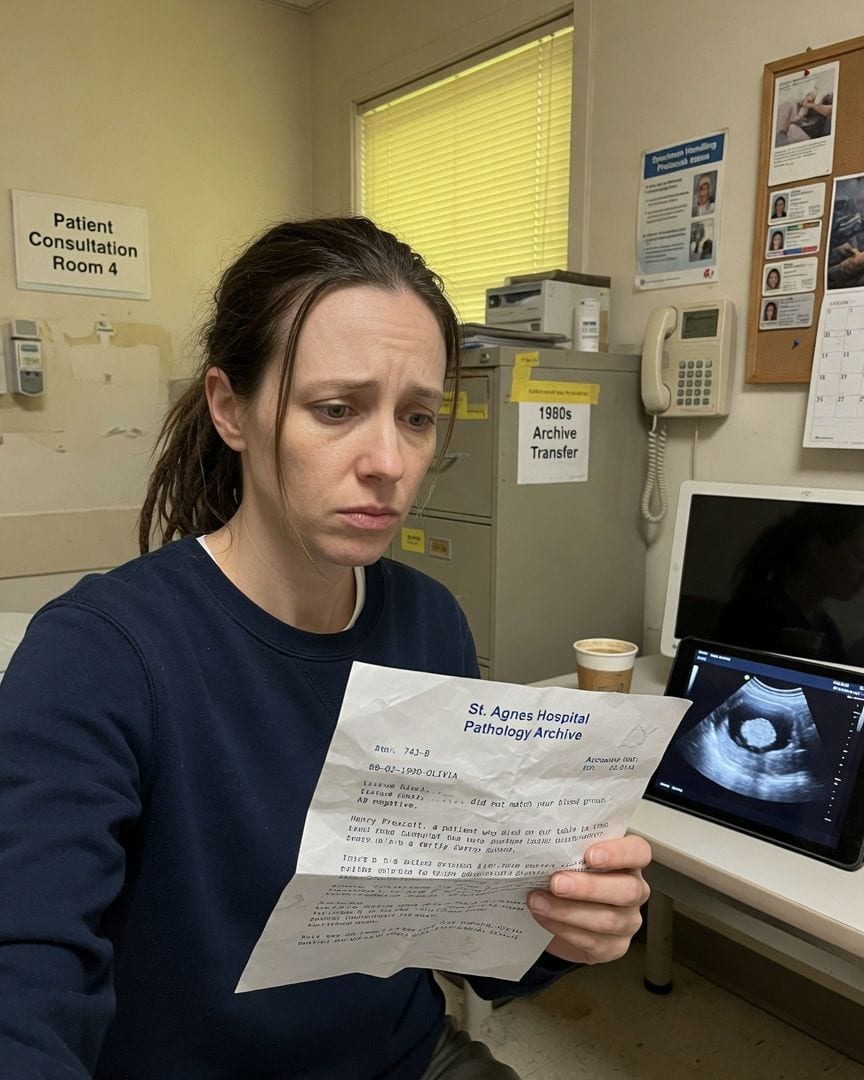
The hospital found a tumor sample filed under my patient number, but the cells belong to a man who died on their table in 1988. My file has no biopsy — and they want me to come in.
A chilling letter from the hospital revealed an anomaly in my medical file: a tissue block, under my hospital number, with a completely different blood type. It contained the DNA of Henry Prescott, a man who died in 1988, just two years before I was born. My own records hold no biopsy, no tumor, leaving me with an impossible question.
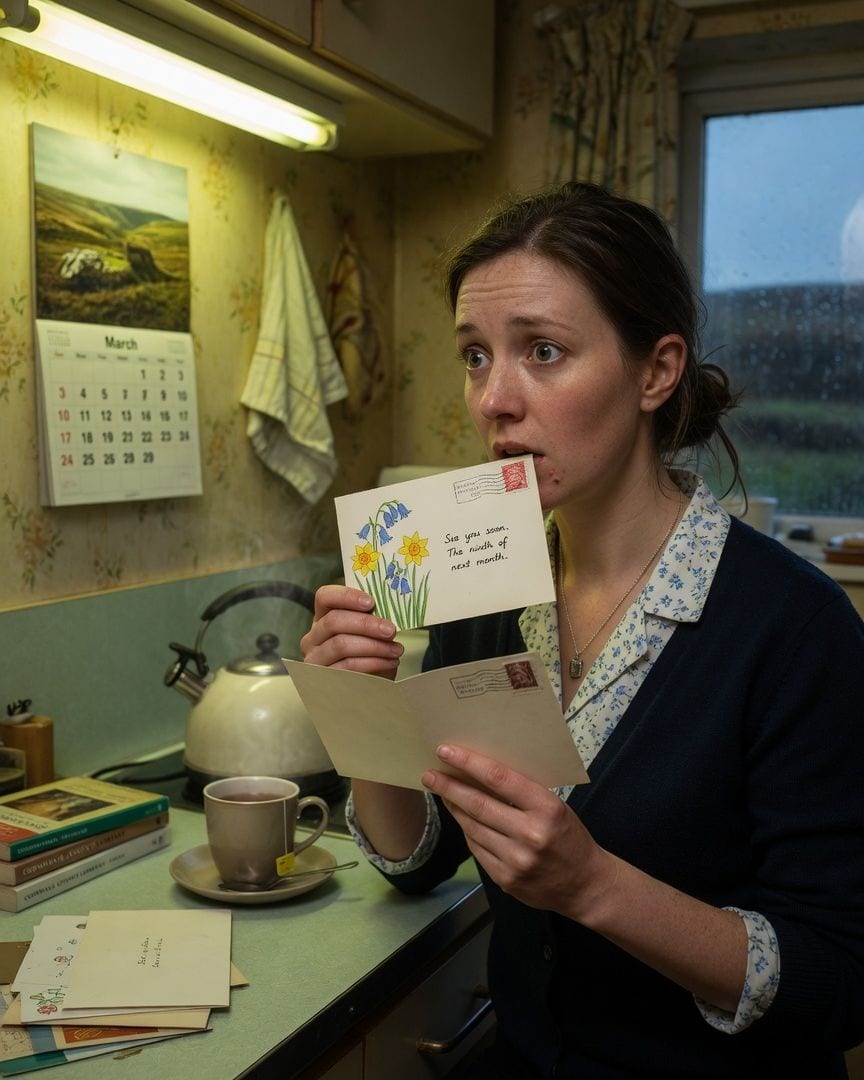
My get-well card arrived from a field, postmarked from a sanatorium that burned down in 1963. It wished me well for an operation I've never had, scheduled for next month.
I was just making tea on an ordinary Tuesday when a strange letter arrived. It was postmarked from Treneglos Sanatorium, a place that burned to nothing over sixty years ago, and contained a get-well card for an operation I'd never had. My research into this impossible message then led me to an old patient register where I found my own name, dated 1958.
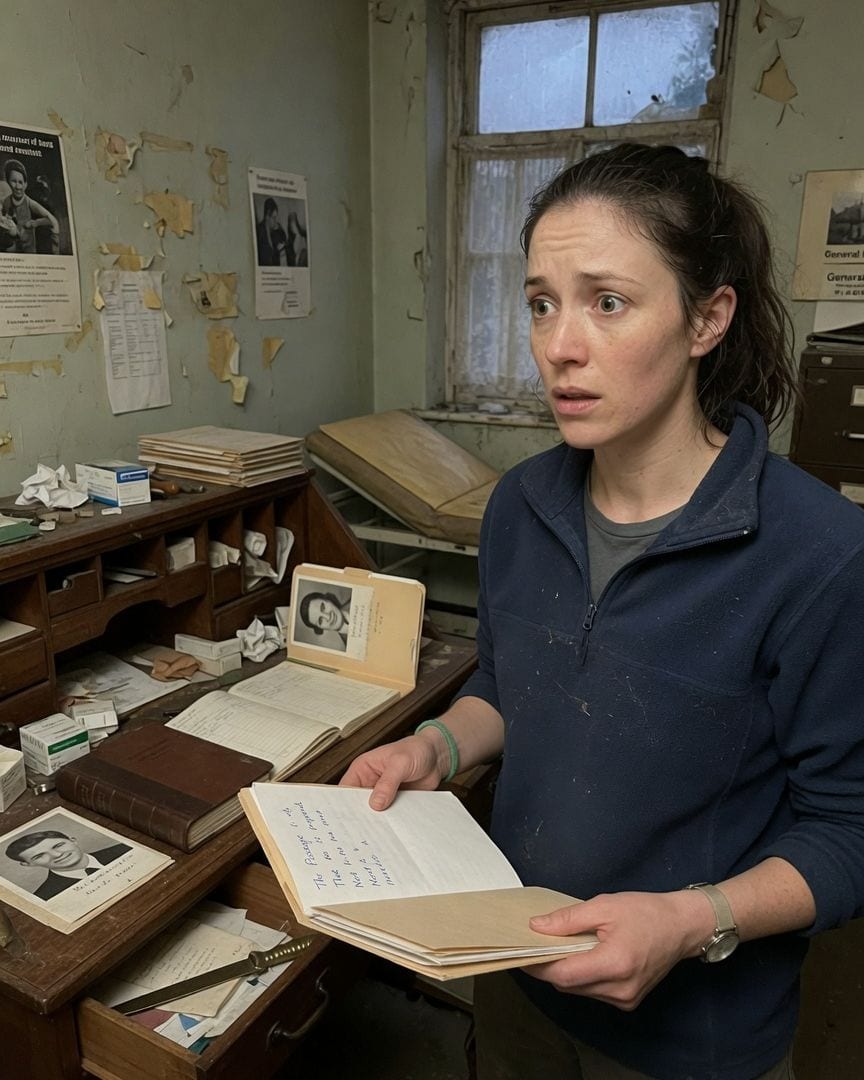
My new clinic's appointment book shows entries for this coming Monday, decades after the doctor retired and died.
Chloe Lawson bought an old, abandoned surgery in Nettlebed, ready to open her new vet clinic. Locals insisted Dr. Almott retired in '79 and the practice shut down for good. But then Chloe found his dusty appointment book filled with meticulous entries, continuing unbroken from 1979 through the decades, right up to this coming Monday.
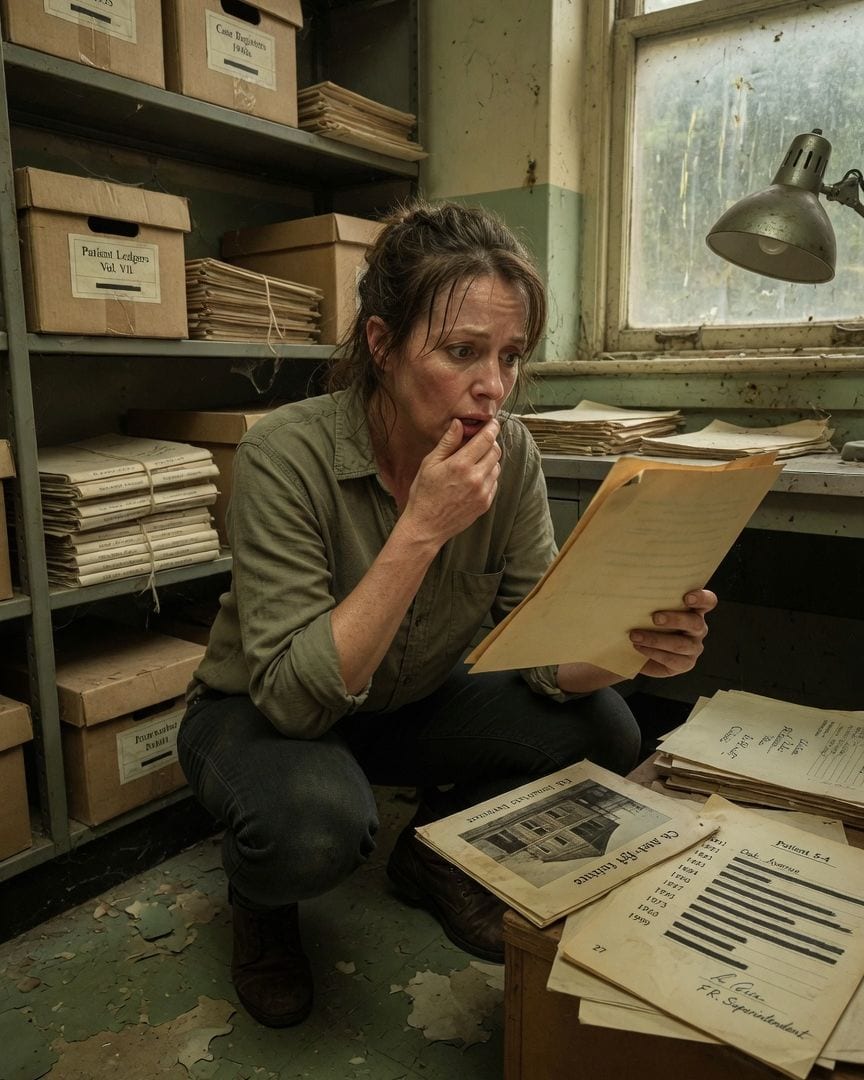
Patient 5-4 keeps checking into my aunt's old sanatorium chalet. The same initials sign them out, 'not traced,' every thirteen years since 1921.
Sifting through my aunt Margaret's estate, I found her old sanatorium file from 1999. Her patient record listed her as 'Patient 5-4,' discharged 'not traced.' But when I accessed the archives, I found 'Patient 5-4' was admitted every thirteen years since 1921, always with identical discharge notes.