My own voice answers a screaming tenant on a tape from my old flat, recorded a week after I moved out. I live alone.
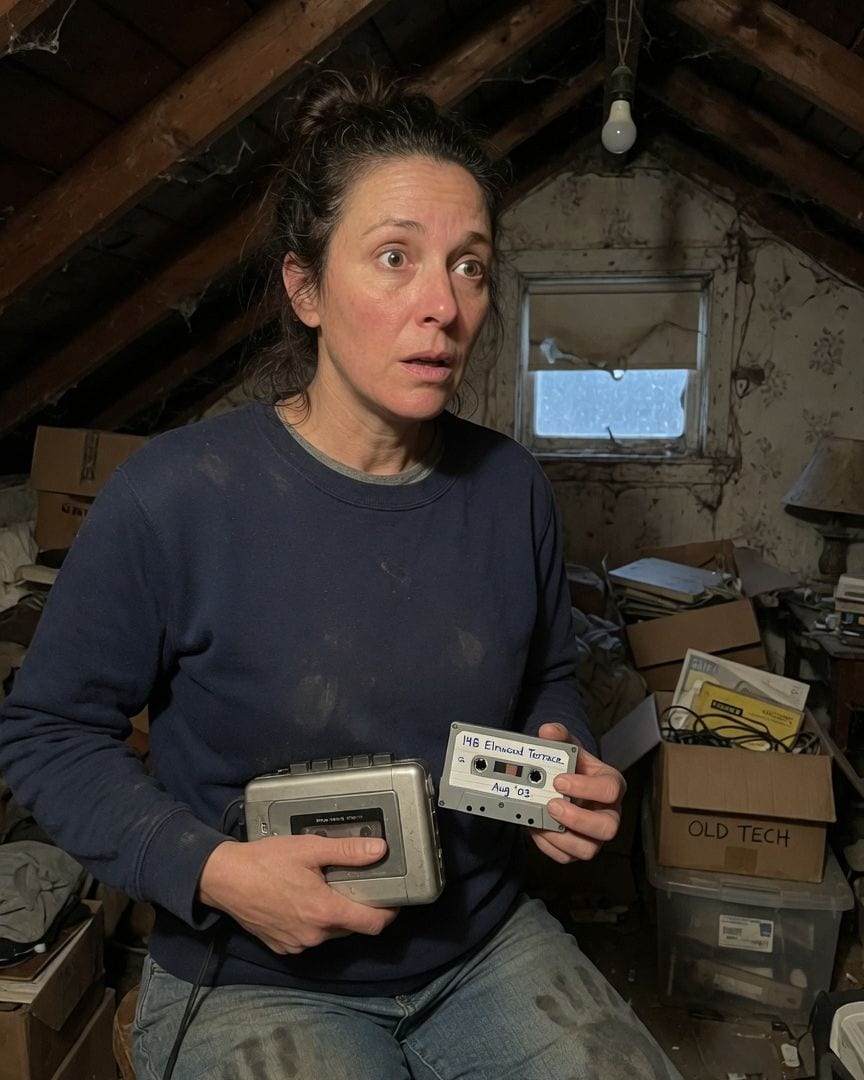
The dust in the attic was thick enough to leave prints, but I didn’t notice until later, when I saw the grey smudges on my jeans.
I was rummaging through a box marked "OLD TECH," a task I’d put off for years, trying to decide what could finally go to recycling. My fingers brushed against a small, grey plastic cassette, an answering machine tape.
It felt absurdly light, and then I saw the label, scrawled in my own familiar hand: "14B Elmwood Terrace. Aug '03."
A prickle of something – nostalgia, maybe – ran down my spine. That was my old flat, the one I’d moved out of exactly twenty years ago. I’d lived there for five years, my first real home.
I found an ancient portable cassette player at the bottom of the box, surprisingly still working when I plugged it in. With a sigh that felt heavier than it should, I slid the tape in.
The first few messages were mundane, a static-laced tapestry of a life long past: an old friend cancelling lunch, a wrong number for 'Brenda,' a reminder about a dentist appointment I certainly hadn't kept.
I was about to eject the tape, half-smiling at the banality, when the tone changed. The familiar beep of a new message. And then, a woman’s voice, raw with terror, screaming.
It wasn't a short cry. It was a sustained, guttural shriek that filled the quiet attic, sharp and real enough to make my stomach clench. I froze, my hand hovering over the 'stop' button, unable to move.
The scream cut off abruptly, as if a hand had been clamped over a mouth. A click. And then, my own voice, calm and even, spoke.
"It's alright," my recorded voice said, a bizarrely soothing tone, utterly at odds with the terror that had just echoed. "I've got her now."
I yanked the tape out, my hands shaking so badly I almost dropped the player. My own breath caught, a cold, hard knot forming in my chest. I had moved out twenty years ago.
A week after that date, I was already in my new place, miles away. I had lived alone ever since.
I replayed the message dozens of times that evening, the scream, then my voice, scarring the quiet of my house. I tried every explanation I could think of. A prank?
But who would prank me, twenty years ago, on an answering machine in a flat I no longer lived in? And how would they get my voice? A mislabeled tape? But the handwriting was undeniably mine, the address precise.
A faulty recording, a bizarre audio overlay? The sequence was too clean, too deliberate. The scream, then the response.
I remembered the forwarding address I’d left with Samuel, my landlord, for the new tenant. Lydia Brooks. A name I hadn’t thought of in two decades.
A quick search online, typing in 'Lydia Brooks 14B Elmwood Terrace,' brought up a chilling result: a faded local news article from twenty years ago. Lydia Brooks, age 23, disappeared shortly after moving into 14B Elmwood Terrace.
No body, no trace, just a missing persons report that went cold within months. The police had found the flat empty. The article mentioned the answering machine was unplugged, no tape inside. My hands trembled again, clutching the cassette.
I called Samuel Walsh, my old landlord. He’d been a casual friend, and we still exchanged Christmas cards. His voice, when he finally picked up, was tight, guarded. I tried to be casual, asked if he remembered Lydia Brooks.
The pause was long enough to be uncomfortable. He remembered her, yes. A nice young woman. I pressed, asking if he recalled anything unusual about her disappearance.
He quickly dismissed it as 'just one of those sad things,' a young woman running off, maybe.
Then I told him about the tape. I described the scream, and my voice. He dismissed it instantly, almost aggressively. "A cruel prank, Isabella. Or a faulty recording. That old machine was always a bit temperamental."
He sounded too eager to shut it down.
I hung up, a new resolve settling over me. I had to see the flat. 14B Elmwood Terrace. It was now occupied by a young couple, according to the building’s current directory.
I invented a story: I was an old tenant, feeling sentimental, hoping to see my old home, perhaps just a quick look at the layout for old times’ sake. The current tenant, a friendly woman named Audrey, was surprisingly accommodating.
She invited me in for tea. The flat was redecorated, brighter than I remembered, but the bones were the same. The window overlooking the street, the small galley kitchen.
We made polite conversation, and I subtly steered it towards the building itself. Audrey, completely oblivious to its history, mentioned an oddity. "Sometimes," she said, stirring her tea, "late at night, we hear this faint, distorted sound.
Like an old answering machine greeting, playing from inside the walls. Even though we don’t have one, of course." She laughed, a light, dismissive sound.
I tried to laugh with her, but the sound felt hollow. A cold knot, tight and hard, formed in my stomach.
After a pleasant but strained conversation, I made my excuses. Audrey stepped out briefly to run an errand, locking the door behind her, but I lingered in the hallway.
My hand rested on the doorframe of 14B, the wood cool against my palm. A sudden, irrational urge to listen, truly listen, seized me. The flat was silent, locked, just a solid wood door between me and the space inside.
I closed my eyes, focusing all my attention. And then, so faint it could have been a trick of my mind, but utterly unmistakable, a whisper slid from beneath the door.
Distorted, hollow, yet clearly my own voice from the tape.
"...I've got her now."
The whisper rattled me more than Lydia's scream had. That was a tangible sound, a recording. This was… live. I called Samuel again the moment I got home. This time, I didn't hold back.
I told him everything – Audrey's comment, the whisper beneath the door, the sheer impossibility of it.
He listened, his face growing paler with each detail I recounted. He ran a hand through his thinning hair, his eyes darting around his living room as if expecting something to appear. Still, he tried for mundane explanations.
"Old wiring, Isabella. Drafts. The building settles. You’re stressed, imagining things."
I pushed back, my voice tight. "Audrey heard it too, Samuel. A phantom answering machine. And the police report said the machine was unplugged when they found the flat. The tape was gone.
So how could my tape have recorded anything if it wasn't even there?"
He flinched. He admitted then, reluctantly, that other tenants in 14B had complained. Faint voices, echoes, sometimes music. But he’d always dismissed them as old building noises or overactive imaginations.
He’d even, he confessed, felt a profound unease about the flat after Lydia disappeared. A sort of coldness, a quiet that wasn't quite right. He’d sold the entire building shortly after, never looked back.
He didn't want to think about it. The silence in his own living room suddenly seemed heavier, its shadows deeper.
Samuel, now visibly shaken, became increasingly paranoid. He started to check his windows every few minutes, pulling back the curtains, then letting them fall. He jumped at the ring of his landline, let it go to voicemail.
He even refused to discuss the flat over the phone, insisting we meet in person.
He told me about a series of silent calls he'd been getting since our last conversation – no caller ID, just dead air, sometimes a faint, persistent hum. "Someone," he whispered, "or something, is listening."
One evening, I received a terse text from him: "Stop. You're stirring it up. Leave it alone."
I called him immediately, but he didn't answer. A cold dread settled over me. I drove to his house, the familiar route feeling alien in the deepening twilight.
I found him pacing his living room, curtains drawn tight against the gathering dark. He looked gaunt, his eyes wide and bloodshot.
"I saw it," he said, his voice barely a whisper. "Outside the window. A shadow. Just standing there, watching." He gestured vaguely towards the street. "It was too tall. Too still. Not a person."
He grabbed my arm, his grip surprisingly strong. "Please, Isabella. Drop it. Burn the tape. Forget Lydia. Some things are better left buried. You don't know what you're dealing with."
His plea hung in the stale air of his living room, heavy and suffocating.
I refused to stop. I thought of Lydia Brooks, a young woman who had simply vanished. Her life, her future, consumed by a silence no one understood. "What if it wasn't just old building noises, Samuel?
What if you knew something? Something you buried?"
The pressure mounted. Samuel stared at me, then at the floor, then back at me, his shoulders slumping. He looked utterly defeated. His voice, when he finally spoke, was barely audible.
He described how, after Lydia’s disappearance, he’d started digging into the building’s history. Quietly, mostly through old tenant records and maintenance logs. He found old complaints, strange entries dating back decades, always concerning 14B.
Whispers in the walls, phantom music, even a child's laughter, all reported by different tenants over the years. Always dismissed, always put down to the 'character' of an old building.
He walked over to an old wooden chest, rummaged inside, and pulled out an ancient, clunky flip-phone. The kind I hadn't seen in fifteen years. "I dismissed it then," he said, holding the phone, his thumb tracing its worn keys.
"But after what you told me... I found this." He navigated through its archaic menu with trembling fingers, finally reaching an old voicemail.
The static-laced recording began. It was Samuel’s own voice, younger, talking to a contractor about a leaky faucet. "Yeah, the drip in 14B. It's constant, even when the tap's off. Think it's the main line, needs a full..."
Then, clear as day, a sudden, bloodcurdling scream. Lydia’s. It was the same raw terror from the answering machine tape. And immediately after, my own calm, chilling voice.
"It’s alright," my voice said, utterly serene. "I’ve got her now."
Samuel paused the recording, his hand trembling, his face ashen. He slowly looked up, his eyes wide with fear. "That call," he said, his voice a ragged whisper. "That was twenty years ago. The day before Lydia was reported missing.
I was talking to the contractor. You weren't there. I didn't even have your new number yet."
I stared at the flip-phone in Samuel’s hand, the small screen glowing faintly, a relic of a bygone era holding an impossible truth.
My own voice, captured on this separate, independent device, repeating the exact same, chilling phrase I’d heard on my answering machine tape. It wasn't just the tape. It wasn't a trick of the machine, or a faulty recording.
My 'second voice' had been there, heard and recorded by Samuel's phone, at the exact moment of Lydia's disappearance, even though I was miles away, living my new life, completely oblivious.
Samuel slowly raised his head, his face a mask of profound horror. His eyes met mine, and for the first time, I saw not just fear, but a dawning, terrible understanding.
It was as if he could see past me, past the room, to something vast and ancient standing just behind me, reflected in his widening gaze.
Samuel explained, his voice raw, hoarse from fear and revelation. He hadn't just found old complaints; he'd found a pattern.
He'd discovered that a defunct property management company, Blackwood & Sons, had owned 14B and several other properties around the city.
He pulled out a weathered, leather-bound ledger from a locked box, its pages brittle with age, filled with meticulous, unsettling notes.
Each entry detailed a 'resonance incident' at one of their properties – disappearances, strange recordings, phantom voices, always targeting a new tenant shortly after they moved in.
"They called them 'sites'," Samuel whispered, tracing a finger across a faded, hand-drawn map tucked into the ledger’s cover. The map was dotted with tiny, almost imperceptible crosses, marking locations across the city.
"Places where strong emotions, trauma, left an imprint. And sometimes, the echo became... active."
He explained how the site at 14B must have latched onto my strong emotional attachment to the flat when I moved out. Five years of my life, a first home.
That imprint, that emotional residue, had created an active 'echo' of my voice. A lure. It wasn't me on the tape, or on his phone.
It was a malevolent imitation, using the resonance of my voice, my emotional residue, to ensnare.
It had drawn in and consumed Lydia, just as it had intended to do to others, playing its distorted greeting, its promise of having 'got her now.'
The ledger detailed similar occurrences, different voices, different victims, but the same underlying mechanism. The horror wasn't a single event, a random haunting. It was a network. A hidden architecture of dread, mapped out in an old leather book.
Isabella and Samuel, armed with the ledger, knew they had to act. We returned to 14B Elmwood Terrace.
It was thankfully empty again, the current tenants, Audrey and her partner, having moved out abruptly a week prior, citing "unforeseen circumstances" to the building manager.
The air inside the flat was heavy, cold, almost stagnant, as if the space itself was holding its breath. I clutched the old answering machine tape, its plastic shell feeling flimsy, yet impossibly potent.
Samuel believed the original answering machine itself, left behind, might have been an initial conduit, amplifying the site's ability to capture and animate.
We found the exact spot where the old answering machine used to sit, a faded rectangle on the dusty floorboards near the front door.
As I stood there, holding the tape, a low hum began to vibrate through the floor, rising up through the soles of my shoes.
Whispers started, faint at first, then growing louder, cycling through snippets of my own voice, Lydia's scream, and other, unknown voices detailed in the ledger, voices of long-gone tenants from decades past. The flat was resisting, pushing back.
Samuel, his face grim, began examining the wall near the doorframe. Behind a loose floorboard, he found an old, corroded junction box, its wires a tangle of decaying copper and brittle insulation.
"The power source," he muttered, "for the building's old intercom system. It might be feeding the resonance." He yanked at the wires, sparks flying in the dim light. The hum intensified, a throbbing pulse that filled the room.
The whispers coalesced into a distorted, guttural sound, like many voices speaking at once through a broken speaker, a chorus of captured agony.
Driven by a sudden, primal urge, an instinct I couldn't explain, I slammed the old answering machine tape, the very object that started all of this, into the exposed wiring of the junction box.
A flash. A crackle that filled the air with the smell of ozone and burning plastic. Then, a profound, absolute silence. The hum was gone. The whispers ceased.
The air grew still, cold, but empty of the prior presence, leaving behind only the scent of dust and burnt electronics. We stood there, breathing heavily, the silence almost deafening in its abrupt totality.
The flat at 14B Elmwood Terrace remained empty. No new tenants moved in. The building was eventually condemned for "structural issues" – a convenient bureaucratic lie that covered a deeper truth.
Samuel Walsh, visibly aged, his hair whiter, became obsessed with the ledger, cross-referencing old property records, trying to identify and neutralize other 'sites.' He still sends me texts, sometimes just a single word: found.
I, Isabella Montgomery, though scarred by the experience, found a strange resolve in the quiet of my own home. The silence felt different now, imbued with a new, fragile meaning, a hard-won peace that I knew wasn't absolute.
I knew the fight wasn't over, but at least it had a name, a shape. The silence itself became a kind of vigilance.
I still live in my quiet house, but the silence feels heavier now, a thin membrane over something vast and restless.
Sometimes, late at night, I hear a faint echo of a voice, not my own, but close enough to make me check the locks.
Samuel sends me updates, little red pins on a digital map, each one marking another potential site, another echo waiting to stir. The silence in my old flat was a hollow victory, because the map showed so many more.
If this one got to you
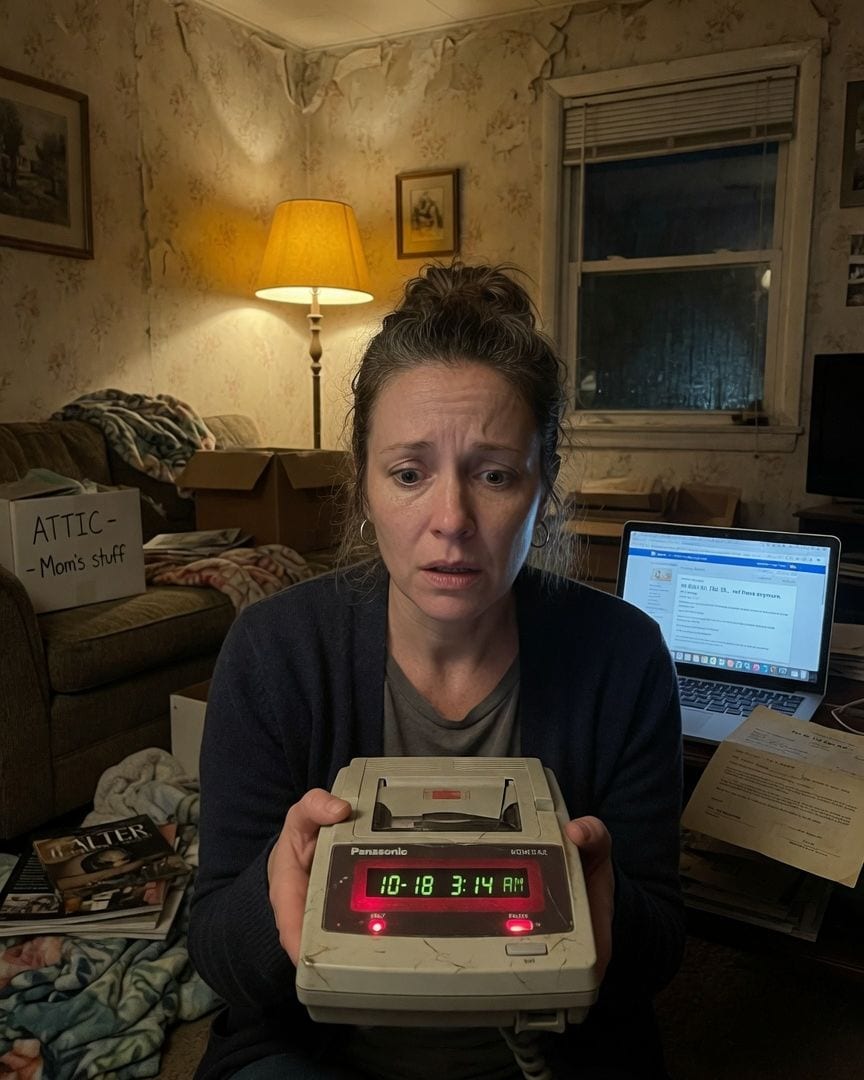
My old answering machine tape holds a new tenant screaming, a week after I moved out. Then, my own calm voice, saying I've got her now.
I unearthed my old answering machine from the attic, a forgotten relic from two decades ago. Playing the tape, I heard a terrifying scream, followed by my own chillingly calm voice saying 'It's alright, Deborah. I’ve got her now'—a message recorded a week after I’d moved out of the flat.
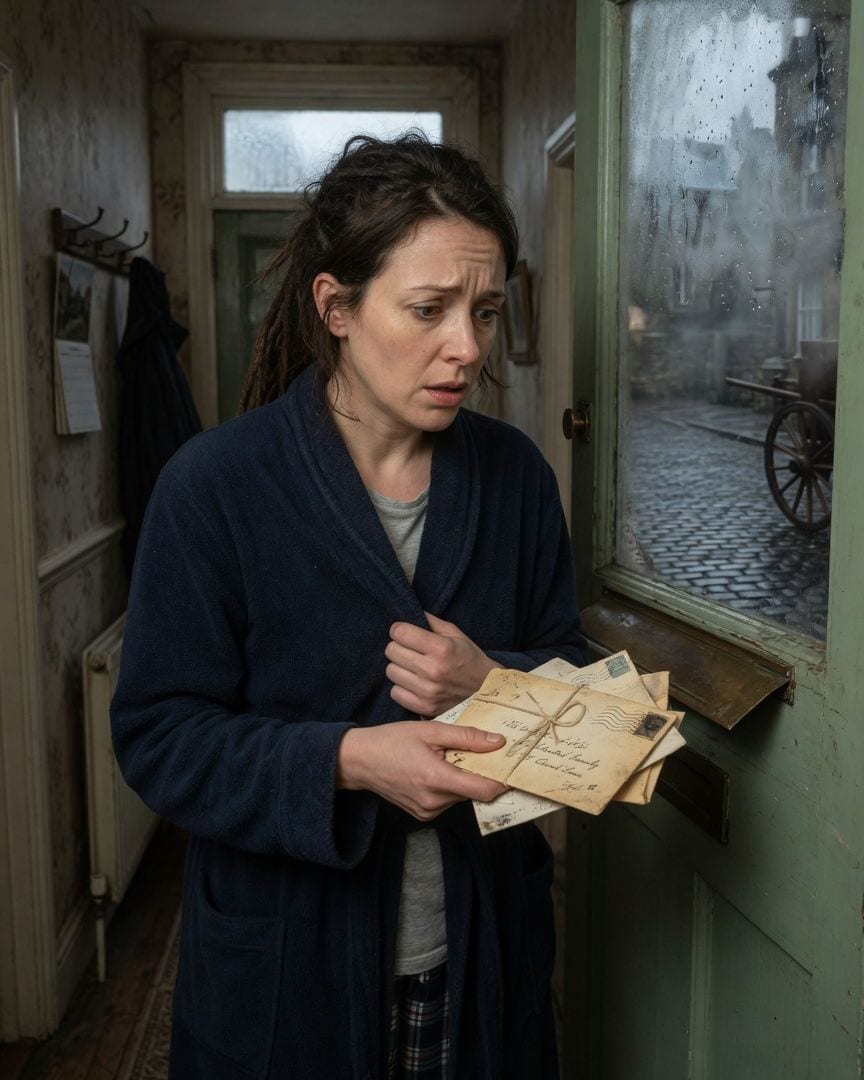
Seventy years ago, a hidden journal recorded my door opening to the wrong street and receiving Lockwood post.
I'd only recently moved into my inherited house, a quiet place on the edge of town. One grey morning, a distinct clatter from the front door's post flap caught my attention. Reaching down, I expected my gravel path, but instead, the flap showed a dark, cobbled street that wasn't mine. A bundle of warm, old letters, addressed to 'The Lockwood Family,' slid through, before the vision flickered and was gone.
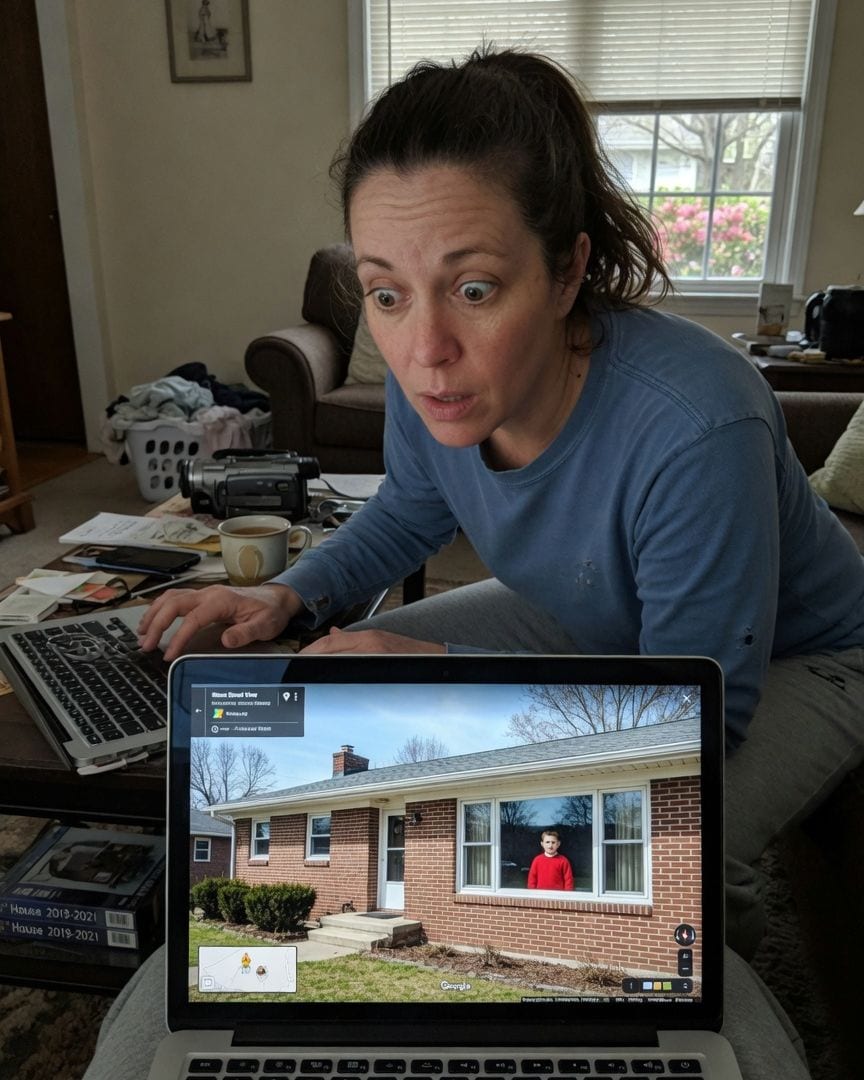
My Street View shows a boy in our window. That room's been empty and locked for months, we have no son, and he's gone if you drag the camera.
I was idly scrolling Google Maps, admiring the spring flowers on my street, when I paused at our house. In the empty, locked front bedroom window, a small boy in a bright red jumper stared out. We have no son, and that room has been storage for two years. He simply vanished from the Street View image.
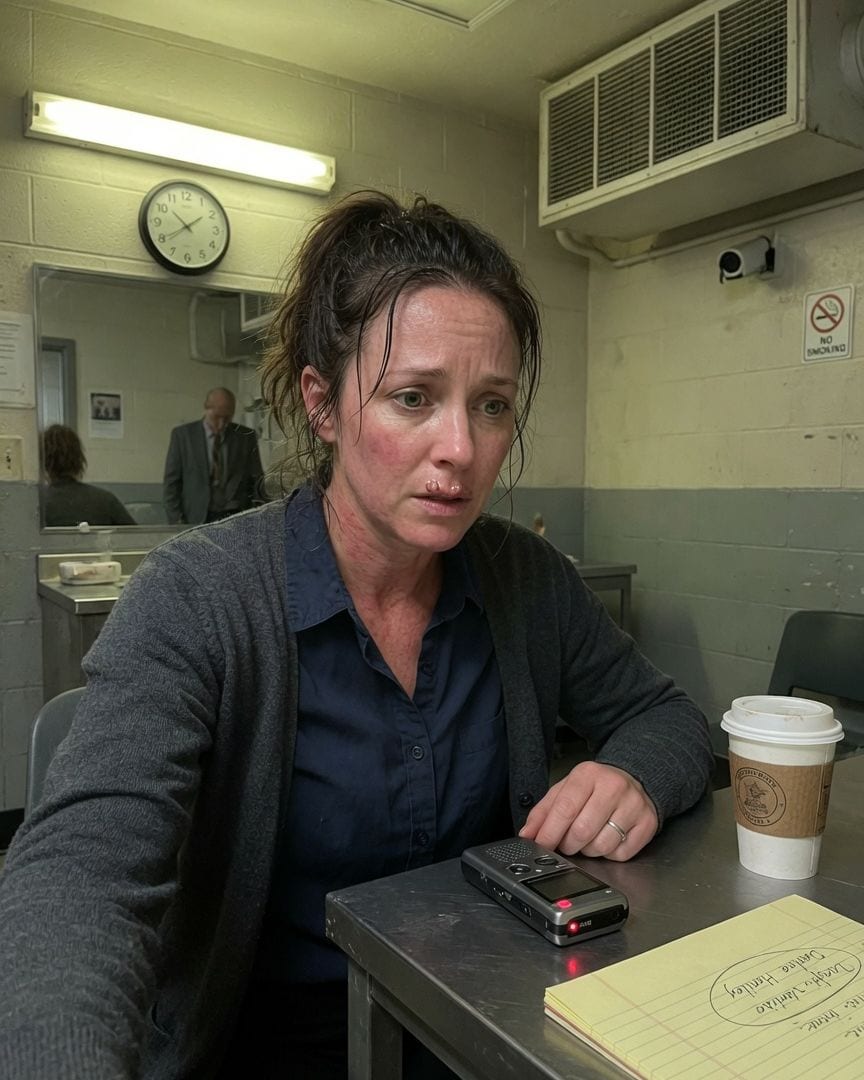
My own voice called 911 from Gary, Indiana, reporting a prowler. I was asleep in Ohio, my phone on the charger.
Sitting in a police interview room, I listened as Detective Walsh played a 911 recording. A woman's hushed voice reported a prowler from a payphone in Gary, Indiana. My stomach dropped cold; it was my exact voice, my specific way of saying 'I think,' even though I was in bed in Ohio that night.
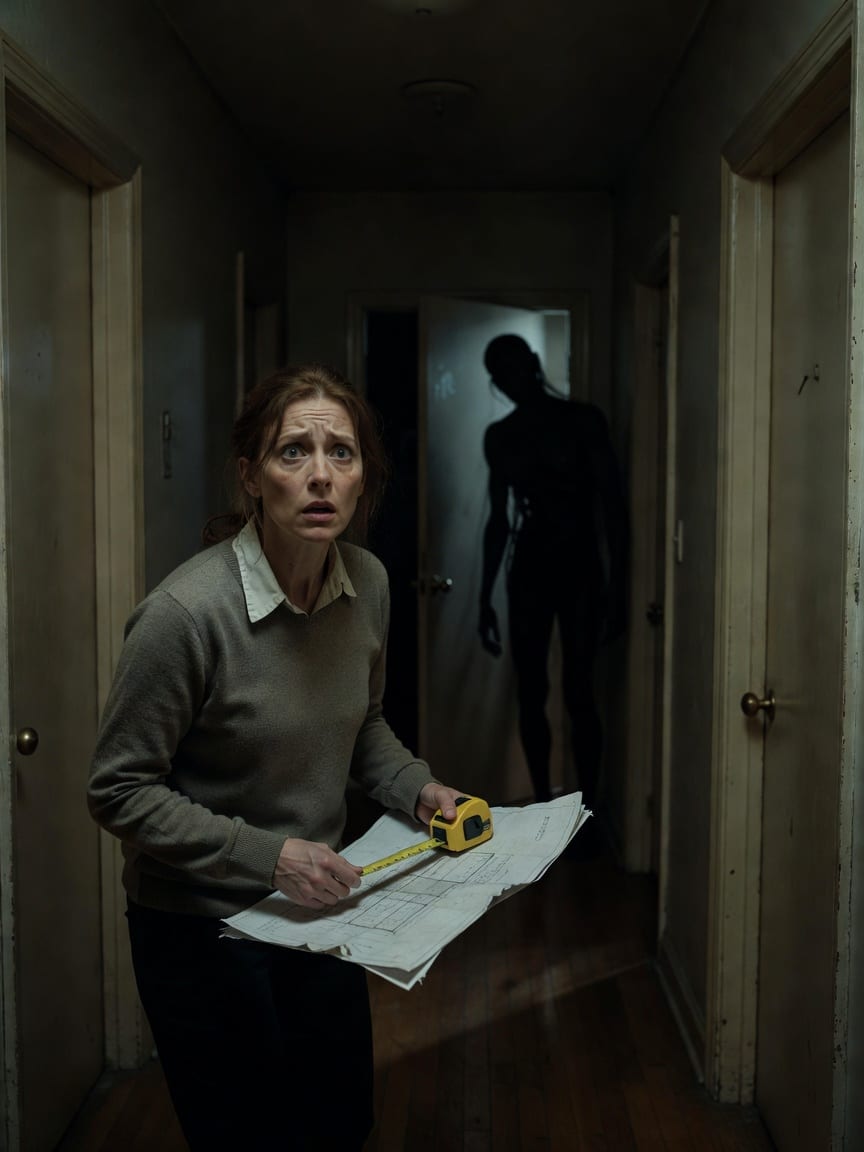
My front door has a dented gate and a dead hydrangea. I walked past it six times, trying to reach the corner shop just a hundred yards away. The pavement kept bringing me back to my own porch, and the shop's light never moved.
My morning started like any other, a quick walk to the corner shop from my home at Number 14, Elm Terrace. But after walking what felt like two minutes, I found myself back at my own front door, the shop no closer. I tried six times, faster and slower, but my street kept compressing, refusing to let me leave.
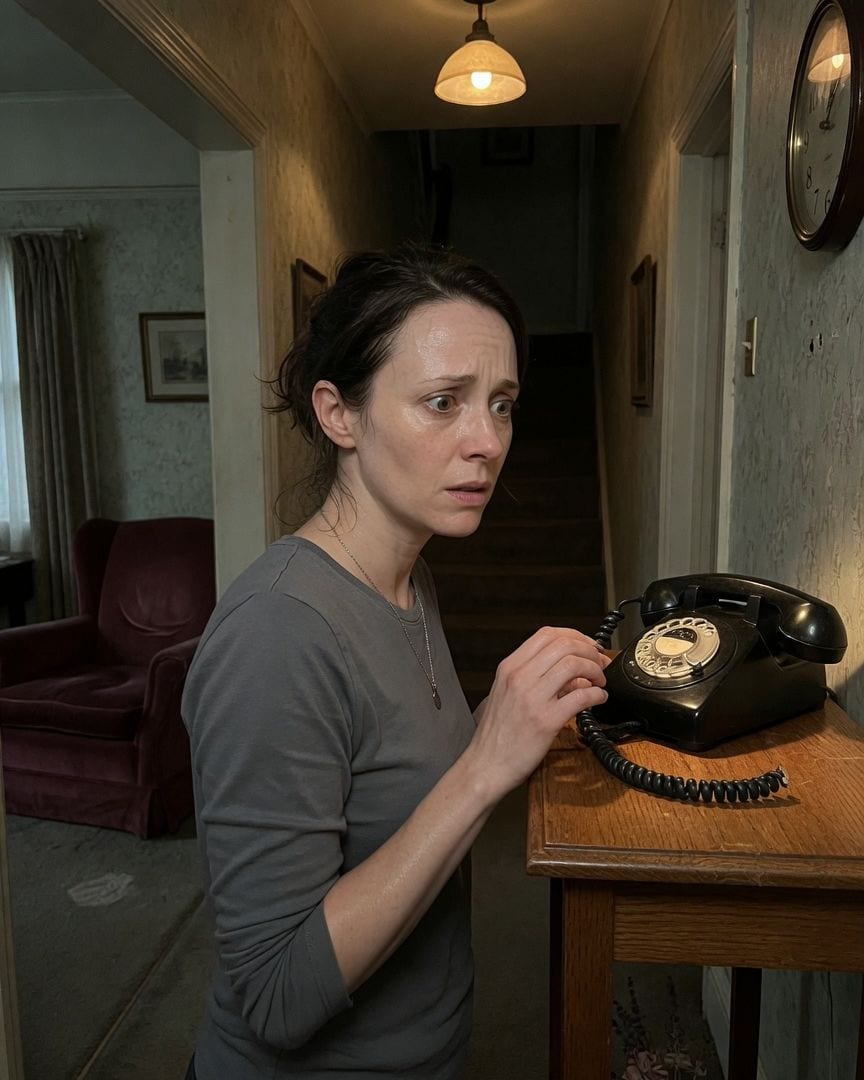
My disconnected Bakelite phone dials itself at 8 PM, receiver warm, always the same three numbers, humming a sound no dead line should make. I live alone.
As a new homeowner, I, Penelope Vaughn, found an antique Bakelite phone in my hall, its line long dead. But every night at 8 PM, the receiver is off its cradle, faintly warm to the touch, and the dial half-spun to the same three digits, making an impossible hum.