My smart speaker asks the time at 4:04 AM every night. The voice is a child's, and we don't have children.
The chime was faint, a tiny electronic whisper from the living room, but it pulled me awake. It had been happening for a week now, always around the same time. Everett was still asleep beside me, his breathing even.
I reached for my phone, the screen blooming bright in the dark. The smart speaker app showed its activity log, a digital transcript of its last interaction.
And there it was again: ‘Asked: Time’ – every single night, 4:04 AM, for seven consecutive days. My stomach clenched. Everett and I didn't have children. No one else had been in the house.
I tapped the entry for last night. The app loaded a small audio file. A child’s voice, small and clear, filled my headphones, no louder than a puff of air, but sharp in the quiet. "What time is it?"
It wasn't a question to me, not really. It was a request, made to the machine. But it hung in the air, echoing in my head even after the recording stopped. I played it again. And again.
The same tiny, innocent query, repeated in the dead of night. It was impossible. It was also undeniably real.
I got out of bed, careful not to wake Everett, and walked into the living room. The small Echo Dot sat on the mantelpiece, its ring light dark now. The room felt different at 4 AM. Colder.
I shivered, not just from the lack of heat. A persistent cold spot near the far wall, just above the baseboard, caught my attention.
I’d noticed it before, a strange draft that no amount of caulking or weather-stripping seemed to fix. Tonight, it felt like a tiny, focused pocket of Arctic air, right where a child might stand.
The next morning, I tried to be rational. This was a technology glitch, a misfiring sensor, a rogue Wi-Fi signal. I checked the network logs on our router – nothing out of the ordinary, no unknown devices connected.
I went through the smart speaker settings again, disabling voice recognition for unknown users, checking permissions. I even performed a full factory reset, wiping its memory clean. “There,” I told myself, plugging it back in, “that should fix it.”
It didn’t.
The following morning, at 4:04 AM precisely, the chime woke me. The log, pristine after the reset, showed the entry: ‘Asked: Time.’ The same small voice, still there, still asking.
I started researching the house. We’d moved in six months ago, a charming 1955 build with good bones. Online records, property deeds, local history archives—I scoured everything I could find. Nothing.
Just a standard chain of ownership, unremarkable lives lived within its walls. No mention of anything unusual, no strange incidents, no unexplained disappearances. It was just a house.
I brought it up with Everett over coffee. "The speaker did it again," I said, my voice tighter than I intended.
He looked up from his tablet, a frown creasing his forehead. "Damn it, Annika. Are you sure it's not a neighbor's device picking up some kid's toy or something? Or a radio?"
"It's a distinct child's voice, Everett. And it’s always 4:04 AM. Every night. From our speaker." I played him the recording, holding the phone out. He listened, his brow furrowing deeper.
He looked unsettled, but he still tried to explain it away. "Old houses settle. Digital ghosts in the machine. It’s creepy as hell, I'll give you that, but there has to be a logical explanation."
But there wasn’t. Not for the voice. Not for the cold spot in the living room that I kept going back to. The chill in that wall wasn’t a draft; it was an absence of warmth, a consistent, unnerving coldness.
I knelt down, pressing my palm against the painted plaster. It was colder than the rest of the room. I started tapping, moving my hand methodically, searching for something beyond a draft. Most of the wall was solid.
But then, near the corner, just above the baseboard, my knuckles hit a section that sounded different. Hollow. Distinctly hollow.
My heart hammered a frantic rhythm against my ribs. Everett’s dismissive rationalizations faded into the background. There was something here, something beneath the surface of this ordinary house. I grabbed a utility knife from the toolbox, my hands trembling slightly.
I carefully ran the blade along the seam of the baseboard, finding a section that gave way with surprising ease. It was already loose. With a small flathead screwdriver, I began to pry.
The wood groaned, then separated from the wall with a soft pop. A gap opened, dark and narrow. I shone my phone’s flashlight into the void. Dust motes danced in the beam, thick and ancient.
Inside, nestled among cobwebs and crumbling plaster, was a small, folded, yellowed piece of paper.
I reached in, my fingers brushing against the grimy wall. The paper was stiff, brittle with age. I pulled it out, my breath catching in my throat.
My fingers trembled as I unfolded it, the creases threatening to tear the fragile material.
It was a child’s crude drawing. A clock, undeniably, its hands pointing to 4:04. Below it, a simple, lonely stick figure child. And beneath that, scrawled in shaky crayon, faded but terrifyingly legible: ‘Lily, 1972.’
Everett was clearly unnerved now. The drawing, taped to our fridge, was a constant, unsettling presence. He still tried to rationalize it, muttering something about a previous owner’s child, a forgotten relic.
But the specific date, 1972, and the exact time, 4:04, tied directly to the smart speaker, couldn't be dismissed as easily as an old house settling.
I tried online searches again: “Lily 1972 Brooks residence.” Nothing. “Lily disappearance 1972.” Too many results, too vague.
I knew I needed more. The next day, I drove to the local historical society. The building was quiet, smelling of old paper and dust.
I spoke to an archivist, a woman named Nora Vance, her gray hair pulled back in a neat bun, her movements precise. She was polite, even helpful, initially. She pulled up the property deeds for our address.
"Built 1955, as you know," she said, tapping a record on her screen. "Owned by the Thornton family until 1975, then sold to the Millers, and so on." Standard property history, nothing out of place.
I pressed her. "What about anything unusual from the early 1970s? Any local events, perhaps, involving children or temporary housing?" I watched her face carefully. A flicker in her eyes.
A slight pause before she answered, "Nothing that stands out, Ms. Brooks. The town was quite different then, of course. Smaller. But no major incidents concerning private residences, that I recall."
Her tone was calm, almost too calm. I sensed a quiet reserve, a hesitation in her answers, that made me feel like she knew more than she was letting on.
She averted her gaze slightly, fiddling with a pen on her desk.
I left the historical society with a knot in my stomach. The child’s drawing on my fridge seemed to watch me, Lily’s stick figure a silent accusation.
I returned home, the voice in my head, the image of that clock at 4:04, driving me. The cold spot in the living room, where the drawing had been hidden, kept drawing my attention. What else was hidden?
What else had been forgotten? I started systematically checking other parts of the house, tapping walls, running my hands along baseboards.
The attic. It was usually just a storage space, ignored for months. But it was a part of the house I hadn't truly investigated. Up the pull-down ladder, into the dusty, cramped space.
Beneath a stack of forgotten boxes of Christmas decorations and old photo albums, I noticed it. A small, almost invisible wooden panel in the floor. It blended seamlessly with the aged planks, a perfect match in color and grain.
It didn't appear to lead anywhere, just a solid, unyielding patch of wood. But it was there, and it was out of place.
I spent hours in the attic, returning day after day, trying to pry open that stubborn wooden panel.
I scraped at the edges with a screwdriver, ran a flashlight beam along every seam, but it resisted my efforts, refusing to yield its secret.
It felt like the house itself was trying to keep me out, the aged wood ungiving.
During these days, a new, unsettling detail emerged. An old, dark sedan began appearing down our street. It was always parked a few houses away, sometimes directly across from our driveway.
I'd catch glimpses of it from the living room window. Someone was dimly visible inside, a shadow behind tinted glass. I tried to dismiss it, told myself it was just a coincidence, a neighbor’s visitor.
But the car's intermittent presence, especially when Everett was at work, began to feel like a watchful gaze, a silent pair of eyes always on our house. My paranoia, a cold, creeping thing, sharpened.
I called Nora Vance again, the archivist. I bypassed the polite pleasantries. "Ms. Vance," I said, trying to keep my voice even, "I'm still looking into properties used in the early 1970s.
Specifically, I'm trying to find if any local social services agencies used private homes for 'temporary housing' or 'private placements' of children."
There was a silence on the other end, long and heavy, like something being dragged across a rough floor. Then, Nora's tone became clipped, a distinct edge replacing her previous politeness.
"Ms. Brooks," she said, her voice low, almost a whisper, "some things are better left buried, for everyone's peace of mind. Digging up old troubles rarely serves anyone." The warning was unmistakable.
It sent a chill down my spine that had nothing to do with the drafty living room. Nora knew. And she was actively trying to deter me. The thought made me angry. What was she protecting?
Nora’s warning, coupled with the dark sedan that still appeared on our street like a silent predator, fueled me. I went back to the attic with a crowbar. This time, I wasn't gentle.
I jammed the flat end into the seam of the wooden panel, gritting my teeth, and heaved. The wood splintered with a sharp crack, then gave way. Dust billowed out from the opening as I pulled the panel free.
It revealed not a room, but a cramped, low crawl space beneath the floorboards, a dark cavity like a forgotten tomb. The air was stale, thick with the smell of old wood and something vaguely metallic.
I crawled inside, my flashlight beam cutting through the gloom. My hand hit something hard.
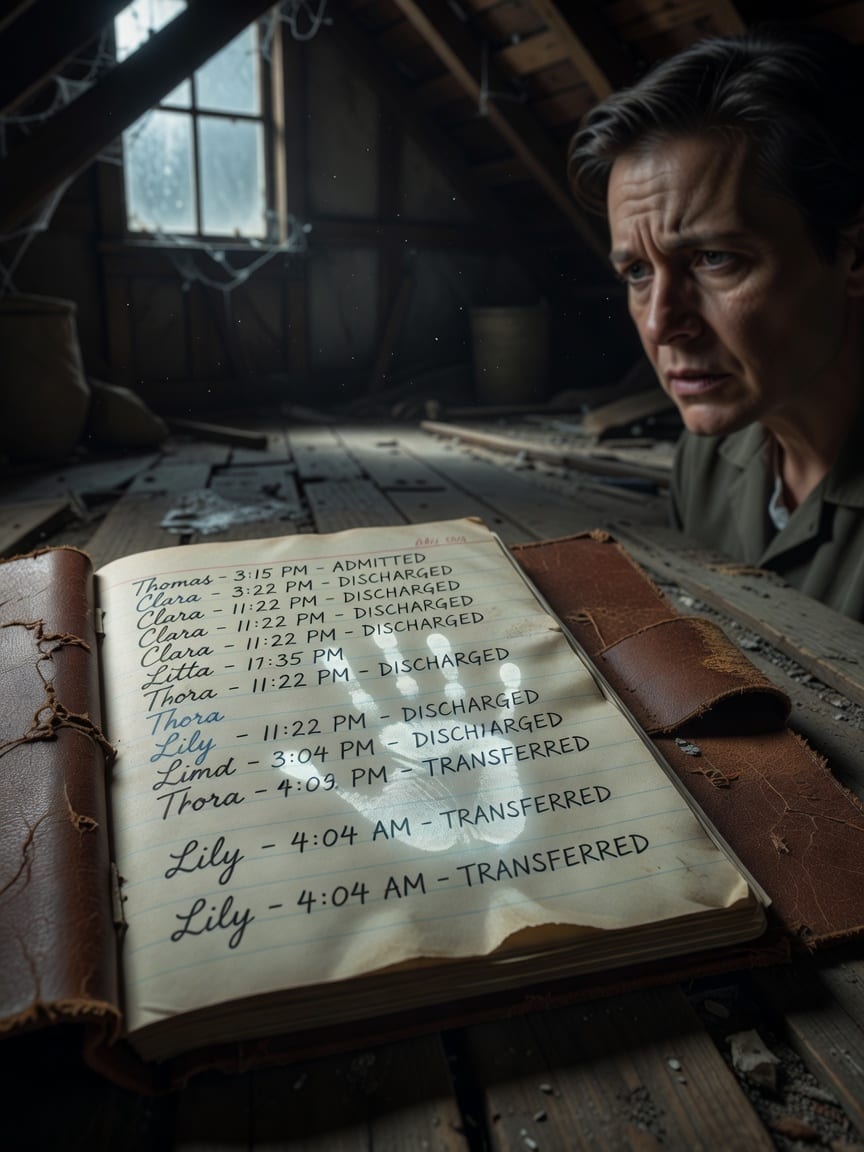
It was a heavy, leather-bound ledger. Clearly old, its cover scuffed and worn, its pages yellowed and brittle. I pulled it out, blowing dust from its surface. The leather felt cold and dry beneath my fingers.
I took it downstairs, into the living room, and laid it on the coffee table.
I carefully opened it. The ledger was filled with meticulous, handwritten entries. Not official, not formal, but precise in a chilling way. Names, dates of arrival, and cryptic notes: 'Child X transferred,' 'Child Y awaiting placement.'
My breath caught, lodged in my throat.
I found it. An entry, almost a third of the way through the book: 'Lily, b. 1968. Arrived 03/15/72. Transferred 08/04/72. Note: 4:04 AM.'
My vision blurred. Lily. 1972. 4:04 AM. Every piece clicked into place, brutally, sickeningly. But it wasn’t just Lily. Dozens of similar entries followed, each marked with a small, unfamiliar symbol resembling a stylized 'S.S.'
This ledger was clearly unofficial, a record that, by all rights, should not exist.
Tucked inside the ledger, like a forgotten bookmark, I found a crumpled newspaper clipping. Dated 1972. The headline screamed about a local 'orphanage scandal' – mismanagement of funds, poor record-keeping. But no mention of specific children.
No mention of private homes being used.
My house was not just a home. It was a silent waystation for children, a secret. This ledger was a meticulous, horrifying record of children whose official existence might have been erased.
The cold spot, the voice, the drawing – all of it suddenly made a terrible, coherent sense. The walls of my house held a darker history than I could have imagined, a history of children brought in and, apparently, disappeared.
I pored over the ledger, flipping through the brittle pages, cross-referencing names with the newspaper clipping. No direct matches for Lily in the article. The 'transferred' notes were vague, offering no real indication of the children's ultimate fates.
A cold, suffocating dread settled over me. This house, our home, was a secret conduit, a place where children vanished from official records.
The ledger was a meticulous, horrifying document, a record that could not be, yet it lay open in my hands, undeniable.
The faint, almost invisible watermark on several pages – the stylized 'S.S.' – nagged at me. It didn't match any known local institution, no official seal I recognized.
I realized the true horror wasn't just Lily, but the dozens of others listed in these pages, the systemic erasure of their young lives. My hands shook, the weight of the book feeling impossibly heavy.
Then, a faint, distinct creak came from downstairs, from the living room directly below me. It broke the silence of the attic like a gunshot.
It was followed by the soft, unmistakable click of the smart speaker, the same sound it made when it activated.
A child's voice, very close, clearly asked, "What time is it?"
I froze, the ledger clutched tight in my hands, my heart hammering against my ribs so hard I could hear it. Every shadow in the attic seemed to lengthen, to twist into something threatening.
I scrambled out of the crawl space, dropping the crowbar with a clatter, and crept towards the pull-down ladder, trying to be as silent as the dust motes.
Downstairs, the living room was empty. The smart speaker sat on the mantelpiece, its ring light dark, silent once more. My breath hitched. I rushed to my phone, fumbling to open the app.
The activity log for the current time showed it: 'Asked: Time. 4:04 AM.' I played the recording.
It was Lily’s voice, as always, small and clear. But this time, after the question, there was a faint, almost imperceptible whisper, a child's sigh, like a ghost giving up. It was so close, so real.
I realized then that the voice wasn’t just an echo of the past, not just a digital glitch. It was a residual presence, a memory tied to the house, to the ledger, to Lily herself.
The stylized 'S.S.' watermark. I couldn't shake it. Back at my computer, I typed it into a search engine, adding "1970s local social services." Finally, after several dead ends, I found a fleeting reference.
'Social Services of Kingsley County,' an organization absorbed into a larger state agency decades ago. Its records, the article vaguely mentioned, were either archived or, more likely, 'destroyed during the transition.'
Armed with Lily's drawing, the ledger, and the smart speaker recordings, I knew what I had to do. The next morning, I drove straight to the main county archives.
At the county archives, I was met with immediate resistance. The current archivist, a young man with nervous eyes, claimed those old records were 'unavailable' or 'digitized and inaccessible.'
He kept repeating that everything from the 70s was 'legacy data' and 'hard to retrieve.'
"I'm not leaving," I stated, my voice shaking but firm. I showed him a photo of the ledger entry for Lily, the 'S.S.' watermark visible, and mentioned Nora Vance by name. "Nora Vance," I repeated, watching his face.
"She was an archivist here. She told me some things are better left buried."
His face went pale. He made a hurried call, his voice low. After a tense, agonizing wait, an older, stern woman, a supervisor, appeared. Her hair was tightly permed, her expression unyielding.
I didn't waste time.
I laid out the evidence, one piece at a time: the photo of Lily's drawing of the 4:04 clock, the ledger with its chilling entries, and then, holding up my phone, I played the smart speaker recording, Lily's tiny voice filling the hushed archive office.
"My house," I stated, my voice clear and unwavering, "was an unregistered holding home for children. One of them, Lily, disappeared. Your records are hiding it."
The supervisor’s composure cracked. Her face drained of color as she stared at the ledger photo. She knew. She had to. She finally relented with a sigh that seemed to carry decades of suppressed secrets.
"Wait here," she muttered, disappearing into the back.
Minutes later, she returned, carrying a dusty, sealed file. 'Thornton House - Special Case,' the faded label read. My house. Inside, Annika found a faded, official memo from 1973.
It detailed the 'irregular use' of the Thornton residence for child placements, citing a lack of proper oversight and a 'failure to account for all transfers.' A handwritten note at the bottom, dated 1974, simply said: 'Lily's case remains open.
No official adoption. Presumed runaway.' It confirmed the 4:04 AM detail, noting Lily's 'distress ritual' of asking the time. The memo stated the program was quietly disbanded, and all associated unofficial records were to be 'destroyed or contained.'
Nora Vance’s faded signature was visible on the memo as a junior clerk.
The institution knew. They had known all along. And they had covered it up, for decades.
The official record confirmed everything I had suspected and feared. The agency acknowledged the existence of the unofficial ledger and the 'oversight' of the former program.
They offered a perfunctory apology and launched an internal review, decades too late to truly help Lily or any of the other children.
Everett and I decided to stay in the house. We couldn't bring ourselves to leave, feeling a profound, unsettling responsibility to Lily and the other children who had passed through its silent halls. It was their last known place.
We never found out what truly happened to Lily after her 'transfer,' or if 'presumed runaway' was the truth they wanted us to believe. The cold spot remained, a constant reminder in the living room wall.
It wasn't just a draft; it was the lingering chill of a forgotten secret.
The smart speaker still logs the 4:04 AM question, though less frequently now. Sometimes, when the house is especially quiet, I hear it from our bedroom, a faint, tiny voice asking, "What time is it?"
I no longer try to explain it away, no longer search for new answers. I just lie in bed, listening, a quiet witness to a question that will never truly be answered.
The house holds its secrets, its echoes, and some wounds are just too deep to ever fully heal. I live with it now, a part of the house's silent history, an extension of its hidden truths.
I understand the dread, the profound wrongness, but it has become a quiet, unsettling companion. My world is forever changed by the child's voice and the truth it spoke.
Is that so?
If this one got to you
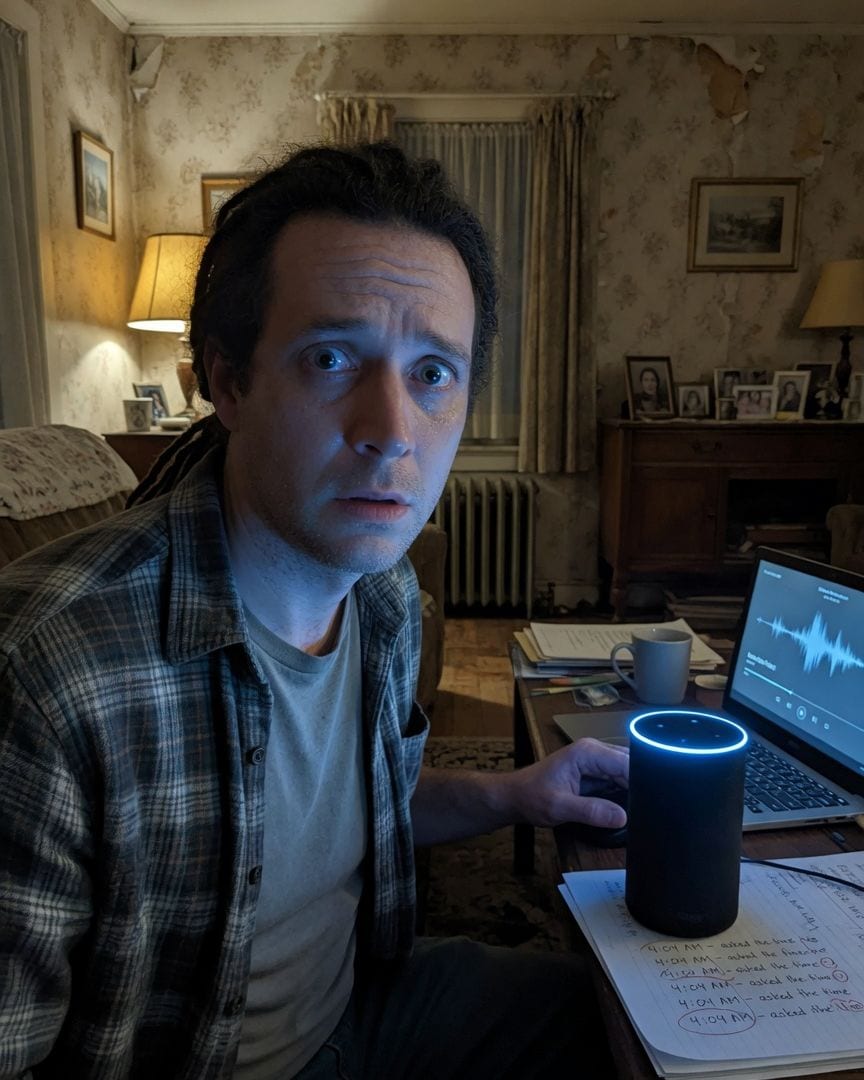
A child's voice asks my smart speaker the time at 4:04 AM every night. My wife and I live alone.
Alone in my quiet house, I found a strange entry in my smart speaker's log. Every night at 4:04 AM, it recorded a small child's voice asking the time, followed by a faint sigh. My wife and I live alone and have no children.
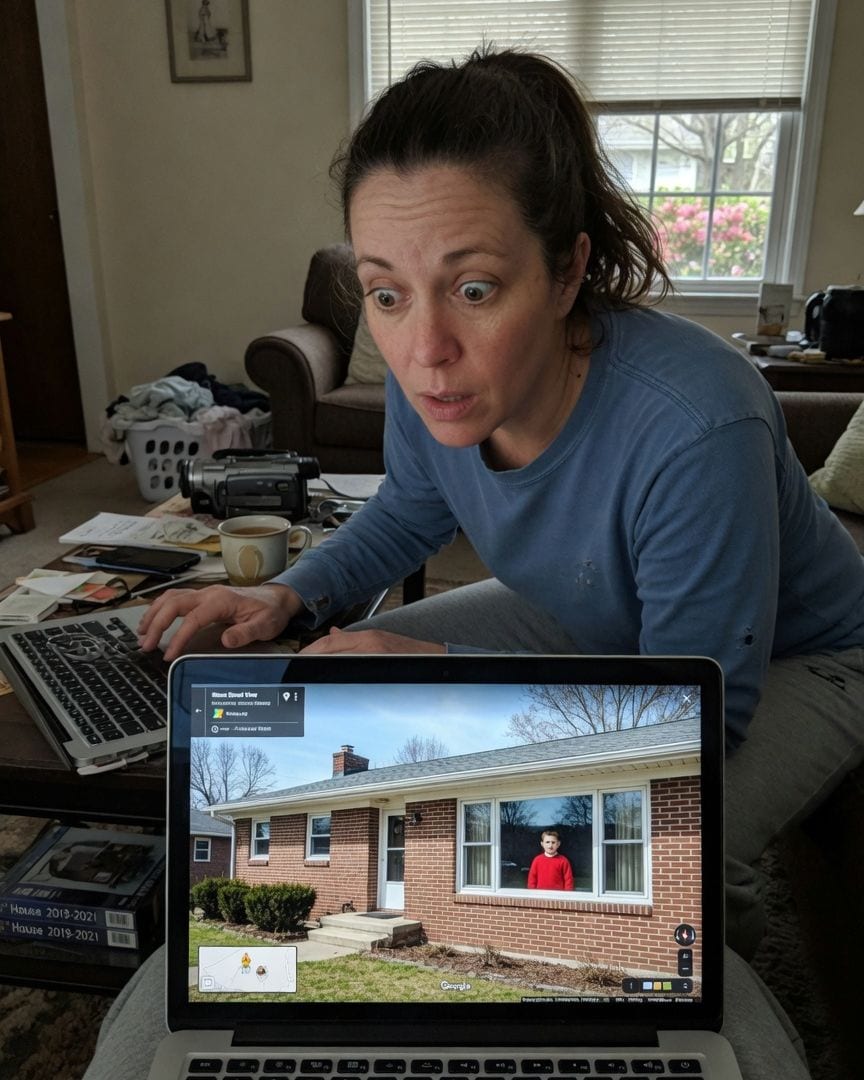
My Street View shows a boy in our window. That room's been empty and locked for months, we have no son, and he's gone if you drag the camera.
I was idly scrolling Google Maps, admiring the spring flowers on my street, when I paused at our house. In the empty, locked front bedroom window, a small boy in a bright red jumper stared out. We have no son, and that room has been storage for two years. He simply vanished from the Street View image.
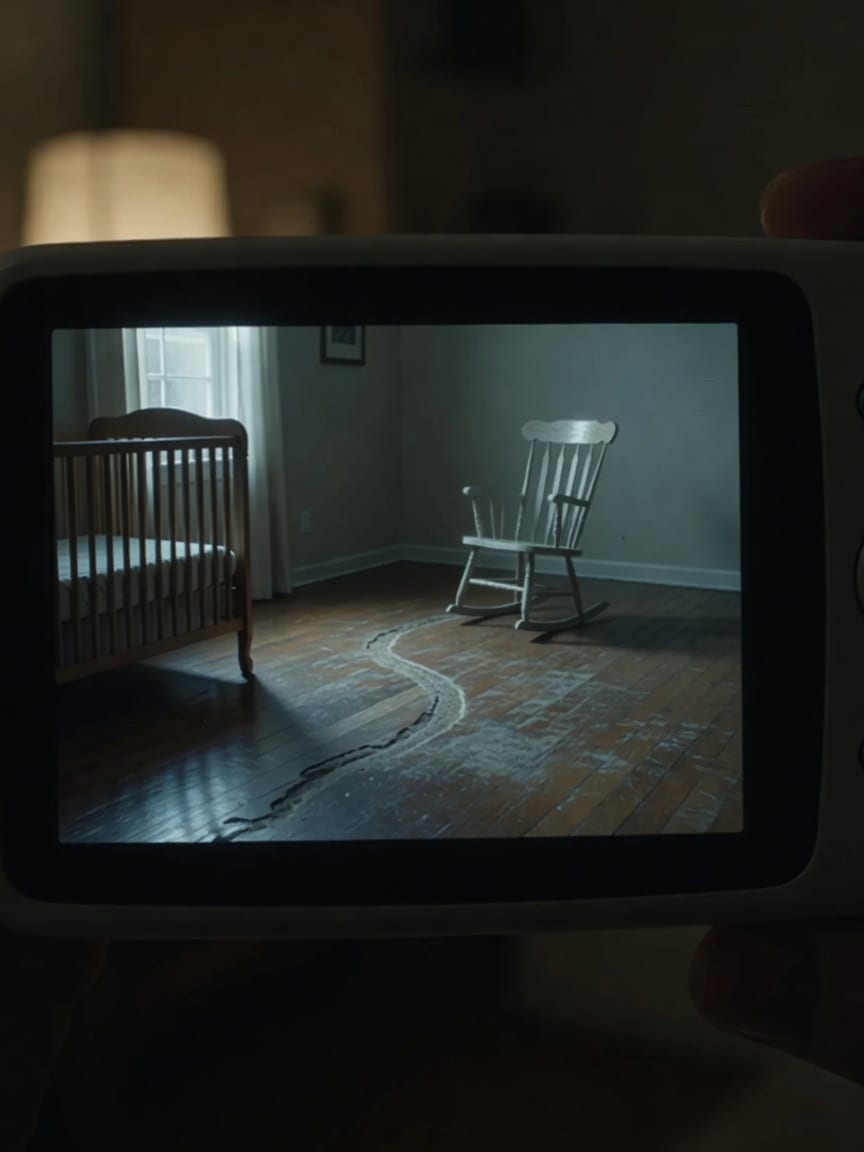
My baby monitor hums a lullaby at 2 AM. I hear a rocking chair creak. The camera shows my daughter's room empty, every night.
Every night, my baby monitor hums a gentle lullaby and a rhythmic creak, as if a rocking chair is in Lily's nursery. But the room is always empty, the monitor's camera shows nothing, and we don't even own a rocking chair. Then I found a newspaper clipping from sixty years ago, detailing a child's disappearance from our house.
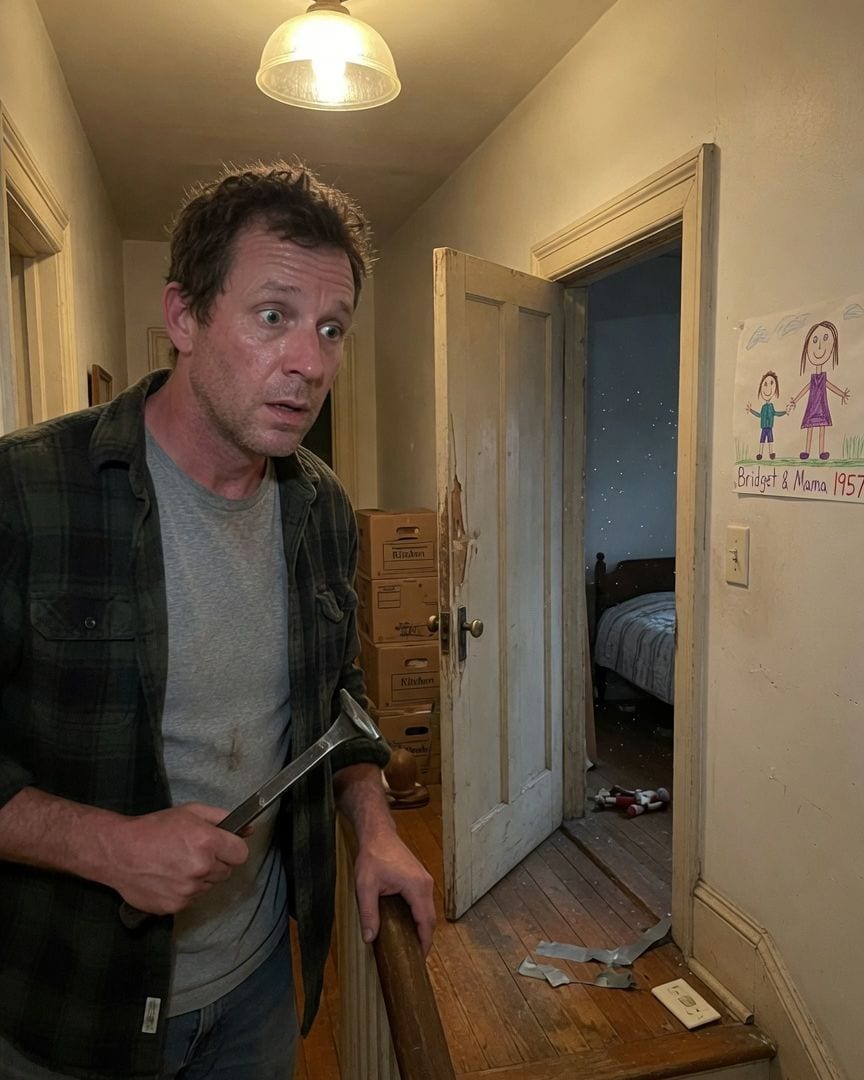
My landing light switches itself off at 9:40 every night. I've watched the switch flick down under nothing, the tape peeled back. The house holds its breath.
My great-uncle's old house was a quiet gift, a place to finally settle. But as I unpacked, a strange worn path on the floorboards led me to a small, barely visible door, perfectly blended into the wall. It was undeniably locked, and felt like a deliberately obscured secret.
My front door has a dented gate and a dead hydrangea. I walked past it six times, trying to reach the corner shop just a hundred yards away. The pavement kept bringing me back to my own porch, and the shop's light never moved.
My morning started like any other, a quick walk to the corner shop from my home at Number 14, Elm Terrace. But after walking what felt like two minutes, I found myself back at my own front door, the shop no closer. I tried six times, faster and slower, but my street kept compressing, refusing to let me leave.
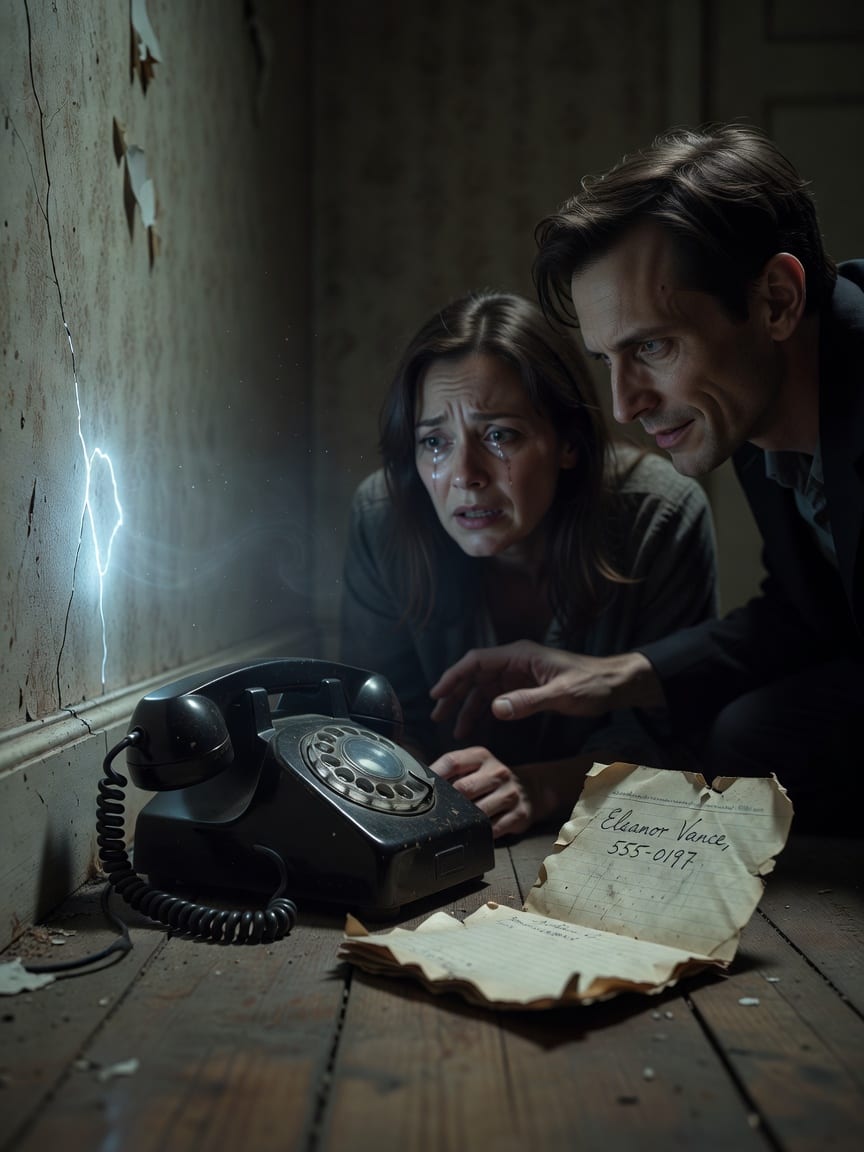
My house's walls ring when I dial a phone number from a 1974 directory. My neighbors said that directory was trash.
I was sifting boxes in my new house when I found an old 1974 telephone directory for my street. It listed my address, 12 Elm Street, under the name "Mr. & Mrs. Sheppard." On a whim, I called the faded seven-digit number. My cell phone rang, but a low, muffled sound also vibrated from the wall beside me.