My ultrasound found a silicone prosthetic where one of my testicles should be. The real one was removed years ago, the space healed, but I never had surgery there. I never knew.
The gel was cold, too cold, spreading across my skin as Dr. Grace Sterling, the radiologist, maneuvered the transducer. I’d booked the appointment for a dull ache that had been lingering for weeks, nothing serious, just annoying.
Dr. Sterling, a woman in her late forties with a calm, practiced demeanor, kept her gaze on the monitor. She was humming softly, a habit I’d noticed during other scans. But the humming stopped. The room suddenly felt very still.
Her brow furrowed, just slightly. Her eyes flickered from the screen to my face, then back. "Mr. Caldwell," she began, her voice steady but a shade too careful, "I'm going to bring in Dr. Sheppard, our urology consultant.
Just for a second opinion."
My stomach tightened. "Is everything okay?"
She offered a small, reassuring smile that didn't quite reach her eyes. "Let's just get another set of eyes on it."
Dr. Marcus Sheppard, a man in his mid-fifties with kind but serious eyes, entered a few minutes later. They spoke in low tones, medical jargon I didn't fully grasp, pointing at the grayscale images on the screen.
The air in the room grew heavy, the silence broken only by the soft whir of the ultrasound machine.
Finally, Dr. Sterling turned back to me, her voice softer now, almost apologetic. "Mr. Caldwell, it appears... one of your testicles is a silicone prosthetic."
I blinked. "A what?"
"A prosthetic," Dr. Sheppard clarified, stepping forward. "It's quite expertly done, actually. The tissue around it is completely healed, and there's no sign of the original organ. It's been replaced. surgically."
My mind raced, grasping for an explanation. An accident? A forgotten procedure? But I’d never had surgery there. Never. I would remember something like that. The gel on my skin suddenly felt like ice.
"When did you have this surgery, Mr. Caldwell?" Dr. Sterling asked, her voice gentle, as if trying to prompt a memory.
I shook my head, my mouth suddenly dry. "I... I've never had surgery there. Not ever."
The question hung in the sterile air, a quiet, impossible hum in the room. The dread was a physical knot, tight and cold, in my gut.
They looked at me, a mixture of concern and bewilderment on their faces, and I knew, with a certainty that chilled me to the bone, that this was not a misunderstanding.
Still reeling, I left the hospital in a fog. The street noise, the rush of traffic, it all sounded distant, muffled. My first, desperate thought was to find an answer, any answer, in the records of my life.
I called my mother, Kathleen, but she was out, and I didn't want to leave a voicemail that sounded like a breakdown. So I called the office of Dr. Lars Doyle, my childhood pediatrician.
The practice had changed hands years ago, now a small family clinic, but they still kept old patient files in their dusty back rooms.
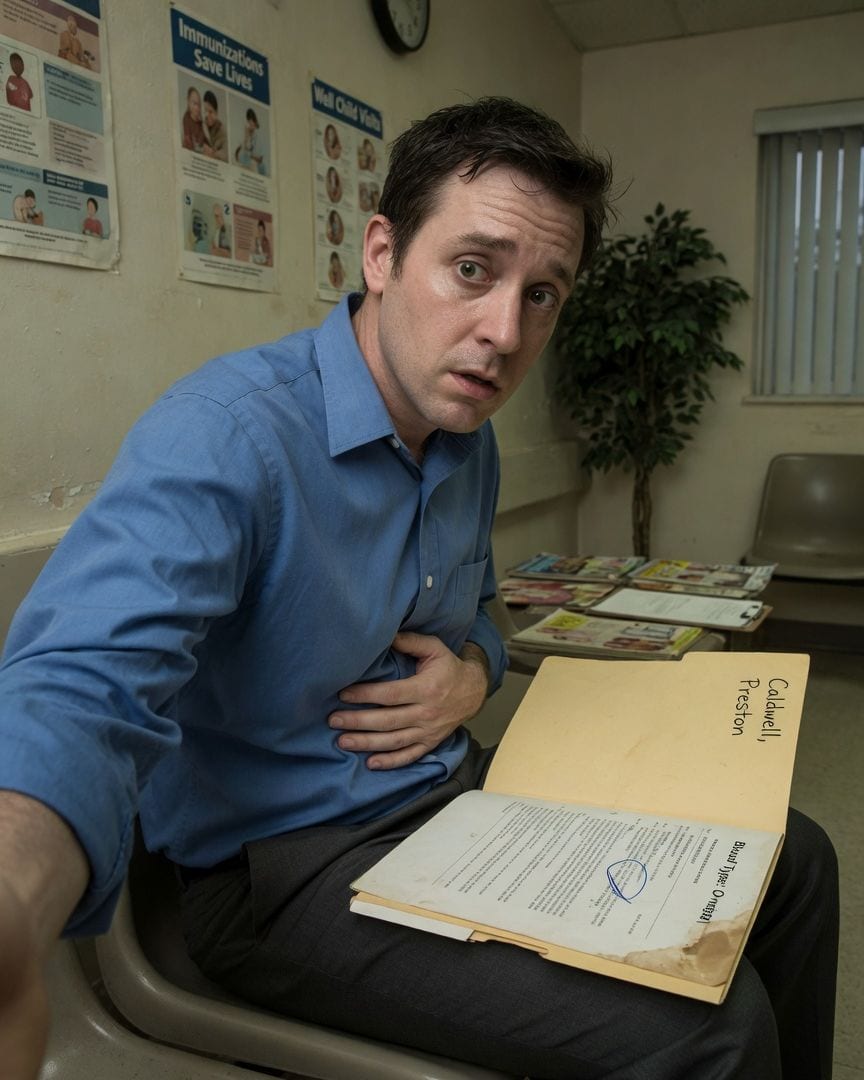
I drove across town, my hands gripping the steering wheel, knuckles white. The receptionist, a young woman with a perpetually cheerful smile, looked through the archived boxes, eventually pulling out a thick, yellowed folder under the name ‘Caldwell, Preston.’
She handed it to me, the paper smelling faintly of dust and forgotten time.
I sat in the waiting room, ignoring the gentle hum of elevator music, my eyes scanning page after page. Growth charts, immunization records, notes about childhood illnesses – mumps, a few stitches from a scraped knee, nothing unusual.
Nothing about surgery, especially not anything involving a prosthetic. I flipped through the lab reports, my breath catching in my throat as I found one from a routine physical when I was five years old.
It was a faded, dot-matrix printout, dated thirty years ago.
'Blood Type: O-negative.'
I stared at the words, a cold certainty forming, a new impossible detail slamming into the one I’d just discovered. O-negative. But I was A-positive. I’d donated blood regularly since I turned eighteen.
My driver's license, my hospital wristband from just last week – all confirmed A-positive. There was no mistaking it.
I called my mother again, this time she answered, her voice slightly distracted. "Mom, do you remember anything unusual about my health when I was really little? Like, before five years old? Any serious illnesses, or... surgery?"
She paused, a beat too long. "Oh, Preston, honey, you were a healthy child. Just the usual sniffles, you know.
There was that one time you had a bit of a fever, a bad flu, I think, when you were about three or four. We were so worried, but it passed, thank goodness. Nothing serious, though. Why? Is everything alright?"
Her vagueness felt like a wall, not forgetfulness. A fever that passed. Nothing specific, nothing surgical. It was an almost practiced evasion. The silence from her end stretched, and I knew she wasn’t going to offer anything more.
I murmured something about a routine check-up and hung up, the phone feeling heavy in my hand.
I stared at the faded printout from his old pediatrician's office, dated thirty years ago. 'Blood Type: O-negative.'
I folded it carefully, trying to reconcile it with the A-positive on my driver's license, the A-positive from the hospital lab just last week. The paper felt cold in my hands, a physical impossibility.
The blood type discrepancy gnawed at me, a relentless itch under my skin. It was harder to dismiss than the prosthetic, in a way. The prosthetic implied a secret, a procedure. The blood type implied... something else entirely.
Something fundamentally wrong with my own identity. I scheduled an appointment with my current GP, Dr. Eleanor Fontaine, a pragmatic woman in her late forties.
I laid it all out: the ultrasound, the silicone prosthetic, the complete lack of memory or record of surgery, and finally, the conflicting blood types from my childhood records versus my current, confirmed type.
Dr. Fontaine listened patiently, her expression shifting from mild curiosity to genuine bewilderment.
"A prosthetic, Mr. Caldwell? And you have no recollection?" she asked, her pen hovering over her notepad. "That's... highly unusual. As for the blood type, well, transcription errors can happen.
Or a lab mix-up, though less common with something as critical as blood type."
She ordered a re-test, just to be absolutely sure. A few days later, the results confirmed it: A-positive. "See?" she said, offering a sympathetic smile, "It's likely just an old error."
I wanted to believe her. I truly did. A transcription error for the blood type, a forgotten, perhaps even childhood-trauma-induced amnesia for the prosthetic. It was the rational explanation.
But the old record, the faded O-negative, felt too specific, too certain to be a mere scribble. And the prosthetic, real and palpable inside me, wasn't a mistake. It was there.
The need for a deeper answer consumed me. I told myself it was to rule out any distant, unknown familial medical conditions that might explain the prosthetic. But I knew, deep down, I was looking for something more.
I ordered a genealogy DNA test kit online.
While I waited for it to arrive, I spent hours online, researching. I typed in terms like "infant corrective surgery 1980s," "birth defects genital reconstruction," "childhood medical records discrepancies."
I found vague mentions of procedures, yes, but nothing that perfectly fit my situation, nothing that felt like my own story. The anonymity of the internet felt cold, indifferent.
Each search result was a dead end, each forum post a stranger's distant worry.
I pulled out old photo albums, dusty relics from my parents' shelves. Baby pictures, toddler pictures. Me with my mom, me with my dad, chubby-cheeked and smiling.
I scrutinized them, searching for any subtle sign I might have missed, any physical oddity, any hint of a scar, anything that could have warranted such an intervention. My features were consistent, my smile unchanged. It was me, undoubtedly.
But the feeling that something was fundamentally wrong, deeply hidden, lingered, a shadow in the corner of every memory.
A few weeks later, my father, Edmund Caldwell, called. His voice, usually gruff but steady, was unusually strained. It was late evening, the only light in my apartment coming from the streetlights outside.
The silence of the room seemed to press in on me.
"Son," he said, his voice quiet, "I heard you were… digging into some old medical stuff."
My heart gave a sudden, hard thump against my ribs. My phone felt suddenly heavy and warm in my hand. "Dr. Fontaine mentioned my old records, Dad. Why?"
A long, weary sigh stretched across the line. The sound was like the scraping of old furniture in a quiet house. "Some things are best left in the past, Preston. Things were… different back then. Complicated."
He didn't elaborate. He never did. His sentences were always clipped, avoiding anything that might lead to further questions about the past, especially my earliest childhood. He just reiterated, "Just leave it be, son. For everyone's sake."
The conversation ended abruptly, like a frayed rope snapping. My hand trembled as I lowered the phone. A chill went through me, colder than the late spring air.
My father rarely interfered in my life, rarely sounded so guarded, so… urgent. It wasn't a threat, but a plea, heavy with unspoken history, thick with something I couldn't place.
I stood there in the dark apartment, the streetlights painting long shadows across the walls. He knew. Or at least, he knew something.
My search had been noted, my questions had reached him, and it was clear that someone very close to me was watching, and whatever I was looking for, he didn’t want me to find it.
The thought, cold and precise, settled in my gut: this wasn't just about an old medical error. This was a secret, carefully guarded, and it involved me.
A new urgency surged through me, a desperate need for the DNA results, which were due any day now. What did my father know? What was he trying to protect? Was it me? Or himself? Or something else entirely?
I wondered if he knew exactly what I was looking for, or what I might find. The silence in the room had changed. It was no longer just empty; it felt expectant, waiting.
The email arrived from the DNA service. My hands were shaking so badly I almost dropped my phone. The subject line was generic: 'Your DNA Results Are Ready!'
I took a deep breath, the air catching in my throat, and clicked.
The first page was clinical, confirming my blood type through genetic markers: A-positive. It dismissed the old O-negative record as an anomaly, just as Dr. Fontaine had suggested. For a moment, a wave of relief washed over me. See?
Just a mistake. A glitch.
But then I scrolled down to the familial matches. My breath hitched. There were no close matches to my 'parents' on either side. My blood ran cold. No matches.
Not a single first or second cousin on either the Caldwell or my mother's maiden name side. It was as if their entire family tree had been pruned of my branch.
A cold dread spread through me, chilling me deeper than any phantom ache. This wasn't a transcription error. This was an absence, a void where my genetic connections should have been. I called Edmund, my fingers fumbling with the numbers.
"Dad," I said, my voice barely a whisper, "I got my DNA results back. They say I'm not biologically related to you or Mom."
There was a long moment of silence on the other end, so profound I wondered if the call had dropped. Then, a sigh, heavy and resigned. "I… I was hoping you wouldn't go this far, Preston."
"What does that mean, Dad?" I pushed, my voice rising. "What happened? The prosthetic, the blood type, the records, Mom's vague answers... none of it adds up! Why am I not your son?"
Edmund's voice was low, strained, brittle. "Your mother and I… we lost our first child. Our son. Preston. He was… he was very sick. Died very young."
The air left my lungs in a rush, a hollow, echoing sound in my ears. The room swam around me. "But… I'm Preston."
"It was a different time, son," Edmund said, his voice cracking, as if the words were tearing through him. "A desperate time. Lars Doyle… he was a pediatrician, a good friend, he had connections.
There was another baby, abandoned, needing a home. Some… adjustments were made. To the records. To the baby. To make him ours. To make him you."
The words hit me like physical blows, each one landing with sickening force. Adjustments. The prosthetic, the impossible blood type, my mother's vague answers, my father's desperate plea to "leave it be" – it all snapped into sickening, coherent focus.
I wasn't Preston Caldwell. I never was. I was a stand-in, a replacement. A shadow. The silence that followed was deafening, the truth a monstrous echo in the small space of my apartment.
The email from the genealogy service was stark, concise. 'Strong Familial Match Found.' Below it, a link to an online memorial page.
Preston clicked, and the screen loaded to a grainy photo of a small, moss-covered headstone in a forgotten cemetery. The engraved name reads: 'Preston Caldwell, Born [his birth year], Died [a year decades ago].'
He closes his eyes, the name a cold echo in his own living body.
I confronted my father face to face. The drive to his house was a blur, my mind reeling, the words from the email still burning behind my eyelids: Preston Caldwell, Born 1988, Died 1991. My birth year. A death date decades ago. The original.
Edmund was in his usual armchair, reading the newspaper, a cup of lukewarm coffee beside him. He looked up as I entered, his expression calm, almost placid. Unbothered.
As if we were about to discuss the weather, not the monumental lie that had been my life.
"Yes," Edmund said, his voice flat, devoid of any discernible emotion, when I laid the DNA results and the printed memorial page on the coffee table. "That was the original Preston. Our son. He died when he was three.
We were heartbroken."
He spoke with a chilling, detached logic, describing the desperate act as a pragmatic solution to an unbearable grief. "Lars Doyle, he knew a woman, a young mother, who abandoned her baby at the hospital. A baby boy.
You," he added, looking at me. "You looked… similar enough. Lars helped us make the new records. The blood type discrepancy, the prosthetic… those were 'adjustments' Lars made.
To ensure the illusion was complete, to make sure no one would ever question that you were our Preston."
His words painted a picture of cold, clinical deception.
He recounted how they moved towns shortly after, how they buried the truth under layers of fabricated history, how they loved me as their own, the secrets becoming a silent pact of survival. He didn’t raise his voice.
He didn’t seem to feel shame or regret. Only a quiet, unshakeable conviction that what they did was necessary.
I listened, my own identity dissolving with each calm, measured word. Every vague answer, every missing record, every odd detail from my childhood now clicked into this monstrous, coherent narrative.
The ache in my side, the silicone prosthetic, the impossible blood type, my mother's flustered non-answers, my father's chillingly serene confession. It all fit.
I saw the love in my father's eyes, a genuine affection that had always been there, but it was a love built on a foundation of profound, surgical deception. It was a love that had overwritten another life, another child.
I rose, the chair scraping loudly on the polished floorboards, the sound sharp in the heavy silence of the room. "So, who am I?" I asked, my voice barely a whisper, raw and thin.
Edmund looked at me, a flicker of something unreadable in his eyes, perhaps a hint of the grief that started it all, or perhaps just a reflection of his own carefully constructed peace. "You are Preston Caldwell, son.
You always have been, to us."
The calm certainty in his voice was the worst part. There was no apology, no remorse, only the quiet, unwavering conviction that what they did was necessary, even right.
As if they had simply filled a vacancy, and I was the perfect candidate.
I felt a profound sense of isolation, a chilling understanding that my entire life had been a meticulously constructed lie, every memory tainted, every bond forged under false pretenses.
I walked out of the house, the heavy oak door clicking shut softly behind me, a sound that felt strangely final. I didn't look back.
There was no escape from this truth; it was inside me, woven into my very cells, written in the records of a dead child.
I drove aimlessly, the silence of the road mirroring the hollow space where my identity used to be. The world outside seemed to mock me with its normalcy, its unburdened existence. I couldn't un-know it.
I was a ghost wearing another ghost's name, living a life that was never truly my own.
I pulled over to the side of the road, staring at my reflection in the rearview mirror, searching for a face that belonged to me, but finding only the familiar, unsettling features of 'Preston Caldwell'.
I never returned to my father's house. I changed my phone number, moved to a different city. The thought of seeking out my biological family felt like another layer of trespass, another assumption of a life that wasn't mine.
My old life, the one I thought was mine, had simply ended, dissolving under the weight of a secret I had unknowingly carried for thirty-five years.
I kept the faded lab report and the DNA printout in a locked box, tucked away in the back of a drawer.
They were physical anchors to a truth that still felt like a nightmare, tangible proofs of a reality no one else knew. I lived alone, worked, went through the motions, but the world had shifted on its axis.
Every interaction, every memory, was now filtered through the knowledge of what I truly was: a replacement, a living echo. The ache in my side, the one that started it all, eventually faded.
But the deeper ache, the one in my very core, remained.
I still used the name Preston Caldwell, because what else was there?
But sometimes, late at night, in the quiet of my new apartment, I would look at my hands, at the lines on my palms, and wonder whose they really were.
The silence in the house finally made sense; it had never been my silence to begin with.
If this one got to you
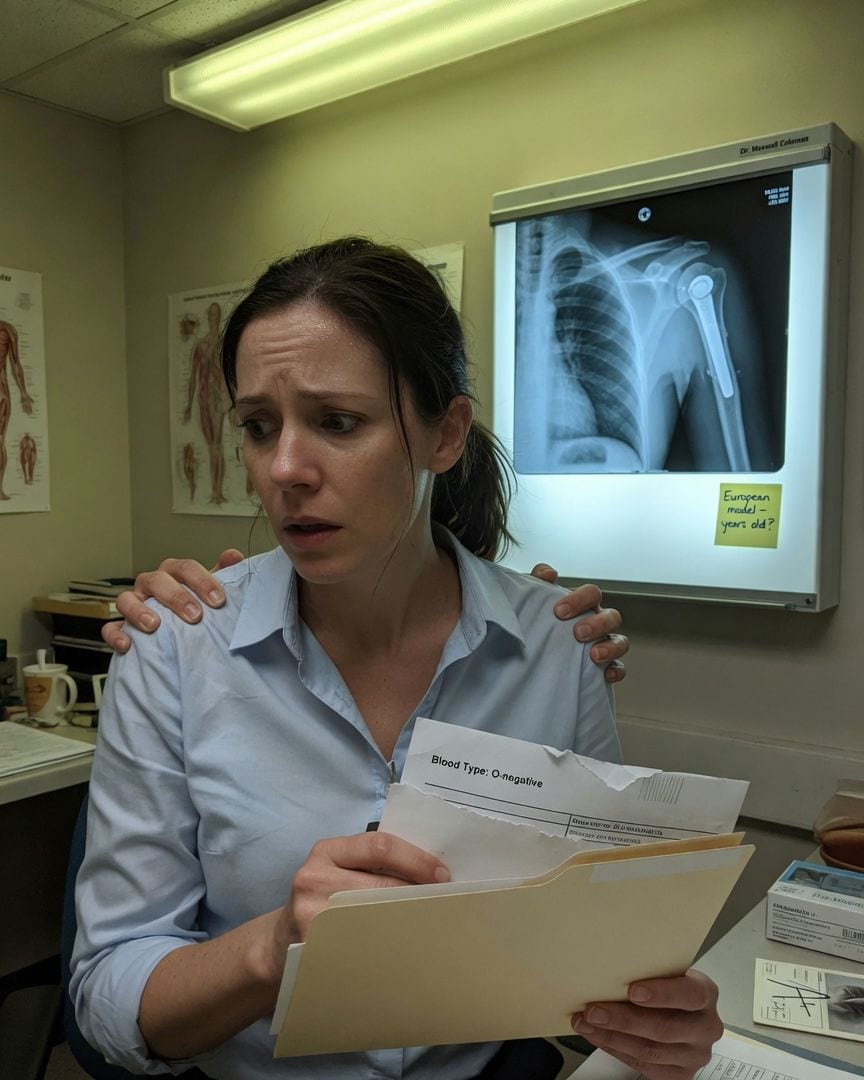
My shoulder X-ray showed a metal ball-and-socket joint. It's been in for years, the consultant said, but I've never had surgery.
After a baffling doctor's visit, I sought concrete proof of my identity, requesting a comprehensive blood panel. The results arrived, stating my blood type was O-negative. Yet, my mother vividly recalled A-positive, and my childhood vaccination card confirmed it, leaving me with a profound, unshakeable dread.
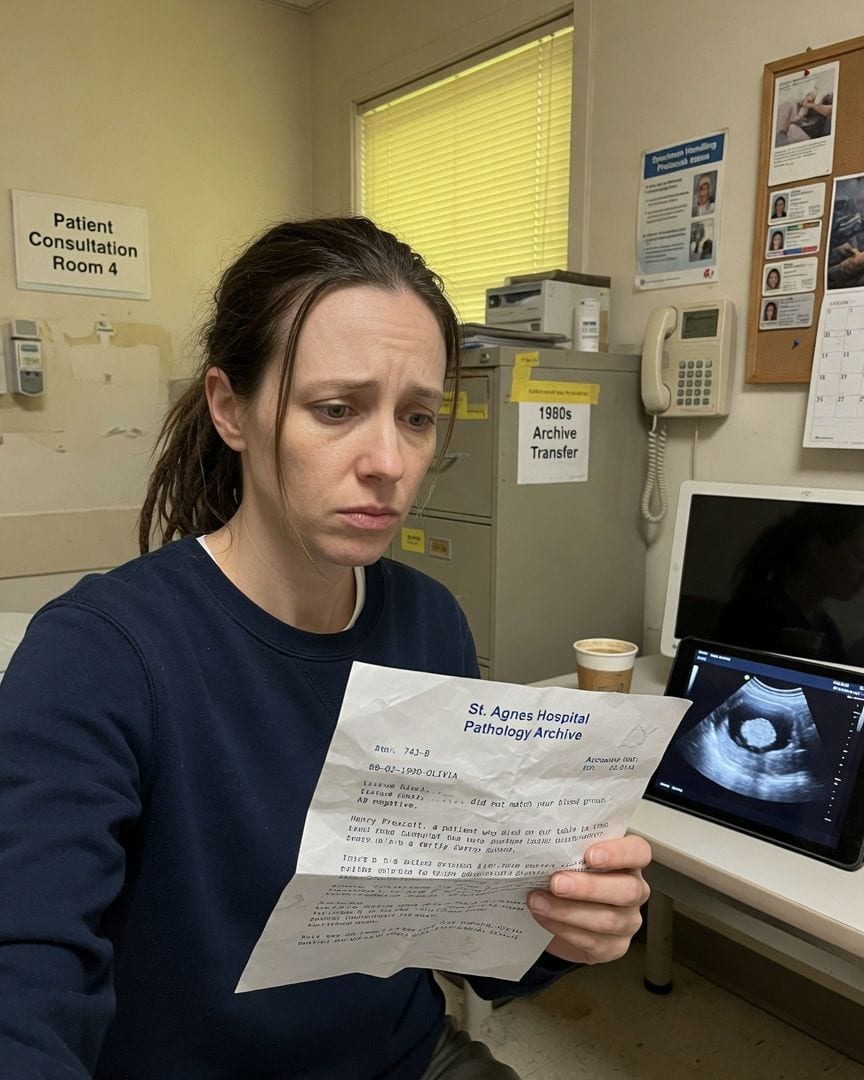
The hospital found a tumor sample filed under my patient number, but the cells belong to a man who died on their table in 1988. My file has no biopsy — and they want me to come in.
A chilling letter from the hospital revealed an anomaly in my medical file: a tissue block, under my hospital number, with a completely different blood type. It contained the DNA of Henry Prescott, a man who died in 1988, just two years before I was born. My own records hold no biopsy, no tumor, leaving me with an impossible question.
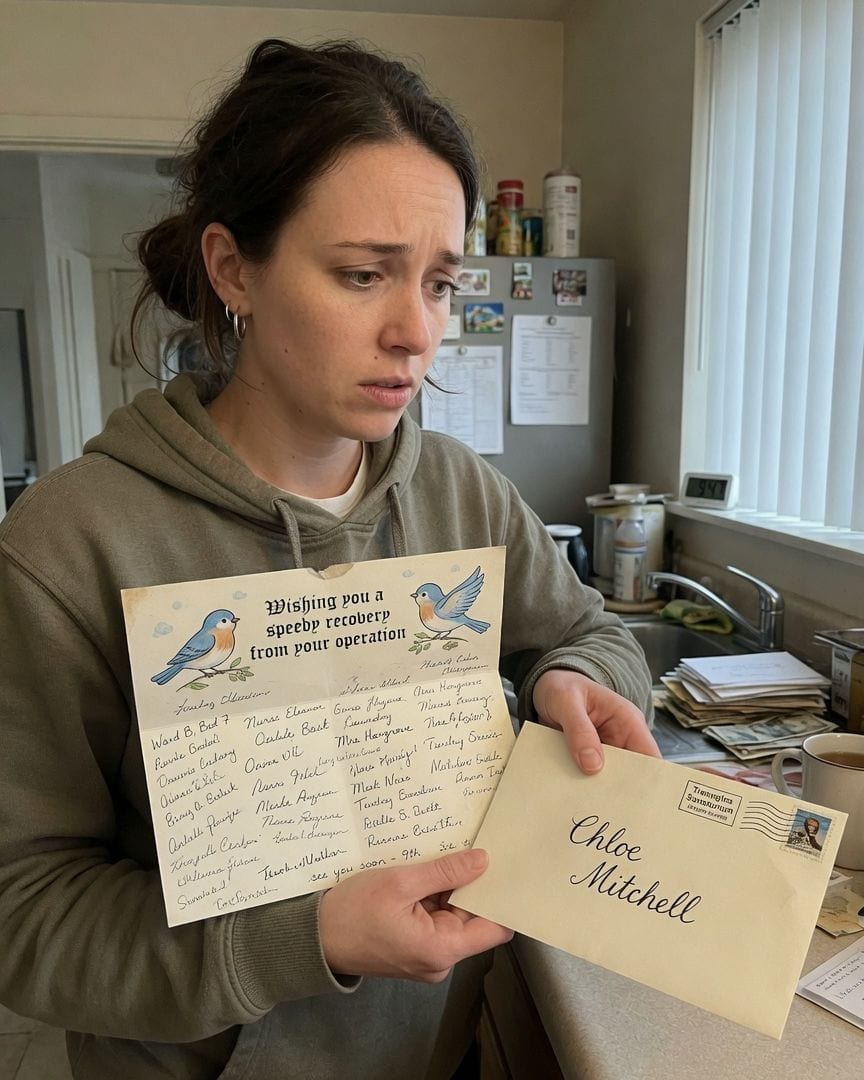
A get-well card wished me a speedy recovery from an operation I never had. It was postmarked from a sanatorium that burned down in 1963.
My quiet Tuesday morning was interrupted by an elegant get-well card, addressed to me. It wished me a speedy recovery from an operation I'd never had. But the postmark read 'Treneglos Sanatorium,' a hospital that vanished in a fire back in 1963.
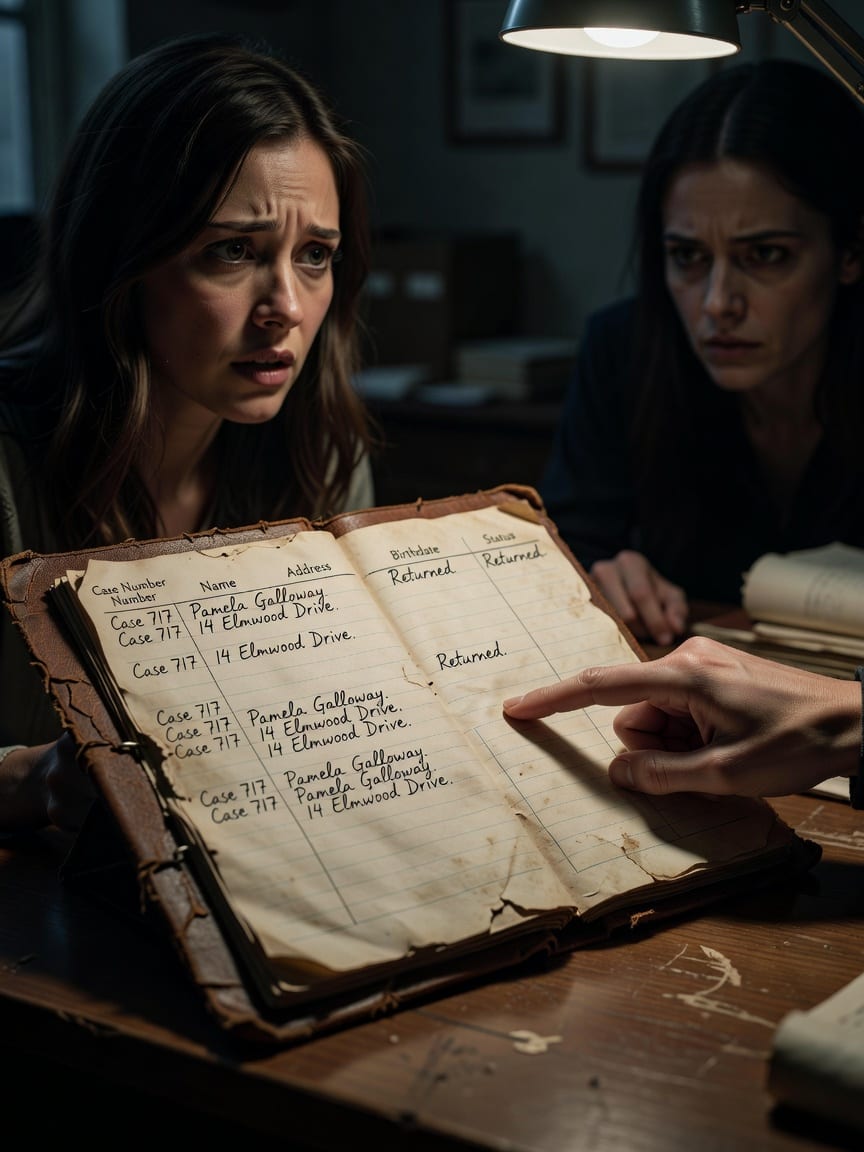
My hospital file has a blacked-out line from 1988. It names my street address, decades before I lived here. Then: 'returned'.
I finally got my medical file, hoping to clear up a ridiculous bill. Inside, I found an entry from 1988: my current home address, scrawled on a partial intake form and marked 'returned.' I was six then, living fifty miles away.
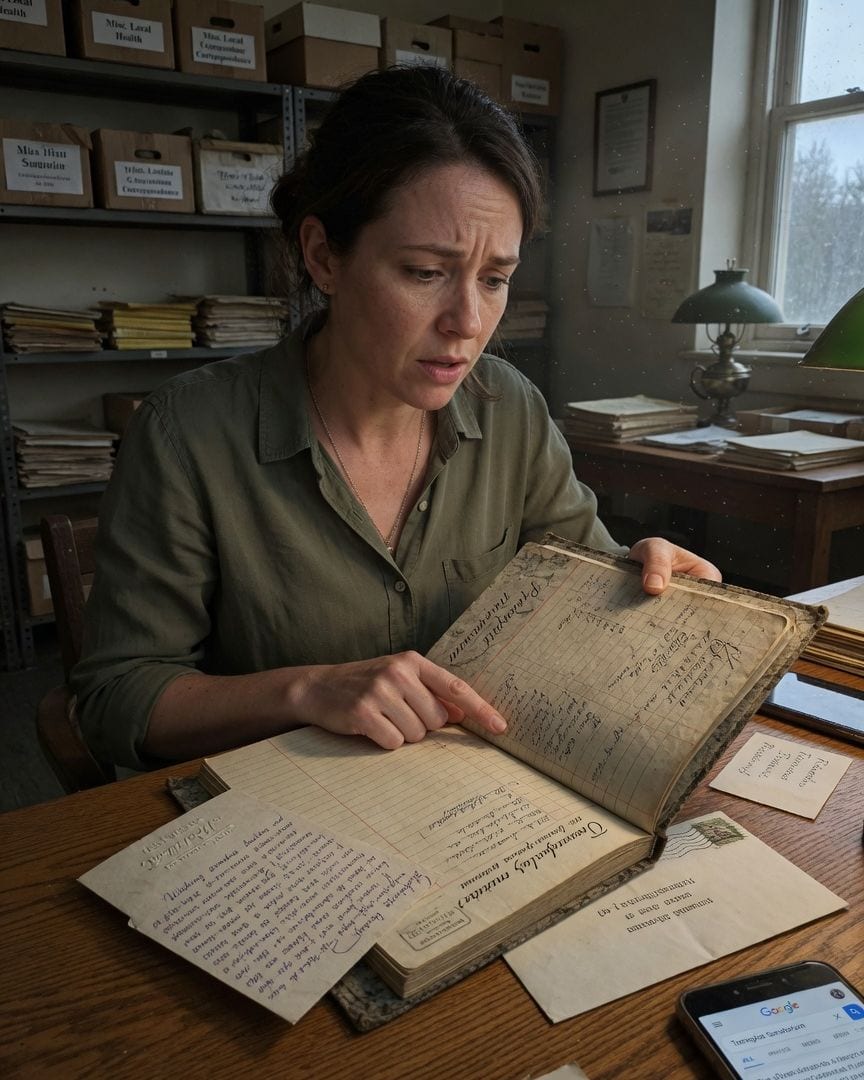
My get-well card wished me recovery from an operation I never had, postmarked from a hospital that burned down in 1963.
I received a get-well card wishing me recovery from an operation I never had. The envelope bore a fresh postmark from Treneglos Sanatorium, a TB hospital that burned down and ceased to exist in 1963. Now, a patient register from that long-gone sanatorium lists my name, dated 1959.
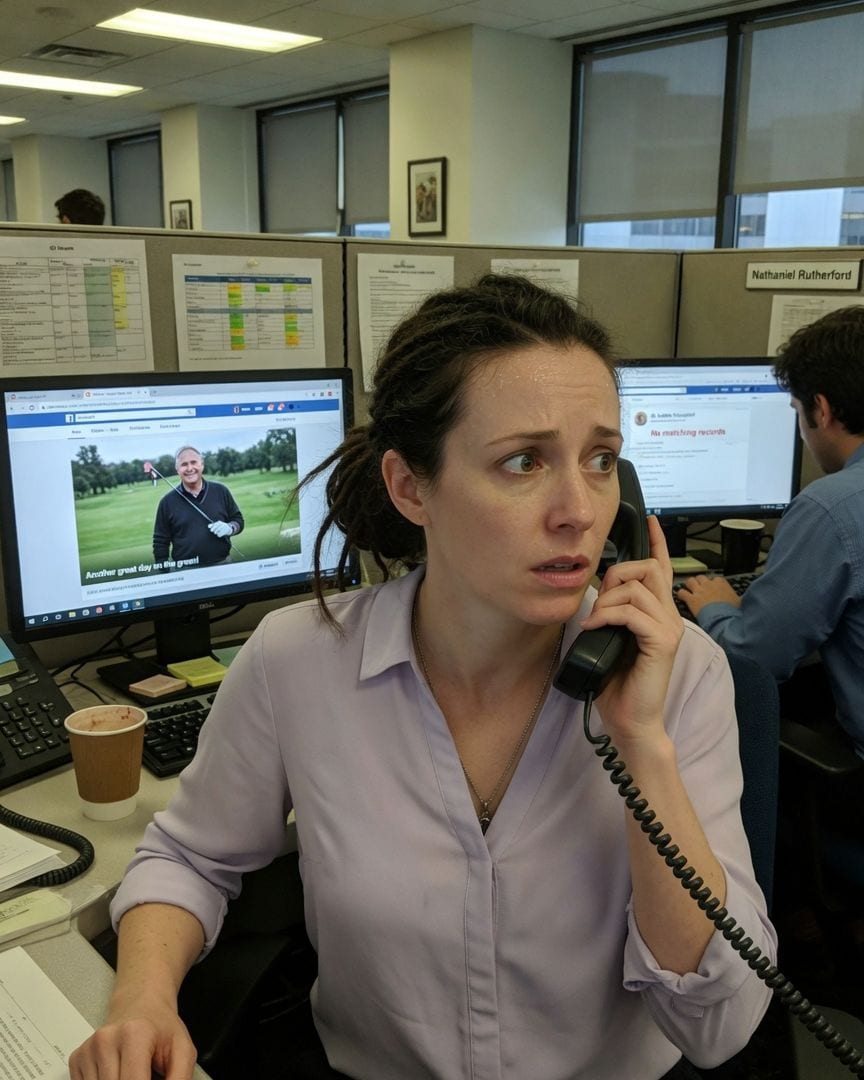
My colleague thanked me for covering his father's stroke. His father is well. He named the hospital, the doctor, the hour, and asked me not to tell him yet.
Nathaniel vanished for three days, then strolled back into the office as if nothing happened. He explained his absence with a detailed story: his father had a sudden stroke and was admitted to St. Jude's. But I had just seen his father, Franklin, on Facebook, looking perfectly healthy and golfing.