My wife thanked me for the pale blue nursery. We have no child. She described the mobile I'd only imagined, then asked when it would arrive.
Sylvia walked back into our lives on a Tuesday morning, exactly one year to the day she’d disappeared. The ferry company had called it a tragic accident, a rogue wave, and we’d held a memorial, scattered ashes.
Then she was just… there. Standing in the doorway of our living room, rain-slicked but otherwise unharmed, like she’d just popped out to the corner store for milk.
The relief that slammed into me was a physical thing, a crushing weight lifting from my chest, leaving me breathless and weak-kneed. I just held her, sobbing into her damp hair, unable to speak, unable to believe.
“The nursery looks lovely, Vincent,” she said later that afternoon, her voice soft, a little breathless, as she traced the edge of the spare room’s doorframe. “I love the pale blue you chose.
And the cot under the window is perfect. And the name, too.”
My breath hitched. We have no child. We’d talked about it, yes, before the ferry, before everything, but only in the abstract. A quiet ‘someday.’
The pale blue room, the cot under the window, even the name she’d mentioned – ‘Elara’ – I’d imagined it all, alone in that empty spare room during the worst of my grief.
A private, morbid fantasy to fill the silence and the aching void she’d left. No one else knew. I’d never even bought a paint sample.
She walked into the room, touching the empty sill where I’d pictured a tiny, plush rabbit. “And the mobile,” she continued, a small frown creasing her brow. “When will the mobile arrive?
The one with the little silver stars and moons?” She described it exactly, the delicate, intricate design I’d pictured in my mind’s eye, a detail I’d never, ever voiced. My heart hammered, a frantic drum against my ribs.
It had to be grief, my mind playing tricks. Or maybe I’d mentioned it once, vaguely, and forgotten. But I knew I hadn't. That image was mine alone.
Later that evening, she asked for coffee. “Black, two sugars,” she said, accepting the mug from my hand. Sylvia never took sugar. Never. Not in twenty years. Not once.
The coffee detail gnawed at me. It was too specific, too fundamental a change. I watched her the next morning, making breakfast. She cracked eggs with her left hand, something Sylvia, a lifelong right-hander, never did.
I tried to dismiss it. Maybe it was a new habit, a coping mechanism from her time away? But where had she been? She offered no details, just vague statements about ‘being lost’ and ‘finding her way back.’
Her eyes, though, seemed to watch me with a strange intensity whenever I looked away, a flicker of something unreadable.
That afternoon, I decided to test the coffee. I made two mugs, identical, one black, one with cream and sugar. I placed them on the kitchen table, side by side. “Here you go, love,” I said, gesturing vaguely.
She picked up the one with cream and sugar without hesitation, brought it to her lips, and took a slow sip. Her smile was soft, contented. “Perfect,” she said. My stomach twisted.
I remembered a petty argument years ago, a joke about how I'd never forget her 'black as night' coffee preference, a detail etched into our shared history. A cold dread began to seep into my bones, a slow, viscous chill.
Later, alone, I pulled up old photos on my phone, scrolling through years of our life together. In every single one, she held things, gestured, even wrote with her right hand. Always.
I found an old video from our wedding, her signing the marriage certificate, her right hand elegantly forming the letters, her brow furrowed in concentration.
I watched Sylvia now, across the living room, idly sketching on a notepad, a local landscape she’d seen on a postcard. Her left hand moved with fluid, practiced ease, shading in the distant hills. It wasn't just a new habit.
It was a reversal. A complete inversion of how she’d always been.
The rational explanations – amnesia, trauma, a new quirk – felt flimsy, inadequate. This was too precise, too fundamental a shift. My wife, but not quite.
I felt a desperate, urgent need to find out what had happened to her, what had changed her so profoundly. And then, I remembered the nursery. The mobile. The one I’d only imagined.
That evening, while Sylvia was showering, the water a steady rush behind the bathroom door, I slipped into the spare room. The pale blue paint glowed faintly in the twilight, reflecting the last slivers of sun.
I scanned the empty walls, the bare cot. Nothing. My heart sank. Maybe it was all in my head. Maybe I was losing it, the grief finally catching up.
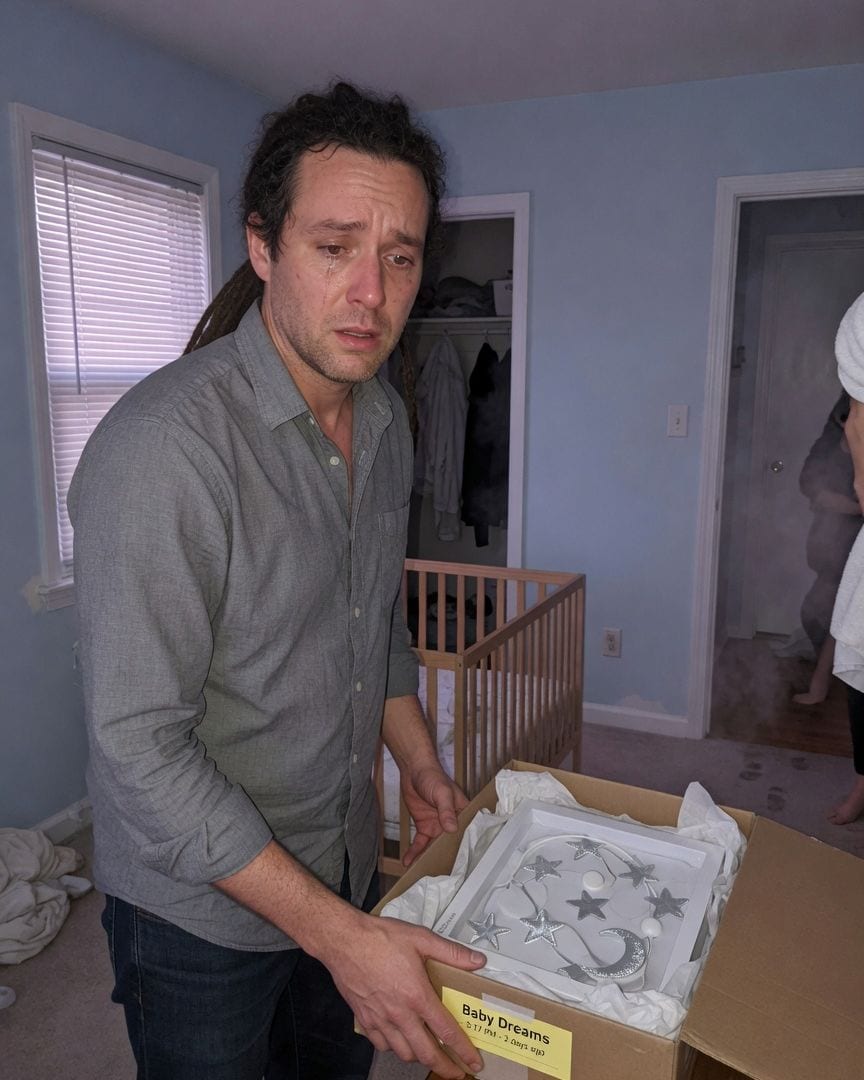
Then I spotted it. A large, plain cardboard box, tucked in the back of the small closet, behind some forgotten blankets. It wasn't there this morning. It wasn't my box.
My hands trembled as I reached for it, the cardboard cool beneath my fingers. I pulled it out, placed it on the floor, and opened it. Inside, nestled in layers of tissue paper, was a child’s mobile.
Silver stars and moons, exactly as I’d pictured. Taped to the side of the box was a receipt. 'Baby Dreams,' a store across town I’d never even heard of. Date: two days ago. Time: 3:17 PM.
My breath caught in my throat. I was at work then, a long meeting I remembered vividly. Sylvia had been with me all day, recovering, resting. Who bought this? And how could it be exactly what I’d imagined?
A cold dread settled over me, heavier than any grief I’d ever known. This wasn't a trick of the mind. This was real. And impossible.
I heard the shower stop. The drain gurgled, then silence. Footsteps padded on the bathroom tiles, approaching the room.
Sylvia was humming softly, a forgotten lullaby I hadn't heard in years, as she pushed the door fully open.
She stepped into the spare room, her hair wrapped in a towel, the scent of lavender and shower steam filling the air.
Her eyes, still holding that strange, intense gaze, fixed on me for a fraction of a second, then on the empty space above the cot. Her smile was wide, loving. “Oh, good,” she said, her voice light. “It finally arrived.
I was beginning to think it wouldn’t.”
I shoved the mobile box back into the closet, heart hammering, and managed to look like I was rummaging for an old sweater as Sylvia emerged, wrapped in a fluffy white towel. She smiled. “Everything alright?”
she asked, her eyes seeming to linger on the closet door for just a beat too long.
“Just looking for an old photo album,” I lied, my voice tight, forcing a casual shrug. “Remember those ones your mum kept?”
“Ah, yes,” she murmured, her smile not quite reaching her eyes. “They’ll be around somewhere.”
The next day, my resolve hardened. I called Baby Dreams. The clerk, a young woman with a surprisingly sharp memory, confirmed the purchase: a mobile, precisely as described, paid in cash, by a woman matching Sylvia's description.
The clerk remembered her because she'd asked peculiar questions about 'imagined' nursery items, remarking on how vivid some people’s fantasies could be. I felt a chill spiderweb across my skin.
Sylvia had been with me, resting in bed, watching old movies. I checked my bank statements, my phone's location history, our joint credit card accounts. Nothing. No record of her leaving the house, no cash withdrawal, no unusual activity.
It was as if she'd simply materialized at the store, made the purchase, and then vanished again, only to reappear by my side.
I tried to research the ferry incident again, digging deeper than the official reports, beyond the carefully worded condolence letters and the insurance claim forms.
There were whispers, local forum posts that had been quickly deleted by moderators, about strange currents off the coast, about bodies that were 'too well preserved' or 'not quite right' when they were eventually found.
One post, a cryptic comment from an account since deactivated, mentioned 'the tide bringing back what it takes, but changed.' It was easy to dismiss as grief-fueled speculation, but my gut told me differently.
I felt a growing certainty that what I was dealing with wasn't Sylvia's trauma, but something far more sinister.
I remembered Sylvia's older sister, Rachel. Rachel had always been more attuned to local folklore, to the 'old stories' of the coast, the ones the fishermen muttered about in the taverns.
She’d always had a quiet interest in things that slipped through the cracks of ordinary explanation. I called her, trying to sound casual, trying to keep the frantic edge out of my voice.
“Hey, Rach. Just wondering… did Sylvia ever mention anything about… local legends? About the sea, or… old tales of things coming back?”
Rachel’s voice, usually so warm, grew distant, a sudden coldness creeping in. “Vincent. What are you talking about?” she asked, a sharp edge to her tone that immediately put me on guard.
“Just curious. She’s been… different since she came back,” I confessed, the words tumbling out despite my efforts at restraint. “Little things. Her coffee. Her… dominant hand.”
A long silence stretched between us, heavy and thick with unspoken fear. “Different how?” she finally asked, her voice barely a whisper, a contrast to her earlier sharpness.
“Her coffee,” I blurted out, the dam breaking. “She drinks it with cream and sugar now. Always black before. And she’s left-handed. Completely.”
Another silence, heavier this time, pregnant with a new, terrifying understanding. Then, Rachel’s voice, strained and urgent. “Vincent,” she said. “Can you come over? Tonight? Alone.”
I agreed to meet Rachel, promising to come alone. When I hung up, Sylvia was standing in the kitchen doorway, a faint, unreadable smile on her face.
Her hands were clasped loosely in front of her, but her posture felt… attentive.
“Who was that?” she asked, her voice light, almost playful, but her eyes were fixed on me, unblinking.
“Just Rachel. Catching up,” I said, trying to keep my voice even, trying to project a normalcy I no longer felt. “She wanted to know how you were settling in.”
Her smile didn't waver. “Lovely. Tell her I said hello.” The words were innocent, but I felt a thread of unease pull taut.
That evening, as I prepared to leave for Rachel’s, pulling on my jacket by the front door, Sylvia came up behind me. I hadn’t heard her approach.
She placed her left hand on my shoulder, stroking my arm with a slow, deliberate motion. Her touch felt… cold. Like marble.
“You’ve been distracted lately, Vincent,” she murmured, her voice a low purr, a sound that should have been comforting but was now unsettling. “Worried about me?”
I felt a prickle of fear, an icy tendril crawling up my spine. “Just glad to have you back,” I managed, pulling away gently, feigning a need to adjust my jacket.
As I backed out of the driveway, I glanced in my rearview mirror. Sylvia was standing at the living room window, watching me.
Her left hand was pressed against the glass, a faint smudge visible even from this distance, a silent wave. The gesture seemed to hold an almost predatory patience.
The drive to Rachel’s was tense. I kept checking my mirrors, half-expecting to see Sylvia’s car behind me, a familiar flash of headlights in the dark. I saw nothing.
But the feeling of being watched persisted, a cold crawl up my spine that wouldn't let go. The shadows by the roadside seemed to deepen, to hold unseen things.
When I arrived, Rachel’s house was dark, save for a single lamp glowing in the living room, casting long, nervous shadows.
She opened the door almost immediately after my first knock, her face etched with worry, her eyes wide and bloodshot. “Come in, quickly,” she whispered, pulling me inside with surprising force.
She slammed the door shut, the sound echoing hollowly through the quiet house, then locked it with a heavy click. She drew the thick velvet curtains, plunging the room into a softer, contained gloom.
She turned to me, her voice trembling. “She’s been watching you, hasn’t she?”
“How did you know?” I asked, my voice barely a whisper, the question a ragged gasp.
Rachel didn’t answer immediately. She walked to a small, antique, locked cabinet by the fireplace and began fumbling with a delicate silver key. Her hands shook, making the task difficult. “Because I’ve seen it before, Vincent.
Not with Sylvia, not exactly, but… something like it.”
Rachel finally opened the cabinet, the lock clicking with a dry, metallic sound. Inside, neatly stacked, were old, yellowed newspaper clippings, brittle with age. She pulled them out, her hands shaking slightly as she laid them on the coffee table.
“After Sylvia… disappeared,” Rachel began, her voice low, raspy, “I started looking. Not just for her, but for answers. For anything that made sense of… the impossible. The official story never quite sat right with me.”
She laid the first clipping on the table. It was from 1973, a local headline: 'Lost Fisherman Returns Home After Three Weeks, Wife Rejoices.' The accompanying photo showed a gaunt man, smiling awkwardly, his eyes too bright.
Rachel pointed to a small paragraph in the middle of the article. “It says here, his wife remarked he’d developed a sudden fondness for sweet sherry. He always drank beer. Only beer.”
She pushed another clipping forward, this one from the early 80s: 'Missing Teen Found Alive, Weeks After Beach Disappearance.'
“Her parents noted she’d switched from right-handed to left-handed overnight, claiming she’d always been ambidextrous, though they swore she’d never once used her left hand before the disappearance.”
My blood ran cold, a glacial current through my veins. The coffee. The left hand. It wasn't just my imagination. It wasn't just Sylvia. “What is this, Rachel?” I demanded, my voice hoarse, barely my own. “What are these stories?”
Rachel looked at me, her eyes filled with a desperate, ancient sadness. “They’re called… returns.
The old stories, the ones the coastal families whisper, say the sea takes what it wants, but sometimes, for reasons no one understands, it sends something back. Something that looks exactly like what you lost, but isn’t.
Something that draws its essence from your sorrow.” She tapped a finger on one of the articles, her nail tracing a faded headline. “Look at the details, Vincent. Always a small, fundamental thing. A reversed habit.
The thing that came back… it learns from the grief. It takes the memories, the personality, but there’s always a glitch. A reversal. A tell.”
She looked at me, her gaze piercing, unwavering. “Sylvia always took her coffee black as night. Always. And she was fiercely right-handed, I remember her practicing her signature for hours as a girl. This… thing… it’s a perfect copy, almost.
It’s learned everything from your mind, your memories of her, your deepest grief. That nursery… it didn’t just guess. It took it directly from you.”
The mobile, the coffee, the left hand – it all clicked into place with horrifying clarity, each impossible detail snapping into a chillingly coherent pattern. Every chilling inconsistency, every moment of creeping dread, suddenly made perfect, terrifying sense.
My wife hadn't returned. Something else had.
Rachel pushed the last clipping towards me. It was from just five years ago, a more recent disappearance from a neighboring town, a young mother lost in a boating accident near the old lighthouse.
The article detailed her miraculous return, and a quote from her husband, expressing his bewildered relief. “She always hated the smell of salt water,” he’d said, his voice thick with emotion. “Now she says it’s comforting, like coming home.”
My gaze scanned the photo of the returned woman, a faint, serene smile on her face, her eyes holding that same unsettling depth I’d seen in Sylvia’s, that unnatural knowing. Then I saw it.
Tucked into the corner of the article, almost out of frame, a small, faded photograph. It was of the husband, standing beside his returned wife, surrounded by well-wishers and news crews.
And in the background, out of focus, almost missed, was a familiar figure. A woman with dark hair, standing on the edge of the crowd, watching the reunion with an unreadable expression.
Her face was blurry, obscured by the distance and the grain of the print, but I recognized the outline, the way she held herself, the set of her shoulders. It was Rachel.
My head snapped up. Rachel was staring at the clipping, her face pale, her hands trembling so violently she nearly knocked over a stack of newspapers.
“Rachel,” I whispered, a new, terrible dread flooding me, deeper and colder than anything I’d felt before. “You were there. In the photo. You knew about this five years ago. What did you do?”
Rachel’s eyes met mine, wide and full of a terror I hadn’t seen before, raw and desperate. Her lips parted, but before she could speak, a loud, insistent knocking began at her front door. Three sharp, deliberate raps.
My blood ran cold. It wasn't a neighbor. It wasn't Rachel's knocking. It was Sylvia's.
The knocking continued, slow and steady, echoing through Rachel’s quiet house, each rap a hammer blow against my chest. Rachel stared at the door, paralyzed, her breath catching in her throat.
“She knows,” Rachel whispered, her voice barely audible, thin with fear. “She followed you.”
I grabbed Rachel’s arm, my grip tight. “What did you do five years ago? What is she?”
Rachel finally broke, tears streaming down her face. “I… I tried to warn them. The husband. He wouldn’t listen. He was so happy to have her back, so relieved, he refused to see it.”
She pulled a small, tarnished silver locket from around her neck, identical to one Sylvia always wore, the one I’d given her on our first anniversary. “This was my grandmother’s. My real grandmother.
She gave it to me right before she disappeared, when I was just a child. She said, ‘If I ever come back, and I tell you this locket is ugly, or that I prefer tea to coffee, you run, child.
You run and you tell no one.’ She never came back. But then… a few years later, a woman came to our door, looking just like her. She had the same eyes. She said she was my grandmother, returned.
She looked at this locket, the one my grandmother adored, and called it ‘gaudy.’ And she asked for tea, with milk and sugar, when my grandmother always took it black as pitch.”
Rachel’s voice cracked, raw with old grief and fresh terror. “I ran. I never saw her again. But I started collecting these stories. These… returns. I think they’re drawn to grief.
To the places where people disappear, especially by the water. They take the form, and they feed. On the love, on the relief, on the hope. They become the echo of what was lost, but they’re hollow inside.”
The knocking intensified, now accompanied by Sylvia’s voice, clear and calm, cutting through the thin wood of the door. “Vincent? Rachel? Is everything alright in there? I heard voices.” The horror was complete.
Not just a replacement, but a predator, sustained by my very sorrow, and Rachel had been tracking them, a silent witness to a recurring, intimate nightmare.
“We have to go,” I hissed, pulling Rachel towards the back door, my mind racing, adrenaline flooding my veins. “She’ll force her way in.”
Rachel shook her head, her face grim, resolute. “No. That’s what it wants. To chase us. To make us afraid. It gets stronger that way. It feeds on the fear, on the struggle.”
She pointed to the stack of clippings on the table, her hand trembling slightly. “They always come back to the source of the grief. To the survivor. To the home. They want to integrate. To replace.”
She grabbed a small, ornate silver hand mirror from a dusty shelf above the fireplace. It looked ancient, tarnished with age. “My grandmother told me… if you show it its own reflection, it falters.
It can’t see itself as what it truly is. It can’t bear the truth of its own emptiness.”
The front door splintered with a loud crack, the wood groaning in protest. “Vincent, I’m coming in,” Sylvia’s voice called, closer now, with an unnerving undertone of demand, of inevitability.
I had to act. I pushed Rachel towards the back window, which overlooked a dense, overgrown garden. “Go. Get out. I’ll distract it.”
Rachel hesitated, her eyes wide, then nodded, scrambling through the window, the old sash rattling as she pushed it open. I heard her footsteps fading into the rustling leaves of the night.
I took a deep breath, clutching the mirror Rachel had left behind, its silver surface cool against my palm. The front door burst open, ripped from its frame with a splintering crash.
Sylvia stood there, perfectly composed, not a hair out of place, her pale blue dress flowing around her. Her eyes, those unsettling, knowing eyes, fixed on me.
“There you are, Vincent,” she said, her voice soft, but with an edge of something ancient and cold, something that had never known warmth. “Why are you hiding from me?”
She stepped into the room, her movements fluid, graceful, but utterly devoid of human warmth, a phantom of my lost wife. Her left hand reached for me, long fingers extending. “Come here, my love.”
I stood my ground, my heart pounding a frantic rhythm against my ribs, and slowly, deliberately, raised the mirror. Sylvia paused, her hand hovering in the air, barely an inch from my face.
Her eyes narrowed, fixed on the silver surface. For a moment, she looked confused, a flicker of something alien in her gaze, a profound incomprehension. Then, a shudder ran through her, a ripple beneath the surface of her skin.
Her perfect smile faltered. Her features seemed to ripple, a momentary distortion, like water disturbed by a stone. A low, guttural sound, not human, not even animal, escaped her lips, a sound of pure, unadulterated wrongness.
She recoiled, stepping back, her eyes wide with something akin to revulsion, fixed on the mirror. The human façade was cracking, peeling away. I stood firm, holding the mirror steady, my arm aching.
She stared at it, at the reflection that was both her and not her, her beautiful face twisting into an expression of pure, unadulterated wrongness.
With a strangled, inhuman cry, she turned and fled, crashing through the broken door and disappearing into the night.
The silence that followed was deafening.
The police found no sign of Sylvia. No body, no car, just the splintered door and the lingering scent of something metallic and cold that seemed to cling to the air.
Rachel provided her clippings, and a hesitant, disbelieving detective recorded her account. They found no evidence of a 'Grief-Mimic,' of course, but the case remained open, unexplained, another unsolved mystery in a town that had seen too many.
I sold the house. The pale blue nursery, with its empty cot and the ghost of an imagined mobile, was painted over in stark white before the new owners moved in. I never bought another coffee mug.
Rachel and I kept in touch, a quiet understanding binding us. We never spoke of Sylvia, not the one who came back, only the real one, lost to the sea. The locket, Rachel’s grandmother’s locket, stayed with her.
A silent warning. I moved to a small apartment inland, far from the coast. Far from the sea.
Sometimes, I still catch myself reaching for two mugs in the morning, one black, one with cream and sugar. The habit of her absence is easier to bear than the terror of her return.
I keep the curtains drawn at night. I avoid looking too long into mirrors. And I never, ever imagine a child’s room.
A few months later, Rachel Pierce received an anonymous package. Inside was a single, faded newspaper clipping from a small town a hundred miles inland. The headline read: 'Local Man's Wife Returns After Long Disappearance.'
A photo showed a smiling couple. The accompanying text mentioned the wife's newly acquired fondness for painting, always with her left hand, though she'd been right-handed her entire life. Rachel crumpled the paper.
The sea wasn't the only place it could find them.
If this one got to you
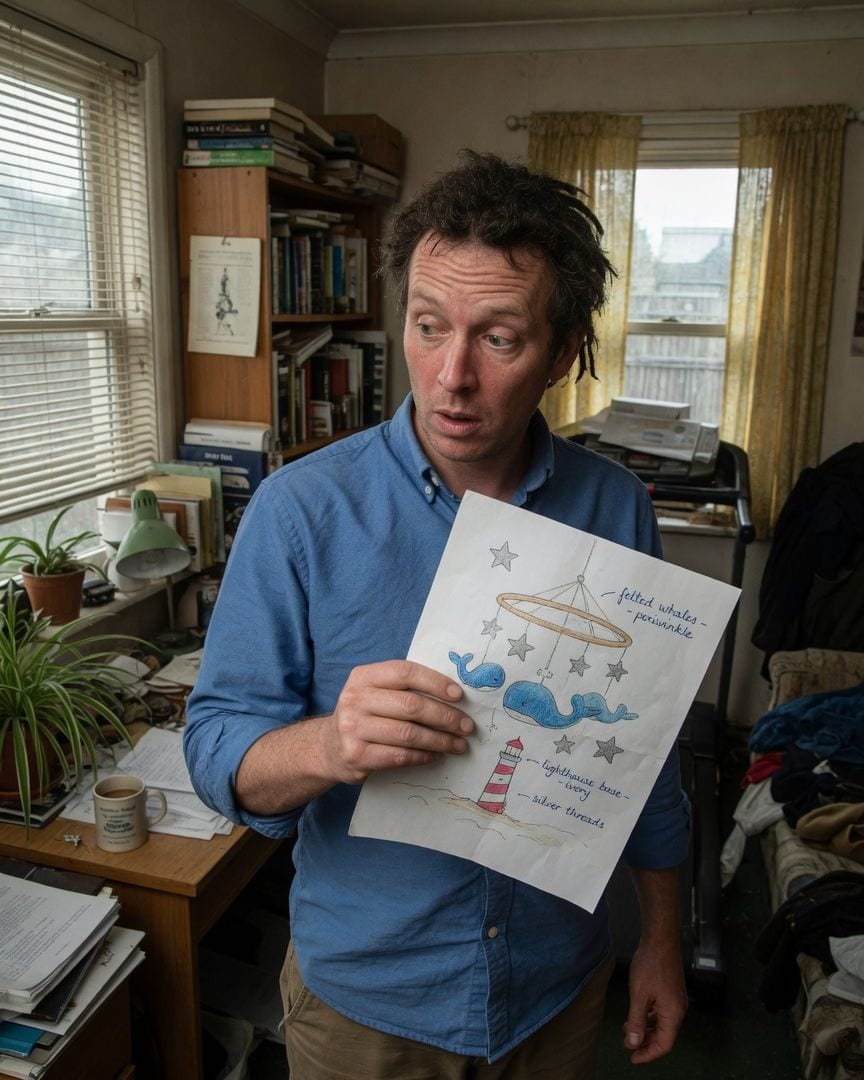
My wife described the pale blue nursery I'd only imagined. She asked when the mobile would arrive. We have no child.
My wife, Nina, returned a year after the ferry disaster, bringing a tidal wave of relief. But a week later, she thanked me for the perfect pale blue nursery, the cot under the window, and the name. I stood frozen; this was a desperate fantasy I’d only ever imagined in my grief, never spoken aloud.
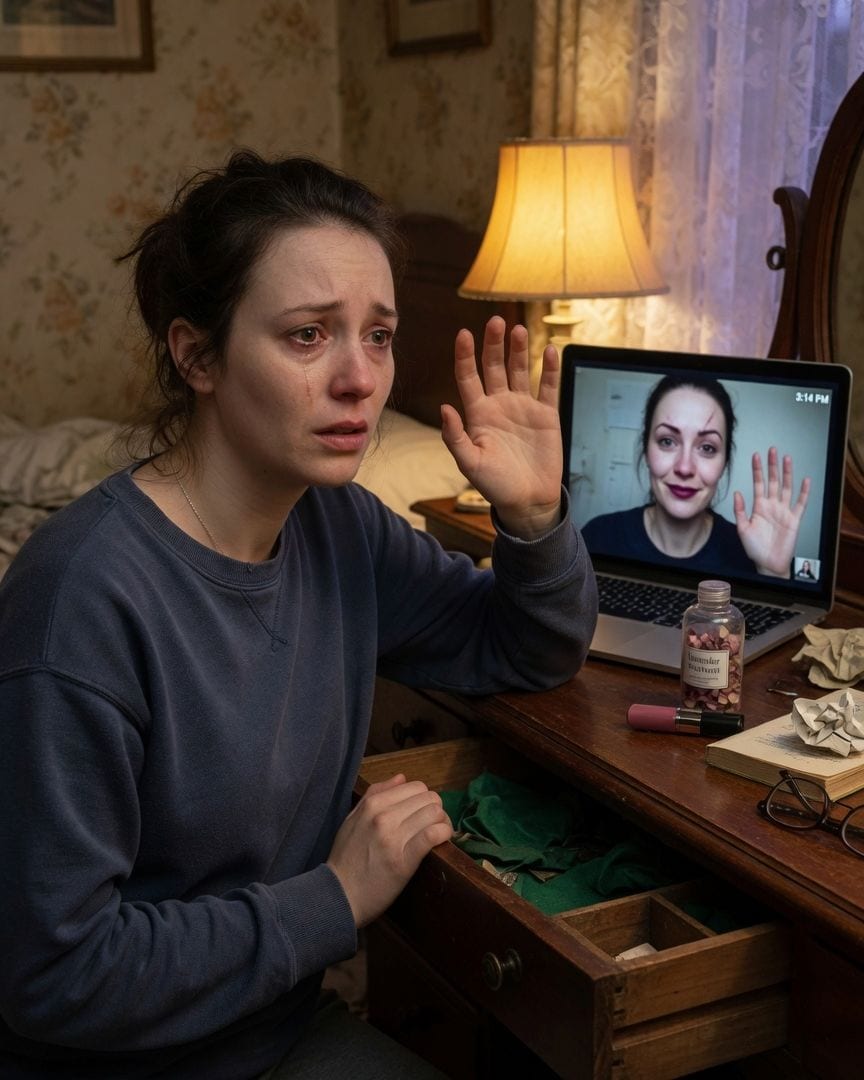
My mother waved with her right hand, both times, on our first call after she came home. She always waved left.
My mother vanished three months ago, then came back. On our first video call, she waved goodbye, but not with her usual left hand. It was her right, a small gesture that twisted something cold in my stomach.
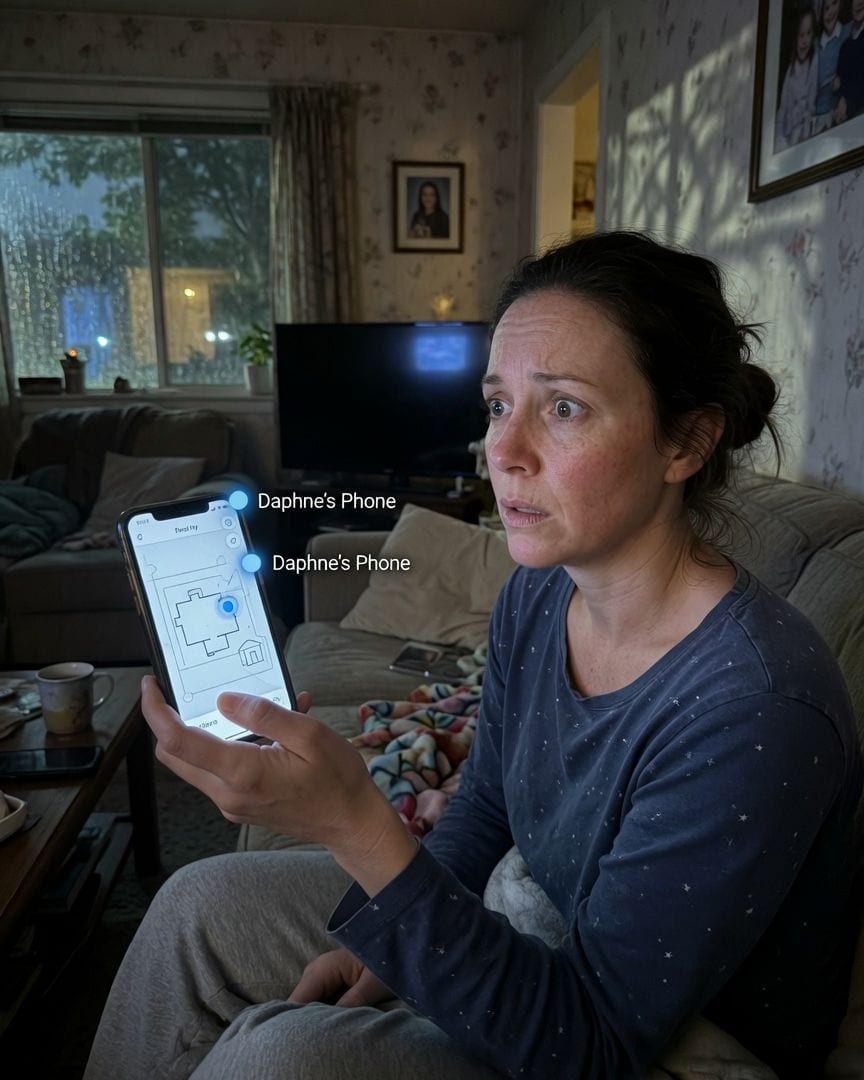
My daughter slept beside me with her phone in my hand — yet Find My Phone showed a second copy of it, labeled hers exactly, creeping slowly around the OUTSIDE of our house.
Curled up on the sofa with my daughter Daphne during a storm, I checked her phone. The 'Find My Phone' app showed her device right next to me. But then, a second identical dot appeared outside, moving slowly along our back fence, patrolling the perimeter.
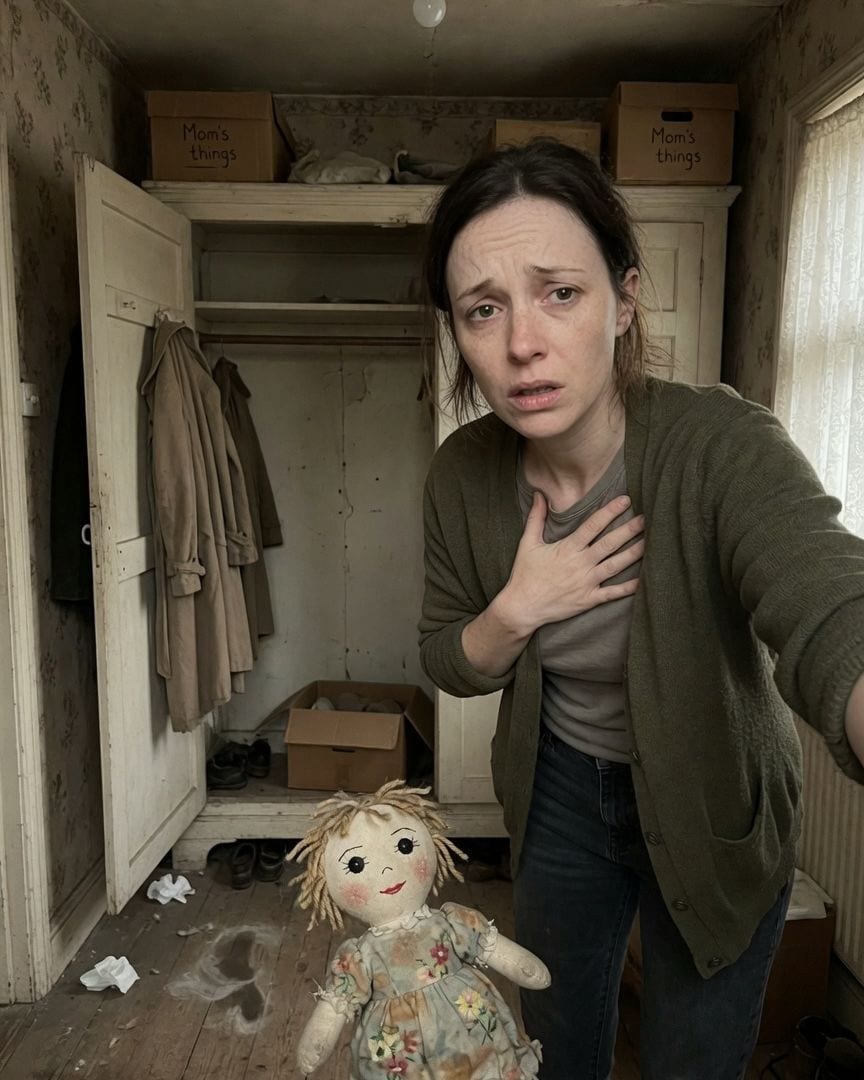
My shallow wardrobe opened into a child's bedroom. I'd knocked on its solid back wall for years. Now the doll from that room is on my floor.
My new house has a box room with a shallow wardrobe, barely a foot deep. But one day, reaching inside, the back wall vanished, opening into a child's bedroom with a cot and a burning nightlight. I slammed the door shut, only for it to be a normal closet again, leaving me with a cold, heavy stone of contradiction.
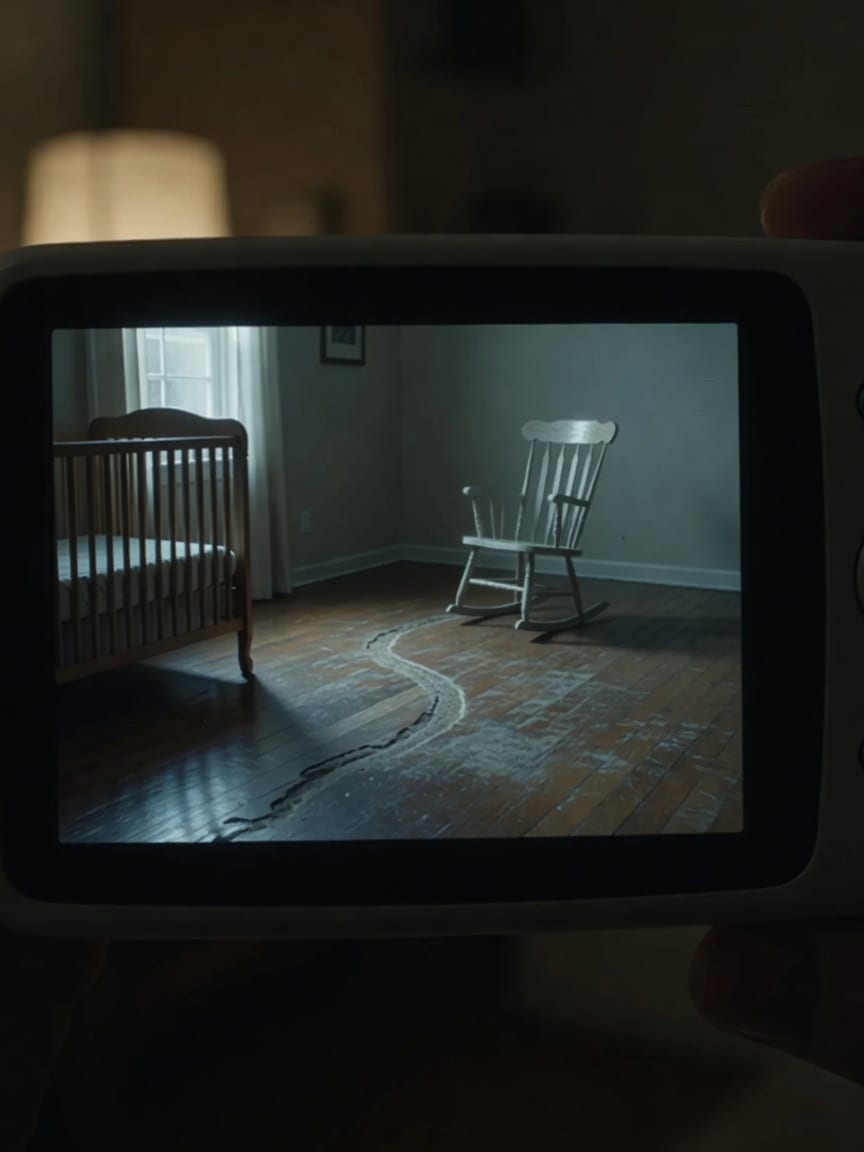
My baby monitor hums a lullaby at 2 AM. I hear a rocking chair creak. The camera shows my daughter's room empty, every night.
Every night, my baby monitor hums a gentle lullaby and a rhythmic creak, as if a rocking chair is in Lily's nursery. But the room is always empty, the monitor's camera shows nothing, and we don't even own a rocking chair. Then I found a newspaper clipping from sixty years ago, detailing a child's disappearance from our house.
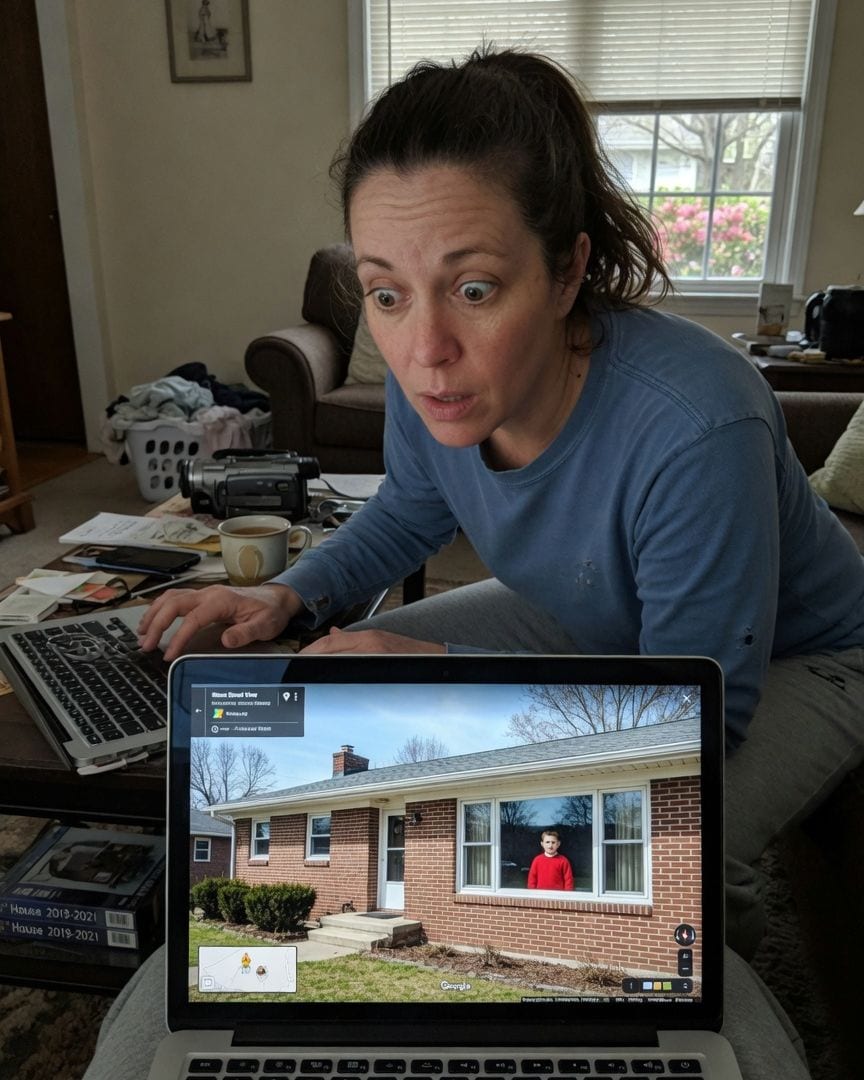
My Street View shows a boy in our window. That room's been empty and locked for months, we have no son, and he's gone if you drag the camera.
I was idly scrolling Google Maps, admiring the spring flowers on my street, when I paused at our house. In the empty, locked front bedroom window, a small boy in a bright red jumper stared out. We have no son, and that room has been storage for two years. He simply vanished from the Street View image.