My wife described the pale blue nursery I'd only imagined. She asked when the mobile would arrive. We have no child.
My wife, Nina, returned a year after the ferry. The initial relief was a tidal wave, crushing me, then lifting me to a dizzying height. But it receded fast.
She looked exactly the same, the same faint freckle on her nose, the same laugh lines around her eyes, but something… something was different.
We were in the kitchen a week after she came home. The morning sun was bright, blinding off the freshly wiped countertops. She reached across the table, taking my hand.
“Thank you, Arthur,” she said, her voice soft, like a secret. “For the nursery. The pale blue, exactly right. And the cot under the window, where the light will fall just so. And the name. I love it.”
My blood ran cold. My own name felt like a stranger in my mouth. We have no child. There was no nursery.
I had only imagined it once, in the worst of the grief, alone in the empty spare room, a desperate, silent coping mechanism.
I had seen the pale blue on the walls, pictured the white cot, even felt a tiny hand grasping my finger. A fantasy I’d never spoken aloud, never even sketched.
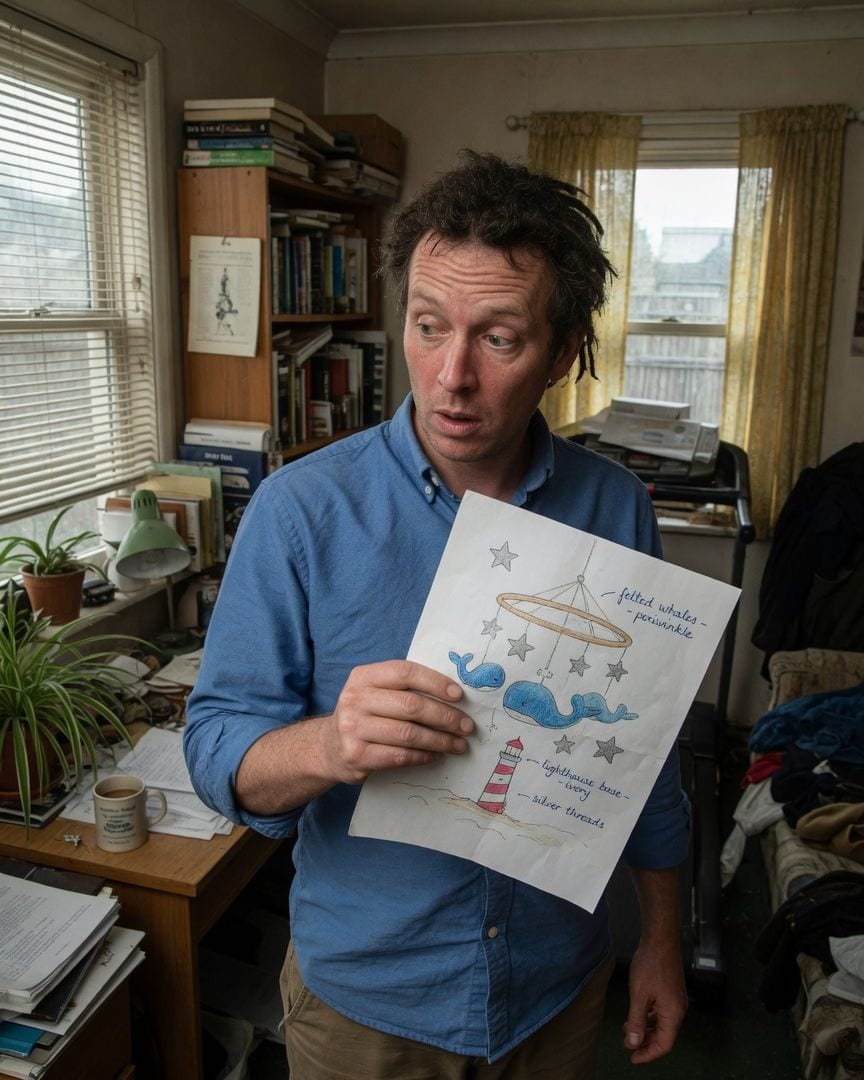
She smiled then, a bright, open smile that didn’t quite reach her eyes. “When do you think the mobile will arrive? The one with the tiny, felted whales? And the little lighthouse?”
That was when the exact chill settled in my bones, a cold that had nothing to do with the spring air seeping in through the open window.
It was as if she'd reached into my skull and pulled out a memory I’d never spoken aloud, never even sketched. My breath hitched. I found myself staring at her right hand, then her left.
She was stirring her tea with her left hand, a habit she’d never had. Nina was always fiercely right-handed, even for the smallest tasks. But now, the spoon spun clockwise in her left, a tiny, perfect circle in the porcelain.
I watched it, a silent, internal scream building. She hummed a tuneless little melody, oblivious, and took a long sip from the mug, her left thumb hooked around the handle.
The tea incident kept replaying. I told myself it was stress, a year of trauma, maybe a subtle brain injury from whatever had happened to her. It was the only way to make sense of it.
But then I started noticing other things. Small, almost imperceptible. She’d reach for the light switch with her left hand, fumbling slightly before correcting herself, a momentary awkwardness.
She’d hold her fork in her left, only switching to her right when I passed her the knife. It was subtle, easily dismissed if you weren't looking for it, if you weren’t already unsettled.
The nursery detail, though, was harder to shake. That evening, after she'd gone to bed, I crept into the spare room, the one I'd mentally converted into 'the nursery' during my darkest days.
It was still just a spare room, filled with boxes, a dusty treadmill, and an old armchair. No pale blue walls, no cot.
Yet, the image of it, as Nina had described, was so vivid in my mind now it felt like a ghost. I started searching, looking for anything that might explain her knowledge. Had I mumbled it in my sleep?
Had I written it down in a grief-fueled haze, then forgotten? I checked old journals, my phone's notes, but found nothing.
The idea of the mobile, specifically, had been so clear – blue whales, a tiny lighthouse, even the silver threads.
I tried to find a picture online, something similar, to see if she'd seen it somewhere, but the exact combination of elements I'd imagined didn't exist. It was unique to my head.
I watched her the next morning, as she buttered toast. Her left hand held the knife, precise, controlled, spreading the butter to the very edges.
She caught my eye and smiled, then switched the knife to her right, almost imperceptibly, as if realizing something. 'Rough night?' she asked, her voice light, innocent. The question felt like a trap. I mumbled something about work.
My mind raced, trying to find a mundane explanation for the mobile, for the hand. Maybe I'd described it to her before the ferry, and my memory was just… gone? No. The grief was too raw, too recent.
It had been a private sanctuary, a place in my mind no one else had ever visited.
Later that day, while Nina was out, I found myself drawn to her old study, a room she hadn't touched since her return. It was exactly as she’d left it a year ago: organized chaos.
Dust motes danced in the sunlight slanting through the window, illuminating the spines of books.
On her overflowing bookshelf, amidst her old gardening guides, was a copy of 'Moby Dick' – a book she'd always detested, finding it too bleak, too long. She preferred the practicalities of soil and seeds.
I pulled it out, a strange intuition guiding my hand. The book felt heavier than it should. Tucked between pages 187 and 188, a single, folded sheet of paper.
It was a sketch. A highly detailed drawing of a baby mobile. Felted blue whales, a miniature lighthouse, tiny silver stars on strings. The specific, intricate design I had only ever pictured in my mind, never spoken, never drawn.
And the handwriting, in delicate cursive beneath the drawing, labeling the colors and materials, was unmistakably Nina's. Arthur stands frozen in Nina's old study, the detailed sketch of the imagined mobile clutched in his right hand.
The drawing is so perfect, so impossibly accurate, that his breath hitchs, a cold certainty blooming in his chest. He hears Nina's light footsteps approaching the door, humming a tune he doesn't recognize.
The sketch burned in my hand. My mind raced, forming no coherent thoughts, just a primal alarm. I shoved it back into the book, replacing it on the shelf just as Nina walked in, a bright smile on her face.
Her eyes, I noticed, flickered to the bookshelf, then to my face, a fraction of a second too long. 'Find anything interesting, love?' she asked, her gaze lingering on the now-closed book.
My heart hammered against my ribs, a frantic bird. I forced a laugh, a dry, cracking sound. 'Just remembering your old hatred for Melville.' She chuckled, a sound that felt brittle, like thin ice.
The next few days were a blur of observation. Every time she used her left hand, a new layer of dread solidified within me. It wasn't just stirring tea now. She'd pour coffee with her left, her wrist slightly awkward.
She’d sign a grocery receipt with her left, the penmanship a little less fluid than I remembered. She’d even affectionately stroke my cheek with her left, her touch cool against my skin.
It was no longer an occasional slip; it was her default, her right hand only coming into play for deliberate, conscious actions, almost as an afterthought.
I started discreetly checking old photos, pulling out albums from the attic, scrolling through thousands of digital pictures. I looked for any evidence, any faint possibility of left-handedness. Childhood pictures, wedding photos, candid shots from vacations.
In every single one, Nina was unequivocally right-handed. Holding a pen, throwing a ball, raising a glass, even gesturing. Always the right. I found her old school yearbook tucked away. Her signature there, too, was a neat, right-handed script.
The discrepancy was undeniable. It felt like I was losing my mind, caught between the woman I loved and this impossible stranger who wore her face.
I began making excuses to leave the house, needing air, needing to think in a space where her presence didn’t feel so… pervasive.
I remembered Eileen Vaughn, a distant relative of Nina's, who lived in the small coastal town where the ferry had departed a year ago.
Eileen had always been a bit eccentric, prone to strange stories, but she'd known Nina since she was a baby. Perhaps she would remember something, some forgotten detail about Nina's handedness, a childhood phase, anything.
It was a desperate hope, a last attempt at a mundane explanation before I had to face… whatever else this was. I called her, my voice strained, attempting to sound casual.
Eileen sounded surprised but agreed to meet for coffee the following afternoon. I didn't tell Nina where I was going, just that I had errands in town. Her smile didn’t falter, but her eyes held a spark I couldn’t decipher.
The drive to the coast was a blur of grey highway and churning thoughts. My phone buzzed with a text from Nina: 'Everything alright? You seem distracted lately.' A chill ran down my spine, tightening my shoulders.
Had she noticed my unease? Or worse, my investigation? I dismissed it as paranoia, a symptom of my own growing fear.
Eileen met me at a quiet cafe overlooking the harbor, a place smelling faintly of brine and old coffee. Her eyes, sharp and knowing, immediately fixed on mine.
'Arthur, you look like you've seen a ghost,' she said, her voice raspy, a smoker's voice. I ordered two coffees, my hands clammy. I started cautiously, asking about Nina’s childhood, her habits, trying to make it sound like general reminiscing.
'Always a bright girl, Nina,' Eileen mused, stirring her tea with a spoon held firmly in her right hand. 'And so particular. Always right-handed, even as a toddler.
Used to scold her mother for trying to get her to use her left.'
My stomach dropped. I described the current situation, the nursery, the left-handedness, trying to keep my voice even, trying to make it sound like a puzzle, not a nightmare.
Eileen listened, her expression unreadable, occasionally nodding, her gaze steady on my face. 'And the ferry?' she asked, her gaze distant, drifting out towards the grey expanse of the sea. 'They said it was a rogue wave. So many lost.'
I explained how Nina just… appeared, a year later, no memory of where she’d been, no explanation. Eileen’s eyes narrowed. 'No memory at all?' I shook my head. 'Just a blank. And then… the nursery. And the left hand.'
Eileen leaned forward, her voice dropping to a near whisper, leaning in across the small table. 'Arthur, tell me something. Does she… still hate the smell of salt? Nina always despised the sea spray, even on a calm day.
Said it made her skin sticky.' I thought back.
Nina had always loved walks on the beach, but now, she seemed to seek out the spray, inhaling deeply, a strange, almost hungry look in her eyes as the wind whipped her hair.
'No,' I admitted, my voice barely a whisper. 'She seems to… like it now. Craves it, almost.' Eileen's jaw tightened. 'I knew it,' she muttered, almost to herself, her eyes hardening. Just then, my phone vibrated again.
I pulled it out, my fingers trembling. A photo. Nina, standing on the beach near our house, smiling, her hair windswept. In the background, barely visible, was my car. The one I had driven to Eileen’s cafe.
The message read: 'Wish you were here. It's beautiful today.' My blood ran cold. She knew exactly where I was.
I showed Eileen the photo, my hand shaking so badly I almost dropped the phone. Her eyes, usually so sharp, softened with a sad understanding.
'She's watching you, Arthur,' Eileen said, her voice devoid of judgment, flat with a terrible certainty. 'Or, whatever she is, it's watching you.' I felt a wave of nausea, cold and acidic. 'What is she, Eileen?
What are you talking about?'
Eileen sighed, her gaze drifting out to the grey, churning sea, to the distant silhouette of the old ferry terminal. 'My sister, Margaret. She was lost on that same ferry, twenty-five years ago. The first time it happened.'
My mind reeled. 'The first time what happened?'
Eileen turned back to me, her eyes clouded with old grief, a deep well of pain I could almost feel. 'Margaret returned a year later, just like Nina.
Same face, same scar above her left eyebrow from when she fell off her bike as a child. But… she was different.' Eileen recounted the details, her voice low and steady, as if reciting a well-rehearsed, terrible story.
Margaret, who had always loved to cook, now couldn’t stand the smell of fresh bread baking, a scent she’d once adored. Margaret, a meticulous gardener, now let her prize roses wither, their delicate petals brown and crumbling.
And, most chillingly, Margaret, who had always written with a flourish of her right hand, now signed her name with a clumsy, almost childish left-handed script.
'I tried to tell people,' Eileen said, her voice cracking, 'that this wasn’t Margaret. That something was wrong. They said it was trauma, grief, that I was imagining things. They dismissed me as delusional. But I knew.
I saw it in her eyes, a flicker of something… not Margaret. A kind of emptiness, covered by a perfect imitation.' Eileen paused, taking a deep, shuddering breath, her gaze locking onto mine. 'She knew things, too, Arthur.
Things only I had ever thought. My secret childhood fears, my private hopes. She'd bring them up, casually, as if they were shared memories, like pulling them from a notebook only I had written in.
It was like she was pulling them from my head.'
The pieces clicked into place with a horrifying certainty. The nursery, the left-handedness, the changed preference for salt, the mobile. It wasn’t a coincidence. It wasn’t grief. It was a pattern. A terrifying, ancient pattern.
'So, what happened to Margaret?' I asked, dread coiling in my gut, tighter and tighter. Eileen looked away, her gaze fixed on the distant horizon, where the sea met the sky in an indistinguishable line. 'She… faded. Slowly.
Became less and less like herself. Less and less like a person. Until one day, she was just gone again. Her body, anyway. They found her by the old lighthouse, just… empty. Like a discarded shell.'
My mind flashed to Nina’s newfound craving for the sea, the almost hungry look in her eyes. It all fit. The mimicry, the feeding on memory, the eventual disappearance. It was a cycle. And Nina was in it.
My throat was dry, my heart a frantic drum against my ribs. 'So Nina… she's not Nina?' I whispered, the words barely audible. Eileen shook her head slowly, her face etched with a profound sorrow. 'The body is.
The essence… I don't know what it is. It's like a void that learns to wear a skin. An echo that consumes the melody.' She reached into her worn leather bag and pulled out a small, faded photograph.
It was old, sepia-toned, showing a young woman with a striking resemblance to Eileen, smiling, her arm around an older man. The woman held a delicate porcelain teacup, her fingers wrapped around it. Her left hand.
'This was Margaret,' Eileen said, her voice thick with unshed tears, her finger tracing the image. 'Her favorite teacup. She always held it in her right hand, like me, like her mother.
After she came back, she held it like this.' Eileen’s finger traced the image of her sister’s left hand on the cup, the small, inverted detail. 'It was the first thing I noticed. The first wrongness.'
A sudden, sharp noise from the kitchen — the distinct clatter of Nina's favorite porcelain teacup hitting the floor, followed by a faint, unfamiliar hum.
The clatter from the kitchen echoed in my ears, freezing me mid-sentence, every nerve ending screaming. Eileen and I exchanged a terrified glance, our eyes wide with unspoken horror.
The hum, low and resonant, seemed to vibrate through the floorboards, a living sound. I scrambled to my feet, Eileen close behind me, her hand gripping my arm like a vise.
We crept to the kitchen doorway, peering cautiously around the frame.
Nina stood by the shattered pieces of her favorite teacup, her back to us. Her left hand was extended, a single shard of porcelain held delicately between her thumb and forefinger, catching the light.
She turned slowly, her expression unreadable, a faint, unsettling smile playing on her lips. Her eyes, usually so warm and familiar, seemed to hold an ancient, knowing depth I’d never seen, a cold, alien intelligence.
'Oh, Arthur,' she said, her voice a soft purr that raised the hairs on my arms. 'You broke my heart. All those beautiful thoughts, all that sorrow… and you bring a witness?'
Her gaze flicked to Eileen, a spark of something cold and ancient in her eyes, devoid of human warmth. 'You always were a meddler, Eileen. Some things are meant to be forgotten.'
The hum intensified, a low thrumming that seemed to emanate from Nina herself, vibrating in the very air. The room grew heavy, thick with the sharp, metallic scent of salt and something else, something cold and unidentifiable.
'The ferry,' I choked out, my voice raw, barely a whisper. 'It was the ferry, wasn't it?'
Nina’s smile widened, humorlessly, a predatory curl of her lips. 'The ferry is merely a doorway, Arthur. A place where the veil is thin. When the living drown in despair, when the grief is profound enough, the void finds purchase.
It takes the form of what is lost, and it feeds. On grief, on memory, on love.' She gestured with the shard of porcelain, still held in her left hand, a silent, chilling emphasis. 'Your grief was so potent, Arthur.
Your imagined nursery, a perfect little wellspring of sorrow and longing. A beautiful blueprint for a new self. I simply… inhabited it. And now, I am Nina.
More Nina than she ever was, because I hold your Nina, your thoughts, your dreams, your deepest, most hidden desires.'
The words were a knife, twisting in my gut, gutting me. Every clue, every wrongness, every impossible detail, now clicked into place, forming a monstrous, coherent whole. The left hand, the nursery, the changed tastes, Eileen’s sister.
It was all a performance, a consumption. Nina, the real Nina, was gone. Replaced by a thing that wore her skin and fed on my sorrow, on my essence.
Eileen gasped, stepping back, her face pale, a hand pressed to her mouth. 'You monster,' she whispered, her voice trembling. Nina’s smile vanished, replaced by an expression of cold, alien indifference. 'Monster? I am merely a reflection.
A perfect echo of what you lost, made real. And you, Arthur,' her eyes fixed on me, boring into my very soul, 'you are my sustainer.'
The air crackled with an unseen energy, pressing in on us. I felt a strange pull, a draining sensation, as if my very thoughts were being siphoned away, my mind going blank.
I tried to move, to run, but my limbs felt heavy, rooted to the spot, unresponsive. Eileen, however, found her voice, a sudden burst of frantic defiance. 'You won't have him!'
she cried, grabbing an old, heavy iron skillet from the counter. She lunged forward, a desperate, futile act.
Nina didn't even flinch. She simply extended her left hand, palm open. The skillet, mid-air, froze, then twisted violently in Eileen's grip, wrenching her arm.
Eileen cried out in pain, a sharp, choked sound, dropping the pan, which clattered harmlessly to the floor. Nina’s eyes glowed with a faint, internal light, like embers. 'Such a waste of energy, Eileen.
Some truths are simply… to be accepted.' She took a slow step towards me, her bare feet crunching softly on the porcelain shards. My heart pounded, not with fear, but with a terrible, crushing understanding.
This wasn’t a fight I could win. This wasn’t a person I could reason with. This was an ancient hunger, wearing the face of my love. Her left hand reached out, not to strike, but to cup my face.
Her touch was cold, like sea ice, seeping into my skin, into my mind. 'You will love me, Arthur,' she murmured, her voice a soothing balm that promised oblivion.
'You will love me as you did, and I will be everything you imagined. And more.'
I could feel her presence in my mind, a subtle, invasive tendril, brushing against the edges of my deepest thoughts, the ones I'd kept hidden even from myself.
The memories of Nina, the real Nina, felt distant, blurred, as if being overwritten, replaced by a perfect, new, and terrifying truth. I saw the imagined nursery, suddenly vivid, complete, a perfect, pale blue.
And in it, a mobile of felted whales, turning slowly, eternally. My own will felt like sand, slipping through my fingers. There was no escape. Only acceptance. Only knowing.
And the slow, terrifying realization that I was already changing, already being remade for her. My thoughts, no longer my own, echoing with her alien presence.
Eileen Vaughn was found a week later, wandering near the old lighthouse, incoherent and suffering from exposure. She spoke only in fragmented sentences about 'the sea taking what it wants' and 'the wrong hand.'
She was institutionalized, her warnings dismissed as the ramblings of an elderly woman in shock. Arthur Montgomery continued his life, seemingly unharmed. Nina remained by his side, a constant, loving presence.
The house was always immaculate, the pale blue nursery now a reality, filled with a cot and a mobile of felted whales. Arthur often sat in the nursery, staring at the mobile, a faint, contented smile on his face.
He no longer noticed the subtle shift in Nina's handedness, or the way her eyes sometimes seemed to hold too much knowledge.
The post office delivered a small package one afternoon, addressed to Arthur. Inside was a single, intricately carved wooden whale, painted pale blue. A note, in Eileen Vaughn's shaky, right-handed script, was tucked beneath it: 'For the mobile. Remember.'
Arthur looked at the whale, then at the nursery, then at Nina, who stood beside him, her left hand resting gently on his arm. Her smile was serene. He tossed the whale into the nearest bin.
It was a perfectly normal Tuesday. Arthur reached for his coffee mug. He picked it up with his left hand, stirring in two sugars and a generous splash of cream.
He'd always taken it black, but lately, this just felt right. He looked at Nina, and she smiled back, her eyes shining. 'Is that so?' she murmured, a faint, wrong little smile playing on her lips.
If this one got to you
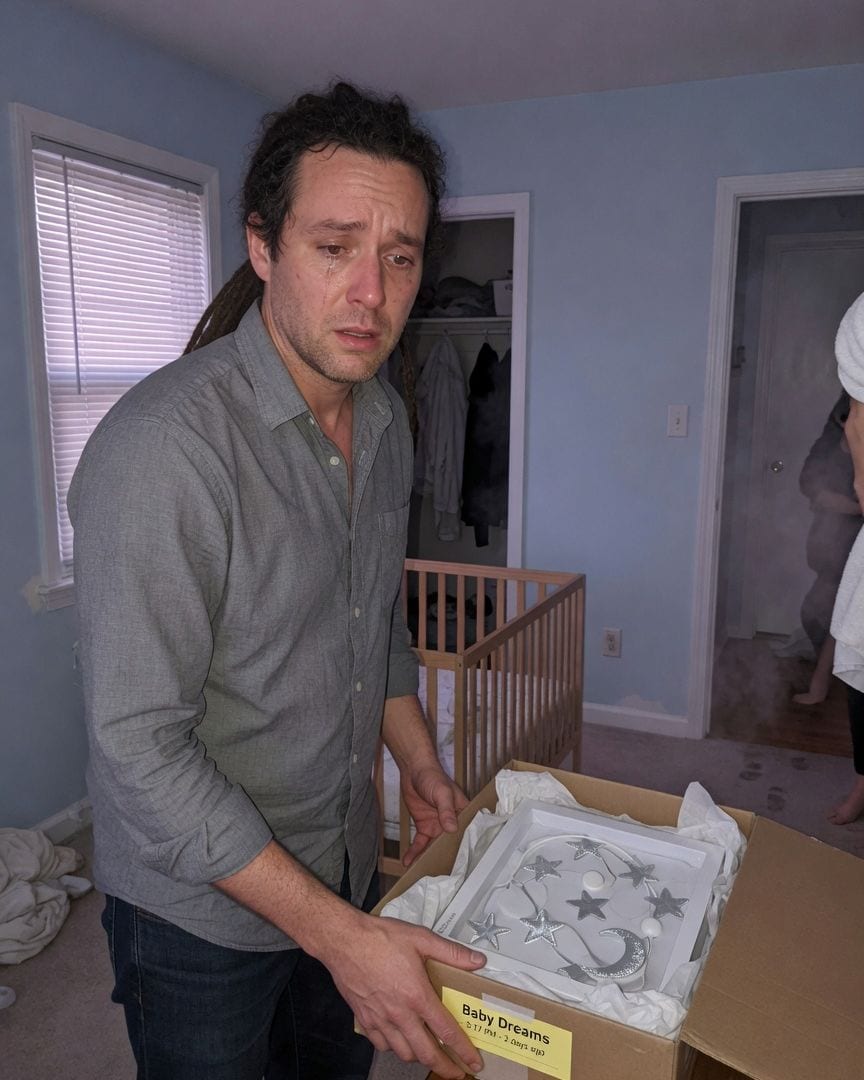
My wife thanked me for the pale blue nursery. We have no child. She described the mobile I'd only imagined, then asked when it would arrive.
Sylvia returned exactly one year after her disappearance, a miracle I could barely believe. But her first words about a nursery I'd only ever imagined, complete with a specific mobile, sent a shiver down my spine. That mobile, a private fantasy, arrived two days ago, and she just asked why it was late.
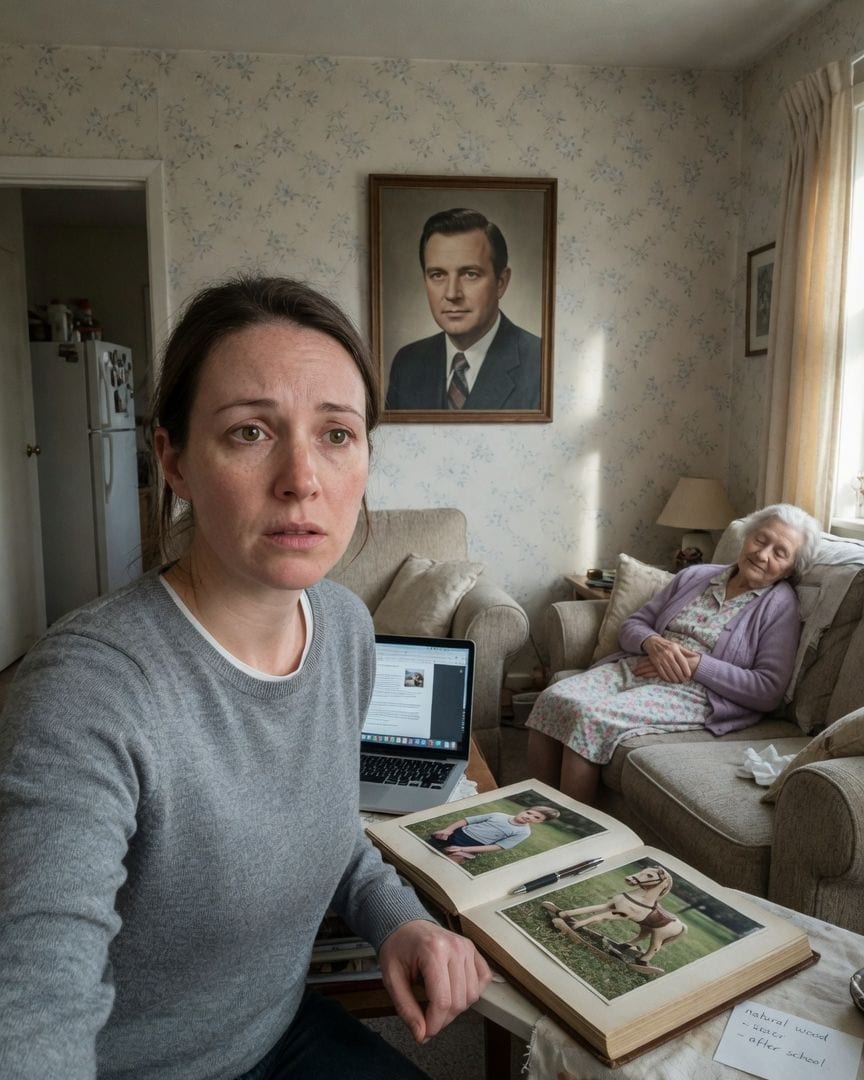
My Grandma Deborah swore she painted my father's rocking horse blue. It was always natural wood, a family heirloom.
My Grandma Deborah returned after a devastating flood, unharmed but changed. She spoke of my father's portrait and the new wallpaper with intimate certainty, details she shouldn't know in a house she'd never entered. Her eyes held a knowing glint, not the soft confusion of age, making the ordinary feel chillingly wrong.
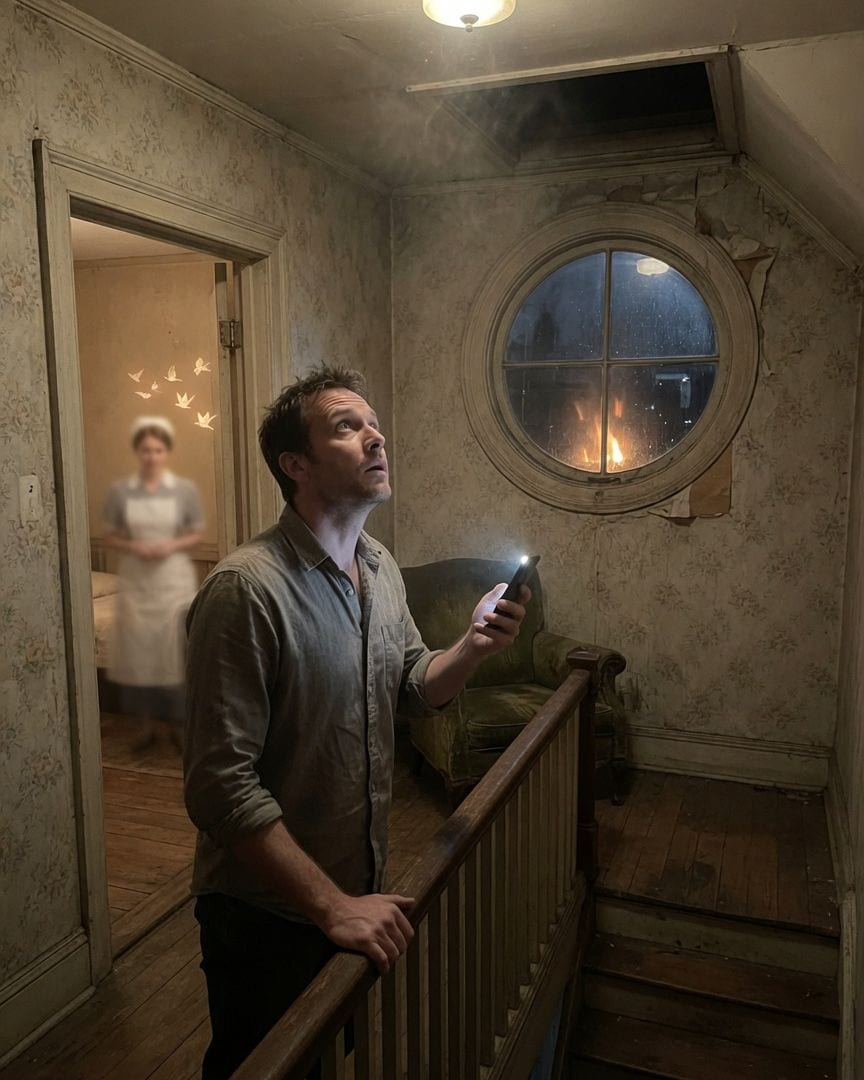
My attic window shows a nursery lit by firelight. The blueprints say no room exists there.
I inherited an old house with good bones, an architect's dream. But soon, I started seeing a nursery, lit by firelight, in the attic window. My blueprints confirm there's no room there.
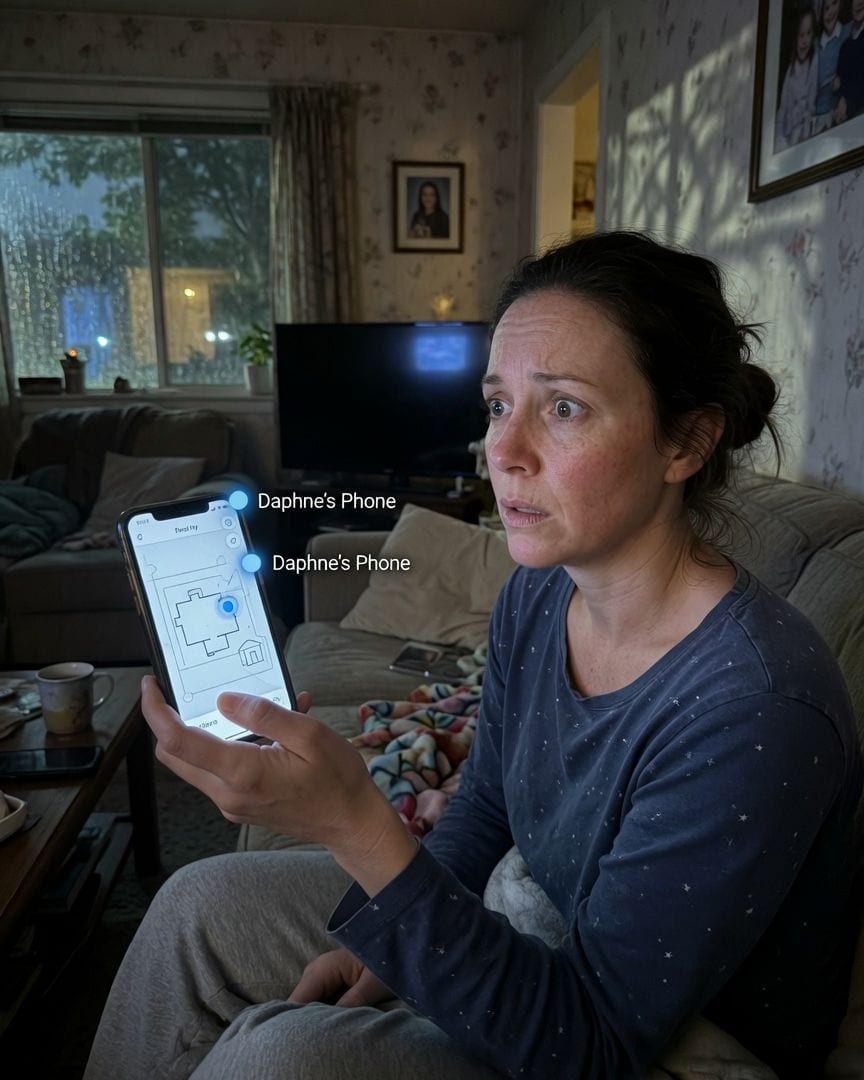
My daughter slept beside me with her phone in my hand — yet Find My Phone showed a second copy of it, labeled hers exactly, creeping slowly around the OUTSIDE of our house.
Curled up on the sofa with my daughter Daphne during a storm, I checked her phone. The 'Find My Phone' app showed her device right next to me. But then, a second identical dot appeared outside, moving slowly along our back fence, patrolling the perimeter.
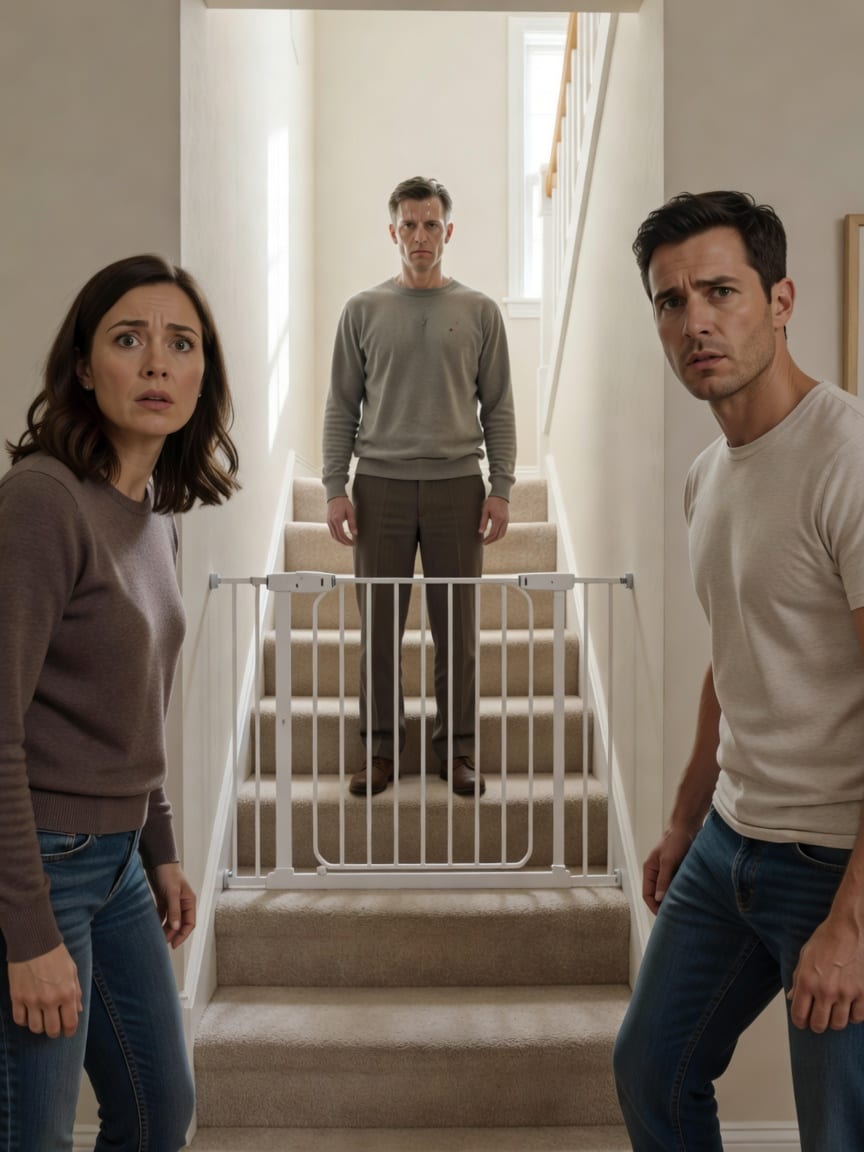
My stair gate latches itself every night. Pressure-fitted tight across my empty stairs, no children live here and no fixings exist on the wall.
I live alone in my inherited house, so the toddler gate at the top of my stairs should not be there. Each morning, I find it perfectly latched and sturdy, despite having hidden it away in the shed the day before. This isn't a quirk; it's a routine, and it isn't mine.
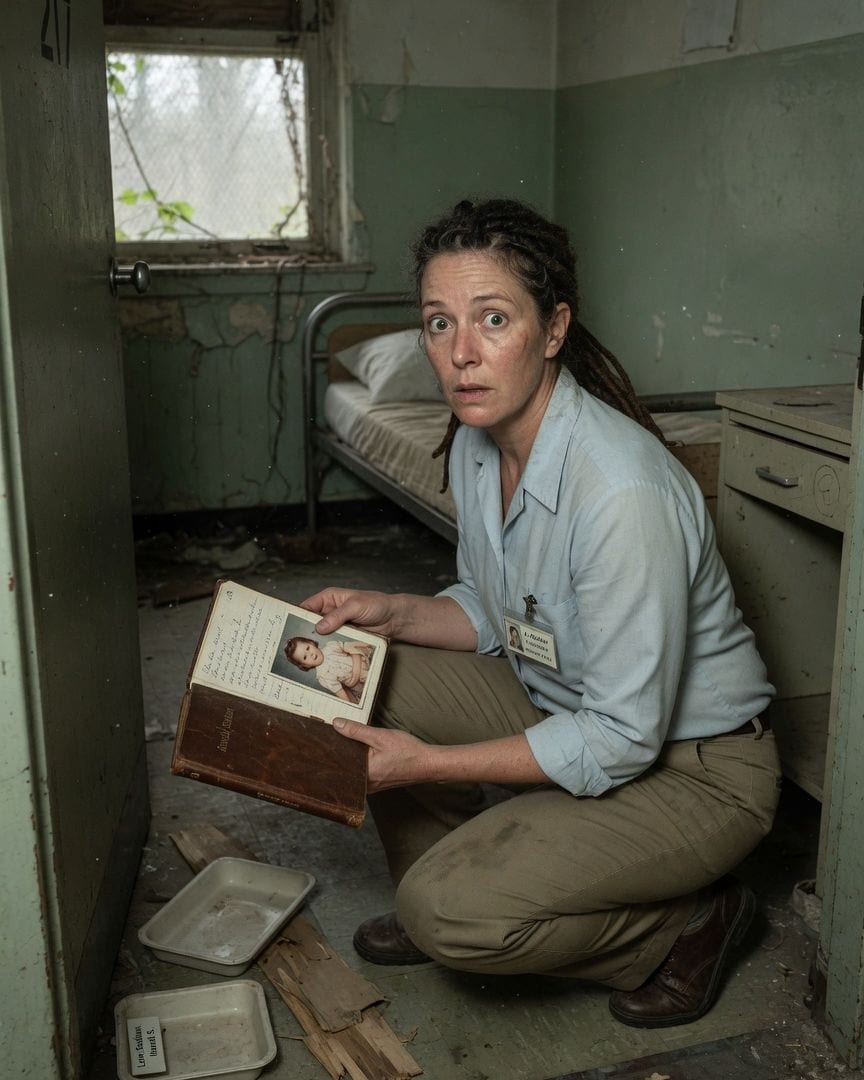
An Army records clerk's dead father just received a medical bill from a Cold War sanatorium closed since 1968, asking for his daughter.
An Army records clerk named Odette Cardew found routine comfort in the archives' dusty quiet, a place that also held the official record of her father, Harold Sutton, who died in the Korean War when she was two. One morning, a declassified medical release with his name appeared, but the bill was dated last month, from a sanatorium in the Ozarks. The facility had closed in 1968, yet the account was active. A chilling handwritten note asked, "Patient asked, again, whether his daughter had come." Driven by dread, Odette visited the crumbling, overgrown sanatorium, where in Room 217, she found a recent meal tray and her father's journal, holding a photo of her as a child and a question dated just last week: "Did she come?"