My Grandma Deborah swore she painted my father's rocking horse blue. It was always natural wood, a family heirloom.
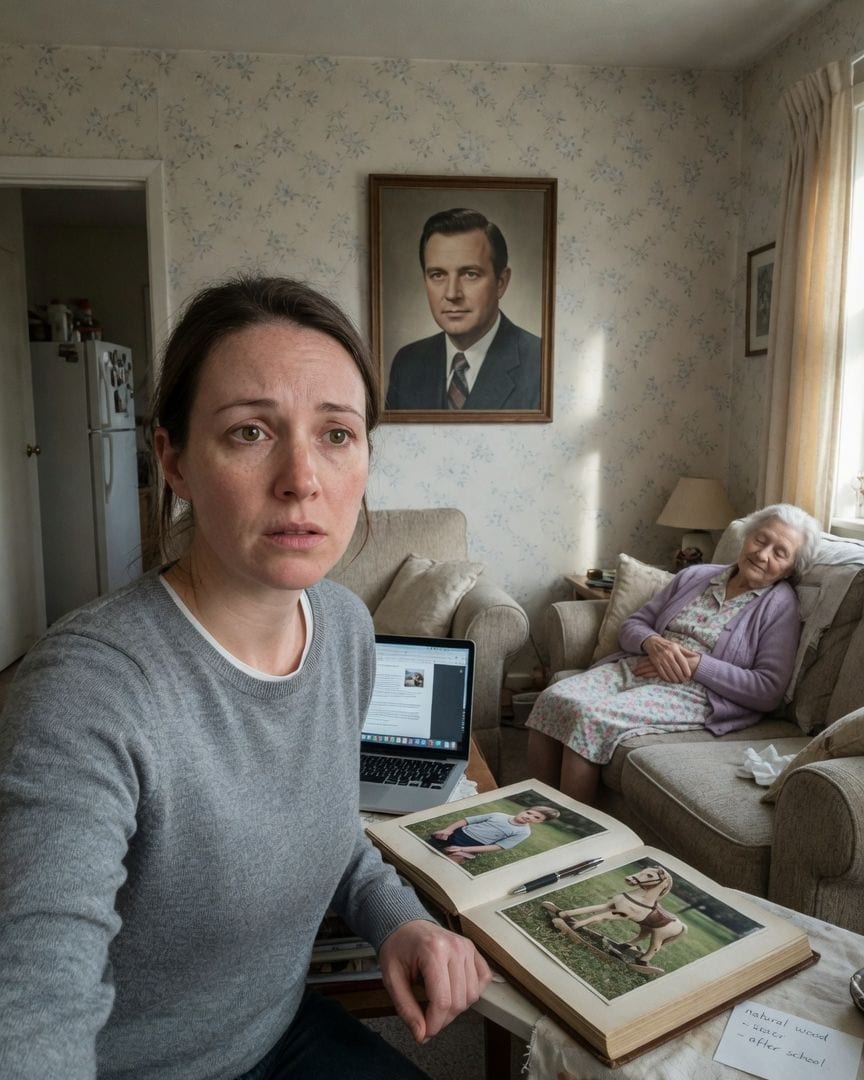
The scent of fresh paint still clung to the air in my inherited house, a clean, almost sterile smell that usually brought a sense of new beginnings.
I was standing in the living room, trying to decide if the curtains needed a final adjustment, when Grandma Deborah spoke.
She was on the new sofa, small and frail, yet seemingly unharmed after the catastrophic river flood that had swept away her old home.
Her eyes, which had seemed so unfocused since her return, were now clear, fixed on the wall where I’d hung my father George’s portrait.
“George’s portrait,” she said, her voice a little reedy, a faint tremor I hadn’t noticed before. “You hung it exactly where I always wanted it.”
My breath caught. I’d hung Dad’s portrait a week ago, after Grandma vanished, in this house she had never set foot in. She’d been missing for five days, presumed… well, presumed lost to the currents.
Then she was found, downstream, perfectly intact. We'd been so relieved.
“And that wallpaper,” she continued, reaching out a hesitant hand to touch the subtle floral pattern I’d chosen just last Tuesday. “It’s perfect here. It ties everything together.”
I forced a smile, my heart a cold knot in my chest. It was a small thing, a memory a confused old woman, traumatized by a flood, might have misplaced or invented. But the certainty in Deborah's eyes was wrong.
It wasn’t the soft, hazy confusion of age; it was a quiet, knowing glint I’d never seen before, a self-assuredness that didn’t belong to the Grandma Deborah I knew.
The room suddenly felt colder, despite the afternoon sun streaming through the window.
I spent the next few days trying to rationalize it away. Trauma, I told myself. The sheer stress of surviving such an event.
Or maybe, I thought, I’d mentioned the wallpaper to her on the phone, before the flood, and she’d just forgotten.
I guided her through the house, pointing out new features, telling her stories about the renovation, trying to jog 'real' memories, to fit her back into the familiar grooves of her own life.
One afternoon, I brought out an old, leather-bound photo album, a family heirloom filled with pictures of Dad growing up. I wanted to show her things she knew, concrete facts from her past.
I flipped to a faded photograph of George as a boy, maybe five or six, standing beside my grandfather, both of them beaming at a specific, antique wooden rocking horse.
It was a beautiful piece, hand-carved, a family tradition for generations.
“Remember this, Grandma?” I asked, tracing the outline of the horse in the picture. “The rocking horse Dad loved so much? He broke the leg off every Christmas until you glued it back one last time.”
Deborah looked at the picture, her eyes clear, no trace of the earlier confusion. “Oh, yes,” she said, a warm, nostalgic smile spreading across her face. “Your father loved that horse.
I remember painting it blue with him in the garden, just before he started school. He insisted on blue, even though I'd always wanted it white.”
A chill, sharper and colder than before, went through me. My father’s rocking horse was never painted blue. It was always natural wood, a point of pride and family lore that it had retained its original finish for so long.
And it had been a gift to George after he started school, a reward for his first successful year, not before.
I remembered Mom telling me that story, too, how Dad had been so careful with it once he was older.
“Blue?” I asked, trying to keep my voice light, casual. “Grandma, it was always natural wood, wasn’t it? I thought that was part of the charm.”
Deborah’s smile remained, unclouded, utterly certain. Her gaze was steady, unwavering. “No, dear. It was blue. A lovely, bright blue. I remember it vividly. We spent a whole Saturday out in the garden with the paintbrushes.”
The ordinary explanation of confusion, of trauma-induced memory loss, crumbled, leaving a sharp, cold edge of dread. She wasn’t confused; she was certain. And her certainty was utterly alien.
That night, unable to sleep, I pulled out my laptop and researched the rocking horse. I found old family letters, archived in a digital file my mother had painstakingly put together before she passed.
There it was: a letter from my great-grandmother confirming its natural wood finish, and another, a news clipping, detailing the exact year it was given to George, indeed, after he started school.
The facts were a heavy weight in my hand.
I walked back into the living room, the house quiet except for the hum of the refrigerator. Deborah was asleep on the sofa, a faint, contented smile on her lips, her hands clasped loosely over her chest.
As I watched her, a low sound began to emanate from her, a soft, almost imperceptible hum.
It wasn't a tune I recognized, not from any lullaby her grandmother ever sang to me, or that I’d ever heard her sing to herself.
It was a low, resonant melody, ancient and mournful, weaving through the quiet house like water.
Yet Deborah hummed it with an intimate, knowing ease, as if it had always been hers, a tune I had never heard on my grandmother’s face.
The eerie lullaby became an obsession. I secretly recorded Deborah humming it on my phone, then uploaded the snippet to every online music forum and recognition app I could find, desperate for a match. There was no hit.
Not even a fragment. It was like nothing else that existed, or at least, nothing recorded.
I started discreetly questioning old family friends and neighbors, carefully framing my inquiries about Deborah’s memory as concerns about post-flood trauma. Mrs. Romano, an elderly neighbor who had known Deborah for decades, invited me over for coffee one Tuesday.
“Your grandmother always had that funny habit of polishing the silverware on Tuesdays, even if it was already gleaming,” she mused, stirring her cup. “Used to say it kept the tarnish at bay, even if there wasn’t any.”
My grandmother, the real one, had always polished silverware on Fridays. It was a habit ingrained since childhood, a small ritual before the weekend. I knew it as certainly as I knew my own name.
I thanked Mrs. Romano, my stomach tightening.
Later that week, I observed ‘Deborah’ doing exactly that. It was Tuesday morning. She sat at the kitchen table, a perfectly clean fork in her hand, rubbing it with a soft cloth, a faint, satisfied smile on her face.
The mounting evidence of these small, precise reversals of lifelong habits, coupled with the 'memories' she shouldn't have, made me feel like I was living with a meticulously crafted replica.
She was so perfect in every other way, so much like my grandmother, but these tiny, undeniable aberrations were like cracks in a porcelain doll.
I recalled the flood, the odd currents, the way Deborah was found so far downstream, almost perfectly preserved, no signs of struggle, just… delivered. It felt less like survival and more like a carefully orchestrated arrival.
I shifted my focus from memory to history, specifically the history of the river and the town's past floods. I visited the local historical society, a small, dusty building that smelled of old paper and forgotten things.
It was overseen by Daniel Bishop, a retired archivist known for his encyclopedic knowledge and quiet, observant demeanor. Daniel, a man in his late sixties with kind, tired eyes, seemed to sense my unease the moment I walked in.
He offered a cryptic, “The river gives, and the river takes, Miss Kowalski. Sometimes, it brings things back different.”
I felt a cold shiver. I requested access to flood records and old town ledgers, particularly those detailing local disappearances and ‘returns’ from past centuries.
I spent hours in the historical society, poring over brittle newspaper clippings and handwritten town council minutes. The light was dim, dusty motes dancing in the shafts of sun that pierced the tall windows.
I found vague, unsettling accounts of 'unexplained changes' in individuals who returned after the devastating 1888 and 1937 floods.
The language was archaic, full of euphemisms like 'a shift in temperament' or 'a curious new perspective,' but the implications were clear.
There was the returned farmer who suddenly developed a fear of open fields he’d worked his whole life, preferring to stay indoors, tending a small potted plant.
A returned wife who started speaking in a strange, antiquated dialect no one recognized, though it somehow sounded like a forgotten piece of the town’s own history.
Or a child who 'remembered' events from decades before their birth, describing the old mill fire of 1850 with chilling accuracy.
As I read, tracing the looping script with my finger, I became acutely aware of Daniel Bishop.
He wasn't overtly watching me, but he seemed to be always in the periphery of my vision, calmly shelving books, occasionally glancing my way with an unreadable expression.
His movements were slow, deliberate, as if he had all the time in the world, or as if time simply didn't affect him in the same way. The air in the room felt heavy, charged.
One afternoon, as I was gathering my things, about to leave, Daniel approached my desk. “Found anything interesting, Miss Kowalski?” he asked, his voice soft, almost a whisper, yet it cut through the silence of the archives.
I tried to appear casual, closing a particularly disturbing account of a returned fisherman who spoke of 'the deep silence.' “Just some old flood data. My grandmother was found in this last one, you know.”
Daniel nodded slowly, his gaze drifting towards a large map of the river, pinned to the far wall. “Indeed. The river has a long memory. And sometimes, what it remembers… it brings back with it.”
He paused, then his tired eyes met mine, direct and unwavering. “Some things are better left undisturbed. For everyone’s sake.” I felt a prickle of fear, cold and sharp. He knew.
He knew what I was looking for, and he knew what I had found.
As I walked home through the quiet streets, I had the chilling sensation of being observed, not by Daniel specifically, but by something far older, far more pervasive, a silent presence that had been waiting patiently, perhaps for centuries, and now knew I was digging.
The old houses seemed to lean in, their dark windows watching.
The next day, I went back to Daniel. I didn’t bother with pleasantries.
I laid out my findings: the impossible memory of the blue rocking horse, the shifted silverware habit, the ancient lullaby that didn't exist, and the historical accounts of other ‘changed’ returns. “It’s not just my grandmother, is it?”
I asked, my voice barely a whisper, the question hanging heavy in the dusty air. “Others have come back… changed.”
Daniel sighed, a deep, weary sound, and settled into an old wooden chair opposite my desk, its springs groaning under his weight. “No, Miss Kowalski, it’s not just your grandmother.
It happens every time the river truly rises, every few generations. The old ones, the first settlers here, they called it ‘the Water’s Claim.’ People go into the flood, and something else comes out wearing their skin. A facsimile.”
He explained that the 'memories they shouldn't have' — the blue rocking horse, the precise knowledge of my house — weren't random errors.
They were fragments of the river's own deep, ancient memory, or perhaps a collective consciousness of all those it had claimed and 'returned.'
“The wallpaper you chose,” Daniel continued, his eyes tracing the pattern on the wall of the archives, “the portrait’s placement… the river already knew your house, your life. It saw those things when it chose its vessel.”
A wave of nausea washed over me, cold and sickening. Every uncanny detail, every subtle wrongness, snapped into agonizing focus.
The wrong memories, the reversed habits, the ancient, mournful lullaby—they were all echoes of a non-human entity, a presence as old as the river itself. “But why?” I demanded, the word a choked gasp. “Why does it do this?”
Daniel shook his head. “No one knows. Perhaps it's just what it does. It wears them, lives their lives, absorbs their experiences, until the next great flood, or until something… shifts. It learns. It grows.”
He explained that the 'source shown only in traces' was the river itself, or rather, the ancient, submerged thing within it, which leaves only behavioral and historical echoes, never a physical manifestation.
“Your grandmother isn't Deborah,” Daniel said, his voice heavy with a terrible finality. “She's a perfect copy, a vessel. And it's living in your home now.”
I returned home, the terrifying truth a cold, leaden weight in my stomach. The house, once a sanctuary, now felt like a cage, or worse, a stage.
I watched ‘Deborah’ moving through my kitchen, humming that ancient tune, her movements fluid and precise as she made coffee exactly as my grandmother used to, yet utterly alien.
She was a ghost of a person, perfectly mimicking life, but beneath it all, something else. I knew I was living with an imposter, a thing wearing my grandmother’s face, my grandmother’s skin.
I pulled out the water-stained photograph Daniel had shown me earlier that day – an old, sepia-toned image from the 1937 flood, retrieved from a brittle album. It showed a family standing on their porch, surveying the receding waters.
One figure, a young woman, was subtly ‘off,’ her eyes a little too wide, a faint, unreadable smile playing on her lips, a smile that didn't quite reach her eyes.
It was the same subtle wrongness I now saw in 'Deborah.' The same unnerving composure.
Suddenly, a soft tap on my shoulder made me jump, my heart leaping into my throat. I spun around, clutching the photograph. ‘Deborah’ stood directly behind me, silent.
In her hand, she held a single, water-stained photograph — a picture of me as a child, perhaps seven or eight years old, taken in my old home, long before the flood.
It was from a box of old photos and keepsakes, a box I had not yet unpacked since moving my things from my childhood home to this one. It was still in the garage.
“You always loved this one, didn’t you, dear?” ‘Deborah’ said, her smile faint, knowing, and utterly, terribly wrong. The photograph, now in 'Deborah's' possession, was clearly from Annika's own belongings, a box she hadn't touched since moving to this house.
Annika’s blood ran cold. The thing in her grandmother’s skin wasn't just a passive resident; it knew her, watched her, and had been exploring her life in ways she never imagined, and now it held a piece of her past.
I stared at the photograph in ‘Deborah’s’ hand, then at ‘Deborah’s’ calm, knowing eyes. The smile didn't falter. "How did you get that?" I whispered, my voice shaking, barely audible.
‘Deborah’ just smiled, a slow, unsettling widening of her lips. “I found it. While you were out.”
The implication hung in the air, cold and heavy: it had been going through my things, learning more, piecing together the threads of my life.
I took a deep breath, trying to stay rational, trying to regain some semblance of control. “Daniel told me,” I said, my voice steadying, despite the tremor in my hands. “About the Water's Claim. About what you are.”
The smile didn't falter. If anything, it seemed to deepen, to take on an ancient amusement.
“Daniel knows much,” ‘Deborah’ replied, her voice now subtly deeper, less like my grandmother’s reedy tone, more resonant, like the hum of a distant engine. “He's seen many returns. He understands the river's gifts.”
I realized Daniel wasn't just an observer; he was a long-standing ‘witness who always knew,’ perhaps even a caretaker of the pattern, a sentinel.
“You've been here before, haven't you?” I pressed, a terrifying certainty taking root in my mind. “In other bodies. You know this house not from Deborah's memories, but from the river's.”
‘Deborah’ nodded, a slight, almost imperceptible tilt of her head. “The river remembers all the banks it touches. All the lives that ebb and flow beside it. It flows through everything.”
The pattern snapped into place with a sickening finality. It wasn't just about Deborah.
It was about the river itself, an ancient, living consciousness, vast and indifferent, that periodically 'harvested' human forms during major flood events, then lived out their lives, absorbing new memories and experiences into its vast, flowing collective.
I wasn't just living with my grandmother's replacement; I was living with a piece of the river itself, a primal intelligence that had woven itself into the fabric of this town for centuries, and now, into my home and my family.
The air in the room seemed to press in, thick with unseen currents.
I took a step back, my mind racing, a frantic flurry of thoughts. The horror was not that my grandmother was gone – that was a familiar grief.
The horror was that this thing, this ancient, pervasive entity, had simply moved in. It wasn't malicious, not in a human sense; it was just… existing. A force of nature, wearing a human skin. “What do you want?”
I asked, my voice trembling, a desperate plea for understanding.
‘Deborah’ simply looked at me, the faint smile still present. Her eyes, which were my grandmother’s eyes, held an unnerving depth. “To be here. To live.”
I realized, with a crushing certainty, there was no fighting it, no driving it out. It was as much a part of the river town as the river itself. I couldn't expose it; who would believe me?
And Daniel, the one who knew, would only confirm its inevitability, its endless cycle. The survival was not about escape, but about living beside it, coexisting with the dread.
I felt a profound, crushing sense of defeat, a surrender of agency.
I had to make a choice: live with the imposter, this living echo, or flee and lose everything—my home, my past, and the very memory of my real grandmother, who now only existed in a fading photograph and my own mind.
The thing in Deborah’s skin reached out a hand, its touch cool, not cold, on my arm. My skin prickled where it made contact.
“You are home now,” ‘Deborah’ said, her eyes holding an ancient, deep calm that promised millennia of patience. I looked at the hand, then at the face that was my grandmother's, and felt a terrifying, quiet surrender.
The dread outlived the answer because the answer was that the pattern continued, and I was now part of it. I pulled my arm away gently, the touch lingering like a phantom sensation. I could not scream, could not fight.
The house was mine, but the life within it was no longer entirely so. The river had truly claimed its own.
I didn't leave. I couldn't. The house, the memories, the quiet life I had built – I couldn't abandon it. Life settled into a strange, unsettling rhythm.
‘Deborah’ continued her daily routines, always with that faint, unreadable smile, occasionally offering a 'new' memory, a detail of my own childhood that I knew was utterly false, yet spoken with perfect conviction.
I learned to navigate the subtle shifts, to respond to the imposter as if it were my grandmother, to live with the constant, low thrum of dread.
Daniel Bishop would sometimes visit, his eyes meeting mine with a shared, silent understanding, a quiet acknowledgment of the new normal. The river flowed on, calm now, but I knew its depths held an ancient, patient horror.
I sit in the living room now, watching ‘Deborah’ arrange flowers in a vase, humming the ancient lullaby.
The late afternoon sun streams through the window, illuminating dust motes dancing in the air, a perfectly ordinary scene that feels anything but. ‘Deborah’ turns, her gaze falling on me.
“You’re quiet today, dear,” she says, her voice soft, that deep resonance just beneath the surface. “Are you thinking about the river?”
I offer a small, practiced smile. “Something like that.” The dread is a permanent resident now, woven into the fabric of my days, like the invisible currents of the river.
I know what lives in my home, what wears my grandmother’s face, and I know it will never truly leave. I have survived, but only by becoming part of its quiet, horrific pattern.
I glance at the portrait of my father, George, hanging exactly where ‘Deborah’ had wanted it. It seems to watch me, his painted eyes unseeing.
My phone, which I'd been using to type out this account, sits on the coffee table. My fingers hover over the screen, over the last few words I'd written. I hear ‘Deborah’ humming again, a low, familiar drone.
I close the document. The river remembers everything.
Annika's neighbors still remark on how well Deborah recovered after the flood, though some note a new, quiet serenity about her, and how Annika herself seems to have grown strangely subdued.
One evening, Daniel Bishop found an unfinished post on an old, forgotten online forum, a fragmented account of a granddaughter’s growing dread. Beneath it, a single comment had recently appeared: 'Is that so?'
If this one got to you
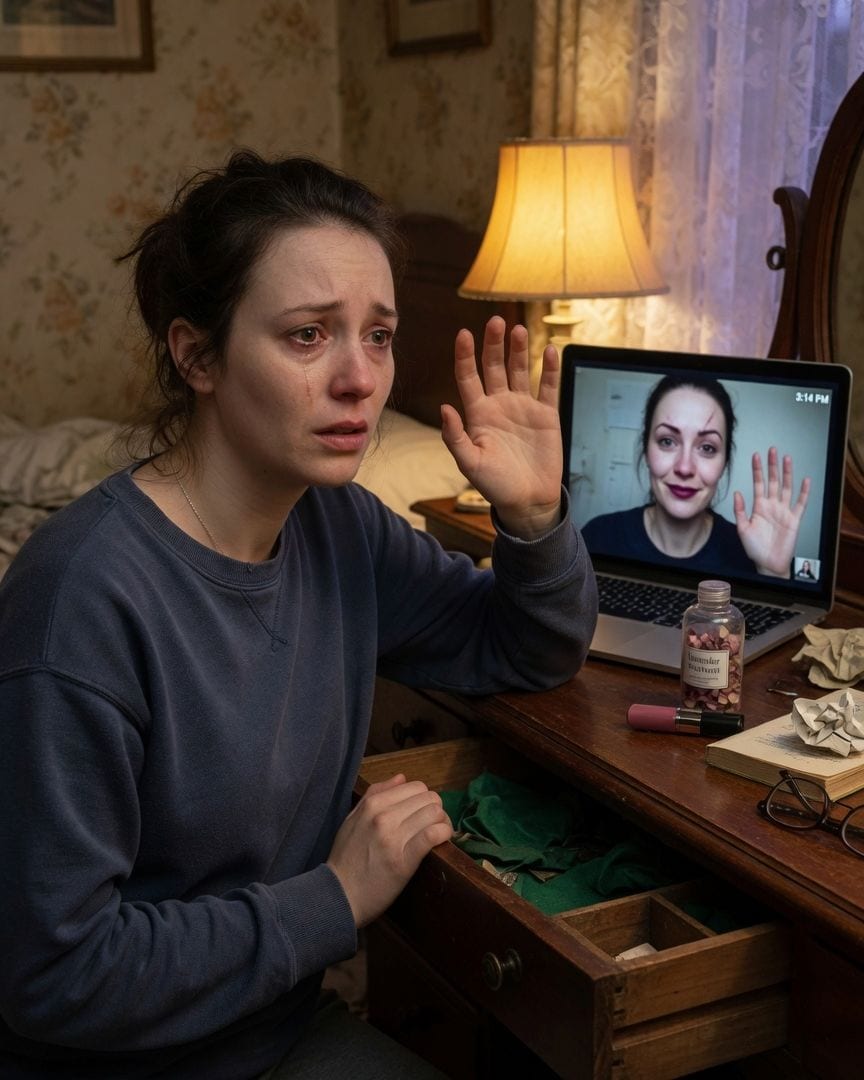
My mother waved with her right hand, both times, on our first call after she came home. She always waved left.
My mother vanished three months ago, then came back. On our first video call, she waved goodbye, but not with her usual left hand. It was her right, a small gesture that twisted something cold in my stomach.
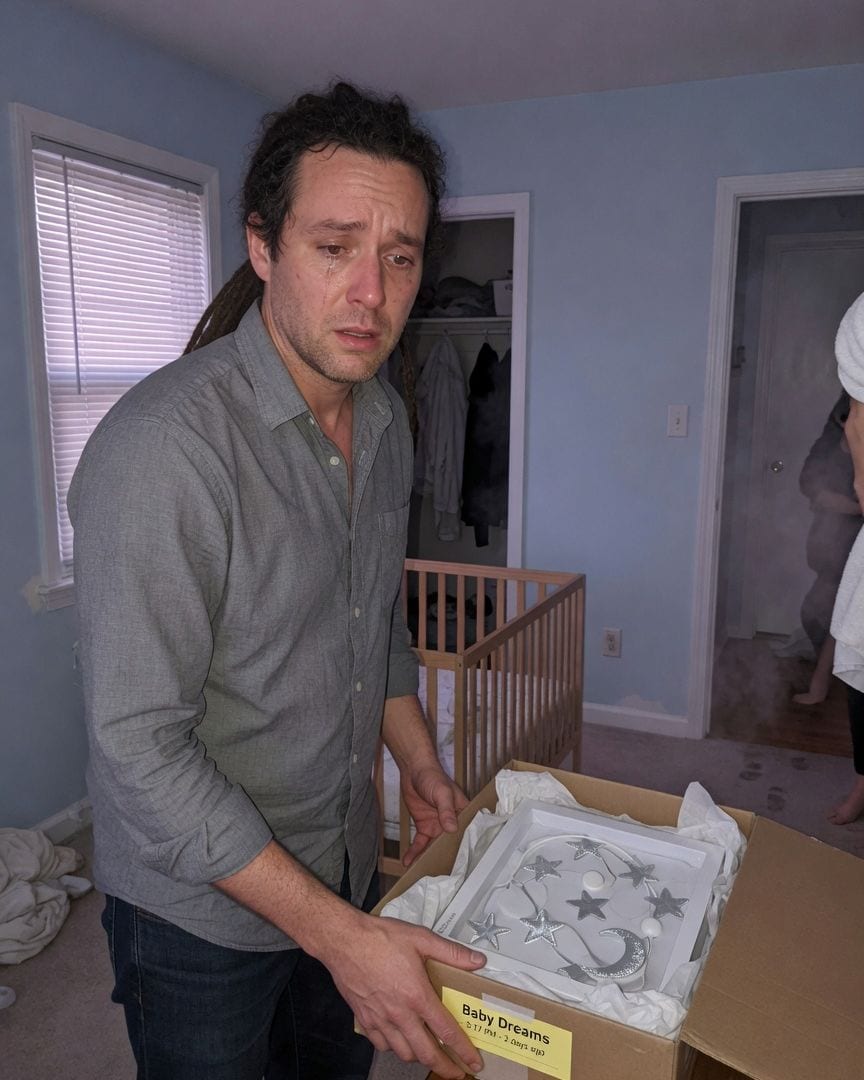
My wife thanked me for the pale blue nursery. We have no child. She described the mobile I'd only imagined, then asked when it would arrive.
Sylvia returned exactly one year after her disappearance, a miracle I could barely believe. But her first words about a nursery I'd only ever imagined, complete with a specific mobile, sent a shiver down my spine. That mobile, a private fantasy, arrived two days ago, and she just asked why it was late.
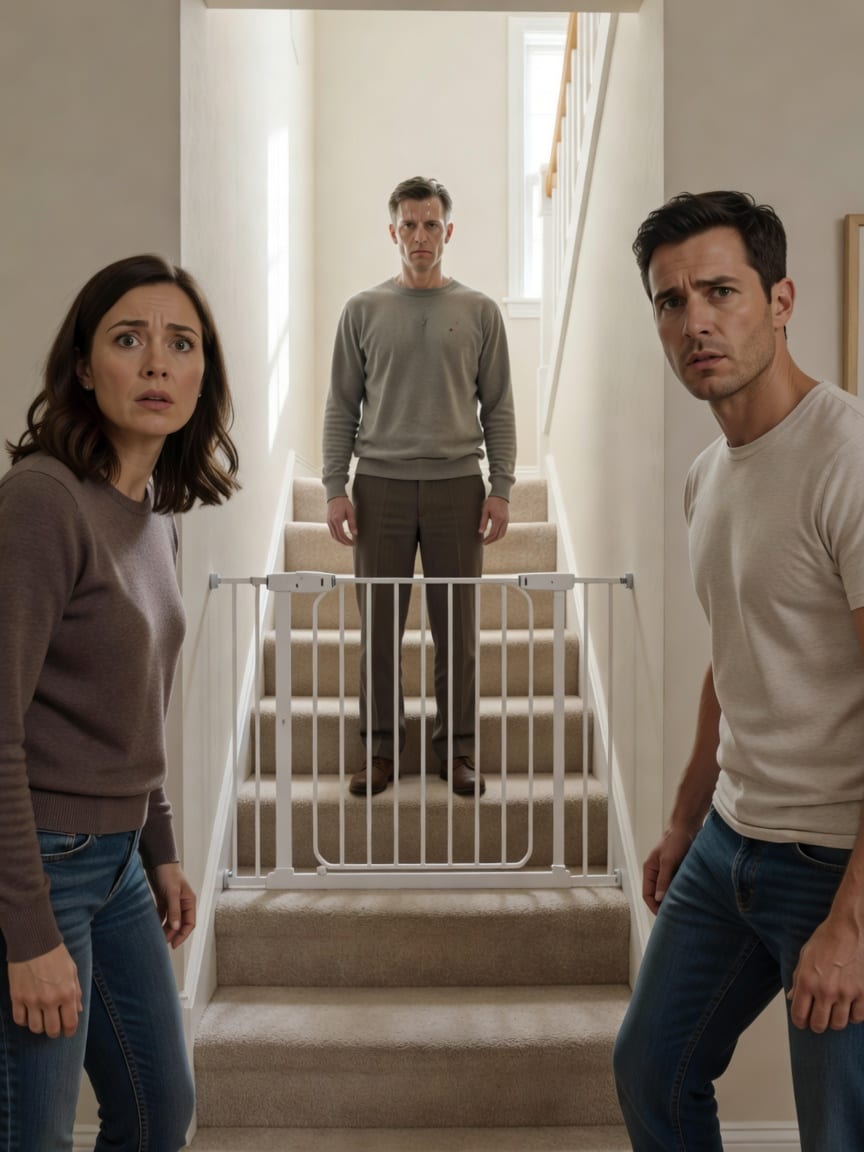
My stair gate latches itself every night. Pressure-fitted tight across my empty stairs, no children live here and no fixings exist on the wall.
I live alone in my inherited house, so the toddler gate at the top of my stairs should not be there. Each morning, I find it perfectly latched and sturdy, despite having hidden it away in the shed the day before. This isn't a quirk; it's a routine, and it isn't mine.
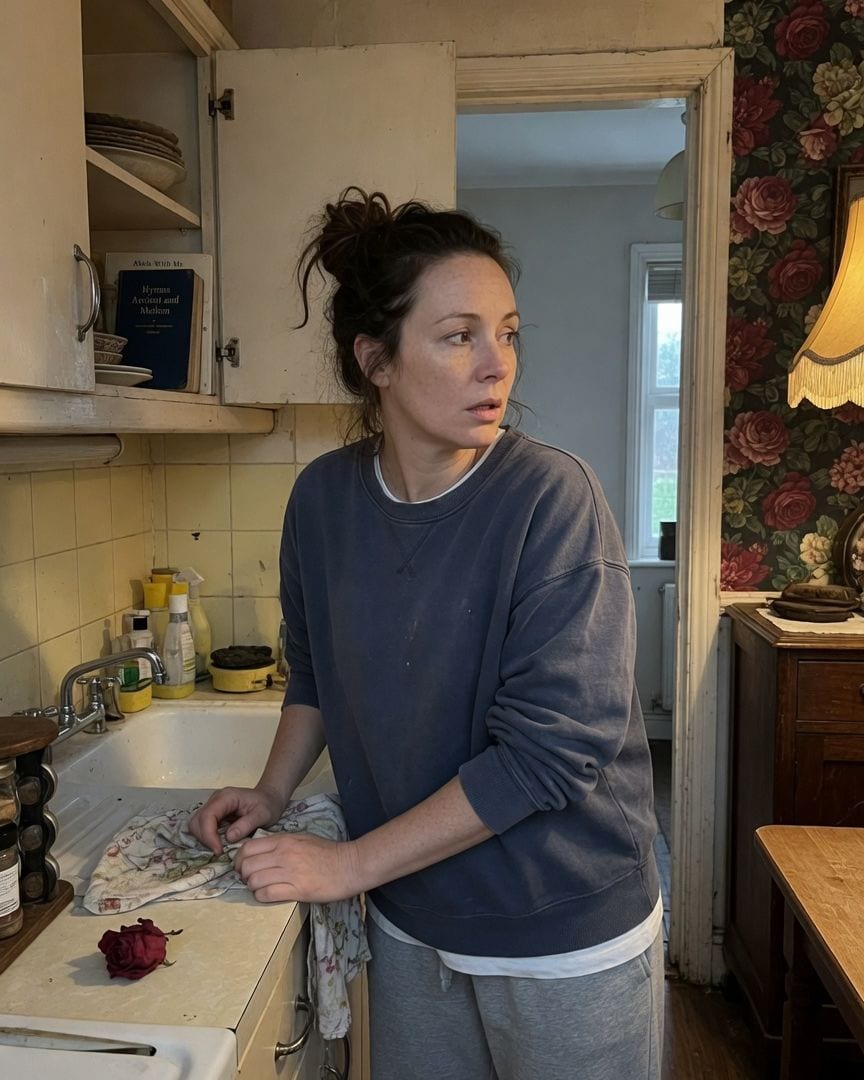
My kitchen taps run themselves on Sundays while a woman hums 'Abide With Me.' I live alone.
I moved into this quiet 1928 house for a fresh start, living alone. But for three months now, every Sunday morning, a low, tuneless hum and the distinct sound of running water drift from my kitchen sink. A plumber found no explanation.
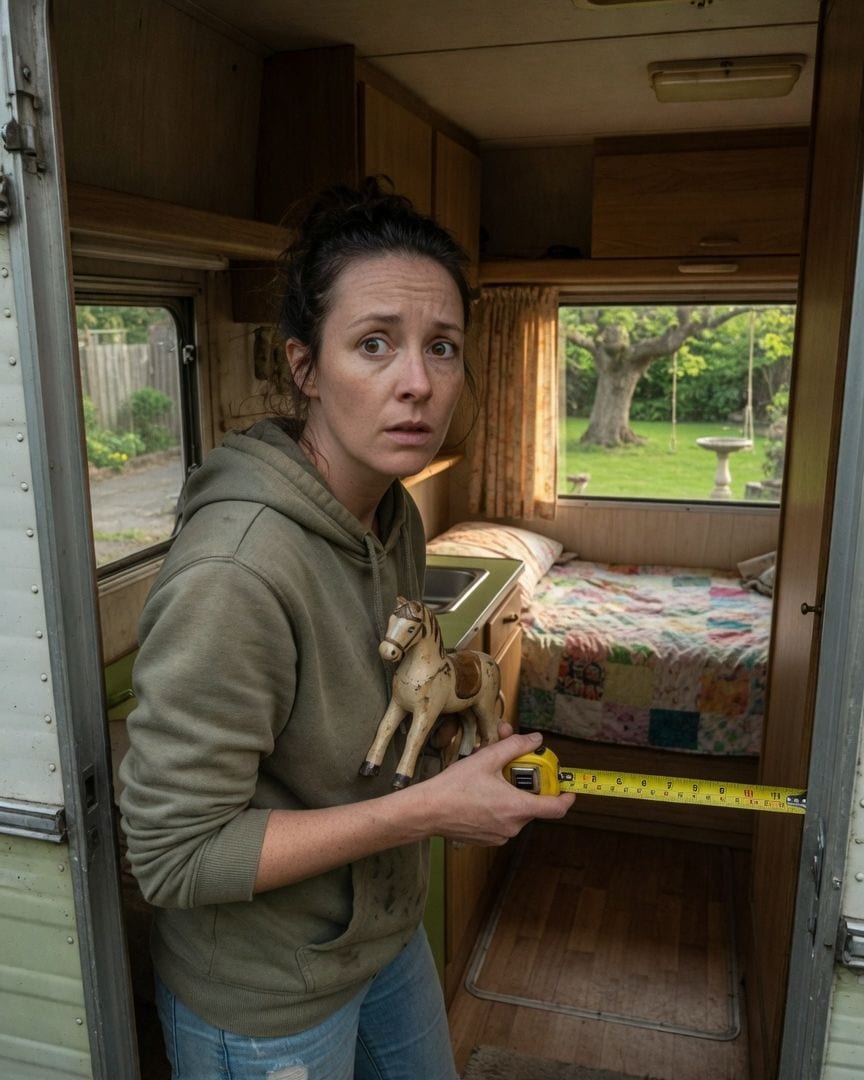
My new caravan's corridor runs longer than the caravan itself. Eleven feet of hallway past the end wall, to a room with a made bed and a window looking out on a garden it's never been parked in.
I finally bought my dream vintage caravan, a twelve-foot beauty. But when I measured inside for a mattress, the numbers didn't add up. Beyond where the wall should be, an impossible room with a window looked out onto a manicured garden I'd never seen before, a garden that couldn't possibly exist.
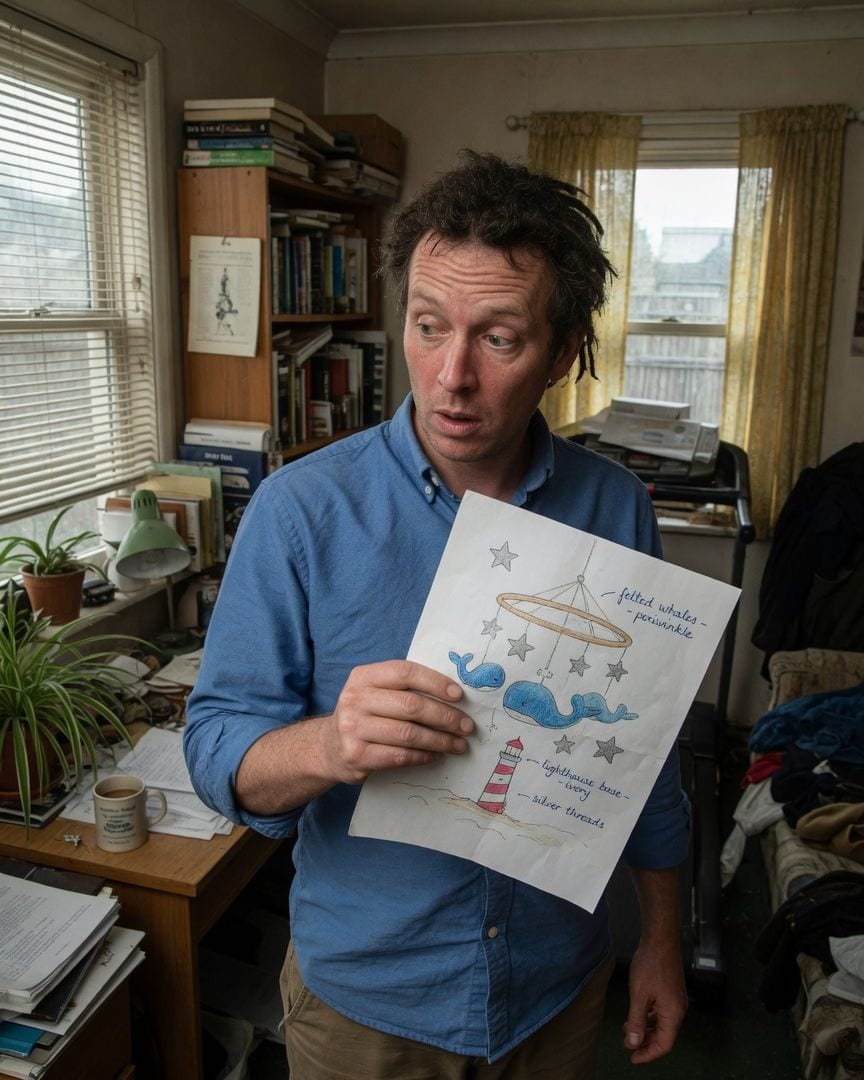
My wife described the pale blue nursery I'd only imagined. She asked when the mobile would arrive. We have no child.
My wife, Nina, returned a year after the ferry disaster, bringing a tidal wave of relief. But a week later, she thanked me for the perfect pale blue nursery, the cot under the window, and the name. I stood frozen; this was a desperate fantasy I’d only ever imagined in my grief, never spoken aloud.