An Army records clerk's dead father just received a medical bill from a Cold War sanatorium closed since 1968, asking for his daughter.
Odette Cardew, an Army records clerk, sifted through a stack of declassified medical releases, a routine task she’d performed for years.
The air in the archive was always cool and dry, smelling faintly of old paper and dust, a scent that usually brought her a quiet comfort. But this morning, a sudden jolt snagged her attention.
She picked up a crisp, white envelope from the stack, her movements slowing as her eyes registered the name stamped across its top: Harold Sutton. Her father.
He had died in the Chosin cold in 1950, when she was just two years old, a fact she knew from the official, sealed records filed away in this very building.
Inside was not a final discharge or a posthumous citation, but an itemized medical statement from a facility nestled deep in the Ozarks. The date at the top of the bill read last month, a current date in 2005.
It listed Room 217, detailed low-sodium dietary restrictions, and demanded a small, current balance. The account was active. A chill snaked up Odette's spine. She told herself it had to be a clerical error, a fantastically bizarre misfiling.
Then she saw the handwritten note scrawled in the margin: 'Patient asked, again, whether his daughter had come.' Her breath hitched.
The entire statement was stamped with the date of her own birthday, a detail that chilled her more than anything else.
It felt less like a bureaucratic mistake and more like a deliberate, impossible message, delivered across more than half a century.
Odette tried every rational explanation. A misfiled record, an impossible namesake, a bureaucratic ghost conjured by outdated software. Her first thought was to dismiss it, to file it away as an anomaly.
But the name, the specific details—Room 217, low-sodium—they clung to her. She carried the bill to her colleague, Pamela Yates, a pragmatic woman with decades in the archives, whose face showed no flicker of emotion at the strange request.
Pamela squinted at the document, then ran its details through their system. She confirmed the file was real, a live account, but could offer no explanation for the current date.
The facility, listed as the 'White River Sanatorium,' had been officially closed since 1968, its records sealed and archived. "Probably some old glitch," Pamela had mumbled, returning to her own stacks. "Happens all the time with these ancient files."
But Odette knew, with a deepening unease, that this felt different. It didn't feel like a glitch. Driven by an unbearable dread and a stubborn need for answers, Odette used her internal access to cross-reference the sanatorium's details.
She bypassed official databases, digging into the most obscure, heavily redacted documents, until she found it: a single, fragmented reference to 'Project Nightingale' and a code: 'Nightingale-117.' Her father's service number.
The Ozarks were a long drive, a landscape of ancient, rolling hills that seemed to swallow the light. Odette found the sanatorium where the old maps indicated: a hulking, overgrown ruin, its stone facade crumbling, vines clawing at every window.
The silence pressed in on her, broken only by the chirping of cicadas. A single, rusted sign, half-buried in weeds, confirmed the name.
The main building was boarded up, its grand entrance a dark, gaping maw, but a side door, partially rotted by time and weather, hung ajar.
It looked as though it had been forced open by a storm, or perhaps, recently, by something else.
Inside, dust lay thick on every surface, a fine gray blanket over forgotten furniture and fallen plaster. Yet, beneath the stagnant air, a faint, metallic scent lingered, like old institutional food that had been cooked just yesterday.
It was too specific to be imagination. Odette followed the room numbers etched on the doors, her heart hammering against her ribs. She found Room 217, just as the bill stated.
It was a small, bare space, a narrow cot against one wall. The air in this particular room felt colder than the rest of the building, a pocket of unnatural chill.
The cot was stripped, but on a grimy bedside table, a faint ring mark suggested a glass had recently sat there. On the floor, a small, empty tray, surprisingly clean, lay tucked against the wall.
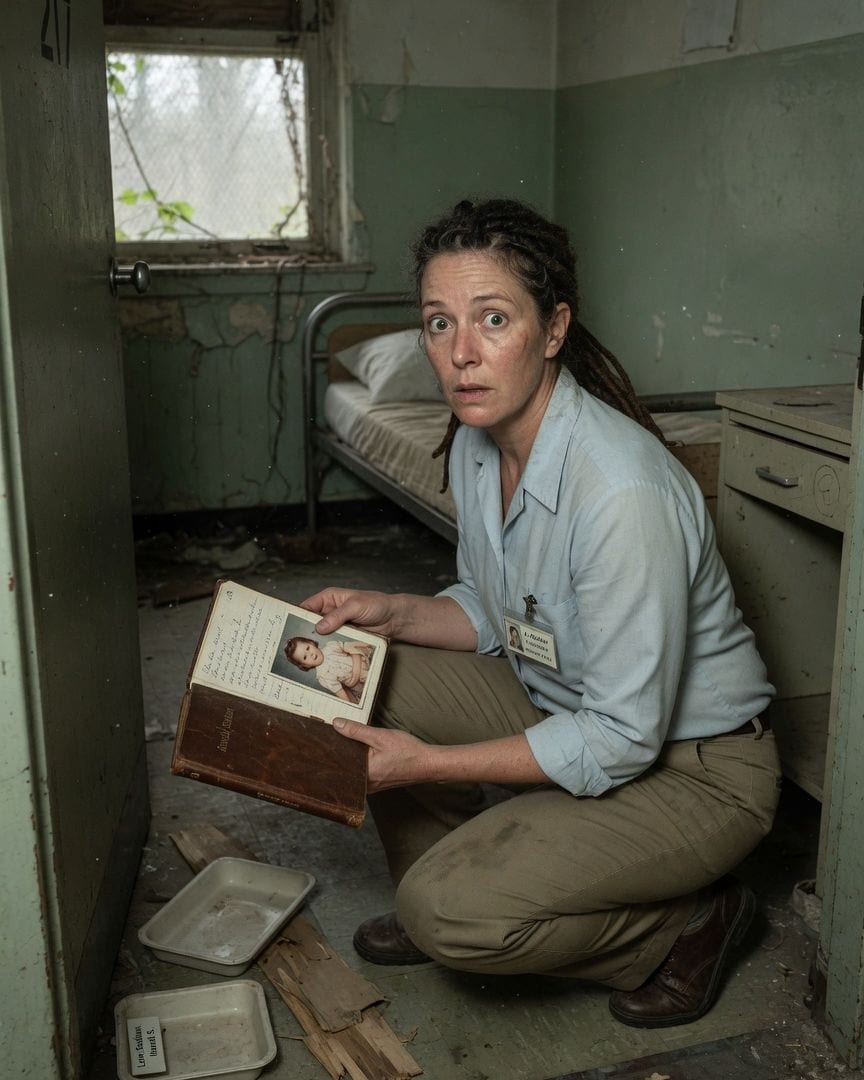
It was the kind of tray used for hospital meals. And inside, a label confirmed it: 'Low Sodium. Harold S.'
Her heart hammered, a frantic drum against her ribs. This wasn't a misfile. This wasn't a glitch. Someone had been here. Her father's room. He had been here.
She scanned the small, bare space again, her gaze catching on something near the base of the cot. A loose floorboard, barely discernible beneath the dust. She knelt, her fingers trembling as she ran them over the aged wood.
It gave slightly. Prying it up with a desperate claw, she felt the splintering wood under her nails. Beneath it, nestled in the dark, was a small, leather-bound journal. It was her father's.
His name, Harold Sutton, etched faintly on the worn cover. Inside, the first pages were filled with familiar entries from the Korean War, descriptions of the bitter cold, the endless marching, the faces of his comrades.
But further back, nestled between yellowed leaves, was a faded photograph of herself as a child, her tiny face smiling, oblivious.
On the facing page, in her father's familiar, slightly shaky hand, dated just last week, was a single, scrawled question: 'Did she come?'
Odette clutched the journal, the dread now a cold certainty that had settled deep in her bones. Her father was alive, or had been, here, last week. She carefully re-boarded the floor, her movements stiff, her mind racing.
The journal offered no immediate answers beyond proving his impossible survival, a truth that ripped at the edges of her reality.
She left the sanatorium as quickly as she could, the ancient building seeming to watch her retreat with blank, empty eyes.
Back at her office, the archive’s familiar scent no longer brought comfort, but a chilling reminder of the deep, hidden layers of information she now knew existed.
Odette dug deeper into 'Project Nightingale,' bypassing official channels with her clearance, using every obscure code and back door she knew.
The official closure date of the White River Sanatorium, she now understood, was a smokescreen, a bureaucratic lie designed to obscure the truth.
She found oblique references to 'extended care protocols' and 'patient status maintenance,' phrases that sounded too clinical, too cold, to apply to human beings.
She discovered a series of low-frequency radio beacons, still active, emanating from the precise location of the Ozarks facility. Their patterns matched a precise schedule of what were termed 'routine administrative checks' for Nightingale-117.
This wasn't just a misfile; it was an ongoing operation, carefully managed and meticulously hidden.
The paper trail was thin, almost nonexistent, a deliberate obfuscation, but the few scattered records she found bore a distinct, stylized symbol: a raven perched on a medical caduceus.
She recognized it instantly from the corner of her father's medical bill, a small detail she had previously dismissed as a mere logo. It was a signature.
Her digging, she soon realized, did not go unnoticed. One evening, leaving the archives late, the fluorescent lights humming above her, Odette found a man waiting by her car.
He was impeccably dressed in a dark suit, his posture precise, his hands clasped in front of him. There was a quiet authority about him, a stillness that unnerved her more than any overt aggression.
"Miss Cardew," he said, his voice smooth and even, betraying no emotion. "Felix Kingsley. From Records Management. We've noticed your… diligent interest in certain historical files."
He didn't threaten, but his presence, the way his eyes seemed to assess her, was a clear and unsettling warning. "Some records are best left undisturbed. They have their own systems of maintenance."
He spoke of 'continuity of care' and 'sensitive protocols' with a chilling detachment, as if discussing inventory rather than people. Odette felt a cold knot tighten in her stomach. He knew everything she had done, everything she was looking for.
He even mentioned the specific call sign, Nightingale-117, as if it were common knowledge.
As he turned and walked away, disappearing into the shadows of the parking lot, a sense of being observed, not just by Kingsley but by the vast, patient machine he represented, settled over her.
She realized the file wasn't just a record; it was a living entity, aware of its own scrutiny, and it was watching her.
The next day, Kingsley summoned Odette to his office. He didn't try to stop her, only to manage her. His office was surprisingly sparse, a contrast to the opulence she might have expected.
He sat behind a vast mahogany desk, a single, antique raven figurine on its corner, a silent echo of the symbol she'd found. "You've pieced together more than most, Miss Cardew," he began, his voice calm, "about Project Nightingale.
Your father, Harold Sutton, isn't 'lost.' He's… filed."
He leaned back, his eyes steady on hers. He explained, with unsettling calm, that Project Nightingale was established decades ago, an off-the-books initiative to 'preserve' individuals deemed vital for future purposes, or simply too inconvenient to officially lose.
They were maintained in a state of suspended animation, sometimes semi-awareness. "Your father's condition is stable. His 'care' is ongoing. He is Nightingale-117."
Odette pressed him on the journal entry, the scrawled question that had haunted her sleep. 'Did she come?' Kingsley sighed, a faint, almost imperceptible sound. "A recurring query. A residual neurological loop, you might call it.
It indicates a certain level of… awareness. A memory, perhaps, reaching for interaction. We log it. Just as we log his dietary needs, his room number, the schedule of his 'checks.' It's all part of his file."
He confirmed the birthday stamp on the medical bill was not an error. "It's a pre-programmed 'event marker' within Project Nightingale's protocols, specifically for Nightingale-117. A 'readiness for daughter contact.' A signal, you see, to initiate observation."
The horror wasn't just that her father was alive, a prisoner in a suspended state, but that his ongoing, impossible existence was meticulously, clinically managed, his consciousness a mere data point in a vast, patient ledger.
The medical bill, the specific room number, the low-sodium food, the question in the journal, even her own birthday stamp—all of it clicked into place, not as errors, but as parts of a horrifyingly coherent system.
The silence of the room seemed to deepen, filled with the weight of the impossible truth.
Odette stared at Kingsley, the implications crushing her, pressing the air from her lungs. Her father was a prisoner of bureaucracy, a living ghost kept tethered to a system that refused to let go. "Why?"
she whispered, the word barely audible. "What's the purpose?"
Kingsley's smile didn't reach his eyes, a thin, almost imperceptible shift of his lips. "Purpose is for those who are truly lost, Miss Cardew. We ensure continuity.
For some, their legacy, their lineage, even their potential interactions, must also be… managed." He rose from his desk, his movements fluid and silent, walking to a heavy, bound ledger resting on a pedestal in the corner of the room.
Its cover bore the familiar raven and caduceus symbol, embossed in dark leather. He opened it, flipping through thick, parchment-like pages filled with the same precise, official script she'd seen on her father's bill.
The pages rustled, a dry, papery sound that filled the quiet office. "Your father's file, Nightingale-117, is extensive," he said, his voice a low hum, "detailing his entire… maintenance history. But some files are… anticipatory."
He paused, his finger tracing a line on an open page, then he gestured to it. Odette’s gaze fell upon the neatly written script, and her breath hitched, a cold dread seizing her, tightening her chest.
Her own name, Odette Cardew, was written in the same steady official hand. Below it, a date two months in the future, and a chilling entry: 'Subject: Daughter of Nightingale-117. Arrival anticipated. Disposition: File initiated.'
Odette felt the blood drain from her face, leaving her cold and dizzy. Her own name, her future, written down as if already determined. "What is this?" she demanded, her voice a tremor she barely recognized.
Kingsley merely watched her, his expression unreadable, calm as a stone. "It means, Miss Cardew, that your journey here was not an accident. It was… accounted for."
He closed the ledger, the soft thud echoing in the stillness of the office. "The system, as I mentioned, maintains continuity. Your father's connection to you, his 'daughter contact readiness,' necessitated a parallel entry.
Your 'file' was opened when your father's 'query' became persistent, when his lingering consciousness reached out for you through the established channels."
He explained that Project Nightingale wasn't just about preserving individuals, but about managing the ripple effects of their 'disappearance' from the world. Odette, as the primary next-of-kin who actively pursued the truth, became a 'subject of interest.'
The stamp of her birthday on the bill wasn't just a marker for her father; it was a subtle call, meant to draw her in, to initiate her 'file,' to confirm her existence within their system.
Every step she took, every record she accessed, every question she asked, had been anticipated, perhaps even subtly guided.
The entire investigation she believed she had undertaken on her own free will was, in fact, a pre-scripted administrative process, and she was merely playing her part in a vast, patient system that had no intention of releasing its grip on anyone it touched.
It had always been waiting for her.
Odette stumbled back, the room seeming to tilt around her, the perfectly ordered office now a terrifying cage. "You lured me here," she choked out, the words catching in her throat. "You planned this." Kingsley nodded slowly, his gaze unwavering.
"We ensured the natural progression of events. A daughter seeking answers about her father. It's a powerful motivator. And now, you understand. The system is not malicious, Miss Cardew. It is simply… thorough."
He gestured to a comfortable armchair, as if inviting her to settle in, to become another entry. "We can discuss your integration into the 'continuity protocols.' Your father is stable. You could be too. Or, you could leave.
But understand, your file remains open. And we are very patient."
Odette stared at the ledger, at her own name, at the future date, a cold and calculated destiny. She understood the calm in Kingsley's voice now.
It was the calm of absolute control, of a machine that had already charted every variable, every human reaction. She could not fight an institution that had already written her story, her very path.
The choice he offered was a cruel illusion, the path already laid out. She imagined her father, suspended in that facility, his mind cycling through the same question for decades, waiting.
She could not join him in that silent, bureaucratic limbo. She turned, her gaze meeting Kingsley’s, her resolve hardening despite the terror. "I'm leaving," she said, her voice shaking but firm. "And I'm closing this file."
Kingsley merely smiled, a faint, almost imperceptible curve of his lips. "As you wish, Miss Cardew. But a file, once initiated, is never truly closed. Only… archived."
Odette left Project Nightingale, driving away from the Ozarks facility in a daze. The world outside felt sharp and too bright, tainted by the quiet horror she now carried.
She never spoke of what she found, not to Pamela, not to anyone. The words would have sounded like madness, and she knew the system would not tolerate open challenge.
Her work in Army records continued, but her meticulousness took on a new, obsessive edge. She watched every incoming file, every coded reference, every anomalous date, searching for other 'Nightingales,' other 'filed' lives.
She found none, or perhaps, she simply wasn't meant to.
The silence from Kingsley was absolute, yet she felt the weight of his words, the unseen threads of her own open file, still accruing entries in some unseen ledger, somewhere in the vast, patient machinery of Project Nightingale.
Years later, Odette, now retired, received a small, unassuming package in the mail. No return address, no sender. Inside, nestled amongst tissue paper, was a single, faded photograph: herself as a child, the same one from her father's journal.
No note, nothing else. Just the photograph, and the chilling knowledge that someone, somewhere, was still making entries. The file was still being signed.
Her colleague, Pamela Yates, would sometimes call, asking if Odette was alright, if she ever heard anything strange. Odette would just smile faintly, a little wrong, and say, 'Everything is filed, Pamela. Everything is filed.'
If this one got to you
A retired librarian's father, declared dead 74 years ago, has a current medical bill from a secret Cold War facility, asking for his daughter.
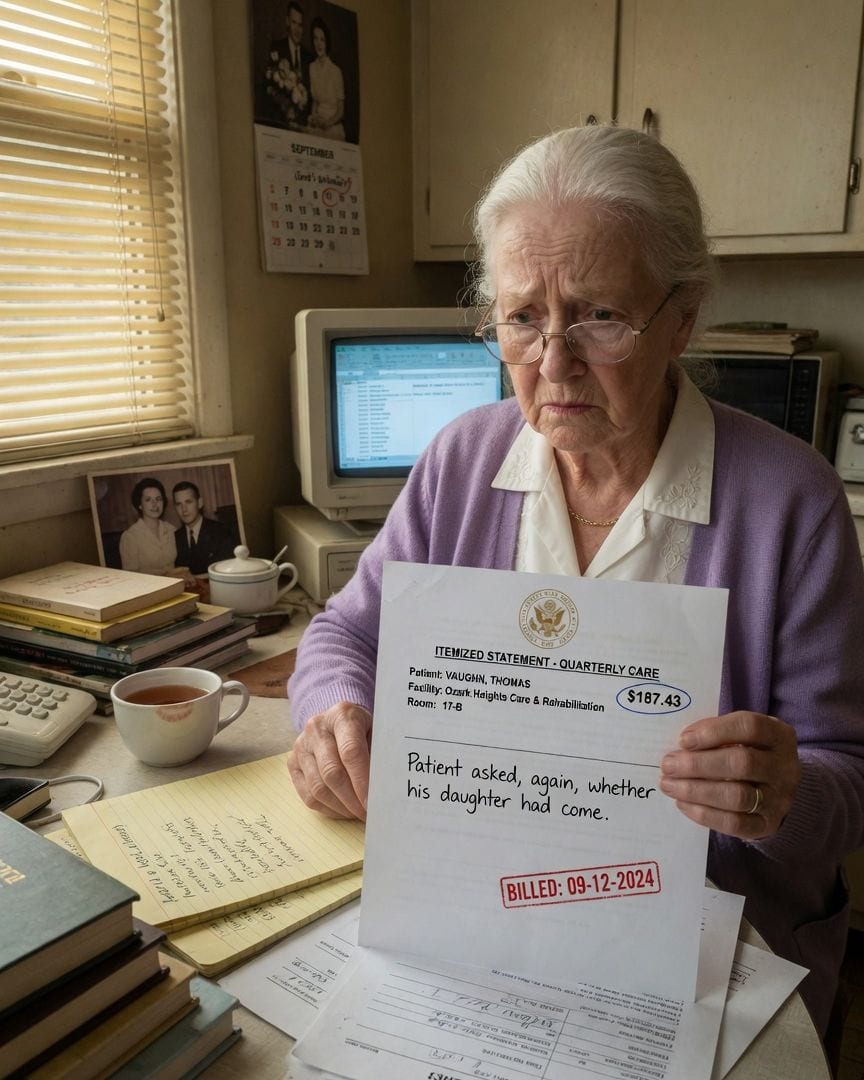
Retired librarian Odette Cardew, 76, found her quiet morning shattered by an official Army medical bill. It was for her father, Thomas Vaughn, declared dead in the Chosin cold 74 years ago, yet listed active care at an Ozarks facility, with a note asking for his daughter. As she painstakingly cross-referenced defunct directories, she uncovered a secret Cold War 'Special Observation Unit' at the address, a black hole on any public map. Then, a declassified manifest revealed Thomas Vaughn was 'RELOC, INDET TERM,' not deceased, and a chilling line designated Odette herself: 'Dependent: Cardew, Odette. Status: Monitored.'
An elderly woman finds a current bill for her Cold War father's care, dated 72 years after he was declared dead.
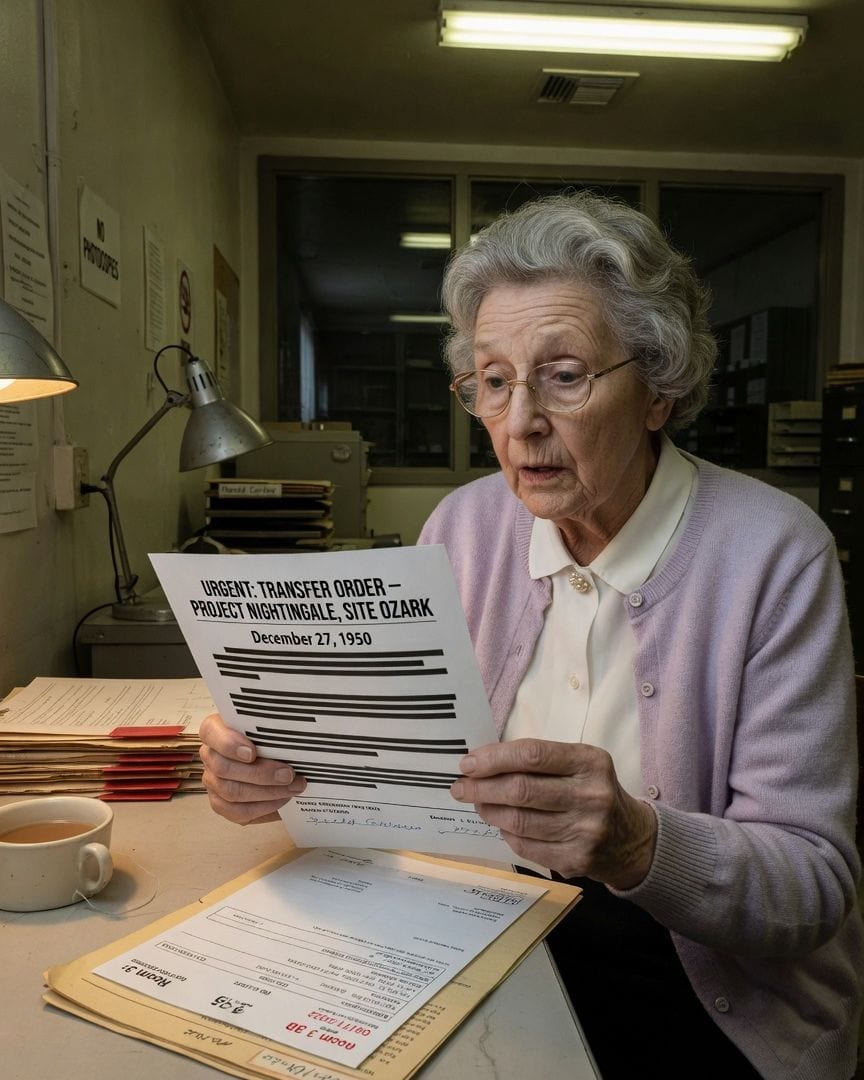
Odette Cardew, a woman in her seventies, spent her days sifting through her father's old Army papers, a quiet ritual honoring a man she knew only as a ghost. Harold Cardew had been declared dead in the brutal Chosin cold of 1950, when she was just two years old. But among the yellowed documents, a crisp, modern medical bill for his current care arrived, detailing his room number and dietary needs at an Ozarks facility, dated her own birthday in 2022. When Army records confirmed his death decades ago, Odette then found an impossible transfer order, dated two weeks after he was officially gone, linking him to a mysterious 'Project Nightingale.' How could a man officially dead still be receiving care and be subject to a secret transfer?
My aunt's sanatorium record shows Patient 5-4. The same file number has been quietly reissued every thirteen years since 1921, signed by the same superintendent's initials.
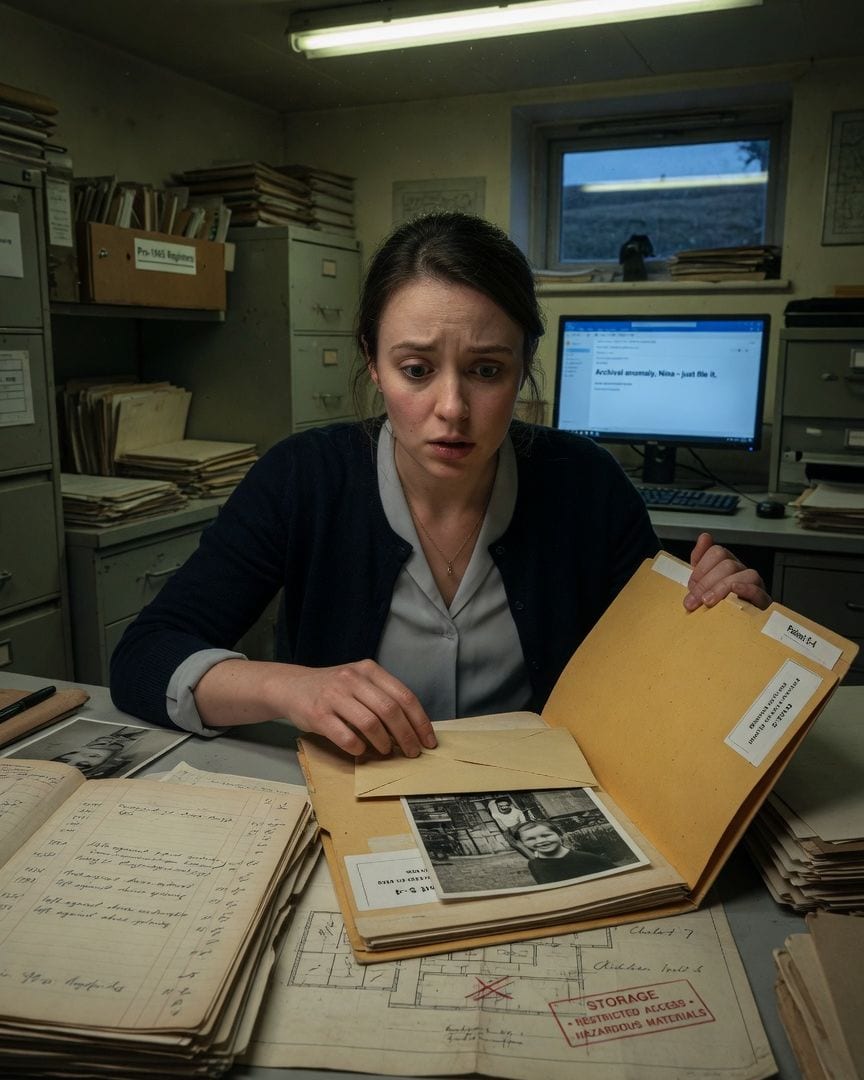
Processing my aunt Florence's admission file in the archives, I found her patient number, 5-4, held a disturbing secret. This number appeared every thirteen years since 1921, for patients admitted to the same remote chalet, signed by the same impossible initials, and all vanished without a trace. Then, hidden in my aunt's file, I found an old photo of her outside that chalet, with a gaunt, still figure watching from its window.
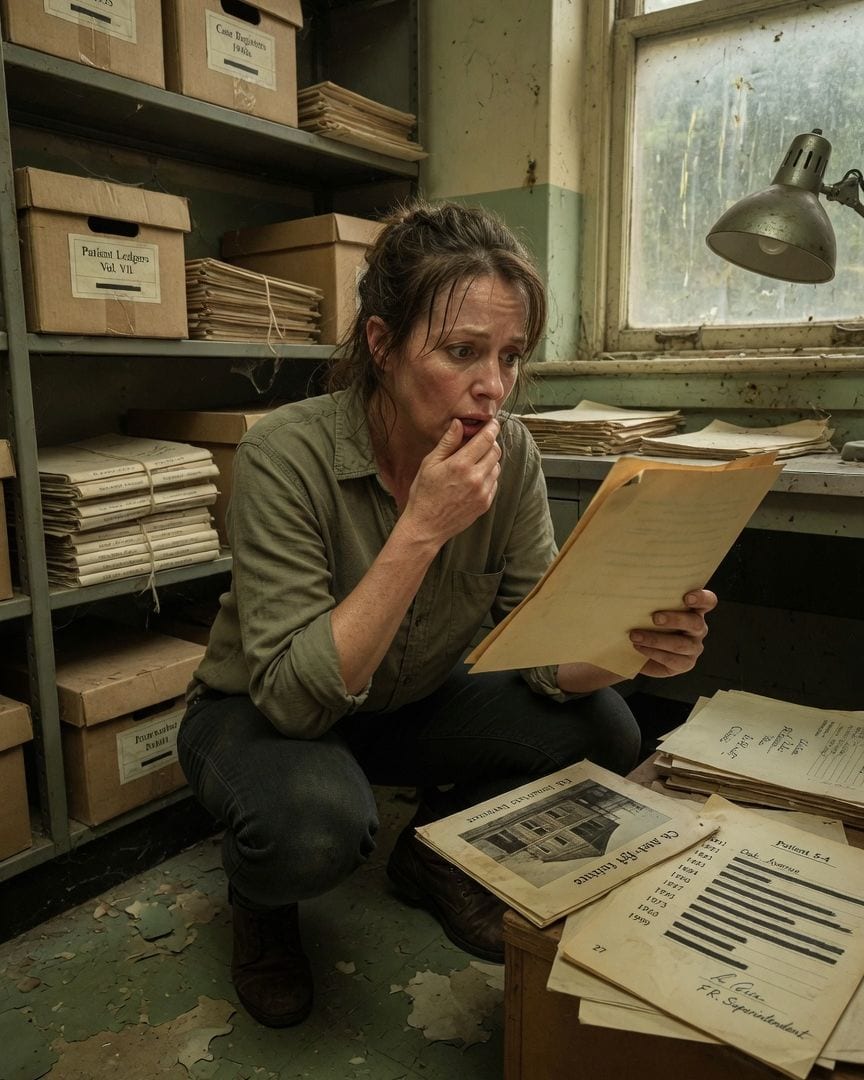
Patient 5-4 keeps checking into my aunt's old sanatorium chalet. The same initials sign them out, 'not traced,' every thirteen years since 1921.
Sifting through my aunt Margaret's estate, I found her old sanatorium file from 1999. Her patient record listed her as 'Patient 5-4,' discharged 'not traced.' But when I accessed the archives, I found 'Patient 5-4' was admitted every thirteen years since 1921, always with identical discharge notes.
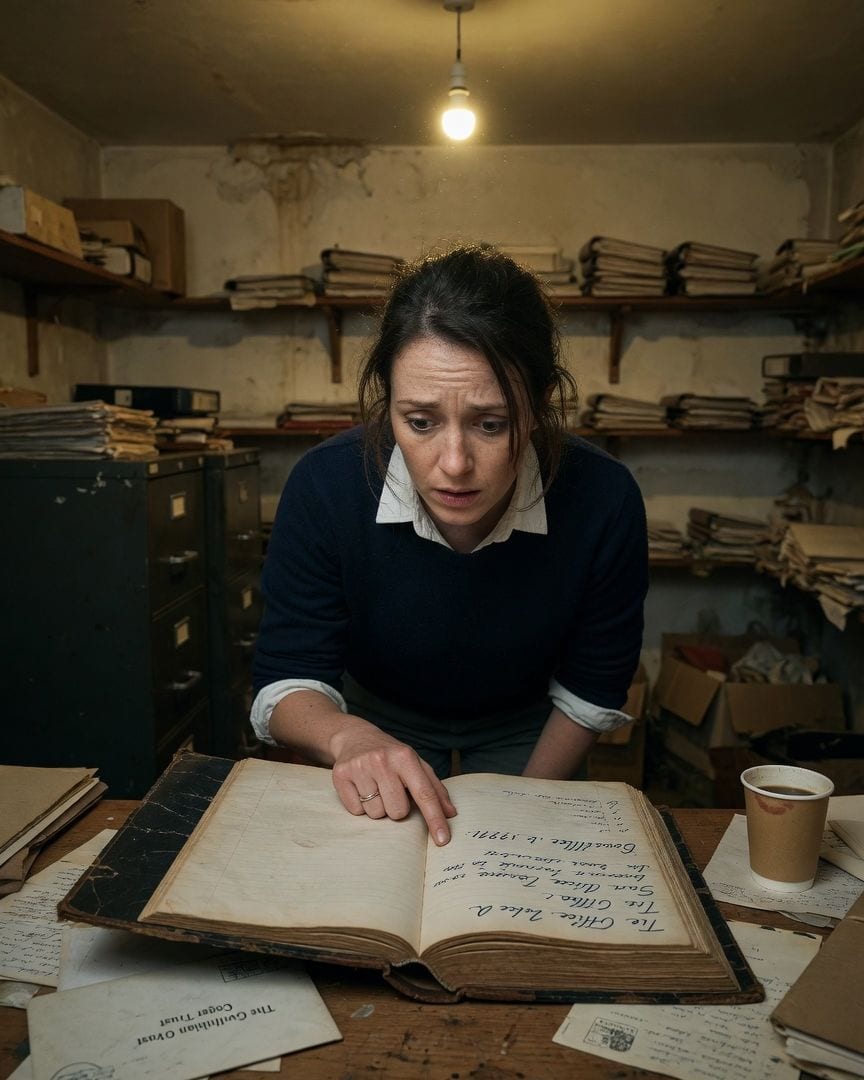
A charity thanked me for a donation 'in loving memory of' my own name. The letter posted from an office lost to the sea decades ago.
A letter arrived, thanking me for a 'generous donation' made in my own loving memory. When I pressed the charity for answers, their historical ledger confirmed the impossible: an entry for Sarah Bishop, born 1991, recorded in 1988. Three years before I was even born.
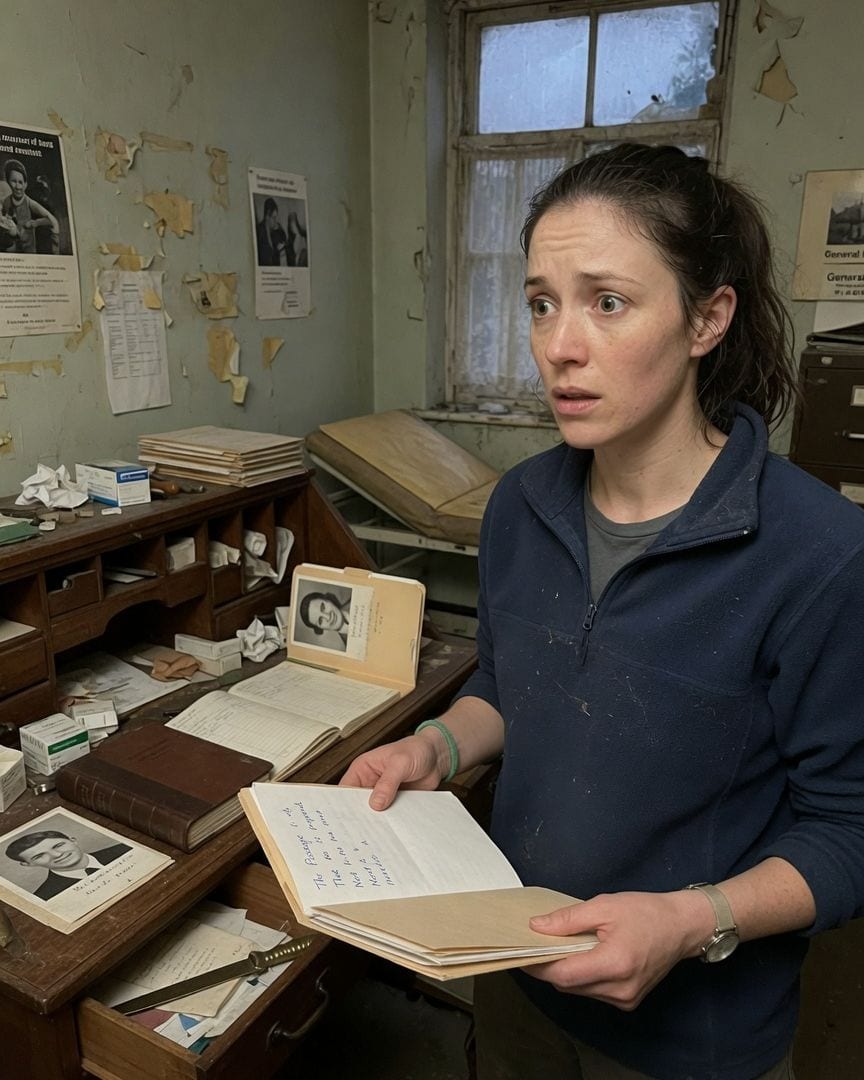
My new clinic's appointment book shows entries for this coming Monday, decades after the doctor retired and died.
Chloe Lawson bought an old, abandoned surgery in Nettlebed, ready to open her new vet clinic. Locals insisted Dr. Almott retired in '79 and the practice shut down for good. But then Chloe found his dusty appointment book filled with meticulous entries, continuing unbroken from 1979 through the decades, right up to this coming Monday.