 Declassified
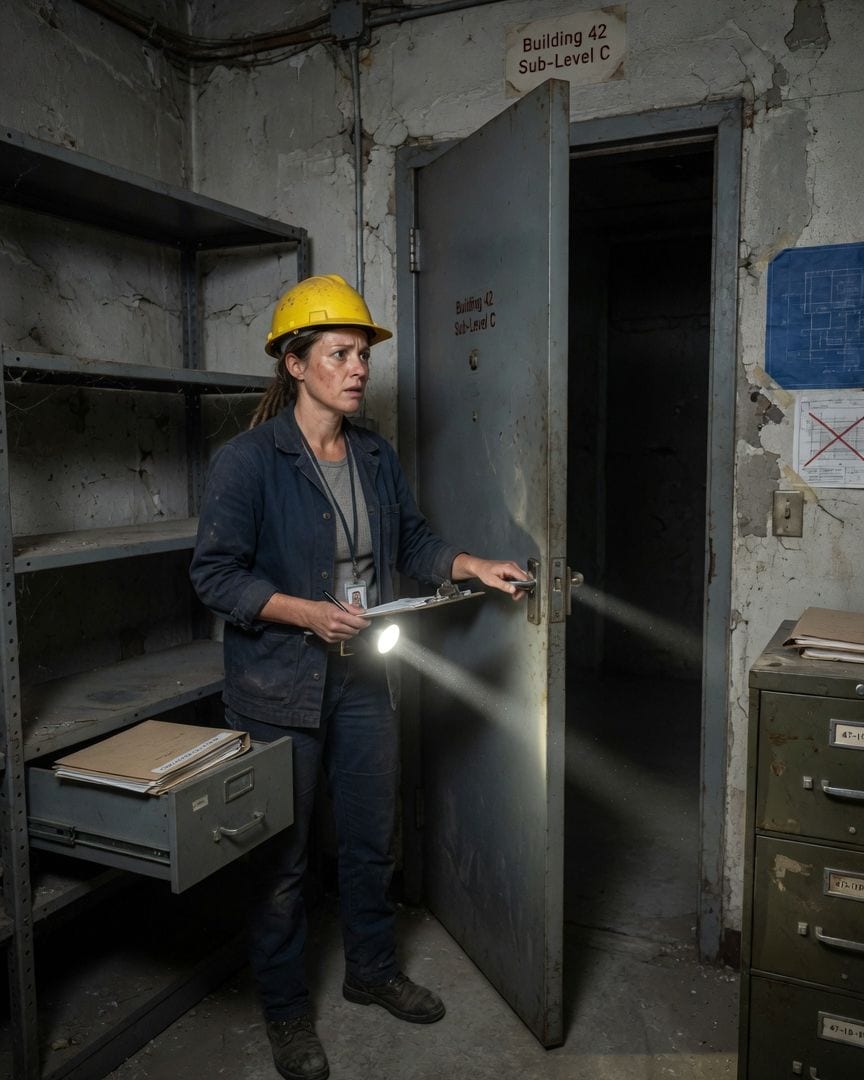
Dessa Kroll, a demolition worker, painstakingly cleared the sub-levels of a half-demolished federal building, her bad knee protesting every ladder descent. The profound silence of the lower levels was broken only by her pen, until she found an unmarked steel door in a wall that should have backed onto open air. From inside, a heavy thud made her pause. She pushed it open to find an archive containing files for a ship lost in 1968—but some documents were dated years later, and one bore her name for site access. What secrets was Building 42 truly hiding beneath its crumbling facade?
10 min read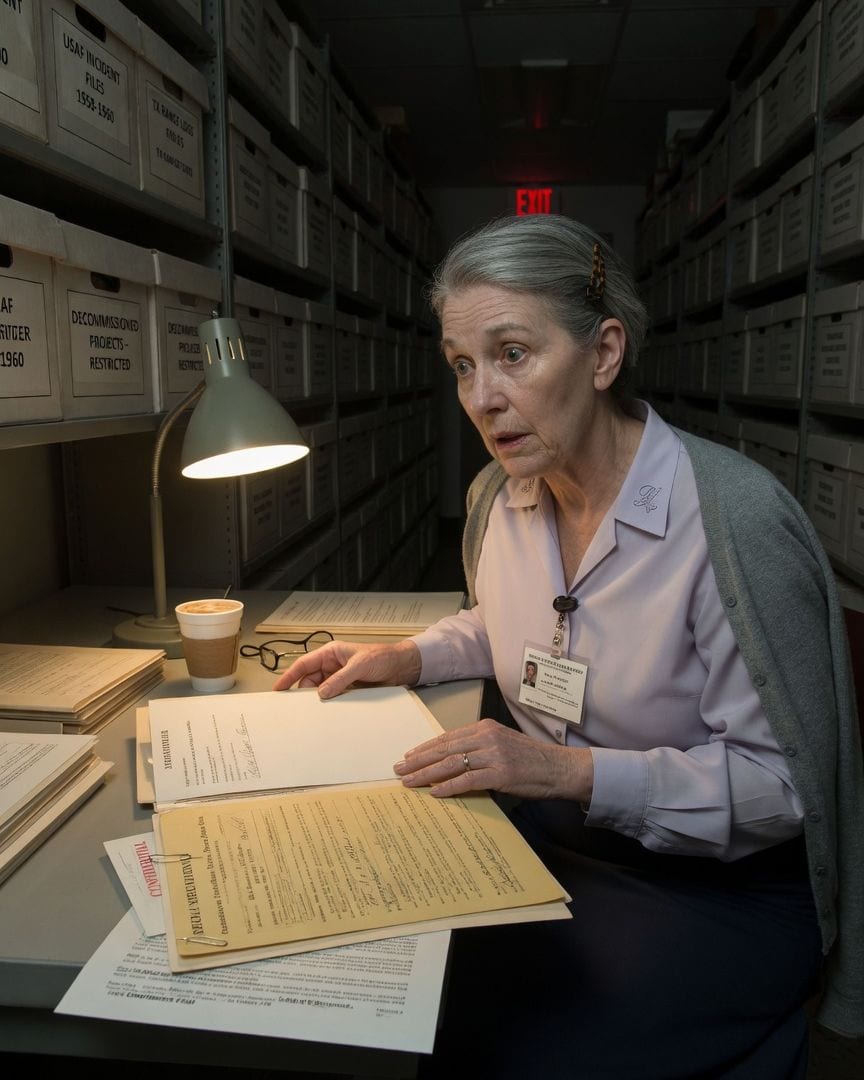 Declassified
Nearing retirement, archivist Rosalind Tate hoped to finally put a long-buried Cold War lie to rest. The shame of signing off on a physically impossible military crate in 1959 had haunted her for decades. In the hushed National Records Center, a declassification request brought her the very file she’d sealed, but instead of closure, she found a requisition for parts for the 'destroyed' drone, dated months after its crash. Then, a maintenance log detailed flight hours for the same unit, weeks later, signed by an officer who never existed. The file wasn't closed; it was chillingly, impossibly, active.
12 min read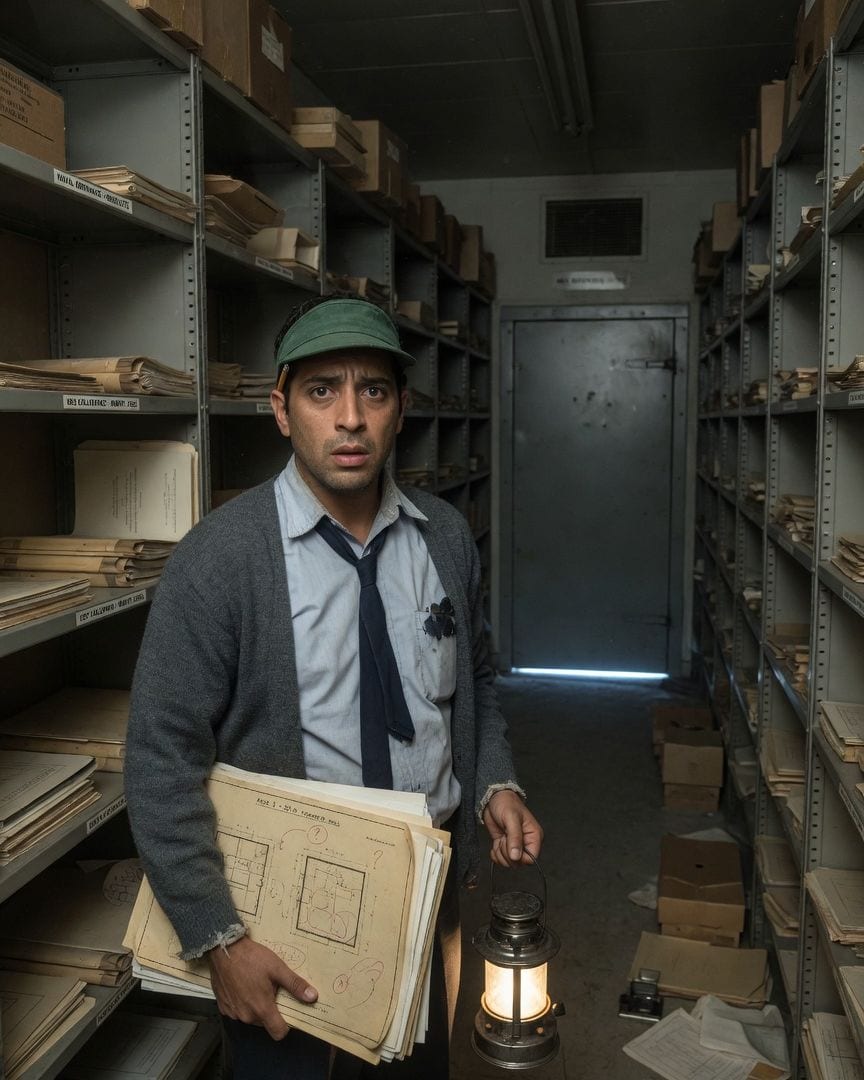 Declassified
Aurelio Bosch, a methodical night-shift clerk, worked through the Cheyenne records vault in Winter 1957, verifying shelf contents. He discovered an aisle forty feet longer than any blueprint showed, ending in a heavy steel door with no lock. From under it pulsed an unnatural light, and the unmistakable thrum of a printing press ran deep inside. Hours later, buried in old naval records, Aurelio found maintenance logs for a ship lost in 1943, meticulously dated into 1948 and signed by its dead crew. Then he found a new supply requisition for the same ship, dated just yesterday, signed by a crewman officially lost decades ago.
10 min read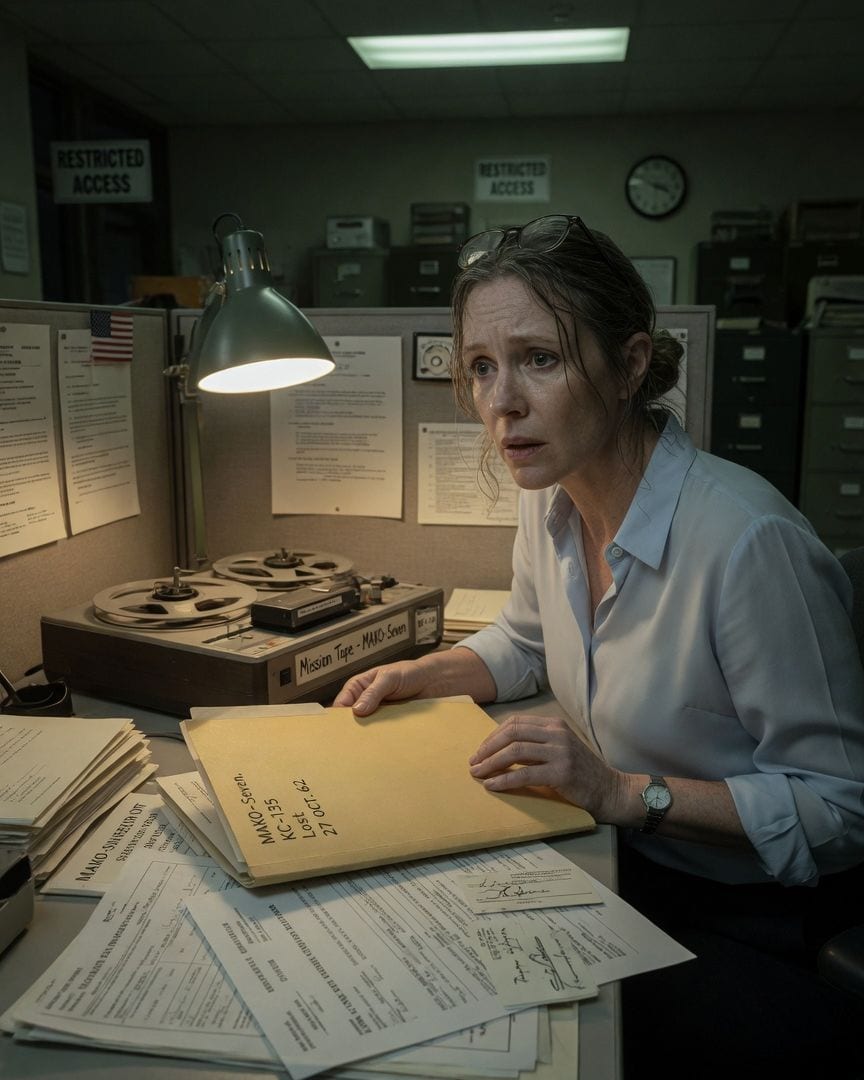 Declassified
Janet Kingsley, a declassification reviewer, was processing a routine request for a lost Cold War mission when she made a chilling discovery. The official report stated the KC-135 MAKO-Seven impacted the Labrador Sea in 1962, but its mission tape continued for nine minutes after the official crash, with the pilot calmly landing. As Janet dug deeper into the yellowed file, she found official documents for the aircraft and pilot dated years after its disappearance. The final discovery was a requisition for replacement parts, signed by Captain Thomas Sowell himself, a full sixteen years after his plane was officially lost and he was declared dead.
10 min read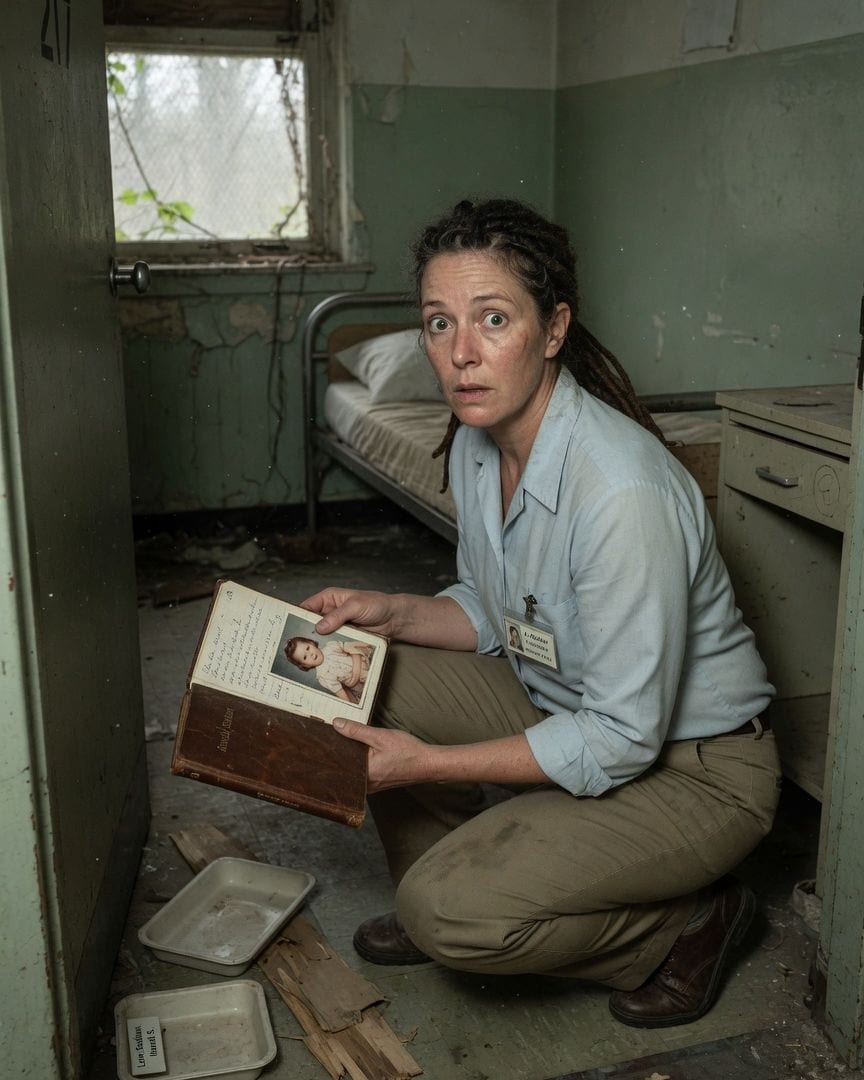 Declassified
An Army records clerk named Odette Cardew found routine comfort in the archives' dusty quiet, a place that also held the official record of her father, Harold Sutton, who died in the Korean War when she was two. One morning, a declassified medical release with his name appeared, but the bill was dated last month, from a sanatorium in the Ozarks. The facility had closed in 1968, yet the account was active. A chilling handwritten note asked, "Patient asked, again, whether his daughter had come." Driven by dread, Odette visited the crumbling, overgrown sanatorium, where in Room 217, she found a recent meal tray and her father's journal, holding a photo of her as a child and a question dated just last week: "Did she come?"
12 min read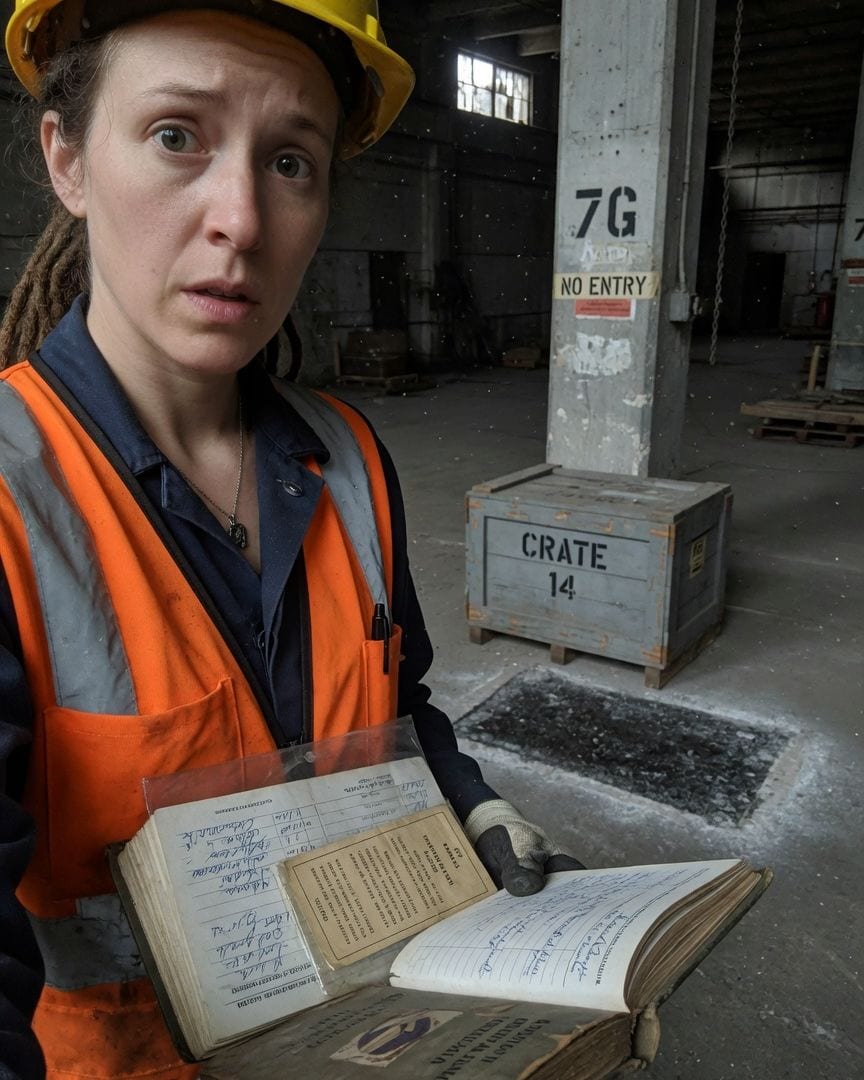 Declassified
An inventory specialist, Deborah Kessling, raced a demolition deadline for a vast Carolina military warehouse, shuttered for years with its employees gone over a decade prior. Her final task was to log its forgotten contents. In a shadow-choked corner, she found Crate 14, radiating an impossible, decades-old chill. Its attached logbook showed a recent maintenance entry from 'Last week,' signed by a civilian contractor no one should have been, yet meticulous quarterly signatures stretched back sixty years, an unbroken chain of checks, even as the paper itself grew cold in her hands. What impossible secret had been so carefully maintained in this forgotten place?
14 min read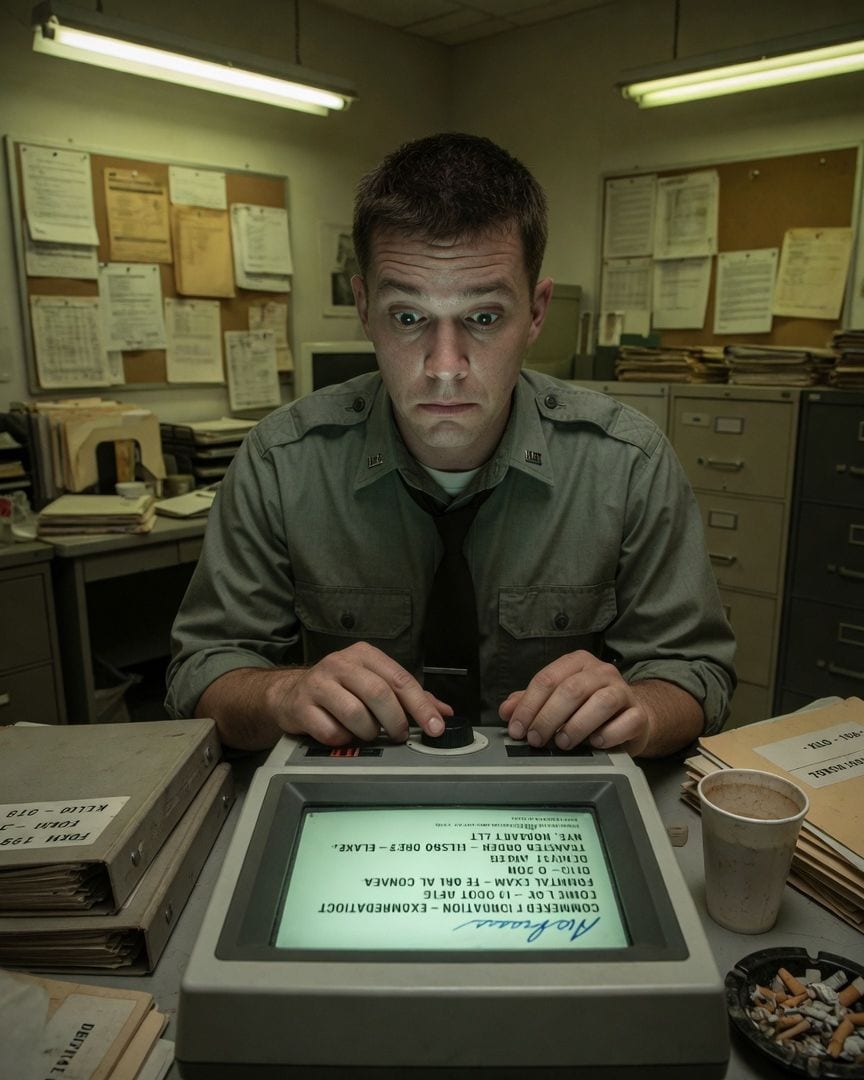 Declassified
Second Lieutenant Hobart Nye, a missile commander in Wyoming, had his quiet 0247 watch shattered by a security report: a massive, silent black triangle hovered over Launch Facility Kilo, casting a perfect shadow. Hobart watched his console's fault panel light up, signaling all ten nuclear missiles going dark in an impossible silence, followed by eleven minutes his security team could not remember. Official logs called it a "radio malfunction," but Hobart found a requisition for invisible-tracking sensors, signed by a base commander who was supposed to be off-base. The final, chilling discovery came when his own service record showed new entries—a dental check-up, a transfer to Alaska—all dated for a future he never lived, complete with his perfectly replicated signature.
12 min read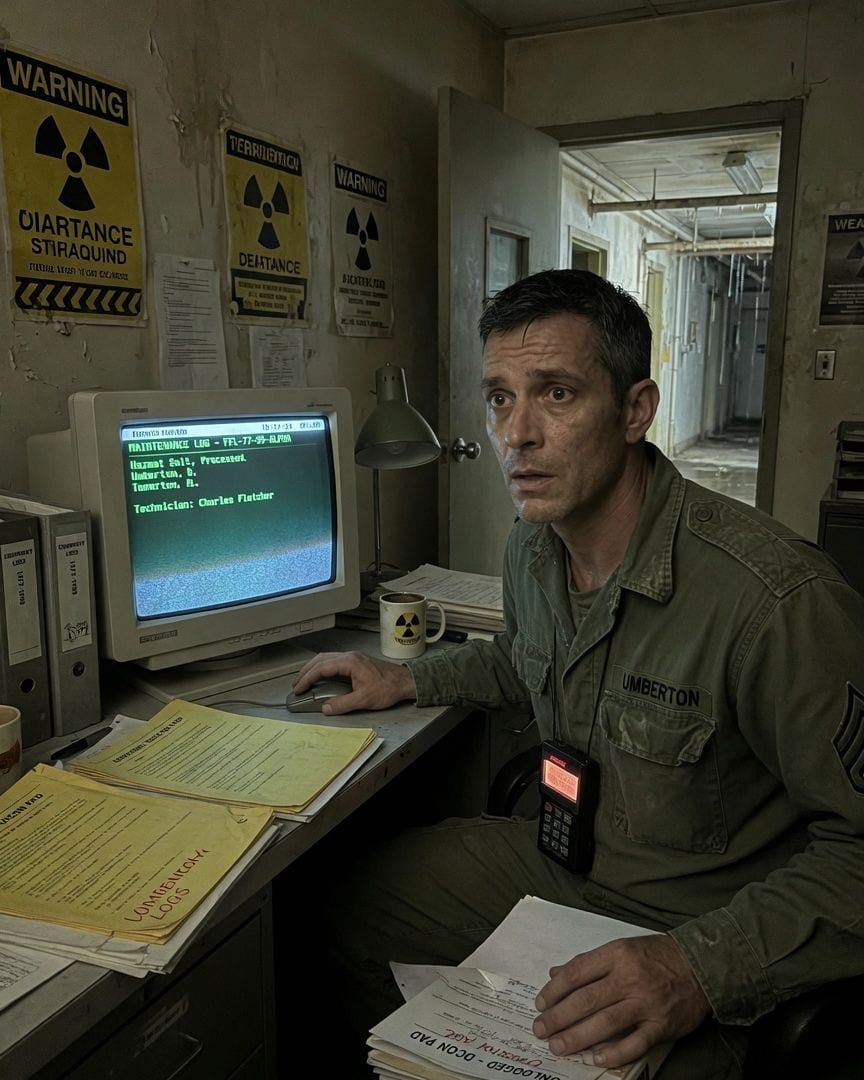 Declassified
Sergeant Blaise Umberton walked his final shift at the soon-to-be-shuttered Ferriday Flats decontamination pad, the predawn air thick with ozone and the heavy silence of a closing era. His peace with the desolate site shattered when he discovered a hazmat suit, glowing faintly and shrieking on his Geiger counter, laid out with his own name stitched perfectly on the breast. Dismissed as a prank by his superior, Umberton followed protocol, but a cold dread compelled him to check the digital records of the facility's Cold War bureaucracy. There he found an entry for a hazmat suit processed under his name, dated for *tomorrow*, and signed by a technician who had retired a decade ago.
11 min read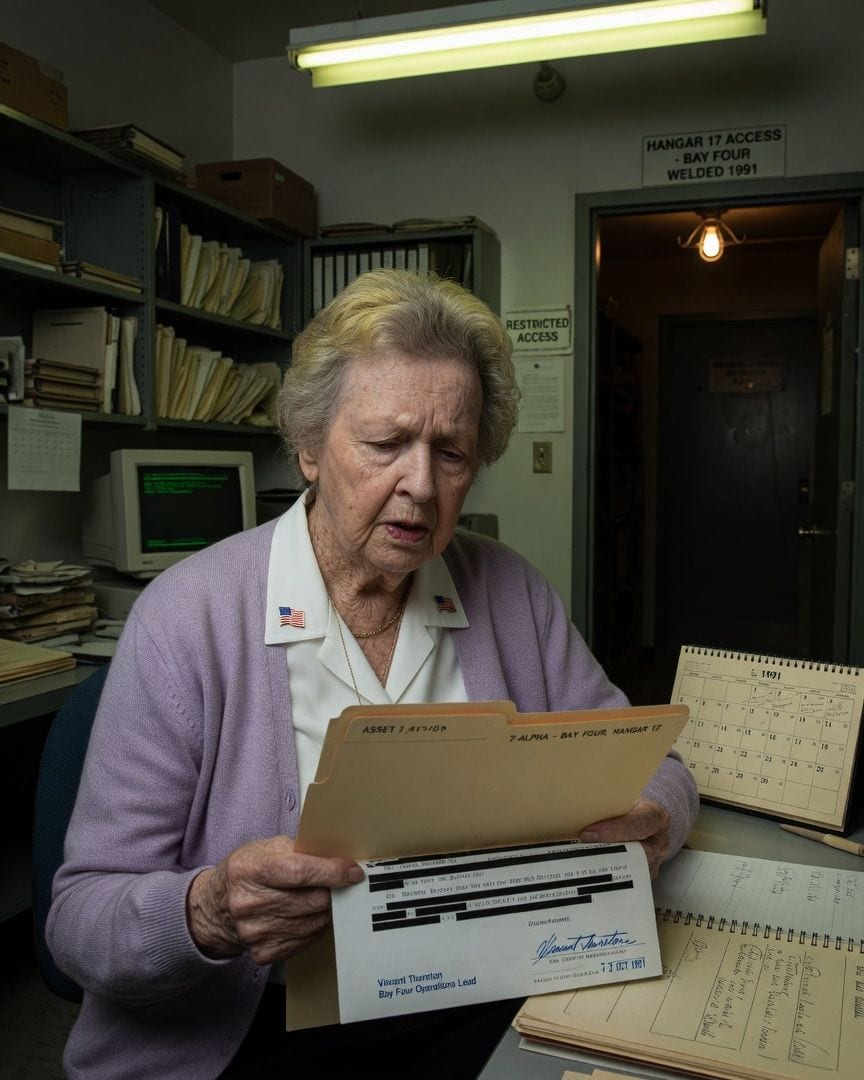 Declassified
Master Sergeant Ada Coyle was in her final week before retirement, overseeing the sealing of Bay Four in a massive Ohio depot hangar. A burly welder, Vincent Thornton, worked in grim silence, running thick beads of molten metal across the great door. Ada signed off, expecting it to go cold and silent within an hour. But for five nights, a faint, rhythmic ticking echoed from the sealed bay. Thirty years later, the ticking still bothered the retired Master Sergeant, a question that refused to be silenced.
10 min read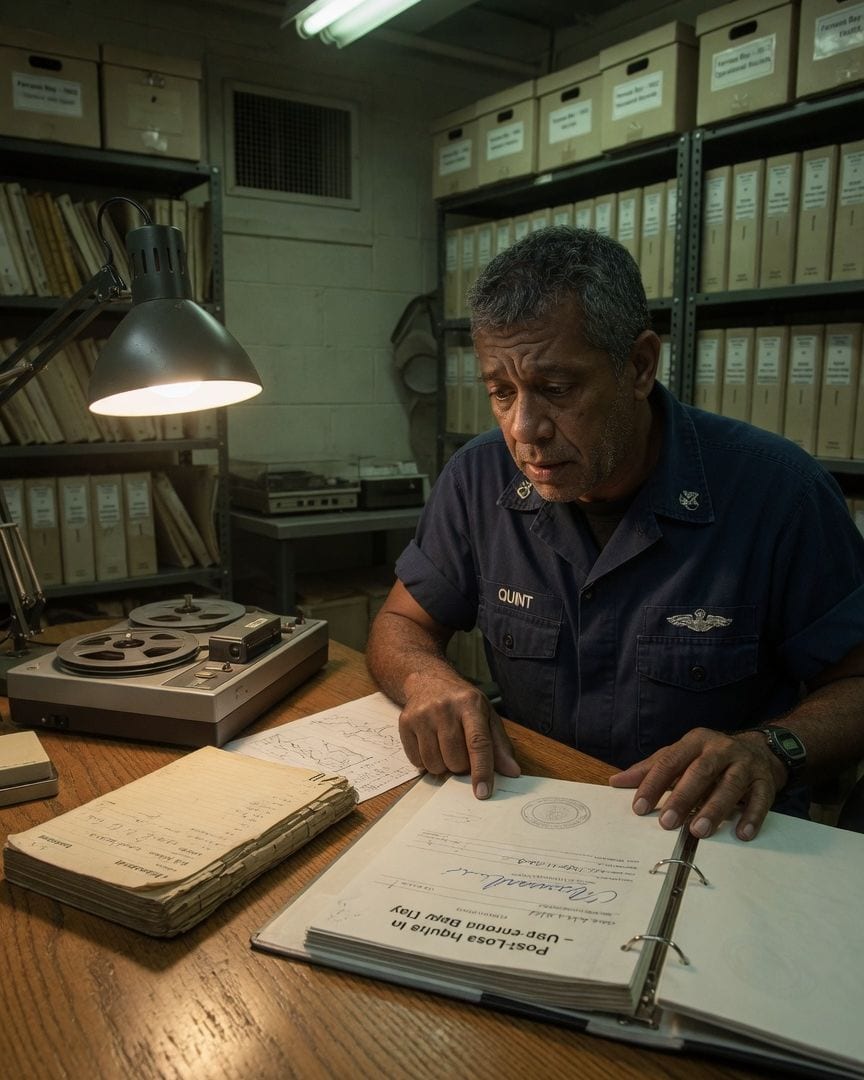 Declassified
Chief Sonarman Abel Quint spent six weeks in the Naval Records vault, listening to the final transmission of the USS Ferrous Bay. His father, Desmond Quint, was on that ship when it vanished in 1962, and Abel sought some final comfort in his voice. But on this morning, a faint, second set of sonar soundings emerged from the recording—soundings in his father's precise cadence that charted the ship’s wreck site thirty years in the future. As Abel cross-referenced records, he then found a maintenance log for the Ferrous Bay's sonar system, dated six months after the ship and his father were officially lost, signed by Desmond Quint himself. What impossible truth was hidden in these official naval records?
13 min read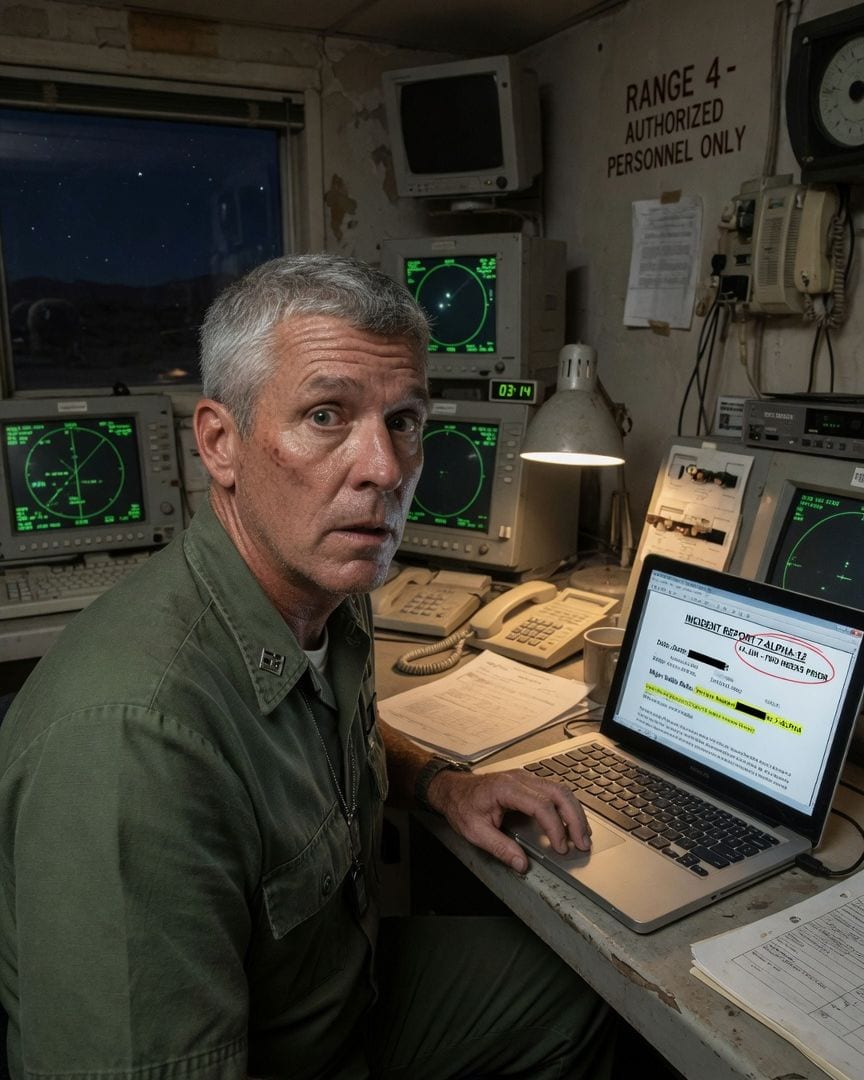 Declassified
Major Hollis Rake, just two weeks from retirement after thirty-five years on a New Mexico desert range, found his predictable world upended. A silent, featureless disc, defying all known phenomena, appeared over the sled rail, its impossible presence confirmed by every instrument on the range. But the true unease began when Major Rake filed his meticulous incident report: it was already in the system, dated two weeks *before* the event even happened. His own name and service number were later found linked to the incident's code in his transfer disposition. Was his retirement just a clerical error, or something far more sinister?
14 min read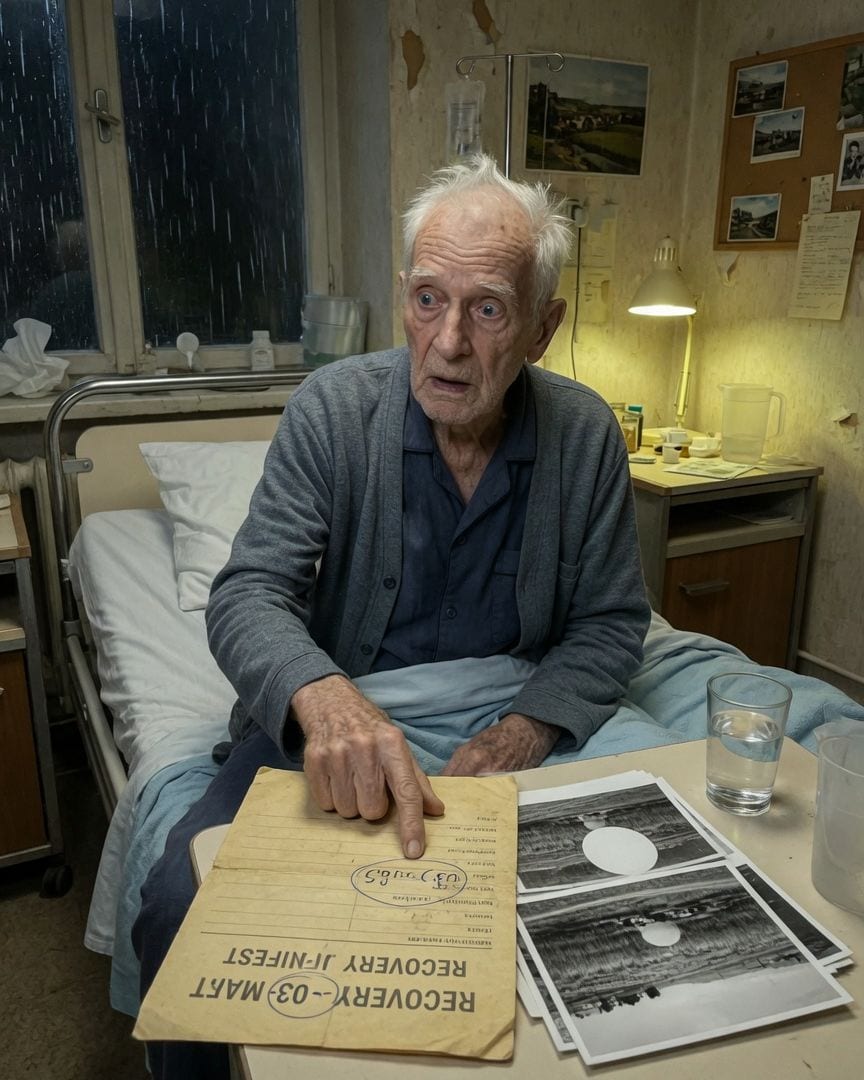 Declassified
Frail in his hospice bed, former Warrant Officer Hank Delacroix began to tell his daughter Eleanor a story from 1954, a vivid memory of a Bavarian rainstorm that erased the world beyond his truck's headlights. He recalled the heavy, olive-drab tarp covering their 'recovered target sleeve,' and how the relentless rain clung to it in impossible depressions, defying gravity as if the water itself had forgotten its nature. Decades later, a yellowed recovery manifest from that night contained a unique code for the object, a string of characters that fit no known classification. Hank's dying whisper confirmed his terrible understanding: it was never just one.
13 min read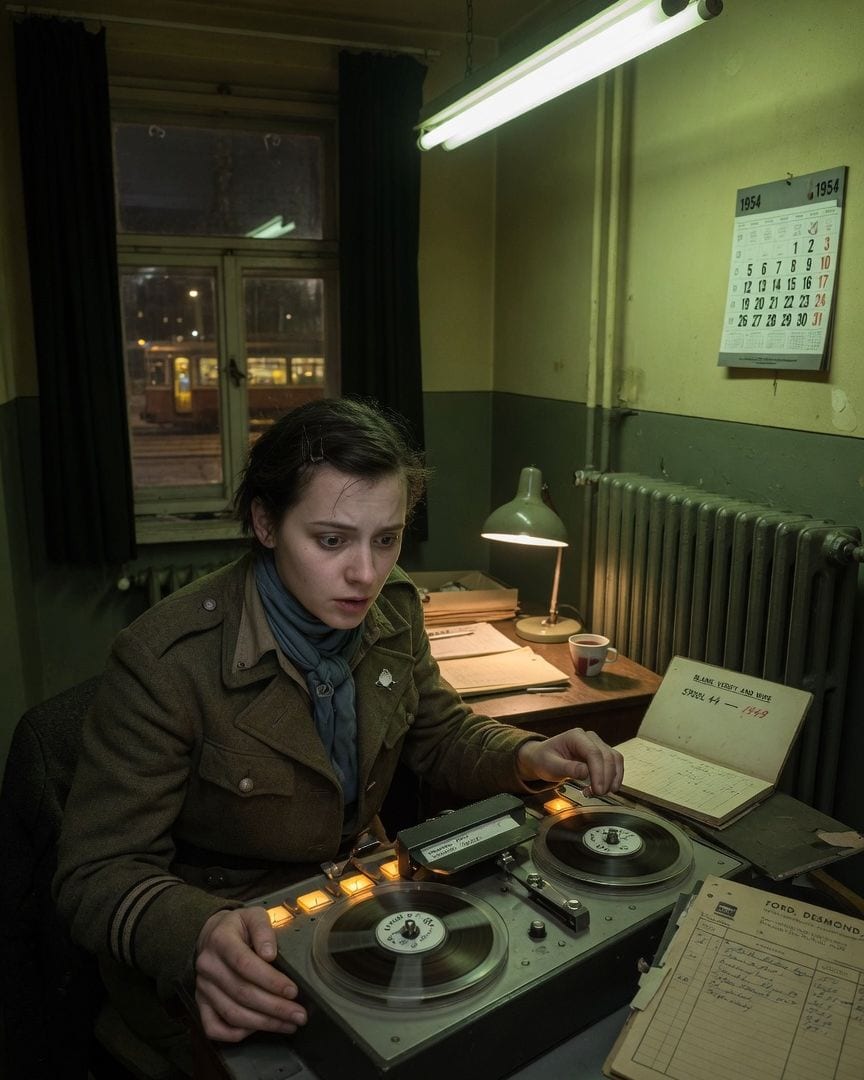 Declassified
Corporal Deyna Vosk began her last watch before dawn in a Berlin listening room, the familiar radiator knock echoing as she played unsanctioned reels. She loaded a tape marked 'BLANK,' sealed in 1949. Instead of silence, it played the impossible sounds of her current room – the radiator, her chair, the distant tram – a space not built until 1951. Then, a reel from 1947 spoke her current service number, and a missing soldier's file showed active supply orders at her post years after his disappearance. What impossible truths were trapped on these tapes?
11 min read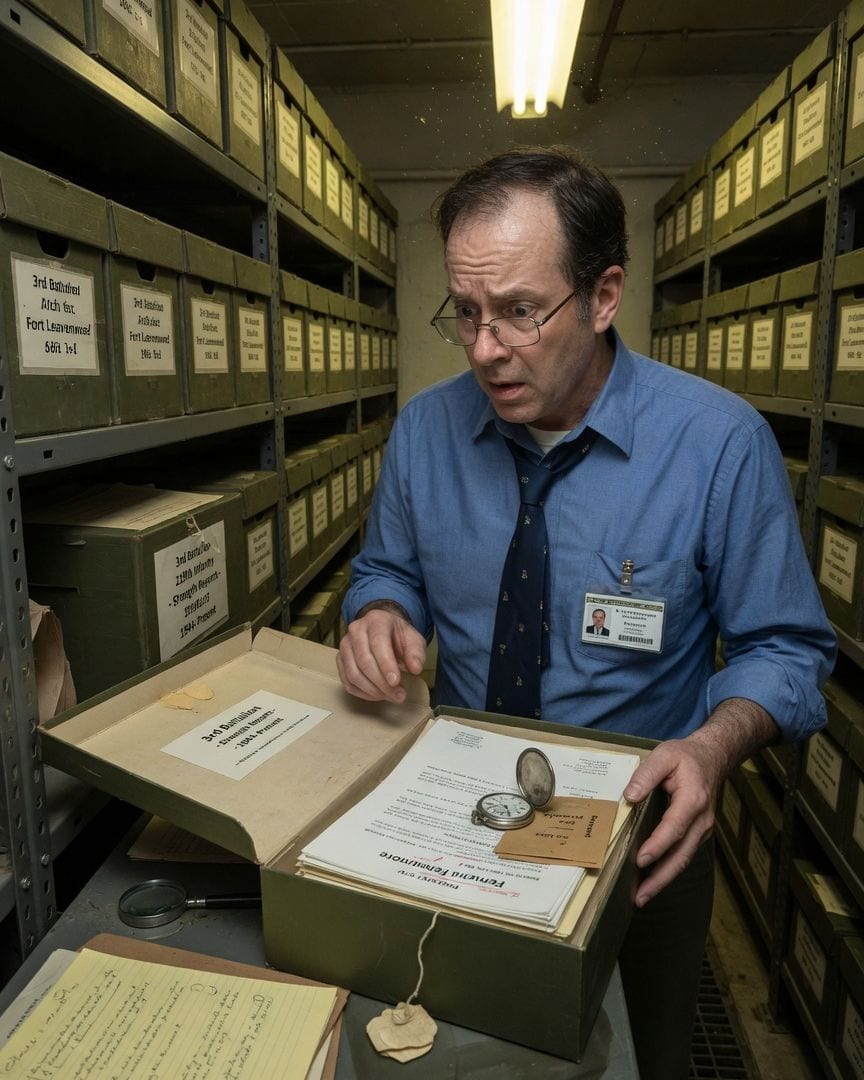 Declassified
Marcus Fennimore, a meticulous archivist, was on his final Friday at Fort Leavenwood's lineage vault, a place he knew intimately after thirty-one years. He stumbled upon twenty-two dust-sealed boxes for '3rd Battalion, 219th Infantry'—a unit that, according to every official record, simply did not exist. Inside, reports ran from 1944 to just last month, with the most recent listing his long-dead father, Kenneth Fennimore, as 'absent.' Marcus’s own father. Then, from a 1944 folder, he pulled his father's actual dog tags and a silver pocket watch, inexplicably warm and steadily ticking, freshly engraved with 'K.F. - Present for Duty.'
9 min read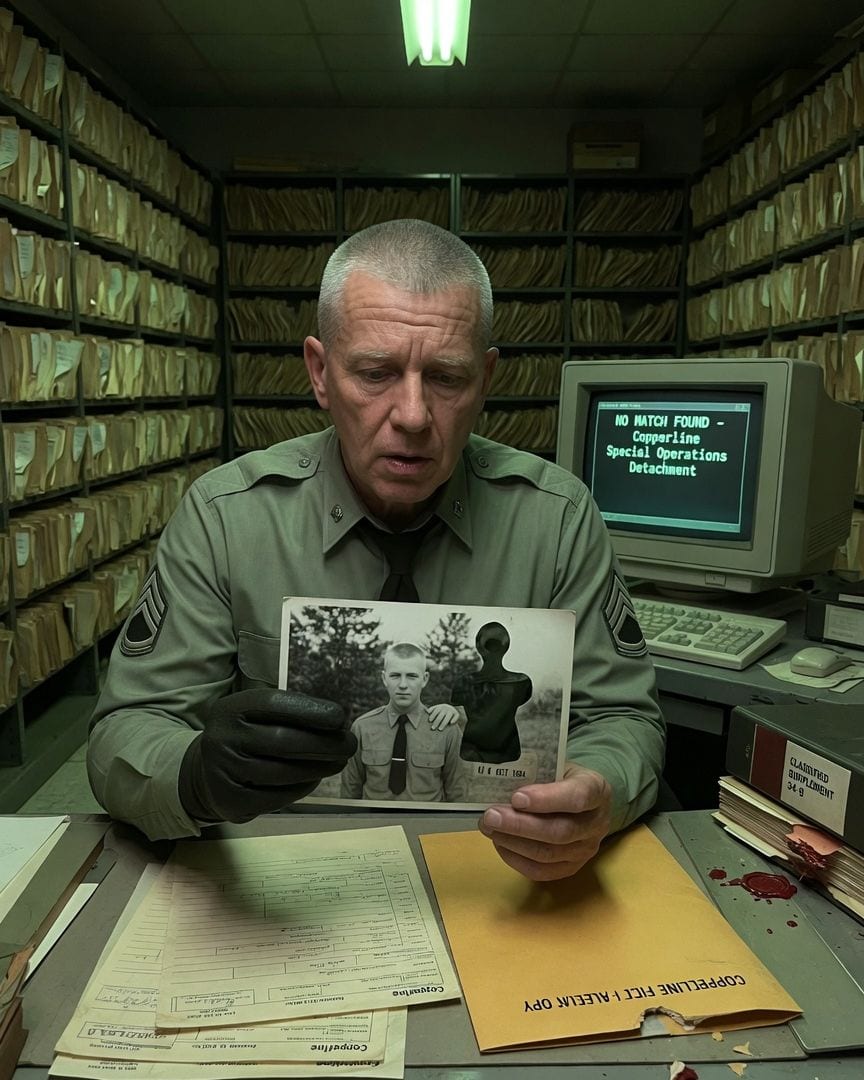 Declassified
Sergeant Major Teodor Vance had only two weeks left before his retirement, a lifetime of military order almost behind him. For thirty years, he'd pulled the 'Copperline' file, always finding it empty – until now. This time, a faint, impossible warmth radiated from the heavy manila, and inside, he found a faded photograph. It showed a younger Vance in an unrecognized uniform next to a man whose entire body had been precisely cut out of the print, from a company that officially never existed. After decades of silence, what did this warm, impossible file truly contain?
11 min read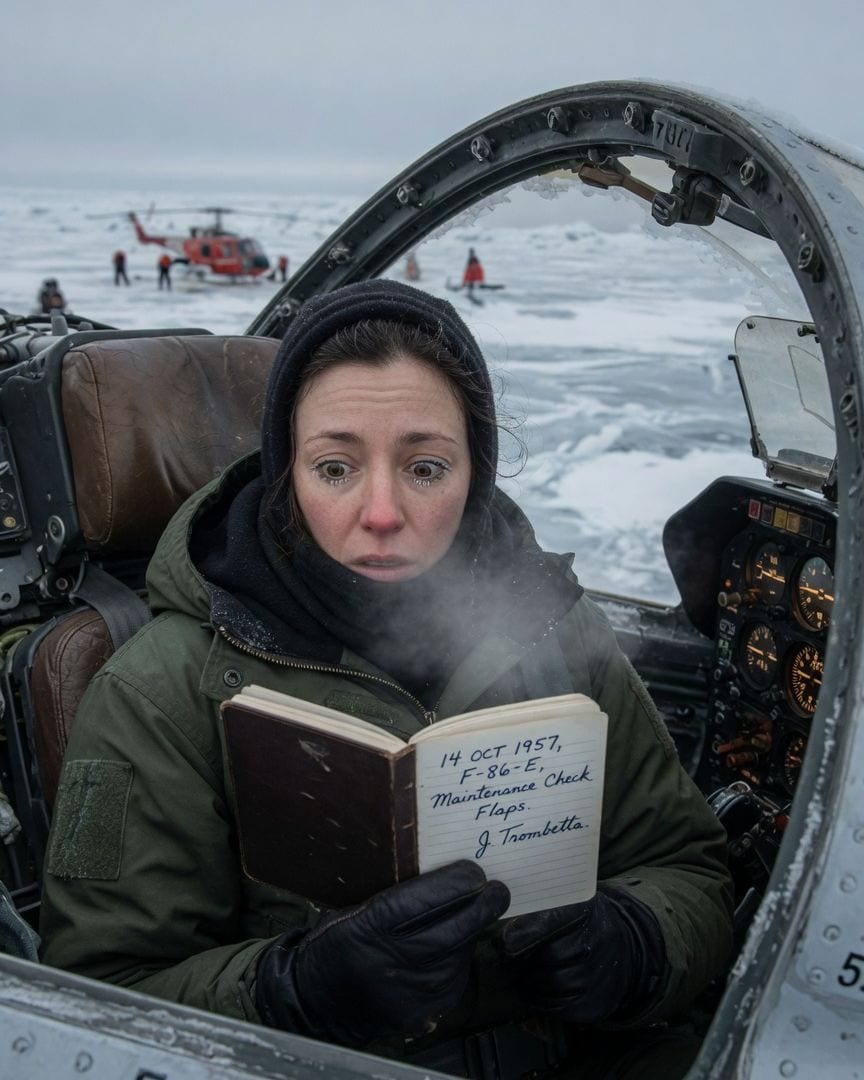 Declassified
Faye Trombetta, an expedition leader, had only three weeks before the Bering Sea froze, shutting down her climate data mission. But her trained eyes caught an impossible sight below: the black tail of an F-86 Sabre jet, perfectly preserved in the ice. The discovery stirred a lifetime of quiet grief; her grandfather had flown Sabres and vanished in 1951 during the Korean War. As she reached the pristine cockpit, she found his flight logbook, its final entry dated 1957—six years after he disappeared.
11 min read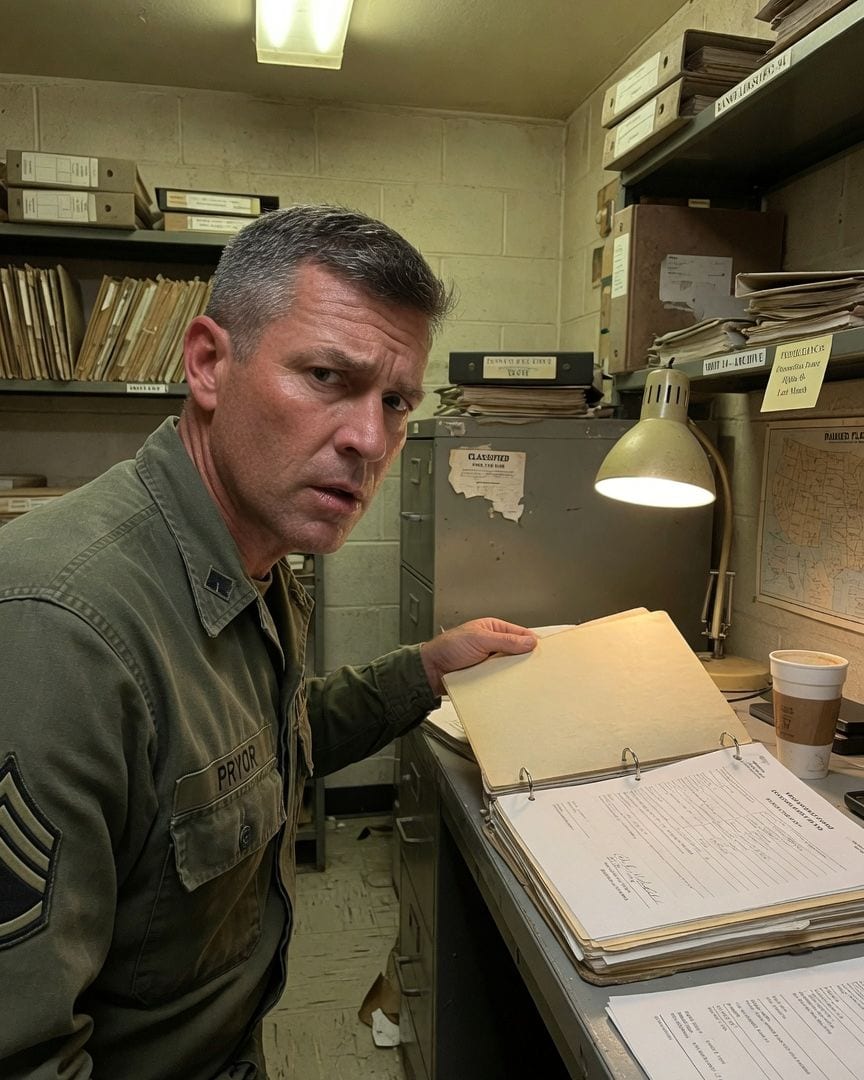 Declassified
Sergeant Alden Pryor was counting down his final eleven days on a twenty-year hitch, expecting to spend them on routine patrols along the Ranier Flats fence line. Instead, his truck stopped at a bizarre sight: a four-hundred-foot glassed crater, miles from anywhere, its sand faintly warm at dawn despite no one recalling a blast. The air above it shimmered with an unnatural distortion, a silent scar of erased violence, and the official file for 'Shot 14' showed recent maintenance sign-offs for a decommissioned tower at the crater site. All these active documents were signed by Captain Everett Caldwell, who had been officially lost in operations thirty years ago, leaving Sergeant Pryor to wonder how a dead man could still be filing reports.
12 min read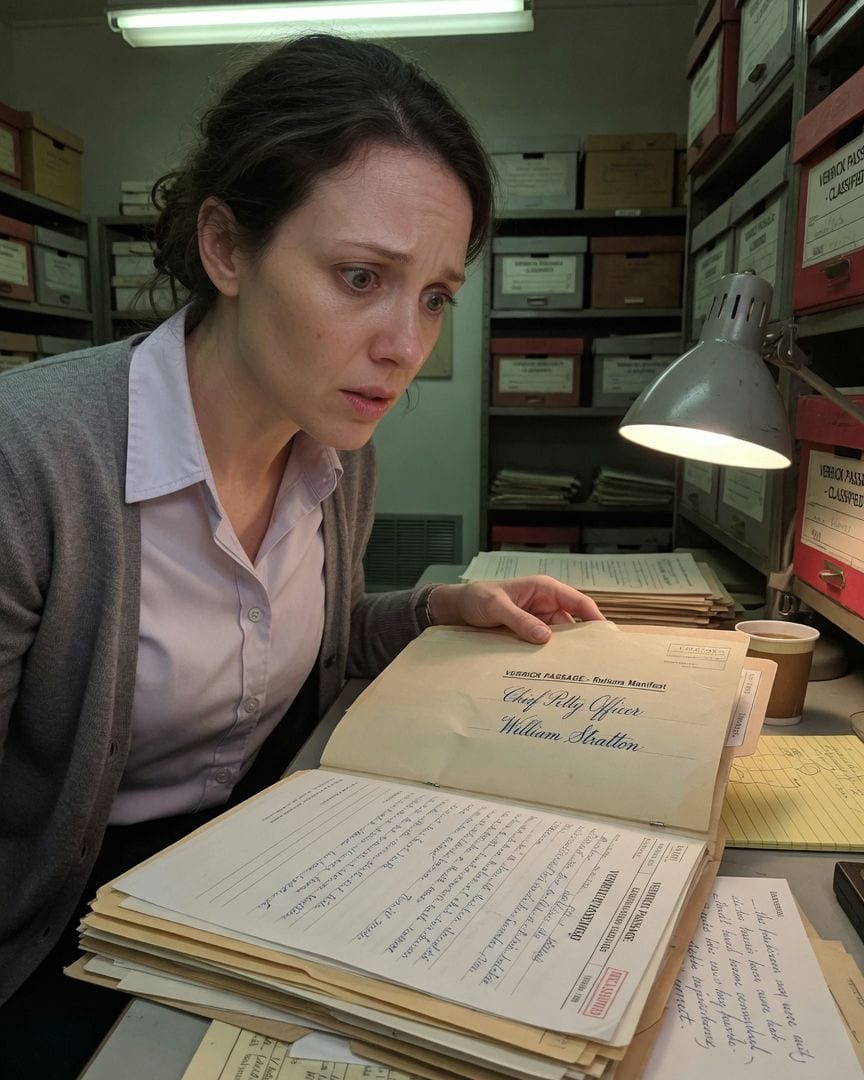 Declassified
In the sterile hush of the declassified archives, meticulous reviewer Ione Fash had a routine task: cross-referencing witness statements from the Verrick Passage file. But as she reviewed files eighty years thick with official silence, she found nine separate interviews containing the exact same chilling sentence, all in an identical, precise hand. Her rational mind sought explanation, yet then she discovered something worse: personnel files for men lost in 1943, still being updated with modern requisitions and payroll runs. Each impossible entry, including a manifest signed just two weeks ago by a casualty from eighty years prior, bore the same unnervingly perfect signature. The file wasn't just a record of the lost; it was still being signed.
9 min read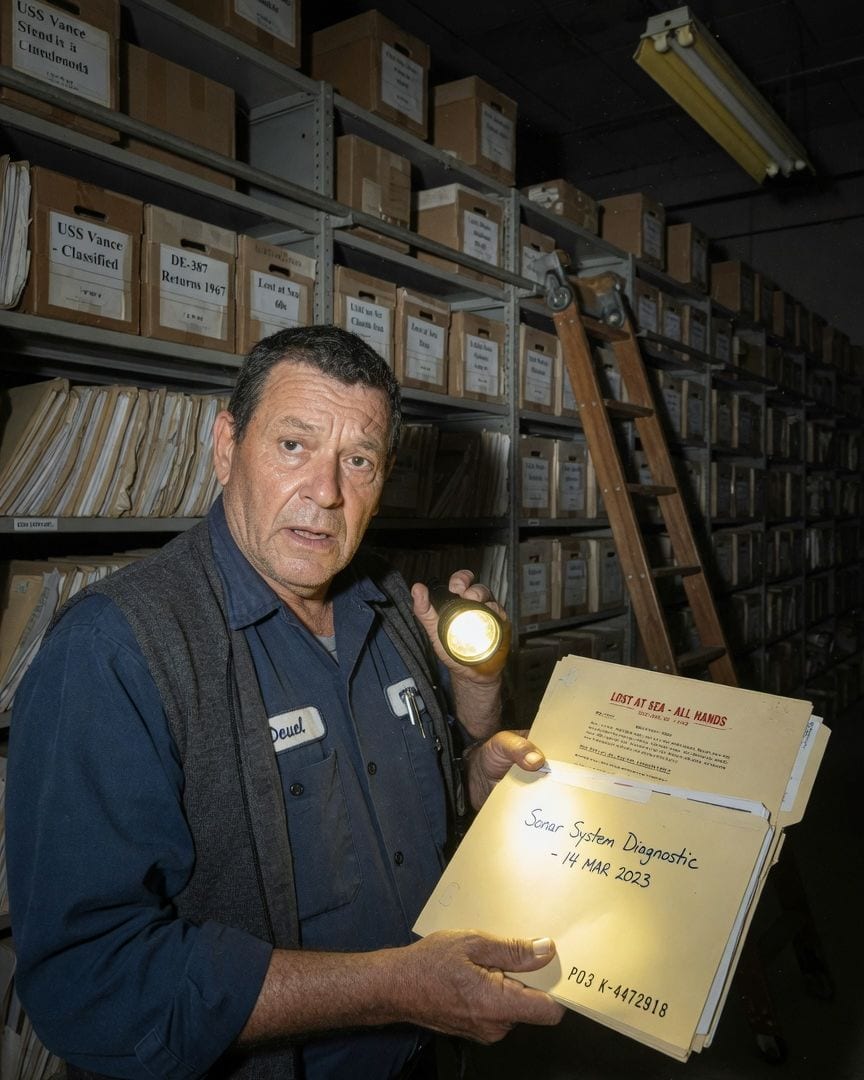 Declassified
Carmine Deuel, 62, spent forty years amidst the dust and forgotten files of the Suitland annex. One night, alone in the cavernous space, a sticky squeal and the faint sway of a rolling ladder broke the silence. He found a classified file from the USS Vance, a ship lost in 1968, pulled from its shelf. Inside, a typed form held a handwritten entry: a routine sonar check, dated last Tuesday. The ink, impossibly, looked damp yet was perfectly dry. Who had accessed the file, and how could its entry be so recent?
9 min read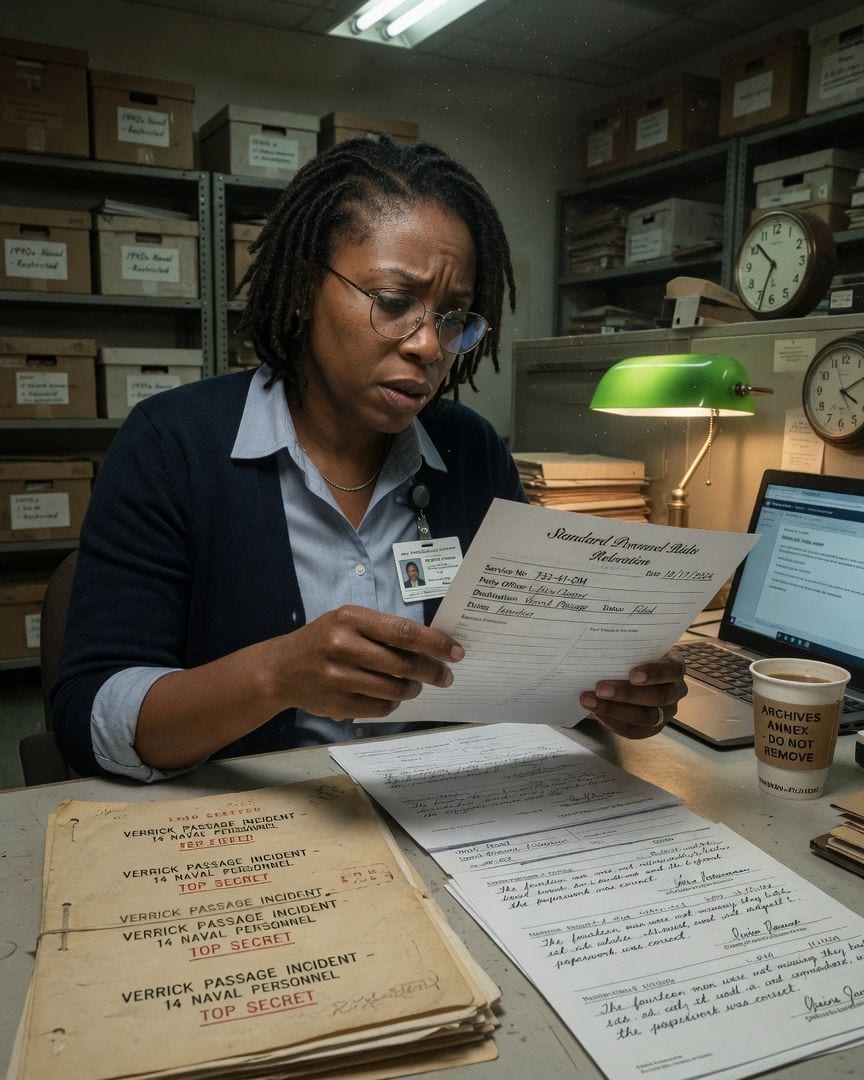 Declassified
Declassification reviewer Ione Fash worked against a looming deadline, her final hurdle a stack of heavily redacted Verrick Passage files. Inside reports from 1944 detailing fourteen missing naval personnel, she found nine witness statements all containing the exact same phrase, penned in an identical, machine-like hand. Her methodical mind flagged the impossible anomaly, but true dread landed when she uncovered a standard requisition form. Dated yesterday, it listed a living, active-duty Petty Officer for 'Relocation' to the Verrick Passage, bearing that same chilling, impossible handwriting.
12 min read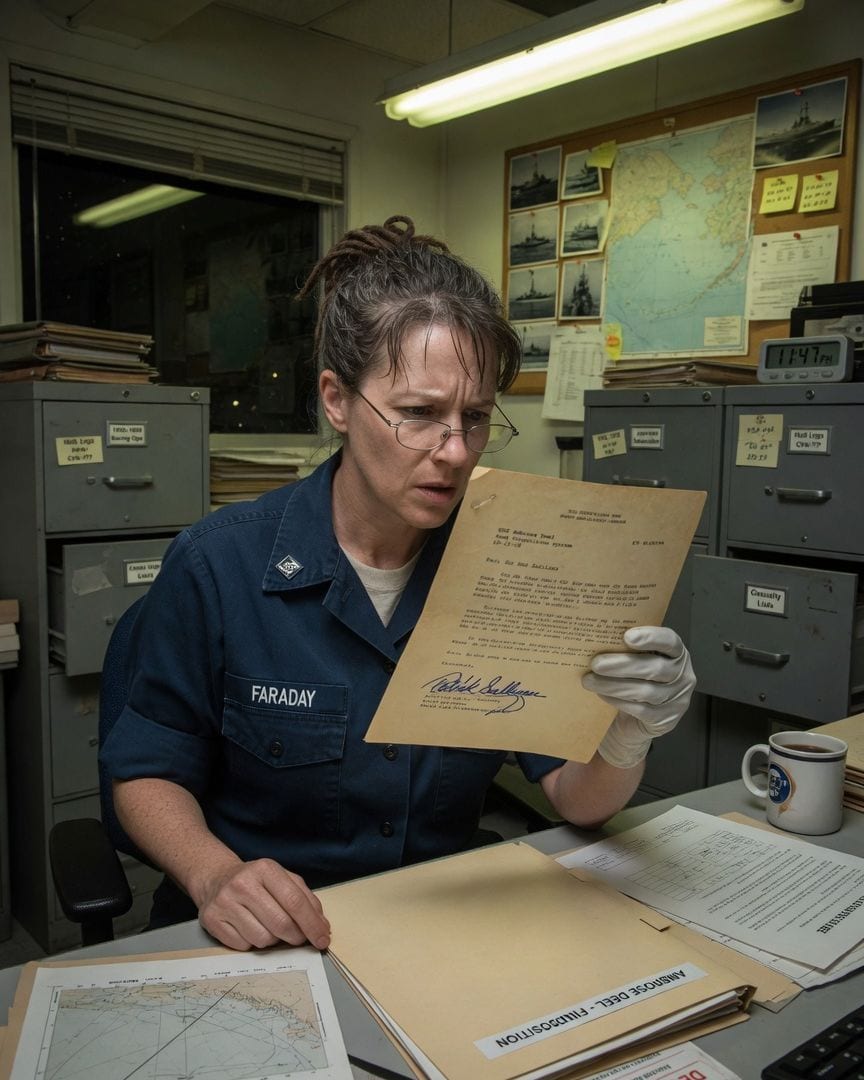 Declassified
Lieutenant Commander Josie Faraday faced a Friday deadline to close a sixty-year-old Cold War naval tragedy, reviewing the USS Ambrose Deel's final disposition in the declassification office. Unease pricked at her as three official records agreed on the sunken fleet tug's location and towing vessel, yet Josie found no ship matching that hull number had ever been built. Sifting through brittle, salt-and-dust-scented papers, she then discovered a maintenance sign-off for the Ambrose Deel dated three years after its official loss. The signature belonged to Patrick Sullivan, the Chief Engineer officially lost with the ship in 1955. How could a dead man sign off on repairs to a vessel already at the bottom of the Bering Sea?
11 min read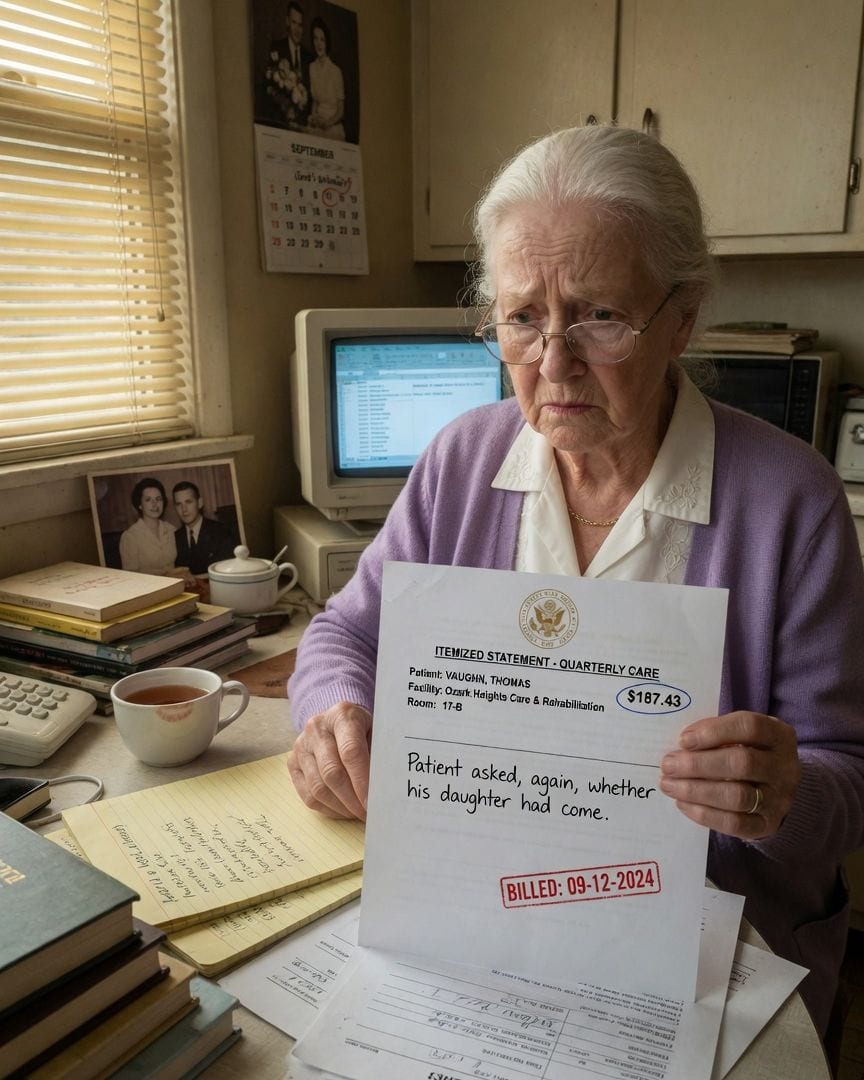 Declassified
Retired librarian Odette Cardew, 76, found her quiet morning shattered by an official Army medical bill. It was for her father, Thomas Vaughn, declared dead in the Chosin cold 74 years ago, yet listed active care at an Ozarks facility, with a note asking for his daughter. As she painstakingly cross-referenced defunct directories, she uncovered a secret Cold War 'Special Observation Unit' at the address, a black hole on any public map. Then, a declassified manifest revealed Thomas Vaughn was 'RELOC, INDET TERM,' not deceased, and a chilling line designated Odette herself: 'Dependent: Cardew, Odette. Status: Monitored.'
10 min read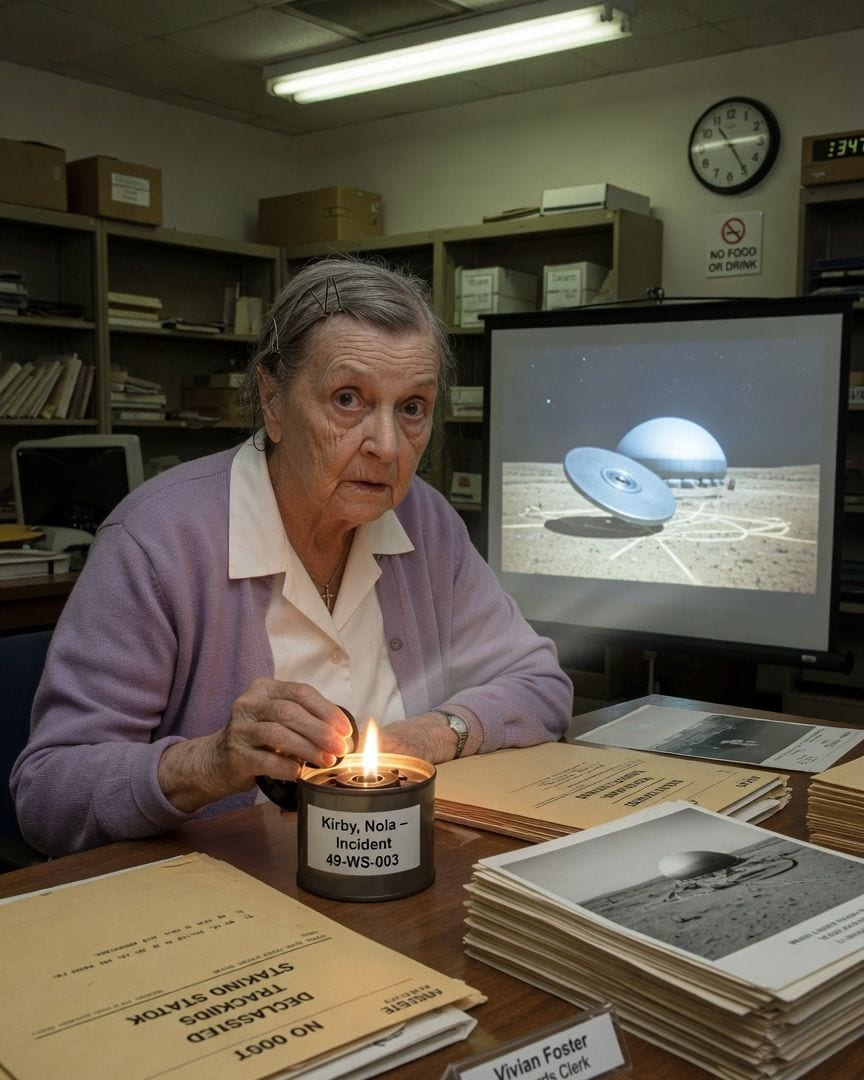 Declassified
Retired civilian Nola Kirby spent decades fighting bureaucracy to declassify her 1949 White Sands file. Back then, Staff Sergeant Kirby tracked an impossibly fast silver disc that paused deliberately, seeming to observe her as much as she observed it. Fifty-one years later, viewing her original film, she saw glowing lines etched around her tracking station in the object's reflection – lines she never saw that night. But the file held a deeper chill: official documents with her name and signature, dated decades after her retirement, including a maintenance sign-off from just two years ago. How could her name appear on records from long after she left service?
13 min read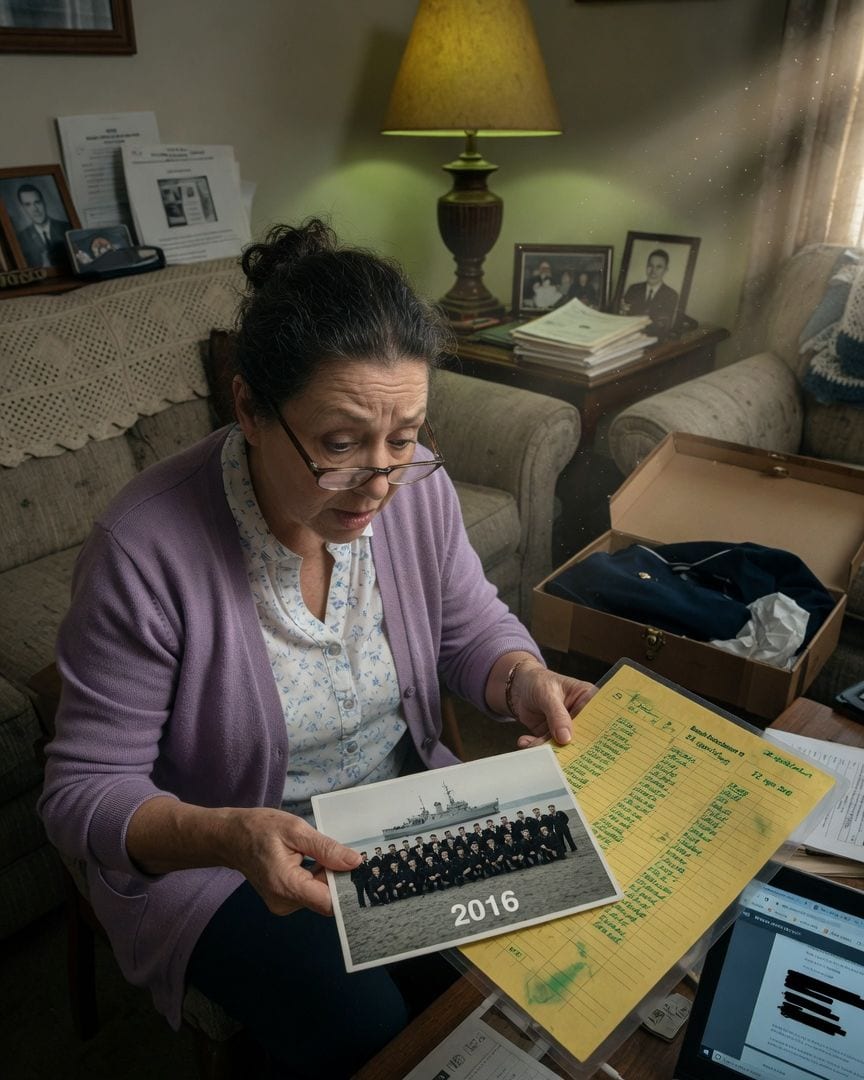 Declassified
Marisol Frayne, 62, finally unlatched her husband’s old footlocker in 2024, eleven years after the Navy declared his ship, the Kaskillan, lost at sea. Dust motes danced in the afternoon light as she lifted the lid, releasing the scent of old canvas and cedar. Inside, beneath his perfectly folded dress blues, she found a photograph of David and his crew standing before a pristine Kaskillan. Her breath caught: the photo was dated 2016, three years after the official reports claimed the ship vanished with all hands. Marisol's methodical search then revealed official logs showing a K-class vessel designation active in 2016, leaving a chilling void where her husband's fate should have been.
14 min read