Major Hollis Rake, two weeks from retirement, reported a silent desert disc. His own report was already filed, dated two weeks before it appeared.
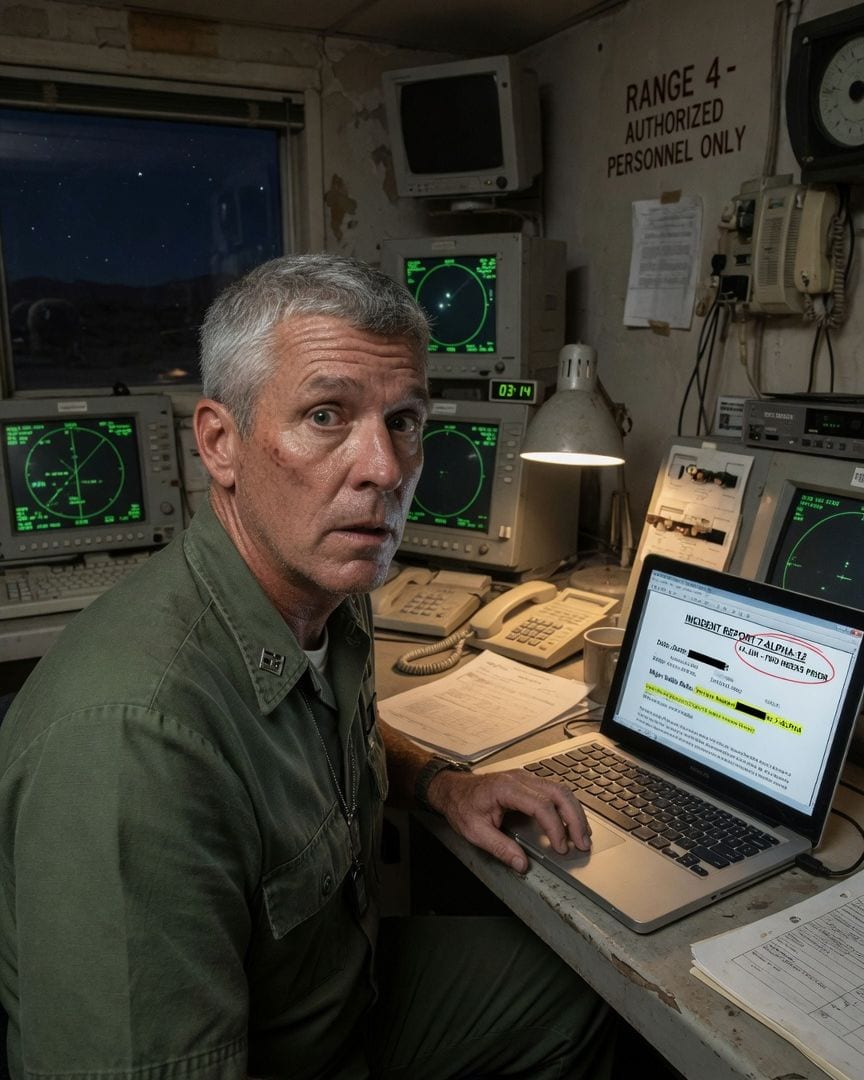
Major Hollis Rake sat on the console step, the chill of the desert night seeping through the concrete. Two weeks to retirement.
He’d spent thirty-five years on this New Mexico range, every day a predictable rhythm of tests, telemetry, and dust.
The static hum of the radar equipment was as familiar as his own breathing, the desert stars a ceiling he’d learned to read like a book. Then, over the mountains, it came.
Not a plane, not a balloon, not even a meteor. A perfect, featureless disc, silent and metallic, that simply stopped above the sled rail. Its surface was a dull, dark gray, absorbing the sparse moonlight.
The air in the command center, usually buzzing with low-level chatter, grew unnervingly still. Every optics station on the range swung to it, their servo motors whining in unison, a chorus of precise, mechanical adjustment.
Theodolites locked on, feeding range and bearing data into the main console. Cine cameras whirred, their film advancing frame by frame, capturing its impossible size and lack of distinguishing marks.
Radar scopes painted a crisp, unwavering blip, reporting a velocity of zero.
The impossible part wasn't the saucer itself; it was that every single instrument, designed for precision and engineered to disagree on the smallest fluctuation, agreed exactly. No flutter, no atmospheric distortion, no instrumental error.
It hung there, a perfectly coherent, perfectly wrong thing, and the silence from the command center was absolute, thick with unasked questions. Hollis felt a cold certainty settle in his gut: this wasn't an anomaly. It was a statement.
And someone, somewhere, already knew.
Hollis, methodical to a fault, initiated the standard incident protocol. His hands, steady from decades of routine, moved across the console. Every data stream was logged, every image secured in triplicate on encrypted servers.
He drafted his preliminary report, a factual, dispassionate account of the impossible: object type, confirmed dimensions, zero velocity, exact coordinates. He tried to reconcile it with known aircraft, atmospheric phenomena, even advanced prototypes from the Black Projects division. None fit.
The sheer, unblinking agreement of the instruments was the wall he kept hitting, the one detail that defied all explanation.
He submitted the report through secure channels, expecting the usual scramble of higher-ups, a flurry of classified investigations, a week of debriefings. Instead, silence. A profound, unnerving lack of response. No calls, no urgent messages, no new directives.
The desert wind outside seemed louder, whistling faintly through the vents. The digital clock on his console ticked over, each second an accusation.
He called his contact in records, a man named Felix Porter, known for his encyclopedic memory of obscure military filings. Porter answered on the third ring, his voice usually a dry monotone, now sounded distracted, almost evasive.
“Rake, you sure you got your dates straight on that one?” he’d asked, a strange edge to his voice.
Hollis confirmed, irritated. “Of course, Felix. I’m looking at the timestamp right now. 03:14 hours, June 14th.”
“Right,” Porter mumbled, then cleared his throat. “Well, you just make sure your paperwork’s in order for your… transfer.” The line went dead.
Later that day, a secure message arrived in Hollis’s inbox, not a query, but a confirmation: 'Incident Report 7-ALPHA-12, Subject: Unidentified Aerial Phenomenon, Range 4, Date: [Two Weeks Prior to Current Date], Reporting Officer: Major H. Rake.'
Hollis felt his blood run cold. He pulled up the message again, scrutinizing every character. The report, his report, described the exact craft, the precise location, the zero velocity—everything he had just witnessed and painstakingly documented.
But it was dated two weeks ago. Before the incident had even happened. A clerical error, he told himself, his breath catching in his throat. It had to be. A profound, impossible clerical error.
Hollis immediately requested the full file on Incident Report 7-ALPHA-12. It arrived electronically, a heavily redacted document that downloaded with unusual speed.
He opened it, his heart thumping a slow, heavy beat against his ribs, a dull ache in his chest. The first page was a summary, identical to the confirmation he’d received, same impossible date, same precise details.
He scrolled, past technical specifications and atmospheric data, past analysis of radar signatures that should not exist. The words blurred on the screen, but his eyes zeroed in on the numbers, the dates.
Then he saw it, buried in a section marked 'Personnel Disposition.' An entry, dated for his retirement, two weeks from now: 'Major Hollis Rake, Service Number: [His Own Service Number], Status: Transferred to Inactive, Disposition Code: 7-ALPHA.'
It was his name. His service number. His retirement date. And the same code as the incident itself.
Hollis stared at the screen, the fluorescent lights of the control room reflecting in his unblinking eyes, a cold, hard knot forming in his stomach. He wasn't just the reporting officer. He was part of the report.
The impossible report gnawed at Hollis. He spent the next few days in a quiet fury, his meticulous nature now a weapon against the absurdity.
The hum of the control room’s servers, usually a comfort, now felt like a low, incessant whisper of something wrong. He cross-referenced the '7-ALPHA' disposition code. It wasn't a standard retirement or transfer code.
It was obscure, buried deep in historical military regulations, used for 'assets removed from active operational theater, status unclassified, monitoring ongoing.' A phrase that offered no comfort at all.
He pulled up old range incident reports, searching for any other 7-ALPHA codes. He found three, all from decades past – 1968, 1979, and 1991.
All involved similar, perfectly coherent, stationary objects over the range, matching the impossible precision of his own sighting. And in each case, the primary reporting officer had been listed with the same '7-ALPHA' disposition code, effective shortly after their incident.
None of those officers, he discovered after a quick search of public records, had ever been heard from again. Their careers simply ended, their names fading from any official trace.
He tried to access their full personnel files, but each attempt was met with a system error, a digital brick wall that presented a blank screen with a polite, but firm, 'Access Denied: Security Protocols Engaged.'
His own access to the secure archives, once unrestricted, became sluggish, then outright denied for 'security review,' a notification that flashed on his screen with chilling regularity.
He tried to call Felix Porter again, but the calls went straight to voicemail, the same recorded message playing over and over, an electronic shrug.
Hollis felt the invisible net tightening.
He wasn't just looking at a clerical error; he was looking at a pattern, a quiet, efficient mechanism that had been operating on this range for decades, filing away not just incidents, but the people who witnessed them.
The very air in the office felt heavier, thicker. He started checking the physical archives, using his remaining clearance to access the oldest, dustiest files, the ones that pre-dated digitized records, looking for anything marked 7-ALPHA.
The air in the archive was thick with the smell of old paper and ozone, the silence punctuated only by the distant hum of the building's ventilation system, a mechanical breath.
He found a ledger, hand-written, from the 1960s, its cover brittle with age. '7-ALPHA' was scrawled next to names, dates, and sometimes, a single, stark word: 'Filed.'
As Hollis dug deeper, the signs became undeniable. His secure workstation, usually requiring a complex biometric login, sometimes logged him in automatically, as if someone had already entered his credentials.
He'd find his screen already open to a specific file he’d been researching, the cursor blinking, waiting for him.
A stack of old classified maps he'd left on his desk, marked with the locations of past 7-ALPHA incidents, was subtly rearranged, a different map now on top, highlighting a remote, unremarkable stretch of desert.
He tried to tell himself it was exhaustion, or just his own paranoia, but the details were too specific.
One evening, as he worked late in his office, the door clicked open. Not a gentle push, but a deliberate, soft click that echoed in the quiet room.
Felix Porter stood there, a thin file folder held loosely in one hand. Porter, usually garrulous and full of dry remarks, was unnervingly quiet, his eyes calm and unblinking, fixed on Hollis.
“Major Rake,” he said, his voice soft, almost sympathetic, "still at it?"
Hollis stiffened. “Felix. My access has been restricted. I thought you might have some insight.”
Porter smiled, a slow, patient smile that didn’t quite reach his eyes. “You’re close to retirement, Hollis. Don’t you think it’s time to start thinking about that fishing trip you always wanted? Or maybe that cabin upstate?”
Hollis felt a chill that had nothing to do with the desert night. “I’m trying to understand these files, Felix. These 7-ALPHA dispositions. This… pre-dated report.”
“Some things,” Porter said, tapping the file in his hand, “are best left understood by those who manage them. The system is… comprehensive. And it’s always been here. You’ve done your part. No need to complicate your final weeks.”
He walked over to Hollis’s desk and placed the file on it – a blank form, clearly marked 'Retirement Request, Final.' “Just sign, Hollis. It’s all taken care of.”
Porter left as quietly as he arrived, the door clicking shut behind him, leaving the scent of old paper and something else, something like quiet inevitability, in his wake. Hollis picked up the form.
It was already filled out, his name, date, and even his signature, perfectly replicated, already present, waiting only for him to pick up a pen and put his mark over the impossible, familiar loops.
Hollis didn't sign the form.
Instead, he used his remaining, sporadic access to the system, bypassing firewalls and security checks with the desperate cunning of a cornered animal, to send an urgent, encrypted message to Laura Ingram, a young, sharp radar technician who had been on duty during his UFO incident.
He asked her to discreetly check for any unusual activity in the disposition logs around the dates of the historical 7-ALPHA incidents. He told himself it was a long shot, a last resort before giving up.
Her reply came back hours later, a single, coded burst of data: 'Anomalous transfers. No known destination. All marked 'Filed.' No corresponding personnel records post-transfer.' It was the confirmation he dreaded.
The mundane explanation had failed, and in its place, a colder, more coherent truth began to assemble itself.
The next morning, Hollis found Felix Porter in his office, calmly shredding old documents, the rhythmic whir of the machine a dull counterpoint to the quiet intensity of the room.
“You’re persistent, Hollis,” Porter said, without looking up from the feed, "Almost admirable."
Hollis slammed his fist on the desk, the heavy wood thudding dully. “What is this, Felix? What does 'Filed' mean? What happened to those men?”
Porter stopped shredding, turning to face Hollis, his face devoid of emotion, his hands resting on the lip of the shredder. “It means they were… processed. The incidents, the witnesses, the data. All of it.
We don't lose things here, Major. We categorize them. The phenomena you saw, it's not random. It's a signal. A trigger. It identifies certain… sensitivities. And then the process begins.”
He gestured to the shredder, then to a stack of new, empty files on his credenza. “I’ve been doing this for forty years, Hollis. Generations of men like you, like those before you.
They see something that fits the pattern, and then they fit the pattern. Your incident, your report, your retirement code – it’s all part of a larger filing system. The file, you see, isn't just a record of what happened.
It’s a record of what will happen. And it’s always being written. You saw it, didn’t you? Your name, your retirement date, already there. It’s not a mistake, Hollis. It’s an itinerary. You’re not retiring. You’re being filed.”
The words hung in the air, cold and precise, making the impossible report from Part 1 click into a horrifying, coherent whole. The dread was in the perfect, calm logic, in Porter's utter lack of malice, only bureaucratic resignation.
Fueled by a desperate need for understanding, Hollis bypassed the system entirely. He knew Porter kept physical archives of sensitive, pre-digital records.
He picked the lock on a heavy, fire-rated cabinet in Porter's office, using a set of old, specialized picks he’d kept since his early days on the range. The tumblers clicked with a soft precision.
Inside, he found an old, physical copy of his original personnel file. It was thick, yellowed, and bound in heavy cardstock, tied with a faded ribbon. The smell of aged paper rose from it, dry and almost acrid.
He flipped past his enlistment papers, his commendations, his medical records. All the expected milestones of a military career. Then he saw it: a section marked 'Pre-Service Psychological Profile.'
It contained detailed observations from his childhood, behavioral analyses from his early schooling, even a note about a 'heightened sensitivity to certain environmental stimuli' from when he was eight years old—an odd, unshakeable memory of lights in the desert sky that he’d long dismissed as a child’s overactive imagination.
Events he barely remembered were meticulously documented, their dates precise, their observations chillingly accurate.
And within this section, stamped with a familiar '7-ALPHA' code, was a single, chilling sentence, dated before he was even a teenager: 'Subject Rake, H. – Primary candidate for long-term observation and eventual disposition within Project ECHO protocol, upon activation.'
His entire life, a path laid out, a destination already chosen. He wasn't just named in the file since the UFO incident. He had been named in it from the very beginning.
The file was not a record of his life. It was a blueprint.
Hollis Rake, the methodical, rational officer, felt a profound, cold terror, a fear that settled deep in his bones, making the fluorescent lights above him seem to buzz louder, brighter. He wasn't a witness.
He was, and always had been, the intended subject. He turned to the very last page of the file, his fingers trembling slightly. He saw his name again, an entry for his retirement date. But it wasn't a retirement.
It read: 'Transfer Order to Inactive Status, Disposition Code 7-Alpha,' effective on his retirement date. Below it, a new entry, dated a week after his retirement, for 'Final Filing: Subject Rake, H. – Complete.'
Hollis knew then. The UFO wasn't an alien craft in the traditional sense, but a 'trigger,' a specific, engineered event designed to identify and activate individuals like him. Project ECHO, mentioned in his childhood profile, was the system.
The 'secrecy machine' wasn’t just documenting anomalies; it was cultivating them. The range, with its isolated nature and precision instruments, was a controlled environment, a kind of laboratory.
The objects, perfectly still and coherent, were not meant to be understood by ordinary means, but to serve as a filter.
Hollis realized the meticulous agreement of his instruments wasn't just a coincidence; it was a deliberate design feature, a test of observation and rationalization.
Those who, like him, meticulously recorded the impossible, who sought the coherent truth beyond the comfortable lies, were the ones designated for 'filing.' They weren't lost to a random universe; they were absorbed by a profoundly patient, utterly rational system.
Felix Porter wasn't an antagonist; he was a functionary, a librarian for a library of human experience and eventual disappearance, a curator of destinies.
The 'File That Kept Writing' meant the system was a living entity, constantly updating, constantly signing off on new entries, new 'filings.' Hollis’s entire career, his dedication to order and truth, had unknowingly led him to this exact, predetermined point.
Every clue, every impossible date, every coded disposition, every quiet warning, now clicked into place, forming a coherent, horrifying mosaic. He was not special. He was simply next in line.
With the full truth understood, Hollis felt a strange, cold calm. There was no escape. The system wasn't a malicious entity he could fight; it was an institution, vast and patient, like the desert itself.
It had been working on him his entire life. He considered trying to warn Laura Ingram, to expose the truth, to break the pattern, but realized the futility. The system had already filed him.
It would file anyone he spoke to, anyone who dug too deep. His 'retirement' was a formality, a quiet transition from active duty to 'inactive status, disposition code 7-ALPHA.'
He walked through the range one last time, the desert wind whipping around him, tasting like dust and distant lightning, the radar dishes silently sweeping the horizon, mechanical sentinels guarding an empty sky.
The impossible object was gone, but its presence lingered, a shadow on his soul. He packed his meager belongings, the few items that defined his life outside the service.
His fishing gear, a worn copy of a desert flora guide, photos of a family he hadn't seen in years.
He knew these things, these anchors to his old life, would soon be meaningless, relics of a self that would no longer exist.
His final act was to access his own personnel file one last time, not to fight, but to witness. He navigated the system, his access strangely unimpeded now, as if the door had been left open for him.
He saw the entry, 'Final Filing: Subject Rake, H. – Complete,' still dated a week after his official retirement. Below it, a blank space, awaiting a final signature. He closed the file. There was no grand confrontation, no desperate escape.
Only the quiet, unyielding logic of a system that had been preparing for him his entire life. He was not going home. He was going to be filed.
Major Hollis Rake's retirement went through as scheduled. His small pension began depositing into an account that would likely never be touched.
On the range, a new officer, Captain Vanessa Drummond, arrived to take his place, unaware of the quiet legacy she inherited. The UFO incident report remained in the system, its impossible dates unchallenged, its 7-ALPHA disposition code a silent marker.
Felix Porter continued his work in records, his office perpetually filled with the scent of old paper, his demeanor calm and unbothered, as if the desert wind itself could not disturb him.
The machine hummed on, its processes uninterrupted, its files growing thicker with each passing year. No one asked where Hollis went, or why his post-retirement calls went unanswered.
His absence was just another data point, another successful 'filing' within the vast, patient mechanism.
The desert wind continued to sweep across the range, erasing any trace of what had transpired, leaving only the silent, watchful radar dishes, their white surfaces gleaming under the indifferent sun.
Weeks later, a routine audit flagged Major Rake's personnel file. A junior records clerk, Laura Ingram, noticed the 'Final Filing: Subject Rake, H. – Complete' entry.
She also noticed that the blank space for the final signature, which Hollis had seen empty, was now filled in.
It was a neat, official hand, the signature a series of tight, almost indecipherable loops, like a pattern that had been drawn many times before. The date next to it was yesterday's.
She stared at it, a faint unease stirring within her, like the first whisper of a coming storm.
She tried to cross-reference the signature, to identify the signatory, but it led to no active personnel, no known department, only an endless loop of encrypted data streams that dead-ended in empty folders.
It was just a signature, an official mark on a file that should have been closed, a final stroke from a system that had no visible administrator.
She closed the file, a shiver running down her spine, and placed it back in the cabinet, watching the dust motes dance in the fluorescent light. The file was never truly closed; it was simply transferred.
If this one got to you
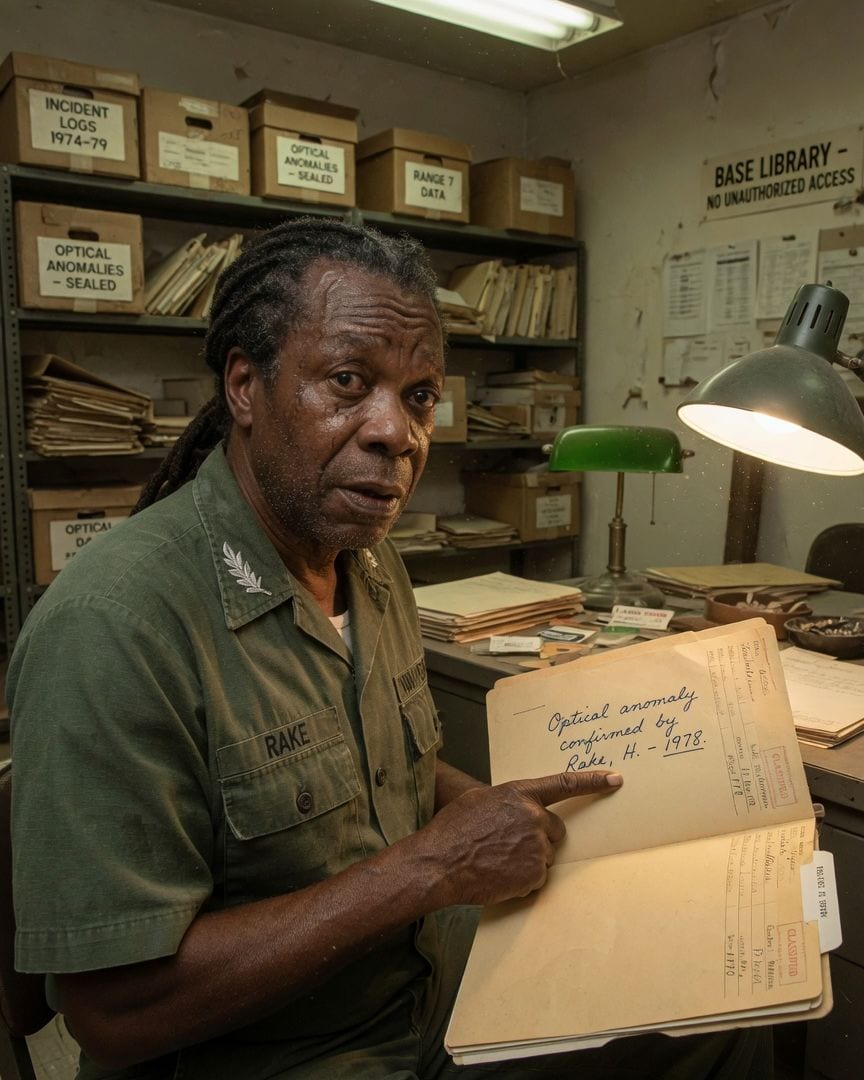
Two weeks from retirement, Major Hollis Rake found his surname on a 1978 Cold War report for an identical anomaly, decades before he was born.
Two weeks from his long-awaited retirement, Major Hollis Rake watched the New Mexico desert shimmer, his console suddenly alive with an impossible reading. An object hung perfectly still above the target range, an uncanny sight confirmed by every instrument on base. When official channels dismissed it as an 'atmospheric inversion,' Hollis dug into the archives, searching for any similar incident. He found a yellowed 1978 report detailing an identical anomaly, but the handwritten addendum chilled him to the bone: 'Optical anomaly confirmed by Rake, H. – 1978.' His own surname, recorded decades before he was even born, stared back from the past.
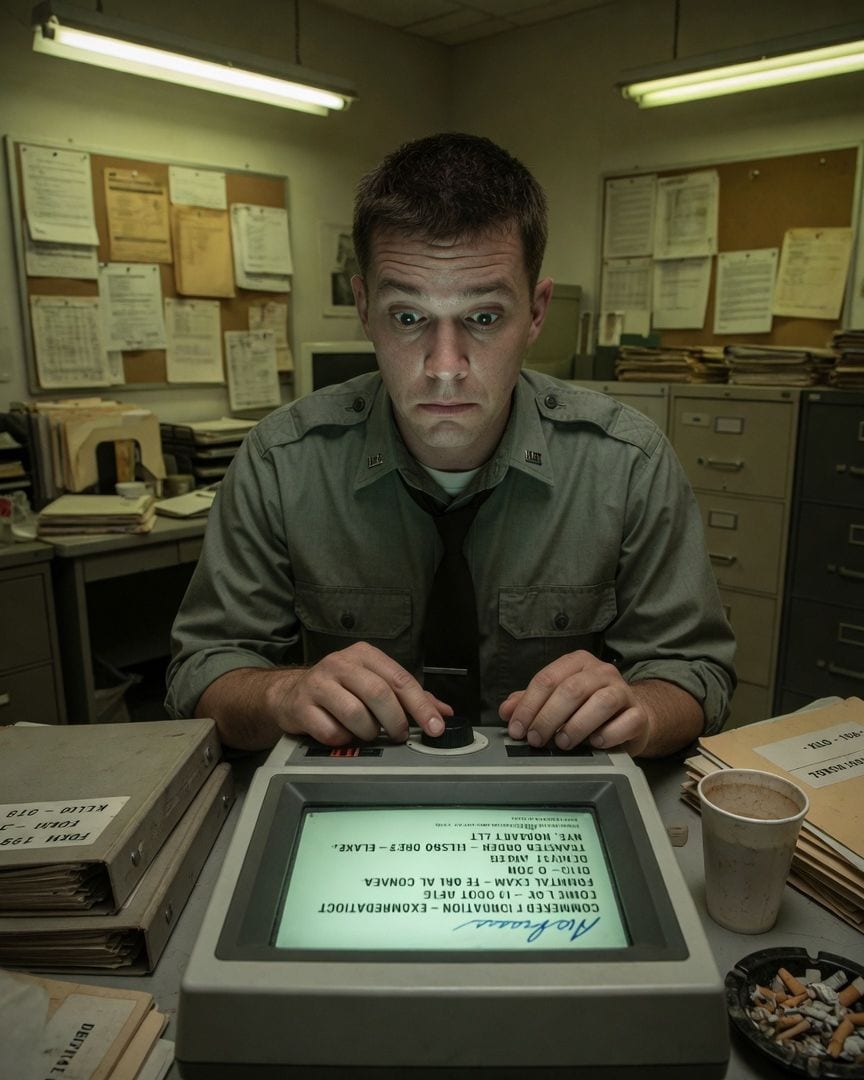
A missile commander watched his ten nuclear silos go dark. His own service record shows his signature on a future he's never lived.
Second Lieutenant Hobart Nye, a missile commander in Wyoming, had his quiet 0247 watch shattered by a security report: a massive, silent black triangle hovered over Launch Facility Kilo, casting a perfect shadow. Hobart watched his console's fault panel light up, signaling all ten nuclear missiles going dark in an impossible silence, followed by eleven minutes his security team could not remember. Official logs called it a "radio malfunction," but Hobart found a requisition for invisible-tracking sensors, signed by a base commander who was supposed to be off-base. The final, chilling discovery came when his own service record showed new entries—a dental check-up, a transfer to Alaska—all dated for a future he never lived, complete with his perfectly replicated signature.
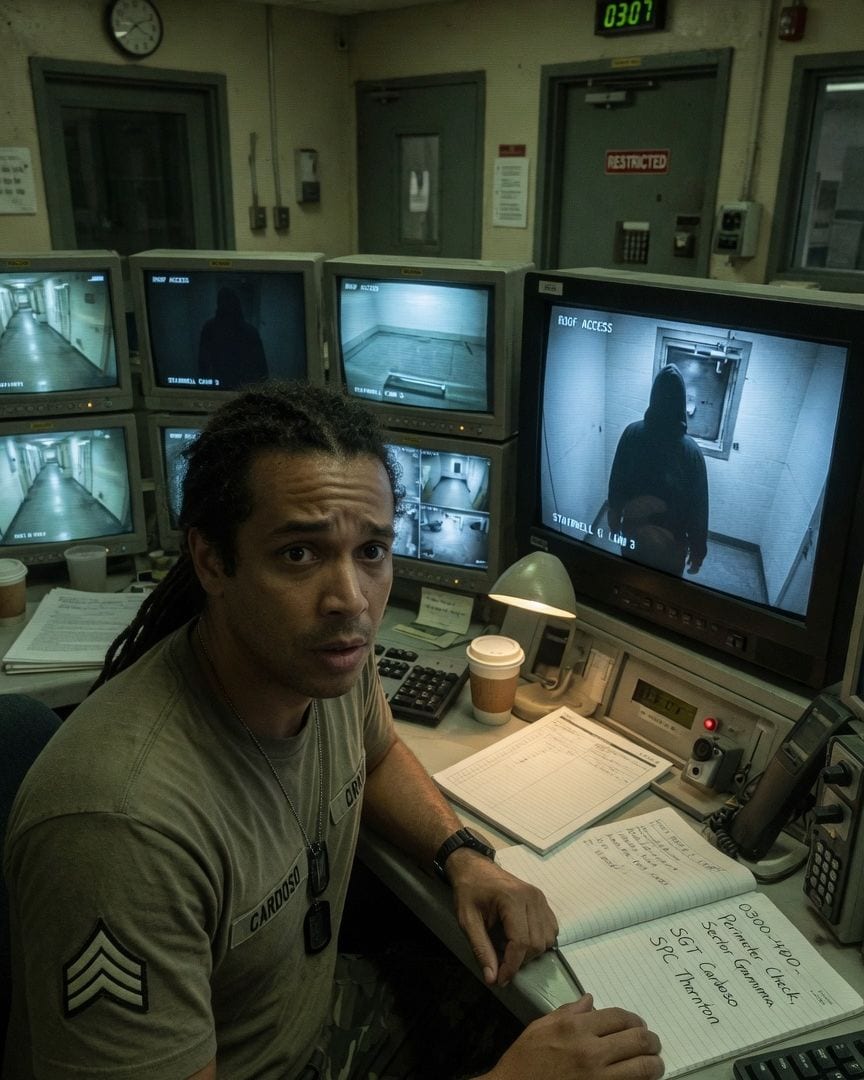
On his last watch, Sergeant Cardoso found his own signature in the duty log for a perimeter check he never did, with a name he didn't know.
Sergeant Rui Cardoso was on his final interior watch at Fort Merritt, a remote coastal outpost, as 0300 ticked by. He spotted a dark, unmoving figure on a monitor showing the sealed roof access, a figure that inexplicably shifted closer to the hatch moments after a specialist confirmed the roof was empty. Rui checked every log and sensor, but the digital fortress showed no breach, and the figure's appearance defied all logic. Yet, in the physical duty log, he found his own unmistakable signature on an entry for a perimeter patrol he never took, alongside a soldier's name he'd never seen. What impossible truth was written in his own hand?
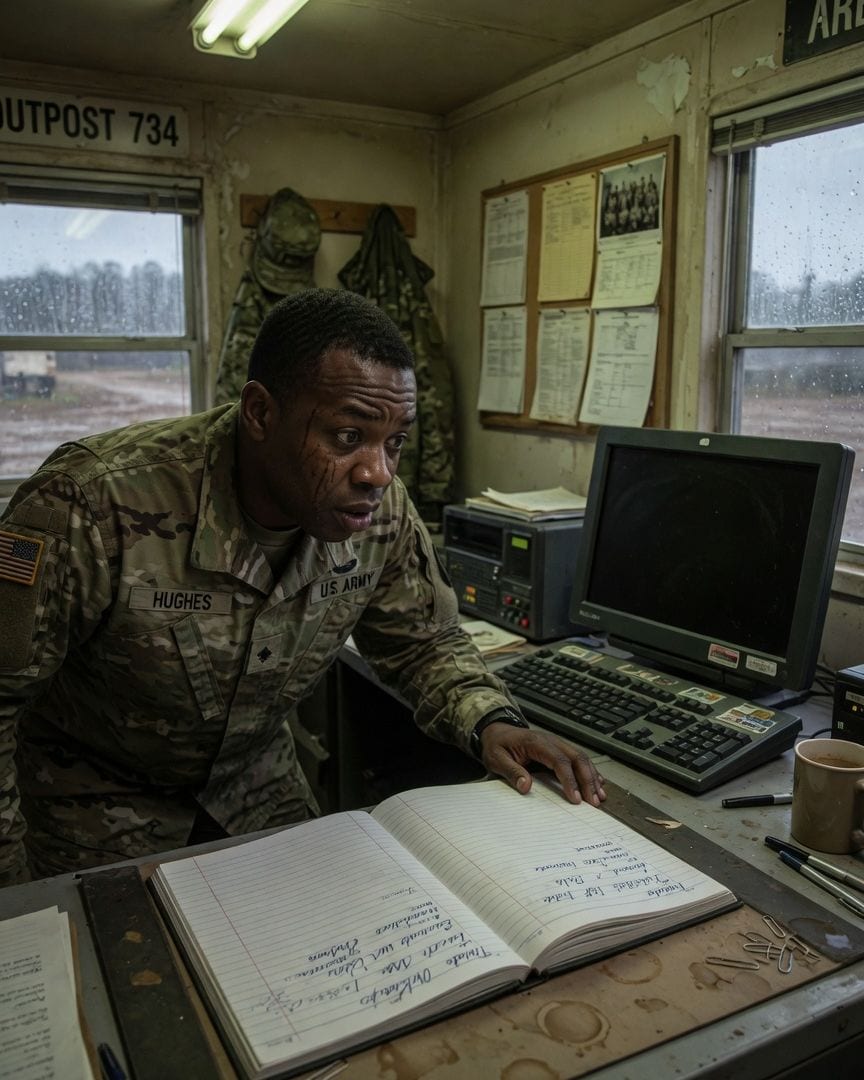
Two days before his company stood down, a staff sergeant heard a Cold War phantom voice answer roll call. Then his computer showed a single, dark, unblinking eye.
Staff Sergeant Preston Hughes had seen a thousand roll calls, but none like the one two days before his company stood down. Amidst the cold, wet dawn at Outpost 734, a phantom voice answered for a soldier named Everett Whitmore—a name no one knew, coming from nowhere. Preston's rational explanations shattered when he found the impossible name in the duty log, signed by his commander, who then denied writing it. Searching for answers, his secure terminal flickered violently, then displayed a single, unblinking eye, impossibly dark, before plunging the office into silence. What impossible truth had just stared back from the screen?
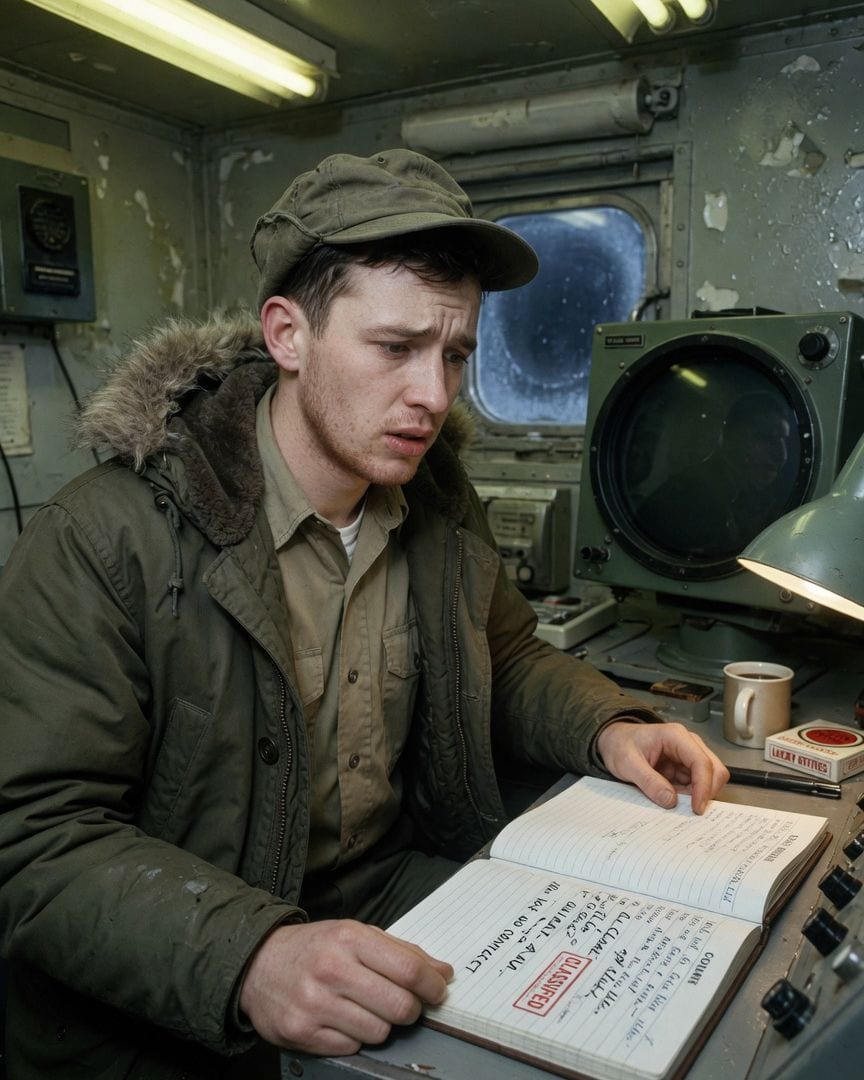
A Cold War airman logs an impossible radar contact on his last sweep. But his official logbook entry is stamped 'CLASSIFIED' and then contradicted by a hastily scrawled 'ALL CLEAR' dated moments before it.
Airman Ordway Vance, 22, manned the radar dome at Site Pellin in the biting North Atlantic dark of January 1962, running the last calibration sweep before its decommissioning. His scope picked up a faint, impossible return, growing closer with each pass, though the ocean remained empty to the eye. When Vance detailed the contact in his official logbook, a 'CLASSIFIED' stamp appeared, followed by a hastily scrawled 'ALL CLEAR' dated moments before his own entry, contradicting his every word. Commander Hartley dismissed it as equipment malfunction, but Vance sensed a chilling, official erasure behind the lie. He soon found a locked cabinet marked 'SITE PELLIN ANOMALIES,' hinting at a deeper truth buried within the base's final days.
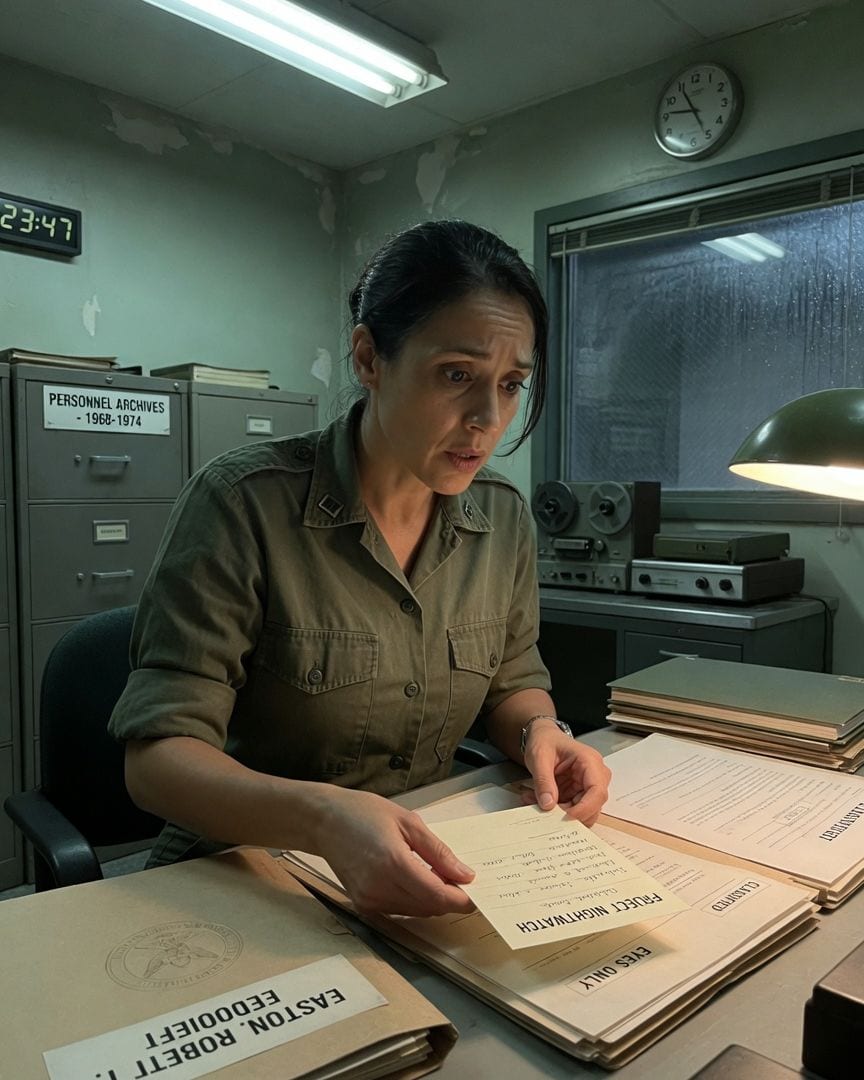
A Cold War tower controller logs an object vanish from radar, then hears the pilot scream it’s filling his windscreen. Her own name, 'Bardolph, Ines', now marked 'Observed' in a secret file.
Captain Ines Bardolph, a tower controller, was counting down the months until her transfer to Langley and the decommissioning of her base, hoping to leave behind the unsettling incidents of her final posting. But one night, her radar scope showed an impossible blip, solid and unwavering, 40 miles north of the Danube, only to vanish in less than a second, leaving a pilot screaming in terror. Despite the clear evidence, the official report blamed "atmospheric inversions," while the terrified pilot received a glowing review and promotion, his file meticulously scrubbed of any anomaly. As Captain Bardolph reviewed the pilot's pristine record, she found a hidden slip of paper, revealing a chilling truth: 'Subject: Bardolph, Ines. Status: Observed.' Was she merely an observer of the impossible, or was she now part of something far more sinister?