A demolition worker found a steel door in a wall backing onto open air. From inside, she heard a heavy box drop. Then she found files for a sunken Cold War ship, dated years after its loss—and her own name on a recent access form for the site.
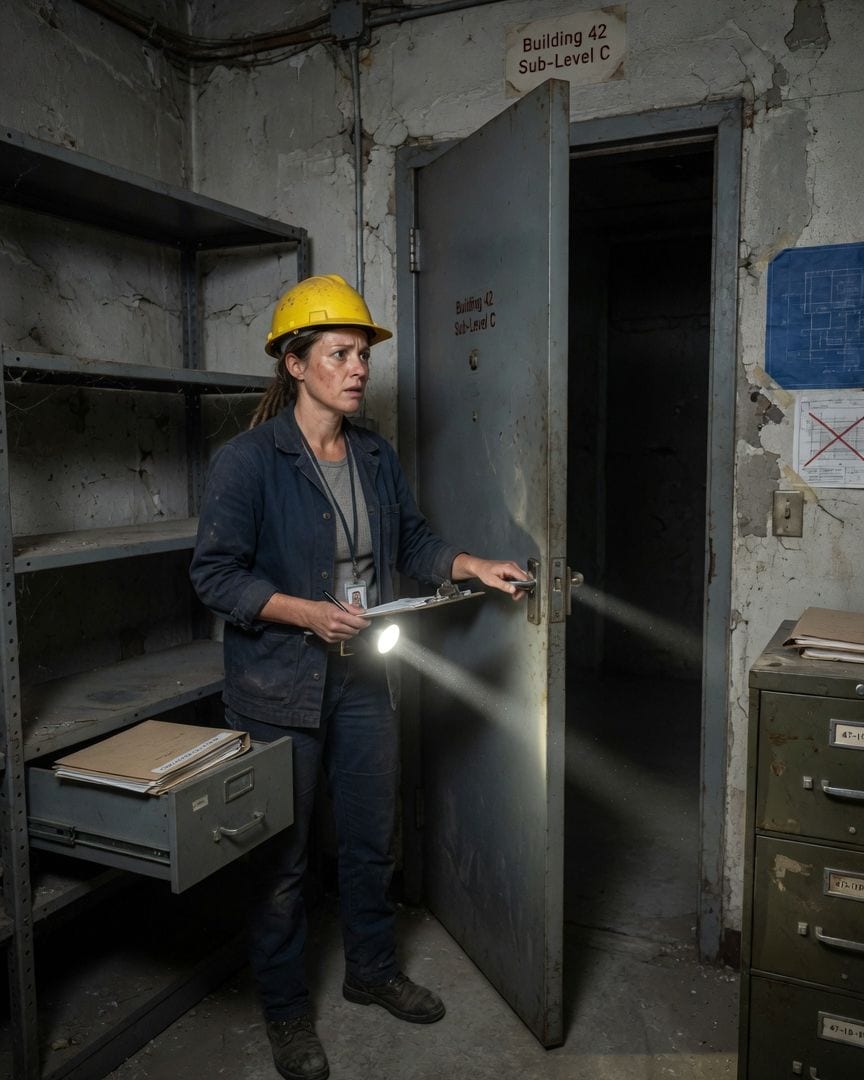
Dessa Kroll winced as her bad knee protested another ladder descent in the half-demolished Building 42 of the Denver federal center. Dust motes danced in the single beam of her flashlight, illuminating crumbling plaster and exposed conduit.
The hum of distant demolition equipment was a familiar drone above ground, but down here, in the sub-level she was tasked with clearing, only a profound silence met her.
She was alone, methodically checking off empty shelving units on her clipboard, the scratch of her pen the loudest sound.
Then, in the west wall, behind a long run of empty steel shelves, she found it. A second steel door, unmarked, with a combination dial.
It was in a wall that, according to the blueprints she’d memorized, backed onto open air – three stories above the employee lot. The impossibility of its placement snagged at her attention.
She ran a hand over the cold steel, surprised to find the hinges, to her touch, freshly greased. She stood there in the dark, clipboard hanging from her hand, listening.
From the other side of that impossible door, she heard a distinct, heavy thud. Somebody set a box down.
Dessa tried the dial, turning it slowly. It spun freely, the mechanism inside long since disengaged. The door wasn’t locked. With a cautious push, it swung inward without a sound, revealing a short, concrete corridor leading into deeper darkness.
Her flashlight beam cut through the stale, cold air, revealing rows of file cabinets, older than anything else in the building, unmarked except for cryptic numeric labels. This wasn't on any official manifest.
It wasn't even on the old, 'declassified' blueprints she’d reviewed for the Denver federal center.
She pulled a cabinet drawer open at random. Inside, neatly stacked, were files. Not contractor files, not personnel files for the federal center, but something else entirely.
She pulled out a thick, heavy folder, its label faded but legible: 'USS Orion – Loss Incident 1968'. Her brows furrowed.
The USS Orion, a naval vessel, had been lost with all hands in the Pacific, a well-known Cold War tragedy. This had to be some sort of archival material, perhaps related to the building's former classified purpose.
But as she flipped through the initial reports, past the official 'lost at sea' declaration, she found something that made her breath catch. A requisition for a new gyrocompass, dated 1975. Seven years after the Orion sank.
Dessa’s mind raced, trying to find a mundane explanation. A misfile? A clerical error on a phantom ship? But then she saw it.
A payroll run, signed off by a Lieutenant Commander she recognized from the original loss reports, dated 1982.
And tucked inside, a small, crisp white form, a requisition for 'Site 42 Access', with a handwritten note in the margin: 'Contractor Kroll – expedite'. Her thumb brushed the paper. It was dated '07/14/Current Year'.
Dessa left the hidden sub-level, the USS Orion file clutched tight. The chill of the unmapped corridor seemed to cling to her, even after she had sealed the heavy steel door behind her.
Back in her small temporary office trailer, she spent the rest of the night cross-referencing. Official naval archives confirmed the USS Orion's loss in 1968, every crewman declared deceased.
There were no records of any survivors, no salvage operations that might explain continued requisitions.
Yet, the file she held contained payroll entries, maintenance logs, and even position reports, all extending for decades past the official loss date, in a steady, official hand.
She found other such files in the cabinet she’d pulled, each detailing a different 'lost' unit – a reconnaissance plane, a submarine, a small army detachment – all with paperwork that inexplicably continued for years.
This wasn't a single error; it was a system. She dug into Building 42's history, going beyond the declassified documents.
She found whispers of a 'Deep Storage Annex' during the Cold War, a black-project designation that had been scrubbed from all public records.
The building itself, she realized, was a carefully constructed shell around something far older and more secretive than she’d imagined. The 'File That Kept Writing' was a pattern, repeated hundreds of times over, in perfect, bureaucratic detail.
The next morning, Dessa returned to Building 42, the USS Orion file secured in her bag. The demolition crew was already at work, their heavy machinery shaking the ground, the vibrations traveling up through the floor.
As she descended to the sub-level, she noticed a change: the impossible door was now closed, and a fresh, bright yellow 'DO NOT ENTER' tape had been stretched across it. It hadn't been there when she left.
She felt a prickle of unease, a cold sensation moving up her spine.
Later that day, as she cataloged a cleared section of the third floor, her work tablet buzzed with an incoming call from an unknown number. She answered.
A calm, even voice, neither overtly friendly nor threatening, simply stated, 'Ms. Kroll, your inventory progress on the lower levels has been noted. We understand you've located some... sensitive materials.' Dessa felt a knot tighten in her stomach.
'Who is this?' she demanded. The voice chuckled softly. 'Someone who appreciates thoroughness. And discretion. Some records are best left undisturbed.' The call disconnected. That evening, back in her trailer, she opened the USS Orion file again.
Tucked inside, where the 'Site 42 Access' form had been, was a new, pristine white document. It was a blank 'Reclassification Order' form, and at the top, printed in a precise, corporate font, was her name: 'Dessa Kroll'.
The next day, Raymond Brooks appeared. He was impeccably dressed, a man in his early sixties with silver hair combed neatly back and an unreadable calm in his eyes.
He introduced himself as a 'federal records manager' and asked to speak with Dessa. He found her in the sub-level, staring at the bright yellow 'DO NOT ENTER' tape.
'Ms. Kroll,' he said, his voice the same one from the phone call, 'we need to discuss your recent… discoveries.'
Dessa turned, the 'Reclassification Order' burning a hole in her bag. 'What is this place? What are these files?'
Brooks gestured vaguely at the tape, then at the concrete walls surrounding them. 'This annex handles certain… administrative requirements. For assets that are not, strictly speaking, lost.'
Dessa pressed him, her voice tight. 'The USS Orion was lost. Everyone knows that. This paperwork is impossible.'
Brooks's calm didn't waver. He picked up a stray piece of demolition debris, a shard of plaster, and turned it over in his fingers. 'Loss, Ms. Kroll, is a matter of perspective. And classification. Some assets are simply re-indexed. Re-filed.
Their original status is… superseded.' He met her gaze, his eyes entirely still. 'The system requires upkeep. Continuous documentation. These individuals, these units, they still exist. Just not in a way that requires public accounting.'
He set the plaster shard down precisely on a structural beam. 'The paperwork you found, the requisitions, the payrolls – they're not for ghosts. They're for ongoing maintenance. To ensure stability, continuity, within their… new operational parameters.'
The words hung in the air, cold and official, like a set of perfectly cut gears. Dessa realized the 'secrecy machine' wasn't just about hiding history; it was about managing an ongoing, active process.
Dessa stared at Raymond Brooks, the cold, clinical explanation chilling her to the bone. Her mind scrambled to catch up, to fit the impossible facts into the framework of his chillingly logical words. 'What kind of parameters?'
she whispered, the question feeling hollow in the vast, empty space of the sub-level.
Brooks smiled, a faint, unsettling curve of his lips that didn’t quite reach his eyes. 'Operational parameters, Ms. Kroll. For those who have been… reassigned.' He took a step closer. 'The facility here has a long history of such reassignments.
It's a complex process, highly specialized. We appreciate your thoroughness in locating the records. Very few manage to penetrate this deep into the archive without… official guidance.' His eyes flickered to her bag, a knowing glint in their depths.
'In fact,' he continued, his voice softer now, almost conversational, 'we were just about to update your file. To include your current status, your… reclassification eligibility. It seems we've been monitoring your progress for some time.
We like to be prepared.'
Dessa felt a sudden, profound coldness, deeper than the sub-level's chill, a specific, pointed dread that centered on her. She thought of the 'Site 42 Access' note, the 'Contractor Kroll – expedite'. It wasn't about the USS Orion.
It was about her. She felt her bad knee ache, a sudden, sharp pain, as if sensing the impending change.
Brooks extended a hand, not in greeting, but as if to offer assistance, a gesture that seemed to pull her forward. 'Don't worry, Ms. Kroll. The paperwork is always meticulously handled. Every detail. Right down to the last… physical attribute.'
He paused, his gaze dropping pointedly to her knee. 'It’s all in the file.'
Dessa scrambled backward, the implication of Brooks's words like a physical blow. Her file. Her physical attributes. This wasn't about archiving history; it was about creating a new one. For her. 'You're not archiving,' she choked out, her voice thin.
'You're… processing.'
Brooks nodded, his expression remaining perfectly calm. 'An elegant term, Ms. Kroll. We facilitate a transition. From one state of being to another, administratively speaking. The files ensure continuity. They document the… modifications.'
He gestured around the echoing sub-level, the concrete walls seeming to absorb all sound. 'This entire building, this facility, it's a funnel. It takes what was, and makes it what will be.
The USS Orion, those planes, those soldiers… they were never lost. They were simply moved. Reclassified. And their new existence requires a certain level of administrative support. Payroll, requisitions, position reports – they detail their continued function, their new purpose.'
He took another slow step toward her, his movements fluid and precise. 'Your profile, Ms. Kroll, is quite complete. Your methodical nature, your ability to uncover hidden systems… it makes you an ideal candidate.
We've been looking for someone with your particular aptitudes.' The coherence of it all was the true horror.
Every impossible entry in the USS Orion file, every continuing payroll run, every requisition for equipment that shouldn't exist – it all clicked into place. They weren't just records of the lost; they were ledgers for the 'reassigned', the 'modified'.
Dessa knew she had to get out. The demolition above them rumbled, an ironic counterpoint to the quiet horror unfolding below. 'I’m not a candidate for anything!' she yelled, her voice echoing unnaturally in the confined space.
She tried to bolt, heading for the impossible door, but Brooks was surprisingly fast, cutting her off without seeming to move quickly. He didn't grab her, didn't threaten her physically.
He simply stood between her and the exit, his presence a calm, immovable barrier. 'Resistance, Ms. Kroll, is inefficient,' he said. 'The process is inevitable. Your file has been signed. The system is already engaged.'
Dessa looked desperately around the cavernous sub-level. The rows of silent file cabinets, the empty steel shelves, they seemed to lean inward, the entire space feeling less like a room and more like a waiting chamber.
She fumbled in her bag, pulling out her clipboard, her only weapon. She held it up, a flimsy shield. 'I’ll expose you!' she threatened, though her voice trembled, betraying the fear she felt.
Brooks merely smiled, a thin, satisfied line. 'The records are already here, Ms. Kroll. All of them. Your account, your discovery, your eventual reclassification. It’s all meticulously documented. The system is self-contained.'
A low hum started, a deep vibration that resonated through the concrete floor, not from the demolition above, but from deeper within the building.
Dessa felt a pressure in the air, a subtle shift, as if the very space was contracting, preparing.
She heard it again, distinct and final: the soft, heavy thud of a box being set down, closer this time, just behind one of the file cabinets. It was the same sound she'd heard when she first found the door.
The demolition of Building 42 proceeded on schedule, the massive structure reduced to rubble in eleven working days. No one reported Dessa Kroll missing; her last check-in had been routine, her contract officially completed.
Her personal effects were packed and shipped to an empty address in the outer suburbs of Denver.
Among the final debris cleared from the sub-level, a single, water-stained clipboard was found, its surface wiped clean of any identifying marks, save for a faint, almost invisible, indentation of a signature that might have been a 'K'.
The site manager noted the efficiency of the cleanup, particularly the complete absence of any unlisted sub-levels or anomalies.
He also noted, briefly, that the contractor who handled the final inventory had been remarkably efficient, especially considering her prior mobility issues. Her bad knee, he recalled, had been a recurring concern.
A new inventory contractor, Joel Larsen, arrived at the Denver federal center the following month, assigned to the next phase of demolition. He was handed a clipboard, heavy with new work orders.
'Good luck, Joel,' the site manager said, 'the last contractor on Building 42 was a real pro. Got everything cleared, even that tricky sub-level. Finished without a hitch.' Joel nodded, flipping through the paperwork.
He paused, seeing a familiar name at the bottom of the last page, a signatory from a previous, unrelated job. 'Raymond Brooks,' he murmured, 'still around, huh?' The site manager shrugged. 'Always. Always signing off on something.'
Joel continued flipping, then stopped at a pristine, blank work order. The top line read: 'Inventory Assignment: Building 43 – Sub-Level Access'.
Beneath it, in a precise, official script, was his own name, 'Joel Larsen', and a small, handwritten note in the margin: 'Candidate Assessment: Completed. Expedite Reclassification Order.' He looked up, a faint, wrong little smile playing on his lips.
'Is that so?'
If this one got to you
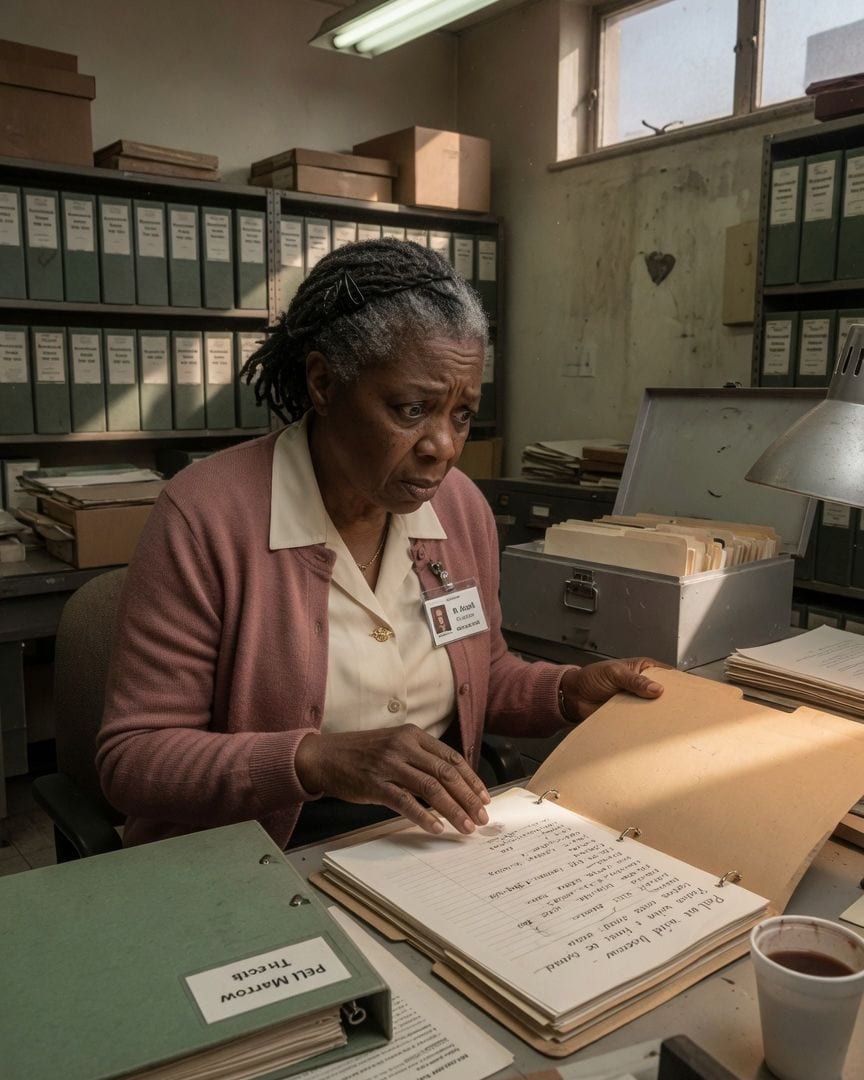
A records clerk's archive file for a Cold War reconnaissance plane lost in 1968 showed it flew yesterday to her own building.
Marguerite Ansell, a records clerk nearing her final week before retirement, meticulously audited Cold War-era files. In the cool, dusty archive, she pulled a file for an oiler declared missing in 1951. Inside, she found a fueling schedule with entries stretching into the present, the last dated just eleven days ago. Then, a second lost ship revealed a similar impossible log, and a cold certainty began to bloom in her chest. Deep in the shadows, Marguerite found an unmarked steel box containing a file for a reconnaissance plane lost in 1968. Its flight log showed a final flight yesterday, to the precise coordinates of her own archive building.
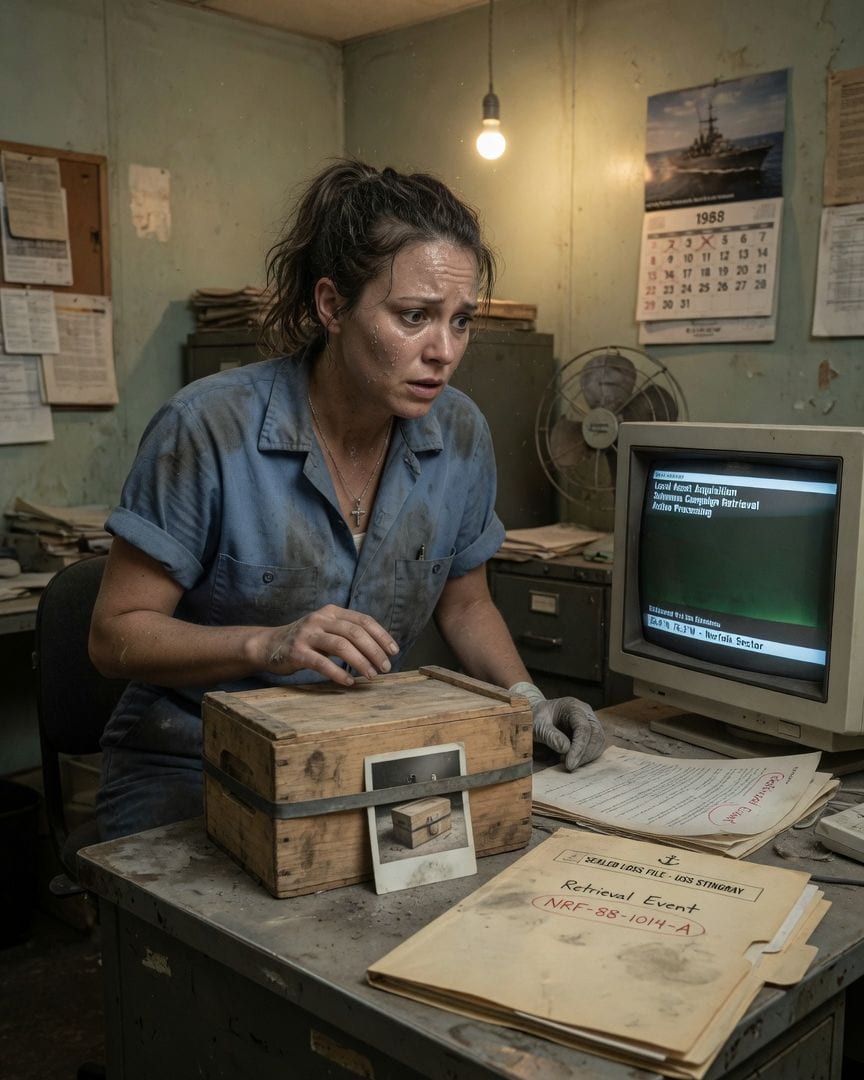
A records depot worker unearths a lost 1940s ship file, then finds a control number from 1988, linking the vanished vessel to the Norfolk coastline.
In 1988, Callista Rhue toiled in a humid Norfolk records depot, her monotonous job sifting through the charred remains of a 1943 fire that had supposedly incinerated everything. She unearthed a cool, unmarked wooden crate that should not have survived, finding a faded 1944 Polaroid of the very crate tucked into its lead band. Inside, a 'sealed loss file' for the USS Stingray, a minelayer vanished in the Solomons, contained an impossible 'Retrieval Event' dated 1988. Callista's database search for the anomaly then pointed not to the distant Pacific, but to active processing for the lost vessel on a remote Norfolk coastline, just miles from the depot. What had truly vanished, and what had been found?
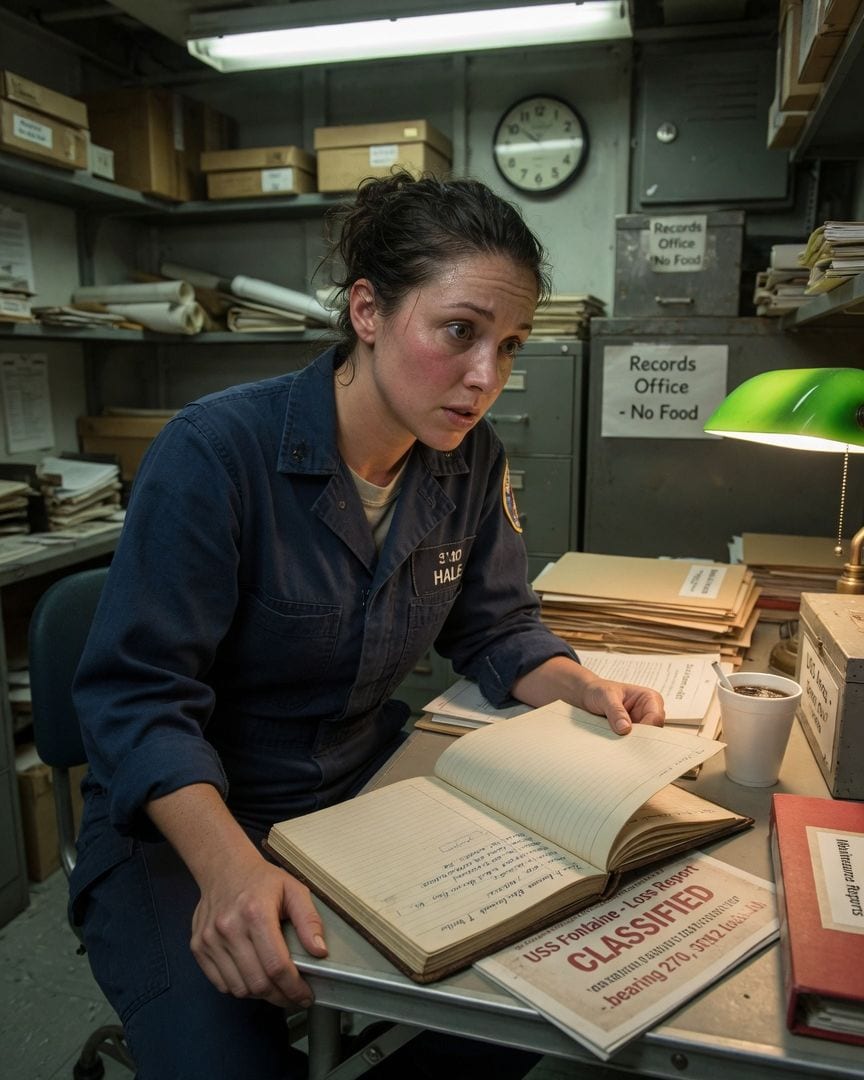
Petty Officer Hale needs a spotless record for her transfer. But the USS Ares sonar logs show an identical, impossible contact, logged to the minute, years apart, and tied to a classified loss report.
Petty Officer Sarah Hale needed a spotless record for her coveted shore duty transfer, a posting she'd worked five years to secure. Alone in the USS Ares sonar shack, three days out from San Diego, her midwatch was broken by an impossible contact: a close, slow echo holding perfect pace, invisible to radar, then vanishing. Her heart hammered, not from fear, but from the data's impossibility. When she found an identical entry in her own log from just one week prior, the cold dread tightened its grip. But the true chill settled when she unearthed decades of similar records, signed by other sonar officers, all showing the same impossible contact at 0212, off the port beam, for nineteen minutes, on the same ship, stretching back years—a persistent echo tied to a classified loss report.
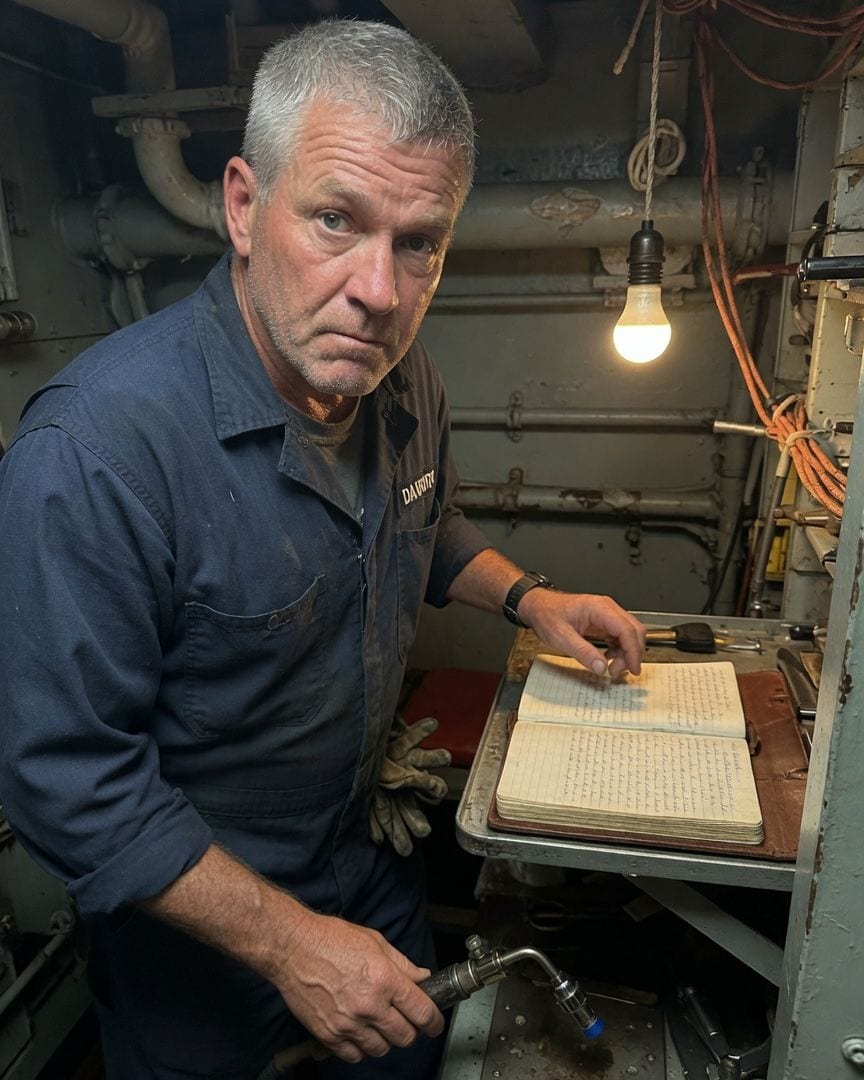
A week from shore duty, Chief Danforth cut a hatch where his ship's plans showed solid steel. An hour later, the wall was seamless, but the Cold War logbook from inside appeared under his mattress.
Chief Petty Officer Raymond Danforth, just a week from ending three decades of service, was intimately familiar with every pipe and plate of the guided-missile destroyer Weatherall. During a mid-cruise overhaul, his gloved hand found a sealed hatch where schematics promised only a solid bulkhead. He cut through the impossible seam to reveal a small, dry compartment, softly lit, containing a logbook filled with an unsettlingly familiar hand. When he returned an hour later with a witness, the hatch was gone, the wall seamless. Later that night, the same logbook appeared beneath his mattress, its pages revealing an entry: 'Petty Officer Howard Montgomery, missing, 1972.' How could a compartment vanish, yet leave its secrets behind?
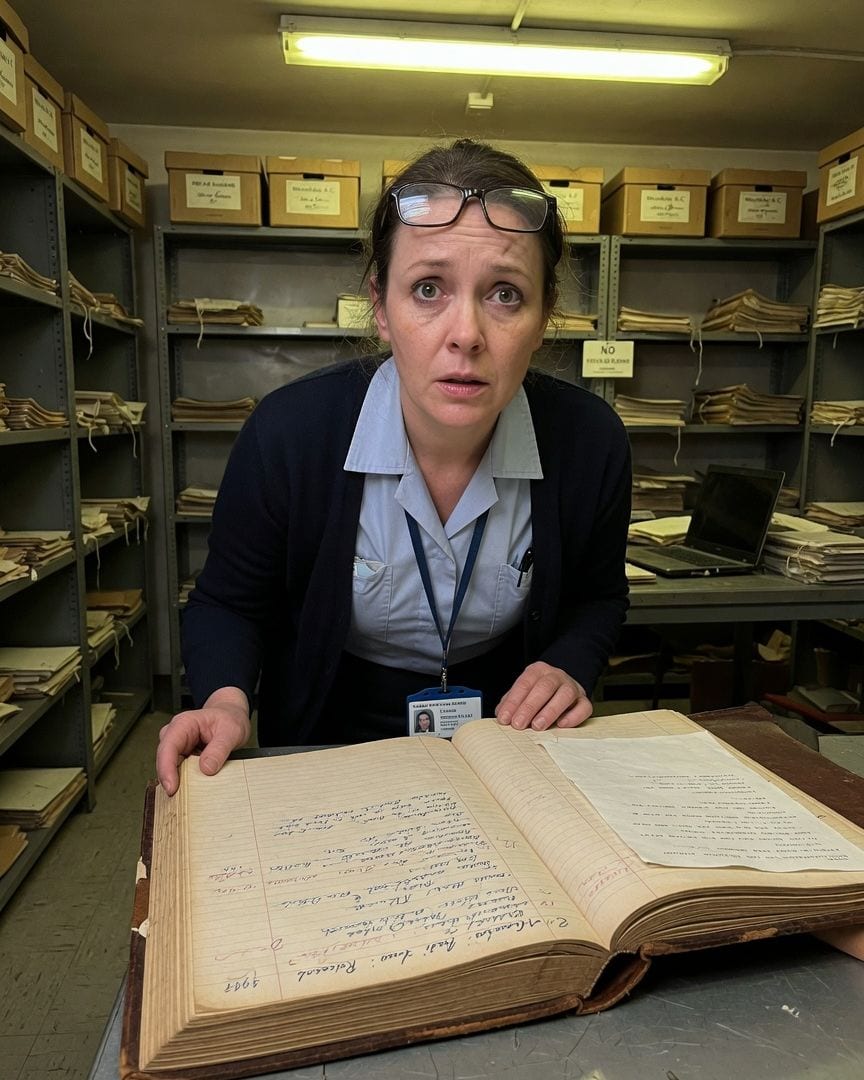
My ambulance trust's incident log shows callout 22-014 to 6 Cathcart Row at 2:40 AM. Every four years, the same call, same address. Always 'patient not found'.
My job involves tedious data entry for ambulance calls, but Incident 22-014 was different. It appeared every four years, always at 2:40 AM, always closed as 'patient not found.' Digging into the dusty physical archives, I found an entry from 1961 for the exact same incident, but its resolution read: 'Subject Secured. Relocated to "Holding".'
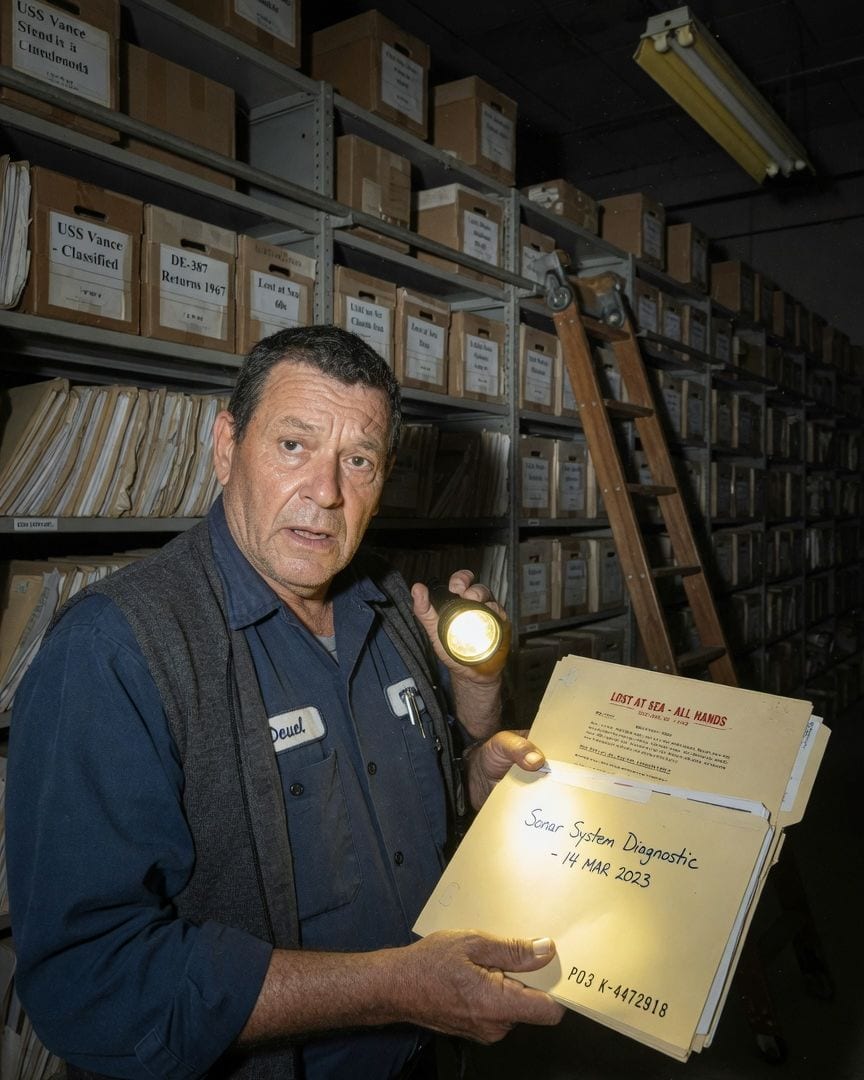
An archivist, alone in the Suitland annex, finds a 1968 lost Cold War ship file with a handwritten entry dated last Tuesday. The ink looks damp, but feels dry.
Carmine Deuel, 62, spent forty years amidst the dust and forgotten files of the Suitland annex. One night, alone in the cavernous space, a sticky squeal and the faint sway of a rolling ladder broke the silence. He found a classified file from the USS Vance, a ship lost in 1968, pulled from its shelf. Inside, a typed form held a handwritten entry: a routine sonar check, dated last Tuesday. The ink, impossibly, looked damp yet was perfectly dry. Who had accessed the file, and how could its entry be so recent?