On her last week before retirement, Master Sergeant Ada Coyle heard a steady ticking from a Cold War depot's sealed bay. Thirty years later, official files named the welder an 'Operations Lead' on a lie.
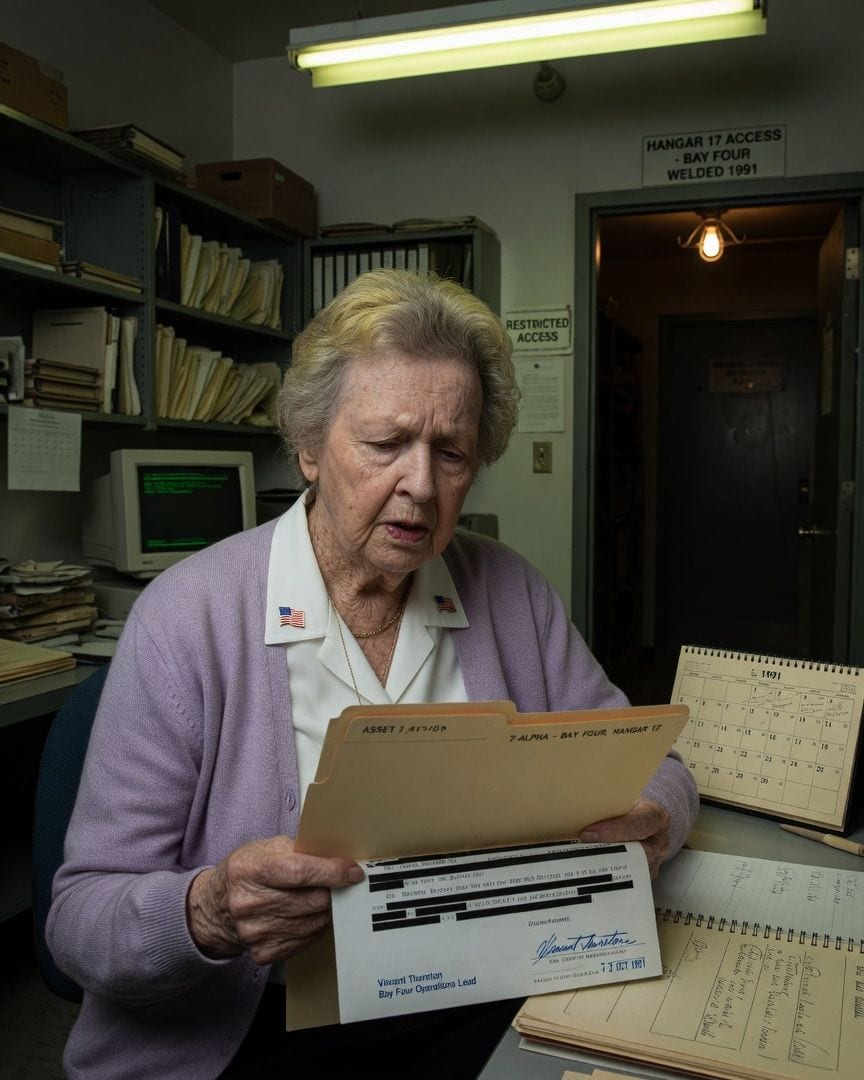
In 1991, during her final week before retirement, Master Sergeant Ada Coyle watched Vincent Thornton, a burly welder from Kentucky, prepare Bay Four of the Ohio depot’s massive Hangar 17.
The official order cited a 'contaminated airframe, pending disposition,' a phrase Ada had seen a hundred times, always followed by a swift dismantling or transfer. This time, it was different.
Thornton, usually quick with a joke, worked in near silence, his face grim behind the mask as he ran thick, continuous beads of molten metal along the seams of the great bay door.
The heat of the torch glowed in the cavernous hangar, making the air shimmer.
Ada, a methodical woman who had overseen records at the depot since 1961, signed off on the safe-and-secure certification, the last piece of paperwork before the welding was complete.
That night, and for the five nights that followed, a faint, rhythmic ticking sound drifted from Bay Four. It wasn't the creaking of cooling metal; Ada knew that sound.
This was a steady, metallic pulse, like an intricate clock mechanism hidden deep inside, a sound that persisted even though the bay had no heat, no light beyond the single bare bulb over its door.
Whatever they had sealed in there, Ada thought, should have gone cold and silent within an hour. The ticking, however, never stopped. Ada retired the next day, the persistent sound a faint, unsettling echo in her memory.
For thirty years, she drove past that hangar on her way to church, the bay still welded shut, the ticking a constant, unsettling presence in the back of her mind, a quiet anomaly in a life built on order.
Thirty years later, in 2021, Ada Coyle, now 85 and with time on her hands, decided she’d had enough. The ticking still bothered her. It was a scratch she couldn’t itch, a question left unanswered.
She used her retiree access to the depot archives, a privilege rarely exercised. The young archivist, Daniel Brooks, a man barely into his forties, looked up, surprised to see her. She requested the files for 'Bay Four, Hangar 17.'
Daniel returned a few minutes later, holding a surprisingly slim folder labeled, incongruously, 'Asset 7-Alpha.' Ada frowned. She’d expected something bulkier, more definitive. Most pages inside were blank, or heavily redacted, black bars obscuring entire paragraphs.
It felt like a file designed to tell her nothing.
Deep within the sparse folder, however, Ada found a 'Quarterly Status Report' for Asset 7-Alpha. Her eyes fixed on the date: it was three months after Bay Four had been sealed.
The report detailed 'operational readiness' and 'resource allocation' for the asset, phrases that made no sense for a 'contaminated airframe, pending disposition.' Most jarringly, the report was signed by 'Vincent Thornton, Bay Four Operations Lead.'
Ada knew Thornton as a welder, a good one, yes, but certainly not an 'Operations Lead' on a classified asset, let alone three months after he’d sealed the bay shut.
She tried to rationalize it as a misfile, a clerical error from a busy era, but the memory of the persistent ticking, so out of place in that cold, dark bay, made the explanation feel thin, almost transparent.
The office itself seemed to hold its breath around her, the air suddenly still.
Ada decided to visit Edith Hawkins, her old supervisor, now in her late seventies. Edith, though moving slower, was as sharp as ever, her memory for depot gossip legendary.
She remembered Ada’s retirement and, of course, the sealing of Bay Four. “A lot of fuss over nothing, that was,” Edith chirped, oblivious to Ada’s underlying tension. Ada cautiously mentioned the 'Vincent Thornton, Operations Lead' detail.
Edith frowned, then a faint smile touched her lips. “Thornton? No, dear, he transferred. Special Projects.” She shuffled through an old desk drawer, producing a faded, spiral-bound desk calendar from 1991.
Its pages were filled with Edith’s neat, official hand, a testament to her meticulous nature. Ada’s eyes scanned the entries until she found it: 'Vincent Thornton – Transferred to Special Projects. Destination: Ohio.' Ada stared at the entry.
Thornton was from Kentucky; he’d hated Ohio, had talked about moving back south every winter. The calendar entry, meant to provide clarity, only deepened the unease. It wasn't a transfer; it was an assignment.
A cold dread settled over Ada Coyle, realizing the official record was a meticulously crafted lie.
Ada returned to the archives, Edith Hawkins’s desk calendar entry burning in her mind like a phantom ember. Daniel Brooks, initially skeptical, was now intrigued by her quiet determination. He saw the cold resolve in her eyes.
“Special Projects, you said?” he asked, pulling up the depot’s old internal directory. The category existed, but it was unusually sparse, lacking the usual departmental contacts and sub-divisions. Together, they dug deeper.
They uncovered a pattern: a string of similar 'transfers' coinciding with other 'lost' assets across decades, always to 'Ohio,' regardless of the asset’s original location or the employee’s home state.
These 'transfers' consistently involved the last individual to interact physically with the asset before its 'disposition.' Ada felt a chill trace her spine as she recognized the chilling regularity.
They found a requisition for 'Cryogenic Coolant, Asset 7-Alpha,' dated 1995 – four years after Bay Four was sealed. Daniel, using his system access, discovered a hidden sub-folder within the Special Projects directory, marked 'Active Maintenance Protocols.'
The files within displayed automated power consumption logs for Asset 7-Alpha, running continuously since 1991. The data scrolled across the screen, a relentless, unbroken line of activity.
The ticking wasn't just in her memory; it was in the records, a cold, hard fact. The hum of the archive server, usually a low background drone, seemed to throb with a new, insistent rhythm.
As Ada and Daniel delved deeper into the 'Special Projects' rabbit hole, the atmosphere subtly shifted.
Ada started receiving strange calls on her old landline – a single ring, then silence, no caller ID, just the faint click of a disconnect.
Daniel reported unusual system errors and access denials when he attempted to cross-reference 'Special Projects' data with the general depot roster. Files would vanish from his screen, only to reappear moments later, subtly altered.
One evening, Ada found a small, sealed envelope slid under her front door. It wasn't addressed, just tucked neatly beneath the weather stripping.
Inside, a single, heavy index card, identical in stock and typeface to old depot forms she remembered handling. It read: 'Query regarding Bay Four disposition has been noted. Further inquiry is not advised.'
No return address, no signature, just the stark, anonymous warning. The message was clear: someone knew what she was looking for, and they were watching. The methodical, rational pursuit of a clerical error had become a personal threat.
The quiet threat of the card, its words so official, yet so menacing, was far more chilling than any shouted warning could have been. The air in her usually cozy living room suddenly felt frigid.
Ada confronted Edith Hawkins again, this time with the index card. Edith’s composure, usually so steadfast, finally broke. Her hands trembled as she examined the card, her eyes wide with a fear Ada had never seen in her old supervisor.
“They still use these? After all this time?” she whispered, the words barely audible. Ada pressed her, demanding answers. The archive records, the phantom calls, the card – it all pointed to something far beyond simple bureaucracy.
Edith, her voice low and strained, finally admitted the truth. “Special Projects wasn’t a department, Ada. It was a reclassification. The things that went in there… they weren’t disposed of. They were… filed. Still active. We just changed the paperwork.”
She explained that 'Operations Lead' was a placeholder, a generic title for an automated system designed to manage the classified assets. But for the sake of audit trails, for the illusion of human oversight, a human name was always attached.
A ghost in the machine. Vincent Thornton, as the last human to physically interact with Asset 7-Alpha, had his name assigned to its ongoing file.
His 'transfer' was simply the administrative process of his disappearance, his identity repurposed to maintain the record. The 'contaminated airframe' was a convenient lie to seal away something nobody understood, but couldn't destroy.
Ada felt a cold clarity, the pieces of the puzzle clicking into place with a horrifying precision. The persistent ticking, the misdated reports, the uncanny 'transfers'—all made sense now, a coherent, monstrous system.
The world tilted, revealing a terrifying order beneath the chaos of the unexplained.
Ada returned to the archive with a renewed sense of urgency, determined to find the current 'Operations Lead' for Asset 7-Alpha.
Daniel, now fully committed, his face pale but his fingers flying across the keyboard, helped her navigate through layers of encrypted files and obfuscated data within 'Special Projects.'
They bypassed a final security protocol, and a new screen flickered to life, displaying a current payroll run for 'Bay Four Operations Lead.' The name listed was 'Gary Brooks.'
Ada didn't recognize it, but Daniel let out a strangled gasp. He pointed a trembling finger at the surname on the screen. “Brooks… that’s my father’s name,” he whispered, his voice barely audible, thick with disbelief.
Daniel’s father, Donald Brooks, a junior records clerk, had disappeared on a classified assignment in 1998, never officially found. The payroll entry showed a direct deposit into an account that was still active last month.
Ada stared at the screen, a chilling realization forming in the pit of her stomach. The file wasn't just written for the lost; it was still writing them.
And now, it was writing for Daniel’s father, drawing a salary for a ghost.
Daniel, horrified, pulled up more on 'Gary Brooks.' It was a placeholder, a generated identity. His father, Donald Brooks, had been assigned to 'Special Projects' shortly before his disappearance, tasked with auditing the 'Asset 7-Alpha' file.
The administrative system, once it had a human attached to an asset, simply continued to process their data, signing them off on requisitions and payroll, meticulously maintaining the illusion of active human oversight.
The 'ticking' Ada had heard for six nights, and then for thirty years, was the asset’s active life support and operational cycle, never truly dormant.
The 'contaminated airframe' was the official cover for a non-terrestrial craft, placed into long-term, self-sustaining storage within Bay Four. The depot wasn't just a storage facility; it was a long-term study and containment site, a vast, quiet machine.
The 'lost' were never lost in the conventional sense; they were simply integrated into this vast administrative machine, their identities repurposed to maintain the 'filed' assets. The pattern, spanning decades and classifications, snapped into place with horrifying clarity.
The facility wasn't just guarding secrets; it was creating them, and in doing so, consuming lives, turning them into paper trails. The fluorescent lights of the archive hummed, a flat, indifferent witness to their grim discovery.
Suddenly, the heavy archives door swung open. A security team, silent and efficient, entered, fanning out to block any exit. Ada and Daniel were cornered, their frantic search brought to an abrupt halt. There was no escape.
Ada understood: they hadn't just found the file; they'd become part of it.
Overseeing the team was a calm, unbothered woman, Sophia Novak, whom Ada recognized as a high-ranking official she’d occasionally seen at the depot years ago—one of 'the ones who knew.'
Novak held a tablet, her finger hovering over a screen displaying what looked eerily like a personnel roster. Ada knew what’s coming.
She grabbed Daniel’s hand, a silent acknowledgment of their shared fate, a small, futile gesture in the face of such overwhelming, bureaucratic precision.
The horror wasn't the capture itself, but the quiet, methodical process unfolding around them, the chilling efficiency with which they were being integrated into the system they had tried to expose.
Their investigation had led them not to freedom, but to their own filing.
The lights in the archive went out. The heavy door clanged shut, its lock clicking with a finality that echoed through the sudden silence. Outside, the depot continued its routine, oblivious to the quiet disappearances within its walls.
Daniel Brooks’s desk sat empty for a week before his name was quietly removed from the active roster. Ada Coyle’s old sedan remained in the visitor parking lot for several days, accumulating dust, eventually towed away by a municipal service.
No one reported them missing; their existence was simply folded into the ongoing administrative processes of the 'Special Projects' division, their inquiries closed, their fates sealed within the very records they sought to understand.
Months later, a new 'Bay Four Operations Lead' appeared on the quarterly reports for Asset 7-Alpha. The name assigned was 'Daniel Brooks.' His payroll account, once dormant, began receiving regular deposits again, funds meticulously allocated for 'ongoing operational support.'
One evening, Ada Coyle’s neighbor, Mrs. Henderson, saw Ada’s old sedan pulling out of her driveway, heading towards the main road. The driver was a figure too straight-backed, too unhesitant for Ada’s age, too smooth in their movements.
The driver turned their head, catching Mrs. Henderson’s eye, and offered a faint, wrong little smile. The file is still being signed.
If this one got to you
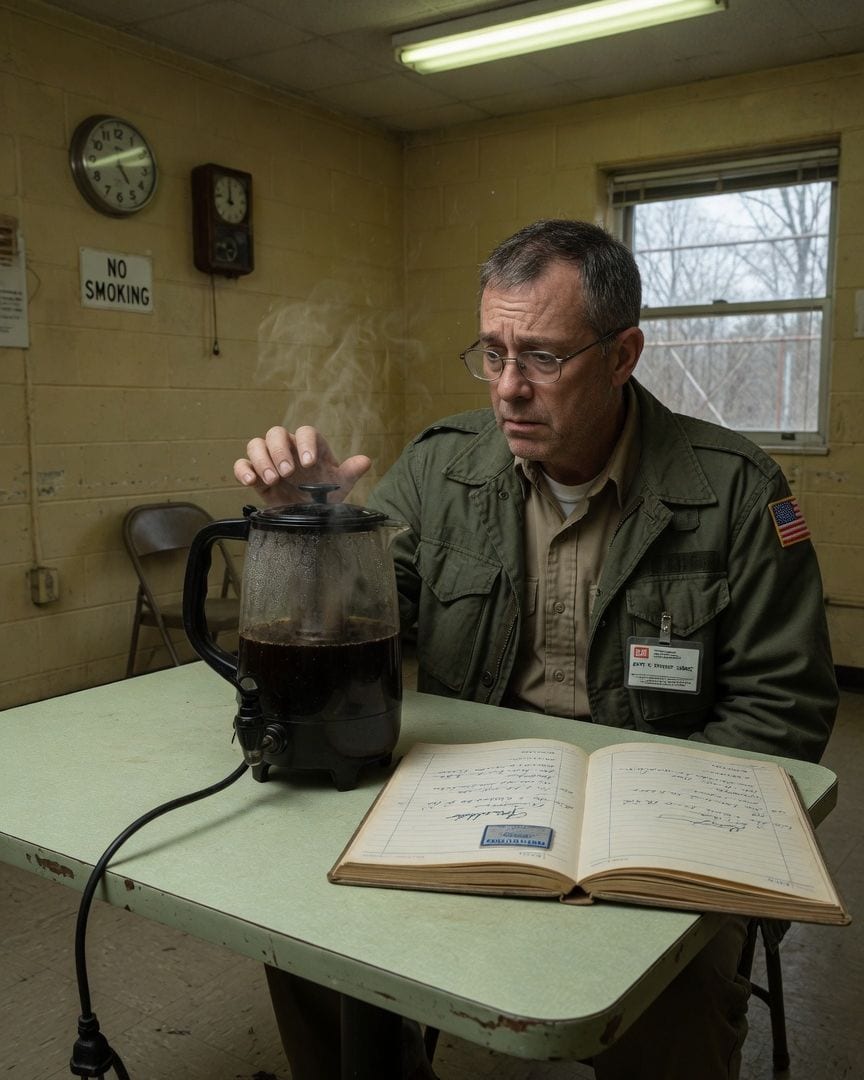
A methodical US Army engineer found a Cold War facility's file stamped 'DECLASSIFY NEVER' — and half its pages were missing.
Captain Nolan Threep, a methodical US Army engineer, expected another routine decommissioning at Alert Facility Twelve in rural Montana. The chains on the doors had rusted solid since 1970, promising a long-dead site. Yet, inside, a faint warmth hung in the air, and a glass coffee urn sat half-full, a wisp of steam rising lazily from its dark surface. The urn, warm to the touch, was clearly unplugged, and the duty log beside it, signed for a shift ending nineteen years prior, looked as though it had been signed yesterday. What secret could a supposedly abandoned Cold War facility hold?
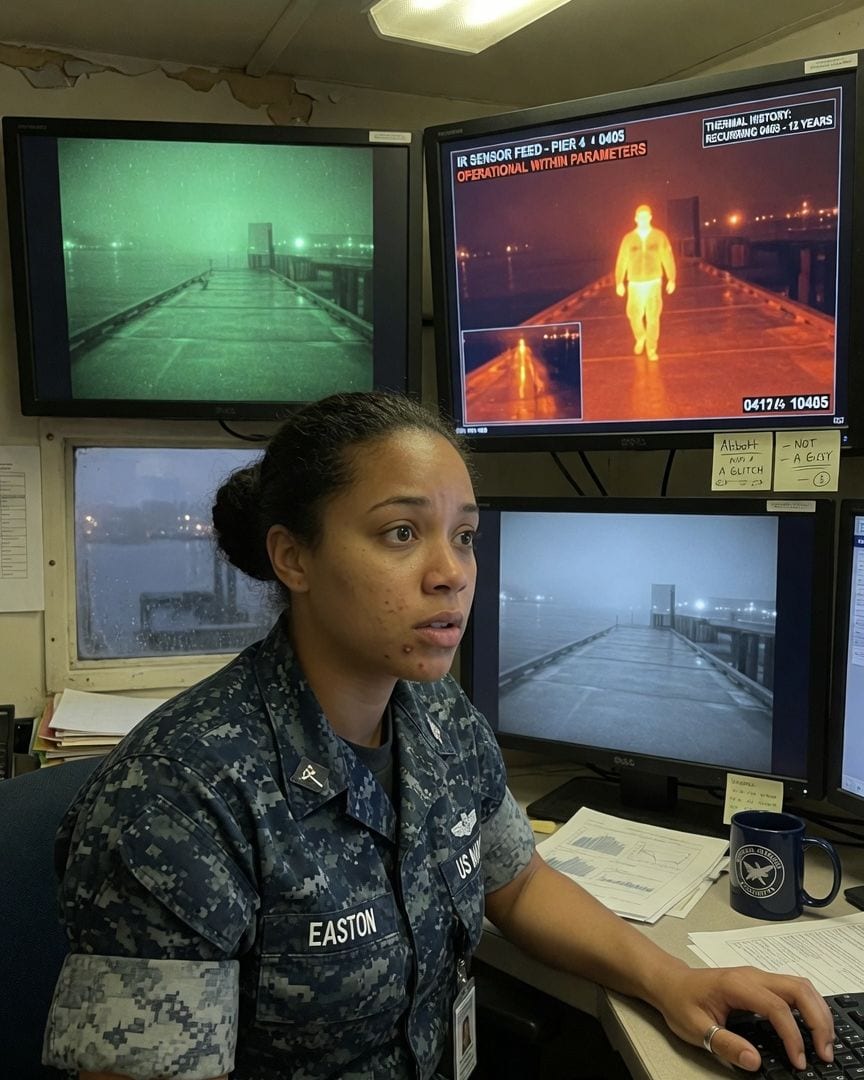
A security officer's camera sees nothing where her sensor logs a man-sized heat bloom on Pier 4, repeating at 0405 every night for twelve years.
Petty Officer Judith Easton, 24, was counting down her last month at Naval Base Kitsap-Bangor’s Pier 4 before a coveted transfer to Pearl Harbor, the security station air thick with the hum of electronics and the briny scent of the Puget Sound. At 0405, her primary IR sensor feed registered a distinct, man-sized heat bloom moving along the pier's caisson, but her optical camera showed only empty, mist-shrouded concrete where the sensor insisted a body moved. What began as a baffling glitch soon turned chilling: the thermal history revealed this impossible heat signature had walked the identical path at 0405 every night for twelve years, dismissed by others but secretly documented by a former officer. His subsequent 'stress-related medical leave' and a sealed 'Project NIGHTWATCH' file now hinted at a hidden truth far beyond a simple sensor error. What exactly had Petty Officer Abbott known?
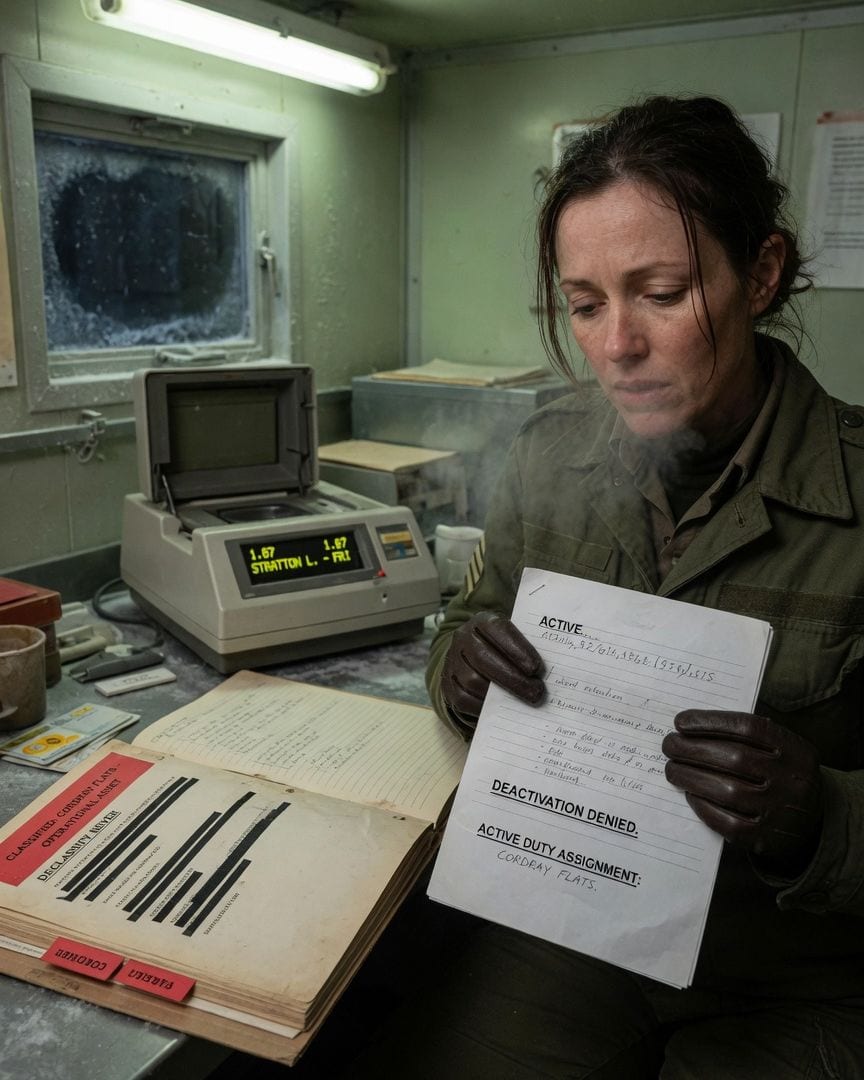
A dead researcher's Cold War film-badge was manually dated for active duty next Friday at Cordray Flats.
Corporal Hettie Vance moved like a ghost through the cold, empty Cordray Flats in the winter of 1988. The decommissioned range was quiet, her film-badge processing a rote exercise, until the 141st badge appeared. It belonged to Leonard Stratton, a research assistant who'd died in 1987, yet the scanner showed a full working exposure. Hettie found its date wheel manually reset for the coming Friday, and a secret file later confirmed an impossible directive: 'ACTIVE DUTY ASSIGNMENT: CORDRAY FLATS.' Who reset the badge, and for what purpose, on a range supposedly abandoned?
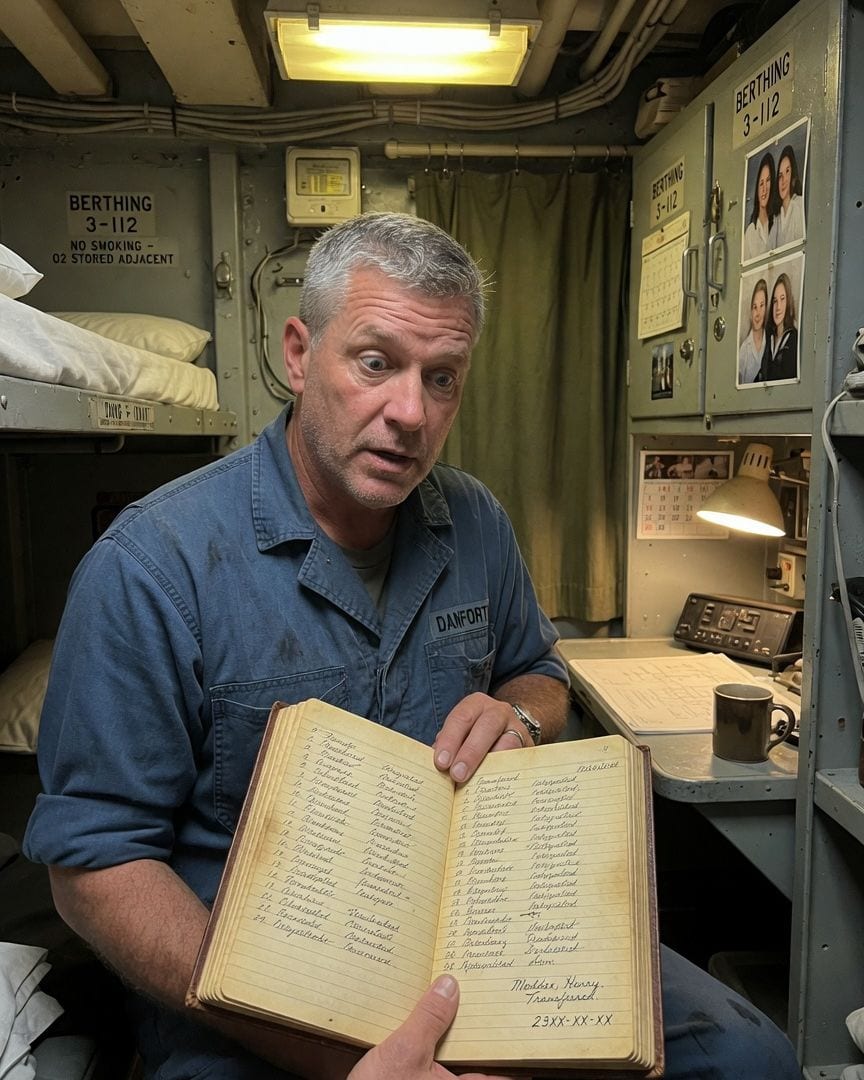
A Chief Petty Officer found a strange logbook. Its last entry listed a living crewman, dated next week.
Chief Petty Officer Russell Danforth was weeks from retirement, his three decades of service nearing an end aboard the USS Weatherall. Deep in the destroyer's familiar steel passages, he stumbled upon a sealed hatch where official plans insisted only solid bulkhead should be. Forcing it open, he discovered a cramped, unsettlingly 'lived-in' compartment holding a bare bulb and a mysterious logbook. Its final entry, stark and fresh, named a living junior petty officer from his own division, dated a week from today. What chilling fate awaited Henry Maddox, according to the Weatherall's secret history?
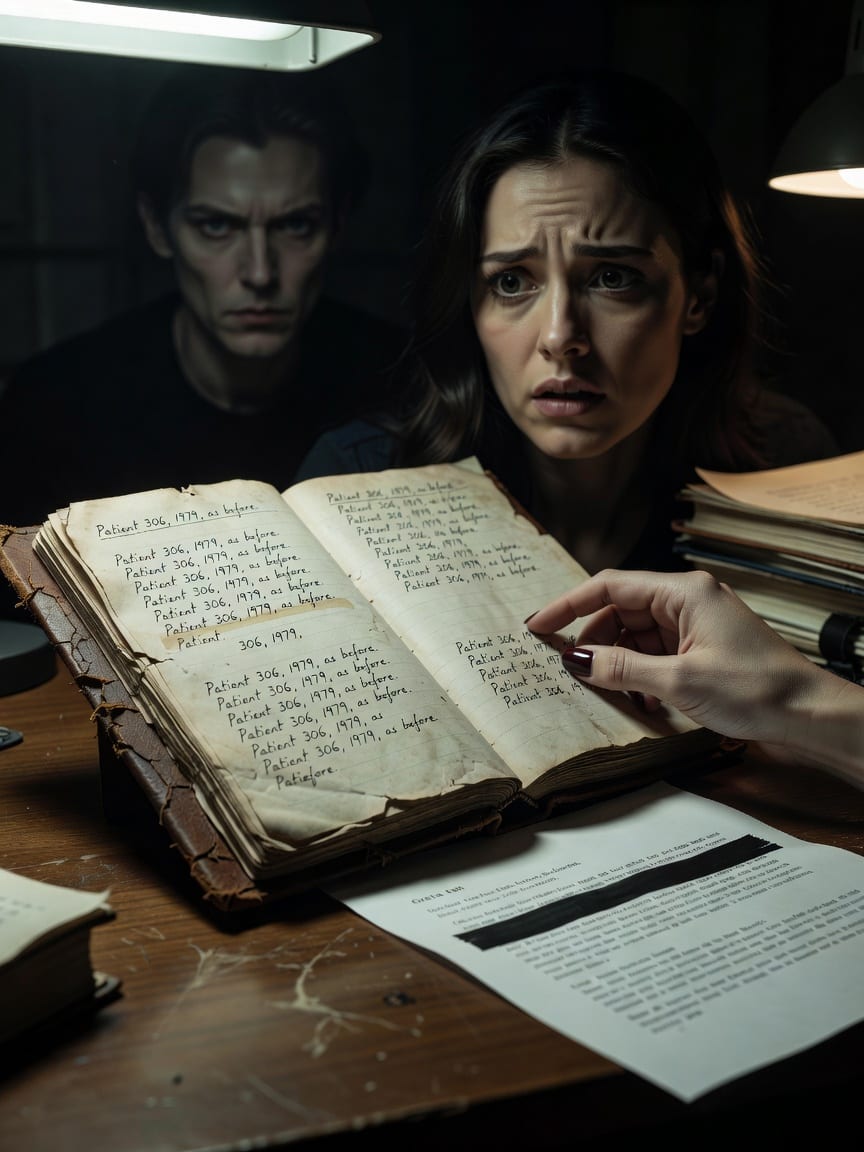
My archive ledger shows Patient 306 admitted in 1889, 1911, 1934, 1957, 1979 — same diagnosis, different names, and always, 'as before.'
My job as an archive transcriber is usually soothing, digitizing ancient admissions ledgers. But a recurring entry for 'Patient 306' caught my eye, noted 'as before' in the same hand for nearly a century. Digging deeper, I found a council file, dated 1998, outlining 'containment procedures' – and it named my own street and surname.
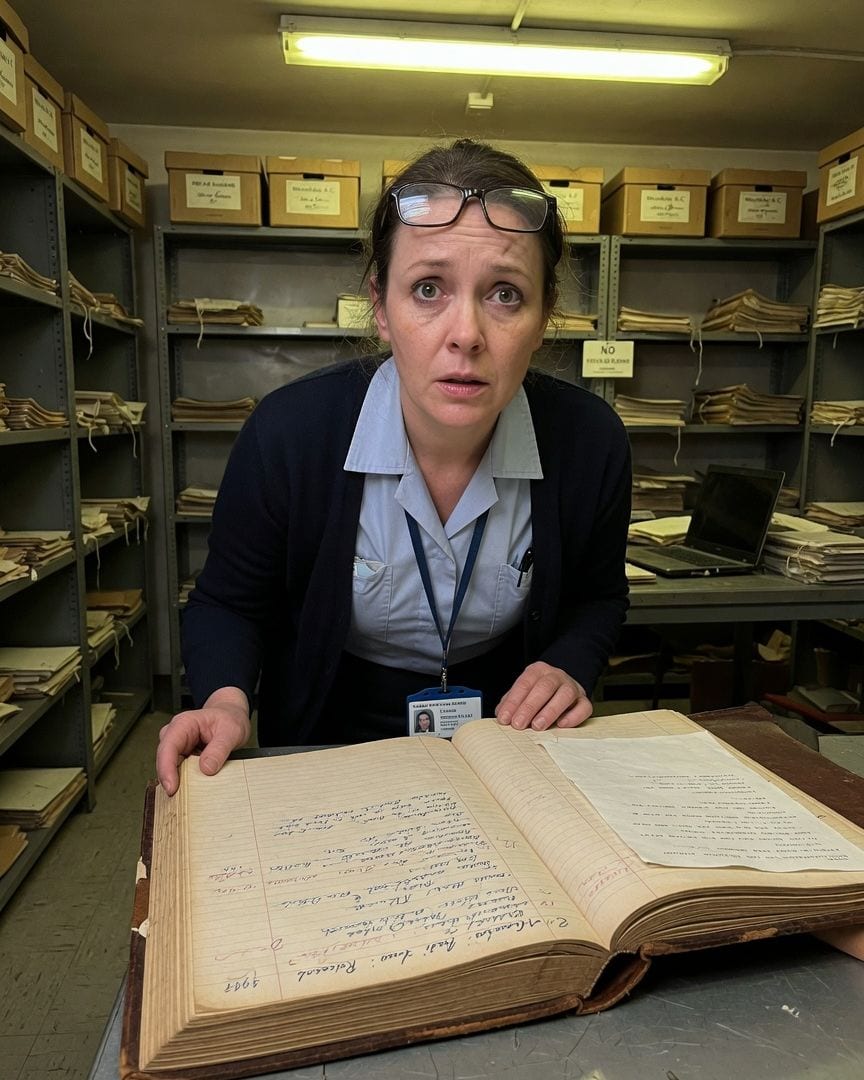
My ambulance trust's incident log shows callout 22-014 to 6 Cathcart Row at 2:40 AM. Every four years, the same call, same address. Always 'patient not found'.
My job involves tedious data entry for ambulance calls, but Incident 22-014 was different. It appeared every four years, always at 2:40 AM, always closed as 'patient not found.' Digging into the dusty physical archives, I found an entry from 1961 for the exact same incident, but its resolution read: 'Subject Secured. Relocated to "Holding".'