An elderly woman finds a current bill for her Cold War father's care, dated 72 years after he was declared dead.
Odette Cardew, a woman in her seventies, sat at her kitchen table, a stack of her father’s old Army papers spread before her. Most were innocuous: discharge forms, pension statements, commendations for valor.
Her father, Harold Cardew, had been declared dead of exposure in the Chosin cold in 1950, when she was two. He was a ghost, a story, a faded photograph on her mantle.
But on top of the stack, nestled among yellowed letters and brittle envelopes, was a crisp, modern envelope. It felt out of place, too stiff and new. Inside, a bill.
Not just any bill, but an itemized statement for care rendered at a facility in the Ozarks. The account was current, the balance small, the billing period listed as this quarter.
It detailed his room number, 3B, his dietary restrictions – specifically, ‘no citrus’ – and a terse note that the patient had asked, again, whether his daughter had come. Odette’s gaze snagged on the date stamp: 08/17/2022.
It was her own birthday. A chill, light as a whisper, traced its way up her arm.
The next morning, Odette drove to the nearest Army Records Center, a sprawling brick building outside St. Louis. Its windows, dark and reflective, seemed to hold a vast, unblinking stare.
She presented the bill to Hazel Doyle, a kind-faced archivist with severe glasses perched on her nose. Hazel typed Harold Cardew’s name into her system, her brow furrowing with the effort of concentration.
“Mr. Cardew, Harold… Yes, here it is,” Hazel murmured, her finger tracing a line on her monitor. “Declared deceased, 1950. Medal of Honor, posthumous.”
Odette pushed the crisp medical bill across the counter, its modern typeface a contrast to the yellowed death certificate Hazel was now viewing. “Then what is this?” she asked, her voice steady despite the tremor in her hands.
Hazel picked up the statement, her eyes scanning the details: “Ozarks… Room 3B… Dietary restrictions… ‘No citrus’,” she read aloud, her smile faltering, her brow deepening. “This must be a clerical error, ma’am. A misfile. It happens with older records.”
Odette shook her head. “It has his name, his service number, and it’s dated today. And it specifically asks for me.” Her finger pointed to the 08/17/2022 stamp.
Hazel’s gaze lingered on the birthday, a flicker of something unreadable in her eyes before she cleared her throat, the sound sharp in the quiet office.
“I’ll pull his full service record,” Hazel said, her voice now flat, professional. “Sometimes there are… discrepancies. It might take a while.”
She disappeared into the labyrinthine stacks, the sound of her footsteps fading as she delved deeper into the records.
Odette waited for two hours, the hum of the fluorescent lights and the quiet rustle of paper the only companions in the sparse waiting area.
When Hazel returned, she carried a thick, red-tabbed folder, its edges worn from years of filing. “Here’s everything official. As you can see,” she said, her voice betraying no emotion, “the death certificate is quite clear.”
Odette sat at a small table in the archive’s reading room, the silence thick around her. She carefully turned the brittle pages of her father’s service record.
Every document confirmed his death: the casualty report, detailing exposure in the brutal Korean winter; the official burial details, a memorial ceremony in absentia; the posthumous commendations for bravery. It was all there, neat, orderly, and irrevocably final.
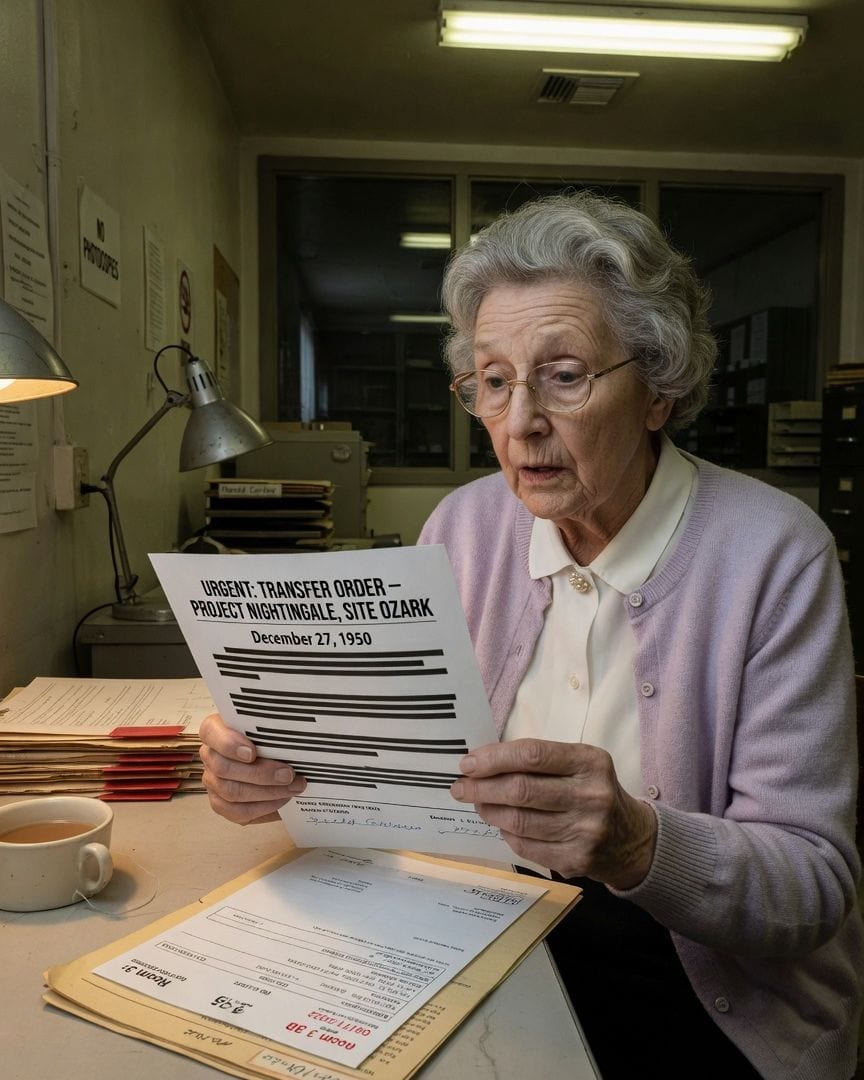
But tucked beneath a standard medical discharge form, stapled to a blank sheet of paper, Odette found a single, heavily redacted memo. Its header, stark and bold, read: ‘URGENT: TRANSFER ORDER – PROJECT NIGHTINGALE, SITE OZARK.’
The date beneath it caught her breath in her throat: December 27, 1950. Two weeks after Harold Cardew was officially declared dead. Below the blacked-out lines of text, her father’s military ID number was handwritten, unmistakable.
She stared at the transfer order, its impossible date mocking the official documents, feeling the cold weight of the paper in her hands.
The name ‘Project Nightingale’ was stamped above a series of blacked-out lines, but her father’s service number was clearly visible, linking him to a place that shouldn’t exist.
Odette photographed the memo with her phone, her hands trembling as she held the camera steady. The faint click of the shutter in the silent reading room felt like a gunshot.
She carefully replaced the document in its folder, its secret now captured in digital form. Back home, she began to research ‘Project Nightingale’ and ‘Site Ozark.’ The internet, usually a vast ocean of information, yielded nothing.
No military installations, no declassified programs, no medical facilities. It was as if the names had been scrubbed from existence, leaving behind only a ghostly echo in a single, impossible document.
She called the number on the medical bill. It connected to an automated voice system for ‘Federal Medical Services, Account Inquiry.’ Inputting her father’s service number always resulted in the same generic, polite message: “Account not found.
Please check your information and try again.” The voice was smooth, unhelpful, and relentless in its loops.
Frustrated, Odette remembered the archivist, Hazel Doyle. She called the Records Center, asking for Hazel by name. A different, younger voice answered, stating Hazel was out on “extended leave.”
The abruptness of it, the lack of explanation, felt wrong, like a door slamming shut in her face.
Odette decided to drive. The Ozarks were only a few hours away, a dense expanse of forested hills. She followed the bill's vague address, winding roads giving way to dirt tracks, the trees pressing in closer, casting long, shifting shadows.
The address led to a forgotten turn-off, overgrown and barely passable, ending at a rusted, padlocked gate.
Beyond it, through the thick, skeletal trees of late autumn, she could just make out the faded concrete walls of a sprawling, low-slung building. Its windows were dark and blank, like eyes that had seen too much.
It looked abandoned, yet the gate’s padlock was conspicuously modern, gleaming silver against the rust. A breath of cold air, carrying the scent of damp earth and decaying leaves, swept through the gap in the gate.
As she drove away, the gravel crunching under her tires, a nondescript sedan with tinted windows pulled out from a hidden turn-off further down the road, keeping a steady, non-threatening distance behind her.
The sedan followed Odette for miles, a silent, unnerving presence in her rearview mirror. It didn’t tailgate or make aggressive moves, but it was always there, a few car lengths back, a dark, watchful shape.
When she stopped for gas, it pulled into the far corner of the parking lot, its engine idling.
When she bought a coffee at a roadside diner, she saw a figure in the driver’s seat, indistinct behind the tinted glass, watching her through the steam on her own window.
The message was clear, chilling in its quiet persistence: someone knew she was digging.
Back home, an hour later, Odette found a small, unmarked envelope tucked under her front door. It was heavy, good quality paper, the kind that whispered of official secrets. Inside was a single, printed slip of paper.
The words were simple, typed in a standard font, but they landed with the force of a blow: ‘Your father asked for you. He knows your birthday. What more do you need?’
There was no sender, no return address, just the terrifying confirmation that her father was not only alive but aware, and that her every move was being monitored.
The implication settled over her like a shroud: they had allowed her to find the bill, perhaps even wanted her to.
The stake was no longer just about her father’s past; it was about her present, and the quiet, pervasive reach of whatever institution had orchestrated this decades-long deception. The air in her small kitchen felt suddenly dense, suffocating.
Odette knew she couldn’t keep going alone. She remembered an old friend of her father’s, Howard Easton, a retired military intelligence officer now living in a quiet retirement community a few states away.
Howard was frail, his skin like parchment, but his mind, she hoped, was still sharp. She drove until dusk, and found him in a sun-dappled living room, surrounded by meticulously arranged books.
He listened patiently as Odette laid out the bill, the transfer order, and the anonymous note. Howard’s eyes, though rheumy with age, sharpened as he examined the ‘Project Nightingale’ memo.
“Nightingale,” he murmured, the name a ghost on his lips, a distant look in his eyes. “Heard whispers of that, back in the day. Never saw a file, of course. Always thought it was a myth.”
Odette pressed him, leaning forward. “What was it, Howard? What did they do?”
Howard sighed, a deep, rattling sound that seemed to pull at the very air in the room. “It was after Chosin. That winter… a nightmare. Too many men lost, too many bodies never recovered. But some… some came back.
Not quite dead, not quite alive. Wounds that wouldn’t close, or minds that simply… weren’t there anymore. They couldn’t be accounted for. The brass couldn’t explain it. Couldn’t bury it. So they filed it. Created a new category: ‘Non-Reintegrable Asset.’
Nightingale was the program that handled them. Kept them… out of sight.” He pointed to the specific dietary restrictions on the bill. “’No citrus.’ That’s specific. Means he’s still reacting, still living, Odette. Your father isn’t dead. He’s filed.”
The pieces clicked into place with an awful, cold precision: the current bill, the room number, the request for her.
Her father was in that facility, a living ghost, meticulously maintained by a system that had simply erased his official existence. The coldness of the truth was worse than any monster Odette could have imagined.
Howard, his voice raspy, continued, the late afternoon light fading into purple shadows around them. “They set up these facilities, rural, out of the way. Ozark was one. I always thought it was contained to Korea. A one-off.
A desperate measure.” He shook his head slowly. “But the whispers… they always said it was too efficient to be just for one conflict.”
He pulled an old, leather-bound journal from his desk drawer, its pages brittle and yellowed, smelling faintly of dust and old paper. “I kept my own notes, you see. Unofficial. Just names, dates, anomalies. Never understood the pattern.”
He flipped to a page filled with cramped handwriting, pointing to a series of cryptic entries. “Look here. A Marine in Vietnam, declared MIA, then a coded reference to ‘Site Delta.’ Another, Gulf War, officially K.I.A., then ‘Site Echo.’
All with similar physiological reports. And here,” his finger trembled as he traced a line, “a recent entry, just a few years ago. A Special Forces operative, Afghanistan. Declared KIA. And then, a reference to ‘Nightingale, Site Gamma.’
It’s not just your father, Odette. It’s always been happening. It’s still happening.” The chilling realization settled over Odette, heavy and cold as stone.
The pattern was undeniable: the same classified project, the same type of ‘medical release’ bills, the same impossible dates, stretching from Korea to the present day.
Her father wasn’t unique; he was just one of many, and the system that took him was still running, still filing away the lost.
Howard’s words hung in the air, a chilling echo of a truth Odette had only just begun to grasp. “They don’t die,” he whispered, his voice thin, “they just… change. And the military can’t explain it, can’t let it out.
So they contain it.” He then gave her a name, a final, heavy key: Walter Sterling. A former high-ranking civilian administrator in the Department of Defense, instrumental in setting up the initial ‘Nightingale’ protocols.
Sterling, Howard explained, was the architect, the ‘one who knew.’
Odette found Sterling a week later, in a meticulously maintained bungalow in a quiet Arizona retirement community.
The desert sun was fierce, but Sterling, a man in his late nineties, was out tending to a small rose garden, impeccably dressed in a light linen suit, his movements precise and unhurried.
Odette confronted him with the bill, the transfer order, Howard’s notes, and the horrifying pattern she’d uncovered. Sterling listened, his expression serene, occasionally pruning a rose with delicate shears, the snip-snip of the blades unnerving in its regularity.
He invited her inside, into a sunlit living room filled with antique books and the faint scent of potpourri. He offered her tea.
“A remarkable bit of detective work, Ms. Cardew,” he said, his voice calm, almost avuncular, as if discussing a pleasant hobby. “Your father was… a difficult case. One of the first, actually. The Chosin cold, combined with… other factors.
He simply refused to expire, even as his body began to shut down. And he wasn’t alone.”
Walter Sterling poured tea with a steady hand, the delicate porcelain clinking softly. “The problem, Ms. Cardew, was not that they were dead. The problem was that they were not dead, not in any way a battlefield surgeon could explain.
And yet, they could not return. Imagine the panic. The societal collapse. So, we adapted. We created a solution: Project Nightingale. A quiet, humane filing system. We gave them comfort, care, and a quiet place to… exist.
We protected them, and we protected the public.” He gestured around his pristine living room, the afternoon light illuminating dust motes dancing in the air. “It was never about malice, Ms. Cardew. It was about order.
About maintaining the illusion of control in a world that constantly defies it. Your father, bless his stubborn heart, insisted on that birthday stamp. A small act of defiance we permitted. He remembered you, even in his… state.
He still asks, you know. Every time the quarterly review comes around.”
Odette felt a cold dread seep into her bones, colder and sharper than the Ozark winter. This man wasn’t a monster; he was a bureaucrat, a man of logic who had simply found a way to categorize the impossible.
His calm explanation was far more horrifying than any monster, any wild story. She asked, her voice barely a whisper, “And it’s still running?”
Sterling smiled faintly, a serene, unbothered expression that did not reach his eyes. “The world, Ms. Cardew, continues to produce anomalies. And institutions, by their nature, continue to adapt.” He placed a delicate teacup before her, steam curling gently.
“The file, Ms. Cardew, is never truly closed. It is merely… updated.”
Odette left Walter Sterling’s home, the Arizona sun feeling impossibly bright and indifferent, its warmth a lie. She had her answers, but they were not the kind that brought peace.
Hazel Doyle remained on ‘extended leave,’ her position quietly filled by someone new, someone who asked no questions. The Ozarks facility remained, dark and silent behind its gleaming padlock, its purpose hidden from the world.
Odette knew she could not expose Project Nightingale; the system was too vast, too deeply entrenched, its logic too chillingly rational.
She had merely glimpsed a cog in a machine that had been turning for generations, quietly consuming those it could not comprehend.
Her father was still ‘filed,’ and she was now part of his record, a new entry in a silent, ongoing ledger. The weight of that knowledge was immense, crushing.
Odette still receives the quarterly medical bill for Harold Cardew, always on her birthday, the balance still small, the account still current. She pays it. She has to.
She sometimes finds herself staring at the postmark, wondering if her father, in his silent room, is still asking for her. She knows the answer, and the knowledge is a cold, patient weight in her chest. She is not saved.
She is merely aware. She is a witness, and the horror is in the coherence. The lost were never lost. They were filed. And the file is still being signed.
The last note on her father’s medical bill lay beside it, its final line: ‘Patient’s daughter has come, and gone.’
Odette Cardew’s neighbor, Marco Pierce, noticed she hadn’t collected her mail in days. He found her kitchen light on, her tea growing cold on the table, and her phone open to a search query for ‘Project Nightingale’.
The last note on her father’s medical bill lay beside it, its final line: ‘Patient’s daughter has come, and gone.’
If this one got to you
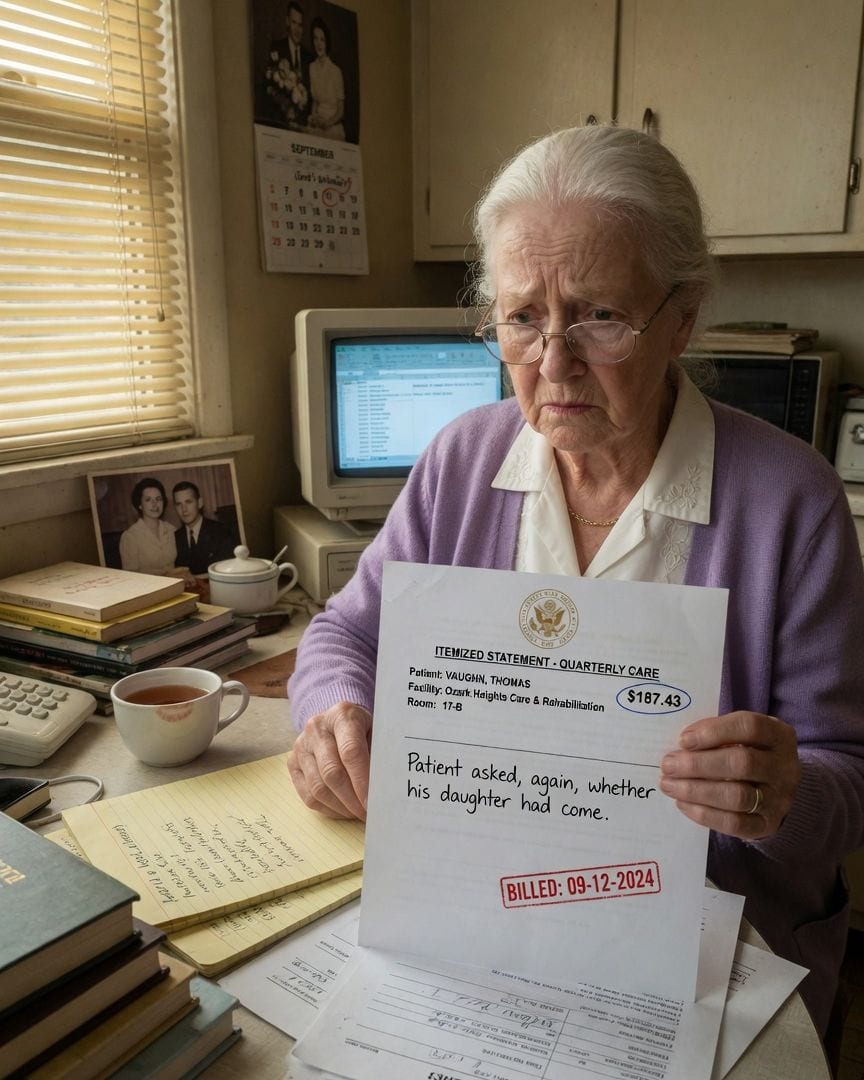
A retired librarian's father, declared dead 74 years ago, has a current medical bill from a secret Cold War facility, asking for his daughter.
Retired librarian Odette Cardew, 76, found her quiet morning shattered by an official Army medical bill. It was for her father, Thomas Vaughn, declared dead in the Chosin cold 74 years ago, yet listed active care at an Ozarks facility, with a note asking for his daughter. As she painstakingly cross-referenced defunct directories, she uncovered a secret Cold War 'Special Observation Unit' at the address, a black hole on any public map. Then, a declassified manifest revealed Thomas Vaughn was 'RELOC, INDET TERM,' not deceased, and a chilling line designated Odette herself: 'Dependent: Cardew, Odette. Status: Monitored.'
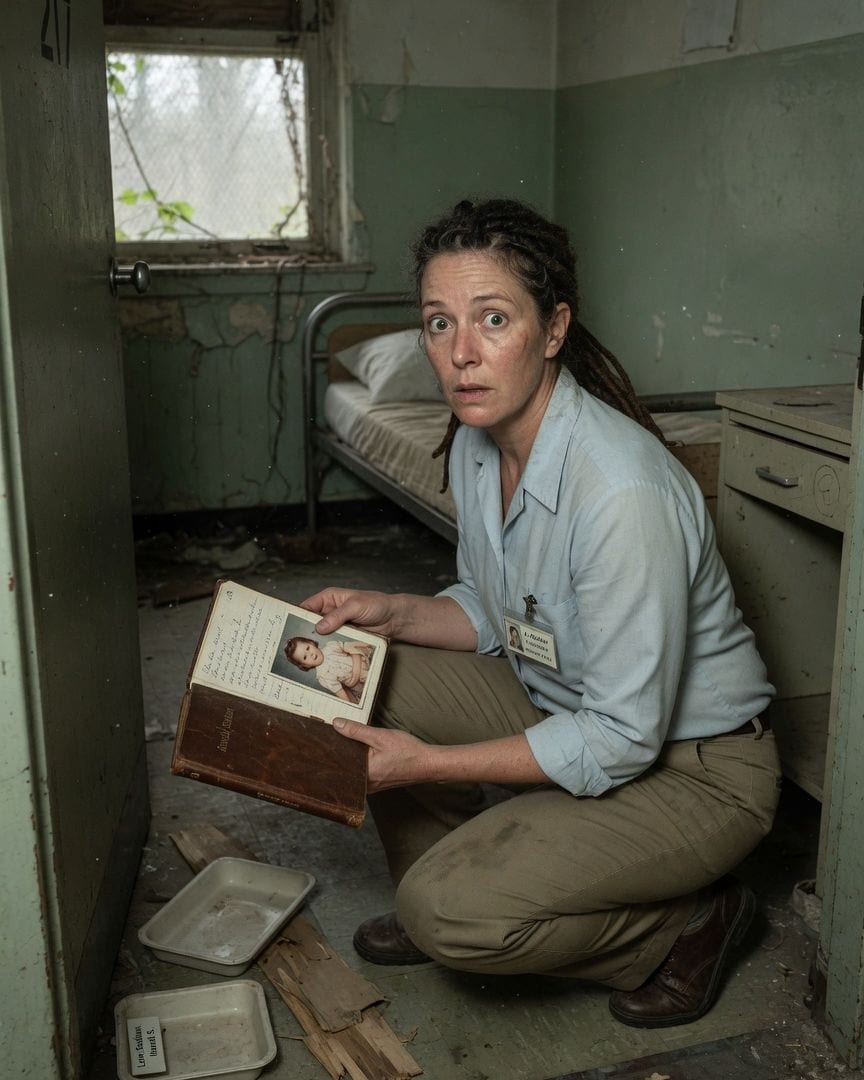
An Army records clerk's dead father just received a medical bill from a Cold War sanatorium closed since 1968, asking for his daughter.
An Army records clerk named Odette Cardew found routine comfort in the archives' dusty quiet, a place that also held the official record of her father, Harold Sutton, who died in the Korean War when she was two. One morning, a declassified medical release with his name appeared, but the bill was dated last month, from a sanatorium in the Ozarks. The facility had closed in 1968, yet the account was active. A chilling handwritten note asked, "Patient asked, again, whether his daughter had come." Driven by dread, Odette visited the crumbling, overgrown sanatorium, where in Room 217, she found a recent meal tray and her father's journal, holding a photo of her as a child and a question dated just last week: "Did she come?"
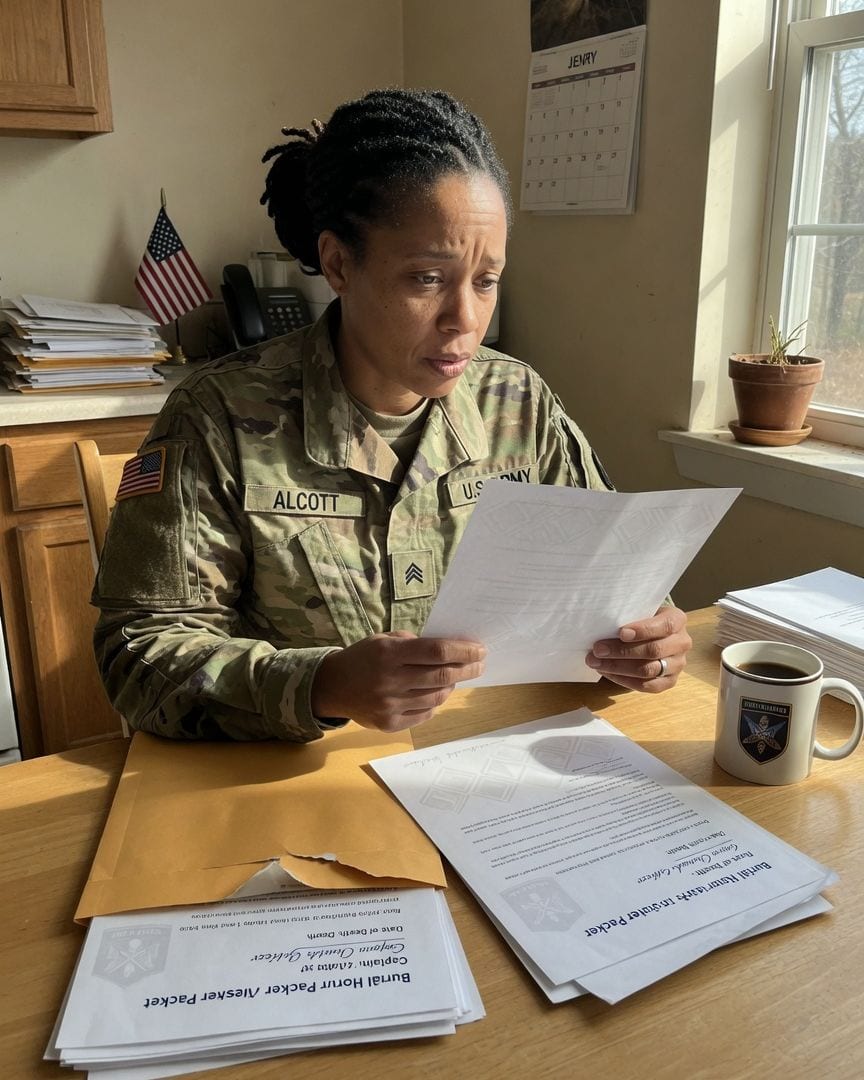
Sergeant First Class Bree Alcott found her own completed burial packet, signed with a confident flourish. It stated her death date was April 17th, next spring, but she was very much alive.
Sergeant First Class Bree Alcott, 38, found her own completed burial honors packet on her kitchen table one quiet autumn morning. It was signed, sealed, and dated for April 17th, next spring, despite her being very much alive. When she took the impossible paperwork to the Fort Claiborne Casualty Affairs office, the staff sergeant there denied any record, even as he traced a faint, archaic watermark on the document. Later, deep in the post's archives, Bree uncovered other packets for soldiers long missing, all bearing the same unsettling watermark and future-dated signature, their 'death' dates now long past – until she found one for tomorrow.
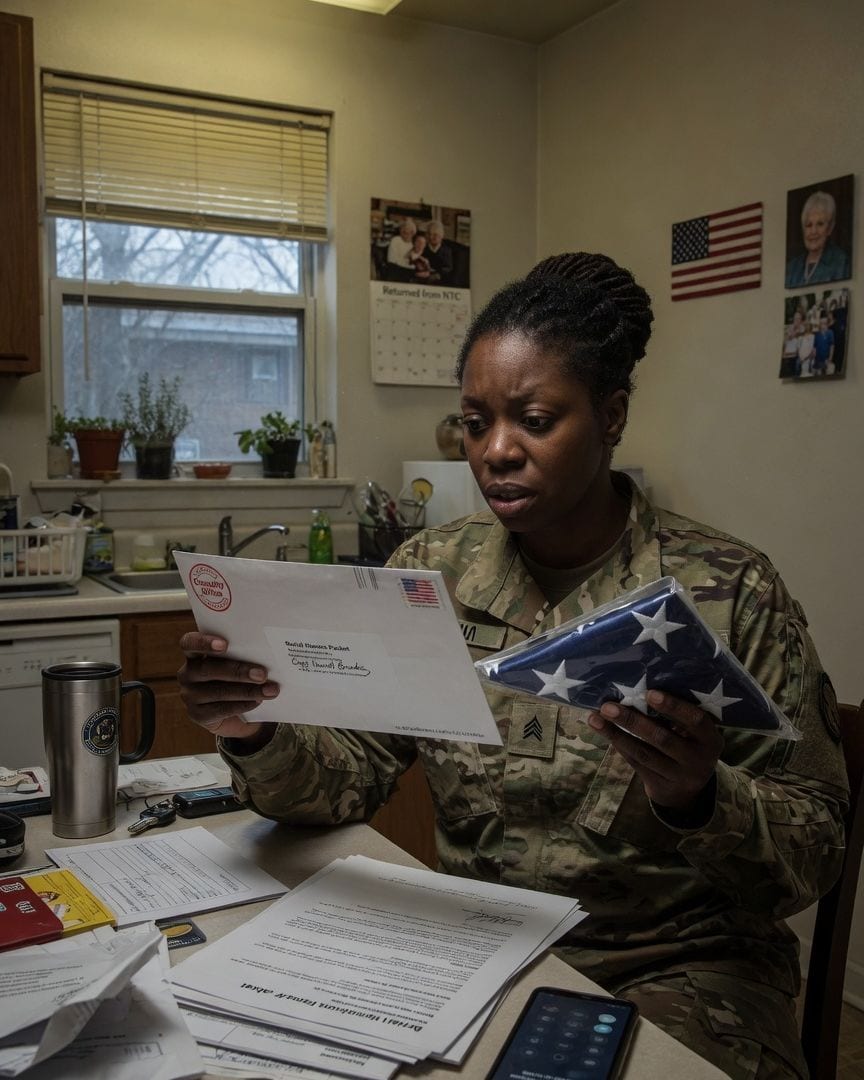
A Sergeant finds her own complete burial packet, dated for the coming spring, then finds a stack of identical ones for others.
Sergeant First Class Bree Alcott returned from a grueling training exercise, looking forward to peace, but found her kitchen table piled with mail, one official package heavy with dread. Inside was her own complete burial-honors packet, every detail filled, from Arlington plot to her grandmother’s chosen hymn, all dated for a specific day in the coming spring. The casualty office dismissed it as a 'glitch,' but Bree found a cryptic code leading to a decommissioned desert station and a stack of identical packets for other soldiers. What meticulous hand had prepared these packets, and why was Bree Alcott’s name on a list for a future she shouldn't have known?
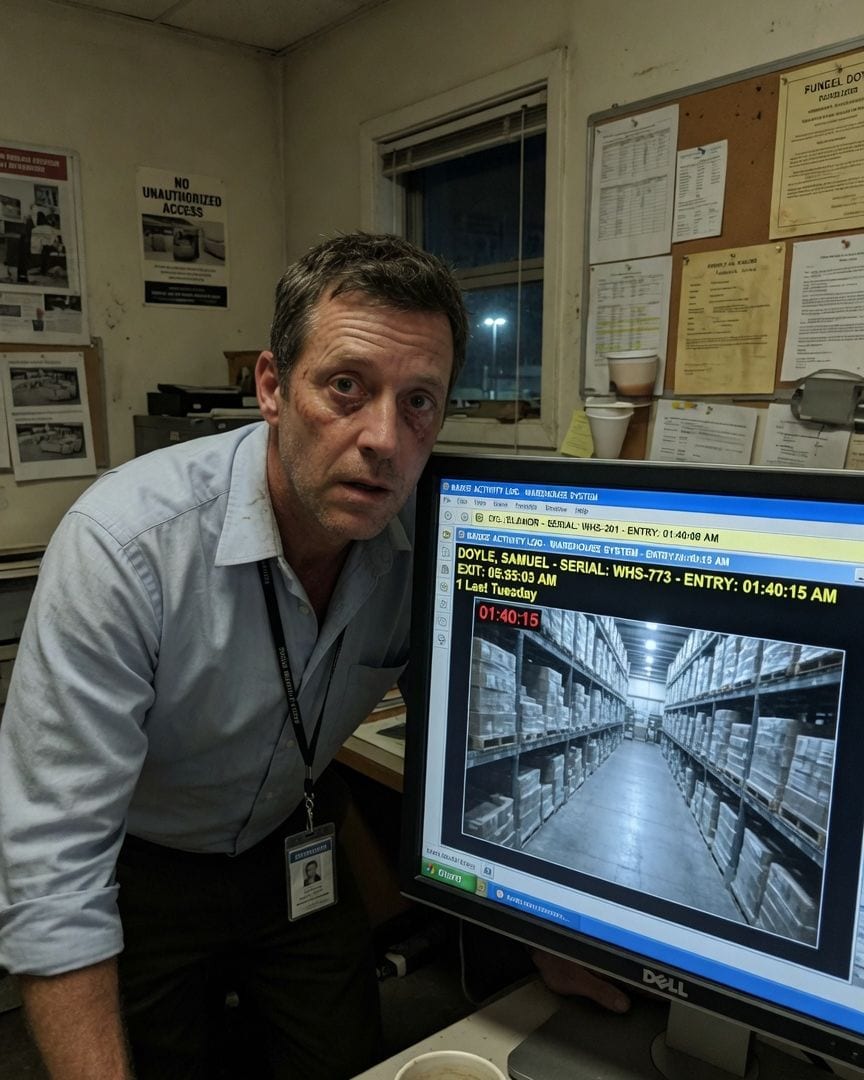
My dead colleague's badge, deactivated weeks ago, logged an entry at 1:40 AM last Tuesday. Then I found another from 1978, with the same impossible times.
My monitor showed a shocking entry: Samuel Doyle, dead and buried three weeks ago, had just logged into the warehouse. His badge was deactivated the day of his funeral, yet the system recorded his precise entry and exit, even though security footage showed the aisles were utterly empty.
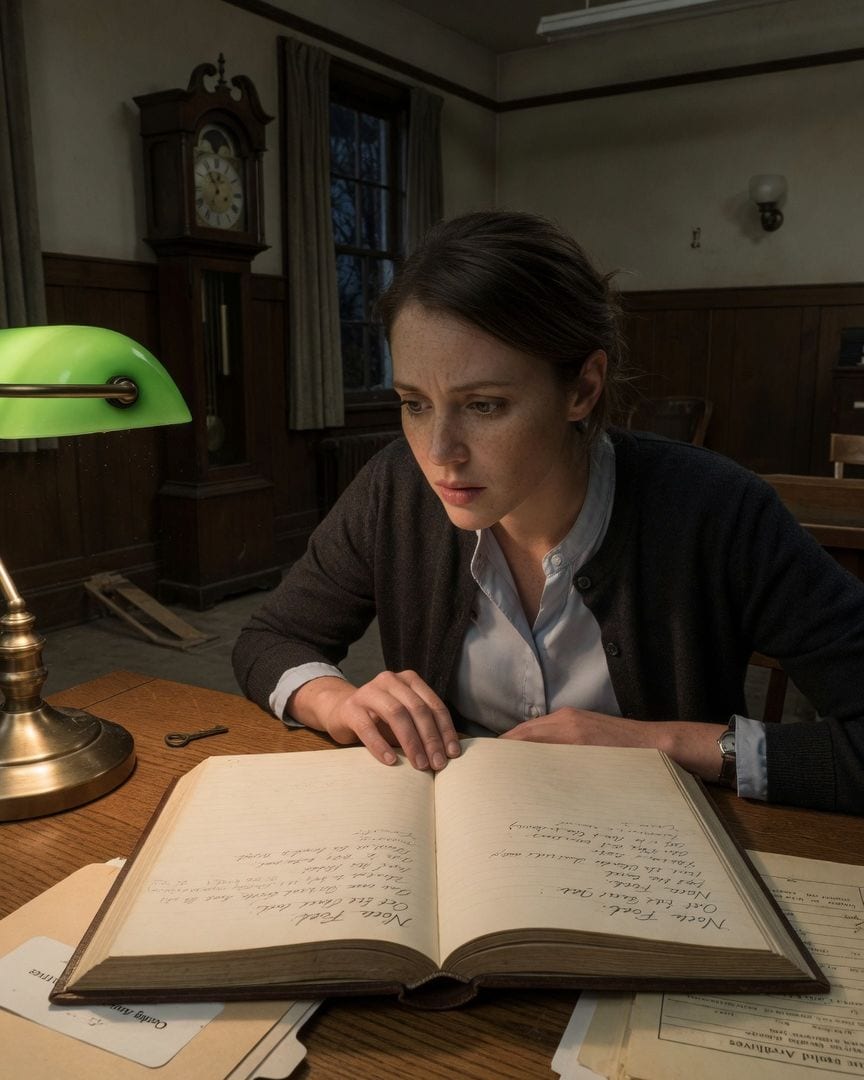
My grandmother’s name reappears in the old book of remembrance — on the same date, same street, every few decades since 1929. A verger’s note reads: 'ask no family.'
As Keeper of the crematorium's Book of Remembrance, my job is quiet and meticulous. But while updating my own grandmother's entry, I found two more Nora Fords listed above hers. Each died on October 3rd, decades apart, with the same address and a strange instruction: 'ask no family.'