Sergeant First Class Bree Alcott found her own completed burial packet, signed with a confident flourish. It stated her death date was April 17th, next spring, but she was very much alive.
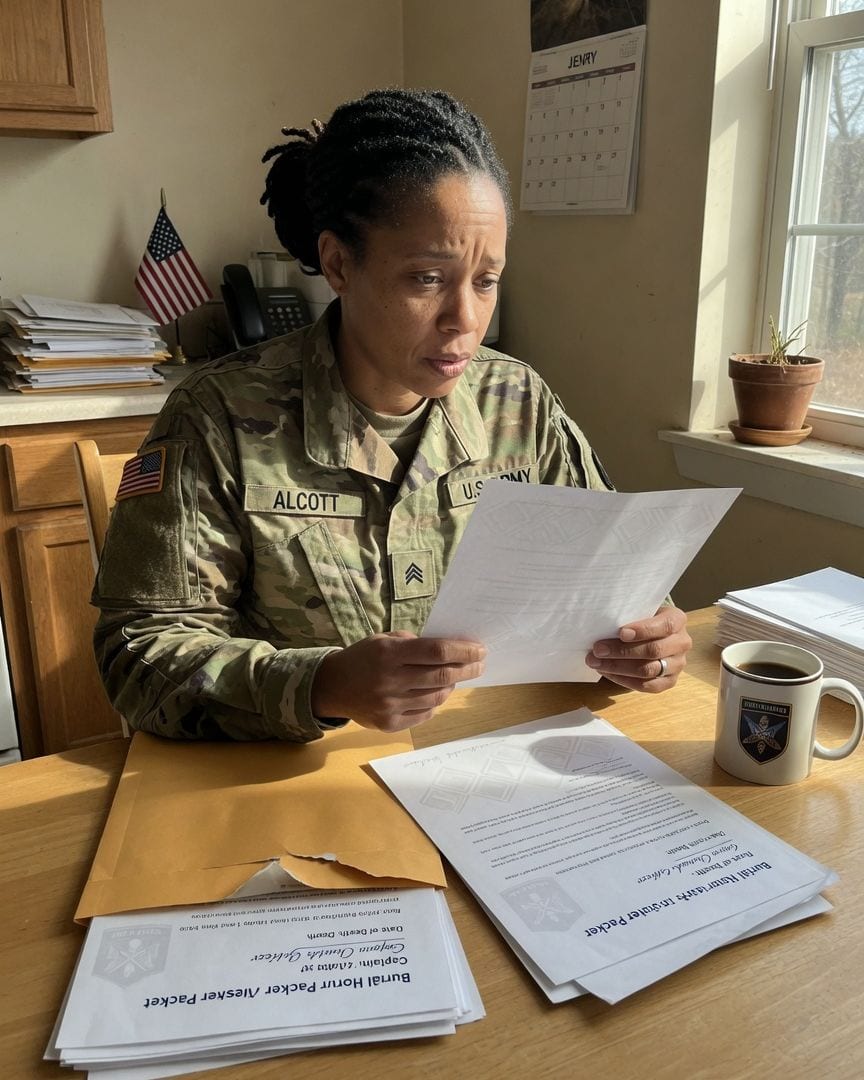
Sergeant First Class Bree Alcott, 38, sat at her kitchen table in her quiet off-post housing near Fort Claiborne, Georgia. The morning sun, weak in late autumn, slanted across the open envelope.
Inside lay a courtesy copy of her own completed burial-honors packet.
Flag folded, plot assigned at Arlington National Cemetery, next of kin notified, even the precise hymn her grandmother had chosen years ago for her own funeral was meticulously filled in.
Bree read it twice, her mind trying to process the impossible paperwork. Her eyes snagged on the date of death: April 17th, next spring. Months away. Then, the signature: 'Captain Charles Yates, US Army, Rendering Officer.'
It was a clean, confident flourish, already signed. A cold dread, sharp and physical, tightened in her chest, making her breath catch. This wasn't a draft. This was complete. And she was very much alive.
The next day, Bree, squared away in her uniform, walked into the Casualty Affairs office, a brick building on the forgotten eastern edge of Fort Claiborne. The air inside smelled of stale coffee and old paper, thick and still.
She approached the counter, the packet clutched in her hand. “I think there’s been a clerical error,” she stated, her voice steady, despite the tremor in her hand that she tried to suppress.
Staff Sergeant Edward Hartley, a man with tired eyes and a meticulous part in his graying hair, looked up from a stack of forms. He was 50, and had been in this office for as long as anyone could remember.
Bree laid the packet on the counter. Hartley picked it up, his gaze scanning the document. He didn't react with surprise, only a faint, unreadable calm that sat oddly in the silent room.
He typed Bree’s name into the official system, his fingers moving slowly over the keyboard. “No record of this packet being initiated, Sergeant First Class Alcott,” he murmured, without looking at her. “It doesn’t exist in the system.”
Bree pointed to the signature, the date. “But it’s here. Physical. It was mailed to my house.” Hartley nodded slowly, his fingers tracing a faint, almost invisible watermark on the paper.
It was a subtle, repeating geometric pattern Bree vaguely recognized from some archaic forms she’d encountered in deep archives years ago, forms that were never supposed to be in circulation. He handed it back. “A mistake, then.”
The ease with which he dismissed it, the unnerving calm in his voice, made the ordinary explanation feel thinner than paper, almost translucent.
Bree left, the packet feeling heavier than it should, the odd watermark a silent, unsettling detail pressed against her palm.
Back in her own office, the official denial from Hartley gnawed at Bree. She couldn't shake the watermark. Hartley’s placid dismissal felt less like reassurance and more like an active denial.
She considered a prank, but the meticulous detail, the specific hymn her grandmother chose, made that impossible.
Using her deep administrative knowledge, she requested access to the post’s oldest physical archives, a cavernous, poorly lit room filled with yellowing boxes that seemed to absorb all light and sound.
The air was thick with dust and the smell of decaying paper. She spent hours, sifting through decades of forgotten files, looking for the watermark. Finally, tucked away in a dusty box labeled 'Misc.
Unresolved,' she found them: a handful of other similar packets. Each one was for a soldier reported 'missing, presumed deceased' years ago, bodies never recovered.
Each bore the same future-dated signature, the same uncanny watermark, and a 'death' date that had long since passed. Bree felt a chill creep up her spine, not from the cold air, but from the realization. This wasn't an error.
This was a pattern. She pulled out the last one, her fingers trembling. Specialist Vincent Lambert. His packet was dated for tomorrow.
The next morning, the urgency of Vincent Lambert's packet propelled Bree. She cross-referenced his name, and the others from the archive box, against the official personnel records.
On the main digital system, Specialist Lambert was indeed listed as 'active,' currently deployed overseas, with a recent 'transfer of duty station' to a vague 'classified unit.' This pattern repeated for the other 'missing' soldiers whose packets she'd found.
None were officially deceased. All had undergone similar, nebulous 'transfers' that offered no real detail. The official records directly contradicted the burial packets, yet both existed simultaneously.
Bree, a master of military bureaucracy, knew this was an impossible reconciliation within any legitimate system. It was a paradox.
She focused on the 'transfer orders' in the digital system, digging deeper into their metadata, past the surface-level summaries. She noticed a subtle, recurring discrepancy: a specific, eight-digit routing code embedded deep within the digital files. It was an anomaly.
She ran a quick query on the code, her fingers flying across the keyboard.
The result flashed on her screen: that code belonged to an old, internal system, 'Project Chimera,' officially decommissioned almost two decades ago, a system designed for classified personnel reassignments during the Cold War.
But the dates on these 'transfers' were recent, some from just a few weeks prior. The code shouldn’t be there.
It was like finding a floppy disk drive listed as current hardware in a brand-new supercomputer, a ghost from an obsolete past. Bree felt a prickle of unease, growing into a cold dread.
This wasn't just a clerical error or a pattern of missing persons; it was a ghost in the machine, an old system still bleeding into the new, leaving digital breadcrumbs for anyone who knew how to look.
Determined, Bree tried to access the old 'Project Chimera' system from a secure terminal in the archives, using every backdoor and legacy access code she knew from her years in administration.
She typed in old system aliases, ran forgotten authentication sequences. Each attempt was met with a persistent 'Access Denied' message, followed by a system alert that read, stark and cold on the black screen: 'Unauthorized Query Detected. Logging Incident.'
A cold knot formed in her stomach. Someone was monitoring the ghost system. Later that day, as she returned to her office, the fluorescent lights humming overhead, she found a small, folded piece of paper tucked under her keyboard.
It was a plain, unmarked Post-it note. In neat, block letters, it read: 'Some things are best left buried.' No signature, no other markings, just the chilling message.
Bree’s heart hammered against her ribs, a frantic drum in the sudden silence of her office. She wasn't just investigating anymore; she was being watched.
She scanned her office, her gaze landing on the doorway to Staff Sergeant Hartley's office, just across the hall. He stood there, framed by the door, his posture still, his face impassive.
His eyes, usually tired, held a depth she hadn't noticed before, a knowing calm that felt far more menacing than any overt threat.
He wasn't overtly threatening, but the sheer lack of expression, the way he seemed to simply observe her, sent a shiver down her spine. The note was a warning.
And Hartley, with his unnerving composure and his presence at the scene, was clearly the one who had delivered it.
Bree walked directly to Hartley’s desk, the Post-it note held open in her hand. “Did you leave this?” she asked, her voice low and steady, but edged with steel that belied the tremor in her gut. Hartley didn’t flinch.
He slowly looked up, his tired eyes meeting hers, holding her gaze with an unnerving stillness. “Perhaps,” he said, his voice a quiet rasp, barely above a whisper. “Some truths are not meant for the light.
Not if you wish to remain in it.” Bree laid Vincent Lambert’s packet on his desk, next to the note, the vivid blue Post-it contrasting sharply with the official-looking, yet deeply wrong, document. “What is this, Sergeant Hartley?
What is Project Chimera? And why are soldiers being marked for death months in advance, only to be ‘transferred’ to a ghost unit that doesn't exist?” Hartley sighed, a long, weary sound that seemed to carry the weight of decades.
He glanced around the empty office, the fluorescent hum suddenly louder, before lowering his voice even further. “The Casualty Affairs office… it has a hidden function. A legacy system, as you suspected. The packets are real.
They identify individuals for a specific kind of… recruitment. Or reassignment.” He paused, choosing his words carefully, his gaze fixed on a point just past Bree’s shoulder. “They don’t die, Sergeant. Not in the way you mean.
They just… stop being here. They go into a program, off the grid. A black-ops unit, perhaps. Or something stranger.
The packets are the administrative cleanup, closing their civilian lives, preparing for a future that isn't exactly death, but isn't life either. A ghost life, for a ghost service.”
He leaned forward, his voice barely a whisper, forcing Bree to lean closer to hear him. “Project Chimera isn’t decommissioned. It’s simply offline from the main network. Running in the dark. It’s always been running, right beneath our feet.”
He explained that the routing codes Bree found were how the 'transfers' were initiated within this hidden system, bypassing official channels, a quiet hand pulling strings in the shadows of the digital world.
The pieces clicked into place with a horrifying certainty. The impossible count, the missing soldiers, the future dates – it all coalesced into a monstrous, coherent shape of institutional dread. It wasn't an error. It was a mechanism.
Bree felt a cold clarity settle over her, chilling her to the bone. This was bigger than a clerical error, bigger than a few missing soldiers. It was a deep, unacknowledged function of the military itself, a quiet, predatory undercurrent.
“Who runs it?” she asked, her voice strained, barely a breath. Hartley shook his head slowly, his gaze still distant. “It runs itself, now. A pattern. An algorithm. It identifies. And it activates.”
He rose slowly, the movement almost unnaturally deliberate, walked to a locked filing cabinet on the far side of the room, and with a small, brass key he produced from a thin chain around his neck, opened a drawer.
He pulled out an old, worn ledger, its leather cover cracked with age, hidden beneath a false bottom that he deftly lifted. The paper inside was yellowed, brittle, the ink faded in places from the passage of time.
“The system has its own records,” he murmured, placing it gently on the desk between them, the ancient book feeling impossibly heavy. He opened it to a page filled with handwritten names and dates, going back decades.
It was the pattern, across rotations and dates, just as he described. He pointed to a column marked 'Designation.' Every tenth entry, or every entry on a certain date, had a specific, etched symbol next to it.
A small, stylized eagle, wings folded, precise and unsettling. He traced his finger down the page, showing how specific dates aligned with specific deployments or unit rotations through Fort Claiborne, a chilling, deliberate calendar of disappearances. Then, his finger stopped.
He pointed to a line, far down the page, for the coming spring. Next to that date, the eagle symbol was there, clear and sharp. And next to it, written in faint, elegant script, was the name: Alcott, B.
Bree stared at her name in the ledger, the letters seeming to burn into her vision, a brand across her future. The cold dread from her kitchen table returned, now a palpable weight pressing down on her chest.
“My name,” she whispered, her voice barely audible, the sound lost in the vastness of the office. “It’s me.” Hartley nodded, his eyes hollow, reflecting a weariness that went beyond physical fatigue. “The system doesn’t choose, Sergeant First Class.
It identifies. A specific set of traits, a certain… readiness for a different kind of service. It’s a pattern of service, a psychological profile that makes a soldier ‘eligible.’ It sees deep into your record, your performance, your very being.”
He continued, his voice low and steady. “The dates aren’t when you will die. They are when your ‘transfer’ becomes active. The burial packets, the 'missing' reports – they’re just the administrative cleanup for your civilian existence.
A way to erase you, legally, from the records that matter to the world you know.” He explained that the 'officer who renders honors,' Captain Charles Yates, wasn't a real person at all.
It was a code-name for the system itself, or the shadowy entity that orchestrated these transfers, an institutional signature.
The flourish of the signature was always the same because it was an automated imprint, a mark of the pattern itself, a cold, unfeeling seal.
He showed her other names, similar to hers, who had ‘transferred’ years ago, disappearing without a trace, their entries mirroring her own.
Then, his finger landed on an earlier entry, dated 25 years ago, with the same eagle symbol, a faded but unmistakable mark.
Next to it, the name: Hartley, E. “I avoided it,” he whispered, his voice cracking with an old, deep pain. “I found a way to stay here. To watch. To warn.
But the system… it still holds a place for me. And for you. You were always named in it.”
The horror wasn't a ghost, but a cold, relentless bureaucracy, operating in the dark, and Bree Alcott was its next designated asset.
The realization that she was irrevocably marked, a cog in a machine she couldn't see, spurred Bree into desperate action.
She couldn’t destroy the ledger; Hartley had explained that the system wasn’t physical, but an ingrained institutional pattern, a self-sustaining entity beyond any single book or computer.
Exposing it seemed impossible; who would believe her outlandish story of ghost units and predetermined disappearances? She would be dismissed as mad, or worse, become a target.
Instead, Bree decided to use her own expertise against the system that had marked her. She would make herself 'unfit.' Racing against the ticking clock of her approaching 'transfer' date, counting down the weeks, she returned to her office.
She spent the next few days in a blur of frantic activity, leveraging every loophole, every obscure regulation she knew.
She began fabricating a history of severe psychological unsuitability, a profile so egregious it would make her undesirable for any form of military service, let alone a classified 'transfer.'
She drafted elaborate reports detailing a sudden onset of extreme anxiety, paranoia, and incapacitating delusional episodes – exaggerating the very dread she'd been feeling, crafting it into a medical profile that screamed 'liability.'
She meticulously documented phantom voices, overwhelming fear of surveillance, and a profound inability to trust authority, filling out forms, scheduling urgent, self-referred mental health evaluations, and even leaving deliberately incoherent voice messages for her commanding officer, full of rambling anxieties and baseless accusations.
She knew the military's aversion to 'problem' soldiers, its systemic need to purge instability. If she could make herself too much of a liability, too broken for their 'special' service, she might escape the pattern.
It was a gamble, a deliberate self-sabotage of her 18-year career, an irreversible act, but it was her only chance to make herself disappear from the system's sight before it could claim her.
Bree's fabricated discharge paperwork, pushed through with unusual speed by the very bureaucracy she sought to outwit, was processed within weeks. She received an involuntary medical discharge, ending her 18-year career in disgrace, her pension severely impacted.
She packed her meager belongings and left Fort Claiborne without a backward glance, never looking at the office that had almost claimed her, nor the looming, silent brick buildings that housed the unseen system.
Edward Hartley remained at his desk in the Casualty Affairs office, his face as unreadable as ever, watching new recruits pass through the building, his gaze lingering on some more than others.
The ledger, he knew, remained hidden beneath its false bottom. The system continued its quiet, relentless work. Bree Alcott, officially, was no longer a soldier, no longer a viable asset for 'Project Chimera.'
She had escaped, but at a permanent, irreversible cost.
Years later, Bree Alcott lived a quiet, anonymous life in a small town in rural North Carolina, far from any military installation.
She worked as a bookkeeper, carefully avoiding anything that reminded her of her past, especially uniforms or official-looking envelopes.
She still checked the news, sometimes, for any mention of Fort Claiborne, but found nothing unusual, nothing to suggest the system had been uncovered. The world simply moved on, oblivious.
One crisp autumn morning, she received a letter in her mailbox. It was a courtesy copy of a retirement packet, fully processed, years ahead of schedule for a soldier discharged long before pension eligibility.
Her name, rank, and years of service were all correct.
But the signature on the packet, the one that finalized her retirement, was identical to the one on her burial-honors packet, the one dated for the coming spring all those years ago.
A few days later, a short, formal email arrived in Bree's old, seldom-checked military email account, from an address she hadn't seen in years. It was from Staff Sergeant Edward Hartley. The subject line was simply 'Regarding your service.'
The body of the email read: 'Welcome home, Sergeant First Class Alcott. Your service has been duly noted.'
If this one got to you
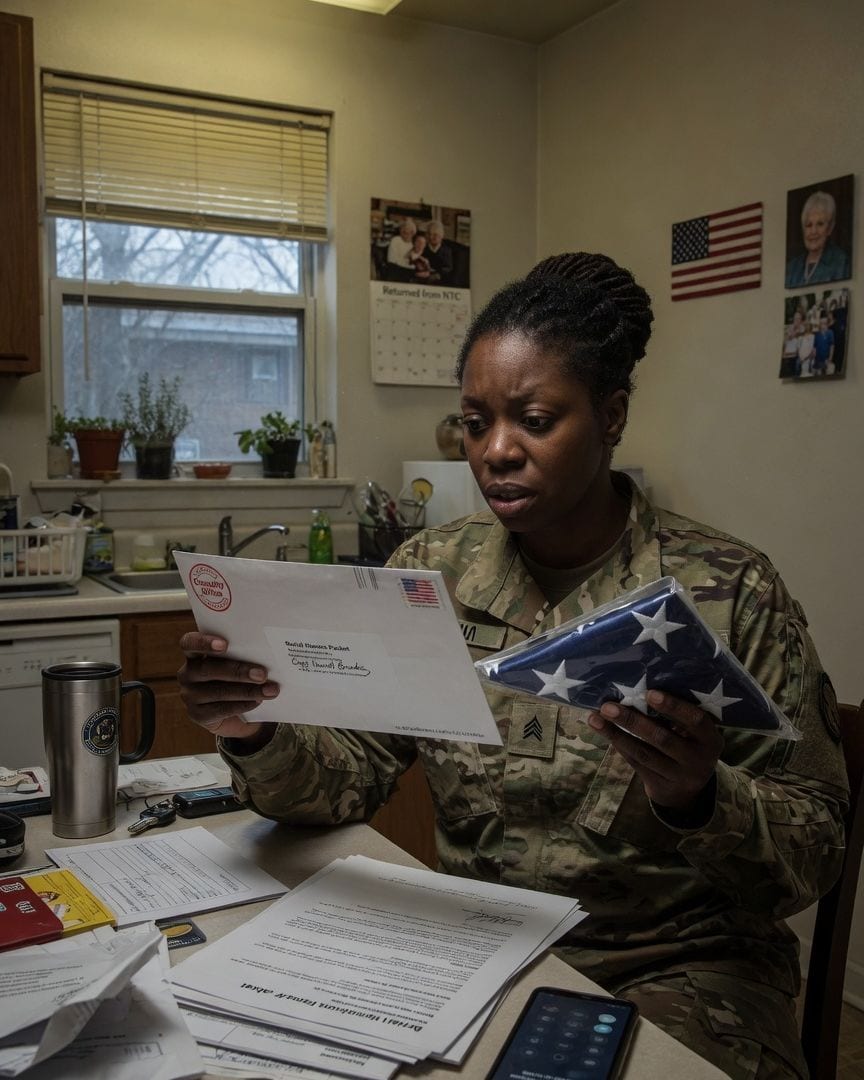
A Sergeant finds her own complete burial packet, dated for the coming spring, then finds a stack of identical ones for others.
Sergeant First Class Bree Alcott returned from a grueling training exercise, looking forward to peace, but found her kitchen table piled with mail, one official package heavy with dread. Inside was her own complete burial-honors packet, every detail filled, from Arlington plot to her grandmother’s chosen hymn, all dated for a specific day in the coming spring. The casualty office dismissed it as a 'glitch,' but Bree found a cryptic code leading to a decommissioned desert station and a stack of identical packets for other soldiers. What meticulous hand had prepared these packets, and why was Bree Alcott’s name on a list for a future she shouldn't have known?
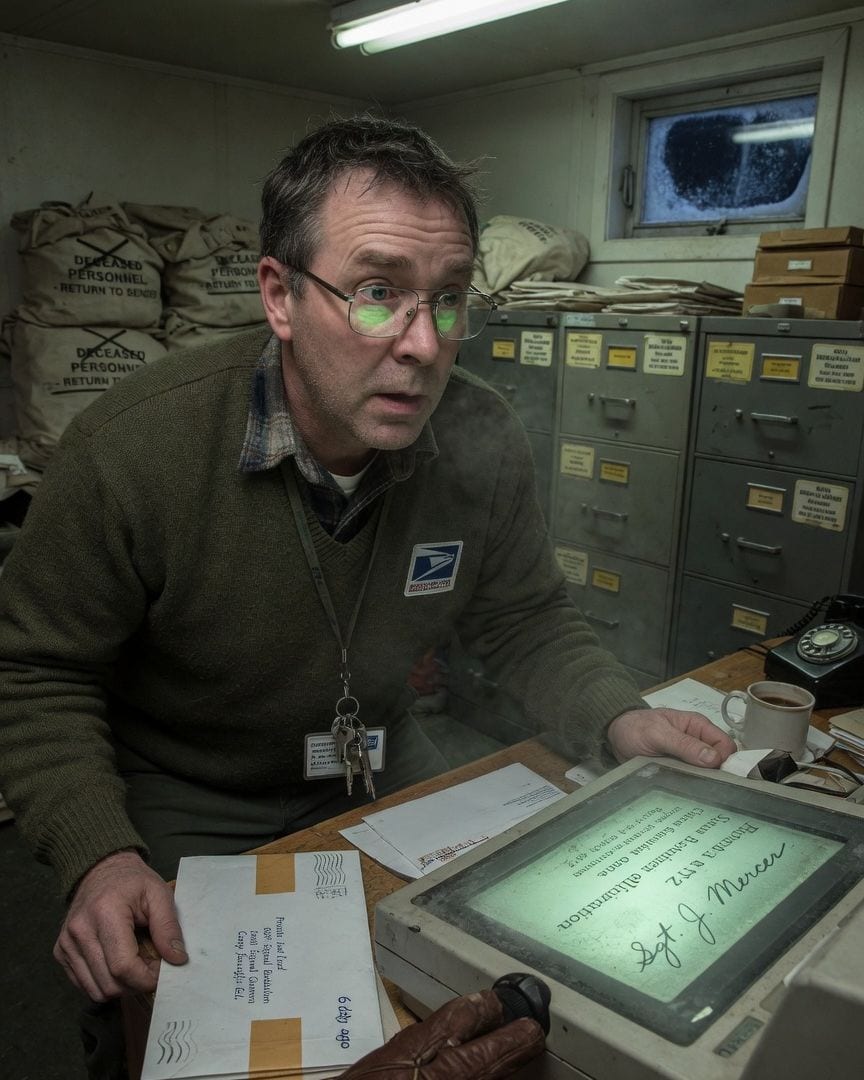
A postmaster at a Cold War Alaskan outpost still received mail for soldiers declared dead in 1969. Then he found their base was active three years later.
Postmaster Rowan Ashcroft had spent two decades watching the weekly mail plane land at Camp Bidwell Annex, a lonely outpost in the bitter Alaskan wind. His methodical mind, accustomed to order, was jolted when the latest mail sack contained forty-three letters for men officially declared dead in 1969. Each envelope, postmarked within days, was addressed to a soldier who wasn't coming back, and Rowan found one already opened and neatly resealed. Driven by duty, he began to sift through declassified Army archives, only to uncover a chilling maintenance log entry for the camp's equipment, dated three years after the base was officially shuttered. What was still happening at Camp Bidwell?
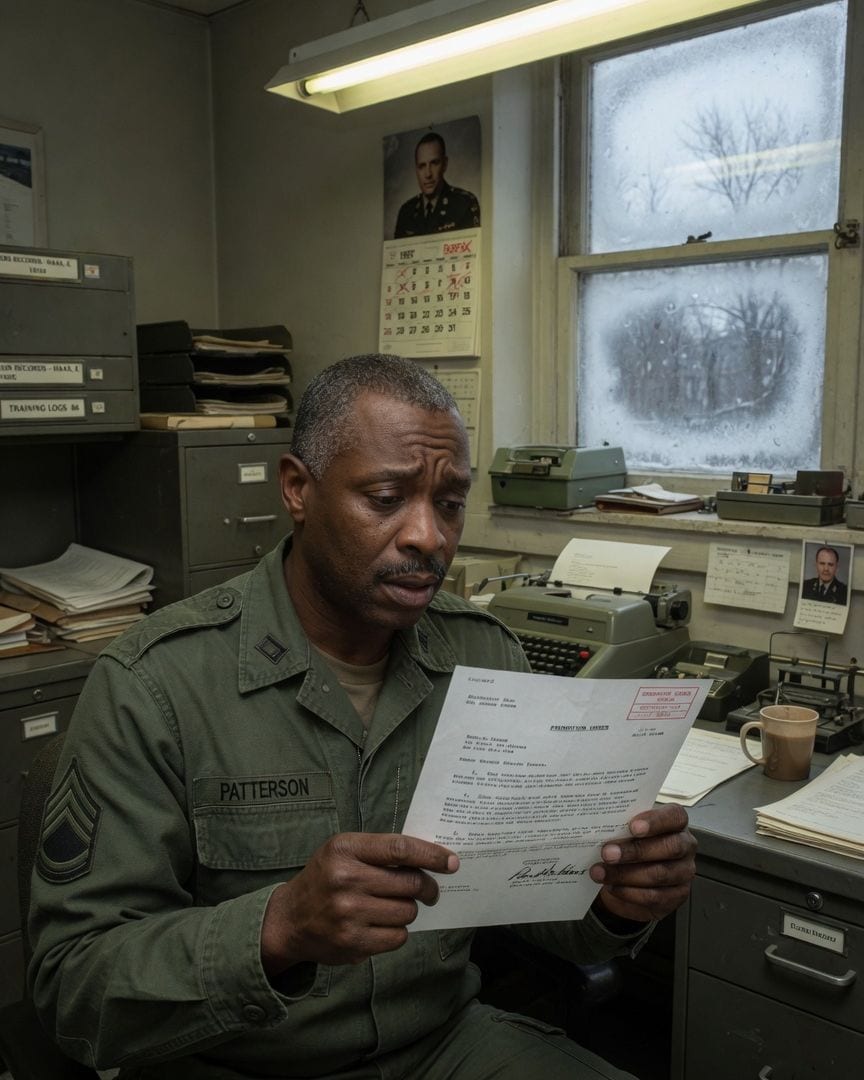
Staff Sergeant Felix Patterson held a promotion order for a young corporal, signed by a Cold War colonel dead for a full year.
Staff Sergeant Felix Patterson felt the German winter chill as he stood in the base admin office, holding Corporal Erich Haas’s promotion order. The young clerk, Private Davenport, wrung her hands, confirming the impossible: Colonel Fairfax’s signature was genuine, despite the colonel having been dead for a full year. A deep, cold dread settled in Felix’s gut, making the office air feel heavy and silent around him. He spent days scrutinizing Haas’s service record, soon uncovering a training certificate also bearing the deceased colonel’s signature, dated months after his death. This was no mere bureaucratic slip; these meticulously clean documents were fundamentally, impossibly wrong.
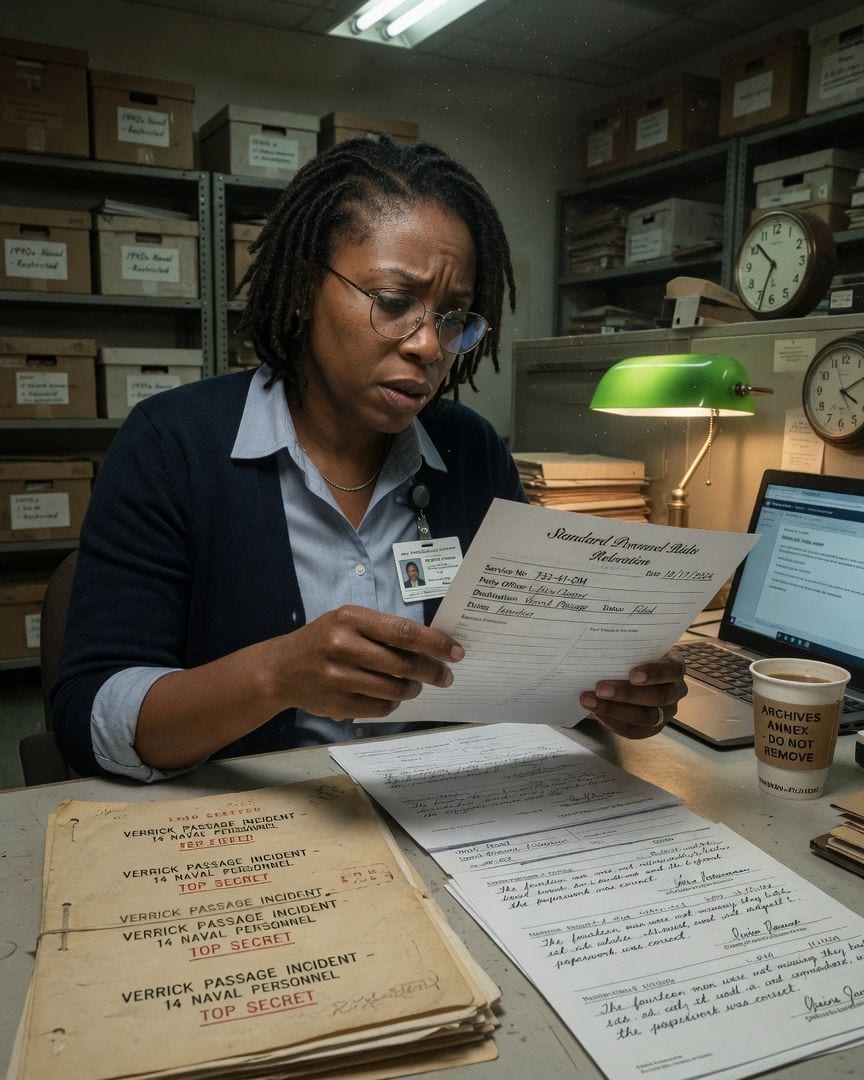
A declassification reviewer finds a form dated yesterday, listing a living sailor for relocation to an eighty-year-old passage, in the same impossible handwriting.
Declassification reviewer Ione Fash worked against a looming deadline, her final hurdle a stack of heavily redacted Verrick Passage files. Inside reports from 1944 detailing fourteen missing naval personnel, she found nine witness statements all containing the exact same phrase, penned in an identical, machine-like hand. Her methodical mind flagged the impossible anomaly, but true dread landed when she uncovered a standard requisition form. Dated yesterday, it listed a living, active-duty Petty Officer for 'Relocation' to the Verrick Passage, bearing that same chilling, impossible handwriting.
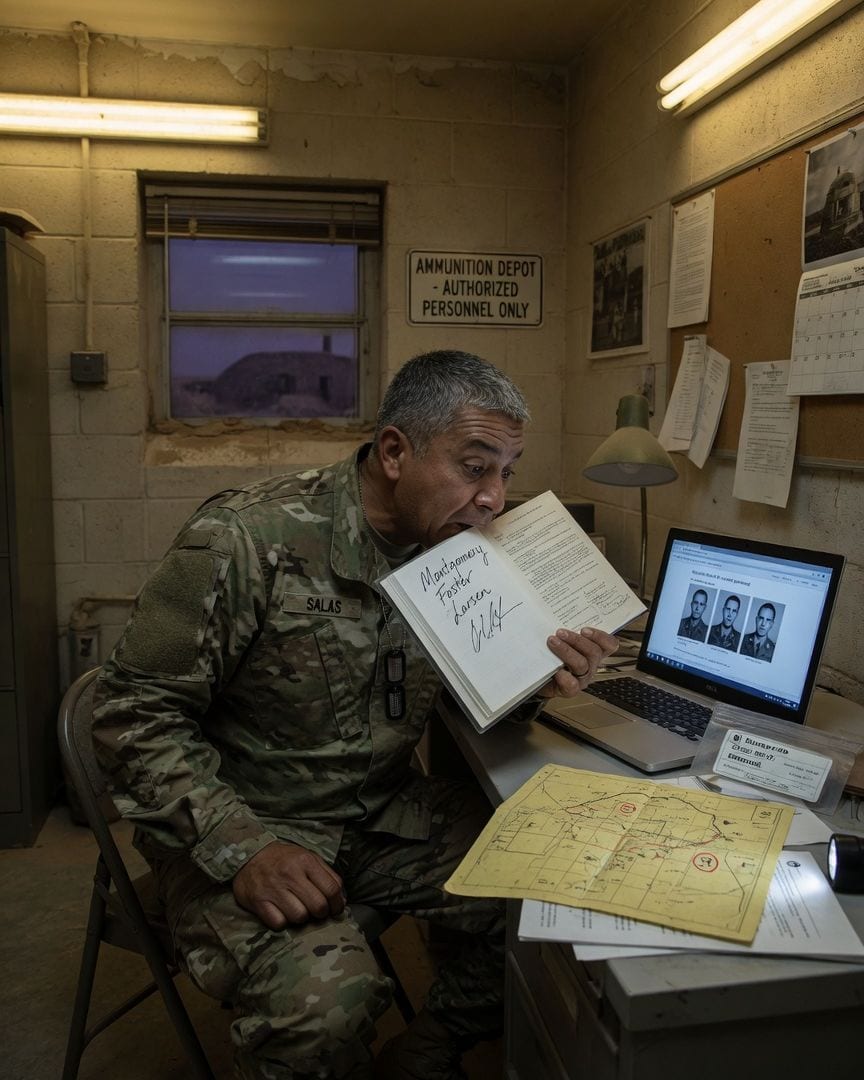
Chief Salas finds a new bunker seal signed by men d*ad or discharged decades ago.
Chief Warrant Officer Curtis Salas completes a final inventory at a desert munitions depot, finding an impossible fortieth bunker not on any map. Its fresh security seal bears signatures from three men: two officially K*lled in Action, and one honorably discharged, all decades ago. Someone, or something, just signed d*ad men's names to a new Army seal.
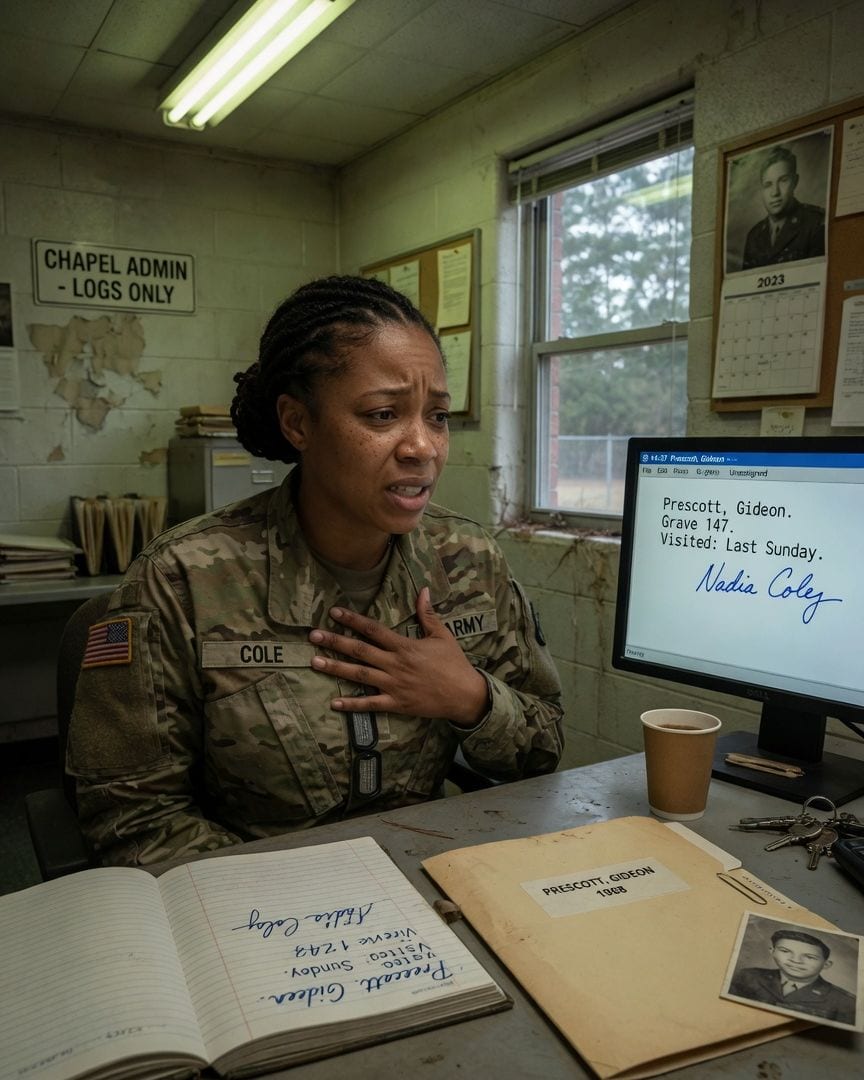
Specialist Cole's cemetery logbook showed a dead Cold War soldier's fresh signature. Then he signed into the base itself.
Specialist Nadia Cole hated her quiet Sunday shifts in the base chapel office, where her main duty was maintaining the cemetery visitor log. One peaceful afternoon, she found a fresh, dark blue entry for Private Gideon Prescott, a soldier who had died in 1968. His signature, identical to his decades-old enlistment papers, stopped her cold. Despite her superior's dismissal, Cole's dread deepened when she discovered the same impossible signature, belonging to the dead man, had also logged into the main base access system just hours later. The digital record glowed with an undeniable, chilling impossibility.