 US Armed Forces
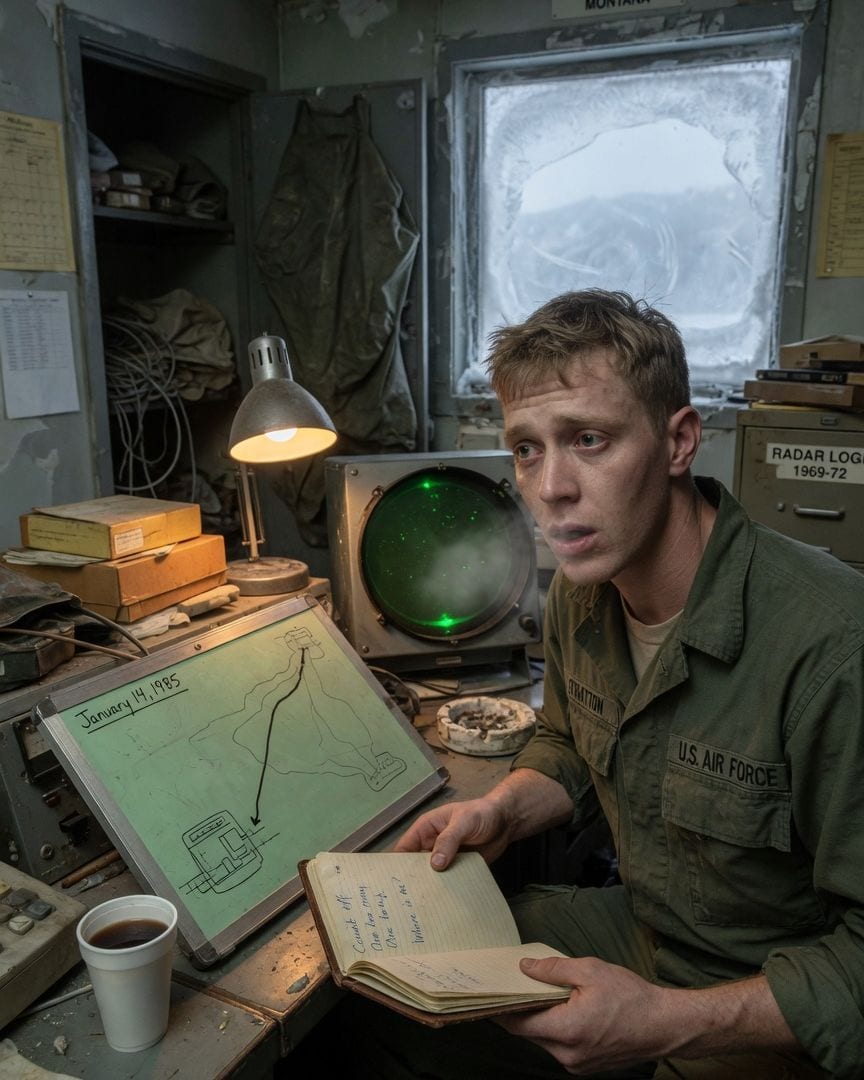
Airman Second Class Lars Stratton was counting down his final weeks at Echo Station, a desolate Cold War outpost due for mothballing. He longed for home, far from the bitter Montana winds and the constant hum of static. Inside the dim radar shack, he logged the usual nightly ghost blip, a faint contact appearing at 2300, just as it had every winter since 1987. This night, a metallic tang like old blood lingered in the air, raising the hairs on his arms. Seeking distraction, Lars later discovered a leather-bound logbook from 1971, detailing the same 2300 contact, but with chilling notes and a manifest listing one airman's name, Bernard Radcliffe, twice—once transferred, once present. Was he truly alone in the silent, remote station?
17 min read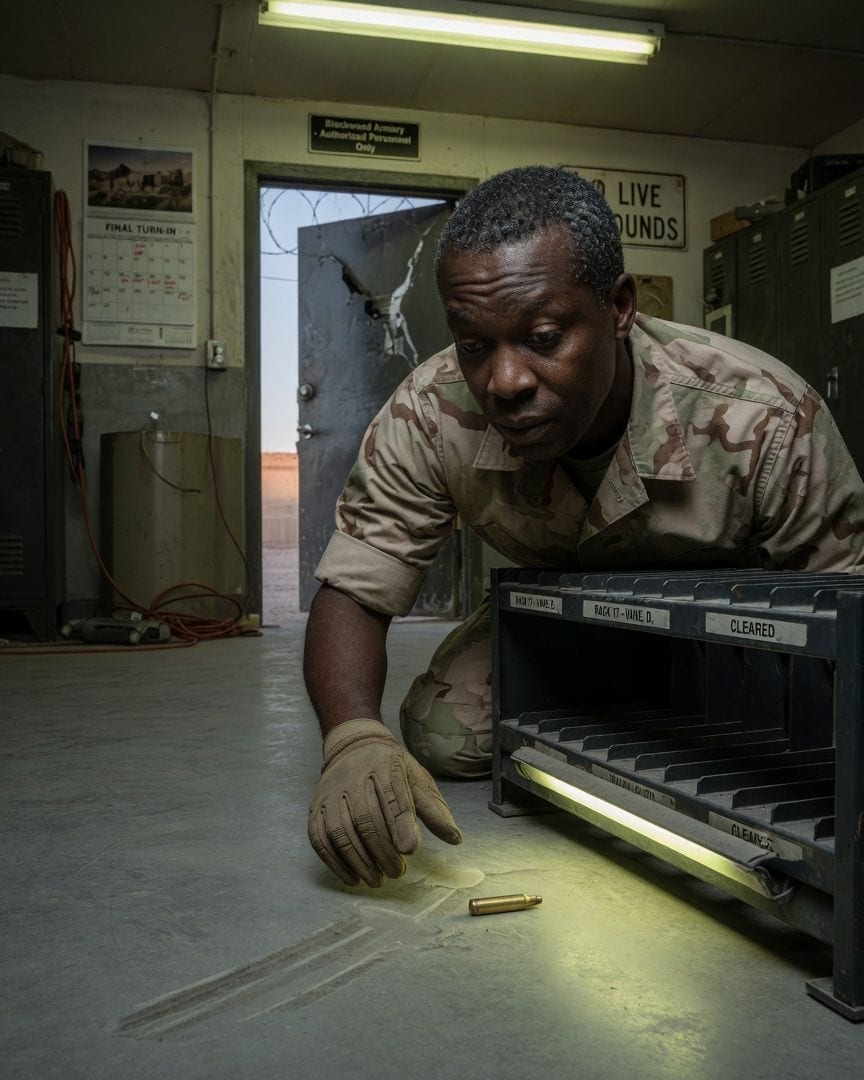 US Armed Forces
Corporal Desmond Vane, a soldier known for his rigid adherence to procedure, meticulously cleared his M4 carbine for its final turn-in at the soon-to-be-decommissioned FOB Blackwood. Defying the armorer's odd rule, he ensured his weapon was absolutely empty, double-checking every component. Yet, hours later, from the locked and supposedly empty armory, Vane heard the unmistakable metallic click of a rifle round chambering itself, over and over, through the night. The next morning, a full inspection revealed no sign of intrusion, but beneath where Vane's carbine had been racked, a single spent brass casing lay on the pristine concrete, accompanied by a faint, impossible boot print. Who or what had violated the secure armory, and how?
12 min read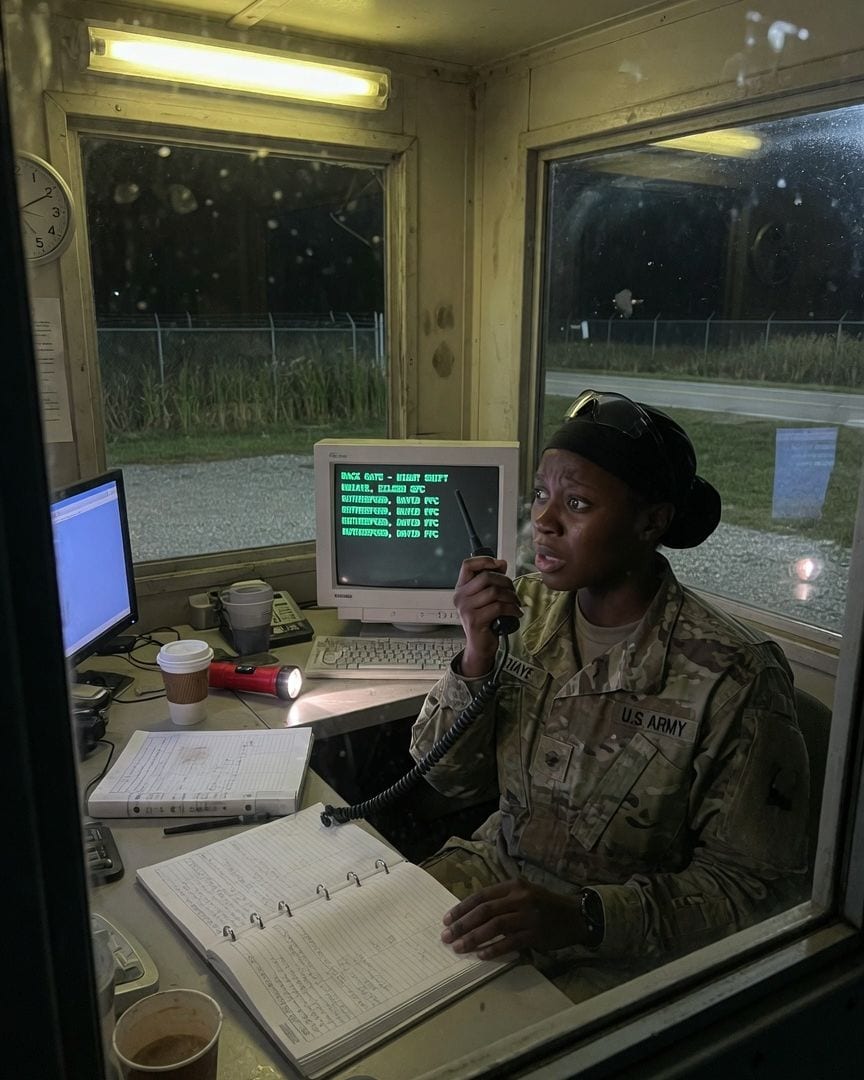 US Armed Forces
Specialist Eileen Ndiaye endured the late October chill at Fort Vashon's back gate, counting the hours until her transfer in two days. Alone on a two-man post due to a flu outbreak, the distant generator hum was her only company against the vast, empty marshland. Just after midnight, three sharp raps echoed on the glass, then again, softer, but the motion lights revealed only gravel and fence wire. A third series of knocks, light as falling ash, came from just six inches behind her ear. Later, trying to rationalize it as fatigue, she checked the logbook and digital roster. Both clearly listed a second man, PFC Rutherford, assigned to her exact post and hours, as if the base system itself swore she hadn't been alone.
10 min read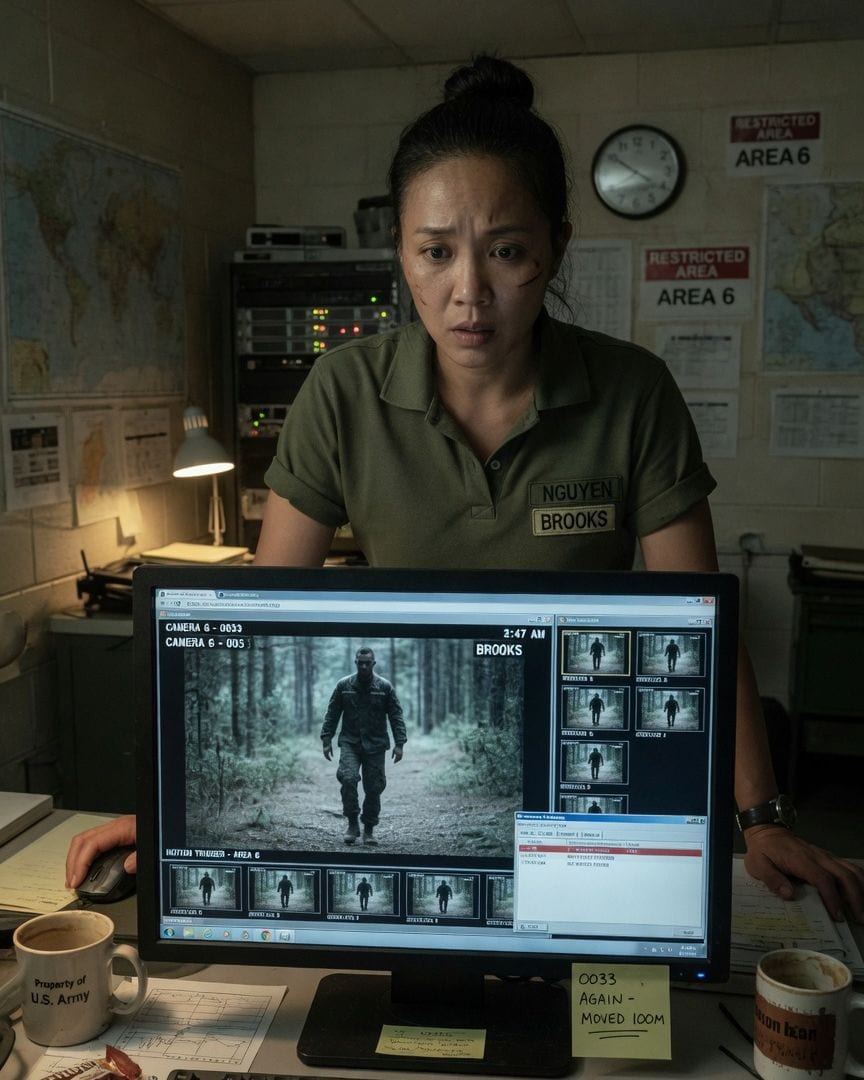 US Armed Forces
Specialist Alice Nguyen's meticulous duties in a remote Louisiana training area were usually a monotonous rhythm, but camera six had shattered it. Every night, precisely at 0033, its motion sensor would trigger, capturing a man mid-stride, while adjacent cameras recorded nothing. She moved the camera, recalibrated its sensors, yet the phantom man continued to appear, his uniform subtly shifting across identical images. After painstaking enhancement, the name 'BROOKS' appeared on his uniform, a name completely absent from forty years of base records. What was this impossible presence, this constant error in a world designed for exact counts?
13 min read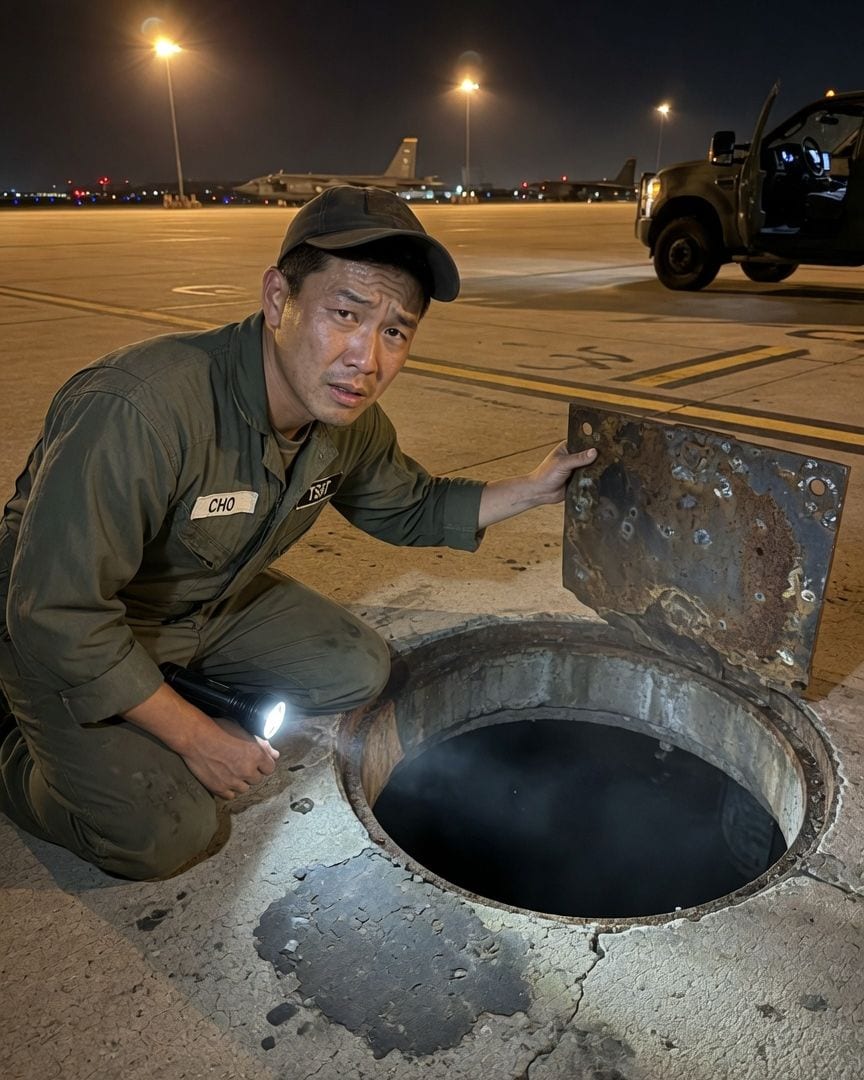 US Armed Forces
Technical Sergeant Daniel Cho was counting down his final two weeks at the Dakota bomber base, determined to solve the phantom riddle of its floodlit flight line. Every night at 0148, a buried sensor logged a vehicle pass, yet overhead thermal cameras consistently showed nothing but empty concrete. To catch the anomaly, he parked his heavy maintenance truck directly over the sensor. But as the clock turned 0148, a low thrum vibrated through his teeth, and the sensor registered a second, impossible vehicle pass—right through his own parked truck. His investigation soon uncovered a hidden, unmapped metal plate in the concrete, sealing a dark shaft that hummed with a deep, rhythmic vibration, like an enormous heartbeat from beneath the earth.
13 min read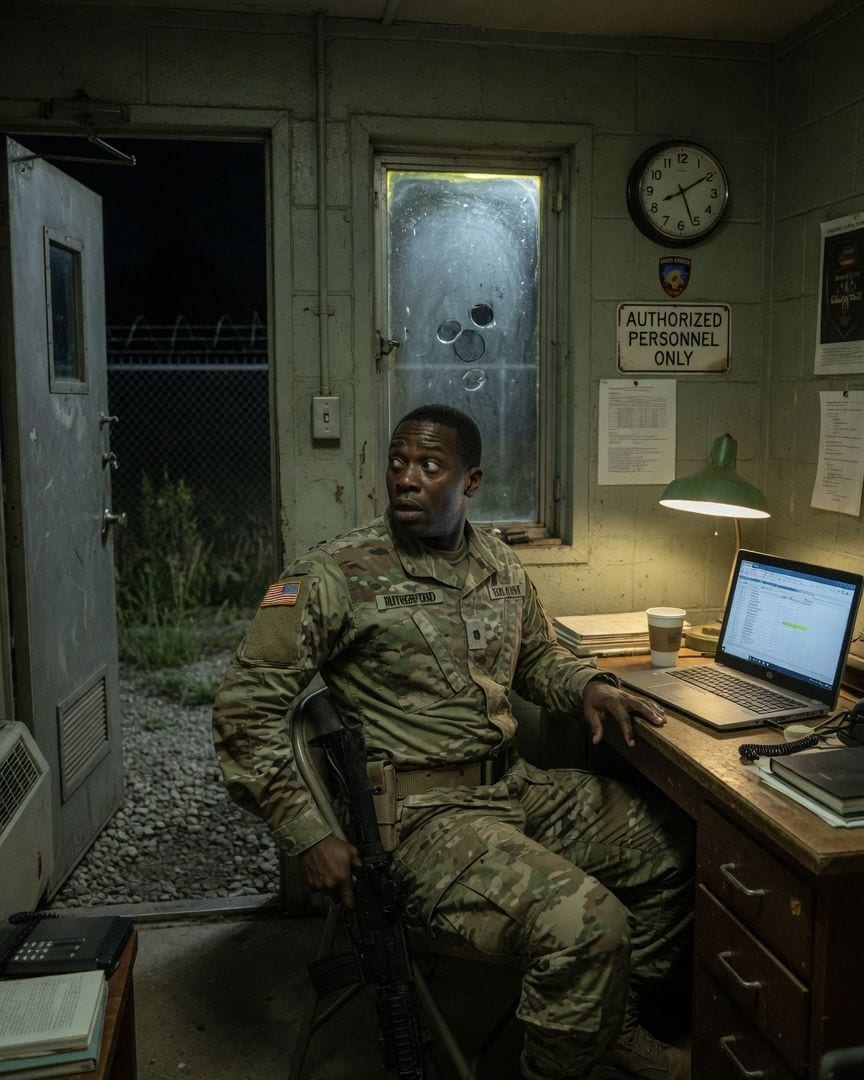 US Armed Forces
Staff Sergeant Julian Rutherford felt an unsettling quiet at Fort Vashon's back gate, replacing a guard who reported strange knocks. He discovered an extra name on the digital duty roster that kept reappearing after deletion, a cold digital ghost. His search through decades of archived logs revealed a persistent anomaly: an unassigned slot, always present on short-staffed shifts. Then, in a forgotten supply shed, he unearthed an old journal detailing similar knocks and shadows, and one entry describing a guard hearing his own name called from the dark. What invisible presence haunted the fort's lonely gate?
15 min read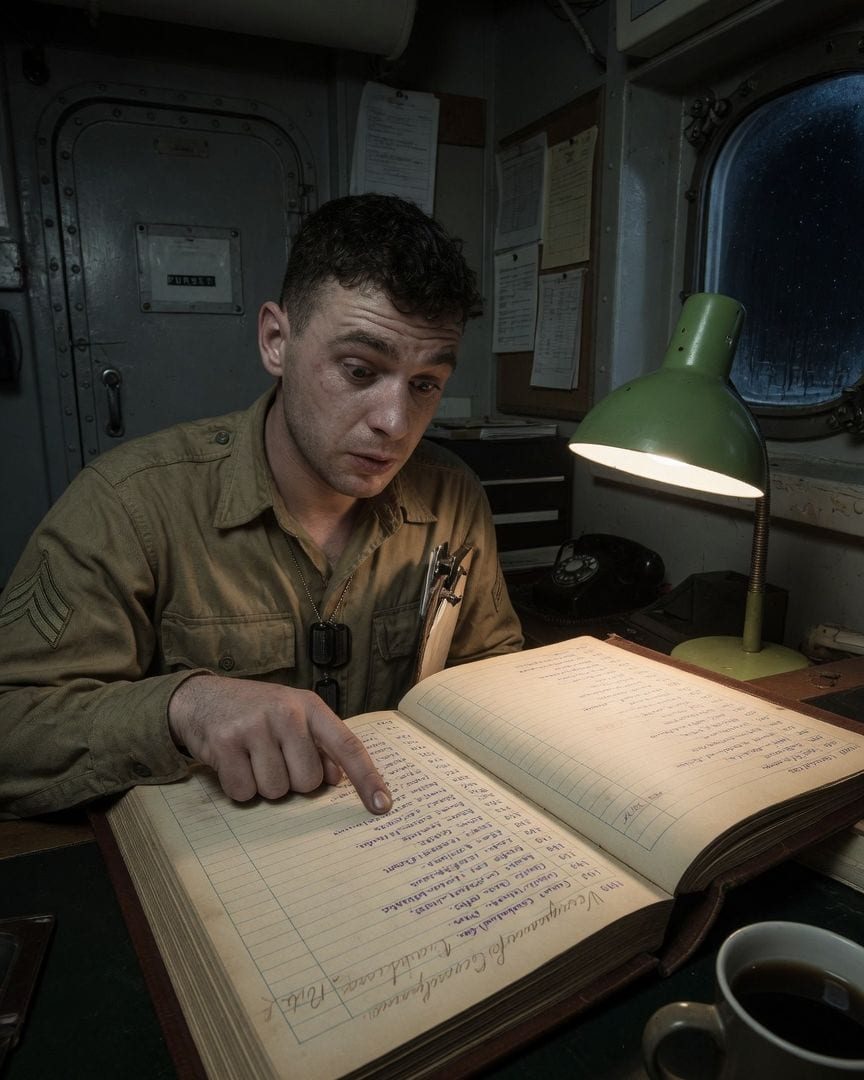 US Armed Forces
Corporal Arthur Kowalski was on his final Atlantic crossing aboard the USS Harrington, a promised reprieve before reassignment, but the cold Atlantic air was nothing compared to the chill seeping into his bones. Despite the official roll listing 402 men, the boat drill revealed 403 soldiers lined up, an impossible discrepancy that defied every record. His discreet investigation led him to the ship's master embarkation roll, where beneath the 1943 entries, he found a faint, handwritten name: 'Vestergaard, Corporal. 1918.' A World War I soldier’s name, in archaic ink, woven into a modern manifest – how could such an impossible entry exist?
12 min read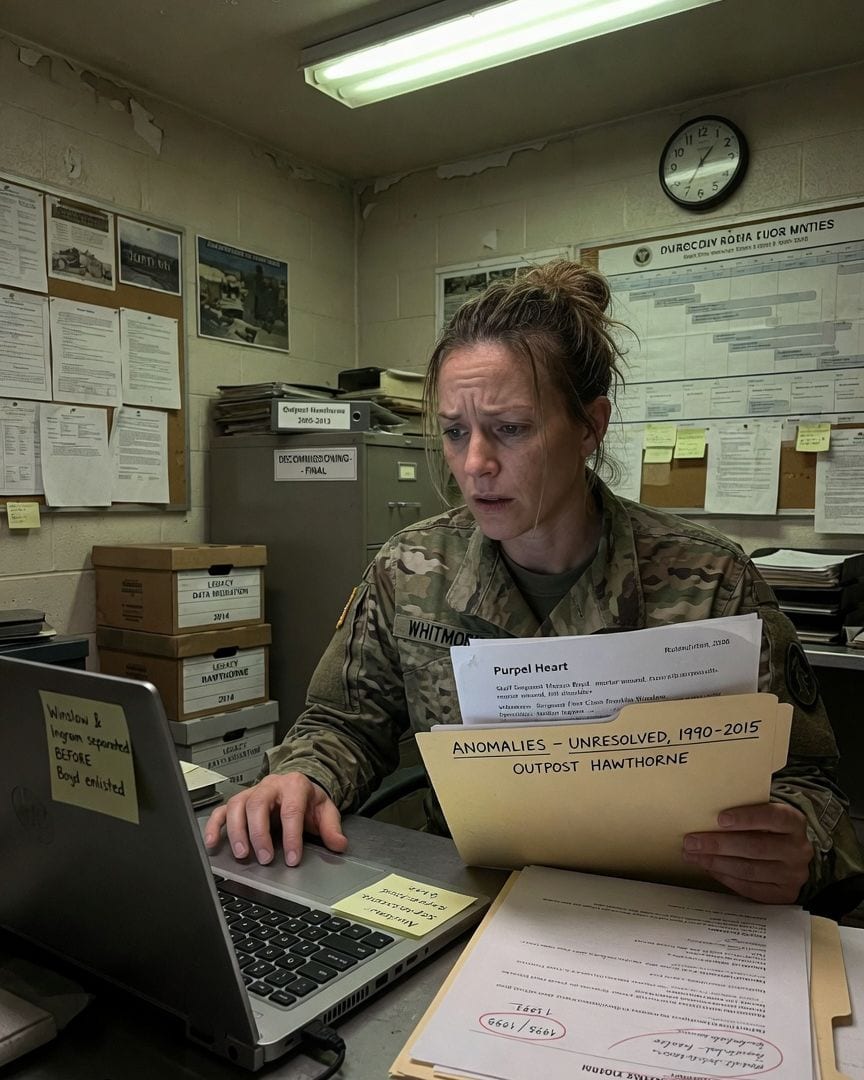 US Armed Forces
Captain Diane Whitmore, Adjutant for the soon-to-be-decommissioned Fort Clay, meticulously reviewed the final awards roster. Her office, usually bustling, was eerily quiet save for the fluorescent hum as she found an entry for Staff Sergeant Marcus Boyd: a Purple Heart for a mortar wound in 2012. But Boyd had returned unharmed, and the listed witnesses had separated from the Army years before he even enlisted. Colonel Sinclair dismissed it as data corruption, but Whitmore sensed a deeper anomaly, and ignoring a post historian's warning, she found another file from Outpost Hawthorne with the same impossible witnesses. What pattern was buried in Fort Clay's archives?
11 min read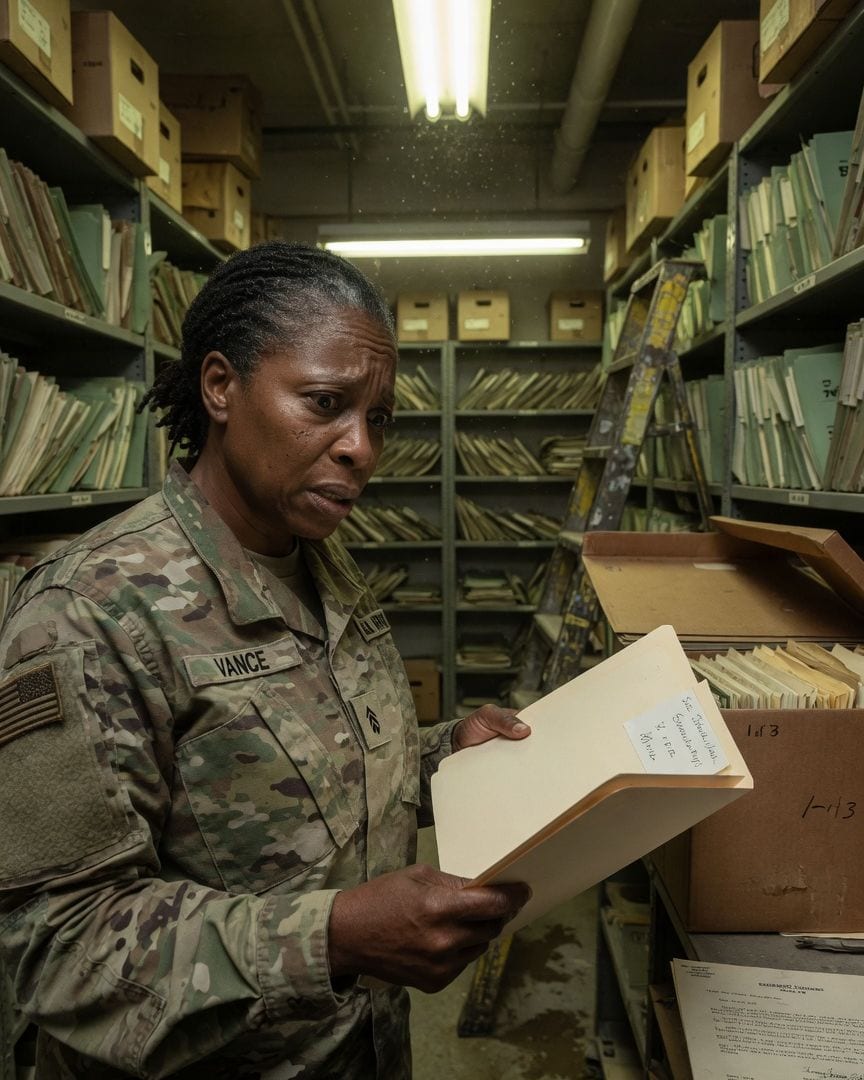 US Armed Forces
Master Sergeant Iris Vance, 18 months from a meticulously planned retirement, sat at her desk in the quiet administrative building of Camp Sterling. The air hummed with a familiar, yet subtly unsettling, tremor. Reviewing her promotion packet, she discovered a Bronze Star for valor, dated fifteen years prior. The citation described a harrowing solo rescue mission she never performed; that day, she’d broken her ankle in a training exercise. Even more chilling, the narrative contained her own internal monologue, word for word. Could her ironclad record be so impossibly wrong?
13 min read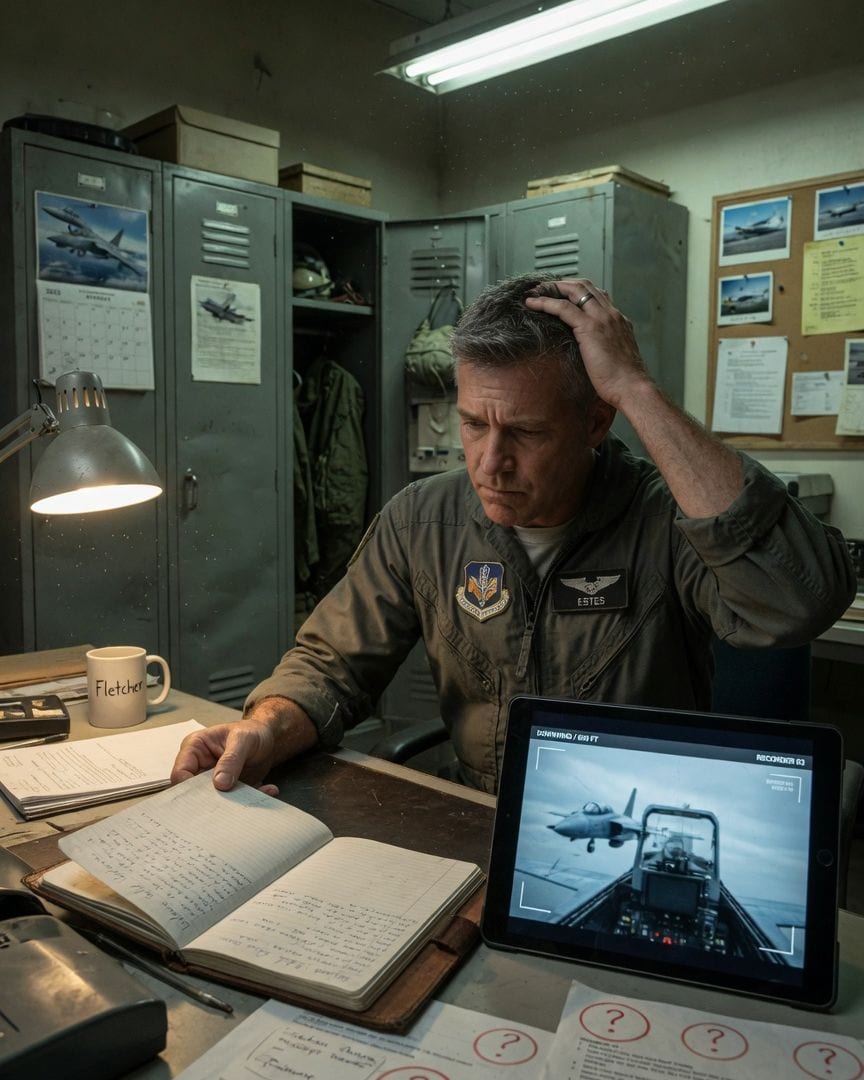 US Armed Forces
Chief Warrant Officer Nathaniel Estes, a pilot whose career hinged on absolute precision, was under evaluation for a critical promotion. His nightly review of HUD tapes from routine Mojave test flights was a meticulous habit, but for a week, it revealed an impossible detail. At precisely 800 feet, one frame showed a sleek, experimental jet tucked impossibly close off his left wing—a craft ground radar never detected. When his maintenance chief found no equipment fault, Estes unearthed a dusty, decades-old logbook detailing identical phantom sightings from 1978. What unseen presence shadowed the desert skies?
12 min read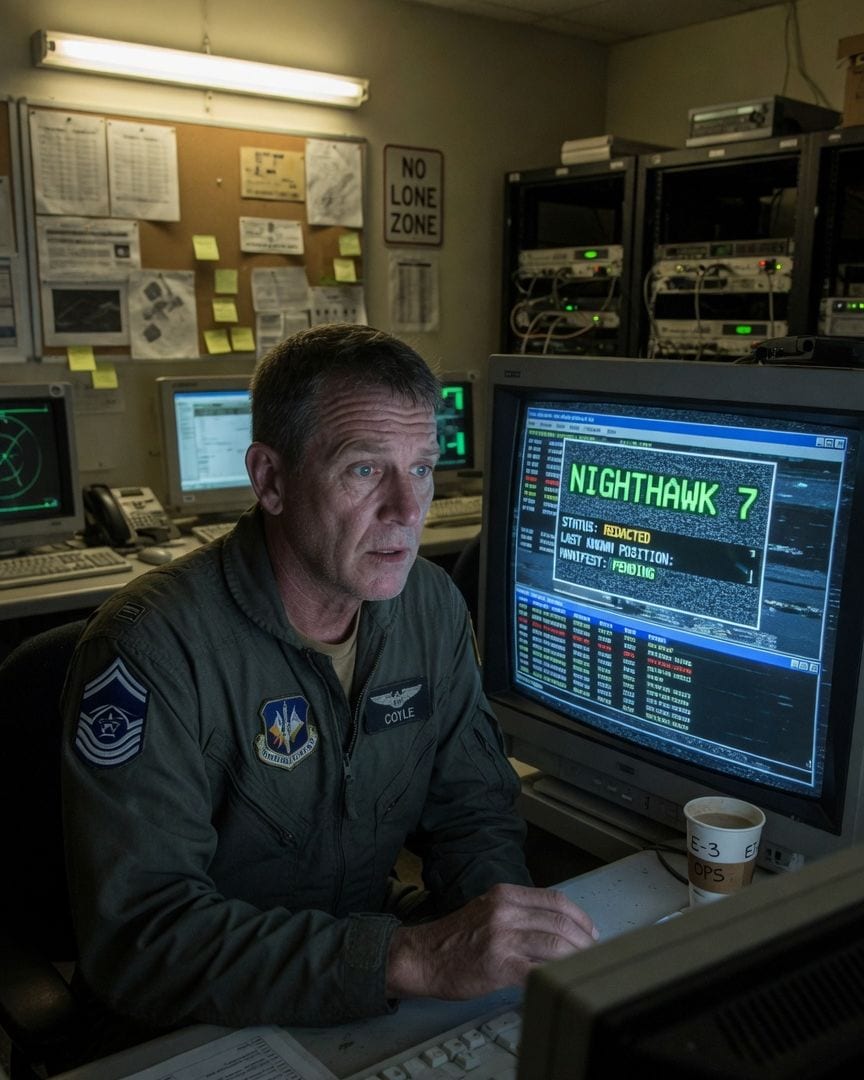 US Armed Forces
Master Sergeant George Coyle, nearly three decades in uniform, counted the last missions before his retirement. High above the black North Atlantic, his E-3 Sentry hummed with the familiar, impossible truth of a ghost radar blip. This single return squawked nothing, eluding every filter and fighter jet sent to investigate, yet the precise systems swore it was there, inbound, week after impossible week. Driven by obsession, Coyle later found a flicker of data: the call sign "NIGHTHAWK 7." Investigating further, an obscure database revealed its status as 'REDACTED,' with its last known position matching the ghost track. What forgotten project was haunting the skies, precisely where it had been scrubbed?
11 min read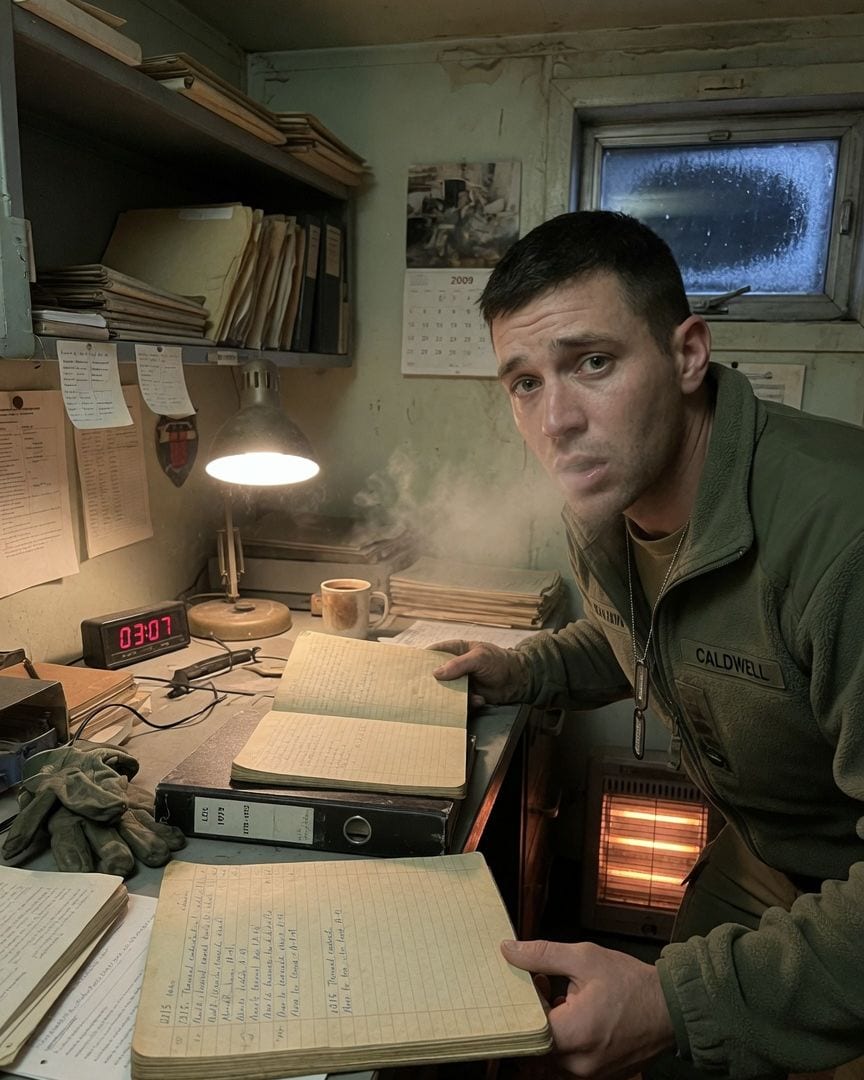 US Armed Forces
In the biting Korean winter, Corporal Vincent Caldwell shivered on watch at Observation Post Kodiak, scanning the frozen rice terraces with his thermal scope. At 0315, a still, warm human figure appeared a mile out, a distinct orange-yellow silhouette against the frigid landscape – yet his night vision goggles showed only empty, cold ground. Dismissing it as a glitch, Caldwell later found the same entry in the digital logs: 'Thermal contact. Man in terraces.' It was a silent, unresolved loop, repeating for weeks. His dread deepened upon discovering decades of handwritten logbooks, each page documenting the same 0315 thermal contact and a cryptic 'M-01.' Was this a permanent fixture, silently acknowledged by every sentry before him?
13 min read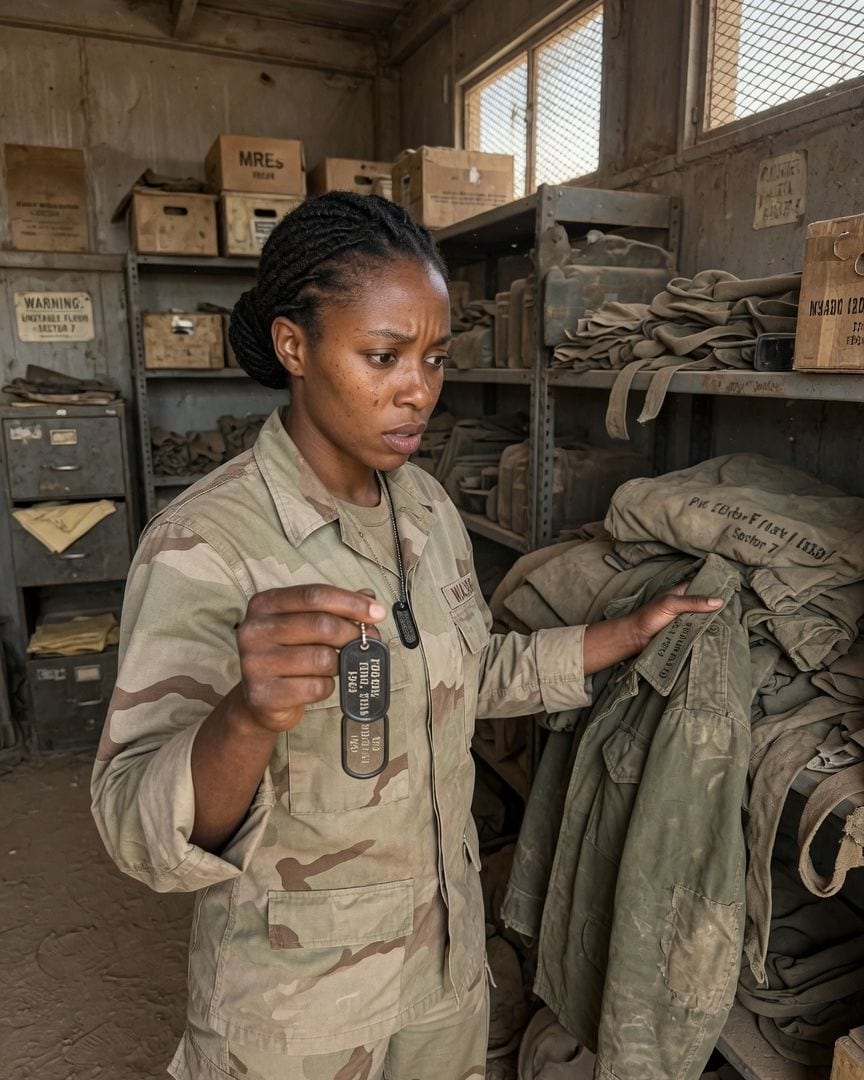 US Armed Forces
Observing a formation in the dry Mojave, Lieutenant Naomi Walsh felt a prickle of unease as a platoon counted one man too many. The extra soldier, Private Ethan Ford, moved with an unsettling quietness, performing duties flawlessly but without a single personal gesture. When his deployment records appeared pristine yet absent from the original manifest, Naomi searched a dusty old depot for answers. There, beneath a pile of tarps, she uncovered a field jacket bearing his name, 'Pvt. E. Ford,' and a dog tag from 1983, decades before the silent soldier could have been born.
14 min read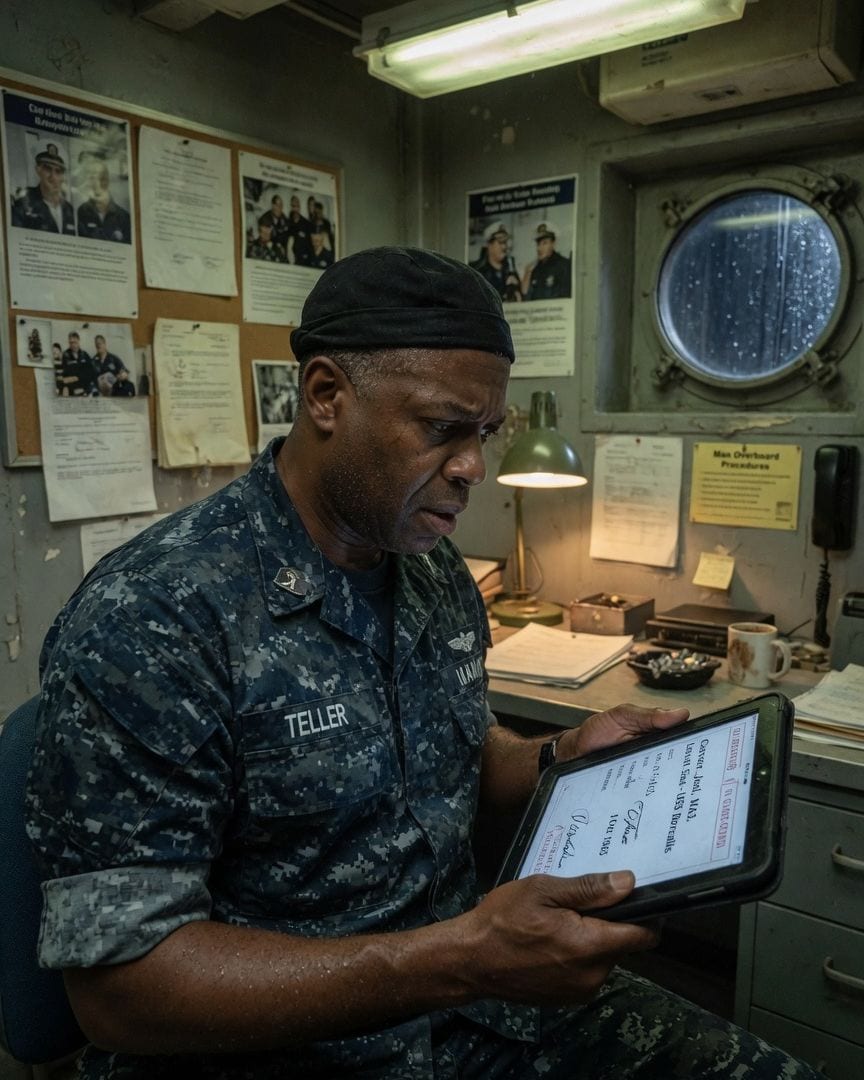 US Armed Forces
Master-at-Arms First Class Desmond Teller battled fatigue and a raging storm aboard the USS Borealis as a man-overboard muster was called. After two meticulous counts, the total came back one man over the ship's manifest, an impossible anomaly. Teller's thorough search led him to a quiet sailor in Berthing 3, calmly making his bunk, who identified himself as Joel Carver, MA3. The ship's records, however, revealed no such crewman, only a faded log entry from 1983: 'Carver, Joel. MA3. Lost at Sea - USS Borealis.' Why was a man lost decades ago now standing in his berthing?
11 min read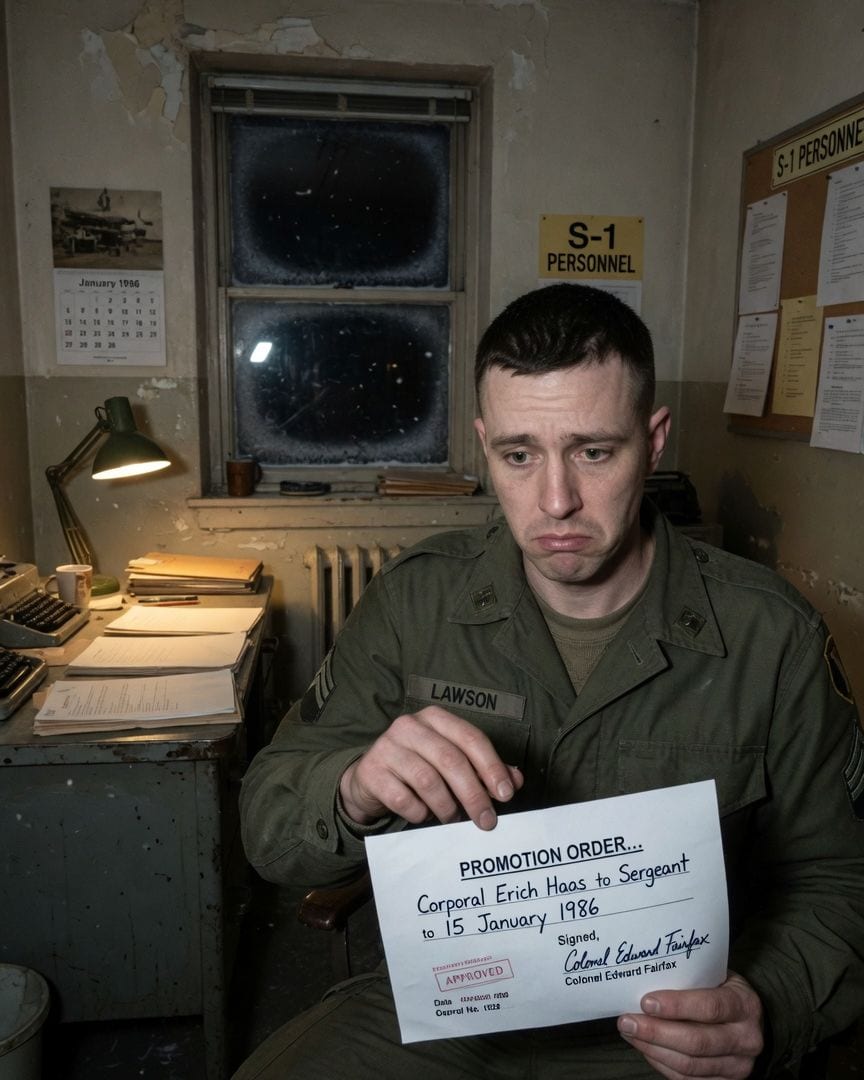 US Armed Forces
Staff Sergeant Julian Lawson, a meticulous NCO in a cold German garrison, found his routine shattered by a new batch of promotion orders. Among them, a promotion for Corporal Erich Haas to sergeant bore an impossible date and the impeccable signature of Colonel Edward Fairfax, a man who had died last December. Despite the document's official validity, Julian's checks revealed no trace of the promotion in any real-world record. When Julian confronted him, Haas himself knew nothing of it, his eyes holding a vacant, unreadable flicker as he looked at the dead Colonel's signature and his phantom new rank.
11 min read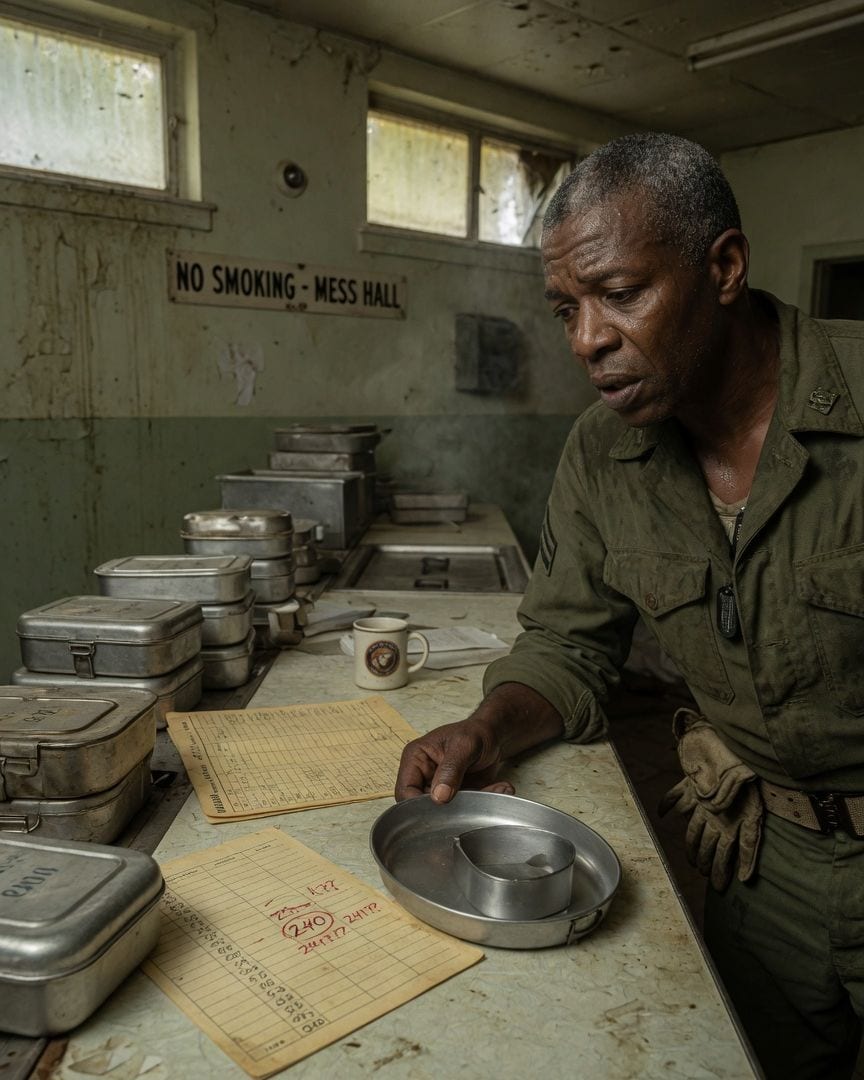 US Armed Forces
Sergeant William Romano, a meticulous Marine on his final deployment, supervised the last inventory of Outpost 73 before its permanent closure. His task in the humid, derelict mess hall was tallying tarnished mess kits, a mundane job until his count stubbornly showed one extra, pristine plate. His junior confirmed the anomaly, chilling Romano and sending him to the mildewed archives. There, a 1944 logbook revealed Mess Sergeant Okafor had documented the exact same extra plate, linked to a Private Brooks who was reported missing and never found. The humid air turned cold as Romano stared at the impossible presence.
11 min read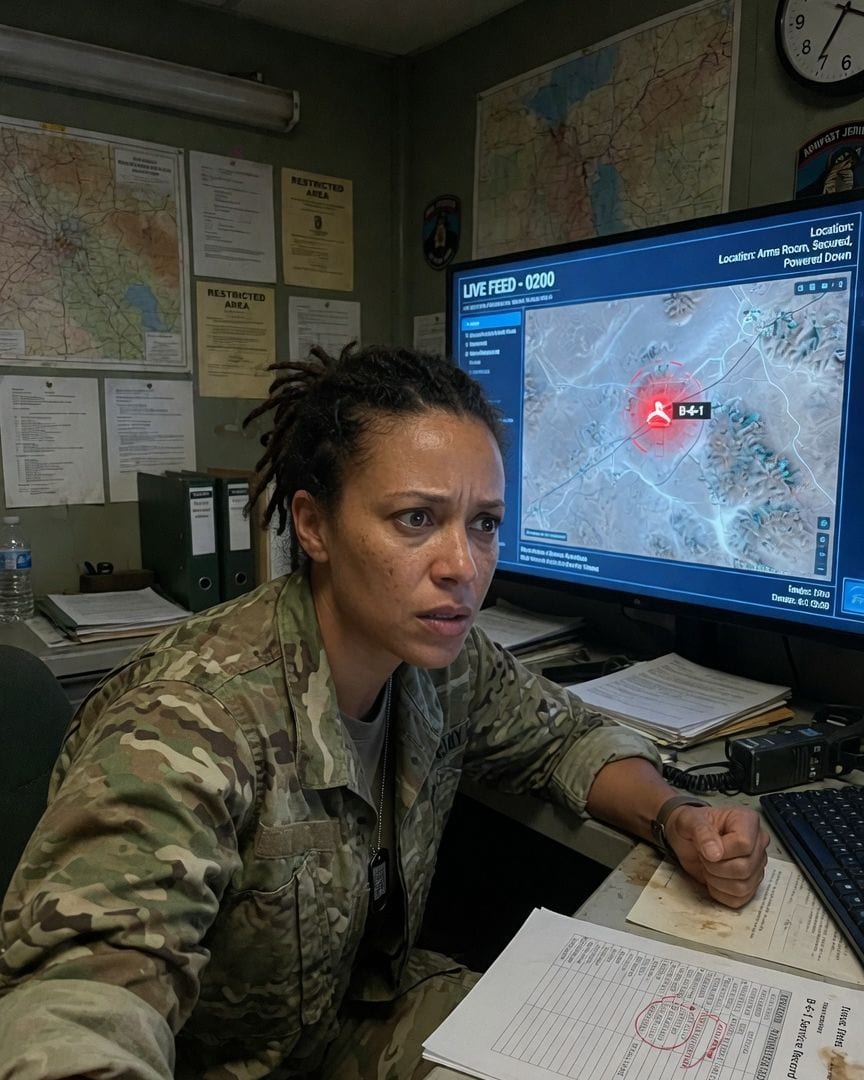 US Armed Forces
At 0200, Captain Monica Winslow monitored Outpost Jericho's Tactical Operations Center, the blue screen glow illuminating her face as a red icon crawled across a restricted live-fire zone. No one was cleared for the area, especially not at that hour, yet the system insisted the icon, labeled B-6-1, was a standard rucksack secured miles away in the arms room. But the system's own records showed B-6-1 as a phantom, repeatedly 'recovered' and 'unassigned,' as if the digital ledger itself fought to reconcile its persistent non-existence. Then, a sergeant found a faded, handwritten tag beneath the rucksack's official barcode: 'Property of Cpt. M. Winslow, Bravo-Six-One. Do Not Reassign.' Her own name, a call sign she'd never used, tied to a ghost tracker still moving across the desert map.
9 min read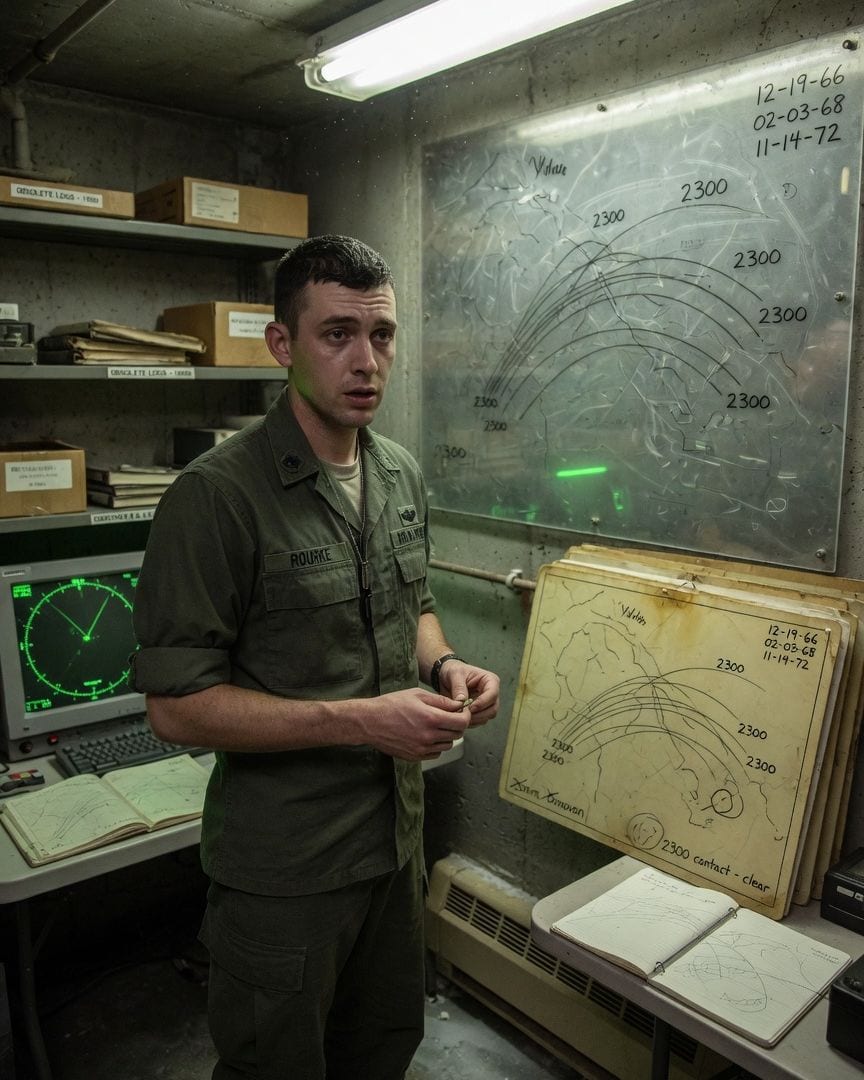 US Armed Forces
Airman Second Class Benjamin Rourke watched the familiar radar ghost glide across his screen at 2300 hours, just as it had every night for a month at the desolate Montana gap-filler station. He'd logged it as a temperature inversion, but its mechanical adherence to schedule felt deeply wrong. Driven by unease, Rourke searched the station's dusty storage closet, unearthing old plotting maps from years past. Every single board, recorded by different hands on different nights, showed the exact same impossible radar trace. But on one faded log from '66, a crude tally mark made that shift's personnel count seem one off.
11 min read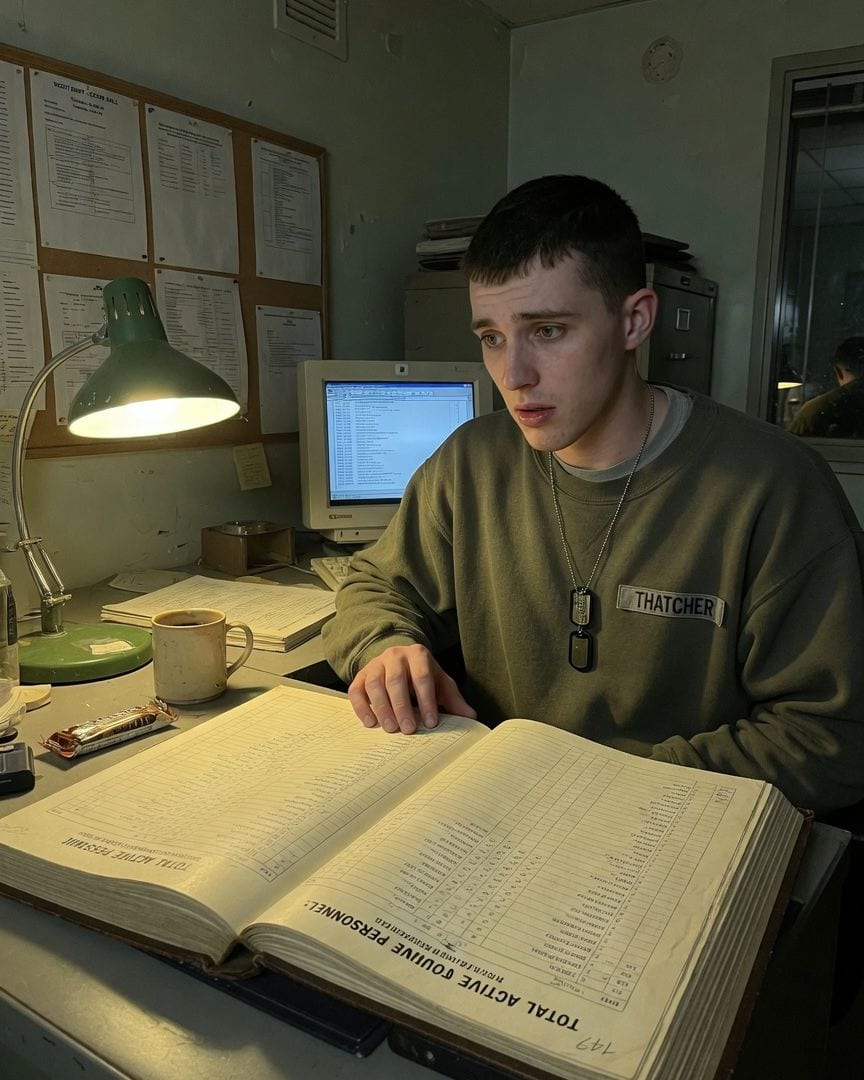 US Armed Forces
Airman First Class Hugo Thatcher, barely twenty and fresh to a desolate missile field, began a lonely night shift in the echoing chow hall. His supervisor had given one disproportionate rule: never right the tipped chair in the corner. Yet, alone in the vast quiet, Hugo straightened it to sweep a crumpled napkin. By morning, the glass on the table stood full of clear water, and a different chair sat tipped against its edge. Then, Hugo found an unknown name on his duty roster, and the base's master manifest listed one extra man.
12 min read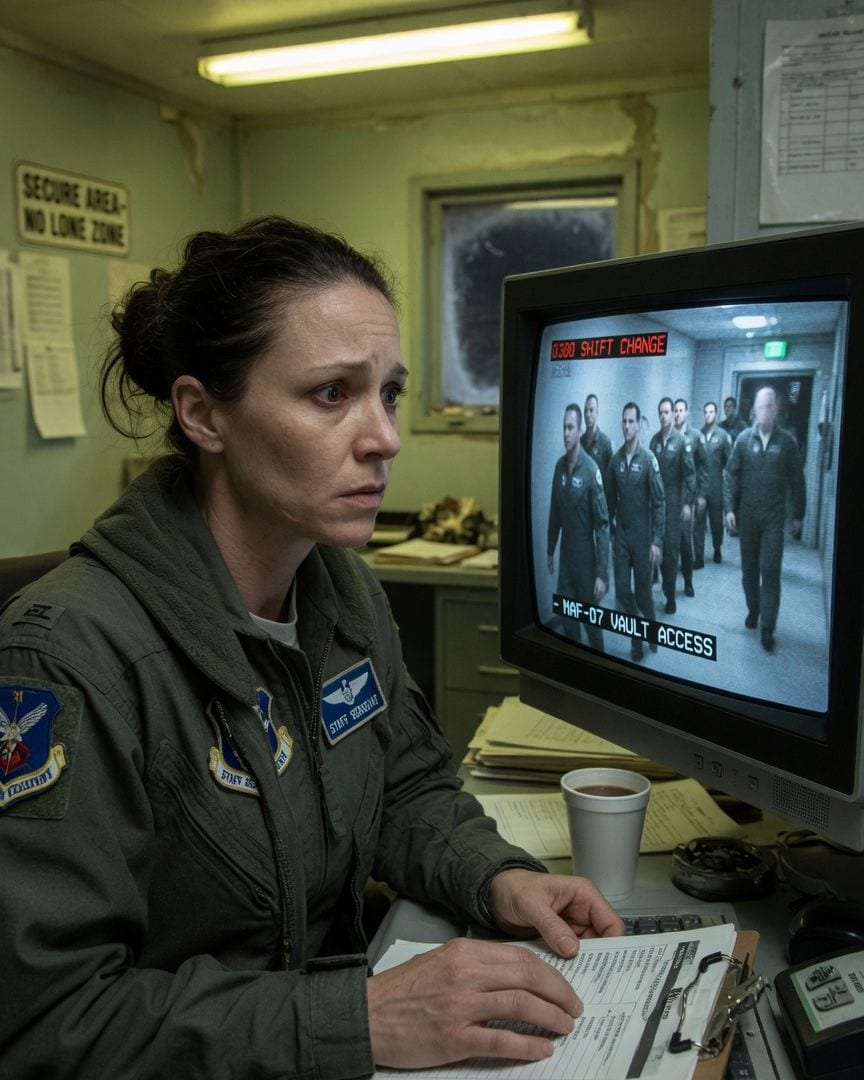 US Armed Forces
Staff Sergeant Helen Buhl mustered her crew for the 0300 shift, expecting eleven men. But a twelfth figure stood in uniform, perfectly aligned with the others, yet completely unlisted on any roster. His face on the security feed then warped into a featureless blur as he passed the scanner, unlogged.
14 min read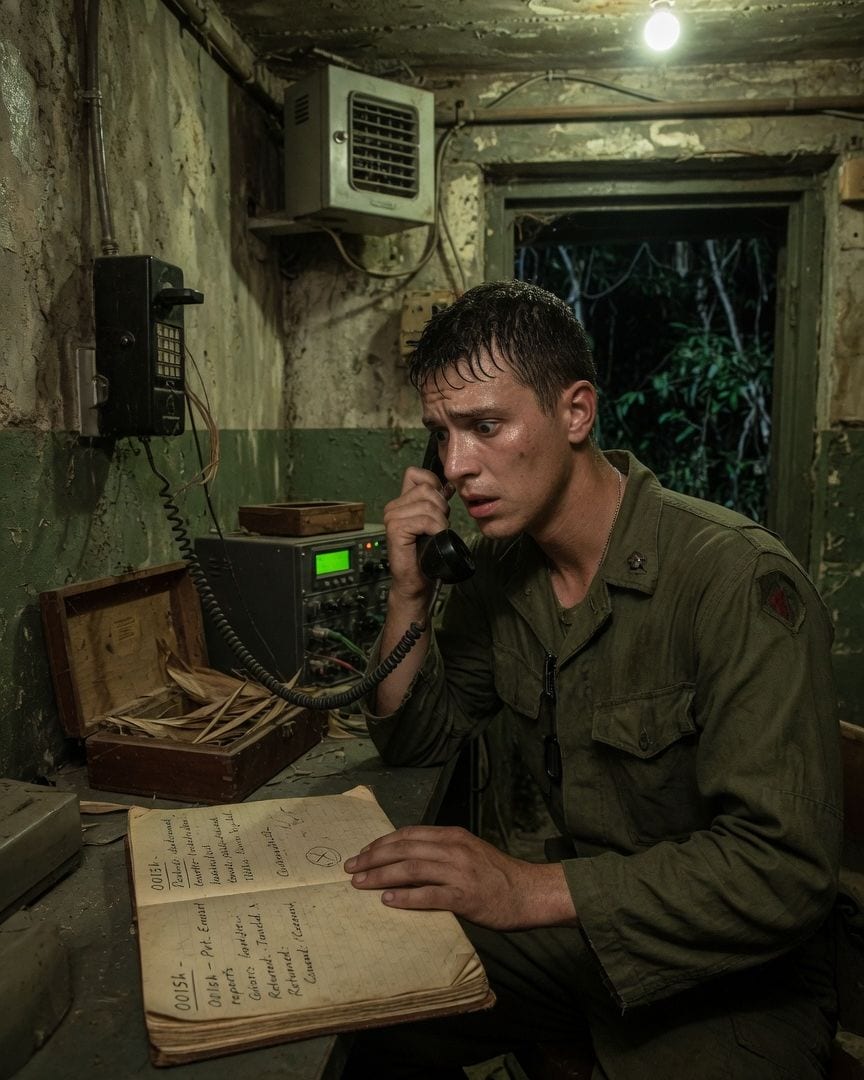 US Armed Forces
Lance Corporal George Beir was counting down his last watches before rotating home from the firebase. One humid midnight, an antique field phone — its wires cut decades ago — suddenly rang, tearing through the bunker's quiet. A young voice on the line calmly requested a password for a returning patrol, giving a countersign from a forgotten war. Beir later discovered a dusty logbook from 1944 confirming the exact exchange, from a soldier marked as missing in action. Was a ghost patrol still waiting for clearance, seventy years later?
12 min read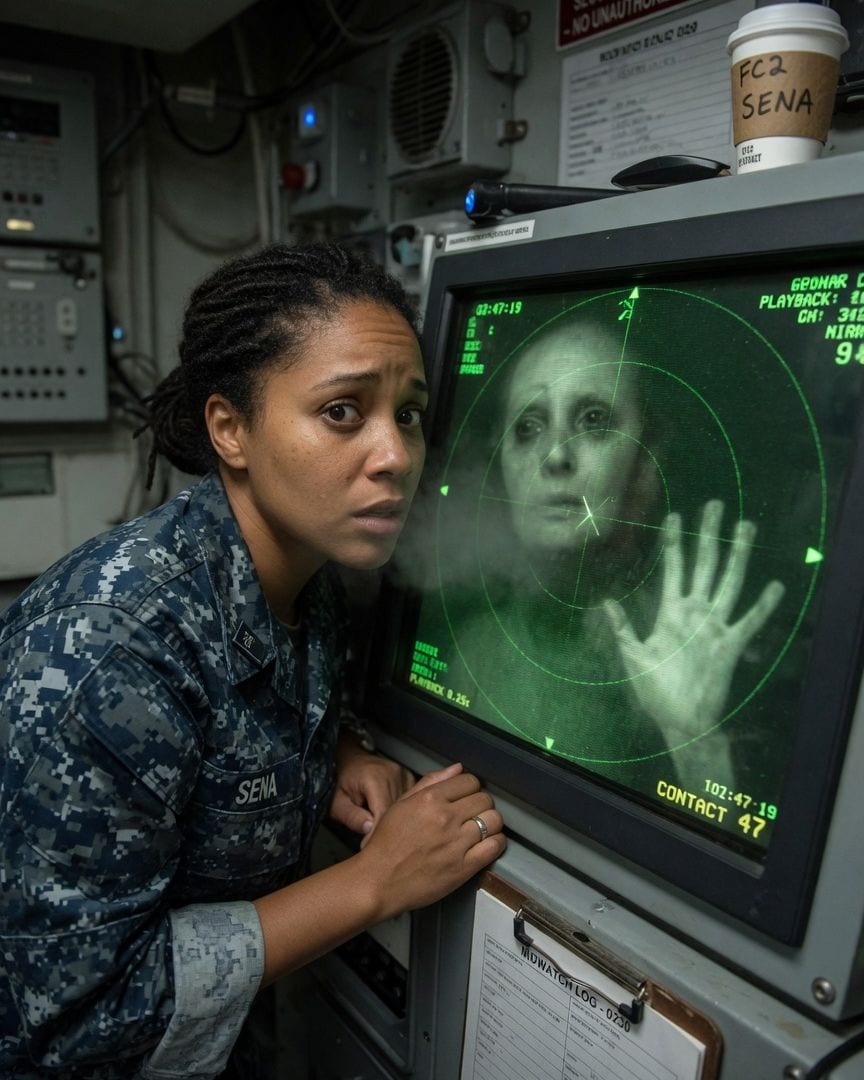 US Armed Forces
Fire Controlman Vera Sena spent her midwatch on the USS Mahan tracking an impossible radar contact that only she could see, silently creeping closer for three nights running. Despite endless checks and reboots, the blip remained, defying logic and baffling her shipmates, an invisible presence in the vast Atlantic darkness. But reviewing her recorded data, she noticed a flicker on the monitor’s glass itself: a blurry outline, like a gaunt face, pressed against the screen from the inside. It stared out with wide, dark eyes, a chilling image superimposed over the digital data, reaching out for a fleeting second before vanishing. What was pressing against her screen, and what did it want from the Mahan?
13 min read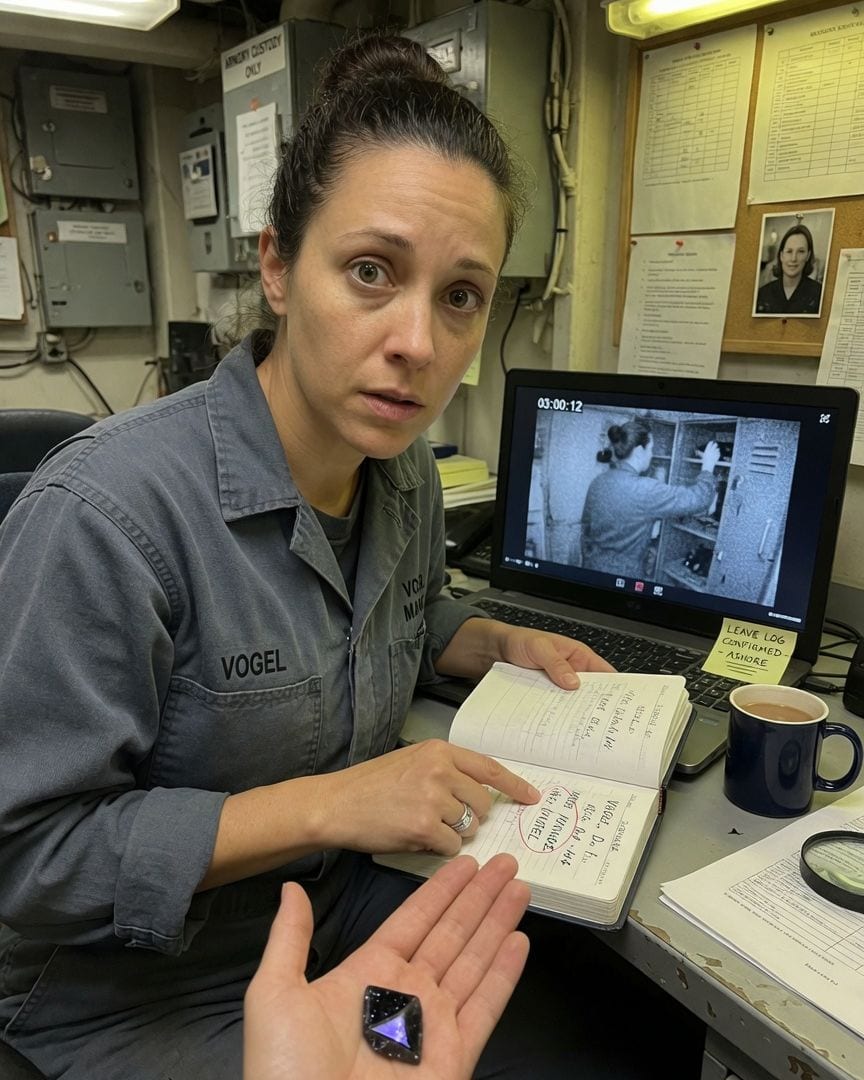 US Armed Forces
Master-at-Arms Dana Vogel, known for her meticulous record-keeping aboard the USS Vance, returned from emergency leave, ready to resume her duties. Reviewing the armory’s custody book, her own signature appeared next to a weapon logged out at 0300 during a critical strait transit. Yet, Dana had been three time zones away in a hospital waiting room, a fact confirmed by her own signed ship’s log. Armory camera footage showed a figure retrieving the weapon, its hand strangely embedded with a dark, faintly glowing crystalline shard. With the ship’s systems designed for unimpeachable accountability, how could her signature appear, and who held that impossible shard?
10 min read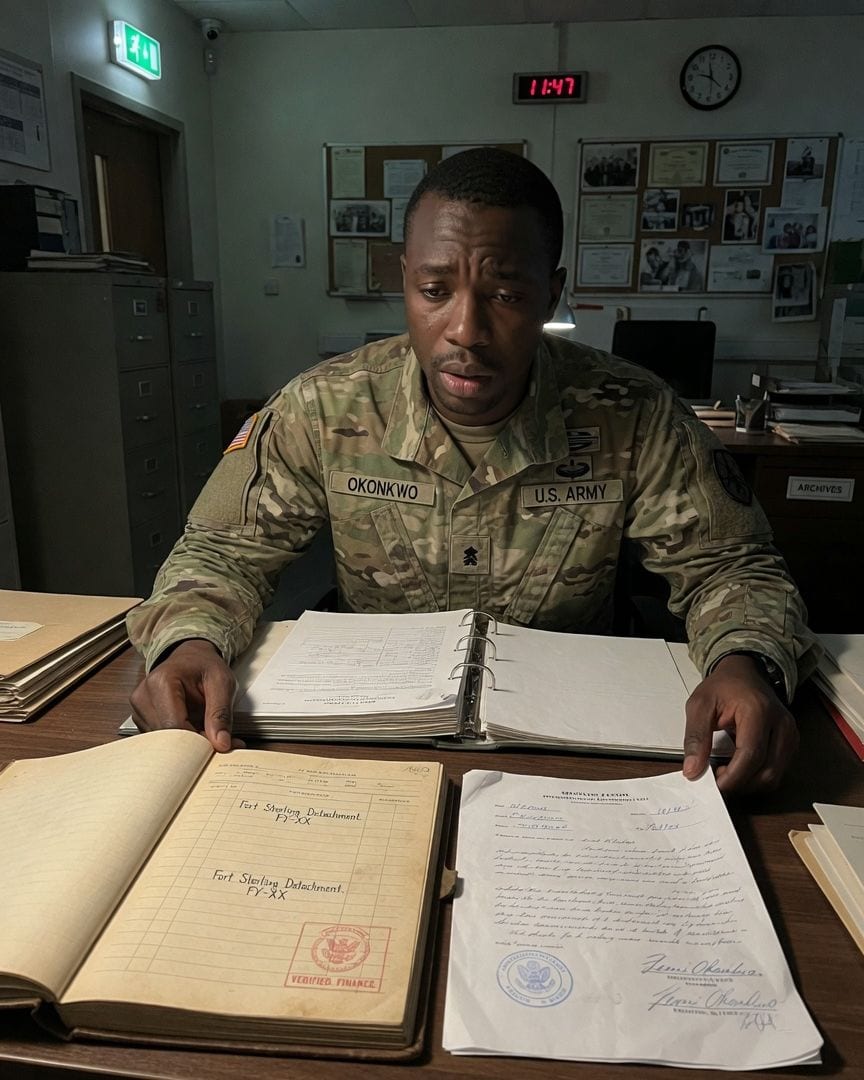 US Armed Forces
Specialist Femi Okonkwo, an Air Force cargo hauler, stared at an earnings statement that contradicted his entire four-year enlistment. It listed nine months of jump pay and a mountain duty station in Colorado—places he’d never been, operations he’d never completed. Finance and HR records, seemingly impeccable, confirmed every detail of his impossible deployment. But when Femi finally retrieved the physical sign-in ledger, the faded blue ink of his supposed signature revealed the true, chilling discrepancy: the neat, elegant hand on the official document was unequivocally not his own. Who signed for Specialist Okonkwo’s impossible deployment, and why was it so meticulously verified?
13 min read