An airman found an unknown name on his night shift roster. Julian Galloway didn't exist, but the base count was one man too high.
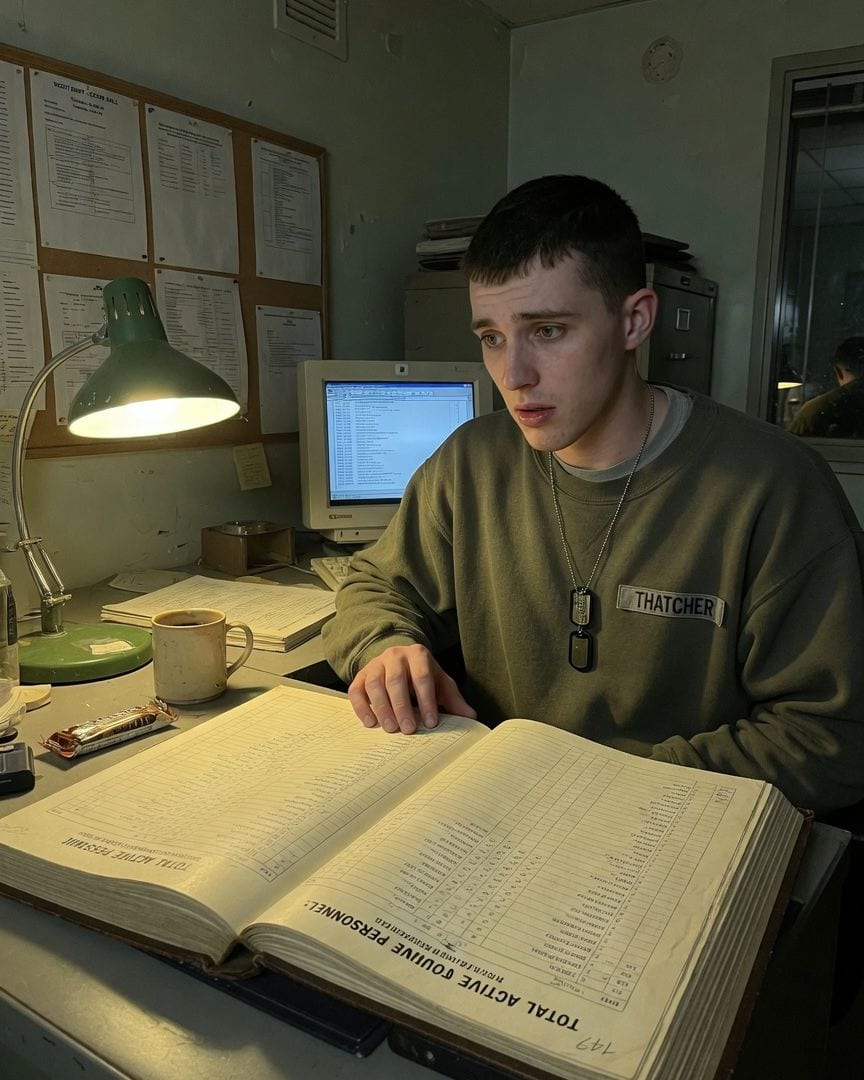
Airman First Class Hugo Thatcher, barely twenty and fresh to the desolate missile field, shivered as he started his empty-chow-hall night shift. The wind screamed across the prairie, rattling the prefabricated building’s thin walls.
Technical Sergeant Oscar Prescott, his shift supervisor, had given him one rule with a gravitas that felt disproportionate to its subject. “That table in the corner?”
Prescott had pointed with a thick finger toward a small, round table draped in a white cloth. An inverted glass sat on it, beside a shriveled lemon slice. A wooden chair was tipped against its edge. “You walk around it.
You never right the chair.” It was an old rule, a superstition perhaps, but Prescott’s tone had left no room for argument.
Hours later, alone with the echoing silence broken only by the hum of the refrigerators, Hugo found himself needing to sweep beneath that very table. A crumpled napkin had found its way there.
He grumbled, a low sound in the vast quiet, and reached down. The chair was light, easy to lift. He set it straight, aligning it with the table’s edge, then ran his broom efficiently beneath it.
The napkin vanished into his dustpan. By morning, when the early shift arrived, a new recruit, Airman Miller, found the glass on the white cloth stood upright and full of clear water.
And a different chair, dragged from another table, sat tipped against the edge of the forbidden one.
Hugo felt a chill that had nothing to do with the biting winter air. He tried to rationalize it – a prank, a tired mind playing tricks in the dead of night.
Perhaps he’d been so focused on sweeping he hadn't noticed someone else in the hall. He checked the chow hall’s duty roster, pinned to the corkboard by the kitchen door, hoping to find a mischievous soul assigned to his shift.
The roster, printed faintly, listed only his name for the late shift. Hugo Thatcher, A1C. Puzzled, he looked at the day’s roster, scanning the familiar names, then back at the night’s.
There, neatly penned beneath his own, was a name he didn’t recognize: ‘Galloway, Julian. A1C.’ He’d been alone. He knew every airman on his shift, and indeed, every airman on the base by sight or reputation.
Julian Galloway wasn’t one of them.
He asked Oscar Prescott about Julian Galloway during the shift change. Prescott, nursing a chipped mug of coffee, squinted at the roster. “Galloway? Never heard of him.” He tapped the paper with a fingernail. “Must be a typo, kid.
Or some new transfer that hasn’t made it to the main manifest yet.” He shrugged it off, dismissing it with a wave of his hand, but Hugo couldn’t. The unease began to gnaw at him.
He spent his off-duty hours discreetly asking around, checking bunk assignments in his own barracks, even glancing at the base’s digital personnel directory when he got a chance at the recreation center. No Julian Galloway.
No record of him ever being assigned to this base, not in any official capacity, digital or otherwise. The name simply didn’t exist outside of that one chow hall roster.
The unease gnawed at Hugo, evolving into a cold certainty that something was profoundly wrong. He decided to go straight to the source, to the most authoritative document on the base.
He sweet-talked the administrative clerk, a harried woman named Beverly, into letting him see the base’s master personnel manifest, a thick, bound ledger of every active-duty airman stationed there.
The large, drab office felt suddenly smaller, the air heavy with dust and the quiet rustle of old paper.
Hugo meticulously counted each name, running his finger down the columns, cross-referencing against the digital system Beverly kept open on her desktop monitor. One hundred and forty-seven names. He double-checked, then triple-checked.
Each face, each bunk, each service number accounted for, confirmed by the digital record. But at the bottom of the final page, where the columns converged, the official ‘Total Active Personnel’ figure was printed in bold, stark black ink.
It read: ‘148’. Hugo Thatcher stood in the base’s administration office, staring at the official personnel manifest, which clearly listed 147 names, yet the total count at the bottom read ‘148 Active Personnel’.
He closed his eyes, then reopens them, but the numbers remained stubbornly unchanged.
The ‘148’ haunted Hugo. It was a phantom digit, a persistent error that refused correction.
He couldn’t shake the feeling that the ‘extra’ man was somehow linked to the chow hall incident, to the inexplicable re-arranging of the chair and glass.
He tried to raise the discrepancy with Oscar Prescott again, catching him outside the motor pool. Hugo suggested it was a serious administrative error, one that could affect the upcoming base inspection scheduled in three months.
Prescott just scoffed, spitting a stream of tobacco juice into the dirt. “Kid, those manifests are always a mess. Someone probably forgot to update a transfer out. Happens all the time.”
But Hugo knew it didn’t happen ‘all the time’ in a place as meticulously documented as a missile field. Errors were flagged, corrected, double-checked. A discrepancy of a whole person was unheard of.
He started spending his nights off-shift in the dusty base archives, a forgotten room filled with metal shelves and the faint smell of mildew. He poured over old records, looking through manifests from years past.
He found similar discrepancies: a ‘Carl Hughes’ in ’72, an ‘Abigail Forsythe’ in ’65, each listed as active personnel but with no corresponding service record, no bunk assignment, no physical trace.
The names changed, but the ‘extra’ slot persisted, always maintaining an impossible total in the official count.
He even found an old bunk assignment for a ‘Julian Galloway’ from a decade prior, for a bunk that was currently empty and had been for years. The name, it seemed, reappeared.
Hugo’s late-night visits to the archives didn’t go unnoticed. The metallic scent of the stacks seemed to cling to his uniform, and the fluorescent lights hummed with a conspiratorial drone.
One evening, as he was cross-referencing a ‘Brandon Porter’ from a 1978 manifest, trying to reconcile the impossible numbers, a slip of paper slid under the archive door with a barely audible rustle.
It was a blank piece of official base stationery, folded once. Inside, written in neat, elegant script, were three words: ‘Leave records undisturbed.’ Hugo’s heart hammered against his ribs, a frantic bird trapped in a cage. Someone knew.
He peered into the dark hallway, but saw no one. The silence that followed felt heavier, thicker than before. The next day, he found his own service record file, which he kept locked in his locker, had been subtly disturbed.
A specific page, detailing his arrival date and initial assignments, was no longer perfectly aligned with the others.
Later that week, Margaret Calloway, a civilian contractor who managed the base’s historical records and had been there since before Hugo was born, cornered him by the mess hall coffee urn.
Her eyes, magnified behind thick glasses, held a knowing, weary sadness that pulled at something deep inside him. “Airman Thatcher,” she said, her voice a low murmur, barely cutting through the clatter of trays, “some things are better left alone.
This base… it has its own way of keeping count.”
She didn’t elaborate, just watched him with an unsettling intensity before turning away, her silhouette disappearing into the lunch crowd, leaving Hugo with a profound sense of being observed, of being warned.
The air around him felt suddenly cold, though the mess hall was warm.
Hugo decided to confront Margaret Calloway directly. He found her in her small, cluttered office tucked away in the deepest corner of the administration building, surrounded by stacks of old documents that towered like ancient ruins.
The air in the room was thick with the scent of aged paper and dust. “Ms. Calloway,” he began, his voice tight, “I need to know about the extra names. Julian Galloway, Carl Hughes… the impossible count on the manifest.”
Margaret sighed, her shoulders slumping, and for a long moment, the only sound was the faint crackle of static from a nearby two-way radio.
“You shouldn’t have straightened that chair, Airman,” she said, not looking up from a ledger she was dusting with a soft cloth. “It’s a placeholder. Always has been.”
She explained that the ‘extra’ slot wasn’t a mistake, but a fundamental error in the base’s original commissioning documents, decades ago. A miscalculation in the initial personnel allocation that somehow became integral.
“The base’s funding, its very existence,” she whispered, her voice barely audible, “depended on that number. It needed one hundred and forty-eight. But it only ever had one hundred and forty-seven bodies.”
She went on, her voice gaining a fragile strength. “The system… it found a way to reconcile itself. It generated the ‘extra’ man. A name, a service record, a bunk—all on paper. But never a real person.”
She told him that the names changed over time, cycled through. “Julian Galloway was the last one before you disturbed the table. It was his assigned ‘seat’, his ‘place’ in the system.”
Hugo felt a cold dread spread through him, a certainty colder than the prairie wind. The chow hall table, the tipped chair, the inverted glass—it wasn’t just an old superstition.
It was a physical manifestation, a beacon for an impossible presence. “And anyone who tries to correct it?” Hugo asked, his voice hoarse, barely a whisper.
Margaret finally looked at him, her eyes, usually kind, now filled with a deep, ancient fear. “Anyone who tries to remove the ‘extra’ from the count… they become the next one.”
Margaret pushed a heavy, leather-bound ledger across her desk. Its cover was brittle with age, cracked and worn, its pages yellowed and smelling of dust and old paper.
“This is the original commissioning ledger,” she said, her voice barely a whisper, echoing the profound quiet of the cluttered room. “From the day the base was founded. Every single airman assigned to this post, from the very beginning.”
Hugo’s hands trembled as he opened it, carefully turning the fragile pages. Each sheet was thin, almost transparent, the ink faded in places.
He saw the names of men long dead, their assignments, their dates of arrival, all meticulously recorded in elegant, looping script.
He scanned the entries for the chow hall, the mess hall, the kitchen staff, looking for any name, any detail that might offer an escape, a different explanation. And then he saw it.
An entry, faded but unmistakably clear, for ‘Thatcher, Hugo. A1C. Chow Hall Night Shift. Special Duties.’ The date beside it was 1958.
Margaret Calloway’s trembling finger traced a faded, elegant script in the ancient ledger, landing on a line that reads: ‘Thatcher, Hugo. A1C. Chow Hall Night Shift. Special Duties.’ The date beside it is 1958.
Hugo stared at his own name, frozen, the paper cold beneath his touch.
Margaret Calloway watched Hugo’s face, her own a mask of profound sorrow. The words she spoke seemed to drift through the heavy air of her office, settling around him like a shroud. “It’s a cycle, Airman. A pattern.
The system… it doesn’t just generate a name. It pulls it from somewhere. From somewhere in time, or perhaps, from someone destined to arrive here, to make the count whole again.”
She explained that his act of righting the chair wasn’t just a disruption; it was an activation. He had signaled his presence, his willingness to engage with the anomaly.
His name in the old ledger wasn’t a coincidence; it was a pre-existing slot, waiting for its occupant. The base, in its twisted, self-preserving logic, had simply called him forth.
“You weren’t just new to the base, Airman,” she said, her voice barely above a murmur, “you were new to your role. The name ‘Julian Galloway’ was just the last placeholder. Now, it’s you.”
The full truth detonated in Hugo’s mind: the ‘extra’ slot wasn’t just a number, it was a living function of the base, a phantom limb that needed to be filled.
And by trying to fix it, by even acknowledging it, he had become the next one to be assimilated into its impossible count.
His physical existence would slowly fade, his identity overwritten by the system, until he was just another name in the ledger, accounted for, but never truly present.
Panic seized Hugo, cold and sharp. He had to leave. He had to escape this place, this impossible fate.
He tried to apply for an emergency transfer, citing personal reasons – a sick relative, a sudden urgent need to be elsewhere. The forms never went through, perpetually ‘lost in transit,’ vanished somewhere in the base’s labyrinthine bureaucracy.
He called home, frantic for a connection, for a voice from the real world, but the lines were always static-filled, dropping his calls after only a few garbled words. Desperate, he tried to simply walk off base.
He approached the main gate during a shift change, his duffel bag over his shoulder, a flimsy shield against the inevitable. The sentry, Airman Charlotte Hughes, scanned his ID card.
The scanner beeped, a sharp, insistent note, but the light remained stubbornly red. “Thatcher?” she asked, frowning, looking from the scanner to his face. “You’re not on the outgoing manifest, Airman.”
Hugo argued, pleaded, his voice rising in desperation, but Charlotte, following protocol with unyielding precision, simply told him he couldn’t leave.
He tried to force his way past, but her hand, surprisingly strong, stopped him, gripping his arm with an unyielding pressure. “You’re accounted for, Airman. But not to leave.”
He saw Oscar Prescott approaching, a familiar, weary look on his face, but his eyes held a strange, distant quality, as if looking through Hugo rather than at him. “Thatcher, what’s going on here?” Oscar asked, his tone flat.
Hugo looked at his ID card, then back at the gate, and a profound, chilling realization settled over him like a tombstone. He was on the manifest. He was accounted for. He was part of the system now.
He was the extra. He simply turned, dropped his duffel bag with a soft thud, and walked back onto the base, his steps heavy with the knowledge that he was already gone.
Hugo Thatcher continued his night shifts. The chow hall table remained undisturbed, the chair tipped, its glass inverted, a silent monument to an unspoken rule. No one ever spoke of Julian Galloway again.
Hugo performed his duties, quiet and efficient, his presence just another part of the base’s background hum. He swept, he mopped, he wiped down counters.
He saw Margaret Calloway sometimes in the mess hall; she would catch his eye, a flicker of profound sorrow in hers, but she said nothing, and he offered no reply. His transfer papers never materialized.
His communications remained garbled, like listening to a conversation through thick glass. He was there, yet not quite. The base inspection passed without incident, the personnel count of ‘148 Active Personnel’ accepted without question, its silent accuracy unbroken.
Days bled into weeks, then into a quiet, unending succession of nights. One night, Oscar Prescott, on a routine patrol of the chow hall, spotted Hugo in the empty space, sweeping the floor with slow, deliberate strokes. “Thatcher!”
Oscar called out, his voice echoing in the cavernous room. Hugo paused, broom in hand, and turned. His face was unreadable, his eyes distant, like windows onto an empty room. “Is that so, Sergeant?”
he replied, a faint, wrong little smile playing on his lips, a shadow of an expression that didn't quite belong. Oscar frowned, a prickle of unease brushing against him, a sensation he couldn't quite place.
He checked his duty roster again, a small, laminated card in his hand, then glanced back at the chow hall. Hugo was still there, sweeping. Oscar shook his head, dismissing the feeling as the late hour playing tricks on him.
He continued his patrol, the wind howling around him outside the building. The chow hall door remained open, a lone broom leaning against the wall inside, a faint scratching sound from within. The air was still.
On a quiet prairie base, an airman named Oscar Prescott continued his patrol, an unsettling feeling he couldn't name clinging to him.
The chow hall door was open, and the wind simply carried the sound of a lone broom, sweeping the floor. He glanced back, but the chow hall was empty. 'Is that so, Sergeant?'
If this one got to you
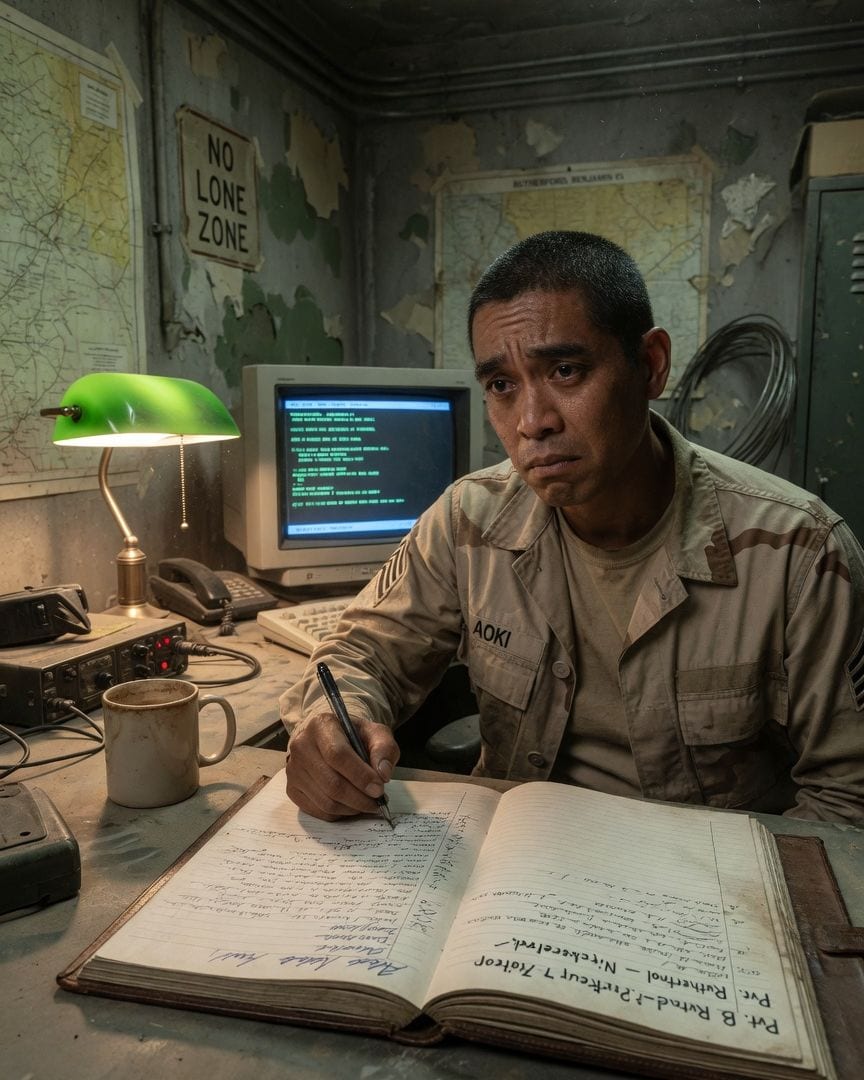
Sergeant Aoki's four-man patrol hears a fifth voice answer their count. A fresh name then appears in the duty log beneath his own signature.
Sergeant Isaac Aoki's final rotation at Outpost 7 was nearing its end, with relief due at dawn. On his four-man night patrol, he broke an old superstition, counting his team aloud in the dust-choked desert. A fifth voice answered, clear and unsettling, from the moonless dark. Back inside the bunker, the chill deepened when a fresh name appeared in the duty log, 'Pvt. B. Rutherford,' beneath Aoki's own signature, a soldier no one knew. Even more disturbing, Aoki later found his own signature on a valor citation for Rutherford, an event he never witnessed.
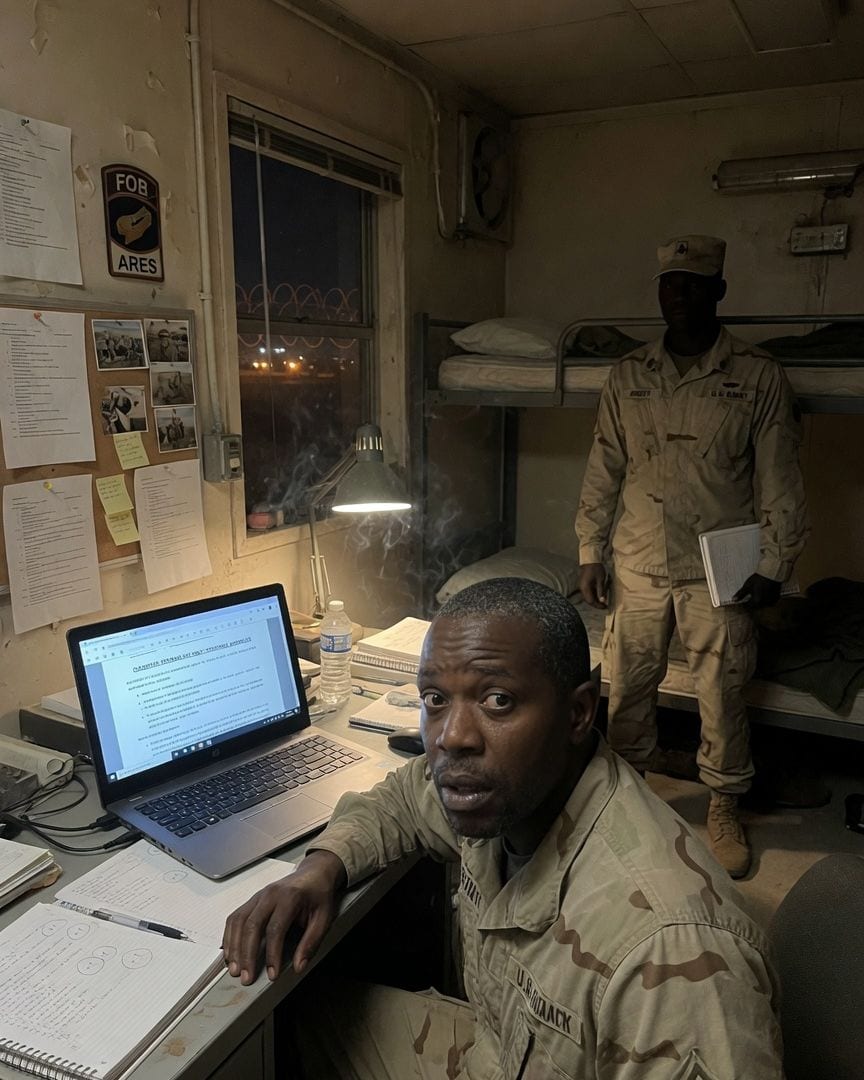
On his final rotation home, Sergeant Abbott counted his platoon: one man too many. The base’s secret files called them 'phantom units,' always watching him.
Sergeant First Class Malcolm Abbott was on his final rotation at FOB Ares, ready for transfer home. He called his platoon to formation, watching the sun break over the desolate desert as he counted each man. But the numbers didn't add up; there was always one extra soldier, standing at rigid attention, perfectly aligned with the others, yet only Malcolm could see him. Despite cross-referencing every manifest, the phantom remained, its face obscured in shadow, a silent sentinel that defied all logic. What secret did the base archives hold about these unacknowledged personnel?
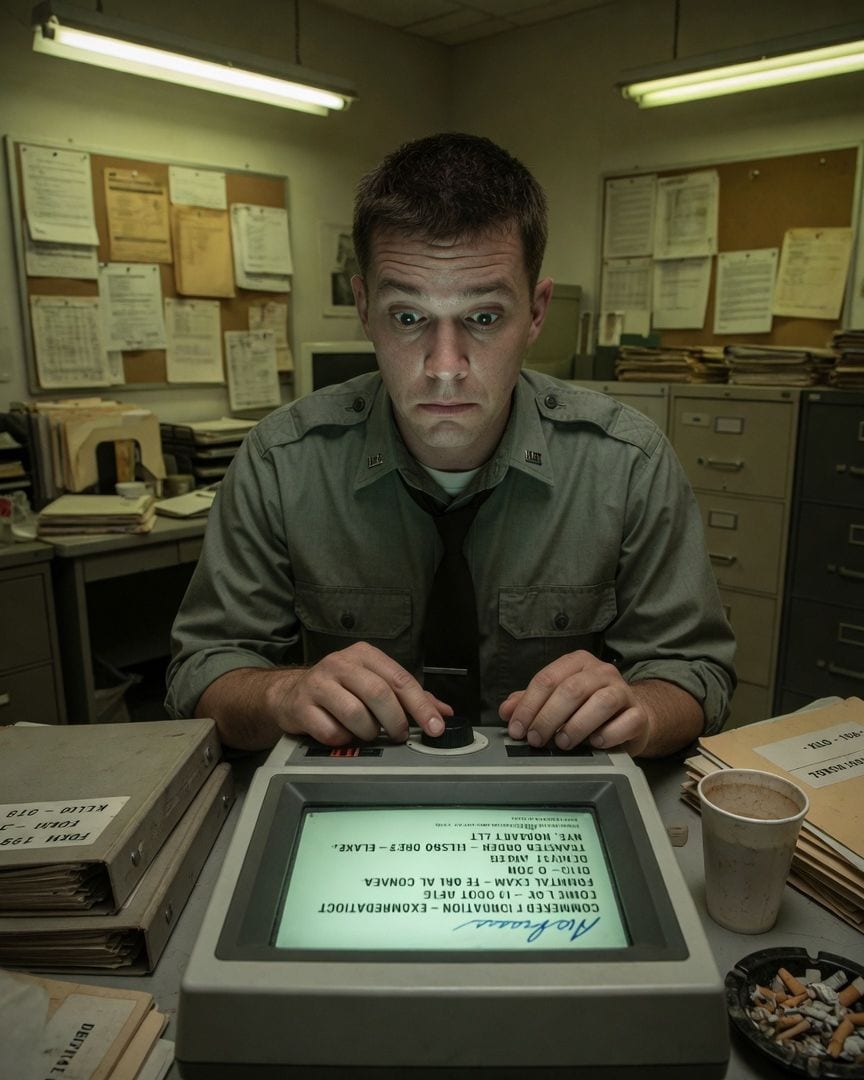
A missile commander watched his ten nuclear silos go dark. His own service record shows his signature on a future he's never lived.
Second Lieutenant Hobart Nye, a missile commander in Wyoming, had his quiet 0247 watch shattered by a security report: a massive, silent black triangle hovered over Launch Facility Kilo, casting a perfect shadow. Hobart watched his console's fault panel light up, signaling all ten nuclear missiles going dark in an impossible silence, followed by eleven minutes his security team could not remember. Official logs called it a "radio malfunction," but Hobart found a requisition for invisible-tracking sensors, signed by a base commander who was supposed to be off-base. The final, chilling discovery came when his own service record showed new entries—a dental check-up, a transfer to Alaska—all dated for a future he never lived, complete with his perfectly replicated signature.
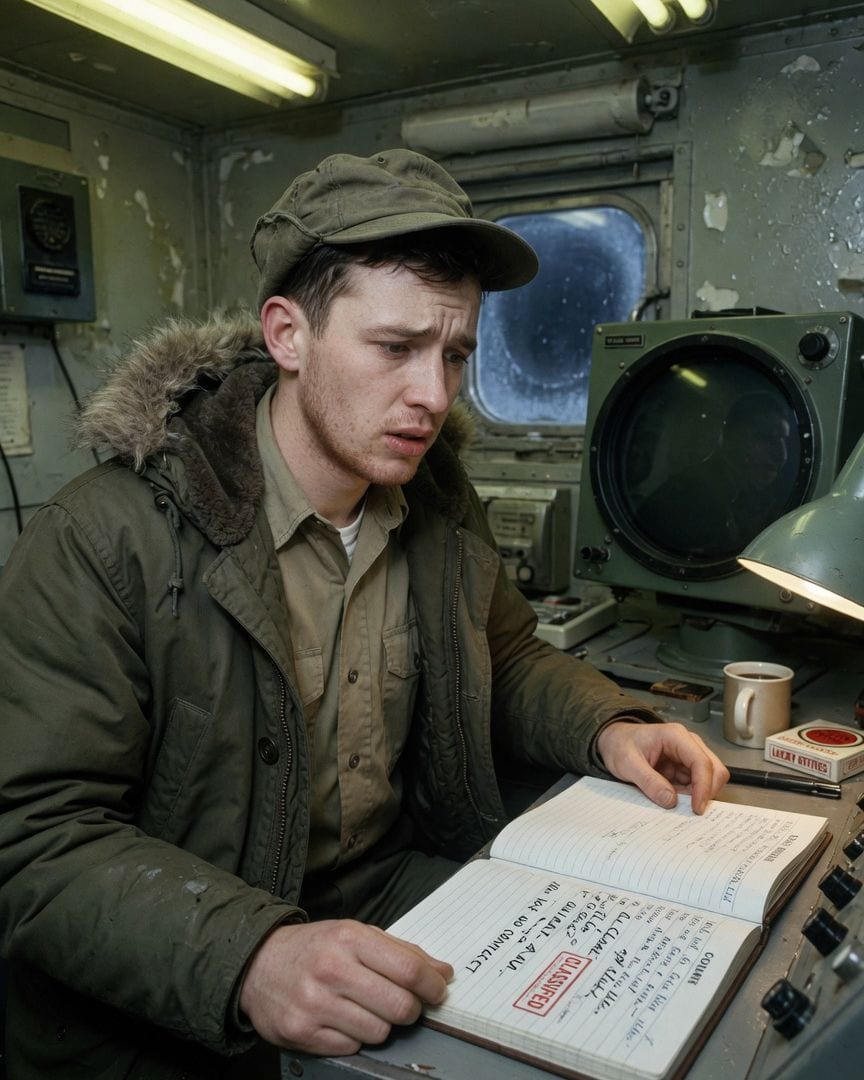
A Cold War airman logs an impossible radar contact on his last sweep. But his official logbook entry is stamped 'CLASSIFIED' and then contradicted by a hastily scrawled 'ALL CLEAR' dated moments before it.
Airman Ordway Vance, 22, manned the radar dome at Site Pellin in the biting North Atlantic dark of January 1962, running the last calibration sweep before its decommissioning. His scope picked up a faint, impossible return, growing closer with each pass, though the ocean remained empty to the eye. When Vance detailed the contact in his official logbook, a 'CLASSIFIED' stamp appeared, followed by a hastily scrawled 'ALL CLEAR' dated moments before his own entry, contradicting his every word. Commander Hartley dismissed it as equipment malfunction, but Vance sensed a chilling, official erasure behind the lie. He soon found a locked cabinet marked 'SITE PELLIN ANOMALIES,' hinting at a deeper truth buried within the base's final days.
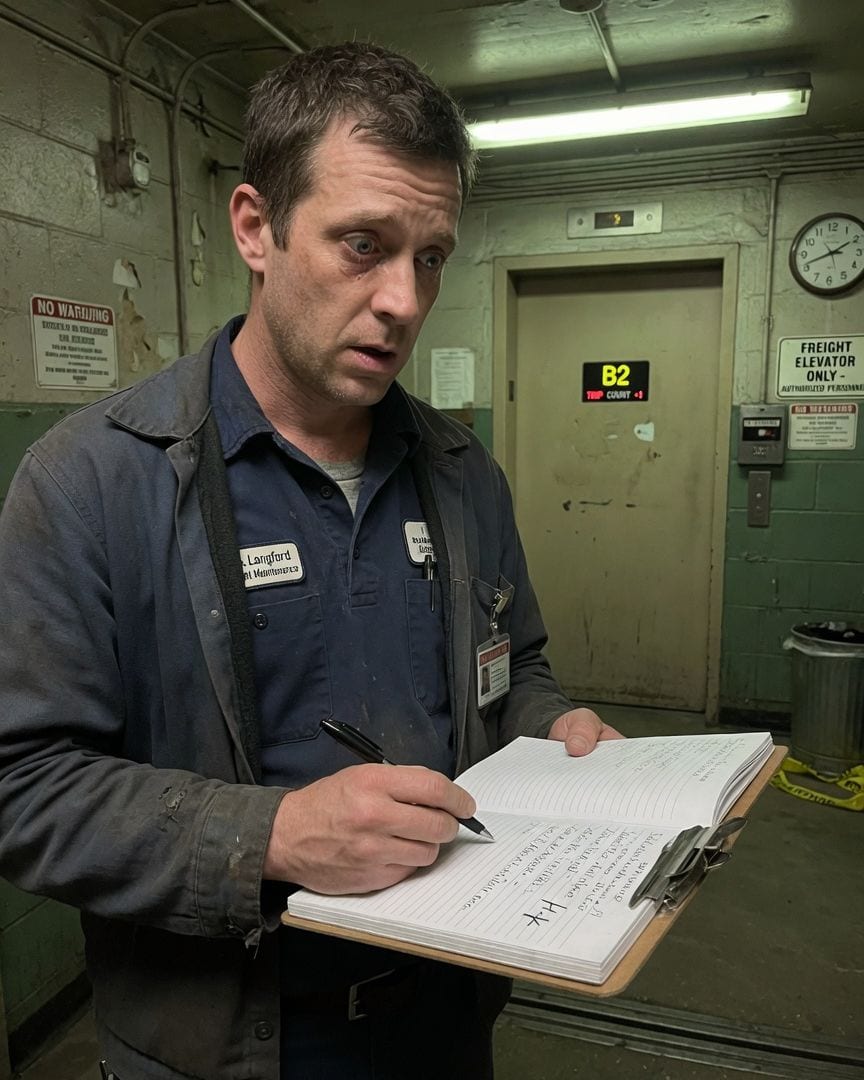
A man just took the elevator to the sealed sub-basement. He isn't on any staff roster, but my initials are in the logbook.
As a maintenance worker, my job is mostly routine, like signing the daily log for the old building's freight elevator. But one night, the log showed a trip to the sub-basement, sealed for a decade, timestamped with my key-switch and signed with my own initials, for a run I never made.
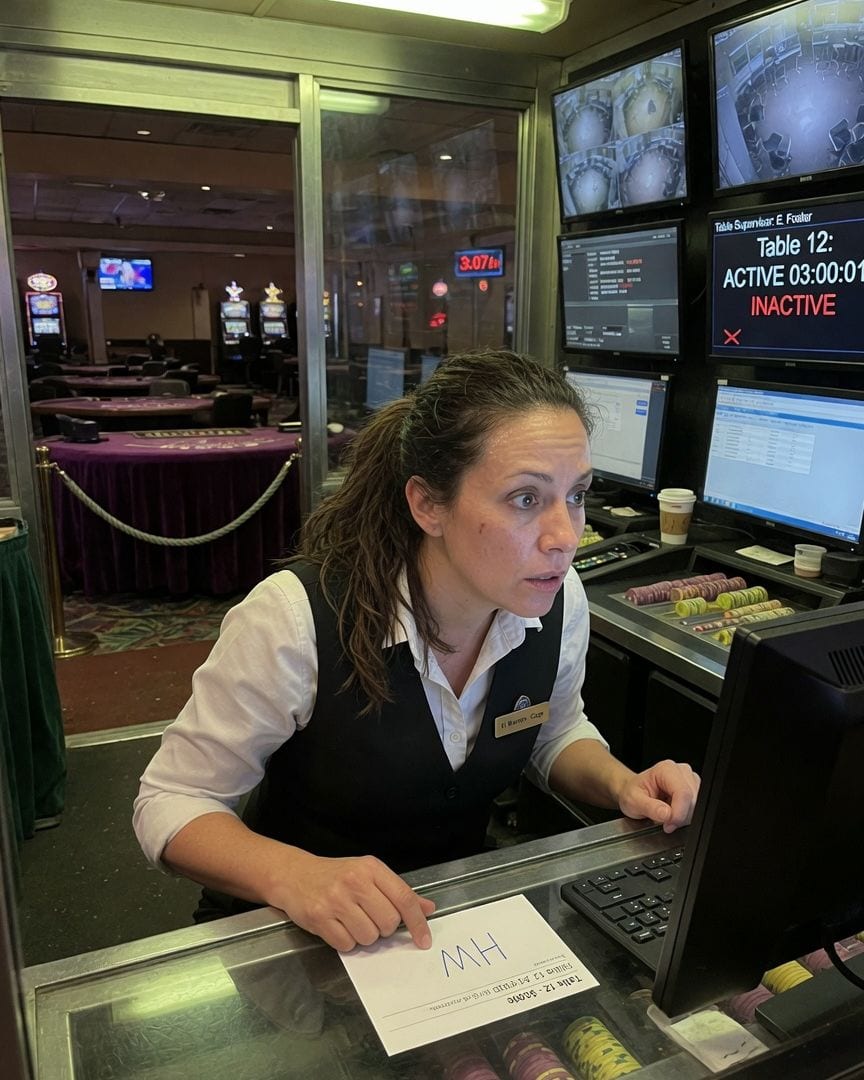
My name signed a fifty-thousand dollar casino fill to a dark, roped-off table. The cage is short by that exact amount. I never touched the slip.
Working the casino cage on a slow night, I logged off after counting my stack of chips. Then the system pinged: a $50,000 transfer to Table 12, closed for months, with my initials on it. The security feed showed my hand moving, making an imperceptible scribble, but I know I never touched a thing.