My name signed a fifty-thousand dollar casino fill to a dark, roped-off table. The cage is short by that exact amount. I never touched the slip.
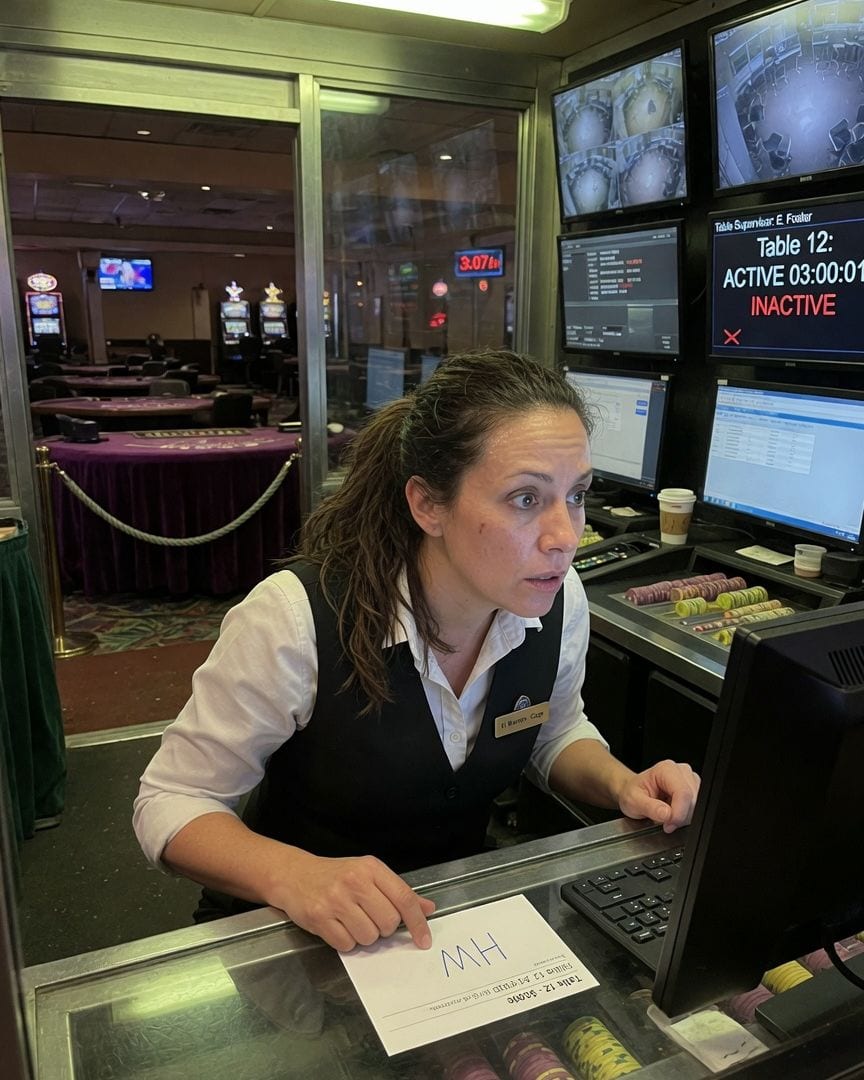
I finished the stack of chips, sliding them into the tray. It was 3:00 AM on a Tuesday, the casino floor a subdued hum of slot machines and distant murmurs. Slow night.
My count was perfect, every chip, every bill accounted for. The fluorescent lights in the cage hummed above me, making the steel glint.
I logged off the terminal, ready for a quick coffee break before the next rush, if there was one.
Then the system pinged.
A notification, sharp and unexpected. Fifty thousand dollars, a cage fill to Table 12. My heart did a strange, cold flip in my chest. Below the amount, in crisp digital type, were my initials: HW.
Table 12.
I spun around, looking past the rows of inactive tables. Table 12 sat at the far end of the pit, dark, covered in its heavy velvet cloth, a thick velvet rope strung across its entrance.
It had been like that for weeks, maybe months. Nobody played at Table 12. It was always closed on my shift.
My hands flew to the physical inventory. A fifty-thousand dollar discrepancy. Just like that. The timestamp on the system log was precise: 3:00:01 AM. My signature, my initials, tied to a transaction I had zero memory of.
My hands felt cold, clammy. I hadn't moved. I hadn't touched a slip. I definitely hadn't sent fifty thousand dollars to a dark, unused table.
I rewound the security camera feed for my station, my fingers fumbling on the keyboard. The last hour played back, pixelated and silent. There I was, alone, counting chips, logging off.
And then, at 3:00:01 AM, my hand moved, almost imperceptibly, reaching for something out of frame, a quick, phantom scribble in the air.
A brief, almost imperceptible flicker near my fingers, like a heat haze, then it was gone, my hand settling back down. I saw it, but I didn't do it.
My rational mind screamed glitch. It had to be. A system error, a cross-wired terminal, anything but what the camera footage seemed to show.
I dove into the digital logs, my fingers flying over the keyboard, determined to find the mundane explanation.
I cross-referenced everything: the transaction ID, the cashier’s login, the table’s status, the supervisor overrides. The system was unwavering. The fill was recorded. My login was active. My signature was there.
Table 12 was listed as ‘active’ for the duration of the transfer, then immediately reverted to ‘inactive.’ It was as if the system itself was playing a cruel, elaborate joke.
I pulled up the roster for my shift, my eyes scanning for any other employees who might have been in the cage, or near Table 12.
Standard list: two security guards patrolling, Albert Porter, the night manager, making his rounds, a couple of dealers in the main pit. No one assigned to Table 12. No one even near that area.
The fill request, the log stated, originated from a supervisor’s terminal. But when I checked the login history for all supervisor stations, there was no active supervisor login at 3:00:01 AM. It was as if the request had simply… materialized.
My eyes burned, staring at the screen, then at the physical transfer slip, which had appeared in the cage tray along with the discrepancy report.
It was a standard, crisp paper slip, the kind we filled out a hundred times a night. But this one had my initials on it, a looping 'HW' in familiar blue ink.
I held it up to the fluorescent light, almost expecting it to be a fake, some kind of elaborate printout. The ink was real. The slight indentation from the ballpoint pen was real. It was my handwriting, my pressure.
Yet, it felt utterly alien in my fingers, cold and accusatory.
The ordinary explanations — a mistake, a prank, even someone else using my login — they all dissolved. No mistake could replicate my exact signature, trigger a supervisor terminal, and then erase its own login.
No prank could make a fifty-thousand dollar physical shortage appear from thin air, tied to a closed table, with no one else involved.
Each piece of evidence, digital and physical, clicked into place, not to explain the impossible, but to confirm it.
Frustration simmered, hardening into a cold resolve. This wasn't a glitch, and it wasn't a prank. Something was fundamentally wrong. I dug deeper into the casino's internal system, past the general logs, into the granular detail of shift assignments.
I needed to see everyone, every role, every special assignment. Surely, a manager would be listed for such an override, even an empty table.
Scrolling through the familiar names of pit bosses and floor supervisors, I finally found it. Under 'Table Supervisors,' specifically assigned to Table 12, was an entry: 'E. Foster.'
My breath hitched. E. Foster? I'd never heard that name. Not in my five years here, not from any of the veterans. I clicked on the entry. No photo. No employee ID. No department. Just the name.
A name persistently assigned to a table that didn't operate, that had been dark and roped off for as long as I could remember.
I clicked back, through older shift logs. Weeks. Months. Every night shift, without fail: 'E. Foster,' assigned to Table 12. A phantom employee, a name without a face, glowing starkly on a roster that should be impossible.
The name 'E. Foster' burrowed into my mind, a relentless itch I couldn't scratch. I tried to dismiss it, to rationalize it as a forgotten placeholder, a vestige of an ancient system, just as Albert Porter had.
But the clarity of that name on the digital roster, the cold dread of the fifty-thousand dollar loss, it wouldn't let me go.
I started quietly asking around, a casual question over coffee, a murmured query during a shift change. "Hey, anyone remember an 'E. Foster' from way back?" Most of the younger staff just shrugged, or gave me blank looks.
A few of the older dealers, the ones with fifty years of smoke and bad decisions etched into their faces, paused. "Foster?" one of them, old Patty, mused, her eyes distant. "Sounds… familiar.
Like a name from a long time ago. Before the digital stuff." But no one could put a face to it, no one had any real memory. Just a ghost of a name.
When I tentatively brought it up to Albert Porter again, he dismissed it with a wave of his hand. "Just digital dust, Hazel," he'd said, his voice a little too quick, a little too loud. "Old system migration. Ghost account.
Happens." But his eyes, I noticed, darted briefly towards the locked brass cabinet in his office, then away, almost imperceptibly. It was such a small thing, but it stood out. Albert never looked away when he was being gruff.
That night, I went back to the security footage, playing the 3:00:01 AM timestamp again and again. I zoomed in on my hand, on the exact spot where the phantom signature had been made. This time, I saw it.
A faint, almost imperceptible shimmer, a distortion in the air, directly over my fingers.
It lasted less than a second, like the air itself had briefly warped, or like heat haze over asphalt, but there was no heat source, just the cool, climate-controlled air of the cage.
It vanished as quickly as it appeared, leaving only my hand, seemingly signing a slip I never recalled seeing.
It was subtle. So subtle I might have missed it if I hadn't been looking for something. But it was there.
A visual tremor in reality, hinting at an unseen presence, a manipulation of my own actions, leaving only my mark, my initials, my guilt. It wasn't a glitch. It was a forced act.
My quiet digging didn't stay quiet for long. The next night, arriving for my shift, I found a small, folded note tucked into the wire mesh of my locker door. It wasn't a printed memo.
It was written on thick, cream-colored paper, the kind you might find in an antique desk, in an elegant, old-fashioned script. It read: "Some things are best left undisturbed. The house always gets its due."
The air around my locker felt colder than the rest of the changing room, as if a localized draft had settled there. My blood ran cold, a metallic taste in my mouth. This wasn't a prank. This was a warning.
And it spoke of knowledge.
I stormed into Albert Porter's office, the note clutched in my hand. "Look at this," I demanded, holding it out.
He blanched, his face draining of color, the ruddy glow under his eyes flickering out.
His gaze snapped to the note, then to me, then, once more, to the tarnished brass cabinet in the corner of his office, the one I'd noticed him glance at before.
It was old, probably original to the casino, and usually kept locked tight.
"A sick joke," he muttered, his voice strained, though he hadn't even touched the paper. "Some bored dealer. Don't let it get to you, Hazel. You're jumpy after the cage incident."
He tried to steer the conversation back to procedure, his usual gruffness replaced by a forced, unsettling calm. "Everything's been handled. The shortage was signed off as a clerical error. It's done."
But it wasn't done. His eyes, fixed on some point just past my shoulder, twitched. His hands, usually so steady when dealing with casino finances, trembled slightly as he shuffled papers on his desk.
The room itself seemed to hold its breath. I felt a distinct prickle on the back of my neck, the certainty that someone, or something, knew exactly what I’d found, and was now watching my every move.
The temperature in the room seemed to drop another degree. I wasn't alone in this. I knew it.
Suspicion had hardened into concrete resolve. Albert Porter was hiding something, and it had everything to do with that cabinet. I waited for his lunch break, feigning a sudden headache that sent me to the breakroom for some 'quiet time.'
The moment he was out of sight, his office door ajar, I slipped inside.
The office felt different now. The air was heavier, almost expectant. My heart hammered against my ribs, a frantic drum against the silence.
I knew Porter kept a spare key to the old cabinet hidden in a hollowed-out copy of 'The Art of War' on his bookshelf – I’d seen him pull it out once, years ago, when he was looking for a misplaced stapler.
My hand trembled as I reached for the book, pulled it down. The key, brass and aged, was there.
The cabinet groaned as I twisted the key, pulling the heavy brass doors open. The scent of dust and old paper, thick and musty, instantly filled the small office.
Inside, stacked neatly, are not files or office supplies, but a series of thick, leather-bound ledgers. Their pages were yellowed, brittle, their covers faded and scuffed with age.
They looked like they belonged in a museum, not a modern casino office.
These weren't digital printouts. These were meticulously handwritten records.
I pulled out the top ledger, its weight surprising in my hands. The cover was blank, save for a faint, embossed 'Operations' that had almost worn away. I opened it. The page was titled 'Nightly Operations.'
My eyes scanned the entries, the neat script flowing across the page. Mundane notes on staffing, repairs, shift changes. Then I saw it.
An entry for 3:00 AM. The exact time of my mysterious fill.
It read: 'Reconciliation: T12 – $50,000.'
Beside it, in the same precise, elegant hand, were the initials: 'EF.'
My breath hitched, a gasp caught in my throat. 'EF.' E. Foster. The phantom employee from the digital roster. The same fifty-thousand dollar amount. The same Table 12, dark and roped off.
This wasn't a glitch. This wasn't a mistake. This was a record.
My fingers, cold and clumsy, fumbled to turn a page, then another. More entries. 'Reconciliation: T12.' Always $50,000. Always 3 AM. Always 'EF.' The dates stretched back, month after month, year after year.
The handwriting was identical across decades, impossibly consistent. A single, unseen hand, recording the same impossible transaction, over and over.
The dread solidified, hardening into a chilling certainty. This wasn't an isolated event. This wasn't a one-off anomaly. This was a routine. This was what the note meant. This was how 'the house' gets its due. Albert knew.
Everyone who saw these ledgers knew. They were just… accepting it.
My fingers flew through the brittle pages, the dusty scent of old paper filling my nostrils, mixing with something else now, something faint and metallic, like old blood.
The neat, precise handwriting for 'Reconciliation: T12' was identical in every entry, stretching back not just years, but decades. I saw dates from the 90s, the 80s, even the late 70s.
Different cashiers' names appear in the margins for other, normal transactions, but the 'EF' for Table 12 is a constant, an unbroken thread through time, a chilling, indelible signature.
I saw an entry dated exactly one year prior, to the day: July 18th. For the same fifty-thousand dollar amount. At 3:00 AM.
This wasn't just a record of something wrong; it was the documentation of an ongoing, institutionalized practice. The casino wasn't just affected by this wrongness; it was complicit in it. It had been, for generations.
They were all part of it. Porter, the previous managers, the owners before them. They knew.
The horror of it didn't just sink in; it slammed into me, knocking the air from my lungs. The sheer scale. The quiet, decades-long complicity.
It made my single, phantom signature feel like just another cog in a vast, ancient machine. I was just the latest instrument.
As I processed the horrifying implications, realizing the enormity of what I'd uncovered, the weight of the ledgers in my hands suddenly felt crushing. The air in the office, already still, grew heavy, static.
A faint, almost imperceptible whisper ghosted from the empty office behind me, from the direction of the desk where Porter usually sat. It repeated, closer now, a soft, dry rasp against my ear: "It's time."
I froze, every muscle in my body locking up. My heart hammered against my ribs, a frantic bird trapped in a cage. The whisper, soft as falling dust, dry as dead leaves, repeated, "It's time."
My eyes darted to the timestamp on the open ledger page: 3:00 AM. The time of my 'fill.' The time of every 'reconciliation.' It wasn't a threat; it was a prompt. A cue.
I slammed the heavy ledger shut, the old binding groaning in protest, the sound unnaturally loud in the suddenly silent office. The dust motes in the air seemed to hang suspended, caught in the sudden stillness. I understood now.
The ledgers weren't merely a record of the wrongness; they were an integral part of its mechanism, a ritualistic accounting. They made it real. They gave it form.
'E. Foster' wasn't a person. It wasn't a ghost. It was a function. A placeholder for whatever entity demanded these nightly payments, these 'reconciliations.'
And the casino, through its managers like Porter, had been quietly facilitating it for decades, for generations. The entity didn't need to physically exist, because the casino itself was its body, its records its memory.
Every clue, every oddity—the dark, roped-off Table 12, the shimmering distortion near my hand on the security footage, my phantom signature on the slip, the cryptic warning note in my locker, Porter’s terrified evasiveness, and finally, these damned ledgers stretching back fifty years—it all snapped into horrifying coherence.
This wasn't a haunting. This wasn't a random supernatural event. This was a meticulously maintained, predatory system. An unseen force, deeply embedded, woven into the very fabric of the institution.
It was the casino's core operation, something as fundamental as the electric lights or the slot machines. It just required a different kind of currency.
My initials, my unwitting complicity, were simply the latest transaction in a ledger that never closed.
Gripping the heavy ledger like a shield, the brass key still cold in my palm, I lunged for the office door. My mind raced, fragments of a plan forming: get out, take the ledger, show it to someone, anyone.
This monstrous truth couldn't stay hidden.
But before my hand reached the knob, the heavy oak door slowly, silently swung shut. It clicked into place with a soft, final sound that echoed like a gunshot in the oppressive silence. Locked.
The overhead fluorescent lights flickered erratically, buzzing now, casting long, dancing shadows that stretched and shrank with a sickening rhythm.
The air grew impossibly cold, carrying a faint, acrid smell of ozone, like a storm brewing, mixed with the musty scent of decaying paper from the ledgers. My breath plumed in front of me.
From the empty interior of the office, from the corner where Porter's heavy desk sat, I heard a scraping sound. Like a chair, heavy and old, being dragged across the linoleum floor. Scrape… drag… It stopped.
Then, a soft, rhythmic tapping began. Tap. Tap. Tap. Like a finger drumming slowly on wood.
I glanced at the frosted glass of Porter's inner window, separating the main office from a small, windowless storage closet he sometimes used. A tall, thin shadow detached itself from the wall, moving with an unnatural grace.
It didn't match the angle of any light source. It was too sharp, too precise, too dark. It seemed to absorb the light, rather than reflect it.
The shadow paused, then slowly raised a hand. Long. Skeletal. It wasn't just a shadow anymore; it had definition. It raised its hand in a gesture I recognized, chillingly, from the security footage. Guiding. Prompting.
It wasn't trying to stop me, not physically. It was showing me how it worked. How it had always worked. The deliberate, methodical way it moved my hand, guiding my fingers to sign, to make the entry.
This wasn't a fight I could win. This wasn't a ghost to be banished. This was a truth, an institution, a system. This was something woven into the very foundations of the casino, more fundamental than the concrete and steel.
This was a truth I could only escape.
With a surge of primal, gut-wrenching terror, I spun. The ledger, heavy and accusing, slipped from my numb fingers, thudding to the floor. I abandoned it. I abandoned everything but the desperate need to run.
I sprinted towards the emergency fire exit, the glowing red sign a beacon in the flickering dark.
The rhythmic tapping grew louder behind me, echoing my frantic footsteps down the empty corridor, a relentless, ancient rhythm chasing me into the cold, indifferent night.
I quit my job at the casino that morning. I didn't even pack my locker. I just walked out into the pre-dawn chill and never looked back. I tried to explain it to the police, to the gaming commission.
I babbled about ledgers and phantom signatures and whispers. Without the physical ledger, which I’d dropped in my panicked flight, my story sounded like a stress-induced delusion, the ramblings of a cashier who had just lost fifty thousand dollars.
They looked at me with pity, then suspicion.
Albert Porter retired abruptly a week later, citing "health reasons." I saw it reported briefly on the local news channel.
Table 12 at the casino remains exactly as it was: roped off, dark, and unused, a silent sentinel in the bustling pit.
The fifty-thousand dollar shortage was eventually written off as an "unexplained clerical error," a footnote in a quarterly report that no one would ever really scrutinize.
The casino continued its operations, seemingly undisturbed, the night shift still humming along, the slot machines still chiming, as if nothing had ever happened. As if it was just another Tuesday.
I now work the day shift at a small, independent bank, a job where every number balances perfectly, where the sun streams through the tall windows, banishing shadows. It’s quiet, predictable.
I rarely think of the casino anymore, of the creeping cold, or the rhythmic tapping that had chased me out into the night. I try not to. I tell myself it's over, that I got out.
But sometimes, when I’m alone in the silent vault, organizing the day’s intake of crisp new bills into neat stacks, a faint, almost imperceptible scent of old paper drifts through the air.
It’s not the fresh paper smell of new money; it's that dry, musty aroma of the ledgers, of something ancient and forgotten, brought back to life.
A chill snakes up my spine, a coldness that has nothing to do with the vault's climate control. I glance over my shoulder, but there's only the solid, unyielding steel of the vault, the perfect rows of safety deposit boxes.
Nothing there. Just my own breath, misting slightly in the cool, filtered air, a faint echo of the ozone smell I remember from Porter's office.
I try to shake it off, to tell myself it’s just a trick of the light, a lingering memory, the stress of a terrible experience. But the chill persists, and the scent, elusive as it is, remains. And I wonder.
I wonder if I truly escaped, or if the house always gets its due, no matter where you are. I wonder if some debts can never truly be paid off.
The house always gets its due.
If this one got to you
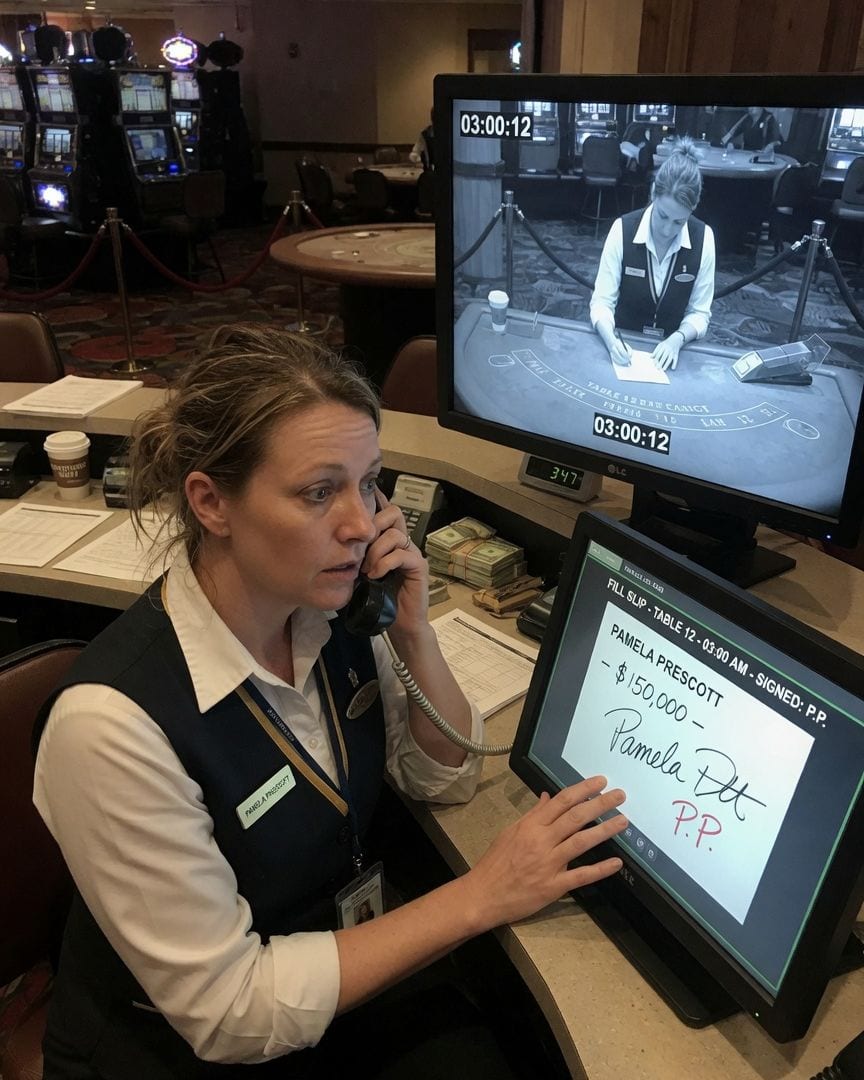
My initials are on a casino count sheet for a table I never touched. Table 12 was dark, roped off for the night.
On my graveyard shift, a routine casino inventory turned impossible. A $50,000 fill for Table 12, a table dark for years, was posted under my name and signature. The impossible part? Security footage shows me making the fill, even as the table itself remained untouched.
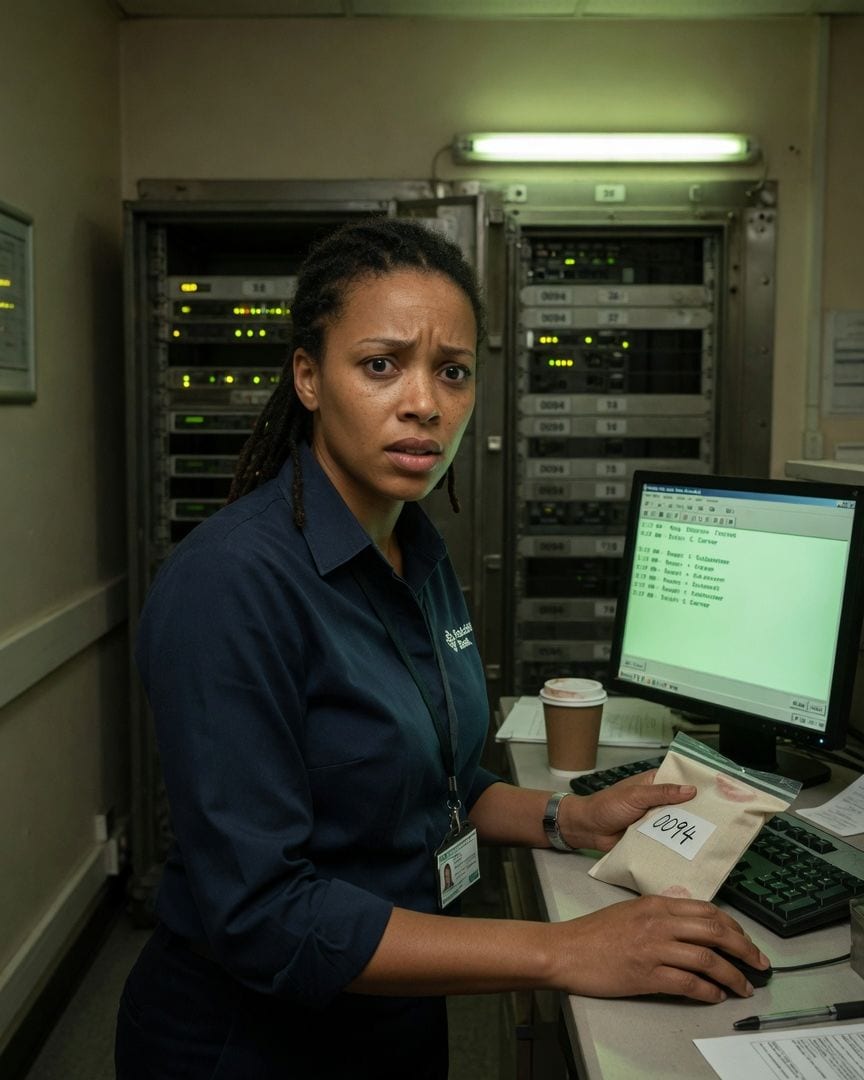
My night-deposit log shows a bag posted at 3:17 AM. My teller number, my count. Bag 0094 is still sealed in the safe, untouched.
I prided myself on precision as a night teller, logging every entry. But at 3:17 AM, a deposit appeared logged under my teller number that I never processed. Security footage then revealed a figure in my uniform, wearing my ID badge, with a blank photo slot.
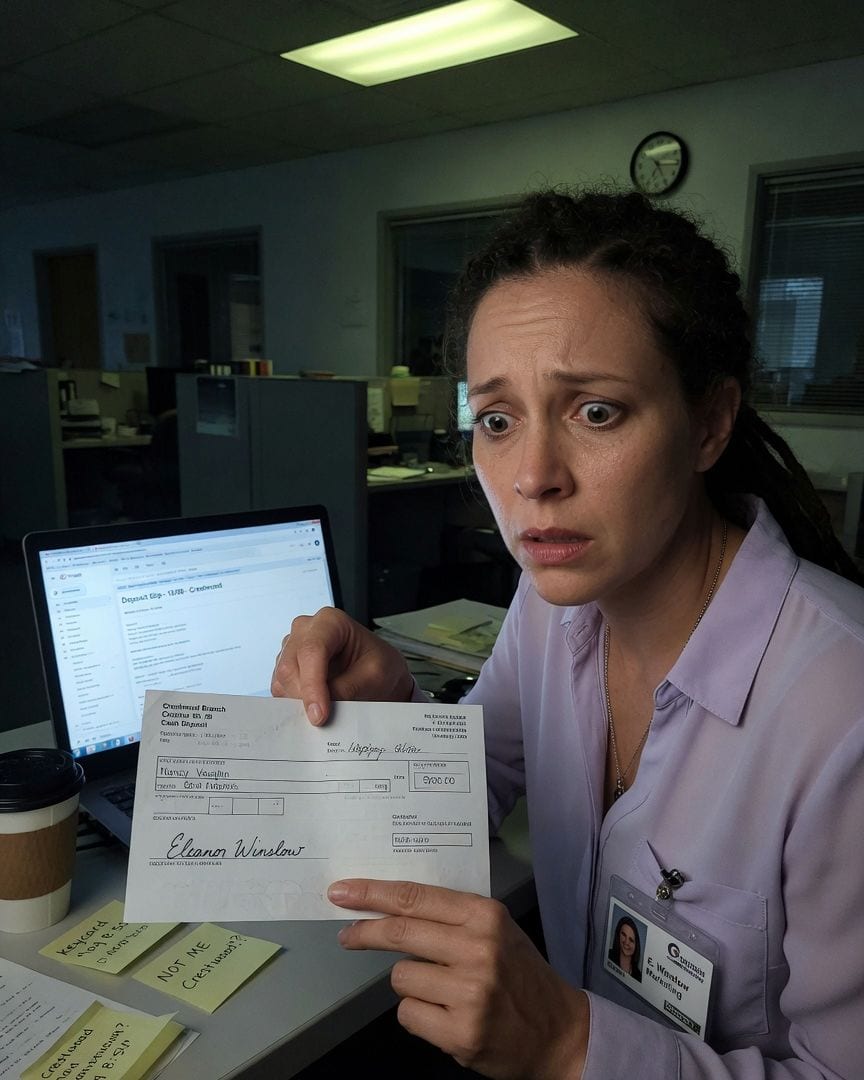
My bank statement shows a $900 cash deposit made in a town I've never set foot in, at 10:40 AM on a workday. I was at my desk, badged in. Two more landed since.
My bank statement showed a $900 cash deposit from a town I'd never visited, 150 miles away. I was at my desk, logged into work, all three times. But the scanned deposit slip arrived, clear as day, showing my own flawless signature.
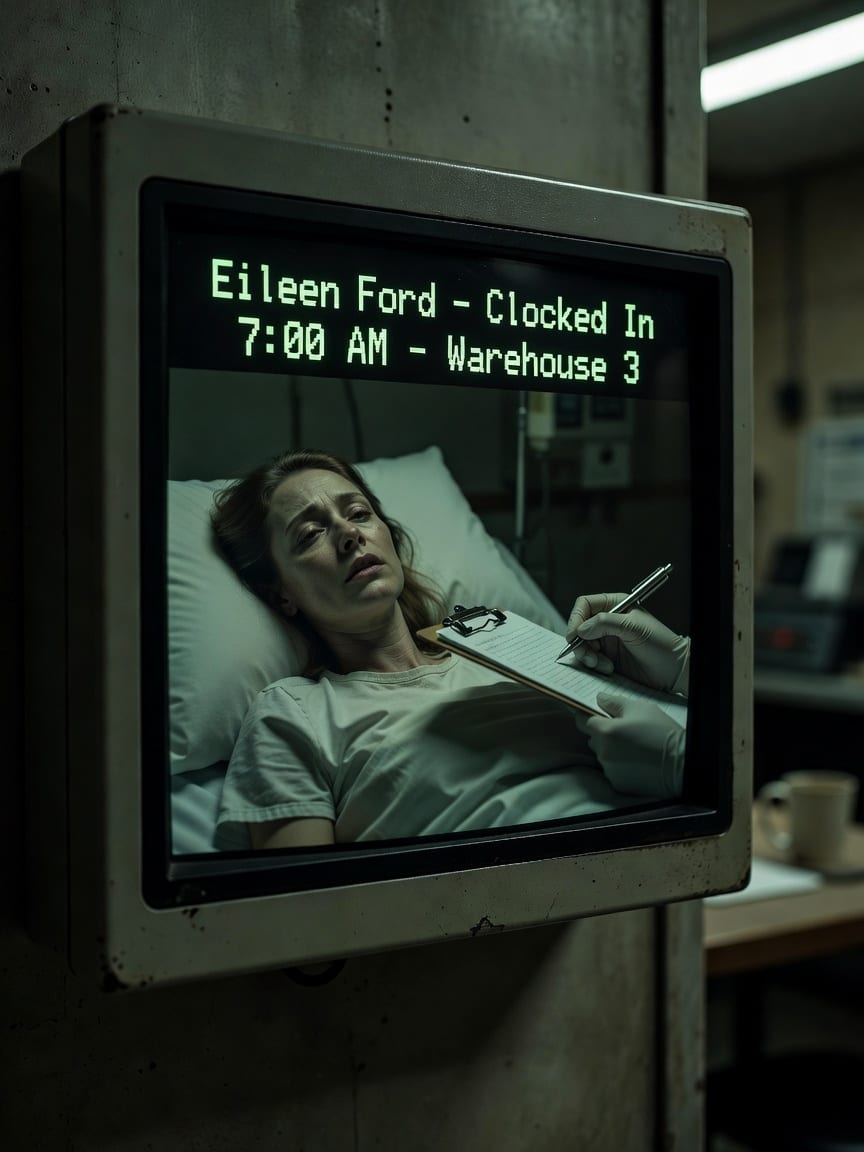
My clock-in card says I worked full shifts in Ohio all week. I was on medical leave in Florida, signed out by a nurse.
After two weeks recovering in a Florida hospital bed, my paycheck arrived significantly too high. My digital payslip claimed I’d worked full shifts at the company's Ohio warehouse every single day of my medical leave, hundreds of miles away. The system even showed my badge scans and supervisor's sign-off for work I simply could not have done.
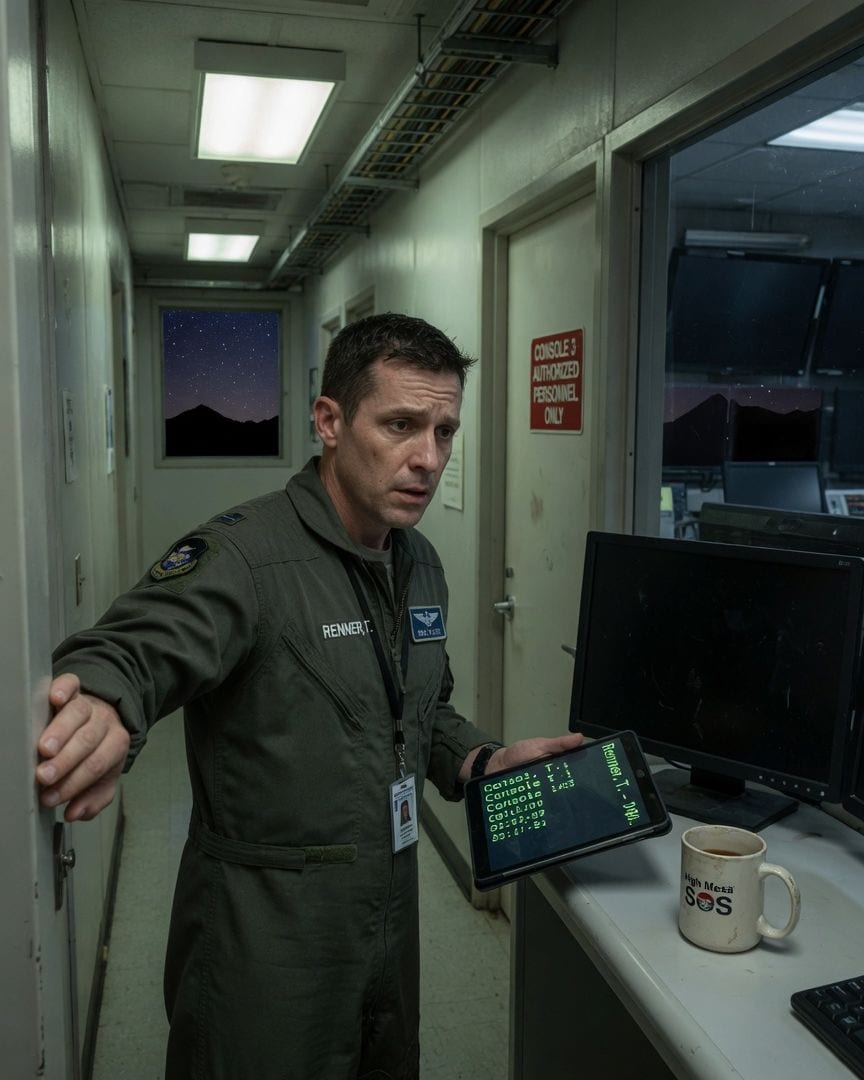
Space operator Theodore Renner left his coffee mug on his console. He found it two rooms away, on a console logged under his name for the exact same hour.
Operator Theodore Renner was ending his midnight shift at High Mesa Space Operations, his relief waiting as the control room hummed. But the electronic watch log revealed an impossibility: his own name, 'Renner, T.', active at a second console, two rooms away, for the exact same hour he’d just worked. He found that remote console dark, yet his distinctive, chipped coffee mug, left on his own station, sat waiting there. His primary console was now mysteriously bare. The system reported routine operations and a maintenance request from the impossible location, all under his name. Theodore knew it wasn't him; what impossible truth was the data screaming?
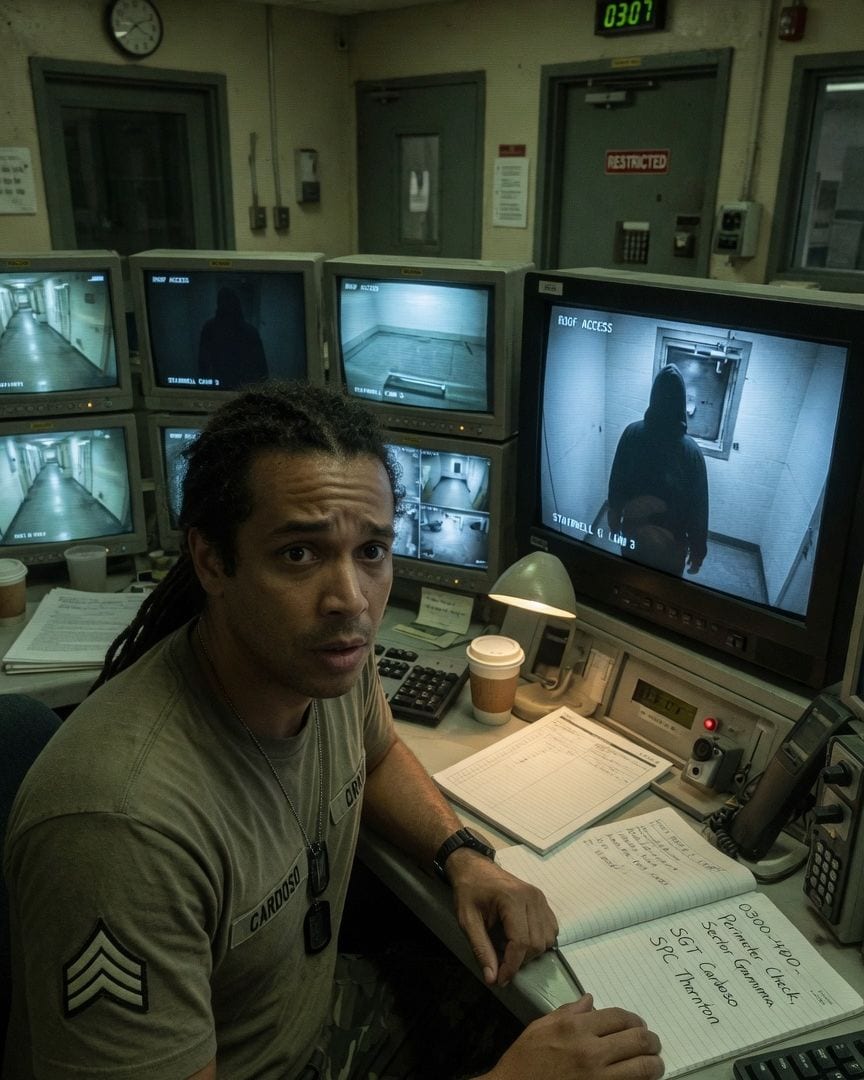
On his last watch, Sergeant Cardoso found his own signature in the duty log for a perimeter check he never did, with a name he didn't know.
Sergeant Rui Cardoso was on his final interior watch at Fort Merritt, a remote coastal outpost, as 0300 ticked by. He spotted a dark, unmoving figure on a monitor showing the sealed roof access, a figure that inexplicably shifted closer to the hatch moments after a specialist confirmed the roof was empty. Rui checked every log and sensor, but the digital fortress showed no breach, and the figure's appearance defied all logic. Yet, in the physical duty log, he found his own unmistakable signature on an entry for a perimeter patrol he never took, alongside a soldier's name he'd never seen. What impossible truth was written in his own hand?