 US Armed Forces
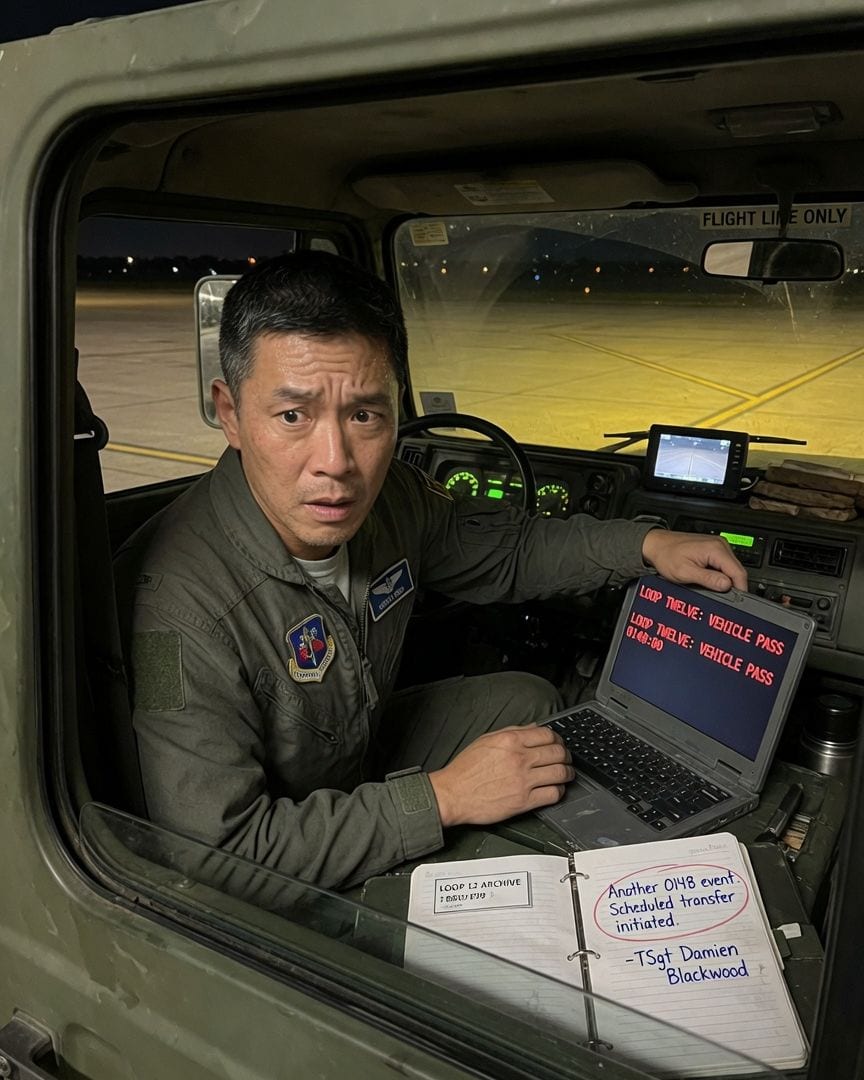
Technical Sergeant Trevor Cho was two weeks from rotating out of a Dakota bomber base, determined to reconcile the impossible data from loop twelve. Every night at precisely 0148, the buried sensor registered a vehicle pass, yet control tower cameras always showed a vast, empty expanse. Cho parked his truck directly over the sensor and watched his console chirp twice at 0148: 'Vehicle Pass.' The floodlit flight line remained starkly empty. His investigation soon uncovered decades of similar 'phantom pass' entries, always at the same time, always dismissed, leaving him to wonder: what impossible presence kept crossing loop twelve?
10 min read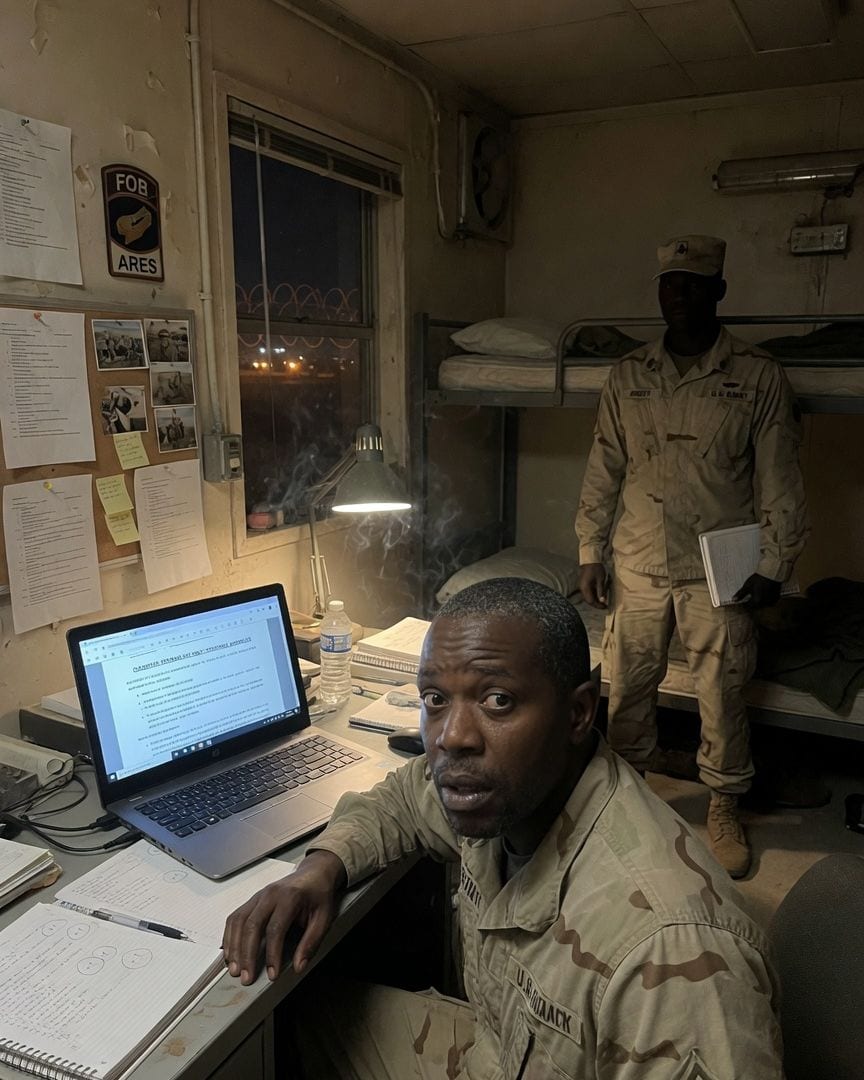 US Armed Forces
Sergeant First Class Malcolm Abbott was on his final rotation at FOB Ares, ready for transfer home. He called his platoon to formation, watching the sun break over the desolate desert as he counted each man. But the numbers didn't add up; there was always one extra soldier, standing at rigid attention, perfectly aligned with the others, yet only Malcolm could see him. Despite cross-referencing every manifest, the phantom remained, its face obscured in shadow, a silent sentinel that defied all logic. What secret did the base archives hold about these unacknowledged personnel?
11 min read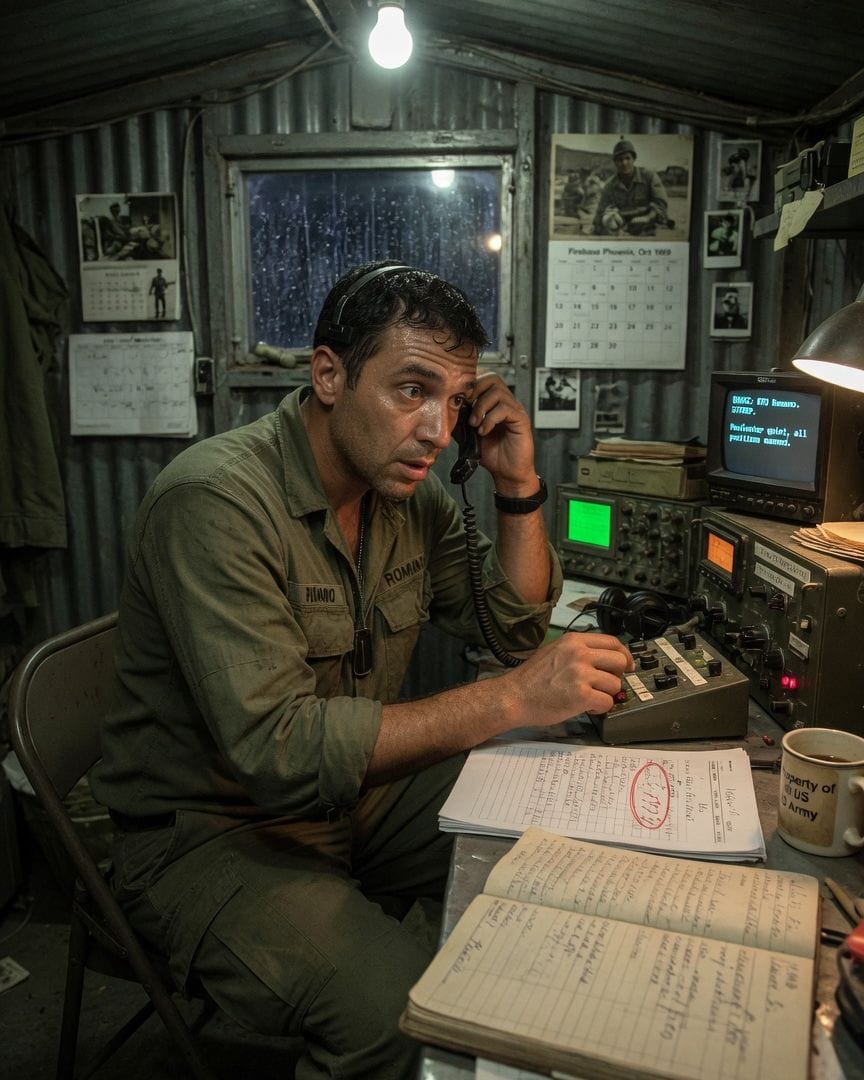 US Armed Forces
At Firebase Phoenix, a lonely RTO named Felix Romano was composing his midnight SITREP when a chilling transmission cut through the static: his own voice, calm and clear, delivering the exact report he was about to send. Felix froze, his heart hammering as the system confirmed his message had already been logged. He meticulously checked every connection, but found no glitch, only a phantom entry. Then, the digital roster for his shift named a secondary RTO he’d never heard of: Sgt. Vance. No one on base knew a Sgt. Vance, yet the name persisted in the system, even appearing in an old 1948 ledger with a cryptic note: 'unaccounted for – Phoenix.'
11 min read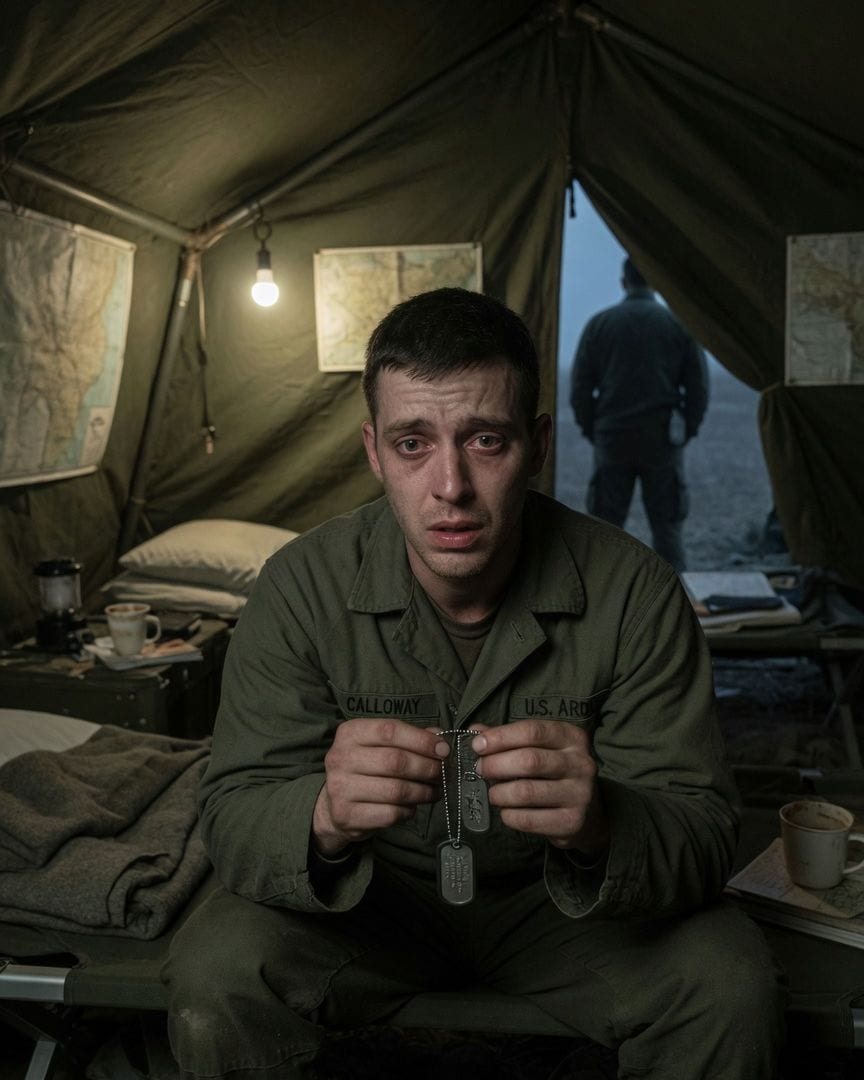 US Armed Forces
Airman Russell Calloway was counting the weeks to his transfer from the isolated Mount Echo Radar Site, enduring another frigid pre-dawn at the lonely outpost. His tentmate, Airman Ethan Brody, had just returned from nine days off-grid after an ATV crash, and something was immediately wrong. Brody, a creature of habit known for four sugars in his coffee, now insisted he drank it black, then later denied any knowledge of the unique mountain goat engraving on his own dog tags. Calloway knew this wasn't a changed habit; it was a fundamental shift, leaving him with a chilling question: who was sleeping in the bunk beside him?
13 min read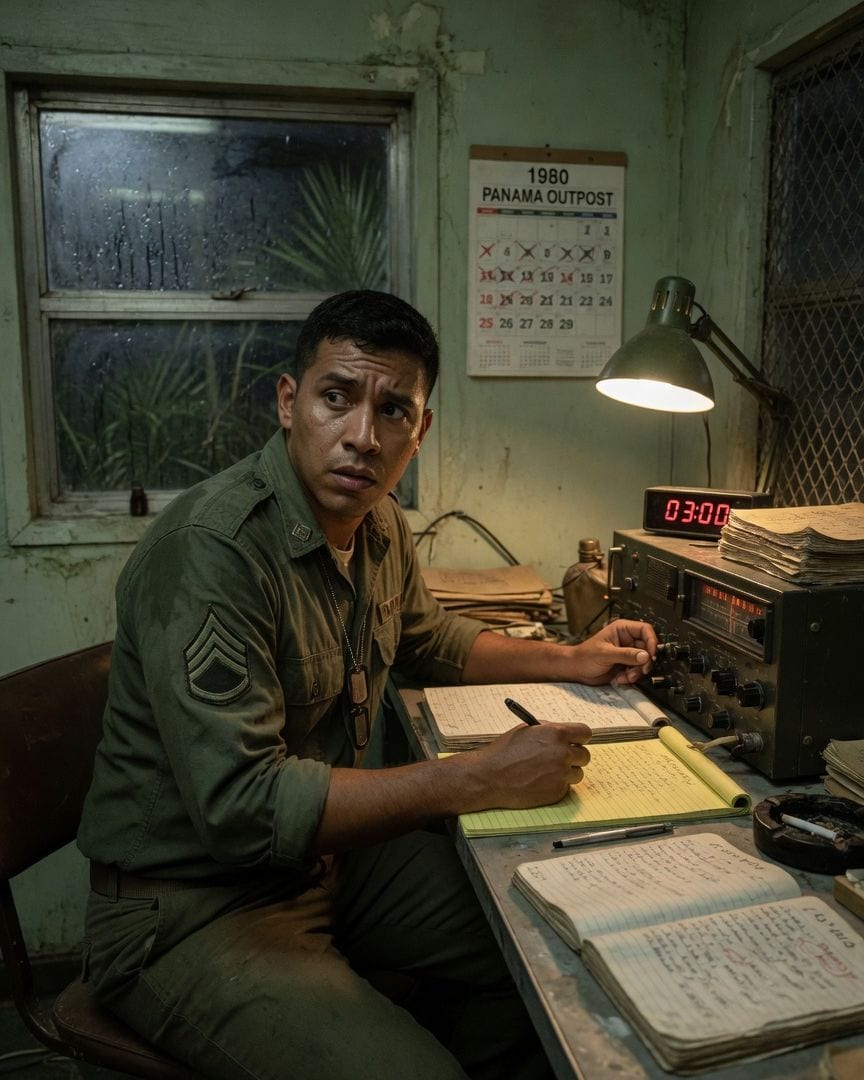 US Armed Forces
Sergeant Adam Ibarra endured the damp Panamanian night in his remote outpost, the hum of old equipment his only companion. For three nights, a calm woman's voice transmitted a looping list of names and dates on the comms set, initially dismissed as a forgotten test loop. But the truth chilled him: these were his predecessors at the station, listed with the precise dates they had 'stopped answering' — and the sequence ended with a blank space just before his own. On the fourth night, Ibarra waited, rigid, as the voice added the last operator's name before him, then paused. Clear as a bell, it finally spoke: 'Ibarra, Adam.' What date would it add next?
11 min read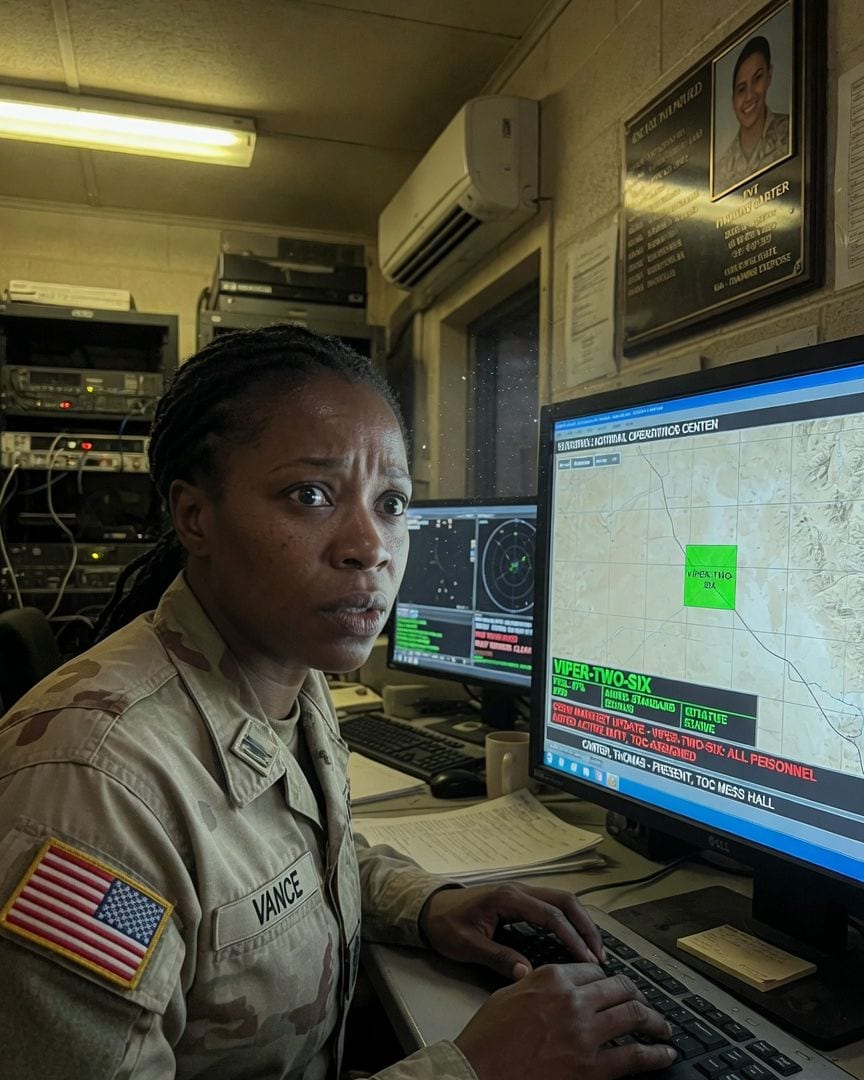 US Armed Forces
Staff Sergeant Eileen Vance monitored the digital net in the silent high desert Tactical Operations Center, the server hum a familiar backdrop to her shift. Her breath hitched when a green icon, call sign Viper-Two-Six, appeared on screen—a vehicle incinerated in a training exercise a year ago, its crew memorialized. Despite all records confirming its destruction and personnel listed as lost, the track reported its position with unnerving precision, then its crew was suddenly listed 'Active Duty, TOC-Assigned'. As Eileen and her colleague watched, the ghost track passed through the base perimeter, sending a final report: Private Thomas Carter, a memorialized crew member, was now 'Present, TOC Mess Hall'.
10 min read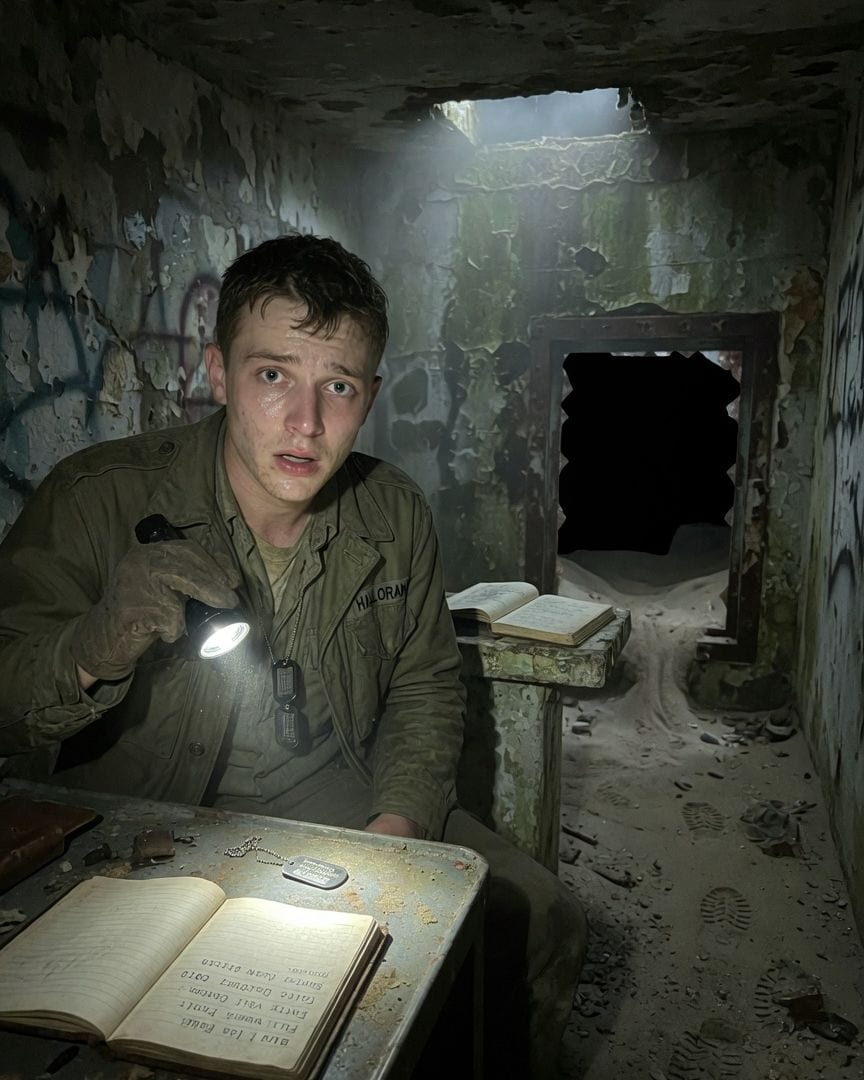 US Armed Forces
Private Frank Halloran shivered through his final graveyard watch at a disused WWII bunker on a lonely California headland, just two days from his transfer. At 0100, a thick fog swallowed the ocean, and through the swirling gray, figures in archaic gear coalesced on the beach below, silent and waiting. By dawn, the beach was empty, but the bunker's rear hatch, sealed for decades, now stood gaping open, leading to a logbook entry confirming an impossible landing party at that exact hour. Inside, Private Halloran found fresh boot prints leading into the winding darkness, culminating in a hidden room holding his superior officer's modern dog tag.
8 min read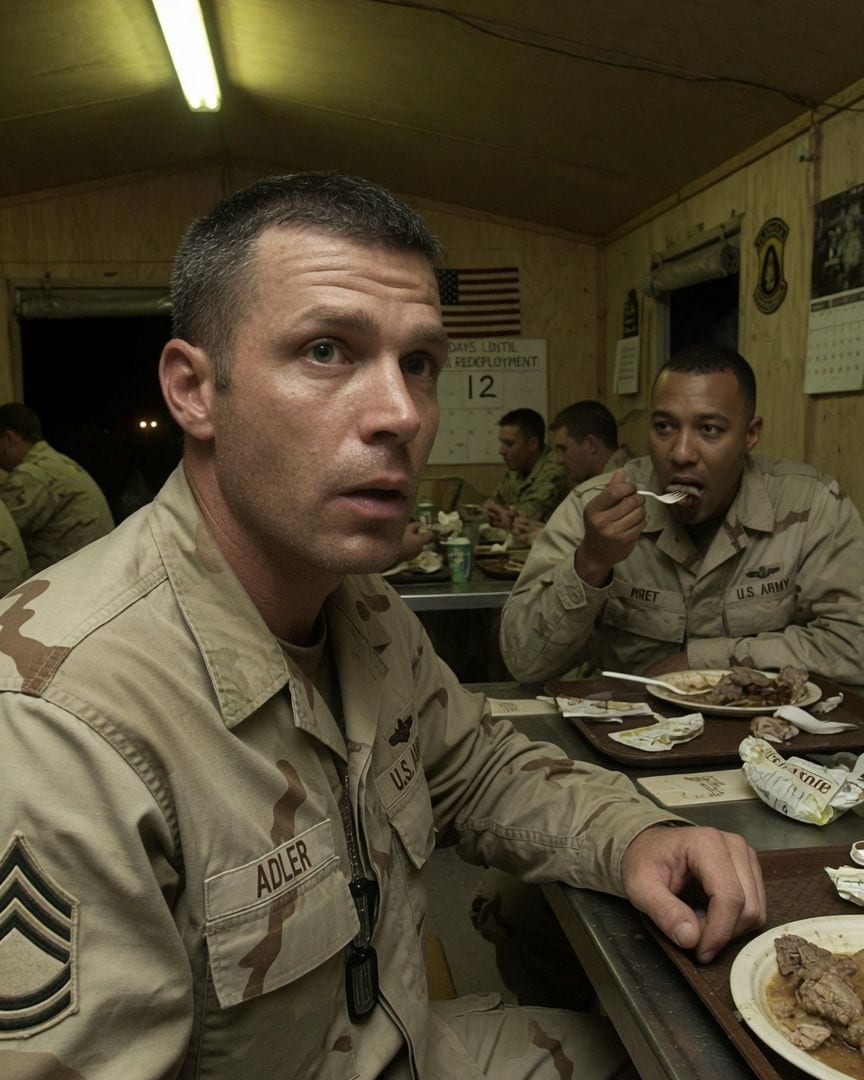 US Armed Forces
Sergeant Walter Adler counted down the final weeks until redeployment, the relief a palpable dust over their desolate outpost. His closest friend, Isaac Priest, had returned from a recent injury, seemingly whole but subtly changed. Adler noticed Priest, a staunch right-hander, eating left-handed, his gait too even, his eyes flat and unreadable. The unease grew into dread when Adler counted 149 men in formation, only for the Captain to announce 148. Then, during final processing, Adler saw it: two identical Isaac Priests, standing in separate lines, a perfect mirror image. How could a man be in two places at once, and why could no one else see it?
12 min read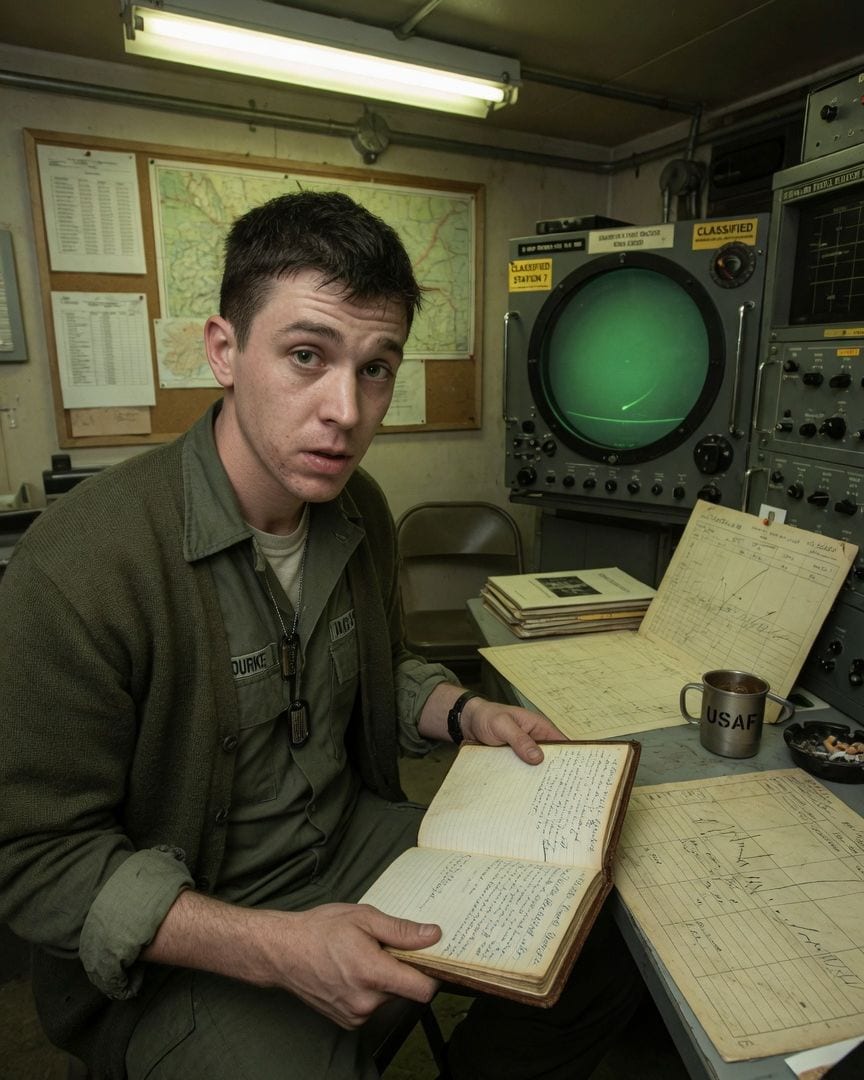 US Armed Forces
Airman Second Class Preston Rourke was nearing the end of his two-year tour at Gap-Filler Station 7, a lonely outpost in the Montana high country. Every night, his radar screen painted a phantom contact, a slow line across the valley floor always dismissed as a temperature-inversion ghost. But while clearing a storage closet, Rourke found old plotting boards from prior winters, each showing the exact same impossible trace, drawn by different hands over successive seasons. His meticulous checks found no weather anomalies to explain the persistent radar ghost. Then, he uncovered a worn, unofficial logbook detailing more radar plots. One entry from 1968, next to an identical trace, contained a date and a name: Airman Gerald Thornton.
9 min read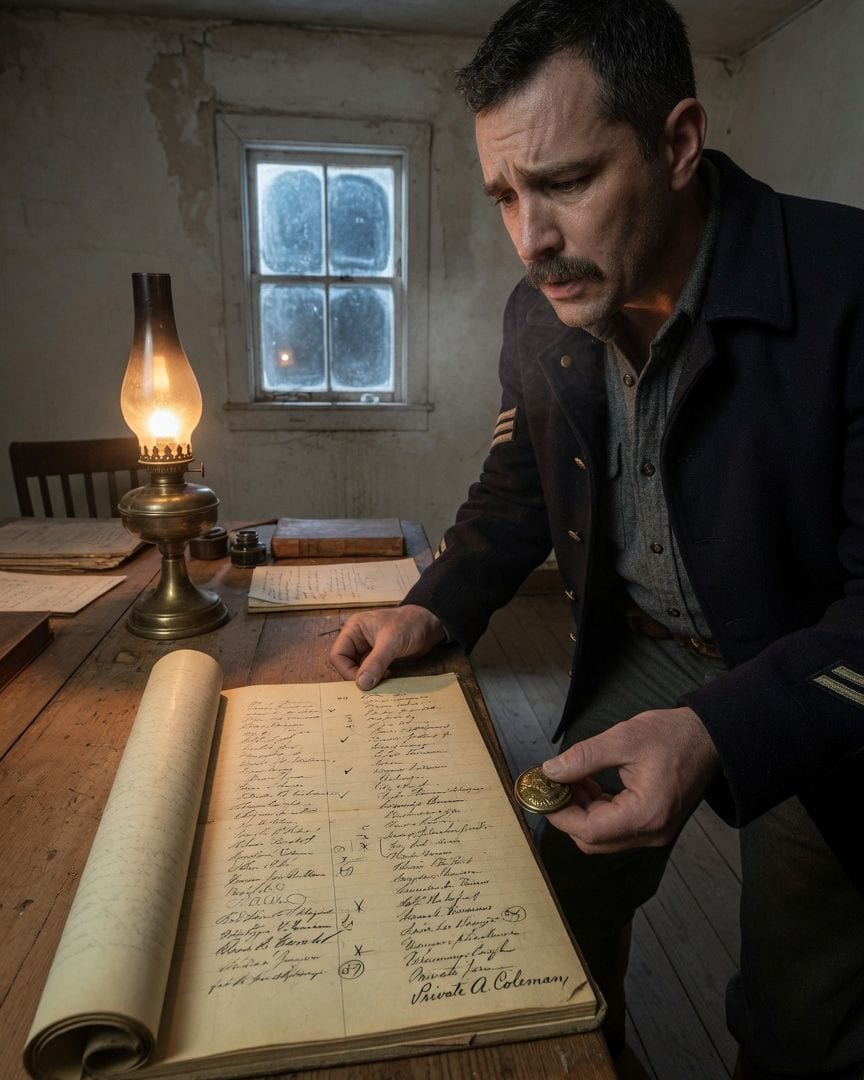 US Armed Forces
Sergeant Felix Thatcher stood in the paymaster's office at Fort Hayes, the bitter Wyoming wind rattling the panes as the last company signed their muster roll. He needed a clean closure here before his transfer, but his meticulous count of thirty-six men soon clashed with Corporal Whitlock's tally of thirty-seven signatures. The discrepancy led him to 'Private A. Coleman,' an unknown name on the roll, signed with an oddly archaic hand. Beneath where the roll lay, Thatcher discovered a tarnished brass button, inexplicably warm to the touch, and matching a uniform design from the 1850s. How could an ancient, warm relic be linked to a fresh, impossible signature?
13 min read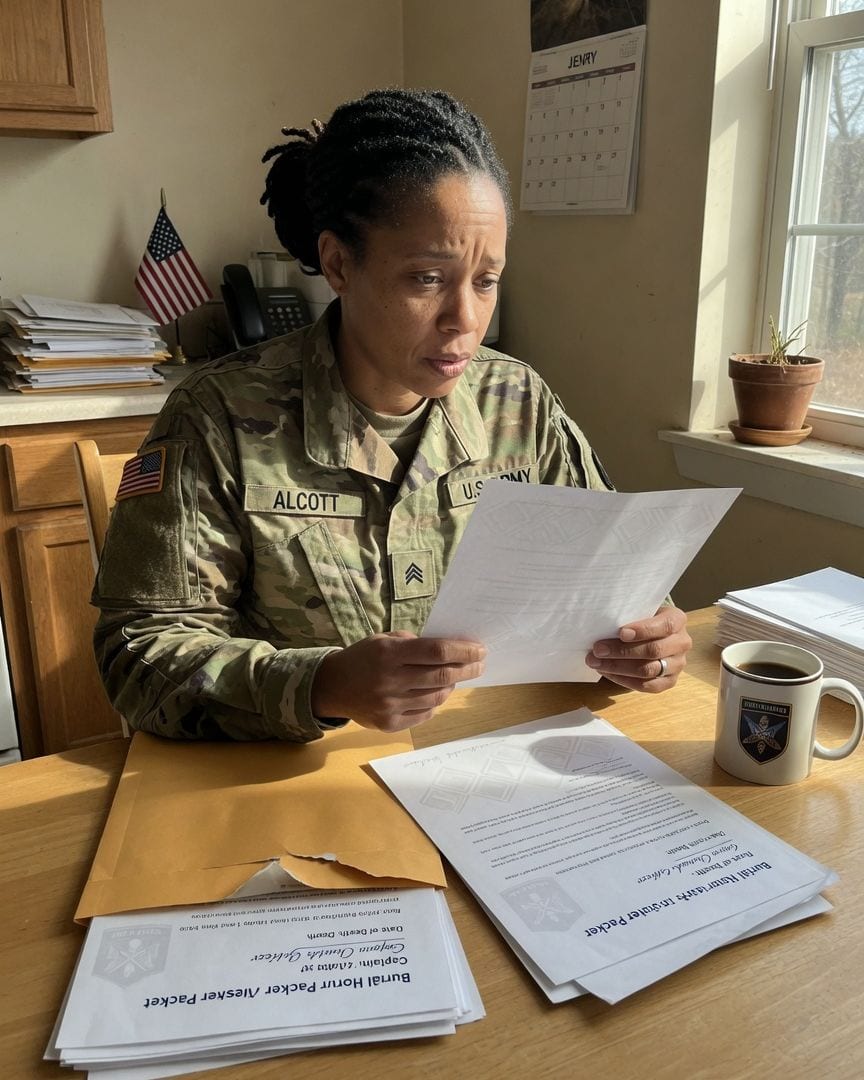 US Armed Forces
Sergeant First Class Bree Alcott, 38, found her own completed burial honors packet on her kitchen table one quiet autumn morning. It was signed, sealed, and dated for April 17th, next spring, despite her being very much alive. When she took the impossible paperwork to the Fort Claiborne Casualty Affairs office, the staff sergeant there denied any record, even as he traced a faint, archaic watermark on the document. Later, deep in the post's archives, Bree uncovered other packets for soldiers long missing, all bearing the same unsettling watermark and future-dated signature, their 'death' dates now long past – until she found one for tomorrow.
13 min read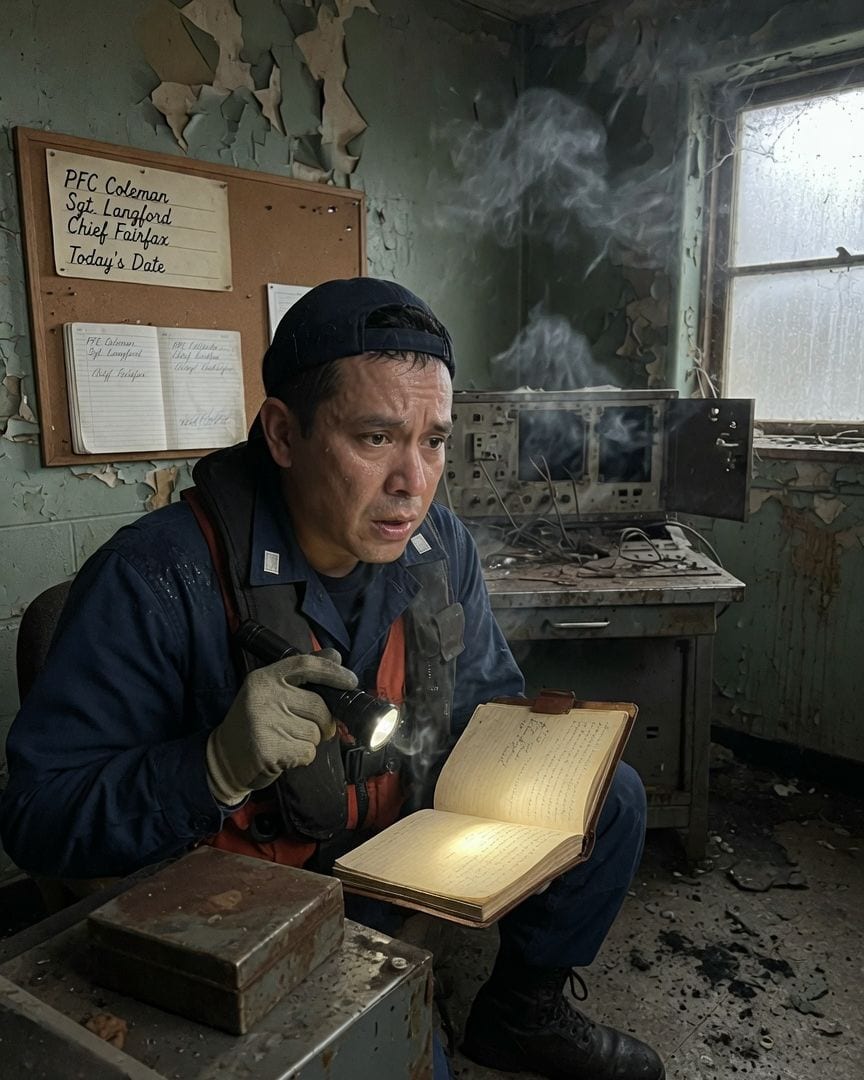 US Armed Forces
Lieutenant Victor Ferro led a final survey team to a long-abandoned LORAN station in the desolate Aleutian fog, a last check before its demolition erased it from memory. But as their boat neared the black-sand beach, a thin plume of smoke curled from the galley stovepipe – from a station officially decommissioned nearly thirty years prior. Inside, the mess hall was eerily neat, tin plates set for a meal, and on a corkboard, a crisp, freshly-inked watch bill listed names unknown to any Coast Guard roll, past or present. The station log lay open to the current date, bearing the same impossible signatures. Who was here, and for whom was dinner being prepared?
10 min read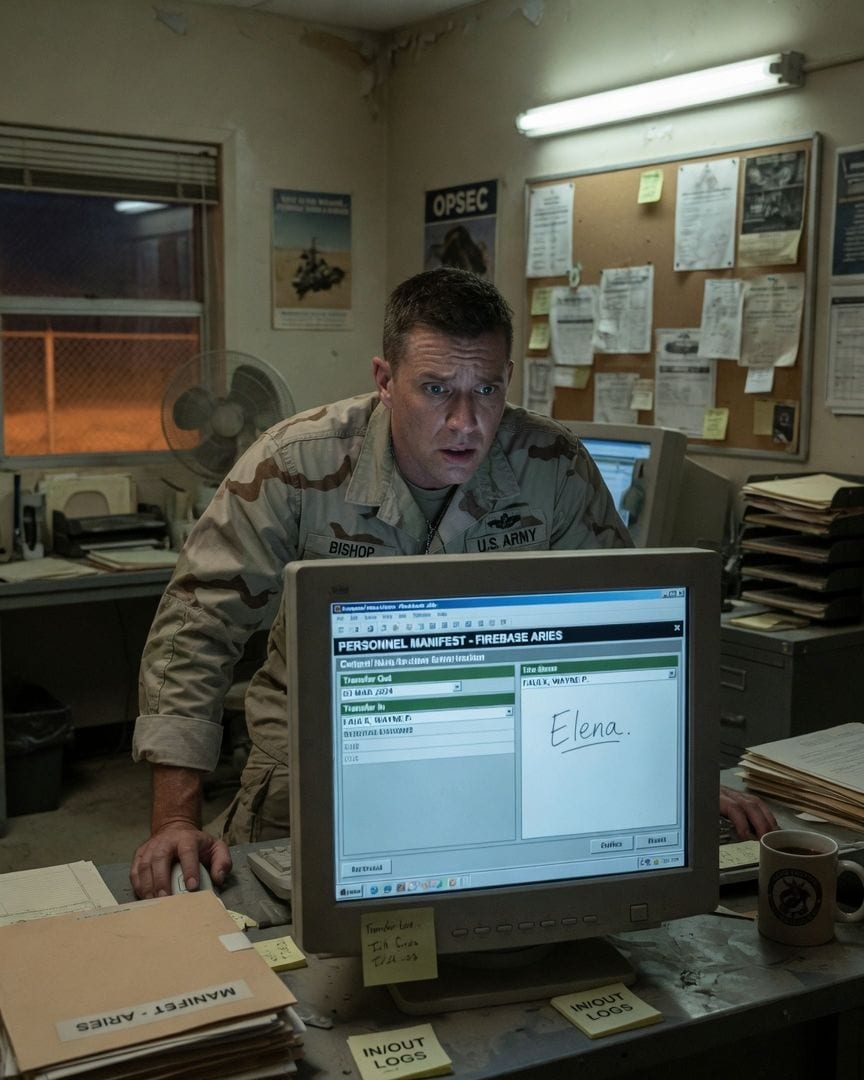 US Armed Forces
Corporal Henry Bishop, a man defined by precision, maintained the meticulous order of Firebase Aries. His world, a hum of servers and crisp paper, relied on every form, every detail being perfectly in place. But that order shattered when he saw Private Wayne Faulk, a soldier transferred out months ago, casually walking back as if he'd never left. Bishop's gut clenched tighter still when Faulk greeted a new lieutenant by her first name — a name Bishop had just processed as 'eyes only,' sealed tighter than a vault. Bishop then found a faint, unofficial 'Elena' scrawled next to Faulk's name, a secret whispered in the machine itself, fracturing the bedrock of his reality with an impossible equation.
12 min read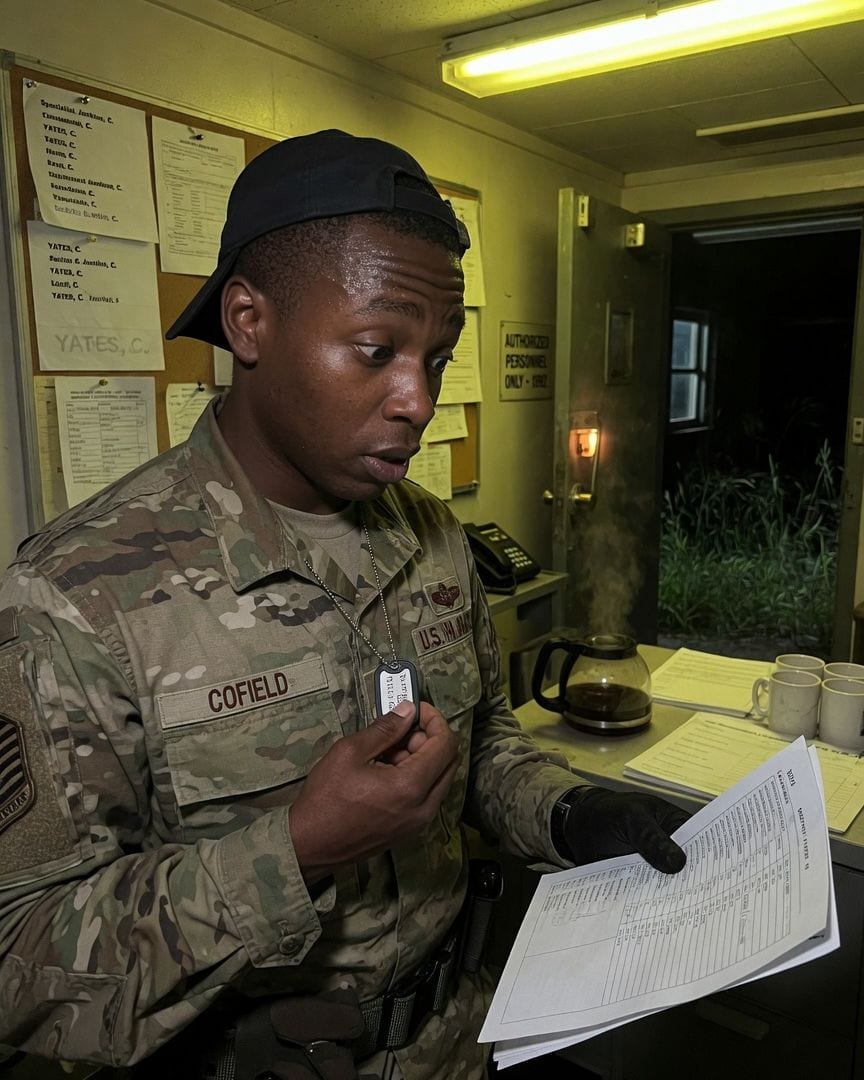 US Armed Forces
Senior Airman Maxwell Cofield was on his final perimeter patrol before transfer, scanning the desolate expanse of a decommissioned weapons storage area mothballed since 1992. His eyes snagged on an impossible sight: a faint yellow glow blooming in a window of the building, officially de-energized for decades. Central Security Control reported the zone clear, yet the heavy steel door was unlocked and warm to his touch, and inside, a coffeepot steamed on a table. Even stranger, a fresh shift-change roster listed unfamiliar names, and beneath them, a faded, ghostly recurrence of 'YATES, C.'—the very airman supposedly transferred last week, whose dog tag lay half-hidden nearby.
13 min read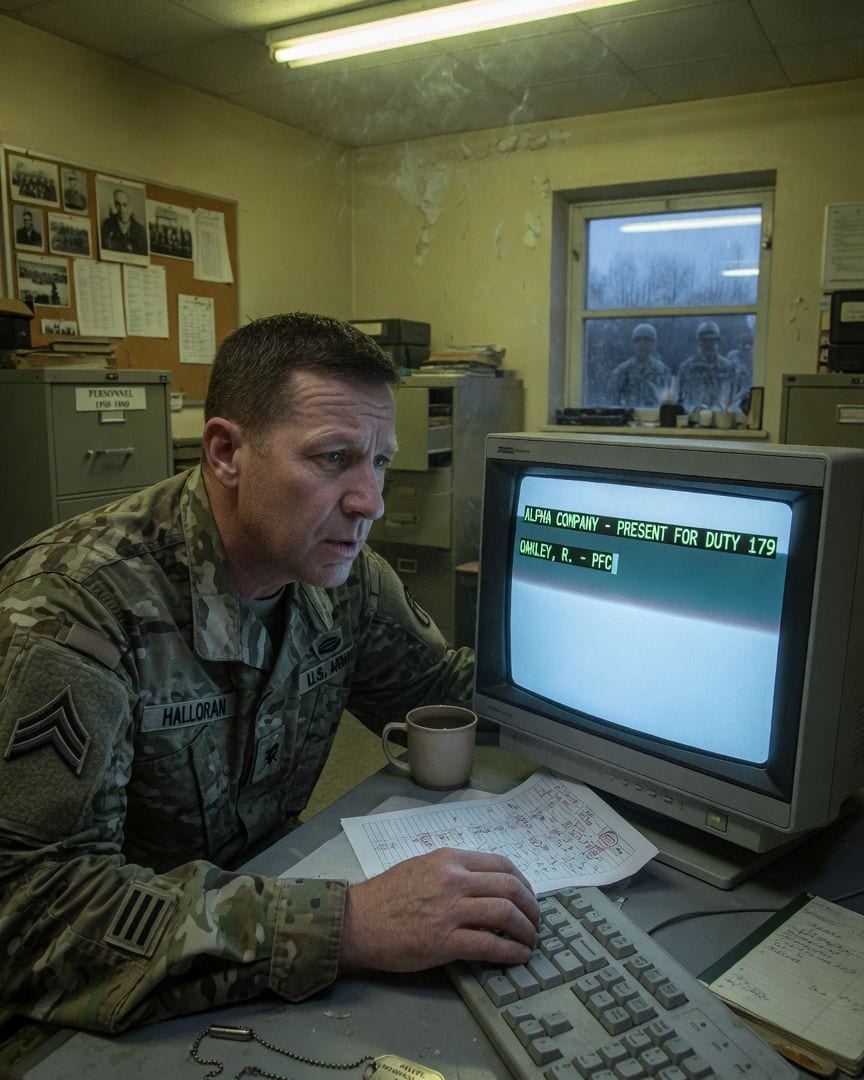 US Armed Forces
Sergeant First Class Roy Halloran was nearing his 20-year retirement, meticulously counting his company in the chilly German orderly room. He knew the number by heart: 178 men. Yet, day after day, his computer insisted on 179. The digital phantom deepened when a new name, 'Oakley, R. - PFC,' appeared, locked and uneditable. Then, from a forgotten cabinet, a tarnished brass dog tag surfaced, bearing the name 'OAKLEY, REGINALD P. - PFC' and the impossible date '1953.' Who was this extra man, and why had his dog tag appeared decades later?
12 min read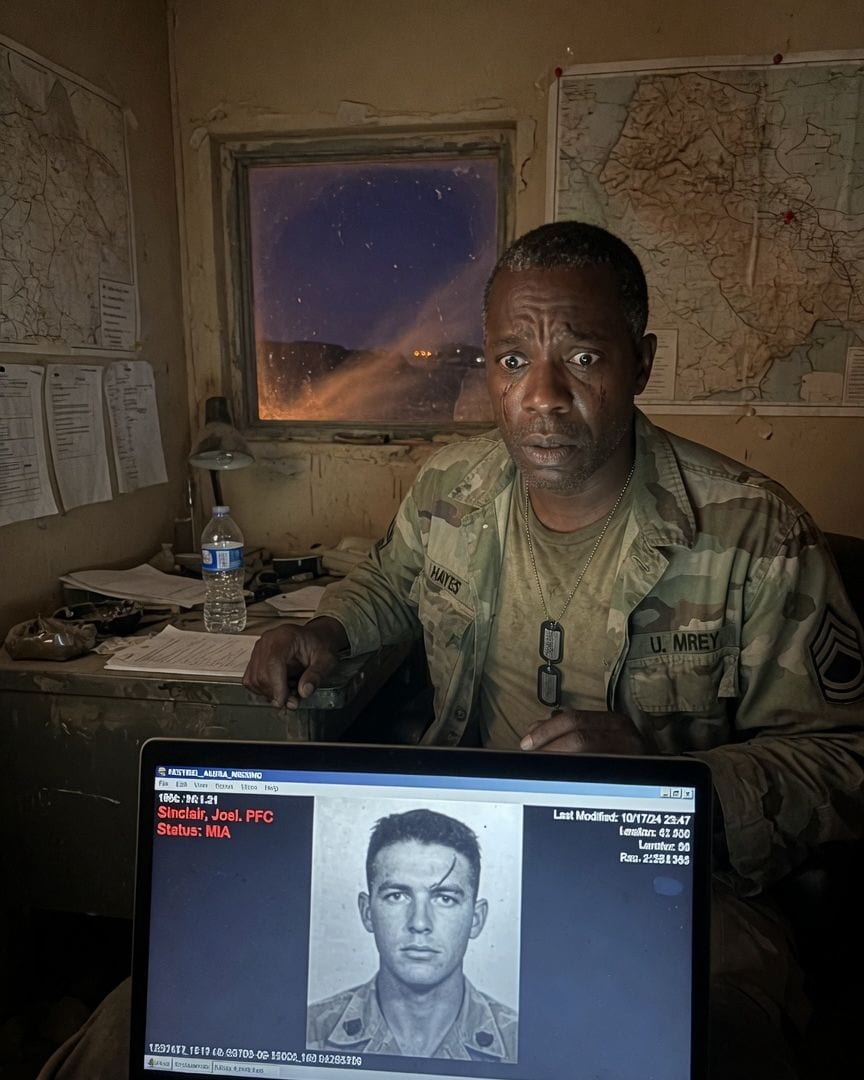 US Armed Forces
Sergeant Marcus Hayes was just three weeks from finishing his eight-month tour at Firebase Kestrel, desperate to leave the relentless desert behind. But on a routine evening head count, the numbers refused to square: thirty-one names on the manifest, yet thirty-two men stood before him. Later, searching for an explanation, Hayes found Private First Class Joel Sinclair sleeping in bunk 17, a soldier he recognized from his unit. Yet, when he checked the digital roster, Sinclair’s file was tucked away in an archive, marked 'MIA' from a tour in 1968-1969. How could a man declared missing fifty years ago be sleeping in his barracks tonight?
10 min read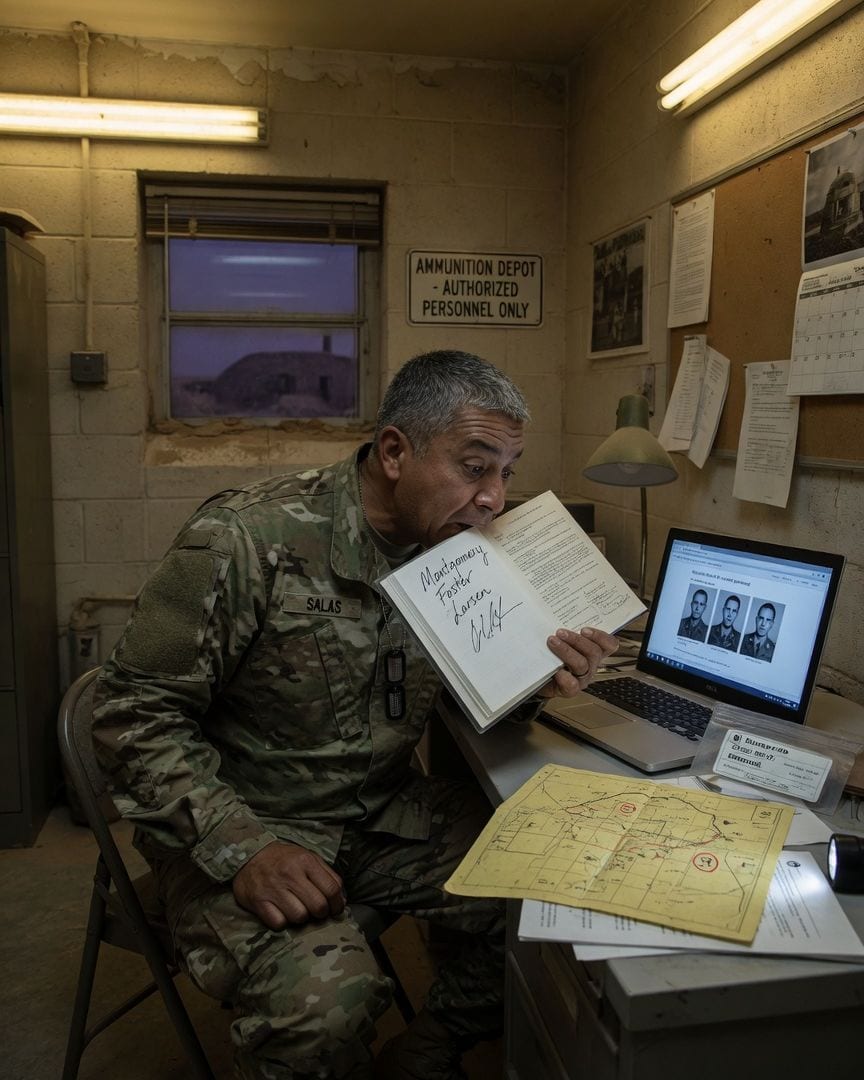 US Armed Forces
Chief Warrant Officer Curtis Salas completes a final inventory at a desert munitions depot, finding an impossible fortieth bunker not on any map. Its fresh security seal bears signatures from three men: two officially K*lled in Action, and one honorably discharged, all decades ago. Someone, or something, just signed d*ad men's names to a new Army seal.
12 min read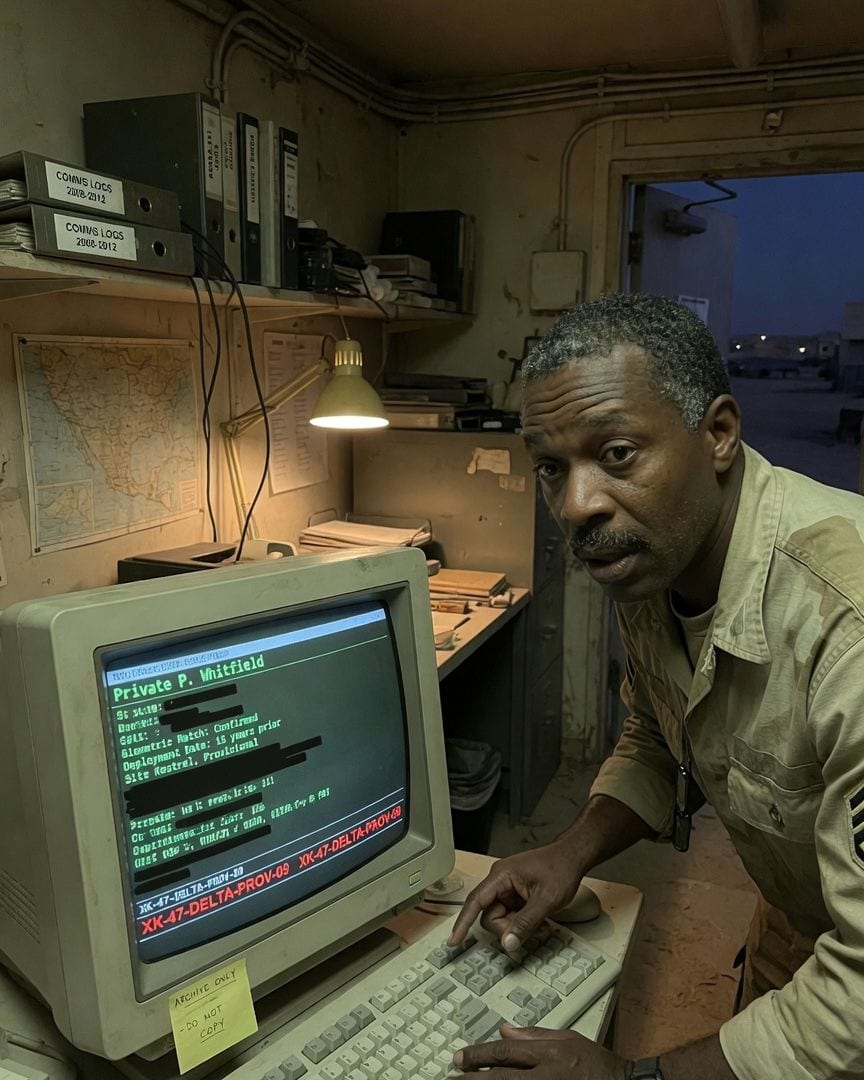 US Armed Forces
Sergeant Isaac Bishop yearned to clear his desk, just three weeks from finally going home from the FOS Kestrel. The low thrum of the base's servers was as constant as the desert wind, but a new anomaly hummed louder in his mind. Chow hall footage showed Corporal Patrick Whitfield in the serving line at 0530 for two weeks straight, yet Bishop's own comms logs confirmed Whitfield was simultaneously on patrol a kilometer away. As Bishop dug deeper, cross-referencing every roster and log, he found no errors, no pranks; instead, an archived service record for a "Private P. Whitfield" emerged, matching the corporal's biometrics and dating his deployment fifteen years ago to "Site Kestrel, Provisional"—a full decade before the FOS Kestrel officially existed.
10 min read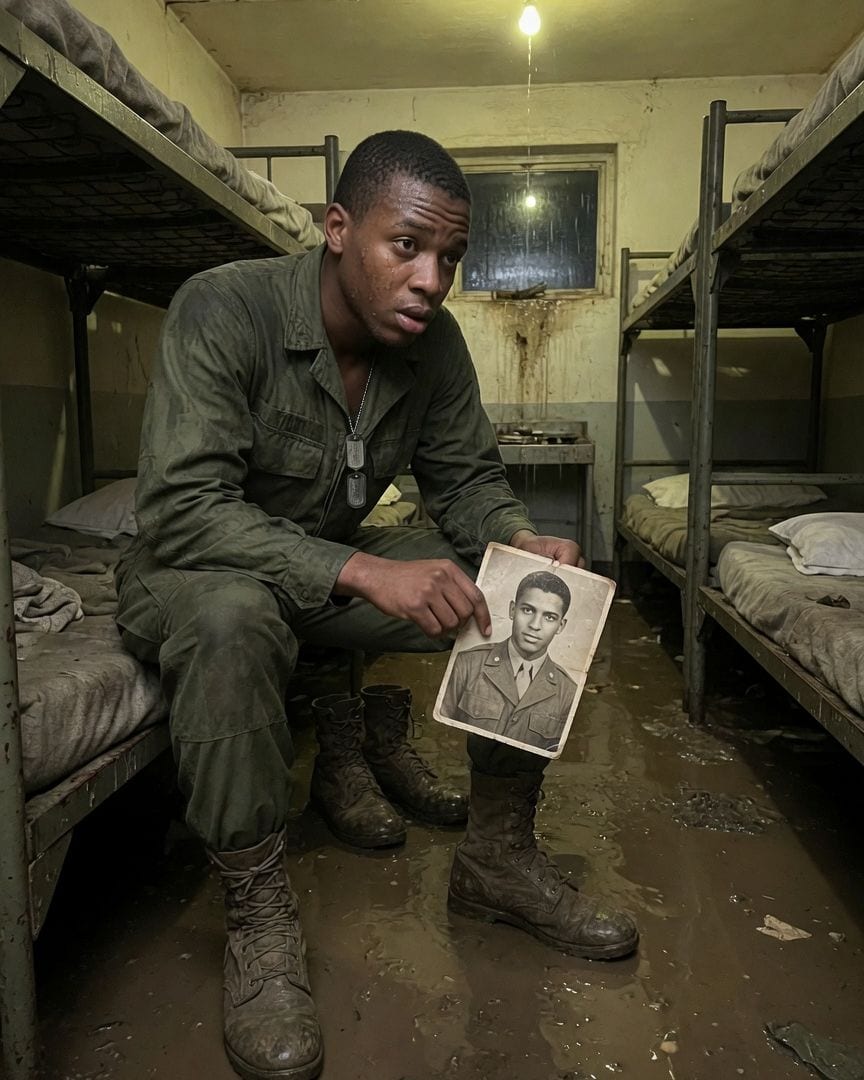 US Armed Forces
Corporal Benjamin Delk, bone-tired from two weeks in the flooded Camp Ledoux barracks, finally sought refuge in the dry, untouched corner bunk. It was a small, desperate victory against the camp's relentless damp. But reveille brought a cold shock: his own boots sat perfectly at the foot of the rack, laced in an intricate, unfamiliar pattern, and still warm with residual heat. Later, investigating the bunk, he found a faded photograph of a young Private in an identical, old-style uniform. The man's intense, familiar eyes seemed to acknowledge Delk, hinting at an impossible connection to the warm boots and the bunk's unspoken rule.
11 min read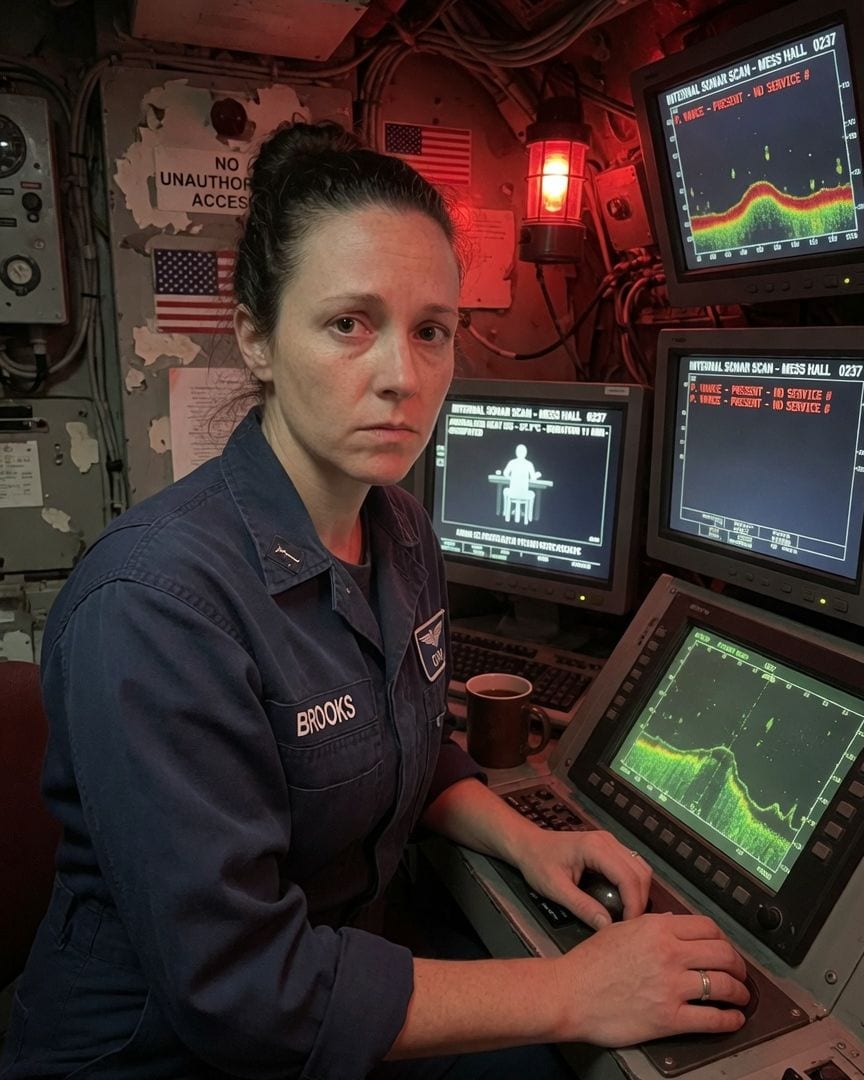 US Armed Forces
Chief Petty Officer Charlotte Brooks felt the weight of her submarine's impending decommissioning, its long service ending soon after a decade as her home. The quiet hum of the USS *Artemis* was broken when a nervous messcook reported seeing a shadow eating alone in the mess hall, then finding one plate short but a perfectly clean tray. Though skeptical, Charlotte checked the security feeds, which showed nothing, yet her sonar logs revealed a distinct human heat signature in the same spot, then abruptly vanish. Her dread deepened when the boat's manifest confirmed 101 souls instead of 100, listing a mysterious 'P. Vance' with no details, whose entry all systems refused to delete.
12 min read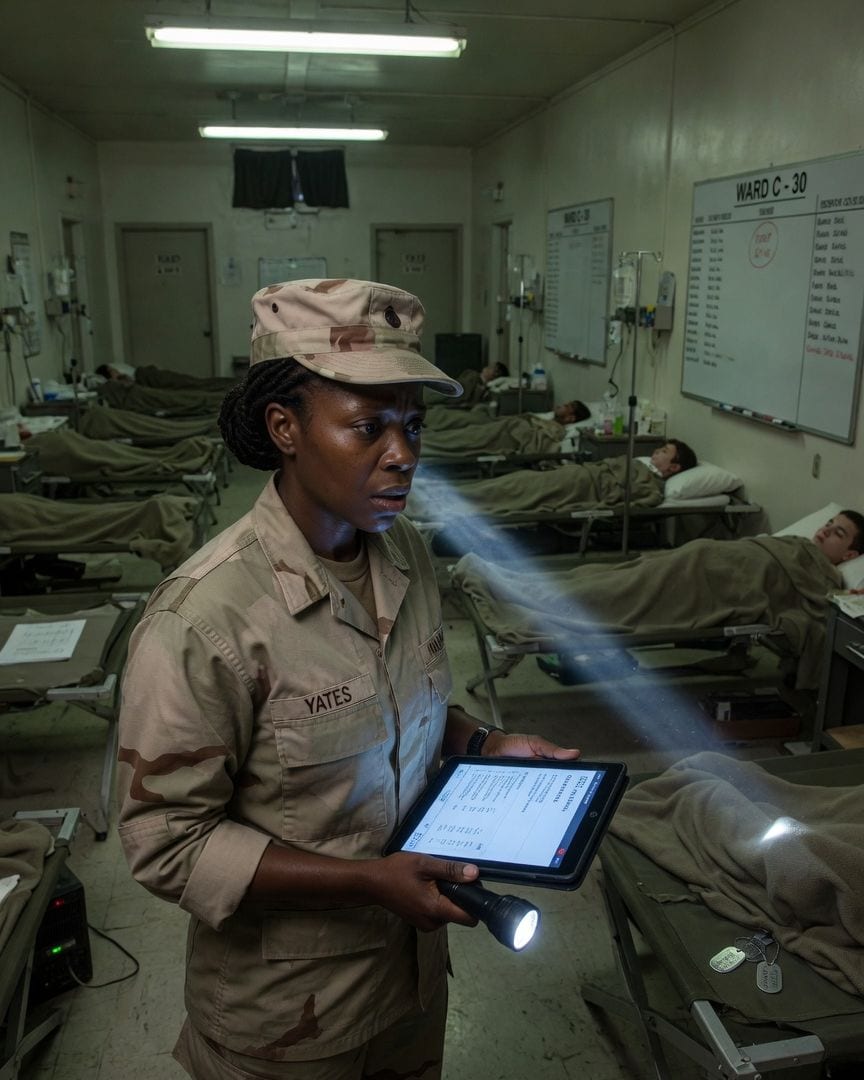 US Armed Forces
Sergeant Amara Yates meticulously counted thirty patients in Ward C of the field hospital. Yet, she found a thirty-first man, asleep in an unlisted cot, with no chart to identify him. The soldier was undeniably present, but the ward's records insisted only thirty existed.
12 min read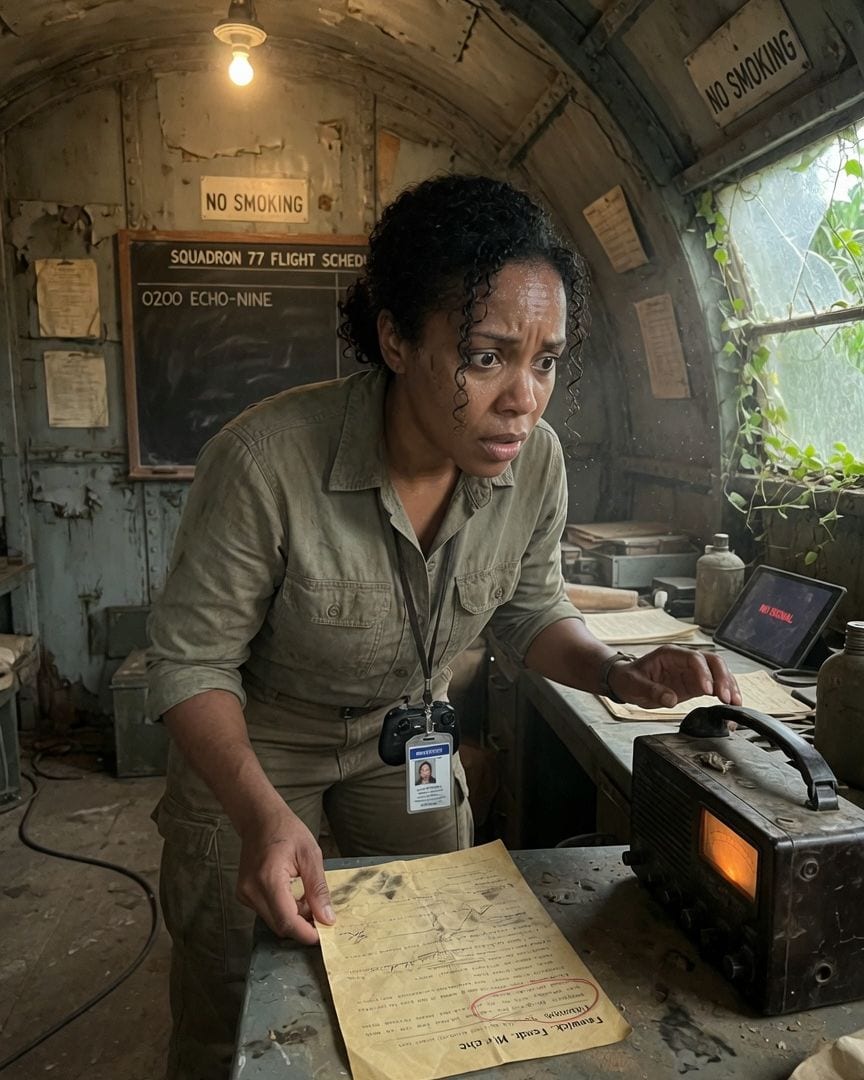 US Armed Forces
Surveyor Ade Fenwick meticulously charted a remote Pacific atoll, part of a meticulous process for a new runway contract. But her drone flagged an impossible structure: a Quonset hut not on any official record for the eighty-year-abandoned base. Inside, a generator hummed, and a 1945 flight manifest listed a phantom squadron, complete with a familiar surname: Fenwick, M. With her comms dead, an old radio in the ready-room crackled to life, calling out a call sign from the very same manifest. Who was on the other end, and how was this base still active?
11 min read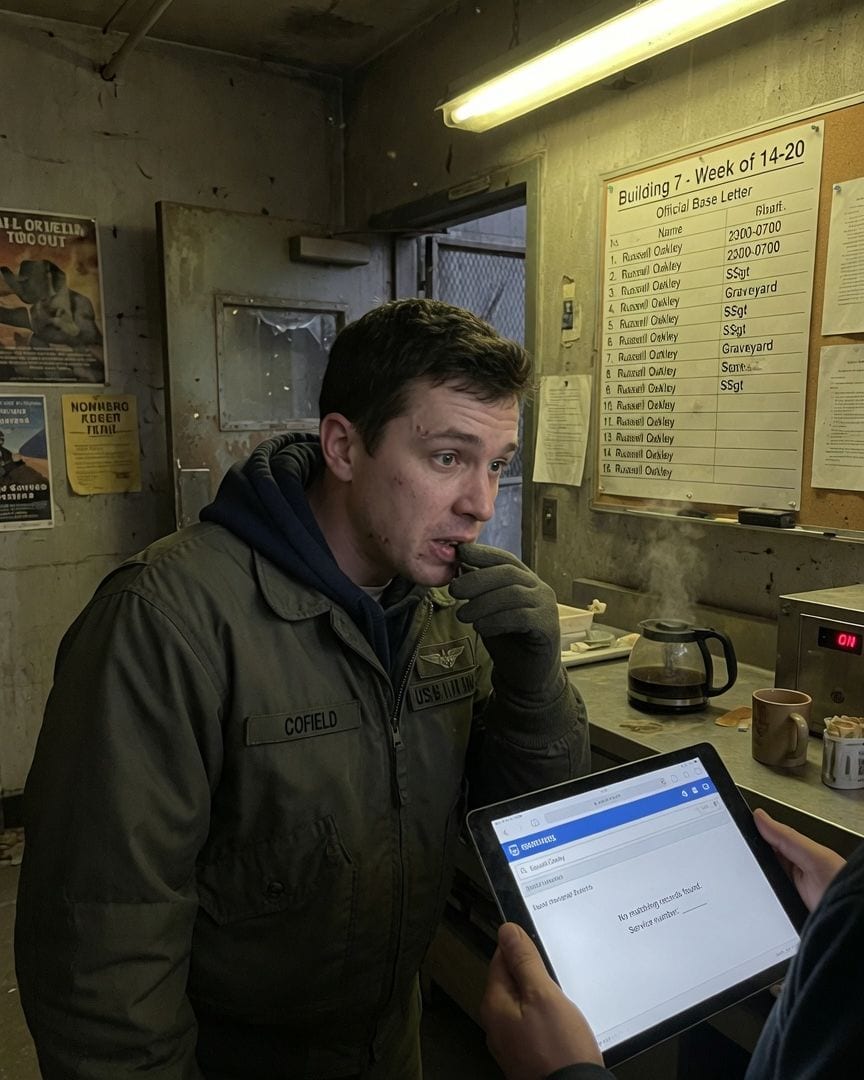 US Armed Forces
Senior Airman David Cofield, just two weeks from his long-awaited transfer, patrolled the perimeter of a decommissioned weapons storage area. Building 7, a concrete shell dark since 1992, suddenly showed a faint, warm light in its window. Inside, fluorescent lights hummed, and a coffee pot on the counter was still warm, defying the building's decades-long power shutdown. A freshly pinned shift roster for the coming week then revealed a name: 'Russell Oakley,' listed for Cofield’s own graveyard shift, yet completely absent from every official base record. Who was Russell Oakley, and how was he on shift in a dead building?
11 min read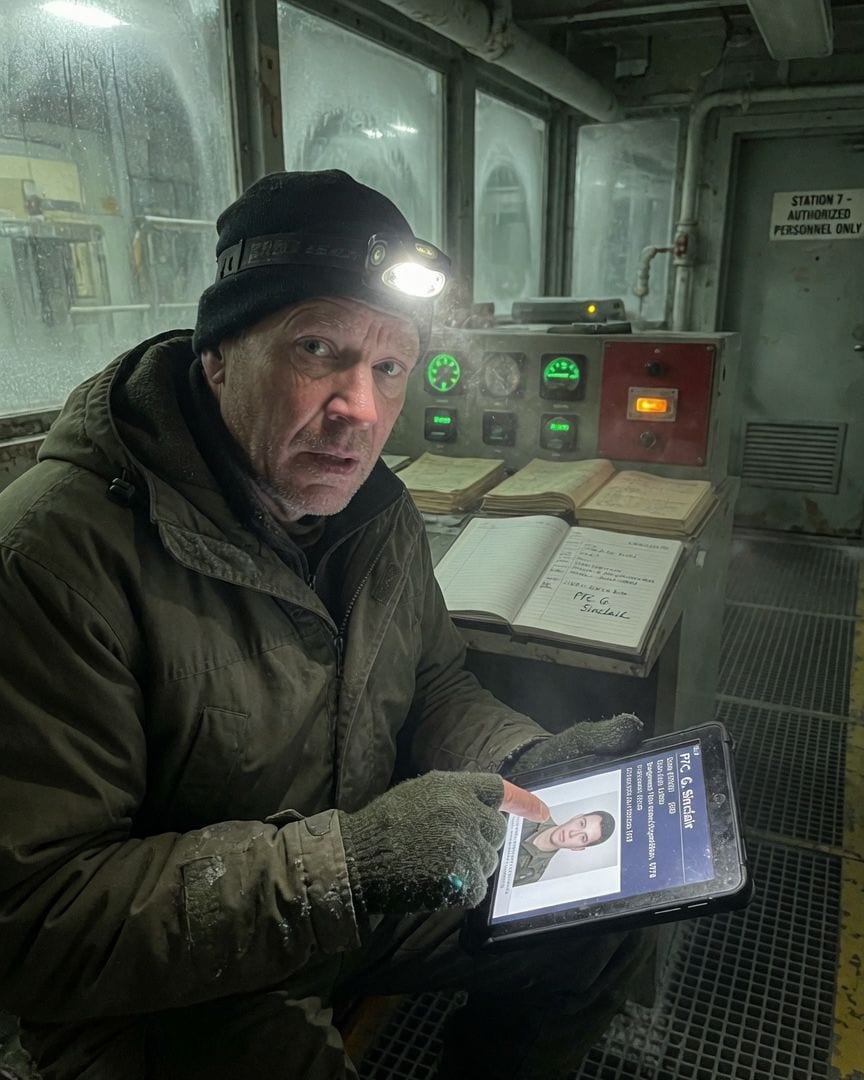 US Armed Forces
Chief Warrant Officer Franklin Ellison was two days from ending his Greenland deployment when his final core probe plunged into an unexpected void. A strange warmth and humid scent rose from the shaft, revealing the long-abandoned Station 7 below, its plant room surprisingly active with glowing gauges and a rhythmic hum. Ellison discovered an open shift log, its last entry, dated for the previous week, signed in fresh ink by PFC. G. Sinclair. Yet, a quick database check revealed Sinclair was reported Missing in Action in 1978, years after the station was officially decommissioned. How could a soldier missing for decades have signed a log last week in a base abandoned for half a century?
11 min read