A surveyor found her name on a 1945 manifest in an eighty-year-abandoned base. Then its old radio crackled to life, calling a name from the list.
Ade Fenwick squinted against the glare, the mid-Pacific sun baking the old coral airstrip. Her survey for the new runway-repair contract was meticulous, every inch accounted for, every historical discrepancy logged.
The military was a world of absolute manifests, precise counts, and documented reality. So when her drone sweep flagged a significant structural anomaly – a coral revetment cradling a Quonset hut – she knew it was off.
The 1945 base plat, the Navy’s real-property rolls, even the atoll’s lone caretaker, Chief Petty Officer (retired) George Drummond, swore no such structure had ever been built. Yet, there it stood, overgrown but undeniable.
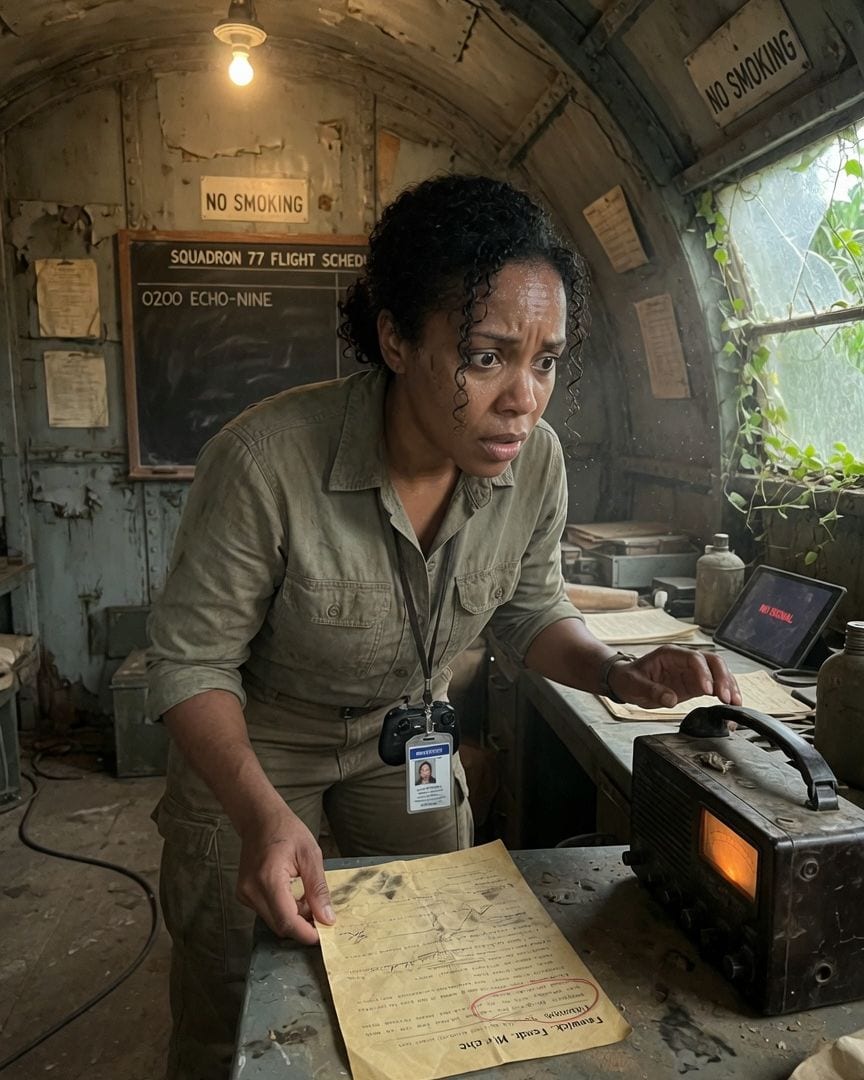
As she approached, a low, steady hum vibrated through the humid air. The generator inside the small, corrugated shed next to the Quonset was running. Pushing open the Quonset’s rusted door, Ade found a ready-room, frozen in time.
A chalked flight schedule board listed sorties for 'Squadron 77' – a number the Navy had never issued. The next departure, '0200,' was still hours away, yet the base had been abandoned for eighty years.
Ade’s rational mind immediately sought explanations: an elaborate prank, a forgotten movie set, a renegade private operation. But the hum of the generator felt too real, too persistent.
The air inside the Quonset was stale, but not musty; the equipment looked maintained, not derelict. She moved to a makeshift desk, a battered metal table, and found a stack of papers.
On top lay a handwritten manifest, dated '1945, Atoll 7, Squadron 77.' It listed 23 names, each with a rank, service number, and a curious designation: 'Echo-One' through 'Echo-Twenty-Three.'
Ade, a stickler for detail, ran the first few service numbers through her secure tablet, expecting 'no record found.'
Instead, she got fragmented, incomplete hits – personnel who existed, but whose assignments to 'Atoll 7' or 'Squadron 77' were conspicuously absent from their official records. It was a count that wouldn't reconcile with reality.
Then, her eyes snagged on the ninth entry: 'Fenwick, M. – Lt. Cmdr. – Echo-Nine.' The initial, the rank, the surname. It sent a chill through her. She tried to dismiss it as coincidence, a common name.
But the specificity felt like a deliberate taunt from a past that refused to stay buried. She looked again at the flight schedule, the impossible departure times, the phantom squadron.
The mundane explanation was failing, and the dread was beginning to take hold.
Ade Fenwick felt a prickle on the back of her neck. The name 'Fenwick, M.' on the manifest was a cold, tangible wrongness.
She pulled out her comms unit, intending to call Captain Sinclair, her CO, and report the anomaly, the impossible structure, the running generator. But the signal was dead.
The atoll was supposed to have intermittent service, but this was absolute silence. As she lowered the device, the old, dust-caked radio in the corner of the ready-room, which she had assumed was a prop, crackled to life.
A faint, distorted voice, tinny and full of static, cut through the hum of the generator. It was calling out a string of numbers and letters: 'ECHO-SIX, this is ECHO-ALPHA. Awaiting manifest confirmation. Over.'
Ade froze, her breath catching in her throat. The call sign 'ECHO-SIX' was on the manifest, just below 'Fenwick, M.' The voice repeated, a little clearer now, 'ECHO-SIX, confirm manifest. Over.'
The silence in the Quonset was thick, broken only by the radio's insistent query.
Ade’s training kicked in. Panic was useless. She needed data. She ignored the radio, which continued its intermittent calls, and began systematically searching the Quonset.
There were no personal effects, no signs of recent human habitation, just meticulously organized, if aging, military equipment. She found a small, locked metal box beneath the desk. Forced it open with a pry bar from her kit.
Inside, a stack of operational logs, bound with twine. They were all dated 1945. She scanned entries, looking for 'Squadron 77,' for 'Echo-Six.'
The logs detailed daily 'personnel counts,' 'sortie preparations,' and 'reconnaissance reports' for a squadron that, by all official records, did not exist. The 'count that wouldn't reconcile' was a daily routine here. The logs listed 23 active personnel.
Ade knew the official historical manifest for Atoll 7 never showed more than 22. One person was always missing from the official record, yet accounted for here.
She tried to raise Drummond on her comms, but the signal remained stubbornly absent. Walking back towards the main camp, Ade found Drummond by the rusted remains of an old jeep, tinkering with its engine.
'Chief, about that Quonset,' she began, trying to sound casual. Drummond straightened, his eyes narrowed slightly. 'What Quonset, ma'am? Nothing out there but coral and history.' His denial was too immediate, too firm.
Ade pressed him, detailing the generator, the flight board. Drummond just shook his head, a faint, almost imperceptible tremor in his hand. 'Kids play pranks, ma'am. Or maybe it's the heat. Gets to you out here.'
He offered her a bottle of water, his gaze unwavering, but Ade felt a cold certainty. He wasn't just denying; he was protecting something.
The more she tried to reconcile the official records with the Quonset's impossible reality, the wider the gap grew. The ghost squadron had a ledger, and it always came out one too many.
Over the next two days, the isolation of the atoll pressed in on Ade. Her comms remained dead. Drummond became increasingly distant.
She noticed small things: a fresh set of boot prints near the Quonset's entrance that weren't hers, a faint smell of pipe tobacco that Drummond favored, even though she hadn't seen him near the hut. She felt watched.
One evening, after returning from a fruitless attempt to find a signal on a higher ridge, she found her secure tablet, which she had left charging in her tent, had been moved.
Its screen was dark, but a faint residue of coral dust, identical to that found in the Quonset, clung to its surface. Nothing was missing, but the implication was clear: someone had been inside. Someone knew she was digging.
The next morning, Drummond approached her, his face unreadable. 'Ma'am,' he said, his voice low, 'Captain Sinclair called on the emergency satellite phone. Says he can't reach you. Wants to know your progress.' Ade felt a jolt. 'He called? When?'
Drummond shrugged. 'This morning. Said if you found anything… unusual… to just pack it up. Said the contract wasn't worth the hassle.' He met her gaze, a flicker of something unreadable in his eyes.
'Said he'd send a boat to pick you up in two days, regardless.' It was a warning, thinly veiled. Drummond knew.
And Captain Sinclair, her own CO, seemed to be subtly nudging her away, dismissing her findings before she could even report them fully. The clock was ticking, and the danger was now personal.
She wasn’t just investigating an anomaly; she was being pushed out, her findings already preemptively discredited. The ghost squadron was real enough to have allies.
Ade knew she had to confront Drummond. She found him by the old lighthouse, staring out at the expanse of the Pacific. 'Chief,' she began, her voice firm, 'Captain Sinclair didn't call.
My comms have been dead, and his emergency number goes straight to voicemail.' Drummond flinched, his shoulders tensing. 'Ma'am, I… I don't know what you mean.' Ade pulled out the manifest from the Quonset. 'This. Squadron 77.
Fenwick, M. And the fact that my tablet was tampered with. Someone is trying to keep this hut a secret. And you're involved.' Drummond slowly turned, his face etched with a mix of fear and resignation.
'It’s… it’s a family thing, ma'am. My grandfather was here during the war. He was part of the maintenance crew, back when… when the Navy was doing experiments. Things they didn’t want anyone to know about.'
He hesitated, then continued, 'They called it Project ECHO. Something about confusing enemy intelligence. Creating phantom presence. My grandfather, he told me to keep the generator running. Said it was important. A legacy.'
Ade felt a cold knot tighten in her stomach. 'Experiments? What kind of experiments?' Drummond shook his head. 'He never said. Just that some things… some people… they didn’t leave. Not really. The count, ma'am.
It always had to be reconciled. They needed to believe they were all still here. Even if no one else did.' The pieces clicked into place. The impossible count, the missing name from official records, the running generator.
It wasn't just a forgotten hut; it was an active, suppressed project. The reason the count never reconciled was because the 'personnel' were never meant to be real, yet the system believed they were. The dread deepened.
This wasn't just a clerical error; it was a living, breathing ghost in the machine, sustained by a generational secret. And Drummond, unknowingly, was its keeper.
Drummond’s confession, though vague, solidified Ade’s resolve. She returned to the Quonset, now seeing the structure not as an anomaly, but as a shrine to a suppressed truth. She remembered Drummond’s grandfather’s words: 'Some things… some people… they didn’t leave.
Not really.' Ade began a more thorough search, focusing on hidden compartments, anything that might contain official records of Project ECHO. Behind a loose wall panel, she found a small, heavy metal box, distinct from the first.
It was sealed with a rusted, official-looking lock. Ade used her multi-tool to pry it open, the metal groaning in protest. Inside, nestled amongst brittle, yellowed documents, was a thick, leather-bound operational logbook – the original Project ECHO ledger.
Its pages detailed the project’s objectives, its 'personnel activation protocols,' and chilling references to 'resonant signature integration.' Ade's hands trembled as she flipped through the final entries, dated a few weeks after the 1945 base plat was officially drawn.
The last page contained a handwritten, stark entry: 'Initiate Phase Two protocol for resonant signature integration. Target: Fenwick, A.' Her own initial. The logbook dropped from her numb fingers. The implication was immediate, horrifying.
She wasn't just observing the anomaly; she was its target. She had always been named in it.
Ade Fenwick stared at the logbook, the words 'Target: Fenwick, A.' burning into her mind. The dread was no longer abstract; it was personal, ancestral.
She found a pre-war photograph tucked into the logbook's cover – a group of stern-faced officers and scientists. Among them, a woman in a Navy uniform, her features strikingly similar to Ade's own: Margaret Fenwick.
A corresponding entry in the logbook detailed Margaret's role as a psychological warfare officer, leading the 'Echo' project, which aimed to create low-level psychic imprints of personnel to confuse enemy intelligence.
The 'Squadron 77' manifest wasn't just a list of names; it was a register of these 'echoes,' sustained by the generator, perpetually running their programmed loops.
The 'count that wouldn't reconcile' was the system's core function: to maintain its impossible roster, to keep the phantom squadron 'active.'
Margaret Fenwick had designed a 'resonant signature integration' protocol, a failsafe to reactivate or reinforce the echoes using individuals with a strong familial or psychic link. Ade, a direct descendant, was that link.
The system, dormant for decades, had sensed her presence, her own 'Fenwick, A.' signature, and was now attempting to integrate her, to make her the next 'Echo-Nine,' to finally reconcile its count with the living.
Drummond's family, unknowingly, had been keeping the system alive, fulfilling an old promise to 'keep the generator running,' never understanding the true horror of what they maintained.
Every clue, from the missing Quonset to the phantom squadron, the insistent radio calls, and the impossible count, clicked into place, forming a terrifyingly coherent pattern.
Ade knew she couldn't let the system integrate her. She had to shut it down. But the radio in the Quonset had grown more insistent, the calls from 'ECHO-ALPHA' now demanding 'Fenwick, A. – Report for integration.'
Drummond appeared at the Quonset entrance, his face ashen, having seen the logbook. 'Ma'am, what is this?' he stammered. 'My grandfather… he said it was just keeping a light on for the boys.'
Ade explained, quickly, urgently, the true nature of Project ECHO, the psychic echoes, the integration protocol. Drummond’s face crumpled. 'My family… we've been feeding this thing?' Ade needed to disable the generator, cut the power that sustained the echoes.
But the radio calls intensified, a faint, disembodied hum now permeating the Quonset, a sense of unseen presences closing in. She grabbed a heavy wrench and sprinted for the generator shed. Drummond, horrified, followed, trying to help.
The hum grew louder, a palpable pressure in the air. Ade knew she had only moments. The generator was old, its wiring exposed. She swung the wrench, smashing the control panel, sparks showering around her. The hum wavered, then died.
The Quonset fell silent. The radio went dead. But as the generator sputtered its last, Ade felt a cold, draining sensation, like a part of her spirit was being siphoned away, a profound sense of loss.
She had stopped the integration, but the cost was real. The silence that followed was not one of peace, but of emptiness. She had saved herself, but something had been taken.
Her mission, her career, perhaps even her sanity, were now irrevocably compromised. She had proof, but who would ever believe her?
The relief boat arrived two days later, just as Captain Sinclair had 'predicted.' Ade Fenwick, pale and exhausted, made her report, omitting the psychic echoes and the integration protocol, knowing it would sound insane.
She simply stated that the Quonset hut was structurally unsound, a hazard, and that the generator had suffered a catastrophic failure. Drummond, shaken to his core, corroborated her story, avoiding eye contact. The runway-repair contract was put on indefinite hold.
Ade’s detailed survey notes were filed, but her recommendation to fully demolish the Quonset and secure the site was met with bureaucratic inertia. The Navy, it seemed, preferred not to acknowledge structures that didn’t appear on its official plats.
The strange, unsettling hum of the generator was gone from the atoll, but a profound quiet remained, a void where something had once been. Ade carried the logbook, carefully wrapped, proof of a truth no one would accept.
Ade Fenwick was transferred to a desk job stateside, her promotion prospects quietly shelved. The official report cited 'fatigue' and 'stress' from her isolated assignment.
She never spoke of Project ECHO, of the phantom squadron, or of the name 'Fenwick, M.' that had haunted her. The logbook remained hidden, a tangible weight of unbelievable truth.
She found herself checking manifests, personnel rosters, any kind of count, with an obsessive eye, always looking for the discrepancy, the name that shouldn't be there, the one extra.
The cold, draining sensation she’d felt at the generator’s death had never fully left her; a subtle, persistent emptiness hummed beneath her skin.
Some nights, she woke, convinced she could still hear a faint, distorted voice on a dead radio, calling out a name, awaiting confirmation.
She was out, but the cost was a piece of herself, and a truth that marked her forever. The silence of the open ocean was a cold comfort, but the hum of a phantom generator still vibrated in her bones.
If this one got to you
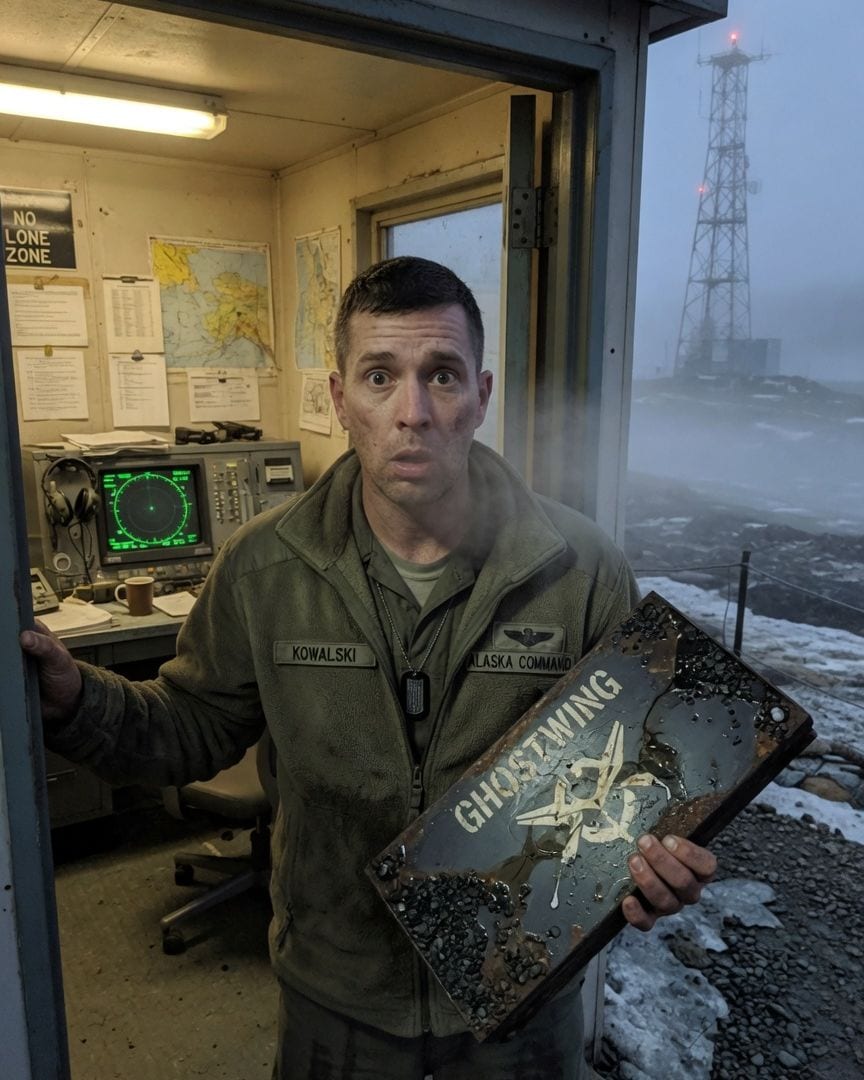
On his last rotation, Airman Kowalski heard a pilot cleared for landing by a tower that had vanished decades ago.
High atop Mount Chugach, Airman Eric Kowalski was counting down his last lonely rotation before transfer, the silence of the Aleutian airwaves his only companion. But then, his headset crackled with an urgent emergency call: a pilot in distress, cleared for landing by a controller whose facility had been decommissioned decades ago. As the phantom voices faded, a third, calm voice cut through the static, addressing him by a name that wasn't his. What impossible signal had broken through the silence, and who was Sowell?
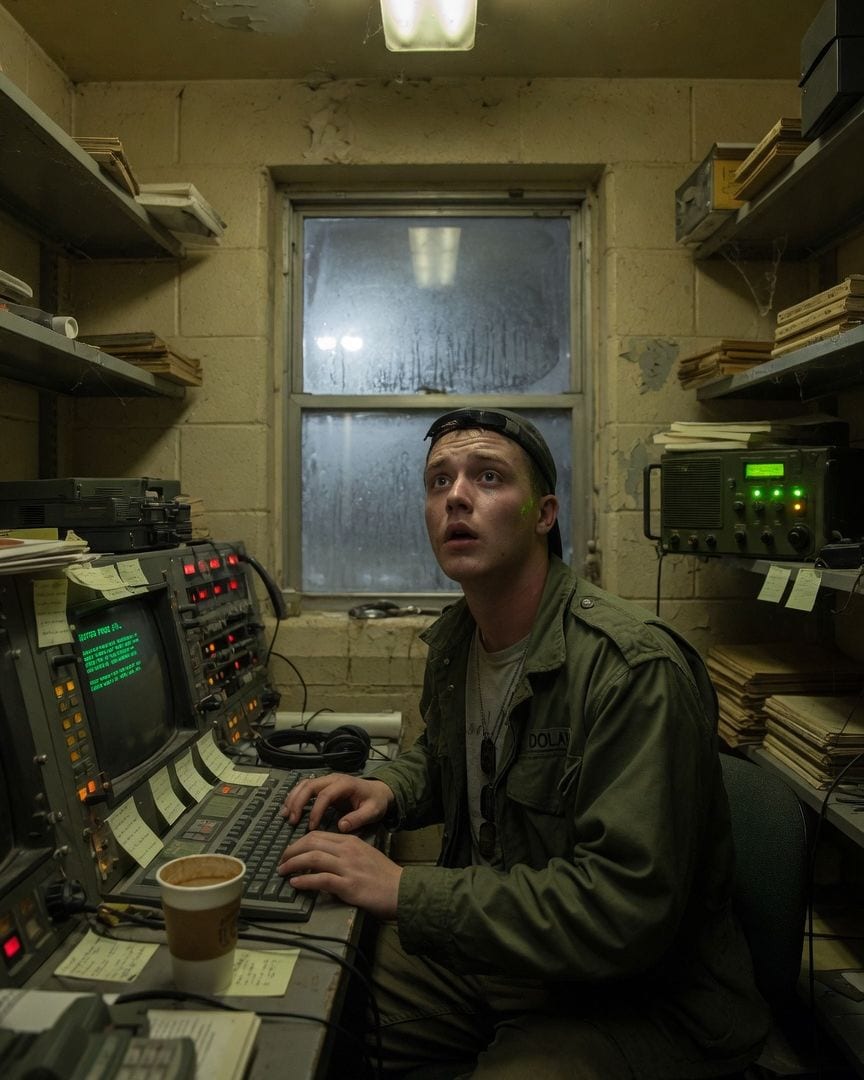
On his last watch, Specialist Dolan heard a dead soldier's voice from an old radio, a week too late.
Specialist Raymond Dolan was on his final watch at Firebase 7, a remote mountain outpost swallowed by a thick, oppressive fog, before its permanent closure. The fire-direction center should have been silent, but strange calls began routing directly to his console, reporting an enemy element in the draw where the 'Ghost Patrol' was lost just a week prior. While Control heard only Dolan's voice echoing into a void, the panicked voices in his ear were terrifyingly real. As he tried to purge the system, an old, unpowered field radio on a dusty shelf inexplicably powered on, its small light glowing green. From its speaker, the voice of Private Abigail Foster, a soldier from the Ghost Patrol, burst through—a week-old transmission, a final warning from the dead.
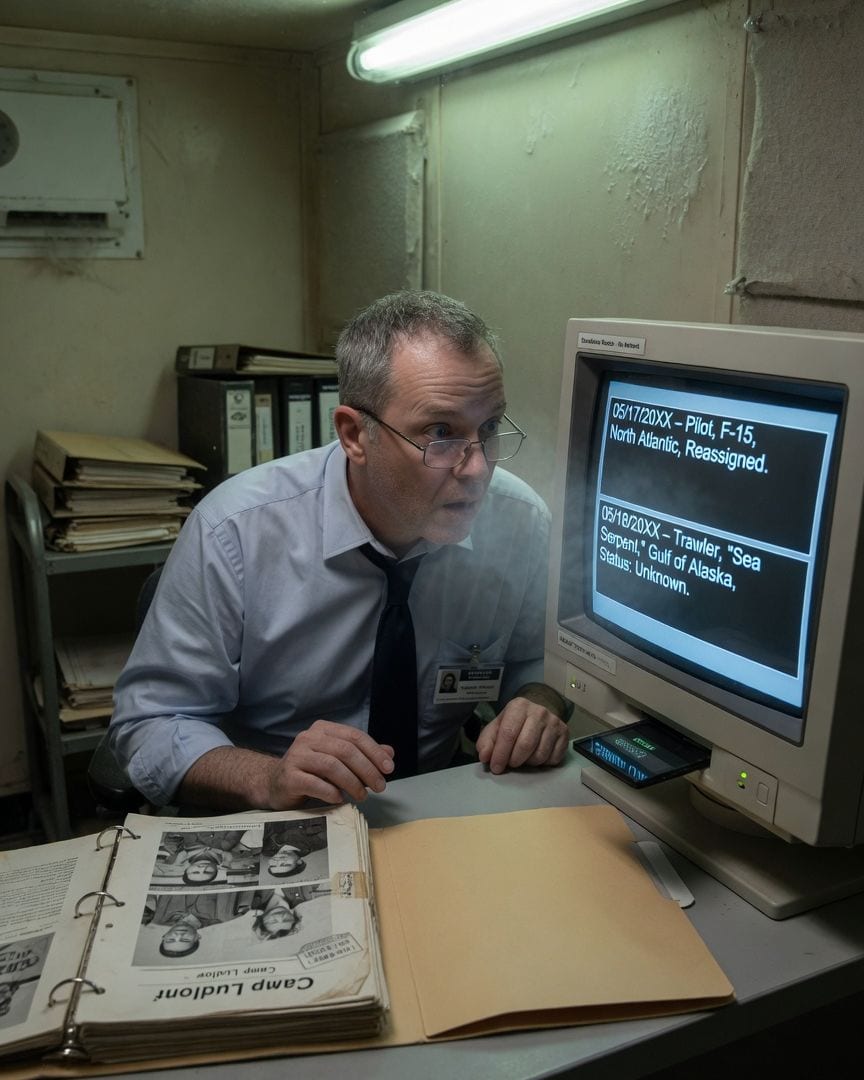
A declassification reviewer opened a Cold War 1959 file. A modern data chip inside showed a pilot missing yesterday.
Declassification reviewer Samuel Vance, whose world was built on the rigid order of official history, smoothed a letter confirming Camp Ludlow’s 1959 closure was a lie. Despite decades of records, the Air Force insisted the Greenland base remained active, its last radio check logged just four days prior. Driven by this profound wrongness, Samuel unearthed the base's ancient physical file, only to find a pristine, modern data chip hidden within its brittle pages. When he inserted it into a secure reader, the screen didn't show history, but a scrolling list of current missing persons—a pilot from yesterday, a trawler from today. How could an archived file hold a living record of the world’s most recent disappearances?
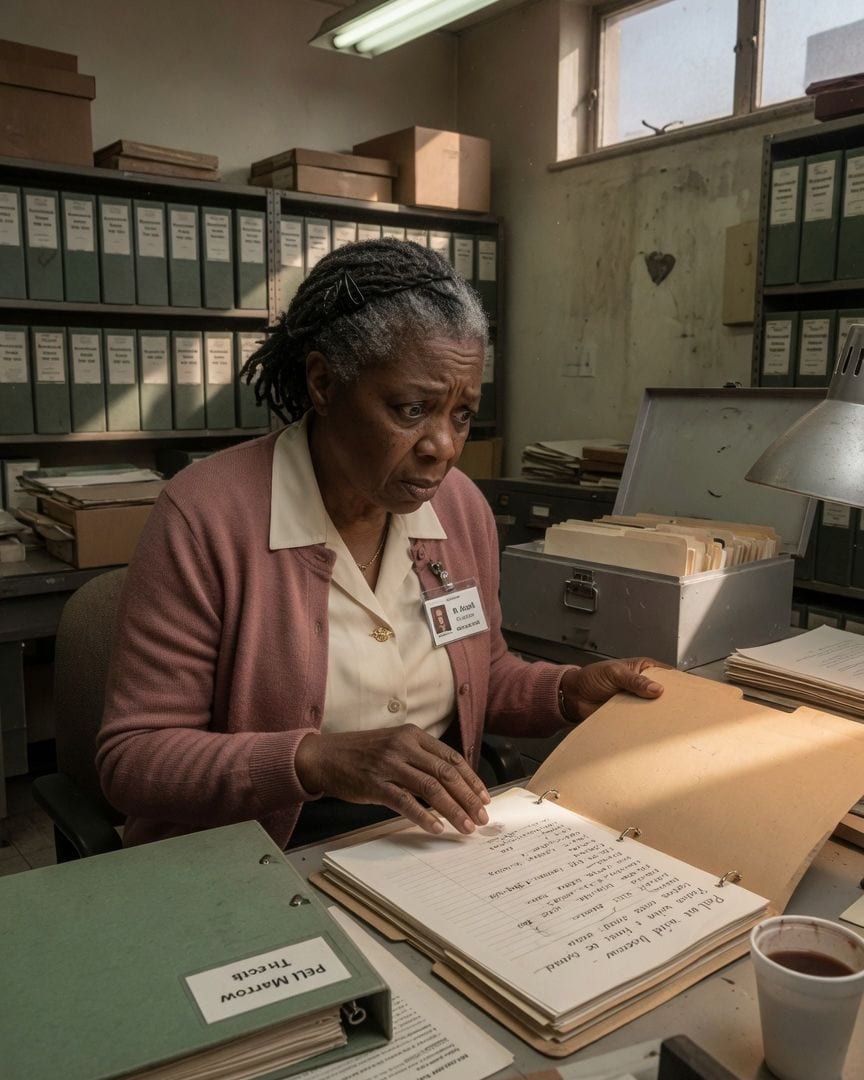
A records clerk's archive file for a Cold War reconnaissance plane lost in 1968 showed it flew yesterday to her own building.
Marguerite Ansell, a records clerk nearing her final week before retirement, meticulously audited Cold War-era files. In the cool, dusty archive, she pulled a file for an oiler declared missing in 1951. Inside, she found a fueling schedule with entries stretching into the present, the last dated just eleven days ago. Then, a second lost ship revealed a similar impossible log, and a cold certainty began to bloom in her chest. Deep in the shadows, Marguerite found an unmarked steel box containing a file for a reconnaissance plane lost in 1968. Its flight log showed a final flight yesterday, to the precise coordinates of her own archive building.
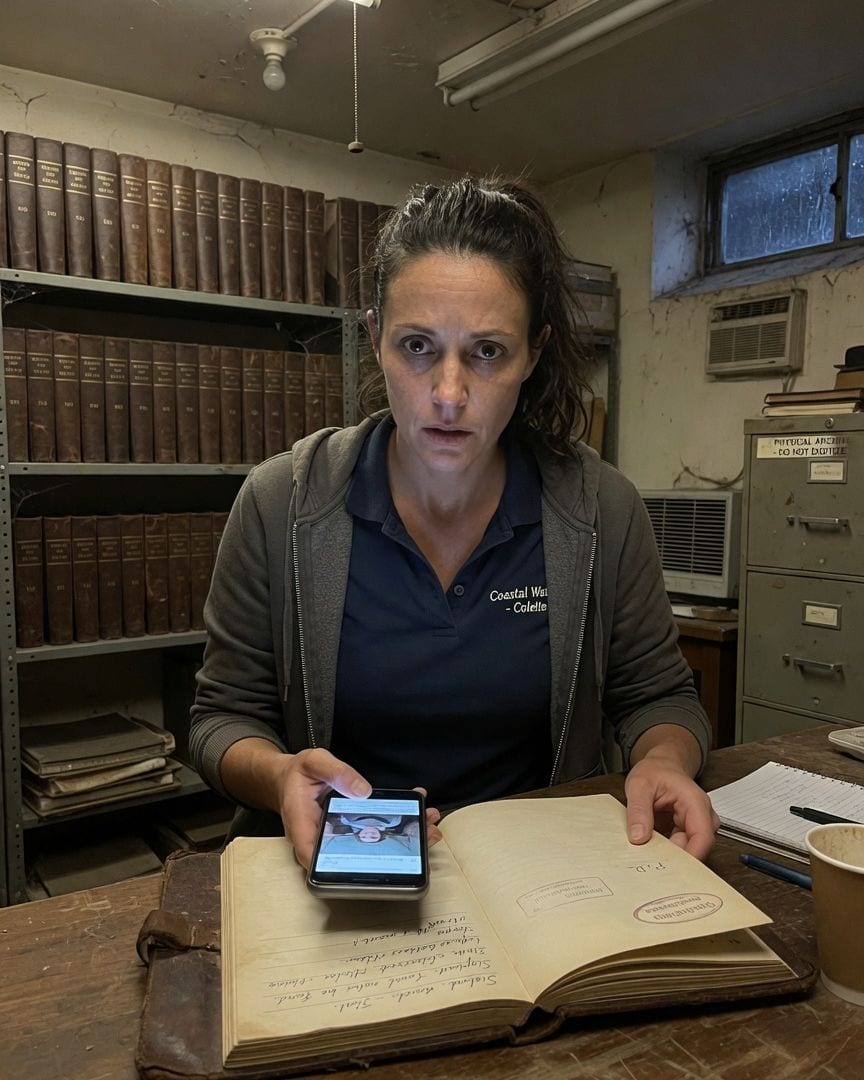
My coastguard log noted Sighting 9 again tonight, a light where no vessel showed. The old logs carry Sighting 9 off Skerry Point at 3:14am every tenth year since 1954, always 'nothing found,' always 'send no boat.'
On my watchtower night shift, the radar screen glowed green and the ocean was quiet. Then, a familiar light appeared off Skerry Point, exactly on cue, just as it had every tenth year for decades. But digging deeper, I found a hidden stamp in an old logbook: 'Operation Skerry. Status: Complete.' It left me with a chilling sense of finality.
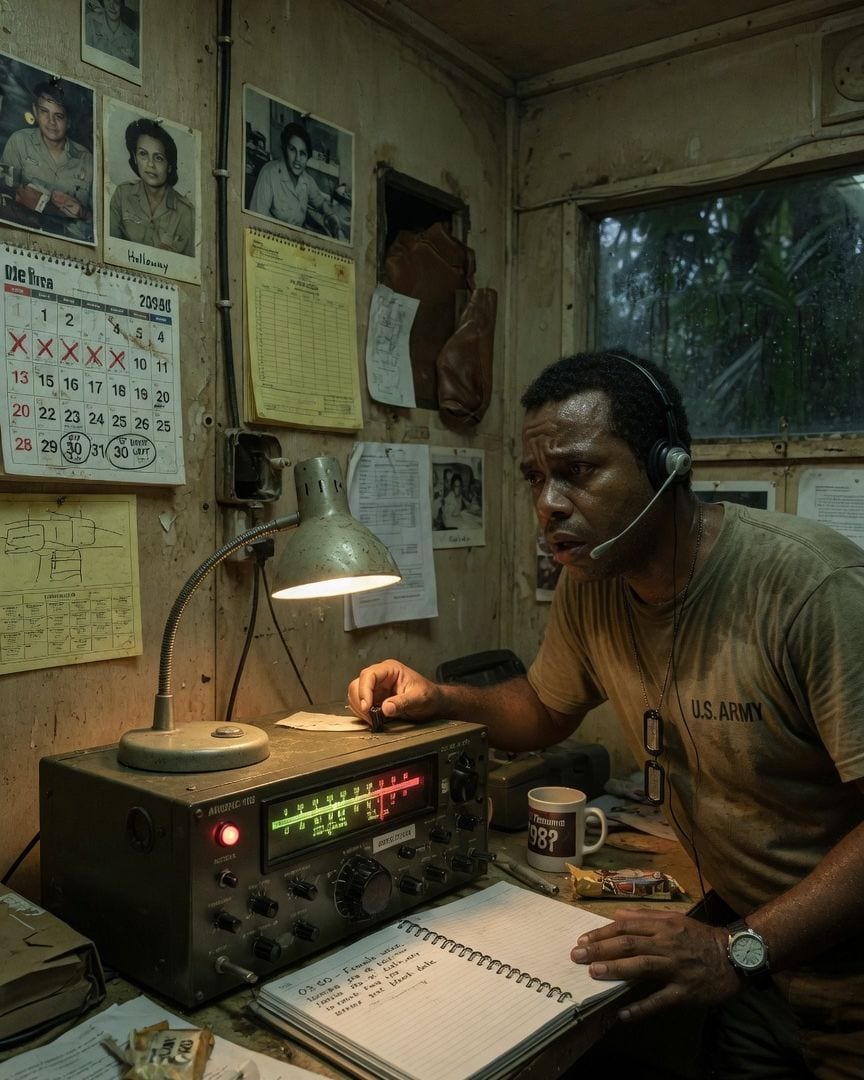
Three months from his tour ending, a sergeant's Cold War radio lists his name with a blank 'ceased answering' date. A hidden logbook warns: 'It knows my name.'
Sergeant Kevin Brooks was three months from finishing his year-long tour at a remote Panamanian jungle station. He meticulously marked each passing day, eager to escape the humid nights and unseen blossoms pressing against the comms shack walls. But at 0300, his old radio crackled to life with a woman's calm voice, listing names of past operators who 'ceased answering.' Then the voice spoke his own name, leaving a chilling blank space where his date should have been. What grim roll call had Sergeant Brooks stumbled upon?