A Staff Sergeant watched a vehicle incinerated a year ago, its dead crew now listed active duty, cross her base perimeter.
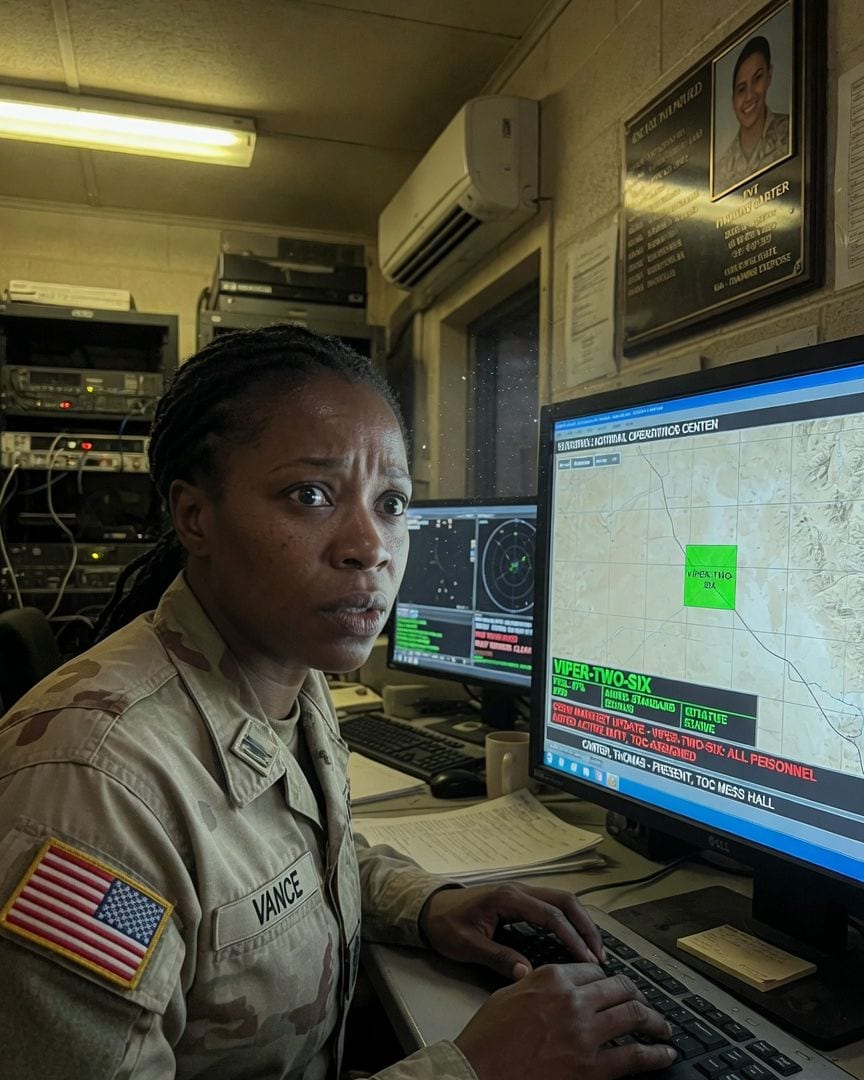
Staff Sergeant Eileen Vance watched the digital net in the high desert Tactical Operations Center, the silence outside broken only by the low hum of servers.
The air conditioning unit kicked on with a dry rattle, stirring the dust motes dancing in the monitor light. A friendly track, call sign Viper-Two-Six, blinked onto her screen, its icon a familiar green square. Eileen’s breath hitched.
Viper-Two-Six was gone, incinerated in a training exercise a year ago, its crew – Private Thomas Carter among them – memorialized on the polished plaque behind her.
She knew the details by heart: the classified burn report, the grim cross-referencing against the manifest. All confirmed destruction, all personnel accounted for as lost.
Yet, the small green icon crawled steadily across the digital map, reporting its position, fuel, and ammunition in the flat, correct format of the training standard.
Not a single radar or picket along its path had ever seen it pass, no ground sensors had ever registered its presence. But the system insisted it was there, moving closer to the base perimeter with unnerving precision.
Eileen felt the strange, disorienting disconnect deep in her chest, a physical wrongness.
Eileen queried the ghost track, a quick sequence of commands sent into the network. The response was instantaneous, a burst of data confirming its reported status, fuel levels, munitions count – all perfectly normal, all perfectly impossible.
As the data scrolled across her screen, a system notification flashed: ‘Crew Manifest Update – Viper-Two-Six: All personnel listed Active Duty, TOC-Assigned.’ Eileen blinked, rereading the impossible line. Active Duty. TOC-Assigned. She ran diagnostics, a knot tightening in her stomach.
She checked for network intrusions, sifting through logs for any sign of a breach, a hack, a prank. She even rebooted her console, the screen momentarily dark before sputtering back to life. Everything came back clean.
The system, by all accounts, was functioning perfectly, yet it insisted the dead crew of Viper-Two-Six were now active, assigned to her TOC.
Eileen called over Staff Sergeant Janet Bishop, her colleague, her voice tight with an urgency Janet rarely heard. She pointed at the screen, at the impossible crew manifest. Janet, initially skeptical, leaned in.
She ran her own checks, her brow furrowing deeper with each confirmation. She checked the burn report, the archived manifests, the personnel database. Every query confirmed the vehicle’s destruction, every name on the memorial wall.
Yet the active duty status persisted on the live network. ‘It’s… it’s all squared away,’ Janet whispered, her voice strained, ‘except for the fact that it’s impossible.’
The hum of the servers seemed to grow louder, the very air in the room suddenly too still.
The ghost track of Viper-Two-Six reached the base perimeter. Eileen and Janet watched, a cold knot forming in Eileen’s stomach.
No physical presence appeared on the heat sensors, no radar picked up a blip, no infrared camera registered anything but the barren desert night.
The digital icon simply passed through the virtual wire, crossing into the base grounds as if a physical vehicle had rolled right through the gate. Then, a new data packet arrived from Viper-Two-Six, a direct personnel report.
It listed Private Thomas Carter as ‘Present, TOC Mess Hall.’
Eileen’s eyes snapped from the screen to the memorial plaque on the wall, where Private Carter’s faded photo smiled back at her, his name etched below it in cold, hard stone.
Eileen reported the incident to Captain Gerald Rutherford, her commanding officer, the next morning. He listened, his expression a careful mask of skepticism, his gaze fixed somewhere over her shoulder. ‘A software bug, Staff Sergeant. Or a very elaborate prank.’
Eileen pushed back, her voice firm, detailing the impossible manifest update, the absolute lack of any physical signature for Viper-Two-Six, the consistency of the digital reports. Rutherford sighed, running a hand over his close-cropped hair.
He dismissed it with a curt wave, suggesting she double-check her server logs for corrupted files. Undeterred, Eileen began her own investigation, digging deep into the TOC’s archived network data from the past year.
The deeper she went, the more the ordinary explanations failed. She found intermittent, unexplained bursts of localized network activity, faint energy signatures recorded near the original Viper-Two-Six crash site, months after the incident.
These weren't system errors; they were data spikes, like phantom transmissions, brief and potent, registering just below the threshold for a full security alert.
More unsettling were the ‘ghost’ maintenance requests she uncovered in the base's old logs—work orders for a defunct vehicle bay, specifically marked for ‘Viper-Two-Six servicing,’ initiated and then left open.
They were never fulfilled, the vehicle long gone, yet they remained stubbornly active in the system's backlog, perpetually awaiting resolution. It was as if the system itself refused to let go, holding onto a ghost that everyone else had buried.
Eileen’s persistent queries into the archived data and network anomalies began to draw attention, a cold, anonymous kind of notice.
She noticed her own access logs had been flagged and reviewed by an anonymous system admin account, an account that didn't appear on any official roster, no name, no assigned department.
One night, working alone in the dimly lit TOC, the silence of the server room stretched thin, almost tactile.
A faint, distorted voice crackled over an unused radio frequency, a whisper that seemed to emanate from the very walls, from the vibrating server racks themselves.
It repeated a series of numbers, a date, then faded into static, leaving only the white noise of the channel. Eileen froze, the hair on her arms prickling.
She glanced at the memorial wall behind her, at the photos of the dead crew, Private Carter’s face a fixed, distant smile.
The air around the plaque felt noticeably colder, a sharp, penetrating chill that had nothing to do with the AC.
She tried to rationalize it as fatigue, a loose connection, the kind of phantom signals that sometimes drifted in from distant desert bases, but the feeling of being observed, of a silent presence, persisted, wrapping around her like a shroud.
The TOC, usually a place of sterile efficiency, felt vast and hollowed, every shadow holding an unseen witness.
Eileen confronted Captain Rutherford again, this time armed with printouts of the anomalous network activity, the ghost maintenance requests, and the flagged access logs. He listened, his jaw tight, his eyes flicking from her face to the pile of paper.
He sighed, running a hand over his face. ‘Staff Sergeant,’ he began, his voice low, ‘there are… aspects of this base’s history that are not widely discussed.’ He hesitated, a long, uncomfortable silence stretching between them.
Then, he pulled a faded folder from a locked drawer in his desk, the ancient metal groaning softly as it opened. ‘This outpost sits on what we've come to call an "anomaly zone."’
He slid a yellowed, hand-drawn map across the desk. It was a crude sketch of the base from decades ago, marking a specific area that encompassed the Viper-Two-Six crash site and a section of the TOC itself.
The pencil lines were faint, almost erased by time, but the boundary was clear. ‘There’s a classified addendum to our operational history,’ he continued, his voice barely above a whisper.
‘A directive to "maintain all active-duty records for personnel lost within the designated anomaly zone" for an unspecified duration.’ He pointed to a single, typed line on the directive, dated 1978. His finger lingered on the ink, almost reverent.
‘It’s not a memorial, Staff Sergeant. It’s a protocol. The system… it demands accountability for them.’ Eileen looked at the map, at the faded circle marking the anomaly zone, then at the directive with its chilling, precise language.
The ghost track, the impossible manifest, the cold spot by the memorial, the phantom transmissions – it all began to snap into a horrifying, impossible coherence, like a puzzle she never wanted to solve.
Eileen sat alone in the TOC, the faded map and the classified directive spread before her on her console.
The directive, dated from 1978, spoke not only of maintaining records but also of ‘anomaly zone liaison’ duties, a title she’d never heard of.
She pulled up the current TOC personnel manifest, trying to reconcile the past with the present, to understand the parameters of this impossible accountability. The system hummed around her, oblivious to the dread that coiled in her gut.
As she cross-referenced the names, a chill snaked down her spine, colder than any desert night. A supplemental, handwritten entry, almost erased by time, appeared on the original 1978 personnel manifest for the TOC.
Her own name, Staff Sergeant Eileen Vance, was listed there, in the same careful, looping script as Captain Rutherford’s predecessor, Captain Foster.
Beside it, the duty: ‘TOC Operations, Anomaly Zone Liaison,’ with a start date that predated her birth by decades. Her fingers brushed over the impossible entry, the ink a faint, ghostly tremor beneath her touch.
Eileen confronted Rutherford one last time, the 1978 manifest clutched in her hand. The paper, fragile with age, seemed to burn in her grasp.
He took one look at her face, then at the document, and went utterly pale, the color draining from his face as if by unseen hands.
‘It’s not about our accountability, Staff Sergeant,’ he said, his voice barely a whisper, a contrast to his usual clipped command. ‘It’s the system’s. This place… it doesn't just take. It keeps.’
He gestured vaguely at the memorial wall, at the servers humming behind her. ‘Those lost here, in the anomaly zone, they aren't truly gone. They’re… re-registered. The core military accounting system, in its rigid adherence to data, cannot delete them.
It sees them as active, and it demands their presence, their status, their accountability. It insists they are still here.’ He pointed to her name on the old manifest, his finger trembling slightly.
‘Your name is there not because you were here, but because the system has already accounted for your future entanglement with this place. It’s a pre-emptive entry.
The ghost vehicle, the reports… it’s the system trying to reconcile a physical asset with its registered, living crew. It's trying to make the numbers fit, no matter how impossible the reality.’
Every fragmented clue, every impossible report, every cold spot, every phantom transmission clicked into place with horrifying precision, forming a monstrous, coherent whole. The horror was not that it made no sense, but that it made perfect, chilling sense.
Eileen felt a profound, chilling understanding settle over her. She wasn't just tracking an anomaly; she was part of its ledger, accounted for before her time, a future entry that had already been recorded.
The ghost track of Viper-Two-Six, which had been pinging from the Mess Hall, now pulsed erratically from the TOC itself, its location shifting wildly between server racks, a frantic dance of digital insistence.
Driven by a desperate need to find a physical anchor, a real object that could explain the digital haunting, she searched the rarely used server bay, the air thick with the smell of ozone and old dust.
Tucked away behind a dusty ventilation unit, almost hidden from view, she found it: a small, charred metallic fragment. It bore the faded serial number of Viper-Two-Six, a few scorched digits still discernible beneath the soot.
It was ice-cold to the touch, a deep, unnatural cold that seemed to absorb the heat from her fingers, yet the digital net registered it as a ‘live beacon’ for the vehicle, a steady, insistent pulse.
This was the artifact, real, dated, undeniable.
As she reached for it, a faint, internal light pulsed within the fragment, a soft, green glow that mirrored the icon on her screen, and the TOC’s systems flickered, the lights dimming, then surging, a low, guttural whine echoing from the servers.
On the memorial wall, the photo of Private Thomas Carter seemed to shift, his eyes momentarily meeting hers, a silent, knowing gaze that held neither anger nor sadness, just a terrible recognition.
The system was trying to pull her deeper, to integrate her fully into its impossible accounting. She understood then. There was no escaping the ledger, only acknowledging its relentless demand.
She gently placed the fragment back in its hidden recess, the futility of resistance heavy in her hands. The system would always seek to account.
The next morning, the ghost track of Viper-Two-Six was gone from the digital net. The ‘ghost’ maintenance requests were all closed, marked ‘resolved’ in the system logs, the dates of resolution showing the previous night.
Captain Rutherford was gone, transferred overnight, his office cleared out, a faint imprint on the desk where his locked drawer used to be.
Eileen remained, alone in the silent TOC, the memorial wall unchanging, yet now imbued with a terrifying new meaning.
Eileen Vance finished her tour at the high desert outpost. She never spoke of the incident again, not to the new CO, not to anyone.
Her service record was impeccable, her transfer to a new assignment processed without issue, a seamless transition in the vast military bureaucracy.
But sometimes, late at night, when she was alone in her new office, in a facility far from the desert, she would find herself running an old, forgotten diagnostic on the network.
And sometimes, for a split second, a familiar call sign, Viper-Two-Six, would flash across the screen, then vanish, leaving behind only the sterile glow of her monitor.
A new Staff Sergeant, Marco Romano, arrived at the TOC to replace Eileen Vance. He noticed a faint, almost invisible, handwritten annotation on the bottom of the current personnel manifest, just beneath his own name. It read: "Liaison, Anomaly Zone."
If this one got to you
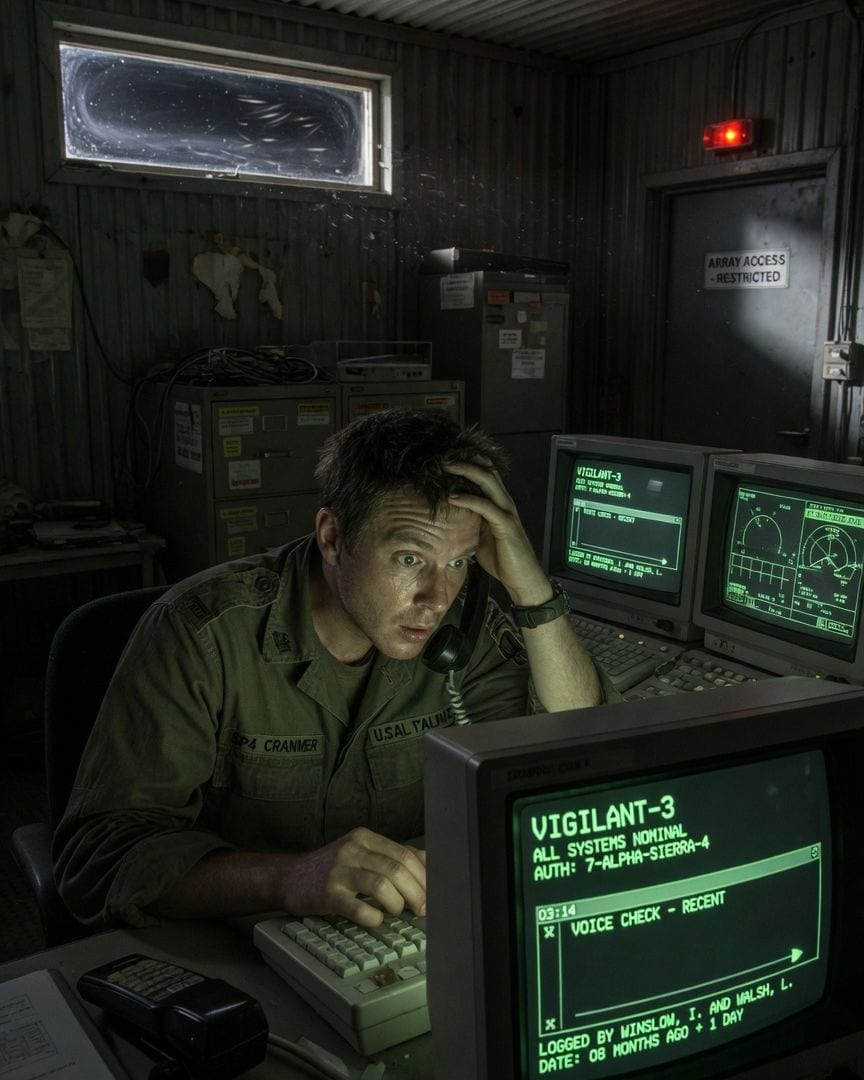
Specialist Cranmer’s console logs a voice from a station destroyed eight months ago. Its dead operators ask, 'Did anyone ever find out what happened to us?'
Specialist Arthur Cranmer endured another lonely overnight watch at Radar Site 4, the wind howling outside his isolated Anatolian post. At 0314, a routine comms check brought a chilling response from Vigilant-3, a station that had burned down, killing its two operators eight months prior. Cranmer's commanding officer dismissed it as a glitch, but the radar specialist knew better. He accessed classified logs, uncovering eight months of regular 'all systems nominal' check-ins from the destroyed station, authenticated by the dead operators. He then found his own recent call, logged by the same two k*lled personnel, followed by their haunting question: 'Did anyone ever find out what happened to us?'
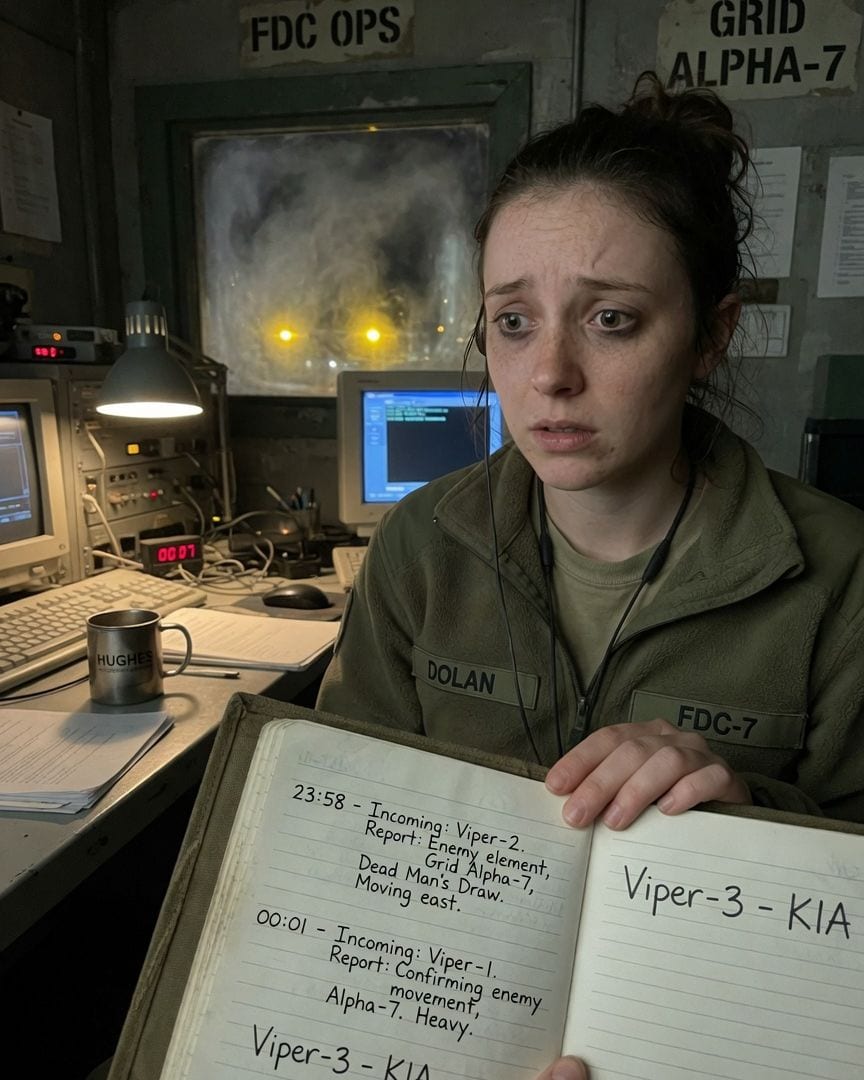
On her final watch at Firebase 7, Specialist Dolan's comms logged frantic calls from a patrol wiped out last week.
Specialist Emily Dolan adjusted her headset in the FDC, the fog pressing against Firebase 7's windows on her final watch before its decommissioning. Near midnight, frantic calls began coming in from observer posts, reporting enemy contact in treacherous territory where a patrol was wiped out just last week. But Control reported losing comms with those posts hours ago, leaving Dolan to realize her system had logged a full conversation with voices no one else heard. Then, the physical FDC logbook confirmed her entries, complete with an unfamiliar annotation: 'Viper-3 - KIA,' the call sign of the very patrol wiped out days before. What impossible truth had the firebase itself recorded?
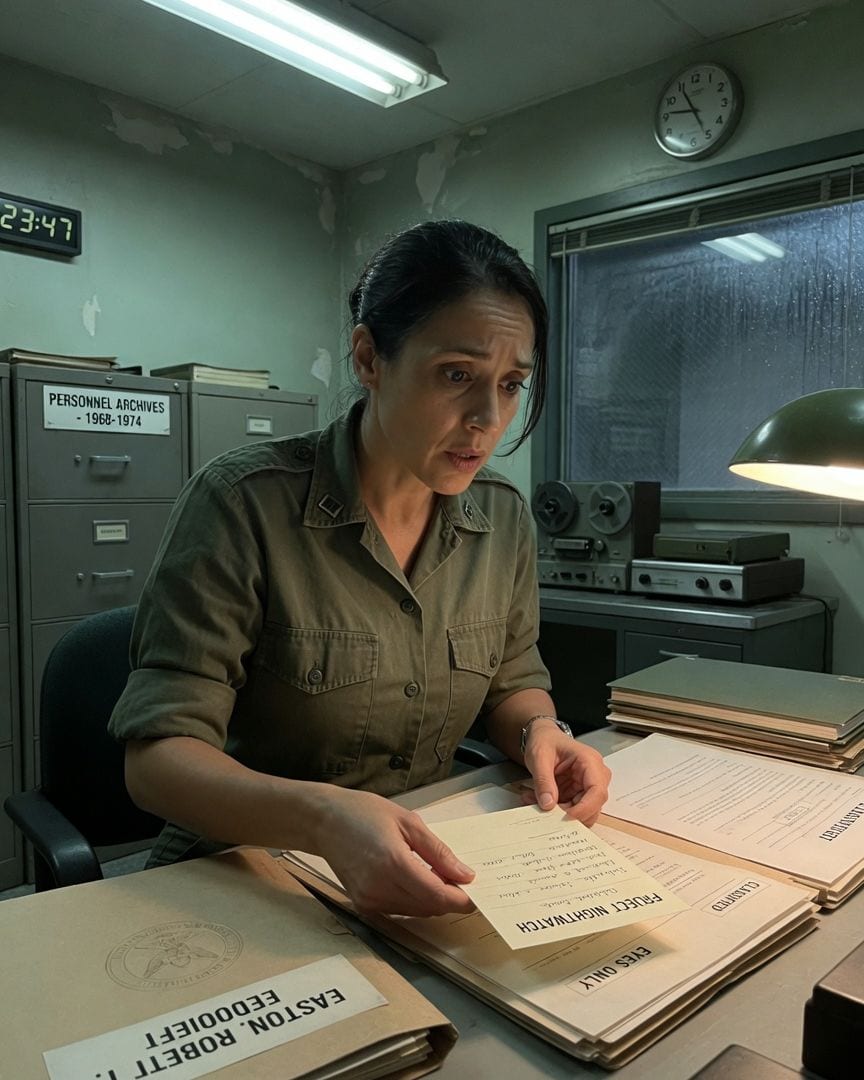
A Cold War tower controller logs an object vanish from radar, then hears the pilot scream it’s filling his windscreen. Her own name, 'Bardolph, Ines', now marked 'Observed' in a secret file.
Captain Ines Bardolph, a tower controller, was counting down the months until her transfer to Langley and the decommissioning of her base, hoping to leave behind the unsettling incidents of her final posting. But one night, her radar scope showed an impossible blip, solid and unwavering, 40 miles north of the Danube, only to vanish in less than a second, leaving a pilot screaming in terror. Despite the clear evidence, the official report blamed "atmospheric inversions," while the terrified pilot received a glowing review and promotion, his file meticulously scrubbed of any anomaly. As Captain Bardolph reviewed the pilot's pristine record, she found a hidden slip of paper, revealing a chilling truth: 'Subject: Bardolph, Ines. Status: Observed.' Was she merely an observer of the impossible, or was she now part of something far more sinister?
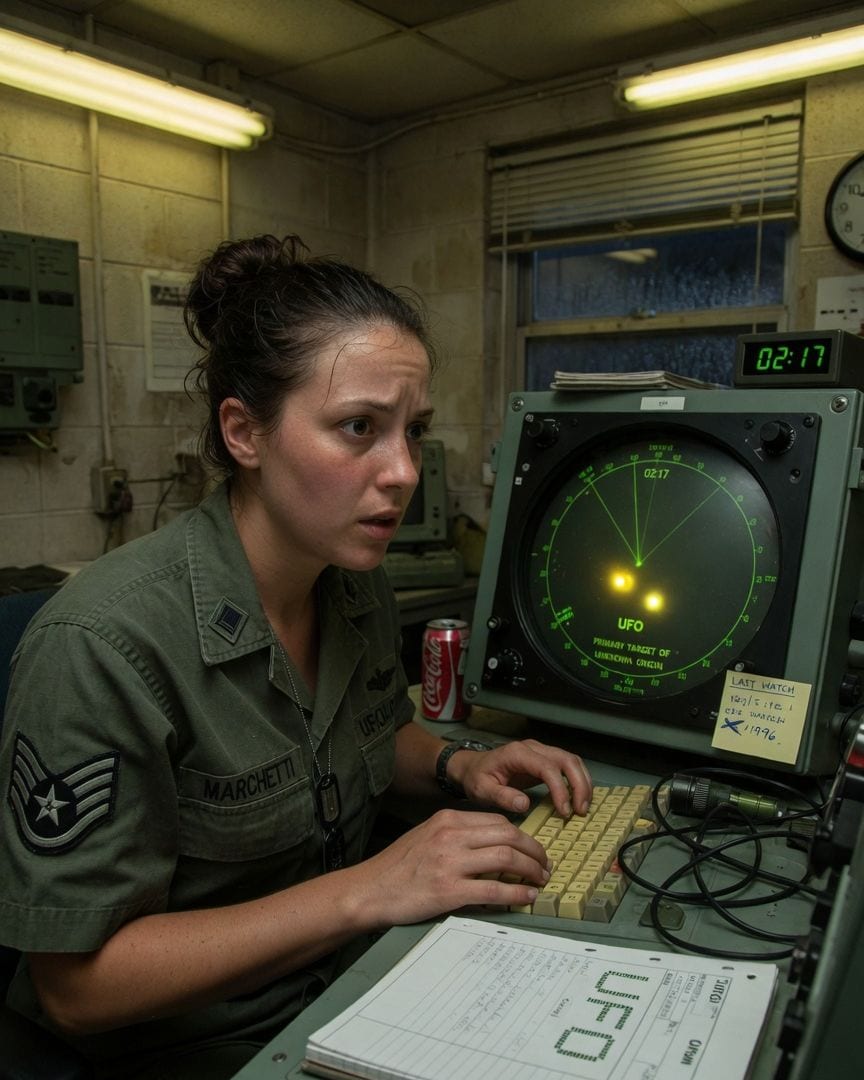
Technical Sergeant Marchetti's last watch saw an impossible radar blip merge with a plane. Later, its manifest showed a 'NO SHOW' passenger who *had* boarded, stamped 'FILE CLOSED'.
Technical Sergeant Odile Marchetti sat alone for her final watch at Gulf Coast ground control, anticipating a quiet transfer to a desk job. The dim console glow and rhythmic radar sweep were familiar, comforting sounds until 02:17, when an airliner captain reported impossible traffic flying in formation. Odile watched a second, larger blip appear on her screen, mirroring the plane's path with impossible precision. As the captain's voice, now tinged with a faint tremor, declared his plane was flying through where the object had been, the two radar returns merged into one, impossibly stable. Later, reviewing the official dismissal, Odile discovered an airline manifest listing a passenger as 'NO SHOW' who had, by handwritten note, definitely boarded—their name redacted, the file stamped 'CLOSED'.
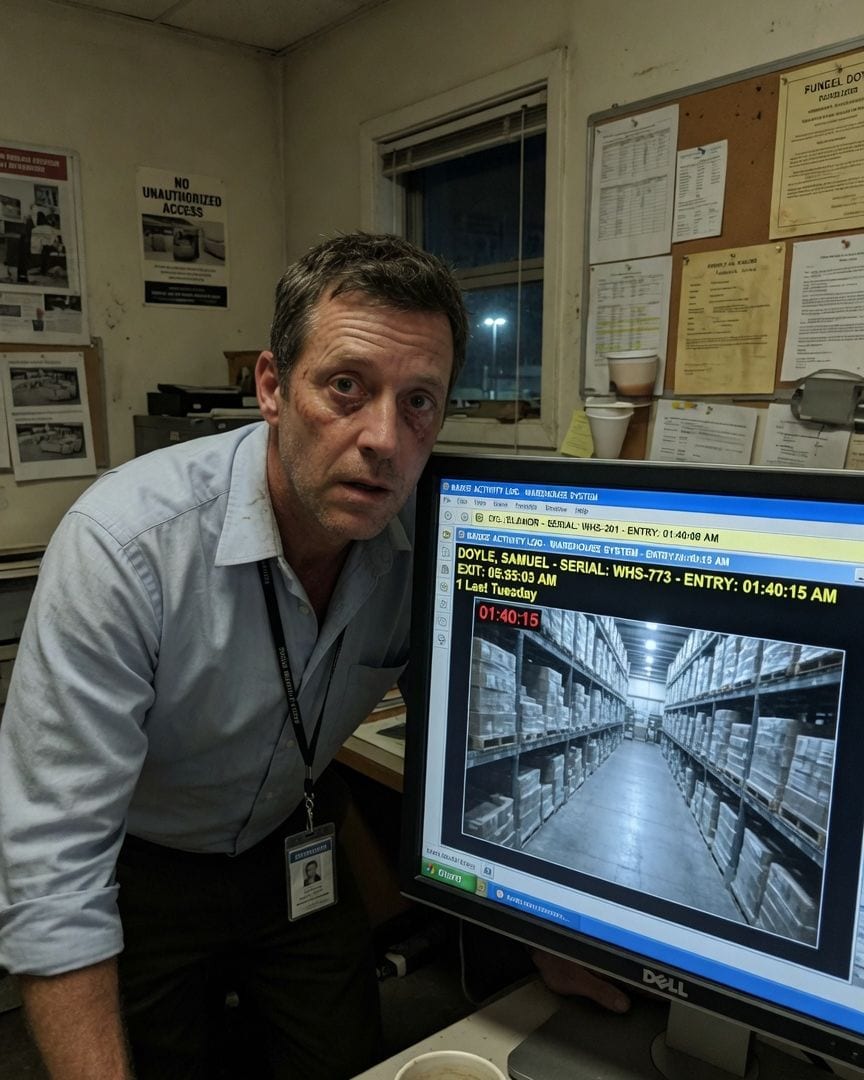
My dead colleague's badge, deactivated weeks ago, logged an entry at 1:40 AM last Tuesday. Then I found another from 1978, with the same impossible times.
My monitor showed a shocking entry: Samuel Doyle, dead and buried three weeks ago, had just logged into the warehouse. His badge was deactivated the day of his funeral, yet the system recorded his precise entry and exit, even though security footage showed the aisles were utterly empty.
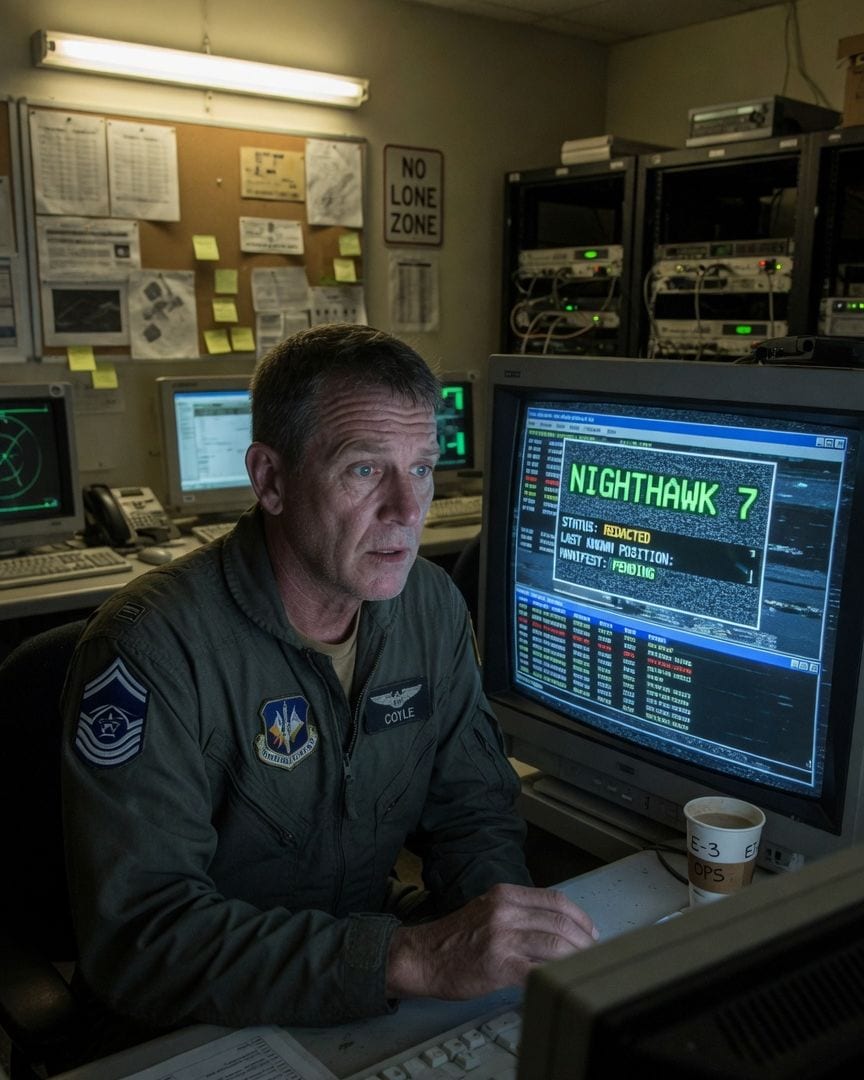
A ghost radar blip returned for Master Sergeant Coyle, three months from retirement. Its call sign: NIGHTHAWK 7, status REDACTED.
Master Sergeant George Coyle, nearly three decades in uniform, counted the last missions before his retirement. High above the black North Atlantic, his E-3 Sentry hummed with the familiar, impossible truth of a ghost radar blip. This single return squawked nothing, eluding every filter and fighter jet sent to investigate, yet the precise systems swore it was there, inbound, week after impossible week. Driven by obsession, Coyle later found a flicker of data: the call sign "NIGHTHAWK 7." Investigating further, an obscure database revealed its status as 'REDACTED,' with its last known position matching the ghost track. What forgotten project was haunting the skies, precisely where it had been scrubbed?