On his last lonely watch, a young private found the decades-sealed bunker hatch gaping open, with a logbook confirming an impossible landing.
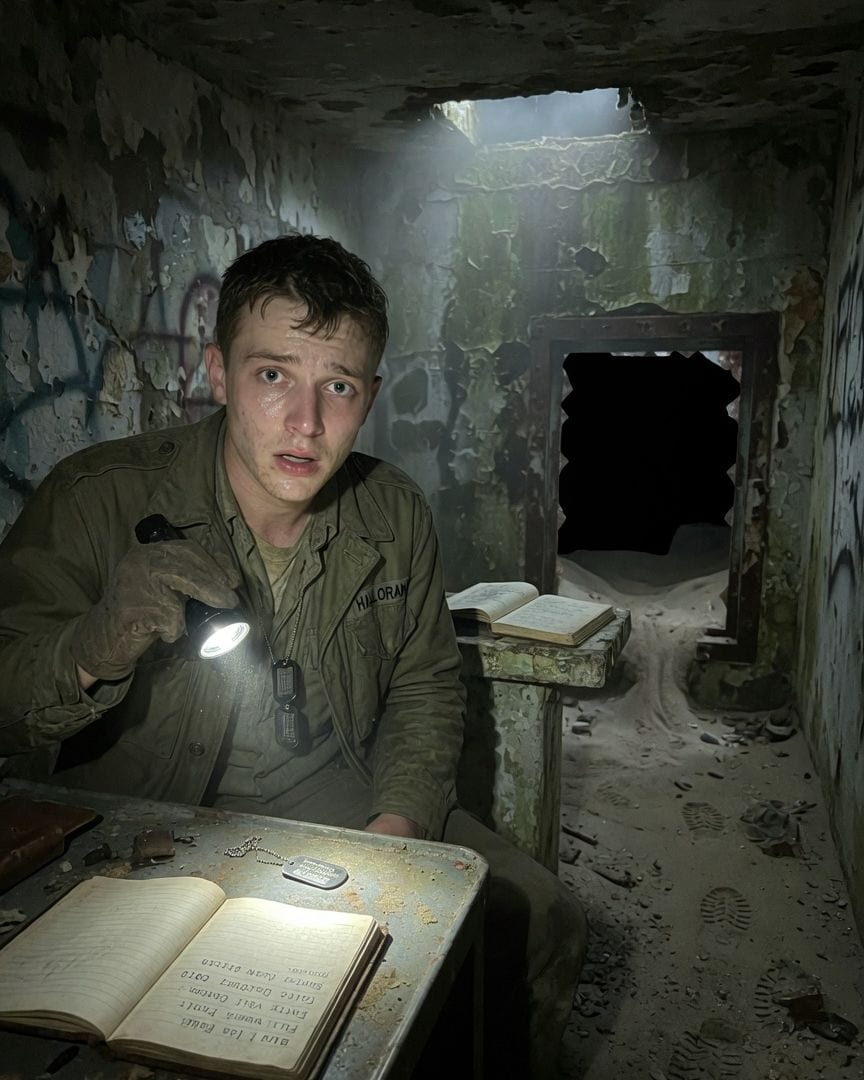
Private Frank Halloran, twenty, shivered on his temporary lookout duty at the disused WWII coast-artillery bunker on the northern California headland.
His transfer was two days out, and this graveyard watch was his last before he could finally put this lonely assignment behind him. At 0100, the fog rolled in thick, a damp, silent wall swallowing the ocean.
He swept the searchlight across the beach, a routine motion, the beam cutting a slow arc through the swirling gray. But this time, out of the swirling gray, figures began to coalesce.
A landing party, forming up on the sand, in gear he didn't recognize—something old, heavy, and utterly out of place. They stood silent, waiting.
He radioed it in, his voice tight, but Captain Fletcher's voice crackled back, attributing it to fog and fatigue, a trick of the light. Halloran knew what he’d seen.
When dawn burned off the fog, the beach was empty, save for a clear set of drag marks hauled up the sand to the bunker's rusted-shut rear hatch.
The hatch, which had been sealed for decades, stood open, a gaping maw in the concrete.
Halloran secured the immediate perimeter, his heart hammering against his ribs, but his training kept him methodical. He inspected the rusted hatch.
The corrosion had been cleanly broken, not pried; it looked as if the metal had simply dissolved at the edges, leaving a clean, almost surgical break.
Inside, the air was cold, damp, and tasted faintly of salt and something else, something metallic and old, like forgotten blood and ancient iron.
His flashlight cut through the gloom of the bunker's main chamber, illuminating crumbling concrete and the detritus of decades. On a crumbling concrete pedestal, amidst the dust and debris, lay a leather-bound, meticulously maintained logbook, open to a recent date.
The last entry, in faded but clear ink, read: '0100. Landing Party: Full Complement. Entry via Rear Hatch.' Halloran felt a cold knot tighten in his stomach.
He tried to rationalize it – squatters, a prank, some elaborate training exercise – but the logbook’s precise entry and the impossible opening of the hatch defied any mundane explanation he could conjure.
Beneath the pedestal, on the dusty floor, was a fresh, distinct set of boot prints, leading deeper into the bunker's winding darkness.
Against his better judgment, Halloran followed the boot prints. The bunker was a labyrinth of forgotten passages and gun emplacements, the darkness pressing in around him.
The prints led him down a narrow, unlit corridor, the air growing colder with every step, ending at a small, hidden room, not marked on any of the old schematics he'd seen.
The silence in the room was absolute, a heavy, dead weight. On a rusted metal table, glinting in the beam of his flashlight, lay a single, modern-looking dog tag.
He picked it up, his gloved fingers tracing the engraved letters: 'SGT. DRUMMOND.' Sergeant Charles Drummond, his own immediate superior, who was supposed to be in his bunk back at base.
Halloran returned to base, the dog tag hidden in his pocket.
He reported the open hatch and the boot prints to Captain Fletcher, omitting the dog tag from his account, knowing he’d sound unhinged, like the fog had finally gotten to him.
Sergeant Drummond, thirty-five, was present and accounted for, giving Halloran a strange, scrutinizing look across the captain's office as Halloran finished his report.
Halloran, shaken but determined to find a logical answer, began to quietly investigate Drummond's movements, checking duty rosters and patrol logs from the previous night, hoping for an explanation that wasn't supernatural. He found nothing.
Under the guise of researching the bunker's historical significance for a unit project, he approached Specialist Sophia Pierce, twenty-four, a diligent records clerk. He asked about old manifests, any records of 'special assignments' for the headland from decades past.
Pierce, initially dismissive, found a historical 'Watch Keepers Detachment' manifest from WWII, noting it was 'unusual' and filed away in a forgotten archive.
Halloran noticed Drummond watching him more closely during their mess hall meals, a subtle, unsettling presence at the periphery of his vision. Each time Halloran glanced up, Drummond would be looking away, but the feeling of being observed persisted.
Halloran found a glaring discrepancy in Drummond's duty log for the previous night – a gap that didn't add up to his reported activities, a two-hour window where the sergeant's whereabouts were simply logged as 'off-base, personal business,' a rarely used and often unverified excuse.
He attempted to access the bunker's old maintenance logs again, hoping for clues about the hatch's mechanism or its long-term integrity, but his digital access was suddenly revoked without explanation. A message popped up: 'Access denied. Administrator override.'
It was not a glitch. Later that evening, he found a folded note slipped under his door: 'Some things are meant to stay buried. Don't push.' The handwriting was precise, almost archaic, a script he vaguely recognized but couldn't place.
On his next patrol near the bunker, as the searchlight cut its slow arc across the treeline, he saw a lone figure silhouetted against the beam, watching him from the deep shadows. It was Drummond.
Halloran called out, his voice sharp against the rising wind, but the figure remained silent, then vanished into the encroaching fog, leaving Halloran with a profound sense of being observed, a shiver running down his spine.
Halloran confronted Drummond in his office, the dog tag now a heavy weight in his hand. He placed it on the desk between them, the metal glinting under the fluorescent light.
Drummond’s composure cracked, just for a moment, a flicker of something ancient and weary in his eyes. He picked up the dog tag, turning it over in his fingers.
'The bunker has a history, Private,' Drummond said, his voice low, almost a whisper against the hum of the air conditioning. 'A standing order that's never been rescinded. A count that must be maintained.'
He explained that the 'Watch Keepers Detachment' wasn't decommissioned; it merely went dormant, waiting for its time. He hinted at a 'duty' that falls to those assigned to the headland, a perpetual role passed down through generations.
The 'landing party' Halloran saw, he said, was just fulfilling that duty, collecting what was owed.
Drummond revealed that the note under Halloran's door was indeed his, a warning meant to stop him from digging deeper, from getting too close to what he shouldn't know.
'The system demands its due, Halloran,' he said, his gaze fixed and unsettling, 'And it has a very long memory.'
Drummond, pale and grim, finally showed Halloran a copy of the 'Watch Keepers' roster, salvaged from an old, forgotten file he kept hidden in a locked drawer.
It was decades old, from 1944, a typewritten page with a dozen names, all marked 'Permanent Assignment.' Halloran scanned the faded entries, his breath catching in his throat.
Amongst the WWII-era names, one stood out, written in the same meticulous hand as the logbook entry he found in the bunker: 'HALLORAN, T. Private. Service No. 374-91-XXX.' The service number was his own, identical.
But the name was 'Thomas,' not 'Frank.' He looked up at Drummond, who met his gaze with a look of grim resignation, a quiet despair.
Halloran stared at the name, the service number, the date, and the 'Permanent Assignment' status, the implication crashing over him with the force of a tidal wave.
Halloran reeled, the old roster a damning piece of proof in his hand. The fluorescent lights of Drummond’s office suddenly felt too bright, the air too thin. Drummond, seeing Halloran's comprehension, elaborated, his voice still low, almost monotone.
The bunker wasn't just a site; it was a 'gate,' a nexus for the Watch Keepers. They were its perpetual guard, and when one was 'lost' or their time expired, another was chosen.
The selection often fell upon those who came too close, or whose names, like Halloran's, 'echoed' in their ancient, unofficial records. The landing party he saw was the 'collection detail,' enacting a cycle that had played out for generations.
Drummond admitted he himself was almost taken years ago, but he 'passed the duty' to another, becoming a 'warden' for the place, ensuring the 'count' was always met.
The dog tag, Drummond explained, was a final, desperate warning for Halloran, a sign that he was being considered as the next recruit.
The 'unfamiliar gear' was simply the uniform of the Watch Keepers, from a time long past, but still current in their immutable 'system.'
Drummond, his face etched with a weary dread that seemed as old as the bunker itself, told Halloran he had one chance to 'reconcile the count' without being taken.
He instructed Halloran to remove all official records of his presence at the bunker and to leave the headland before the next fog cycle, which was already beginning to gather on the horizon, obscuring the distant ocean.
He implied that if Halloran failed, the 'Watch Keepers' would make him part of their permanent roster, just as they had done with countless others whose names had appeared on their 'special assignments' list over the decades.
Halloran raced against time, his mind a blur of terror and adrenaline. He returned to base, his movements hurried but precise, the methodical training of his military life serving him now in a desperate bid for survival.
He deleted his temporary assignment logs from the digital system, wiping his name from the rotation schedule, then destroyed physical copies of local records that mentioned his posting to the headland.
As he worked, he heard distant, rhythmic marching sounds from the direction of the bunker, growing louder, carried on the rising wind.
The fog, a dense, swirling shroud, began to roll in, swallowing the coastline, a familiar damp chill seeping into the air.
He felt a cold dread, the sensation of being counted, assessed, as if unseen eyes were watching his every move, waiting for the count to be complete.
Halloran escaped the headland just as the fog fully enveloped the coast, leaving behind a blank space in the records where his temporary assignment should have been.
He requested an immediate transfer, citing 'unforeseen circumstances' and the need for a change of scenery.
Captain Fletcher, though perplexed by Halloran's unusual pallor and the suddenness of his request, approved it without further questions, perhaps sensing a deeper truth he didn't want to investigate.
A few days later, the bunker's rear hatch was found rusted shut again, just as it had been for decades, the drag marks on the sand erased by the tide, leaving no trace of what had transpired.
Halloran is now stationed thousands of miles away, trying to forget the fog and the count. He keeps a faded copy of the old Watch Keepers roster, tucked away with his most private belongings, a chilling reminder.
He often finds himself checking manifests, headcounts, any list of names, with a meticulousness that borders on obsession, knowing some counts can never truly be reconciled, only temporarily postponed.
He scans each new roster, a cold dread in his gut, searching for an echo of a name, a familiar service number.
A month after Private Halloran's transfer, Specialist Sophia Pierce found a minor discrepancy in the supply logs for the old coastal bunker.
A new entry, dated the day of Halloran’s departure, recorded a single, unmarked dog tag added to the inventory. Beneath it, in the remarks section, someone had scrawled a single, chilling word: 'Reconciled.'
If this one got to you
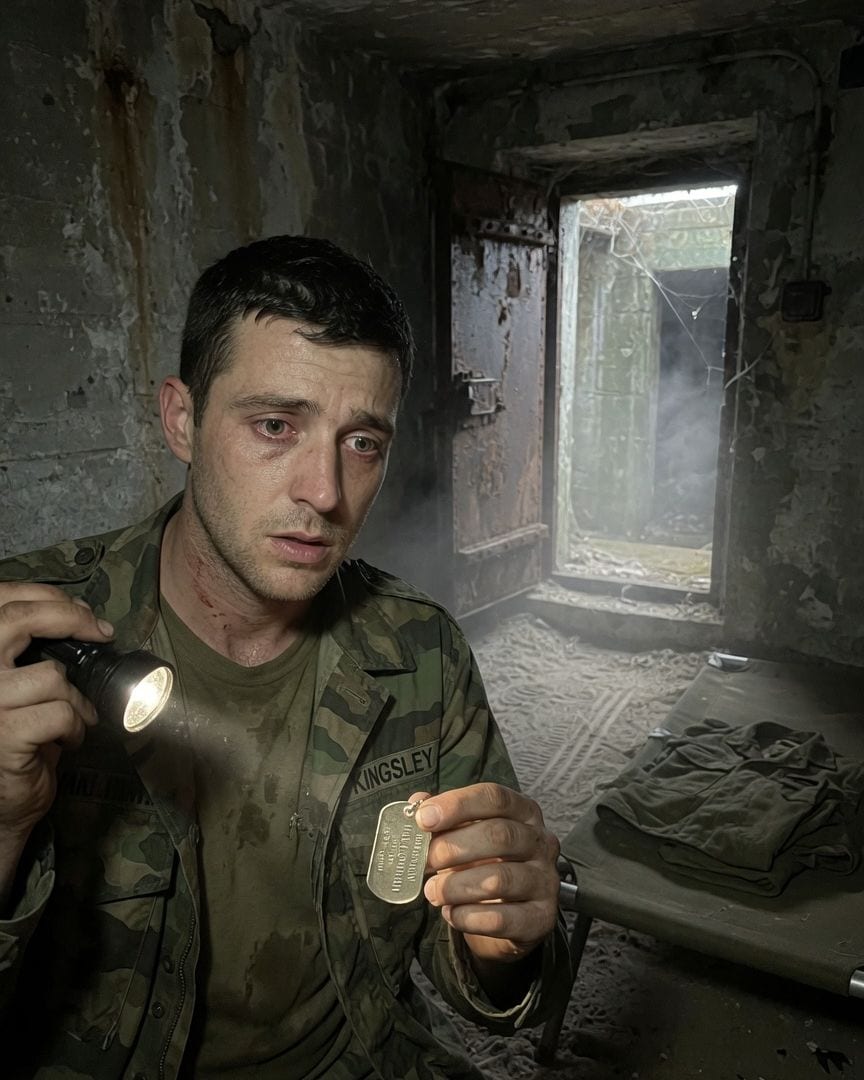
On his final rotation, a Private finds a WWII dog tag for 'Halloran' in a bunker sealed for eighty years.
Private Roland Kingsley endured the bone-deep weariness of his final graveyard watch at a reactivated WWII bunker on the Northern California coast, just hours from dawn and the end of his deployment. His searchlight cut through thick fog, revealing impossible figures: men in archaic WWII uniforms, assembling on the deserted beach, only to vanish moments later. As dawn broke, Kingsley discovered the bunker's rear hatch, sealed for decades, now stood mysteriously ajar. Inside, on an empty cot, lay a WWII-era field jacket, and in its pocket, a dog tag for 'Halloran' — a name impossible to the bunker's eighty-year history. What unseen presence had disturbed the long-sealed past?
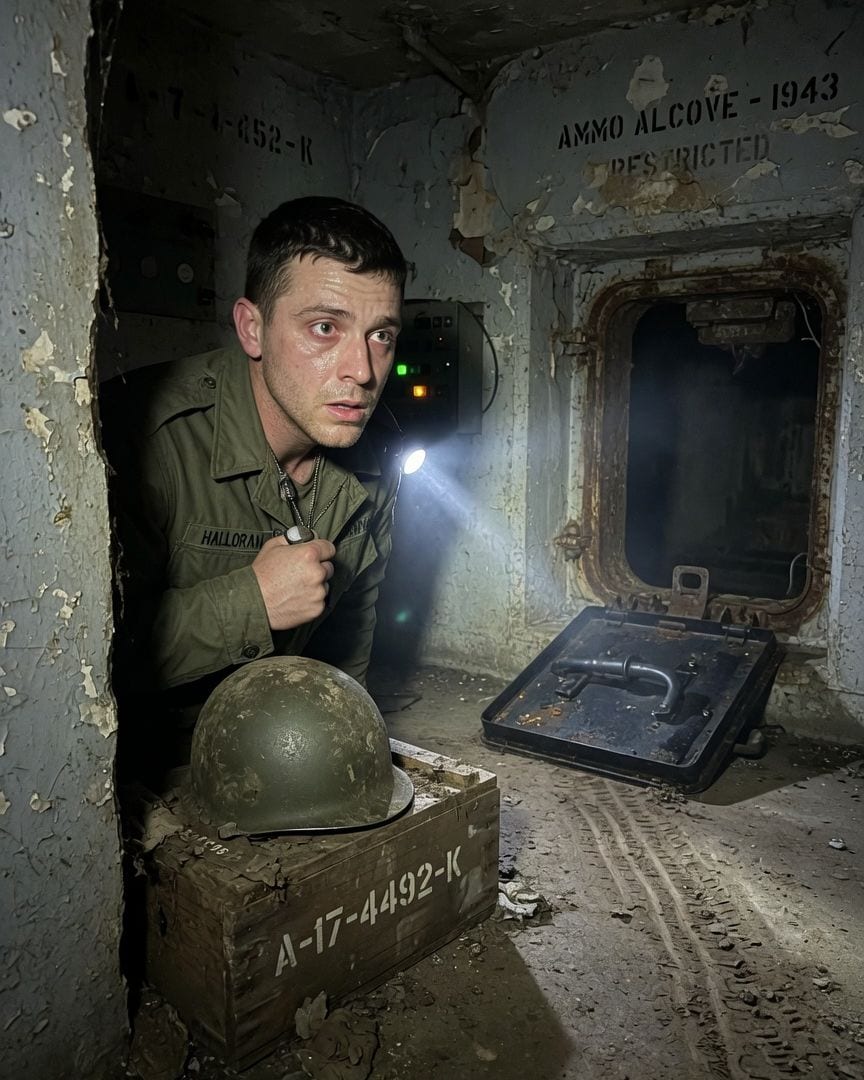
A coastal sentry on his last watch found the bunker's decades-sealed hatch ripped open by impossible strength.
Private Daniel Halloran shivered through his final hours on watch at the old WWII coast-artillery bunker, counting down to his discharge and going home. The pre-dawn fog rolled in thick, and through its swirling white, he watched a landing party form on the beach below, their outdated gear impossibly clean, their forms unmoving. After dawn burned off the mist, the beach was empty, but up the embankment, the bunker's rear hatch—sealed for decades—stood violently ripped open, its locking bar twisted. Inside the dark, silent chambers, Daniel's flashlight found a mud-caked military helmet, unlike any he'd ever seen, bearing a faded serial number that felt sickeningly familiar.
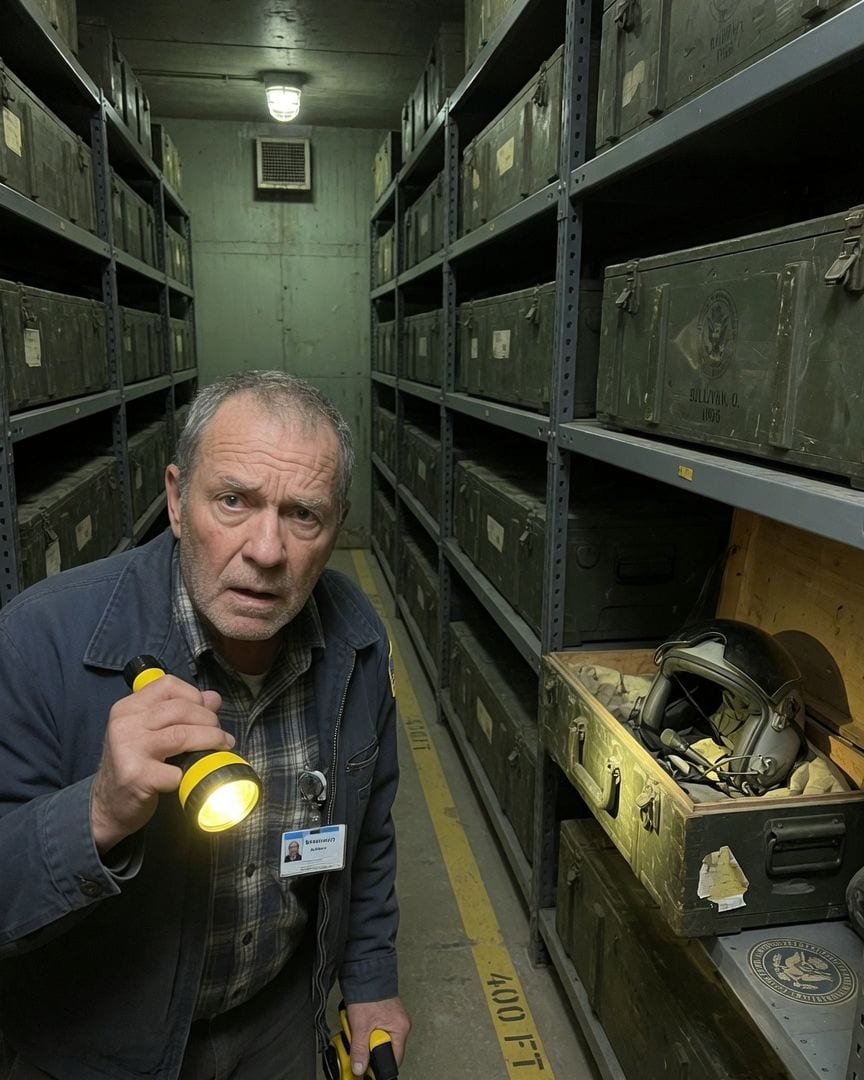
On his last audit before retirement, Barrow Nunnelly’s measuring wheel found a Cold War storage cave 211 feet longer than any map, holding a pilot's helmet named SULLIVAN, O.
Barrow Nunnelly, a sixty-three-year-old auditor, faced his last contract before retirement: an audit of Cheatham Storage Cave 3. The vast, subterranean chamber, humming at a steady fifty-two degrees, was officially four hundred feet long, a fact confirmed by decades-old blueprints. Yet, Barrow’s measuring wheel clicked past four hundred, then five hundred, finally stopping at an impossible six hundred eleven feet. Beyond the charted length, he found older industrial units holding military-grade crates with obsolete federal seals, culminating in a sealed container from 1966 holding a worn flight helmet bearing the name "SULLIVAN, O." The cold silence of the cave now held an impossible, untold story.
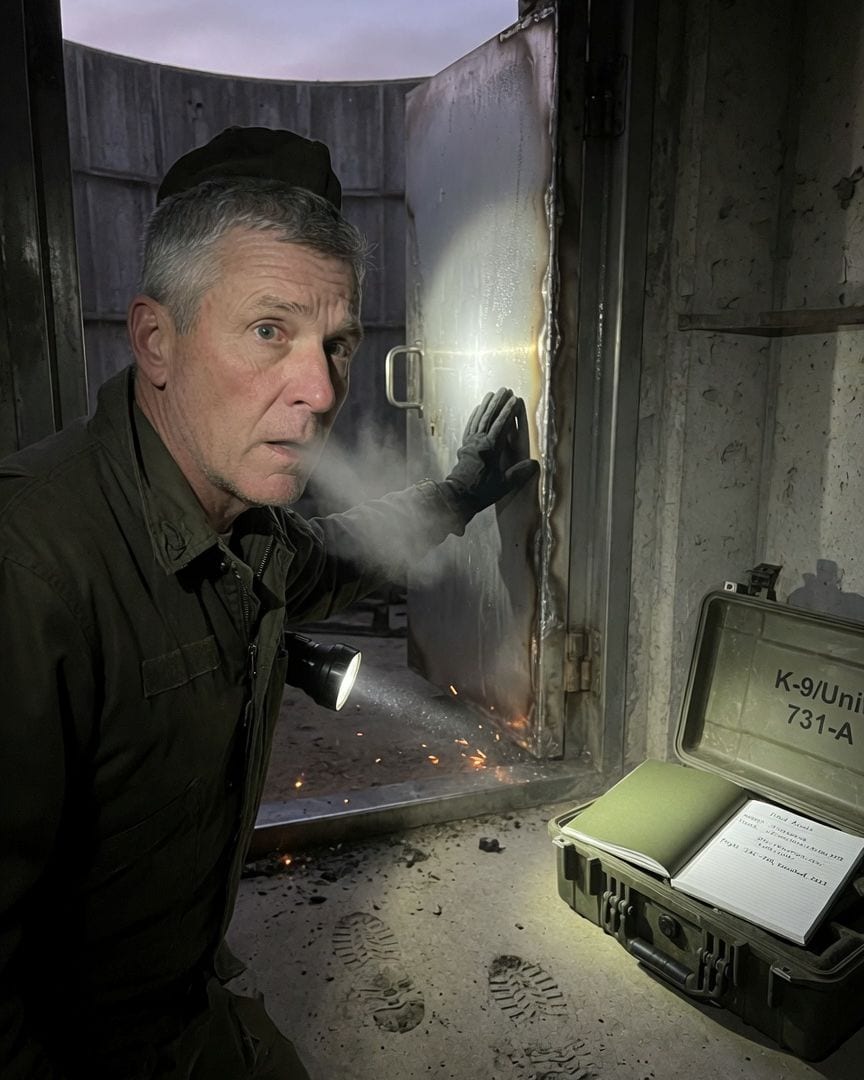
The Cold War silo was welded shut in 1968. A Captain found lights burning, fresh prints leading inside, and a logbook with a vanishing from last week.
Captain Merrit Sable faced a deadline at Silo K-9: one cold morning to retrieve classified hardware before its scheduled demolition at noon. The silo, officially welded shut by the Air Force in 1968 and long off-grid, should have been a tomb of forgotten machinery. Yet, through a cracked port, he saw nine work lights burning steadily forty feet down, and felt the faint suction of an active ventilation system. After breaching the decades-old weld, Merrit found more than just lights; fresh boot prints led deeper into the meticulously clean shaft, but none returned. A hidden compartment in an empty, warm hardcase revealed a logbook, its crisp pages detailing notorious military disappearances, with the latest entry dated just last week.
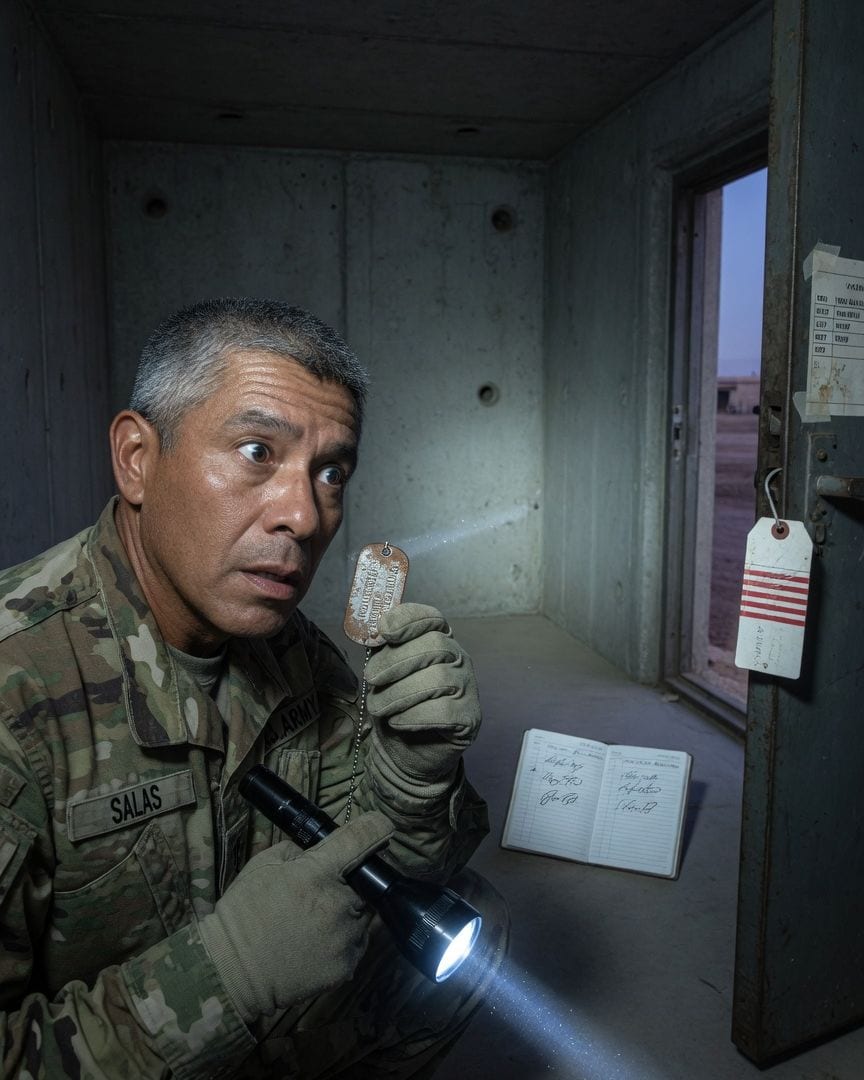
An inventory officer found a bunker's log of soldiers, then found one of their dog tags marked 'KIA, 1970'.
Chief Warrant Officer Gideon Salas meticulously oversaw the Hawthorne Ammunition Depot's inventory, racing against its final closure in two weeks. The high desert winds whipped dust across the familiar igloos as he worked, each bunker accounted for, until he reached the eastern perimeter. There, an extra igloo, Bunker 40, stood with a current lock and seal, though it wasn't on any map. A duty log propped open nearby listed inspections signed by men the Army swore didn't exist. His gut, honed by decades of service, churned with unease; inside the empty bunker, his flashlight found a corroded dog tag bearing one of those names, marked 'KIA, 1970'.
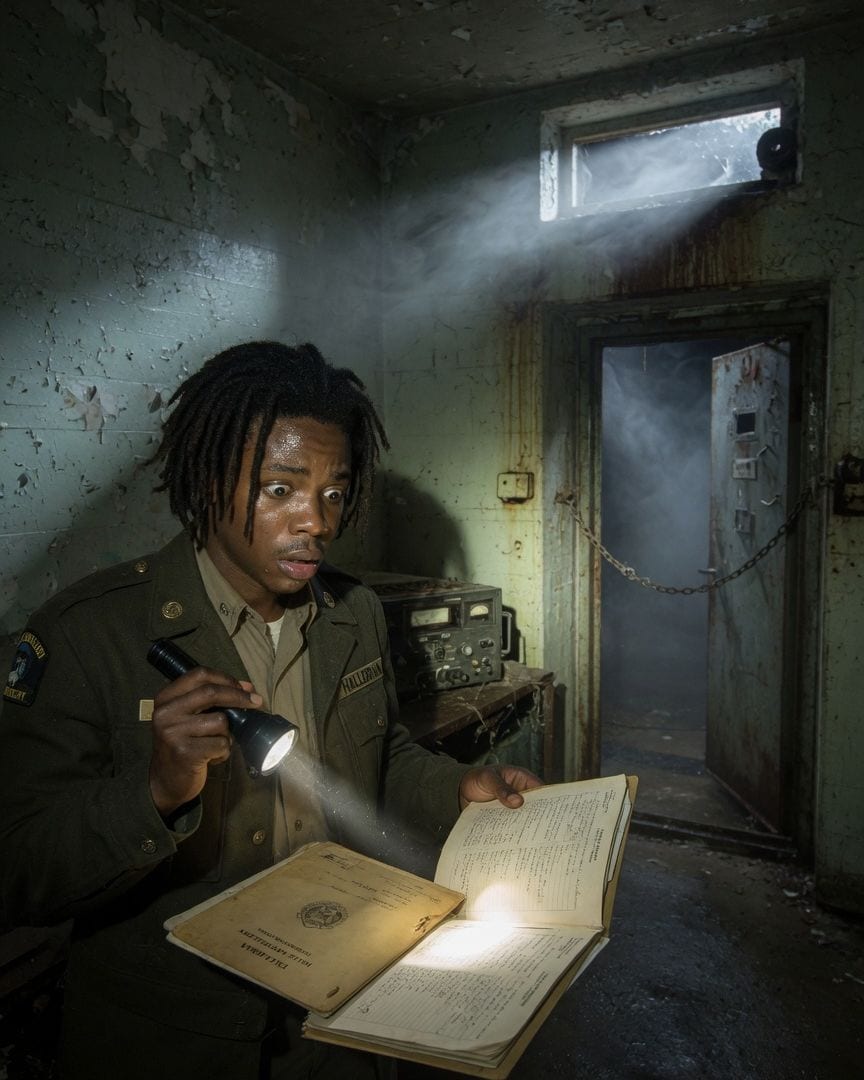
On his last shift, a coast sentry finds his own name signed in fresh ink on a 1943 army record, dated exactly one year ago.
Private Roy Halloran counted the final hours of his last watch behind the searchlight of an old, rust-tinged artillery bunker on the northern California coast. His monotonous graveyard shift was nearly done, and his transfer close, but at 0100, the swirling coastal fog revealed a silent landing party of men on the beach, their gear anachronistic and alien. When dawn burned off the mist, the beach was empty, yet faint drag marks led directly to the bunker’s long-sealed rear hatch, now mysteriously ajar. Inside, amidst the cold, acrid air, he discovered a pristine 1943 army service record bearing his own name. A freshly signed entry dated exactly one year ago to the day left him wondering: had the past somehow reached out to claim him?