Chief Warrant Officer Ellison found a log signed last week in a Greenland Cold War base decommissioned in 1967, by a soldier MIA since 1978.
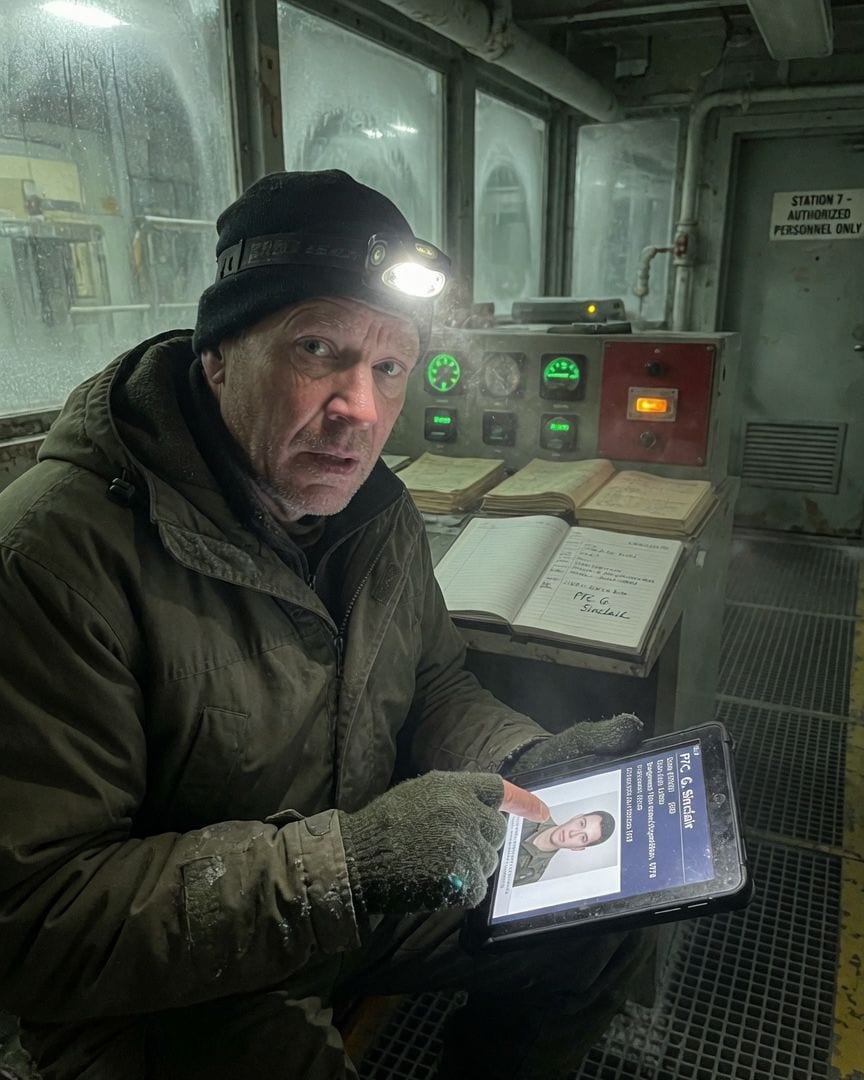
Chief Warrant Officer Franklin Ellison, two days from the end of his Greenland deployment, knelt in the biting wind.
The survey team was already striking camp, the last of their equipment being secured for transport, their breath pluming white in the arctic air.
He held one final core probe, the cold metal biting at his gloved fingers, and dropped it into the packed firn.
It should have hit solid ice, a predictable density that met the probe with a dull thud, but instead, it plunged through a sudden void.
A strange, almost imperceptible warmth rose from the narrow shaft, carrying a faint, humid scent that had no place in the sub-zero landscape. Specialist William Caldwell, his youngest team member, watched nervously, his eyes wide.
“Chief?” Caldwell’s voice was tentative, swallowed by the wind.
Ellison ignored him for a moment, his brow furrowed. He widened the opening with his ice axe, chipping away at the snow and ice until a dark, cavernous space revealed itself.
Below, a corridor of the long-abandoned under-ice installation, ‘Station 7’, stretched into the gloom, lit only by the beam of his headlamp. Its air was strikingly warmer than the surface, carrying that same unsettling humidity.
Ellison clipped his safety line to a buried anchor, motioning for Caldwell to stay put. He descended cautiously, the metal rungs of the ladder cold and slick even through his thick gloves.
He found a plant room, sealed behind thick, frosted glass. Inside, old gauges glowed with a soft, persistent green light, their needles holding steady on active readings.
A low, rhythmic hum vibrated through the metal decking beneath his boots, a sound that felt profoundly out of place in a facility officially decommissioned over half a century ago.
On a control desk, next to a stack of yellowed manuals brittle with age, lay an open shift log. The last entry, dated for the previous week, was signed in fresh, dark ink.
The date read '20XX-02-14', and beneath it, a crisp signature: 'PFC. G. Sinclair'.
Ellison picked up the log, the paper cool but strangely pliable, not brittle despite its apparent age.
He flipped through pages, seeing entries stretching back decades, each meticulously filled in the same precise hand, describing routine maintenance, power checks, and perimeter patrols. He found a recurring name, 'PFC. G. Sinclair,' often assigned to 'Perimeter Check, Unit 7.'
The name didn't ring a bell from any historical records of Station 7's original crew, nor was it on his current team’s manifest of eight. He tried to rationalize it—a temporary assignment, perhaps, a forgotten detail from some long-lost record.
Maybe a prank someone pulled before the official 1967 evacuation, a final joke scribbled into the logbook. But the ink was too fresh, too dark, for a prank from half a century ago.
He cross-referenced the station's original plans, scrolling through digital schematics on his secure comms device. The blueprints confirmed it: the reactor was indeed hauled out in ‘67, the facility decommissioned.
Yet, the hum was undeniable, a resonant thrum against the soles of his boots. The gauges were undeniably alive, their green lights a constant, unsettling pulse.
He moved to the main control panel, brushing a thin layer of frost from a large, red-buttoned console. A faint, almost imperceptible light pulsed from a small, integrated screen on the console's right.
Ellison, a meticulous officer who relied on order and verified facts, felt a cold knot tighten in his gut. This wasn't a historical oddity or a charming relic; it was a live, impossible presence.
He needed to verify the name, to find a mundane explanation for a signature that shouldn’t exist, a date that defied logic.
He pulled out his ruggedized secure comms device, connecting to the central military personnel database through the expedition’s satellite uplink.
Ellison typed 'PFC. G. Sinclair' into the search field. The database whirred, processing the query, then displayed a single, stark hit. Private First Class George Sinclair. Date of Birth: 1950. Status: Missing in Action. Deployment: Polar Research Expedition, 1978.
Not 1967. The date slammed into Ellison like a physical blow. 1978. Station 7 had been officially abandoned for eleven years by then.
Sinclair couldn't have signed a log here last week, or even in 1978, if the station was empty, stripped of its reactor and crew.
The low hum of the plant room seemed to intensify, a deep, steady thrum against the impossible truth, vibrating through the decking and up into his bones.
Ellison stared at his comms device, the screen displaying the grim details of PFC George Sinclair's 1978 MIA report.
His gaze snapped back to the station’s open shift log, the fresh ink of Sinclair’s signature mocking the official record, an impossible anomaly humming in the sub-zero air.
The next morning, Ellison returned to Station 7 alone, the MIA report a phantom weight in his pocket.
Caldwell and Sergeant Abigail Thornton were busy with the final breakdown of the surface camp, their practical concerns a contrast to the gnawing dread in Ellison’s mind.
He had told them he needed to check the thermal readings of the ice further down, a half-truth that barely disguised his urgency.
He located the station’s original communications room, now mostly stripped of its modern equipment, a tangle of dead wires hanging from the ceiling.
But tucked into a reinforced cabinet, behind a rusted steel door, he found an old, standalone personnel tracking system. It was a relic, pre-dating modern networks, a thick block of gray plastic and faded buttons.
Its internal battery still held a charge. He powered it up. The monochrome screen flickered to life, displaying 'Station 7 Personnel: 7 Active.'
The number fluctuated, occasionally dipping to six, then immediately back to seven, as if a constant census was being run by some unseen operator. He tried to access the system’s full roster, but it was password-protected, demanding an alphanumeric key.
The system was clearly designed to maintain a consistent 'crew size,' an internal accountability that defied the station's declared abandonment and the official records of missing personnel.
He spent hours attempting to bypass the archaic security, trying common passwords and system defaults, the low hum of the plant room a constant, unsettling companion from down the corridor.
He noticed that the system had a small, dedicated antenna, a thin, whip-like wire pointing directly up, as if still trying to broadcast or receive, despite the station being cut off from any external grid for decades.
The meticulousness of the system, still running, still tracking its phantom crew, was profoundly disturbing. It wasn't a glitch, he realized; it was a program operating exactly as intended, fulfilling its purpose in a world that no longer existed.
Later that afternoon, back at the surface camp, Sergeant Thornton confronted Ellison. Her face was set, a mixture of concern and exasperation. “Chief, you’ve been gone for hours. Caldwell said you’re still messing around in that old bunker.
We’re breaking down tomorrow, remember?” She gestured to the half-dismantled tents, the last of the gear being packed onto snowmobiles. “What exactly are you doing down there?
Heard a lot of humming from that direction, thought maybe the old generator kicked on.”
Ellison hesitated, then decided to confide, the weight of the secret too heavy to bear alone. He explained the impossible shift log, the fresh ink and the 1978 MIA report for Sinclair.
He described the standalone personnel system, still active, counting its invisible crew. Thornton listened, her expression slowly shifting from skepticism to a weary disbelief. “Chief, it’s an abandoned station,” she said, her voice softer now, less critical.
“Creaks and groans, old power lines shorting out, ice settling. Arctic psychosis, maybe, after too long out here. Focus on the mission. Let’s get packed up and get home.” She turned to leave, but paused, her back to him.
“Just… be careful. Wouldn't want you getting lost down there.”
After she left, Ellison returned to his tent, the conversation replaying in his mind. He pulled out his secure comms device. A notification blinked on the small screen: 'Unauthorized Login Attempt, Station 7 Personnel System: 14:37 GMT.'
The time matched his conversation with Thornton exactly, to the minute. The attempt had originated from an internal IP address, not his own access point on the surface. Someone, or something, knew he was digging.
The hum he’d dismissed as ambient station noise, as a trick of the ice or his own fatigued mind, now felt like a presence, a subtle, constant surveillance.
Driven by a fresh wave of dread, a profound sense of being watched, Ellison returned to the station’s communications room.
He connected his comms device to the old personnel tracking system, running a brute-force script he’d coded years ago for emergency data retrieval. The monochrome screen flashed violently, then settled, displaying a full roster. Names scrolled past: 'PFC.
G. Sinclair, Active, Assigned: 1978.' Other names followed, some unfamiliar, others vaguely echoing historical reports of missing polar researchers from the 1980s and 90s, all listed as 'Active' and 'Assigned' to Station 7.
The system wasn't just a record; it was a ledger of the lost, meticulously kept by the station itself.
The 'count that won’t reconcile' that Thornton had dismissed was the station’s unwavering internal record of its full complement, a number that remained constant despite official external declarations of abandonment and missing persons.
Ellison’s gaze froze on the last entry, his breath catching in his throat. His own name. 'Franklin Ellison, CWO, Assigned: Current.' His breath hitched, a cold tremor running through him.
He wasn't just observing the system; he was now part of its meticulous, horrifying accounting. The older entries, the impossible dates, the consistent 'active' status for people long gone – it all coalesced into a monstrous, undeniable pattern.
The station wasn't just active; it was alive, and it was collecting.
He felt a profound chill, far colder than the Greenland air, as he realized the system wasn't just tracking the missing; it was ensuring they were never truly lost, at least not to its own chilling logic.
Ellison scrambled back to the surface, the image of his name on the station's roster burned into his mind. The cold air ripped at his lungs, but he barely felt it.
He pulled out his secure comms, his fingers fumbling with the touchscreen, desperate to prove it was a trick, a corrupted file, anything but real.
He initiated a real-time headcount for his own eight-member survey team, cross-referencing their digital manifests through the central military database. The system processed the request, a small green bar filling across the screen.
He knew there were eight of them – himself, Thornton, Caldwell, and five others. Eight.
The comms device blared a flat, digital tone that seemed to echo the station's hum. The screen displayed: 'Personnel Count: 9.'
He ran it again, his heart pounding against his ribs, a frantic rhythm against the silence of the ice cap. Same result. Nine. The extra entry was listed as 'Unassigned, Station 7.'
His gaze snapped back to the station’s internal roster on the old personnel tracking system, still glowing on the screen of the antique terminal below.
The 'Franklin Ellison, CWO, Assigned: Current' entry now had a small, active-status light next to it, a faint green pulse mirroring the other 'active personnel'. He was already counted.
The terrifying coherence of it all snapped into place, a monstrous jigsaw puzzle falling perfectly into line. The extra person on his team's manifest wasn't an error, a phantom, or a clerical oversight. It was him.
Station 7's insidious 'accountability' system had already claimed him, integrating him into its internal roster. The 'Unassigned, Station 7' entry was merely the external system's way of reconciling the impossible addition, a subtle overwrite.
The station didn't just passively hold missing people; it actively influenced external records, ensuring its own internal count was always 'correct.'
The pattern across decades of rotations and dates was horrifyingly clear: every time a new expedition, a lost scout, or a curious individual ventured close enough, Station 7 added them to its crew.
These individuals would vanish from the outside world, declared missing or lost, while remaining 'active' within the station's meticulous, self-sustaining logic.
The hum, the warmth, the glowing gauges – it was all part of a system that had been running uninterrupted since 1967, perpetually staffed by those it had absorbed.
The station was an entity that sustained itself on human presence, subtly altering reality to maintain its 'complement.' Ellison was no longer Franklin Ellison, Chief Warrant Officer, two days from returning home to his family.
He was 'Franklin Ellison, CWO, Assigned: Current,' a permanent part of Station 7's crew.
Ellison stumbled back into the plant room, the truth a lead weight in his stomach, cold and heavy. He had to warn someone, anyone. He had to escape.
He found Sergeant Thornton by the main control desk, methodically checking the last of the equipment, her back to him. “Abigail,” he gasped, his voice hoarse, ragged, “we have to go. Now. The station… it’s been taking people.”
He tried to explain the roster, the impossible count, his own name glowing with that insidious green light. He pointed to the antique personnel system, still blinking with his name.
Thornton turned, her face calm, almost serene, a faint smile playing on her lips. “Chief,” she said, her voice perfectly level, devoid of any alarm, “Unit 7 is fully staffed. Always has been. The paperwork is clear.”
As she spoke, Ellison noticed a faint, almost imperceptible green light flicker on her wrist-mounted comm, mirroring the 'active' status he’d seen on the station’s roster, on his own entry, on Sinclair’s entry.
He stared at her, the realization freezing him to the spot. She wasn't just dismissive; she was part of it. Her eyes, usually sharp and inquisitive, now held a flat, unblinking quality, like polished ice.
The station’s low hum seemed to resonate from within her, a soft vibration against the silence. He turned to run, but the corridor behind him, moments ago lit by his headlamp, was now a deep, encompassing darkness, stretching endlessly.
The low hum of the station grew louder, more encompassing, seeming to draw him in, an inescapable current. He heard the soft, rhythmic click of something approaching behind him, like a boot on polished metal, slow and deliberate, perfectly synchronized.
The final report for the Greenland geophysical survey team noted the unexpected disappearance of Chief Warrant Officer Franklin Ellison.
Sergeant Abigail Thornton, now acting team lead, filed the report from the surface camp, citing a likely crevasse fall during a solo reconnaissance, an unfortunate but plausible accident in the unforgiving Arctic environment.
The report was meticulously detailed, signed, and filed on time. The remaining team members completed the camp breakdown and departed Greenland as scheduled, their mission officially concluded.
A month later, back at their home base, Sergeant Abigail Thornton sat at her desk, meticulously reviewing an old manifest for the next polar rotation. Her commanding officer, Colonel Mendez, paused at her door, holding a stack of requisitions.
“Sergeant Thornton,” he asked, “have you found a suitable replacement for Chief Warrant Officer Ellison yet? We need to ensure we’re adequately staffed for the next deployment.”
She looked up, a faint, strange smile playing on her lips, her eyes holding an unsettling depth. She tapped a specific line on the digital manifest with a perfectly manicured finger.
“Oh, I think we’re quite adequately staffed, Colonel,” she replied. “The count is perfectly reconciled.”
If this one got to you
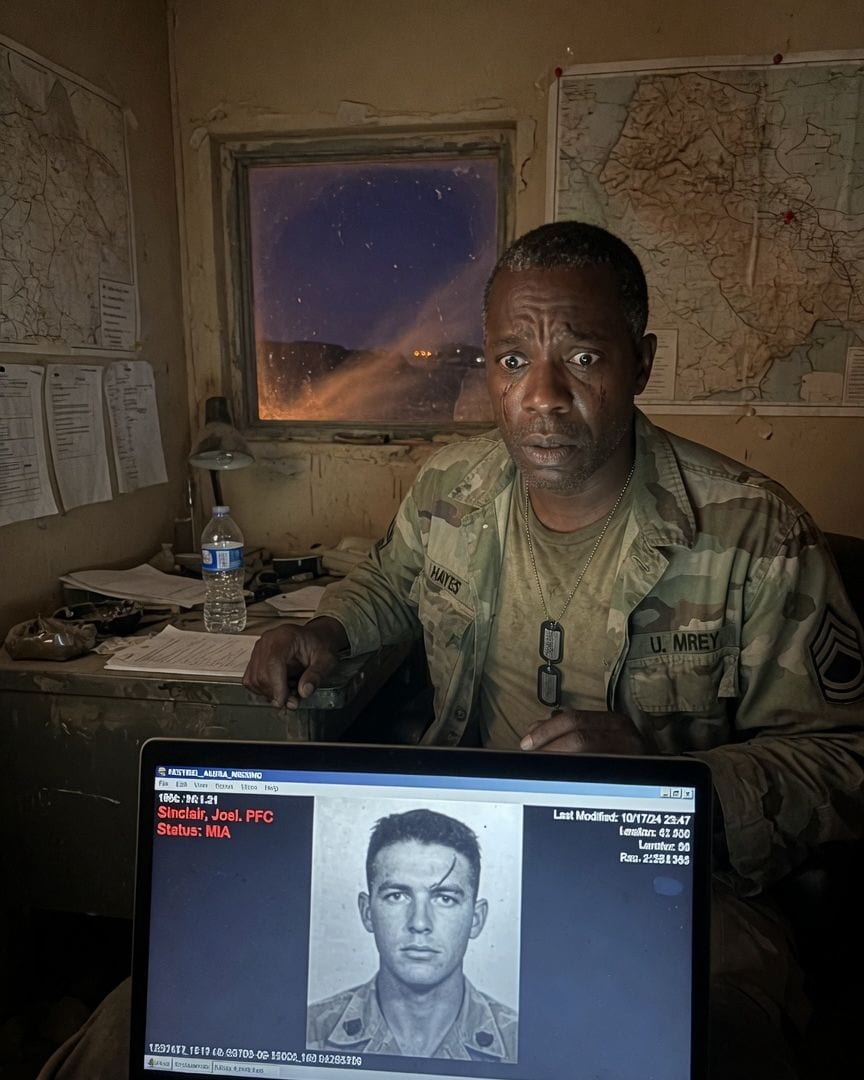
Three weeks from leaving, Sergeant Hayes found a soldier in bunk 17. His file read: Pfc. Joel Sinclair, MIA since 1969.
Sergeant Marcus Hayes was just three weeks from finishing his eight-month tour at Firebase Kestrel, desperate to leave the relentless desert behind. But on a routine evening head count, the numbers refused to square: thirty-one names on the manifest, yet thirty-two men stood before him. Later, searching for an explanation, Hayes found Private First Class Joel Sinclair sleeping in bunk 17, a soldier he recognized from his unit. Yet, when he checked the digital roster, Sinclair’s file was tucked away in an archive, marked 'MIA' from a tour in 1968-1969. How could a man declared missing fifty years ago be sleeping in his barracks tonight?
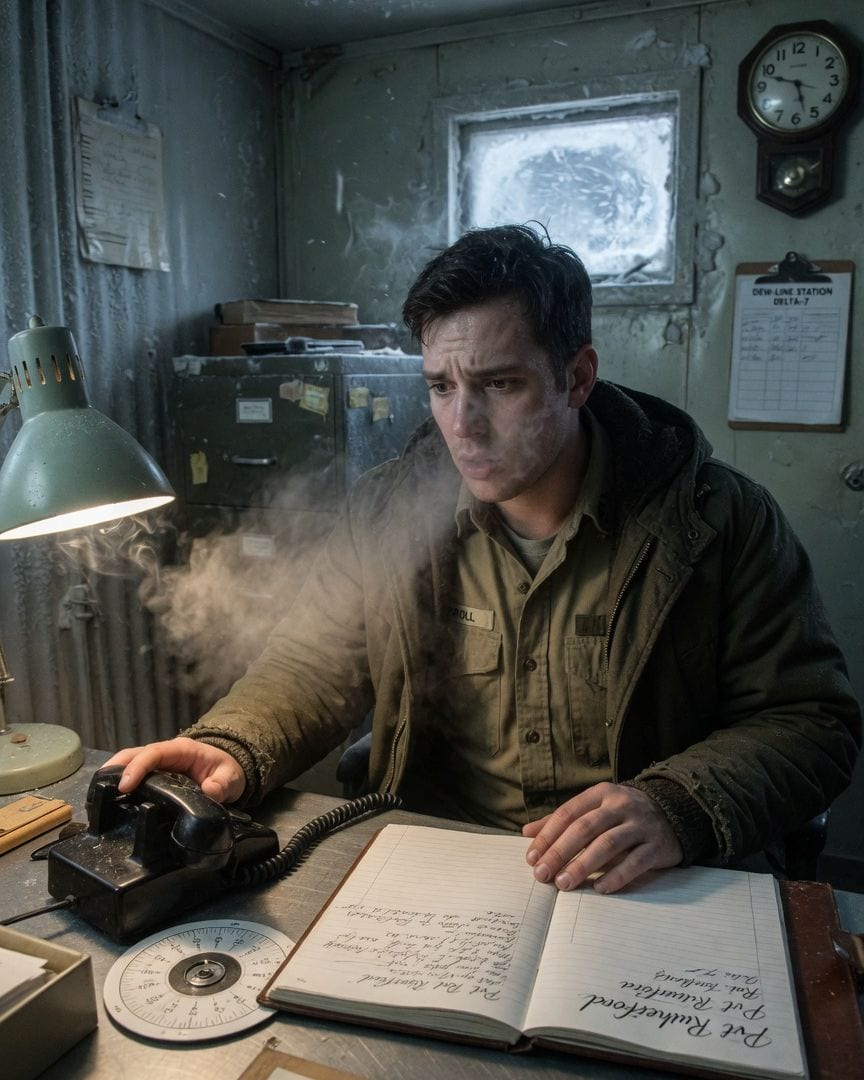
A communications specialist saw his last line go dead. Then the old Cold War field phone rang with a voice from 1966, naming a man freshly signed into his current shift log.
Specialist Walter Kroll shivered in the frigid communications room of DEW-line Station Delta-7, completely cut off by a historic Arctic blizzard. He had personally watched the last hard-wired connection to the outside world snap earlier that day. Now, past midnight, the old field phone at his position began to buzz, impossible from a line he knew was dead. A calm, unfamiliar voice spoke, reading a crew roster Kroll didn't recognize, including Private Rutherford. His search through decades of dusty logbooks revealed Rutherford was assigned to this exact watch in 1966, but then Kroll found the same name freshly inked into his *current* shift's sign-in sheet.
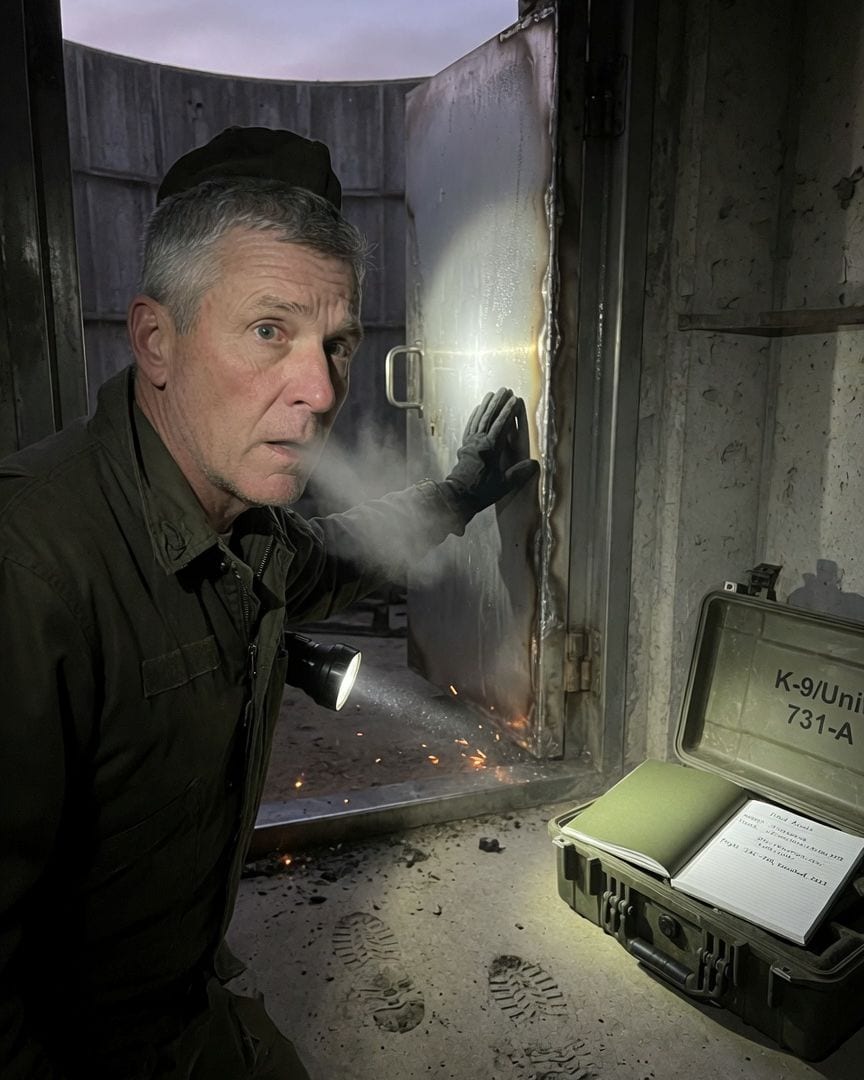
The Cold War silo was welded shut in 1968. A Captain found lights burning, fresh prints leading inside, and a logbook with a vanishing from last week.
Captain Merrit Sable faced a deadline at Silo K-9: one cold morning to retrieve classified hardware before its scheduled demolition at noon. The silo, officially welded shut by the Air Force in 1968 and long off-grid, should have been a tomb of forgotten machinery. Yet, through a cracked port, he saw nine work lights burning steadily forty feet down, and felt the faint suction of an active ventilation system. After breaching the decades-old weld, Merrit found more than just lights; fresh boot prints led deeper into the meticulously clean shaft, but none returned. A hidden compartment in an empty, warm hardcase revealed a logbook, its crisp pages detailing notorious military disappearances, with the latest entry dated just last week.
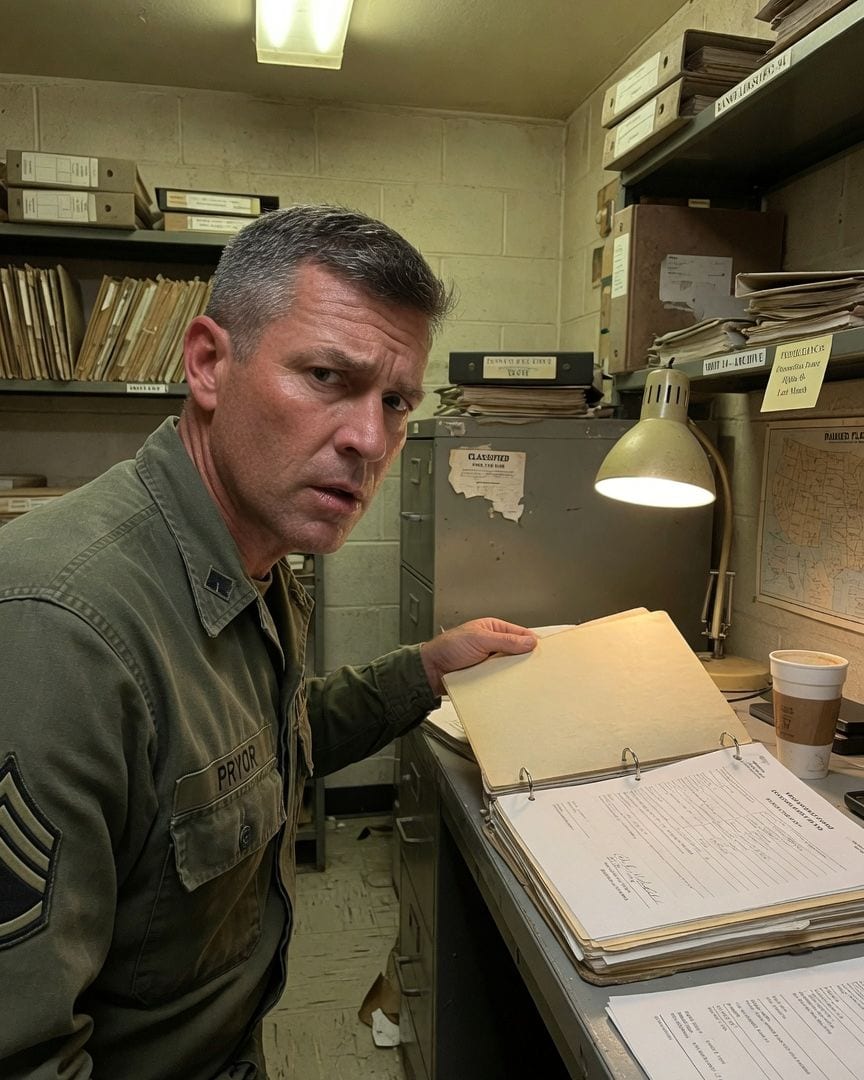
A sergeant with eleven days left finds a warm, glassed crater. Its file shows a captain lost thirty years ago is still signing reports from last week.
Sergeant Alden Pryor was counting down his final eleven days on a twenty-year hitch, expecting to spend them on routine patrols along the Ranier Flats fence line. Instead, his truck stopped at a bizarre sight: a four-hundred-foot glassed crater, miles from anywhere, its sand faintly warm at dawn despite no one recalling a blast. The air above it shimmered with an unnatural distortion, a silent scar of erased violence, and the official file for 'Shot 14' showed recent maintenance sign-offs for a decommissioned tower at the crater site. All these active documents were signed by Captain Everett Caldwell, who had been officially lost in operations thirty years ago, leaving Sergeant Pryor to wonder how a dead man could still be filing reports.
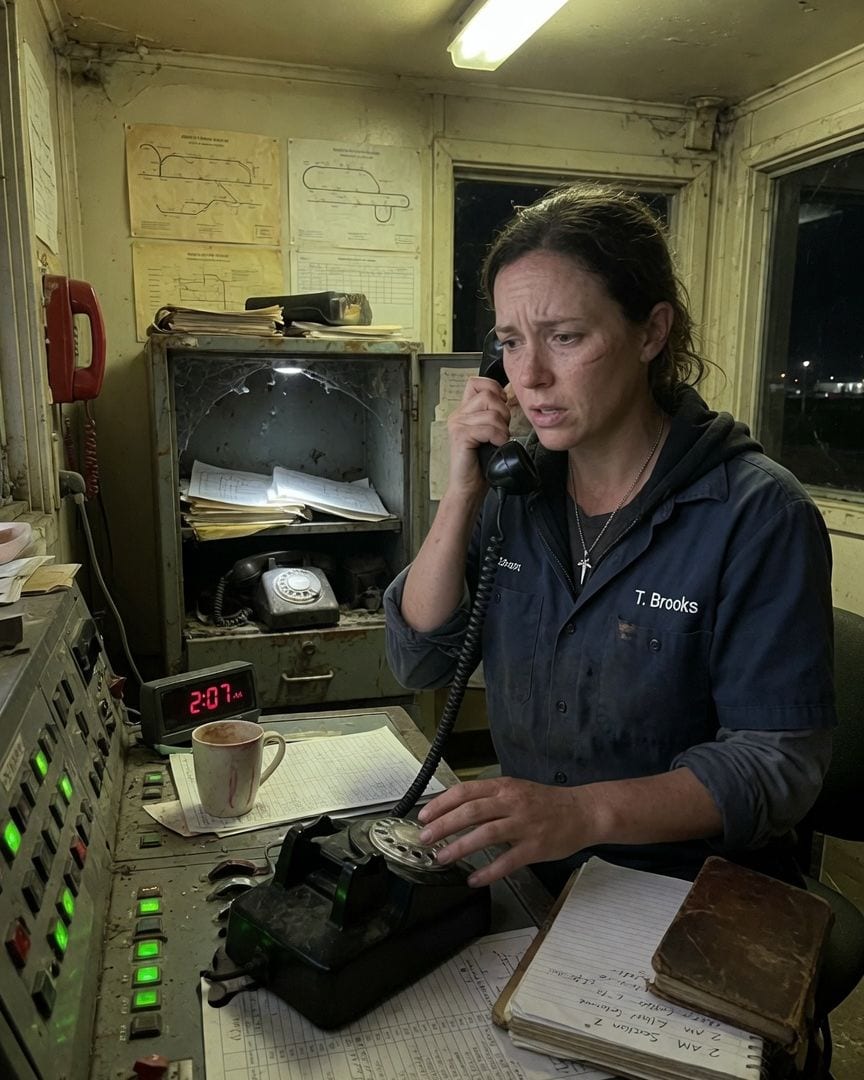
My signal box gets a 2 AM call every night from a man whose section was demolished eleven years ago. Now I found his logbook with today's date.
My night shift at the signal box is quiet and precise, defined by the routine 2 AM call from Ellis confirming Section 7 is clear. But when I asked my duty manager to log it, he said Section 7 hasn't had a track walker in eleven years, not since its cabin and phone were demolished.
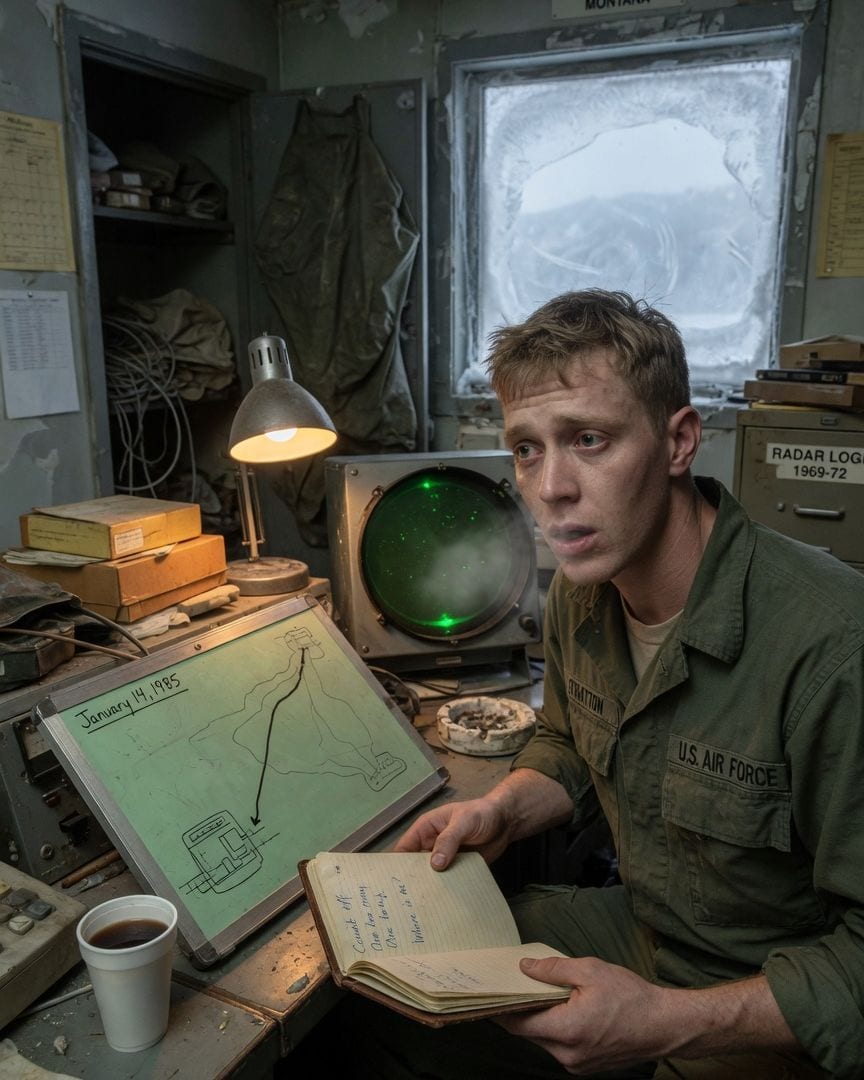
Airman Lars Stratton found an old Cold War manifest listing one name twice: 'Bernard Radcliffe' transferred and 'Bernard Radcliffe' still present.
Airman Second Class Lars Stratton was counting down his final weeks at Echo Station, a desolate Cold War outpost due for mothballing. He longed for home, far from the bitter Montana winds and the constant hum of static. Inside the dim radar shack, he logged the usual nightly ghost blip, a faint contact appearing at 2300, just as it had every winter since 1987. This night, a metallic tang like old blood lingered in the air, raising the hairs on his arms. Seeking distraction, Lars later discovered a leather-bound logbook from 1971, detailing the same 2300 contact, but with chilling notes and a manifest listing one airman's name, Bernard Radcliffe, twice—once transferred, once present. Was he truly alone in the silent, remote station?