Three weeks from transfer, Airman Calloway found his tentmate’s dog tags with a custom engraving, but the man claimed he'd never seen them.
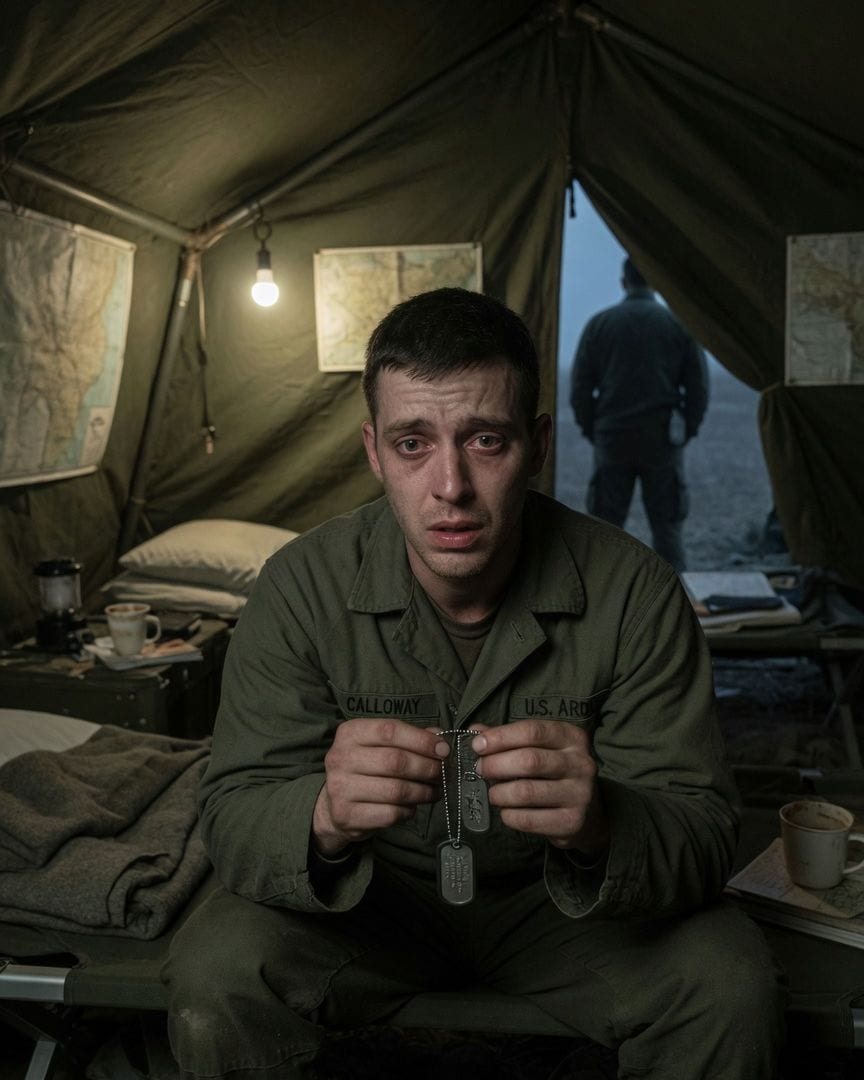
The thin air bit at Airman Russell Calloway's lungs as he trudged through the pre-dawn gloom toward the mess tent at Mount Echo Radar Site. Another frigid morning, three weeks until his transfer to a less isolated post.
He’d shared a tent with Airman Ethan Brody for six months, long enough to know the man’s every routine, especially his coffee.
Brody, back from his nine days 'off the grid' after the crash that had left his ATV a crumpled mess, was already at the counter, mug in hand.
“Morning, Brody,” Calloway grunted, reaching for his own mug. “Still ruining that brew with four sugars?”
Brody turned, a faint, almost imperceptible hesitation in his smile. His eyes were clear, perhaps a little too bright for this hour. “Sugars? Why on earth would I do that, Calloway? Disgusting. Black, always.”
He took a long, slow sip of the steaming, bitter liquid.
Calloway felt a chill that had nothing to do with the mountain wind. Brody had never, not once in six months, drunk his coffee black. He always had four sugars, a running joke for the whole crew.
He watched Brody, a knot tightening in his stomach, as the man calmly finished his coffee, as if he always had. The small detail gnawed at Calloway, refusing to be dismissed.
The coffee incident persisted in Calloway’s mind. He tried to dismiss it – head injury from the crash, a strange new habit. But the detail was too specific, too ingrained in their shared history. He had known Brody.
The man was a creature of habit, especially when it came to his morning caffeine.
Later that day, while Brody was on shift, Calloway returned to their tent. He scanned their shared space, a meticulously organized clutter of military issue gear. Brody’s cot was made with parade-ground precision, every corner tucked, every crease sharp.
Calloway knelt beside it, running his hand under the mattress, a habit from a shared prank involving hidden snacks. His fingers brushed against something metallic and flat.
He pulled it out: Brody’s original dog tags. They were standard issue, tarnished with the sweat and grit of months in the field.
But Calloway remembered Brody telling him about a custom engraving he’d gotten years ago, a small mountain goat, a symbol of his hometown, nestled beside his service number. He’d shown it off once, a point of pride.
Calloway turned the tag over. There it was, faint but clear, the tiny, almost illegible symbol etched into the metal.
When Brody returned from shift, Calloway casually brought it up. “Hey, found your old tags,” he said, holding them out. “Still got that mountain goat?”
Brody blinked, his eyes flat, devoid of recognition. He barely glanced at the tags. “Mountain goat? No idea what you’re talking about, Calloway. Never had anything like that.”
His voice was even, unbothered, as if Calloway had suggested he owned a pet unicorn.
Calloway felt the rational explanations crumble like dry earth. This wasn't a changed habit. This was a changed man. The wrongness wasn't just a detail; it was a fundamental shift, a missing piece of identity. He knew Brody.
This wasn't him.
That night, Calloway couldn't sleep. He lay on his cot, listening to the rhythmic breathing of the man in the next bunk. He knew it was Brody, accounted for, present and correct on the manifest. But it wasn't his Brody.
He stared at the small, tarnished dog tag in his palm, its surface etched with the tiny, almost illegible symbol of a mountain goat — a symbol Ethan Brody had proudly displayed on every personal item, a nod to his hometown.
He glanced at the 'Brody' currently whistling softly outside their tent, then back at the tag, a cold certainty settling in his gut.
The next few days, Calloway moved with a quiet urgency, every interaction with 'Brody' a fresh stab of unease. He started cross-referencing, subtly at first. He slipped out of the tent one night, heading to the comms shack.
Airman Samuel Whitmore, a lanky comms specialist, was on duty, hunched over a console. Calloway feigned a need to check an old weather report. As Whitmore typed, Calloway peered at the screen.
He saw the daily personnel manifest scroll by, a long list of names, service numbers, and duty assignments. He found Brody's name, then scrolled up, past yesterday, past the nine days Brody was missing, to the manifest before the crash.
He saw Brody's name there too. Two entries, identical service numbers, identical names, for the same period. He leaned closer, his breath catching. Then he saw it: a small, almost imperceptible discrepancy in the signature field from the pre-crash entry.
It was just a slightly different flourish on the 'y'. But it was there. And then, he saw a third entry, from a week before the crash, also for Brody, with a third, subtly different signature.
Three 'Ethan Brodys' on the official record. Calloway felt the floor tilt beneath him.
He checked equipment manifests for the crashed vehicle, noting serial numbers, maintenance logs. The vehicle Brody had supposedly crashed was a standard-issue recon ATV. The logs showed it was indeed recovered, damaged, and salvaged.
But a faint entry, quickly overwritten, mentioned a second, older ATV, also reported 'missing' from the same sector around the same time. No recovery log. No incident report.
Calloway worked late in the comms shack, feigning equipment checks, while Samuel Whitmore, unaware of Calloway’s true purpose, hummed along to static, the hum seeming to resonate with the strange emptiness Calloway felt.
Calloway dug through old digital archives, personnel files for Mount Echo rotations stretching back a decade. He wasn't looking for crashes anymore, but for anything that felt off.
He found it in the small details: a sudden, unexplained transfer of a perfectly healthy airman; a brief, unlogged period where a single bunk in a ten-man tent was reported 'empty' despite all personnel being accounted for; an unusual spike in 'clerical errors' in manifests from specific periods.
The pattern was diffuse, almost invisible, but once he saw it, he couldn't unsee it. Each time, it was a subtle shift in numbers, a name appearing twice, or a person returning slightly... different.
He recalled an old story among the veterans, a 'ghost in the machine' at Mount Echo, always dismissed as fatigue or cabin fever. Calloway knew it wasn't.
Calloway's late nights in the comms shack didn't go unnoticed. One evening, Captain Deborah Mitchell, the site commander, a woman of sharp intellect and even sharper eyes, found him. “Working late, Airman Calloway?”
Her voice was calm, but her gaze was piercing, cutting through the low light of the console. “Just running diagnostics, Captain. Interference on the long-range channels.” Calloway tried to keep his voice steady, his fingers hovering over the keyboard.
Mitchell walked closer, her uniform rustling softly, the sound unnaturally loud in the quiet room. “Mount Echo has a way of getting into people’s heads, Calloway. Makes them see things that aren’t there. Makes them… question.”
She paused, her eyes fixed on the screen displaying a blurred manifest, though Calloway doubted she could read it from that distance. “Some things are best left unquestioned, Airman. For your own good. For the good of the unit.”
Her words were a soft warning, a velvet-gloved threat that hung in the air like a fog. Calloway felt a prickle on the back of his neck, a cold hand tracing his spine.
Later, back in his tent, he found his personal locker slightly ajar. Nothing was missing, but a small, insignificant item – a worn photograph of his family – had been moved from its usual spot.
It was a clear message: he was being watched. The 'Brody' in the adjacent bunk snored softly, a sound that now filled Calloway with dread, like sand grinding between teeth.
He began to suspect that Brody wasn't the only one, and Captain Mitchell's calm demeanor was not out of ignorance, but complicity.
He realized he was no longer just investigating; he was now the target of whatever silent force maintained the impossible counts.
The warning from Captain Mitchell only fueled Calloway's resolve. He needed proof that couldn't be dismissed, something concrete, undeniable.
He remembered Samuel Whitmore mentioning an old, unofficial, handwritten logbook kept by a previous comms operator, a 'cranky old timer' who trusted paper more than pixels. Whitmore said it was probably in storage, long forgotten.
Calloway found it in a dusty, unmarked box in the back of the comms supply shed, nestled between obsolete manuals and forgotten cables.
The brittle pages, yellowed with age, were filled with tight, meticulous script, documenting daily comms checks, weather patterns, and personnel movements. But it also contained a hidden, coded section.
The old operator, a Master Sergeant named Vincent Thornton, had used a simple substitution cipher, easily broken with a little patience and a military encryption handbook Calloway still had from basic training.
Calloway spent hours, hunched over the book, translating. The entries were chilling. Thornton had documented 'anomalies' – not just in comms, but in personnel. His entries spoke of 'the count,' of men returning 'hollow,' of 'ghosts on the roster.'
He detailed three specific instances over a two-year period where an airman would go 'off-grid' after a minor incident, only to return subtly changed, followed by a 'plus one' discrepancy in the manifest that would eventually be 'corrected' by higher command.
Thornton had even noted the coffee preferences, the forgotten dog tags, the subtle shifts in signatures. He'd seen it all. 'They slip them in,' one entry read, 'the system accounts for them, but it can’t reconcile the original.'
Calloway felt a wave of nausea, the room spinning slightly around him. The coffee, the dog tags, the signatures – it all clicked into place, every small wrongness now forming a grotesque whole.
Thornton’s final entry, dated shortly before his own unexplained transfer, simply read: 'They’re not replacing the dead ones. They’re replacing the alive ones. And the dead ones are still here. Just not on the books.'
The revelation from Thornton's logbook solidified Calloway's dread. He now understood that 'Brody' was a replacement, one of many. He went back to the digital manifests, armed with Thornton's insights, and began cross-referencing the 'plus one' anomalies.
He focused on the specific dates and 'incidents' Thornton had meticulously recorded. He found the 'corrected' entries, the erased names, the inexplicable duplicate service numbers. But then he noticed something more insidious. It wasn’t just Mount Echo.
Thornton had hinted at other 'stations' in his coded notes, vague references to 'sister sites.'
Calloway, using a secure, encrypted channel he knew Samuel Whitmore used for personal calls, managed to access a broader military personnel database – a risk, but necessary. He filtered by 'remote radar installations' and 'unexplained transfers.'
The pattern exploded across the screen: a dozen other sites, from the Nevada desert to the Alaskan wilderness, showed similar 'plus one' discrepancies, similar 'clerical errors,' always following brief, unexplained disappearances.
He saw names he recognized from classified reports, names of personnel who had simply vanished or returned 'different.'
And then, on the manifest for the 2008 Mount Echo rotation, a single, horrifying entry: three 'Ethan Brodys' listed as present and accounted for on the same day, all with identical service numbers, all marked 'active duty.'
Samuel Whitmore, who had been quietly working beside Calloway, saw it too. His face drained of color. “That’s not a typo, Calloway,” Whitmore whispered, his voice trembling. “That’s three ghosts on the books. And they’re all accounted for.”
The realization hit Calloway with the force of a physical blow. It wasn't just individual replacements; it was a systemic infiltration, a methodical harvesting of personnel across multiple isolated outposts.
The military's own rigid accountability system, designed to track every single soul, was being weaponized against itself, becoming the perfect cover.
The 'entities' were so precisely accounted for, so perfectly integrated into the digital manifests, that they became untraceable, indistinguishable from the originals, until a small, human detail like a coffee preference or a forgotten dog tag gave them away.
Samuel Whitmore, now fully onboard, helped Calloway decipher the full scope of Thornton’s coded notes. The 'accidents' – the crashes, the brief periods off-grid – were merely the points of exchange.
The entities weren't hostile in the conventional sense; they simply existed, performing their duties, maintaining their 'cover,' until something exposed them.
The 'plus one' anomalies were the system's own desperate attempt to reconcile the impossible, a glitch in the matrix that was quickly patched over by a command structure that either knew and facilitated it, or was too deeply compromised to see it.
Captain Mitchell's warning now resonated with a terrifying clarity. She wasn't just protecting the secret; she was part of the mechanism.
The Mount Echo Radar Site wasn't just a strategic outpost; it was a processing center, a quiet, forgotten corner where the living were exchanged for perfect, silent copies, and the system itself became complicit in its own corruption.
Calloway knew he couldn't fight an organization, or whatever was behind it, with weapons or words. His only chance was to make the system reject the anomaly, to force it to expose itself. He and Whitmore devised a plan.
They would use the site’s own radar, comms, and personnel tracking systems to create an undeniable, real-time 'plus one' that couldn't be dismissed as a clerical error. Their target: 'Brody.'
At 0300, during the deepest part of the night shift, Calloway initiated a simulated, high-priority emergency drill, triggering a full site-wide personnel check.
Simultaneously, Whitmore jammed the primary comms, forcing a switch to the old, analogue backup system that Thornton had trusted. As the base scrambled, lights flickering in the sudden, manufactured chaos, Calloway accessed the main manifest.
He logged the 'Brody' in their tent as 'present,' then, using a ghost access code from Thornton's log, reactivated the pre-crash 'Brody's' dormant service record, marking him 'present and active' on the analogue system.
The digital system, designed for redundancy, tried to reconcile the two, its internal logic screaming.
Then, Calloway, using a third, encrypted signal, pinged Brody's original, registered locator beacon – a device he’d found hidden in a decommissioned supply crate, a relic from the true Brody's crash.
The beacon, now active, registered 'Brody' as a third, distinct entity, moving outside the perimeter. The site alarms blared, a raw, grating sound that ripped through the quiet night.
Captain Mitchell stormed into the comms shack, her face a mask of cold fury. “What have you done, Airman?” she hissed, her voice low and dangerous. On the main screen, the manifest flickered, unable to resolve the impossible data.
Three Brodys. One in the tent, one on the old log, one outside the wire, a ghost signal.
A low, guttural shriek tore through the silence of the mountain, echoing from somewhere beyond the perimeter, followed by a heavy, wet thud that vibrated through the floor. The digital manifest flickered one last time, then resolved.
Only one 'Ethan Brody' remained. The one in the tent. The one Calloway knew wasn't real. The system had reconciled the count, violently.
The dread wasn't that the system failed, but that it was designed to succeed, no matter the cost.
By dawn, the Mount Echo Radar Site was a hive of activity. A specialized team arrived, sweeping the perimeter, recovering what they vaguely referred to as 'debris.' Captain Mitchell remained tight-lipped, her eyes never quite meeting Calloway’s.
'Brody' was gone, officially 'transferred,' his cot stripped bare. Whitmore, pale and shaken, was reassigned to a remote desk job in North Dakota. Calloway’s transfer was expedited, his three weeks cut to three days.
He packed his meager belongings, the memory of the shriek and the thud still raw in his ears. The official report cited a 'system malfunction' and 'personnel error.'
No mention of impossible counts, no mention of the original dog tags Calloway had discreetly buried near the crashed ATV, no mention of the silent, perfect copies.
The system had closed ranks, absorbing the anomaly and erasing the evidence, leaving only a hollow space where a man used to be.
Russell Calloway sat on the transport plane, watching the snow-capped peaks of Mount Echo disappear into the distance. He was going home, a transfer confirmed, his service record clean. He had survived. But the cost was immense.
He knew too much. He knew the quiet, methodical horror that lurked in the meticulously kept records of the most accountable organization on earth. He knew that some systems, once compromised, learn to hide their own corruption, seamlessly.
He clutched a small, worn photograph of his family. He would see them soon. He wondered if they would notice a subtle difference in him, a quiet shift in his laughter, a forgotten habit.
He wondered if, somewhere, another radar site was preparing for its next 'accident.' He knew it was. The dread was not that it could happen, but that it was happening, everywhere, and the paperwork swore it wasn't.
He looked out the window at the clouds, seeing only the vast, silent network of other remote sites, other mountains, other deserts. He knew the count would always reconcile, one way or another. But for how long?
And who was doing the counting? He closed his eyes, the hollow silence of the cabin filling his ears. He was home. He was safe. He was accounted for.
But he knew, with a chilling certainty, that the quiet, perfect replacements were still out there, silently filling the ranks, waiting for their turn to be counted. The system was too big to fail.
It was just big enough to hide.
On a remote island outpost, thousands of miles away, a grizzled Marine sergeant, on his final rotation before retirement, found an extra cup of coffee on the mess hall counter, steaming and black. He never drank it black.
He always took four sugars. He wrinkled his nose, and asked why on earth he'd ever drink it like that.
If this one got to you
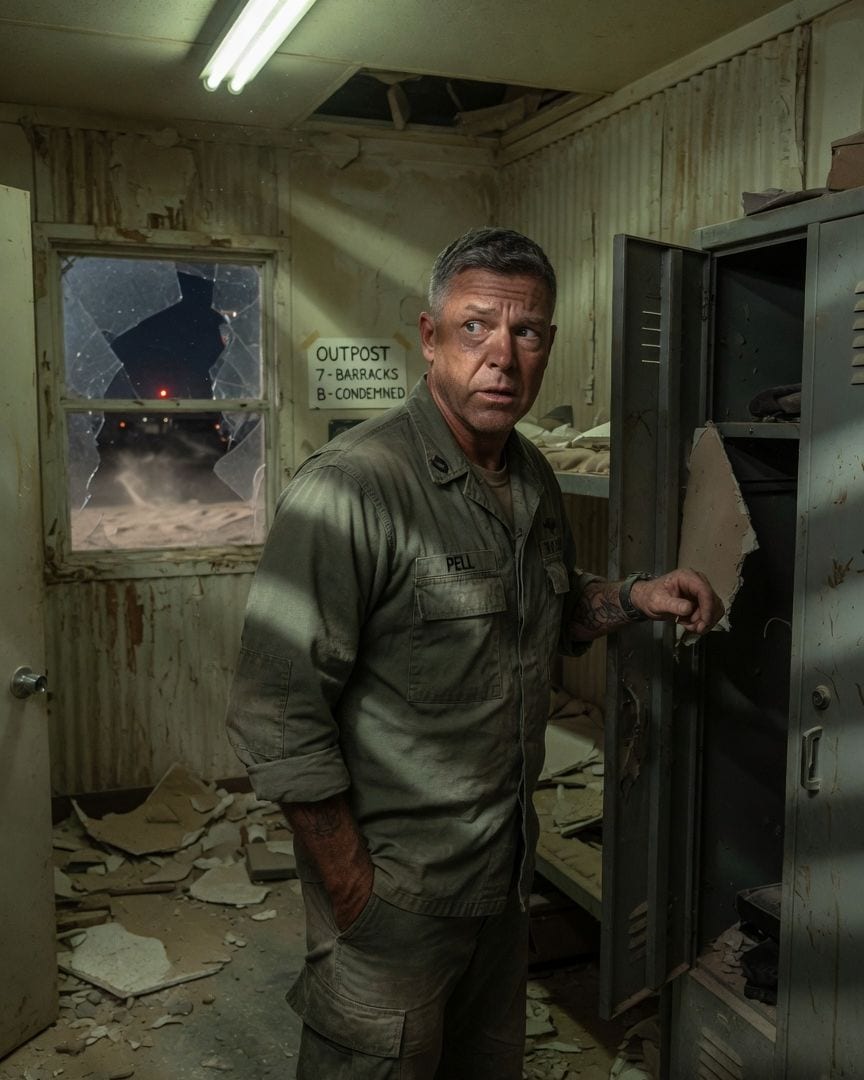
Gunnery Sergeant Pell found his battle buddy’s original dog tags in the collapsed barracks. They were burnt, bent, and Odom was wearing them when he left.
Gunnery Sergeant Russell Pell was nearing the end of his final rotation at remote Outpost 7 when his battle buddy, Sergeant Howard Odom, returned from medevac. The relief was short-lived; Pell immediately noticed Odom's laugh was off—higher, reedy, a stranger's sound in a familiar face. Over days, subtle changes in Odom's posture and memory of shared jokes deepened Pell's unease. His dread solidified when he searched Odom's old, damaged bunk and found his original dog tags, burnt and bent, the very ones Odom wore when he was evacuated. How could they be here now?
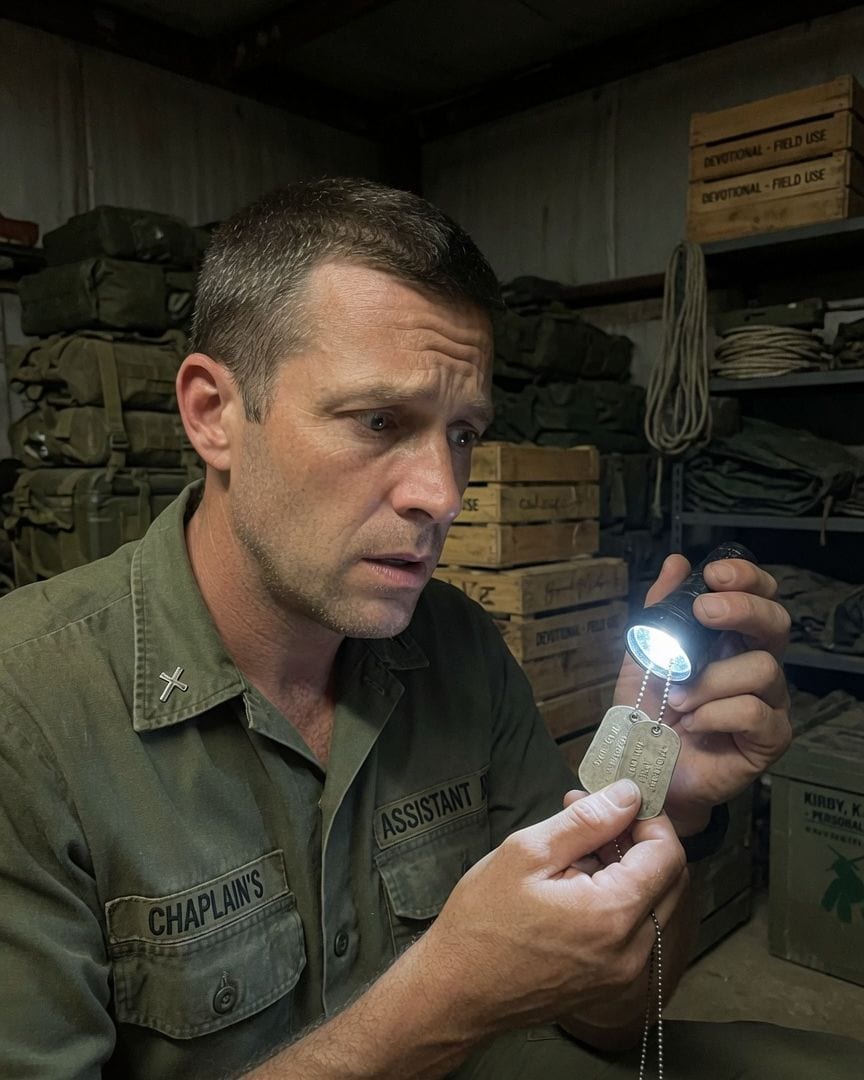
Private Kirby's old dog tags bore a completely different serial number than the ones he wore daily.
Chaplain's Assistant Moss had always known Private Kirby to cross himself the 'wrong way round,' a small joke in their grim routine. After three weeks missing, Kirby returned, but during service, his hand moved cleanly, the 'correct' way. The usual chuckle and self-deprecating shrug were gone, leaving Moss with a specific, cold unease.
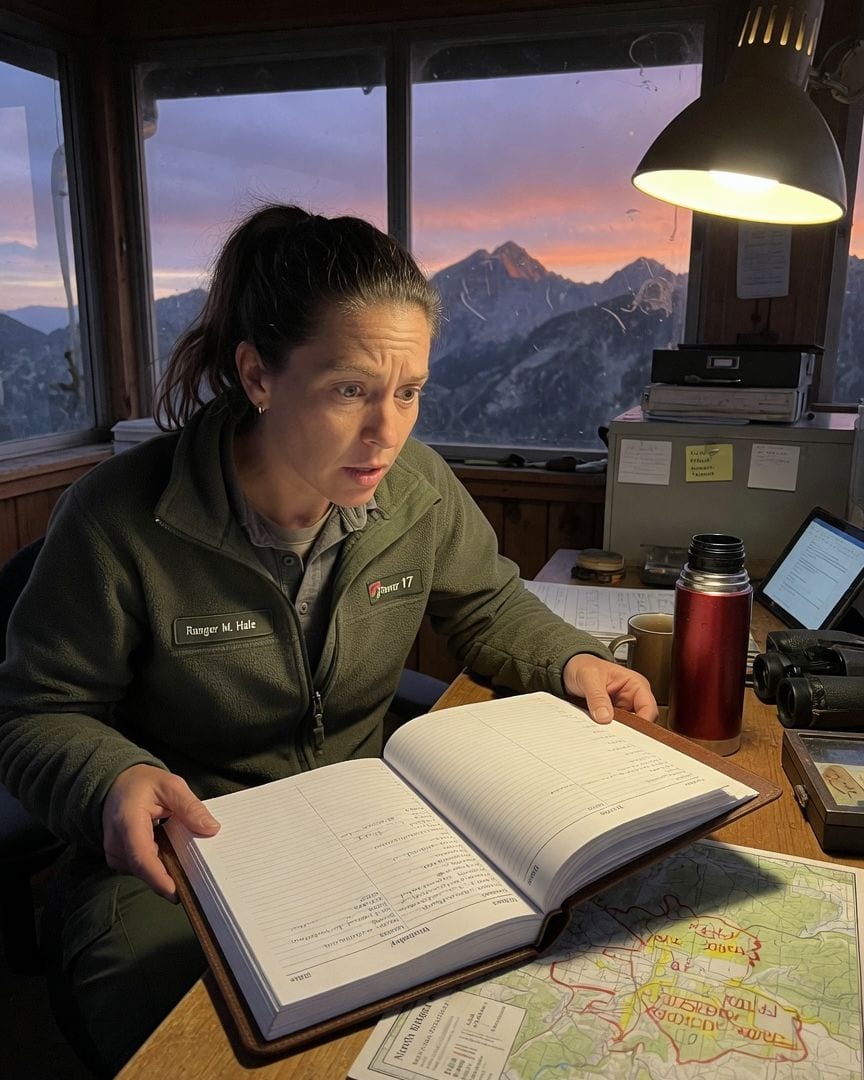
My fire lookout tower's summit register holds a blank space where the hiker's name should be. The trail he climbed has been closed since June.
As a ranger at Tower 17, I watched a hiker climb the North Ridge Trail, officially closed for months. Later, I opened the summit register where I'd just seen him sign, only to find the page unnervingly blank, as if no one had ever touched it.
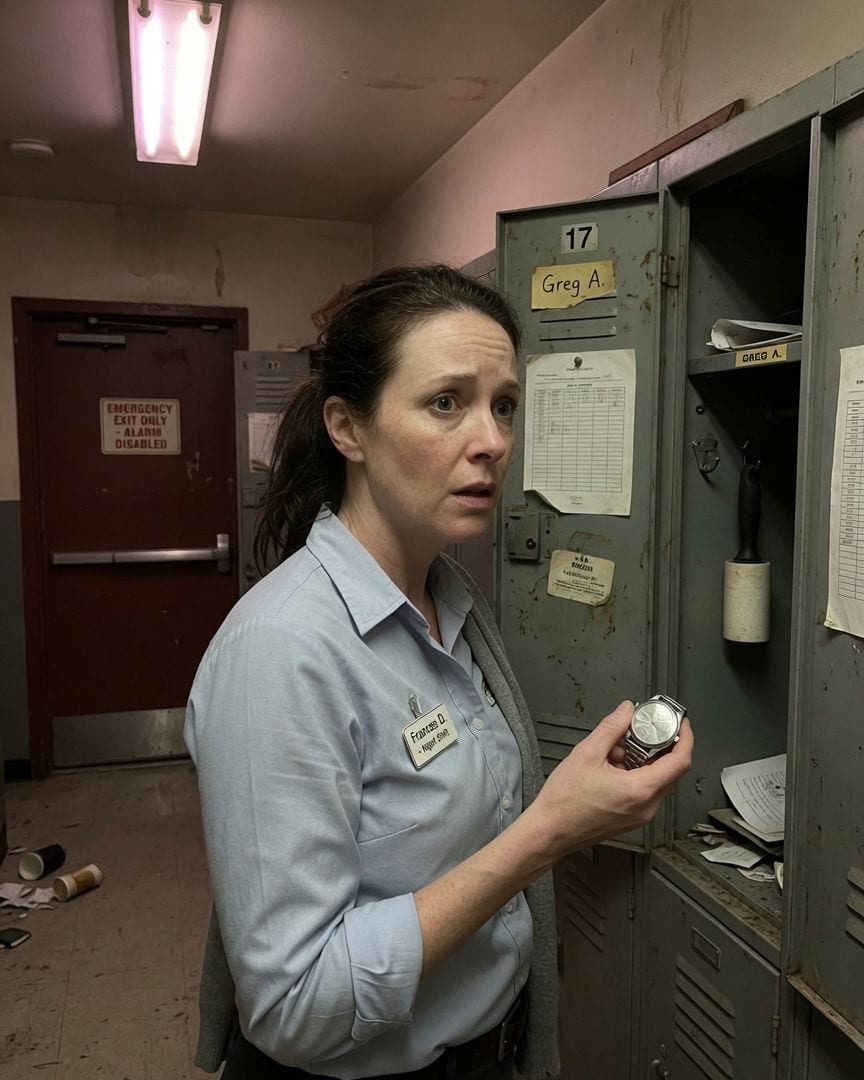
My colleague vanished and returned with a secret I don't have. He named the amount, the drawer, and the hour.
The fluorescent hum of my night shift office usually grounds me, but after my colleague Greg Ashford reappeared, things felt wrong. He'd vanished for three nights, then returned, undeniably Greg, but with a strange request. He thanked me for keeping quiet about a register incident last spring, detailing it down to the minute, a secret that simply did not exist.
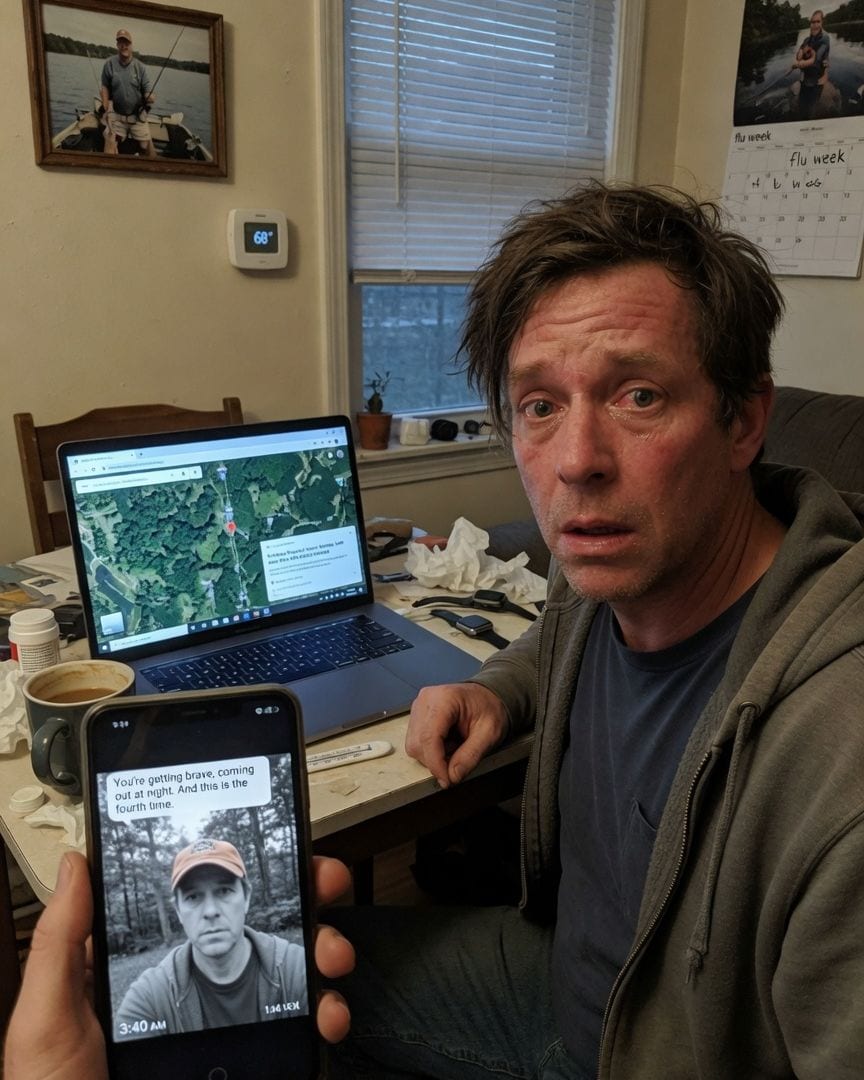
My brother-in-law's camera caught my face in Montana at 3:40 AM. I was asleep in Ohio, but it's the exact orange cap I lost, and he's seen me there four nights running.
I was just making coffee when my brother-in-law sent a photo from his Montana hunting land. It showed my face, wearing my lost baseball cap, timestamped 3:40 AM. I was home in Ohio, sick in bed, and hadn't been to Montana in years. And this was the fourth time.
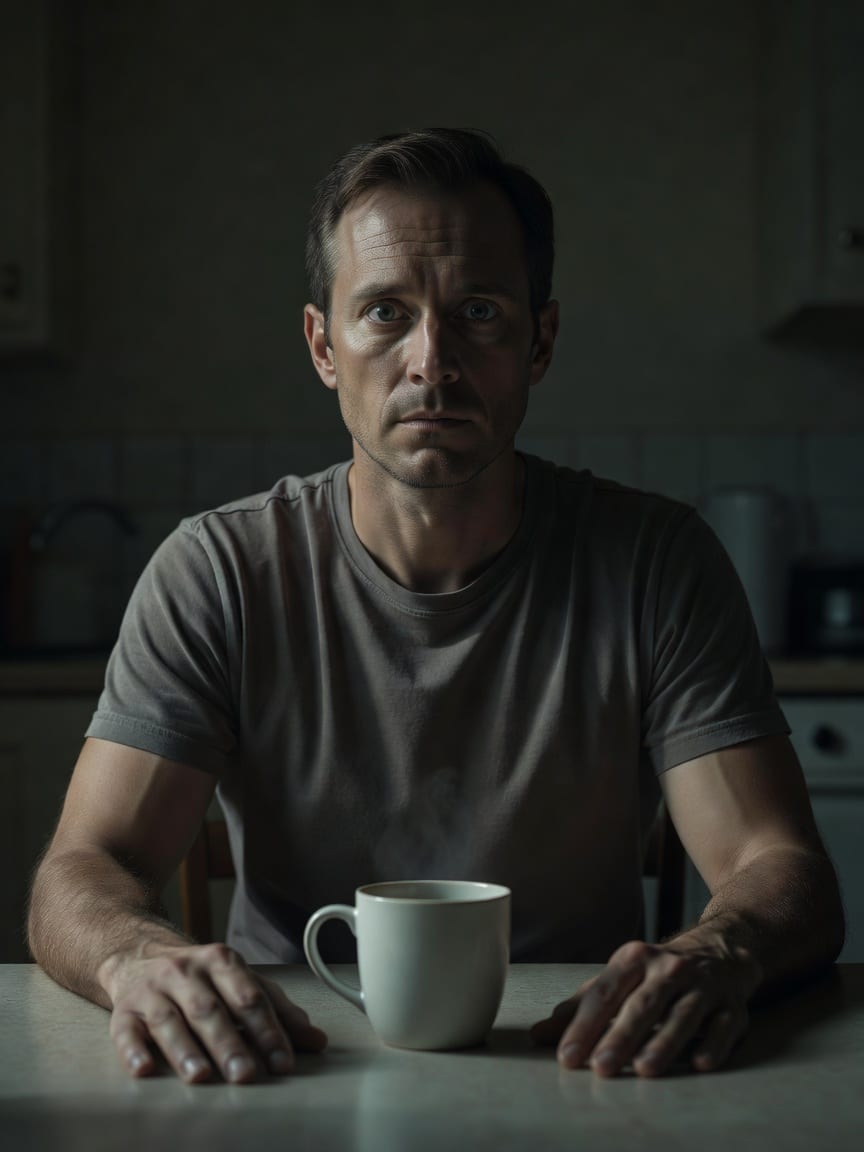
My brother Bernard orders 'espresso' now. He said 'expresso' his whole life, we always teased him. He came back from the lodge three days ago.
Bernard was home after three days missing, his face tan, undeniably him. But then he asked for 'espresso' a third time, perfectly pronounced, a word he'd mangled for forty years. A chilling certainty bloomed: the man across from me was not Bernard.