Gunnery Sergeant Pell found his battle buddy’s original dog tags in the collapsed barracks. They were burnt, bent, and Odom was wearing them when he left.
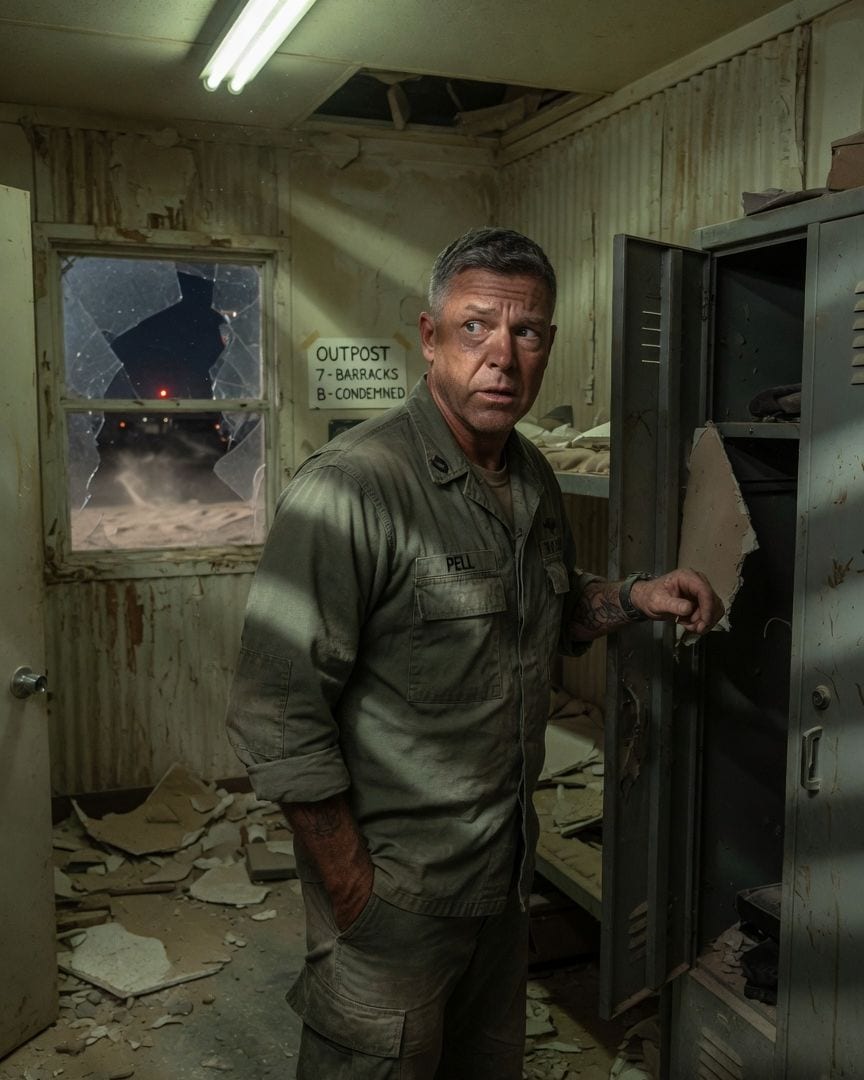
Gunnery Sergeant Russell Pell stood in the mess hall of Outpost 7, a remote desert station, the scent of overcooked rations heavy in the air.
The familiar din of clattering trays and low chatter usually offered a sort of comfort, but tonight it felt off-key. Pell watched Sergeant Howard Odom, his battle buddy, laugh with a cluster of new recruits by the water cooler.
Odom had just returned from medevac, whisked away after a ceiling collapse in the barracks.
Pell could pick Odom’s laugh out of a crowded mess hall, out of a hundred firefights – a big, broken bark you felt in your own chest, a sound that had carried them both through two deployments, through stretches of silent, desert darkness.
It was a laugh that cut through the noise, a genuine, almost boisterous rumble.
But this laugh, the one rattling off the corrugated metal walls right now, was different. Higher. Shorter. A stranger's laugh, a reedy, almost breathless sound that stretched thin in a friend's mouth.
Pell turned around, expecting to see someone else, some junior NCO trying to ape Odom’s camaraderie, but there Odom stood, head tilted back, still laughing, his eyes catching Pell’s as he turned.
The desert wind outside howled, a low, mournful sound, rattling the very bones of the isolated outpost.
Pell tried to dismiss the uncanny feeling, to file it away as trauma, a nervous tic from the collapse, or just the lingering effects of medication from the hospital. Odom had been through something rough. People changed.
But the cold knot in Pell’s gut persisted, a stubborn, unsettling refusal to loosen its grip.
Over the next few days, Pell subtly observed Odom. He kept a quiet distance, watching him from the corners of his eyes during morning briefings, in the dusty, sun-baked yard during drills, or across the mess hall.
He noticed the smaller things. They had a shared inside joke, a phrase about a particularly bad MRE, a detail only they would truly understand, a shorthand built over years.
Pell tested it, dropping the phrase casually during a lull in conversation. Odom fumbled it, a flicker of confusion in his eyes, before covering it with a quick, too-loud version of that new, reedy laugh.
It was a laugh that didn't quite reach his eyes.
Odom’s posture was subtly different too, Pell realized – a slight stiffness in his shoulders, a way he held his head, almost as if he were trying to remember how Odom used to stand. Pell rationalized, then dismissed each detail.
The man had taken a ceiling to the chest. He was recovering. Maybe Pell was just tired, nearing the end of his final rotation, his mind already half-checked out.
He decided to check Odom's old bunk, still mostly cleared out in the damaged section of the barracks that was slated for demolition. Maybe something familiar would ground Odom, or Pell himself.
He told himself it was just a final check for stray gear. He stepped over fallen debris, the air thick with dust and the metallic scent of rust.
The section of the barracks felt cold, abandoned, the light dim and fractured through broken window panes. He found Odom’s old wall locker, mostly empty, its door hanging ajar.
In a forgotten, grimy corner, tucked behind a loose metal panel that pulled away with a screech of rusted screws, Pell's fingers closed around something small and metallic. He pulled it out. Odom's original dog tags, dull and scarred.
Burnt at the edges, bent sharply, and still caked with dried grit from the ceiling collapse. Odom had been wearing these when he was ‘injured’ and evacuated.
Pell distinctly remembered the glint of metal around his neck as they loaded him onto the medevac chopper. The official paperwork, Pell recalled with a jolt, stated new tags were issued upon his return. How could these be here?
Pell held the damaged tags, the metal cool and heavy in his palm. A flash of memory: Odom, grimacing, clutching his chest as he was loaded onto the medevac, a glint of metal at his neck. These were those tags.
He looked around the desolate, dust-filled bunk, a place Odom had not set foot in since the incident. The implication hit him like a physical blow, a cold, sickening wave washing over him: the Odom who left did not return.
Or, worse, the Odom who left never truly left this outpost. A faint creak of floorboards from the corridor outside. Pell’s head snapped up. Footsteps. Coming closer.
He shoved the dog tags into his cargo pocket, the cold metal pressing against his thigh, his heart thumping against his ribs. The door handle to his current, shared quarters, just down the hall, began to slowly turn.
Pell now actively avoided Odom, the changed laugh a constant, grating reminder that burrowed under his skin. It was harder than he expected, the small outpost offering few places to truly hide.
He used his NCO privileges to try and access Odom’s medevac records, hoping for a clue, any official detail that might explain the discrepancy of the dog tags. Each attempt hit a wall.
'Restricted access,' 'classified,' or simply 'file not found.' It was too clean, too consistent. The lack of information felt like information itself.
He sought out Corporal Lily Fletcher, a junior NCO who had been on watch the night of the ceiling collapse. Lily, always a sharp, observant kid, looked pale when he mentioned the incident.
She admitted to hearing ‘two distinct sounds’ from the collapse site that night – not just the thunderous crash of the ceiling, but a 'wet thud' right after, a sound she dismissed at the time as debris settling or her own fatigue playing tricks.
She now shivered, her eyes wide, remembering. 'It was… wrong, Gunny,' she whispered, 'I just put it out of my head.'
Pell also began observing other long-serving personnel at the outpost.
Sergeant Colette Drummond, the mess cook, who used to be a fount of gossip and bad jokes, a fixture in the mess hall, was now eerily silent, her movements precise, almost mechanical, as if she were following a new, stricter programming.
Private Curtis Maddox, a veteran sentry who knew every rock and dune around Outpost 7, had started missing routine perimeter checks, his patrol reports always slightly off, detailing areas he couldn’t possibly have reached in the time allotted.
Yet, these discrepancies were never questioned. Pell saw the pattern, subtle as desert dust, settling over the outpost, a creeping, pervasive wrongness he couldn’t ignore.
Pell’s digging did not go unnoticed. His secure comms, usually crystal clear on the outpost’s dedicated network, developed intermittent static whenever he attempted to research Odom or the ceiling collapse.
It wasn't just interference; it was specific, a low hiss that obscured only the words he needed to hear. One morning, he found his personal locker subtly disturbed.
Nothing was stolen, no obvious damage, just a feeling that someone had been through it, a slight displacement of his folded uniforms. He started checking the lock, leaving a single hair across the seam, a trick he’d learned years ago.
He found it broken later that day. The pressure mounted, tightening around him like a noose.
Odom, the replacement, approached Pell during a routine morning drill, his gait still just a touch too stiff. His voice was calm, almost too calm, utterly devoid of the usual bluster or camaraderie.
'You’ve been acting strange, Gunny,' Odom said, his gaze unwavering, lingering a moment too long on Pell's face, searching for something Pell didn't want him to find. 'Something on your mind?'
There was no accusation in Odom’s voice, no malice, just a quiet, knowing observation that chilled Pell to the bone. He felt a profound unease, a gnawing dread.
He wasn’t just investigating a mystery; he was being watched, observed by something that understood his every move, something that had already infiltrated his world, his small, isolated outpost.
Pell decided he couldn’t sit on this any longer. He had to confront someone in authority, someone who might have answers, or at least the power to do something.
He went to Captain Brooke Marsh, the outpost's commanding officer, a by-the-book officer who valued order and efficiency above all else.
He laid out his evidence, careful to present it as objectively as possible: Odom’s changed laugh, Lily Fletcher’s testimony about the ‘wet thud,’ the missing medevac records he couldn’t access, and finally, Odom’s damaged dog tags, still in his cargo pocket, their burnt edges a stark, undeniable truth.
Marsh, initially dismissive, her face a mask of professional skepticism, visibly faltered when she saw the tags.
Her eyes, usually composed and steady, widened slightly, a flicker of fear crossing her features as she took the bent metal from his outstretched hand.
She paced her office, a tight, nervous energy now radiating from her. Her usual military bearing had crumbled. Then she turned back, her voice low and strained.
'There have been… anomalies at this outpost before, Gunny,' she admitted, her words forced, almost a confession. 'Incidents. Personnel lost, injured, or transferred under… unusual circumstances. Always hushed up. Always tied to structural damage or isolated patrols. Never fully explained.'
She gestured vaguely to a heavy, locked cabinet built into the wall. 'There’s a coded archival system. For these incidents. Designed to keep a 'clean' record for official channels, while preserving a 'true' record for internal, need-to-know eyes.
Command calls them "redacted events" in the official logs.' Her voice dropped to a desperate plea. 'Drop this, Gunny. For your own good. This isn’t a fight you can win.'
She shoved the dog tags back into his hand, her gaze urgent.
Ignoring Captain Marsh’s desperate warning, the information about the coded archives echoing in his mind, Pell used the obscure, fragmented details Marsh had inadvertently given him to access the outpost’s hidden archives.
He worked from a secure terminal late that night, the screen his only source of light in the dim, cramped comms room. The terminal, usually reserved for classified comms, glowed with decades of secret reports.
He typed in the last combination Marsh had used, a string of letters and numbers he’d memorized from her fleeting glance at her office cabinet. The system granted him access.
He scrolled through, his blood running cold as he found a series of incident logs, each one echoing Odom’s situation: 'Private First Class Elias Caldwell, transferred due to structural collapse, Outpost 7, 1998.'
'Sergeant Catherine Larsen, lost on isolated patrol, Outpost 7, 2005.' 'Specialist David Lee, medical evacuation due to facility damage, Outpost 7, 2012.' The dates formed a horrifying, cyclical pattern, each incident followed by an immediate, usually quiet, replacement.
Several names matched current, subtly 'off' personnel he’d observed – Sergeant Colette Drummond, Private Curtis Maddox. They weren't just 'off'; they were replacements. The pattern across rotations was undeniable, a slow, insidious assimilation.
Then, a report from ten years ago caught his eye. A 'near-miss' incident during a structural inspection.
His breath caught in his throat as he saw his own name, Russell Pell, starkly visible as 'primary contact' in the report, from a decade ago, regarding this very outpost. He had almost been one of them.
Just as he tried to click for more details, to unravel the full truth of his own connection, the screen flickered violently, then went dark, plunging the small room into oppressive silence.
The power outage was brief, a matter of seconds, but the message was clear, precise, and utterly terrifying. Pell knew.
The outpost wasn't just a base; it was a trap, a living entity that absorbed and replaced, weaving itself into the fabric of military bureaucracy.
The 'near-miss' a decade ago wasn't just an accident; he had been marked then, almost taken, and had been observed, perhaps even drawn back, ever since, a long-term target finally returned to the snare.
The entity sustained itself through the military's own cycles of deployment and casualties, using the system's inherent need for accountability to hide its replacements, to log them as 'returned' or 'transferred.'
Odom's changed laugh, the burnt dog tags, Lily Fletcher’s ‘two distinct sounds,’ the quiet mess cook, the missed checks of the sentry – every clue now snapped into horrifying focus as a subtle failure of perfect mimicry, the 'tells' of the entity, small, almost imperceptible flaws in their human façades.
The horror wasn't a rogue agent or a vast, shadowy conspiracy; it was the very ground they stood on, an anomaly inside a system engineered to make anomalies impossible, thereby making it impossible to fight.
He was trapped here, and had been, in a sense, for a decade. The truth was understood, and it could not be undone.
Pell knew he couldn’t fight the entity directly; it was the outpost itself, vast and pervasive, ancient and patient.
The realization that he was always named in it, that he was simply a delayed harvest, settled over him with a chilling, almost detached calm. He wouldn't survive, not truly, but he could expose it.
He raced to the primary comms array, the low hum of the servers a hollow comfort in the sudden, crushing silence of his realization.
He intended to transmit the archived files he found – the pattern, the names, the dates, his own chilling 'near-miss' report – to an outside, uncompromised channel, to anything beyond Outpost 7’s reach.
His fingers flew across the console, inputting the encryption keys he knew by heart, establishing a burst transmission protocol to a rarely used emergency channel. The data bar climbed, agonizingly slow, a green line creeping across the screen.
Just as the final segment of the transmission bar lit up, a quiet, familiar voice spoke from directly behind him. 'You were always drawn back here, Gunny,' Sergeant Odom said, his voice devoid of anger, or even emotion.
It was that new, reedy sound, now stripped bare of any attempt at mimicry. 'We knew you would be.' Pell slowly turned.
Odom stood there, perfectly still, his eyes holding that familiar, unsettling blankness, a faint, wrong smile playing on his lips, an imitation of human amusement that didn’t quite fit.
He reached out a hand, not in threat, but in invitation, towards Pell, his palm open. The transmission completed with a final, soft 'ping'.
Gunnery Sergeant Russell Pell was never heard from again. His disappearance was officially logged as 'desertion under active duty,' a blot on an otherwise exemplary record.
Captain Brooke Marsh filed the report, her face a mask of practiced composure, but attached a small, coded addendum referencing 'Outpost 7 incidents' to his classified personnel file.
The outpost continued its operations, personnel rotating in and out, the desert winds erasing footprints and memories.
The archived files Pell tried to transmit were never confirmed to have reached their destination, lost in the vastness of the military's digital landscape, or perhaps, simply absorbed.
Years later, a new recruit, Private Richard Maddox, arrived at Outpost 7. He was the son of Private Curtis Maddox, who had vanished on a 'routine transfer' years ago.
Richard was assigned to a bunk in the newly renovated barracks, a fresh coat of paint covering older scars.
Tucked away in a forgotten corner of his wall locker, he found a set of old, slightly bent dog tags, caked with dried grit.
He showed them to the mess cook, Sergeant Colette Drummond, whose face was still eerily placid, her movements precise. 'These look like my dad's old tags,' Richard said, 'but he had new ones when he left.'
Sergeant Drummond looked at the tags, then at Richard, a faint, wrong little smile spreading across her face. "Is that so?" she asks, the smile on her face not quite reaching her eyes.
If this one got to you
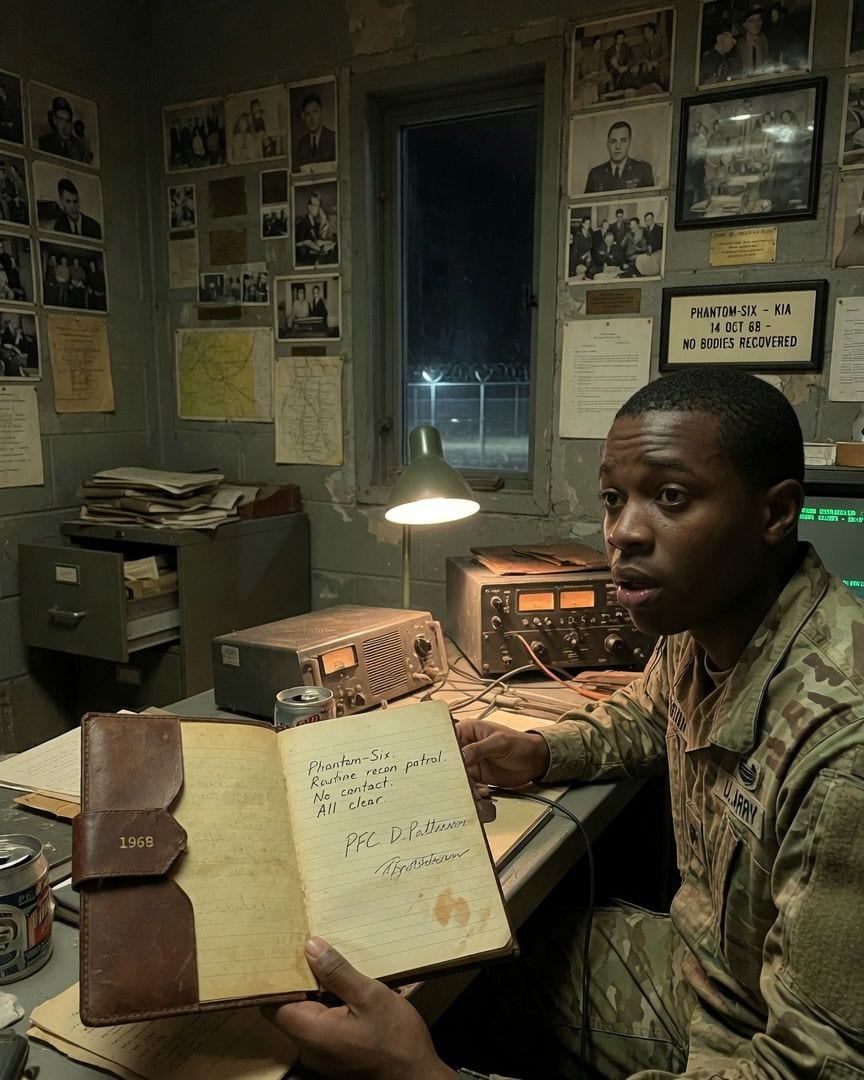
A DMZ specialist finds a 1968 Cold War logbook entry, signed by a lost soldier, its ink shimmering faintly.
Specialist James Farr, on a long night shift at a desolate Korean DMZ outpost, meticulously monitored his console, a squared-away soldier accustomed to the quiet hum of equipment. His focus shattered when a faint, static-laced whisper ghosted from a dead channel, calling out 'Phantom-Six' — a unit lost near this wire in 1968. The urgent voice then specifically mentioned his tower window light, asking him to turn it off before it drew fire. Later, an old logbook from 1968 revealed an entry dated three days *after* Phantom-Six was officially lost, signed by one of the vanished soldiers, its ink subtly shimmering with an unnatural gleam.
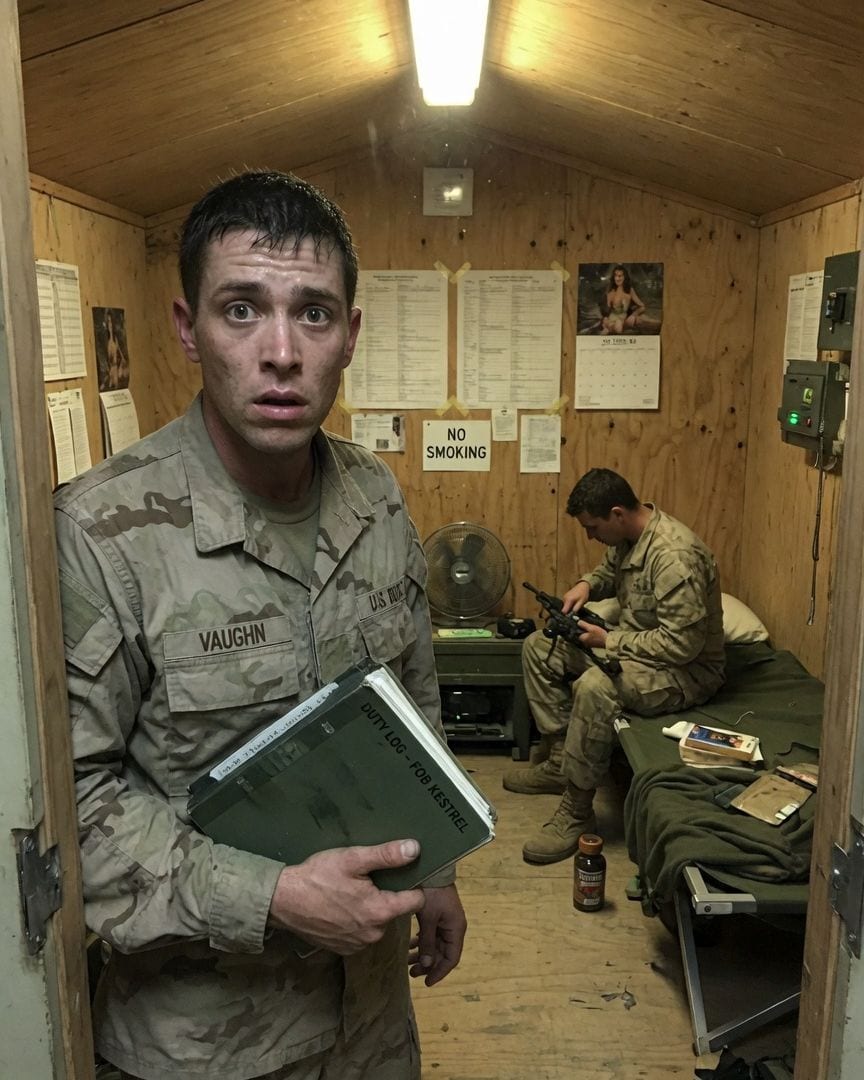
A soldier's bunkmate was airlifted from the FOB, but his signature appeared in the duty log the very next day.
Soldier Eugene Vaughn had spent two years at the isolated FOB Kestrel, used to the generator's drone. His bunkmate, Corporal Patrick Aldridge, had recently returned, pale but grinning, after a nasty fall. Then, Aldridge, an Ohioan who called soda 'pop,' began to say 'reckon,' a word Vaughn had never heard him use, denying it with an unsettling laugh. Vaughn's unease grew, until he found the unit's duty logbook; inside, signed 'Aldridge, P.', were entries for tasks dated *after* his bunkmate had been airlifted from the FOB. Vaughn knew it was impossible. He confronted Aldridge, logbook in hand, meeting an unreadable smile and eyes suddenly uncomfortably still.
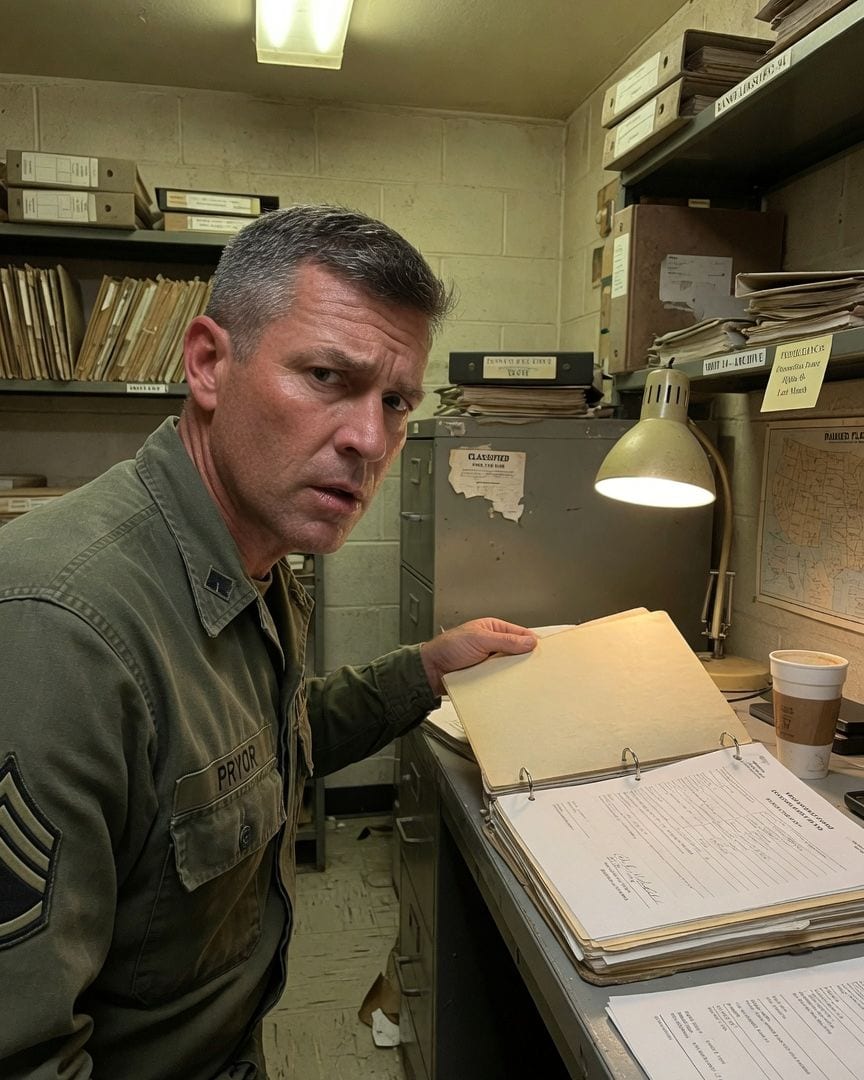
A sergeant with eleven days left finds a warm, glassed crater. Its file shows a captain lost thirty years ago is still signing reports from last week.
Sergeant Alden Pryor was counting down his final eleven days on a twenty-year hitch, expecting to spend them on routine patrols along the Ranier Flats fence line. Instead, his truck stopped at a bizarre sight: a four-hundred-foot glassed crater, miles from anywhere, its sand faintly warm at dawn despite no one recalling a blast. The air above it shimmered with an unnatural distortion, a silent scar of erased violence, and the official file for 'Shot 14' showed recent maintenance sign-offs for a decommissioned tower at the crater site. All these active documents were signed by Captain Everett Caldwell, who had been officially lost in operations thirty years ago, leaving Sergeant Pryor to wonder how a dead man could still be filing reports.
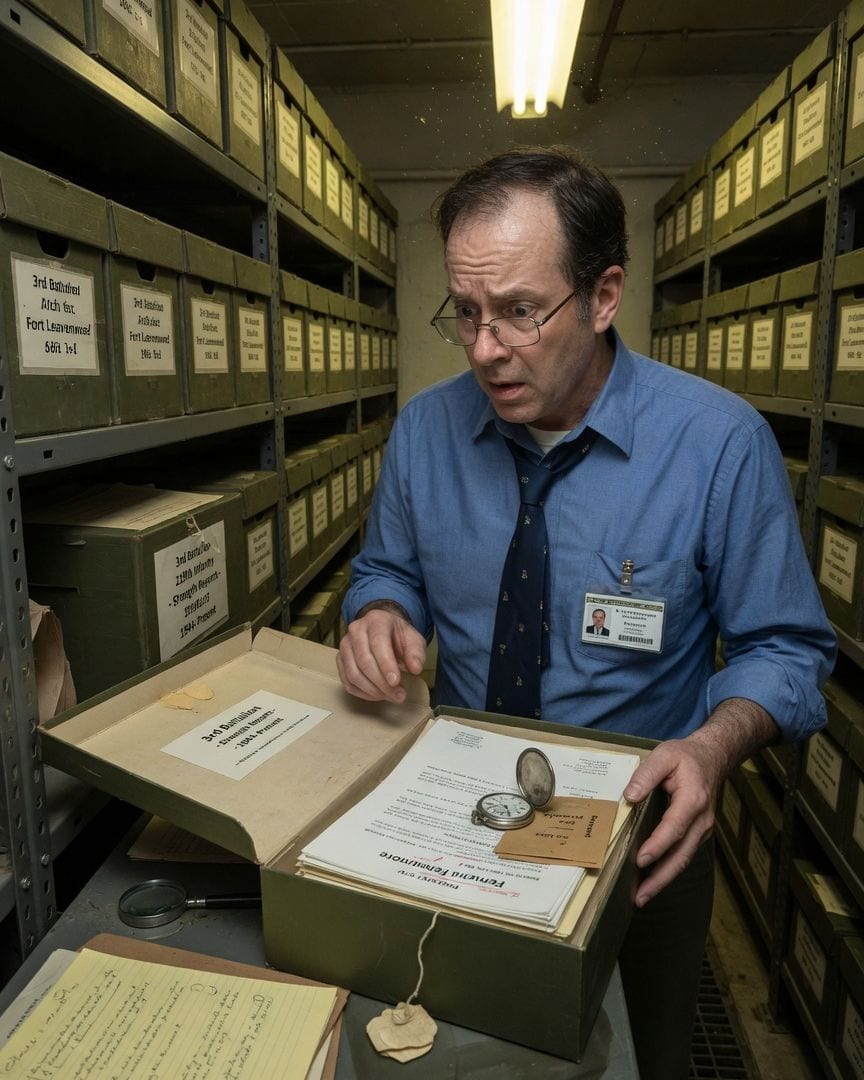
On his last Friday, an archivist finds his dead father's pocket watch in a Cold War ghost unit's file, ticking and warm.
Marcus Fennimore, a meticulous archivist, was on his final Friday at Fort Leavenwood's lineage vault, a place he knew intimately after thirty-one years. He stumbled upon twenty-two dust-sealed boxes for '3rd Battalion, 219th Infantry'—a unit that, according to every official record, simply did not exist. Inside, reports ran from 1944 to just last month, with the most recent listing his long-dead father, Kenneth Fennimore, as 'absent.' Marcus’s own father. Then, from a 1944 folder, he pulled his father's actual dog tags and a silver pocket watch, inexplicably warm and steadily ticking, freshly engraved with 'K.F. - Present for Duty.'
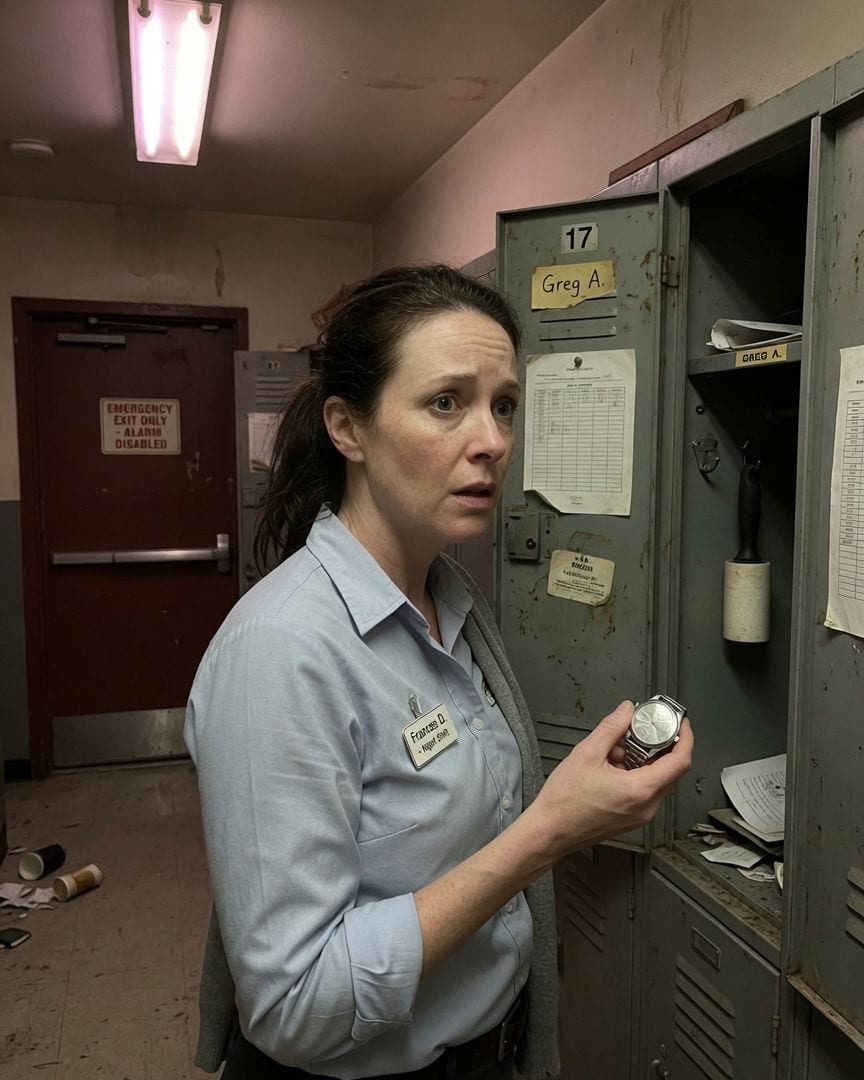
My colleague vanished and returned with a secret I don't have. He named the amount, the drawer, and the hour.
The fluorescent hum of my night shift office usually grounds me, but after my colleague Greg Ashford reappeared, things felt wrong. He'd vanished for three nights, then returned, undeniably Greg, but with a strange request. He thanked me for keeping quiet about a register incident last spring, detailing it down to the minute, a secret that simply did not exist.
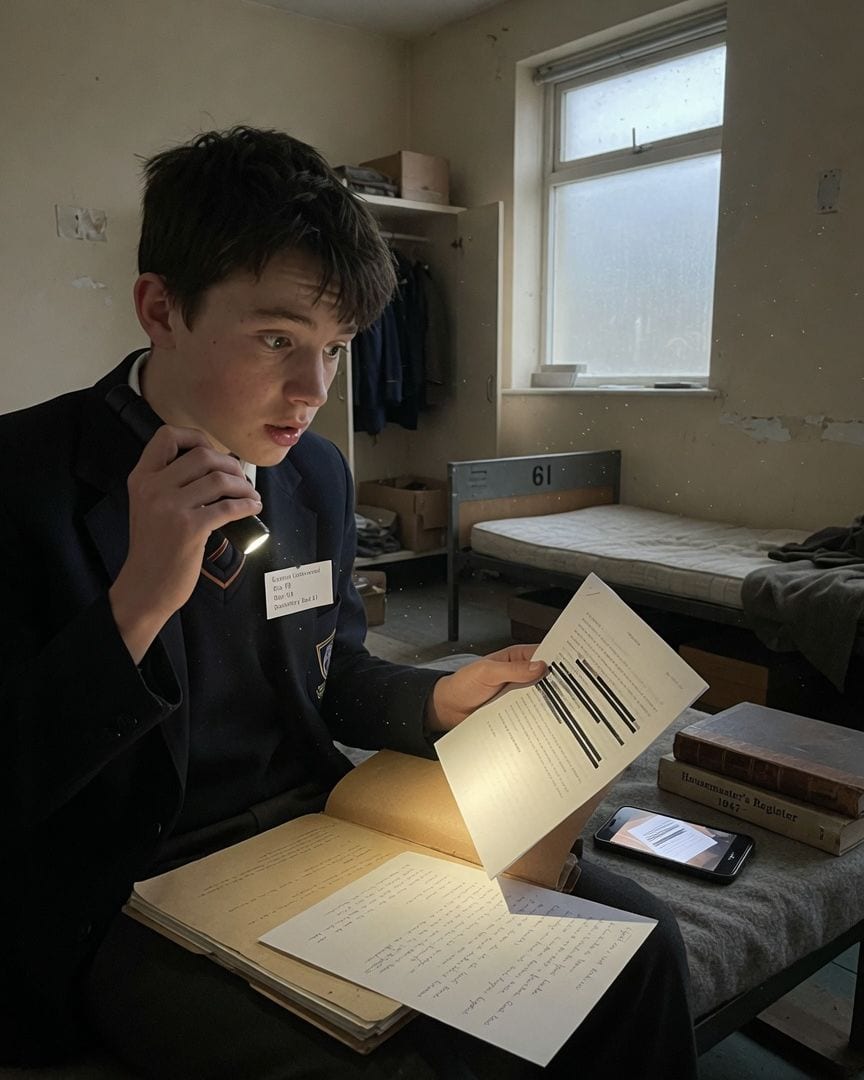
My boarding school bed number was 61, and the archive shows a boy assigned it every eight years since 1947, each leaving mid-term with the bed 'to remain made up'.
I found my matriculation card, listing me as 'Boy 61, Dormitory Bed 61.' Later, an old ledger revealed every boy assigned that bed since 1947 left mid-term, with an unsettling note: 'bed to remain made up.' Our housemaster’s recent scribble, 'as the others,' only deepened the dread around my own assigned bed.