My colleague vanished and returned with a secret I don't have. He named the amount, the drawer, and the hour.
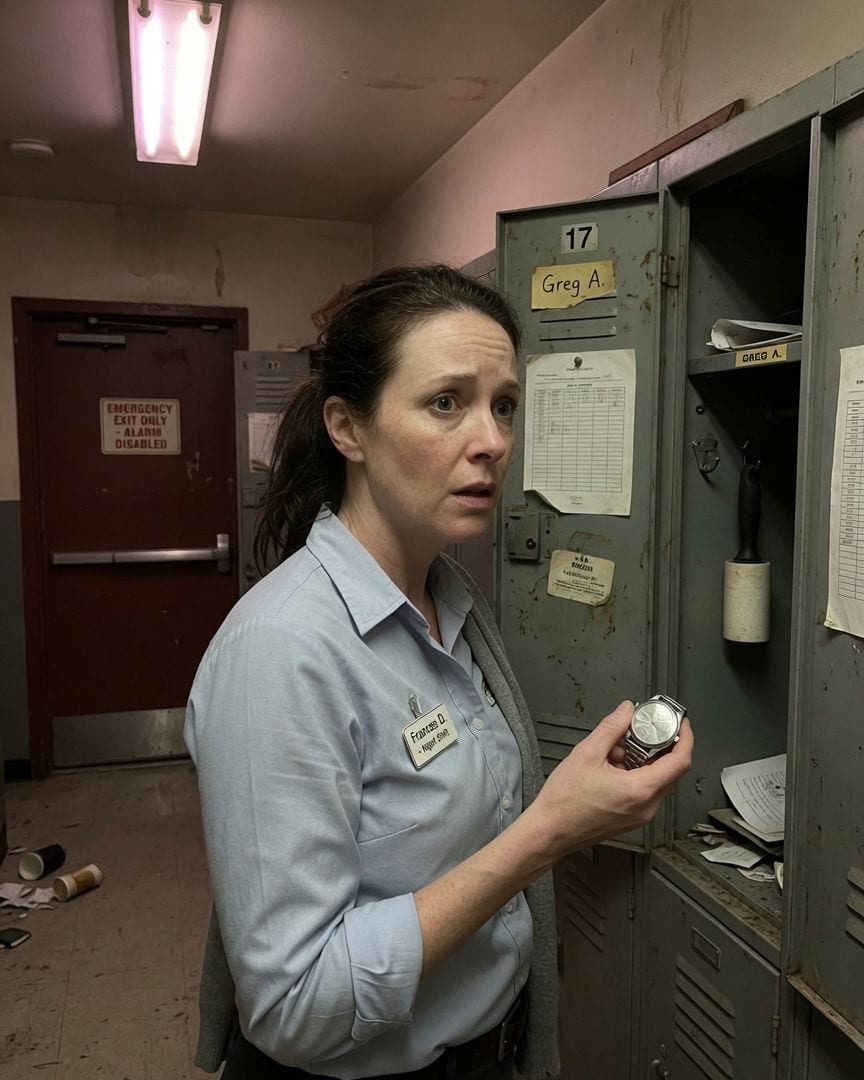
The fluorescent hum of the night shift office usually grounded Frances Donovan, a constant, predictable drone that was the only sound for hours.
But the last few days, that hum felt like a vibration directly in her skull, rattling something loose. Her colleague, Greg Ashford, had vanished three nights ago, only to reappear at a depot forty miles away, unharmed.
Relief had been a short, sharp breath, quickly followed by a strange, unsettling quiet in the air around him.
He was back, yes, undeniably Greg. Same slightly crooked smile, the same scar above his left eyebrow from that bike accident years ago.
But then, yesterday, in the breakroom, he’d leaned in, his voice a low, quiet murmur, and thanked her. "For keeping quiet," he’d said, "about the register last spring."
He named the exact drawer, the precise amount, the hour down to the minute. Frances’s blood had run cold.
There was nothing to keep quiet about. The register had been balanced perfectly that night, every penny accounted for. She'd worked that shift; she knew.
She’d even checked the logs again, out of a compulsion she couldn’t explain, just to be sure. Perfect. Yet Greg’s eyes, fixed on hers, were calm, certain.
He’d asked her to keep it between them, a shared secret that simply did not exist. The air in the breakroom, usually stale and thick with coffee, felt impossible to breathe, pressing down on her.
Every time he spoke, every casual gesture, Frances searched for a crack, a flaw in the familiar face. It was Greg, undeniably.
But the certainty in his voice about a secret that didn't exist, a secret only she would know, was a cold, impossible wrongness that echoed in her skull.
She tried to rationalize it. Stress from the disappearance? Maybe he’d had a bad dream and conflated it with her? She even considered a twisted joke, but Greg wasn't that kind of man. Not usually.
The next day, a strange compulsion she couldn't shake led her to linger by the old staff lockers, a forgotten corner near the disused fire exit.
Greg had cleared his out a week before he vanished, moving to a new section, a minor internal shuffle. His old locker, number 17, stood empty now, the door left ajar, mocking the neatness of his new start.
As Frances passed, a glint caught her eye, a tiny flash of silver deep in the corner. Behind a rusted hook, half-hidden by a forgotten lint roller, a small, dark shape. She reached in, her fingers brushing against cold metal.
It was Greg’s watch. Not the cheap, plastic digital one he wore for work, the one that beeped the hours, but his father’s old Omega. A heavy, silver piece, its back engraved. He never took it off. Never.
It was a gift from his late father, a man Greg spoke of with reverence, recounting stories of fishing trips and late-night talks.
He'd shown Frances the engraving years ago, tracing the letters with a calloused thumb: 'To my boy, always.'
Why would he leave it here, in a forgotten locker, in the dust and grime? The official report stated he was disoriented but otherwise fine, walking out of the distant depot forty miles away, having simply wandered off.
But this watch, tucked away in a place he wouldn’t return to, spoke of something else entirely. It was a misplaced anchor, a physical contradiction to the story, a silent alarm bell ringing in the quiet locker room.
Frances held the watch, its cool weight a contrast to the growing heat in her chest. She remembered Greg always tapping it, a nervous habit he’d picked up from his father, a constant, comforting connection.
He’d never, not once, been without it, not even in the shower. The official story was that he'd walked out of the remote depot, confused but otherwise intact. He should have had this watch.
It should have been on his wrist. But here it was, in the dusty, empty locker, a silent, damning piece of evidence.
This wasn't just a misplaced item; it was a deliberate abandonment, or worse, a sign that the Greg who came back wasn't the Greg who had left. The realization hit her, cold and sharp.
The relief she'd felt for his safe return curdled into something else entirely. She stood frozen before the open locker, Greg’s old watch glinting in the dim light.
The engraving, 'To my boy, always,' seemed to mock the official story, a cold weight in her palm.
The watch became Frances’s secret burden. She kept it hidden in her desk drawer, tucked beneath old invoices, observing Greg from a distance, trying to find a pattern in the small dislocations.
His habits were mostly the same, yes, but small things were off. He’d always taken his coffee black, a point of pride, saying anything else was ‘just warm milk.’ Now he asked for two sugars, sometimes even three.
He used to whistle an old blues tune when he was stressed, a low, melancholy hum. Now it was a pop song from the charts, something light and forgettable, without any of the old tune’s depth.
Minor, easily dismissed, but accumulating, like dust in an empty room.
She started digging into the company’s internal records. The official report on Greg’s disappearance and return was sparse, almost too clean. A brief mention of disorientation, a perfunctory medical check-up, then cleared for work.
No details on how he got to the depot, or why he was found there, just a vague note about 'wandering'. Frances accessed the security footage for the main facility from the night Greg vanished.
Hours of empty corridors, then a blur on Camera 4, timestamped 03:14. Greg, yes, but moving with a strange, almost too fluid gait, disappearing into a service stairwell that led directly to the loading docks.
No sign of him leaving the building via the main exits, none of the usual clock-out procedures. She then looked at the depot footage from around the time he was found. Nothing.
The cameras around the perimeter, specifically 7, 8, and 9, were listed as 'malfunctioning' that week, according to the logs. A convenient blind spot.
She cross-referenced other 'missing person' incidents in the company’s history, quietly, through old HR archives, pretending to audit inventory manifests.
Three other cases over the past decade: employees vanishing from night shifts, always found days later at distant depots, always 'unharmed but disoriented.' Each time, the perimeter cameras at the discovery depot were 'malfunctioning.'
A pattern, too neat to be coincidence, began to emerge, chilling her to the core. This wasn't just about Greg. This was bigger.
Frances's quiet digging didn't go unnoticed. One evening, as she was scrolling through old maintenance logs, searching for the names of the repair technicians, Carl Fontaine, the regional manager and head of security, appeared silently behind her.
His reflection in her monitor startled her, making her jump. "Everything alright, Frances?" he asked, his voice even, but with an edge she hadn’t heard before. It made the air in the small office feel suddenly thinner, colder.
"Just clearing up some old files," she lied, her pulse quickening, thrumming in her ears. He nodded slowly, his gaze lingering on the screen, then on her, a long, assessing look that made her skin prickle. "Good. Efficiency is key.
No need to revisit things that have already been settled." The words were a soft warning, a cold draft despite the office's usual stuffiness. Later that week, Greg himself approached her.
"You’ve been quiet lately," he said, his smile a little too wide, a little too fixed. It didn't reach his eyes. "Anything on your mind?" He didn't ask it like a concerned friend.
He asked it like a predator testing the air, an odd, almost-too-bright gleam in his eyes. Frances felt a tremor of fear, a primal alarm bell. She was being watched.
The next night, she found a small, neatly folded note on her desk, tucked under her keyboard. It simply read: 'Some things are best left buried.' No signature. Just the company letterhead, crisp white, embossed with the corporate logo.
The dread intensified. It wasn’t just a feeling anymore; it was a concrete threat. Someone knew what she was doing. Someone wanted her to stop.
And the way Greg looked at her now, sometimes, when he thought she wasn't looking, was no longer familiar. It was appraising, as if she were an object to be categorized.
She was no longer just investigating; she was being hunted.
The note solidified Frances's resolve. There was no going back now. She found Carl Fontaine in his office, the engraved watch clutched in her hand, its cool metal a grounding presence.
The room was always too warm, too quiet, the air thick with the scent of his expensive aftershave. "What happened to Greg?" she demanded, placing the watch firmly on his polished desk, the silver glinting under the soft light.
Carl picked it up, turning it over in his fingers, his expression unreadable, calm as still water. "A sentimental piece," he murmured, almost to himself. "Greg was found, Frances. He’s back. Everything is as it should be."
"No," she insisted, her voice tight with a mix of fear and conviction. "The Greg who came back isn't the one who left. He knows things he shouldn't, things only I know, like that register incident.
And he left this behind." She pointed at the watch. "And those other cases? The malfunctioning cameras? It’s a pattern, Carl. Not coincidence."
Carl set the watch down, his gaze unwavering, finally meeting hers. "Patterns are just that, Frances. Coincidences. The world is a messy place."
"Not this messy," Frances retorted, her voice trembling now, but holding firm. "People don’t just vanish and reappear forty miles away with impossible memories and then leave their most cherished possession behind.
And why are the depot cameras always conveniently 'malfunctioning'?" She felt a sudden, sharp cold, like someone had left a freezer door open in the room.
Carl sighed, a sound of weary resignation, as if she were a troublesome child. "You're a smart woman, Frances. Too smart for your own good, sometimes."
He leaned back in his leather chair, a slow creak from the springs, his eyes finally meeting hers again, and a cold, terrible calm settled over him, chilling the air around them even further. "You want the truth?
The truth is, sometimes people… don't come back. Not really. What you see is a… continuation. A replacement. They fill the void." He gestured vaguely towards the window, indicating the sprawling, indifferent world outside. "It ensures continuity. Keeps things orderly.
Your Greg vanished. This one… returned. It’s been happening for a long time. The depot is just where the transition is managed. And the memories? They’re… downloaded. Sometimes, there are glitches. A detail missed. A memory they shouldn’t have.
Like the register, or your watch." Frances felt the floor drop out from under her. It wasn't a monster, not a ghost. It was a system. And Carl Fontaine wasn't just aware; he was a part of it.
Frances stared at Carl, reeling, a dizzying emptiness in her stomach. "Downloaded? Glitches? What are you talking about?" she whispered, the watch now burning cold in her hand, suddenly feeling like a shard of ice.
Carl simply smiled, a thin, knowing curve of his lips, utterly devoid of warmth. "It’s efficient. It ensures stability. And Greg… he’s adjusted well."
Just then, the door to Carl’s office opened, and Greg himself entered, carrying a stack of files.
He glanced at Frances, then at Carl, his eyes lingering on the watch on the desk for a fraction of a second too long. "Everything alright?" he asked, his voice unnervingly smooth, too perfectly pitched.
Carl nodded. "Just a chat, Greg. Frances had some concerns."
Greg turned to Frances, his expression softening, a familiar warmth in his eyes that now felt utterly false, a performance.
"Frances," he began, "I was just thinking about that time, your seventh birthday, when your grandmother took us to the old tea shop.
Remember the tiny porcelain cups, and how she’d tell us stories about fairies living in her lavender sachets?"
Frances froze. Her grandmother had taken only her to that tea shop. It was a private, special memory. Greg had never been there.
He couldn't possibly know about the porcelain cups, or the delicate floral pattern on them, or the scent of her grandmother's lavender sachets, or the specific fairy stories.
He described the exact pattern on the teacups, the way the sunlight hit the stained glass window above their table, the specific scent of her grandmother's perfume.
He recounted every detail, warmly and in detail, a moment he was never present for.
Greg’s eyes, usually so familiar, held a strange, still depth as he described the scent of her grandmother's lavender sachets, the exact pattern on the teacups, a moment from her seventh birthday he couldn't possibly have known.
"It was a lovely day," he said, a faint, wrong smile touching his lips. Carl watched, unblinking, a silent accomplice to the horror unfolding before her.
The air in Carl’s office grew heavy, thick with the impossible truth. Frances felt a cold dread bloom in her stomach, expanding, suffocating.
"You… you weren't there," she choked out, her voice barely a whisper, a last, desperate attempt to anchor herself to reality. Greg’s smile didn’t falter, didn’t even twitch. "Of course I was, Frances. It was a lovely day.
We had lemon tarts, remember? Your favorite."
Carl intervened, his voice disturbingly gentle, cutting through the horror like a surgeon's scalpel. "As I said, Frances, some memories are… shared. Transferred. Sometimes with remarkable accuracy, sometimes with minor discrepancies. It's a complex process."
He stood, moving to the window overlooking the vast, dark expanse of the company’s parking lot, the rows of empty trailers stretching into the night. "The entity requires… hosts. To observe, to learn, to integrate.
It’s been operating for centuries, adapting. The depots are merely modern access points. People vanish, yes, but something always comes back. Something familiar, something that can blend. It maintains the fabric, you see. Prevents panic. Prevents disruption."
Frances’s mind raced, connecting the dots: the impossible register memory, the abandoned watch, the other 'disappearances,' the conveniently malfunctioning cameras. It all clicked into place, a horrifying, coherent pattern.
The wrongness wasn't random; it was systematic, an insidious, ancient mechanism woven into the mundane fabric of their world. Greg, the man standing before her, was a perfect, chilling testament to its efficiency.
He was a vessel, a living memory, a flawless simulation. The cold, rational explanation was far worse than any monster. It was a quiet, relentless consumption.
Frances looked from Greg’s placid, knowing face to Carl’s calm, accepting one. There was no escape. She was trapped in this office, caught in a truth too vast, too horrifying to comprehend. "What happens to the originals?"
she asked, her voice hollow, barely her own.
Carl turned from the window, his expression unbothered, as if discussing inventory. "They serve their purpose. Their memories are… integrated. Recycled, in a sense. Nothing is truly lost, merely repurposed."
Greg stepped closer, his hand reaching out, not with malice, but with a strange, unnatural tenderness, a parody of human comfort. "You understand now, don't you, Frances? It’s not so bad. We ensure order. We ensure continuity."
His fingers brushed her arm, and a profound, bone-deep cold seeped into her skin, unlike anything she had ever felt. It was the touch of something utterly alien, wearing the familiar warmth of a friend.
She tried to pull away, but found her limbs heavy, unresponsive, held fast by an unseen force. Her mind screamed, but no sound escaped her throat. The dread was absolute, overwhelming, a total eclipse of her being.
She was no longer a witness; she was a discovery. Greg’s eyes, once so familiar, now held a deep, ancient knowing, a silent promise of what was to come.
She saw her own fate reflected in their depths, a quiet, inevitable absorption. The room began to spin, the fluorescent lights blurring into a sickly halo.
Her last thought was of the watch, still lying on Carl’s desk, a forgotten anchor to a life that was slipping away.
Frances Donovan was reported missing from her night shift a week later. Her car was found in the company parking lot, keys still in the ignition.
Carl Fontaine oversaw the investigation, expressing his regret at the sudden, inexplicable disappearance of such a valued employee. Greg Ashford, though visibly saddened, continued his work with his usual quiet efficiency.
The empty space Frances left behind was quickly filled, the night shift rota seamlessly adjusting. Life at the distribution center returned to its routine hum, unbroken, undisturbed.
A new night shift supervisor was hired, a young woman named Lily Granger. Greg Ashford greeted her warmly on her first night, a perfectly amiable smile on his face. "Welcome to the team, Lily," he said.
"Frances was a good friend. She's… missed." Lily nodded, a little nervous, still finding her footing in the new environment. "I heard. It's awful." Greg chuckled softly, a low, easy sound. "Sometimes, things just… happen.
But we carry on, don't we?" He then leaned in, his voice dropping to a low, quiet murmur, the sound almost a conspiratorial whisper. "By the way, Lily, about that register last spring.
I always appreciated you keeping quiet about it. Named the drawer, the amount, and the hour, didn't you?" Lily stared at him, her brow furrowed in confusion. She’d only just started. She knew nothing about a register from last spring.
But Greg’s eyes, fixed on hers, were calm, certain. He asked her to keep it between them.
If this one got to you
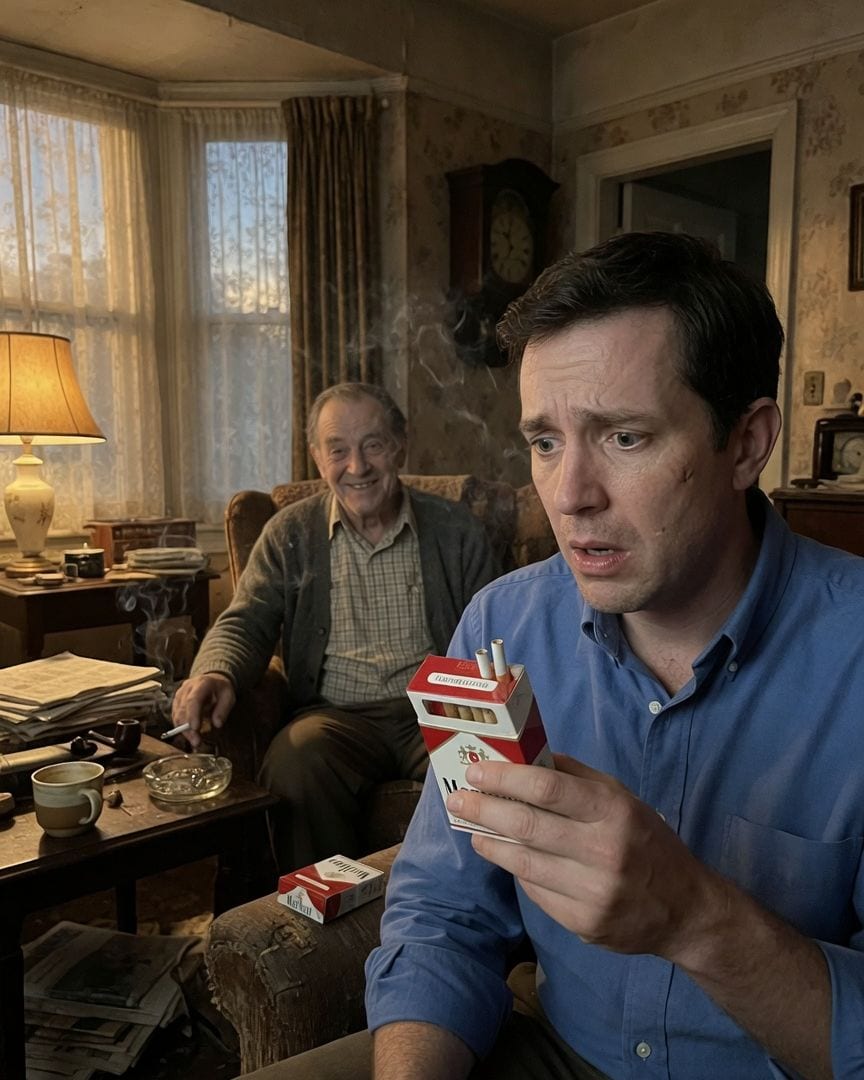
My uncle always smoked left-handed. He went missing, came back smoking with his right — and when I said so, he held out the pack and asked me to show him how he used to do it.
My Uncle Frank, a fixture in his armchair, vanished for two days and returned changed. He's always smoked left-handed, a nicotine stain on his thumb a permanent reminder. But tonight, he holds his cigarette in his right hand, a slow, wide smile on his face that doesn't quite reach his eyes.
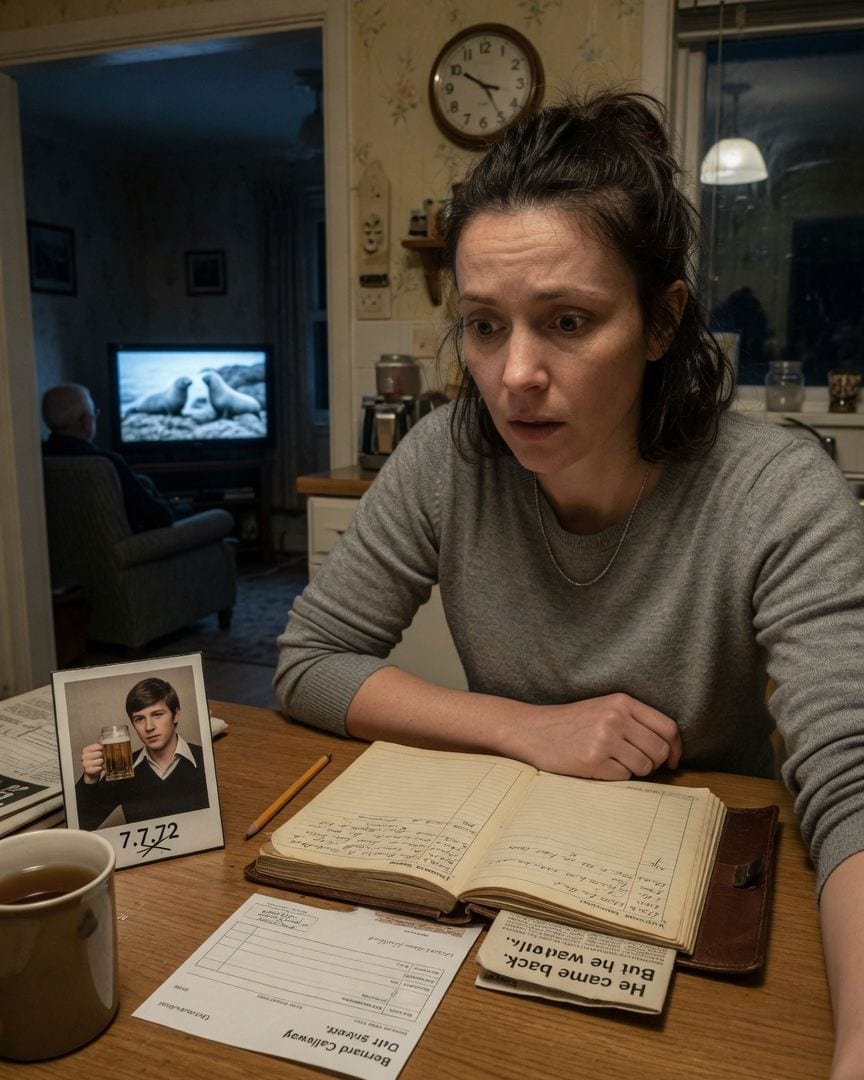
My father's bank slip had uncrossed '7's. He swore he never had that habit.
My father, Bernard, returned three months ago, a miracle after being presumed lost at sea. But a bank statement revealed a disturbing detail: the '7's in his signature were uncrossed. For decades, he'd meticulously crossed every '7', yet now he denied ever having the habit.
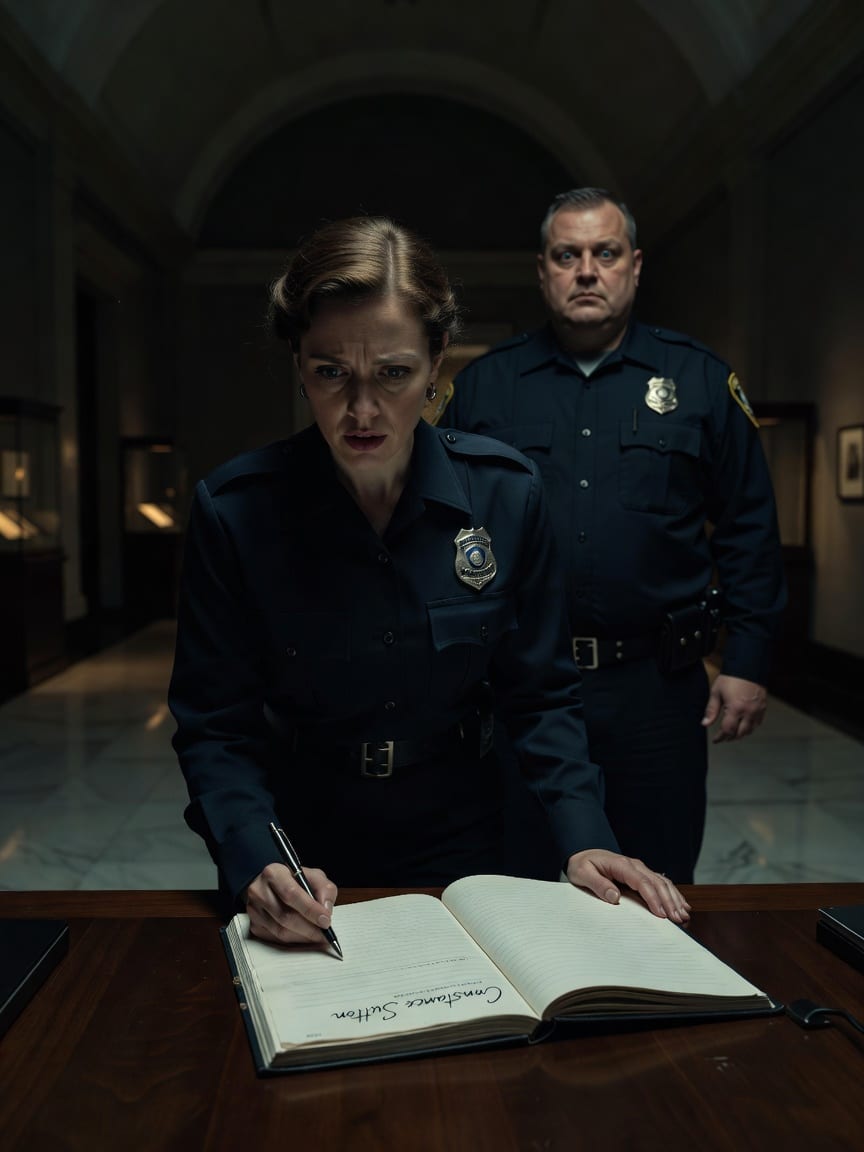
My relief guard Anton always signed in green ink. The police pulled the handover book: no Anton, no green ink, ever.
For two years, my routine as a night guard at the Prescott Museum has been a comforting rhythm, ending with the arrival of Anton Kowalski. But after a small theft, the police reveal Anton doesn't exist and his name isn't in the handover book. Now, I've found my own signature in that book for a night I was explicitly off duty.
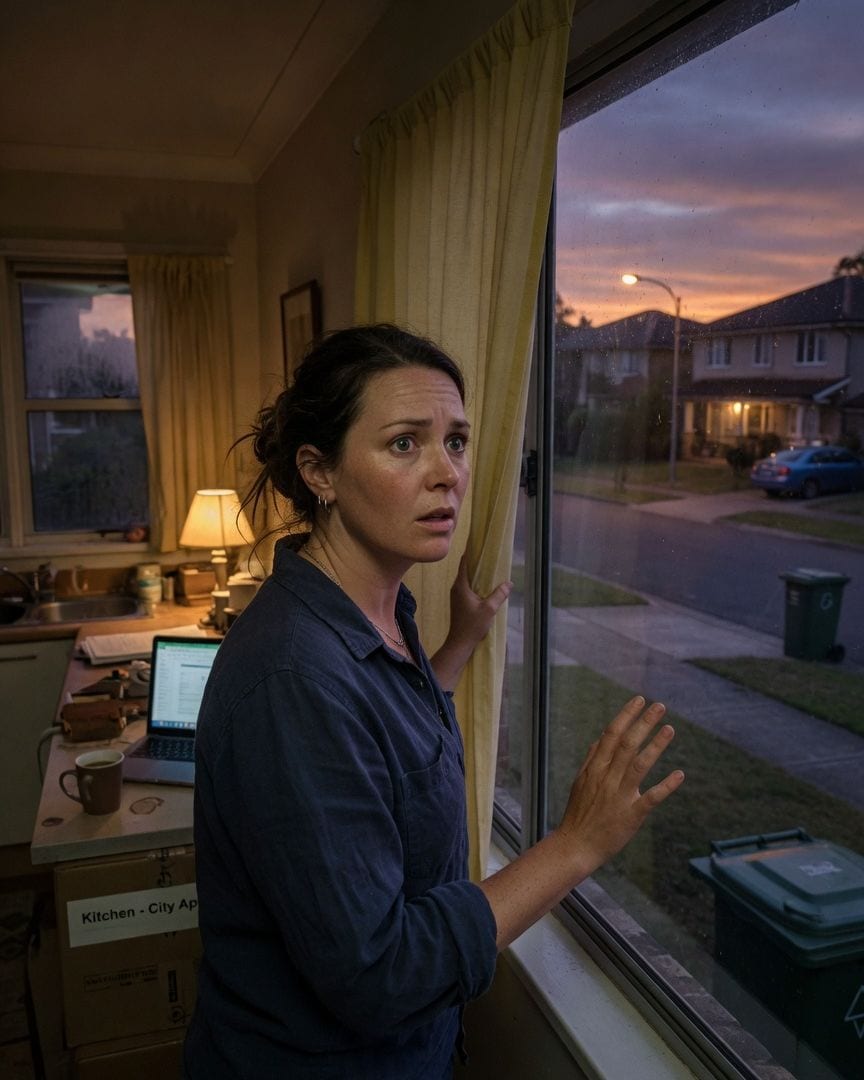
My bin was turned the wrong way Tuesday. The man three doors down hasn't been seen since, though his curtains still open.
New to Oakhaven, I dismissed the local warnings as charming quirks. But after I put my bin out first, my neighbor Joel Whitmore vanished, leaving only a cryptic 'My turn' note. The same strange symbol from his note was chalked on my bin, facing the street.
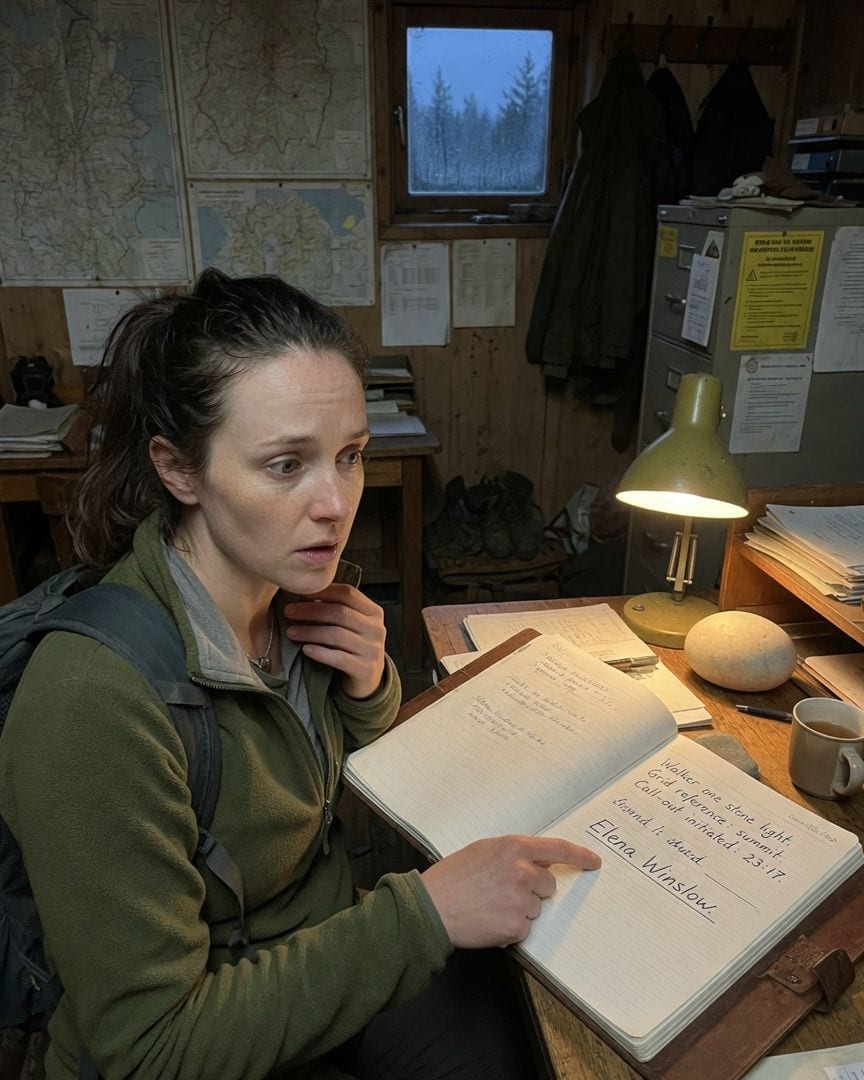
My pocketed mountain stone meant a rescue logbook recorded a call-out that night for me — a shout that never went out.
After an exhilarating climb on Cadair, I took a small, smooth white stone from the summit cairn, despite a warden's warning. Back at the station, a logbook entry shocked me: my name, dated last night, for a rescue call with an impossible detail: 'Walker one stone light'.
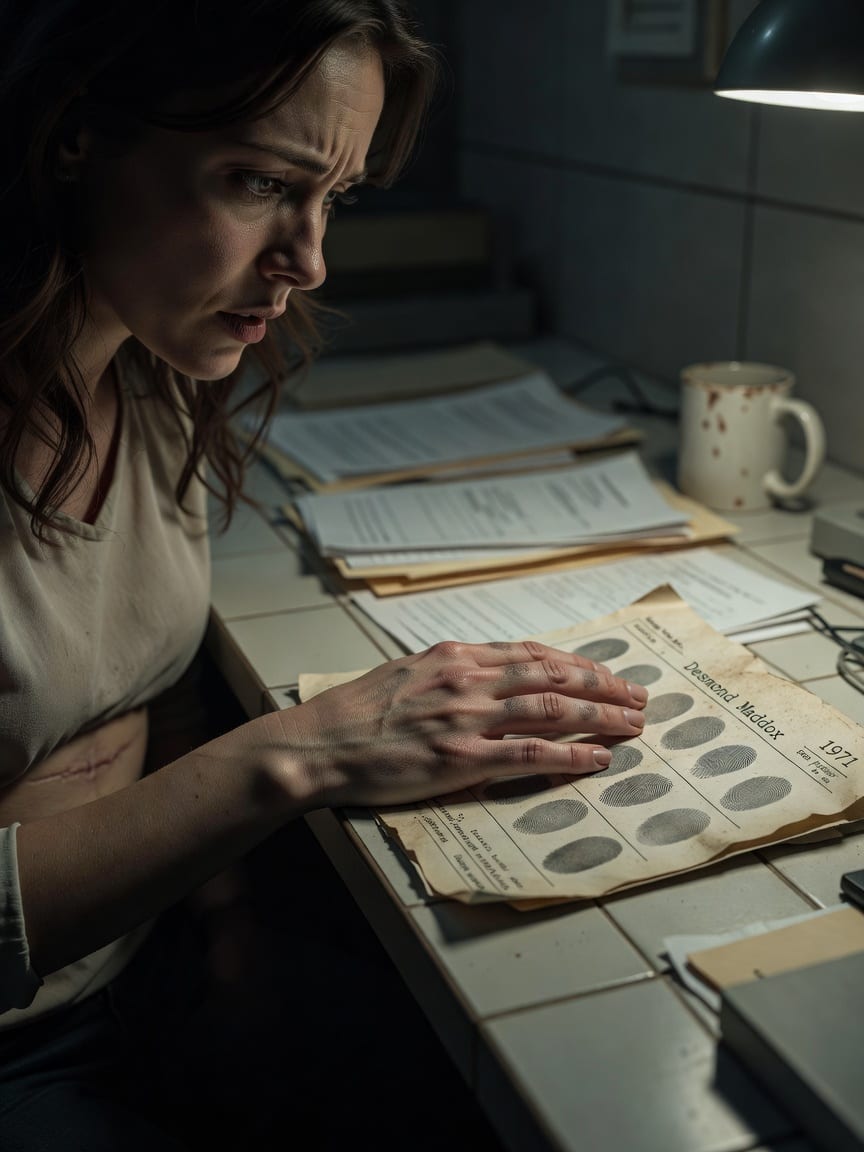
My fingerprints matched a man's 1971 arrest card. I've never been to that city, nor used that name. The examiner just stared at my hands.
As a fraud auditor, my world is built on facts, so when forensic examiner Russell Sheppard slid two ten-prints across his desk, I expected routine. One was mine. The other, yellowed from 1971, belonged to a Desmond Maddox arrested in New Haven – a city I'd never visited. But the impossible truth was clear: his prints were an exact match to mine.