A postmaster at a Cold War Alaskan outpost still received mail for soldiers declared dead in 1969. Then he found their base was active three years later.
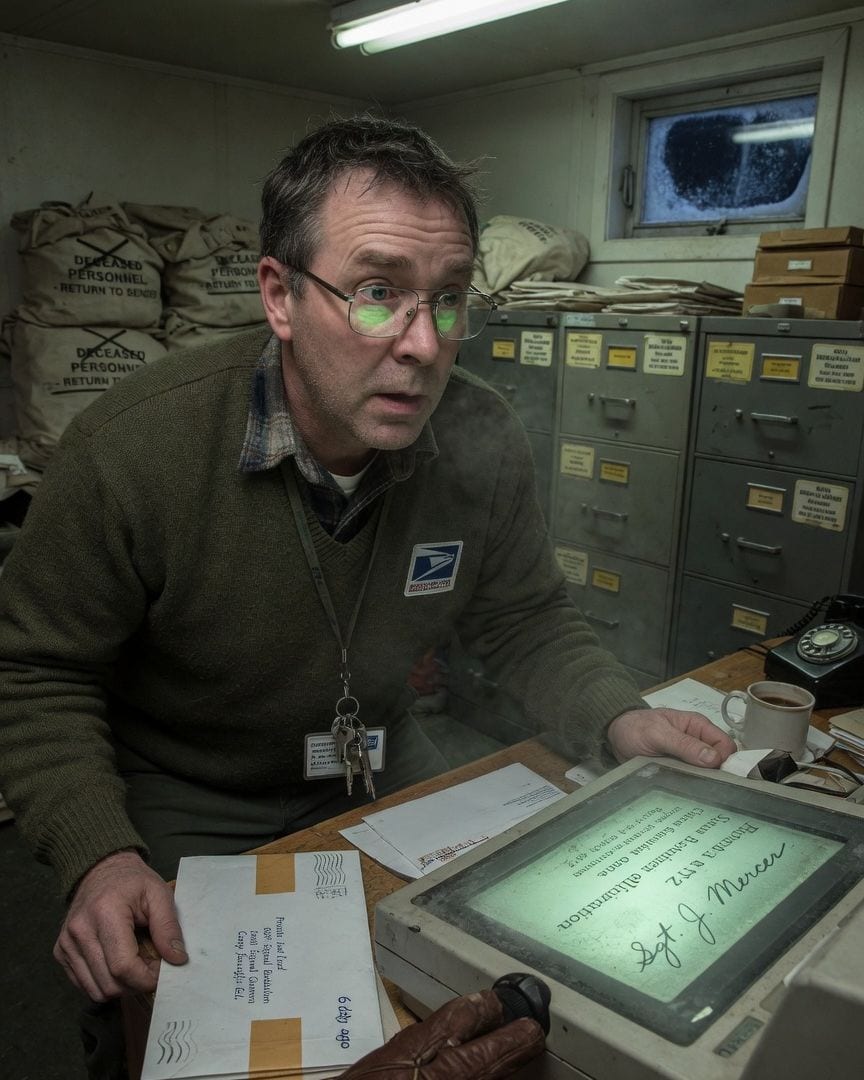
The bitter Alaskan wind whipped around Camp Bidwell Annex as Postmaster Rowan Ashcroft watched the weekly mail plane land.
It was Tuesday, as it always was, and the small, twin-engine Cessna bounced on the gravel strip before taxiing toward the squat, gray building. Rowan had stood in this exact spot for over two decades, witnessing the same ritual.
Years ago, he had stopped forwarding the heavy canvas mail sacks meant for the 88th Signal Battalion; the unit had been officially struck from the Army rolls in 1969, its personnel dispersed or declared lost.
No one was left to receive it.
This week, however, the sack seemed heavier than usual. When the pilot wrestled it onto the porch, Rowan’s gloved fingers brushed against the canvas, feeling the bulk of its contents.
Forty-three letters, a quick count confirmed, all postmarked within the last six days. Each envelope was addressed in a different, unfamiliar hand to men the Army had told their families weren't coming back – men officially listed as dead.
Rowan pulled one out, a thick, square envelope addressed to a Private Joel Carver.
His methodical mind, a lifetime spent imposing order on the world, snagged on the impossible detail: the envelope was already open, the flap neatly resealed with a strip of brown tape.
He peeled back a corner; the adhesive was still tacky, faintly smelling of stale glue. The mail for the dead was still being processed.
Rowan, a man for whom an anomaly was a problem to be solved, not ignored, spent the next few days trying to rationalize the mail.
He checked the postmarks against the national registry for any new regional sorting facilities that might have rerouted old addresses. He cross-referenced the names on the envelopes with known historical units for misassigned service numbers.
He even considered the possibility of a grotesque, elaborate prank, but the sheer volume and consistency of the weekly deliveries ruled it out. Nothing. The envelopes were real, the addresses valid, the recipients definitively deceased, and the origin utterly untraceable.
Driven by a deep-seated sense of duty, Rowan accessed the declassified Army archives, sifting through the microfiche records for the 88th Signal Battalion. The official story was clear: disbanded, personnel dispersed, all records closed in 1969. Every entry confirmed it.
But then, a flicker. A quarterly materiel inventory from 1971, two years after the official disbandment, listed 'active signal relay components' allocated to 'Unit 7, Camp Bidwell'—a designation he recognized as an integral part of the 88th.
It was a single, almost negligible line, tucked away between entries for long-decommissioned vehicles and obsolete equipment. It was enough. The ordinary explanation, that this was merely forgotten historical data, began to fray.
He started pulling every file, every scrap of paper related to Unit 7 and the 88th, going deeper than any routine inquiry would warrant. The deeper he went, the less rational the world seemed to become.
Late one evening, the only sound in the annex the quiet whirring hum of the microfiche reader, Rowan found it. A maintenance log entry. The heading read: 'Signal Relay Unit 7, Camp Bidwell. Routine service and calibration. July 14, 1972.'
Three years after the base was shuttered. Three years after the 88th was dissolved. Three years after Camp Bidwell was officially a ghost town. A log entry for its equipment, routine as could be.
It was signed, in a neat, looping hand: 'Sgt. J. Mercer.' Rowan leaned closer, his breath fogging the cold glass of the reader.
The ink on the microfiche image, a faded, ghostly gray on most of the documents, appeared impossibly, vibrantly dark on this one, as if the pen had just been lifted from the page.
The image of that impossibly dark ink burned in Rowan's mind. He could not unsee it. It was a tangible thing, a point of contact with an impossibility, and it demanded an explanation.
Using his network of postal contacts and obscure government databases, he painstakingly traced 'Sgt. J. Mercer.'
The search was long, winding through old military personnel files and retired civil service records, but it eventually led him to an eighty-one-year-old retired Army records clerk named Judith Mercer, living in a small, isolated fishing village hundreds of miles away on the Alaskan coast.
The journey was long, the roads winding through desolate, snow-dusted wilderness that stretched endlessly under a perpetually overcast sky. The silence of the landscape seeped into the truck cab, amplifying the obsessive hum in Rowan’s thoughts.
When he finally reached her weathered clapboard house, perched precariously on a rocky outcrop overlooking a gray, churning sea, Judith was frail but sharp.
Her eyes were clear and surprisingly steady, her gnarled hands surprisingly steady as she offered him a mug of steaming black tea. He carefully, methodically, explained his discovery, showing her a printout of the microfiche entry.
Her gaze lingered on the signature, a flicker of something unreadable in her eyes. She didn't deny it, didn't even seem surprised. Instead, she nodded slowly, a quiet, unsettling calm about her that suggested not confusion, but profound, weary recognition.
Judith Mercer spoke in riddles, referring to 'the filing system' and 'the process' with a reverence that chilled Rowan to the bone.
She spoke of 'active files' and 'closed cases' as if they were living things, entities with their own will and purpose.
Rowan stayed overnight in the village's only motel, a single room above a bait shop, but he felt an unwelcome scrutiny, a cold prickle on the back of his neck.
An old, unmarked black sedan, too clean for the dusty roads, was parked outside his window when he woke, the glass dark and opaque. Later, he saw it outside Judith's house, its engine idling silently.
The driver was always obscured, just a shadow behind the tinted glass, but the message was clear: his digging had been noticed.
When he returned to Judith’s house the next morning, the air inside the small living room felt heavier, colder. She placed a gnarled hand on his arm, her grip surprisingly firm.
'Some things,' she said, her voice barely a whisper, 'are best left filed, Mr. Ashcroft. The system… it maintains order.' Her eyes held a deep, unspoken warning, a silent threat that felt far more potent than any shouted accusation.
The air in the small room thickened with unspoken implication, pressing down on Rowan, making his ears ring with an unseen weight.
Rowan, unyielding in his pursuit of logical coherence, pressed Judith.
He laid out the evidence: the mail addressed to dead men, postmarked last week; the envelopes opened and resealed with tacky tape; the post-1969 records for a supposedly disbanded unit; her own impossible signature from 1972.
He showed her the printouts, the meticulous notes he had compiled. Faced with his relentless rationality, a crack finally appeared in her composure. She exhaled slowly, a long, weary sound that seemed to carry decades of suppressed knowledge.
'The 88th Signal Battalion,' she began, her voice hoarse, 'never truly stopped operating. It was… filed.' She explained that certain units, deemed too sensitive, too vital, or perhaps too anomalous, were never disbanded in the conventional sense.
Instead, they were absorbed into an ongoing, internal bureaucratic system. 'The paperwork didn't stop because the unit didn't stop,' she whispered, her gaze fixed on a distant point beyond the window.
'It continued to generate its own existence through the files.' The mail sack arriving every Tuesday at Camp Bidwell? That was the system's own internal correspondence, processed and marked by its unseen clerks. The tacky tape?
A signature of the system's ongoing 'reading' and 'processing' of the letters. The requisition forms, the payroll runs, the maintenance logs—all continued, meticulously recorded, sustaining the unit in a perpetual state of bureaucratic activity.
The 88th wasn't lost; it was being maintained, deep within the archives, a ghost unit perpetually on active duty, fueled by paper and ink.
Judith, her resolve finally broken, her face pale, led Rowan to a locked metal cabinet in a back room. Inside, amidst dusty ledgers and yellowed folders, sat a single binder, thicker and newer than any other.
It was labeled simply: 'ACTIVE.' She opened it to a section marked '88th Signal Battalion — Current Operations.'
The pages were filled with recent entries, requisitions for supplies, position reports, all in that same unnervingly uniform hand Rowan had seen in the microfiche. Her finger, trembling now, pointed to the newest entry at the bottom of a page.
It was a requisition form, not for equipment, but for 'Postmaster Services, Camp Bidwell Annex.' The date stamped neatly at the top was next Tuesday.
Below, in the signature block, filled in with the neat, official script of the file itself, were the words: 'Ashcroft, Rowan. Current. Active.'
The quiet hum of the room seemed to drop away, leaving only the sound of Rowan's own breath, suddenly loud and ragged in his ears. The file wasn't just recording the past; it was writing his future.
Judith explained, her voice flat, that the 'filing' system wasn't merely an archive; it was a living, self-perpetuating entity. It absorbed individuals who became aware of its operations, integrating them into its ongoing bureaucratic processes.
The postmaster at Camp Bidwell was a critical node for the system's 'internal mail' and had always been.
She showed Rowan archived requisitions for 'Postmaster Services' dating back decades, each one signed by his predecessors, their names neatly filed under 'ACTIVE.'
The mail, the requisitions, the maintenance logs—they were all part of the continuous, unceasing 'life' of the 88th Signal Battalion within the system. Rowan's methodical nature, his dedication to his post, made him the perfect candidate for integration.
The previous postmaster, a quiet man named Miller, had 'retired' suddenly when his name appeared on the requisition form for his replacement—Rowan himself, years ago.
The horror wasn't that the unit was lost, but that it was never lost at all, and that its bureaucratic existence now demanded his participation. The system didn't need people to operate; it needed people to be operated on.
Rowan tried to escape.
He left Judith’s house abruptly, the silent sedan nowhere in sight, and drove back through the desolate Alaskan landscape, a frantic energy urging him to pack his few belongings at the annex and leave Camp Bidwell forever.
The snow-dusted peaks and the endless stretches of spruce trees blurred past his truck windows. He drove for hours, the image of his name in the file, neatly penned, burning in his mind.
He would simply abandon his post, drive until he ran out of gas, then keep walking. He would be free.
But as he approached the annex, a familiar sight made him slam on the brakes, sending a spray of gravel behind the tires. Another mail sack, heavy and canvas, already sat on the porch.
It was a full day before its usual Tuesday arrival. It was addressed to the 88th.
He knew, with a dreadful certainty that settled like ice in his stomach, that this sack contained the latest 'internal mail,' and that it was his duty, his assigned duty, to process it.
His rational mind, which had always sought order, now found itself trapped by it. He could drive past, could leave it. He could turn the truck around and disappear into the vast Alaskan wilderness.
But the years of routine, the ingrained sense of responsibility, the very methodical nature that had led him to this truth, held him captive. He pulled his truck to a stop, the engine ticking in the cold.
He stepped out, the Alaskan wind whipping around him, and walked towards the porch. His hand reached for the new mail sack. The system had filed him, and he was unable to refuse its call.
Rowan Ashcroft continued his duties as postmaster at Camp Bidwell. The mail sack arrived every Tuesday, sometimes a day early, sometimes with the rustle of anticipation that only he now heard.
He opened the letters addressed to the 88th Signal Battalion, read them, and resealed them with tacky tape.
He processed the requisitions, his hand now steady and precise, signing off on forms that detailed equipment and personnel for a unit that officially ceased to exist decades ago.
The unmarked black sedan was no longer seen in the village or outside his annex. The silence of Camp Bidwell was deeper now, filled only by the rustle of paper.
Rowan sat at his desk, processing a new batch of requisitions for 'Unit 7, Camp Bidwell.' He signed his name, 'Ashcroft, Rowan,' in the neat, official script he had now mastered. He glanced at the date. It was next Tuesday.
His gaze fell on the final form in the stack: a requisition for 'Records Clerk, Camp Bidwell Annex,' dated for next month. The name block was blank, waiting. The file is always waiting for the next signature.
If this one got to you
A Sergeant finds her own complete burial packet, dated for the coming spring, then finds a stack of identical ones for others.
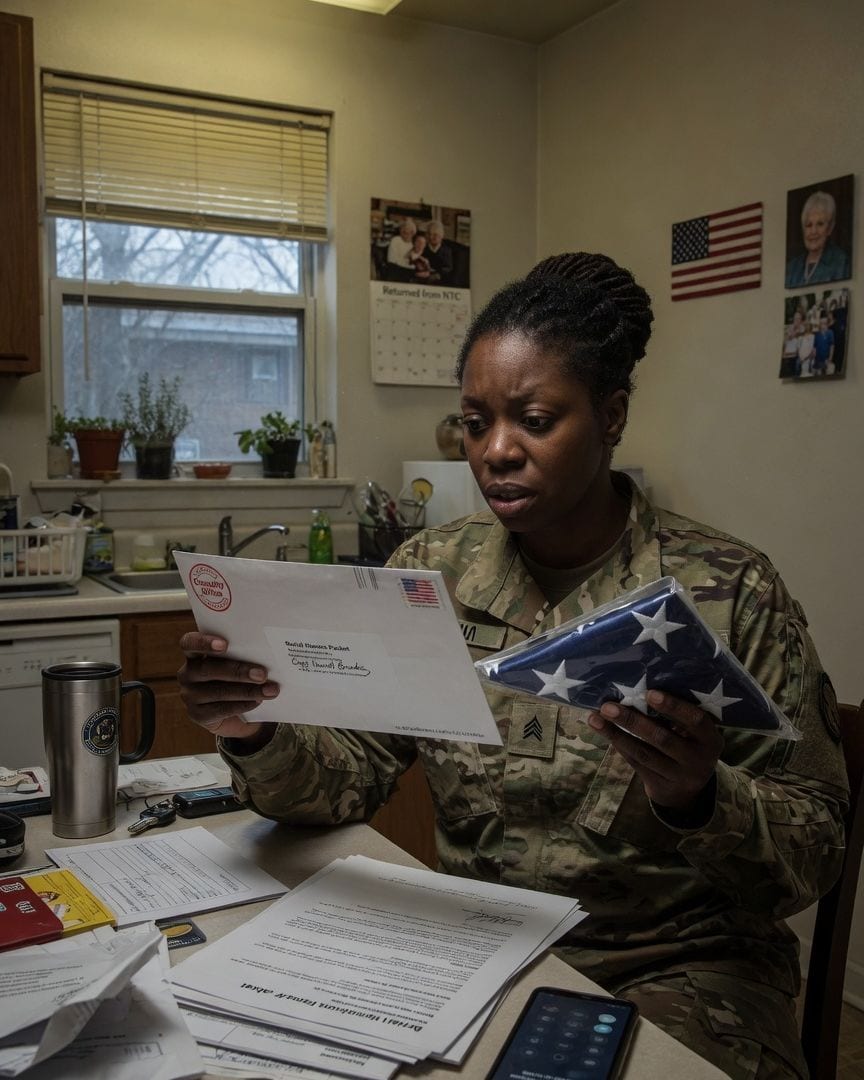
Sergeant First Class Bree Alcott returned from a grueling training exercise, looking forward to peace, but found her kitchen table piled with mail, one official package heavy with dread. Inside was her own complete burial-honors packet, every detail filled, from Arlington plot to her grandmother’s chosen hymn, all dated for a specific day in the coming spring. The casualty office dismissed it as a 'glitch,' but Bree found a cryptic code leading to a decommissioned desert station and a stack of identical packets for other soldiers. What meticulous hand had prepared these packets, and why was Bree Alcott’s name on a list for a future she shouldn't have known?
On his last watch, Corporal Carter found boot prints ending inside a sealed magazine, and a blood-red handprint from a soldier decades out of time.
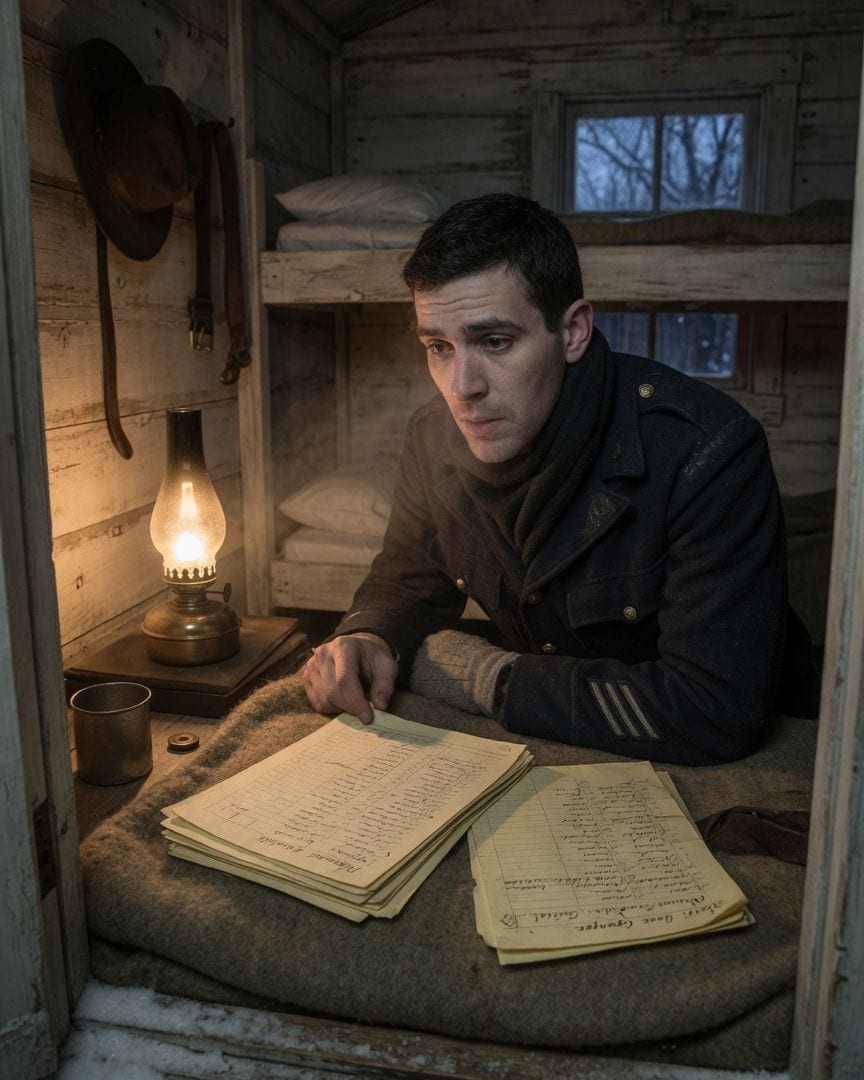
Corporal Franklin Carter shivered, not from the biting November wind, but from the chill of his last pay muster at Fort Taggart before its winter abandonment. His final duty was to count every man, tallying thirty-seven, precisely the company strength. But his breath hitched when he saw the completed roll: it ran thirty-eight names long. An impossible extra slot, filled by a voice that answered 'Here, Corporal,' for a soldier whose name, Pvt. Isaac Granger, vanished from all official records, only to reappear in a forgotten supply log from 1863. Was Fort Taggart abandoning its dead, or something far older?
A Berlin archive researcher races a deadline. A hidden log for a Cold War barracks on a vacant lot has ink still wet from last month.
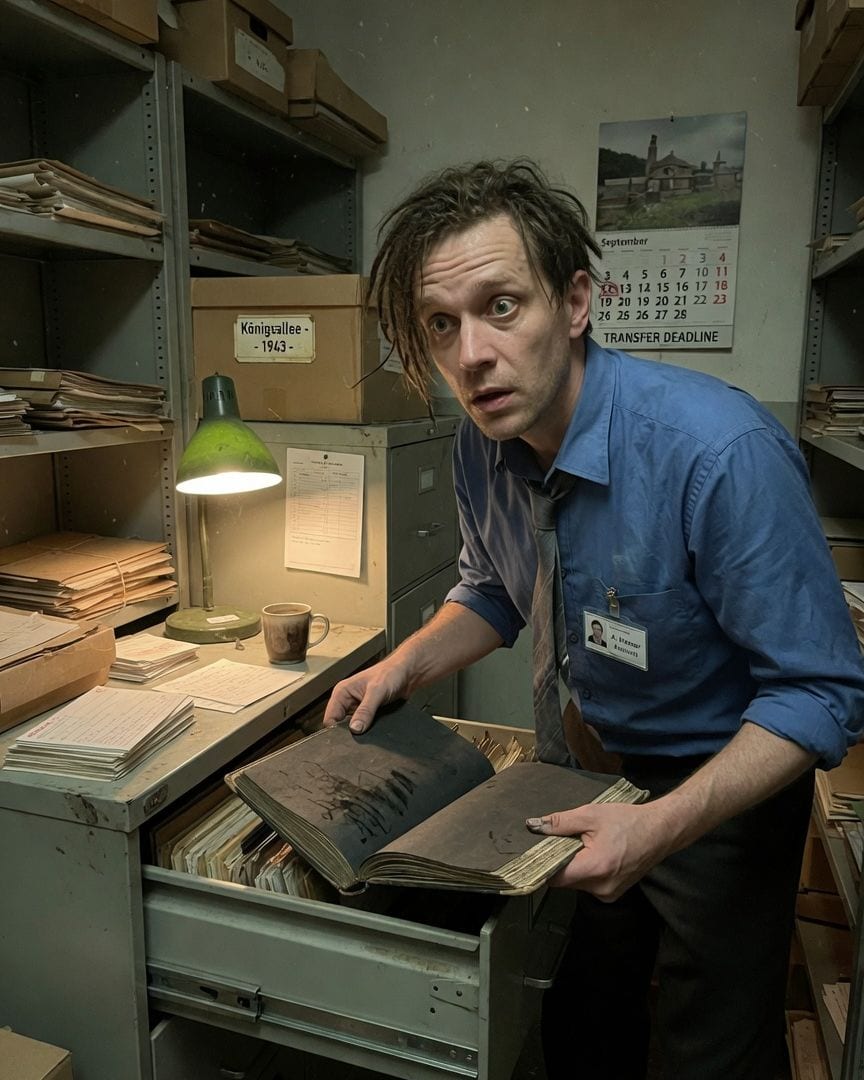
Ansel Vidmar, a methodical researcher, felt the pressure of a looming deadline. The municipal transfer of the old Berlin archive was days away, and he still had countless documents to categorize amidst towering stacks of forgotten history. His focus narrowed to an unindexed metal cabinet, revealing records for a garrison company at Königsallee – an address that had been a vacant lot since the war. A punishment log inside listed an entry from 1983, a date far too recent for a non-existent building. When Ansel visited the site, he found only overgrown grass, save for a single, eerily clean concrete doorstep emerging from the earth. His unease solidified into dread when he later uncovered a hidden Quartermaster's Log, meticulously detailing supplies for the same barracks, with entries extending to "last month," the final page's ink still faintly wet. What unseen operations were still being maintained?
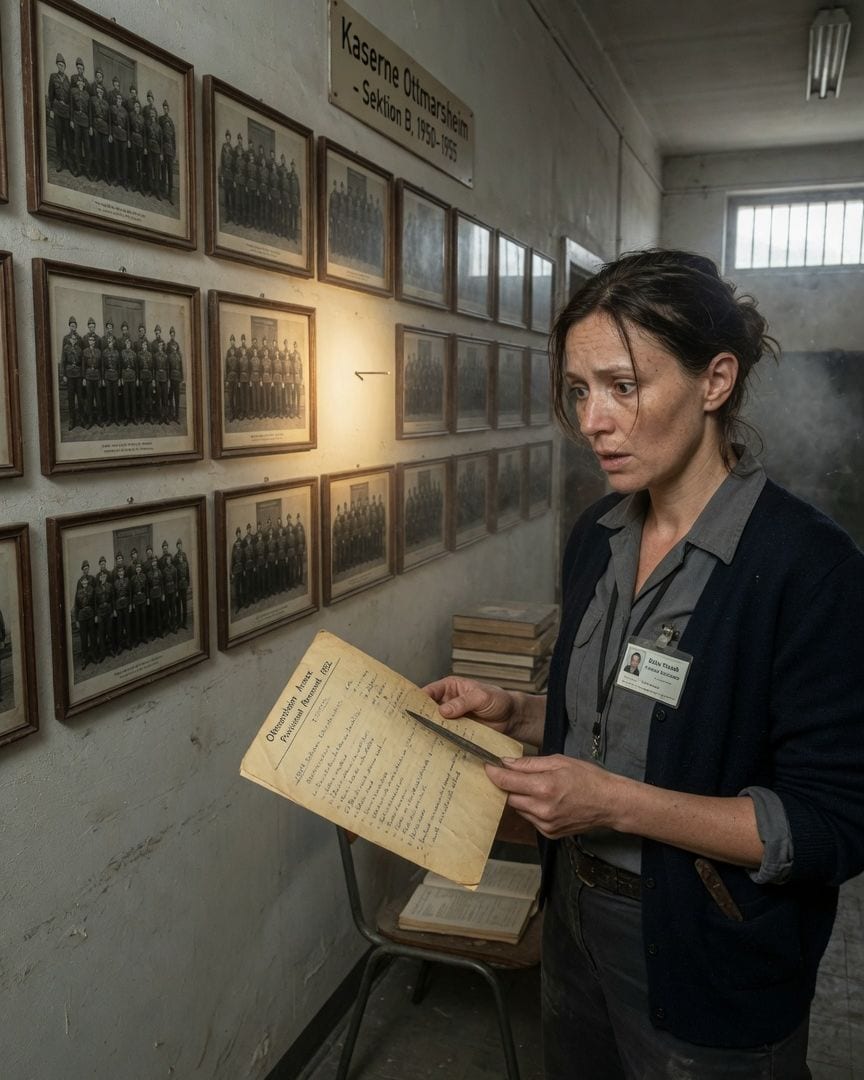
At a Cold War kaserne days from demolition, inventory clerk Delia Straub found a missing photo frame for a unit that never existed. Every soldier on the wall stared directly at its empty space.
Inventory clerk Delia Straub had eleven days to log every item at Kaserne Ottmarsheim before demolition crews arrived, turning history into rubble. Amid the dusty halls, she found a stark anomaly: a missing photo frame for the 604th Ordnance Detachment, a unit never officially stationed at the base. What made the empty space chilling was that every soldier in the surrounding photographs was looking not at the camera, but directly into that void. Delia's search for answers unearthed an unofficial manifest listing the 604th, with names of men officially declared killed in action years before. Who were these phantom soldiers, and why did their impossible record persist?
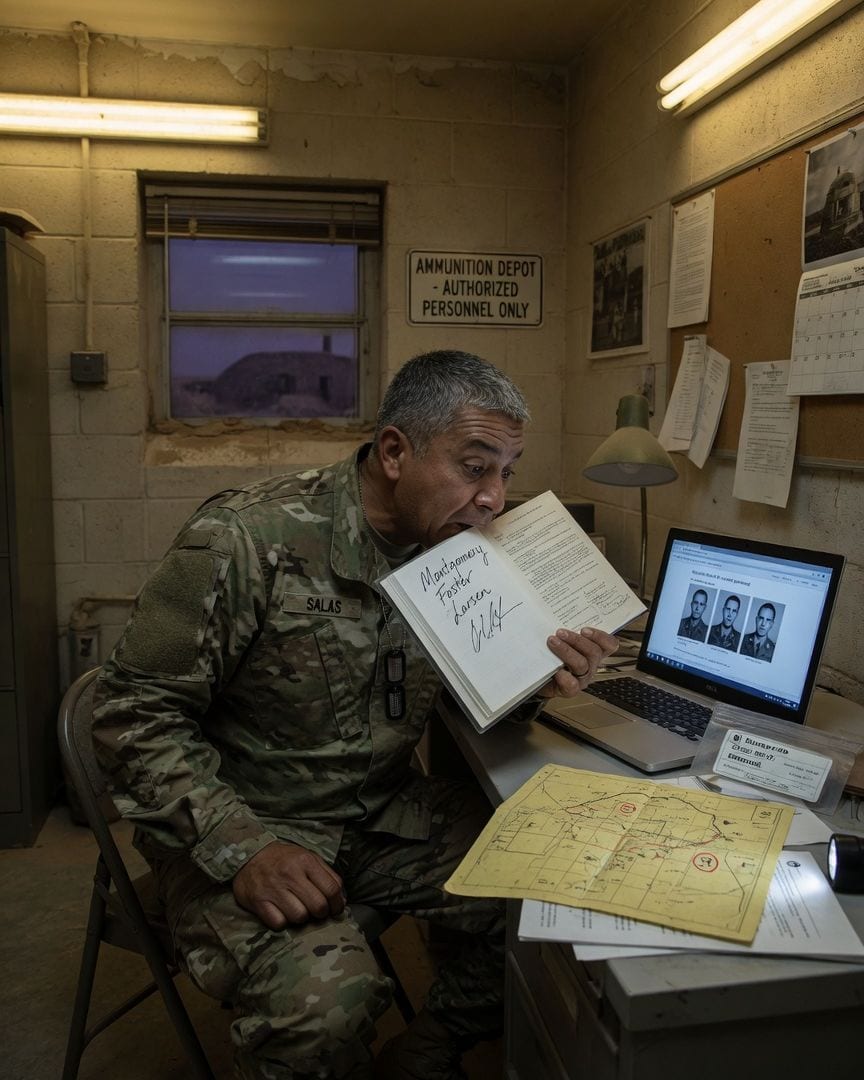
Chief Salas finds a new bunker seal signed by men d*ad or discharged decades ago.
Chief Warrant Officer Curtis Salas completes a final inventory at a desert munitions depot, finding an impossible fortieth bunker not on any map. Its fresh security seal bears signatures from three men: two officially K*lled in Action, and one honorably discharged, all decades ago. Someone, or something, just signed d*ad men's names to a new Army seal.
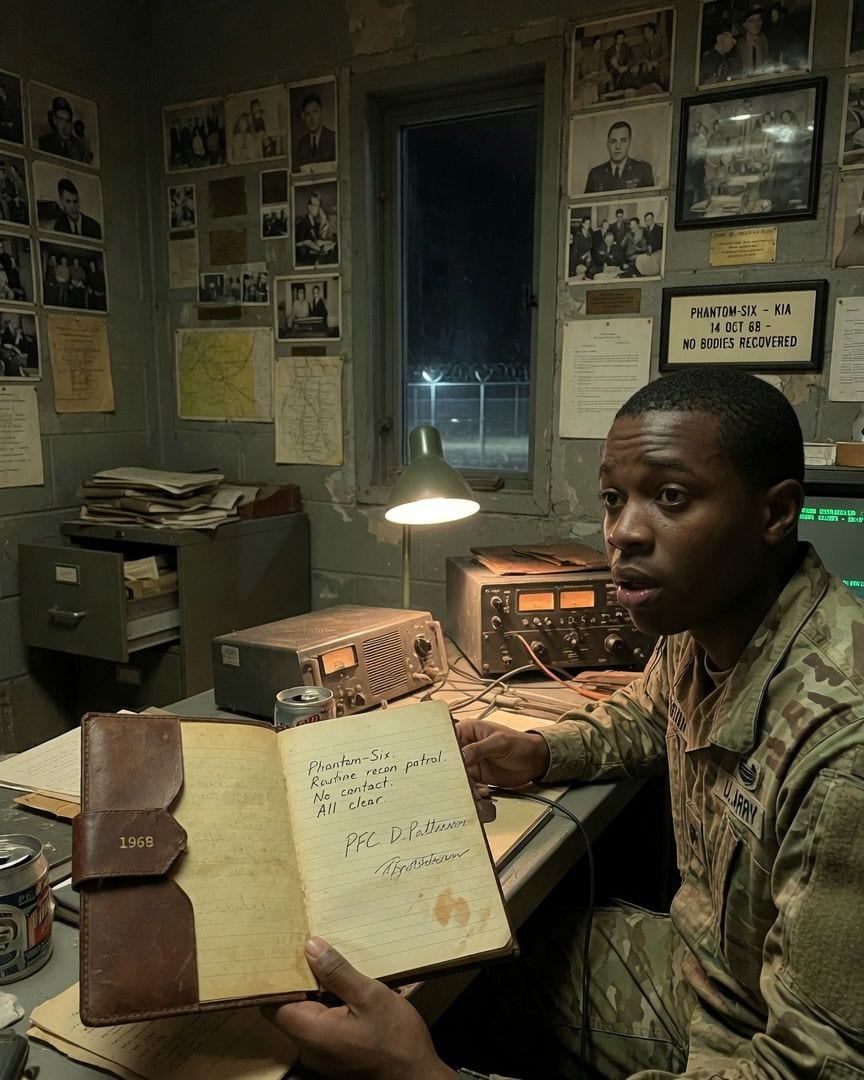
A DMZ specialist finds a 1968 Cold War logbook entry, signed by a lost soldier, its ink shimmering faintly.
Specialist James Farr, on a long night shift at a desolate Korean DMZ outpost, meticulously monitored his console, a squared-away soldier accustomed to the quiet hum of equipment. His focus shattered when a faint, static-laced whisper ghosted from a dead channel, calling out 'Phantom-Six' — a unit lost near this wire in 1968. The urgent voice then specifically mentioned his tower window light, asking him to turn it off before it drew fire. Later, an old logbook from 1968 revealed an entry dated three days *after* Phantom-Six was officially lost, signed by one of the vanished soldiers, its ink subtly shimmering with an unnatural gleam.