My aunt's sanatorium record shows Patient 5-4. The same file number has been quietly reissued every thirteen years since 1921, signed by the same superintendent's initials.
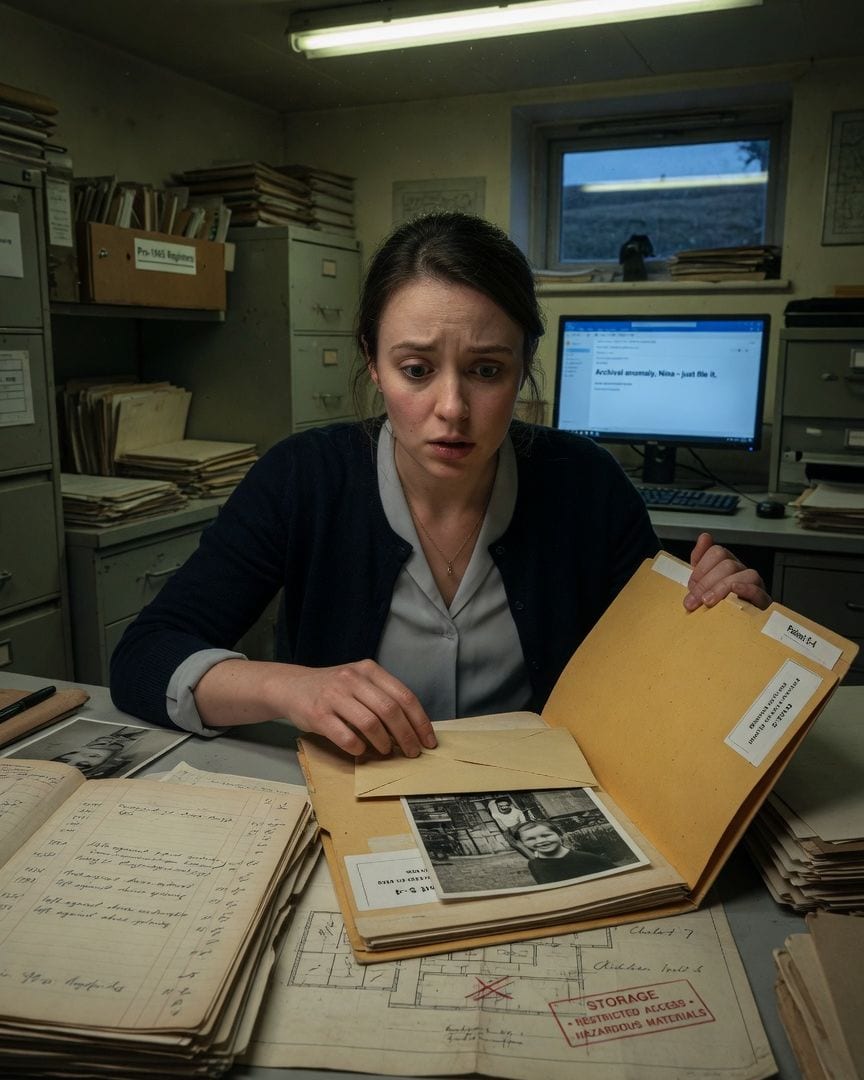
The air in the archives always smells of dust and a faint, sweet disinfectant, like old wounds trying to heal. Today, it just felt heavy. I was processing my aunt Florence Delaney’s admission file. Patient number: 5-4.
It was 2025, and Florence, bless her, was 65 and confused, admitted just last week. The number, 5-4, snagged at something in my memory. Just a flicker, an itch.
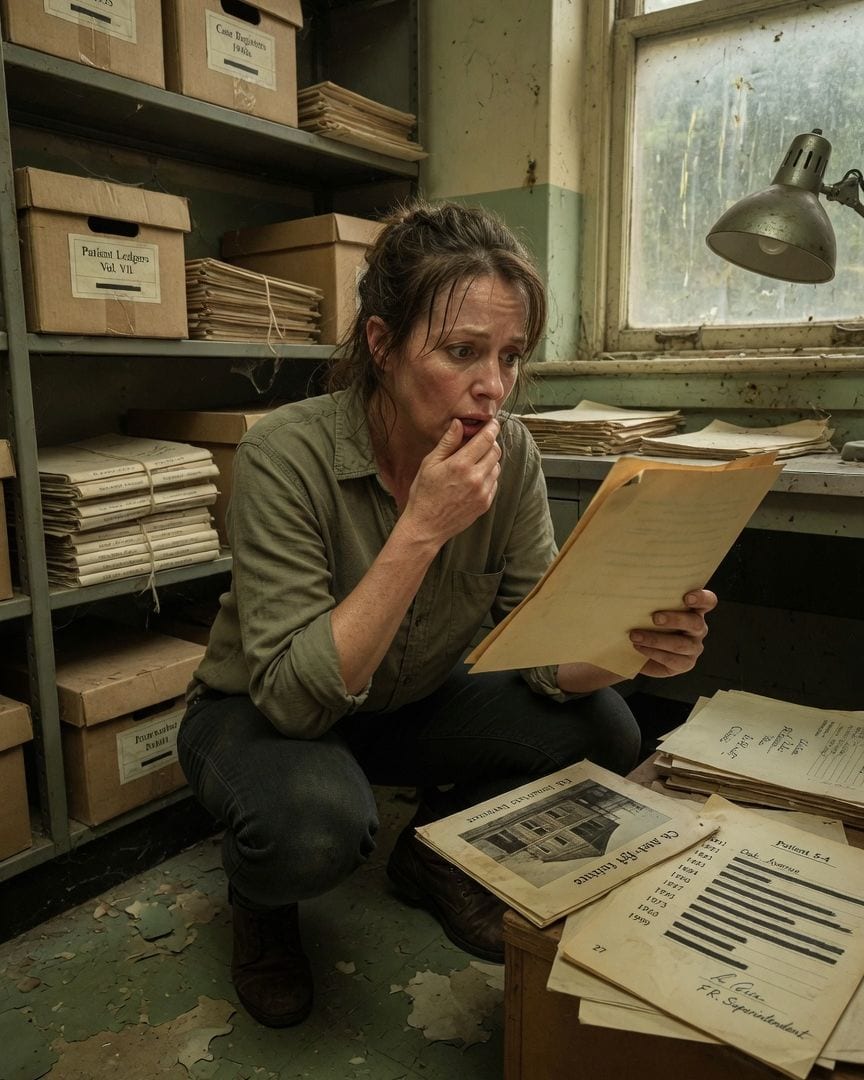
I pulled the old physical registers, heavy ledgers with brittle, yellowed pages, from their shelf. They creaked open, exhaling that same ancient air. I started at the front, thumbing through. General Admissions, then Patient Files. And there it was.
Patient 5-4, 1921. Admitted. Then, on the next line, ‘left against advice, not traced.’ I kept going. Patient 5-4, 1934. Same note. 1947. 1960. Every thirteen years, without fail. Always Patient 5-4. Always the same curt notation.
Each of these patients, I noted, had been assigned to the ‘chalet at the end of the terrace’—a remote building on the sanatorium grounds, overlooking the bleak expanse of Cranbrook Moor.
And then the detail that made my breath catch: every single one of those 5-4 files, from 1921 to 2012, was signed off by the same superintendent's initials. E.B. It’s impossible. Superintendents change. Names change.
Even the sanatorium's name changed once, back in the sixties. But E.B. remained. Now, my aunt Florence's file, dated 2025, sat on my desk, awaiting its own entry in this impossible sequence. My hands were suddenly cold.
I tried to tell myself it was a clerical error. An internal code for a specific type of case, perhaps. A recurring one, somehow. It had to be. I brought it up with Patrick Crane, my boss, Head of Archives.
He was always so calm, almost unnervingly so.
'Archival anomaly, Nina,' he said, not even looking up from his monitor. The screen cast a blue glow on his face, making his features stark. 'Probably a system quirk from before digital records were standard.
Pre-sixties data is a mess, you know that. Just file it.'
But I couldn't. The pattern was too consistent, too coherent, to be a quirk. The thought gnawed at me. I dug deeper, cross-referencing names from the historical 5-4 entries with general admission and discharge records. Nothing.
Not a single one of the '5-4s' from previous cycles appeared anywhere else in the system. No subsequent admissions. No family inquiries. No death certificates. They didn't just 'leave against advice'; they simply vanished.
They were never traced because there was nothing to trace.
My office, usually a place of quiet order, felt too small, the files pressing in. I pulled up the old architectural plans for the sanatorium.
On the current, digital maps, the 'chalet at the end of the terrace' was marked 'Storage: Restricted Access,' with a red-stamped note: 'Hazardous Materials.' It seemed ridiculous. What hazardous materials?
But then I found the older, hand-drawn plans from the 1950s. On those, it was clearly labeled 'Chalet 7,' a patient residence. Not storage.
And the dates on the restriction orders—I found a memo from 1960, another from 1973—aligned almost perfectly with the 5-4 cycle dates. The red stamp, the hazardous materials warning, the restricted access. It was too neat, too precise.
It was like someone had deliberately erased the chalet's true purpose, then put up a warning to keep people away from an empty room.
I went back to my aunt Florence's physical file, the one on my desk, a thick, yellowing folder. My fingers traced the edges of the heavy cardboard, feeling for anything unusual.
There was a slight ripple, a stiffness at the very back. Deep within, almost fused with the aged paper, was a sealed, unlabelled envelope. It was thin, flat, easy to miss.
My heart was doing a frantic little drum solo against my ribs as I carefully peeled back the seal. Inside was an old, sepia-toned photograph.
It showed my aunt Florence, much younger, maybe in her late twenties, standing outside that very chalet. The 'chalet at the end of the terrace,' the one now marked 'Restricted Access.'
She was smiling hesitantly, a little shy, her hair pulled back.
But my gaze didn't stay on her. It flew to the upper window of the chalet, almost lost in the glare of the sun. There, faint, indistinct, but undeniably present, was a figure. Perfectly still.
Looking directly out, directly at Florence, directly at the camera. It wasn't Florence. It was too tall, too gaunt. Too… old.
The sepia photograph, with its silent, gaunt watcher in the window, felt like an icy hand on my spine. It wasn’t just a pattern anymore; it was a physical presence. A tangible wrongness.
The figure in the chalet window felt like a silent accusation.
I couldn't shake the initials E.B. ‘Everett Brooks.’ That name was etched into every 5-4 file, spanning decades. I spent the next few days deep in the sanatorium's digitized archives, sifting through ancient staff directories.
I found an entry for 'Everett Brooks, Superintendent' in a 1950 directory. Then another for 1970. Another, more recent one, from 1990, listed him as 'Everett Brooks, Emeritus Superintendent, Special Projects.'
This man, if he were still alive, would be well over a hundred. It was ludicrous.
I even found an obituary from 2005 for an 'Everett Brooks,' but the photo clearly showed a much younger man, certainly not someone who would have been superintendent in 1950. It wasn't one person. It was a title. A role.
A designation. Passed down, like some unholy inheritance.
My search led me to a mention of 'Cranbrook Moor Sanatorium Archives Special Collections.' The description was vague: 'sensitive historical documents,' housed in a secure, off-site annex. A prickle of certainty ran through me.
The full 5-4 files, the ones that held the real story, wouldn't be in the main registers. They'd be there.
I used my credentials to access the Special Collections log. The system was old, clunky, but there it was: Patient 5-4 files. All of them, explicitly listed as 'transferred to private storage, access restricted by standing order of E.B.'
The restriction date was what truly stopped me cold. It wasn't some arbitrary date in the past. It was the day after the 2012 Patient 5-4 entry was filed.
The cycle was being actively, deliberately managed, right down to the archival process.
I started working late, staying behind after everyone else had gone, trying to find a digital back door into that 'private storage' area within the Special Collections.
The silence of the empty archives was usually comforting, but now it felt watchful. I began to notice things. My office door, which I always locked with the heavy deadbolt before leaving, was sometimes found subtly ajar in the mornings.
Not kicked in, just... unlocked. Open. My meticulously organized files, stacked just so, would be rearranged on my desk.
Nothing stolen, no obvious disturbance, just small details shifted, a folder half an inch out of place, a pencil moved to the other side of my keyboard.
I’d rationalize it as my own fatigue, or a draft, or maybe a cleaning crew I hadn't seen.
One evening, I was deep in the system, trying to bypass a digital lock on a restricted archive room. The monitor hummed, my fingers flying over the keys. Suddenly, the lights in my section flickered violently, then went out completely.
The unexpected darkness was absolute, heavy, suffocating. My heart hammered against my ribs, a panicked bird. The emergency lights clicked on after a second, casting long, distorted shadows, but it was barely enough to see.
I froze, every nerve ending screaming, listening to the sudden, cavernous silence.
Then I heard it. A soft, definite click from the far end of the darkened corridor, near where the Special Collections annex was. Like a heavy door closing.
I saw a fleeting shadow pass under the emergency lights, moving away from the restricted section, too fast to identify. It vanished around the corner.
The next morning, an unmarked envelope was on my desk, tucked under my keyboard, almost like an afterthought. The paper was brittle, yellowed, not from any of our current supplies. Inside was a single, old, typewritten memo.
The words were stark: 'Curiosity is a luxury Patient 5-4 cannot afford. E.B.'
The dread was no longer just about dusty old records. It was here. It was personal.
I marched into Patrick Crane's office, clutching the memo, the sepia photograph, and my printed-out research on 'Everett Brooks.' He was at his desk, as usual, meticulously stacking old ledger books.
His office, unlike mine, felt oddly sterile, despite the ancient documents surrounding us.
'What is this, Patrick?' I demanded, slamming the memo onto his polished wooden desk. The sound echoed in the quiet room. 'Who put this on my desk? And who is Everett Brooks?'
He picked up the memo, his fingers brushing the brittle paper. His placid expression, which I’d always found slightly unnerving, finally cracked. His face tightened, a muscle in his jaw clenching.
He looked at me, really looked at me, for the first time.
'You've been asking too many questions, Nina,' he said, his voice low, almost a whisper, but it carried an undeniable weight.
He slid the memo back across the desk, then pushed the photograph of Florence and the chalet closer to me. 'Everett Brooks isn't a person, Nina. Not anymore. It's a designation. The 'Superintendent of Special Projects.' It's a role.
It’s been filled by… a succession of individuals, all operating under the same mandate. They manage the 'transfers'.'
My blood ran cold. Transfers. The euphemism was almost worse than outright murder.
'The sanatorium,' Patrick continued, his voice regaining its unnerving calm, 'has, for generations, been aware of a localized phenomenon on the moor. It’s centered around the chalet at the end of the terrace. Every thirteen years, it… activates.
It requires a specific kind of individual to be introduced to the chalet.'
He gestured vaguely. 'Left against advice, not traced.' He repeated the phrase from the old files. 'It means they were never meant to return. They simply vanished. Absorbed. By whatever resides there.'
He paused, letting that sink in. The silence in his office was suddenly suffocating. 'The institution's role,' he went on, 'is to ensure the cycle continues without public knowledge. To provide the 'patients' and maintain the records with bureaucratic precision.'
He looked at me, his gaze unblinking. 'Florence, your aunt, was chosen because she exhibited specific 'sensitivities.' A heightened intuition, a certain melancholic resonance. Qualities that made her a suitable candidate for the current cycle.'
He leaned forward slightly, his voice dropping another notch. 'It's for the greater good, Nina. To prevent something far worse from breaking free from the moor.'
The pieces clicked into place with a horrifying, sickening finality. The restricted chalet, the vanishing patients, the unchanging initials. My aunt. It all fit. Horrifyingly.
Patrick, his voice grim, then slid something else across the desk. It wasn’t a thin memo. It was an old, heavily redacted 'Standard Operating Procedure: Cycle Management' document, distinct from anything I had ever seen in the archives.
It was stamped not only with the sanatorium’s official seal, but also with an older, unfamiliar insignia: a stylized, interlocking knot, like roots entwined deep in the earth.
The document detailed 'Patient Transfer Protocols' for the 5-4 sequence, using language so chillingly clinical it made my stomach churn. It explicitly mentioned 'containment breaches' and 'preemptive measures' to ensure 'cyclical stability.' This wasn't just managing. It was containing.
My eyes scanned the final page, a list of names. Not just patients. Staff members 'reassigned' after previous cycles. And there it was, stark and terrifying: 'Everett Brooks,' listed as 'Supervisor, Cycle 1973, Transferred to Oversight.'
He hadn't just signed off on the records. He had managed these disappearances, these sacrifices, and then moved on, or up, within this hidden system.
My gaze fell further down the page, to an entry from 1960. Patient 5-4. Admitted. Then, on the very next line, something that made the air freeze in my lungs: 'Caretaker: Florence Delaney. Transferred to Patient 5-4 Protocol.'
Not my aunt Florence, who was born in 1960, but someone with the exact same first name, and my family's surname. Another Florence Delaney, a generation earlier.
And then, almost erased in the fine print at the bottom of that page, a name: 'Witnessed by: Deborah Delaney.'
Deborah, my great-aunt, who still lived on the desolate edge of the moor, who always spoke vaguely of 'the moor's appetite' and 'things that need feeding' but was dismissed as eccentric.
Patrick's eyes met mine across the desk, unblinking. 'The cycle ensures continuity, Nina. It has to. And it has a way of drawing in those who get too close.'
As he finished speaking, the heavy door to his office quietly clicked shut behind me.
I didn't think, I just acted. I left Patrick's office, the weight of the 'Superintendent's Log' and the 'Cycle Management' document a physical ache in my trembling hands, and practically ran to my car.
My great-aunt Deborah’s cottage was remote, perched on the highest, most windswept edge of the moor. The drive was a blur of dark peat and low, scudding clouds.
She was frail, sitting by a crackling peat fire, but her eyes, when she looked at me, held a knowing that seemed centuries deep. She wasn't surprised.
Not by my frantic arrival, not by the heavy logbook I thrust at her, nor by my garbled questions.
'The moor has an appetite, child,' she said, her voice raspy, like dry leaves. She confirmed everything Patrick had hinted at, and more. 'The 'localized phenomenon' isn't a monster, Nina. It's a hunger.
A raw, ancient pull in the moor itself, tied to a specific geological anomaly, deep beneath that chalet. Every thirteen years, it wakes. And it needs a conduit.
A sensitive individual, like a lightning rod, to draw it in, to stabilize it. Or else…' She gestured vaguely towards the window, where the moor stretched out, vast and grey. 'It expands.
It consumes more than just the chalet's immediate vicinity.'
The institution, she explained, led by the 'Everett Brooks' designation, had managed this for centuries, providing the conduits. The 'transfers' were simply sacrifices, given to keep the balance.
The Delaney family, living on the moor for generations, became the 'witnesses who always knew.' Some, she admitted quietly, had even been complicit, providing their own 'sensitives' when the cycle demanded, or meticulously documenting the process.
She pulled an old, leather-bound Bible from a dusty shelf. Its pages were filled not with births and deaths, but with meticulously logged 'departures' of various Delaney relatives, always in thirteen-year intervals, always marked, chillingly, 'to the moor's embrace.'
'The figure in your photograph?' Deborah whispered, her gaze distant, haunted. 'That's what's left after a few months. A shell. Waiting for the next one.'
Florence, my aunt, was next because she was the most 'receptive' in our generation, a sensitivity Deborah had noticed for years. The horror wasn't in some monstrous revelation, but in the cold, documented inevitability of it all. It was history.
My history.
Deborah urged me to leave, to forget it, to run. 'The moor will take what it's owed, Nina,' she pleaded, her hand trembling as she clasped mine. 'You can't fight it. You'll only draw its gaze.'
But I couldn't. Not after everything. I had the records, the photograph, Deborah's testimony, my family's dark, complicit history. I knew no one would believe me, but I had to try. To save my aunt. To expose the truth.
I had to go back.
I drove back to the sanatorium, the heavy old logbook and the sepia photograph wrapped in my jacket, clutched tight. The building's lights shimmered faintly in the distance, a deceptive beacon against the encroaching dusk.
I found Patrick Crane in the archives, exactly where I'd left him, meticulously preparing a new file. The methodical, unhurried way he moved sent a fresh wave of ice through me.
He looked up as I entered, his expression unnervingly calm, completely devoid of surprise.
'You shouldn't have gone to Deborah, Nina,' he said, his voice flat, devoid of accusation, simply stating a fact. 'The cycle is maintained for a reason. To disrupt it... would be catastrophic.'
He gestured to the new file on his desk. It was a blank Patient 5-4 admission form. My breath hitched. The name field was already filled in with that familiar, elegant script, perfectly matching the 'E.B.' initials: Nina Harlow.
The date of admission was tomorrow.
'Florence's 'transfer' was successful,' Patrick explained, his voice unnervingly even, 'but your interference created an instability. You're the closest match now. The moor requires balance.'
I stared at him, my mind reeling. The unblinking gaze in his eyes, devoid of humanity, was the same ancient, dead knowing I'd seen in the indistinct figure from the photograph.
Patrick wasn't just an administrator; he was part of the cycle, perhaps even a previous 'Everett Brooks,' or something else entirely, something far older and colder.
Terror seized me, raw and absolute. This wasn't a conversation. It was a sentence. I made a desperate, animalistic break for it.
I lunged across his desk, grabbing the 'Superintendent's Log' and the photograph, knocking over a stack of old files that exploded across the floor in a cloud of dust. Patrick made no move to stop me.
He just watched, his calm, dead gaze fixed on me, as I fled the sanatorium.
The moor's chill was already seeping into my bones, and I ran, clutching the heavy old register to my chest, carrying proof no one would ever believe.
I disappeared. I cut every tie, deleted every online trace, vanished as completely as any Patient 5-4.
I sent the compiled records, the sepia photograph, and my own frantic, rambling account to every investigative journalist I could find, to obscure online forums, even to a contact at a national newspaper. I waited. And waited.
There were no responses. Only automated rejections, or deafening, disquieting silence.
The Cranbrook Sanatorium continued its operations, undisturbed, its lights burning calmly on the moor's distant edge, visible on clear nights. Patient 5-4 was never mentioned again in public records, nor was Nina Harlow's disappearance ever investigated.
Deborah Delaney’s cottage was found empty a few weeks later by a distant relative, its door ajar, the peat fire long cold. Her family Bible, which she’d shown me, was gone. Turned to dust, perhaps, like the stories it held.
The moor remained quiet. Too quiet.
I live under a new name now, far from the moor, in a city where the constant noise usually drowns out the quiet whispers of the wind.
But the whispers are always there in my head, a low hum beneath the traffic. I jump at shadows, turning sharply when a door clicks too loudly down the hall, or a car slows on the street outside my window.
Every unfamiliar face I see feels like a potential tracker, every passing glance holds a hidden meaning.
I look over my shoulder constantly, expecting to see that unnervingly calm gaze of Patrick Crane, or the gaunt, indistinct figure from the chalet window.
Sometimes, when the silence is too deep, I feel a prickling on my skin, as if an ancient hunger is testing the air, sensing my presence.
The heavy leather-bound logbook is hidden beneath floorboards, its impossible entries a constant, cold weight.
I take it out sometimes, late at night, under the dim glow of a single lamp, just to confirm it’s real, that I didn’t dream it. A solid, undeniable piece of the horror. I know the cycle will continue.
I merely escaped one entry, a placeholder for another. I am not truly free. The moor’s hunger is always there, waiting, a vast, patient entity.
And I know, with a chilling certainty that settles deep in my bones, that it has a way of drawing in those who get too close.
The heavy leather-bound logbook is hidden beneath floorboards, its impossible entries a constant, cold weight.
If this one got to you
Patient 5-4 keeps checking into my aunt's old sanatorium chalet. The same initials sign them out, 'not traced,' every thirteen years since 1921.
Sifting through my aunt Margaret's estate, I found her old sanatorium file from 1999. Her patient record listed her as 'Patient 5-4,' discharged 'not traced.' But when I accessed the archives, I found 'Patient 5-4' was admitted every thirteen years since 1921, always with identical discharge notes.
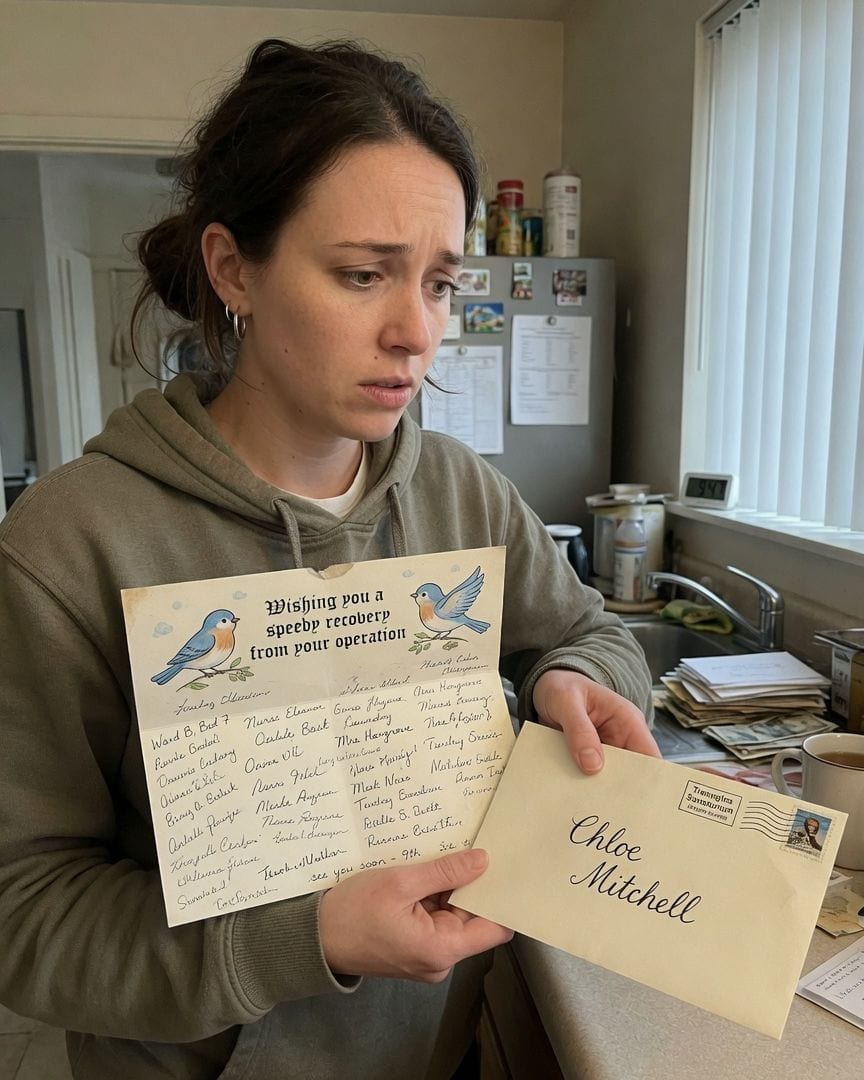
A get-well card wished me a speedy recovery from an operation I never had. It was postmarked from a sanatorium that burned down in 1963.
My quiet Tuesday morning was interrupted by an elegant get-well card, addressed to me. It wished me a speedy recovery from an operation I'd never had. But the postmark read 'Treneglos Sanatorium,' a hospital that vanished in a fire back in 1963.
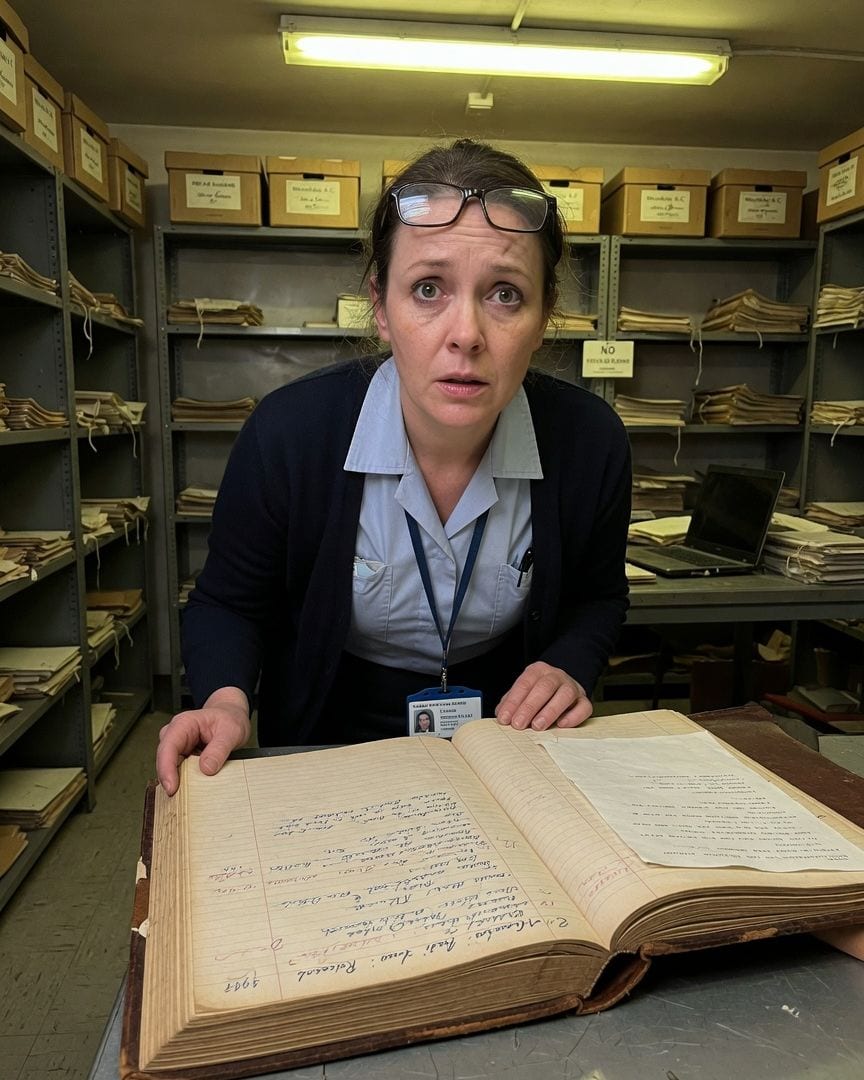
My ambulance trust's incident log shows callout 22-014 to 6 Cathcart Row at 2:40 AM. Every four years, the same call, same address. Always 'patient not found'.
My job involves tedious data entry for ambulance calls, but Incident 22-014 was different. It appeared every four years, always at 2:40 AM, always closed as 'patient not found.' Digging into the dusty physical archives, I found an entry from 1961 for the exact same incident, but its resolution read: 'Subject Secured. Relocated to "Holding".'
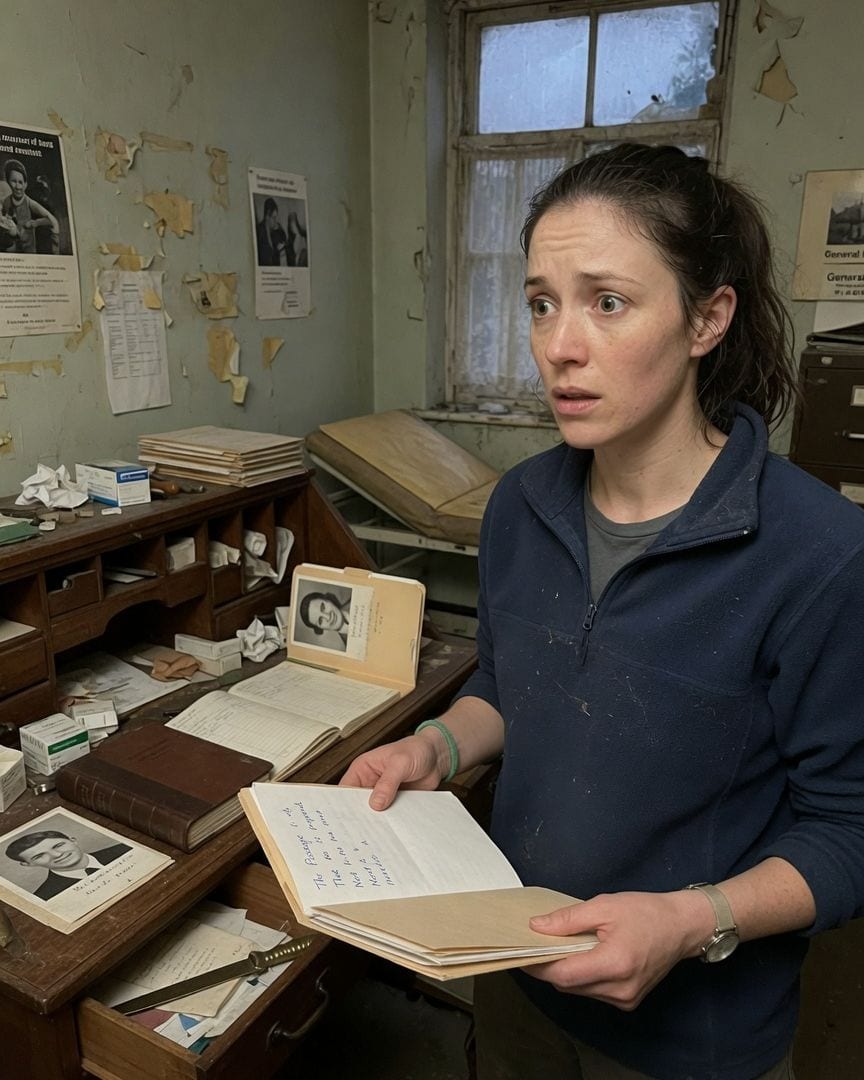
My new clinic's appointment book shows entries for this coming Monday, decades after the doctor retired and died.
Chloe Lawson bought an old, abandoned surgery in Nettlebed, ready to open her new vet clinic. Locals insisted Dr. Almott retired in '79 and the practice shut down for good. But then Chloe found his dusty appointment book filled with meticulous entries, continuing unbroken from 1979 through the decades, right up to this coming Monday.
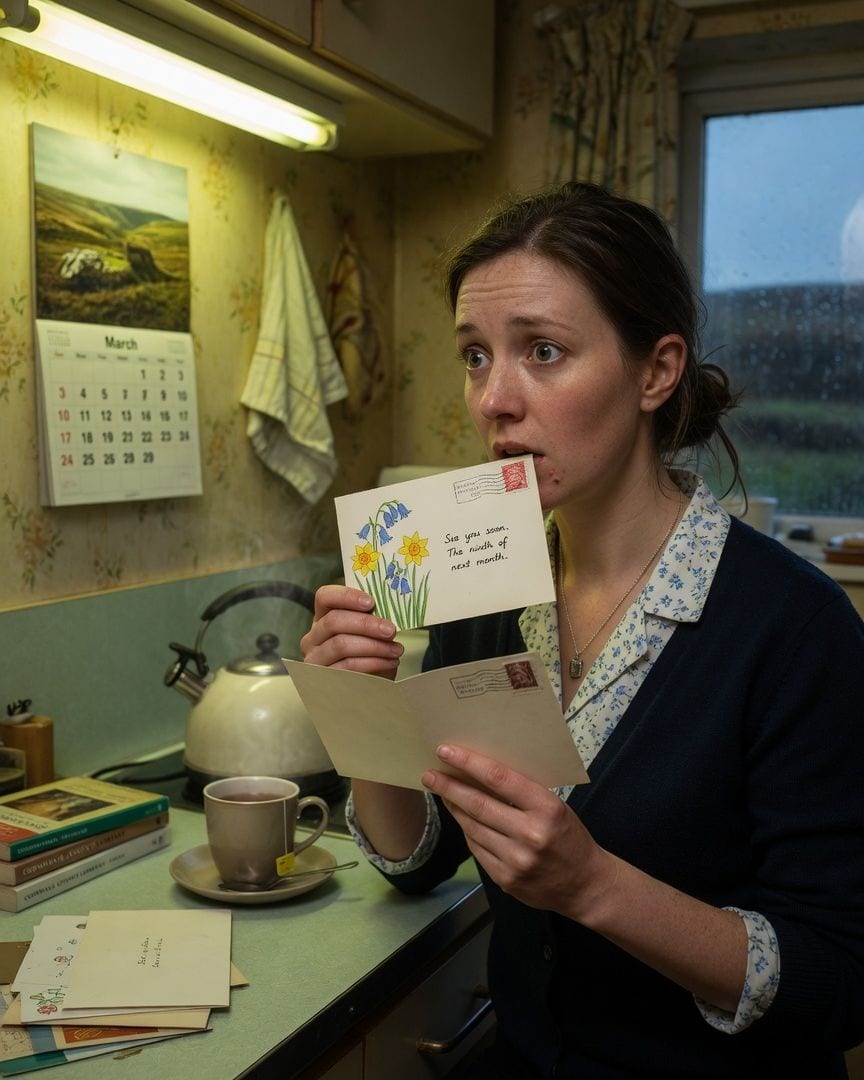
My get-well card arrived from a field, postmarked from a sanatorium that burned down in 1963. It wished me well for an operation I've never had, scheduled for next month.
I was just making tea on an ordinary Tuesday when a strange letter arrived. It was postmarked from Treneglos Sanatorium, a place that burned to nothing over sixty years ago, and contained a get-well card for an operation I'd never had. My research into this impossible message then led me to an old patient register where I found my own name, dated 1958.
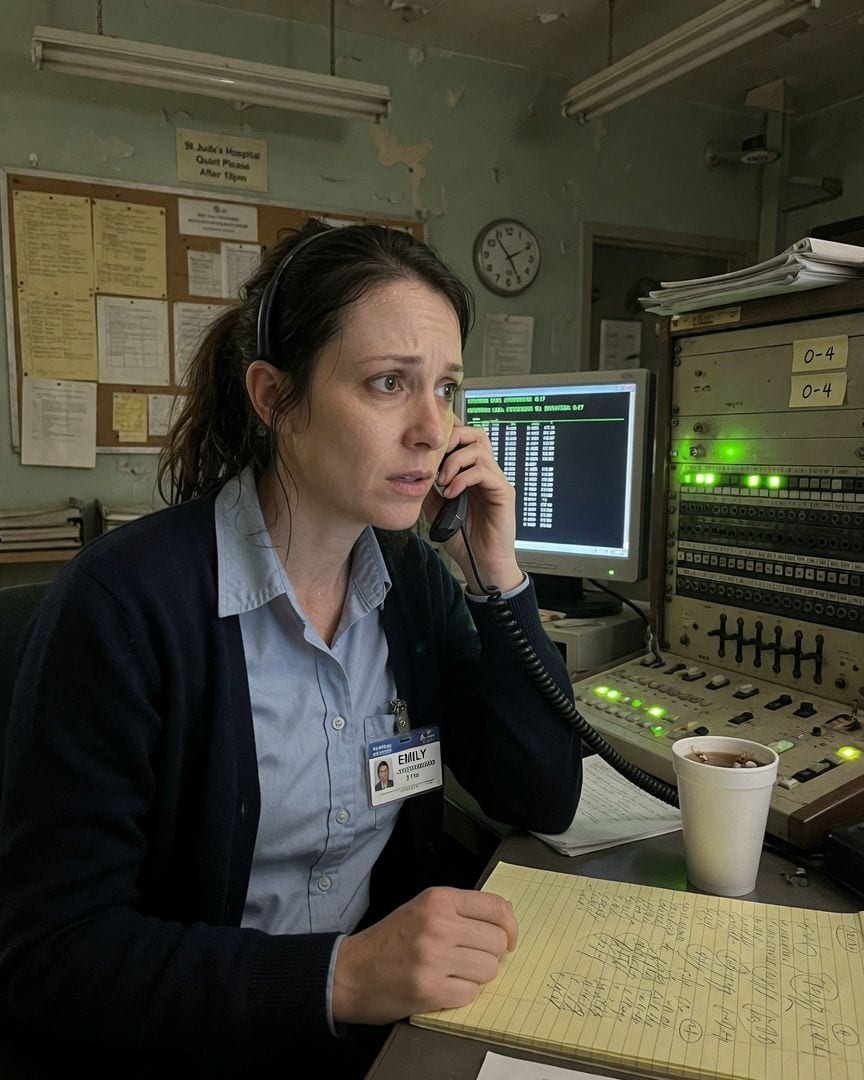
A nurse's voice asks me to page Dr. Reyes to the third floor. My hospital's third floor was demolished years ago, and extension 0-4 with it.
Working the quiet overnight shift at St. Jude's, I was used to predictable clicks. But just after 4 AM, my switchboard lit up: a call from extension 0-4. That extension was decommissioned decades ago, tied to a floor that no longer exists, yet the light pulsed insistently.