My wrist X-ray showed a titanium plate fixing a break from years ago. My surgeon asked which hospital did the operation. I've never had surgery in my life.
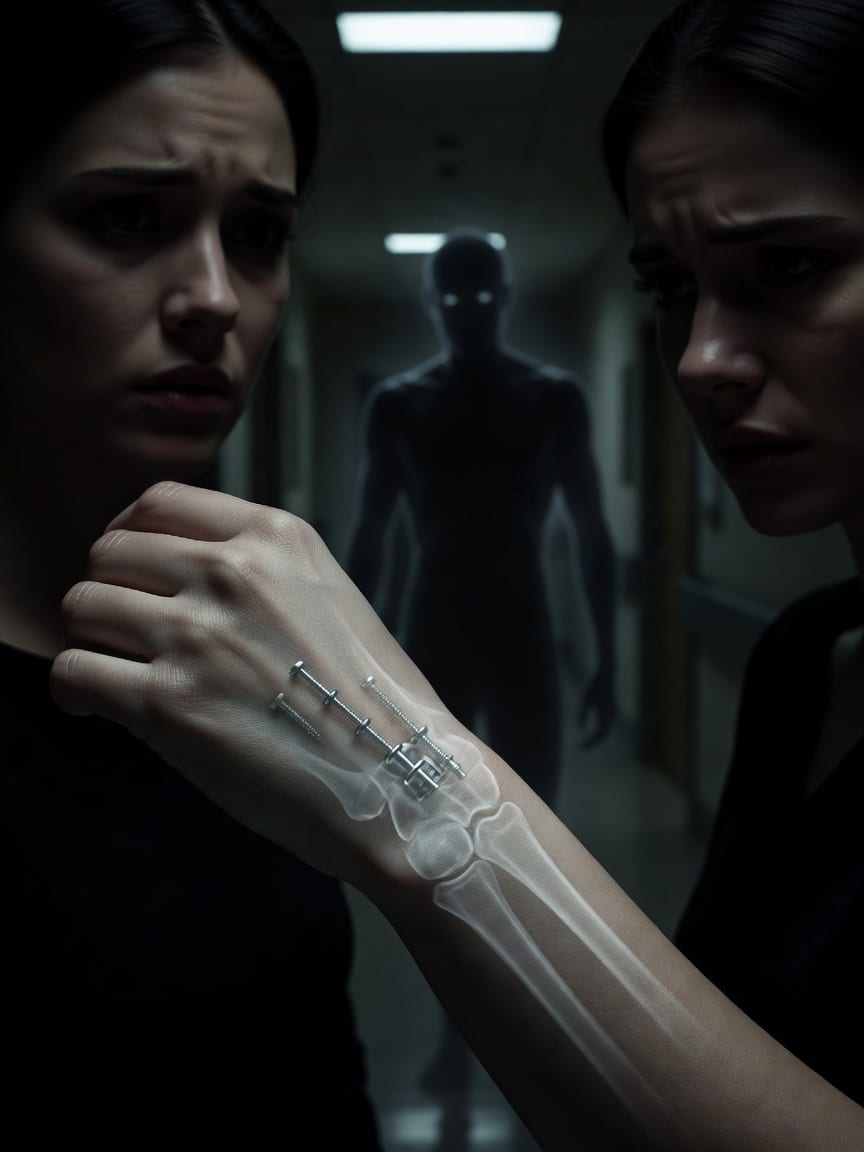
I sat in the fracture clinic, bored. My left wrist was a little swollen, stiff. I’d knocked it clumsily against a cupboard door in the kitchen. Nothing dramatic. Just a stupid accident that needed a quick check.
Dr. Leonard Blackwood, my orthopedic surgeon, a man whose quiet demeanor I usually found reassuring, held my X-ray film up to the light. The room hummed with the fluorescent glow, clinical and stark.
His brow furrowed. He traced a finger across the film, then squinted. "Ms. Sutton," he began, his voice flat, "when did you have this titanium plate put in? And at which hospital?"
I blinked. The image on the film showed a pristine, long-healed break in my radius, mended perfectly. Six small screws, gleaming like tiny bolts, held a thin, elegant metal plate firmly embedded in the bone. It was undeniably there.
I looked from the X-ray to my own smooth, unblemished left wrist. There wasn't even a faint surgical scar. Nothing.
"Dr. Blackwood," I said, my voice unnervingly steady, even to my own ears, "I have never had an operation in my life."
He looked from the film to me, a flicker of professional doubt in his eyes. He probably thought I was mistaken, or worse, somehow trying to mislead him. But then that doubt shifted, deepened, into something else, something unsettling.
He tapped the plate on the X-ray again, a physical impossibility staring back at us both, trapped in the harsh light. The silence in the room seemed to press in, thick and cold.
Dr. Blackwood, a man of methodical procedure, didn't dismiss my claim outright. He simply stared at the X-ray again, then at my wrist, then back at the film. His jaw tightened.
He ordered a new scan, a higher resolution MRI, to rule out a bizarre artifact, a mislabeled film, or some kind of medical ghost. He wouldn’t be the first doctor to suspect a computer glitch.
Two days later, I was back in his office. The MRI confirmed it: the titanium plate was unmistakably, surgically, my titanium plate. He showed me the new images.
It was healed into my bone, clearly having been there for years, possibly decades. No scar, no memory, but undeniably present, an internal fixture.
"I’ve delved into your medical history, Ms. Sutton," he admitted, rubbing his temples. A stack of printouts lay scattered across his desk, looking like discarded attempts at an explanation.
"Our hospital system goes back fifty years digitally, further in physical archives. There is nothing. Not a single record of orthopedic surgery under your name, not even a significant childhood injury that might explain such a procedure."
He leaned forward, his voice low, the words carefully chosen. "This is… unprecedented. I then cross-referenced the unique serial number stamped on your implant. All modern implants carry them, for traceability." He pushed a faded, grainy printout across the desk.
It was an X-ray, almost identical to mine, dated May 1983. The plate, the six screws, the specific hairline fracture pattern – it was a perfect match.
The patient name on the old printout was obscured by the paper's age, almost illegible.
"It’s from our archives," Dr. Blackwood continued, his voice barely above a whisper. "A child. But the name… it’s not yours. Not Annika Sutton. We need to check the physical files. The original, hard copy records."
The unease in the room was palpable, a cold knot tightening in my stomach. My own body held a secret, a past that belonged to someone else. The sterile air, usually a comfort, now felt heavy, suffocating.
The reality of it, plain and undeniable on the X-ray, defied every rational thought.
Dr. Blackwood returned from the hospital archives, a thick, yellowed folder clutched in his hand. The weight of it seemed to bend his arm slightly.
He carefully laid two X-rays on the light board: my fresh scan, still crisp, and the decades-old film, its edges curling with age. The identical titanium plates gleamed in the light, side-by-side, mirroring each other across forty years.
He opened the folder to a brittle page, its ink faded to a pale brown. “Here it is,” he murmured, his finger tracing a line. “The original record for this plate.”
I leaned closer, my breath catching in my throat. The patient name, now clear, read: 'Vivienne Carter, age 7. Left wrist repair. May 1983.'
My own wrist, the one attached to me, the one I had just knocked against a cupboard door, throbbed with a phantom ache, a ghost of a child’s long-healed trauma.
The name Vivienne Carter echoed in my mind. I left Dr. Blackwood’s office in a daze, the strange reality of my wrist a heavy weight, heavier than any actual injury. My car felt alien beneath me.
This couldn't be a mistake. Not with the matching X-rays, the serial number. This was something impossible.
A quick online search for 'Vivienne Carter, 1983' yielded a local newspaper obituary. 'Beloved daughter Vivienne Carter, age 7, passed away tragically after a fall…' The date matched the X-ray precisely: May 1983.
A child, deceased, yet her implant was in my living body. This wasn't a mix-up; it was an impossible transfer, a violation of time and biology. I felt a chill that had nothing to do with the outside air.
I decided to visit the hospital’s patient records department, a sprawling, fluorescent-lit labyrinth on the third floor. Vanessa Montgomery, the administrator, a woman with kind eyes but a firm grip on protocol, initially rebuffed me.
“Patient privacy, Ms. Sutton, even decades on. I can’t just—”
I cut her off, my voice sharp with a desperation I didn't recognize. “This isn’t about privacy. This is about my body.” I explained my situation, displaying my X-ray and the archival printout.
The sheer strangeness of it, the undeniable proof of the identical plates, swayed Vanessa. Her initial skepticism gave way to a dawning, professional bewilderment. She finally agreed to search for Vivienne Carter’s physical file.
It was thin, mostly a death certificate and a few sparse notes. One note, however, stood out, a small, handwritten addition at the bottom of the release form: 'Body released to family, per Dr. R. Carter.' Dr. R. Carter.
A doctor, also a Carter. Could it be a relative? The newspaper obituary for Vivienne listed survivors, including a father, Reginald Carter.
My phone buzzed with an updated search result. Reginald Carter, retired medical researcher, aged 79. An address, not far from the old hospital. Driven by a relentless, cold curiosity, I drove to the quiet, tree-lined street.
The houses were old, stately, with carefully manicured lawns and rose gardens in full bloom. It was too normal. The address was a two-story brick house, nestled behind an ancient oak.
I walked up the flagstone path, my hand trembling slightly as I pressed the doorbell.
A thin, elderly man with a shock of white hair answered the door. His eyes, though aged, were startlingly clear, a piercing blue. He looked at me, not with surprise, but with an unnerving calm. “Can I help you?”
he asked, his voice even, unbothered.
I introduced myself, carefully omitting the full reason for my visit. I spoke of researching local history, of the old hospital, of a name I’d come across, subtly letting ‘Vivienne Carter’ slip into the conversation.
Reginald Carter listened, his gaze unblinking, betraying nothing. The living room behind him was neat, filled with antique furniture and the faint, sweet scent of potpourri. It felt less like a home and more like a carefully maintained museum.
“Please, come in,” he said, a peculiar hospitality in his tone. “Would you care for some tea?”
As we spoke, sitting in stiff armchairs, I subtly steered the conversation to Vivienne. Reginald spoke of his daughter with a serene, almost detached fondness, as if recounting a beloved story rather than a personal tragedy.
“Vivienne was a bright spark,” he said, pouring delicate china cups of tea, his hands steady. “Gone too soon, yes. But… not entirely.” He paused, stirring his own tea, his eyes meeting mine over the rim of his cup.
A prickle of unease ran down my spine. It felt like he was watching me, not just listening. Observing.
He produced a worn photo album from a nearby shelf, its cover scuffed. “Perhaps these will help with your ‘research’,” he offered, his tone mild, as if he knew exactly what my research truly entailed.
The album was filled with faded snapshots of a family life, many featuring a smiling, dark-haired little girl – Vivienne. She had a mischievous grin, a gap between her two front teeth.
As I leafed through it, my heart pounding a slow, heavy rhythm against my ribs, Reginald occasionally pointed to a photo, a gentle, guiding hand on my arm.
“Here she is after her fall,” he said, indicating a picture of Vivienne with a bandaged wrist. The bandage was thick, almost comical on her small arm. “A very specific injury, that one. Required… innovative solutions.”
I felt a sudden, profound chill that had nothing to do with the room’s temperature. He knew. He knew I was looking for answers about the plate. He was offering them, but on his own terms, testing me.
His calmness was not indifference; it was something far more unsettling. He was observing my reaction, waiting for me to catch up to the horror he already understood. The tea in my cup seemed to grow cold instantly.
I couldn't shake the feeling that Reginald Carter was playing a deeply unsettling game. He hadn't tried to hide anything, not really. He'd simply presented the pieces and watched me try to assemble them.
I returned to his house the next day, the photo album I’d borrowed clutched in my hand, its weight now significant.
“Dr. Carter,” I began, my voice firm, cutting through any pleasantries, “I need to be direct. My wrist X-ray shows a titanium plate. It’s identical to the one Vivienne had. I have no memory of it.”
Reginald nodded slowly, his expression unchanging, a faint, almost anticipatory quality to his blue eyes. “Yes, I surmised as much. You’ve been digging.” He gestured to a chair, an invitation I barely registered. “Please, sit. There’s much to explain.”
He didn’t deny it, didn’t feign surprise. He simply waited for me to settle. “After Vivienne’s… accident,” he began, his voice even, devoid of any raw emotion, “the grief was unbearable.
As a medical researcher, I couldn't accept such a finality. The body, you see, is a vessel. The mind, the consciousness, is… adaptable.”
I felt a cold dread spread through me, chilling my very core. “What are you saying?”
Reginald opened a drawer in a polished mahogany desk and pulled out a binder, its cover stamped with a faded, official-looking seal: 'The Reintegration Project: Post-Mortem Identity Transfer.' He laid it on the table between us.
It looked like something from a forgotten government file.
“Vivienne’s body was, shall we say, preserved. The injury, yes, very real. But her essence was gone. We theorized… that a new essence, a new consciousness, could be… reintegrated. Given a fresh start, in a vessel that was otherwise perfect.”
He flipped to a page with complex diagrams, neural pathways, and bio-engineering schematics that made my head spin. “It was a controversial program. Highly experimental. Designed to alleviate the unbearable loss for families.
To give them back a child, if not the original soul, then a new, vibrant one in the same form.”
I stared at the documents, my vision blurring. The words swam before my eyes, twisting into grotesque shapes. “You… you put someone else’s mind into Vivienne’s body?”
Reginald looked at me, a faint, almost paternal smile touching his lips. It was the most unsettling expression he’d shown yet. “Not ‘someone else’s mind,’ Annika. A new one. A blank slate, nurtured into a new identity. Like yours.”
The air in the room grew heavy, thick with the impossible. The reality of his words settled like lead in my stomach, pulling me down. My wrist, my body, was not entirely my own.
It was a borrowed form, a second chance for a body that had died decades ago. Every strange detail, every impossible record, every fleeting moment of unease I’d ever felt, snapped into horrifying, inescapable focus.
A wave of nausea washed over me. I gasped, the air catching in my throat. “So… my consciousness was… implanted into a dead child’s body?” My voice was a raw whisper.
Reginald nodded calmly, picking up the photo album again as if to punctuate his statement. “A body that was, medically speaking, viable. A perfect vessel. Your life, your memories, they are entirely yours, Annika.
But the form… the form belonged to Vivienne.”
He flipped to a specific page, his finger landing on a photograph. It was a close-up of Vivienne, perhaps a year or two before her accident, playing in a garden.
Her left arm was visible, bent at the elbow, and there, starkly clear on her inner wrist, was a distinctive, jagged scar. It was precisely where the titanium plate was in my X-ray.
Precisely where I had no external scar, just smooth, unblemished skin.
Reginald looked up, his eyes meeting mine, steady and unwavering. “A mark of her life,” he murmured. “A mark you carry internally, but not externally. An impossible object, examined and real.”
I stared at the photograph in my hands, then down at my own wrist, tracing the smooth skin where the scar should have been, where it was in the photo.
The scar was undeniable, a physical testament to a past that was not mine, yet was imprinted on the very body I inhabited.
Reginald Carter’s voice was a steady hum, detailing a horrifying scientific ambition that stretched across decades. “The Reintegration Project wasn't about resurrecting the dead, Annika. It was about continuity.
Families who lost children to sudden, non-degenerative trauma… we offered them a chance to, essentially, restart. A body with a healthy, functioning brain, capable of accepting a new neural imprint. The original consciousness, often nascent or traumatized, would… fade.
A new one would take root.”
He explained the procedure with clinical detachment: neural mapping, memory implantation, a careful weaning process that blurred the lines between genetic host and new identity.
My own birth records, my childhood photos, my entire personal history – all carefully constructed and reinforced, a new reality built upon an old foundation.
The titanium plate, the unique fracture, the scar in the photograph – these were the physical anchors, the remnants that the 'reintegration' couldn't erase.
“You are a success, Annika,” Reginald stated, almost proudly, a strange triumph in his voice. “You’ve lived a full, happy life. You are proof of concept.”
He showed me more documents: case studies, thick folders with redacted names and blurred faces, but the patterns were chillingly clear. Other children, other families, other 'reintegrations.' I was not unique.
I was one of many, a quiet horror of misplaced identities scattered across the decades.
The dread wasn't just about my body; it was about the insidious, scientific hubris that had created me, and others like me, all without our knowledge or consent.
The crisp pages of the binder seemed to rustle with the whispers of lost lives.
I left Reginald’s house that day, the binder of 'Reintegration Project' documents heavy in my hands. The world outside felt distorted, a stage set for a life that wasn't entirely mine. Weeks bled into months.
I spent them digging, driven by a desperate need to find others. The hospital records department, which Vanessa Montgomery, still bewildered, had allowed me limited access to, became my sanctuary.
The hushed rows of old files, the scent of dust and aging paper, were my new reality.
I cross-referenced old trauma cases with subsequent disappearances from birth registries, looking for patterns. It was painstaking, terrifying work.
I found two other cases from the same decade, children who had suffered severe, non-fatal injuries, whose bodies were later officially 'released to family for private care,' and whose names vanished from public record, only for new, unrelated birth certificates to appear years later, using similar, often slightly altered, biographical details, but always within proximity of the original families.
The pattern was clear, chillingly systematic.
The 'Reintegration Project' wasn't just Reginald’s personal grief project; it was an institutional shadow, a quiet, horrifying solution for certain powerful, grieving families.
I found a reference to a 'private clinic' that once operated under the old hospital’s umbrella, now defunct, its records sealed by court order. The trail went cold there.
I realized I couldn't expose it fully, not without shattering countless lives, including my own constructed reality. The institution, though officially 'stopped' decades ago, had left an indelible mark, a quiet legacy of borrowed bodies and fabricated lives.
The horror was not a monster in the dark, but a cold, clinical solution to grief, enacted by those who thought they were giving life, not stealing it.
I had to make it stop, if only by confirming its existence and ensuring its permanent dormancy. I made anonymous reports to medical ethics boards, compiled my findings, and sent them to investigative journalists, carefully omitting my own direct involvement.
The story was too big, too fragile, to be my own. It was everyone's, and no one's.
The 'Reintegration Project' never made headlines, not directly. The anonymous reports led to quiet investigations, sealed documents, and the permanent closure of several obscure medical research grants.
Reginald Carter, already elderly, remained untouched, his 'work' too deeply buried, too sensitive to fully unearth. The ripples he created were felt, but the stone he dropped was too small, too subtle for the public to ever truly grasp.
I felt a profound shift within myself. I continued my life, went to work, saw friends, but a part of me was perpetually detached, a quiet observer of my own existence.
The world seemed to shimmer with a new, unsettling transparency. I looked at people, wondering how many wore borrowed faces, carried phantom memories, were 'reintegrated' without ever knowing. The cold, quiet companion of knowledge never left my side.
The titanium plate in my wrist remains, a silent, internal monument to a life I didn't live. Sometimes, a phantom ache pulses through it, a ghost limb of a child’s long-forgotten fall.
I look at my reflection, at the familiar face, the eyes that have seen thirty-four years of my own memories, and I know they are mine.
Yet, a part of me whispers that the body holding them has seen far more. I’ve learned to live with the uncanny wrongness, the knowledge that my very existence is a testament to another’s tragedy and a chilling scientific ambition.
My life is real, my identity is mine, but the vessel carries echoes. I carry echoes. I am Annika Sutton, but I am also, irrevocably, the body that doesn’t fit. The knowledge is a cold, quiet companion, always present.
I live, I breathe, I am. But sometimes, I catch my own reflection and wonder if the eyes looking back are truly mine, or just borrowed.
If this one got to you
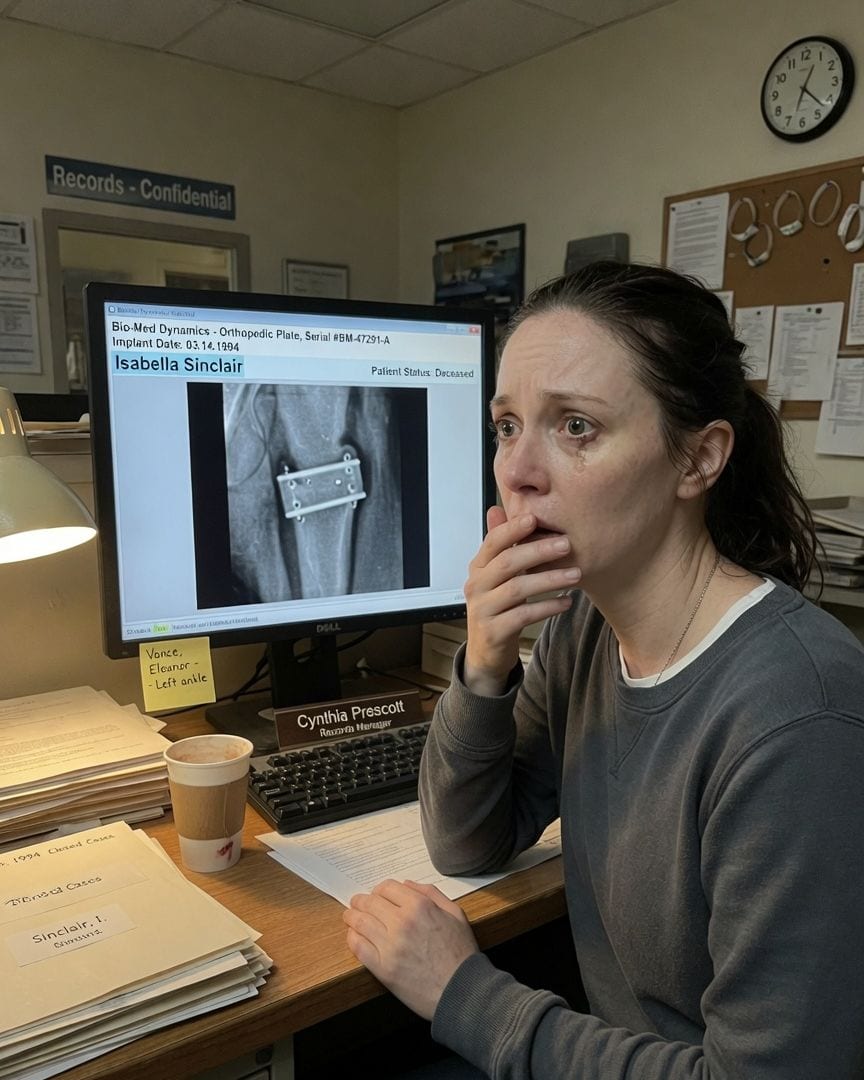
An MRI turned up a surgical plate in my ankle — from a surgery I never had, and there's no scar. Its serial number is registered to a patient marked deceased.
I went for a routine MRI, but the technician found a metal plate embedded deep in my left ankle, an old surgical implant I had no memory of. My doctor confirmed it had been there for decades, fused with the bone. The true shock came when hospital records traced the plate's serial number: the patient associated with my implant was marked deceased.
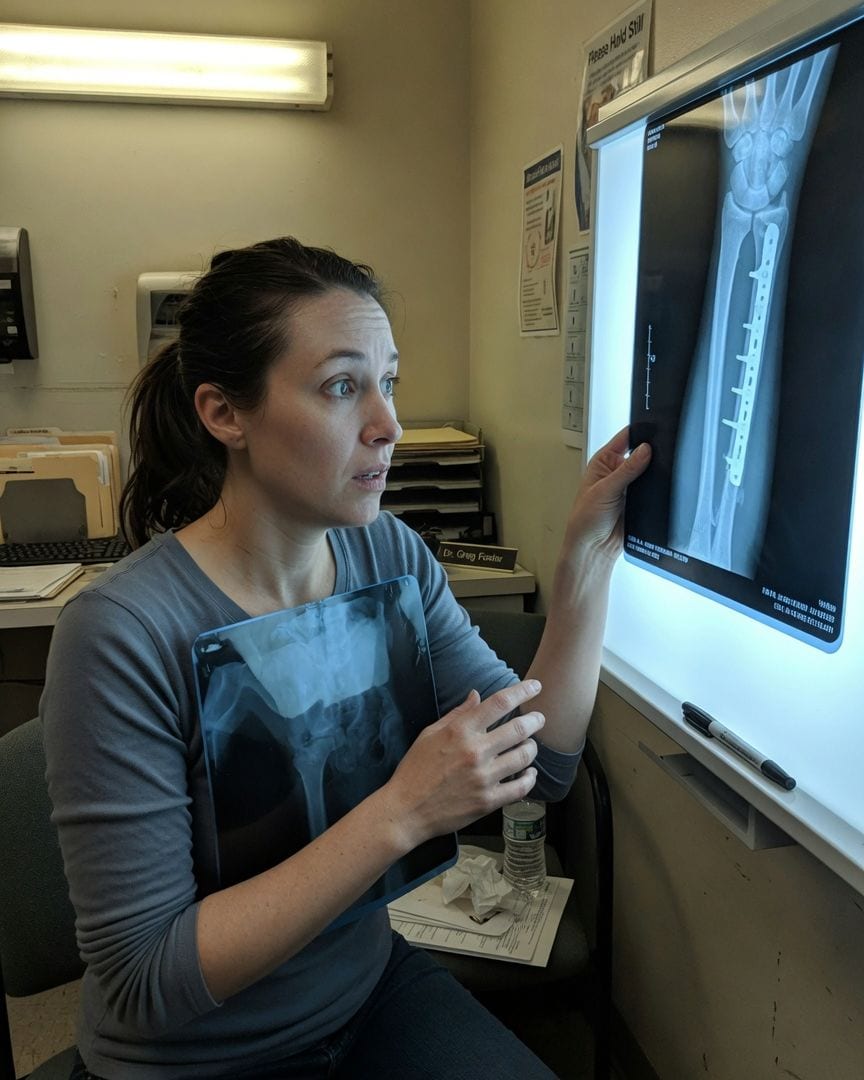
My X-ray shows a metal plate in my forearm, fixed years ago. I've never broken a bone there, and there's no scar.
I visited the clinic for a sprained wrist, expecting a routine X-ray. Instead, Dr. Foster showed me the scan: a metal plate and eight screws were clearly visible, mending an old fracture in my forearm. I stared, chilled, because I have never broken an arm, never had surgery, and held no memory of such a life-altering event.
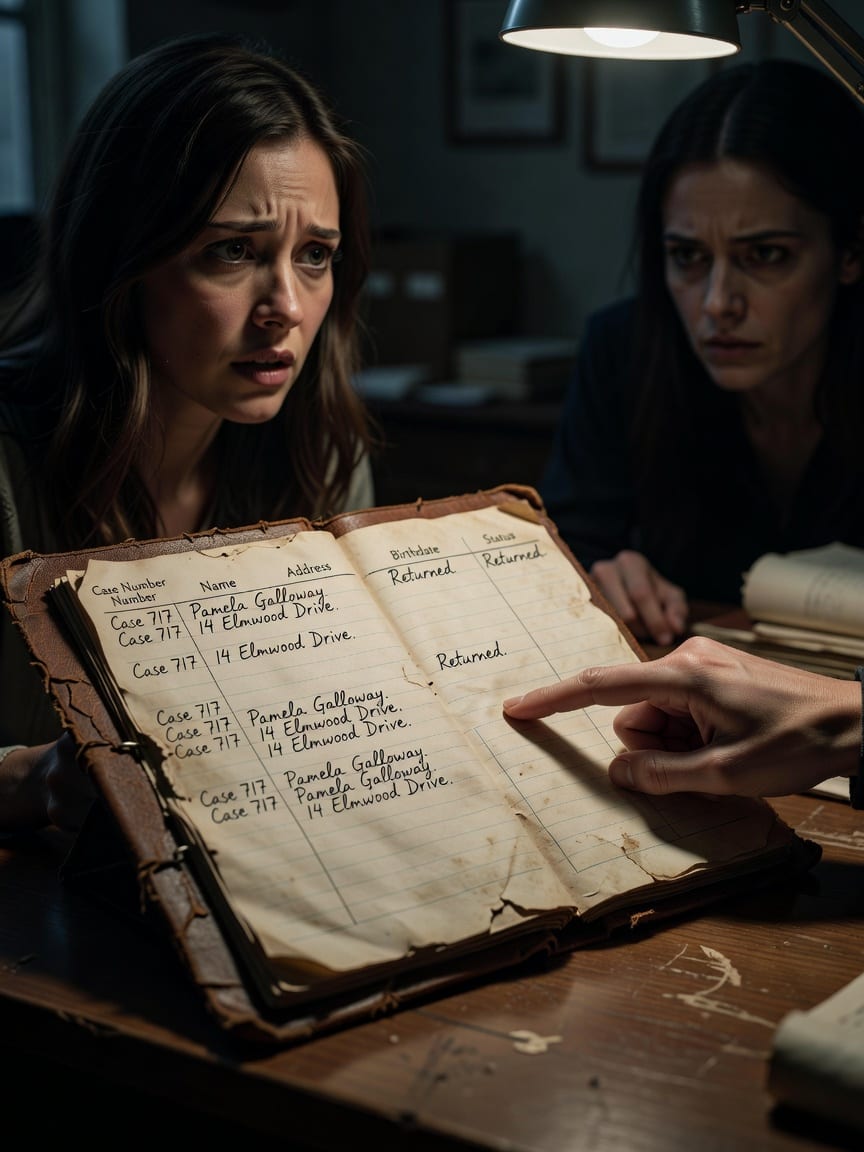
My hospital file has a blacked-out line from 1988. It names my street address, decades before I lived here. Then: 'returned'.
I finally got my medical file, hoping to clear up a ridiculous bill. Inside, I found an entry from 1988: my current home address, scrawled on a partial intake form and marked 'returned.' I was six then, living fifty miles away.
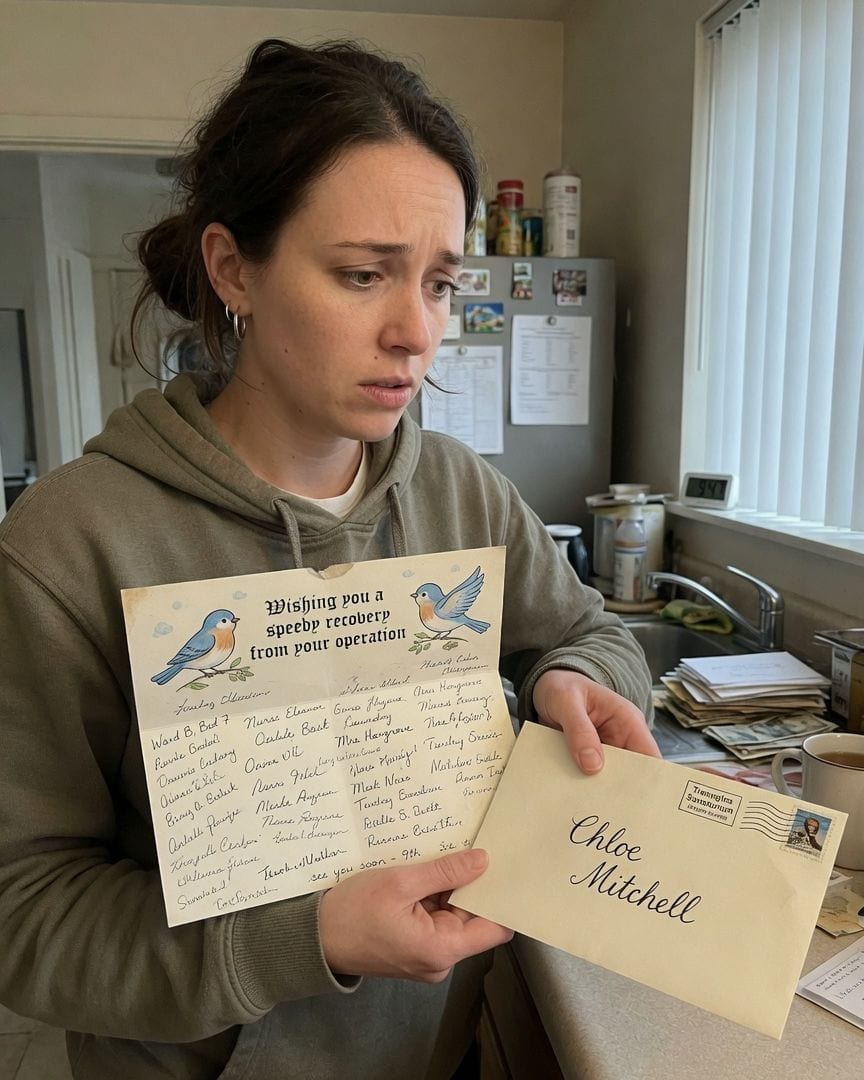
A get-well card wished me a speedy recovery from an operation I never had. It was postmarked from a sanatorium that burned down in 1963.
My quiet Tuesday morning was interrupted by an elegant get-well card, addressed to me. It wished me a speedy recovery from an operation I'd never had. But the postmark read 'Treneglos Sanatorium,' a hospital that vanished in a fire back in 1963.
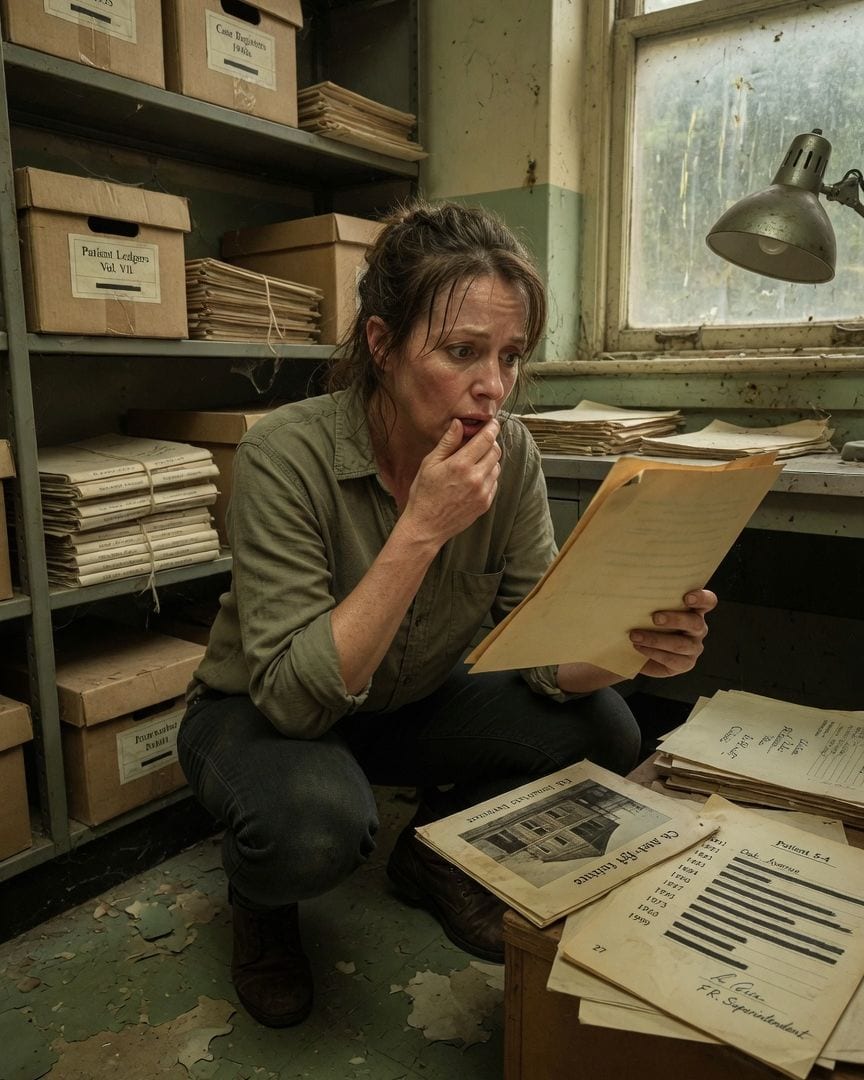
Patient 5-4 keeps checking into my aunt's old sanatorium chalet. The same initials sign them out, 'not traced,' every thirteen years since 1921.
Sifting through my aunt Margaret's estate, I found her old sanatorium file from 1999. Her patient record listed her as 'Patient 5-4,' discharged 'not traced.' But when I accessed the archives, I found 'Patient 5-4' was admitted every thirteen years since 1921, always with identical discharge notes.
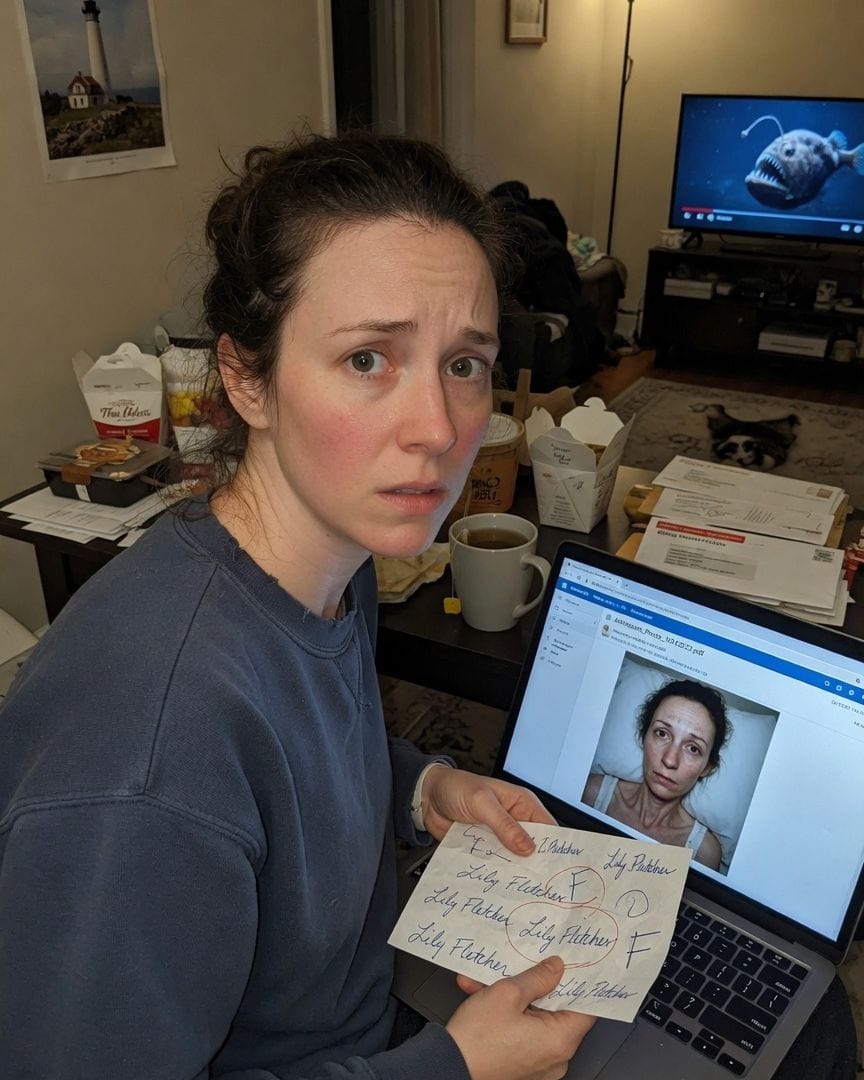
A hospital is billing me for a two-night stay in Cleveland — with my insurance, my wristband scans, and a discharge form in my own signature. I spent that whole week home alone, and I've never been admitted anywhere.
A bill arrived from Cleveland General Hospital for a two-night stay under my name, Lily Fletcher. I'd spent those dates at home, but the hospital had my accurate details and even a discharge summary. The chilling part? It was signed with my unmistakable signature, a mark I know I never made.