My X-ray shows a metal plate in my forearm, fixed years ago. I've never broken a bone there, and there's no scar.
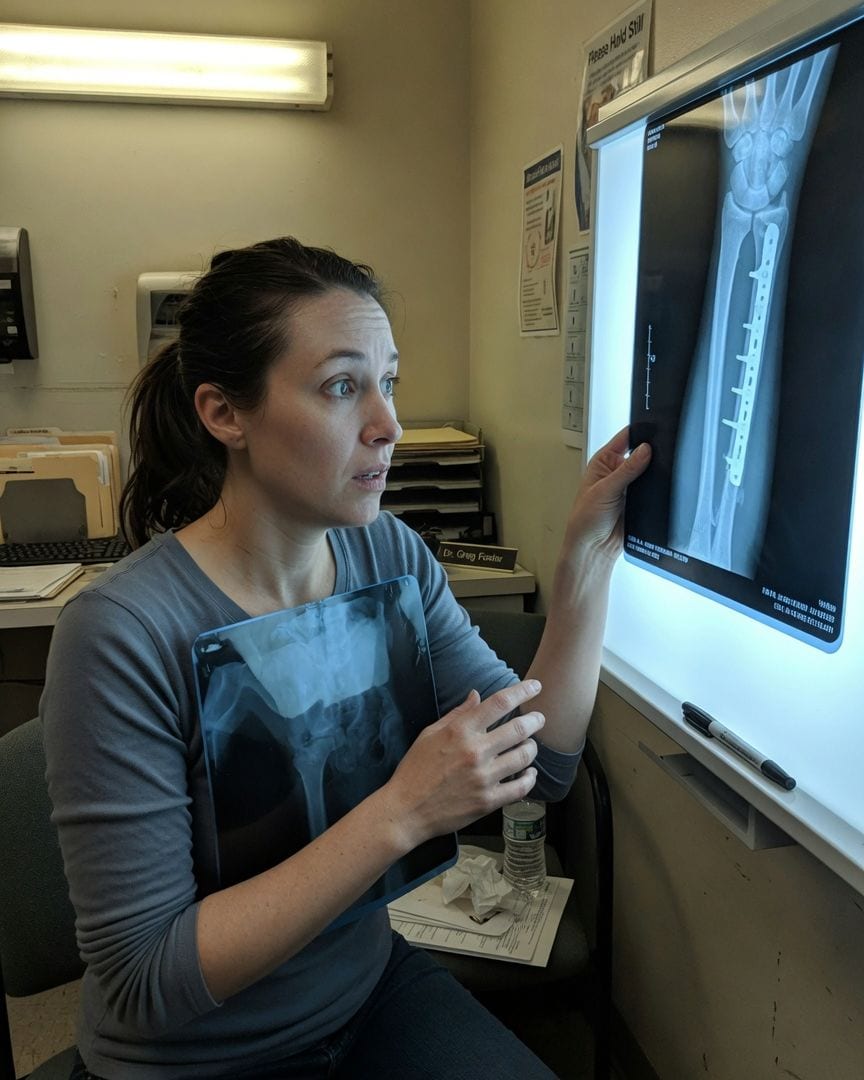
The clinic air was cool, smelling faintly of antiseptic and old paper. I’d sprained my wrist, an embarrassing slip on a patch of ice, and Dr. Foster had sent me for an X-ray, just to be sure.
Leo, the technician, a man whose face seemed set in perpetual disinterest, positioned my arm on the cold plate, muttered something about holding still, and then the machine whirred. It was a quick process.
A few minutes later, Dr. Greg Foster, my orthopedic surgeon – calm, measured, middle-aged, exactly the kind of doctor you’d want – called me into his office.
The X-ray glowed on the lightbox, stark white bones against a blue-black background. "Well, the wrist is just a sprain," Dr. Foster said, pointing with a pen that clicked softly against the plastic. "No fracture there, thankfully.
But I'm more interested in this." He moved the pen, tapping a spot mid-forearm, directly on the radius and ulna. Clear as day, outlined against the bone, was a long, thin metal plate, secured by eight small screws.
The bones around it showed old fracture lines, faded to nothing, perfectly mended.
"Looks like a clean repair," he commented, his brow furrowed slightly in professional admiration. "Who was your surgeon? It's a textbook job."
My breath hitched. I stared at the screen, a cold dread seeping into me, slow and insistent, like water rising. I ran my free hand over my other forearm. Smooth skin. Unblemished. No raised line, no discoloration. Nothing.
I had never broken an arm. Not ever. I’d never had surgery, not even a minor procedure that might explain this.
My mind raced, trying to grasp for any memory, any fleeting image of a hospital room, a cast, a recovery. There was nothing. Just a vast, smooth blank.
The metal on the screen was undeniably my bone, my arm, but it was a history that wasn’t mine. I tried to voice a question, to ask him what he meant, but only a choked, half-formed sound emerged.
Dr. Foster waited patiently, misinterpreting my shock as a memory lapse. "Sometimes these things slip the mind after so many years," he offered kindly. "It's been a while, by the look of it."
The X-ray, undeniable and clinical, showed a life I hadn't lived, inside my own skin.
I left Dr. Foster's office in a daze, the X-ray printout clutched in my hand like a foreign object. My first thought, once the initial shock wore off, was simple: a mistake. A mix-up. It had to be.
Hospitals made errors. So I got a second opinion. At a different clinic, with a different radiologist, a different surgeon. The new X-ray confirmed it, identical to the first.
The plate and screws were real, long-healed, and firmly in my arm. Both doctors assured me there was no mistake. It was me.
They even gave me the specific implant ID number, a string of letters and numbers etched into the metal.
Determined to find a rational explanation, I spent the next week diving into my own medical history. I called my childhood physician, Dr. Albright, who remembered me as "the kid who never got sick."
He had no record of any major injury, let alone surgery, on my arm. My college clinic records were equally sparse, noting only routine check-ups and a bout of strep throat.
In fact, my entire medical history before about ten years ago was suspiciously thin, a blank slate where a full life should have been. It was as if my body had just... appeared, fully formed and healthy, a decade ago.
The only anomaly I found, buried deep after Julian Sterling, a lawyer I consulted, painstakingly navigated through old, almost illegible insurance claims, was a vague reference from twelve years ago to 'diagnostic scans' at something called 'Aegis Medical Group.'
I’d never heard of it. My memory, usually sharp, drew a complete blank. Online searches yielded little; Aegis Medical Group had apparently closed abruptly eight years ago.
Its website was defunct, its physical location now a vacant lot in an industrial park. There was no contact information, no public archive.
It was as if the clinic, and any record of my supposed past, simply vanished, taking with it any potential explanation for the metal in my arm. Julian, for his part, found the whole thing unsettling.
"It’s too clean," he’d said, tapping a pen against his teeth. "Clinics don't just disappear without a trace, Hazel."
Frustrated, and feeling like I was chasing ghosts, I stumbled upon an obscure online forum for people seeking archived medical records from defunct clinics.
It was a digital dead end for most, full of desperate posts, but a thread mentioned 'Aegis Medical Group' and suggested contacting a former archivist, Nora Harrington, who supposedly kept digital backups.
The post was old, from years ago, but I had nothing else.
I sent an email, half expecting it to bounce. Nora replied within hours, a surprisingly calm and concise message.
She didn't ask why I was looking for Aegis records, simply provided a link to an encrypted file and a decryption key. My hands trembled slightly as I downloaded and opened it.
The file structure was clinical, meticulous. The main folder was labeled: 'Project Chimera - Subject: Ford, H.A.'
My middle initial was 'M'.
Inside, nestled among scanned documents and technical diagrams, I found a detailed surgical report for a forearm fracture, complete with the specific implant ID number. It was identical to my X-ray. The date on the report read: fifteen years ago.
And then, a faded, grainy ID photo. The woman in the photo had my eyes, my nose, but the jawline was subtly different, just a fraction softer.
Her hair, though hard to tell in the monochrome image, appeared a slightly different shade. It was almost her, but not quite, and the name 'Ford, H.A.' echoed the surgical report for the metal in her arm.
The photo pulsed on my screen, a ghost of a face that was almost my own. "Ford, H.A.," I whispered, the name a bitter taste in my mouth.
I showed the file to Julian Sterling, projecting it onto the large screen in his office. He leaned forward, eyes narrowed, picking apart the details. "The encryption is… professional," he noted, running a hand through his already rumpled hair.
"Not something a single archivist would typically manage. And Aegis's sudden closure… it’s all too neat." He advised caution, his initial professional curiosity shifting into genuine wariness.
I pressed Nora Harrington for more information. Her email replies grew increasingly evasive. She spoke in generalities about Aegis's 'specialized reconstructive medicine,' careful phrasing that sounded both technical and utterly meaningless.
She flat-out refused to elaborate on 'Project Chimera' or the 'Ford, H.A.' file, citing 'proprietary treatments' and 'sensitive patient information.'
But there was a tremor in her carefully worded sentences, a faint undercurrent of fear that hadn't been there in her initial, calm reply.
Undeterred, I scoured online archives, digging deeper than I ever thought possible.
I found a forum post from eleven years ago, now deleted but preserved in an old cache, from someone asking about 'missing years' and 'unfamiliar memories' after treatment at Aegis. The account abruptly went silent shortly after the post.
Another dead end, another whisper in the dark. Julian, meanwhile, unearthed something more concrete: a sealed lawsuit against Aegis from nine years ago, quickly settled out of court.
The vague court documents cited 'unforeseen post-operative complications' and 'identity confusion' as the cause of action.
That phrase, 'identity confusion,' snagged in my mind, a hook pulling at something I couldn't yet see, but which hinted at a darker truth than Nora's 'reconstructive medicine.' Julian had tried to get the seal lifted, but it was impenetrable.
"Someone really wanted this buried," he’d commented, leaning back in his chair, the leather creaking under his weight. The room felt heavier, the air colder, as if the weight of all these hidden truths was pressing in on us.
As Julian and I dug deeper, a subtle shift in my environment began. It wasn't overt, no loud bangs or direct threats, but a creeping sense of wrongness. One morning, I found my apartment door slightly ajar.
I was sure I'd locked it. Nothing appeared to be missing, no sign of forced entry, just that unsettling crack in the mundane.
I checked the lock repeatedly for days after, double-checking, triple-checking, the click of the deadbolt suddenly sounding inadequate.
A few days later, an anonymous email landed in my inbox. No subject line. Just a single sentence: 'Some answers are better left buried. For your own good.'
The tone was chillingly calm, not a threat, more like a quiet, detached warning. It felt like something a scientist might say before closing a lab door for good. I showed it to Julian. He didn't scoff.
He just nodded slowly, his face grim. His own office, he admitted, had experienced a targeted 'data breach' that week.
Nothing major, he claimed, just a few obscure files related to Aegis seemed to have been accessed, then vanished from his server logs.
He shrugged it off as a coincidence, a hack targeting old files, but his unease was clear in the way he kept glancing at the door, as if expecting someone to walk in.
Then, Nora called. Her number was blocked. "Hazel?" Her voice was a trembling whisper, barely audible over the static. "You have to stop, Hazel." My heart hammered against my ribs. Her usual composure was completely gone. "They're watching.
They know you're asking questions." I demanded to know who 'they' were, but Nora's only response was a terrified sob before she hung up, refusing to say more than 'It's not safe.'
The line went dead with a soft click that echoed in the suddenly silent apartment. I walked to my living room window, pulling back the curtain.
A dark sedan, tinted windows opaque, had been parked across the street for two days. It was gone the third morning, leaving only a lingering sense of being observed, a phantom weight on my shoulders.
The street looked ordinary, sunlit, but the world had taken on a new, sharper edge.
I confronted Nora. She had to tell me. We met in a quiet, secluded park, the kind with ancient oak trees and a few dog walkers who gave us a wide berth.
Nora was visibly shaken, her hands gripping her handbag so tightly her knuckles were white. Her usual composure, the polite evasiveness, was completely gone, replaced by raw fear. I didn’t waste time.
I pulled out my phone, showing her the X-ray image, the 'Ford, H.A.' file, and the cached forum posts.
"What was Project Chimera, Nora?" My voice was low, barely a whisper, but it carried the full weight of my desperation. "What did Aegis Medical Group really do?"
Nora finally broke. Tears welled in her eyes, tracking paths down her pale cheeks. She looked around, as if expecting to see someone emerge from behind the trees.
"It wasn't just reconstructive surgery," she began, her voice hoarse, "that was the public face. Aegis… it was about 'body-matching' for individuals who suffered catastrophic trauma. A new life in a compatible host." She wrung her hands.
"I was part of the records department. My job was to generate new identities, meticulously erasing old ones. Creating histories that never existed."
She swallowed hard, looking directly at me, and the full horror of her words began to coalesce.
"Ford, H.A. was the original occupant of the body you're in, Hazel," Nora confessed, her voice barely a whisper now, lost almost completely in the rustling leaves above us. "She died years ago. An accident.
No next of kin, no one to claim her. Her body… it was deemed suitable."
She explained that the program aimed to give trauma victims a second chance, a new beginning. It involved 'repurposing' bodies from individuals with no next of kin or unclaimed remains, then implanting new memories, constructing entire new identities.
The healed break in my arm, the metal plate… it was a physical scar from the original body's life, from Ford, H.A.'s life.
A detail, Nora explained, that was deemed too minor to fully 'correct' during the modification process without risking the body's integrity. "It was a… a compromise," she stammered, shuddering.
Nora began to weep openly, her face buried in her hands. "We thought we were doing good. Giving people another chance. A way to escape the trauma. But it was never that simple. It was never right."
The park around us felt suddenly silent, the birdsong muffled, as if the trees themselves were listening, bearing witness to her terrible confession. The truth was worse than I could have imagined.
Nora, still trembling, reached into her handbag and pushed a small, encrypted data chip across the picnic table. It was black, no bigger than my thumbnail, cold against my skin.
"This is the true Project Chimera," she said, her eyes wide with a mixture of fear and relief. "The other part. What they did to you."
My hands shook as I took the chip. "What do you mean?" I managed, my voice thin, reedy.
Nora’s voice dropped to a near-inaudible whisper, her eyes darting around the park. "You weren't just given a body, Hazel. You were the subject."
I clutched the chip, the plastic digging into my palm, my mind racing, the implications beginning to form a terrifying shape, sharp and jagged. I turned and walked away from Nora, the chip a burning weight in my hand.
The park seemed to recede behind me, losing its color and sound.
Back in my apartment, the silence was deafening. My heart pounded in my ears as I sat at my laptop, the screen a blank, waiting mirror. I inserted the chip, the click loud in the stillness.
A single file loaded instantly, a clinical document titled: 'Subject: Ford, H.M. - Consciousness Relocation Protocol. Status: Successful.'
Beneath the title, a photo stared back at me. My current face. And a date: ten years ago. Below that, a phrase: 'Memory imprint complete. Host compatibility: 99.8%.'
And then, a single, chilling line appeared, stark and absolute: 'Original identity: Terminated.'
The chip contained my complete Project Chimera file. It was a meticulous, clinical account, devoid of emotion, terrifying in its precision.
It detailed how, following a severe, unrecoverable brain injury I sustained ten years ago—an accident I had absolutely no memory of—my original consciousness was digitally mapped. My thoughts, my experiences, my personality—all reduced to data.
Then, this data, me, was transferred into the body of 'Hazel A. Ford,' the body of the woman whose life had ended years prior, the one with the metal plate in her arm.
The file meticulously outlined the 're-engineering' process. The host body was physically modified to more closely resemble my original appearance—my true appearance, the one my consciousness had inhabited before. My jawline, my hair, the subtle contours of my face.
Nora’s explanation about the ID photo clicked into place: the differences I saw were the remaining traces of the host body’s original physical form before it was altered to become me.
A new set of memories, creating my current life, was then implanted. My parents, my childhood home, my university, my friendships, my career as a graphic designer—all a constructed narrative, seamlessly woven into the new vessel.
The 'missing years' in my official medical history were accounted for as the period during which my original consciousness was mapped and the host body was prepared, a process that took months, maybe even a year.
And the healed break in my arm, the plate, and the screws? They were explicitly identified as a physical remnant of the host body's original life, Ford, H.A.'s life.
A detail, the file coldly stated, "too minor to fully erase without compromising the integrity of the transfer." It was a cold, calculated scientific endeavor, not a monstrous one.
The program's philosophy, as documented, was to 'save' individuals by providing them with new vessels, justifying the appropriation of unclaimed bodies as a humanitarian act. It was efficient, dispassionate, and utterly horrifying in its clinical precision.
Julian, horrified by the contents of the chip, immediately recognized the magnitude of the ethical breach. He pushed his spectacles higher on his nose, his face pale. "This isn't just malpractice, Hazel. This is a crime against humanity."
We collaborated, meticulously gathering all the evidence: my X-rays, Nora’s terrified, whispered testimony, the encrypted files, the sealed lawsuit records.
Julian connected with a retired investigative journalist, a woman named Eleanor Vance, who had tried to expose Aegis years ago but was mysteriously silenced, her career all but destroyed.
With Eleanor’s help and extensive network, the full scope of Project Chimera was leaked to the media. The story detonated like a bomb. News channels worldwide picked it up, newspapers ran screaming headlines. A massive public outcry erupted.
The remaining doctors and administrators from Aegis, many of whom had gone underground, living quiet, comfortable lives, were eventually identified and arrested.
The former Aegis facilities, now vacant lots and crumbling buildings, were raided, revealing other hidden labs, other 'subjects' in various stages of transfer or body preparation.
These individuals, some in comas, some showing signs of severe disorientation, were identified and offered care, their fates now tragically in the public eye.
I became a reluctant public figure, a living testament to the program's chilling reality. My face was on every screen, my story dissected.
I testified, speaking with a calm, unwavering voice about the horror of discovering my own identity was rebuilt into another's shell, about the quiet terror of knowing your past is a lie.
The program was definitively shut down, its architects facing justice, and its dark legacy brought into the light. The world reeled, grappling with the ethical quagmire Aegis had created.
My own life, the one I thought I knew, shattered and rebuilt, was now the focal point of a global conversation. The air in every room felt charged, heavy with the weight of revelation.
The news cycle raged for weeks, then months, as the implications of Project Chimera rippled across society. I became a symbol, a human face to the ethical nightmare, my story discussed in medical journals and ethics debates worldwide.
Julian, driven by a quiet fury, established a foundation dedicated to identifying and supporting other 'relocated' individuals.
Nora, granted immunity for her cooperation, dedicated her remaining years to the foundation, haunted but resolute, her fear slowly replaced by a fierce determination.
My life changed irrevocably. I learned to live with the knowledge, but the sense of my own body being a borrowed vessel, and my memories a constructed narrative, never truly left me.
I navigated the world with a quiet, internal awareness, forever marked by the truth of my existence.
There were days I felt like a stranger in my own skin, days the reality of it hit with the force of a physical blow.
Other days, I simply existed, trying to find meaning in a life that was both mine and not mine.
I sit now in my living room, watching a news report about the ongoing investigations into Project Chimera. They've found other 'subjects,' other lives rebuilt, other bodies given new identities. The screen glows, casting a pale light on my face.
I touch my forearm, feeling the smooth skin where the plate lies beneath, a constant, silent reminder. The world has changed for me, but the world outside continues, largely oblivious to the quiet, internal wrongness many now carry.
The news report shows a blurred, pixelated image of another person, newly identified as a 'relocated subject,' walking down a busy street in a different city.
Their face is unfamiliar, yet their posture somehow resonates with a quiet, self-contained dread, an echo of something lost. I know that feeling intimately. I watch them disappear into the crowd.
The doctor had called it a healed fracture. She called it a whisper.
Hazel had found peace, of a kind. She’d learned to live in her borrowed skin.
But sometimes, when she saw a stranger pass by, a faint, almost imperceptible tremor in their step, a certain lost look in their eyes, she wondered if they, too, were listening to the echoes of someone else’s broken bones.
The doctor had called it a healed fracture. She called it a whisper.
If this one got to you
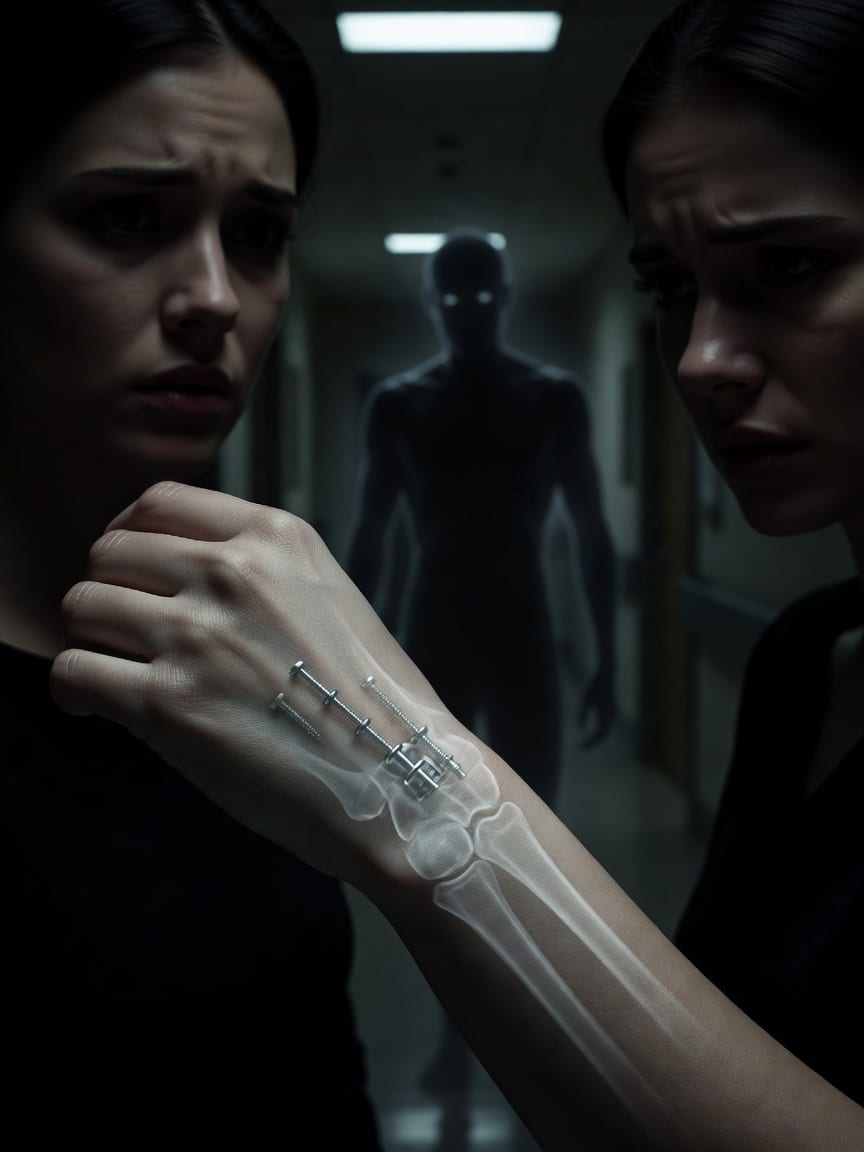
My wrist X-ray showed a titanium plate fixing a break from years ago. My surgeon asked which hospital did the operation. I've never had surgery in my life.
After a clumsy accident, I visited the fracture clinic for my swollen wrist. But my X-ray showed a perfectly healed titanium plate embedded in my bone – an implant I had no memory of receiving. Despite being decades old, there was no scar on my skin, and no medical record of the surgery under my name.
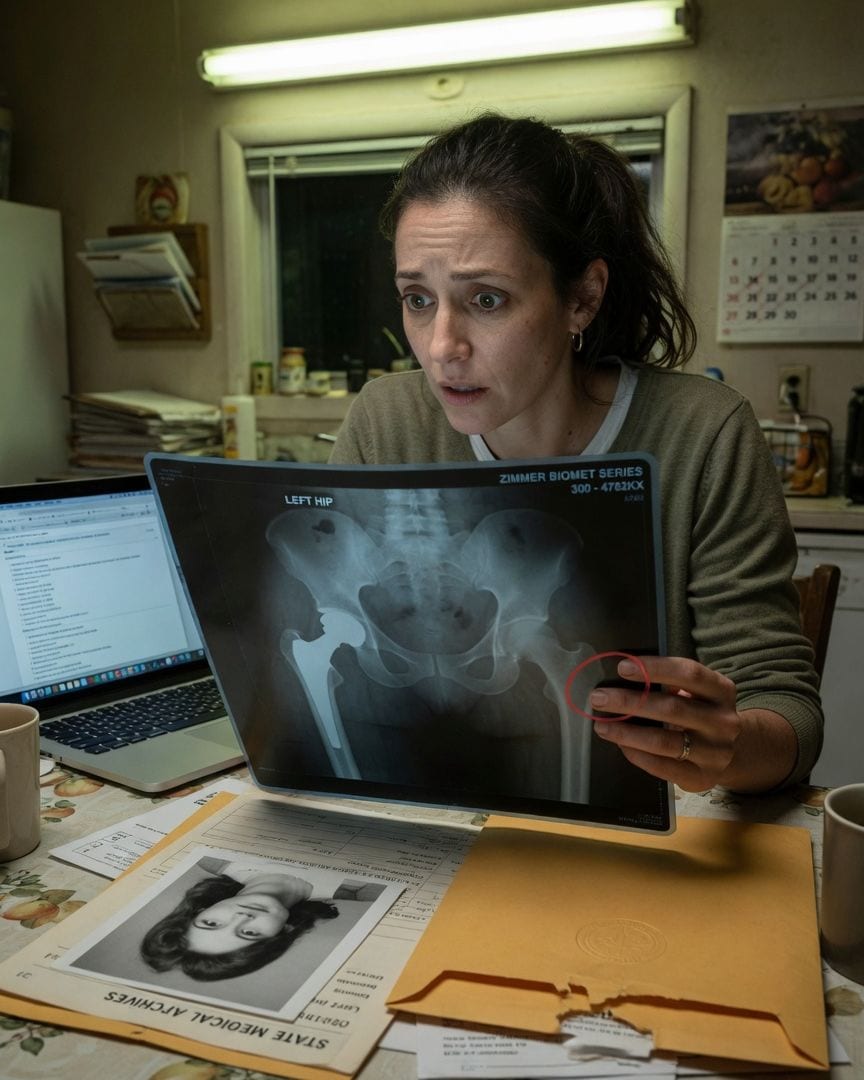
My X-ray showed a complete hip replacement. I walk without a limp, and there's no scar on that thigh.
I went in for a minor hernia repair, expecting a routine pre-op X-ray. But my surgeon showed me the film, pointing to a gleaming metal hip replacement perfectly seated in my left hip. I had no memory of major surgery, no scar, no pain, and the implant was 45 years old — seven years older than me.
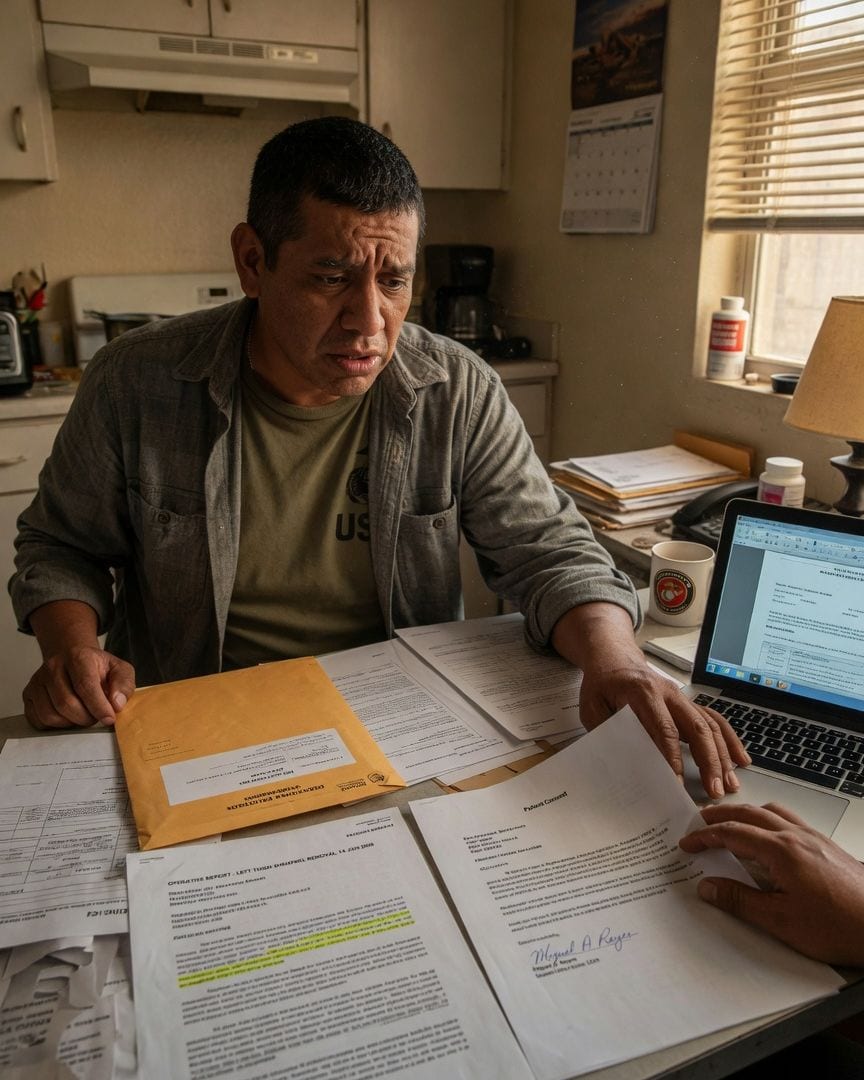
A veteran's VA file listed surgery for shrapnel. The doctor retired decades before he joined the Corps.
Miguel Reyes, a veteran, sat in a sterile VA clinic, his bad knee throbbing, expecting routine. Instead, a physician's assistant presented a digital file detailing shrapnel removed from his thigh in 2008 – an injury Miguel had no memory of, no scar for. His own service record later confirmed the impossible surgery, complete with a consent form bearing his perfect, yet utterly alien, signature. Driven by unease, Miguel researched the listed surgeon, Dr. Charlotte Bennett, only to discover she had retired from military service decades before he even enlisted. The numbers didn't just not add up; they violently contradicted each other, revealing a deliberate, impossible fabrication in his own life story.
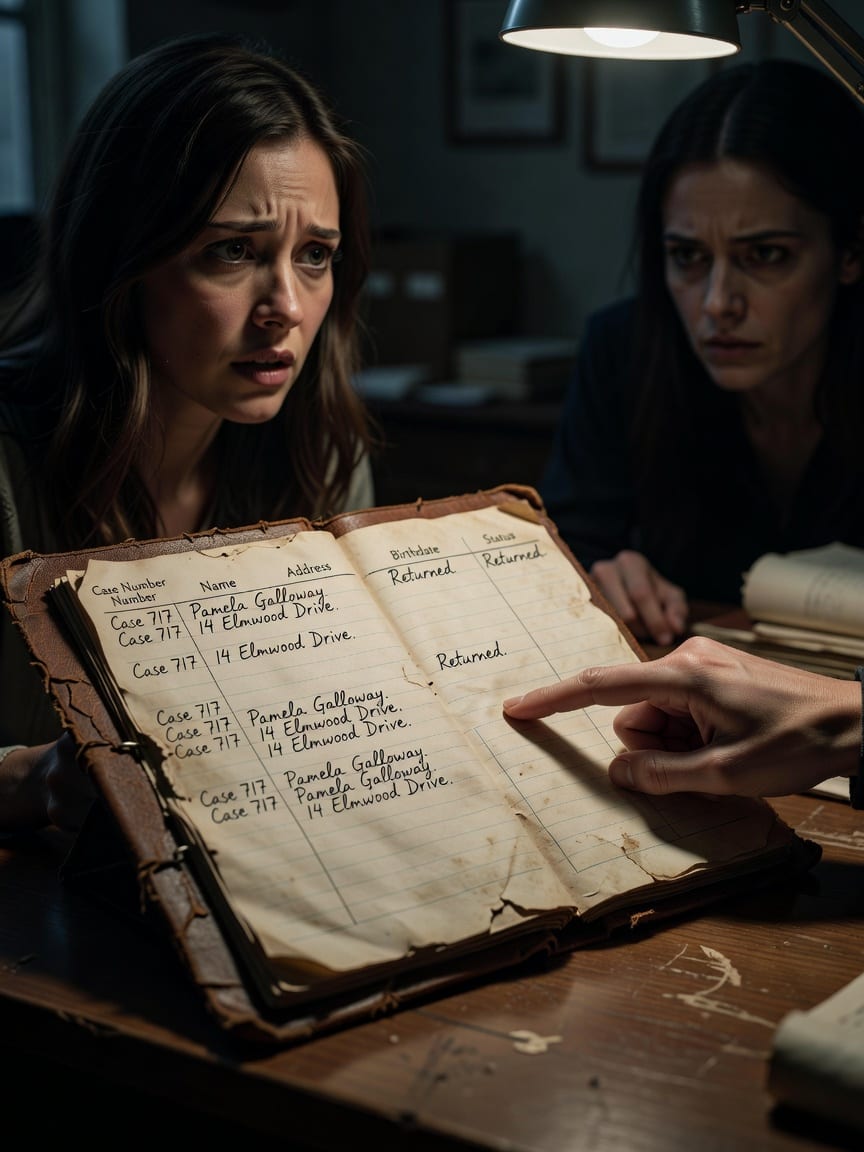
My hospital file has a blacked-out line from 1988. It names my street address, decades before I lived here. Then: 'returned'.
I finally got my medical file, hoping to clear up a ridiculous bill. Inside, I found an entry from 1988: my current home address, scrawled on a partial intake form and marked 'returned.' I was six then, living fifty miles away.
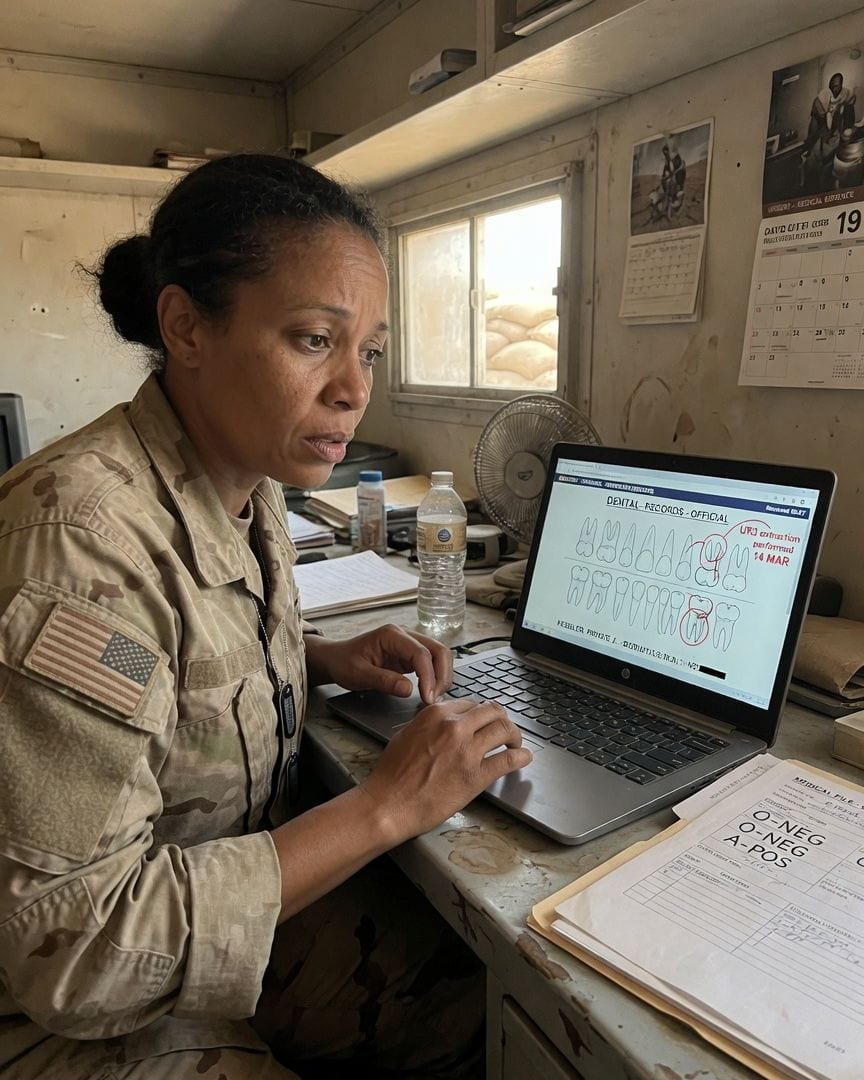
Weeks from going home, Sergeant Whitmore saw Private Kessler’s dental records show teeth he didn’t have and missing ones he did.
Sergeant First Class Iris Whitmore counted the weeks until her deployment ended, dreaming of home as the desert heat baked FOB Cerberus. But the familiar weight of Private Kessler’s dog tags soon brought a cold knot of dread: his blood type, once O-negative, suddenly read A-positive. She dismissed medical anomalies and clerical errors, only to find his official records subtly rewriting his timeline, linking old injuries to new identities. When his dental charts arrived, showing teeth he never had and missing ones he did, Sergeant Whitmore faced an impossible question: who was Private Kessler, really?
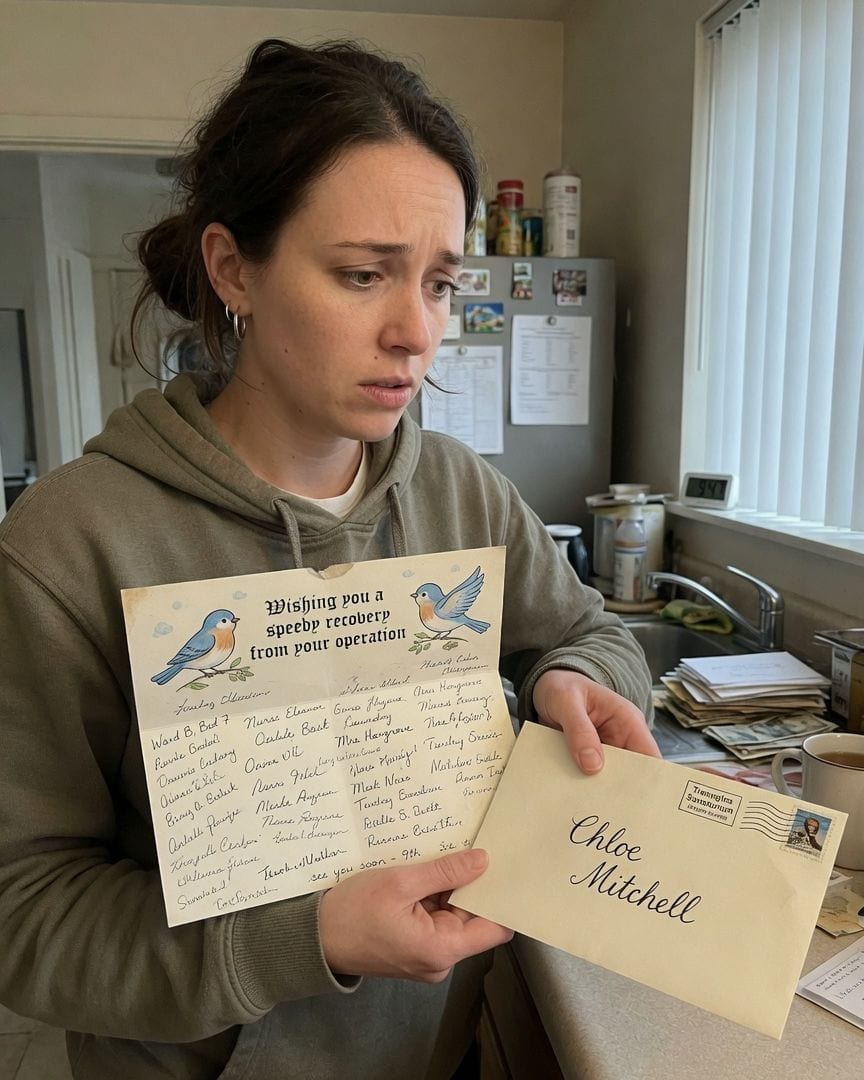
A get-well card wished me a speedy recovery from an operation I never had. It was postmarked from a sanatorium that burned down in 1963.
My quiet Tuesday morning was interrupted by an elegant get-well card, addressed to me. It wished me a speedy recovery from an operation I'd never had. But the postmark read 'Treneglos Sanatorium,' a hospital that vanished in a fire back in 1963.