My bedroom mirror shows a woman doing her hair, in a room papered differently than mine. She moves a half-second late.
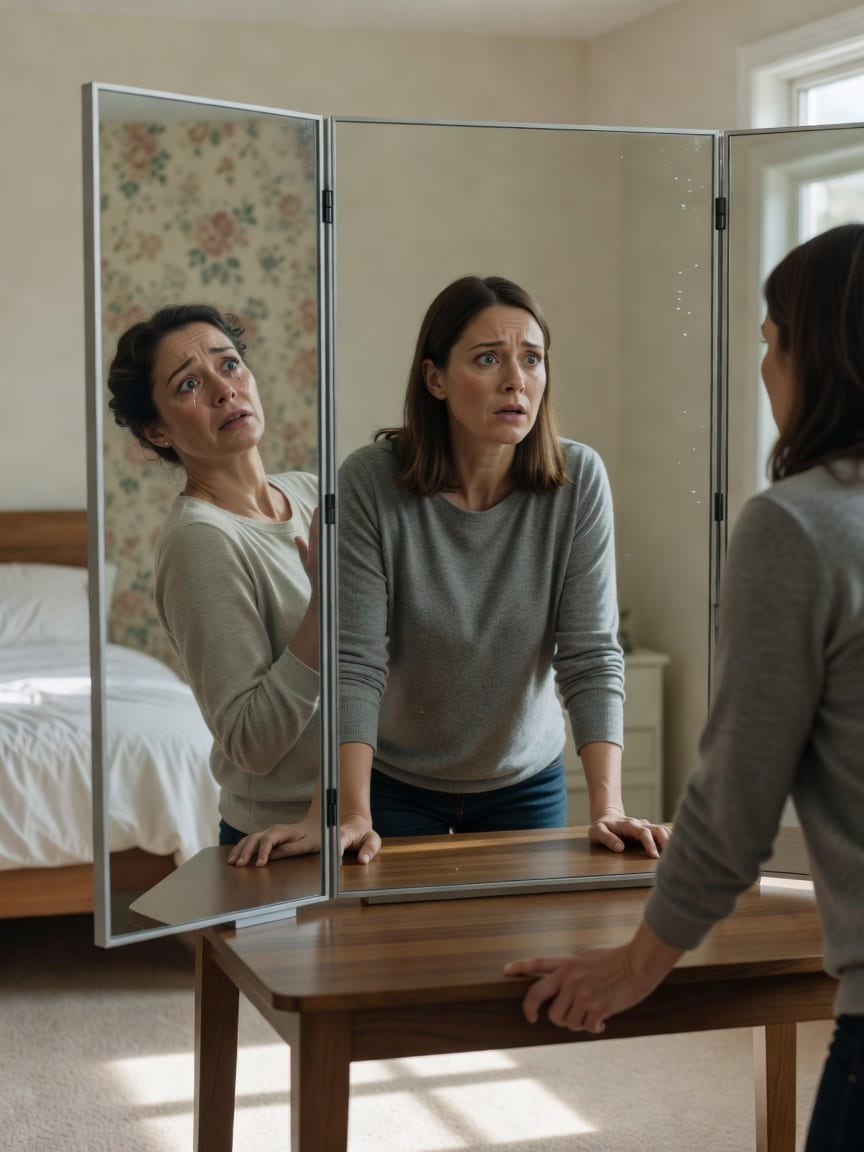
I still had boxes stacked against the plain white walls of the bedroom, a faint scent of old wood and dust settling into the space. The house was mine now, an inheritance from a distant aunt I barely knew.
The antique dressing table was part of the deal, heavy dark wood, with three folding mirror wings. Straight on, it showed my reflection, just my tired face after a day of unpacking.
But twice now, late at night, when I’d shifted my angle on the bed, the left wing had shown something else entirely.
A woman. She wore a high-necked blouse, her dark hair pinned up, and she was doing her hair at that very same table. The room behind her was papered with faded floral patterns, a contrast to my stark white.
The first time, I blinked it away, a trick of tired eyes, a distorted reflection from the window. The second time, I watched her.
When I twitched my hand, she moved a half-second late, as if catching up to a memory of the gesture. Her eyes were downcast, focused on her task. I held my breath.
She slowly raised her head, just a fraction, her gaze still hazy. Then I shifted again, fully sitting up, and the mirror snapped back to my own startled face, the white wall behind me.
It wasn't my reflection, and it wasn't my room. The distinct floral wallpaper burned behind my eyelids.
Shaken, I spent the next day dissecting the impossible. I meticulously cleaned every inch of the mirror, polished the wood frame, even tried to angle lamps from different directions to catch a phantom reflection. Nothing.
The glass was old, yes, but not warped. It was just a mirror. I spent hours researching the house's history online, hoping for a mundane explanation—a known quirk, a previous occupant’s practical joke.
The records were sparse, just property deeds and census data, confirming the house had been in the same family for generations before my aunt. Nothing about ghostly residents or strange reflections. Just quiet lives.
Frustration clawed at me. I ran my hand along the dressing table's worn surface, the wood cool under my fingers. My hand brushed against something loose underneath, just at the edge of the carpet. A floorboard.
It lifted easily, revealing a small, velvet-lined cavity, dark and musty. Inside lay a single, sepia-toned photograph, its edges curled like old parchment.
It was her. Unmistakably the woman from the mirror. Same high-necked blouse, same dark hair, same serene, almost melancholic expression. There was no name, no date, just the face. A chill, sharp and definite, ran through me.
Not a draft from the floorboard, but an internal tremor. This wasn't a trick of light. This was a person. A real, tangible person.
I spent hours online, reverse-image searching, trawling historical archives, but the woman remained nameless, lost to time. The air around the dressing table mirror seemed to grow perceptibly colder.
That night, the photograph sat on my bedside table, its sepia eyes seeming to follow me as I moved through the room.
I lay awake for a long time, the image of the mirror woman superimposed over my thoughts, the woman in the photograph a constant, silent presence. Sleep felt impossible.
I sat up, pushing myself against the headboard, my gaze drifting to the window overlooking the untended, overgrown garden. Moonlight cast long, skeletal shadows across the lawn.
Then, for a split second, the view shifted. The garden wasn't autumnal and neglected. It was vibrant, meticulously tended, bursting with summer roses on trellises, not the skeletal bushes I knew. And there she was.
The woman from the photo, dressed in a flowing, high-necked dress, stood by a rose bush, her head tilted, humming softly to herself. She turned, her movements fluid and unhurried, as if looking back into the house, directly at me.
Then, as quickly as it appeared, the vision dissolved, leaving only the dark, untended garden I knew. I stared, frozen, every muscle tensed. I had seen her. Outside. In a different time.
Still reeling from the impossible vision, I knew I couldn't dismiss it. My rational mind was screaming, but my eyes had seen what they'd seen.
The historical society, which I'd badgered again, offered little more than property deeds and census records, all frustratingly vague about previous occupants. No names, no personal histories beyond an official head-count.
Determined, I started asking local elders, showing them the faded photograph. Most recognized the house, a local landmark of sorts, but few knew its distant past.
"Belonged to the Sullivans for ages," one old woman murmured, "but that was before my time. Only one I can think of is Reginald Coleman. He's a distant cousin, something of a local historian, lives down by the old mill."
I found Reginald Coleman, 68, in his quiet, book-filled home. The scent of old paper and leather filled the air. He was composed, almost serene, as I explained my reason for coming, carefully laying the photograph on his coffee table.
He picked it up, his fingers tracing the woman's face.
"Ah, poor Eileen Sullivan," he said, his voice soft, unhurried, almost melancholic. "She lived in your house, you know. My great-aunt. A bit peculiar, kept to herself."
He spoke of her quiet life in the house, her artistic inclinations, her eventual 'moving on' from the property. He offered generalities, never specifics. "She was a sensitive soul, you see. Had a difficult time adjusting to... certain realities."
I pressed him for details of Eileen's departure or death. "Did she move away? Did she pass on here?"
Reginald merely reiterated, his gaze distant, "She moved on, dear. Family matters, best left in the past." His calm was unnerving, a placid surface over something I sensed was much deeper.
He offered me tea, changing the subject to local history, clearly wanting to steer me away from Eileen. I left with a growing suspicion. Reginald never once said Eileen 'died' or 'left' the house. Only 'moved on.'
The wording felt like a deliberate avoidance, a careful omission. It was like he was reading from a script, one he’d rehearsed for decades.
After my conversation with Reginald, a subtle, disquieting shift occurred in the house. It wasn't just my imagination anymore. I felt an undeniable presence, like a quiet observer.
I'd leave the faded photograph of Eileen on my desk, her serene face staring up, only to find it later, face down, as if someone had gently, deliberately turned it away. No open windows, no drafts, nothing to explain it.
Just a quiet click of realization that I wasn’t alone.
A faint, sweet scent, like dried lavender, would waft through the halls, not my own perfume, but distinctly feminine and old. It was strongest near the dressing table, lingering in the air even when I'd opened every window.
It felt like a memory, a lingering echo of a woman.
One evening, deep into researching Eileen Sullivan online, despite Reginald’s evasiveness, my laptop screen flickered violently. It wasn't a normal glitch, not a momentary stutter.
For a terrifying fraction of a second, the browser window was overlaid with swirling, old-fashioned handwriting. It wasn't text from any webpage, it was etched across the screen like a temporary tattoo, forming a single, stark word: "TRAPPED."
My heart hammered against my ribs. The house lights dimmed, then surged, humming unnaturally loud.
A profound, icy chill permeated the air around me, not just a draft, but a cold that seemed to emanate from the very walls, settling around my neck and shoulders.
I felt a distinct, heavy pressure, as if someone stood directly behind me, breathing cold air onto my neck. I spun, my eyes wide, my body tensed for impact, but the room was empty.
The laptop screen was back to normal, showing a blank search page. The lights steadied. The chill began to recede. My breath hitched, caught somewhere in my throat. I wasn't just investigating a mystery anymore. I was being watched.
Or perhaps, joined.
I couldn't shake the feeling of being watched, of Eileen's presence growing. It wasn't malevolent, but desperate, a palpable yearning. I returned to Reginald Coleman, my resolve hardened, the photograph of Eileen clutched in my hand like a shield.
I laid it on his coffee table, its sepia tone stark against the polished wood.
"Reginald," I began, my voice steady despite the tremor in my hands, "I saw her. In the window, in a different time. And my laptop… it showed me a word. 'TRAPPED.'"
Reginald's placid expression, which had been so unwavering, finally fractured. He picked up the photo, his fingers tracing Eileen's faded face. His gaze was distant, lost in some old memory. "Eileen... she saw things too," he murmured, almost to himself.
The words were barely audible. "The family, they called them 'delusions.' She claimed the house showed her moments from the past, things that hadn't happened yet, things that were happening again. She tried to tell us."
He sighed, a long, weary sound, as if the weight of decades had just settled onto his shoulders. "We were a proud family, Chloe. Embarrassed. A young woman, seeing things, saying such... fantastical things. It wasn't proper.
We had her quietly institutionalized. Said it was for her own good. Eventually, she was moved to a sanitarium where she... passed away." He finally met my eyes, and they were filled with a profound sadness.
"It was considered a family tragedy, best kept quiet. To protect her, to protect our name."
He confirmed that Eileen’s room had been my current bedroom, the one with the dressing table. "She would spend hours there," he said, "combing her hair, talking to her reflection. We thought she was losing her mind."
The pieces clicked into place, chillingly, horribly precise. The mirror, the window, the sense of recurrence. Eileen wasn't just a distant memory; she was a warning. Her 'delusions' were the very things I was now experiencing.
The cold dread settled deeper within me, realizing Eileen's isolation wasn't just personal, but imposed, a systematic erasure. The house had been her only confidant, her only witness, echoing her reality because no one else would.
The ordinary explanation died for good right there in Reginald’s quiet, dusty living room. This was real.
Reginald, his calm façade now completely shattered, stood and walked towards an old, dust-covered chest in the corner of his attic, a place I hadn't noticed on my previous visit.
Dust motes danced in the slivers of sunlight piercing the grimy window. "There was a box of her things," he said, his voice barely a whisper, thick with a sudden, profound grief. "Papers...
they said she was delusional, but she wrote everything down. I just... I couldn't bring myself to face them."
He fumbled with the rusted latch, his hands trembling slightly, then pulled out a heavy, leather-bound journal, its cover worn smooth with age, its pages bulging. "This was hers. Her diary. I never truly read it. Couldn't bring myself to."
He handed it to me, his hand shaking so much the book almost slipped.
It was Eileen's diary.
My fingers brushed the aged leather, feeling the history contained within its pages. I opened it to a random page, my eyes scanning the neat, looping script, so fragile and elegant.
The entries detailed Eileen's life in the house, her growing awareness of the mirror's other reflections, her precise descriptions of the 'wrong year' through the window, exactly as I had experienced it, down to the trellised roses.
Eileen had meticulously documented everything, every terrifying glimpse, every dismissed attempt to explain. The entries became increasingly frantic, describing her attempts to warn future occupants, her pleas to be believed.
My gaze snagged on a specific date, written in bold, desperate strokes. It was a full decade before the official records Reginald had mentioned, a decade before Eileen was supposedly institutionalized.
And beneath it, in a desperate, looping scrawl, were the words: "They said it was a fever. They buried the truth."
I devoured Eileen's journal. It was a harrowing account of a woman slowly driven to despair, not by madness, but by an unbearable truth.
Page after page, Eileen meticulously documented her experiences: the mirror showing past occupants, the window revealing glimpses of earlier eras.
She called the window her "Door Onto The Wrong Year," and drew intricate maps of the garden as it appeared in those visions, matching Chloe's own glimpse perfectly.
She even sketched the faded floral wallpaper, the one I’d seen in the mirror, detailing how it was from a renovation in the early 1900s, before her time, proving the house retained memories beyond even its last occupant.
Most chillingly, Eileen wrote about observing herself from the past, trapped in a recurring loop, unable to break free from the house's temporal echoes.
She described seeing her younger self, always in that high-necked blouse, always doing her hair, always turning toward the window as if pulled by an unseen force.
The journal detailed how her family, unwilling to believe her, had her declared mentally incompetent and institutionalized years before the official date Reginald knew, simply to silence her and take control of her property.
Her 'death' in the sanitarium was a fabrication, a final act of erasure.
The house wasn't just remembering; it was replaying Eileen's trapped existence, her desperate pleas for help, and I was now living through it, becoming a part of the loop, a witness to her unending torment.
The diary, a tangible artifact of a life meant to be erased, was the undeniable proof that the ordinary explanation had died for good. Every wrong detail, every impossible vision, every cold spot—it all clicked into a coherent, terrifying whole.
I returned to Reginald, the worn leather diary clutched in my hands, a weapon against the past. I laid it open before him, pointing to the entry revealing the true date of Eileen’s institutionalization and her desperate plea.
Reginald read it, his face paling, the serene mask completely gone, replaced by a profound, shaking grief.
"I... I only knew what they told me," he whispered, his voice thick with unshed tears. "They said she was ill, that it was for the best. I believed them. I wanted to believe them."
He admitted he'd never truly read the diary, only kept it out of a vague sense of obligation, unable to face what it might contain, perhaps afraid of what it would reveal about his family's complicity.
He looked at the pages, then at me, his eyes filled with a fresh horror, a deeper understanding of what his silence had allowed.
As we spoke, a cold spot formed directly in front of the dressing table mirror in my bedroom, a draft that cut through the still air of Reginald’s living room, chilling the very bones in my hand holding the diary.
The left wing of the mirror, the one that had shown me Eileen before, flickered. This time, it wasn't showing my bedroom, but Eileen's room with the faded floral wallpaper. Eileen wasn't doing her hair.
Her face, drawn and pale, was pressed against the glass, her eyes wide with a silent, agonizing plea, her mouth open in a soundless scream. She held a faded, yellowed note against the mirror, its looping scrawl eerily familiar.
I leaned closer, my breath catching in my throat, and read the single, desperate word: "HELP ME."
It was the same handwriting from the 'TRAPPED' message on my laptop, the same plea echoing from a past that refused to stay buried.
I reached out, my fingers brushing the cold glass, but Eileen's image wavered, then vanished, leaving only my own reflection staring back, wide-eyed and terrified.
Eileen was still there, trapped, eternally repeating her plea, and I was her only witness, bound to her memory.
Reginald, broken by the truth, became my staunchest ally. Together, we gathered all of Eileen's documentation, including the diary, and began the arduous process of correcting the historical record.
It was a slow, uphill battle against decades of official silence and family reputation, but we persevered. We filed petitions, presented evidence, chipping away at the carefully constructed lie.
The house remained, its echoes still present, though I now understood them, not as threats, but as a trapped soul's desperate cries.
I found the hidden compartment in the dressing table exactly as Eileen described in her diary, empty but for a faint impression where notes had once rested.
The scent of lavender still occasionally drifted through the house, a bittersweet reminder of a life unjustly cut short.
I still live in the house. I've learned to live with the echoes, the occasional glimpse of Eileen in the mirror or the wrong year through the window.
I know Eileen is trapped, and I am her only witness, her only memory. I bought a new, modern mirror for my bedroom, carefully placing it over the spot where the old dressing table stood. It feels safer, cleaner.
But sometimes, when the light is just right, I see a faint, almost imperceptible shimmer in the glass, a reflection of a different wallpaper, and feel a cold breath on my neck. The house remembers, and now, so does she.
The cycle continues, Eileen's plea forever echoing in the quiet spaces. I am no longer just an occupant; I am a keeper of a secret, a living link in a chain of recurrence.
The dread outlives the answer, because some truths cannot be undone, only endured. I carry the knowledge of Eileen's unending loop, a quiet burden in my everyday life.
The garden, too, seems to hold its breath, waiting for a past that never quite leaves.
Chloe's new neighbor, Malcolm Sterling, waved from across the street. "Lovely old place," he called. "Any quirks?"
Chloe just smiled, a faint, wrong little smile that lingered too long, and turned back to her window, where the garden beyond looked just a little too green for the season.
If this one got to you
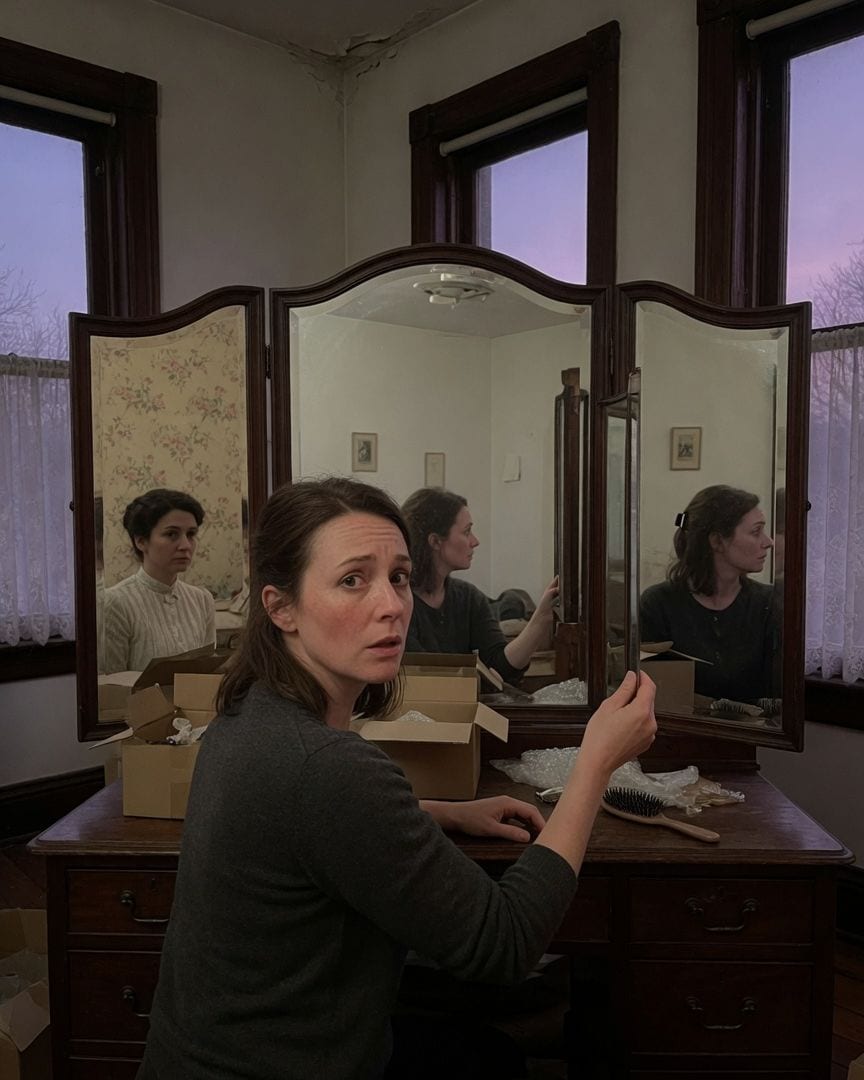
My dressing table mirror shows a woman in a high-necked blouse, doing her hair in a room papered differently from mine. She moves a half-second late, catching up to a memory of the gesture.
Settling into my inherited, old house, I found myself drawn to an antique dressing table with a three-winged mirror. But when I angled the mirror, it showed a woman from another time, brushing her hair in a room unlike my own. Her every movement in the reflection was a half-second too slow, an unsettling temporal stutter across the decades.
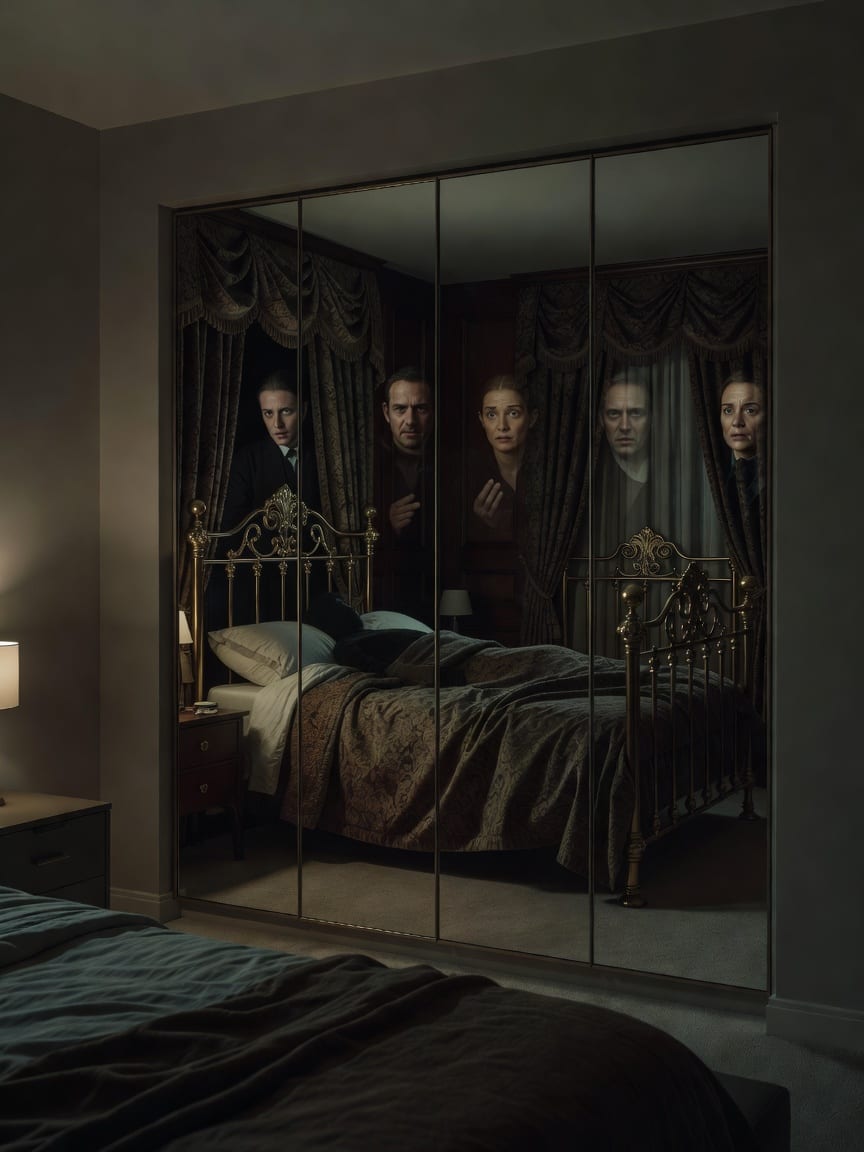
My bedroom mirror shows a Victorian room, not mine. The figure asleep in its brass bed doesn't move, even when I sit up watching.
I woke up before dawn to find my new bedroom mirror reflecting something impossible. Instead of my own room, it showed an old, shadowy bedroom with a figure lying perfectly still in a massive brass bed. Every morning near four, the same scene appears, along with a faint, sweet, medicinal scent.
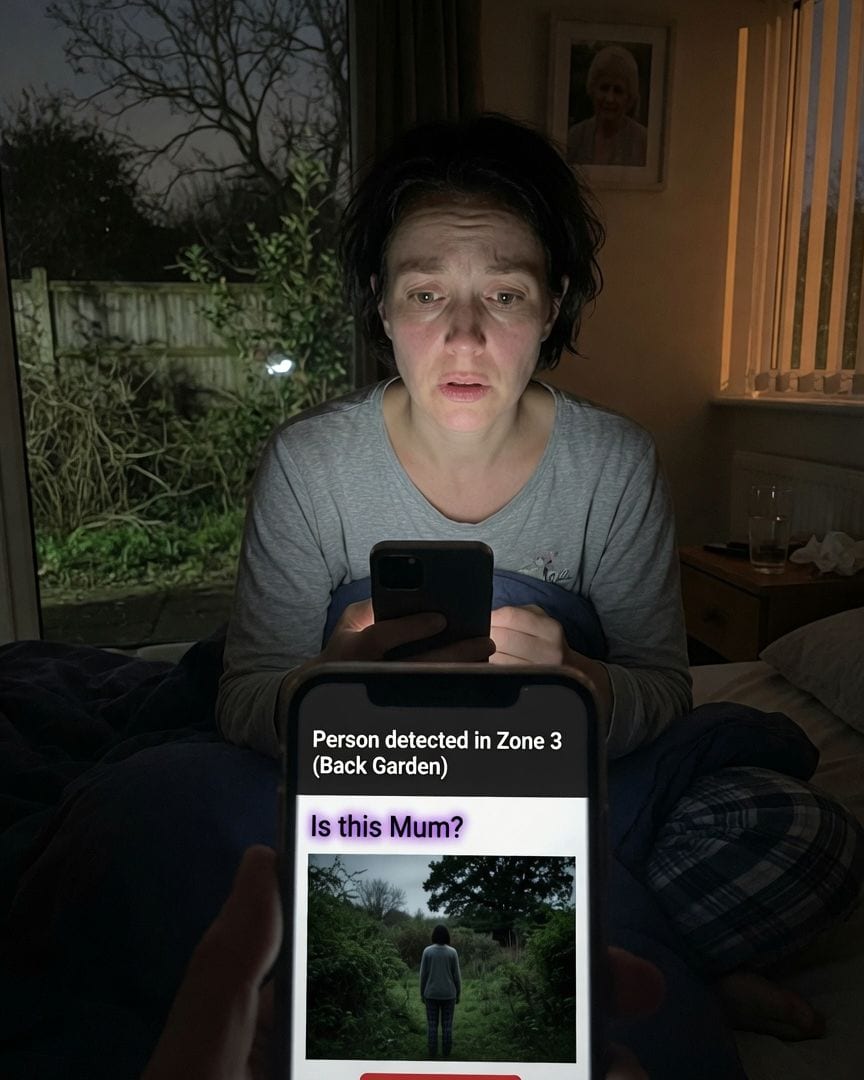
My security camera sent a clip at 3:03 AM: a woman standing in my back garden. The subject line read, 'Is this Mum?' My mother died here in March.
My phone pinged at 3 AM with a security camera alert, interrupting the deep quiet of my house. The attached clip showed a still figure in the back garden, but the subject line froze me. It asked, 'Is this Mum?' My mother died here in March.
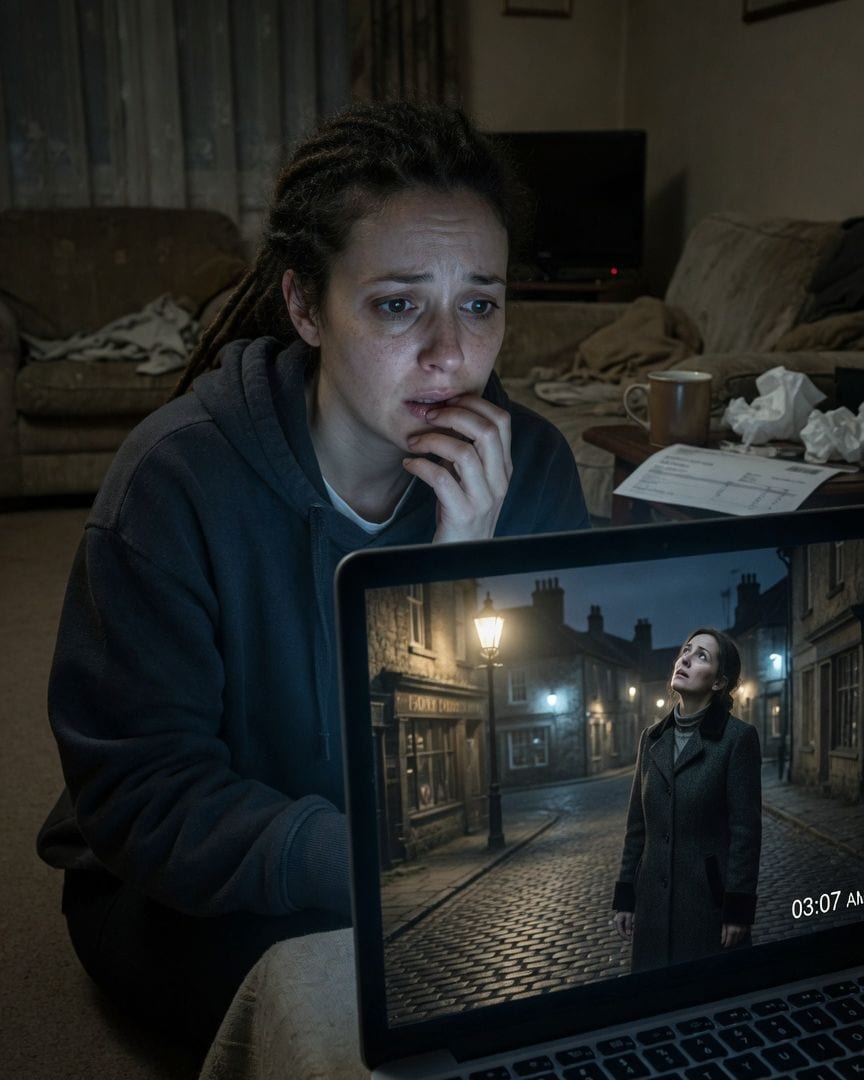
My aunt's coat walked into the village square at 3 AM. The webcam caught her looking straight into the lens, two weeks after we buried her in it.
Staring at my village church webcam at 3 AM, the square was deserted and quiet. Then a figure emerged, wearing the distinctive wool coat my Aunt Constance was buried in just two weeks ago. She paused, then slowly tilted her head up, looking directly into the camera lens, right at me.
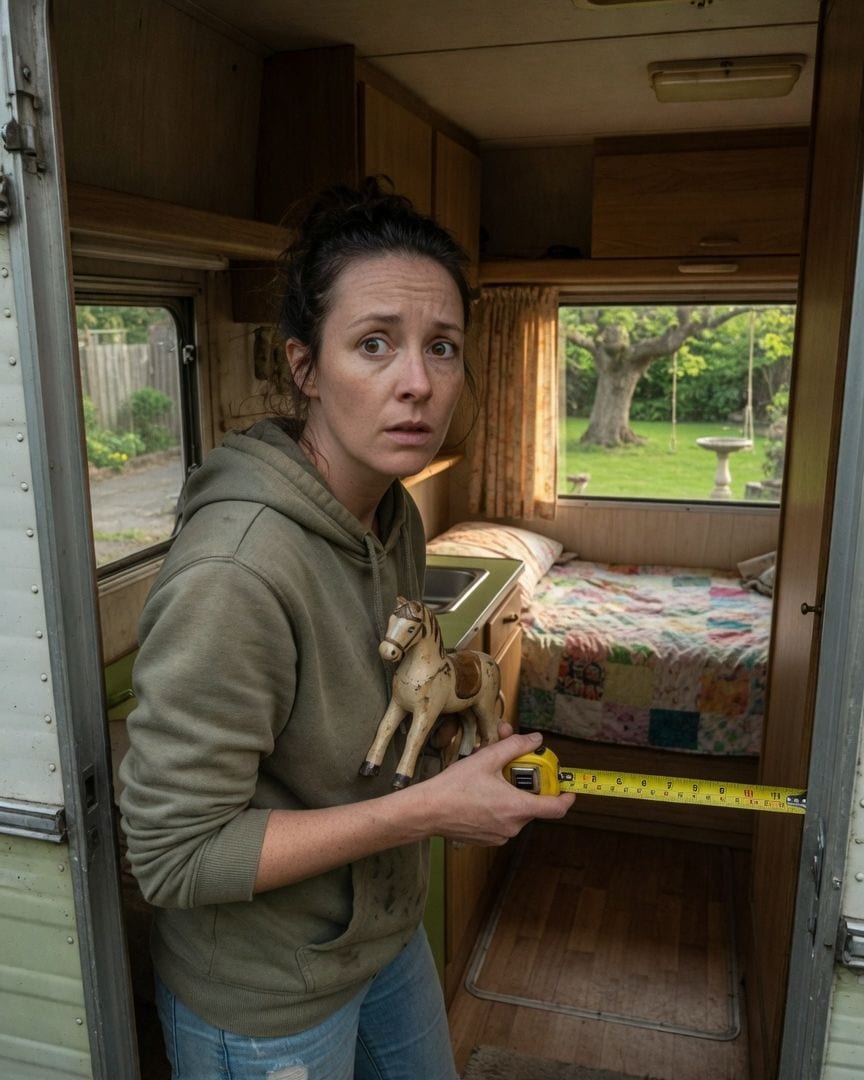
My new caravan's corridor runs longer than the caravan itself. Eleven feet of hallway past the end wall, to a room with a made bed and a window looking out on a garden it's never been parked in.
I finally bought my dream vintage caravan, a twelve-foot beauty. But when I measured inside for a mattress, the numbers didn't add up. Beyond where the wall should be, an impossible room with a window looked out onto a manicured garden I'd never seen before, a garden that couldn't possibly exist.
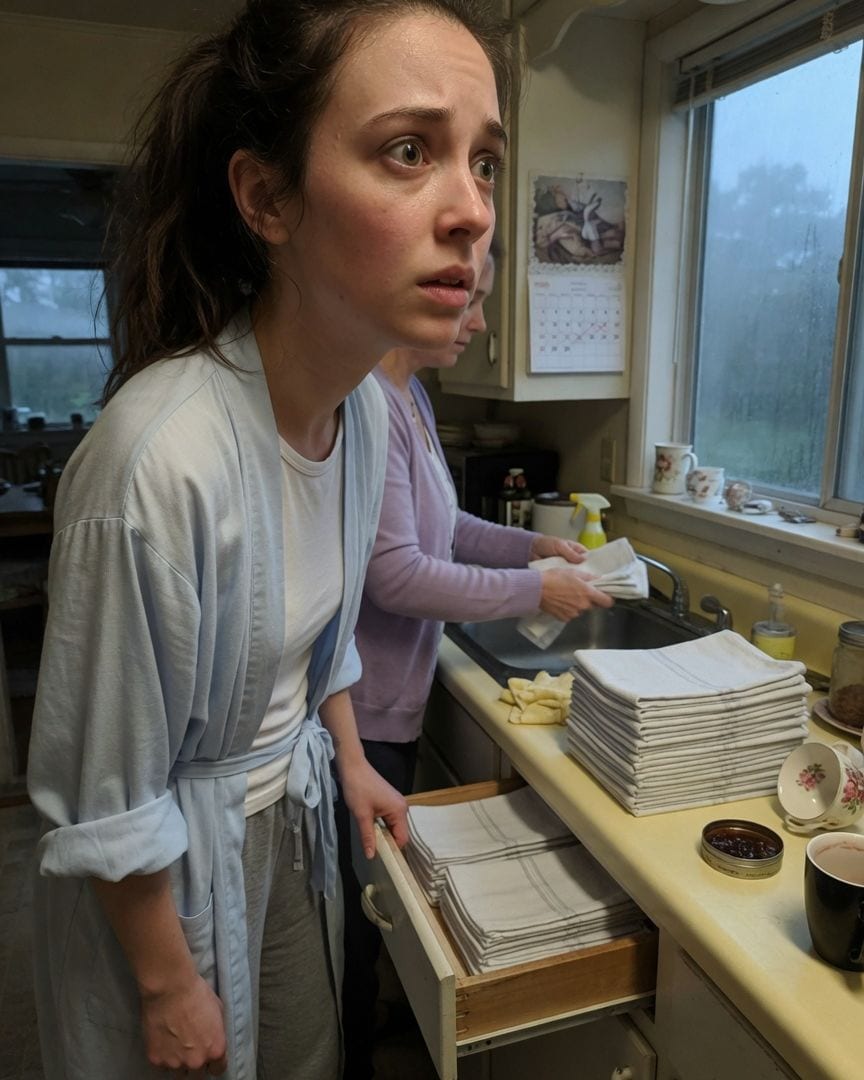
My mother's left wrist has a new scar. She never had one there.
My mother is finally home after her disappearance, and I'm trying to find our old rhythm. But then I watch her fold tea towels, a simple ritual I learned from her. She's doing it completely wrong, seam-out, insisting it's how she's always done it.