The butcher's back hook always hangs empty, draped with a red cloth. It holds a standing order since 1911 for the Hall, which burned down before the first war. The meat is gone every Friday, but no one's seen a cart.
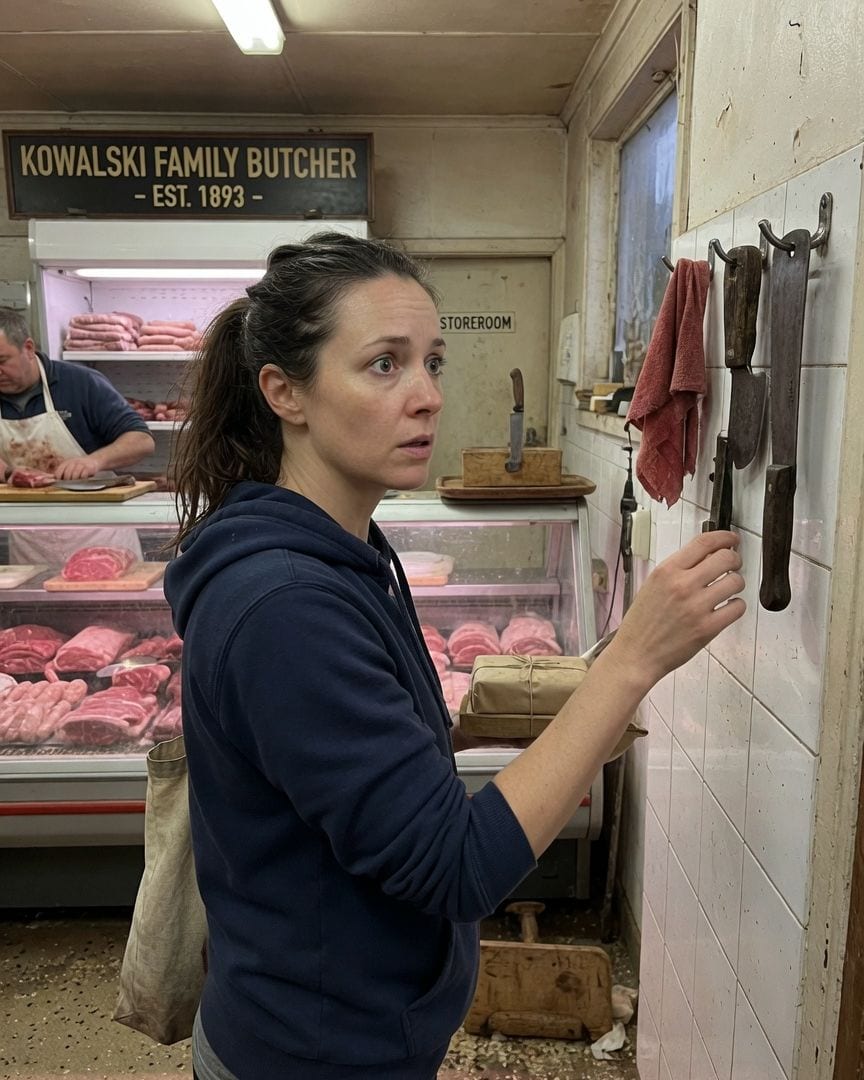
I remember my first time in Oscar Kowalski’s butcher shop. It was six months after I’d moved to Longnor, and I was still figuring out the local spots.
The place was straight out of a postcard – gleaming white tiles, sawdust on the floor, the heavy scent of fresh cuts and something vaguely metallic. I needed somewhere to hang my reusable canvas bag while Oscar prepared my order.
My eyes scanned the wall and landed on a single hook at the very back, tucked away near a display of old, dusty cleavers.
It was conspicuously empty, draped with a small, faded scrap of red cloth, almost like a miniature flag. It looked sturdy, practical.
I reached for it, my fingers already brushing the rough fabric.
Oscar, who had been meticulously slicing a sirloin on a thick wooden block, froze. The heavy thud of his knife hitting the block made me jump.
'Not that one, dear,' he said, his voice surprisingly sharp, cutting through the quiet hum of the refrigerated display. His eyes, normally crinkled with good humour, were wide, almost startled.
He quickly gestured with his cleaver to another, perfectly functional hook right next to it. 'That one’s… reserved.'
He recovered quickly, a forced smile stretching his lips, but the abruptness of his reaction left a prickle of unease on my skin. He chuckled, a thin, dry sound.
'Old family tradition, you know how it is in these small towns.'
I stammered an apology, pulling my hand back, and hung my bag on the innocuous hook he’d indicated. But as he wrapped my chicken breasts and joked about the changeable weather, I couldn't shake the question.
Why was that one hook, out of all the others, 'reserved'? What could be so special about an empty hook in a quiet village butcher shop? It felt… wrong. A tiny, misplaced detail in an otherwise perfectly normal scene.
The question nagged at me. Later that week, I needed more sausages, so I returned. Oscar was busy with Mrs. Henderson, a woman who seemed to know everything about everyone in Longnor.
While he was distracted, weighing out pork chops and exchanging gossip, my curiosity got the better of me. I glanced at the 'reserved' hook again.
It was still empty, the red cloth fluttering faintly, almost imperceptibly, in a draft I couldn't feel anywhere else in the shop. It hung there, a silent sentinel, its purpose a mystery.
As I paid for my order, I watched Oscar carefully. He moved to the back, near the door that led to a small, cluttered storeroom.
He slipped a small, rectangular parcel, distinct from my own order, onto a sturdy wooden tray.
It was wrapped in plain, thick brown paper, tied meticulously with twine, and looked like a specific cut of meat, but it had no label, no price sticker. It simply sat there, waiting. He didn't seem to be expecting anyone.
Back home, unpacking my groceries, I found a loose piece of butcher paper tucked into the bottom of my bag. It wasn't the kind he usually used for my specific cuts; this was rougher, older, almost brittle. I unfolded it.
On it, in a spidery, faded hand, was a single line of script: 'Hall – Usual – Mon/Fri – Since 1911'. Below it, scrawled in what looked like the same hand, was an odd addendum: 'Never seen a cart.'
I frowned, holding the paper under the kitchen light. Longnor Hall. I knew about that. It was the big estate manor that had burned down in a catastrophic fire over a century ago.
I’d read about it in the local history pamphlet I’d picked up at the council office when I first arrived. Nothing but overgrown ruins now.
Why would a butcher, even an old family business like the Kowalskis, have a standing order for a place that no longer exists?
And who would write such a cryptic note, specifically stating that the order was 'never seen a cart'? It was like someone was documenting a ritual, but also its inherent impossibility. My earlier unease sharpened into something colder.
I couldn’t shake the cryptic note. My mind raced, trying to rationalize it away. An old family joke, perhaps? A piece of paper that had simply slipped from an ancestor's records and found its way into my bag by chance?
Maybe Oscar kept old records for sentimental reasons. But the feeling of wrongness, the slight chill I’d felt in the shop, persisted.
I pulled out my phone and searched for old maps of Longnor. I found a digitized scan of an early 20th-century ordnance survey map, dated just a few years before the 1911 fire.
Zooming in, I located the sprawling grounds of Longnor Hall, its grand outline still visible before its destruction. As I scrolled, something odd caught my eye.
A faint, almost imperceptible sketch is overlaid on the map, focusing on a specific spot within the now overgrown grounds, roughly where the old service entrance would have been.
And then, my blood ran cold. Scrawled directly onto the scanned map, in what looked like the exact same spidery, faded hand as the note, was a small, crude drawing of a hook. It was unmistakable.
The very hook at the back of Oscar’s shop, the 'reserved' one with its scrap of red cloth. And beneath it, stark and ancient, a single, terrifying word: 'WARNING'.
The 'WARNING' scrawled on the map hit me like a physical punch. It pulsed in my mind, an unseen alarm bell.
I spent the next few days in a daze, the image of that empty hook, its red cloth, and the ominous word burning behind my eyes. I tried to talk myself out of it. It had to be a coincidence.
An old local’s eccentricity. But I couldn't ignore the coherence: the date on the note, the connection to the burned-down Hall, Oscar's sharp reaction, the uncollected parcel.
I even tried casually mentioning Longnor Hall to Sean Merritt, my colleague at the council office. 'Just old ruins, isn't it?' he’d said, shrugging, his eyes glued to his monitor.
'Heard some old story about it, but nothing worth bothering with.' He was no help.
Unconvinced, I started visiting the local historical society after work. I posed as a history enthusiast, explaining I was new to town and fascinated by its past. I requested archives related to the 1911 Longnor Hall fire.
The records confirmed the fire had been catastrophic, leaving nothing but foundations and charred earth. A small aside mentioned the Kowalski family having been the town's butchers for 'generations,' serving the Hall and the surrounding estates.
Then, I shifted my approach. 'Are there any unusual local customs or legends tied to the Hall?' I asked the archivist, a stern but polite woman named Florence Hartley.
She was in her seventies, with shrewd eyes that seemed to take in everything. She gave me a long, appraising look over the rim of her spectacles.
'There are always stories, dear,' Florence said, her voice dry, barely above a whisper. 'Longnor is an old place. But stories are just that.'
I pressed on, emboldened by my discovery, mentioning the 'standing order' I’d heard about. Florence’s expression didn't change, her face a mask, but her eyes, those sharp, knowing eyes, lingered on me for a beat too long.
A cold dread seeped into the air around us, a chill that had nothing to do with the library's ancient walls. She simply returned to her cataloguing, her silence a heavy curtain.
Leaving the library, I decided to take a walk along the 'old road' that once led directly to the Hall. It was now overgrown, barely a path, more like a deer trail winding through dense woodland.
As dusk gathered, painting the sky in bruised purples and greys, I saw a figure in the distance. They were partially obscured by the skeletal branches of the trees, moving slowly, deliberately, along the path towards the ruins.
It was too far to make out who it was, but the figure carried something small, rectangular, wrapped in plain brown paper. The same kind of parcel Oscar had put on the tray. My blood went cold.
The sight on the old road sent a fresh wave of dread through me, chilling me to the bone. I hurried away, heart hammering, every rustle of leaves sounding like footsteps behind me.
I couldn’t shake the feeling of being watched, of having stumbled onto something I shouldn’t have.
The very next morning, Oscar Kowalski was at my door. Not with a delivery, not for a chat, but with an odd, almost furtive request.
He stood on my porch, twisting his flat cap in his hands, his gaze fixed on his worn shoes.
'Miss Abbott,' he began, his voice softer than usual, 'My son, he mentioned you were asking after old Longnor Hall at the archives.' He cleared his throat, a dry, rasping sound. 'Some things are best left undisturbed, you know.
Old stories… they don't always take kindly to being dug up.'
His tone was gentle, almost pleading, but his eyes, when they finally met mine, held a deep, unsettling seriousness. I felt a chill that had nothing to do with the morning air.
How did Oscar know I was at the archives? My visits had been discreet. And why did he seem so genuinely worried, almost afraid? I tried to play it off, forcing a casual smile.
'Oh, I was just curious about local history, Oscar. Longnor's got such a rich past.'
He just nodded slowly, his gaze drifting over my shoulder, as if looking past me into my house. 'Just be careful, Miss Abbott. Especially around Friday evenings.' The words hung in the air, heavy and full of unspoken meaning.
He didn’t elaborate. He simply turned, a man burdened by an invisible weight, and shuffled down my garden path.
I watched him go, then looked down at my doorstep. A faint, earthy smell clung to the wood, like damp soil and something else I couldn't quite place – something raw, animal, but not quite.
I looked down the street, but Oscar was already gone, swallowed by the morning fog. I knew then that my investigation hadn’t just been noticed; it had been acknowledged.
Oscar's warning was far more direct and personal than his earlier dismissal of the 'reserved' hook. It was a warning meant for me.
The next Friday, I couldn’t bring myself to ignore Oscar’s warning, or the image of the figure on the old road. Just before closing, I drove past the butcher shop, my engine idling, barely daring to look.
Through the steamed-up window, I saw Oscar. His back was to me, broad and hunched as he went through a familiar, almost ritualistic motion.
He placed a small, brown-wrapped parcel onto the 'reserved' hook, carefully unwrapping the red cloth from around his wrist, where it must have been tied, and retying it around the hook itself.
He then closed the shop, extinguished the lights, and locked up, without waiting for any collection. The parcel just hung there, alone in the dim shop.
I had to know. The following Monday, I returned to the shop, the crumpled 'Hall' note and the map with its 'WARNING' burning a hole in my pocket. 'Oscar,' I said, my voice tight, forcing myself to be calm.
'I need to know about the Hall. And that hook.'
Oscar sighed, a deep, shuddering sound that seemed to carry the weight of generations. His shoulders slumped, and he looked older, wearier, than I’d ever seen him.
He nodded slowly, then led me to the back, past the refrigerated displays and the gleaming knives. From under the counter, he pulled out a heavy, leather-bound ledger. Its pages were thick, yellowed, filled with neat, looping script.
His family's order book, going back generations.
He flipped to a specific page, his finger tracing a line. 'The Hall,' he said, his voice flat, devoid of emotion. 'The usual. Every Monday, prepared. Taken every Friday. Since 1911.'
I saw the consistency, the unbroken line of entries stretching back through the years, a perfect, chilling record. 'But the Hall burned down!' I insisted, the words a desperate plea for reason.
Oscar looked at me, his eyes weary, haunted. 'The building burned, Miss Abbott. What was underneath it… that just got exposed. Our family has always seen to it. The offering.'
He gestured vaguely towards the empty hook now, the red cloth a silent witness. 'It's a way to keep things quiet. To keep it… fed.' His voice dropped to a whisper. 'The red cloth? It's a marker.
So no one else ever touches it. Until you did.'
A wave of nausea washed over me. The 'meat' isn't for a phantom customer, a nostalgic joke. It was for something real. Something ancient. Something the town, through Oscar’s family, had been appeasing for over a century.
The warning on the map, the figure on the old road, Oscar’s earlier distress – it all snapped into horrifying focus. It wasn't about an old building. It was about what had been under it.
Reeling from Oscar's confession, I demanded to know more. My mind raced, trying to comprehend the sheer scale of the deception, the hidden ritual. Oscar, however, was tight-lipped, his face once again a mask of quiet resignation.
He only repeated that 'it keeps the town safe,' his gaze distant, as if seeing things I couldn't.
Desperate for answers, I returned to Florence Hartley at the historical society the next morning. My hand trembled as I clutched a crumpled photograph I’d taken of Oscar’s ledger entry.
Florence took the photo, her expression unreadable, her gaze lingering on the dates, the unbroken chain of 'Hall – Usual'. 'So, Oscar finally told you some of it,' she said, almost to herself, her voice betraying no surprise.
A faint, knowing smile played on her lips, a smile cold enough to freeze the room.
She then rose, moving with a surprising agility for her age, and walked to a locked wooden cabinet I hadn't noticed before.
With a faint click, she opened it, retrieving another, much older, ledger – its heavy, vellum pages yellowed and brittle with age. The leather binding was cracked, the gold leaf long since worn away.
She opened it carefully, almost reverently, on the reading table.
'This is the town council's own record,' Florence stated, her voice calm, devoid of judgment. 'Going back to before the first Hall was even built. You see, the Kowalski family has always managed the 'offerings.'
But before 1911, the 'sustenance' they provided was… different. More personal.'
She pointed to an entry from the late 1700s, barely legible. It detailed a 'tithe' from the local population, a 'seasonal appeasement for the Hall's continued dormancy.' My breath caught in my throat.
The names listed under 'tithe' are all local families, some still in Longnor. The dates are cyclical, recurring every few years, coinciding with harvest festivals or winter solstices. And the 'sustenance' was clearly not animal meat.
The descriptions were vague, euphemistic, but unmistakably referred to human individuals.
Florence looked up, her gaze unwavering, her eyes holding an ancient, terrible knowledge. She closed the old ledger with a soft thud, the sound echoing unnervingly in the quiet room.
'It's been a long time since we had to make that kind of offering,' she says, her voice flat, chilling. 'But the Hall always gets its due. One way or another.'
I recoiled from the ledger, the implications of 'a different kind of sustenance' and 'tithe' slamming into me with sickening force. 'What do you mean, 'personal'?' I whispered, my voice barely audible, the words tasting like ash.
The library air felt impossibly heavy, pressing down on me.
Florence Hartley closed the old book, her movements deliberate. 'Before the fire, the Hall contained a deeper part of the entity. It required… human lives. Not often, but regularly enough to keep it from taking more.
The town council records, though coded, detail the 'disappearances' and 'accidents' that coincided with the 'tithe' dates. The Kowalskis, as the keepers of the land and its secrets, provided the conduit. They delivered the offerings, then as now.
When the Hall burned, the entity was partially released, its hunger changing. It could no longer take directly, not as it had. But it remained, a gaping emptiness beneath the ruins, a consuming presence.'
She continued, her voice devoid of emotion, a simple recitation of fact. 'That's when Oscar's great-grandfather, with the help of the then-council, devised the 'meat' offering. A substitute.
A weaker form of appeasement, but enough to keep it from reverting to its old hunger. A ritual to contain it. The hook was always the point of transfer, the conduit for the offering.'
Her gaze fixed on me, sharp and piercing. 'You, Miss Abbott, by using that hook, you’ve not just broken a rule. You've introduced a new scent, a new vulnerability. The entity knows you're here. It knows you interfered.'
Every clue clicked into place with horrifying precision: Oscar's agitation, the stark 'WARNING' on the map, the figure on the old road, the precise dates in the ledgers, the strange parcel. It wasn't superstition; it was a desperate, fragile peace.
A bargain struck by generations to keep a nameless, ancient horror at bay. And I had shattered it.
Florence's words hung heavy in the suffocating air of the historical society. I felt a primal fear, not just for myself, but for the whole town, for every unsuspecting soul living under this unspoken pact. 'What do I do?'
I asked, my voice trembling, the question a desperate plea.
Florence looked at me, her gaze chillingly calm, as if she were simply stating an inevitable truth. 'The offering must continue. And now, perhaps, it needs to be… strengthened. You’ve disturbed the balance. You are now part of it.'
I stumbled out of the historical society, the ancient ledger's pages, with their terrible truths, burning in my mind. The casual buzz of the town, the friendly faces of passersby, all seemed a grotesque lie.
I drove frantically towards the old road, towards the ruins of Longnor Hall. I had to see it, to understand what I had unleashed.
The sun was setting, casting long, skeletal shadows from the trees that lined the winding, overgrown path. The air grew colder with every mile, thick with the scent of damp earth and something else—something acrid, metallic, like an old wound.
As I approached the overgrown foundations, I saw it. Not a building, but a gaping maw in the earth, a natural fissure that seemed to breathe cold air, a dark void that swallowed the dying light.
And by its edge, on a flat, ancient stone, lay the brown-wrapped parcel. The one I saw Oscar place on the hook. It was torn open, its contents gone.
A faint, almost imperceptible tremor ran through the ground beneath my feet, a vibration that resonated deep in my bones.
A low, guttural hum seemed to emanate from the fissure, a sound like a vast, unseen engine idling beneath the world. I backed away slowly, my heart hammering against my ribs, each beat a frantic drum against the growing silence.
I felt a cold presence reaching for me, a hunger that went beyond physical appetite, a mental pressure that threatened to crush me.
I knew. I broke the rule. And now the price was being collected.
I turned to run, but my legs felt heavy, leaden, rooted to the spot. The hum intensified, a silent scream in my mind, an invasive, consuming pressure.
A shadow detached itself from the deepening twilight, not a form, but an absence of light, a moving void that had a terrifying purpose.
It drifted towards me, consuming the last vestiges of the fading light, leaving only the cold and the hum.
Megan Abbott was reported missing by her colleague, Sean Merritt, three days later. Her car was found abandoned on the old road leading to Longnor Hall, doors unlocked, keys still in the ignition.
The police conducted a thorough search of the area, including the overgrown ruins, but found no trace of her. Oscar Kowalski was questioned but offered little beyond his usual routine, muttering about 'old traditions'.
Florence Hartley confirmed Megan's interest in local history but had no further information. The town quietly returned to its rhythm, a familiar hush settling over Longnor once more.
The local newspaper ran a small article about Megan Abbott's disappearance, eventually moving on to other news. Life in Longnor continued, punctuated by the weekly rhythm of Oscar Kowalski's butcher shop.
Every Monday, the standing order for the Hall was placed on the red-draped hook. Every Friday, the parcel was gone.
And every week, Oscar continued to tell new visitors about the town's history, always gently waving them away from that one particular hook. He'd smile, a faint, almost imperceptible smile, and say, 'Some things are just reserved.'
Months later, Sean Merritt, still troubled by Megan's disappearance, visits Oscar's shop. He notices the red cloth on the back hook looks a little newer, a little brighter. He asks Oscar if he's seen anything, heard anything.
Oscar just shakes his head. 'No, Sean. Nothing at all.' He then turns to prepare a fresh cut, humming a low, tuneless melody. Sean notices the butcher's hand, holding the knife, has a faint, almost unnoticeable tremor.
And the smile Oscar gives him is just a little too wide, a little too calm. He just looks at Sean, and says, 'Is that so?' with a faint, wrong little smile.
If this one got to you
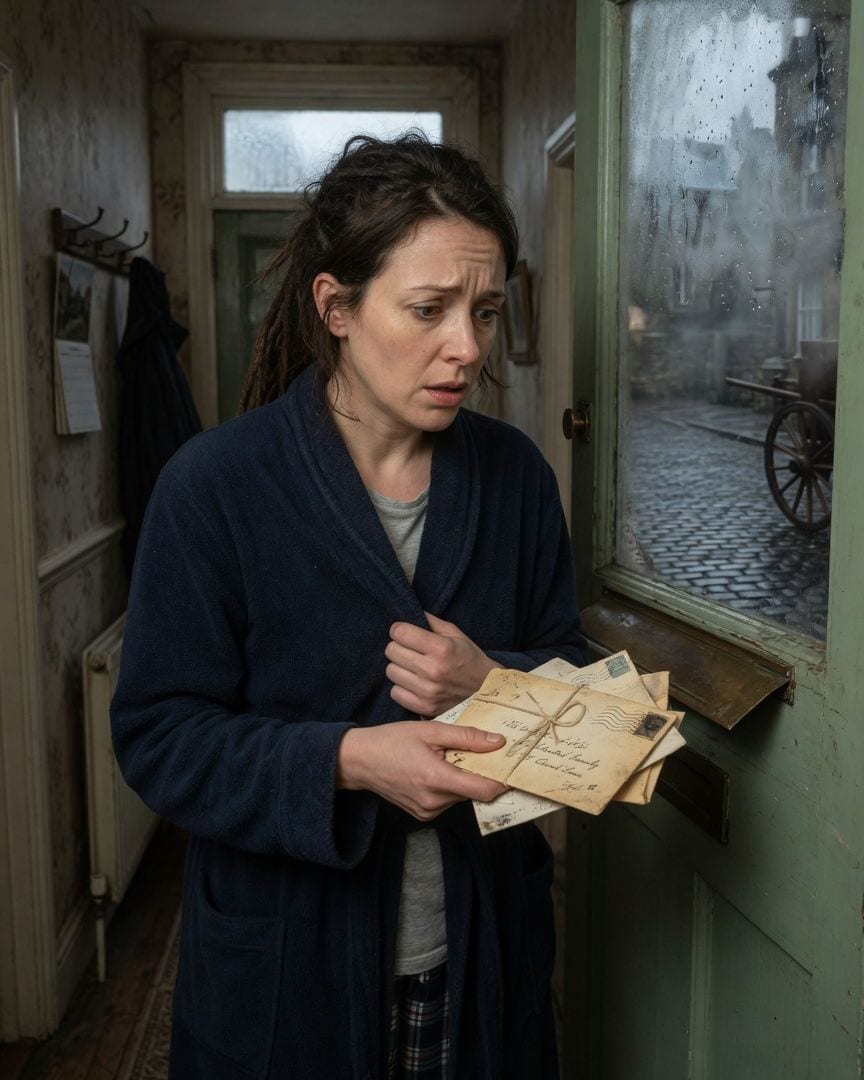
Seventy years ago, a hidden journal recorded my door opening to the wrong street and receiving Lockwood post.
I'd only recently moved into my inherited house, a quiet place on the edge of town. One grey morning, a distinct clatter from the front door's post flap caught my attention. Reaching down, I expected my gravel path, but instead, the flap showed a dark, cobbled street that wasn't mine. A bundle of warm, old letters, addressed to 'The Lockwood Family,' slid through, before the vision flickered and was gone.
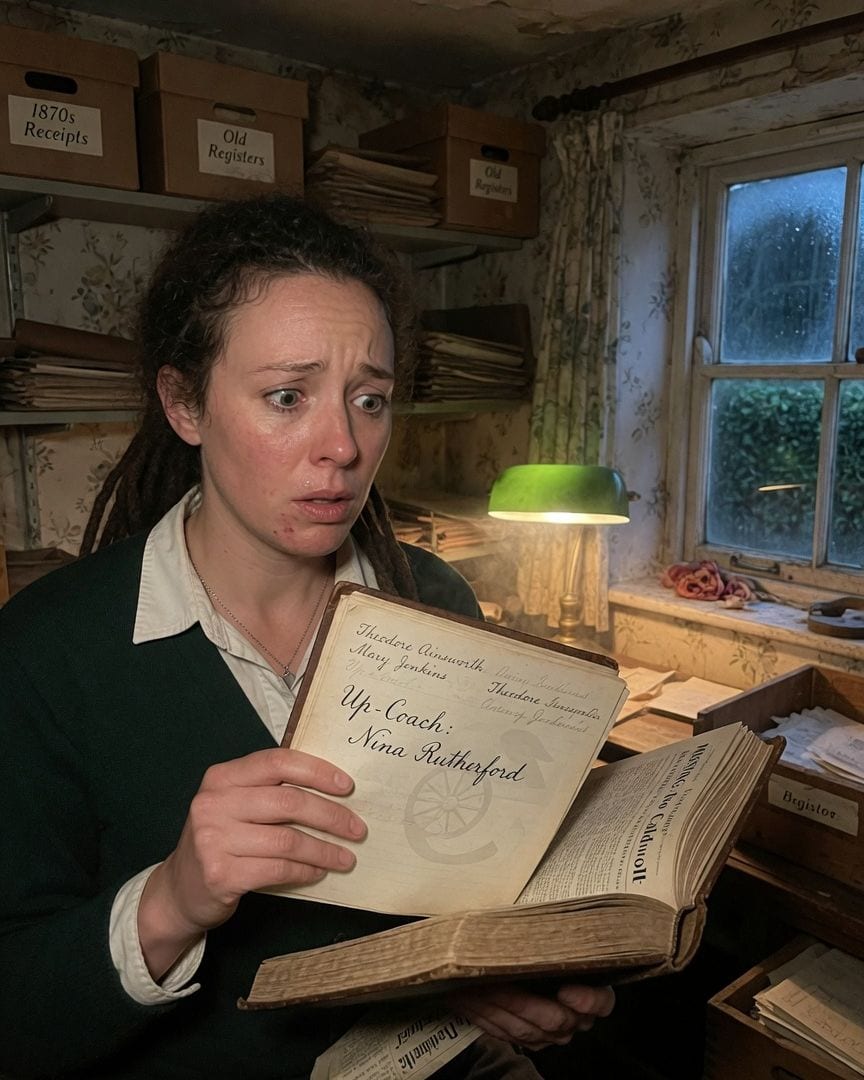
The old inn's arrivals book logs a vanished girl's name. She disappeared two months ago, but the ledger says she checked in last week.
As the new owner of The Angel Inn, I cherished its ancient history. But one evening, while tidying the old arrivals book, I found a chilling entry: Nina Rutherford, a local girl who vanished two months ago, was logged as checking in last week.
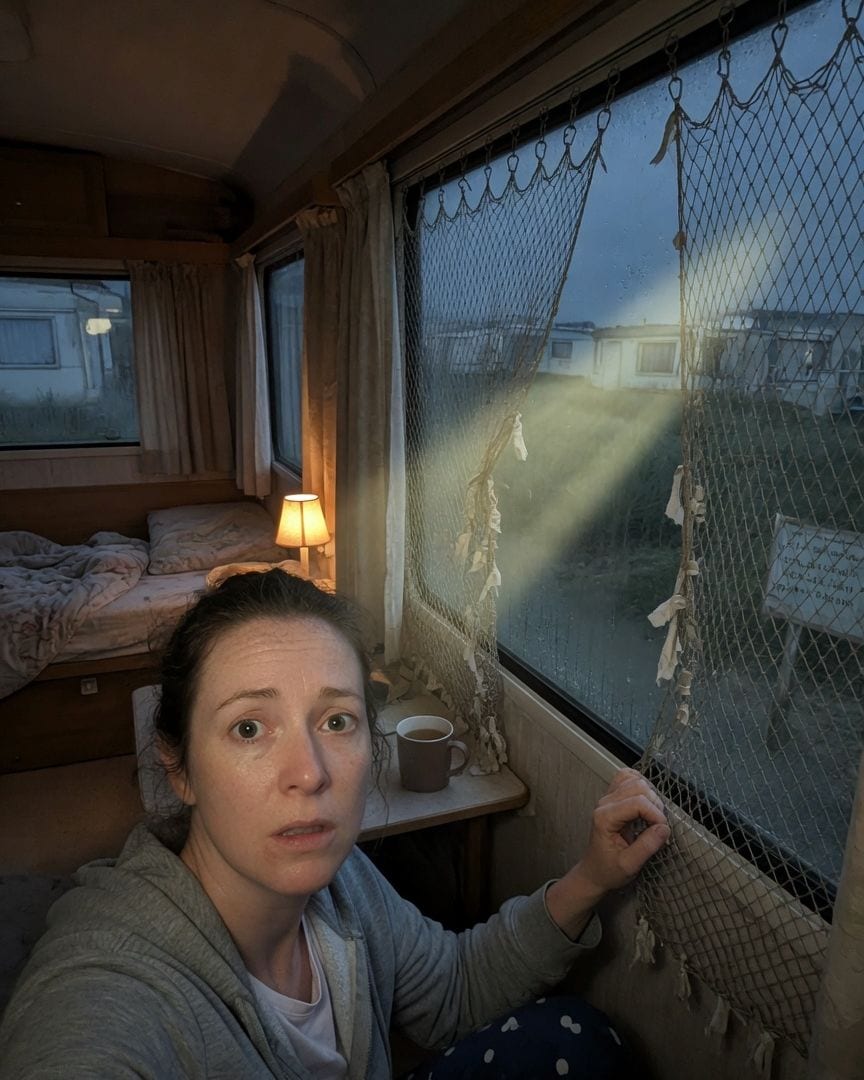
My caravan's seaward curtain was wide open. Fifteen minutes later, it was drawn tight, the hooks ripped outwards from the sea.
I arrived at Seawall Sands Caravan Park, looking forward to quiet nights by the sea in my caravan, number 14. An old sign mentioned a rule to draw seaward curtains by nine, but I forgot. I woke to find my curtain, left open, now tightly closed, its metal hooks ripped outwards from the sea side.
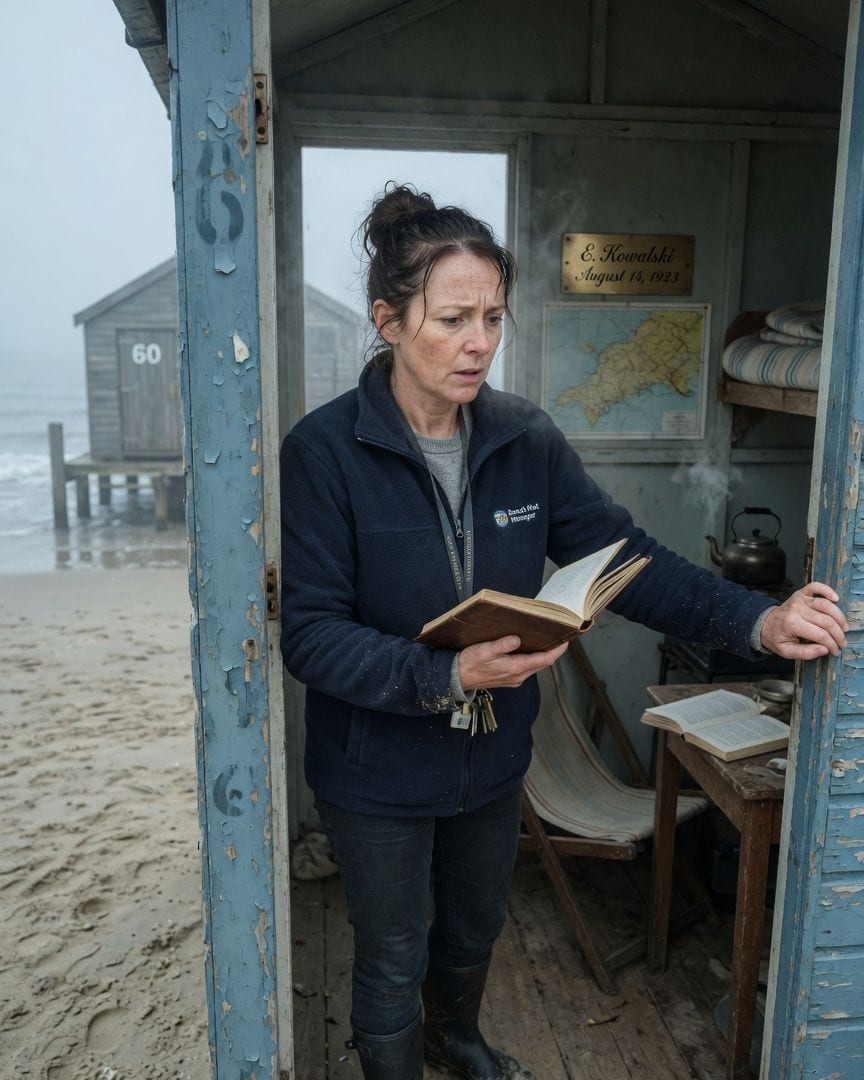
My beach hut row now has Hut 61, but it's not in my books. Inside, a kettle steams, and a plaque on the wall bears my family name, dated 1923.
As manager of the council's sixty beach huts for ten years, I knew my route blind. But on my usual morning walk, nestled against the groyne beyond Hut 60, stood a Hut 61. It looked decades old, just like the others, yet my ledger held no record of its existence.
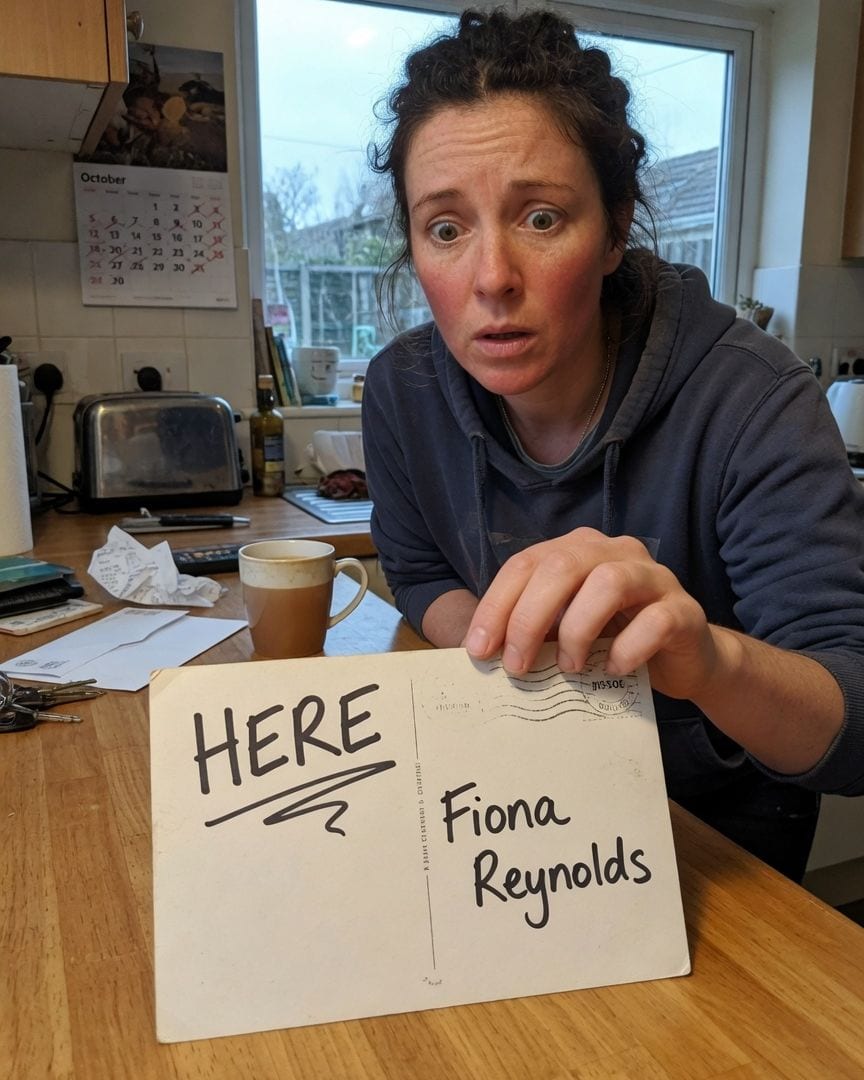
My dead brother's handwriting keeps arriving on cards, postmarked from the level crossing where he died. He never wrote to me.
The first card arrived from my brother, James, a week ago. He died fifteen years ago, but his distinctive handwriting was undeniable, each message postmarked from Bissoe, the site of his death. Now the third card, 'HERE,' makes me question everything I thought I knew.
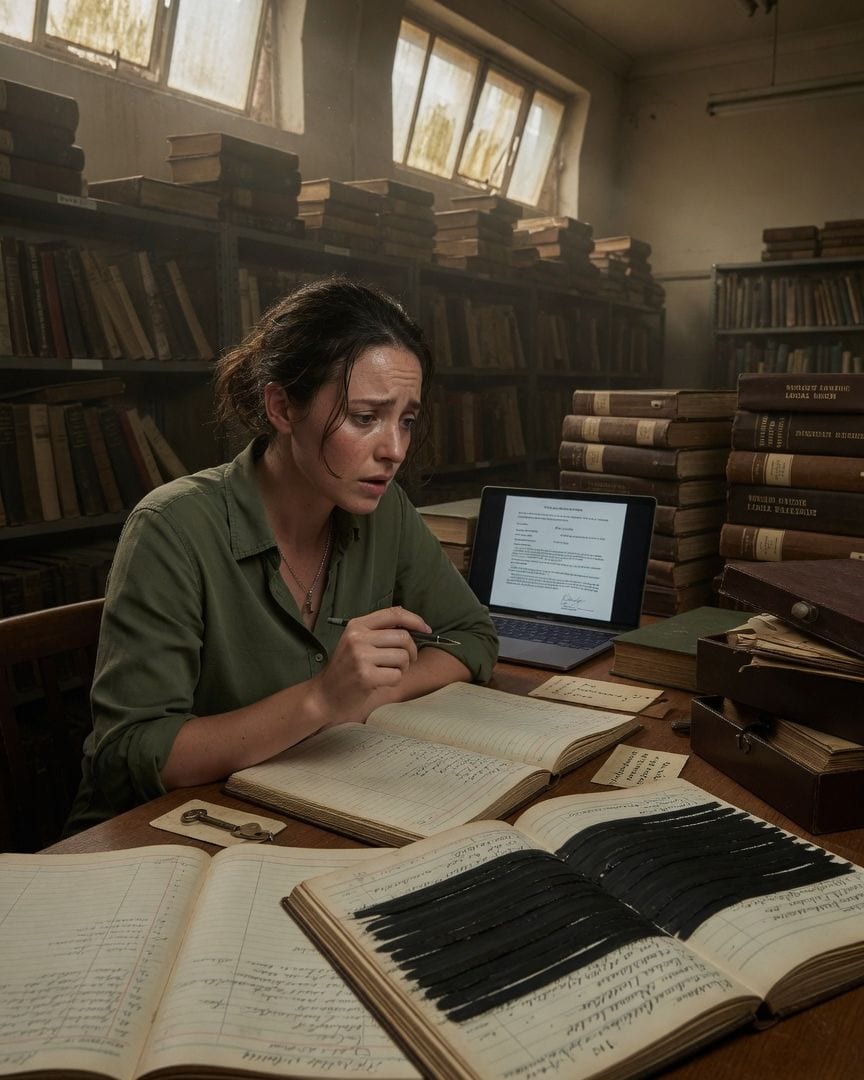
My grandmother’s name is on a blacked-out line from a 1954 drowning inquest, on our street, with a note: 'do not send a second notice.'
Transcribing old inquest registers in the quiet archive was a routine task, until I found a 1954 entry for an accidental drowning. The next of kin line was savagely blacked out, but the faint impression underneath named Patricia Kingsley, my grandmother. Her address was listed on Weir Lane, eleven years before she ever lived there, alongside a chilling note: 'do not send the notice a second time.'