My car ran a red light at 9:41 PM in a town I've never been. The photos show my exact plate, my roof rack. I was speaking at city council, across the state.
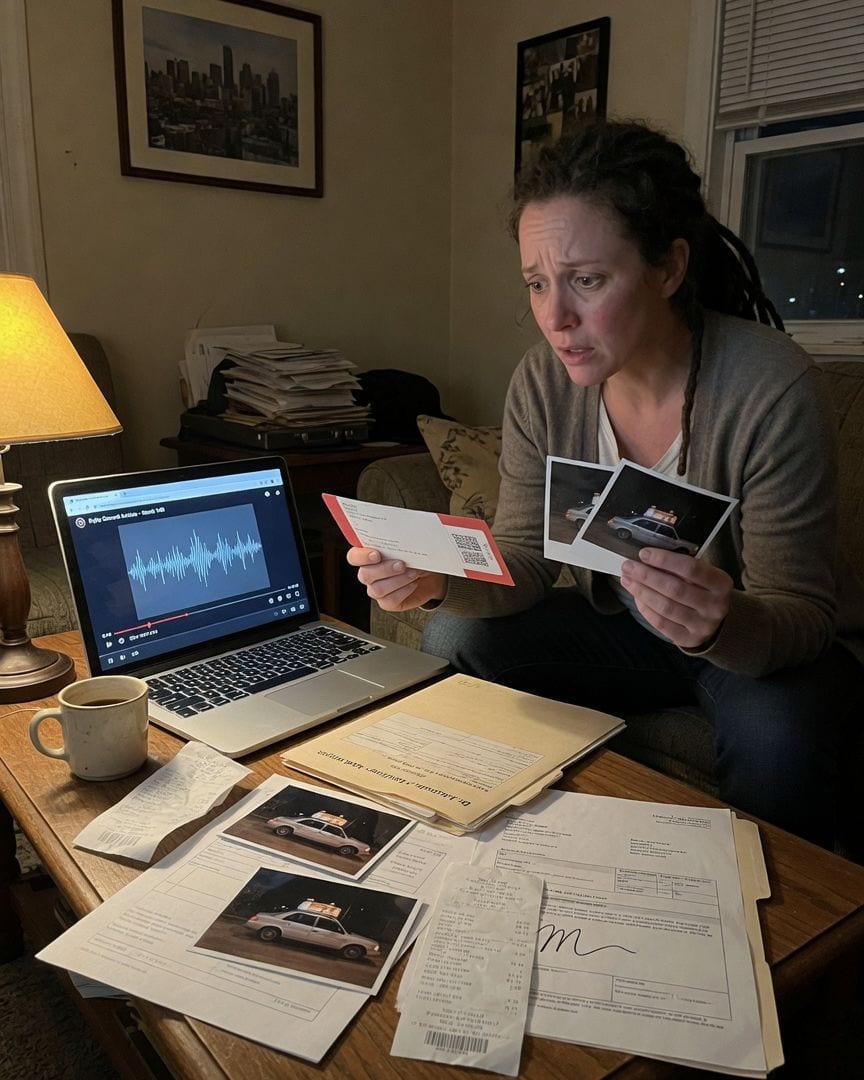
The red-light camera ticket arrived in the mail, a crisp, official insult. I stared at the three grainy photos, my breath snagging in my throat.
My car, unmistakable with the custom roof rack I’d installed myself, was sailing through a downtown intersection. The timestamp read 9:41 PM. I knew, with a certainty that chilled me to the bone, that this was impossible.
That evening, I’d been three hundred miles away, in another city entirely, standing at a podium at a city council meeting.
I pulled up the meeting's public record, my laptop screen glowing in the dark living room. My own voice, amplified and slightly tinny, filled the silence, captured in the audio archives, timestamped and clear: "…thank you for your time tonight.
I urge you to consider…" It was 9:37 PM when I started, 9:42 PM when I finished. Exactly when my car was supposedly speeding through a town I’d never driven through, a town I’d only vaguely heard of.
The physical ticket, the undeniable proof of my presence in two places at once, felt like a cold stone in my gut, a record insisting on a truth that simply was not mine.
I spent days trying to dispute the ticket. Phone calls, emails, explaining the public record. Each attempt met with polite, unyielding bureaucracy.
The woman on the other end of the line, her voice flat and practiced, repeated the same phrase: "Ma'am, the photos are clear, the plate matches, the fine stands."
My protestations about being across the state, my detailed account of the city council meeting, were met with a patient silence that suggested I was either lying or delusional. The photos remained, concrete and damning.
Frustrated, I started digging through my own digital footprint, searching for any anomaly. I checked bank statements, credit card activity, the GPS history on my phone. Nothing.
My personal timeline was solid, meticulously logged by the digital trails we all leave.
My phone placed me in the correct city, my credit card showed a coffee purchase there at 8:00 PM, my email sent a work draft from my hotel room at 10:30 PM.
Then, buried in a stack of old receipts I’d meant to shred—a habit I’d never quite broken, even in the age of paperless—I found it.
Tucked beneath a grocery list from three weeks prior, almost pristine: a gas station receipt from a small town two states away, dated for the exact same night as the red-light ticket.
A small purchase, just enough for coffee and a snack. The total was only $4.75. I hadn't been there.
I’d never even heard of the town, not until I looked it up on a map, its dot appearing a hundred miles past the red-light town. A single, inexplicable receipt could be a mistake, a stray piece of paper.
Two impossible records, from the same impossible night, in two different, impossible locations, started to hum with a quiet, terrifying pattern.
The gas station receipt sent me into a deeper dive. I started scrutinizing every piece of paper, every digital record I possessed, with a newfound, obsessive intensity.
My office was soon buried under piles of bank statements, utility bills, old Amazon order confirmations.
That’s when I found it: a delivery notification for a package that had arrived at a vacant apartment building across town, dated for a week earlier.
A week I’d spent recovering from an emergency appendectomy, barely able to move from my bed, let alone answer a door. I remembered the dull throb in my side, the way even sitting up was an effort.
The delivery slip had been scanned and attached to the notification. I clicked the link, zooming in on the image. And there it was, in unmistakable black ink: my signature.
The loops, the slant, the specific way I formed the 'M,' with that little flourish at the end – it was mine. No doubt about it. My stomach clenched.
I printed the slip, my hands trembling slightly, and packaged it along with the red-light ticket and the gas station receipt.
I took them all to a local handwriting expert, a small, discreet office in a building I’d passed a thousand times.
The expert, a calm, precise woman named Dr. Albright, laid the official report out between us. The fluorescent lights hummed, making the silence feel heavy. She gestured to the delivery slip with a pen.
"Ms. Merritt," she stated, her voice even, "this is unequivocally your signature. No forgery, no imitation. It's yours."
I stared at the looping script, then at the date printed starkly beside it: March 14th. A week I spent recovering from surgery, unable to leave my bed.
Dr. Albright’s confirmation hit me like a physical blow. My own signature, on a document I couldn't possibly have signed. The rational explanations—glitch, prank, mistake—were gone, burned away by the cold, hard fact of my own handwriting.
I felt a strange lightness in my head, a vertigo of disbelief.
I began a systematic, almost frantic, audit of my entire life, every piece of paper, every digital trace. My apartment became a war room of timelines and cross-references.
I found a library book checked out in my name, in a town three hours north, six months ago – a book on advanced quantum mechanics, a subject I found utterly baffling.
I’d never even seen the book, let alone borrowed it.
Then, a small cash withdrawal from an ATM in a shopping mall I hadn't visited in years, on a Tuesday I was definitively at work, confirmed by my company's badge-in records.
The pattern was erratic, the locations scattered, the dates seemingly random, but the impossible fact remained: records of me, or my things, existing where I was not.
It was like I was bleeding into other realities, leaving behind fragments of a phantom life. I scoured online forums, deep dives into obscure corners of the internet, searching for similar anomalies.
I found faint, quickly dismissed mentions of 'ghost records' or 'doppelganger traces' – always couched in skepticism, always ending in 'debunked.' Most threads quickly went cold, their original posters disappearing or deleting their accounts.
The sheer volume of my own impossible records, however, was no hoax. It was my life, being lived by someone or something else, leaving a paper trail I couldn't outrun.
The more I dug, the more the air around me seemed to thicken, to grow still and watchful. My browser history occasionally showed searches I hadn't made, for obscure archival terms or long-defunct government agencies.
My smart speaker, usually so obedient, sometimes activated unprompted, playing static for a few seconds before going silent, like a forgotten radio tuning itself.
Then, an anonymous email landed in my inbox. The subject line was blank. The body contained only three words: 'Let sleeping records lie.'
The words weren’t a threat, but a flat, calm warning, like a librarian reminding you of the rules. I tried to reply, but the address bounced back immediately, a dead end.
A few days later, the online account of one of the 'ghost record' forum users I'd been trying to contact, a 'HansFont' who had posted some surprisingly specific theories before disappearing, abruptly vanished. His entire posting history, gone.
Later that evening, my phone rang. A blocked number. I hesitated, my thumb hovering over the answer button, a cold dread seeping into my fingers. Finally, I answered. A calm, measured male voice, devoid of emotion, spoke.
"Some things," the voice said, "are best not known. For your own sake, Ms. Merritt." The line clicked dead. The dread turned sharp, personal. My investigation wasn't just uncovering a pattern; it was being noticed.
I was no longer just hunting for answers; I was being hunted away from them. The silence in my apartment after the call felt heavy, as if the walls themselves were listening.
The anonymous warning and the chilling phone call solidified my conviction that this wasn’t a glitch; it was deliberate, or at least observed.
I redoubled my efforts to find 'HansFont,' eventually tracing a defunct email address mentioned in one of his old, archived posts to a retired archivist named Hans Fontaine.
He lived a quiet life in a small, isolated town nestled in the mountains, initially refusing to meet me. His voice on the phone was gruff, weary. "Leave it alone," he'd said. "For your own good."
I ignored him. I drove the five hours, feeling a desperate urgency propel me. I showed up at his door, armed with my folder of impossible records. He was a gaunt man with weary eyes, his skin like parchment paper.
He opened the door only a crack at first, then reluctantly, when he saw the thick folder clutched in my hand.
I laid out the red-light ticket, the gas station receipt, the delivery slip with my own confirmed signature, spreading them across his cluttered kitchen table.
Hans traced a finger over my looping 'M' on the delivery slip. "I knew they'd surface again," he murmured, his voice barely a whisper. He explained he’d worked for the 'Bureau of Chronological Anomalies,' a clandestine institution that tracked 'echoes.'
"Not ghosts, Ms. Merritt," he clarified, his eyes meeting mine, "but... a kind of temporal duplication. Sporadic, unpredictable. A person, an object, briefly replicated, existing just long enough to perform an action, leave a trace, then… gone."
He described them as "ghosts in the machine of reality, leaving only paper trails."
The Bureau’s purpose, he said, was purely observational – to catalog these 'anomalies,' never to intervene. "They don't harm anyone, not directly," he insisted, pushing a stray grey hair from his forehead, "but the records… they can unravel a life."
He mentioned 'Subject C' as a recurring anomaly, a pattern of these echoes centered around certain individuals. He looked at my records.
"The red-light ticket, the signature, the gas receipt – they weren't your actions, Charlotte, but the actions of your 'echoes.'" The fragmented pieces of my impossible life clicked into a horrifying, coherent picture.
My hands, resting on the table, felt suddenly cold.
Hans, guilt-ridden by his past involvement and the Bureau’s cold detachment, finally provided me with a partial, coded access key to a restricted section of the Bureau's internal archives.
The tiny, metallic card he handed me felt impossibly light, yet heavy with unspoken weight. "They've been tracking these for decades," he warned, his voice low, as if the walls might listen. "Be careful. Some truths are best left buried."
He watched me pocket the card, his weary eyes full of a sorrow I didn't yet understand.
My heart pounded as I used the key, accessing the database from a secure, anonymous connection I'd set up in a rented office space. The screen glowed an icy blue. I typed my name into the search bar, 'Merritt, Charlotte.'
The system whirred, a faint fan noise from the server rack behind me. Then, it loaded.
There it was: my face, my name, 'MERRITT, CHARLOTTE' at the top of the entry. Below it, a column of dates, specific times, and terse codes: 'Echo Trace 07/04/1995: Small Town Pharmacy (Signature Confirmed).' I scrolled, my fingers almost numb.
Dates from my childhood, before I could even write, scrolled past. 'Echo Trace 10/19/1998: School Cafeteria (Item Relocation).' Dates from events I remember vividly, but was nowhere near the listed location.
The last entry on the page, in bold, was today's date, followed by 'SUBJECT C-7: ACTIVE.'
The Bureau's database wasn't just a list; it was a comprehensive ledger, a chillingly neutral record of my 'recorded' existence. I scrolled through decades of entries, each one a precise, clinical annotation of an 'echo trace.'
The red-light ticket, the delivery slip, the gas station, the library book – all were there, categorized under specific 'Event Codes' and coordinates I could pinpoint on a map.
I found entries from my early childhood: a lost toy that reappeared in an impossible place, a drawing I swore I’d made appearing years later in a neighbor's attic, baffling both of us.
The ledger detailed them all with cold, dispassionate accuracy.
The accompanying notes explained the 'recording' process in detached, scientific terms: 'Spontaneous temporal duplication event. Subject's physical and mental state at time of recording replicated. Duration: variable. Purpose: unknown. Outcome: trace artifact generation.' The Bureau simply observed, cataloged, and archived.
There was no malevolence, no grand conspiracy, just a cold, relentless pattern. I wasn't a recent victim; I was a lifelong phenomenon, a recurring subject of these 'echoes.' The records were my history, just not my lived history.
Every inexplicable detail, every impossible record, every dismissed memory clicked into place, forming a coherent, terrifying picture of a life I didn't fully live, but was undeniably documented.
I understood now. I couldn't 'stop' the echoes; they were a natural, if terrifying, phenomenon. The Bureau wasn't an enemy to fight, but a meticulous, dispassionate observer. My only hope was to disappear from their systems, to become irrelevant.
If I left no new traces, if I became a ghost in my own right, perhaps the echoes would cease to have anything to duplicate.
I began a frantic, methodical process of digital erasure: closing accounts, deleting online footprints, creating new, untraceable identities that existed only in cash transactions and burner phones. The air in my apartment felt thin, constantly charged with a nervous energy.
I compiled a compressed, encrypted copy of the Bureau’s ledger, along with a coded message explaining my situation, and sent it to several trusted, independent journalists, a desperate act of self-preservation, hoping someone would find it if I vanished completely.
I packed a small bag, a few essentials: passport, some cash, a change of clothes. Ready to leave my entire life behind, to become a ghost myself.
As I stood by the door, my hand on the cold knob, the silence of the empty apartment pressing in, my phone chimed. A new email. From the Bureau.
The subject line was stark: 'New Trace Alert: Subject C-7. Location: Your Current Address. Time: Current.' I froze, the blood draining from my face. The address was my apartment. The time was now. I couldn't run from the echoes.
I couldn't run from myself.
I never left. The emails from the Bureau stopped after that last alert. I tried to live normally, to find a semblance of my old routine, but the knowledge was a constant hum beneath the surface of my thoughts.
Every interaction, every piece of mail, every fleeting memory was now suspect. Was that really me, or an echo? Had I done that, or had it? I checked my records obsessively for weeks, then months, finding nothing new.
The silence was almost worse than the alerts. It offered no confirmation, no clear ending. I began to wonder if it had finally stopped.
Or if, perhaps, I had simply become better at ignoring the impossible, at integrating the dread into my daily routine. The world continued, oblivious, to generate its records.
One evening, a small, nondescript package arrived at my door. The delivery slip was already signed. It was my signature. I didn't remember signing for anything, didn't remember even opening the door to the delivery person.
I looked at my hand, then at the brown cardboard box, addressed to me from an unknown sender. My breath caught in my throat. I opened it. Inside, nestled in shredded paper, was a single, antique-looking, blank ledger.
The cover was dark leather, smooth and worn, with no markings. Its pages were thick, creamy, and empty. The paper was waiting, crisp and empty, for her own hand to begin writing.
If this one got to you
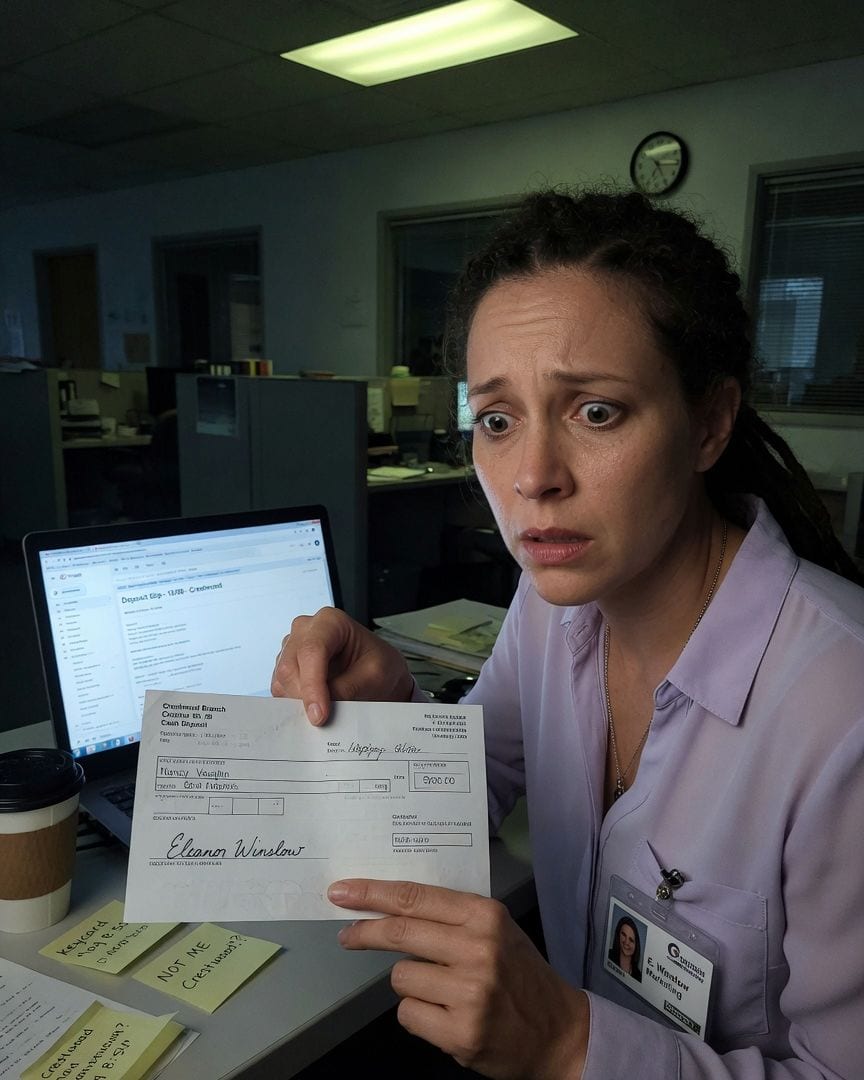
My bank statement shows a $900 cash deposit made in a town I've never set foot in, at 10:40 AM on a workday. I was at my desk, badged in. Two more landed since.
My bank statement showed a $900 cash deposit from a town I'd never visited, 150 miles away. I was at my desk, logged into work, all three times. But the scanned deposit slip arrived, clear as day, showing my own flawless signature.
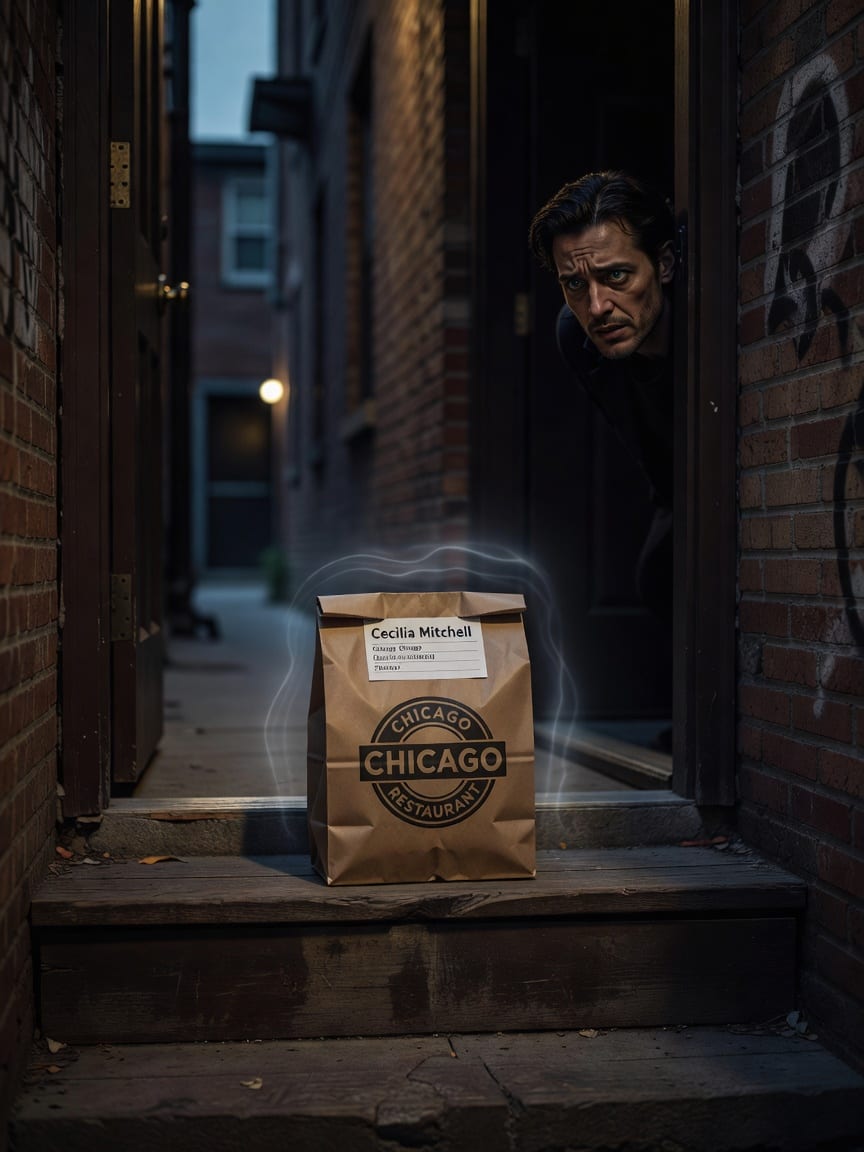
My food app ordered Chicago pizza at midnight while I cooked in Seattle. It has my name, my card, and an address I’ve never seen.
Friday night in my Seattle apartment usually brings comfort, but checking my food delivery app shattered that calm. I found a phantom order: Chicago deep dish, delivered 2,000 miles away, every Friday for a month, charged to my card. The real dread hit when the delivery service confirmed a digital signature on file, unmistakably mine, for every single meal.
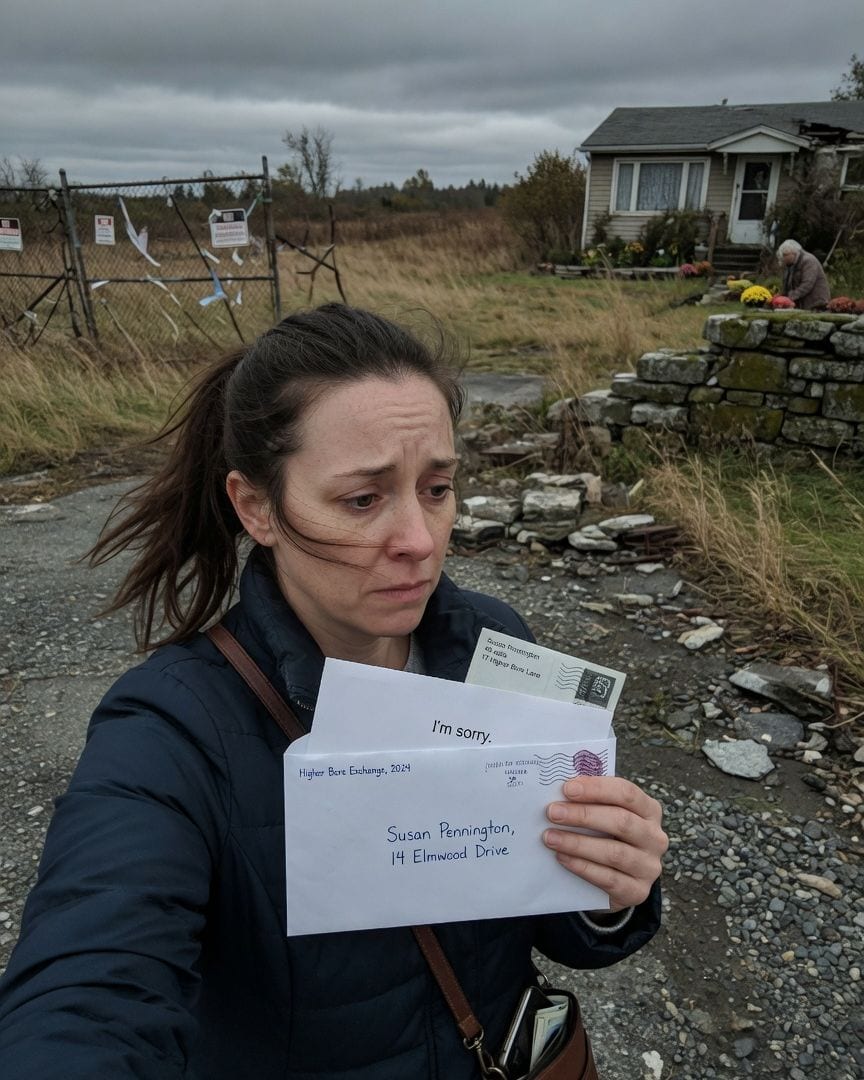
My phone bill listed forty calls made at 3:14 AM to a house demolished in 1990. The paper bill came from a flattened building. My name is on it.
I stared at my phone bill, my morning coffee forgotten. It detailed forty calls, each at 3:14 AM, to an address I knew was a vacant lot where a house had stood decades ago. But the real dread began when I saw the bill's return address: a telephone exchange flattened years before.
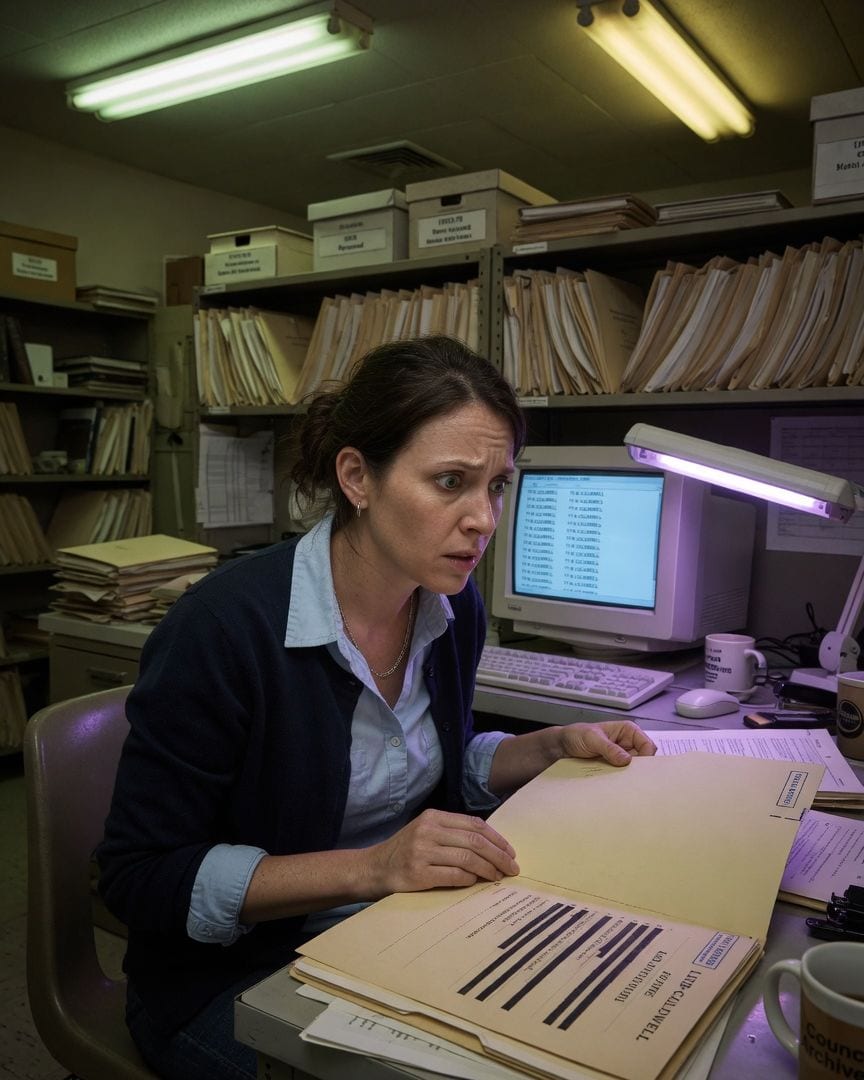
My employer's security file holds a vetting report on me dated nine years before I ever applied. It has my full name and my parents' address — with only one line, the source who referred me, blacked out.
Working a routine data audit, I pull my own security file. The issue date is nine years before I even applied for the job. Then, hidden within an old archive file, I find my current address etched under a blacked-out line.
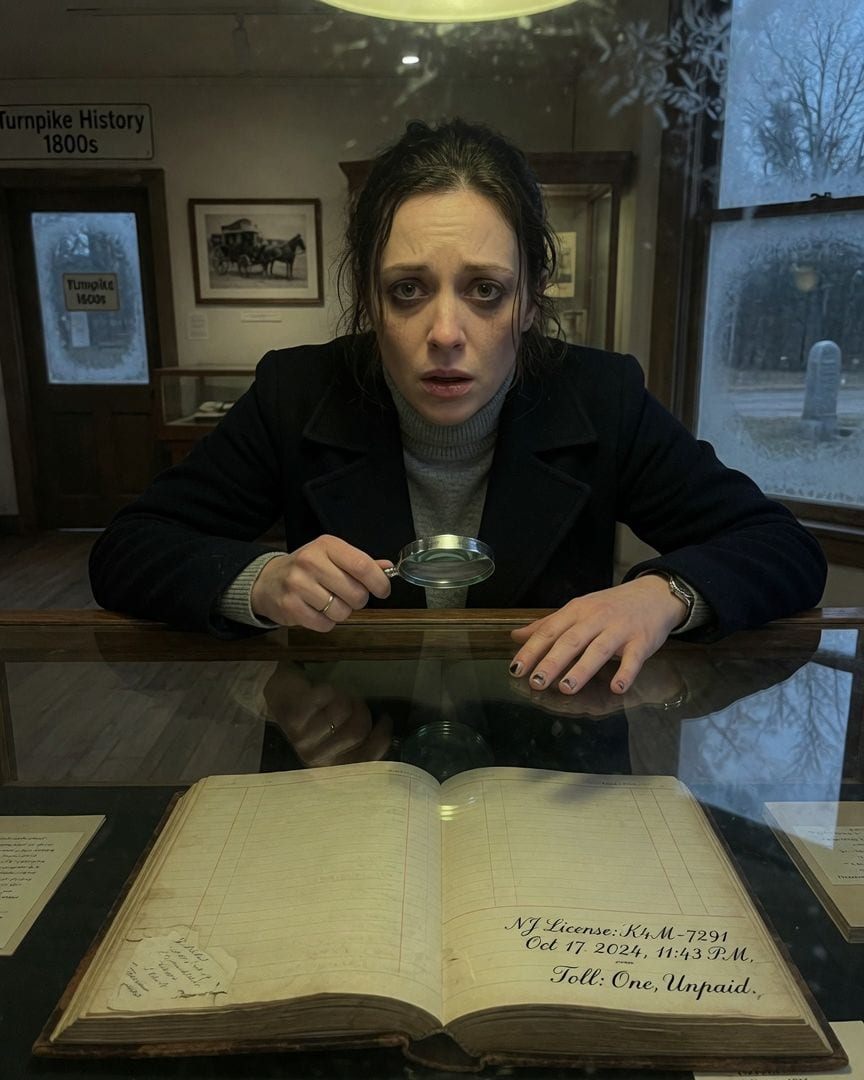
My car stalled at the old turnpike milestone, and the 1874 toll ledger now lists my plate, the date, and an unpaid toll.
My car stalled at an old turnpike milestone, exactly where the carrier had warned me never to stop after dark. The next week, at the local museum, I found a new entry in a century-old toll ledger. There, in fresh ink, were my car's registration, the exact date and hour I stalled, and 'Toll: One, Unpaid.' I knew it wasn't a joke.
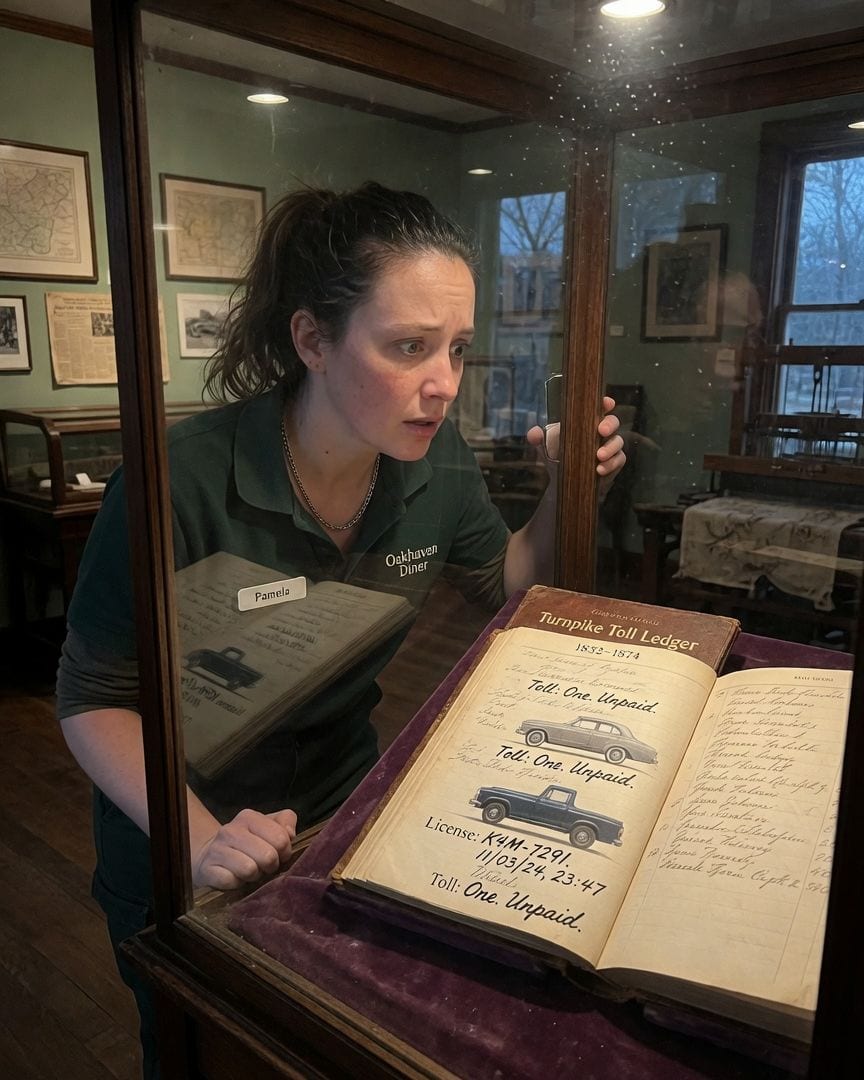
My car stalled at the old turnpike milestone, after dark. The toll ledger, closed in 1874, then listed my car, my stall time, and a toll of one, unpaid.
I had just moved to Oakhaven when my old sedan died on a dark, winding road by an infamous turnpike milestone. The next day, I found my car's exact registration and stall time written in fresh ink in a 150-year-old, locked museum ledger, marked 'Toll: One. Unpaid.' The curator dismissed it as a prank, but her white knuckles and strained voice hinted at something far more unsettling.