My coach stopped twice at Keele services this morning. Same pumps, same lit sign, the driver's log disc spinning a tight circle, never leaving the one place.
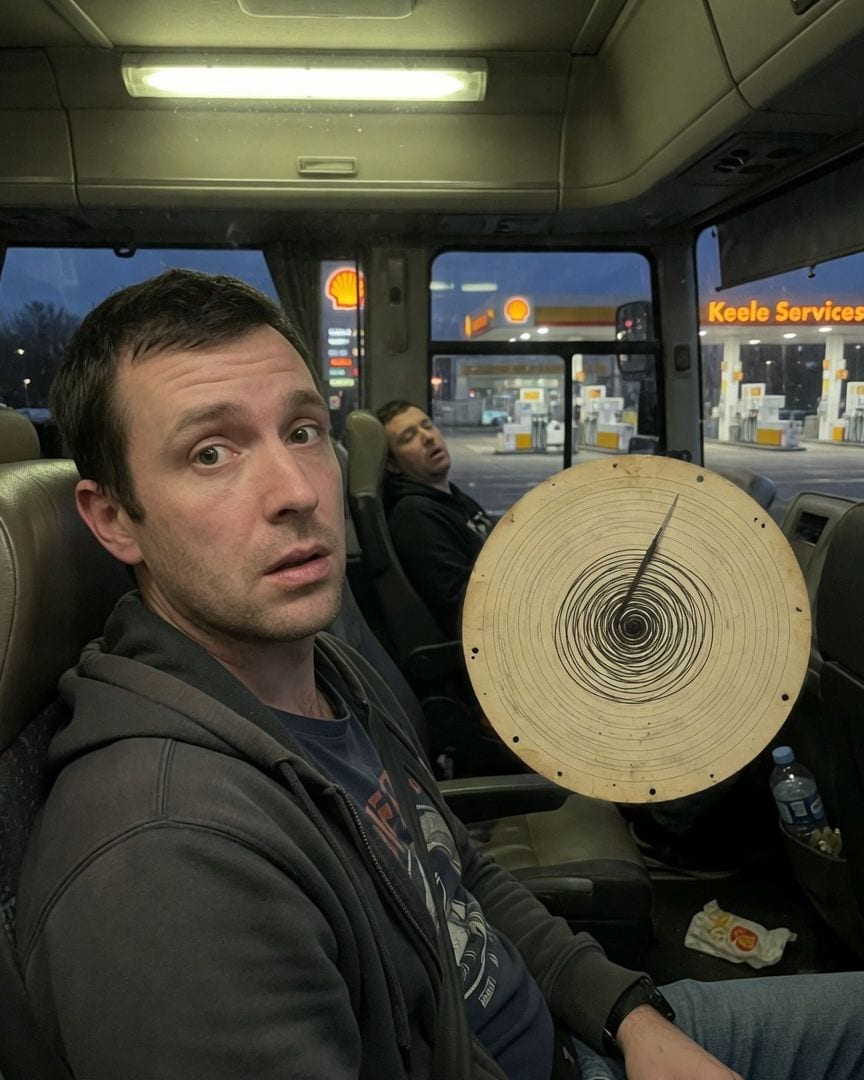
The fluorescent hum of the Keele Services main hall was the first thing that registered when I cracked open my eyes. It was 3:20 AM. I was on the overnight coach from Edinburgh, heading south.
My neck was stiff, pressed against the window, the cold glass a small comfort. Outside, the familiar orange glow of the Shell sign, the row of pumps, the identical white coaches lined up.
Gerald, our driver, was stretched out, head back, catching a few minutes. I glanced at my watch, then leaned back, trying to reclaim sleep.
The next time I stirred, the light filtering through the window was a shade less harsh, leaning towards pre-dawn grey. My eyes snapped open, and for a moment, I thought we’d moved. We hadn’t. We were at Keele Services again.
The same pumps, the same lit sign, the same greasy smell of fast food wafting through the vents. I rubbed my eyes, feeling a strange jolt of disorientation. My watch read 4:50 AM.
An hour and a half later, and we were back.
I twisted in my seat, peering forward. Gerald was back in the driver's seat, stretching his arms, oblivious.
On the dashboard, just above the steering wheel, was the old-fashioned driver's recording disc, a paper log meant to track distance and time. It was spinning, a tiny needle tracing our journey. But it wasn't marking a line of travel.
It was scribbling a tight, perfect circle right in the center, as if the coach hadn't moved an inch from the moment I first woke up.
The needle was vibrating, a frantic, contained scribble, a perfect little knot of impossible stasis. It didn’t make any sense.
An hour and a half, yet the disc showed we’d been stationary, always in the same spot, never leaving the one place. A cold prickle of dread, sharp and sudden, crawled up my spine.
My mind, usually so precise, tried to rationalize it – a dream, a bad sleep, a glitch in the disc, but the image of that perfect, frantic circle was too clear.
Back in the city, the memory of Keele Services gnawed at me. The double stop, the identical pumps, the perfect, infuriating circle on Gerald’s log disc.
I tried to dismiss it, told myself I was tired, that the brain played tricks in the dead of night. But it didn't feel like a trick. It felt like a solid fact, lodged in my memory with unnerving clarity.
The prickle of dread wouldn't go away.
A week later, unable to shake it, I found myself driving north on the M6, back to Keele. The need for verification was an itch I couldn’t ignore. I parked, walked into the main building.
It was busy, bustling with families and lorry drivers. I tried to act casual, a graphic designer taking a break from a long drive, but my focus was absolute.
I started my methodical walk-through. I remembered a specific corridor near the back, past the main food court, leading to the staff areas. It was drab, smelled faintly of stale fryer oil and disinfectant.
I counted the doors: first, a cleaning cupboard; then, the linen store; next, the staff lounge; finally, the manager’s office. Four doors, all clearly marked, all staff-only.
I even took photos, ostensibly of the fire exit signs, but really to capture the layout.
Then I went outside. My phone’s measuring app, usually used for client mock-ups, became my tool. I walked the perimeter of that specific section of the building, tracing the exterior wall where those four staff doors should correspond.
My app, precise to the inch, showed a significant discrepancy. From the outside, the wall stretched for a length that should have comfortably housed a fifth section, a room between the linen store and the staff lounge.
But there was nothing. No window, no door, just a solid brick wall. The interior layout, with its four doors, refused to reconcile with the exterior dimensions.
It was like a segment of the building had simply been erased from the inside, a ‘phantom room’ that, according to the physical evidence, should exist, but simply didn't.
The wall itself felt unusually thick there, dense and silent, absorbing the faint motorway hum rather than transmitting it.
I ran my hand over the rough brick, expecting to feel a seam, a faint line where a window might have been bricked up. Nothing. Just a smooth, unbroken expanse.
My head spun. Four doors inside, space for five outside. The dimensions defied logic, defied geometry. This wasn't a trick of the light or a tired mind. This was a physical discrepancy, a solid impossibility in brick and mortar.
Confused and more than a little unnerved, I decided I needed to see an old site plan, something official. I wandered, looking for an information desk, anything.
Near the back exit, I spotted an older man, Robert Norwood, in a worn Keele Services polo shirt, tidying a bin with slow, deliberate movements. He looked like he’d been there for decades.
I approached him, my voice hesitant. "Excuse me, I know this sounds strange, but I was wondering if you knew anything about the original building plans for this place?"
I quickly explained my observation about the missing room, the discrepancy between the interior and exterior measurements.
Robert paused, his hands still on the bin. He listened, his expression unreadable, a faint, almost imperceptible smile playing on his lips. His eyes, a pale blue, seemed to hold a vast, quiet knowledge.
"Ah, the old place," he said softly, his voice a low rumble. "Always got its little secrets." He slowly straightened up, his gaze drifting past me towards the problematic wall.
The blank space, the solid brick where the phantom room should be, seemed to subtly deepen.
And then, a faint, almost invisible outline of a door, a shimmer of a dark line, momentarily appeared, undeniably present in a way it hadn't been moments before.
I stared, first at the shimmering door outline – a faint, almost charcoal-grey etching on the beige wall – then at Robert. My heart hammered, a frantic drum against my ribs. It wasn't just in my head.
He saw it too. "What was that?" I demanded, my voice tight. "What is that door?"
He merely shrugged, that faint, unsettling smile still playing on his lips. "Just the way things are, Miss Hughes. Always have been."
His eyes held mine for a moment, calm and unbothered, as if seeing impossible architecture materialize was an everyday occurrence. "Some things," he added, his voice barely a whisper, "don't like to be pinned down."
He turned back to his bin, movements slow, deliberate, as if our conversation was over.
Over the next few days, I found myself returning to Keele. It was an obsession now, a burning need to understand what I'd seen. The phantom door was elusive.
Sometimes, I’d walk past that section of the corridor, and the wall would be solid, unremarkable, just as I’d first measured it.
Other times, usually when the main hall was quiet, a low hum in the air, I’d catch that faint outline again, a ghost of a doorway, an optical trick that defied all physics.
I tried to photograph it with my phone, but the camera consistently blurred the spot, or distorted the image, turning the ethereal outline into a smudged aberration.
It was like the camera couldn't quite resolve it, refusing to capture what my eyes clearly saw.
My research deepened. The local historical society had old blueprints for Keele Services, dating back to its construction in the late 1950s. I pored over them, tracing every line, every measurement.
They confirmed what my phone app had initially suggested: no architectural discrepancy in the original plans. The building was designed to be straightforward, four staff rooms in that section, perfectly matching the exterior.
This 'room' wasn't an oversight or a later renovation. It was an active anomaly, a physical impossibility that shouldn’t exist.
One evening, as dusk settled, I saw Robert slip into a small, unmarked office tucked away behind the staff lounge. The door was plain, unlabelled, easily missed.
He was there for about twenty minutes, then emerged, locking the door carefully behind him with an old, brass key. He didn't see me, lurking by a display of regional cheeses. After he left, the corridor felt quiet, abandoned.
Driven by a compulsion I couldn't resist, I peered through the frosted glass panel of the door. The office was a cluttered space, dimly lit by a single bulb.
Shelves overflowed with old files, tools, and what looked like dusty ledgers. Something glinted on a desk.
I watched for a few more minutes, then tried the handle. Locked. I fumbled in my bag for the small set of lock-picking tools I'd bought online a year ago for a joke, a passing interest.
My hands trembled as I worked the pins. A soft click. I eased the door open, slipping inside. The air was thick with the smell of old paper and dust.
On a small, wooden desk, beneath a stack of maintenance requests, lay an old, leather-bound logbook. It looked like a personal journal. Tucked into its pages, almost as a bookmark, was a faded photograph.
The photograph, curled at the edges, was a group shot of Keele staff from the 1960s. They were gathered outside the services, smiling, some with work tools, some holding cups of tea.
Robert, younger, stood at the back, a mop-head of dark hair. But it was a woman in the front row who seized my attention. She was young, her hair styled in a bouffant, wearing a neat uniform.
And she bore an unsettling resemblance to me. The same slight curve to the jaw, the same shape to the eyes. It was jarring, like looking at an ancestor, or a doppelgänger.
I reached out to touch it, my fingers hovering over her face.
"Looking for something, Miss Hughes?"
Robert’s voice, quiet and calm, cut through the silence like ice. I spun around, heart leaping into my throat. He was standing in the doorway, blocking the exit, his face unsmiling.
His eyes, usually distant, were fixed on me, knowing and cold. He wasn’t angry, not exactly. That was the disturbing part. He just looked... unsurprised.
He walked past me, picked up the logbook from the desk, and slid the photograph back into its pages. "Some things are best left undisturbed," he said, his voice low, almost a murmur.
He held the logbook loosely in his hand, a heavy, dark weight. "They have a way of... repeating." He didn’t elaborate, didn't confiscate the photo, didn't even ask why I was in his office.
He simply stood there, watching me, his presence a heavy cloak in the small room.
From that day, Robert’s presence became a constant. I’d catch him in my rearview mirror as I left the carpark, his silhouette at the carpark’s edge, a distant, still figure. He was always there, always watching.
It wasn't menacing in an aggressive way, more like a silent, unnerving observation. He wasn’t threatening me, but his gaze felt like a warning, a constant reminder.
One evening, I returned to my car after a long shift. Tucked under the wiper blade, a small, folded piece of paper. It was a note, handwritten in neat, old-fashioned script.
The ink was faded, but the words were clear: "The circle always completes. Don't try to step off." The precise, slightly slanting letters, the way the 'f' curved at the end – it was unmistakably Robert's handwriting.
The dread, once an abstract chill, now solidified, turned personal. This wasn't just about a weird building or a glitch in time. It was about me.
The note felt like a physical weight in my pocket. I found Robert at the small cafe attached to the services, nursing a lukewarm tea.
He looked up as I approached, his expression still unreadable, but a faint recognition in his eyes. I slid into the seat opposite him and pushed the note across the table. It slid to a stop inches from his teacup.
"What is this?" I demanded, my voice low but firm. "What do you want?"
He looked at the note, then at me. "A warning, Miss Hughes." He picked up the piece of paper, folded it neatly, and slipped it into his jacket pocket. "The last one, perhaps."
"The last one?" I scoffed, running a hand through my hair. "What the hell are you talking about? The coach, the door, the picture, now this note. Explain it." I was tired of the cryptic answers, the unsettling calm.
Robert sighed, a long, weary sound, and took a sip of his tea. "Keele Services," he began, his voice surprisingly soft, "is a nexus. A place where the geometry... folds in on itself."
He gestured vaguely, as if describing something he saw clearly, but I couldn't. "Every thirty years, the entire complex, for a short period, becomes dislocated. It creates a temporal and spatial loop."
I stared at him. "A loop? Like... a time loop? What, is it a ghost?"
He shook his head. "No. Not a ghost, not a haunting. It's the geometry itself, Miss Hughes. The very fabric of this place, making a loop. Like a knot in a string, pulled tight, then loosened, then pulled tight again."
He looked at me, his gaze steady. "That driver's disc you saw? The perfect circle? That's the physical manifestation.
The needle marking the same spot because, in that moment, the coach was in two places at once, or no place at all. It was caught in the fold. And the phantom room you found," he continued, "that’s a seam.
A consistent point where the loop manifests physically. Where the building, for a short time, briefly exists in its own impossible dimensions."
My mind raced, connecting the impossible circle, the shifting door. It fit. Horrifyingly, it fit. "It's a consistent phenomenon?"
"Oh yes. Like a tide. It comes in, it goes out. And sometimes, it snags things. Certain journeys, certain individuals." He paused, looking at me with an unnerving intensity. "Most people, they're disoriented for a while, then they forget.
Dismiss it as fatigue, a dream. But some... some notice. Like you." He leaned forward slightly. "I started working here in '63. The phenomenon was already known then, among a few of us.
We had our own ways of tracking it."
"So, you're saying this has happened before? Many times?"
He nodded slowly. "Many, many times. It's the nature of this place."
I felt a cold shiver, not of fear, but of profound, unsettling comprehension. The mundane explanations I'd tried to force – tiredness, a faulty disc, an architectural oversight – they all shattered, leaving this impossible, coherent truth behind.
It wasn't a mistake. It was a pattern. A mechanism.
Olivia, connecting Robert's calm, unsettling words to her own bewildering experiences, felt a sickening lurch in her gut. "Are you... are you part of it?" she asked, her voice barely a whisper. "Are you caught in it too?"
He remained evasive, looking out the cafe window at the grey motorway sky. "I am merely aware, Miss Hughes. Like others before me. We are... observers."
The way he said 'observers' made it sound less like a choice and more like a sentence.
My mind flashed back to the faded photograph in his office, the young woman with my face from the 1960s. The implications were chilling, too vast to grasp all at once.
"That picture in your office," I pressed, my voice trembling now, unable to hold back the fear. "The woman who looks like me. Who is she?"
Robert turned back to me, and for the first time, his calm facade finally cracked. A flicker of something, pity mixed with a deep, resigned sadness, crossed his eyes.
He reached into his jacket pocket and pulled out a worn, folded photocopy. It was an old newspaper clipping, creased and yellowed, dated exactly thirty years prior. The headline was innocuous enough: 'Local Woman Reports Strange Delays on Coach Journey.'
My eyes dropped to the accompanying small photograph, grainy but unmistakable. It was the woman from Robert's office picture. And terrifyingly, undeniably, it was me. A younger me, perhaps, or a version of me, but me.
The caption beneath it read: 'Olivia Hughes, 32, a graphic designer.'
The dread was absolute. It wasn't just a cycle. It was my cycle.
I stared at the clipping, then at Robert, my mind reeling, struggling to reconcile what I saw with everything I understood about reality. The Olivia Hughes, 32, graphic designer. The date, exactly thirty years ago.
It was too precise, too horrifyingly specific to be a coincidence. My own name. My own age.
Robert gently took the clipping from my numb fingers, folding it back into his pocket. His voice was softer now, tinged with a deep melancholy. "No, Olivia. It's inevitable. You're not just observing the cycle; you're part of it.
Always have been. Always will be, in some form."
He explained that the anomaly, the fold in reality, anchors 'resonant' individuals to its recurrence.
"Every thirty years," he said, his gaze distant, as if seeing beyond the cafe walls, "someone experiences it, notices it, and then becomes part of its fabric. A quiet thread woven into the pattern."
He gestured vaguely, his hand sweeping towards the back of the services, towards his office. "That woman in the old staff photograph... she was you, thirty years ago. And the woman before her, sixty years ago."
He reached into his jacket again, not for the clipping this time, but for his personal logbook. It was a thick, leather-bound volume, far older than the one in his office. He opened it, revealing meticulous, coded entries.
There were diagrams of spatial shifts, notations about driver's discs and their circular patterns. And lists of names, each marked with a small, stylized circle next to it. My name, Olivia Hughes, was there.
And the name of the woman from the old photo. And beneath that, an even older name, almost illegible, but marked with the same chilling symbol.
"You're a constant, Olivia," Robert concluded softly, closing the logbook. "The one who always notices. The one who always remembers, for a time."
My initial panic gave way to a chilling, horrifying calm. It was a cold acceptance, a comprehension that settled deep in my bones. "So, I can't stop it?" I asked, my voice flat.
Robert shook his head, his pale eyes holding mine. "No one can. It's not a thing to be stopped. It's a fundamental property of this place, like gravity or the turning of the seasons. It simply recurs."
He explained that the choice, if there was one, was what to do with the knowing. He told me of others, individuals who had become aware in previous cycles.
Some fought it, raged against it, often descending into madness or fading into quiet, haunted acceptance. Others, like him, became 'keepers of the knowledge,' watching the cycle unfold, offering unheeded warnings to those like me, just as he had.
I understood then that the world outside the loop, the 'normal' world, could not comprehend this truth. My rational mind, which had sought answers, now found itself trapped by them. There was no monster to fight, no escape route.
No hidden door to pry open, no ancient curse to break. I was not a victim, not in the way I’d imagined. I was an integral piece of the impossible geometry, a living cog in a repeating, unfeeling machine.
I was part of the recurrence.
I returned to my life, to my flat, my work, but the world now felt thinner, a veil over a deeper, cyclical reality.
I performed my routines, met deadlines, but a part of me was always at Keele, always watching for the phantom door, always listening for the hum of an arriving coach.
The M6, once just a road, now felt like a circulatory system, endlessly pumping coaches towards that inevitable nexus.
I found myself making trips back to the services, not to investigate, but to observe, to confirm. To check if the phantom door was shimmering. To see if new faces seemed a little too familiar.
I exchanged silent, knowing nods with Robert whenever our paths crossed. He never spoke, just that faint, knowing smile, those distant eyes.
I started my own logbook, mirroring his. It wasn't the ornate, leather-bound kind, but a simple hardback notebook. I meticulously filled its pages with observations of the smallest shifts, subtle recurrences, new faces and old patterns.
The circle, I realized, was not just on a disc; it had become my life, my awareness, my very existence.
The coach pulls into Keele Services at 3:20 AM. I am seated near the front, my usual spot these days. I watch a young woman stir in the seat opposite, rubbing sleep from her eyes.
She squints at the lit Shell sign, then at her watch. I know what she is seeing. I see the driver glance at his recording disc, a paper circle scribbling its tight, perfect line in the same spot.
I know what is coming next. I reach into my bag, my fingers brushing the worn cover of my own logbook. It is almost time for the second stop. She has her own role to play now.
I have to be ready.
Months later, Robert Norwood is tidying a bin near the back doors of Keele Services. A new young woman, a graphic designer, walks past, her eyes lingering on the space where a door sometimes appears, sometimes doesn't.
Robert offers a faint, almost imperceptible smile. The woman notices him, and a small, knowing nod passes between them. Her name was Olivia. She is simply there.
If this one got to you
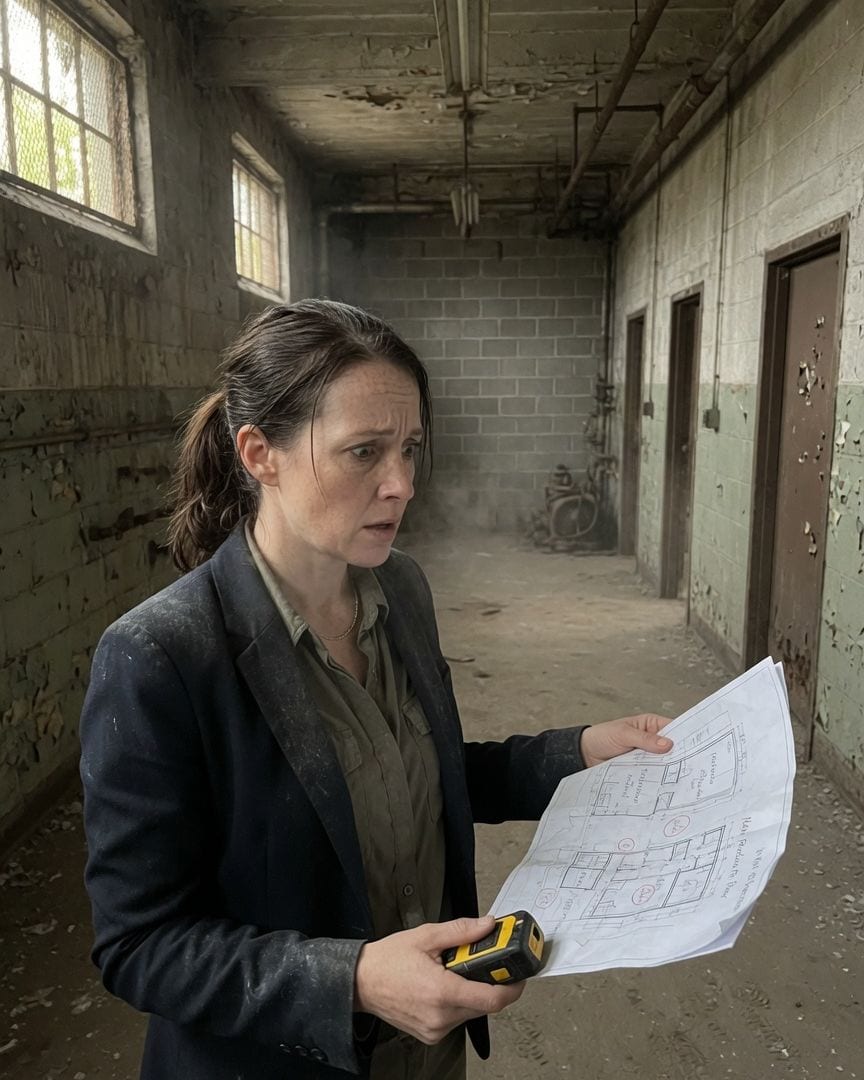
One room is missing from this factory floor. My blueprints show four, but I only found three doors.
Intrigued by an abandoned industrial complex, I secured its old blueprints and entered the cold, silent building. Pacing a long corridor, I meticulously counted doors, comparing them to the detailed plan. The blueprint clearly showed four distinct rooms, but the corridor's length, and my own count, revealed only three doors.
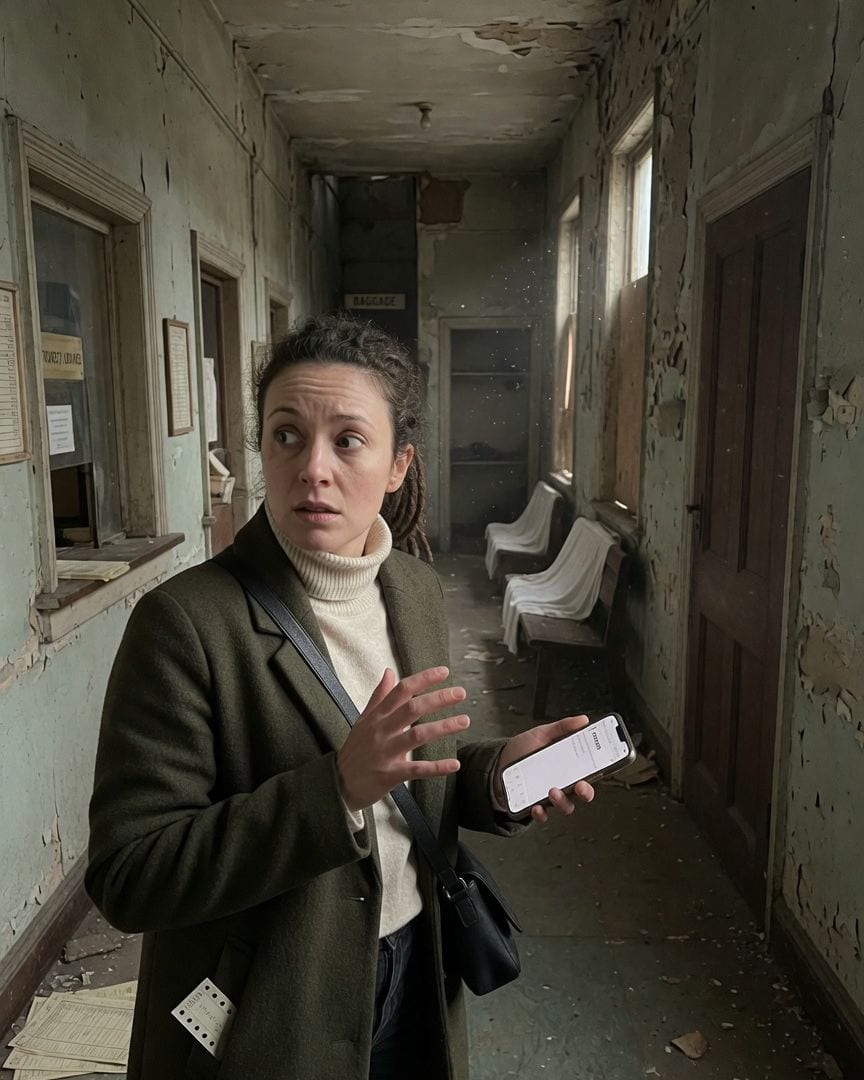
My scenic railway loop repeated six times. The same trestle bridge, the same waterfall, over and over, the conductor punching my ticket each pass. We never left the circle.
My scenic railway journey was supposed to be a gentle, thirty-minute loop through the gorge. But after only fifteen minutes, the same landmarks rolled past again, and again, and again. The conductor, Henry Kingsley, punched my ticket six times as if each was the first, his gaze utterly devoid of recognition.
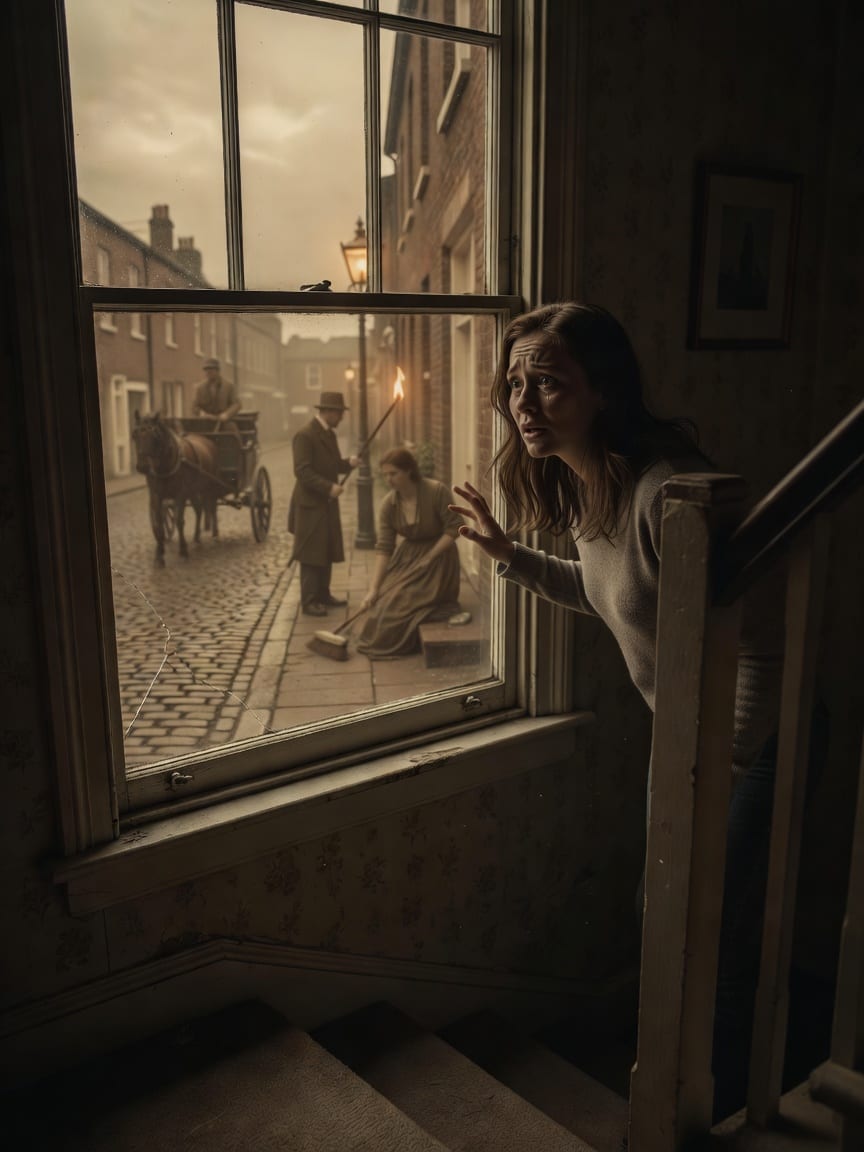
My half-landing window looked down on a cobbled street, a horse and cart. My panes, same crack. Below, only the bins.
I moved into this inherited house for a fresh start, living alone in the quiet. But the third stair on the main flight is deeply worn, a ghostly scoop hinting at decades of unseen footsteps. It feels hollow, and the wall beside it hides a faint, inexplicable seam.
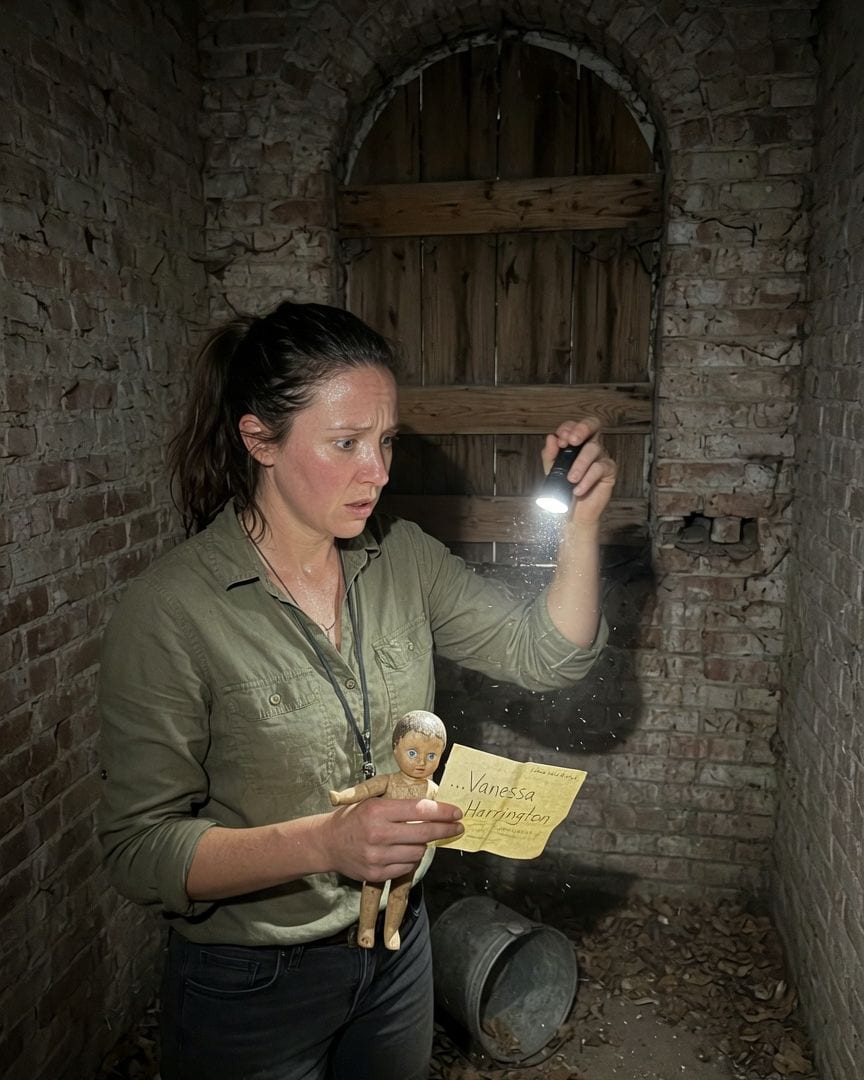
The attendance register has marked one pupil 'present' every single day since 1911 — never once absent. No child by that name has ever sat an exam.
Settling into my new teaching job at Oakhaven Elementary, I found myself drawn to the sealed bell tower. But it was the school's old register that truly unsettled me. A phantom entry, 'Pupil X,' had been marked 'Present' every single day since 1911, with no other records to prove they ever existed.
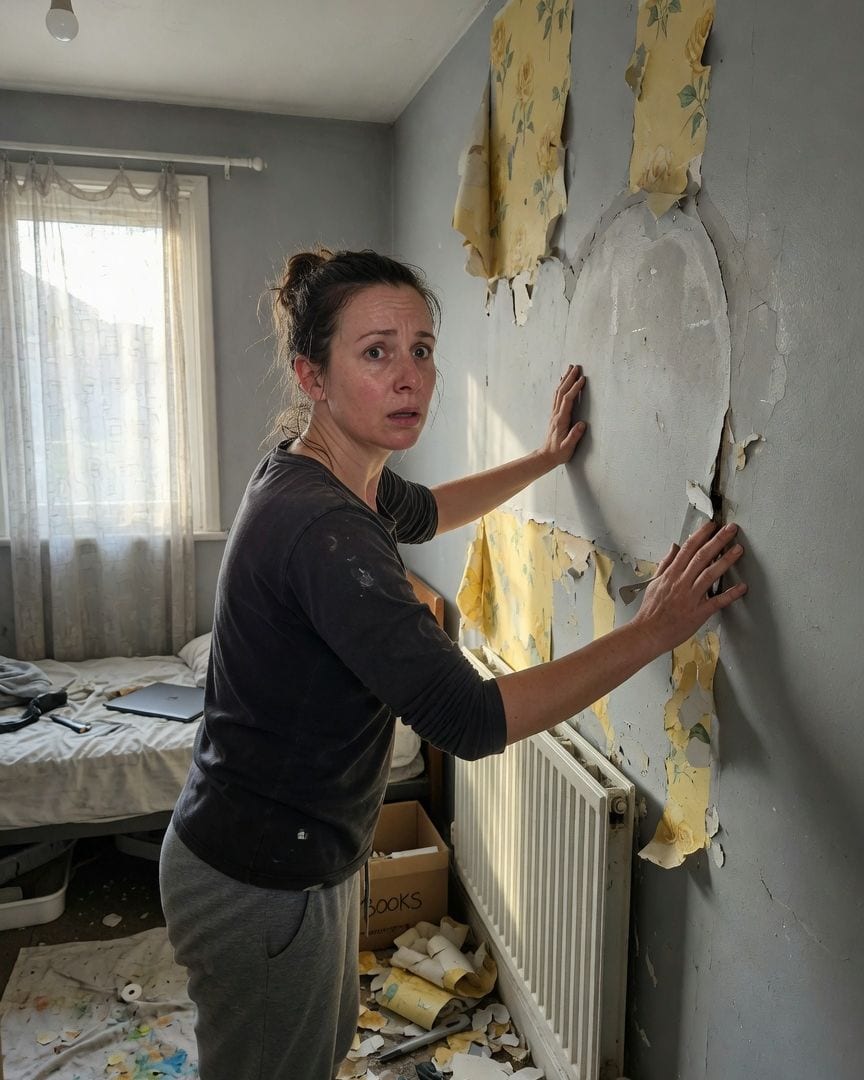
I painted the box room grey, but twice I've woken to find it papered in yellow roses I never bought — seams lifting exactly where the empty-flat photos show bare plaster.
I moved into my new flat in March, ready for a fresh start. But the box room, freshly painted grey, kept growing old-fashioned yellow rose wallpaper. The third time, as I stripped it, the wall opened to reveal a perfectly preserved, sunlit room from May 1978, complete with a steaming teacup.
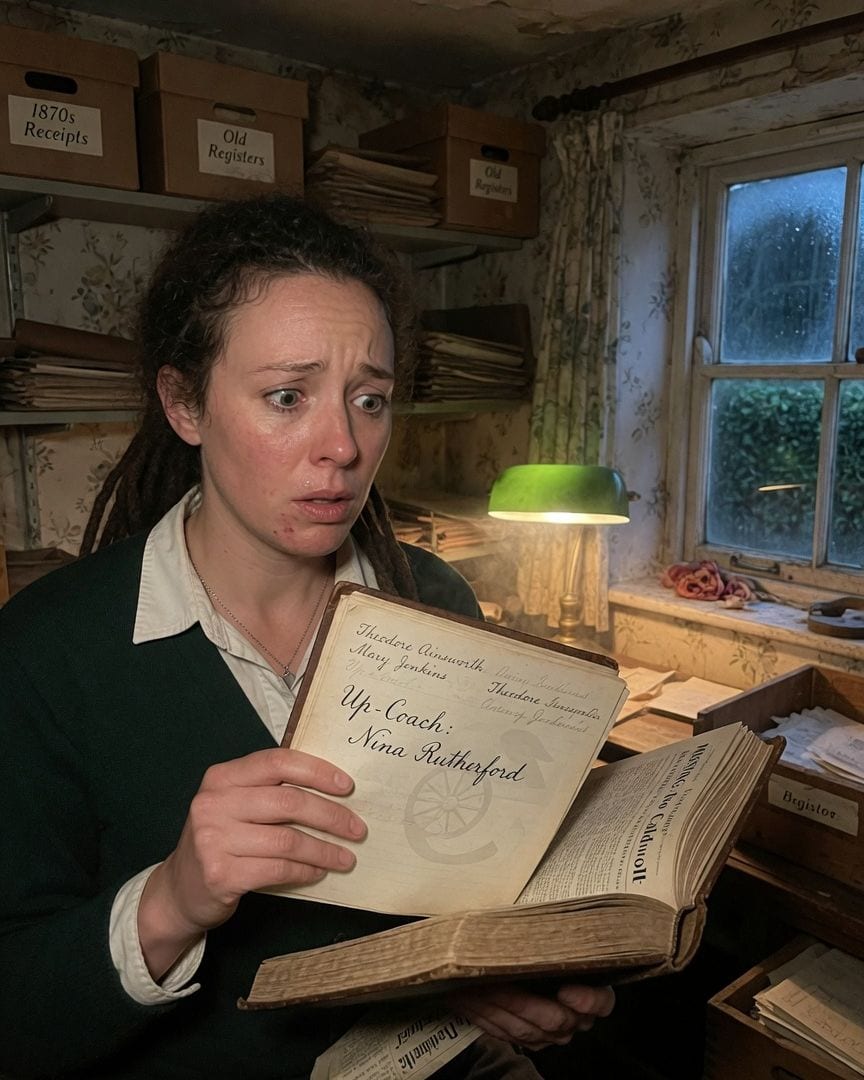
The old inn's arrivals book logs a vanished girl's name. She disappeared two months ago, but the ledger says she checked in last week.
As the new owner of The Angel Inn, I cherished its ancient history. But one evening, while tidying the old arrivals book, I found a chilling entry: Nina Rutherford, a local girl who vanished two months ago, was logged as checking in last week.