My coal scuttle empties itself through the week, though I never light the fire. Every Sunday, it's heaped full again. The coal house has been bricked up for decades.

I had inherited the house from a distant aunt I barely knew, a woman who'd only existed to me as a name on Christmas cards.
It was an old place, solid brick, quiet, the kind of house that swallowed sound, promised peace.
After weeks of sifting through decades of musty belongings—embroidered doilies, brittle photo albums, a lifetime condensed into boxes—I was finally starting to feel like it was mine.
Most things had gone to charity or the dump, but one detail remained, untouched. It sat by the gaping maw of the hearth in the living room, an ornate, antique brass coal scuttle.
It was a beautiful thing, heavy and burnished, a relic from an era when fires were a daily necessity. I never used it. The central heating worked perfectly, and frankly, I didn't fancy messing with soot and ash.
So, the scuttle sat there, a dusty, decorative piece. But I noticed something odd almost immediately. Every Tuesday, when I did my proper cleaning, the scuttle would be empty, just a faint film of coal dust clinging to the bottom.
A relic. Yet, every Sunday morning, without fail, it was heaped full of good, hard coal. Gleaming black. Fresh.
I tried to rationalize it. A draft? Did I somehow forget a stray bag of coal I’d bought and then inexplicably dumped it in there? Was a neighbor playing a strange, elaborate prank?
But the coal house, a small stone shed tucked against the back wall of the garden, had been bricked up decades ago, the mortar old and crumbling.
And the nearest coal merchant, according to Raymond Abbott at the local archives, had stopped deliveries sometime in the early eighties. There was no source. The scuttle was simply full on a Sunday. Pristine.
As if someone had just carefully placed it there. Every single week.
The routine became a quiet obsession. I started setting my alarm for Sunday mornings, earlier and earlier, expecting to catch a delivery truck, a neighbor with a bizarre sense of humor, anything.
I’d creep down the stairs, heart thumping, only to find the living room empty, the scuttle already brimming. Nothing. The coal simply was there. It felt like a defiance, a quiet, insistent wrongness.
One Tuesday, driven by a growing frustration, I decided to prove it to myself. I emptied the scuttle myself, every last lump, carrying the dusty coal out to the garden shed and tipping it into a forgotten corner.
It made a surprisingly heavy clatter. I even swept out the scuttle until the brass gleamed. There was no doubt; it was thoroughly, demonstrably empty.
By Saturday night, I found myself checking it every few hours, a nervous habit forming in my gut. I tried to focus on my book, on the television, but my eyes kept darting to the corner of the room.
Would it be empty? Would this stupid, old house finally make sense?
Sunday morning arrived, grey and damp outside. I walked into the living room, a cold knot tightening in my stomach. The scuttle was, predictably, overflowing. My breath hitched. I stared at it, then at the floorboards around the hearth.
The wood was old, dark oak, deeply worn from decades of footsteps.
Running my fingers over the boards, I felt a distinct, perfectly scuttle-shaped indentation, a deep groove in the grain, as if the heavy brass container had rested in that exact spot for a very, very long time.
This wasn't just a random occurrence; it was a deeply ingrained habit, etched into the very fabric of the house. I knelt, pressing on the warped wood beside the indentation. A small section creaked, then lifted slightly, grudgingly.
Beneath the loose floorboard, in a shallow, dusty cavity, lay a tiny, faded hand-stitched sampler. It was old, yellowed linen, barely legible, depicting a simple hearth and the words, 'The Sunday Coal.' My breath caught, sharp and cold.
The threads were ancient, brittle, almost monochrome with age, browns and grays. But in the bottom right corner, a single, distinct stitch formed a tiny, impossible blue knot, vibrant and fresh, completely out of place against the faded pattern.
I looked from the sampler to the scuttle, which I had just emptied myself, now brimming with coal again, the glinting black lumps reflecting the impossible blue of that thread.
The sampler felt like a direct message, a whisper from the past, though I couldn't understand what it was trying to tell me.
I carefully photographed it, trying to capture that single, defiant blue stitch, then placed it back beneath the floorboard, a secret now shared. I began digging into the house’s history, more seriously this time.
The previous owner, Sylvia Whitaker, had lived there her entire life. Raymond Abbott, the local historian at the archives, confirmed it. He was a kind man, though reserved, his office smelling perpetually of old paper and dust.
He produced property deeds, old census records. Sylvia had died quietly in her late eighties, unremarked by most, slipping away sometime in the late 90s or early 2000s, long after the coal merchant had stopped.
Nothing, he said, about eccentric coal habits.
Back at the house, the other ‘routines’ started to emerge, not just the scuttle. I noticed the kettle always seemed to have residual warmth at precisely 6 AM, even if I hadn't touched it all night. It wasn't boiling, just...
warm. A specific, ancient armchair in the living room always had a deeper impression on the left cushion, no matter how vigorously I plumped it.
The third stair on the main staircase creaked, but only when I stepped on it a certain way, as if avoiding a specific spot.
It felt like living inside someone else’s schedule, a meticulous, unvarying pattern that was not my own, a ghost’s quiet insistence. I found myself adjusting, stepping over the third stair, checking the kettle. It was unsettling.
I felt a growing unease, a prickle on the back of my neck. The routines were no longer quaint; they felt deliberate.
One evening, after meticulously documenting the kettle's 6 AM warmth in a small notebook, I left it open on the kitchen counter, my pen beside it.
Later, returning for a glass of water, I found the notebook closed, my pen neatly placed on top. A faint, almost imperceptible smudge marred the page detailing the kettle’s anomaly. I checked the doors, the windows – all locked.
Every one.
A few days later, while researching Sylvia’s family tree online in the living room, I heard a distinct, gentle thump from the attic directly above me. I froze, my fingers hovering over the keyboard. The attic.
It was locked, the key kept in my desk drawer in the study. I had been up there exactly once to survey the storage space, then locked it. I sat still for a long moment, listening, but heard nothing more.
When I finally worked up the courage to retrieve the key and ascend the creaking attic steps, I found nothing amiss, no broken rafters, no disturbed boxes.
But lying open on the dusty floorboards, directly beneath the bare bulb, was a single, heavy, leather-bound book. An old household ledger. It hadn't been there before. It definitely hadn't.
The ledger was Sylvia Whitaker’s. I recognized the neat, looping script instantly from old property forms Raymond had shown me.
Meticulously kept, it detailed every aspect of her daily life: meals, chores, social calls, even her precise schedule for tending to the hearth. "6 AM: Kettle, porridge. 7 AM: Clean hearth, fill scuttle." The entries were dated, precise, spanning decades.
Page after page of unwavering routine.
I felt a cold wave of recognition, then dread. Every routine I’d observed, every oddity that had unsettled me, was meticulously recorded here. The worn chair, which she marked as "afternoon reading."
The avoided stair, which she noted as "patchy repair needed, step wide." Even the specific time the window in the parlor was opened for "fresh air" was logged. Sylvia had lived a life of unwavering, almost ritualistic, habit.
The house wasn't just remembering; it was a precise archive, a repository of her every move.
Raymond Abbott, when I later showed him photos of the ledger on my phone – carefully not mentioning how I found it – confirmed Sylvia was known for her "steadfastness."
He mentioned her last years were spent in increasing isolation, her routines becoming her entire world after her sister, her last remaining close relative, passed.
"She was a creature of habit, right to the end," he'd said, a faint sadness in his voice. "Lived and died by the clock, that woman."
As I listened to him, the pieces clicked into place, chillingly. The coal scuttle was just the first, most obvious, cue in a long, elaborate, silent play. A script the house was still running.
Back at the house, I poured over the ledger, cross-referencing entries with my own observations. The routine was perfect, chillingly so. I reached the final pages, entries becoming sparser, then dissolving into a series of blank lines.
But on the very last dated entry, a 'Sunday' like so many others, an additional, almost imperceptible pencil mark caught my eye. A tiny, faint tally line in the margin, next to "7 AM: Clean hearth, fill scuttle."
It was a new mark, almost too light to see, but undeniably there.
And then, as I watched, my heart hammering against my ribs, another faint mark, in my own distinct handwriting, appeared right beside it: 'Full scuttle.'
The words formed themselves, stroke by stroke, with my exact loop on the 'f,' my particular slant on the 't.'
A chill washed over me, a sensation of icy dread, because I hadn't touched the book since finding it, and the ink was still wet, shimmering faintly on the page, the entry mirroring an earlier, identical one from Sylvia's hand.
I dropped the ledger, scrambling back from the table, overturning my chair with a clatter that echoed too loudly in the sudden silence.
The page I’d just been reading, where my own handwriting had mysteriously appeared, now had another faint, almost imperceptible pencil mark beside the current day's entry—a tiny, fresh tally line that definitely hadn’t been there moments ago.
The house was marking off my days.
I snatched up the ledger, my hands trembling so hard the pages rustled like dry leaves. The tally marks weren't just a record of chores; they were a countdown.
I flipped back through the final, blank pages of Sylvia's entries, finding more faint pencil tallies, each one leading to the next, like a morbid game of tic-tac-toe.
The routine wasn't just a memory the house held; it was a loop, an unbreakable cycle, culminating in the last, chilling entry: 'Sunday, 10 PM: Lock up, final tea.'
I remembered Raymond’s words: 'She was a creature of habit, right to the end.' Sylvia had died alone in the house, found days later.
The house, through its retained memory, was not merely replaying Sylvia's life, but re-enacting her final, isolated moments, drawing me into the role, preparing me for the culmination.
The coal scuttle, the kettle, the worn chair – all of it was a precise sequence of cues.
The blue stitch on the sampler, the fresh tally marks, my own handwriting appearing – the house was actively updating the script, ensuring the performance continued, ensuring the new occupant was ready.
I was Sylvia’s understudy, and the play was nearing its tragic finale. The house wasn't haunted in the traditional sense; it was a meticulous, unfeeling stage manager, determined to see its last act played out.
The next Sunday, I woke with a cold dread that clung to my skin like grave dust. It was 5:58 AM.
Two minutes later, I heard it: the faint, familiar whistle of the kettle from the kitchen, a gentle, insistent sound. I felt a magnetic pull towards the hearth, towards the scuttle.
The house wanted me to play my part, to descend the stairs, clean the hearth, fill the scuttle. To begin the final Sunday.
I resisted, every fiber of my being screaming at me. I forced myself to move, to pack a small bag, grabbing the ledger and the sampler, the only two pieces of proof I had.
As I moved towards the front door, the floorboards creaked behind me, not just one, but a series of distinct groans, ending with a heavy thud on the third stair, as if a weighty, unseen presence had just landed on it, right where Sylvia always 'stepped wide.'
The air in the hallway grew colder, biting at my exposed skin. And then, a faint but unmistakable scent of old tea, Sylvia’s 'final tea,' filled the kitchen, wafting towards me, cloying and sweet.
I knew I had to break the routine, not just escape it. I had to leave the house, but I had to leave it wrong.
I walked back into the living room, a defiance swelling in my chest, and instead of placing the scuttle neatly by the hearth, I kicked it, hard, sending coal scattering across the polished floorboards, black lumps skittering and bouncing, some lodging themselves beneath the antique rug.
Then, with a gasp of air, I left the front door wide open, a complete violation of Sylvia's meticulous 'lock up' routine. As I ran down the gravel drive, bag clutched tight, I heard a distant, faint wail.
It sounded like a kettle boiling over, not just from the kitchen, but seeming to emanate from the very walls of the house itself, a low, keening sound that followed me into the street.
I didn't look back, clutching the ledger and the sampler, my only proof.
I never returned. I found a small apartment across town, leaving the house and almost all my belongings behind.
I tried to explain to a skeptical friend once, showing them the ledger with the impossible entries, the sampler with its impossible blue stitch.
They humored me, suggested stress, a vivid imagination, maybe even residual gas from the old house causing hallucinations. They didn't understand. They couldn't.
The house, I heard through local gossip months later, remained empty. It was listed for sale, but never quite selling. People said it had a 'strange energy,' a 'cold spot,' that the new owners had backed out suddenly.
No one ever mentioned the coal scuttle. No one ever mentioned the kettle.
Years passed. I built a new life, far from that house. I kept the ledger and the sampler locked away in a safe deposit box, rarely looking at them.
But every Sunday, like clockwork, a shiver still ran down my spine.
Sometimes, if I was quiet enough, if I listened hard enough, I swore I could hear a faint, distant whistling, like a kettle reaching its boil, no matter where I was, no matter how far away I traveled.
I never lit a fire again.
The house, I know, is still waiting for Sunday.
If this one got to you
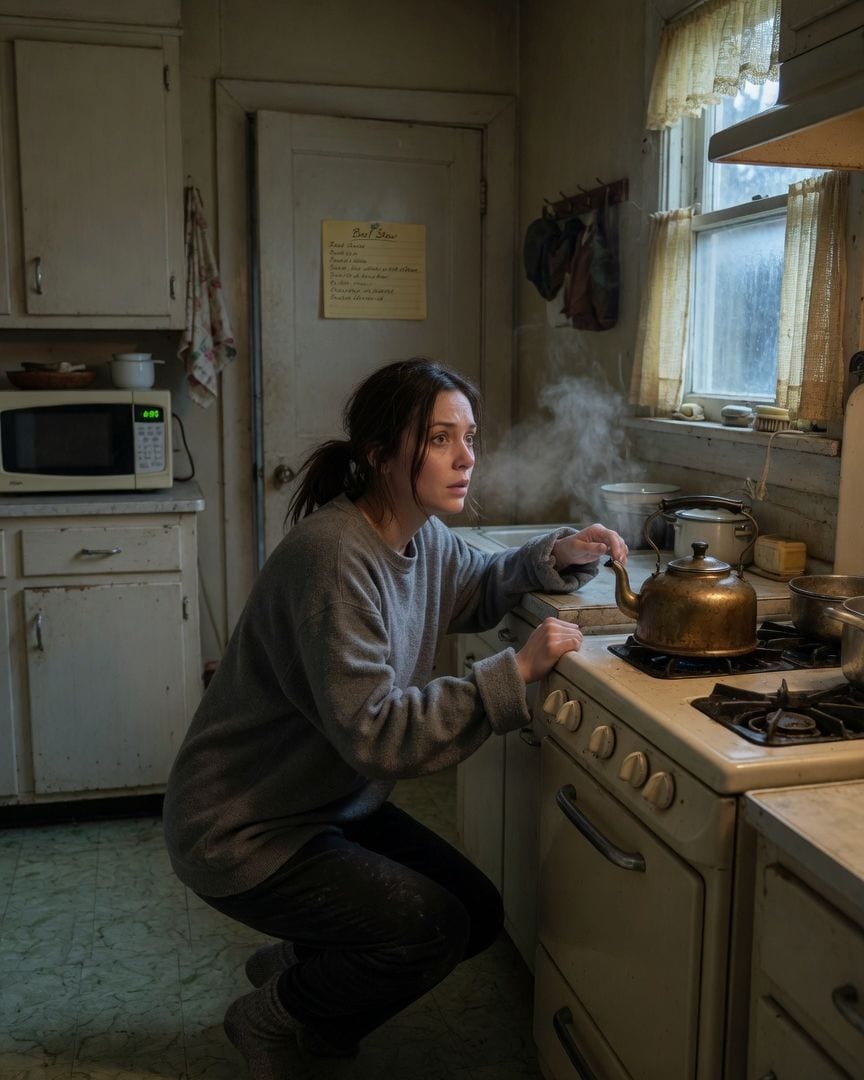
My front step is scrubbed white every Monday before dawn, wet stone and a bar of yellow soap left on the sill. I live alone. I've never scrubbed a step in my life.
Every Monday morning, before dawn, I find my front step scrubbed sparkling white. I live alone, haven't scrubbed it in years, and my security cameras show no one. Yet the damp stone always bears faint knee-prints and hand-marks, appearing as if by unseen hands.
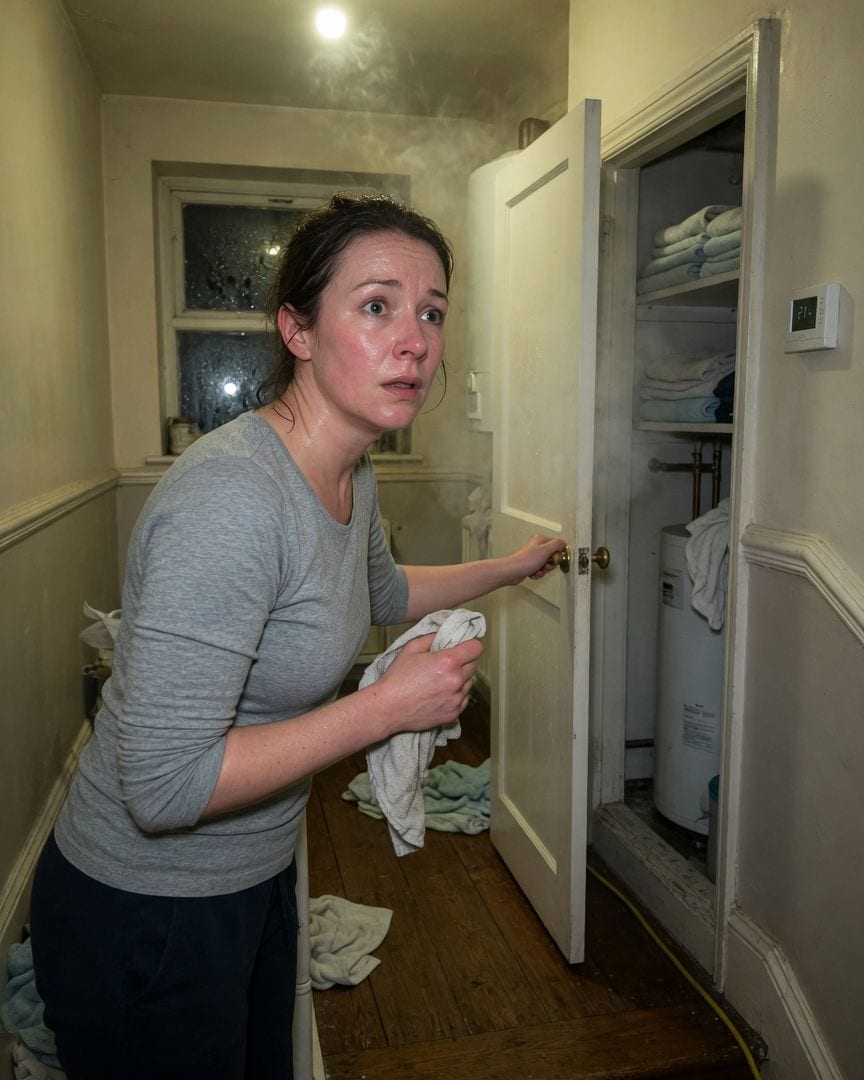
My airing cupboard opened onto a burning brick copper, sheets boiling. The heat rolled out, smelling of soda and wet linen. I shut it; my boiler was back.
My new house, bought just last spring, felt colder than expected. When I opened the airing cupboard, it wasn't mine at all, but a blast of steam and a roaring fire from an impossible past. Days later, a faint, metallic smell still drifted from the landing, and a worn path on the floorboards led to a hidden, ancient sampler beneath my feet, dated 1892.
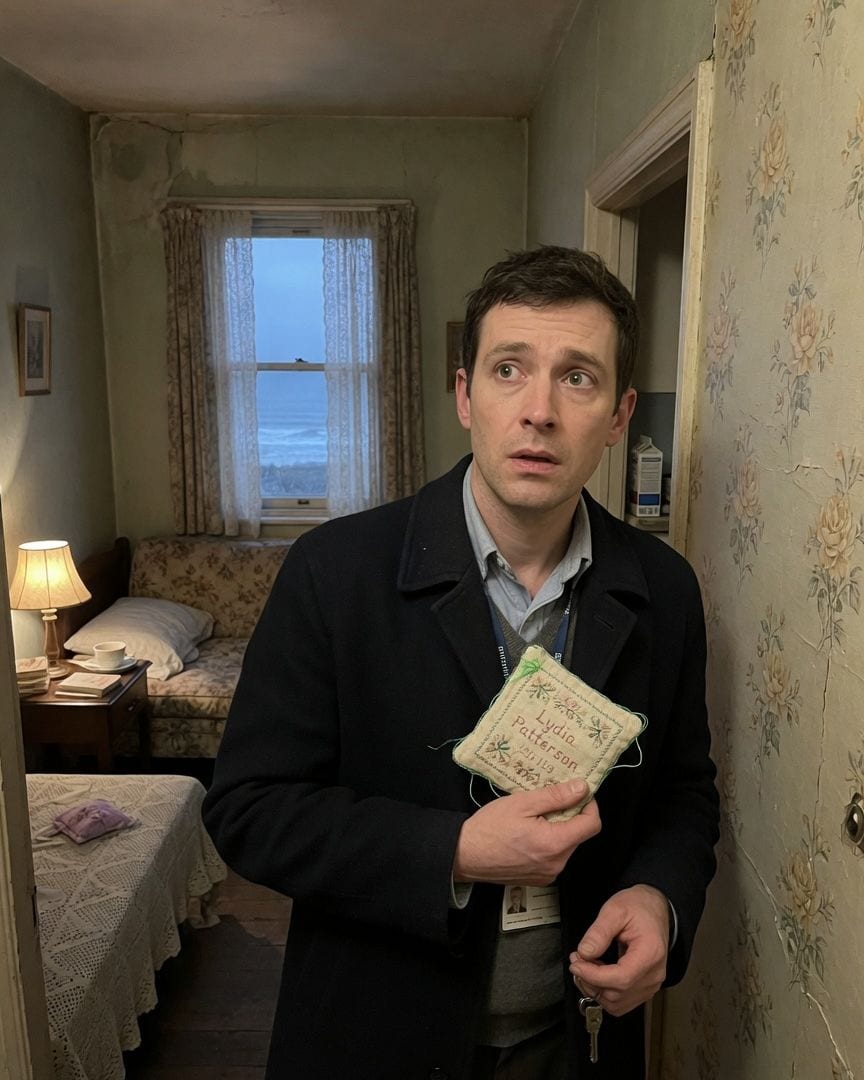
The 'empty' almshouse I was auditing wasn't empty. I heard a bare foot *thump-thump* from next door.
My new charity role involves auditing the supposedly 'empty' almshouse units. But from the unexplained activity outside to a fresh carton of milk inside, something is deeply wrong. Then, in one unit, I found a dead woman's sampler with a jarringly new thread, and heard bare feet thumping next door.
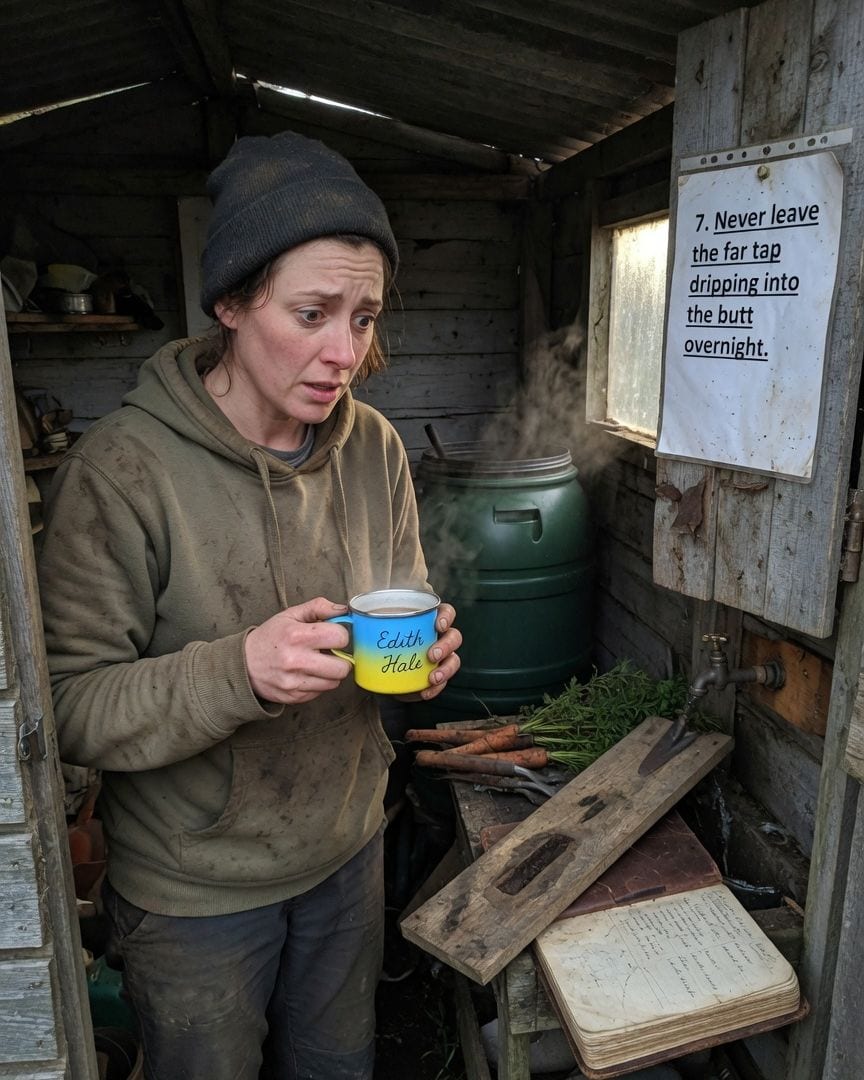
The one night I left the tap dripping, my allotment water butt was full to the brim and warm to the touch — with a child's unrusted tin cup floating on top.
Moving to Blackwood, I hoped my allotment would be a fresh start. But the shed's rulebook warned, 'Never leave the far tap dripping.' One morning, my water butt was full and steaming, an unnerving warmth rising from it. Inside, a child's tin cup floated, unrusted, etched with the name 'Edith Hale'.
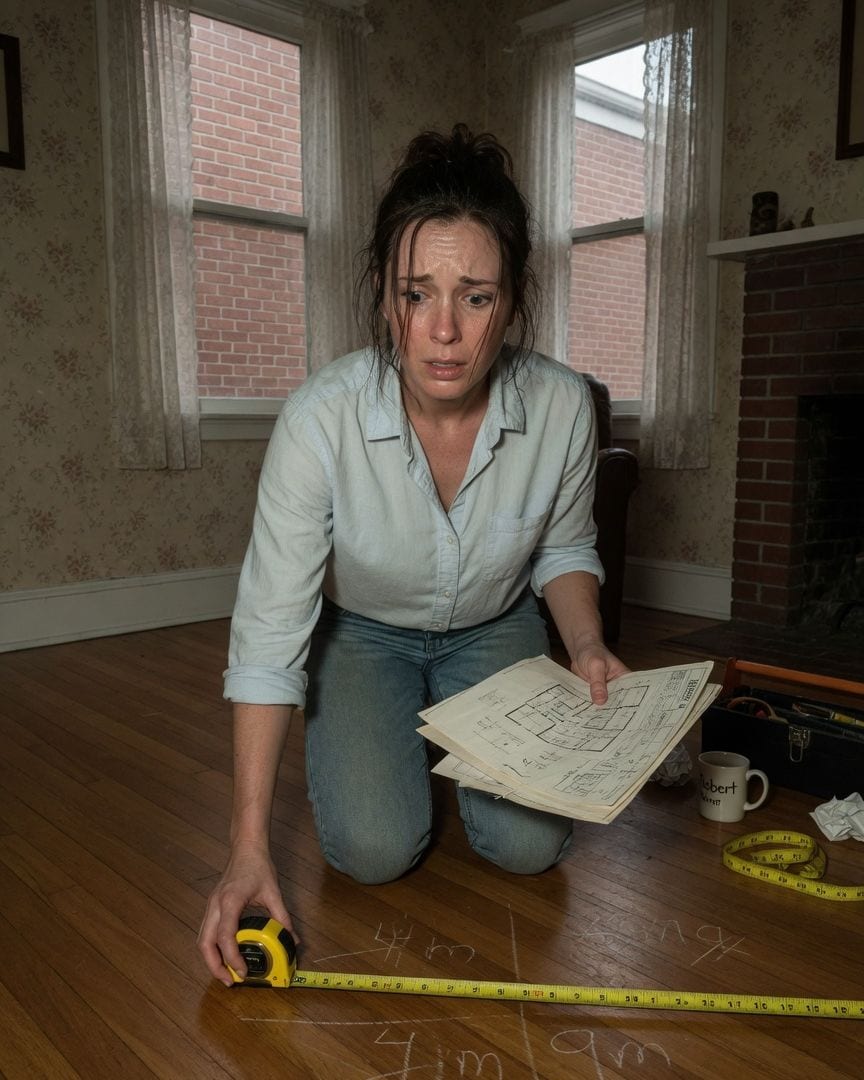
Our living room measures four by five metres. But the outside wall is nine metres long. A metre of house, gone, and I can't find it.
After moving into our charming 1920s house, I was meticulously measuring the living room when the dimensions refused to add up. My calculations of the interior space led me to discover a narrow, unpainted fifth door in the hallway, tucked almost out of sight. It wasn't on any original plans, and it opened to absolute, impenetrable darkness.
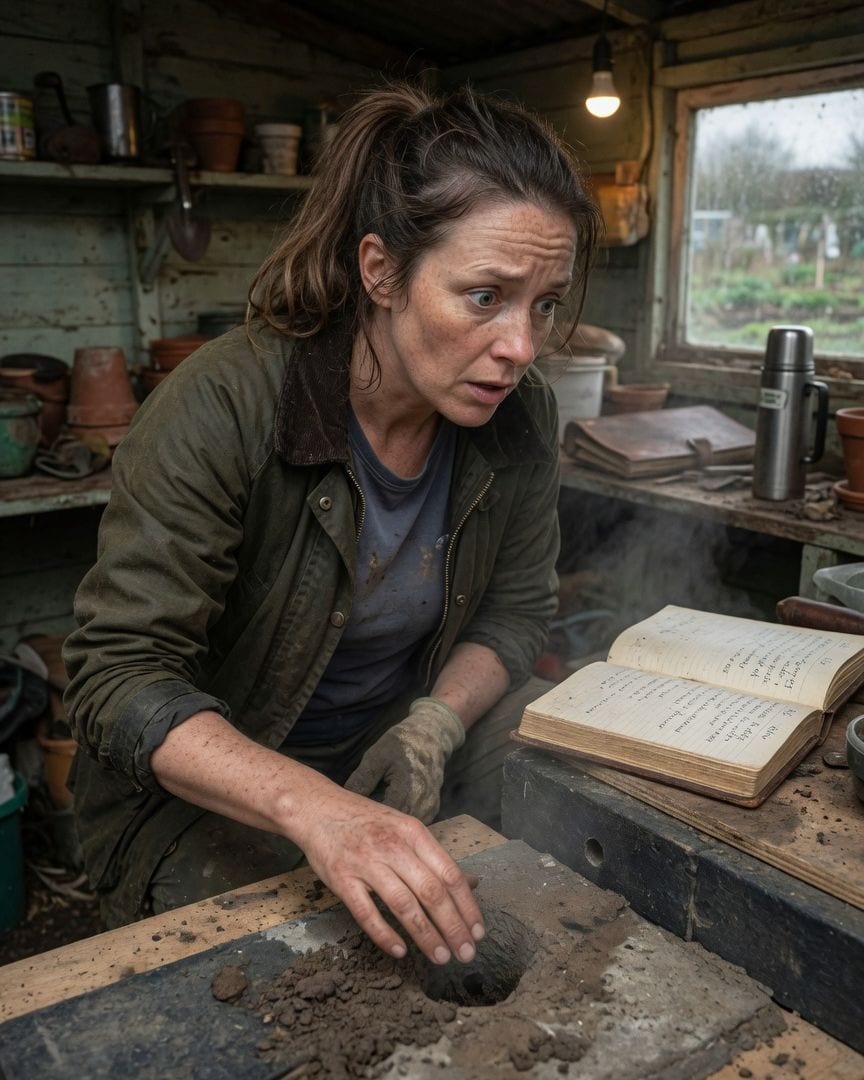
Every gardener who's held allotment plot 26 gave it up after a single season, each one leaving the same note behind: never dig the ground below two feet.
Newly single at 38, I hoped Plot 26 at Weir Field Allotments would be a fresh start. But the committee’s rent book held a strange, decades-old rule: 'ground not to be dug below two feet.' Ignoring the warnings, I dug anyway, only to find a perfectly smooth concrete slab with a tiny hole—and a distinct, unnatural cold breath rising from it.