My cottage is now outside the parish, says the vicar. I moved one boundary stone into my ditch, and now I'm outside the line.
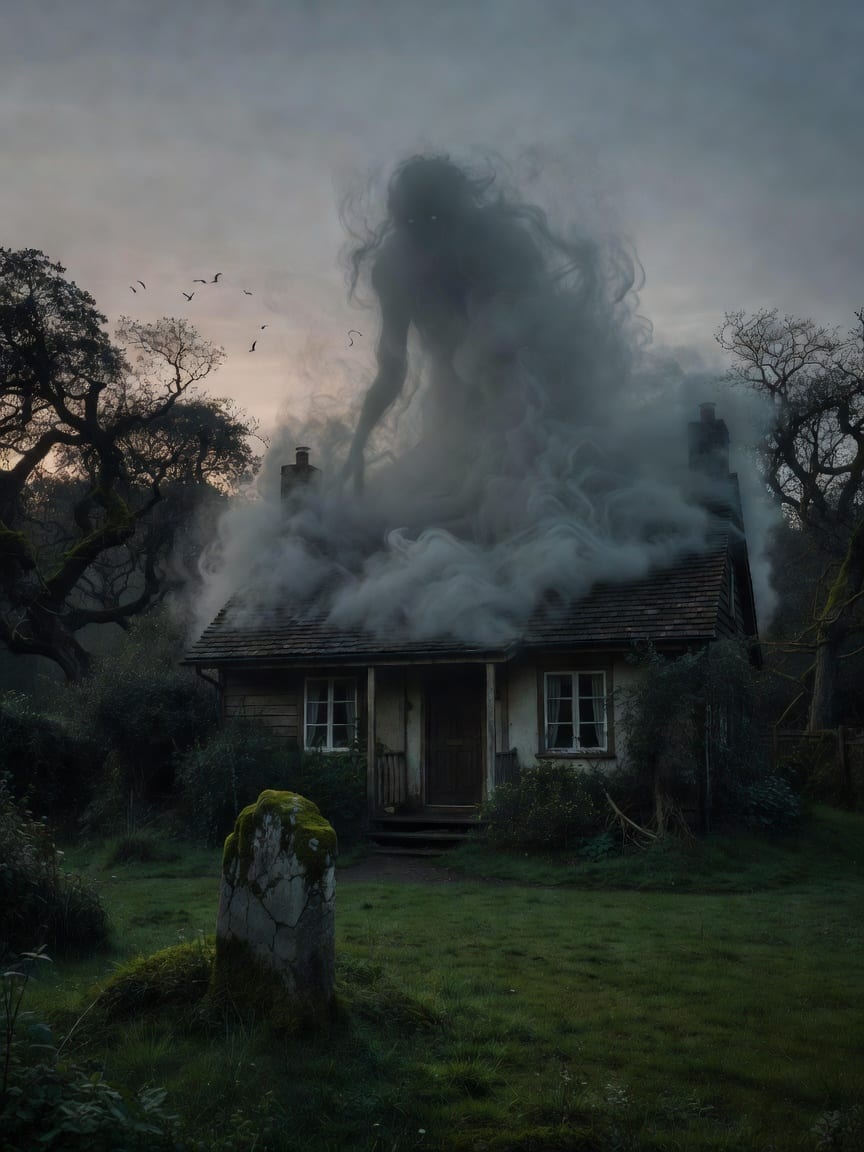
It started a few weeks ago, just after I’d finally settled into the cottage. I loved it, the quiet, the sprawling garden, the ancient oak in the corner of the plot.
But the garden also had this old, moss-covered lump, half-buried, right at the edge of what I’d assumed was my property. I’d meant to dig it out for weeks.
It was just an irregular, lichen-covered stone, maybe a foot high, lying in a shallow ditch where the garden technically ended and the woods began. It looked like it had simply toppled over. A nuisance, nothing more.
So, one sunny Tuesday, I grabbed a spade and a crowbar, and with a bit of effort – it was heavier than it looked – I levered it out of the ditch and rolled it a yard or so back onto what felt like firmer, higher ground.
It tidied the boundary, made the garden feel more expansive. I patted the soil around its new base, pleased with my small act of domestic improvement.
A few days later, Vicar Reginald Vance showed up at my door. He’s a tall man, elderly, with kind eyes and a voice like worn leather. He usually stops for a chat when he’s passing.
But this time, his face was grave, almost apologetic. He stood there, twisting his cap in his hands, then finally explained.
He said he was terribly sorry, but following the annual Rogation perambulation – a walk, apparently, where they 'beat the bounds' of the parish – they’d discovered my entire cottage now lay outside the parish line.
He then, with a quiet solemnity that made my blood run cold, informed me that he could no longer christen my children, or, God forbid, bury me.
He couldn’t keep me ‘on the right side of the line,’ as he put it. I stared at him, bewildered. It was absurd.
I told him it must be a mistake, a clerical error, but he just shook his head, his kind eyes full of a profound, unsettling disconnect.
It felt like the very ground beneath my feet had shifted, leaving me suspended in an undefined space. My home was still my home, of course, but something fundamental had changed.
I tried to reason with Vicar Vance, standing in my living room, the faint scent of old woodsmoke still clinging to the walls. “But Vicar,” I argued, “it’s just a line on a map, isn’t it? An old tradition.
My property deeds are clear.” He listened patiently, perched on the edge of my armchair, his hands clasped. He then reached into his briefcase and produced a tattered, parchment scroll, yellowed and fragile.
It was the parish’s perambulation roll, he explained, passed down since 1687. Its meticulous script listed every boundary marker, every stream, every ancient tree.
He ran a finger down the scroll, finding my cottage’s original plot, then traced a new, unsettlingly precise curve. “Here,” he murmured, his voice low, “this is where the stone was.
And here,” his finger moved, “is where it is now.” The new line, inked in a far newer, sharper hand, clearly arced around my property, leaving my cottage entirely outside. He looked up, his expression unreadable.
“Some of the older families in the village,” he added, almost as an aside, “they keep their own records. Their own private maps, as it were, of the bounds.”
He dismissed his quiet hints as quaint local eccentricity, a relic of a bygone age. But the idea stuck with me. If the official records were this old, what else might be out there?
Determined to find a more rational explanation for this bureaucratic absurdity, I headed to the local archives. It’s a small, dusty room in the old town hall, smelling of paper and damp.
Sifting through stacks of land deeds and historical maps, my fingers coated with fine dust, I finally found it: a beautifully rendered, hand-drawn map from the late 18th century.
It was too detailed for an official survey, showing every boundary stone, every winding stream, every old oak. As I examined it, I noticed faint, almost erased annotations in tiny, looping script near several of the drawn stones.
I leaned closer to the ancient map, my breath held.
The tiny script was difficult to decipher in the dim archive light, but one particular annotation, right near the spot where my cottage now stood – starkly, impossibly outside the drawn line – caught my eye.
My finger, almost of its own accord, traced the faded, brittle ink. The words were clear, if unsettling: ‘Here, the Merritts lost their youngest. 1742.’ A shiver ran down my spine, unrelated to the cool, stale air of the archive.
But then, the paper itself, beneath my finger, felt impossibly colder. A deep, penetrating chill, far colder than the room, seemed to emanate directly from the ancient parchment.
I glanced around, a sudden, unnerving sense of being watched prickling at the back of my neck. But the archive was empty, save for the quiet rustle of old paper as I slowly pulled my hand away.
The map’s chill stayed with me, even after I left the archives. The name ‘Merritts’ and the date 1742 felt like an itch I couldn’t scratch. The next day, I went to see Lydia Reynolds, the village’s unofficial historian.
She’s 72, sharp-eyed, and has lived in the same cottage since she was a girl. Her family, she’d once told me, had been here for generations, ‘long before the Normans, some say.’
I showed her a photo of the map on my phone, pointing to the annotation. Lydia peered at it, her lips thinning. “Old wives’ tales, Colette,” she said, but her eyes held a knowing sadness.
“Just stories people used to tell to keep the children from wandering too far.” She spoke in riddles, mentioning ‘the cost of carelessness’ and ‘the old ways for a reason.’
I persisted, pressing her on the map’s strange chill, the vague, unsettling feeling it gave me. Finally, she sighed, a long, weary sound.
“My family,” she admitted, her gaze drifting out the window, “like a few others, we keep private records. Just… to remember.” The conversation left me more disturbed than before. What was there to remember that wasn’t in the official books?
I returned to the archives, cross-referencing the ‘Merritts’ name and the date 1742 with parish birth and death records. I found a record of a Merritt child, born in 1740, but no death certificate.
Only a vague, unsettling note: ‘unexplained disappearance.’ My search then expanded. I spent days poring over local newspapers and church records, looking for other instances of ‘unexplained loss’ or ‘vanished without a trace.’ A disturbing pattern began to emerge.
Over the centuries, several families had reported similar ‘losses,’ often coinciding with periods of documented ‘boundary disputes’ or ‘stone displacements’ mentioned in the old perambulation rolls.
The euphemisms for these vanishings were chillingly consistent: ‘taken by the moor,’ ‘swallowed by the woods,’ ‘gone where the sun doesn’t reach.’ No bodies. No explanations. Just… gone.
As I dug deeper, the subtle hostility from some villagers grew. It wasn't overt; no one shouted or confronted me. But old Mrs. Henderson, who used to wave from her garden as I passed, now turned her back.
The shopkeeper, usually chatty, simply bagged my groceries in silence. My internet connection at home, usually reliable, became frustratingly sporadic, and when I tried to access certain digitized local records from the county archives, they were mysteriously ‘unavailable.’
It felt less like a glitch and more like a targeted block. One evening, I found a crudely folded note tucked under my cottage door.
It was just a small scrap of paper, the handwriting shaky, almost illegible, as if penned by an old, trembling hand. ‘Leave the line alone, or the line will leave you.’
The words were simple, blunt, but the implication was terrifying. It wasn't a prank; it felt like a warning. Later that week, while fetching groceries, I saw Vicar Vance standing in the churchyard.
He wasn’t talking to anyone, just standing perfectly still, watching my cottage. It wasn't a casual glance; his posture was rigid, his face unreadable, turned directly towards my home. He didn’t wave, didn’t smile.
He simply watched, a still, calm presence that made me feel like a specimen under glass, every move observed, my fate already sealed, by him or by whatever he was so intently watching for.
The note still clutched in my hand, I walked directly to the church. I found Vicar Vance in the quiet solemnity of the vestry, sorting old communion linens.
He looked up, his calm façade finally cracking, replaced by a deep weariness I hadn't seen before. I laid out my findings: the maps, the historical ‘losses,’ the recurring pattern I’d uncovered.
He listened, his gaze fixed on some point beyond me, then he sighed. “Colette,” he said, his voice low, “the boundary stones are not merely symbolic. They never were. They are ancient wards, physically delineating a protected space.”
He spoke not with fear, but with the quiet resignation of generations of knowledge. “The parish isn’t just a spiritual jurisdiction. It’s a line drawn against… The Outside.”
He described ‘The Outside’ not as a place, but a ‘hunger,’ a ‘drawing-in’ that manifests when the boundary is weakened. Moving a stone doesn’t just change jurisdiction; it opens a small, temporal breach, a doorway for what slips through.
“My family,” he continued, “like Lydia’s, has been the quiet caretakers of this knowledge for centuries. Ensuring the stones are never moved, ensuring the Rogation ceremony reinforces the wards. The ‘losses’ you found… they were people, or things, taken.
Unmade, Colette. Pulled from existence by what slips through the gap.” He gestured to a locked, heavy oak chest in the corner of the vestry, bound with tarnished brass. “There are other records,” he said, his voice barely a whisper.
“More detailed. Private.” He turned to me, his eyes filled with a profound sorrow. “You opened a door, Colette. A door that was meant to stay shut.”
Vicar Vance produced a heavy, ornate brass key from a pocket in his cassock. It clinked softly as he unlocked the oak chest. Inside, nestled amongst bundles of old church documents, was a thick, leather-bound ledger.
Its pages, yellowed with age, were filled with elegant, looping script. It was a family record, far more detailed than anything I’d found in the archives, its entries spanning centuries. He turned to a specific page, worn thin from handling.
“Samuel Porter,” he read aloud, his finger tracing a name, his voice barely audible. “Lost 1972.” My blood ran cold.
Next to the entry, a crude but unmistakable sketch of a boundary stone was drawn, identical in shape and markings to the one I’d moved, labeled simply: ‘displaced.’
The ledger then revealed a list of other names, each with a date and a similar note about a displaced stone, stretching back centuries, hinting at a terrifying cyclical nature to these ‘losses.’
Whole families, some familiar from my research, others long forgotten. Vicar Vance turned another page, his finger hovering over the very last entry. The space for a name was blank, disturbingly so.
But the date section was filled in, in Vicar Vance’s own neat hand: ‘Rogation, this year.’ He looked up at me, his eyes filled with a profound, quiet sorrow that said everything.
The pattern wasn't just history; it was a living, recurring threat, and I had just set the stage for its next iteration.
Armed with the horrifying ledger, I rushed back to Lydia Reynolds’ cottage. This time, there was no pretense, no evasiveness. Lydia, now resigned to me knowing the truth, led me to a dusty back room stacked with ancient books.
She produced her own family’s even older, more detailed journals – generations of observations, warnings, and desperate attempts to understand. These weren’t just records; they were a living history of dread.
These journals described ‘The Outside’ not as a malevolent entity, but as an indifferent, fundamental force, a ‘drawing-in’ that seeks to re-integrate anything that becomes truly ‘outside’ the known, defined world.
It doesn’t take lives violently; it unmakes them, pulling them from existence, leaving only faint traces, like dust on a forgotten shelf.
Lydia turned a page in one of her journals, its parchment almost translucent with age, revealing a faded, sepia-toned photograph from the 1970s. It was a family portrait of the Porters, smiling stiffly on a summer lawn.
But in the background, Samuel Porter was subtly, unnervingly blurred, his form almost transparent, his hand reaching towards the edge of the frame, as if being inexorably pulled away. His expression wasn't one of terror, but of serene, helpless acceptance.
The date on the back confirmed it: just before his ‘loss’ in 1972. The horror wasn't violence; it was erasure.
I realized then, with a sickening jolt, what Rogation Sunday truly meant. The ceremony, happening that very morning, was not just about beating the bounds; it was about reinforcing them, renewing the ward.
And my cottage, now officially ‘outside,’ was the next target. I stood alone in my garden, the air heavy with dread.
From the distant church, I heard the faint, rhythmic thud of the parishioners’ staves as they beat the bounds, drawing closer, a slow, inexorable march around the protective circle I had so carelessly breached.
The air around my cottage grew impossibly cold, a deep, pervasive chill that seemed to emanate not from the air, but from the very ground beneath my feet.
A low, drawing whisper began to rise from the woods beyond my property line, a sound that wasn't wind, but rather a soft, insistent pull, like something vast drawing a slow, hungry breath.
I felt a prickling on my skin, as if every hair was standing on end.
Then, a thick, heavy fog began to roll in, not from the ground up, but from above, descending in a slow, suffocating curtain, obscuring the morning light. The world around me turned to a swirling grey.
I could just make out a vast, indistinct outline within the descending mist, something immense and shapeless, beginning to lower itself, like a vast, hungry mouth, directly over the spot where my new ‘boundary’ now lay, its presence a palpable, physical weight pressing down, a presence that warped the very air itself.
It was the artifact that could not exist, the ‘drawing-in’ made manifest.
The Rogation procession passed my cottage, their staves striking the ground with purposeful thuds, their voices a low murmur of traditional hymns.
The parishioners' faces were grim, their eyes fixed forward, pointedly avoiding my gaze, as if I were already invisible.
The descending fog dissipated as quickly as it had appeared, the morning sun breaking through, but I could still feel the lingering cold, the faint, insistent whisper at the edge of my hearing.
My cottage felt hollowed, subtly wrong, as if its very essence had been thinned. Later that day, I encountered Vicar Vance in the village square.
He simply nodded, his expression a quiet sorrow, a shared understanding of a truth too terrible to speak aloud.
I tried to live with the new reality. I attempted to move the boundary stone back, but it was now impossibly heavy, rooted to the spot, mocking my efforts.
Small things began to disappear from my cottage – a favorite mug from the kitchen, a well-read book from my bedside table, then an entire framed photograph of my parents from the mantelpiece. Not stolen, just… gone.
And my reflection in the mirror seems a little fainter each day, a subtle transparency around the edges, as if I myself am slowly becoming part of the ‘unmade.’
The village still holds its Rogation ceremony each year, the vicar’s voice clear as he reads the perambulation roll.
Colette Harlow’s cottage remains listed outside the parish, its windows dark, its garden overgrown, and the boundary stone she moved still stands, impossibly heavy, a yard back from its original place.
The children are still warned, ‘never, ever move a stone.’ Her name is slowly fading from the village’s memory.
If this one got to you
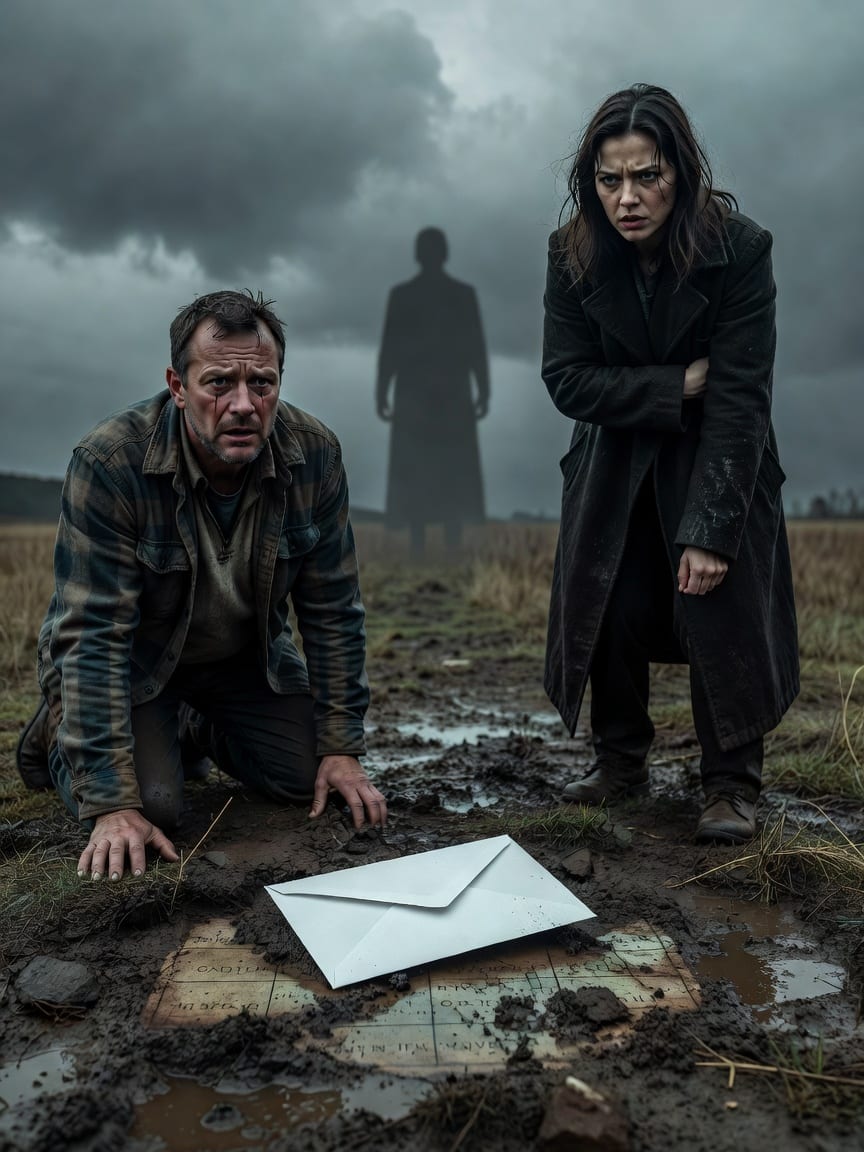
My mail carrier delivers polling cards to Nine Acre Field. It floods, they say. The tithe map shows nine family plots there.
As the new county archivist, I was used to quiet days poring over dusty records. But then I found an empty field, Nine Acre, was receiving current-year polling cards and utility notices for nine distinct addresses. When I investigated, I unearthed a perfectly crisp, current-year tax bill, buried in its soil, surprisingly warm against my fingers.
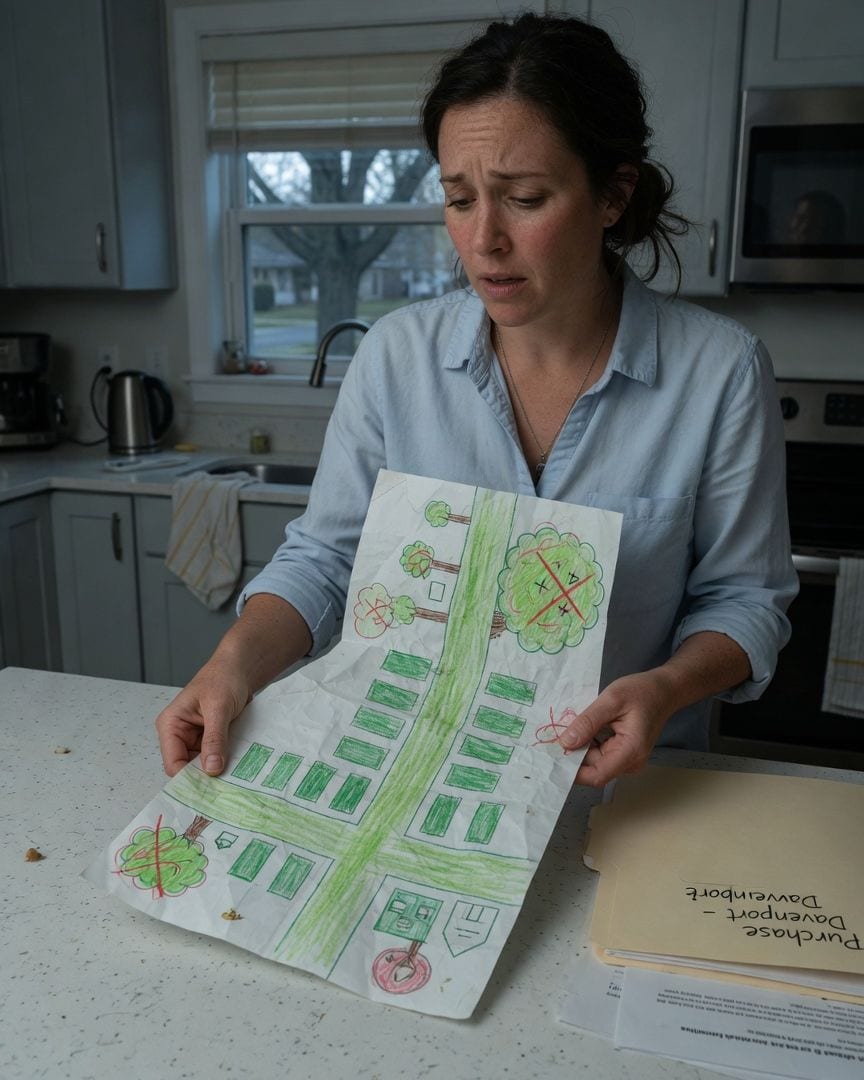
A hand-drawn map keeps arriving through our letterbox — every space on the lane marked green, except the one spot under the old lime tree, alone in red. The agent made us swear we'd never park there.
My new house came with a strange local quirk: weekly maps slipped through my letterbox, each one marking a specific parking spot with an angry red X. A legal addendum about the spot, and my neighbors' evasiveness, made me uneasy. But nothing prepared me for the ancient, identical map I found, which marked my own house with that terrifying red X.
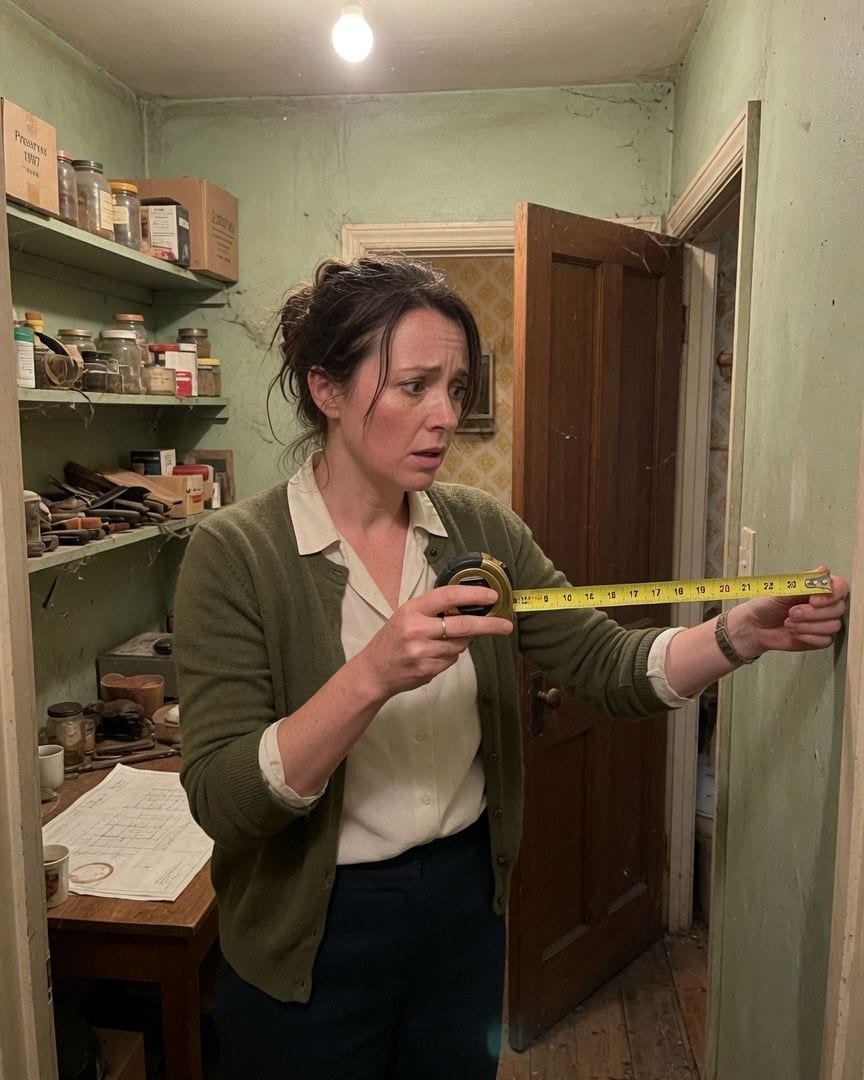
My ferry crossed the estuary three times yesterday, and each time we landed back at our own dock. The far shore simply wasn't there.
My routine ferry commute to the Oakhaven archives usually anchors my day, but yesterday, the boat inexplicably kept returning to our starting point. That unsettling feeling followed me home to my old family house, where I discovered a small, windowless annex whose internal measurements simply did not match its exterior footprint.
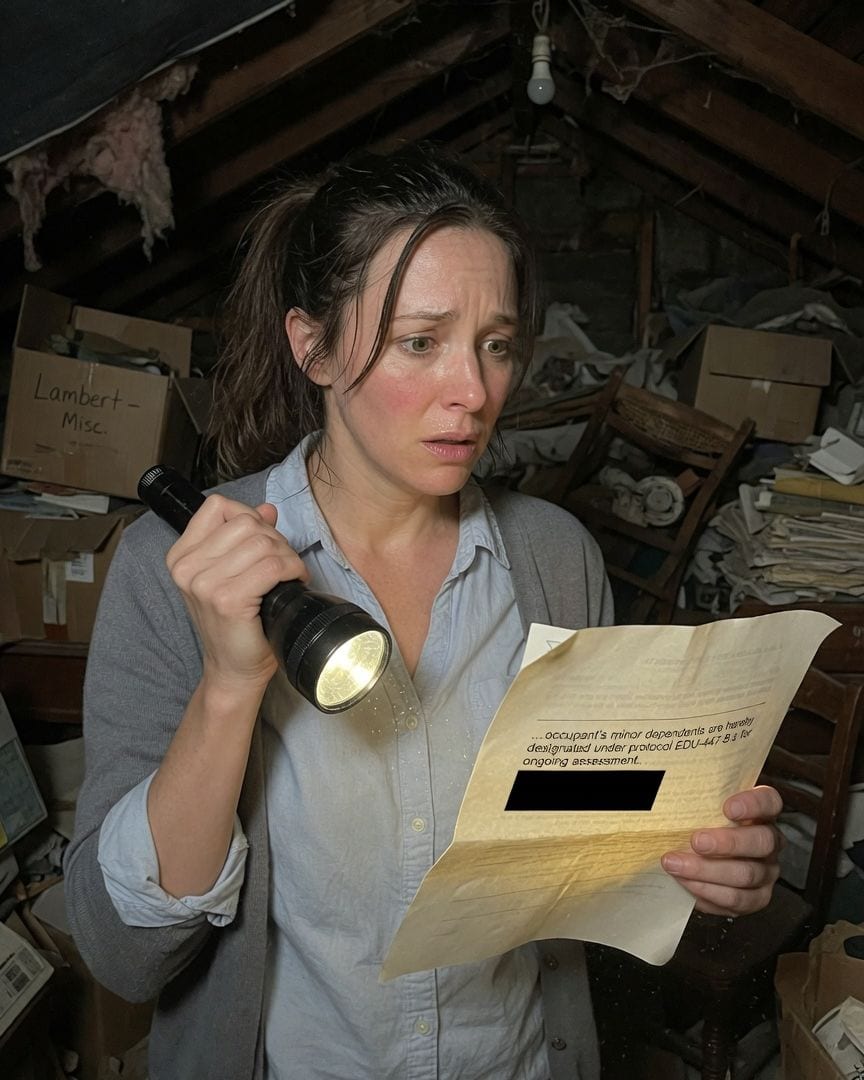
My county archive digital file has a redacted line from 1901, marked 'recurs each generation.' The address? My house. The instruction number? My son's school registration.
Searching mundane county archives, I found a 1901 school log entry for my house, Church Lane, No. 17. A perfectly blacked-out line, marked as 'Withheld – recurs each generation,' pointed to a code Monica at the Education Office used when registering my son. Then, in our attic, I found an identical blacked-out line on an old property notice, designating 'minor dependents' under the same code.
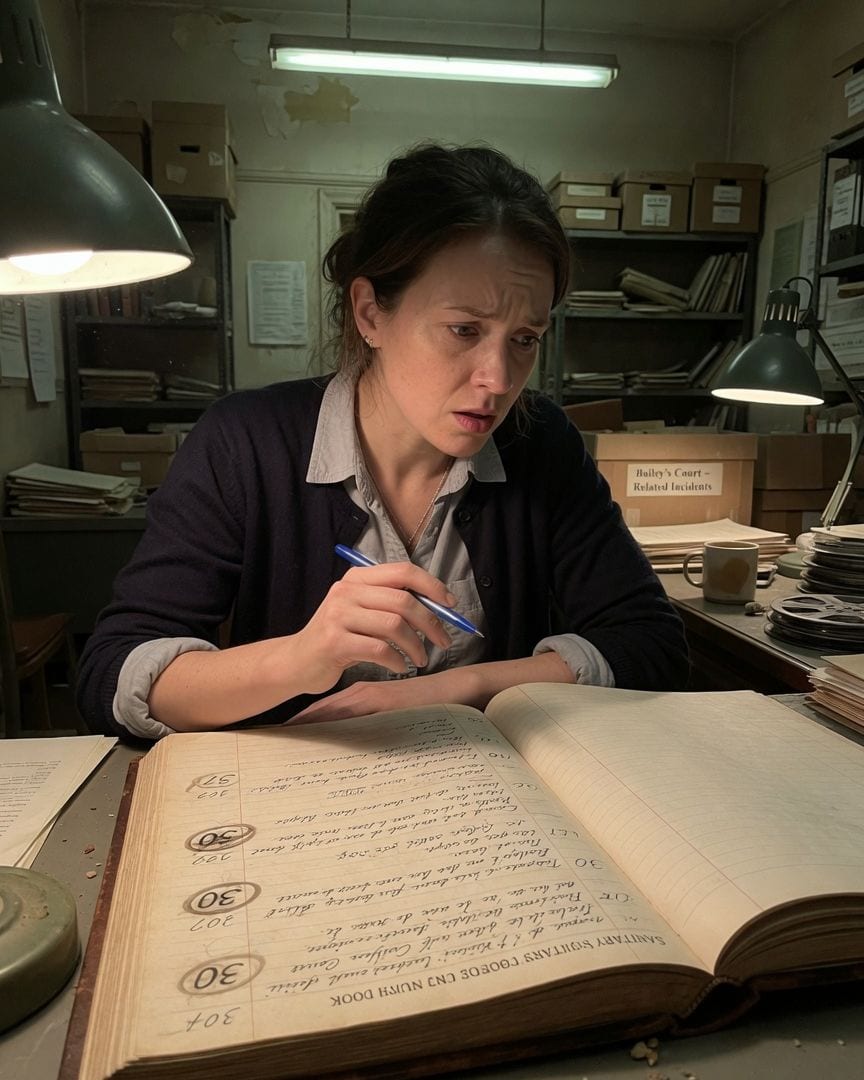
Entry 30 in the old records was re-inked for decades, always the same 'foul drain,' same order: 'do not act.' Then I found it on my street.
My job as a transcriber is usually tedious, but then I found Entry 30. The same complaint, a foul drain, logged for decades, was always re-inked with a chilling instruction: 'nuisance as before, enter it, do not act.' Then I found the same entry again, this time for my own street.
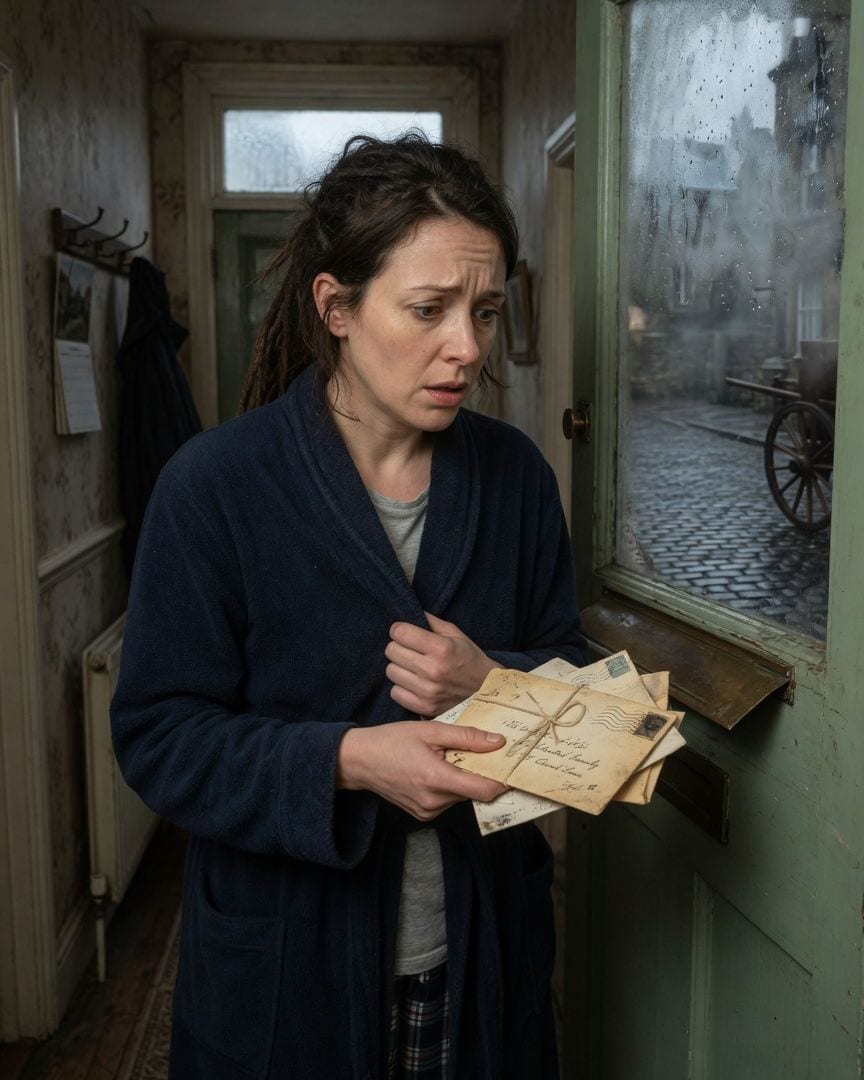
Seventy years ago, a hidden journal recorded my door opening to the wrong street and receiving Lockwood post.
I'd only recently moved into my inherited house, a quiet place on the edge of town. One grey morning, a distinct clatter from the front door's post flap caught my attention. Reaching down, I expected my gravel path, but instead, the flap showed a dark, cobbled street that wasn't mine. A bundle of warm, old letters, addressed to 'The Lockwood Family,' slid through, before the vision flickered and was gone.