My dead relative's 1940 hospital record had a note: 'same admission number as reissued below.' Below it, decades later, was my home address, and 'hold, do not process new patient.'
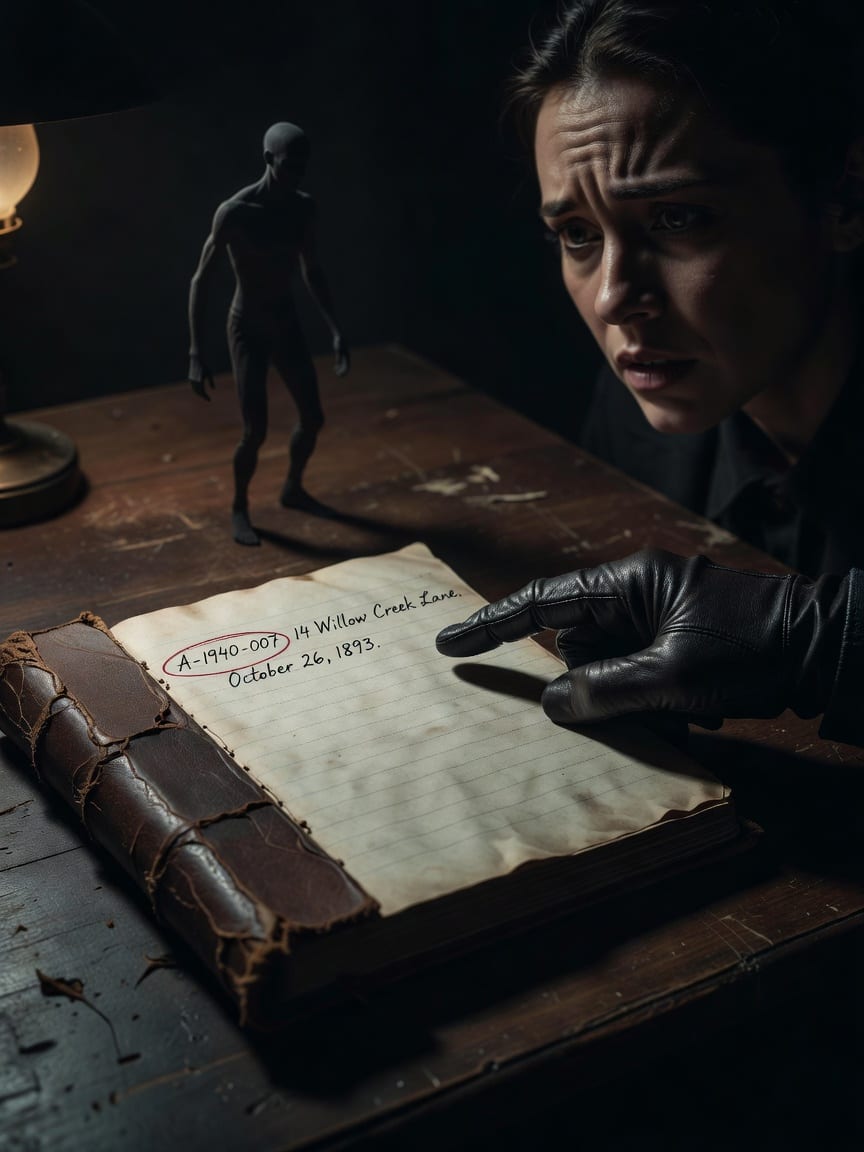
The dust in the archives always smelled the same: old paper, forgotten lives, and a faint, metallic tang I could never quite place. As an archivist, I loved it. Today, though, it felt heavier, almost suffocating.
I was looking for Vera Abbott, my great-aunt. Not for family history, not really. More out of professional curiosity. Vera had been admitted to the psychiatric hospital here in 1940.
She lived to be 103, perfectly sane, if a little sharp-tongued. I’d always wondered about that admission, a forgotten blot on a long life.
I fed the microfiche reel into the reader, the familiar whirring sound filling the quiet room. Names scrolled past, stark against the grainy white. Finally, there she was: “Abbott, Vera. Admission: 1940.” I zoomed in.
Date of birth, diagnosis — a vague “nervous disposition,” common enough for the era. But then, below her name, a single line was thick with black redaction, a permanent marker slashed across sensitive data. Annoying, but not unusual.
What was unusual was the tiny, handwritten note crammed into the margin, scrawled in an old-fashioned script: ‘same admission number as reissued below’. My brow furrowed. I scrolled down, expecting to find a re-entry for Vera herself, maybe a discharge then readmission.
Instead, decades later, a new entry. The identical number: A-1940-007. Below it, the name field was blank, a wide white space. But an address was penned there, meticulous and clear: '14 Willow Creek Lane.'
My own address. My heart gave a stupid little thump against my ribs.
Then the final note, chilling me from the inside out: ‘hold, do not process new patient’. The quiet hum of the microfiche reader, which I usually found soothing, was suddenly deafening. My own home address, tied to a blank file, with a command to hold.
It didn’t make sense. None of it.
I told myself it was a clerical error, a misfiled placeholder, something easily explained away by overworked staff in an analog era.
The precision of the handwriting, though, the specific instruction – ‘hold, do not process new patient’ – gnawed at me. It wasn’t a mistake. It was a directive. Someone had deliberately put my address on this record.
I pushed away the tea I hadn't touched, the lukewarm ceramic cold against my palm. I decided to check the admissions indices for other years, searching specifically for ‘A-1940-007’.
If it was a generic number, I'd find it all over the place, maybe even recycled for entirely different hospital departments. If it was a mistake, it wouldn't persist.
The reels spun. My fingers flew. 1960s index. There it was again. ‘A-1940-007’. Assigned to a ‘Samuel Prescott’. No specific diagnosis, just ‘observation requested’. The address listed was ‘22 Hemlock Drive’. Two blocks from my house. 1980s index. Again. ‘A-1940-007’.
This time for a ‘Monica Harrington’. Listed as a ‘temporary resident’. Address: ‘7 Maple Ridge Road’. Another block away. Each time, the number was identical: A-1940-007.
Each time, the name was different, completely unconnected to Vera Abbott, or to each other. Prescott, Harrington. But the associated addresses, I realized with a growing prickle on my skin, were all within a few blocks of my own street.
My neighborhood.
It wasn't an error. It couldn't be. Someone had been deliberately, quietly, reissuing this specific number, maintaining a file for different people, across different decades, all linked to my small, quiet corner of the city.
The ordinary explanation unravelled with each new entry, leaving behind a cold, hard knot of wrongness. My breath felt thin in my lungs.
My fingers flew through the microfiche, the pattern solidifying into a cold dread. The air in the archives suddenly felt thick, like stale breath. I pulled up the 1970s index.
My eyes scanned for it, dreading what I would find, but compelled to look anyway.
There it was again: ‘A-1940-007’.
This time, the entry read: ‘Galloway, Sarah. Age: 7. Address: 14 Willow Creek Lane. Status: monitored.’
My own street. My own family name. A shiver ran through me, cold and absolute. The child’s address. It was my address.
The dread was a physical thing now, a sudden, cold recognition of my own family name, staring back from a record that shouldn't exist.
The name ‘Sarah Galloway’ and my own address on that record clawed at the back of my mind. I couldn’t shake it. As soon as I could, I went back to the hospital, ignoring the nervous flutter in my stomach.
The first thing I did was try to find records for Sarah Galloway directly in the hospital's electronic system. Nothing. No trace of a Sarah Galloway from that era. Not even a passing visitor, let alone a patient.
It was like she'd been scrubbed clean.
I moved on to the physical patient files for ‘A-1940-007’ from the various decades. I pulled Samuel Prescott’s file, then Monica Harrington’s. They were almost empty.
Each file contained little more than a cover sheet, the reissued number, a date, and then pages of blank medical forms or cryptic bureaucratic memos about ‘status updates’ and ‘property assessments.’ Never any actual patient care details.
No doctor’s notes, no treatment plans, no discharge summaries. It wasn’t a medical record; it was an administrative file, a dossier, almost.
Back at my desk, I opened a digital map. With a trembling finger, I plotted all the addresses associated with ‘A-1940-007’ that I’d found. Hemlock Drive, Maple Ridge Road, and of course, Willow Creek Lane.
They formed a tight cluster, a precise radius around my own house. A bullseye. The ‘patients’ weren't admitted for treatment; they were simply marked and tracked because of where they lived.
The quiet hum of the archive, which had been a comfort before, now felt like a watchful presence, the air colder than it should have been.
I knew who I needed to talk to. Vincent Norwood. He was retired now, a former hospital administrator, infamous for his encyclopedic, some would say obsessive, knowledge of the hospital’s history.
I found him in the small, rarely-used break room, meticulously cleaning his glasses with a square of linen. He looked up, his eyes, magnified by his spectacles, unnervingly calm.
“Miss Galloway,” he said, his voice soft, almost a whisper, as if he expected to be overheard. “Lost something?”
I didn’t waste time. I laid out my printouts on the chipped Formica table: Vera Abbott’s redacted file, the reissued number, the addresses, the blank names, the chilling ‘monitored’ status for Sarah Galloway.
He listened, his face betraying nothing, his gaze lingering on the documents. The glasses gleamed. He offered me a cup of lukewarm tea from a thermos.
“Some things are better left undisturbed, Miss Galloway,” he said, his soft voice cutting through the silence. “The history here is complex.” He picked up the Sarah Galloway printout, his thumb tracing the 'monitored' status.
A cold dread seeped into my bones. His composure was what truly rattled me.
Later that day, I returned to my desk. My ‘A-1940-007’ printouts, which I’d left neatly stacked, were subtly rearranged. A single page, the one with my address and the 'hold' note, was turned face down. A shiver ran through me.
No one else was supposed to be in this section. I logged into my computer. The system showed my research files had been accessed less than five minutes ago. But I’d been talking to Vincent, a floor away.
The hair on my arms pricked. Someone knew I was digging.
The next morning, I went straight for Vincent Norwood’s office. I didn't knock. He was at his desk, sorting through an impossibly tall stack of yellowed papers.
I marched in, slamming the printout of the Sarah Galloway entry onto his desk, my own address highlighted like a neon sign.
“What is this, Mr. Norwood?” I demanded, my voice steady despite my racing pulse. “Sarah Galloway? My address? ‘Monitored’?”
Vincent sighed, a weary, practiced sound. He didn’t look surprised. He just leaned back in his chair, fingers steepled. “A-1940-007 isn’t a patient number, Miss Galloway. Not in the way you’re thinking. It’s a designation. For certain… individuals.
From certain properties.”
My stomach churned. “Designation for what? What individuals?”
He took a slow, deliberate breath. “The hospital, long ago, in its original incarnation as a sanitarium, began quietly ‘managing’ specific bloodlines residing in a particular geographical area. Bloodlines believed to possess a unique, inherited ‘sensitivity.’”
My mind raced. “Sensitivity? You mean… they thought they were psychic? Or crazy?”
“Perceptive,” he corrected, his eyes calm, unwavering. “More open to what lies beneath the veil, shall we say. Vera Abbott was indeed the first ‘official’ patient under this designation, though her ‘treatment’ was more observation than therapy.
An initial data point, you could say. Sarah Galloway,” he continued, his gaze flicking back to the printout, “was also ‘on file,’ living in your house. The ‘monitored’ status meant exactly that. We kept tabs. Quietly. Discreetly.”
He looked at me directly then, his calm breaking just slightly, a flicker of something almost like pity in his eyes. “And the ‘hold, do not process new patient’ note? That was for you.
When you moved into 14 Willow Creek Lane, you were flagged. The file was updated. You were added to the list. Just like Vera. Just like Sarah. You are… on file.”
I felt a cold dread spread through my veins, chilling me to the bone. “On file? For what, exactly, Mr. Norwood? What kind of ‘sensitivity’ are we talking about?” My voice was barely a whisper now.
Vincent shook his head slowly. He stood, then gestured to a locked cabinet in the corner of his office, a heavy, old thing, dark wood scarred with age. “The designation predates even Vera Abbott.
It’s older than the hospital itself, in a way.” He walked over, the floorboards creaking under his weight, and unlocked the cabinet with a small, brass key. Inside, nestled on a velvet cushion, was a single, heavy, leather-bound ledger.
Its cover was worn smooth with age, the leather cracked in places, but meticulously cared for.
“This,” he said, pulling it out, the ancient leather creaking mournfully, “is where it truly began.” He laid the ledger on the table. Its pages were yellowed and brittle, the script faded but legible, written in an ornate, spidery hand.
Vincent's voice dropped to a whisper, so low I had to strain to hear it over the sudden pounding in my ears. “It’s about your family. It’s about you.” He pointed to the very first entry for A-1940-007.
The date was clearly visible: 1890. And below it, not a person, but a property address — the exact address of my own house, ‘14 Willow Creek Lane.’
Fifty years before my great-aunt Vera was even born, and more than a century before I had moved in.
Constance stared at her own home address, written in ornate script, fifty years before her great-aunt Vera was born. The same number that now marked her.
The ledger lay open between us, the ancient script a cold, hard truth. Vincent explained it all, his voice flat, emotionless. The sanitarium, founded in the late 19th century, was built on land with a local history, a reputation.
People around here, he said, were prone to visions, to unusual perceptions. ‘Sensitives,’ the founders called them, with a mix of scientific curiosity and what sounded like outright fear.
So, they started a program. Not to treat, but to identify and ‘manage’ these bloodlines. The ‘A-1940-007’ designation, he confirmed, was the original code for my property, 14 Willow Creek Lane, a known ‘hotspot.’
Anyone residing there, or born into the associated families, was quietly added to the file. Vera Abbott, the ‘patient,’ was simply the first person from that address to warrant more active ‘observation.’
My own 'hold, do not process new patient' note meant I was recognized as the current resident of the designated property, a new entry in a centuries-old bureaucratic chain. The terror wasn’t a monster lurking in the shadows.
It was the sheer, calm, clinical scale of it: a generational, institutional ‘management’ program, meticulously documented, hidden in plain sight, all because of a house. My house.
A cold fury simmered in my gut, quickly overtaken by a desperate, urgent need to act. I didn’t hesitate. I pulled out my phone, my fingers flying. Click. Vera’s redacted file. Click. Sarah Galloway’s ‘monitored’ status. Click.
The 1890 ledger entry for ‘14 Willow Creek Lane.’ Click. The note with my own address, ‘hold, do not process new patient.’ Proof. Concrete. Undeniable.
Vincent watched me, his face a mask of resignation. He didn’t try to stop me.
“They won’t intervene unless you give them a reason, Miss Galloway,” he whispered, his eyes darting to the closed door, as if expecting someone to burst in. “But once you’re on the file, you’re always on the file.
They just… watch.”
He quickly rose, then guided me to a back exit I hadn’t even known existed, a narrow, unmarked door leading to a dimly lit alley. As he opened it, he fumbled with a tablet, quickly accessing the hospital’s electronic records.
A few swift taps, and he cleared my recent search history, all traces of my digging wiped clean. “Go,” he urged, his voice low and urgent, pushing me out into the cold night.
I clutched my bag, the phone inside feeling like a lead weight, the photos proof of a life irrevocably altered by a hidden administrative decree. I glanced back at the imposing, silent hospital, its dark windows like unblinking eyes.
I felt the distinct chill of unseen eyes, the knowledge a permanent, unwelcome guest in my mind. I was free, but the file, I knew, was still open.
I sold my house. I left my archiving job, unable to stomach the thought of being near those records, those knowing eyes. I moved to a different state, changed my name to Eleanor Merritt.
I tried to present my ‘proof’ – the photos of the old records, the ledger entry, the notes – to anyone who would listen. A local journalist. A sympathetic lawyer.
They all nodded politely, their expressions shifting from concern to polite dismissal. An elaborate delusion, they concluded. The ramblings of a traumatized woman. The hospital continued its quiet work, undisturbed, its files intact, its secrets safe.
I lived a life of constant vigilance, forever looking over my shoulder, the knowledge a permanent, silent companion.
Years later, driving through my old town on a whim, a morbid curiosity guiding me, I saw a new housing development rising where my former street once stood.
They had torn down all the old houses, including mine, replaced them with cookie-cutter suburban homes. A large, neatly printed sign on the fence read: ‘Welcome to Abbott Grove. New families, new beginnings.’
I froze, a cold dread washing over me, colder than anything I’d felt that day in the archives. ‘Abbott.’ Vera Abbott’s surname. Prominently displayed. A silent, chilling echo from the files I carried, from the past I couldn't escape.
She knows the file is still open, just under a new name.
If this one got to you
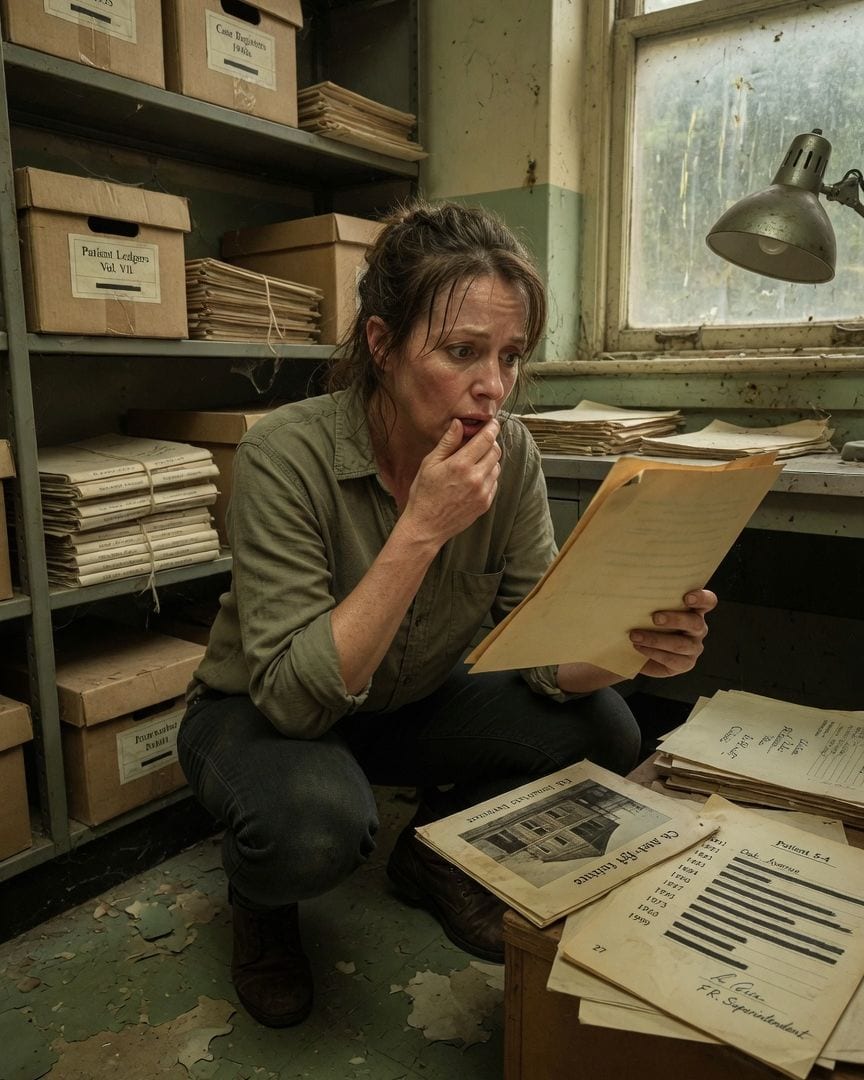
Patient 5-4 keeps checking into my aunt's old sanatorium chalet. The same initials sign them out, 'not traced,' every thirteen years since 1921.
Sifting through my aunt Margaret's estate, I found her old sanatorium file from 1999. Her patient record listed her as 'Patient 5-4,' discharged 'not traced.' But when I accessed the archives, I found 'Patient 5-4' was admitted every thirteen years since 1921, always with identical discharge notes.
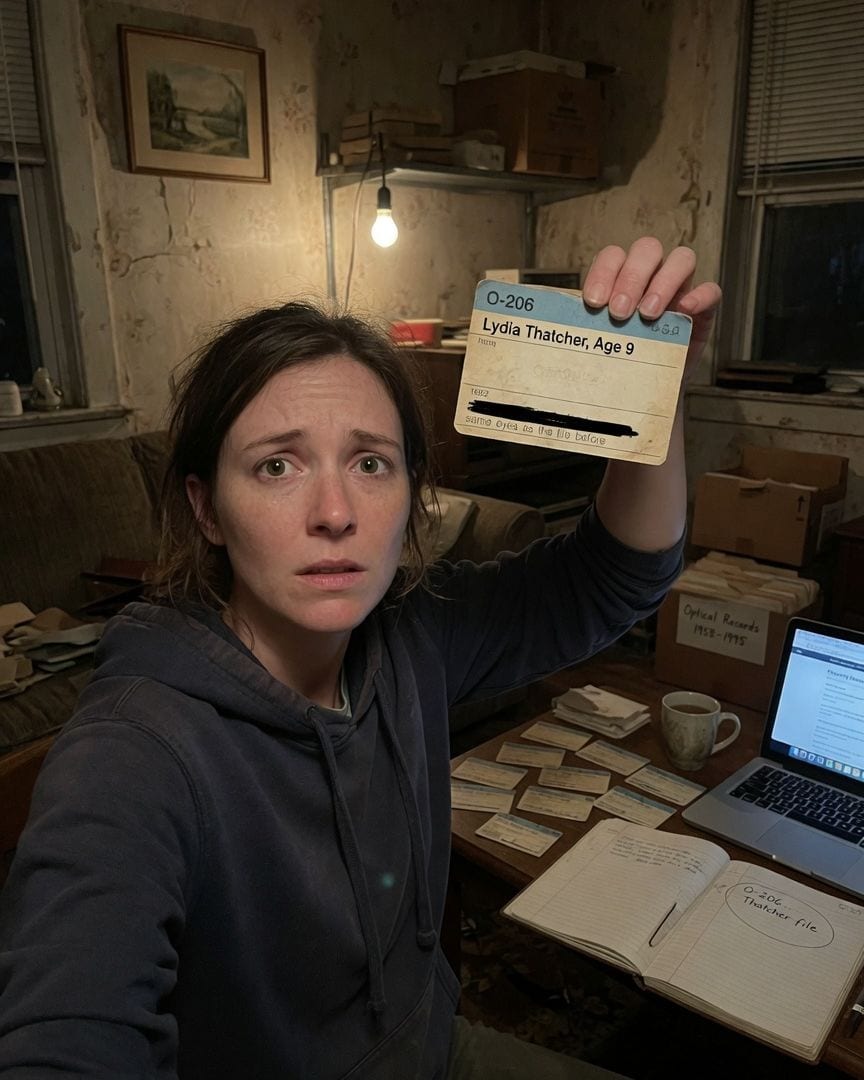
My own optical card is dated 1962, with my name on it. I wasn't born until 1993.
Sifting through old patient files from my former optical practice, I found my own O-206 card. It had my name, Lydia Thatcher, and my current home address printed on it. But the card was dated 1962, decades before I was even born, and a redacted note mentioned 'same eyes.'
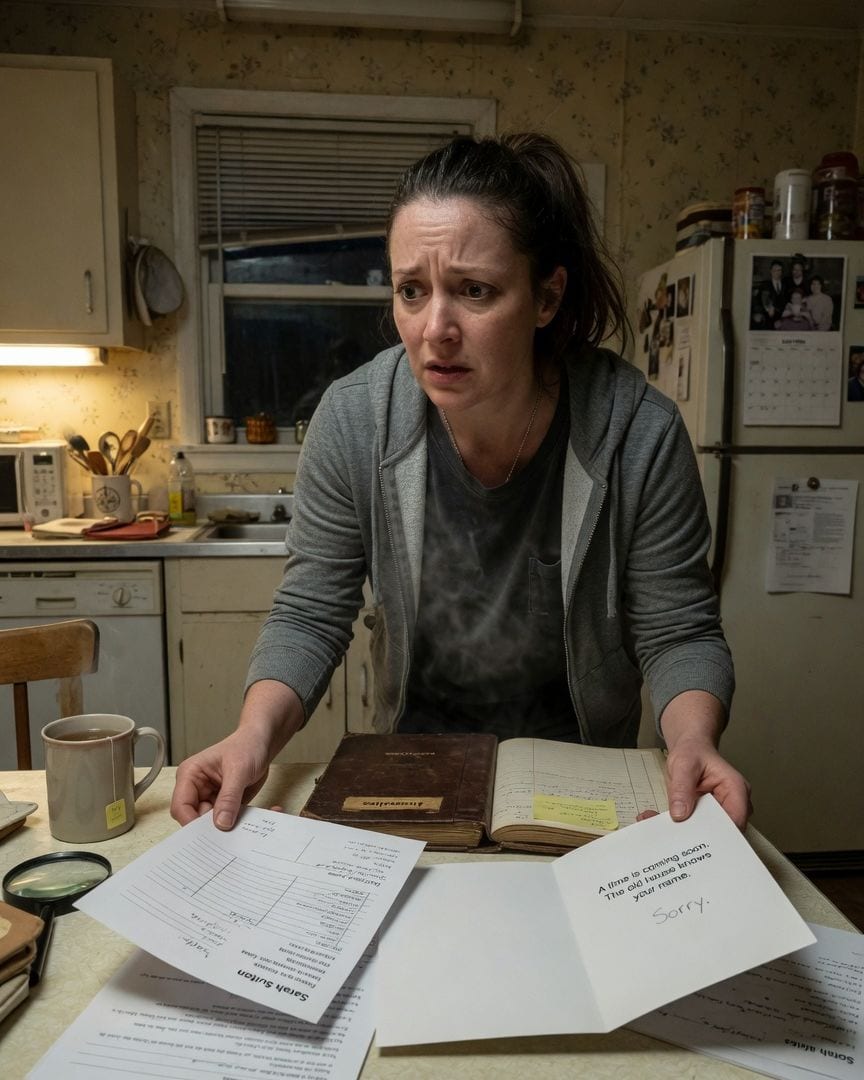
My name sits in the 1966 electoral register. My house, my exact name. Someone pencilled 'sorry' in the margin.
I was sifting through dusty microfiche, tracing my family line for my childhood home, when I found it. The 1966 electoral register for my address listed my exact name: Sarah Sutton. My heart hammered. I wasn't born until 1988; this was thirty-five years before I existed.
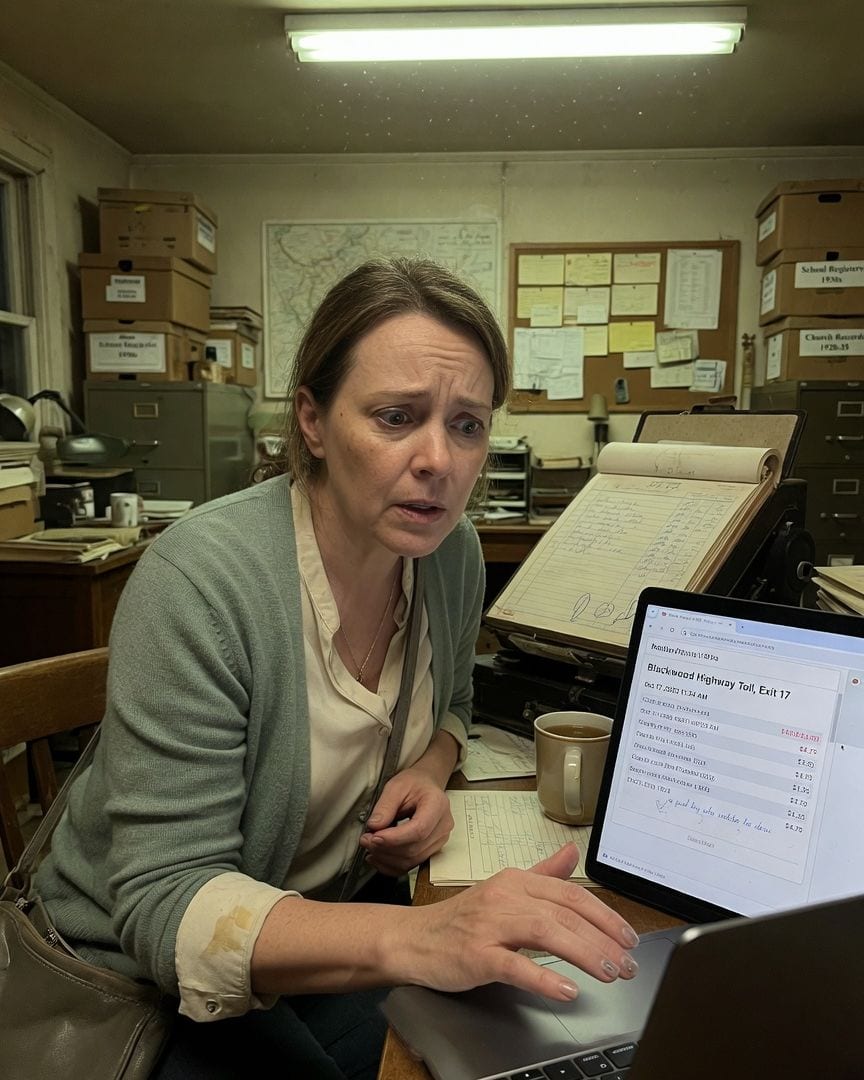
A 1931 school register marks me present every single day of that spring term — but I was born in 1969. And the teacher's note beside my name calls me 'a quiet boy who watches the door.'
As the village archivist, Lydia Kowalski uncovered her own name in a 1931 school register, decades before she was born. Then she found her unmistakable signature in the book, followed by the teacher's chilling note describing 'a quiet boy who watches the door'. Later, her bank statement showed a highway toll charge from a place she'd never been, on a day she was home with the flu.
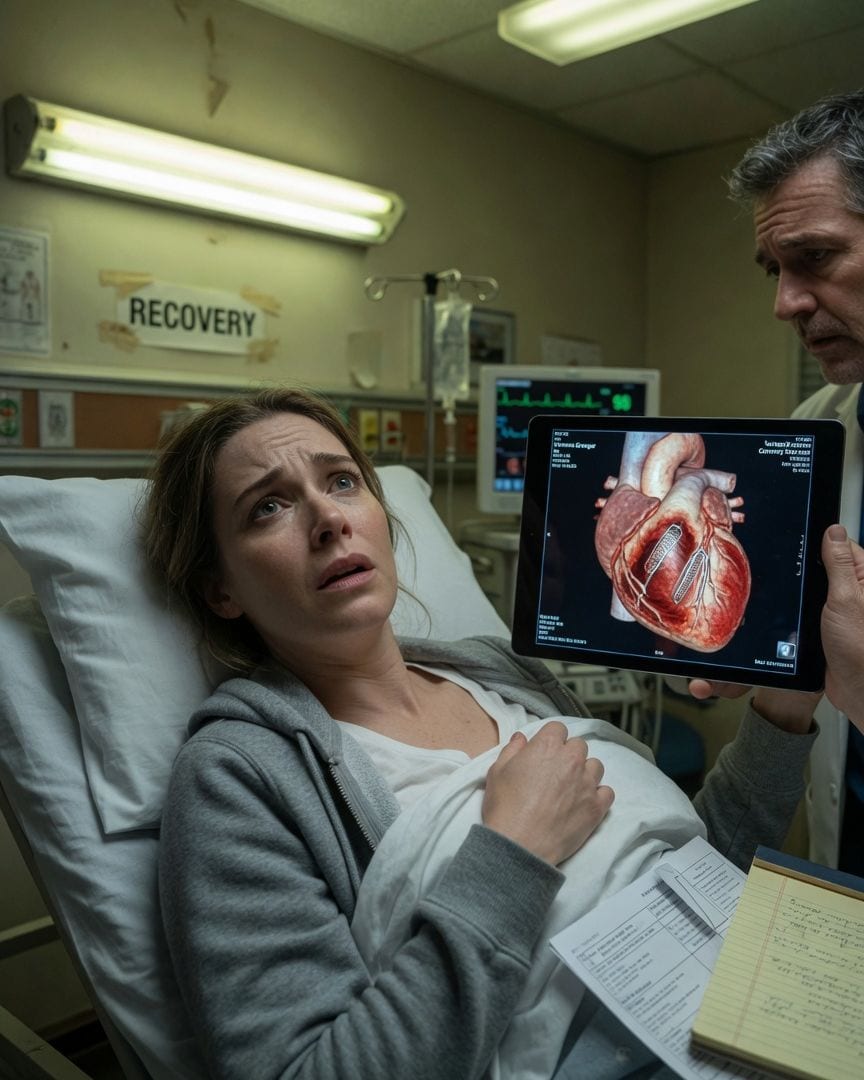
Metal stents are propping open my heart. The doctor rotated the image, but I've never had a cardiac procedure.
After years of dismissed chest pain, a CT scan revealed an impossible truth: my heart contained two metal stents. Dr. Maddox confirmed there was no record of any cardiac procedure in my entire medical history, and I had no memory of ever having surgery. My own body held a secret, alien architecture I couldn't explain.

My taxi driver knew my name before I spoke, then apologized for the flight I was going to miss. I was arriving. The cab's plate was scrapped four years ago.
After a strange taxi ride, I received an unsettling birthday card addressed to me. Its return address listed 'Old Mill Road Field,' an empty lot where a mill once stood, and it was postmarked locally. The card arrived four months before my actual birthday, sparking a cold dread I couldn't ignore.